Grew
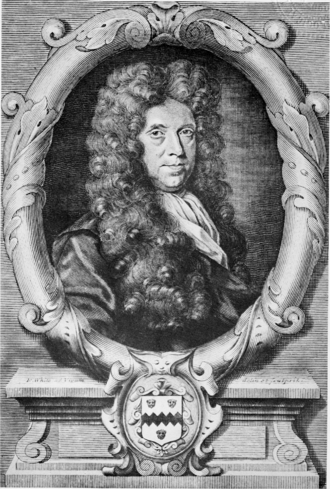
ACHIEVEMENT(S): One of the founders of the science of plant anatomy.
NICKNAME/ALIAS: None.
DATE/PLACE OF BIRTH: baptized 26th^ September 1641, in Mancetter, Warwickshire, England.
DATE/PLACE/AGE AT DEATH: 25th March 1712, in London, England. Aged 70.
DISCIPLINE: Botanist.
FIELD: Botany.
LANGUAGE: English.
PARENTS: Reverend Obadiah Grew and Ellen Vicars.
SIBLINGS: Half-brother, Henry Sampson (b. 1632).
SPOUSE: Mary Huetson (d. 1685); Elizabeth Dodson.
CHILDREN: One son and two daughters by second marriage.
EDUCATION: School in Coventry; Pembroke Hall, Cambridge, to 1661.
MAJOR WORK: ‘The Anatomy of Plants’, 1682.
LIFE AND TIMES: After leaving Cambridge, Grew went to Leyden, where he extended his interest in human and animal anatomy to that of plants.
In 1671, he returned to England and set up a medical practice in Coventry. Early that same year, he showed his first work on plants to his half-brother, who was a member of the Royal Society.
His half-brother was sufficiently impressed with the work to show it to Oldenburg*, secretary to the Society, and Wilkins*, the bishop of Chester. Within a few months, in May 1671, the work was approved for printing by the Royal Society*, as ‘The Anatomy of Vegetables Begun’ and shortly after that, Grew was elected to the Society.
The work included a lot of detail on the structure of bean seeds, noted the existence of cells and coined many terms now in common use, like radicle (for the embryonic root), plume (for what is now known as the plumule, or primary bud of a plant embryo), and parenchyma (for unspecialized cells).
Grew presented ‘The Anatomy of Vegetables Begun’ to the Royal Society at the same time as Malpighi*’s manuscript on the same subject, published in 1672.
In January 1672, Grew read two more papers on plant anatomy to the Royal Society. These were later published together as ‘Idea of a Phytological History’. In April, he was made Curator of the Society for the anatomy of plants. Later the same year, he was persuaded by Wilkins, Sprat* and others to move from Coventry to London, where he intensified his study of plant anatomy, while continuing to practice as a doctor.
In London, Grew became friendly with Hooke*, who was pioneering the science of microscopy, using the new compound microscope. Hooke made the Royal Society’s microscope available to Grew and, by 1677, both of them had become secretaries of the Society.
Grew worked on crystalline materials in plant tissues, as well as a study of the intestines and related organs of 35 different animal species, a study that he published as ‘Comparative Anatomy of the Stomach and the Guts’ in 1681. In 1672 he investigated the nature of snow and noticed that it was composed of ‘icicles’ of determined form.
In 1675, Grew coined the term ‘comparative anatomy’ in his ‘Comparative Anatomy of Trunks’. His extensive descriptions and illustrations of the contents of the Society’s museum at Gresham College appeared in 1681.
Grew continued to study plant anatomy and passed his findings on to the Royal Society in a series of ‘discourses’, which were so highly regarded that he was asked to collect them in book form.
Published in 1682, this became his most popular work, titled: ‘The Anatomy of Plants’. The work included a section on the anatomy of flowers as well as wood engravings that showed the microscopic structure of plant tissue. In this work Grew described and illustrated the structures of stems and roots by the combined use of cross-sections and obliquely cut surfaces.
Grew also made important contributions to plant shape, studying flowers, fruits and seeds. In the flower, he identified the ‘emplacement’, now referred to as the calyx, the ‘foliature’ or corolla and the ‘attire’, the name he gave to the stamens and styles.
‘The Anatomy of Plants’ is now best remembered for the idea that the stamen, with its pollen, is the male sex organ and that the pistil corresponds to the sex organ of the female.
Grew never taught and as a result, much of his knowledge died with him, but his main ideas were summarized by Ray*.
ASSESSMENT: His achievements included important contributions to plant morphology.
EXTRA CONNECTIONS: He knew Newton*
ONELINER: Nehemiah Grew, plant anatomy pioneer
BIBLIOGRAPHY:
EB, DSB.