Graham G
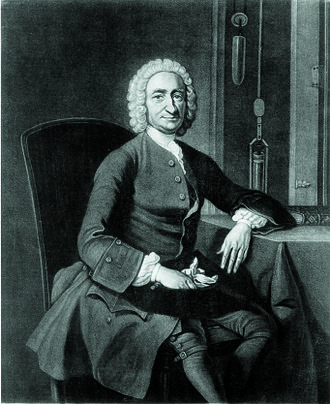
Achievements: Invented the dead-beat escapement for clocks, in 1715.
Born: c. 1674; Horsgill, near Rigg, Cumberland, England
Died: November 20, 1751; London, England (Aged 77)
Field & Discipline: Science; Astronomy; Horology; Instrument-Maker
Language: English
Father: George Graham (d. c.1756)
Mother: Unknown
Siblings: William; Richard; Isabella
Spouse: Elizabeth Tompion (m. 1704)
Children: None
Education: Unknown
Major Work:
"A Contrivance to Avoid the Irregularities in a Clock's Motion Occasion'd by the Action of Heat and Cold Upon the Rod of the Pendulum" (1726 “Philosophical Transactions of the Royal Society,” 34, no. 392, 40-44)
Life & Times:
In July 1688 Graham was apprenticed to Henry Aske, a London clock and watch maker, and seven years later, on 30 September 1695, he was granted the freedom of the Clockmaker's Company, then under the mastership of William Clement, the inventor of the anchor escapement.
During his apprenticeship Graham's inventiveness and manual dexterity had attracted the attention of [partner of] Tompion*, the leading clock, watch and instrument maker of the day, and in 1696, at the age of 22, he began working in Tompion's workshops.
In 1704 Graham married Tompion's niece, Elizabeth Tompion, later becoming Tompion's partner and succeeding to the business on Tompion's death in 1713. With Tompion, between 1705 and 1710, Graham originated the device then known as a planetarium (now called an orrery), a clockwork mechanical machine which by the working of geared models showed the motions of the planets around the Sun (with the Earth completing a year's rotation in about 10 minutes), made under the patronage of Charles Boyle, 4th Earl of Orrery.
In 1715 Graham invented his deadbeat escapement, in which the escape wheel remains stationary when not moving forward. This was a modification of the older anchor escapement, invented around 1670 by Clement, in which the escape wheel (so-called because it allows the energy provided by the weight or spring to "escape" and turn the clock-hands) was controlled by a pallet (a small arc-shaped piece of metal connected to the pendulum that moved within the teeth of the escape wheel) ensuring that the pendulum swung only within a small arc.
In Graham's "deadbeat" improvement of this system (greater accuracy was required by astronomers) the acting surfaces of the pallet prongs were divided into two faces, which allowed a much smoother action of the movement of the clock hands, preventing inaccuracies resulting from recoil and thereby and thus much finer measurements to be made.
Graham's deadbeat escapement produced extraordinarily accurate clocks, which could work for a year without being rewound, and gained him much prestige as the successor to Tompion.
In 1715 Graham also began experiments to overcome the effects of temperature changes on pendulum length and the rate of timekeeping, and by 1722 he had developed his mercury-compensated pendulum (in which the pendulum was made more accurate by the reduction of the metal expansion in the pendulum rod) which he adjusted and tested carefully before presentation in a paper to the Royal Society in 1726.
The combination of Graham's deadbeat escapement and stable pendulum was extensively adopted in the trade, and remained in precision clocks until the late 19th century. About 1725 Graham also invented the cylinder escapement for watches, an improvement of the escapement designed by Tompion, which had been patented by Tompion, Edward Booth and William Houghton in 1695. Graham's design for this escapement was also deadbeat, and was particularly effective because it was not affected by changes in driving power.
Aside from his clock and watch making business, Graham also made many scientific instruments, including barometers and orreries. His first precision instrument was made in 1725: an eight-foot mural quadrant for the astronomer [made quadrant for] Halley*, who had become astronomer-royal in 1720. The quadrant introduced a new system of calibration, improving the accuracy of observation.
Two years later Graham constructed another important astronomical instrument, a 24-and-one-quarter-foot zenith sector, for Sir Samuel Molyneux's private observatory at Kew, in which he introduced the great improvement of a micrometer screw to subdivide the vernier divisions. James Bradley used this sector for studies which led to his discovery of the aberration of light from fixed stars in 1729.
In 1728 [lent money to] John Harrison*, on the recommendation of Halley, approached Graham for help in the promotion of his concept of a precision marine clock for finding longitude at sea, and on Graham's advice, combined with a generous loan (£200) from Graham as encouragement, Harrison built and tested his time-keeper before submitting it to the Board of Longitude, with Graham's full support.
By the early 1730s Graham's clocks and astronomical instruments had earned him international fame, and in 1736, when Louis XV sent the mathematician [made instruments for] Maupertuis* to Tornea, Sweden (now Tornio, Finland) to measure the arc of meridian, he took several instruments made by Graham, including an accurate pendulum clock and a transit for a nine-foot mounted telescope, which hung vertically and could be directed by micrometer screw.
The observations made by Maupertuis using these instruments showed that a degree near the Arctic Circle was nearly a mile longer than [work related to] Cassini* had predicted, and longer than a degree measured near Paris. When combined with the results from the expedition to Peru (led by [work related to] Charles-Marie de La Condamine*) the Earth was proved to be a sphere flattened at the poles, in accordance with the theories of [work related to] Newton* and [work related to] Christiaan Huygens*.
Graham's work in instrumentation was above all noted for his kinematic designs, including more accurate graduations and micrometer screws for precise subdivisions, including a micrometer eyepiece.
He also made many of his own astronomical observations, and this practical experience contributed to his designing and building skills, which he then taught to his followers Jonathan Sisson and John Bird.
He died in his house in Fleet Street, London in 1751, and was buried in Tompion's grave in Westminster Abbey.
Extra Connections: [sold instruments to] Celsius* bought the Lapland expedition instruments from him.
Assessment: George Graham was the foremost horologist and astronomical instrument maker of his day.
Oneliner: George Graham, famous English instrument-maker
Bibliography:
- Dictionary of National Biography.
- Dictionary of Scientific Biography.
- Encyclopedia Britannica.
- Lloyd, Alan H.,"George Graham, Horologist and Astronomer", in Horological Journal, 3, no. 1118 (November 1951), 708-717.
Multimedia
@@Connections II #9 - *