Hypnosis
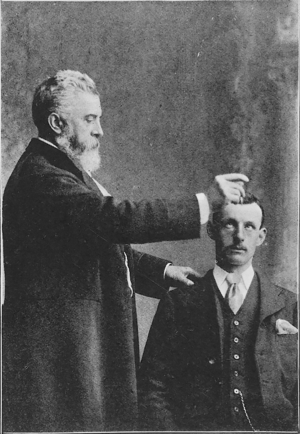
ALTERNATIVE NAME/S: Mesmerize
DETAILS/DESCRIPTION:
Hypnosis is a mental state resembling sleep during which the subject is unusually receptive to the power of suggestion. While references to trance-like states can be traced to the ancient cultures of Egypt, Greece, China, and Britain, it wasn’t until the 18th century that the present understanding of hypnosis took root.
Mesmer* (1734-1815), a Viennese physician, was the precursor to modern hypnotists. He believed that the laws of magnetism directly influenced health by interacting with bodily fluids. Mesmer performed therapeutic experiments in which patients were placed in a trance-like state and had magnets applied to their bodies. This practice, called ‘mesmerism,’ was very controversial in its day and was eventually discredited by the medical community. It is from the work of Mesmer that we get the terms “animal magnetism” and “mesmerize.”
Braid* (1795-1860), a British surgeon, laid the groundwork for the acceptance of hypnosis as a legitimate form of therapy with experiments, conducted in the mid-18th century. In 1843, Braid adapted the terms “hypnotic” and “hypnosis” from Hypnos, the Greek god of sleep.
Today, hypnosis is widely regarded as an effective therapeutic tool and has been officially recognized by many professional associations in the disciplines of medicine, psychology, psychiatry, and dentistry. Hypnosis is currently used for treating pain, curbing addiction, making people behave like chickens, and aiding childbirth, among other uses.
ONELINER: Hypnosis
OTHER CONNECTIONS:
Sigmund Freud (1856–1939), the founder of psychoanalysis, studied hypnotism.
BIBLIOGRAPHY:
Encyclopædia Britannica.
Wikipedia