Freud, S 2
Sigmund Freud (/frɔɪd/ *FROYD*,[2] German: [ˈziːkmʊnt ˈfʁɔʏt]; born Sigismund Schlomo Freud; 6 May 1856 – 23 September 1939) was an Austrian neurologist and the founder of psychoanalysis, a clinical method for evaluating and treating pathologies seen as originating from conflicts in the psyche, through dialogue between patient and psychoanalyst,[3] and the distinctive theory of mind and human agency derived from it.[4]
Freud was born to Galician Jewish parents in the Moravian town of Freiberg, in the Austrian Empire. He qualified as a doctor of medicine in 1881 at the University of Vienna.[5][6] Upon completing his habilitation in 1885 he was appointed a docent in neuropathology and became an affiliated professor in 1902.[7] Freud lived and worked in Vienna having set up his clinical practice there in 1886. Following the German annexation of Austria in March 1938, Freud left Austria to escape Nazi persecution. He died in exile in the United Kingdom in 1939.
In founding psychoanalysis Freud developed therapeutic techniques such as the use of free association and discovered transference, establishing its central role in the analytic process. Freud's redefinition of sexuality to include its infantile forms led him to formulate the Oedipus complex as the central tenet of psychoanalytical theory.[8] His analysis of dreams as wish-fulfillments provided him with models for the clinical analysis of symptom formation and the underlying mechanisms of repression.
On this basis Freud elaborated his theory of the unconscious and went on to develop a model of psychic structure comprising id, ego and super-ego.[9] Freud postulated the existence of libido, sexualised energy with which mental processes and structures are invested and which generates erotic attachments, and a death drive, the source of compulsive repetition, hate, aggression, and neurotic guilt.[9] In his later work Freud developed a wide-ranging interpretation and critique of religion and culture.
Though in overall decline as a diagnostic and clinical practice, psychoanalysis remains influential within psychology, psychiatry, and psychotherapy, and across the humanities. It thus continues to generate extensive and highly contested debate concerning its therapeutic efficacy, its scientific status, and whether it advances or hinders the feminist cause.[10] Nonetheless, Freud's work has suffused contemporary Western thought and popular culture. W. H. Auden's 1940 poetic tribute to Freud describes him as having created "a whole climate of opinion / under whom we conduct our different lives".[11]
Biography
Early life and education
Sigmund Freud was born to Ashkenazi Jewish parents in the Moravian town of Freiberg,[12][13] in the Austrian Empire (now Příbor, Czech Republic), the first of eight children.[14] Both of his parents were from Galicia, a historic province straddling modern-day West Ukraine and southeast Poland. His father, Jakob Freud (1815–1896), a wool merchant, had two sons, Emanuel (1833–1914) and Philipp (1836–1911), by his first marriage. Jakob's family were Hasidic Jews and, although Jakob himself had moved away from the tradition, he came to be known for his Torah study.
He and Freud's mother, Amalia Nathansohn, who was 20 years younger and his third wife, were married by Rabbi Isaac Noah Mannheimer on 29 July 1855.[15] They were struggling financially and living in a rented room, in a locksmith's house at Schlossergasse 117 when their son Sigmund was born.[16] He was born with a caul, which his mother saw as a positive omen for the boy's future.[17]
In 1859, the Freud family left Freiberg. Freud's half-brothers immigrated to Manchester, England, parting him from the "inseparable" playmate of his early childhood, Emanuel's son, John.[18] Jakob Freud took his wife and two children (Freud's sister, Anna, was born in 1858; a brother, Julius born in 1857, had died in infancy) firstly to Leipzig and then in 1860 to Vienna where four sisters and a brother were born: Rosa (b. 1860), Marie (b. 1861), Adolfine (b. 1862), Paula (b. 1864), Alexander (b. 1866).
In 1865, the nine-year-old Freud entered the Leopoldstädter Kommunal-Realgymnasium, a prominent high school. He proved to be an outstanding pupil and graduated from the Matura in 1873 with honors. He loved literature and was proficient in German, French, Italian, Spanish, English, Hebrew, Latin and Greek.[19]
Freud entered the University of Vienna at age 17. He had planned to study law, but joined the medical faculty at the university, where his studies included philosophy under Franz Brentano, physiology under Ernst Brücke, and zoology under Darwinist professor Carl Claus.[20] In 1876, Freud spent four weeks at Claus's zoological research station in Trieste, dissecting hundreds of eels in an inconclusive search for their male reproductive organs.[21]
In 1877, Freud moved to Ernst Brücke's physiology laboratory where he spent six years comparing the brains of humans and other vertebrates with those of frogs and invertebrates such as crayfish and lampreys. His research work on the biology of nervous tissue proved seminal for the subsequent discovery of the neuron in the 1890s.[22] Freud's research work was interrupted in 1879 by the obligation to undertake a year's compulsory military service. The lengthy downtimes enabled him to complete a commission to translate four essays from John Stuart Mill's collected works.[23] He graduated with an MD in March 1881.[24]
Early career and marriage
In 1882, Freud began his medical career at Vienna General Hospital. His research work in cerebral anatomy led to the publication in 1884 of an influential paper on the palliative effects of cocaine, and his work on aphasia would form the basis of his first book On Aphasia: A Critical Study, published in 1891.[25] Over a three-year period, Freud worked in various departments of the hospital. His time spent in Theodor Meynert's psychiatric clinic and as a locum in a local asylum led to an increased interest in clinical work. His substantial body of published research led to his appointment as a university lecturer or docent in neuropathology in 1885, a non-salaried post but one which entitled him to give lectures at the University of Vienna.[26]
In 1886, Freud resigned his hospital post and entered private practice specializing in "nervous disorders". The same year he married Martha Bernays, the granddaughter of Isaac Bernays, a chief rabbi in Hamburg. Freud was, as an atheist, dismayed at the requirement in Austria for a Jewish religious ceremony and briefly considered, before dismissing, the prospect of joining the Protestant 'Confession' to avoid one.[27] In the event a civil ceremony took place on 13 September and a religious ceremony the following day with Freud having been hastily tutored in the Hebrew prayers.[28] The Freuds had six children: Mathilde (b. 1887), Jean-Martin (b. 1889), Oliver (b. 1891), Ernst (b. 1892), Sophie (b. 1893), and Anna (b. 1895). From 1891 until they left Vienna in 1938, Freud and his family lived in an apartment at Berggasse 19, near Innere Stadt, a historical district of Vienna.
[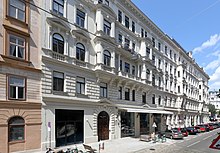
Freud's home at Berggasse 19, Vienna
In 1896, Minna Bernays, Martha Freud's sister, became a permanent member of the Freud household after the death of her fiancé. The close relationship she formed with Freud led to rumours, started by Carl Jung, of an affair. The discovery of a Swiss hotel guest-book entry for 13 August 1898, signed by Freud whilst travelling with his sister-in-law, has been presented as evidence of the affair.[29]
Freud began smoking tobacco at age 24; initially a cigarette smoker, he became a cigar smoker.[30] He believed smoking enhanced his capacity to work and that he could exercise self-control in moderating it. Despite health warnings from colleague Wilhelm Fliess, he remained a smoker, eventually developing a buccal cancer.[31] Freud suggested to Fliess in 1897 that addictions, including that to tobacco, were substitutes for masturbation, "the one great habit."[32]
Freud had greatly admired his philosophy tutor, Brentano, who was known for his theories of perception and introspection. Brentano discussed the possible existence of the unconscious mind in his Psychology from an Empirical Standpoint (1874). Although Brentano denied its existence, his discussion of the unconscious probably helped introduce Freud to the concept.[33] Freud owned and made use of Charles Darwin's major evolutionary writings, and was also influenced by Eduard von Hartmann's The Philosophy of the Unconscious (1869). Other texts of importance to Freud were by Fechner and Herbart,[34] with the latter's Psychology as Science arguably considered to be of underrated significance in this respect.[35] Freud also drew on the work of Theodor Lipps, who was one of the main contemporary theorists of the concepts of the unconscious and empathy.[36]
Though Freud was reluctant to associate his psychoanalytic insights with prior philosophical theories, attention has been drawn to analogies between his work and that of both Schopenhauer[37] and Nietzsche. In 1908, Freud said that he occasionally read Nietzsche, and was strongly fascinated by his writings, but did not study him, because he found Nietzsche's "intuitive insights" resembled too much his own work at the time, and also because he was overwhelmed by the "wealth of ideas" he encountered when he read Nietzsche.
Freud sometimes would deny the influence of Nietzsche's ideas. One historian quotes Peter L. Rudnytsky, who says that based on Freud's correspondence with his adolescent friend Eduard Silberstein, Freud read Nietzsche's The Birth of Tragedy and probably the first two of the Untimely Meditations when he was seventeen.[38][39] In 1900, the year of Nietzsche's death, Freud bought his collected works; he told his friend, Fliess, that he hoped to find in Nietzsche's works "the words for much that remains mute in me." Later, he said he had not yet opened them.[40] Freud came to treat Nietzsche's writings "as texts to be resisted far more than to be studied." His interest in philosophy declined after he had decided on a career in neurology.[41]
Freud read William Shakespeare in English throughout his life, and it has been suggested that his understanding of human psychology may have been partially derived from Shakespeare's plays.[42]
Freud's Jewish origins and his allegiance to his secular Jewish identity were of significant influence in the formation of his intellectual and moral outlook, especially concerning his intellectual non-conformism, as he pointed out in his Autobiographical Study.[43] They would also have a substantial effect on the content of psychoanalytic ideas, particularly in respect of their common concerns with depth interpretation and "the bounding of desire by law".[44]
Relationship with Fliess
During the formative period of his work, Freud valued and came to rely on the intellectual and emotional support of his friend Wilhelm Fliess, a Berlin-based ear, nose, and throat specialist whom he had first met in 1887. Both men saw themselves as isolated from the prevailing clinical and theoretical mainstream because of their ambitions to develop radical new theories of sexuality. Fliess developed highly eccentric theories of human biorhythms and a nasogenital connection which are today considered pseudoscientific.
...
Development of psychoanalysis
In October 1885, Freud went to Paris on a three-month fellowship to study with Jean-Martin Charcot, a renowned neurologist who was conducting scientific research into hypnosis. He was later to recall the experience of this stay as catalytic in turning him toward the practice of medical psychopathology and away from a less financially promising career in neurology research.[56] Charcot specialized in the study of hysteria and susceptibility to hypnosis, which he frequently demonstrated with patients on stage in front of an audience.
Once he had set up in private practice back in Vienna in 1886, Freud began using hypnosis in his clinical work. He adopted the approach of his friend and collaborator, Josef Breuer, in a type of hypnosis that was different from the French methods he had studied, in that it did not use suggestion. The treatment of one particular patient of Breuer's proved to be transformative for Freud's clinical practice. Described as Anna O., she was invited to talk about her symptoms while under hypnosis (she would coin the phrase "talking cure" for her treatment). In the course of talking in this way, her symptoms became reduced in severity as she retrieved memories of traumatic incidents associated with their onset.
The inconsistent results of Freud's early clinical work eventually led him to abandon hypnosis, having concluded that more consistent and effective symptom relief could be achieved by encouraging patients to talk freely, without censorship or inhibition, about whatever ideas or memories occurred to them. In conjunction with this procedure, which he called "free association", Freud found that patients' dreams could be fruitfully analyzed to reveal the complex structuring of unconscious material and to demonstrate the psychic action of repression which, he had concluded, underlay symptom formation. By 1896 he was using the term "psychoanalysis" to refer to his new clinical method and the theories on which it was based.[57]

Approach to Freud's consulting rooms at Berggasse 19
Freud's development of these new theories took place during a period in which he experienced heart irregularities, disturbing dreams and periods of depression, a "neurasthenia" which he linked to the death of his father in 1896[58] and which prompted a "self-analysis" of his own dreams and memories of childhood. His explorations of his feelings of hostility to his father and rivalrous jealousy over his mother's affections led him to fundamentally revise his theory of the origin of the neuroses.
Based on his early clinical work, Freud postulated that unconscious memories of sexual molestation in early childhood were a necessary precondition for psychoneuroses (hysteria and obsessional neurosis), a formulation now known as Freud's seduction theory.[59] In the light of his self-analysis, Freud abandoned the theory that every neurosis can be traced back to the effects of infantile sexual abuse, now arguing that infantile sexual scenarios still had a causative function, but it did not matter whether they were real or imagined and that in either case, they became pathogenic only when acting as repressed memories.[60]
This transition from the theory of infantile sexual trauma as a general explanation of how all neuroses originate to one that presupposes autonomous infantile sexuality provided the basis for Freud's subsequent formulation of the theory of the Oedipus complex.[61]
Freud described the evolution of his clinical method and set out his theory of the psychogenetic origins of hysteria, demonstrated in several case histories, in Studies on Hysteria published in 1895 (co-authored with Josef Breuer). In 1899, he published The Interpretation of Dreams in which, following a critical review of existing theory, Freud gives detailed interpretations of his own and his patients' dreams in terms of wish-fulfillments made subject to the repression and censorship of the "dream-work". He then sets out the theoretical model of mental structure (the unconscious, pre-conscious and conscious) on which this account is based.
An abridged version, On Dreams, was published in 1901. In works that would win him a more general readership, Freud applied his theories outside the clinical setting in The Psychopathology of Everyday Life (1901) and Jokes and their Relation to the Unconscious (1905).[62] In Three Essays on the Theory of Sexuality, published in 1905, Freud elaborates his theory of infantile sexuality, describing its "polymorphous perverse" forms and the functioning of the "drives", to which it gives rise, in the formation of sexual identity.[63]
The same year he published Fragment of an Analysis of a Case of Hysteria, which became one of his more famous and controversial case studies.[64] Known as the 'Dora' case study, for Freud it was illustrative of hysteria as a symptom and contributed to his understanding of the importance of transference as a clinical phenomena. In other of his early case studies Freud set out to describe the symptomatology of obsessional neurosis in the case of the Rat man, and phobia in the case of Little Hans.[65]
Transference is the process by which patients displace onto their analyst feelings and ideas which derive from previous figures in their lives. Transference was first seen as a regrettable phenomenon that interfered with the recovery of repressed memories and disturbed patients' objectivity, but by 1912, Freud had come to see it as an essential part of the therapeutic process.[66]
Early followers

At Clark University, 1909. Front row: Freud, G. Stanley Hall, Carl Jung; back row: Abraham Brill, Ernest Jones, Sándor Ferenczi
In 1902, Freud, at last, realised his long-standing ambition to be made a university professor. The title "professor extraordinarius"[67] was important to Freud for the recognition and prestige it conferred, there being no salary or teaching duties attached to the post (he would be granted the enhanced status of "professor ordinarius" in 1920).[68] Despite support from the university, his appointment had been blocked in successive years by the political authorities and it was secured only with the intervention of one of his more influential ex-patients, a Baroness Marie Ferstel, who (supposedly) had to bribe the minister of education with a valuable painting.[69]
With his prestige thus enhanced, Freud continued with the regular series of lectures on his work which, since the mid-1880s as a docent of Vienna University, he had been delivering to small audiences every Saturday evening at the lecture hall of the university's psychiatric clinic.[70]
From the autumn of 1902, a number of Viennese physicians who had expressed interest in Freud's work were invited to meet at his apartment every Wednesday afternoon to discuss issues relating to psychology and neuropathology.[71] This group was called the Wednesday Psychological Society (Psychologische Mittwochs-Gesellschaft) and it marked the beginnings of the worldwide psychoanalytic movement.[72]
Freud founded this discussion group at the suggestion of the physician Wilhelm Stekel. Stekel had studied medicine at the University of Vienna under Richard von Krafft-Ebing. His conversion to psychoanalysis is variously attributed to his successful treatment by Freud for a sexual problem or as a result of his reading The Interpretation of Dreams, to which he subsequently gave a positive review in the Viennese daily newspaper Neues Wiener Tagblatt.[73]
The other three original members whom Freud invited to attend, Alfred Adler, Max Kahane, and Rudolf Reitler, were also physicians[74] and all five were Jewish by birth.[75] Both Kahane and Reitler were childhood friends of Freud. Kahane had attended the same secondary school and both he and Reitler went to university with Freud. They had kept abreast of Freud's developing ideas through their attendance at his Saturday evening lectures.[76] In 1901, Kahane, who first introduced Stekel to Freud's work,[70] had opened an out-patient psychotherapy institute of which he was the director in Bauernmarkt, in Vienna.[71]
In the same year, his medical textbook, Outline of Internal Medicine for Students and Practicing Physicians, was published. In it, he provided an outline of Freud's psychoanalytic method.[70] Kahane broke with Freud and left the Wednesday Psychological Society in 1907 for unknown reasons and in 1923 committed suicide.[77] Reitler was the director of an establishment providing thermal cures in Dorotheergasse which had been founded in 1901.[71] He died prematurely in 1917. Adler, regarded as the most formidable intellect among the early Freud circle, was a socialist who in 1898 had written a health manual for the tailoring trade. He was particularly interested in the potential social impact of psychiatry.[78]
Max Graf, a Viennese musicologist and father of "Little Hans", who had first encountered Freud in 1900 and joined the Wednesday group soon after its initial inception,[79] described the ritual and atmosphere of the early meetings of the society:
The gatherings followed a definite ritual. First one of the members would present a paper. Then, black coffee and cakes were served; cigars and cigarettes were on the table and were consumed in great quantities. After a social quarter of an hour, the discussion would begin. The last and decisive word was always spoken by Freud himself. There was the atmosphere of the foundation of a religion in that room. Freud himself was its new prophet who made the heretofore prevailing methods of psychological investigation appear superficial.[78]

Carl Jung in 1910
By 1906, the group had grown to sixteen members, including Otto Rank, who was employed as the group's paid secretary.[78] In the same year, Freud began a correspondence with Carl Gustav Jung who was by then already an academically acclaimed researcher into word-association and the Galvanic Skin Response, and a lecturer at Zurich University, although still only an assistant to Eugen Bleuler at the Burghölzli Mental Hospital in Zürich.[80][81]
In March 1907, Jung and Ludwig Binswanger, also a Swiss psychiatrist, travelled to Vienna to visit Freud and attend the discussion group. Thereafter, they established a small psychoanalytic group in Zürich. In 1908, reflecting its growing institutional status, the Wednesday group was reconstituted as the Vienna Psychoanalytic Society[82] with Freud as president, a position he relinquished in 1910 in favor of Adler in the hope of neutralizing his increasingly critical standpoint.[83]
The first woman member, Margarete Hilferding, joined the Society in 1910[84] and the following year she was joined by Tatiana Rosenthal and Sabina Spielrein who were both Russian psychiatrists and graduates of the Zürich University medical school. Before the completion of her studies, Spielrein had been a patient of Jung at the Burghölzli and the clinical and personal details of their relationship became the subject of an extensive correspondence between Freud and Jung. Both women would go on to make important contributions to the work of the Russian Psychoanalytic Society founded in 1910.[85]
Freud's early followers met together formally for the first time at the Hotel Bristol, Salzburg on 27 April 1908. This meeting, which was retrospectively deemed to be the first International Psychoanalytic Congress,[86] was convened at the suggestion of Ernest Jones, then a London-based neurologist who had discovered Freud's writings and begun applying psychoanalytic methods in his clinical work. Jones had met Jung at a conference the previous year and they met up again in Zürich to organize the Congress. There were, as Jones records, "forty-two present, half of whom were or became practising analysts."[87] In addition to Jones and the Viennese and Zürich contingents accompanying Freud and Jung, also present and notable for their subsequent importance in the psychoanalytic movement were Karl Abraham and Max Eitingon from Berlin, Sándor Ferenczi from Budapest and the New York-based Abraham Brill.
...
Early psychoanalytic movement[]
| Part of a series of articles on |
|---|
| Psychoanalysis |
After the founding of the IPA in 1910, an international network of psychoanalytical societies, training institutes, and clinics became well established and a regular schedule of biannual Congresses commenced after the end of World War I to coordinate their activities and as a forum for presenting papers on clinical and theoretical topics.[96]
Abraham and Eitingon founded the Berlin Psychoanalytic Society in 1910 and then the Berlin Psychoanalytic Institute and the Poliklinik in 1920. The Poliklinik's innovations of free treatment, and child analysis, and the Berlin Institute's standardisation of psychoanalytic training had a major influence on the wider psychoanalytic movement. In 1927, Ernst Simmel founded the Schloss Tegel Sanatorium on the outskirts of Berlin, the first such establishment to provide psychoanalytic treatment in an institutional framework. Freud organised a fund to help finance its activities and his architect son, Ernst, was commissioned to refurbish the building. It was forced to close in 1931 for economic reasons.[97]
The 1910 Moscow Psychoanalytic Society became the Russian Psychoanalytic Society and Institute in 1922. Freud's Russian followers were the first to benefit from translations of his work, the 1904 Russian translation of The Interpretation of Dreams appearing nine years before Brill's English edition. The Russian Institute was unique in receiving state support for its activities, including publication of translations of Freud's works.[98] Support was abruptly annulled in 1924, when Joseph Stalin came to power, after which psychoanalysis was denounced on ideological grounds.[99]
After helping found the American Psychoanalytic Association in 1911, Ernest Jones returned to Britain from Canada in 1913 and founded the London Psychoanalytic Society the same year. In 1919, he dissolved this organisation and, with its core membership purged of Jungian adherents, founded the British Psychoanalytical Society, serving as its president until 1944. The Institute of Psychoanalysis was established in 1924 and the London Clinic of Psychoanalysis was established in 1926, both under Jones's directorship.[100]
...
Escape from Nazism
In January 1933, the Nazi Party took control of Germany, and Freud's books were prominent among those they burned and destroyed. Freud remarked to Ernest Jones: "What progress we are making. In the Middle Ages they would have burned me. Now, they are content with burning my books."[111] Freud continued to underestimate the growing Nazi threat and remained determined to stay in Vienna, even following the Anschluss of 13 March 1938, in which Nazi Germany annexed Austria, and the outbreaks of violent antisemitism that ensued.[112] Jones, the then president of the International Psychoanalytical Association (IPA), flew into Vienna from London via Prague on 15 March determined to get Freud to change his mind and seek exile in Britain. This prospect and the shock of the arrest and interrogation of Anna Freud by the Gestapo finally convinced Freud it was time to leave Austria.[112]
Jones left for London the following week with a list provided by Freud of the party of émigrés for whom immigration permits would be required. Back in London, Jones used his personal acquaintance with the Home Secretary, Sir Samuel Hoare, to expedite the granting of permits. There were seventeen in all and work permits were provided where relevant. Jones also used his influence in scientific circles, persuading the president of the Royal Society, Sir William Bragg, to write to the Foreign Secretary Lord Halifax, requesting to good effect that diplomatic pressure be applied in Berlin and Vienna on Freud's behalf. Freud also had support from American diplomats, notably his ex-patient and American ambassador to France, William Bullitt. Bullitt alerted U.S. President Roosevelt to the increased dangers facing the Freuds, resulting in the American consul-general in Vienna, John Cooper Wiley, arranging regular monitoring of Berggasse 19. He also intervened by phone call during the Gestapo interrogation of Anna Freud.[113]
The departure from Vienna began in stages throughout April and May 1938. Freud's grandson, Ernst Halberstadt, and Freud's son Martin's wife and children left for Paris in April. Freud's sister-in-law, Minna Bernays, left for London on 5 May, Martin Freud the following week and Freud's daughter Mathilde and her husband, Robert Hollitscher, on 24 May.[114]
By the end of the month, arrangements for Freud's own departure for London had become stalled, mired in a legally tortuous and financially extortionate process of negotiation with the Nazi authorities. Under regulations imposed on its Jewish population by the new Nazi regime, a Kommissar was appointed to manage Freud's assets and those of the IPA whose headquarters were near Freud's home. Freud was allocated to Dr Anton Sauerwald, who had studied chemistry at Vienna University under Professor Josef Herzig, an old friend of Freud's.
Sauerwald read Freud's books to further learn about him and became sympathetic toward his situation. Though required to disclose details of all Freud's bank accounts to his superiors and to arrange the destruction of the historic library of books housed in the offices of the IPA, Sauerwald did neither. Instead, he removed evidence of Freud's foreign bank accounts to his own safe-keeping and arranged the storage of the IPA library in the Austrian National Library, where it remained until the end of the war.[115]
Though Sauerwald's intervention lessened the financial burden of the *Reich* Flight Tax on Freud's declared assets, other substantial charges were levied concerning the debts of the IPA and the valuable collection of antiquities Freud possessed. Unable to access his own accounts, Freud turned to Princess Marie Bonaparte, the most eminent and wealthy of his French followers, who had travelled to Vienna to offer her support, and it was she who made the necessary funds available.[116] This allowed Sauerwald to sign the necessary exit visas for Freud, his wife Martha, and daughter Anna. They left Vienna on the Orient Express on 4 June, accompanied by their housekeeper and a doctor, arriving in Paris the following day, where they stayed as guests of Marie Bonaparte, before travelling overnight to London, arriving at London Victoria station on 6 June.
Among those soon to call on Freud to pay their respects were Salvador Dalí, Stefan Zweig, Leonard Woolf, Virginia Woolf, and H. G. Wells. Representatives of the Royal Society called with the Society's Charter for Freud, who had been elected a Foreign Member in 1936, to sign himself into membership. Marie Bonaparte arrived near the end of June to discuss the fate of Freud's four elderly sisters left behind in Vienna. Her subsequent attempts to get them exit visas failed; they all were murdered in Nazi concentration camps.[117]

Freud's last home, now dedicated to his life and work as the Freud Museum, 20 Maresfield Gardens, Hampstead, London NW3, England
In early 1939, Sauerwald arrived in London in mysterious circumstances, where he met Freud's brother Alexander.[118] He was tried and imprisoned in 1945 by an Austrian court for his activities as a Nazi Party official. Responding to a plea from his wife, Anna Freud wrote to confirm that Sauerwald "used his office as our appointed commissar in such a manner as to protect my father". Her intervention helped secure his release from jail in 1947.[119]
The Freud's new family home was established in Hampstead at 20 Maresfield Gardens in September 1938. Freud's architect son, Ernst, designed modifications of the building including the installation of an electric lift. The study and library areas were arranged to create the atmosphere and visual impression of Freud's Vienna consulting rooms.[120] He continued to see patients there until the terminal stages of his illness. He also worked on his last books, Moses and Monotheism, published in German in 1938 and in English the following year[121] and the uncompleted An Outline of Psychoanalysis, which was published posthumously.
Death

Freud's ashes in the "Freud Corner" at the Golders Green Crematorium
By mid-September 1939, Freud's cancer of the jaw was causing him increasingly severe pain and had been declared inoperable. The last book he read, Balzac's La Peau de chagrin, prompted reflections on his own increasing frailty, and a few days later he turned to his doctor, friend, and fellow refugee, Max Schur, reminding him that they had previously discussed the terminal stages of his illness: "Schur, you remember our 'contract' not to leave me in the lurch when the time had come. Now it is nothing but torture and makes no sense." When Schur replied that he had not forgotten, Freud said, "I thank you," and then, "Talk it over with Anna, and if she thinks it's right, then make an end of it."
Anna Freud wanted to postpone her father's death, but Schur convinced her it was pointless to keep him alive; on 21 and 22 September, he administered doses of morphine that resulted in Freud's death at around 3 am on 23 September 1939.[122][123] However, discrepancies in the various accounts Schur gave of his role in Freud's final hours, which have in turn led to inconsistencies between Freud's main biographers, has led to further research and a revised account. This proposes that Schur was absent from Freud's deathbed when a third and final dose of morphine was administered by Dr. Josephine Stross, a colleague of Anna Freud, leading to Freud's death at around midnight on 23 September 1939.[124]
Three days after his death, Freud's body was cremated at Golders Green Crematorium in North London, with Harrods acting as funeral directors, on the instructions of his son, Ernst.[125] Funeral orations were given by Ernest Jones and the Austrian author Stefan Zweig. Freud's ashes were later placed in the crematorium's Ernest George Columbarium (see "Freud Corner"). They rest on a plinth designed by his son, Ernst,[126] in a sealed[125] ancient Greek bell krater painted with Dionysian scenes that Freud had received as a gift from Marie Bonaparte, and which he had kept in his study in Vienna for many years. After his wife, Martha, died in 1951, her ashes were also placed in the urn.[127]
Ideas
Early work...
Id, ego, and super-ego[]
Main article: Id, ego and super-ego

The iceberg metaphor is often used to explain the psyche's parts in relation to one another.
Freud proposed that the human psyche could be divided into three parts: Id, ego, and super-ego. Freud discussed this model in the 1920 essay Beyond the Pleasure Principle, and fully elaborated upon it in The Ego and the Id (1923), in which he developed it as an alternative to his previous topographic schema (i.e., conscious, unconscious and preconscious). The id is the unconscious portion of the psyche that operates on the "pleasure principle" and is the source of basic impulses and drives; it seeks immediate pleasure and gratification.[164] Freud acknowledged that his use of the term Id (das Es, "the It") derives from the writings of Georg Groddeck.[154][165]
The super-ego is the moral component of the psyche.[156] The rational ego attempts to exact a balance between the impractical hedonism of the id and the equally impractical moralism of the super-ego;[155] it is the part of the psyche that is usually reflected most directly in a person's actions. When overburdened or threatened by its tasks, it may employ defence mechanisms including denial, repression, undoing, rationalization, and displacement. This concept is usually represented by the "Iceberg Model".[166] This model represents the roles the id, ego, and super-ego play in relation to conscious and unconscious thought.
Freud compared the relationship between the ego and the id to that between a charioteer and his horses: the horses provide the energy and drive, while the charioteer provides direction.[164]
Life and death drives
Main articles: Libido, Death drive, and Repetition compulsion
Freud believed that the human psyche is subject to two conflicting drives: the life drive or libido and the death drive. The life drive was also termed "Eros" and the death drive "Thanatos", although Freud did not use the latter term; "Thanatos" was introduced in this context by Paul Federn.[167][168] Freud hypothesized that libido is a form of mental energy with which processes, structures, and object-representations are invested.[169]
In Beyond the Pleasure Principle (1920), Freud inferred the existence of a death drive. Its premise was a regulatory principle that has been described as "the principle of psychic inertia", "the Nirvana principle",[170] and "the conservatism of instinct". Its background was Freud's earlier Project for a Scientific Psychology, where he had defined the principle governing the mental apparatus as its tendency to divest itself of quantity or to reduce tension to zero. Freud had been obliged to abandon that definition, since it proved adequate only to the most rudimentary kinds of mental functioning, and replaced the idea that the apparatus tends toward a level of zero tension with the idea that it tends toward a minimum level of tension.[171]
Freud in effect readopted the original definition in Beyond the Pleasure Principle, this time applying it to a different principle. He asserted that on certain occasions the mind acts as though it could eliminate tension, or in effect to reduce itself to a state of extinction; his key evidence for this was the existence of the compulsion to repeat. Examples of such repetition included the dream life of traumatic neurotics and children's play. In the phenomenon of repetition, Freud saw a psychic trend to work over earlier impressions, to master them and derive pleasure from them, a trend that was before the pleasure principle but not opposed to it.
In addition to that trend, there was also a principle at work that was opposed to, and thus "beyond" the pleasure principle. If repetition is a necessary element in the binding of energy or adaptation, when carried to inordinate lengths it becomes a means of abandoning adaptations and reinstating earlier or less evolved psychic positions. By combining this idea with the hypothesis that all repetition is a form of discharge, Freud concluded that the compulsion to repeat is an effort to restore a state that is both historically primitive and marked by the total draining of energy: death.[171] Such an explanation has been described by some scholars as "metaphysical biology".[172]
Melancholia
In his 1917 essay "Mourning and Melancholia", Freud distinguished mourning, painful but an inevitable part of life, and "melancholia", his term for pathological refusal of a mourner to "decathect" from the lost one. Freud claimed that, in normal mourning, the ego was responsible for narcissistically detaching the libido from the lost one as a means of self-preservation, but that in "melancholia", prior ambivalence towards the lost one prevents this from occurring. Suicide, Freud hypothesized, could result in extreme cases, when unconscious feelings of conflict became directed against the mourner's own ego.[173][174]
....
Religion
Main article: Freud and religion
Freud regarded the monotheistic God as an illusion based upon the infantile emotional need for a powerful, supernatural pater familias. He maintained that religion – once necessary to restrain man's violent nature in the early stages of civilization – in modern times, can be set aside in favor of reason and science.[181] "Obsessive Actions and Religious Practices" (1907) notes the likeness between faith (religious belief) and neurotic obsession.[182]
Totem and Taboo (1913) proposes that society and religion begin with the patricide and eating of the powerful paternal figure, who then becomes a revered collective memory.[183] These arguments were further developed in The Future of an Illusion (1927) in which Freud argues that the function of religious belief is psychological consolation. He argues that the belief in a supernatural protector serves as a buffer against man's "fear of nature", just as the belief in an afterlife serves as a buffer against man's fear of death.
The core idea of the work is that religious belief can be explained through its function in society, not through its relation to the truth. In the first part of Civilization and Its Discontents (1930), he considers the "oceanic feeling" of wholeness, limitlessness, and eternity (brought to his attention by his friend Romain Rolland), as a possible source for religious feelings. He notes that he has no experience of this feeling himself, and suggests that it is a regression into the state of consciousness that precedes the ego's differentiation of itself from the world of objects and others.[184] Moses and Monotheism (1937) proposes that Moses was the tribal pater familias, killed by the Jews, who psychologically coped with the patricide with a reaction formation conducive to their establishing monotheistic Judaism;[185][186] analogously, he described the Roman Catholic rite of Holy Communion as cultural evidence of the killing and devouring of the sacred father.[121][187]
Moreover, he perceived religion, with its suppression of violence, as mediator of the societal and personal, the public and the private, conflicts between Eros and Thanatos, the forces of life and death.[188] Later works indicate Freud's pessimism about the future of civilization, which he noted in the 1931 edition of Civilization and its Discontents.[189] Humphrey Skelton described Freud's worldview as one of "stoical humanism".[190] The Humanist Heritage project summed his contributions to understanding of religion by saying:
Freud's ideas on the origins of the religious impulse, and the comforting illusion religion provided, were a significant contribution to a tradition of scientific humanist thought, in which research and reason were the means of uncovering truth. They also served to highlight the powerful resonance of childhood influences on adult lives, not least in the realm of religion.[190]
In a footnote of his 1909 work, Analysis of a Phobia in a Five-year-old Boy, Freud theorized that the universal fear of castration was provoked in the uncircumcised when they perceived circumcision and that this was "the deepest unconscious root of antisemitism".[191]
Legacy
[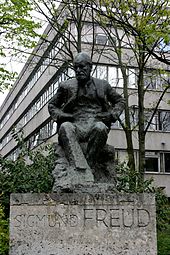
The 1971 Sigmund Freud memorial in Hampstead, North London, by Oscar Nemon, is located near to where Sigmund and Anna Freud lived, now the Freud Museum. The building behind the statue is the Tavistock Clinic, a major psychological health care institution.
Freud's legacy, though a highly contested area of controversy, has been assessed as "one of the strongest influences on twentieth-century thought, its impact comparable only to that of Darwinism and Marxism,"[192] with its range of influence permeating "all the fields of culture ... so far as to change our way of life and concept of man."[193]
Psychotherapy
Though not the first methodology in the practice of individual verbal psychotherapy,[194] Freud's psychoanalytic system came to dominate the field from early in the twentieth century, forming the basis for many later variants. While these systems have adopted different theories and techniques, all have followed Freud by attempting to achieve psychic and behavioral change through having patients talk about their difficulties.[3]
Psychoanalysis is not as influential as it once was in Europe and the United States, though in some parts of the world, notably Latin America, its influence in the later 20th century expanded substantially. Psychoanalysis also remains influential within many contemporary schools of psychotherapy and has led to innovative therapeutic work in schools and with families and groups.[195] There is a substantial body of research which demonstrates the efficacy of the clinical methods of psychoanalysis[196] and of related psychodynamic therapies in treating a wide range of psychological disorders.[197]
The neo-Freudians, a group including Alfred Adler, Otto Rank, Karen Horney, Harry Stack Sullivan and Erich Fromm, rejected Freud's theory of instinctual drive, emphasized interpersonal relations and self-assertiveness, and made modifications to therapeutic practice that reflected these theoretical shifts. Adler originated the approach, although his influence was indirect due to his inability to systematically formulate his ideas. The neo-Freudian analysis places more emphasis on the patient's relationship with the analyst and less on the exploration of the unconscious.[198]
Carl Jung believed that the collective unconscious, which reflects the cosmic order and the history of the human species, is the most important part of the mind. It contains archetypes, which are manifested in symbols that appear in dreams, disturbed states of mind, and various products of culture. Jungians are less interested in infantile development and psychological conflict between wishes and the forces that frustrate them than in integration between different parts of the person. The object of Jungian therapy was to mend such splits. Jung focused in particular on problems of middle and later life. His objective was to allow people to experience the split-off aspects of themselves, such as the anima (a man's suppressed female self), the animus (a woman's suppressed male self), or the shadow (an inferior self-image), and thereby attain wisdom.[198]
Jacques Lacan approached psychoanalysis through linguistics and literature. Lacan believed that most of Freud's essential work had been done before 1905 and concerned the interpretation of dreams, neurotic symptoms, and slips, which had been based on a revolutionary way of understanding language and its relation to experience and subjectivity, and that ego psychology and object relations theory were based upon misreadings of Freud's work. For Lacan, the determinative dimension of human experience is neither the self (as in ego psychology) nor relations with others (as in object relations theory), but language. Lacan saw desire as more important than need and considered it necessarily ungratifiable.[199]
Wilhelm Reich developed ideas that Freud had developed at the beginning of his psychoanalytic investigation but then superseded but never finally discarded. These were the concept of the Actualneurosis and a theory of anxiety based upon the idea of dammed-up libido. In Freud's original view, what really happened to a person (the "actual") determined the resulting neurotic disposition.
Freud applied that idea both to infants and to adults. In the former case, seductions were sought as the causes of later neuroses and in the latter incomplete sexual release. Unlike Freud, Reich retained the idea that actual experience, especially sexual experience, was of key significance. By the 1920s, Reich had "taken Freud's original ideas about sexual release to the point of specifying the orgasm as the criteria of healthy function." Reich was also "developing his ideas about character into a form that would later take shape, first as "muscular armour", and eventually as a transducer of universal biological energy, the "orgone"."[198]
Fritz Perls, who helped to develop Gestalt therapy, was influenced by Reich, Jung, and Freud. The key idea of gestalt therapy is that Freud overlooked the structure of awareness, "an active process that moves toward the construction of organized meaningful wholes ... between an organism and its environment." These wholes, called gestalts, are "patterns involving all the layers of organismic function – thought, feeling, and activity." Neurosis is seen as splitting in the formation of gestalts, and anxiety as the organism sensing "the struggle towards its creative unification."
Gestalt therapy attempts to cure patients by placing them in contact with "immediate organismic needs." Perls rejected the verbal approach of classical psychoanalysis; talking in gestalt therapy serves the purpose of self-expression rather than gaining self-knowledge. Gestalt therapy usually takes place in groups, and in concentrated "workshops" rather than being spread out over a long period of time; it has been extended into new forms of communal living.[198]
Arthur Janov's primal therapy, which has been influential post-Freudian psychotherapy, resembles psychoanalytic therapy in its emphasis on early childhood experience but has also differences with it. While Janov's theory is akin to Freud's early idea of Actualneurosis, he does not have a dynamic psychology but a nature psychology like that of Reich or Perls, in which need is primary while wish is derivative and dispensable when need is met. Despite its surface similarity to Freud's ideas, Janov's theory lacks a strictly psychological account of the unconscious and belief in infantile sexuality. While for Freud there was a hierarchy of dangerous situations, for Janov the key event in the child's life is an awareness that the parents do not love it.[198] Janov writes in The Primal Scream (1970) that primal therapy has in some ways returned to Freud's early ideas and techniques.[200]
Ellen Bass and Laura Davis, co-authors of The Courage to Heal (1988), are described as "champions of survivorship" by Frederick Crews, who considers Freud the key influence upon them, although in his view they are indebted not to classic psychoanalysis but to "the pre-psychoanalytic Freud ... who supposedly took pity on his hysterical patients, found that they were all harboring memories of early abuse ... and cured them by unknotting their repression." Crews sees Freud as having anticipated the recovered memory movement by emphasizing "mechanical cause-and-effect relations between symptomatology and the premature stimulation of one body zone or another", and with pioneering its "technique of thematically matching a patient's symptom with a sexually symmetrical 'memory.'" Crews believes that Freud's confidence in accurate recall of early memories anticipates the theories of recovered memory therapists such as Lenore Terr, which in his view have led to people being wrongfully imprisoned or involved in litigation.[201]
Science
Research projects designed to test Freud's theories empirically have led to a vast literature on the topic.[202] American psychologists began to attempt to study repression in the experimental laboratory around 1930. In 1934, when the psychologist Saul Rosenzweig sent Freud reprints of his attempts to study repression, Freud responded with a dismissive letter stating that "the wealth of reliable observations" on which psychoanalytic assertions were based made them "independent of experimental verification."[203]
Seymour Fisher and Roger P. Greenberg concluded in 1977 that some of Freud's concepts were supported by empirical evidence. Their analysis of research literature supported Freud's concepts of oral and anal personality constellations, his account of the role of Oedipal factors in certain aspects of male personality functioning, his formulations about the relatively greater concern about the loss of love in women's as compared to men's personality economy, and his views about the instigating effects of homosexual anxieties on the formation of paranoid delusions. They also found limited and equivocal support for Freud's theories about the development of homosexuality.
They found that several of Freud's other theories, including his portrayal of dreams as primarily containers of secret, unconscious wishes, as well as some of his views about the psychodynamics of women, were either not supported or contradicted by research. Reviewing the issues again in 1996, they concluded that much experimental data relevant to Freud's work exists, and supports some of his major ideas and theories.[204]
Other viewpoints include those of Hans Eysenck, who writes in Decline and Fall of the Freudian Empire (1985) that Freud set back the study of psychology and psychiatry "by something like fifty years or more",[205] and Malcolm Macmillan, who concludes in Freud Evaluated (1991) that "Freud's method is not capable of yielding objective data about mental processes".[206] Morris Eagle states that it has been "demonstrated quite conclusively that because of the epistemologically contaminated status of clinical data derived from the clinical situation, such data have questionable probative value in the testing of psychoanalytic hypotheses".[207]
Richard Webster, in Why Freud Was Wrong (1995), described psychoanalysis as perhaps the most complex and successful pseudoscience in history.[208] Crews believes that psychoanalysis has no scientific or therapeutic merit.[209] University of Chicago research associate Kurt Jacobsen takes these critics to task for their own supposedly dogmatic and historically naive views both about psychoanalysis and the nature of science.[210]
...
Philosophy
See also: Freudo-Marxism
[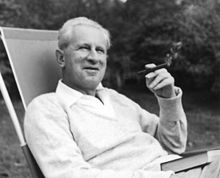
Herbert Marcuse saw similarities between psychoanalysis and Marxism.
Psychoanalysis has been interpreted as both radical and conservative. By the 1940s, it had come to be seen as conservative by the European and American intellectual community. Critics outside the psychoanalytic movement, whether on the political left or right, saw Freud as a conservative. Fromm had argued that several aspects of psychoanalytic theory served the interests of political reaction in his The Fear of Freedom (1942), an assessment confirmed by sympathetic writers on the right.
In Freud: The Mind of the Moralist (1959), Philip Rieff portrayed Freud as a man who urged men to make the best of an inevitably unhappy fate, and admirable for that reason. In the 1950s, Herbert Marcuse challenged the then prevailing interpretation of Freud as a conservative in Eros and Civilization (1955), as did Lionel Trilling in Freud and the Crisis of Our Culture and Norman O. Brown in Life Against Death (1959).[230] Eros and Civilization helped make the idea that Freud and Karl Marx were addressing similar questions from different perspectives credible to the left. Marcuse criticized neo-Freudian revisionism for discarding seemingly pessimistic theories such as the death instinct, arguing that they could be turned in a utopian direction. Freud's theories also influenced the Frankfurt School and critical theory as a whole.[231]
...
Literature and literary criticism
The poem "In Memory of Sigmund Freud" was published by British poet W. H. Auden in his 1940 collection Another Time. Auden describes Freud as having created "a whole climate of opinion / under whom we conduct our different lives."[248] [249]
Literary critic Harold Bloom has been influenced by Freud.[250] Camille Paglia has also been influenced by Freud, whom she calls "Nietzsche's heir" and one of the greatest sexual psychologists in literature, but has rejected the scientific status of his work in her Sexual Personae (1990), writing, "Freud has no rivals among his successors because they think he wrote science, when in fact he wrote art."[251]
Feminism

Betty Friedan criticizes Freud's view of women in her 1963 book The Feminine Mystique.[252]
The decline in Freud's reputation has been attributed partly to the revival of feminism.[253] Simone de Beauvoir criticizes psychoanalysis from an existentialist standpoint in The Second Sex (1949), arguing that Freud saw an "original superiority" in the male that is in reality socially induced.[254] Betty Friedan criticizes Freud and what she considered his Victorian view of women in The Feminine Mystique (1963).[252] Freud's concept of penis envy was attacked by Kate Millett, who in Sexual Politics (1970) accused him of confusion and oversights.[255]
In 1968, the US-American feminist Anne Koedt wrote in her essay The Myth of the Vaginal Orgasm: "It was Freud's feelings about women's secondary and inferior relationship to men that formed the basis for his theories on female sexuality. Once having laid down the law about the nature of our sexuality, Freud not so strangely discovered a tremendous problem of frigidity in women. His recommended cure for a frigid woman was psychiatric care. She was suffering from failure to mentally adjust to her 'natural' role as a woman."[256] Naomi Weisstein writes that Freud and his followers erroneously thought his "years of intensive clinical experience" added up to scientific rigor.[257]
....
Knowledge Web Content (see main node)
Full Name: Sigmund Freud
Achievements: Founder of psychoanalysis
Born: May 6, 1856; Freiberg, Moravia (now Pribor, Czech Republic)
Died: September 23, 1939; London, England (Aged 83)
Field & Discipline: Medicine; Psychoanalysis; Physician
Language: German
Father: Father: Jakob Freud
Mother: Amalia Nathansohn
Siblings: 1 brother: Alexander. 5 sisters: Anna; Rosa; Marie; Adolfine; Pauline
Spouse: Martha Bernays
Children: 2 sons: Jean-Martin; Oliver, Ernst. 3 daughters: Sophie; Matilde;
Anna Freud
Education: Sperl Gymnasium, Vienna; University of Vienna medical school
Major Work:
"The Interpretation of Dreams" (1900)
"The Psychopathology of Everyday Life" (1904)
"Dora Analysis" (1905)
"Jokes and Their Relation to the Unconscious" (1905)
"Three Essays on the Theory of Sexuality" (1905)
"Totem and Taboo" (1913)
"Beyond the Pleasure Principle" (1919)
"The Analysis of the Ego" (1920)
"The Ego and the Id" (1921)
"Inhibitions, Symptoms and Anxiety" (1925)
Life & Times:
At university Freud worked under the physiologist [studied under] Brucke* who was a follower of the materialist philosophy of[influenced by] Helmholtz*.
During his research at the physiological laboratory, Freud worked on histology (the study of the structure of tissues). He investigated the structure of nerve cells and then moved on to microscopic examination of the human nervous system.
In 1882 he fell in love with Martha Bernays, the daughter of a prominent Hamburg family. Freud realized he had to make a career and took a job as a clinical assistant at the General Hospital in Vienna. His main interest was psychiatry, which he studied under the Theodor Meynert.
At this time he heard about the work of [influenced by] Breuer*, who was privately treating a neurotic patient by the innovative method of encouraging her to relive traumatic memories under hypnosis. (While working at the hospital, Freud published some papers on the use of cocaine. He recommended its anesthetic properties and suggested its use in opthamology. His friend [a pal of] Koller was recognized for pioneering the use of cocaine as a local anaesthetic in ophthalmic work).
In 1885, Freud went to the Salpetriere mental hospital in Paris where he studied for several months under the famous neurologist, [taught by] Charcot* who was using hypnosis in his study of hysterics, and Freud was stimulated to switch from the physical aspects of neurology to the psychological.
In 1886 Freud married and set up his own practice as a neurologist. Freud used hypnotism in his practice for treating hysterical patients but was not satisfied with the results. In 1889 he went to France to consult Dr Hippolyte Bernheim who had been introduced to the use of hypnotism by [knew work of] Liebault*. Freud was also using Breuer's method of encouraging patients to relive bad memories.
Over the next few years, Freud abandoned the use of hypnotism and developed his own method of "free association," encouraging the patient to say whatever came into their mind as one thought followed another, through association. His methods were radical and he began to form conclusions which upset the medical establishment, particularly when he stated that certain psychoneuroses were caused by unconscious sexual conflicts. In 1895 Freud and Breuer published "Studies in Hysteria".
It was the following year that Freud coined the term 'psychoanalysis' for his method of treating patients. In 1900 he published what is regarded by many as his most important work: "The Interpretation of Dreams" about the significance of dreams and the functioning of the unconscious mind. He isolated various mechanisms of the unconscious mind, like repression and displacement, and linked these to the drives, impulses and desires the conscious mind does not wish to acknowledge.
This theory of disguised wish-fulfilment was one of Freud's most important contributions to psychology. Examining the content of the unconscious mind, he concluded that it was essentially infantile and he held that the driving forces were sexual and antagonistic feelings about parents.
The Oedipus complex is the most well-known example of this theory: sexual desire for one parent is united with jealous hatred of the other parent.
In 1902 Freud set up the Wednesday Psychological Discussion Group. Among the members over the years were Alfred Adler and Lou [collaborated with] Salome*.
In 1904 Freud published "The Psychopathology of Everyday Life". Unlike his book on dreams, this one became popular. It is an account of the many ways in which we express the hidden layers of our thoughts by imperfect mental functioning such as slips of the tongue, spelling a word wrongly, or forgetting. Freud concluded that many of these apparently insignificant acts are driven by wishes and conflicts hidden from the conscious mind.
In 1905 he published three books. The "Dora Analysis" (1905) is an account of how the interpretations of dreams could be useful in the treatment of neuroses. "Jokes and Their Relation to the Unconscious" (1905) revealed how unconscious feelings may be indirectly expressed. "Three Essays on the Theory of Sexuality" outraged the orthodox medical establishment by his description of infantile sexuality and the theory that adult perversions were a distorted version of infantile sex.
In 1906 Carl Jung, the Swiss analyst, announced his acceptance of Freud's views. In 1913 Freud published "Totem and Taboo" (regarded as second in importance only to his book on dreams) which explored reactions to incest and parricide and revealed a link between the governing impulses in children and primitive men.
At the end of the decade he published two books pioneering the psychology of the ego: "Analysis of the Ego" and: "The Ego and the Id". He proposed a division of the mind into the id (the unconscious), the ego (the conscious mind) and the superego (an ego ideal which embodies parental standards and demands, and is responsible for inducing guilt). Conscience, he held, was the result of tension between the ego and the superego.
His most important work in the next few years was on the nature and origin of anxiety and fear in: "Inhibitions, Symptoms and Anxiety" (1925).
In 1938, accompanied by his daughter Anna, and his couch, Freud left the famous consulting rooms at 19 Bergasse, where he had practised since 1891, to settle in Hampstead, London, where he continued to practice and write until a month before his death.
Extra Connections: [anticipated by] Galton’s* word-association pre-dated his free-association.
One of his patients was the composer [a patient was] Gustav Mahler*
He approved of the rest cure treatment suggested by SW [approved rest cure of] Mitchell*
He influenced the work of surrealist painter Salvador [influenced] Dali*.
Assessment: Freud is one of the most important figures of the twentieth century. As the founder of [founded] psychoanalysis* he is credited not only with its introduction to medicine but also to the psychological viewpoint which now colors all the arts, our interpretation of history, and every area of human society from politics and sociology to warfare and marketing.
Oneliner: Sigmund Freud, founder of psycholanalysis
Bibliography:
- Gay, Peter, Freud, A Life for Our Time, W W Norton & Company, New York and London, 1988.