Agricola
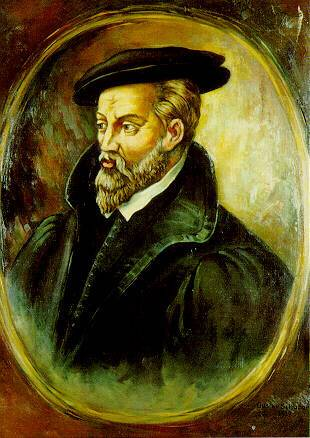
Nickname/Alias: Real name: Georg Bauer
Achievements: Scholar and scientist known as "the father of mineralogy.”
Born: March 24, 1494; Glauchau, Germany
Died: November 21, 1555; Chemnitz, Germany (Aged 61)
Field & Discipline: Industry; Engineering; Mining; Metallurgist
Language: German; Latin
Father: Gregor Bauer
Mother: Unknown
Siblings: Franciscus; Hans
Spouse: 1) Name Unknown (widow of Thomas Meiner, m. before 1526); 2) Anna Schutz (m. 1542)
Children: At least one daughter
Education: Schools in Glauchau, Zwickau and Magdeburg (1511-14); University of Leipzig (1514-17)
Major Work:
“On the Nature of Metals” (1556)
Life & Times:
Bauer attended schools at Glauchau, Zwickau and, from 1511, at Magdeburg, and then in 1514 he enrolled at the University of Leipzig. Here he studied classics, philosophy, philology, and the natural sciences, and came under the influence of the humanist revival. He received his B.A. in 1515, but remained at Leipzig for the next two years, continuing to study while also lecturing in elementary Greek. During this period, following the custom of the time, he latinized his name to Georgius Agricola.
In 1517, Agricola became a teacher of Latin and Greek at Zwickau, where two years later he was promoted to “rector extraordinarius.” In 1519 he organized a new Greek School at Zwickau, and published his first work on grammar in1520. In 1522, returning from a brief period in Leipzig, he found the teaching at the university badly disrupted by theological disputes, and in 1523 decided to continue his studies in Italy, stopping to visit the great Dutch scholar [visited] Erasmus* in Basel on the way. He went first to Bologna in order to study medicine, natural science and philosophy, continued his
studies at Padua, and then completed his clinical studies at Venice.
While in Venice, Agricola worked for two years (1523-25) at the Aldine Press, established by [worked at firm of] Aldus Manutius* in the 1490s, where he was responsible for editions of Galen and Hippocrates on medicine published in 1525.
In 1526 Agricola received his M.D. and in the autumn decided to return to Saxony. He had by this stage developed an interest in mining and geology. In the spring of 1527 he was appointed town physician at Joachimsthal [now Jachymov, Czechoslovakia], an important European silver-mining center. During his spare time he studied mineralogy and mining, and visited mines and smelting houses, becoming acquainted with every aspect of mining technology and practice up to that time. In 1530 the publication of his metallurgical treatise “Bermannus,” made him well-known. In 1533 Agricola then decided to leave Joachimsthal and return to his birthplace, Chemnitz, where he again became town physician, and also bought shares in a local copper smelter and silver mine, and by 1542 was one of the town’s twelve richest inhabitants.
He continued his extensive research on the principles of geology, mining and mineralogy, but his work was interrupted for three years in 1546, when he came to the attention of the Protestant Duke Maurice, elector of Saxony, who appointed him mayor and then made him an emissary during Maurice's negotiations with [emissary to] Charles V*, Holy Roman Emperor, who was at war with the Protestant Schmalkaldic League. Over the following three years, as one of the few Roman Catholic representatives at Maurice's court, Agricola played an important role in the negotiations on religious tolerance with Charles V's Catholic commanders and diplomats.
Agricola was finally able to return to his studies in 1548, was probably the first to distinguish between "simple" substances and compounds at a time when chemical knowledge was almost nonexistent. He also described in detail the erosive action of rivers and the effect of erosion in shaping mountains.
In 1550 Agricola returned Joachimsthal, where he continued to study and write, and after three months returned to Chemnitz with the finished text of his most important work: “On Metals,” which he had begun 20 years earlier in Joachimsthal, leaving the designer Blasius Weffring in the process of illustrating the text with 292 woodcuts. The work was eventually published posthumously in 1556. In it, after surveying historical and classical mineraological knowledge and assessing the content and distribution of metal mines in antiquity, Agricola dealt with the laws of ownership of mines and their day-to-day management.
This was followed by a detailed study of mining and metallurgy, in which he discussed the geology of ore bodies, surveying, mine construction, pumping, ventilation, and the application of waterpower. He also described the assaying of ores, the methods used for enriching ores before smelting, and procedures for smelting and refining a number of metals. The work ended with a discussion of the production of glass and of a variety of chemicals used in smelting operations. “On Metals” became an immediate authority on all aspects of mineralogy and mining.
In 1552-53 the black plague spread through Saxony, and Agricola worked night and day in the hospitals, losing one of his daughters to the disease. As ever, he used the experience to make a detailed study of the epidemic, which he published as: “On the Plague” in 1554 a year before his death
Extra Connections: Contemporary mining operations were largely funded by the [work related to] Fugger* bankers.
[an admirer was] Melanchthon* was an admirer of Agricola.
Assessment: Among the first to base a natural science on observation as opposed to speculation. Despite being a highly trained classicist and humanist, he was able to remain independent of the theories of ancient classical authorities, and was highly regarded by his contemporaries.
Oneliner: Agricola, Renaissance mining expert
Bibliography:
- Agricola, “De re metallica libri XII,” trans. and with introduction by Henry Clark Hoover and Lou Henry Hoover, London, 1912.
- Dictionary of Scientific Biography.
- Encyclopedia Britannica.