Camden, William
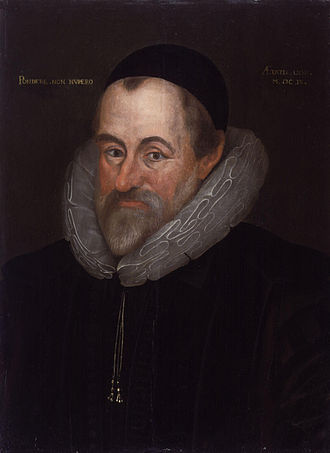
Name: William Camden
Achievements: Made the first (16th century) comprehensive topographical survey of England.
Born: May 2, 1551; London, England
Died: November 9, 1623; Chislehurst, Kent (Aged 72)
Field & Discipline: History; Historian
Language: English
Father: Samson Camden
Mother: Elizabeth Curwen
Siblings: Unknown
Spouse: None
Children: None
Education: Christ's Hospital; St. Paul's School, Camden (1564-66); Magdalen
College, Broadgates Hall and Christ Church, University of Oxford (1566-71)
Major Work:
“Britannia” (1586)
Life & Times:
At Oxford Camden became interested in historical and antiquarian research, encouraged by a fellow student, [a fellow-student was] Sidney*, and decided to become an academic. However, he was prevented by his participation in a religious controversy and in 1571 he left Oxford for London.
For the next four years (1571-75), Camden traveled throughout the country, studying its topography, making notes of antiquities, and collecting archaeological material. During this period he also established a close relationship with his most important patron, Dr. Gabriel Goodman, dean of Westminster, through whose influence he was appointed Second Master of Westminster School in 1575.
Here Camden taught several distinguished pupils, including the dramatist [taught] Jonson*, and continued his research during vacations. In 1577 he met the Flemish cartographer and antiquary [encouraged by] Ortelius*, who encouraged him to systematize his findings and prepare for publication the pioneering topographical survey of the British Isles in Latin which he titled “Britannia” (1586).
Originally planned to cover the topography of Britain from Roman to medieval times, the work involved Camden in a decade of extensive travelling and a lot of laborious research, which included gaining some knowledge of the Welsh and Anglo-Saxon languages. It was the first based on field work, was published in Latin in 1586 with a dedication to [dedicated work to] Cecil*, and was immediately successful, running into four continuously revised editions by 1594. A sixth, enlarged edition was published in 1607.
The work brought Camden into contact with many scholars, several of whom became friends, including [a pal of] Bodley*, Archbishop [a pal of] Ussher*, and [a pal of] John Selden*. In addition, he began corresponding with several European scholars, including the historian [corresponded with] de Thou* (whom he met in 1606), the astronomer [corresponded with] Peiresc*, the royal librarian [corresponded with] Dupuy*, and the humanist [corresponded with] Casaubon*.
In March 1593, Camden succeeded Edward Grant as Headmaster of Westminster School, four years later publishing a Greek grammar for the use of his pupils (1597). In October 1597, on the recommendation of [helped by] Fulke Greville*, Camden was appointed Clarenceaux King-at-Arms in the College of Heralds, a position that gave him more time to write.
Over the following years Camden continued his travels around the country, researching for a planned general history of England, but ill health persuaded him that it was too ambitious a scheme, and instead he concentrated on smaller projects, such as the publication of his collection of commonplace remains, “Remains concerning Britaine” (1605), which contained a remarkable collection of medieval secular Latin poetry. His first official commission came a year later, for a narrative account in Latin of the trial of [reported trial of] Fawkes* and the “blow-up-Parliament” Gunpowder Plotters (November 1605), published in 1607.
In the autumn of 1607, Camden suffered a severe injury to his leg by a fall from a horse which laid him up for nearly nine months. During this confinement, he began work on a project he had been planning for some time, a history of the reign of Elizabeth I. After another interruption caused by serious illness, and his move from London to Chiselhurst, Kent, in 1615 Camden had got as far as the end of 1588, and published it (in Latin) as “Annals of the Affairs of England and Ireland During the Reign of Elizabeth,” with English translations published in 1625, 1628, and 1635.
The second part, bringing the story down to the accession of James I in 1603 and completed by Camden in 1617, was not, on his instructions, published until after his death, appearing first in Leyden in 1625, and in London in 1627.
This work has been the basis of most later accounts of Elizabeth’s reign, although Camden was criticized by some contemporaries for his treatment of the events concerning Mary Queen of Scots.
Camden's health continued to deteriorate, and in 1618 he retired to his house in Chiselhurst, where during this last period of his life he wrote an outline of a history of the reign of James I which remained unpublished until 1691. In March 1622, he founded a chair of history at the University of Oxford, but only a year later he was struck down with paralysis, and died.
Extra Connections: He was a friend of [a pal of] Allen*
Assessment: William Camden was a pioneer of historical and genealogical research.
Oneliner: William Camden, early pioneer of topography
Bibliography:
- Collier’s Encyclopedia.
- Dictionary of National Biography.
- Encyclopedia Britannica.