Borodin, A
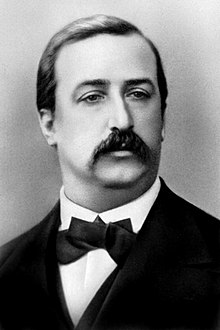
Full Name:Alexander Porfiryevich Borodin
Achievements: Major Russian nationalist composer and chemist
Born: November 12, 1833; St. Petersburg, Russia
Died: February 27, 1887: St. Petersburg, Russia (Aged 53)
Field & Discipline: Music; Chemistry; Composer
Language: Russian; German; French
Education: Private tutors; Academy of Medicine and Surgery, St. Petersburg
Major Work:
"Prince Igor,” (unfinished, completed by Nikolay Rimsky-Korsakov and Alexander Glazunov)
"Polovtsian Dances"
"In Central Asia"
Life & Times:
Borodin was illegitimate and as was common practise, Borodin was registered as the lawful son of one of his father's serfs, Porfiry Borodin, but he lived in comfort with his mother, who educated him at home. Borodin learned German, French and later English, and, from the age of eight, took music lessons, first for the flute, then the piano. He composed his first piece, a polka, at the age of nine. He also took an interest in science, particularly chemistry. At 17 he enrolled at the Academy of Medicine and Surgery in St. Petersburg and for six years studied the sciences. He was then posted for a year to a military hospital as a house surgeon. In 1860 he received his doctorate.
In late 1859, Borodin left St. Petersburg for Heidelberg, Germany, where he spent time with chemist [a pal of] Mendeleyev*, with whom he toured Europe in 1860 and 1861. He also composed "String Sextet in D minor,” written in a style reminiscent of [influenced by] Felix Mendelssohn*. In the spring of 1861, Borodin met his future wife, the 29-year-old Russian, Ekaterina Sergeyevna Protopopova. They traveled to Mannheim where they were overwhelmed by the operas of [influenced by] Wagner*, which they heard for the first time. They made a tour of Italy, where Borodin composed the "Piano Quintet in C minor" and the "Tarantella in D major" for piano duet.
On his return to St. Petersburg in September, 1862, Borodin was appointed reader in chemistry in the Medico-Surgical Academy, and two years later, was appointed professor. He gave lectures on chemistry at the Institute of Forestry. In 1863, the new laboratory of the Academy was opened, and Borodin, who had recently married Ekaterina, was given quarters in the same building, where he lived for the rest of his life. From 1862 to 1872, Borodin conducted investigations into the products of the condensation of the aldehydes of valerian, enantol and vinegar.
He composed a number of pieces, notably the first of his mature songs, "The Sleeping Princess,” and an opera-farce "The Bogatirs." He also began an opera: "The Tsar's Bride.” His music life took a significant turn when he met composer Mily Balakirev, who welcomed him into his famous circle, "The Five" -- a group of Russian composers whose music was to become known for its distinct "Russian" quality. (The other three members were [knew] Rimsky-Korsakov*, [knew] Mussorgsky* and Cesar Cui.) Under Balakirev's guidance, Borodin began composing his first major work, "Symphony No. 1 in E-flat Major," which had a successful first public performance in 1869.
In 1869, he began what would be his operatic masterpiece, "Prince Igor,” but abandoned it a year later because he felt it lacked dramatic interest. He continued work on his second symphony. Borodin's musical career, which was always subordinate to his professional career, was eclipsed even further in 1872 with the founding of the St. Petersburg Medical School for Women. Borodin, who had taken a leading part in the School's development, was now responsible for giving more chemistry lectures and dealing with administration. But from time to time, he sat down to write more of "Prince Igor.”
In 1874, he composed the "Polovtsian Dances.” In the winter of 1875, he sketched his "String Quartet in A,” which he did not complete for four years. Rimsky-Korsakov kept urging Borodin to spend more time on "Prince Igor" and even performed separate numbers of the opera at concerts of the Free School of Music to give him incentive. But the work progressed at a snail's pace, and Borodin kept turning his attention to other compositions.
In May, 1880, the "E-flat symphony" was performed with great success at Baden-Baden, Germany, and that year Borodin wrote a short orchestral piece, the tone poem "In Central Asia,” one of 12 pieces commissioned from various Russian composers to mark the first 25 years of the reign of Tsar Alexander II, and one of his most successful and popular works. He dedicated the piece to [dedicated piece to]Liszt.*
Mussorgsky's death in 1881 inspired Borodin to compose a setting of Pushkin's poem "For the shores of thy far native land,” and that summer, he completed a second string quartet, in D major. But during the 1880s, his wife's ill health and the demands of his scientific career occupied most of his time. With Liszt's assistance, Borodin's fame as a composer spread to Western Europe. As a result, Borodin was made a member of the French Societe des Auteurs, Compositeurs et Editeurs, sponsored by the composer [sponsored by] Saint-Saens* in 1885.
In 1886, Borodin began work on a third symphony in A minor, then returned, after about eight years, to "Prince Igor,” composing several numbers. On February 27, 1887, after writing some new material for the "Third Symphony,” he died suddenly of heart failure while attending at a fancy-dress ball.
Extra Connections: Was impressed by chemical theories of [work related to] Cannizzarro*
Assessment: A major Russian composer, Borodin excelled in the use of orchestral color and in the evocation of distant places.
Oneliner: Alexander Borodin, major Russian composer and chemist
Bibliography:
- Encyclopedia Britannica.
- Oxford Dictionary of Music Abraham, Gerald, "Borodin,” inThe New Grove Dictionary of Music and Musicians, London: Macmillan, 1985.
- Figurovskii, N.A. and Yu I. Solov'ev, Aleksandr Porfir'evich Borodin: A Chemist’s Biography, Berlin & New York: Springer Verlag, 1988.
Father: Prince Luka Stepanovich Gedianov
Mother: Avdot'ya Konstantinovna Antonova
Siblings: None
Spouse: Ekaterina Sergeyevna Protopopova
Children: Adopted 3 girls: Elizaveta Gavrilovna Balaneva (married
Aleksandr Pavlovich Dianin, Borodin's student and successor, and was the
mother of Sergei Aleksandrovich Dianin); Elena A. Guseva; Gania Litvinenko