Cannizzaro, S
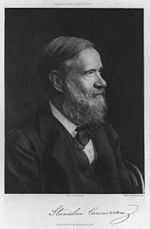
Achievements: Recognized the distinction between atomic and molecular weights
Born: July 13, 1826; Palermo, Sicily, Kingdom of the Two Sicilies (Italy)
Died: May 10, 1910; Rome, Italy (Aged 83)
Field & Discipline: Science; Chemistry
Education: Schools in Palermo; University of Palermo, Sicily; University of Pisa, Italy
Major Work:
"Summary of a Course in Chemical Philosophy"
Life & Times:
In 1849, in Paris, Cannizzaro was introdued to the laboratory of the great French scientist [worked with] Chevreul*, who worked in the Jardin des Plantes. For more than a year, Cannizzaro worked at the Jardin with Stanislaus Cloez studying the derivatives of cyanamide, prepared by causing the halogens of cyanogen to react with ammonia.
In 1851, aged 25, Cannizzaro accepted an appointment as professor of physics, chemistry and mechanics at the Collegio Nazionale in Alessandria, Piedmont (now Italy). He set up a well-equipped laboratory and devoted much of his time to chemical research. In 1853, he began to study aromatic alcohols, a class of compounds then little known, and discovered that treating benzaldehyde with a concentrated alcoholic hydroxide produced equal amounts of benzyl alcohol and the salt of benzoic acid. This became known as the "Cannizzaro Reaction."
In 1855 Cannizzaro was appointed professor of chemistry at the University of Genoa, where he began work with Bertagnini on anisic alcohol, converting benzyl chloride, a derivative of benzyl alcohol, into phenylacetic acid. In 1858, Cannizzaro published his most famous work, "Summary of a Course in Chemical Philosophy" in the scientific periodical, "Nuovo Cimento", published in Pisa. The article, frequently republished and translated, tried to clear up the confusion that prevailed at the time around the subject of atomic theory.
[In 1808, English chemist [work related to] Dalton* had tried to explain atomic theory in "New System of Chemical Philosophy", in which he considered -- but then rejected -- the idea that equal volumes of gases under the same conditions contained equal numbers of particles. In 1811, Italian scientist [work related to] Avogadro* took up this idea, and by making a clear distinction between atoms (which he called "elementary molecules") and molecules ("integral molecules"), was able to draw a number of important conclusions, including the law that "under the same conditions of temperature and pressure, equal volumes of all gases contain the same number of smallest particles". Three years later French physicist [work related to] Ampere* proposed a similar idea. Had these men's conclusions been accepted at the time, chemists around the world would have been spared half a century of confusion. However, the papers were not well understood and whatever chemical facts were known, they were not enough to provide the needed evidence to confirm the hypothesis].
Cannizzaro agreed with Avogadro's law: that under identical environmental conditions, equal volumes of gases contained the same number of smallest particles. But Cannizzaro suggested that these particles were not atoms, but molecules, since even the elementary substances were made up of molecules, each consisting of two or more atoms. So if one simple substance reacted with another, each molecule would open up, and its atoms, together with the atoms of the other substance, would proceed to form compound substances which were the products of the reaction. Cannizzaro therefore successfully demonstrated that the clear distinction between atom and molecule caused all apparent contradictions to vanish. The foundation of his exposition was provided by his definition of the relative atomic weight, on which modern chemistry depends: that the "smallest quantity" of an element capable of entering into the molecule of a compound is precisely the atomic weight of the element.
In this way he showed that the atomic weights of the elements in the molecules of a volatile compound could be calculated by applying Avogadro's principle concerning gases (gram-molecular weights of different gases occupy equal volumes at the same temperature and pressure). His work initially attracted little attention.
At the time, chemists were growing more and more frustrated in the general attempt to "systematize" their science. An important figure in the "systemization" movement was German chemist [work related to] Kekule*, who, helped organize the first International Congress of Chemists at Karlsruhe, Germany, in September, 1860. The meeting was to establish, among other things, precise definitions of atom, molecule, equivalent, atomicity, alkalinity, etc.
Cannizzaro presented a paper condensed from his paper, and after his speech, his friend Angelo Pavesi, professor of chemistry at the University of Pavia, distributed copies of the paper. This brought Cannizzaro's arguments to the attention of the eminent chemists of the world, including Russians [influenced] Borodin* and [influenced] Mendeleyev*, and the German chemist Lothar Meyer. Meyer was an instant apostle, and soon after wrote "Die modernen Theorien der Chemie" (1864), which referred to Cannizzaro's ideas throughout and proved a powerful influence on the chemical world. Further, it was the recognition of true atomic weights that permitted Meyer and Mendeleyev independently to formulate the periodic law at the end of the 1860s.
With the success of [involved in] Garibaldi*'s Sicilian revolt in 1860, Cannizzaro returned to his native Palermo to take part in the new government, and was made a member of the Extraordinary Council of the State of Sicily. In 1861, he was appointed professor of inorganic and organic chemistry at the University of Palermo. Here, he built a new laboratory and restructured the chemistry syllabus, and made Palermo the center of chemical education in Italy.
During the 10 years he spent in Palermo, Cannizzaro pursued the study of aromatic alcohols, and, in 1865, was the first to propose the name "hydroxyl" for the OH radical. In 1871, with the unification of Italy, Cannizzaro was appointed to the chemistry chair at the University of Rome, where he founded the first Italian Institute of Chemistry. Here he continued his work on the constitution of natural substances that he had begun with Piria, concentrating on determining the structure of santonin, which he showed to be one of the few natural compounds derived from naphthalene.
In 1871, Cannizzaro was made a member of the Italian Senate, and later became vice president of the Assembly and a member of the public instruction council. He continued to lecture with great energy and flair until 1909, when at 83, he died in Rome.
Assessment: Dismissed the notion that inorganic and organic chemistry function by different rules.
Oneliner: Stanislao Cannizzaro, chemist and political figure
Bibliography:
- Dictionary of Scientific Biography.
- Encyclopedia Britannica.
- Marotta, Domenico, "Stanislao Cannizzaro", in Great Chemists , ed. by Edward Farber, New York & London: Interscience Publishers, 1961.
Language: Italian
Father: Mariano Cannizzaro
Mother: Anna di Benedetto
Siblings: Nine brothers and sisters
Spouse: Henrietta Withers
Children: 1 daughter; 1 son