UAE united arab emirates
==
SEE TWO ABU DHABI
see mbz, mentor to mbs
SEE CRYPTO CURRENCY CORRUPT 3
see erik blackwater
joined at hip w/ saudi?
Dubai will host next COP after cairo ?! its FF lobbyists outnumber __?
---
an 5 25
Donald Trump insists that he is maintaining a strict distance between his presidency and his business interests, and he maintains that he is avoiding conflicts of interest by letting his son, Eric Trump, handle the Trump Organization.
But in an article published by the New York Times on May 5, journalists Eric Lipton and David Yaffe-Bellany report that during Trump's presidency, his business is making more foreign deals than ever.
The deals, according to Lipton and Yaffe-Bellany, are being orchestrated by Eric Trump and his older brother, Donald Trump Jr.
READ MORE:George Washington would have thrown up
"It is a rush to cash in that involves billions of dollars with few precedents in American history," the Times reporters explain. "A luxury hotel in Dubai. A second high-end residential tower in Jeddah, Saudi Arabia. Two cryptocurrency ventures based in the United States. A new golf course and villa complex in Qatar. And a new private club in Washington. In many cases, these new deals promoted over the last week will personally benefit not only Eric Trump and Donald Trump Jr., but also, President Trump himself."
This "marathon of deal making," according to Lipton and Yaffe-Bellany, "has been so rapid that many elements have drawn limited public attention in the United States, despite most of it being out in the open."
Trump White House spokesperson Anna Kelly told the Times, "The president's assets are in a trust managed by his children. There are no conflicts of interest."
But author Douglas Brinkley, a history professor at Rice University in Houston, said of the Trump family's foreign deals, "There’s nothing like it."
READ MORE:'Fundamentally dishonest': Liz Cheney reemerges to blast Trump and 'personality cult' GOP
*Read the full New York Times article at this link (subscription required).
==
an 3 24
The credibility of House Republicans' "star witness" against President Joe Biden and his son Hunter Biden, former FBI informant Alexander Smirnov, suffered a major blow when he was arrested for allegedly lying to the FBI and reports showed that he was getting information from Russian intelligence.
House Oversight Committee Chairman James Comer (R-Kentucky) and countless right-wing media pundits touted Smirnov as the person who could prove that President Biden was involved in a bribery scheme involving the Ukrainian energy company Burisma. But Rep. Jamie Raskin of Maryland — the Oversight Committee's leading Democrat — told ABC News, "I think the Smirnov revelations destroy the entire case. Smirnov was the foundation of the whole thing. He was the one who came forward to say that Burisma had given Joe Biden $5 million, and that was just concocted in thin air."
Smirnov's history continues to draw scrutiny.
READ MORE:**House Republicans explore 'backup options' as Biden impeachment goes nowhere**
According to a report published by The Guardian on March 14, business filings and court documents show that Smirnov is "connected to a UK company owned by (Donald) Trump business associates in Dubai."
The Guardian's Jacqueline Sweet explains, "Smirnov's accounts to the FBI, beginning in 2020, that federal prosecutors now say are impossible fabrications, served as a major justification of the House impeachment investigation into the Bidens….. Back in 2020, Smirnov was paid $600,000 by a company called Educational Transformation Technologies (ETT), prosecutors said. That same year, Smirnov began lying to the FBI about the Bidens, according to his indictment."
According to Sweet, ETT's shareholders include CEO Christopher Condon, an American, as well as "Pakistani-American investor Shah Khan and Farooq Arjomand, a former chairman and current board member of Damac Properties in Dubai."
"Condon, Arjomand and Khan registered ETT Investment Holding Limited in the UK on 6 March 2020," Sweet reports. "Khan, an investor who purchased the Plaza Hotel in 2018, and Arjomand have ties to Donald Trump through Trump associates and Damac, a major Middle East developer that has partnered with Trump for a decade."
READ MORE:**Why was GOP’s star witness re-arrested? He may have been trying to flee the country: report**
Sweet continues, "Arjomand, Khan and Condon owned 34, 33 and 33 percent of ETT Investment Holding Limited respectively, according to UK business filings…. Former Damac Chairman Hussain Sajwani is also close to Trump and has been described as his friend in multiple news reports. Trump has called the billionaire a 'friend' and a 'great man,' and his family 'the most beautiful people.' Sajwani attended Trump’s 2016 inauguration, and Trump's sons Donald Jr. and Eric Trump attended the 2017 ribbon-cutting of Trump International golf club in Dubai, licensed by Damac in 2014."
READ MORE:**'We were warned': GOP rep says Smirnov indictment 'really undercuts' impeachment efforts**
*Read The Guardian's full report at this link.
==
e and e 6 23
sultan Ahmed al-Jaber, the chief executive of the UAE state-run oil company and president-designate of COP 28, has faced scrutiny from Western lawmakers for his ties to fossil fuels. Andreea Alexandru/AP Photo
One of the world’s wealthiest oil states is engaged in a wide-ranging public relations and lobbying campaign to cast itself as an environmental leader before it hosts the United Nations’ next climate talks in November.
But the United Arab Emirates’ efforts are colliding with a barrage of criticism from lawmakers and environmentalists in both the U.S. and Europe, who scoff at the idea that the oil-flush nation is committed to helping shift the world off planet-heating fossil fuels.
Amid the negative headlines, the UAE’s government has signed — and abruptly terminated — long-term contracts with at least two strategic communications firms, even as it offers fat pay packages to veteran PR executives to assist with the effort, according to interviews and Justice Department documents.
the communications offensive, which began as far back as 2019, seeks to persuade U.S. officials and the American public that the Persian Gulf state’s plan to expand oil and gas drilling is compatible with international efforts to slash the use of fossil fuels — the main cause of rising temperatures worldwide.
During the past decade, the UAE has spent more than $1 million on direct climate-focused advocacy and paid millions more to advisory firms and think tanks helping to polish its green credentials, an analysis by POLITICO’s E&E News of federal disclosure filings found. No other host nation has invested as much time and money to shape its image ahead of the annual climate negotiations.
In contrast, the United Kingdom didn’t disclose hiring any American PR or lobbying firms for climate advocacy the year it hosted the 2021 U.N. summit in Glasgow, Scotland, according to past filings under the Foreign Agents Registration Act. During that gathering — when UAE won the right to host this year’s talks — the Emiratis paid two firms more than $314,000 for their U.S.-focused climate influence efforts.
Much of the criticism of the UAE’s role this year has focused on Sultan Ahmed al-Jaber, the Emiratis’ climate envoy and CEO of its state-owned oil company, who will serve as the summit’s president. In that position, he will take a lead role crafting the initial negotiating text and guide a final deal with top diplomats at the gathering, known as COP 28.
“To have the COP be basically run by the fossil fuel industry sets the bar very, very high for accomplishments,” Sen. Sheldon Whitehouse (D-R.I.) said in an interview earlier this year. “The people running the UAE COP need to do something to show that this is going to be different.”
While the UAE has pledged to reach net-zero greenhouse gas emissions by midcentury and to help raise $20 billion for renewable energy projects by 2035, it’s also investing more than $100 billion to increase its oil production by nearly 1 million barrels per day over the next four years. Thirty percent of UAE’s economy is directly based on the oil and gas industry, according to U.S. Department of Commerce data.
During the past decade, the UAE has spent more than $1 million on direct climate-focused advocacy and paid millions more to advisory firms and think tanks helping to polish its green credentials. | Karim Sahib/AFP/Getty Images
A spokesperson for al-Jaber rejected attacks on his government’s commitment to climate action.
“COP 28 has assembled a diverse team of UAE and global experts — in climate policy, technology, communications and other fields — to develop, advance and advocate for greater climate ambition,” said the spokesperson, who under UAE policy was not authorized to be named in public.
“As a nation with scarce water and food resources, in one of the hottest places on the planet, the UAE is deeply committed to the urgency of the climate crisis and the immediate need for meaningful climate action,” the spokesperson added in a statement.
Al-Jaber’s role has come under new scrutiny this week as climate negotiators gathered in Bonn, Germany, for preliminary discussions leading up to the November-December summit.
“We have a president who has significant experience in the oil and gas sector in an oil-and-gas-producing nation,” Simon Stiell, executive secretary of the U.N.’s climate body, told reporters Monday. “It provides an opportunity to ask some very difficult questions, but also to seek some very difficult but needed answers.”
A river of PR contracts
The UAE spends tens of millions of dollars annually on U.S. lobbying and PR, more than most other nations, according to data compiled by the watchdog group OpenSecrets. And while much of the Emiratis’ recent U.S. advocacy has focused on their military priorities, there has been a steady uptick in the nation’s climate-related messaging as it sought to land and prepare for the global climate negotiations, federal filings show.
Part of that strategy in recent months included deals with top global public relations firms to work on COP 28. Yet two of the agreements abruptly ended months before they were scheduled to conclude, a fact that has not been previously reported.
In September 2022, the UAE’s state-owned renewables company Masdar hired BCW Global to provide “strategic communications activities to support the UAE in its role as host country in 2023 for COP28,” a contract agreement filed with the Justice Department says. Al-Jaber founded Masdar in 2006 and chairs its board of directors.
The deal was set to run through November 2024 and would have paid BCW the equivalent of more than $750,000. But federal filings show the firm’s work for the UAE ended on Dec. 23, 2022 — less than three months into the two-year agreement.
BCW confirmed in a statement to POLITICO that the deal had ended but did not respond to questions about why or at whose request the UAE contract was terminated.
In January, the Emiratis made two climate-focused deals with Edelman, the world’s largest public relations firm.
One agreement sought to position al-Jaber and other executives with Masdar “as sustainability leaders with key stakeholders in the U.S.,” according to a contract filed with the U.S. government. The Edelman deal with the UAE began in January and is set to run until the beginning of the climate conference, netting the firm about $500,000. It’s the largest climate-focused agreement by any COP host country in the past decade, according to POLITICO’s analysis.
The only comparable contracts were a $99,000 consulting deal that Fiji made with Qorvis Communications LLC three months before its COP presidency in 2019. Peru signed a five-month deal worth $200,000 with Ogilvy Public Relations Worldwide in 2014.
Another Edelman deal, which had no defined end date in the filings, focused on “outreach to key stakeholders and media as well as the development of digital and social content for COP28 assets ahead of, and during” the climate conference, a preliminary agreement says. As part of that work, the firm helped draft speeches and run the conference’s social media accounts, filings show.
That latter Edelman deal concluded in April, after just four months.
“Edelman supported the announcement of the COP28 presidency and initial rollout; however, this engagement has concluded,” Edelman spokesperson Michael Bush said in a statement. Bush did not respond to follow-up questions about the intended duration of the contractscope of work, why the work ended or which party scrapped the agreement.
The contracts with BCW and Edelman ended “amicably,” the COP 28 spokesperson said.
Thirty percent of UAE’s economy is directly based on the oil and gas industry, according to U.S. Department of Commerce data. | Kamran Jebreili/AP Photo
Meanwhile, the UAE has enticed seasoned PR executives to join the conference’s communications operation as the host country and al-Jaber face continued attacks.
Alan VanderMolen, the conference’s Abu Dhabi-based communications director, was previously the top spokesperson for the multinational manufacturer S.C. Johnson & Son Inc. The UAE has also brought on David Canzini, who as an aide to then-British Prime Minister Boris Johnson opposed windfall oil taxes. He was hired through the Anglo-Australian consultancy the CT Group, which didn’t respond to a request for comment. Canzini’s role was first reported by the Financial Times.
One communications strategist said they turned down a nearly $1 million salary, which would have required moving to the UAE. The person said they were uncomfortable with the concept of the role.
“It’s life-altering amounts of money,” said the person, who was granted anonymity to speak freely to discuss a field of international diplomacy in which they continue to work.
When asked whether such salary offers were common, the COP 28 spokesperson said the team does not comment on personnel matters.
An honest broker?
The UAE’s surge in climate advocacy comes at an important time for the global U.N. talks. The Paris climate agreement that has guided the negotiations since 2016 will require countries for the first time to formally share the progress they have made toward meeting their national commitments to slash emissions.
That reckoning will show that the world is far off track from the agreement’s goal to limit warming to 1.5 degrees Celsius above preindustrial times.
But supporters of climate action are divided on whether they see the UAE is a genuine climate broker. The negotiation host typically wields significant influence over final agreements, which require unanimity. In past conferences, oil- and gas-rich nations have weakened language calling for an end to fossil fuels — as seen during last year’s climate talks in Egypt, which produced a final statement with unexpected language welcoming more natural gas production.
Skeptics said they wonder how ambitious the UAE will be when dialogue reaches inevitable standstills.
“The UAE has tried hard to position itself as a country that is transitioning to a future economy that is not dependent on fossil fuels,” said Nigel Purvis, a former State Department official who now runs the consulting firm Climate Advisers. “But whether that transition can be made real and whether it can occur on a timeframe that is consistent with climate science, that is what this COP is going to test.”
U.S. climate envoy John Kerry told The Associated Press that al-Jaber “is a terrific choice” to lead the U.N. climate conference, citing his work on renewable energy projects. | Sean Gallup/Getty Images
Since at least 2019, lobbyists and PR officials hired by the UAE have worked to introduce Emirati climate officials and present talking points to U.S. policymakers and journalists, according to a review of documents that U.S. public relations and lobbying firms must file on behalf of overseas clients under the Foreign Agents Registration Act. Over the same period, the country has inked five climate-focused advocacy deals, the POLITICO analysis found. They are cumulatively worth more than $1 million.
Climate messaging has also become an increasing priority for the UAE’s broader advocacy efforts.
One example was a $5.5-million-per-year general communications deal that the Emiratis signed in April 2022 with the strategic advisory firm now known as FGS Global. The firm has declined to comment to POLITICO.
FGS officials have taken part in meetings with top U.S. climate officials on behalf of the UAE, according to documents and interviews. On Jan. 14, two days after al-Jaber’s appointment prompted international criticism, a top FGS executive attended a briefing with al-Jaber and Amos Hochstein, President Joe Biden’s coordinator for global infrastructure and energy security. Hochstein and U.S. climate envoy John Kerry also appeared alongside al-Jaber at an energy forum in Abu Dhabi that day.
Later that week, Kerry told The Associated Press that al-Jaber “is a terrific choice” to lead the U.N. climate conference, citing his work on renewable energy projects. Kerry has said solving climate change requires countries like the UAE, which World Bank data shows has the world’s fourth-highest per capita rate of greenhouse gas emissions, seeing a future for themselves.
In contrast, Whitehouse and 131 other members of Congress and the European Parliament have called for ousting al-Jaber from his leadership of the climate summit, pointing to what they call his potential conflicts of interest.
The State Department described the U.S. officials’ meetings with al-Jaber and UAE operatives as routine diplomatic engagement and emphasized that the U.S. government had arranged them.
“As Special Presidential Envoy for Climate, Secretary Kerry engages frequently with the COP28 President-Designate, Dr. Sultan Al Jaber, to articulate U.S. views, including on how to ensure that COP28 delivers credible, necessary action in this decisive decade to keep 1.5C within reach,” wrote a spokesperson, who asked not to be named to comply with State Department policy.
Outreach to think tanks and lawmakers
In addition to hiring dozens of lobbyists and public relations executives, the UAE also gives millions of dollars annually to Washington think tanks like the Atlantic Council. Its scholars have praised the Emiratis’ actions on climate change while providing access to U.S. officials.
Al-Jaber is “an ideal choice” to lead COP 28 because of his “rich background in both renewables and fossil fuels,” Atlantic Council CEO Fredrick Kempe said in a January opinion piece for CNBC. Al-Jaber made his first speech as COP 28 president-designate at an Abu Dhabi event the think tank hosted in January, which federal filings show lobbyists for the UAE heavily promoted.
But Kempe did not disclose in his op-ed that the Atlantic Council has received more than $3 million from the UAE since 2019 and hundreds of thousands of dollars from energy firms al-Jaber oversees, financial entanglements that the Washington Free Beacon first reported. Atlantic Council spokesperson Richard Davidson called that “an oversight that we regret” but told POLITICO that the “funding didn’t influence” Kempe’s views. CNBC has since attached an editor’s note to the piece.
Al-Jaber made his first speech as COP 28 president-designate at an Abu Dhabi event in January, which federal filings show lobbyists for the UAE heavily promoted. | Karim Sahib/AFP/Getty Images
The Atlantic Council also organized a weeklong trip to Abu Dhabi for senior staffers from the offices of Republican Reps. Frank Lucas of Oklahoma, Bruce Westerman of Arkansas, Ken Calvert of California and then-Rep. Kevin Brady of Texas. Lucas and Westerman now chair two committees that oversee climate and environment policy.
The trip included sessions on climate finance, the UAE’s efforts to reduce carbon pollution and its plans for the climate conference. The Atlantic Council’s Davidson said the trip intended to help Republican aides “devise pragmatic solutions” to energy and climate challenges. A Lucas spokesperson declined to comment. Aides of Westerman and Calvert didn’t respond to questions about the trip or the UAE’s climate work.
People who have studied the UAE’s approach to climate advocacy called the campaign a reflection of its foreign influence efforts.
“It kind of creates this echo chamber where you have an article from a media outlet that’s very favorable to them that’s echoed in a think tank panel and then that’s echoed by somebody giving a speech on the floor of the House,” said Ben Freeman, a research fellow at the Quincy Institute for Responsible Statecraft, who in December authored a comprehensive review of Emirati lobbying efforts in the United States.
“You start to have that type of drumbeat go over and over and over,” he said. “Even if it’s not outright lies, it’s changing the narrative that would otherwise be there if the scales weren’t tipped so heavily towards the UAE.”
Reporter Sara Schonhardt contributed.
will host next COP after cairo ?! its FF lobbyists outnumber __?
https://www.alternet.org/jared-kushner-2659707943/
https://www.dallasnews.com/news/politics/2022/08/26/former-texas-rep-steve-stockmans-arrest-surfaces-as-feds-build-case-against-trump-ally/
paywall
no lnx
Politics
Former Texas Rep. Steve Stockman’s arrest surfaces as feds build case against Trump ally
Attorneys building a case against Barrack argue Stockman’s arrest is relevant.
U.S. Rep. Steve Stockman (standing) of Friendswood and musician Ted Nugent, a National Rifle...
By Emily Caldwell
Aug 26, 2022
WASHINGTON — The arrest timeline of former Houston-area Republican U.S. Rep. Steve Stockman, convicted in 2018 in a complex corruption scheme that involved misusing charitable funds, may be used as evidence by U.S. attorneys building a case against Trump allyTom Barrack.
Barrack, a private equity investor and close friend of former President Donald Trump, will go on trial with a business associate in September on charges ofillegally lobbying Trump on behalf of the United Arab Emirates.
In a brief submitted before Barrack’s trial, attorneys said they intend to introduce evidence showing that Barrack and his associate were directed, by the UAE, to meet with and advocate for the appointment of Stockman to the position of U.S. ambassador to the UAE, but were unable to because of Stockman’s arrest on March 16, 2017.
The attorneys argued that Stockman’s “arrest is relevant because it explains why the Defendants were not able to fulfill this request, despite agreeing to do so.”
“Without this information, the jury may mistakenly conclude that the Defendants willingly refused to follow through on the UAE’s direction, when, in fact, circumstances beyond their control deprived them of the opportunity to do so,” the attorneys wrote.
Though Stockman’s name has been redacted from the public brief, text describing him as a former congressman and his arrest date are clearly visible, and Stockman had, in the weeks before his arrest, indicated he was highly interested in securing the UAE ambassador position.
The 74-year-old Barrack, who was chairman of Trump’s 2017 inaugural fund, and his associate Matthew Grimes, 27, were arrested in July.
Both men have pleaded not guilty to charges of secretly advancing the UAE’s interests, at the direction of senior UAE officials, by influencing Trump’s 2016 campaign foreign policy positions and U.S. government stances during the first half of Trump’s presidency.
In 2018, Stockman was convicted in federal court of masterminding a wide-ranging fraud scheme, using significant charitable donations from big-shot conservative donors to cover campaign debts and personal expenses. He was found guilty of all but one of the 24 counts brought against him, including fraud, money laundering and violating federal election law.
In late 2020, Trump commuted the remainder of Stockman’s 10-year prison sentence, prompting his release from the Federal Correctional Institution, a low-security facility in Beaumont. His family had been worried about his health after he contracted COVID-19 while incarcerated.
Emily Caldwell
Emily Caldwell. Emily Caldwell is covering politics in Washington for The Dallas Morning News. She is from College Station, Texas, and graduated from The University of Texas at Austin in 2021 with degrees in journalism and Latin American studies. She spent a number of years at The Daily Texan, UT's student newspaper, and was the editor-in-chief her senior year.
emily.caldwell@dallasnews.com
an 8 22
In Mwanza, Tanzania, Nairukoki Leyian-Naisinyai tells me that here, “Corporations come with papers from the government claiming that they have the right to our land.” She points to the large corporations that have entered the lands of the Maasai people to mine rubies and tanzanite. The Maasai can neither assert their rights to the land nor benefit from the mining of these precious resources.
This article was produced by Globetrotter.
The Maasai are a semi-nomadic pastoralist community that proudly practice an Indigenous way of life closely tied to their land and cattle. Their ancestral lands border the East African Rift Valley, the Serengeti National Park and the Ngorongoro Conservation Area. The government aims to expand the Ngorongoro Conservation Area in northern Tanzania and plans to turn it into a game reserve.
“Every activity depends on the land,” says Rosa Olokwani-Mundarara, who—along with Leyian-Naisinyai—fights for the rights of the Maasai people to have greater control over their lives. The Maasai community, like other pastoralists, find themselves being marginalized by the capture of their lands for mining, tourism and conservation. According to the Legal Resources Centre and Oxfam, the globally recognized principle of Free, Prior and Informed Consent (FPIC) can be extended to African human rights law and customary law, providing a legal basis to resist displacement. Joyce Ndakaru, who works at the nonprofit HakiMadini (or Right to Minerals), tells me that while FPIC offers important legal protection, the precarious situation of the Maasai land tenure—in particular women’s land tenure—rights poses challenges for women like Olokwani-Mundarara and Leyian-Naisinyai.
Conservation or Displacement?
Pastoralists, such as the Maasai community, have lost their land to mining, tourism and conservation as a result of unjust practices that are rooted in colonial processes. Desperate to provide water to their declining livestock herds (62,000 have been lost between December 2021 and January 2022 due to the drought in Tanzania), the Maasai have been excluded from areas reserved for tourism, trophy hunting and conservation.
For three decades, the Maasai of Loliondo have been resisting displacement by a game reserve that will be managed by Otterlo Business Corporation based in the United Arab Emirates, which has alleged ties to Dubai’s royal family. An attempt in June to demarcate 540 square miles of this land for the game reserve was met with protests:{. Many Maasai were injured by police. Twenty-four are currently facing charges for the murder of a police officer; their lawyer }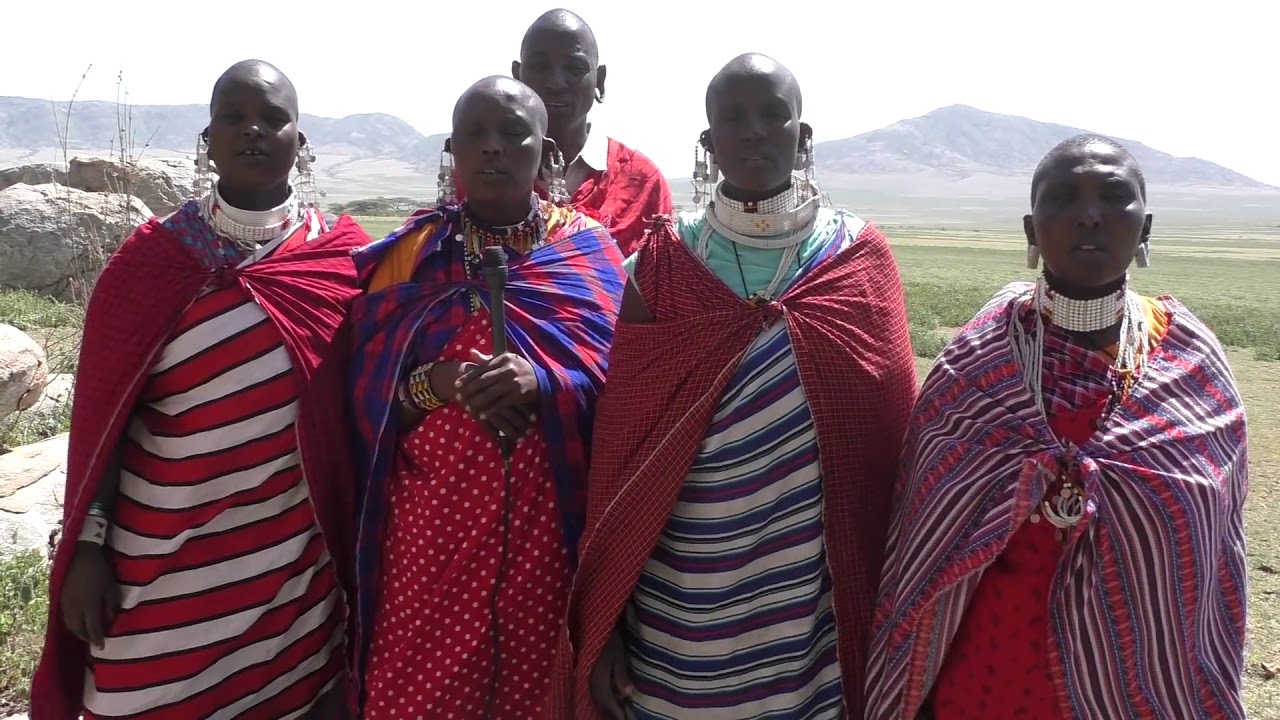 :{ that this is a “}:politically motivated:{” trial. More than 2,000 Maasai, mostly women and children, have }:fled into Kenya:{, seeking medical care and protection. In a }:statement:{ to the UN Convention on Biological Diversity, the Maasai of Loliondo denounced the land grab as an existential threat.}:
Soon after Tanzania won its independence in 1961, Prime Minister Julius Nyerere argued that African socialism would be rooted within African traditional society (although traditions that marginalized women would still have to be overcome). Nyerere implemented village collectivization projects to restructure rural production systems. In Define and Rule (2012), Mahmood Mamdani explains that this restructure of the production systems was done to dismantle the legal and administrative arms of the colonial state to ensure that these structures served a different political vision of forging unity by overcoming differences under one legal regime. As the global economic crises in the late 1980s led to a shift toward neoliberal globalization, Nyerere’s approach was considered outmoded. Challenges with collectivization programs had devastating economic outcomes in Tanzania. The World Bank criticized Nyerere’s economic policies as overemphasizing equity rather than productivity.
Privatization under structural adjustment in the 1980s expanded mining, agriculture and tourism sectors. Land tenure reforms a decade later became a focus of contestation, with women’s groups aiming for statutory property rights, while pastoralist groups sought to protect customary rights. The former raised the threat of integration into markets on detrimental terms through titling, while the latter offered to protect communal rights (and remained steeped in patriarchal practices). Women pastoralists have remained locked into this harsh situation.
Struggles of the Maasai Women
“The challenge that women are facing is that we do not have the capital to engage in mining, and do not own livestock,” Olokwani-Mundarara tells me. We are talking about how women’s economic activity, particularly in Olokwani-Mundarara’s Maasai community, is controlled by men. “Men want women to go to the market and to provide food. Failure to do so results in beating,” Olokwani-Mundarara says. Any attempt by a woman to explore a livelihood strategy that cannot be controlled by men is also met with violence. Leyian-Naisinyai says, “Women are expected to do housework and care for the livestock… [owned by] men.” Meanwhile, climate change is only adding to the issues faced by women. A journal article published in Environmental Policy and Law (2021) highlights how the climate crisis is “exacerbating sexual and gender-based violence against women.”
When Olokwani-Mundarara decided to speak publicly about the need to resist corporations that are threatening to take their ancestral lands, the elders, who are all men, verbally humiliated her as “seeking [the] attention of men.”...
==
hmn no lnx grfx
https://astutenews.com/2018/06/mapping-erik-princes-private-mercenary-empire/
OPINION
Mapping Erik Prince’s Private Mercenary Empire
June 3, 2018
Erik Prince, the brain behind the infamous private military firm Blackwater, is now in China training security forces.
Prince is partially responsible for modernizing the private army for the post 9/11 world, outsourcing militaries to cheap, specialized labor pools and skirting traditional regulations meant to ensure accountability for armed forces.
His journey from hiring mercenaries to help bolster the U.S. occupation in Iraq to China is long, dizzying and includes stops around the world to train Colombian mercenaries to help make a private army for the U.A.E.and outfitting crop duster planes with missiles to be fired at Armenians.
He has become a global figure, roaming between conflicts zones to sell various governments his expertise on private armies.
To document his journey thus far, Al Bawaba has compiled a partial list of countries/regions in or for which he has done business.
United States
Prince’s trip around the world starts in the United States.
Born in an affluent Michigan family, his family maintained deep ties to the Republican establishment and several conservative, religious organizations like American Values. His sister, Betsy DeVos, married into one of the most influence political families in the Midwest, the DeVos’s, and began helping to run the Republican party machine in Michigan.
That marriage, which tied the Prince and DeVos family together, has given Erik unprecedented political access into the federal government. His list of close allies including Steve Bannon, U.S. President Donald Trump’s former chief strategist. His sister gives him a direct line of access to Trump himself.
Erik became a Navy SEAL and then established his own private military firm in 1997, Blackwater.
Once the U.S. invaded Iraq in 2003, Blackwater received billions in contracts from the U.S. government to help supplement the official mission with private boots on the ground, relatively free from accountability or laws from any particular government.
Iraq
Blackwater’s activities in Iraq are infamous and account for Prince’s self-imposed exile from the United States.
Apart from harassing Iraqi civilians and running them off of roads with their armored personnel carriers, they also indiscriminately gunned down 14 innocent people in Baghdad in 2007, drawing an investigation and heavy criticism from media outlets around the world.
The incident stands as a cautionary tale for when mercenary groups such as Blackwater are able to operate without sufficient legal or logistical oversight. Facing a wave of scrutiny, Prince left Blackwater and the firm changed its name twice (to Xe and then Academi) to escape the heat.
Many thought they had seen the end of Erik Prince, but he resurfaced later at the helm of a different private military company.
U.A.E.
pasted image 1 nyt
A satellite image of the camp in the U.A.E. built to train Prince’s 800-member mercenary battalion ]
In 2011, Erik Prince was appointed by the crown prince of Abu Dhabi to make a secret, private army. For this, he was paid $529 million.
In documents obtained by the New York Times, the mission of this privately commissioned battalion included “intelligence gathering, urban combat, the securing of nuclear and radioactive materials, humanitarian missions and special operations ‘to destroy enemy personnel and equipment,’ and crown-control.
Prince hired Colombians and nationals of other countries thousands of miles away to fill his ranks from two reasons. First, Prince was looking to pay them as little as possible. Second, they weren’t Muslims. Prince surmised that Muslims could not be trusted to kill other Muslims.
A few years later in 2015, Saudi Arabia began its military intervention in Yemen and recruited a host of other Arab nations to join its coalition. Abu Dhabi’s crown prince, business partner to Erik Prince, Sheik Mohamed bin Zayed al-Nahyan, signed up for the cause in order to destroy any creeping Iranian influence in the war-torn nation.
:{
}:
Yemen
Erik Prince and his U.A.E. private military firm helped recruit and train over 1,000 soldiers from Latin American countries. Then, their bodies started appearing on battlefields in Yemen.
A single missile reportedly killed 45 mercenaries from the U.A.E.
Prince’s initial battalion of 800 soldiers had blossomed into almost 2,000 specialized troops hired mostly from Latin America to do the U.A.E.’s business.
Although officials say Erik Prince’s formal business role with the U.A.E. had ended several years before the intervention into Yemen, his corporate blueprint to partially outsource the U.A.E.’s military is doubtlessly still in use.
The U.A.E. keeping and even expanding Prince’s blueprint for a private, outsourced army demonstrates just how influencial he and his mercenary business model has become.
Azerbaijan
pasted image 2
A militarily-modified crop duster, called the T-Bird (LASA Engineering)]
After his stint in the U.A.E., Prince began doing more business with Chinese executives at the Frontier Services Group (FSG), which he heads.
On this new enterprise, Prince said it “is not a patriotic endeavor,” rather, it is intended “to build a great business and make some money doing it.”
Interestingly enough, Prince’s business with FSG took him to Azerbaijan, where he was paid by the government to help it deal with its Armenian problem. Armenians are concentrated into Azerbaijan’s Nagorno-Karabakh region, which seceded from Azerbaijan and formed a semi-recognized, de facto state.
Azerbaijan called on Erik Prince and FSG to help it keep watch on the Nagorno-Karabakh region, also called the Republic of Artsakh. In response. Prince wanted to show the government two crop duster planes meant for agricultural use but refitted for military purposes. The planes were meant to be outfitted with state-of-the-art surveillance technology and were supposedly able to fire missiles.
They never made it to Azerbaijan after an investigation shut the sale down.
This is because the deal may have broken several laws. The Washington Post found that “executives were concerned that the company might be skirting U.S. law — known as International Traffic in Arms Regulations (ITAR) — requiring Americans to obtain special permits before defense-related technology can be transferred to foreign countries.”
In response to this controversial arms trade, all but two Americans on the FSG executive board quit due to concerns that he was not serving U.S. interests. This has freed Prince to deal more closely with the Chinese.
Eastern Africa
FSG’s ‘focus region’ (Frontier Services Group)]
FSG’s public focus is on providing security and logistical help to eastern African countries such as South Sudan, Kenya, Somalia and the DRC.
“When you want logistics done in Africa, you call DHL,” said Sean McFate, a former military contractor in Africa and current expert on mercenaries at the Atlantic Council. “When you want muscle, you call Erik Prince.”
One of FSG’s ventures appears to help oust the extremist militant group, Al Shabaab, from southwest Somalia—an area it has largely controlled for years. “We have brought together strong international business leaders to team-up with talented Somali entrepreneurs to make development in South West Somalia a reality,” an FSG statement reads.
“The project will include an integrated solution of air-land-sea logistics capabilities and advanced security management.”
China
FSG’s headquarters is in Hong Kong, and though it publicly states that its focus is on eastern Africa, FSG is now reported to be doing domestic work on behalf of the Chinese government.
FSG is partially owned by CITIC, a Chinese-government own investment firm. CITIC is slowly taking more and more control of FSG and is reportedly already the dominant shareholder, meaning it has greater power than Prince to determine the company’s vision and business deals.
“The Chinese are gradually taking more control” of the company. CITIC is now playing a larger role as Frontier’s dominant shareholder, said Xin who heads the International Security Defense College that trains security personnel and is overseen by FSG.
“Prince’s share is decreasing. The Chinese are in charge, so it won’t matter.”
One of FSG’s most recent missions has been to train thousands of security personnel in China’s northwest Xinjiang province, where millions of ethnically Turkic Muslims called Uyghurs live.
Uyghurs are routinely targeted by the state due to continuous attempts by some to break away from China and form an independent state.
Thousands of Uyghurs are part of an extremist group called the Turkistan Islamic Party (TIP), whose leaders are hiding in Pakistan and whose members have a heavy presence in Syria fighting against the Syrian regime.
Human Rights Watch accused the Chinese government of “deploying a predictive policing program,” using massive surveillance technology and a web of high-tech surveillance cameras and compulsory data collection.
They’ve also reportedly sent thousands of Uyghurs to Chinese ‘re-education’ camps.
The Mercenary Prince
This list only details a few of Erik Prince’s ventures, and does not include an attempt by Prince to send thousands of mercenaries into Afghanistan and reform the political structure of the entire country to essentially be a colony for the United States.
However, Prince has transformed battlefields everywhere and fundamentally altered the way governments construct security apparatuses.
Iran is heavily reliant on outsourced Afghani mercenaries to be cannon fodder in the war in Syria. Russia is supplementing its own intervention into Syria with mercenaries hired by the state-backed Wagner Group who also sends troops to Ukraine. To beat back the nascent extremist group Boko Haram, Nigeria hired private, Apartheid-era security forces from South Africa to do the job.
Thanks to Erik Prince, outsourcing military and intelligence labor is now the norm.
Currently Prince appears to be under investigation by Special Counsel Robert Mueller, thanks to meetings he had arranged with a close aide to Russia’s President Vladimir Putin, Kirill Dmitriev in the Seychelles Islands, a place its own government explains is “the kind of place where you can have a good time away from the media.” The meeting was allegedley to set up a backchannel between Trump and Russia in order to facilitate clandestine communications.
McFate told Al Bawaba that Prince’s use of mercenaries allows countries to enter into and escalate conflicts without having to report it to their citizens; his tactic gives governments “plausible deniability” to anything that the mercenaries do.
According to Dr. P.J. Brendese, a professor at Johns Hopkins University and expert on democratic accountability, private military firms “have greater independence to exercise their own prerogatives and ‘we the people’ don’t get a say. That’s the most dangerous thing, because they’re profiting–their motivation it not God and country; their motive is money.”
By Ty Joplin
Source: Al Bawaba
https://theintercept.com/2016/04/11/blackwater-founder-erik-prince-drive-to-build-private-air-force
see 2020 update below
==
ECHO PAPA EXPOSED
Inside Erik Prince’s Treacherous Drive to Build a Private Air Force
Jeremy Scahill, Matthew ColeJeremy Scahill, Matthew Cole
April 11 2016,
https://theintercept.com/2020/12/02/uae-arms-sale-wagner-group/
lame duck, congr hearings? UAE
an 920
house Foreign Affairs chairman slams Trump’s State Department for its ‘indifference to civilian casualties’ in Gulf arms deal
Alex HendersonSeptember 16, 2020
In May 2019, President Donald Trump made an emergency declaration in order to complete the sale of more than $8 million worth of weapons to Saudi Arabia, the United Arab…
https://www.alternet.org/2020/08/dont-be-hoodwinked-by-trumps-uae-israel-peace-deal-its-a-sham/
==
https://www.alternet.org/2020/06/how-a-behind-the-scenes-bare-knuckle-brawl-shaped-us-foreign-policy-under-trump/
It was a bare-knuckle brawl of the first order. It took place in Washington, D.C., and it resulted in a KO. The winners? Lobbyists and the defense industry. The losers? Us. And odds on, you didn’t even know that it happened. Few Americans did, which is why it’s worth telling the story of howSaudi, Emirati, and Qatari money flooded the nation’s capital and, in the process, American policy went down for the count.
The fight began three years ago this month. Sure, the pugilists hadn’t really liked each other that much before then, but what happened in 2017 was the foreign-policy equivalent of a sucker punch. On the morning of June 5th, Saudi Arabia, the United Arab Emirates (UAE), Egypt, and Bahrain announced that they were severing diplomatic ties with Qatar, the small but wealthy emirate in the Persian Gulf, and establishing a land, air, and sea blockade of their regional rival, purportedly because of its ties to terrorism.
The move stunned the Qataris, who responded in ways that would later become familiar during the Covid-19 pandemic — by emptying supermarket shelves and hoarding essentials they worried would quickly run out. Their initial fears were not unwarranted, as their neighbors,Saudi Arabia and the United Arab Emirates, were even reported to be planning to launch a military invasion of Qatar in the weeks to come (one that would be thwarted only by the strong objections of Donald Trump’s then-Secretary of State Rex Tillerson).
To make sense of this now three-year-old conflict, which turned aspects of American policy in the Middle East ranging from the war in Yemen to the more than 10,000 American military personnel stationed in Qatar into political footballs, means refocusing on Washington and the extraordinary influence operations the Saudis, Emiratis, and Qataris ran there. That, in turn, means analyzing Foreign Agents Registration Act (FARA) documents filed by firms representing all three countries since the spat began. Do that and you’ll come across a no-punches-barred bout of lobbying in the U.S. capital that would have made Rocky envious.
AD REMOVED FOR SUBSCRIBED USER
The Saudis Come Out Swinging
The stage had been set for the blockade of Qatar seven months before it began when Donald Trump was elected president. Just as his victory shocked the American public, so it caught many foreign governments off guard. In response, they quickly sought out the services of anyone with ties to the incoming administration and the Republican-controlled Congress. The Saudis and Emiratis were no exception. In 2016, both countries had reported spending a little more than $10 million on FARA registered lobbying firms. By the end of 2017, UAE spending had nearly doubled to $19.5 million, while the Saudi’s had soared to $27.3 million.
In the months following Donald Trump’s November triumph, the Saudis, for instance, added several firms with ties to him or the Republicans to an already sizeable list of companies registered under FARA as representing their interests. For example, they brought on the CGCN Group whose president and chief policy officer, Michael Catanzaro, was on Trump’s transition team and then served in his administration. To court the Republican Congress, they hired the McKeon Group, run by former Republican Representative Buck McKeon, who had previously served as chairman of the House Armed Services Committee.
And that was just registered foreign agents. A number of actors who had not registered under FARA were actively pushing the Saudi and Emirati agendas, chief among them Elliott Broidy and George Nader. Broidy, a top fundraiser for Trump’s campaign, and Nader, his business partner, already had a wide range of interests in both Saudi Arabia and the UAE. To help secure them, the two men embarked on a campaign to turn the new president and the Republican establishment against Qatar. One result was a Broidy-inspired, UAE-funded anti-Qatar conference hosted in May 2017 by a prominent Washington think tank, the Foundation for Defense of Democracies. It conveniently offered Representative Ed Royce (R-CA) a platform to discuss his plans to introduce a bill, HR 2712, that would label Qatar a state sponsor of terrorism. It was to be introduced in the House of Representatives just two days after the conference ended.
Qatar, mind you, had been a U.S. ally in the Middle East and was the home of Al Udeid Air Base, where more than 10,000 American soldiers are still stationed. So that bill represented a striking development in American-Qatari relations and was a clearly traceable result of Saudi and UAE lobbying efforts.
The unregistered influence of players like Broidy and Nader was evidently backed by other FARA-registered Saudi and UAE foreign agents actively pushing the bill. For example, Qorvis Communications, a long-time public relations mouthpiece for the Saudis, circulated a document titled “Qatar’s History of Funding Terrorism and Extremism,” claiming that country was funding Al-Nusra, Hamas, the Muslim Brotherhood, and other groups. (Not surprisingly, it included a supportive quote from David Weinberg, a senior fellow at the Foundation for Defense of Democracies.)
While that anti-Qatar crusade was ramping up in Washington, the president himself was being wooed by the Saudi royals in Riyadh on his first official trip abroad. They gave him the literal royal treatment and their efforts appeared to pay off when, just a day after the blockade began, Trump tweeted, “During my recent trip to the Middle East I stated that there can no longer be funding of Radical Ideology. Leaders pointed to Qatar — look!”
A week after the imposition of the blockade, the Emirati ambassador to the United States, Yousef al-Otaiba, wrote a Wall Street Journal op-ed calling for Al Udeid Air Base to be moved to the UAE, a development the Qataris feared could open the door for an eventual invasion of their country.
However, this Saudi and Emirati onslaught did not go unanswered.
Qatar Strikes Back
Tamim bin Hamad al-Thani, the emir of Qatar, was caught flat-footed by the influence operations of the Saudis and the United Arab Emirates. The year before Donald Trump became president, the Qataris had spent just $2.7 million on lobbying and public relations firms, less than a third of what the Saudis and UAE paid out, according to FARA records. But they now moved swiftly to shore up their country’s image as a crucial American ally. They went on an instant hiring spree, scooping up lobbying and public-relations firms with close ties to Trump and congressional Republicans.Just two days after the blockade began, for instance, they inked adeal with the law firm of former Attorney General John Ashcroft, paying $2.5 million for just its first 90 days of work.
They also quickly obtained the services of Stonington Strategies. Headed by Nick Muzin, who had worked on Trump’s election campaign, the firm promptly set out to court 250 Trump “influencers,” as Julie Bykowicz of theWall Street Journal reported. Among others, Stonington’s campaign sought to woo prominent Fox News personalities Trump paid special attention to like former Arkansas Governor Mike Huckabee. He was paid $50,000 to travel to Qatar just months later.
In September 2017, the Qataris also hired Bluefront Strategies to craft a comprehensive multimedia operation, which was to include commercials on all the major news networks, as well as digital and printed ads in an array of prominent publications, and a “Lift the Blockade” campaign on social media. Meanwhile, ads on Google and YouTube were to highlight the illegality of the blockade and the country’s contributions to fighting terrorism. Bluefront Strategies was to influence public opinion before the next session of the U.N. General Assembly that month. Qatar and its proxies then used the campaign “to target key decision-makers attending the General Assembly, including Trump” to gain support on that most global of stages.
Its agents weren’t just playing defense, either. They actively attacked the Saudi lobby. For example, Barry Bennett of Avenue Strategies, a PR firm they hired, sent a letter to the assistant attorney general for national security accusing Saudi Arabia and the Saudi American Public Relation Affairs Committee (SAPRAC) of FARA violations in their funding of an expensive media campaign meant to connect Qatar’s leaders with violent extremism and acts of terror.
Such counterpunches proved remarkably successful. SAPRAC eventually felt obliged to register with FARA. Meanwhile, Huckabee tweeted, “Just back from a few days in surprisingly beautiful, modern, and hospitable Doha, Qatar.” Finally, at that U.N. meeting, President Trump actually sat:{ down with Emir al-Thani of Qatar and } :{, “We’ve been friends a long time… I have a very strong feeling [the Qatar diplomatic crisis] will be solved quickly.” They both then emphasized the “tremendous” and “strong” relationship between their countries.}:
The Qataris next mounted a concerted defense against HR 2712. Lobbying firms they hired, particularly Avenue Strategies and Husch Blackwell, launched a multifaceted campaign to prevent that legislation from passing. Elliott Broidy even claimed in a lawsuit that the Qatari government and several of its lobbyists had hacked his email account and distributed private emails of his to members of Congress in an attempt to discredit his work for the Saudis.
In November 2017, Barry Bennett from Avenue Strategies went on the attack, using a powerful weapon in Washington politics: Israel. He distributed aletter to members of Congress written by a former high-ranking official in the Israeli national security establishment explicitly stating that Qatar had not provided military support to Hamas, as HR 2712 claimed it had.
Three months later, Husch Blackwell all but threatened Congress and the Trump administration with the cancellation of a $6.2 billion Boeing contract to sell F-15 fighters to the Qatari military (and the potential loss of thousands of associated jobs) if the bill passed and sanctions were imposed on that country. All of this was linked to a concerted effort by Qatari agents to contact “nearly two dozen House offices, including then House Majority Leader Kevin McCarthy,” to prevent the bill’s passage, according to a report by the Foreign Influence Transparency Initiative at the Center for International Policy where we work. Ultimately, HR 2712 died a slow death in Congress and never became law.
The Saudi Bloc’s Battle for the War in Yemen
Just as Qatar started to turn the tide in the fight for influence in Washington, the Saudis and their allies faced another problem: Congress began moving to sever support for the Saudi-led war in Yemen. On February 28, 2018, Senator Bernie Sanders (I-VT) introduced a joint resolution to withdraw U.S. support for that war. According to FARA filings,Brownstein Hyatt Farber Schreck, LLP, representing the Saudi ministry of foreign affairs,contacted several members of the Senate Committee on Foreign Relations, particularly Democrats, presumably to persuade them to vote against the measure.
That March, the firm sent out dozens of emails to members of Congress inviting them to a gala dinner with the key Saudi royal, Crown Prince Mohammed bin Salman himself. According to the invitation from the CGCN Group, another FARA-registered firm representing the Saudis, the “KSA [Kingdom of Saudi Arabia]-USA Partnership Gala Dinner” was to emphasize the “enduring defense and counter-terrorism cooperation” and “historic alliance” between the two countries. It would end up taking place just two days after the Senate voted to table Sanders’s bill.
Emirati lobbyists similarly reached out to Congress to maintain support for their role in that war. Hagir Elawad & Associates, for example, distributed an op-ed written by the UAE minister of state for foreign affairs justifying the war, as well as a letter written by that country’s ambassador, Yousef al-Otaiba, to 50 congressional contacts defending the Saudi-led coalition’s efforts to avoid civilian casualties and arguing that “the United States has a clear stake in the coalition’s success in Yemen.”
When that conflict began, Qatar was still a member of the coalition, but the imposition of the blockade led it to withdraw its forces from Yemen. Qatari officials then used the country’s media empire, centered on the broadcaster Al Jazeera, to highlight the disastrous aspects of the ongoing war. In doing so, they provided the Saudis and Emiratis with yet another reason to focus their own influence machines on both Qatar’s and Al Jazeera’s destruction. (That network’s closure was, in fact, one of the original 13 demands the Saudis and Emiratis had made for lifting the blockade.)
From the moment it was founded in 1996, Al Jazeerahad been an instrument of Qatari soft power, so it was hardly surprising that the UAE had long pressured members of Congress to force the network to register under FARA as a foreign agent. And Emirati lobbying efforts were not in vain. In early March 2018, 19 members of Congress signed and sent aletter to then-Attorney General Jeff Sessions urging the Justice Department to demand that Al Jazeera be registered under FARA. Another such letter sent to the Justice Department in June 2019 by six senators and two representatives asked “why Al Jazeera and its employees have not been required to register.” According to FARA filings, all but one of those representatives had either received campaign contributions from or been contacted by a Saudi or Emirati lobbying firm. Al Jazeera, however, has yet to register.
The Murder of Jamal Khashoggi
Despite the efforts of Saudi and Emirati lobbyists in the early months of 2018, the emir of Qatar still managed to land an invitation to the Oval Office. At their meeting that April 10th, President Trump again described al-Thani as a “friend” and a “great gentleman” as well. The emir, in turn, thanked the president for “supporting us during this blockade.”
If Trump’s cozying up to him was a setback for the Saudis, the murder of critic and Washington Post contributing columnist Jamal Khashoggi nearly did in the Saudi lobbying juggernaut as well. The CIA later confirmed that the crown prince himself had ordered that Saudi citizen’s assassination at the country’s consulate in Istanbul, Turkey.
As a result, some lobbying firmscut ties with the kingdom and its influence on Capitol Hill waned, as did positive public opinion about Saudi Arabia. In December 2018, the Senate passed the Sanders bill to end support for the war in Yemen. Both houses of Congress also passed a War Powers resolution to end involvement in that conflict, a historic congressional move in this century, even if later vetoed by President Trump (as were a series of attempts to block his treasured arms sales to Saudi Arabia and the United Arab Emirates).
Given the president’s unyielding support for the Saudis and Emiratis as especially lucrative customers for this country’s defense industry, the Qataris have clearly decided to crib the Saudi playbook. In May, that country purchased 24 Apache helicopters for $3 billion and, a few months later, agreed to pay for and manage a $1.8 billion expansion of Al Udeid Air Base to ensure the American military’s continued presence for the foreseeable future. In doing so, Qatar was visibly at work coopting two of the most powerful lobbies in Washington: the military and the weapons makers.
And the Winners Are…
Though Qatar faced a near-existential threat to its survival when the blockade began, three years later it’s not only surviving, but thriving thanks significantly to its influence operations in Washington. They have helped immeasurably to deepen economic, diplomatic, and military relations between the two countries.
Meanwhile, the emir’s rivals in Riyadh not only failed to make their blockade a success, but saw their influence wane appreciably in the U.S. as they stumbled from one public relations fiasco to the next. Even their staunchest defender, Donald Trump, recently threatened to sever U.S. military support for the Kingdom if the Saudi royals didn’t end their oil war with Russia (which they promptly did).
In truth, however, the real loser in this struggle for influence hasn’t been Saudi Arabia or the Emiratis, it’s been America. After all, the efforts of both sides to deepen their ties with the military-industrial complex (reinforcing the hyper-militarization of U.S. foreign policy) and increase their sway in Congress have ensured that the real interests of this country played second fiddle to those of Middle Eastern despots. Certainly, their acts helped ensure near historic levels of arms sales to the region, while prolonging the wars in Yemen andSyria, and so contributing to death and devastation on an almost unimaginable scale.
None of this had anything to do with the real interests of Americans, unless you mean the arms industry and K Street lobbyists who have been the only clear American winners in this never-ending PR war in Washington. In the process, those three Persian Gulf states have delivered a genuine knockout blow to the very idea that U.S. foreign policy should be driven by national — not special — interests.
Morgan Palumbo is a researcher with the Foreign Influence Transparency Initiative at the :{Center for International Policy:(style="box-sizing:border-box;outline:none;margin:0px;padding:0px"):}:.
Jessica Draper is a researcher with the Foreign Influence Transparency Initiative and Arms and Security Project at the :{Center for International Policy:(style="box-sizing:border-box;outline:none;margin:0px;padding:0px"):}:.
==
nitze grifter
Since forming BeforeItsNews, Kitze focused heavily on privacy-related products, including Unseen, a now shuttered secure messaging platform, and founding the cryptocurrency Flashcoin, both of which were featured in aglowing 2018 profile in The Epoch Times that made no reference to his role as an officer in the organization.
Kitze also serves as chairman of the Alphabit Fund, a Dubai and Cayman Islandsbased cryptocurrency fund aiming toraise $300 million thatReuters described in 2018 as “one of the world’s largest digital currency funds.”
PAY DIRT
Lachlan Markay
Alphabit’s co-founder and managing director, Saeed Al Darmaki, worked for over eight years at Abu Dhabi’s sovereign wealth fund, Abu Dhabi Investment Authority, raising questions about whether Alphabit has state backing. Kitze did not respond to a request for comment about the investors in Alphabit, his responsibilities as a vice president at Epoch or his current relationship with BeforeItsNews.
Epoch, for its part, offered incomplete and contradictory answers about Kitze’s role at the news organization.
Dr. Dana Cheng, a spokesperson for The Epoch Times, responded to questions about Kitze’s involvement, saying, “Mr. Kitze had limited involvement with The Epoch Times more than 7 years ago,” adding, “There is no relationship between The Epoch Times and any of Mr. Kitze’s endeavors, including beforeitsnews."
Cheng appeared to contradict her statement about Kitze’s involvement with Epoch more than seven years ago when questioned about his appearance on tax filings in the 2017 and 2018 tax years. “Yes, he was a board member in 2017 and 2018, with minimal involvement,” said Cheng, adding, “He is not a board member nor a VP now.”
==
==
deforestation
https://www.ecowatch.com/worlds-largest-palm-oil-plantation-2645576807.html
no lnx
3.20
A new company has begun clearing rainforest in an area of Indonesia's easternmost Papua province earmarked to become the world's largest oil palm plantation, in a vast project that has been mired in allegations of lawbreaking.
If seen through to completion, the Tanah Merah project will generate an estimated $6 billion in timber and create a plantation almost twice the size of London, at the heart of the largest tract of intact rainforest left in Asia. It will also release an immense amount of carbon dioxide into the atmosphere, at a time when Indonesia has committed to reducing emissions from deforestation.
Since March of last year, the Digoel Agri Group, founded by a politically connected Jakarta family and now backed by an investor from New Zealand, has bulldozed 170 hectares (420 acres) of rainforest in a section of the project previously spared from land clearing, satellite imagery shows.
The clearance amounts to a fraction of the 280,000 hectares (692,000 acres) allocated for the project, now controlled by several different conglomerates. But it signals that deforestation could quickly accelerate after a decade of false starts by other investors.
A satellite view of Digoel Agri's forest clearance, seen in late November 2019.
Since it was first conceived in 2007, the rights to the project have changed hands several times, involving a string of investors who have deployed crude and complex corporate secrecy techniques to hide their identities.
The licensing process for the project has been plagued by irregularities. A cross-border investigation by The Gecko Project, Mongabay, Malaysiakini and Tempo, published in November 2018, revealed that key permits were signed by an elected official who was simultaneously serving a prison sentence for embezzling state funds.
A subsequent report found that officials believe other essential permits — for both the plantation and a giant sawmill to process the timber — were falsified.
Two companies, majority-owned by anonymous firms registered in the United Arab Emirates, began operating on the basis of these permits, to the north of the land now held by Digoel Agri. In response to written questions from The Gecko Project and Mongabay they have denied the allegation that the permits were falsified.
On paper, Digoel Agri's involvement in the project represents a clean break from those allegations. The firm arrived on the scene after the suspect permits held by earlier investors were revoked and reassigned to it.
Jackson Iqbal de Hesselle, 32, a member of the Rumangkang family, which is behind Digoel Agri, said its operations were clean. "We're obeying the rules," he said in a recent interview at the firm's office in Jayapura, the capital of Papua province.
However, while there are no apparent links between Digoel Agri and the previous investors, its ability to operate is partly predicated on the allegedly compromised licensing process that went before....
https://www.alternet.org/2020/03/why-sanctions-against-iran-and-venezuela-during-a-pandemic-are-cruel/
no lnx
Why sanctions against Iran and Venezuela during a pandemic are cruel
President Donald J. Trump signs an Executive Order to place further sanctions on Iran Monday, June 24, 2019, in the Oval Office of the White House. (Official White House Photo by Joyce N. Boghosian)
Written by Vijay Prashad, Paola Estrada / Independent Media Institute March 16, 2020
Swiftly moves the coronavirus disease (COVID-19), dashing across continents, skipping over oceans, terrifying populations in every country. The numbers of those infected rises, as do the numbers of those who have died. Hands are being washed, tests are being done, and social distance has become a new phrase. It is unclear how devastating this pandemic will be.
In the midst of a pandemic, one would expect that all countries would collaborate in every way to mitigate the spread of the virus and its impact on human society. One would expect that a humanitarian crisis of this magnitude would provide the opportunity to suspend or end all inhumane economic sanctions and political blockades against certain countries. The main point here is this: Is this not the time for the imperialist bloc, led by the United States of America, to end the sanctions against Cuba, Iran, Venezuela, and a series of other countries?
Medical Shortages
Venezuela’s Foreign Minister Jorge Arreaza told us recently that the “illegal and unilateral coercive measures that the United States has imposed on Venezuela are a form of collective punishment.” The use of the phrase “collective punishment” is significant; under the 1949 Geneva Conventions, any policy that inflicts damage on an entire population is a war crime. The U.S. policy, Arreaza told us, has “resulted in difficulties for the timely acquisition of medicines.”
On paper, the unilateral U.S. sanctions say that medical supplies are exempt. But this is an illusion. Neither Venezuela nor Iran can easily buy medical supplies, nor can they easily transport it into their countries, nor can they use them in their largely public sector health systems. The embargo against these countries—in this time of COVID-19—is not only a war crime by the standards of the Geneva Conventions (1949) but is a crime against humanity as defined by the United Nations International Law Commission (1947).
In 2017, U.S. President Donald Trump enacted tight restrictions on Venezuela’s ability to access financial markets; two years later, the U.S. government blacklisted Venezuela’s Central Bank and put a general embargo against the Venezuelan state institutions. If any firm trades with Venezuela’s public sector, it could face secondary sanctions.The U.S. Congress passed the Countering America’s Adversaries Through Sanctions Act (CAATSA) in 2017, which tightened sanctions against Iran, Russia, and North Korea. The next year, Trump imposed a raft of new sanctions against Iran which suffocated Iran’s economy. Once more, access to the world banking system and threats to companies that traded with Iran made it almost impossible for Iran to do business with the world.
In particular, the U.S. government made it clear that any business with the public sector of Iran and Venezuela was forbidden. The health infrastructure that provides for the mass of the populations in both Iran and Venezuela is run by the State, which means it faces disproportionate difficulty in accessing equipment and supplies, including testing kits and medicines.
Breaking the Embargo
Arreaza, the Venezuelan foreign minister, told us that his government is alert to the dangers of COVID-19 with a health infrastructure that has been affected by the sanctions. Vice President Delcy Rodríguez is leading a presidential commission to manage whatever resources are available. “We are breaking the blockade,” Arreaza said, “through the World Health Organization, through which we have obtained medicine and the tests to detect the illness.” The WHO, despite its own crisis of funds, has played a key role in both Venezuela and Iran.
Nonetheless, the WHO faces its own challenges with sanctions, particularly when it comes to transportation. These harsh sanctions forced transportation companies to reconsider servicing both Iran and Venezuela. Some airlines stopped flying there; many shipping companies decided not to anger Washington. When the World Health Organization tried to get testing kits for COVID-19 from the United Arab Emirates (UAE) into Iran, it faced difficulty—as the WHO’s Christoph Hamelmann put it—“due to flight restrictions”; the UAE sent the equipment via a military transport plane.
Likewise, Arreaza told us, Venezuela has “received the solidarity from governments of countries such as China and Cuba.” This is a key issue. China, despite its own challenges from COVID-19, has been supplying testing kits and medical equipment to Iran and to Venezuela; it was China’s vigorous reaction to the virus that has now slowed down its spread within China itself. In late February, a team from the Red Cross Society of China arrived in Tehran to exchange information with the Iranian Red Cross and with WHO officials; China also donated testing kits and supplies. The sanctions, Chinese officials told us, should be of no consequence during a humanitarian crisis such as this; they are not going to honor them.
Meanwhile, the Iranians developed an app to help their population during the COVID-19 outbreak; Google decided to remove it from its app store, a consequence of the U.S. sanctions.
End the Sanctions
Yolimar Mejías Escorcha, an industrial engineer, tells us that the sanctions regime has put a lot of pressure on everyday life in Venezuela. She says that the government “continues to make an effort to ensure that people who most need it get health care, education, and food.” The opposition has tried to say that the crisis is a consequence of the government’s inefficiency rather than a result of the imperialist blockade on Venezuela. On March 6, she tells us, a new campaign was launched in the country called “Sanctions Are a Crime.” She hopes that this campaign will explain clearly to people why there are shortages in her country—the sanctions being the core reason.
In 2019, a group of countries met at the United Nations in New York to discuss the U.S. unilateral sanctions that violated the UN Charter. The intent was to work through the Non-Aligned Movement to create a formal group that would respond to these sanctions. Venezuela’s Foreign Minister Arreaza told us that Venezuela supports this initiative but also the declaration of principles drafted by Iran against unilateralism and the Russian formal complaint about denial of visas for officials to visit the UN building in New York. “We hope to resume meetings this year once the difficulties presented by COVID-19 are overcome,” he said. They want to meet again, Arreaza said, to “advance joint, concrete actions.”
What Arreaza told us are initiatives at the interstate level. At the same time, there are ongoing initiatives led by popular movements and political organizations. In November 2019, an anti-imperialist solidarity meeting was held in Havana, Cuba, with representatives from 86 countries. At this meeting, it was decided that attention must be focused on the inhumane use of power in our time; a call was sent out to hold a week of anti-imperialist struggle between May 25 and May 31. The aim of the week is to alert the world’s public about imperialism and—in this context—about the murderous sanctions regime driven by the United States, more murderous in this time of COVID-19.
The question that a week of activities such as this poses is quite simple: What kind of moral fiber holds together an international system where a handful of countries can act in a way that goes against all the highest aspirations of humanity? When the United States continues its embargos against more than 50 countries—but mostly against Cuba, Iran, and Venezuela—when there is a global pandemic afoot, what does this say about the nature of power and authority in our world? Sensitive people should be offended by such behavior, its mean-spiritedness evident in the unnatural deaths that it provokes. When the U.S. Secretary of State Madeleine Albright was asked about the half-million Iraqi children who died because of U.S. sanctions, she said that those deaths were a price worth paying. They were certainly not a price that the Iraqis wanted to pay, nor now the Iranians or the Venezuelans, or indeed the majority of humankind. We march in May against this desiccated worldview; we march for humanity.
Vijay Prashad is an Indian historian, editor and journalist. He is a writing fellow and chief correspondent at Globetrotter, a project of the Independent Media Institute. He is the chief editor of LeftWord Books and the director of Tricontinental: Institute for Social Research. He has written more than twenty books, including The Darker Nations: A People’s History of the Third World (The New Press, 2007), The Poorer Nations: A Possible History of the Global South (Verso, 2013), The Death of the Nation and the Future of the Arab Revolution (University of California Press, 2016) and Red Star Over the Third World (LeftWord, 2017).
Paola Estrada is in the Secretariat of the International Peoples Assembly and is a member of the Brazilian chapter of ALBA Movements (Continental Coordination of Social Movements toward the Bolivarian Alliance for the Peoples of Our America).
This article was produced by Globetrotter, a project of the Independent Media Institute.
==
==
iran better at proxy eg hezbollah (and sort of houti in yemen) than saudis
uae also trying (// saudis) to professionalize army; grabbing territotoy in yemen, not really in coordination w/ SA, their interests may diverge?
overton chattam house
https://kpfa.org/episode/upfront-june-24-2019/
==
==
https://theintercept.com/2019/06/12/darkmatter-uae-hack-intercept/
==
https://www.democracynow.org/2019/4/17/libyan_humanitarian_crisis_worsens_as_over
...GONZÁLEZ: And could you talk about the role of Erik Prince and his former mercenary organization, Blackwater, in Libya?
ANAS EL GOMATI: Well, it’s really the UAE’s role that is behind this. I think, in 2010, theUAE, Mohammed bin Zayed, gave over half a billion dollars to the Frontier Services Group, which is now led by Erik Prince, formerly of Blackwater. And since then, allegedly, according to Western print media, Erik Prince, alongside the UAE, established an air base, a military base, a drone base, in eastern Libya between 2014 and '16.Now, this is well documented by the U.N. Panel of Experts on the Security Council, where the year that Libya was supposed to be delivered an enduring peace, a sustainable peace, a concession by both sides in the civil war, in 2016, when they announced the beginning of this new chapter in Libya's history and delivered this Government of National Accord in Tripoli, was the very year that the UAE violated the arms embargo in Libya in unprecedented levels but also began to establish the final touches and final pieces of this air base in eastern Libya called al-Khadim. Now, it possesses a massive arsenal of drones, Wing Loongs, which are Chinese kind of mimics of the American Predator F1 drone, but it also houses at least two Air Tractors, which are kind of industrial—industrial kind of aircraft that have been kitted out with air-to-surface missiles. And at the very least, this kind of move—I mean, it’s very, very difficult to pin down, so that’s whyI’m using the word “alleged,” because I don’t want to get sued. But at the very least, there have been many, many investigations that have pinned this to Erik Prince’s Frontier Services Group.
At least in the last two years, that arsenal of drones and Air Tractors have been used to support Khalifa Haftar’s ground offensives in Benghazi and in Derna, that have displaced around 100,000 people in Benghazi but have also led to 1,700 people being imprisoned in Derna. And many of those ground invasions, many of those military assaults, are now being investigated by the ICC for war crimes. So, I think it’s that kind of tacit and underlying kind of discreet military assistance that the UAEprovided, that the French provided in Benghazi, that has not only bolstered Khalifa Haftar in the east of the country but has been the platform and the pretext for this latest offensive in Tripoli.
And we should remind ourselves that thi
...
https://www.alternet.org/2019/02/the-foreign-policy-money-trail-in-washington-how-middle-eastern-powers-fund-government-think-tanks-and-influence-us-legislation/
The 2016 elections awakened Americans to a startling reality: the country’s political system is ripe for foreign interference. The Russians took full advantage of social media with bot armies and through unregistered foreign agents. While their influence garnered considerable attention and has led to increased enforcement of the Foreign Agents Registration Act (FARA), one area has remained largely off the congressional and media radar screens. Yet it remains a vital part of the way other governments try to influence policy in this country: the foreign funding of think tanks.
This story originally appeared at Tom Dispatch.
Most Americans undoubtedly have little idea what a think tank actually does. Having worked at two of them myself, it’s fair to say that even those of us who have labored inside these basic building blocks for policymaking in Washington are often still trying to figure out just what many of them do. Still, whether you know it or not, you’ve certainly seen think-tank employees on cable news, heard them on the radio, or read their op-ed pieces.
After all, think tanks are homes for so many of the “experts” who are the go-to sources for media coverage of foreign and domestic policy topics on just about any day — and are often key go-to sources for those making policy in Washington, too). You know, the former Department of Defense official you caught on NBC News discussing Iran or the Middle Eastern expert you saw quoted in Newsweek critiquing the Trump administration’s policies there. Outside the public eye, members of Congress and executive branch officials rely heavily on think tanks for expertise on a wide range of issues, for key congressional testimony, and even for quite literally helping craft public policy.
Those who run Washington generally trust the inhabitants of think tanks of their political bent to provide the intellectual foundations upon which much of public policy is built. At least in some cases, however, that trust couldn’t be more deeply misplaced, since cornerstones of the ever-expanding think-tank universe turn out to be for sale.
Every year foreign governments pour tens of millions of dollars into those very institutions and, though many think tanks are tax-exempt non-profits, such donations often turn out to be anything but charitable gifts. Foreign contributions generally come with critically important strings attached — usually a favorable stance toward that country in whatever influential work the think tanks are doing. In other words, those experts you regularly read or see on screen, whose scholarship and advice Washington’s politicians and other officials often use, are in some cases being paid, directly or indirectly, by the very countries on which they are offering advice and analysis. And here’s the catch: they can do so without ever having to tell you about it.
The Money Trail From Foreign Governments to Think Tanks
“I’ve never had to worry in my years at CAP about an analyst or me saying X, Y, and Z and worry about a funding source. Never thought about it. Never,” explained Brian Katulis of the Center for American Progress (CAP). He was speaking at aMiddle East Institute (MEI) event in January entitled “The Role of Think Tanks in Shaping Middle East Policy.” MEI President Paul Salem echoed this sentiment, noting that funding, particularly foreign government funding, shouldn’t ever shape a think tank’s work. “Independence,” he proclaimed, “is sacred.”
Such comments, like the events themselves, are just the norm in Washington think-tank life — unless, that is, you follow the money, in which case they seem both striking and supremely ironic. On any given day, Washington is, in fact, awash in foreign-policy events at think tanks. There, experts convene to publicly discuss just about every topic you’d want to hear about — except one, of course: their funding. And that is what made the Katulis-Salem exchange particularly interesting. What they and their follow panelists never mentioned at an event extolling the importance of think tanks in helping craft political Washington’s Middle East policies was this: both CAP and MEI have received millions of dollars from authoritarian governments in the Middle East.
MEI has publicly reported receiving millions from Saudi Arabia and lesser amounts from the Persian Gulf states of Oman and Qatar. By far itslargest donor, however, seems to have been the United Arab Emirates (UAE), reportedly making a “secret” $20 million contribution to that think tank, earmarked to “hire experts in order to counter the more egregious misperceptions about the region” and “to inform U.S. government policymakers.” In other words, in the spirit of that MEI panel title, the UAE’s funding was explicitly designed to shape that think tank’s — and so U.S. — policy considerations.
While hardly in that $20 million range, CAP has also publicly reported receiving at least $1.5 million from the UAE.
And keep in mind that those two think tanks are hardly the only ones receiving donations from countries in the Middle East. The Center for a New American Security, for instance, received $250,000 from the United Arab Emirates to produce a study on the need for the U.S. to export military-grade drones to countries like… the UAE. That think tank’s subsequent report on the topic notes that the U.S. doesn’t export drones to the UAE and other countries, but should because “this reluctance to transfer U.S. drones harms U.S. interests in tangible ways.” Never mind that a third of those killed in drone strikes in the devastating war in Yemen are civilians.
The Brookings Institution received a $14.8 million donation from Qatar. In fact, according to a New York Times analysis, nearly all of the most prominent foreign-policy think tanks in Washington have accepted money from authoritarian regimes in the Middle East or elsewhere. And that, in turn, is just the tip of the iceberg, since think tanks are not legally required to publicly disclose their funding.
Charity or Influence Buying?
If think tanks are to be believed, the money they receive from such funders changes little. Recent events at a number of think tanks, including the Center for American Progress and the Middle East Institute, should, however, give pause to anyone who assumes that such institutions are by their nature insulated from the influence of foreign funders.
Recently, serious questions have been raised about whether CAP’s ties to the UAE, itself a close ally of the Saudi royals, contributed to its awkward response to the brutal murder of Washington Post journalist and Saudi citizen Jamal Khashoggi in that Kingdom’s embassy in Istanbul, Turkey. Following that killing, CAP released a response condemning the Saudis for their involvement in Khashoggi’s murder, but not calling for specific consequences to punish the Kingdom.
According to reporting by the Intercept’s Ryan Grim, such consequences were stripped from the statement by a CAP staffer who just happened to be Brian Katulis. Then, in December, CAP largely sat on the sidelines as the Senate passed a historic resolution to end U.S. involvement in the devastating Saudi-UAE war in Yemen. At the MEI event in January, Katulis dismissed those giving “energy and dynamism” to “the Yemen debate” for ignoring “the full complexity of the challenges.” Jamal Khashoggi’s name wasn’t even mentioned.
Despite MEI head Salem’s claim that “independence is sacred,” there’s reason to question how independent scholars can be when their work is, at least in part, dependent on foreign funding. In at least one case, for instance, Salem’s institute published the work of Fahad Nazer, who was directly on the Saudi payroll. While earning $7,000 a month as a foreign agent for Saudi Arabia, Nazer wrote several pro-Saudi articles for both think tanks and mainstream media outlets, including one for MEI that made no mention of his financial ties to the Saudis. That March 2018 article did, however, encourage yet more U.S. support for the country’s ruling crown prince, Mohammed bin Salman, who, Nazer wrote, would “be good for Saudi Arabia, the United States, and the world.”
Just seven months later, bin Salman would reportedly authorize the brutal murder of Jamal Khashoggi and, in January 2019, Nazer himself would become the official spokesperson for the Saudi Embassy in Washington.
Blurred Lines and Lack of Transparency
Nazer’s case also illustrates a growing pattern of interactions between think tanks that receive foreign funding and the registered foreign agents of those countries. In fact, Emirati foreign agents last year reported contacting think tanks at least 85 times, according to an analysis of Foreign Agents Registration Act filings for a forthcoming report on the Emirati lobby in the U.S. by the Foreign Influence Transparency Initiative at the Center for International Policy, which I direct.
Perhaps not surprisingly, CAP’s Katulis and MEI were among the top think-tank contacts for UAE’s foreign agents.According to 2018 filings, Katulis was contacted at least 12 times by the Harbour Group, which the UAE paid more than $5 million in 2018 to “influence U.S. policy,” according to the firm’s FARA filings. Katulis was a particular focus for them because he was helping to organize a “study tour” in which think-tank experts would take a luxurious trip to both the UAE and Saudi Arabia. That group also contacted MEI at least 14 times on behalf of the UAE, directing most of its efforts towards a “speaking engagement at MEI” for the Emirati ambassador to the U.S., the same man who had directed that “secret” $20 million contribution to the institute.
Under current law, it is perfectly legal for think tanks that receive funding from foreign governments to also work with foreign agents registered to represent those very governments. FARA includes an exemption for those engaged in “bona fide… scholastic, academic, or scientific pursuits.” Like many parts of the FARA statute, it’s not at all clear what “bona fide” means, but think tanks are presumably exempt from registration if they meet this threshold.
While the work done by both think tanks and registered foreign agents can sometimes overlap, the two are worlds apart on one critical score: transparency. Under FARA, registered foreign agents are required to disclose a considerable amount of what they do, including whom they’re working for, how much they’re being paid, and whom they’re contacting, as well as when and where they do it, on behalf of foreign principals like the United Arab Emirates. And most of that information is available online. Anything they distribute on behalf of a foreign backer must also include a “conspicuous statement” to let anyone know that what they’re reading is being distributed on behalf of a foreign principal.
Think tanks receiving funding from foreign sources are, however, not required to do any of the above.
As is appropriate during tax season, most of this should, in the end, be blamed on the Internal Revenue Service. Think tanks usually operate as tax-exempt organizations and, according to the IRS, “a tax-exempt organization is generally not required to disclose publicly the names or addresses of its contributors set forth on its annual return.”
While MEI and CAP do both disclose their funding sources on their websites — for which they should be commended — many think tanks do not. And few, even among those that do, mention any potential conflicts of interest that might be reflected in their published reports or the speeches and media appearances of their members. Even more worrisome, a Project On Government Oversight investigation by Lydia Dennett found numerous examples of think-tank experts not reporting or mentioning financial ties to foreign governments when testifying before Congress. Hiding such potential conflicts of interest is likely to leave the public and policymakers with the impression that they’re hearing truly objective experts, when they may, in fact, be taking testimony from someone who is functionally or literally on the payroll of a country with a deep stake in what they’re telling Congress.
If think tanks are to remain credible sources of foreign-policy expertise, such ties must, at the very least, be laid bare.
A first step would simply be to require think tanks to publicly disclose any foreign funding they receive, something easily done by amending the IRS code. In addition, just as registered foreign agents are required to include a “conspicuous statement” letting readers know they’re working on behalf of a foreign power, think tanks should have to fully disclose their funding sources and any potential conflicts of interest in all their written products, as well as at speaking engagements, especially testimony before Congress. It should also be incumbent upon the media to do a better job of vetting sources. Sure, journalists are extraordinarily busy, but if a simple Google search can reveal that the Middle East “expert” you’re quoting is being paid by a country in the Middle East, it behooves you to tell your readers that.
Finally, transparency is essential, but it’s well past time for think tanks themselves to focus on the track records of the countries they’re getting money from. The Brookings Institution did just that by cutting ties with the Saudis shortly after the murder of Khashoggi and, soon after, MEI, too, announced that it would decline any further funding from the Saudi government. More recently, and following the questions raised about CAP’s involvement with the United Arab Emirates, that think tank announced that it would no longer accept UAE money. As a CAP spokesperson said, “It’s just the right thing to do.”
CAP, MEI, and Brookings are, however, the exceptions. Most think tanks haven’t done “the right thing” and dropped funding from autocratic regimes. Nor are they likely to voluntarily increase transparency about that funding. The burden then falls on Congress to enact reforms ensuring that senators and representatives will know when the expert they’re hearing discuss a specific country or the region it’s in is being paid by that very same country. Failure to act could leave Americans asking a simple and uncomfortable question: Which country is buying U.S. foreign policy today?
===
===
nyt no lnx
Who Is Behind Trump’s Links to Arab Princes? A Billionaire Friend
The financier Tom Barrack told the 2016 Republican National Convention that Donald J. Trump “played me like a Steinway piano” in the 1988 deal that began their friendship.CreditCreditShawn Thew/EPA, via Shutterstock
By David D. Kirkpatrick
June 13, 2018
The billionaire financier Tom Barrack was caught in a bind.
In April 2016, his close friend Donald J. Trump was about to clinch the Republican presidential nomination. But Mr. Trump’s outspoken hostility to Muslims — epitomized by his call for a ban on Muslim immigrants — was offending the Persian Gulf princes Mr. Barrack had depended on for decades as investors and buyers.
“Confusion about your friend Donald Trump is VERY high,” Ambassador Yousef al-Otaiba of the United Arab Emirates emailed back when Mr. Barrack tried to introduce the candidate, in a message not previously reported. Mr. Trump’s image, the ambassador warned, “has many people extremely worried.”
Not deterred, Mr. Barrack, a longtime friend who had done business with the ambassador, assured him that Mr. Trump understood the Persian Gulf perspective. “He also has joint ventures in the U.A.E.!” Mr. Barrack wrote in an email on April 26.
The emails were the beginning of Mr. Trump’s improbable transformation from a candidate who campaigned against Muslims to a president celebrated in the royal courts of Riyadh and Abu Dhabi as perhaps the best friend in the White House that their rulers have ever had. It is a shift that testifies not only to Mr. Trump’s special flexibility, but also to Mr. Barrack’s unique place in the Trump world, at once a fellow tycoon and a flattering courtier, a confidant and a power broker.
During the Trump campaign, Mr. Barrack was a top fund-raiser and trusted gatekeeper who opened communications with the Emiratis and Saudis, recommended that the candidate bring on Paul Manafort as campaign manager — and then tried to arrange a secret meeting between Mr. Manafort and the crown prince of Saudi Arabia. Mr. Barrack was later named chairman of Mr. Trump’s inaugural committee.
But Mr. Manafort has since been indicted by the special prosecutor investigating Russian meddling in the presidential election. The same inquiry is examining whether the Emiratis and Saudis helped sway the election in Mr. Trump’s favor — potentially in coordination with the Russians, according to people familiar with the matter. Investigators have also asked witnesses about specific contributions and expenses related to the inauguration, according to people familiar with those interviews.
Image
Mr. Trump in Riyadh, Saudi Arabia, in 2017, for an Arab summit meeting. “It all started with you and JK and I,” Mr. Barrack wrote in a congratulatory email to the Emirati ambassador about the meeting; the initials refer to Jared Kushner.CreditStephen Crowley/The New York Times]
A spokesman for Mr. Barrack said he has been advised he is not a target of the special prosecutor. Investigators interviewed him in December but asked questions almost exclusively about Mr. Manafort and his associate Rick Gates, said a person familiar with the questioning.
Mr. Barrack has steered clear of any formal role in the administration; he has said he rebuffed offers to become treasury secretary or ambassador to Mexico. (He sought a role as a special envoy for Middle East economic development, but the idea never gained traction in the White House.)
Instead, he has continued making money, as he has for decades, working with the same Persian Gulf contacts he introduced two years ago to Mr. Trump. Mr. Barrack’s company, known as Colony NorthStar since a merger last year, has raised more than $7 billion in investments since Mr. Trump won the nomination, and 24 percent of that money has come from the Persian Gulf — all from either the U.A.E. or Saudi Arabia, according to an executive familiar with the figures. Colony NorthStar has not disclosed the investors in its funds.
Mr. Barrack’s email correspondence with Ambassador Otaiba, which has not previously been reported, was provided to The New York Times by an anonymous group critical of Emirati foreign policy, and it illustrates the formative role Mr. Barrack played as a matchmaker between Mr. Trump and the Persian Gulf princes.
Mr. Barrack’s representatives did not dispute the authenticity of the emails. His spokesman said in a statement that Mr. Barrack “sees his business in the Middle East as a way to help political dialogue and understanding, not the other way around, and he does so through relationships that span as far back as the reign of even some of the grandfathers of the current regional rulers.”
But having the ear of the president, say other executives and former diplomats who work in the gulf, has only enhanced Mr. Barrack’s stature in the region.
“He is the only person I know who the president speaks to as a peer,” said Roger Stone, a veteran Republican operative who has known both men for decades. “Barrack is to Trump as Bebe Rebozo was to Nixon, which is the best friend,” Mr. Stone added, referring to the wealthy real-estate developer who is best remembered for his closeness to President Richard Nixon during his impeachment process.
Mr. Barrack’s closeness to Mr. Trump extends to the president’s family. By 2010, he had acquired $70 million of the debt owed by Mr. Trump’s son-in-law, Jared Kushner, on his troubled $1.8 billion purchase of a skyscraper at 666 Fifth Avenue in New York. After a call from Mr. Trump, Mr. Barrack was among a group of lenders who agreed to reduce Mr. Kushner’s obligations to keep him out of bankruptcy.
A month after his first outreach to Ambassador Otaiba, Mr. Barrack wrote again on May 26 to introduce Mr. Kushner, who was preparing for a role as a presidential envoy to the Middle East.
“You will love him and he agrees with our agenda!” Mr. Barrack promised in another email.
Image
Mr. Trump and Mr. Barrack, the chairman of his inaugural committee, during the president’s inauguration concert at the Lincoln Memorial.CreditKris Connor/REX, via Shutterstock
A Billionaire Buddy
Thomas J. Barrack Jr. and Donald J. Trump first met in the 1980s, and Mr. Barrack got the better of the encounters. He negotiated Mr. Trump into overpaying for two famous assets: a one-fifth stake in the New York department store chain Alexander’s in 1985, and the entire Plaza Hotel in 1988. Mr. Trump paid about $410 million for the Plaza and later lost both properties to creditors.
But Mr. Barrack nonetheless parlayed the deals into a lasting friendship, in part by flattering Mr. Trump about his skill as a negotiator.
“He played me like a Steinway piano,” Mr. Barrack recounted in a speech at the Republican convention.
At 71, Mr. Barrack is the same age as President Trump and shares his fondness for expensive trophies. He owns a 700-acre winery and polo ranch in the Santa Ynez Valley in California, sold a seven-bedroom mansion in Santa Monica last year for $38 million, and snapped up an Aspen ski resort for a reported $18 million just in time for the start of the season.
Yet people who know him well say he still tells new acquaintances that he is truly honored to meet them, cheerfully doling out superlatives like “first-class,” “amazing” and “brilliant.” He invariably tells the story of his own success as a parable about luck and perseverance, never about talent.
He grew up speaking Arabic as the son of Lebanese immigrants to Los Angeles; his mother worked as a secretary and his father ran a grocery store in Culver City. By 1972 he had earned a law degree from the University of Southern California and he interviewed for a job with Nixon’s personal lawyer, Herbert Kalmbach. As Mr. Barrack tells the story, he returned moments later to drop off a book about football that they had discussed, and his gesture won him a job over candidates with more prestigious degrees.
Dispatched to Saudi Arabia because of his Arabic skills, Mr. Barrack was enlisted as a squash partner for “a local Saudi,” he often says, and the Saudi turned out to be a son of the king and his first big break in business.
Image
Mr. Barrack, left, playing polo in the Hamptons in 2017. He owns a 700-acre winery and polo ranch in the Santa Ynez Valley in California.CreditRebecca Smeyne for The New York Times
In the decades to come, Mr. Barrack cultivated relationships across the region, once befriending an elderly Bedouin on a bus who turned out to be an executive of Aramco, the Saudi oil giant. Mr. Barrack invited his new Bedouin friend to stay with him in Newport Beach, Calif., while seeking a medical treatment, and the favor landed Mr. Barrack an assignment to help Aramco buy 375 Blue Bird school buses, the biggest deal in his life at the time.
His friends describe him as a concierge to the Persian Gulf royals, helping them buy American or European homes, looking after their children on visits to the West and vacationing with them at his home in the south of France. After his private equity firm bought a resort built by the Aga Khan on 35 miles of the Sardinian coast, Mr. Barrack, a Catholic, opened a halal restaurant to welcome gulf royals who came by in their yachts.
As a young lawyer, Mr. Barrack once negotiated drilling rights with Ambassador Otaiba’s father, who was then the Emirati oil minister. The emails show that Ambassador Otaiba later worked with Mr. Barrack to help seal a 2009 deal in which his private equity firm sold the L’Ermitage Raffles hotel in Beverly Hills to a joint venture half owned by an Abu Dhabi investment fund for $41 million. Three years later, Ambassador Otaiba invested $1 million in a fund that Mr. Barrack had set up to buy homes on the cheap after the real estate crash, according to the emails.
When Ambassador Otaiba worried about Mr. Trump’s proposed Muslim ban — “even someone as nonjudgmental as I am, had a problem with that statement” — Mr. Barrack wrote back that Mr. Trump was “the king of hyperbole.”
“We can turn him to prudence,” Mr. Barrack wrote in an email. “He needs a few really smart Arab minds to whom he can confer — u r at the top of that list!”
Image
Jared Kushner, right, during Mr. Trump’s meeting with Saudi Crown Prince Mohammed bin Salman in the Oval Office in March.CreditDoug Mills/The New York Times
A Shift In Policy
Mr. Barrack’s efforts began to pay off. Mr. Kushner met Ambassador Otaiba in May 2016. Soon after, Mr. Barrack and Ambassador Otaiba began working to arrange a secret meeting between Mr. Manafort, who became Mr. Trump’s campaign manager that June, and Deputy Crown Prince Mohammed bin Salman of Saudi Arabia,the dominant adviser to his father, King Salman.
Mr. Barrack had befriended Mr. Manafort in the 1970s, when they were both living in Beirut and working for Saudi interests. Early in 2016, when Mr. Trump faced the prospect of a contested nomination fight at the Republican convention, Mr. Barrack had recommended Mr. Manafort for the job of campaign manager. “The most experienced and lethal of managers” and “a killer,” Mr. Barrack called him in a letter to Mr. Trump.
Prince Mohammed was widely seen as an ambitious protégé of the Emirati rulers, and in an email to the Emirati ambassador, Mr. Barrack presented a Manafort meeting as a prelude to a meeting with Mr. Trump.
“I would like to align in Donald’s mind the connection between the U.A.E. and Saudi Arabia which we have already started with Jared,” Mr. Barrack wrote to Ambassador Otaiba on June 21, 2016. “I think it is important that you be the center pin!!”
Mr. Barrack had competition. The Saudi prince had tried to reach the Trump campaign through “a midlevel person” at the rival private equity giant Blackstone, Mr. Barrack wrote in a follow-up email. “Obviously I would like the meeting to be arranged by you and me rather than Blackstone,” Mr. Barrack told the ambassador.
Image
Yousef al-Otaiba, the Emirati ambassador to the United States, with theHouse speaker, Paul Ryan,center, in Abu Dhabi in January.CreditJon Gambrell/Associated Press
Mr. Barrack also pitched Mr. Manafort on the value of the Emirati connection.
“Paul is totally programmed on the closeness and alignment of the U.A.E.” and agreed to meet Prince Mohammed “because he is a friend of your boss and the U.A.E.,” Mr. Barrack wrote.
The emails show that the meeting was scheduled for June 24, and that Mr. Manafort sought to meet at the prince’s hotel to avoid the news media. But a spokesman for Mr. Barrack said that Mr. Manafort had canceled at the last minute for scheduling reasons.
Regardless, Mr. Barrack’s advocacy apparently proved effective. The day after the meeting was scheduled, Mr. Barrack forwarded to the ambassador a message from Mr. Manafort with a “clarification” that modulated Mr. Trump’s call for a Muslim ban.
A few weeks later, on July 13, Mr. Barrack informed Ambassador Otaiba that the Trump team had also removed a proposed Republican platform provision inserted to “embarrass” Saudi Arabia. The provision had called for the release of redacted pages about the kingdom in a report on the terrorist attacks of Sept. 11, 2001.
When Mr. Trump won in November, Ambassador Otaiba was eager to pull Mr. Barrack even closer. “We have a lot of things that we will have to do together. Together being the operative word,” he wrote in a note congratulating Mr. Barrack on Mr. Trump’s upset victory.
“Let’s do them together,” Mr. Barrack responded.
Later, Mr. Barrack attended a dinner party at Ambassador Otaiba’s home with other Arab ambassadors and former American officials (the chef was from the world-renowned Inn at Little Washington). Mr. Barrack offered to make introductions in the new administration. “Tell me who is high on your hit list.”
“Thanks to you, I’m in consistent contact with Jared and that has been extremely helpful, for both sides I think,” Ambassador Otaiba wrote Mr. Barrack.
They celebrated again in May 2017, when Mr. Trump made his first foreign trip as president, to Riyadh in Saudi Arabia for an Arab summit meeting.
“It all started with you and JK and I so congratulations on a great beginning,” Mr. Barrack wrote to Ambassador Otaiba, referring to Mr. Kushner by his initials.
Image
Paul Manafort, center, who became chairman of the Trump campaign after a recommendation from Mr. Barrack, has pleaded not guilty to charges of financial fraud and lying to federal investigators.CreditAl Drago for The New York Times
Things Go Sour — But Not For Barrack
Two weeks after the Riyadh meeting, Mr. Trump began to align himself firmly with the Saudis and Emiratis against their rivals around the region. When those two states imposed an embargo on their neighbor Qatar — home to a major United States air base — Mr. Trump broke with his own administration to throw his weight squarely behind the Saudis and Emiratis.
He quickly congratulated Prince Mohammed when he assumed the title of crown prince — and commended him again when he summarily detained about 200 businessmen and rivals in a consolidation of his power. This spring, Mr. Trump handed the Saudis and Emiratis an even greater victory by pulling out of the nuclear deal with their nemesis, Iran. In turn, the gulf monarchs have made only pro forma protests against Mr. Trump’s recognition of Jerusalem as the capital of Israel.
Yet many of the connections facilitated by Mr. Barrack have brought liabilities, too.
The linkages between Mr. Trump and the Saudis and Emiratis have come under new scrutiny. A few months after Mr. Barrack arranged the initial introductions, George Nader, a Lebanese American businessman and a top adviser to the de facto ruler of the U.A.E., met with the candidate’s son Donald Trump Jr. at the Trump headquarters in New York. In that Aug. 3, 2016, meeting, Mr. Nader reported that the rulers of both Saudi Arabia and the United Arab Emirates supported the Trump campaign and offered their assistance, according to people familiar with the discussion.
Such help would have violated campaign laws, and Mr. Nader is now cooperating with the special prosecutor, who is examining that meeting as well as a string of others that followed, according to people familiar the matter.
Mr. Manafort has pleaded not guilty to charges of financial fraud and lying to federal investigators in connection with his work for Russian-backed interests in Ukraine. Mr. Gates, whom Mr. Barrack hired to help run the inauguration and then as a Washington consultant, has pleaded guilty to making false statements to investigators and agreed to cooperate with the special prosecutor.
Mr. Kushner has also given testimony to the special prosecutor.
But Mr. Barrack’s business is still going strong,in part as a result of his continuing relations with the Saudis and Emiratis. When his company was looking for partners in its $400 million purchase last year of a landmark Los Angeles office tower, One California Plaza, it sold a $70 million stake to an Israeli insurance company. Another $70 million stake went to a state investment company controlled by the crown prince of Abu Dhabi, in the United Arab Emirates, according to a person familiar with the deal.
What is more, Mr. Barrack may profit more directly than ordinary shareholders or executives from the investments he helps bring in, because in some cases, according to Colony NorthStar filings, he earns the extra fees known as carried interest on profits from funds he raised — as if he were a partner in a private equity firm rather than merely a chairman of a publicly traded company.
Friends of Mr. Barrack argue that his long history of business in the Persian Gulf shows that the investments are unrelated to any White House connections.
Yet one thing has shifted.
Until recently, Mr. Barrack’s most prominent gulf customers were neither the Emiratis nor the Saudis — but their bitter rivals the Qataris, who bought the film studio Miramax and a Paris soccer team from him, among other marquee properties. During the campaign, Mr. Barrack reached out to the Qataris as well, helping set up a meeting between Mr. Trump and the emir of Qatar in Trump Tower in September 2016.
“Tom wanted Qatar to know he arranged it,” said a person involved in meeting, “and he wanted Trump to know he arranged it.”
But Mr. Trump’s stance on the dispute with Qatar appears to have cast a shadow over Mr. Barrack’s business there: None of the gulf investments that Mr. Barrack’s company has brought in since Mr. Trump’s nomination have come from Qatar.
“We still consider Tom a friend and partner,” said a senior Qatari official, speaking on the condition of anonymity to avoid angering the White House. “But with all the recent things that have happened we have suspicions about the level of his involvement in this crisis.”
Ben Protess, Maggie Haberman and Mark Mazzetti contributed reporting from Washington.
A version of this article appears in print on , on Page A1 of the New York edition with the headline: Arab Princes Embrace Trump, Set Up by Tycoon Matchmaker. Order Reprints | Today’s Paper | Subscribe
Related Coverage
Thomas Barrack’s Colony Capital Ends Bid for Weinstein Studio
Nov. 7, 2017
Image
In the Saudi Desert, World’s Business Leaders Follow the Money
Oct. 23, 2017
===
https://www.motherjones.com/politics/2018/10/how-a-disgraced-republican-fundraiser-is-exposing-qatars-shadowy-lobbying-offensive/
Formore than a year, Qatar has been locked in a diplomatic feud with Saudi Arabia, the United Arab Emirates, and other Middle Eastern nations, which blockaded their Persian Gulf neighbor over its close ties to Iran and alleged support for terrorism.This fight has spilled over into Washington, where the small but gas-rich country has mounted an aggressive influence campaign to counter its regional rivals—one that has involved not just an army of high-paid lobbyists but also allegations that Qatar hacked and leaked the emails of a top Republican fundraiser and Emirati ally viewed as an impediment to Qatar’s charm offensive. Newly revealed documents illuminate theshadowy lobbying effort, including the mysterious role of a veteran UN diplomat in Qatar’s secretive campaign to win over American political figures with access to Donald Trump.
Early this year, news organizations began to receive troves of emails hacked from the account of Elliott Broidy, then the deputy finance chairman of the Republican National Committee. A venture capitalist who heads a defense contracting firm, Broidy is a staunch supporter of Israel and an ardent critic of Qatar, which he has accused of funding terrorist groups. A series of damaging news stories resulted from Broidy’s leaked emails, revealing how he had sought eye-popping payouts from foreign governments while helping the leaders of those nations gain coveted access to Trump and other US officials. Broidy worked in particular with the UAE and assisted Emirati efforts to advance its interests in Washington, including by funding two conferences focused on Qatar’s links to international terrorism. Broidy’s defense firm, Circinus, subsequently won a lucrative contract worth hundreds of millions from the UAE. Broidy says all his efforts were legal.
Last March, Broidy sued Qatar, Nick Muzin, a lobbyist who worked on its behalf, and others alleging they conspired to hack his emails and distribute them to the media to harm his reputation. The lawsuit mostly failed in court. A California judge threw outthe complaint against Qatar in August, citing a law that bars US lawsuits against sovereign states, and later tossed the suit against Muzin and other defendants on jurisdictional grounds. But Broidy’s legal campaign also targeted an unlikely figure—Jamal Benomar, a Moroccan-born British citizen who had recently left a high-level United Nations post following a 25-year career in which he served as a special envoy to Yemen and as a top adviser to then-Secretary General Ban Ki-moon.
Benomar’s appearance in the drama was curious because he had no previously known ties to international lobbying. But Broidy’s July lawsuit against the diplomat, who currently advises Morocco’s UN mission, alleged that Benomar was at the center of Qatar’s shadowy lobbying offensive. The case is ongoing, and as it continues the litigation is exposing parts of a shadowy geopolitical caper stretching from Doha to DC.
A cybersecurity firm hired by Broidy said in April that it had traced the breach of his email account to a location in Qatar. And last month Broidy’s lawyers outlined findings that Broidy was just one target in a broader campaign to illegally access the emails of people of potential interest to Qatar. They allege, based on records subpoenaed from a popular URL-shortening service, that the same user who sent phishing emails to Broidy and people close to him, seeking to dupe them into divulging their password information, blasted similar messages to more than 1,200 others. The recipients included government officials in the UAE, Saudi Arabia, Bahrain, and Syria; journalists in several countries; and ex-employees of Washington public relations firms that had worked for the UAE. These alleged efforts seem to be part of a cyberwar between Gulf neighbors; the UAE and Qatar have repeatedly accused each other of hacking the accounts of their top officials.
Based partly on information gathered by Broidy’s investigators, the FBI is investigating the hack of his email, according to people who have spoken with FBI agents probing the breach. Those sources said the investigation seems to be run out of the bureau’s Los Angeles office; Broidy lives and works in Beverly Hills. Benomar has not been contacted by the FBI, a source familiar with the matter said.
Broidy’s lawsuit against Benomar alleges the career diplomat acted as one of an unspecified number of “illegal, unregistered agents” working for Doha in the United States and wielded “significant responsibility for coordinating Qatari influence in the United States.” Benomar served as a sort of middle man for the Qataris, sources familiar with the lobbying effort tell Mother Jones. According to these sources, he helped to arrange the country’s hiring of US lobbyists including Muzin and his partner, Joey Allaham, who previously ran a series of New York City-based kosher restaurants.
Benomar’s lawyer, Abbe Lowell, a prominent criminal defense attorney who also represents Jared Kushner, defends his client with a surprising claim. Benomar, Lowell says in a court filing, indeed “advised Qatar on foreign policy issues,” but Lowell says he did so at the direction of the Moroccan government. Lowell declined to answer questions from Mother Jones about why Morocco asked Benomar to advise Qatar, what kind of advice he provided, or whether he was paid for his work. Broidy’s lawyers contend that Benomar was compensated and point to his appointment last month to the board of Lagardère, a French media company partly owned by Qatar’s sovereign wealth fund.)
Broidy’s complaint against Benomar alleges the diplomat had extensive phone contact with both Qatari government officials and US lobbyists for Qatar between October 2017 and June 2018. That included 47 calls and texts in February and March 2018 with Ahmed Al-Rumaihi, a Qatari official involved in the country’s US influence efforts. The complaint, based on phone and other records gathered by Broidy’s lawyers, also notes that Benomar spoke to Muzin the day before Muzin’s firm reported receiving a $500,000 payment from Qatar.
Broidy’s lawsuit alleges that Benomar helped distribute the hacked emails. He “personally participated in reviewing, categorizing, and preparing for dissemination unlawfully hacked documents,” Lee Wolosky, one of Broidy’s lawyers, wrote in an October 4 letter to US District Judge Cathy Seibel, who is overseeing the case.
Subpoenas issued in the California case against Qatar and Muzin turned up a March 13 exchange of WhatsApp messages between Muzin and Allaham. In the messages, reviewed by Mother Jones, the lobbyists discussed a visit by Benomar to Doha; Allaham noted that he believed Benomar was there perusing Broidy’s hacked emails. “That’s what I think he was doing there,” Allaham wrote. “Reviewing them.”
“Why would they need Jamal to review emails?” Muzin responded. “He doesn’t know anything about Broidy or the groups that are mentioned, other than what I told him.” The exchange is among evidence that Broidy’s lawyers hope to cite in their suit against Benomar. It shows that Benomar “personally was reviewing the emails and trying to claim credit for the attack,” Wolosky told Seibel during a status conference in the case last week.
Lowell declined to comment on whether Benomar was in Doha. A person familiar with Allaham and Muzin’s arguments said their WhatsApp exchange shows the lobbyists had no involvement in the hack, did not know who was responsible, and were speculating about emails that were already public. By March 13, news organizations had already published articles citing the hacked emails. So Muzin, Allaham, and Benomar did not necessarily have advance knowledge of their release.
Lowell argues that Broidy’s lawsuit against his client should be dismissed because Benomar has diplomatic immunity resulting from his current role working with Morocco’s UN mission. Broidy’s lawyers dispute this, noting that Benomar was retained by the Moroccan mission on August 1, 2018, nine days after Broidy sued him.
In a meeting with attorneys in the case last week, Seibel agreed to put off discovery in Broidy’s lawsuit until she rules on the question of Benomar’s immunity. Lowell treated that ruling as a win. He argues Broidy’s lawsuit aims mostly to use the discovery process to reveal information that embarrasses Doha and win points with the UAE. Broidy’s aim is “deflecting attention from himself and continuing to align himself with foreign countries with whom he has or has had a financial relationship,” Lowell wrote in a September 28 letter to the judge.
Broidy may lose in court. But if what he really desires is to reveal the actions of Qatar and its agents, perhaps he has already succeeded.
https://www.democracynow.org/2018/10/17/investigation_as_us_backed_war_in
shocking new investigation has revealed that the United Arab Emirates hired U.S. mercenaries to carry out assassinations of political and clerical leaders in Yemen. The former elite U.S. special operations fighters were paid to take part in missions to kill those deemed to be “terrorists” by the UAE. The UAE worked with the U.S. company Spear Operations Group, founded by an Israeli-American man named Abraham Golan, who told BuzzFeed, “There was a targeted assassination program in Yemen. I was running it.” The group’s first target in Yemen was a local leader of al-Islah, a political party whose members include Nobel Peace Prize laureate Tawakkul Karman. We speak with journalist Aram Roston of BuzzFeed News, who broke the story. His new piece is titled “A Middle East Monarchy Hired American Ex-Soldiers to Kill Its Political Enemies. This Could Be the Future of War.”
==
==
https://fanack.com/united-arab-emirates/faces/mohammed-bin-zayed-al-nahyan/
june 2018
Mohammed bin Zayed al-Nahyan, the de facto ruler of the United Arab Emirates (UAE), is highly respected by his fellow Emiratis, extremely well connected on the international stage, yet lately has been putting his fingers in too many pies.
When Bin Zayed was born in the dusty town of Ain in 1961, the UAE was neither a country nor a nation. It was known as the Trucial States, a set of British-ruled protectorates set up in the late 19th century to control piracy in the Persian Gulf.
Bin Zayed was ten years old when his father, Sheikh Zayed, brought together a federation of six other major families to form the United Arab Emirates.
He received his education at local schools in Ain and Abu Dhabi. In 1979, he joined the Royal Military Academy Sandhurst in the United Kingdom – a long-time ally of his family – where he trained in armour, helicopter and tactical flying and as a paratrooper. He graduated a year later and returned home to join the Officers’ Training Course.
He held several roles in the UAE military, from officer in the Amiri Guard (the UAE’s elite security force) and pilot in the air force, to his current role as deputy supreme commander of the armed forces.
Although he put away his uniform some time ago, he remains first and foremost a military man. A look at his biography on the Emirati government website shows the extent of his role in and influence on the army, putting into perspective the expansion of the army’s budget and arsenal since he became the de facto ruler in 2014. It is now one of the best-equipped army’s in the region.
Bin Zayed married Sheikha Salama bint Hamdan bin Mohammed al-Nahyan in 1981 and has nine children with her.
Away from politics, he heads the Mohammed bin Zayed Species Conservation Fund, a philanthropic endowment established to provide targeted grants to individual species conservation initiatives, recognize leaders in the field of species conservation and elevate the importance of species in the broader conservation debate.
Apassionate falconer himself, Bin Zayed is committed to the protection of falcons, as well as other species, including the oryx and houbara from the Arabian Peninsula. In line with his dedication to environmental protection, he has also taken the lead in alternative energy projects in Abu Dhabi, primarily Masdar City.
He is also committed to fighting human trafficking through a 55 million dirham donation to the United Nations Global Initiative to Fight Human Trafficking; and in 2011, he and the Gates Foundation pledged $50 million each to fund the purchase and delivery of vaccines for children in Afghanistan and Pakistan.
Valuable Lessons
Bin Zayed grew up witnessing the rapid transformation of the UAE from huts to Hilton hotels and skyscrapers. Along the way, his father, Sheikh Zayed bin Sultan, elder brother Khalifa and he learned two valuable lessons: the UAE cannot survive without outside protection and they need to remain strategically significant to keep mainly their Western allies interested and on board. Moreover, the country’s geographical location puts it between two regional powers that historically have shown an interest in controlling it.
The shah of Iran had occupied three Persian Gulf islands claimed by the UAE mere days before the country’s declared independence, while Saudi Arabia tried to conquer Bin Zayed’s hometown of Ain in the 1950s but failed. The governments of Saudi Arabia and the UAE signed the Treaty of Jeddah in 1974 to end 40 years of territorial conflict.
Following independence and British decolonization, his father wove a web of alliances mainly rotating around the world’s superpower the United States, offering bases and ports for its growing fleet in the Gulf.
The 1979 revolution in Iran became the main direct threat for the Emirates’ sovereignty.
De-facto Ruler
Sheikh Zayed bin Sultan’s strategy of maintaining the UAE as an oasis of political calm was inherited and upheld by his son and successor Khalifa, until his debilitating stroke in 2014. Bin Zayed then emerged as the de-facto ruler of the country, although he had already been at the helm of its domestic and foreign policy for almost a decade.
Since the Kuwait war, the Gulf states have enjoyed safety and security, provided mostly by their American ally, yet over the year, Iran’s growing influence has raised serious concerns in the region. As the Bush years became the Obama ones, Washington policymakers saw China as an emerging threat and began to shift their focus away from the Middle East towards containing the giant in the Far East.
Beginning in 2010, alarm bells began ringing in Abu Dhabi. Obama was serious about negotiations with Tehran. He also oversaw an oil-dependent American economy shaking off it shackles due to domestic fracking. Subsequently, American interest in and concern about Saudi Arabia dwindled, as did its interest in the UAE.
The fears of Gulf monarchs were aggravated when the Arab Spring engulfed the region and proved that the Obama administration would do little to assist its old allies and friends. More importantly, the rise of the Muslim Brotherhood terrified many Gulf monarchs, who viewed it as a direct threat to their governing models.
Bin Zayed felt the heat when an Emirati opposition group, al-Islah, linked to the Muslim Brotherhood circulated petitions demanding greater representation in the UAE. He responded by arresting the group’s members and forcing them to sign humiliating promises that they would not demand democracy again. He subsequently introduced an anti-terrorism law intended to keep them in prison or in exile. By crushing all opposition, he sent a message that he would do whatever it took to preserve the system at home, and then embarked on a mission to rebalance power in the region.
His fears were amplified when Qatar allegedly supported an array of Arab revolutionaries (liberals, socialists and Islamists) through the state-run broadcaster al-Jazeera, with which Bin Zayed has long clashed over its editorial policies, offering them a platform to speak out.
His response was to try and contain the effects of the Arab Spring immediately and seek all possible avenues to limit its repercussions.
Containment Strategy
He first focused on Egypt as the most significant of the Arab nations where the Muslim Brotherhood had gained a political foothold, allying himself with reactionary forces within the country which it backed diplomatically and financially. After Abdel Fatah al-Sisi seized power in 2013, the UAE flooded Cairo’s coffers with billions of dollars to help stabilize the devastated economy. Al-Sisi’s grip on power tightened, but his biggest threat remained feeding a nation of 90 million people.
With a new leadership installed in Saudi Arabia in January 2015, Bin Zayed moved to strengthen the relationship among both leaders and to align their policies. Indeed, he succeeded by presenting himself as the ‘mentor’ of the young and ambitious Crown Prince Mohammad bin Salman (MBS),Saudi Arabia’s de facto ruler, given his father King Salman’s ailing health and lack of interest in ruling.
The designated enemies then became Qatar and Turkey, who both sympathize with the Muslim Brotherhood and were supporters of the ‘change’ that was occurring in the Arab world.
Leaks of correspondence by the UAE ambassador to Washington, Yousef al-Otaiba, in 2017 revealed the extent of the influence held by the UAE in major political and diplomatic circles in the United States as well as its media. Billions were also spent supporting and enhancing al-Sisi’s regime.
The leaks also revealed how the UAE amassed political loyalty in preparation for the diplomatic battle with Qatar that Saudi Arabia, Bahrain, Egypt and the UAE launched in May 2017.
The final piece of Bin Zayed’s strategy was strengthening ties with the Trump administration, which seemed to use rhetoric that heartened the Emirati.
First came the Russia-Trump spy affair. According to the Washington Post, ‘[T]he United Arab Emirates arranged a secret meeting in January between Blackwater founder Erik Prince and a Russian close to President Vladimir Putin as part of an apparent effort to establish a back-channel line of communication between Moscow and President-elect Donald Trump, according to US, European and Arab officials.’
Bin Zayed then flew to Washington and was among the first heads of state to be hosted by the new president. Ahead of Trump’s visit to Saudi Arabia, Bin Zayed held talks with him at the White House and discussed enhancing cooperation on counterterrorism, confronting Iran and building on the increasingly close relationship.
Bin Zayed and MBS engineered Trump’s visit to the kingdom and talked to the president in the language dearest to his heart: money. An agreement, worth $350 billion over ten years, was signed between the Saudi leadership and the Trump administration.
The strategy behind this back-channel approach was an attempt to neutralize a Russia-US rivalry that had increased under Obama, in an attempt to get Russia to back off Iran, a relationship that had developed after Russia intervened to save the regime in Syria, a common ally for both.
This would give Bin Zayed more leverage to roll back the Iranian threat, which stems mainly from its expansionist Shia supremacist approach.
Moreover, with the coup attempt in Ankara, which Otaiba’s leaked emails alleged had been bankrolled by the UAE,Bin Zayed pushed MBS to a stand-off with the Qataris, the weakest link in the bigger regional chain.
According to the Washington Post, citing US intelligence officials, the UAE arranged for Qatari government social media and news sites to be hacked in late May 2017 in order to post fiery but false statements about Qatar’s emir, prompting a diplomatic crisis that has yet to be resolved.
http://www.newsweek.com/who-george-nader-bannon-mbz-mueller-middle-east-791556
yemen
history, not civil war but clash of empires
Brit
marxist south, effective army feared by saudis
bush41
clerics thwart oil/empire efforts
blackwater
https://kpfa.org/episode/letters-and-politics-april-30-2018/
UAE gold mines haddi temp pres 2011 arab spring, integrated into globaliz IMF, got rid of subsidies, austerity
UAE hack?
https://www.democracynow.org/2017/7/21/has_jared_kushners_failed_deal_with
==
vox
no link
The secret Seychelles meeting Robert Mueller is zeroing in on, explained
Why did Erik Prince meet with a Russian fund manager shortly before Trump’s inauguration?
By Andrew Prokopandrew@vox.com Updated Mar 8, 2018, 7:48am EST
Erik Prince arrives to testify to the House Intelligence Committee last year. He met a Russian fund manager in the Seychelles in January 2017. Mark Wilson/Getty
Special counsel Robert Mueller has gotten a new cooperator in the Russia investigation. And he’s testifying about what, exactly, happened at a mysterious meeting between a Trump associate and a Russian fund manager in the Seychelles, an East African archipelago nation in the Indian Ocean.
The New York Times’s Mark Mazzetti, David Kirkpatrick, and Adam Goldman reported Tuesday night that George Nader — an adviser to the de facto leader of the United Arab Emirates — is cooperating with Mueller’s probe. In a sign of his importance to the investigation, Nader testified before a grand jury last week.
That’s big because Nader helped organize, and attended, that curious Seychelles meeting on January 11, 2017, shortly before Trump’s inauguration. The meeting brought together Erik Prince, Trump donor and founder of the private security company Blackwater, with Kirill Dmitriev, who manages a Russian sovereign wealth fund and is thought to be close to Vladimir Putin.
Anonymous sources have long claimed to reporters that the purpose of the Seychelles meeting was for Trump’s team to covertly communicate with Putin’s team. After all, it happened just weeks after Jared Kushner reportedly told the Russians that he wanted to set up a back channel through which they could communicate.
But Prince has hotly denied that that’s what happened, including in sworn testimony last year. He said he just made the Seychelles trip for business reasons, that he was in no way representing Trump, and that the meeting with Dmitriev was both entirely unplanned on his end and completely uneventful.
It appears, though, that Nader is telling the grand jury otherwise. The Washington Post’s Sari Horwitz and Devlin Barrett reported Wednesday that Nader is saying the meeting was “an effort to establish a back channel between the incoming administration and the Kremlin” — and that Mueller has other evidence to that effect, as well.
We don’t yet know the specifics of what Nader is saying as part of his semi-voluntary cooperation (the FBI questioned him at Dulles Airport after a flight last month and seized his electronics, per the Times). But if Prince was acting on the Trump’s team behalf, it would demolish months’ worth of denials from both him and the White House that he was doing any such thing. And it would raise serious questions about why, exactly, all parties involved were so set on keeping the Seychelles meeting secret.
The cast of characters for the Seychelles meeting
Trump wasn’t in the Seychelles, but Crown Prince Mohammed bin Zayed al-Nahyan was. Chris Kleponis-Pool/Getty
The people present to meet at the Seychelles on January 11, 2017, included the following:
Erik Prince is the founder of Blackwater, the private security/mercenary company that scored big contracts from George W. Bush’s administration (and some of whose employees were accused of killing Iraqi civilians). Prince has since sold Blackwater (which renamed itself) and gone out in search of new lines of mercenary business.
Prince donated about $250,000 to Trump’s campaign and to outside groups supporting Trump and was in contact with Steve Bannon during the transition. He also happens to be the brother of controversial Education Secretary Betsy DeVos.
MBZ, or Mohammed bin Zayed al-Nahyan, is the crown prince and de facto ruler of the United Arab Emirates. MBZ did business with Erik Prince several years ago — the UAE awarded Prince a contract worth several hundred million dollars “to help assemble an internal paramilitary force,” per the Washington Post. Diplomatically, the UAE regime is close to Saudi Arabia and unfriendly to Qatar and Iran.
George Nader, a Lebanese-American business executive who has a decades-long history in international diplomacy, has lately advised MBZ. He visited the White House several times in 2017. He also at one point consulted for Blackwater.
Kirill Dmitriev manages the Russian Direct Investment Fund, a $10 billion Russian government-established sovereign wealth fund that’s under US sanctions. He’s believed to be close to Vladimir Putin. His fund was until recently part of the Russian government-owned bank Vnesheconombank, or VEB.
Finally, there’s the setting — the Seychelles Islands is a tropical archipelago nation a few hundred miles off the coast of eastern Africa. Its government brags that it is “the kind of place where you can have a good time away from the media.”
The context of the Seychelles meeting
Jared Kushner. Mark Wilson/Getty
Potentially relevant context for the Seychelles meeting is that there were several other meetings of the various factions involved the month before, mostly happening in Trump Tower.
On December 1, 2016, Jared Kushner and Michael Flynn met secretly in Trump Tower with the Russian ambassador, Sergey Kislyak. Kislyak reported back to his bosses that at this meeting, Kushner said he wanted to set up a secret communications channel between the Trump team and Russia. (Kushner denies that this happened.)
Days later, the Washington Post received an anonymous letter revealing that this secret meeting happened and who was present (though they couldn’t confirm it for several more months). The letter also claimed that at the meeting, Kushner, Flynn, and Kislyak discussed setting up a meeting between a Trump representative and a Russian in some third country, and concluded Flynn was too high-profile to go.
On December 12, Kislyak returned to Trump Tower and met with Kushner’s deputy. Then on the following day, Sergey Gorkov, the head of the Russian government-owned bank VEB, stopped by to meet with Kushner. Again, these meetings remained secret for months.
Then on December 15, 2016, a little over a month after Trump won the presidential election, the United Arab Emirates crown prince, MBZ, flew to the United States. There, he met with several Trump transition officials, including Flynn, Kushner, and Bannon. What was strange about this was that MBZ did not inform the Obama administration that he was traveling to the US, as major foreign leaders usually do. Trump’s team didn’t disclose the meeting either, and it too remained secret for several months.
Erik Prince also visited Trump Tower twice during the transition, to meet with Bannon, he later testified.
What happened in the Seychelles: Erik Prince’s account
Erik Prince testifies to Congress back in 2007
Erik Prince testifies to Congress back in 2007. Mark Wilson/Getty Images
Prince’s story of how he ended up going to the Seychelles and what took place there, which he gave under oath to the House Intelligence Committee on November 30, 2017, is as follows:
One day, an aide to MBZ, the crown prince of the United Arab Emirates, invited Prince to fly out to the Seychelles and meet MBZ, offering few details. Prince characterizes the invitation as: “His Highness would like to see you if you can come out to the Seychelles.” Prince says he understood this as an invitation “to talk about potential business.”
So Prince accepted and flew out there on January 11, 2017. A meeting of about an hour ensued with MBZ, “a couple of his brothers,” and others in his entourage. They discussed general issues in the field, but no specific business proposal was made.
Toward the end of the meeting, Prince testified, someone in MBZ’s party casually “mentioned a guy I should meet who was also in town to see them, a Kirill Dmitriev from Russia, who ran some sort of hedge fund.” (Prince did not name Nader in his testimony.)
Prince accepted, and met Dmitriev at the hotel bar one on one for no more than 30 minutes. They discussed general issues in the field, but no specific business proposal was made. Prince then stayed in the hotel that night and left the next morning.
Overall, the meeting with Dmitriev was so uneventful that, he claims, he couldn’t even remember the man’s name a few months later. There was no follow-up to it. And Prince certainly never claimed in any way to be acting on behalf of Donald Trump.
Was this the secret US-Russia backchannel meeting that Kushner reportedly wanted?
The Washington Post was the first to unearth the Seychelles meeting, in a report by Adam Entous, Greg Miller, Kevin Sieff, and Karen DeYoung published last April, which was sourced to anonymous “U.S., European and Arab officials.” Their account of why and how the meeting happened was very different from Prince’s. They write:
Following the New York meeting between the Emiratis and Trump aides, Zayed was approached by Prince, who said he was authorized to act as an unofficial surrogate for the president-elect, according to the officials. He wanted Zayed to set up a meeting with a Putin associate. Zayed agreed and proposed the Seychelles as the meeting place because of the privacy it would afford both sides.
So, per the Post’s sources, it was Erik Prince who said he wanted the meeting, who said he was acting as a surrogate for President-elect Trump, and who asked MBZ’s team to put him in touch with a Putin confidant. The whole purpose of the meeting was to be a back channel between Trump’s team and Putin’s team.
That would sure seem to make sense, since all this happened shortly after Kushner reportedly said he wanted to establish a secret back channel with Russia, and both MBZ and Prince made their own trips to see Trump officials not long after that. However, there was no actual proof of this.
Nader — and Mueller’s investigation more generally — could be providing the proof. It does not appear that Nader has been charged with anything, but the Times reported that when he landed at Dulles Airport on January 17 of this year, the FBI was waiting for him, at Mueller’s behest. They served him with a subpoena, questioned him, and seized his electronics. They’ve questioned him several more times since and he went before a grand jury for testimony last week.
It’s also worth noting that Michael Flynn has been cooperating with Mueller’s investigators since early December and we haven’t seen any of the fruits of his cooperation yet. Flynn was present in the meeting in which Kushner reportedly told Kislyak he wanted a back channel. He was also present when Kushner and Bannon met MBZ. He may well have told Mueller why the Seychelles meeting happened.
And if the Seychelles meeting was a back channel, what actually came of it?
If it were to be proven that the Trump team wanted to set up the Seychelles meeting, the question would remain about what actually happened there — and why those involved wanted so badly to keep it secret.
One potential topic is, of course, the incoming administration’s foreign policy. In the first Post report on the meeting, their sources claimed that one topic of discussion was “whether Russia could be persuaded to curtail its relationship with Iran, including in Syria,” a topic that was very much of interest to the UAE.
But if this were merely about essentially aboveboard foreign policy discussions, it’s unclear why they would have had to happen with such secrecy, through a back channel. (Rather than just waiting nine days for Trump to be sworn in.)
Was money involved? The Russian who went to the meeting, Kirill Dmitriev, is a moneyman, after all. So is Sergey Gorkov, who met with Jared Kushner in Trump Tower weeks earlier. What’s more, Dmitriev’s fund was until 2016 actually part of the Russian government-owned bank Gorkov runs, VEB.
Furthermore, this week’s Times report says that Mueller “appears to be examining the influence of foreign money on Mr. Trump’s political activities,” and has previously asked whether Nader “funneled money from the Emirates to the president’s political efforts.” So he does seem to be following some sort of money trail.
Finally, and perhaps most obviously of all, there’s the possibility that this happened so that Trump’s team and Putin’s could secretly communicate about Russian interference in the 2016 campaign. So far, there’s no specific evidence that that’s the case. But we clearly haven’t heard the last of the Seychelles meeting.
VF
...“Erik had no role on the transition team. This is a complete fabrication,” a spokesman for Prince said in a statement to the Post. “The meeting had nothing to do with President Trump. Why is the so-called under-resourced intelligence community messing around with surveillance of American citizens when they should be hunting terrorists?” The White House offered a similar denial to the newspaper. “We are not aware of any meetings and Erik Prince had no role in the transition,” Sean Spicer, the White House press secretary said in a statement.
The Post reports that the Seychelles meeting was set up by the crown prince of [UAE] Abu Dhabi, Sheikh Mohamed bin Zayed al-Nahyan, and his brother, and took place shortly after Zayed also met with Bannon and Trump’s son-in-law, Jared Kushner, in New York City. Zayed, according to Western officials, also met with Putin twice in 2016.
==
==