United Kingdom/ UK England
===
primary 919 on bbc policy, brexit, cambr anal, gwpf
UK tag also
===
sun never set on the empire b/c god wanted to keep an eye on it
===
-=-=
10 26
US spy-tech firm Palantir has been accused of "intimidation" after writing letters to MPs who raised concerns about its involvement with the UK Government.
Novara Media reported that parliamentarians including former Labour leader Jeremy Corbyn had been sent letters after publicly raising concerns about the company, which has close ties to both the Israeli military and the Trump administration in the US.
In the UK, Palantir has contracts totalling hundreds of millions of pounds with bodies including the Ministry of Defence, NHS England, and the Cabinet Office.
In June, Corbyn told the Commons: "Palantir is a very big and very dangerous outfit. The Government are developing a close relationship with Palantir, platforming and so on.
Former Labour leader Jeremy Corbyn
"Could the minister assure the House that everything to do with Palantir will now be paused until we can get to the heart of the matter of how it first became embroiled in government contracts, how it gained them and what its influence over this government is, particularly via Peter Mandelson?"
Disgraced Labour grandee Mandelson – who is under police investigation due to his close friendship with the paedophile Jeffrey Epstein – owned the now defunct Global Counsel, which had represented Palantir.
Novara reported that Corbyn had been sent a letter by Palantir two days later.
The former Labour leader said: "I am in no doubt as to why Palantir is writing these letters to MPs: to intimidate its critics into silence.
"Their tactics of intimidation will not work and they will not shut me up. I will never be deterred from speaking out against Palantir, which should have no place in our public services whatsoever."
READ MORE: Amnesty backs calls to scrap Palantir's NHS contract
Labour MP Rachael Maskell and independent MP Shockat Adam were also contacted by Palantir after publicly raising concerns about the company.
Maskell told Novara Media: "Clearly there is a reason as to why Palantir has paid close attention to the scrutiny that MPs have brought to this company which has been handed lucrative contracts by successive governments."
On social media, Palantir UK chief executive Louis Mosley responded to Corbyn saying: "The letter wasn't to silence you, but simply to point out where you are saying things that are not true.
"Perhaps I should have softened the phrase 'I hope this alleviates any concerns you had'?"
A Palantir spokesperson said: "There are a great deal of incorrect claims about Palantir circulating online. When politicians – sometimes inadvertently – amplify these falsehoods, they risk misleading the public.
"The purpose of these letters was to set the record straight. If politicians continue to repeat false claims, we will continue to correct them."
Elsewhere, Labour MP Clive Lewis has been involved in a public row with Labour peer and former party deputy leader Tom Watson, who recently joined Palantir as a senior vice president.
Lewis accused Watson of deploying "the opaque and misleading arguments used to defend Palantir".
READ MORE: Palantir boss given VIP viewing of Bayeux tapestry by British Museum
Speaking to the BBC earlier this month, Watson said: "One of the things I'd say to my former colleagues is 'Do you want to let the rule of law lead procurement practice, or do you want to let mob rule to lead procurement practices?' Because you get yourself in a lot of trouble if you go down on the latter one."
He added: "I think we are very targeted by the people that are targeting Israeli companies. We're not an Israeli company, but because of our work in Israel, we found ourselves in the middle of the row of the Gaza protests."
Watson also told the BBC that Palantir would work with a Reform UK government on immigration crackdowns if the situation arose, saying: "We don't actually work in that sector, but yes, of course we would."
//
How Elon Musk went from Tesla CEO to the 'most powerful civilian, non-governmental actor in history
Fri, 23 October 2026
-=-=
-=-=
REF THEHILL
NEWSWEEK
Khaleda Rahman
National Correspondent
Khaleda Rahman is Newsweek's National Correspondent based in London, UK. Her focus is reporting on education and national news. Khaleda joined Newsweek in 2019 and had previously worked at the MailOnline in London, New York and Sydney. She is a graduate of University College London. Languages: English. You can get in touch with Khaleda by emailing k.rahman@newsweek.com
Newsweek is a Trust Project member
Supreme Court Justice Amy Coney Barrett has warned about threats to free speech in the United Kingdom.
Coney made the remarks during an interview with Bishop Robert Barron for an episode of his podcast, Bishop Barron Presents, which was released on Sunday.
“Think about what’s happening with respect to free speech rights in the U.K.,” Barrett said during a discussion about the purpose of law. “Contrary opinions or opinions that are not in the mainstream are not being tolerated, and they’re even being criminalized. Because of the First Amendment, that can’t happen here.”
Barrett has been contacted for further comment via an email to a Supreme Court spokesperson.
Supreme Court Justice Amy Coney Barrett speaks at the Reagan Library on September 9, 2025, in Simi Valley, California. | Mario Tama/Getty Images
Why It Matters
Barrett’s comments come as Britain has faced increased scrutiny over its policing of speech, including from Vice President JD Vance, in recent months.
Some critics have focused on the Online Safety Act, rolled out this year, which requires social media companies to remove illegal content on their platforms. Critics say is being implemented too broadly and has resulted in the censorship of legal content.
Others have pointed to specific cases, including that of a British Catholic woman who recently became the first person charged for silently praying outside an abortion facility under a new buffer zone law. Meanwhile, police in London and Manchester recently pledged to arrest people who chant “globalize the intifada,” raising free speech concerns.
What To Know
In the interview, Barron refers to the Catholic thinker John Courtney Murray and his argument that in a pluralistic society, peace depends on shared principles. He goes on to ask Barrett whether what Catholics call “natural law” or “basic moral intuitions” can still play a role today.
But Barrett says the Constitution “could help to that end.”
“If we think about free speech or freedom of religion, I think we can see those guarantees as a way in which they can function as articles of peace,” she said.
She noted that in the U.S., the First Amendment prevents the government from criminalizing opinions, adding that it doesn’t just allow free speech but also forces tolerance.
“I think the First Amendment protects, guarantees, forces us to respect one another and to respect disagreement. There’s a tolerance of different faiths, a tolerance of different ideas…we can see what would happen if you didn’t have the guarantee to hold that in place.”
Barrett, who is a devout Catholic, jointed the nation's highest court in 2020 after President Donald Trump appointed her to replace the late Justice Ruth Bader Ginsburg. Her appointment cemented the court's conservative supermajority, which overturned the constitutional right to abortion in 2022.
What People Are Saying
Vice President JD Vance said at the Munich Security Conference earlier this year: “In Britain and across Europe, free speech, I fear, is in retreat.”
He added: ”I will admit that sometimes the loudest voices for censorship have come, not from within Europe, but from within my own country.”
A U.S. State Department report on human rights practices in the U.K. released over the summer said, "significant human rights issues” in the U.K. included “credible reports of serious restrictions on freedom of expression, including enforcement of or threat of criminal or civil laws in order to limit expression.”
British Prime Minister Sir Keir Starmer told reporters in September: "Free speech is one of the founding values of the United Kingdom, and we protect it jealously and fiercely and always will.”
He added: ”I draw a limit between free speech and the speech of those that want to peddle pedophilia and suicide (on) social media to children. Therefore, I'm all for free speech, but I'm also for protecting children from things that will harm them."
What Happens Next
The debate over free speech in the U.K. is sure to continue in the coming months.
---
AN 11 25
CNN reports the United Kingdom is no longer sharing intelligence with the U.S. about suspected drug trafficking vessels in the Caribbean, sources familiar with the matter told CNN, because it does not want to be complicit in “illegal” attacks.
The U.K. controls a number of territories in the Caribbean where it bases intelligence assets, and for years it had helped U.S. administrations locate and track vessels suspected of carrying drugs so the U.S. Coast Guard could interdict them, sources said. Under earlier administrations that meant military officials would merely stop and board suspect ships, and then seize drugs and detain the crew.
But now President Donald Trump and his military heads have decided to launch lethal strikes against the boats and treat criminal suspects without due process rights, which prompted the U.K. to worry the U.S. is abusing British intelligence to select targets and break international laws.
United Nations human rights chief Volker Türk said last month that the strikes violate international law and amount to “extrajudicial killing.” Sources told CNN that the U.K. agrees with Türk’s assessment.
Critics on X cheered the decision by U.K. officials and worried Trump was obliterating U.S. standing in the international community.
“The UK is correct: these strikes are indeed illegal,” said Valerie Morkevičius, an author and Associate Professor of Political Science at Colgate University on X. “Trump is burning through American soft power at an incredible rate.
CNN White House correspondent Betsy Klein noted the international drama on X, saying “Next season on The Diplomat.”
“Our closest ally doesn’t trust that we’re handling these alleged drug boats in the Caribbean lawfully. That’s concerning, to say the least,” said another X user, while a majority of opinions confirmed the U.K. was doing the right thing because what Trump was doing is “plainly illegal.”
“Good. We can’t be trusted not to do war crimes with dumb-dumb and Whisky Pete in charge,” commented yet another critic on X.
Read the CNN report at this link.
---
gmail 8 25
This Weekend, We Saw the UK Descend Into Censorship, Brutality, and Authoritarianism
Keir Starmer and Yvette Cooper's government arrested elderly protesters, a blind man using a wheelchair, and others – all in the name of providing diplomatic cover for a genocidal regime.
---
---
liz truss cspan 5 24 heritage
===
lONDON—However hard they try — and try they do — the British cannot beat Americans for dysfunctional, embarrassing, weird, indeed criminal, politics.
They haven’t witnessed anything like a former “adult film” star conjuring a picture of the 45th president in his underwear, telling her right before they had sex that she reminded him of his daughter, an encounter she describes as “brief.”
Maybe if Prince Andrew had been forced to listen to one of convicted pedophile Jeffrey Epstein’s teenagers discuss her, um, “date” with His Royal Highness in a public courtroom, it might come close to this cringe-making awkwardness.
But the prince settled out of court, so no points there.
Still, while Conservative Prime Minister Rishi Sunak can’t begin to compete with Donald Trump’s epic vulgarity, and members of Parliament insist on speaking in sentences complete with nouns and verbs — unlike many in Congress (looking at you, Marjorie Taylor “peachtree dish” Greene) who could use some English lessons — that doesn’t mean they aren’t giving it their all.
The sitting Tory government knows it’s likely to lose the next election bigly, so for some reason best known to themselves (or attributable to the subsidized booze in the House of Commons bar) they’ve decided to copy every stupid, crazy, hateful hairball of an idea puked up by our own Republicans.
You’re welcome, Britain.
Diversity initiatives in government? No mas.
No more networks for Muslim staff in the Civil Service. No more support of LGBTQ employees.
And no more attaching official IDs to “rainbow lanyards” or other displays of supposedly “woke” tendencies.
Studies show that most Britons support diversity and inclusion in the workplace, but who cares what the voters want?
Define a woman?
The sick and spiteful policies of Florida’s own mini-Mussolini have inspired the Conservatives to embrace a bunch of lousy schemes, such as a new education ruleforbidding schools to teach about where babies come from, contraception, consent, etc. to any kid under 9 — which apparently doesn’t happen anyway — and bans discussion of gender identity.
Don’t say “gay,” don’t say “sex,” and certainly don’t say “trans.”
Rishi Sunak, who likes to say “a man is a man and a woman is a woman,” wants it made clear to the Youth of the U.K. that being trans is bad.
He’s fond of accusing Labour leader Keir Starmer of being “unable to define a woman” (a favorite talking point among U.S. Republicans) and recently added to his image as a jerk of the first order by making a transphobic “joke”in the House of Commons.
He made said “joke” on the day the mother of Brianna Ghey, a 16 year-old trans girl murdered by two teenagers, was sitting in the Commons gallery.
Sunak refused to apologize.
Ronald Dion DeSantis would be proud.
Protests
USF campus police using tear gas on protestors on the USF campus in Tampa on April 30, 2024 (photo credit: Tampa Bay SDS)
Top Gov would not, however, be proud of how the British government is handling pro-Palestinian protests at universities.
Not once have the police been summoned to break up the encampments which have sprung up on the silky lawns of Oxford and in the hallowed halls of the London School of Economics.
The Tories would much prefer the approach of Columbia’s president, Minouche Shafik, who didn’t seem to mind how the cops treated her students and has categorically refused to divest from Israel.
Fun fact: Not only is the dual U.S.-U.K. citizen Shafik a distinguished economist, she was awarded a life peerage by Prime Minister Boris Johnson, he of the hair and the endless scandals.
Baroness Shafik sits in the House of Lords — when she’s not screwing up a major educational institution, that is.
In contrast to Columbia and other seats of learning across the country, many British universities are actually discussing divestment with student demonstrators.
Trinity, the richest college at the very rich Cambridge University, has agreed to give up its stock in arms companiesthat supply the Israeli military.
Gaza protests across the U.K. have been almost entirely peaceful, but that’s not stopping Rishi Sunak from scaremongering, summoning university headsand demanding they take “personal responsibility” for the safety of students, especially Jewish students, some of whom feel understandably uncomfortable about their classmates’ vehement opposition to Israeli policy.
Antisemitism
It’s undeniable there’s a fair amount of anti-semitism in the U.K. , some on the left, some on the right. “Free Palestine” has been spray-painted on buildings in London neighborhoods known to have a substantial Jewish population and Jewish kids verbally harassed.
Some Jewish students say the academic environment is hostile, making them feel vulnerable; others, such as Jews for Justice for Palestinians, have joined the protests.
A group of rabbis, lawyers, and other prominent British Jews have called for a ceasefire.
It’s not that Sunak really likes Israel; it’s more that he really dislikes universities, even though he has degrees from two of them (Oxford and Stanford).
Universities teach young people to question authority, especially the Conservative Party, and often encourage students to pursue what he has called “useless” degrees, the kind that don’t lead to high-paying jobs providing a good “return on investment” to society.
Sunak means degrees in subjects such as the arts and the humanities.
(He himself studied philosophy at Oxford).
Kind of reminds you of Top Gov (Yale and Harvard), doesn’t it?
Brown folks
Then there’s immigration: Ron DeSantis, Donald Trump, and the rest of their whole sick crew despise immigrants — unless they’re rich, conservative and, ideally, from Norway or some other white country.
Brown folks are not welcome.
Dislike of foreigners is also a core value of British Conservatives; they don’t like brown people, either.
They are, however, pretty ecumenical in their xenophobia: Brexit was fueled by pissed-off Britons wanting to throw those dang Poles, Italians, Germans, Filipinos, and other not-English types out of this green and pleasant land.
Never mind the fruit rotting on the vines for lack of farm laborers and the dire shortage of nurses and other health care workers.
I have to admit that on immigration policy, the Sunak government may have Florida and Texas beat.
You will recall Top Gov sent planes to collect asylum seekers from Texas and flew them off to Massachusetts to keep them out of Florida (makes zero sense, I know).
The Tories are more ambitious: They mean to catch the boatloads of desperate refugees when they arrive from France and dispatch them to Rwanda to be “processed.”
Yes, Rwanda, which the Tory government has declared “a safe country,” despite strong rulings to the contrary by the British High Court, and despite what the U.S. State Department calls “significant human rights issues,” i.e. targeting journalists, violence against LGBTQ people, and extra-judicial killings.
The British government has, to date, paid the Rwandan government £370 million pounds.
So far, they’ve flown exactly one guy there.
Slow start
Sunak allows that, sure, it’s a slow start, but it’s not his fault, it’s those human rights groups, high court judges, and flaming liberals in the House of Lords.
He boasts the government is poised to export pesky asylum seekers any day now: Commercial charters have been booked and planes are waiting on runways ready to take off.
Problem is, of the 5,700 refuges deemed “eligible” for removal, more than half of them have disappeared, blending into the general British population, probably working and contributing to the economy.
While the Sunak government has yet to go so far as to claim asylum seekers are rapists and murderers “poisoning the blood” of the nation, their xenophobic rants are nonetheless reminiscent of Trump’s.
Priti Patel, a former Tory cabinet minister, warned that immigration would destroy the U.K. from within.
MP Suella Braverman utters dire warnings about the cross-Channel “invasion.”
Braverman embraces the Great Replacement conspiracy theory, railing against threats to “the West” and dilution of “English culture” from too damn much diversity.
Racist snark
For months, Rishi Sunak seemed to like her racist snark, but then she went too far, accusing the London police of “playing favorites” and being too nice to pro-Palestinian demonstrators.
That was too much for a law-and-order suck-up like Sunak and he fired her.
Unrepentant, she is now the darling of fascist-adjacent groups such as Britain First.
(That name sounds kind of familiar … .)
More fun facts: Sunak, Patel, and Braverman are all the children of immigrants. Their parents came to Britain from Uganda, Mauritius, and Tanzania, children of immigrants from India themselves.
Apparently British Conservatives are so eaten up with prejudice and paranoia they wouldn’t recognize irony if it slapped them upside the head.
Barring some almighty intervention, Labour is going to beat them like a rented mule, and while the party of Keir Starmer isn’t going to bring about the New Jerusalem, they’re unlikely to spend their time in government tormenting the weak and the vulnerable.
They might even do some good.
Meanwhile, the Tories might want to stop taking their cues from Ron DeSantis and his master, the Beast of Mar-a-Lago.
As Rick Wilson, the smartest (ex) Republican in the U.S., reminds us, everything Trump touches dies.
Florida Phoenix is part of States Newsroom, a nonprofit news network supported by grants and a coalition of donors as a 501c(3) public charity. Florida Phoenix maintains editorial independence. Contact Editor Diane Rado for questions: info@floridaphoenix.com. Follow Florida Phoenix on Facebook and Twitter.
heated 8 23
britain's Hot New Import from America: The Climate Culture Wars- Britain loves to embrace America's worst ideas for some reason. Now it's diving head first into the idea that climate is a "culture war" issue, with prime minister Rishi Sunak vilifying the Labor party as "anti-motorist." It has big "they're gonna take your trucks and burgers" vibes, as Kate Aronoff reports for The New Republic.
===
===
12 22 an comm dr
...Tessa Khan of Uplift, one of the organizers of Saturday's rallies, said in a statement that "people only need to look at their bills to know that the U.K.'s energy system is broken."
"This Day of Action is to give a voice to those who want change from this government," said Khan. "Instead of spending billions of our money subsidizing gas fields and expensive gas imports, which will guarantee bills stay high for years, people want sensible, practical solutions to permanently lower our energy costs."
"People want those in fuel poverty given the support they need to stay warm this winter; they want help to insulate their homes; and they want this government to unblock onshore renewable energy, which will provide our homes with cheaper energy for years to come," Khan added. "This is about coming together to tell the government to look after the needs of British people, and not the needs of wealthy oil and gas companies."
===
===
3 22 [recall how fast renege on sedition caucus pledges]
https://www.alternet.org/2022/03/fossil-fuel-giants-ditching-russia/
Major international oil companies began dumping their investments in Russian oil and gas this week following the country’s invasion into Ukraine. But experts say it’s unlikely these decisions will mean anything good for the transition to clean energy, and could actually set the companies back with their plans to achieve net-zero emissions.
This story was originally published by Grist. You can subscribe to its weekly newsletter here.
It started with BP. Last weekend, under pressure from the U.K. government, the British oil giant decided to exit it’s nearly 20 percent stake in the Russian company Rosneft. Russian crude makes up about a third of BP’s oil production, and the company said it would take a financial hit of as much as $25 billion. In a statement, BP Chair Helge Lund said, “The Rosneft holding is no longer aligned with BP’s business and strategy.”
Shell, Exxon, and the Norwegian oil company Equinor have since followed,withdrawing from various joint ventures in oil and gas projects in Russia. While abandoning oil and gas production is exactly what climate advocates want these companies to do, the moves do not represent a shift in strategy for Big Oil.
For one thing, when BP first announced its plans to achieve net-zero emissions in 2020, the company made it clear that the plan did not apply to its stake in Rosneft.Now, the exit from Russia might actually hurt that plan, according to Jonathan Elkind, a senior research scholar at Columbia University’s Center on Global Energy Policy.
Both BP and Shell have said they planned to fund their forays into clean energy with profits from the fossil fuel side of their businesses. “So this creates, at a minimum, a crosswind that they have to figure out a way to manage,” said Elkind, referring to the two companies’ exit from Russia. “That may translate into a need to rethink some of what their priorities had been.”
In other words, the situation in Russia won’t stop demand for fossil fuels, and major oil companies may decide to replace their Russian investments with new oil and gas ventures elsewhere. According to the International Energy Agency, Russian oil and gas production is not the most carbon-intensive in the world, but it’s also not the cleanest. If this leads BP, Shell, or Exxon to move into parts of the world with dirtier production, their emissions could increase.
It’s also unclear whether oil companies will be able to sell off their Russian assets or if they’ll be forced to walk away from them. Even if they are able to sell assets, the proceeds may not be put toward clean energy. When Shell sold off its assets in the U.S. Permian Basin last year for $9.4 billion, itsaid that it would spend some of the cash for the energy transition, but returned $7 billion of the proceeds to shareholders. “There’s not generally a straight line you can draw from oil majors selling out of oil and gas plays to buying into clean energy,” said Lorne Stockman, research co-director at the advocacy organization Oil Change International.
Stockman also takes issue with the idea that BP and Shell need oil and gas funds to transition to clean energy. “Companies that are in the clean energy business don’t need to run that business off of fossil fuel profits. There’s a thing called credit markets. You can get loans. You could issue shares. There are many ways to raise money to invest in clean energy,” he said.
Another question is whether Big Oil’s withdrawal of capital, and the technical expertise that comes with it, will have consequences for Russia’s plans to expand oil and gas development in the Arctic Circle— development that has been made possible due to climate change’s rapid warming of the area.
For example, Rosneft is building a multi-billion dollar oil production and export hub called the Vostok Oil project on the Taymyr peninsula, threatening a fragile ecosystem and the Indigenous communities that depend on it. On Wednesday, a key international investor in the project, Trafigura, said it was reviewing its stake.
Elkind said it’s hard to tell whether the withdrawal of investment and trade ties with Russian companies will be a short-term phenomenon or more enduring. But another factor is whether Russia can complete a project like Vostok without technological support from the West.
“All of this would create headwinds for Vostok,” he said. “Whether they can be overcome by Rosneft, it is too early to tell.”
===
https://www.alternet.org/2020/11/billionaire-tax/
$427 billion lost each year to tax dodging by corporations and the rich: landmark study
Julia Conley and Common Dreams November 23, 2020
A first-of-its-kind international report released Friday shows how wealthy countries are the primary drivers of tax revenue loss each year—contributing to $427 billion in losses to public funding annually and affecting the ability of countries all over the world, including developing nations, to provide services to the public.
The Tax Justice Network's inaugural State of Tax Justice report is the first study to thoroughly measure how much money each country loses each year to corporate tax abuse and private tax evasion, using data that was self-reported by corporations to tax authorities.
The report notes that in light of the global coronavirus pandemic, the loss of revenue to tax abuse and evasion has major implications for public health efforts. One nurse's annual salary is lost every second to tax havens—the equivalent of 34 million nurses' salaries each year.
"A global tax system that loses over $427 billion a year is not a broken system, it's a system programmed to fail," said Alex Cobham, chief executive of the Tax Justice Network.
"Under pressure from corporate giants and tax haven powers like the Netherlands and the U.K.'s network, our governments have programmed the global tax system to prioritize the desires of the wealthiest corporations and individuals over the needs of everybody else," he continued. "The pandemic has exposed the grave cost of turning tax policy into a tool for indulging tax abusers instead of for protecting people's wellbeing."
Lower-income countries are particularly affected by tax evasion during public health crises like the current pandemic, with losses are equivalent to 52% of their public health budgets. While rich countries lose hundreds of billions more dollars each year to tax evasion and abuse, their losses only make up about 8% of their public health budgets.
Latin America and Africa's tax losses are equivalent to about 20.4% and 52.5% of their public health budgets, respectively.
Contrary to data compiled in the European Union's "highly politicized blacklist" of tax havens, the Tax Justice Network said, high income countries are behind a vast majority of global tax abuse. The British territory Cayman Islands is responsible for other countries losing $70 billion in public funding each year, while the U.K.'s tax laws take away more than $42 billion. The U.S. is in fifth place globally, robbing other countries of $23.6 billion each year.
While countries including Palau and Trinidad and Tobago are on the EU's blacklist and are not cooperative with international tax regulations, the Tax Justice Network reported, they "did not create any observable tax losses for other countries."
Meanwhile, high-income countries are behind 98% of public funding losses around the world, contributing to a loss of $419 in annual tax revenues.
:{:{}:
}:
Corporate abuse by multinational corporations is directly responsible for the loss of $245 billion each year, with companies shifting $1.38 trillion in profits out of the countries where those profits were earned into tax havens, the report said. Private tax evaders also stored a total of $10 trillion in offshore accounts, leading to a loss of $182 billion in public funding.
Joe Boughner, public affairs director for Canada-based labor union ACFO-ACAF, tweeted that corporations which penalize workers for "crippling our economy" by taking time off should focus far more on the $5.7 billion lost each year to tax evasion and corporate abuse.
Rosa Pavanelli, general secretary of the global labor union Public Services International, who took part in Tax Justice Network's webinar launching the report, pointed to the notion of "building back better" after crises like the pandemic, which has been adopted by the United Nations and U.S. President-elect Joe Biden.
"If you really believe in building back better then pay your taxes!" Pavanelli tweeted. "If governments don't act now our democracies are really in trouble."
To ensure countries around the world don't continue to lose hundreds of billions of dollars each year which could go to strengthening their public health, infrastructure, and education systems, the Tax Justice Network said, governments must promptly take three far-reaching actions:
Introduce an excess profit tax on multinational corporations making excess profits during the pandemic, such as global digital companies, in order to cut through profit shifting abuses.
:{:{}:
}:
Introduce a wealth tax to fund the Covid-19 response and address the long term inequalities the pandemic has exacerbated, with punitive rates for opaquely owned offshore assets and a commitment between governments to eliminate this opacity.
Establish a UN tax convention to ensure a global and genuinely representative forum to set consistent, multilateral standards for corporate taxation, for the necessary tax cooperation between governments, and to deliver comprehensive, multilateral tax transparency.
The report also called on G20 member countries, which are collectively responsible for 26.7% of global tax losses and cost countries $114 billion each year through their tax laws and loopholes for the wealthy, to address the issue at their summit this weekendand require the publication of individual multinational companies' tax reporting, "so that corporate tax abusers and the jurisdictions that facilitate them can be identified and held to account."
"Now more than ever we must reprogram our global tax system to prioritize people's health and livelihoods over the desires of those bent on not paying tax," Cobham said.
FROM YOUR SITE ARTICLES
'The billionaire election': How 2020 is a referendum on wealth ... ›
Billionaire wealth has surged by nearly $1 trillion during 7 months of ... ›
Billionaire wealth rises to more than $10 trillion for first time ever ... ›
RELATED ARTICLES AROUND THE WEB
How does US tax law allow billionaires not to pay? Read this and try ... ›
Tech billionaire charged in 'largest ever' tax fraud for hiding $2 ... ›
What could the US afford if it raised billionaires' taxes? We do the math ›
==
===
eugenics PM sawkins
===
desmog 920
campaigners were hailing a "massive victory" as the UK government finally decided against giving planning permission to a big new coal mine in a Northumberland beauty spot.
===
==
omg covid delingpole zinc grift
https://www.desmog.co.uk/2020/08/10/how-uk-climate-science-deniers-turned-their-attention-coronavirus-covid-19
no pix twt
on December 31, 2019 many of us were reflecting on the past year and thinking about what opportunities lay ahead. Few were paying close attention to early reports ofunexplained cases of pneumonia thousands of miles away in Wuhan, the large capital city of China’s Hubei Province.
But less than three months later, on March 23, Boris Johnson was ordering anational lockdown to try and stop that virus, by then known worldwide as COVID-19, from raging across the UK. This came 52 days after the chief medical officer of England hadconfirmed the nation’s first two cases.
The coronavirus crisis once again saw the UK divided — between those putting their trust in public health experts and their recommendations, and those quick to question the science on which the government claimed to base its decisions for controlling the pandemic. For those who have watched the decades-long efforts to slow climate action, this was a familiar phenomenon. And the coronavirus pandemic seemed to give fresh ammunition to some familiar faces.
A close look at commentary on both COVID-19 and climate change reveals significant crossover between unqualified voices casting doubt on experts recommending action.
Why?
“There’s nothing mysterious about this,” says Stephan Lewandowsky, a professor of cognitive science, who studies the persistence of misinformation in society at the University of Bristol.
“I think COVID is just climate change on steroids in a particle accelerator,” he says. “The same forces are happening: You have the inevitability of a virus which is the same as the inevitability of the physics. And opposing that you have politics which motivates some people to deny the inevitables and instead resort to bizarre claims.”
---
Find out more about the crossover between COVID and climate science denial in DeSmog's special series
---
'No need to panic’
Commentators with a history of casting doubt on established climate science first turned their attention to COVID in the days just after Chinese authorities ordered the 11 million residents of Wuhan, a city the size of London, intolockdown.
On January 24,Ross Clark, a columnist for The Spectator who has lamented“hysteria” around COVID-19, said there was “no need to panic about coronavirus” despitewarnings from leading epidemiologists about the potential spread of the outbreak.
On January 29, British economistRoger Bate similarlyargued on the website of theAmerican Enterprise Institute (AEI), a climate science denying free-market lobby group, that news reports around COVID-19 were unnecessarily sparking a major political reaction.
“A contagion will happen at some point, and it’s important we recognize it and react. Unless the coronavirus mutates into something far more dangerous, this isn’t it,” he wrote[spectator pix]
the idea that governments and the media were overreacting to the coronavirus threat was echoed by libertarian online magazine:{Spiked:(style="background-color:#ffff66;"):}:,which has takenfunding from notorious backers of climate science denial theKoch family, and hasincluded Bate and other AEI scholars among its contributors. It published an article as early as January 30 saying there was“mass hysteria in the newsrooms” around COVID.
By mid-February, the World Health Organization had declared that the threat of COVID-19 spreading across the world was“high” — yet a relaxed attitude continued to prevail among some commentators.
On February 19, centre-right blog ConservativeHome published an article by**Daniel Hannan**, a columnist and former Tory MEP,claiming that COVID-19 was unlikely to be as lethal as the common flu.
Hannan, a leading figure in the UK’s campaign to leave the EU, haslinks to various American lobby groups that have spread misinformation on climate change including theCato Institute and theHeritage Foundation. He encouraged ConservativeHome readers to “cheer up” and discouraged “panic” over the virus. That message was taken up by Clark in anotherSpectator article, arguing that “coronavirus hysteria” was “the latest phenomenon to fulfil our weird and growing appetite for doom"
[pix]
clark told DeSmog he stood by his analysis but acknowledged: “Clearly, COVID-19 took off more than I, or virtually anybody imagined it would at that stage.”
“There is a very broad range of opinions among virologists, epidemiologists and others who might be regarded as expert in this field,” he said, “so the idea that I am at odds with some mythical consensus of expert opinion is false.”
“I have been around long enough to know there is no such thing as scientific consensus on either issue [climate change or COVID], nor indeed on any matter where evidence is still emerging and open to wide interpretation,” he added.
Even after the World Health Organizationdeclared the contagion to be a pandemic in early March, commentators who have long cast doubt on warnings issued by climate scientists continued to deny that COVID-19 was a major threat.
Mail on Sunday columnistPeter Hitchensclaimed that Britain was infected by a “bad case of madness,” arguing that restrictions were bein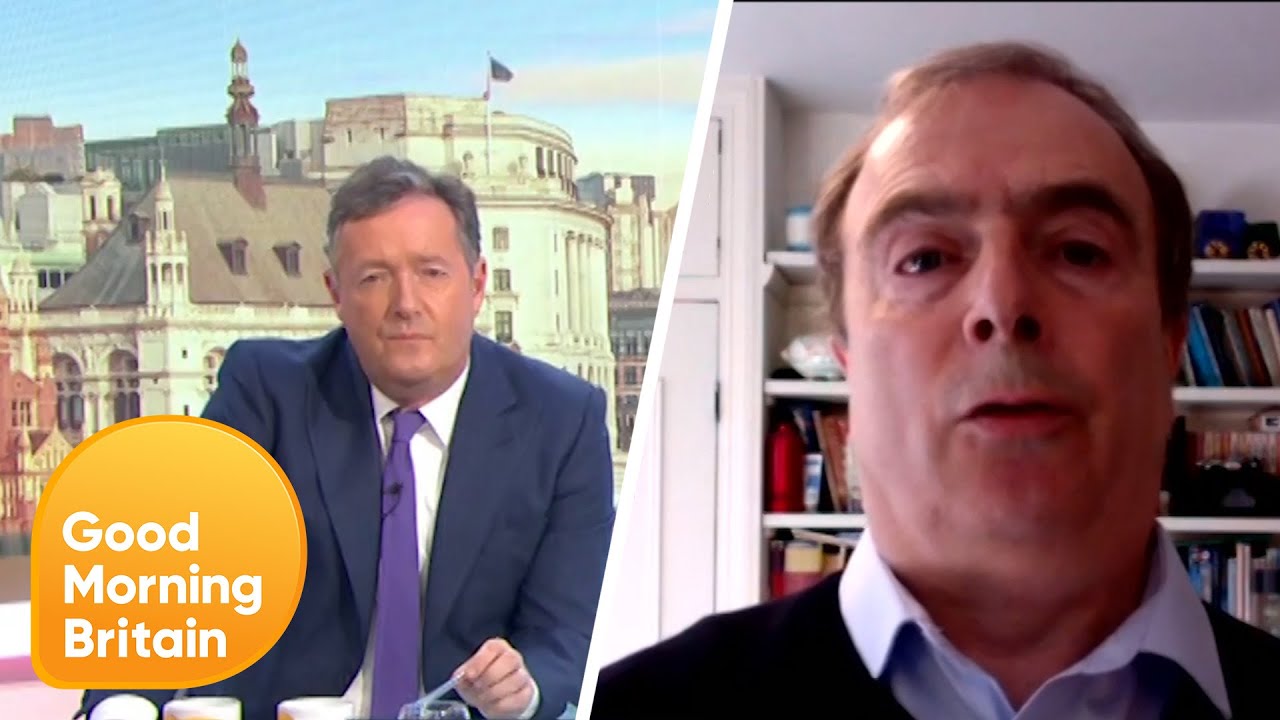 and “unreason.”
The language was familiar: Hitchens has previouslyrejected science showing human activity is responsible for global warming, and labeled measures to tackle climate change such as environmental taxes asa “sort of madness.”
For Lewandowsky, this “hysteria” narrative is part of a wider phenomenon of undermining expertise across the board, from Brexit, to climate change, and now COVID-19.
Lewandowsky points out that this also extends to many on the fringes of the political debate, such as controversial commentatorKatie Hopkins, who had over a million Twitter followers before the platform banned her, and has said the public were being“played” by the government for being asked to wear face masks. Or Brexit Party leaderNigel Farage, who described a police visit to his home as “lunacy” after he apparently broke lockdown rules.
Both have also cast doubt on the reality an of climate change.
“They’re quite explicit about saying that one person’s fact is another person’s lie, because that then enables them to avoid accountability,” Lewandowsky argues.
Miracle cures and conspiracy theories
These commentators’ contributions to the debate haven’t been without consequence. Some have spread conspiracy theories that have had real-world impact, while others have admitted to ignoring official safety guidelines, putting the public at risk of catching the disease.
ColumnistJames Delingpolewrote in a March 28article for the Spectator Australia titled ‘Wu Flu Notes’ that he had gone about his daily business despite having symptoms that align with coronavirus and that it was possible he had “infected lots of graduates.”
Some days later, Delingpole posted a tweet claiming a “high-powered zinc formula” had helped him recover from the illness without the need to go into intensive care – despite little being known about whether any such formula can be a cure for the virus.
He went on to write, “what I’d like more than anything is for this stuff to be available on the open market for everyone. But to mass produce it my friend needs ££££. If I crowdfunded it who’d be interested?” He concluded his request by asking for “potential big money backers."
[twt]
delingpole’s zinc promotion was comparable to comments made by US conspiracy theoristAlex Jones, who, a few weeks prior, hadreceived a cease-and-desist letter from a top New York attorney based on claims he had marketed and sold fraudulent COVID-19 treatments on his conspiracy website. US President Donald Trump was also widely criticised for suggesting that disinfectant taken internally could be a treatment for the virus.
Theories about miracle cures can take hold partly as a result of personal politics, Lewandowsky argues. Under lockdown, “you’re asked to stay at home and to look after other people by not doing what you’d like to do, and that is very challenging if you’re a believer in personal freedom and autonomy,” he says.
The same can be said of the motivations for spreading misinformation on climate change: “A lot of climate denial is very high-pitched, frenetic, emotional, angry, toxic – and that’s all triggered because people’s identity is at stake.”
The desire to reach for conspiracy theories may also stem from a need to feel that individuals still retain some control, says Evita March, a senior lecturer of psychology at Federation University Australia. “Conspiracy theories offer the believer some comfort in that there is still behavioural predictability,” she says.
And there were plenty of conspiracy theories flying around, pushed by long-time climate science deniers.
Piers Corbyn, brother of former Labour Party leader Jeremy Corbyn, was quick to promote the idea that coronavirus was thefault of politically liberal billionaires, and that it was related to the**Chinese-developed 5G mobile network**.
The latter conspiracy, alsopromoted by Infowars’ Jones, had significant real-world consequences. Over the Easter weekend it wasreported that 20 phone masts had been subject to arson attacks. According to Mobile UK, the trade association for four mobile network operators, an estimated 50 masts had beentargeted by April 15
[bbc pix]
david Lawrence, a researcher at campaign group Hope Not Hate, told DeSmog that theories around 5G have existed for a number of years, so “the stage was already set.” ”When the global COVID-19 outbreak occurred, there was both a susceptibility to be exploited and a ready-made explanation to hand,” he said.
“In some ways this is similar to climate change,” said Lawrence, “in that people who work in industries that would be negatively affected by efforts to reduce carbon emissions might be more likely to find reasons to reject the scientific consensus.”
Such conspiracy theories become popular — whether in relation to climate change or COVID-19 — because they are a means of “simplifying and attributing blame,” particularly during a time when “people feel that they have lost control over their lives,” says Lewandowsky.
“Some will seek comfort in the idea that there are bad people out there causing the pandemic because, for some, knowing there are bad people responsible for terrible things is more comforting than to assume that these things are uncontrollable,” he says. “It allows people to direct anger at someone.”
Distrusting modellers
Many commentators directed their fire at a familiar foe — scientific models.
On April 1, the same day the United Nations announced thepostponement of the annual UN climate change conference, two prominent UK climate science deniersargued in The Wall Street Journal that the pandemic had “dramatically demonstrated the limits of scientific modelling to predict the future.”
Benny Peiser andAndrew Montford, the Director and Deputy Director of the UK’s principal climate science denial campaign group the**Global Warming Policy Foundation (GWPF)**, criticised policymakers for using academic research that was subject to a “lack of quality control.” “In normal times this doesn’t matter much, but it’s different when studies find their way into the policy world,” they wrote.
They did not mention that the GWPF’s own approach to ‘peer-review’, which undercover reporters in 2015 showed operated on the basis of sending reports to its members of its own advisory council. The model has been described by UK charity Sense About Science, whose Advisory Council included GWPF advisor Matt Ridley, as “a way of trying to give scientific credibility to certain claims in the hope that a non-scientific audience will not know the difference.”
Eight days later, Breitbart’s Delingpole similarly criticised scientific modelling,dismissing research from the University of Washington forecasting more than150,000 deaths from the disease across the US as “operating in the realms of purest fantasy.” Whether on climate change or the pandemic, “we have no idea whether or not we can trust” scientific experts and their modelling, Delingpole argued[pix BB]
clark takes a similar view, telling DeSmog: “on both COVID-19 and climate change there are a lot of people who seem to favour the results of modelling over real-world observation.” Those who want action “will latch on to any model” that suits their ends, he claimed, and will “decide that is 'the science', that it is fact, beyond all challenge.”
Anarticle in Spiked likewise argued in April that “worst-case scenario thinking” and “doomsday forecasts” from models had clouded political judgement, referencing the obesity crisis, swine flu, and climate change.
This process of regularly casting doubt on models represents the “weaponisation of the scientific method,” says Imran Ahmed, founder of the Centre for Countering Digital Hate. “Those sorts of sly tactics that have been used by these groups have amounted to an entire culture of how they spread information, spread ideas, and build audiences for their groups.”
“It’s expressed through philosophical strands which are anti-expert, faux-populist and conspiracies” and can include the “incel movement, climate denial, vaccine denial, identity-based hate,” he argues.
“As new facts emerge and as the understanding of the scientific movement changes,” says Ahmed, “these actors look back at previous consensuses and say, ‘see, they were lying back then.’”
Attacking environmentalists
As well as attacking coronavirus experts on their response recommendations, many commentators who oppose climate action also attacked those looking further ahead by putting forward proposals to ensure recovery plans were consistent with governments’ environmental pledges.
For months, commentators who regularly question the veracity of mainstream climate science denounced environmental activists for supposedly distracting the world with climate change amid the threat of pandemics.
On March 12, Telegraph columnistSherelle Jacobsargued that university funding should be redirected away from climate change research and towards “the scientifically uncontested problem of pandemics.” The day after, when the UK was effectively put under a national lockdown, Dutch climate science denial groupCLINTEL published anopen letter titled “Fight virus not carbon.”
Greenpeace,The Climate Group, and many other environmental organisations believe that the government should include environmental policies in coronavirus economic recovery measures to “build back better,” particularly as the country seeks to position itself as a climate leader ahead of hosting the UN climate talks in November 2021.
Some commentators spun this argument to imply that the environmental movement was happy that the virus has spread.
On March 22, former Top Gear presenterJeremy Clarksonclaimed in the Sunday Times that “greens just can’t stop smiling” because COVID-19 was “their idea of a wet dream.” Spiked contributor Ross Clark echoed this position in a response to DeSmog’s questions, saying that “there is a strand of opinion on the left which wants these crises — climate change and COVID — to be as big as possible because they see it as a way of undermining capitalism, and other aspects of our lives, and reforming society in their own dream vision.”
On March 25, a couple of days after Clarkson’s polemic appeared, Spiked editor Brendan O’Neill similarly argued that the pandemic was “a glimpse of the dystopia greens want us to live in.”
“The truth is that if the COVID-19 crisis has shown us anything, it is how awful it would be to live in the kind of world greens dream about. Right now, courtesy of a horrible new virus, our societies look not dissimilar to the kind of societies Greta Thunberg, Extinction Rebellion, green parties and others have long been agitating for,” he wrote.
[pix] o’Neill reiterated this position when contacted by DeSmog, saying both the “green movement” and the reaction to COVID represented “privileged Westerners taking political decisions and actions” to the detriment of some of society’s most vulnerable. “Progressives should be questioning the impact of the reaction to COVID-19 on working people and poor people,” he said.
In June, 57 charitieswrote to Prime Minister Boris Johnson asking him to put the creation of jobs in low-carbon sectors at the forefront of his economic recovery plans. They also asked the government to cancel the debts of developing countries struggling with both the impacts of the pandemic and the climate crisis.
Delingpole later wrote in acolumn for Breitbart saying environmentalists were celebrating the lockdown as a blueprint for a “new world order.” The GWPF took this argument one step further,publishing an image of a crying woman with the text, “net zero, like lockdown but permanent” — a reference to the UK government’s plans to slash the country’s emissions.
As these pieces were appearing, a Twitter account claiming to represent the climate protest group Extinction Rebellion (XR) in the East Midlandsposted an image of an XR-branded sticker on a lamppost with the words, “corona is the cure, humans are the disease.”
Official XR accounts were quick to condemn the tweet andsaid that they were not affiliated with the newly created account, which has since been deleted. But various outlets and commentators used the tweet to condemn the protest group.
Gaia Fawkes, the environmental section of political blog Guido Fawkes,suggested the post showed that XR was “in favour of extinction,” though it acknowledged coordinators of the organisation had “distanced themselves” from the supposed splinter group. A spokesperson for the site told DeSmog it stood by its reporting despite well-publicised doubts over the authenticity of the East Midlands organisation, stating it was “unaware of any publicly available list of ‘official’ [XR] groups at the time.”
The GWPF likewise claimed the Twitter account’s “anti-human sentiment” was “widely shared” among environmentalists,rejecting claims that the East Midlands account was fake.
Author and Guardian columnist George Monbiot suggests that while it is predominantly money that is behind climate science denial or tobacco industry lobbying, “with COVID-19, the motive definitely varies,” but the outcome is essentially the same.
“There are a lot of very well-paid people who are very professional and they’re using the expertise that they’ve gathered in other areas of dispute about scientific facts and the policies arising from them, and applying those directly to the pandemic,” he argues.
“Take their power seriously, but don’t take any of their arguments at face value,” Monbiot concludes. “It’s not worth trying to deconstruct the nonsense they come out with.”
Political impact
Unlike in theEU referendum or Trump’s presidential campaign, pushing anti-expert rhetoric may no longer be a winning strategy in the wake of COVID-19. Polling shows that despite worry about the pandemic and its impacts, the public still wants governments totackle climate change. And politicians attaching themselves to the anti-science bandwagon are now struggling in the polls.
For the Centre for Countering Digital Hate’s Ahmed, attacking the concept of expertise around COVID-19 is “the first truly great strategic mistake by those who espouse this radical world view.”
The US and UK are two of the countries hardest hit by the coronavirus pandemic, and both have leaders “who have been denying evidence and fact,” says Lewandowsky. “Johnson and Trump are creating a situation in which the very thought that we could establish a common truth is under attack,” he says. Both are regularly backed by commentators who also openly question the concept of expertise, whether on climate change or coronavirus.
But these positions have begun to hurt both leaders. Johnson has plummeted from a position of public popularity prior to the UK’s lockdown to anegative approval rating almost four months later. And the gap between the majority of Americans who disapprove of Trump’s leadership and those keeping faith with the president now sits ataround 15 percent, numbers that could see him lose November’s election.
That may reflect a wider shift in the public mindset, Lewandowsky argues: “My hope is that the COVID crisis has kind of given us a reset here, and there’s some evidence that people are beginning to say that we do need experts and data.”
==
ew 120
Client Earth has the green light from a British court to sue the UK government for undermining its own planning authority's concerns about the climate crisis when it approved Europe's largest gas-fired power station, according to The Independent.
==
an 1219
Britons gear up to defend NHS from privatization scheme as Tories win strong majority in UK electionJake Johnson / Common Dreams
==
omg
https://www.alternet.org/2019/12/after-a-big-win-for-boris-johnson-and-brexit-the-british-left-faces-the-darkness
no lnx
After a big win for Boris Johnson and Brexit, the British left faces the darkness
Written by Andrew O'Hehir / Salon December 13, 2019
British general elections have a tendency to deliver last-minute surprises, and the U.K.’s third in less than five years did not disappoint. Unfortunately for the Labour Party, the British left and the anti-Brexit forces, the surprise of 2019 appears to be a catastrophic wipeout.
Polls leading into Thursday’s election had suggested a tightening race that could end in a “hung parliament.” Lines — sorry, queues — at polling places were lengthy, and British social media buzzed with the possibility that left-wing Labour leader Jeremy Corbyn might win just enough seats to forge a coalition government with the Scottish National Party, ousting preening, Trump-flavored Prime Minister Boris Johnson and the Conservative Party and paving the way for a second Brexit referendum.
None of that will happen now. As Johnson told a cheering crowd at Conservative Party headquarters in London, the Tories had won a “stonking” victory, which will ensure that the U.K. leaves the European Union sooner rather than later, and will lock down the right’s hold on power in Britain for the next several years.
With most votes counted early on Friday morning, the BBC reports that the Tories will win an outright majority of roughly 364 seats in the 650-seat House of Commons, a gain of 47 from the indecisive 2017 election.
If possible, the news for Labour and Corbyn, its controversial leader, is even worse than that. While the Conservative vote share is only slightly higher than it was in 2017, Labour’s vote has declined by roughly 8 percent. After gaining 30 seats in 2017 for a total of 261 — its biggest electoral gain for 20 years — Labour stands to lose 57 or 58 seats this time around, potentially its worst overall election result since World War II.
There are several interesting footnotes to this election, including abig comeback by the Scottish National Party, who have won at least 48 seats, virtually wiping out both Labour and the Tories north of the border and reigniting the push for Scottish independence. The centrist Liberal Democrats, who had hoped to thrive by being the only party clearly against Brexit, remain irrelevant, with party leader Jo Swinson losing her seat to the SNP.
But for Labour and the overall British left, no sugarcoating is possible. This election is an unmitigated disaster.
As author and journalist David Kogan told me in a recent interview, the British left saw Corbyn’s unexpected victory in the Labour leadership campaign of 2015 as a historic opportunity to pursue systemic progressive change. That opportunity is gone now, and for years to come. Let’s take a moment to acknowledge that for many people in Britain and around the world, this is a crushing blow.
Whatever you make ofJeremy Corbyn, he is a person of great moral decency and unbending principle, who engaged and aroused a generation of young activists. For practical purposes his political career is now over: Late on Thursday, Corbyn said he intended to remain as leader for a period of “reflection,” although many in the party would clearly prefer he quit immediately. He certainly will not try to lead Labour into another election.
Exactly why did this election go so badly south for Labour, and what lessons does this debacle hold for Americans who yearn to defeat Donald Trump next November? It’s way too early to offer definitive answers to those questions — especially from thousands of miles away — but if you spent any time on political Twitter on Thursday evening, you know that plenty of people gave it a try.
The fairest answer is probably that damn near everything went wrong for Labour, and that outside observers will draw whatever lessons they like, mostly the ones that support whatever they already believe. Democratic “moderates” in the U.S. are already using the Corbyn catastrophe, for instance, to warn darkly that their own party must not take a chance on a leftist or progressive candidate like Bernie Sanders or Elizabeth Warren in 2020. Whatever the merits of that argument, it doesn’t have much to do with what just happened across the pond.
It’s perfectly true that Corbyn was the most prominent leftist leader of any major political party in any major Western democracy over the last several years, and that he pushed an unrepentant progressive agenda. But that agenda — expanding public services and ending the era of austerity — was widely popular in almost every detail, and was not the reason Labour lost this election so badly.
Corbyn himself, as a political personality, is another matter. Four years as party leader have exposed the fact that he was a lifelong activist with no management experience. He has alternately seemed too weak and too autocratic — and has also been subjected to relentless vilification by the pro-Tory press.Fairly or not, people in Britain who didn’t adore him had largely come to fear and dislike him. So far, it seems that many Labour candidates think Corbyn’s presence at the top of the party is the biggest reason they lost, but not necessarily because middle-ground voters perceived him as too radical.
It was hugely damaging that Corbyn refused to take a clear position on Brexit, the overarching political issue that dominated this election. To be fair, he didn’t have great options, and his promise to act as a “neutral referee” on Brexit reflected an awkward split within his party’s base.To oversimplify the equation slightly, traditional working-class Labour voters in the north of England tended to support Brexit, while affluent, cosmopolitan Labour voters in and around London overwhelmingly opposed it. Still, if the party’s leader had taken a clear position and stuck with it (as in fact he did in the 2017 campaign), the results might have been different.
Corbyn also appeared indecisive, or somewhat worse than that, when it came to Labour’s burgeoning anti-Semitism scandal, in which some Jewish Labour MPs or candidates were targeted for abuse by pro-Palestinian leftists. As David Kogan puts it, there was no evidence that Corbyn himself harbored hateful views, but also no evidence that he cared about the problem all that much or understood how badly it had damaged the party’s reputation.
There are no precise parallels to either of those things in American politics, although there are certainly echoes. To this point, allegations of anti-Semitism against Democratic members of Congress have done no lasting damage — largely because their source, one might say, is compromised. But Brexit, I suppose, is metaphorically similar to Donald Trump’s border wall, which is more or less the instrument he used to pry Ohio, Florida, Iowa, Michigan, Wisconsin and Pennsylvania away from the Democrats.
In both cases, we’re talking about a political party struggling to adapt to rapid change, so far without success. One analysis of the British election I encountered late on Tuesday night suggested that Labour might actually gain a few previous Tory seats in London, while losing many more longtime Labour seats in what was once the party’s working-class northern heartland. (This appears accurate so far.) That would be England’s version of the Big Sort, in which geography, educational level and generational identity — along with race, of course — become the dominant social dividing lines and political signifiers.
Jeremy Corbyn and the British left just experienced a painful illustration of this cultural and demographic shift in action, and of how it nourishes a politics of rage and resentment that can undermine and endanger democracy. Americans already know about this: You can feel certain you’re on the right side of history, and still end up, shocked and dismayed, on the wrong side of electoral arithmetic. The trick, of course, is to find a way to win without sacrificing your essential principles. Does anyone ever do that?
==
Coldplay /Band pause touring until they can offer 'environmentally beneficial' concerts
==
desmog
Police have been criticised for repeatedly delaying a review of official guidance for policing fracking protests after a cache of leaked correspondence highlighted ongoing problems with the...
==
1119
More than 60 MPs are standing down in the upcoming election. While it’s always sad to bid esteemed colleagues goodbye, some MPs leaving may not be such a bad thing for the UK’s efforts to tackle the climate crisis.
From fracking supporters, to aggressive opponents of climate campaigns, here’s a quick rundown of some of those that won’t be returning to the house of fun come 2020. Read more...
---
fter seven years of promoting fracking, Conservative ministers have withdrawn their support.
The UK government has issued an immediate moratorium in England because of the risk of earth tremors. Governments in Scotland, Wales and Northern Ireland have already issued measures that amount to moratoriums on fracking. Read more...
==
https://www.desmog.co.uk/2019/09/04/bbc-changes-editorial-guidelines-improve-scrutiny-unbiased-thinktanks
no lnx
BBC Updates Editorial Guidelines to Improve Scrutiny of Thinktank Pundits
Read time: 3 mins
By Mat Hope • Wednesday, September 4, 2019 - 11:20
The BBC has altered its editorial guidelines after persistent calls for the organisation to improve transparency around the commentators to which it gives a platform.
The broadcaster has now added “think tanks” to a list of groups that it says presenters and producers should “not automatically assume … are unbiased”.“Appropriate information about their affiliations, funding and particular viewpoints should be made available to the audience, when relevant to the context,” the guidelines say.
The change could have significant ramifications for representatives of anti-regulation, pro-Brexit think tanks and campaign groups based in and around offices at 55 Tufton Street, including the UK's principal climate science denial campaign group the Global Warming Policy Foundation, on which DeSmog has extensively reported.
This follows pressure from journalists including the Observer’s Carole Cadwalladr. She has long fought for the funding and ideology of groups including Vote Leave, Leave.EU, the Institute of Economic Affairs, Taxpayers’ Alliance, and other Tufton Street groups to be made clear when they appear on the BBC’s programmes.
Revealing the change to the guidelines on Twitter, Cadwalladr called the move “a very small ray of sunshine in an ongoing national shitshow”. In an email to Cadwalladr from a BBC press officer, she was told the changes had been made in part due to a meeting she had with the organisation’s Director General, Tony Hall.
Carole Cadwalladr
?
@carolecadwalla
OMG!!!
A v small ray of sunshine in ongoing national shitshow..but @BBC has introduced a new policy on think tanks! That includes info on "funding"!!
*faints*
Look! And it only took all of us going on & on for years (& a strategic ambush of the director general at a public event)
Cadwalladr told DeSmog:
‘It’s a really important move that a lot of people have been calling out for a very long time. These corporate lobbyists have been pushing policies on behalf of unknown clients and have been given a free platform to disseminate their misinformation across pretty much all UK broadcasters.”
“I really hope other news organisations will now follow the BBC’s lead and that we will finally see the end of this paid-for propaganda masquerading as ‘independent’ free speech’”.
[Read more: Mapped: A Who's Who of Brexit and Climate Science Denial]
Adam Ramsay, Co-Editor of openDemocracy UK, who has also long argued that experts should be forced to disclose who funds them if they want to participate in high-profile broadcasts, called the change “a small victory for everyone who has investigated these lobby groups masquerading as think tanks”. But he urged caution until there had been some examples of the guidelines being implemented. He told DeSmog:
“It’s only a small victory until we see how journalists apply the policy. Will the IEA be introduced as ‘and now, the representatives of British American Tobacco are here to put the tobacco industry view?’ Or will they still in reality be paraded as experts, with a mumbled introduction informing viewers that other views are available?”
Dustin Gilbreath, Communications Manager for watchdog Transparify, which ranks think tanks on their transparency, welcomed the move, and hoped it would encourage groups to be more open. He told DeSmog:
“In the United Kingdom, the lion's share of reputable think tanks have embraced financial transparency as the standard. Only a limited few large think tanks continue to take money from hidden hands behind closed doors.”
“We hope that the BBC's actions will encourage those think tanks that remain opaque in the UK to reconsider their financial transparency.”
==
===
bit lost see clintel
https://www.desmog.co.uk/2019/09/06/climate-science-deniers-planning-coordinated-european-misinformation-campaign-leaked-documents-reveal
A coalition of climate science denial groups is gearing up for a European media blitz later this month, in an apparent bid to derail efforts to set an EU-wide “net zero” emissions target, documents obtained by DeSmog show.
Plans for a self-styled “European Declaration” include press conferences in Brussels, Rome and Oslo and a letter to be sent to leaders of EU and UN institutions, scheduled for mid-September.
The letter claims to have “400 independent Climate Scientists and Professionals” signed up so far.
Some notable signatories are part of a trans-Atlantic network of thinktanks pushing for environmental deregulation post-Brexit, and have a history of climate science denial. A number of former employees of the network’s member organisations are now staffers in Boris Johnson’s cabinet Brulle, Professor of Sociology at Drexel University and an expert on climate science denial, told DeSmog the campaign looked like a panicked response to recent high-profile efforts to highlight the climate crisis:
“The rise of the Extinction Rebellion movement, and the immense popularity and influence of Greta Thunberg, are having a significant impact on media coverage of climate change and concern about this issue. I would suspect that the aim of the campaign is to blunt the impact of these climate advocacy efforts.”
“The talking points are stale and patently scientific nonsense. That isn't critical. The point would be to keep the ‘contested’ nature of climate change alive.”
Geoffrey Supran, a Research Associate at Harvard University who gave evidence to the European Parliament in March on oil giant ExxonMobil’s historic promotion of climate science denial, said he thought the move was an attempt to distract from the various upcoming efforts to increase action on climate change globally, such as the UN Climate Action Summit at the end of the month:
“These people are the rhetorical equivalent to the kid in the classroom screaming ‘Look at me! Look at me!’ They're desperate for attention.”
“As always, they presumably hope to muddy the waters of public and political discourse on the climate crisis. To feed the echo chamber of sympathetic right-wing media and blogs, and to prey on naive and unsuspecting journalists who may be tempted to exercise false balance in their climate coverage.”
Coordinated effort
The campaign is being spearheaded by a new Netherlands-based climate science denial group called the Climate Intelligence Foundation (CLINTEL), launched in April with funding from Niek Sandmann, a multimillionaire real estate developer.
The group’s co-founder Guus Berkhout, an engineering professor who began his career at Shell and set up the Delphi Consortium in the 1980s to develop new exploration methods for the oil and gas industry, told DeSmog that interest in the campaign had been “overwhelming”.
Berkhout said there were plans to hold press conferences in European capitals and that the effort was being “expanded to a World Climate Declaration”. He declined to offer further details or comment.
In addition to CLINTEL, the international organising group includes some well-known figures from the climate misinformation world, including:
- Professor Richard Lindzen, former Distinguished Senior Fellow at the Cato Institute (USA)
- Viv Forbes, Chairman of the Carbon Sense Coalition (Australia)
- Professor Fritz Vahrenholt, Speaker at the European Institute for Climate and Energy (Germany)
- Professor Jeffrey Foss, Contributor to the Frontier Centre for Public Policy (Canada)
- Jim O’Brien, Chair and Co-founder of the Irish Climate Science Forum (Ireland)
- Terence Dunleavy, Founding Chairman of the International Climate Science Coalition (New Zealand)
In an email seen by DeSmog, Berkhout explains that “signatures are being collected from persons who give a valuable contribution to the climate debate and are recognised as such”. He goes on to boast that there are “already a lot of great names on the list”.
Of the 400 signatories, only a handful have a background in climate science, with the majority being writers, engineers and geologists with no direct expertise in the field.
In addition to the Cato Institute's Richard Lindzen,the list features numerous figures from US-based libertarian groups, including Patrick Michaels of the Competitive Enterprise Institute, and Charles Battig and Willie Soon from the Heartland Institute, which provides a total of 12 signatures alone. All three organisations are members of the Atlas Network, a Koch-funded international umbrella body of free-market groups.
UK affiliates of the network include the Institute of Economic Affairs (IEA), the Adam Smith Institute (ASI) and the Taxpayers’ Alliance. A number of former employees of these groups are now working in Boris Johnson’s government.
Taxpayers’ Alliance founder Matthew Elliott is reportedly advising new Chancellor Sajid Javid, whose Conservative leadership campaign he ran, while former employee Chloe Westley has joined Boris Johnson’s Number 10 team. International Trade Secretary Liz Truss has appointed two special advisors from the IEA and ASI.
UK support
The UK’s principal climate science denial group, the Global Warming Policy Foundation(GWPF), founded by former Chancellor Nigel Lawson in the run-up to the 2009 Copenhagen climate summit, is also well-represented in the campaign.
At least four members of its Academic Advisory Council feature in the letter’s signatories, and other contributors to the GWPF have also backed the “declaration”.
One is Northumbria University Professor Valentina Zharkova, who gave a lecture to the group last year claiming that climate change is caused by natural solar cycles. A paper Zharkova co-authored in June on the same subject was criticised for containing “basic errors” and an investigation into how it came to be published was launched by the scientific journal that printed it.
CLINTEL also has close ties to the GWPF. Berkhout wrote an essay for the UK group last year insisting that climate change was purely a natural phenomenon. And in February, the GWPF published an article by its Dutch counterpart that said: “Yes, the Earth is warming up. But that is business as usual. Earth’s history tells us that climate change has always happened.”
The following month GWPF director Benny Peiser spoke at a gathering in Amsterdam where CLINTEL announced its upcoming launch.
At that event, Berkhout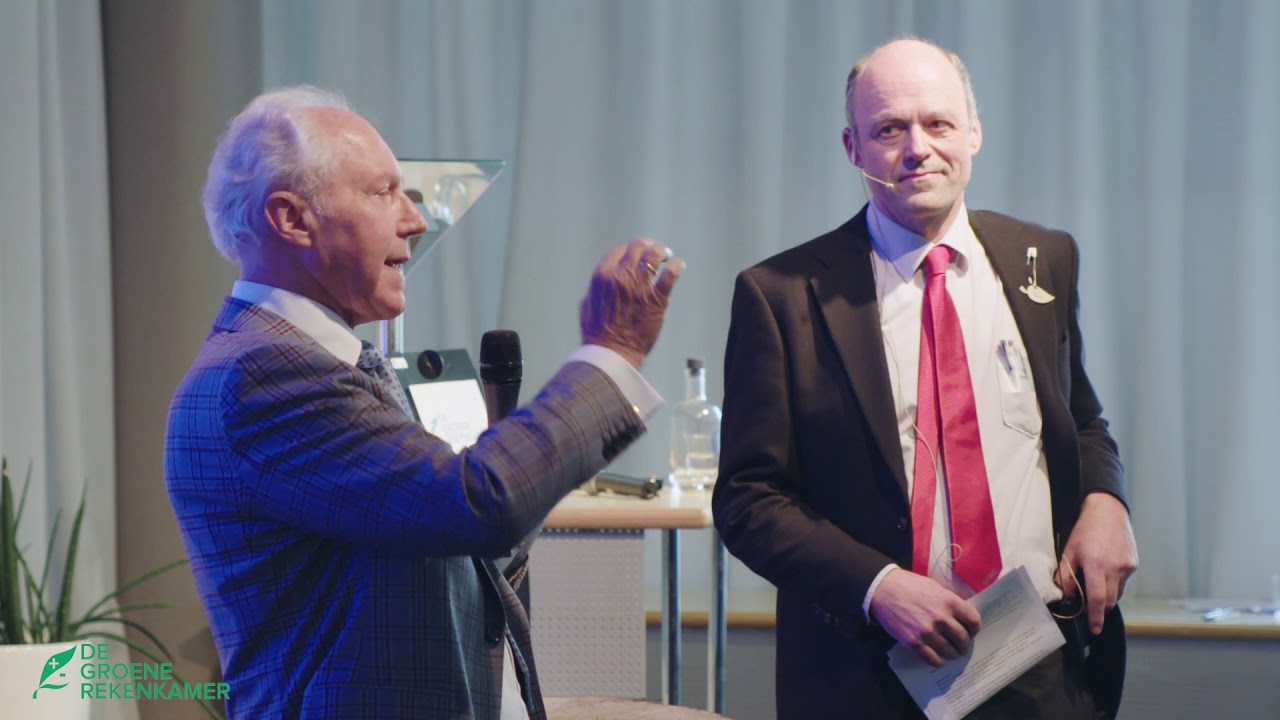 : “in this whole audience, apart from the organisation and a few brave ones, I don't see young people. So the first thing we are going to do is talk with the young people.” CLINTEL currently has a youth wing called “Young Clintel”.
The GWPF did not respond to a request for comment.
Other UK signatories include directors and former directors of lesser-known oil and gas companies, as well as five Fellows of the Geological Society, a professional body representing Earth scientists.
In addition to the EU “net zero” emissions target under consideration, planned “climate strike” protests and the upcoming UN Climate Action Summit, the media offensive may also, given its European focus, be timed to coincide with a crunch government meeting in Germany on how the country will meet its 2030 emissions target, set to take place on 20 September.
German signatories to the letter include a spokesperson for the European Institute for Climate and Energy (EIKE), which a Der Spiegel investigation earlier this year found had been working closely with the insurgent, far-right Alternative for Germany party to campaign against action on climate change.
===
===
OMG
desmog
Is Boris Johnson's Cabinet the Most Anti-Climate Action Ever?
Boris Johnson conducted an extraordinary cull of government ministers on his first day as Prime Minister. His mission was mainly to bring in new, more pro-Leave blood to replace the supposed...
===
desmog 819
England recently experienced its most severe blackout in more than a decade, leading to a cacophony of calls from the usual suspects to scrap windfarms and abandon plans to turn the country’s electricity supply from brown to green.
The blackout was caused by two power plant outages last Friday – at the Little Barford gas-fired power plant and the Hornsea offshore wind farm. While National Grid was quick to explain that this was a “rare and unusual event”, the breakdown was used to push an anti-climate action agenda under the auspices of debate over energy policy.
==
==
https://www.alternet.org/2019/07/the-bolton-gambit-succeeded-critics-warn-top-trump-adviser-has-put-the-uk-on-path-to-war-with-iran/
no lnx
‘The Bolton gambit succeeded’: Critics warn top Trump adviser has put the UK on path to war with Iran
Written by Jake Johnson / Common Dreams July 22, 2019
With the United Kingdom and Iran in the midst of a tense and dangerous standoff after the tit-for-tat seizure of oil tankers in the Strait of Hormuz, international observers are warning that the British government has fallen into a trap set by hawkish U.S. national security adviser John Bolton that could lead to a devastating military conflict.
After British commandos earlier this month swarmed and detained Iran’s Grace 1 oil supertanker in waters east of Gibraltar, Bolton applauded the move as “excellent news” and said “America and our allies will continue to prevent regimes in Tehran and Damascus from profiting off this illicit trade.”
Simon Tisdall, foreign affairs editor and commentator for The Guardian, wrote over the weekend that “Bolton’s delighted reaction suggested the seizure was a surprise.”
“But accumulating evidence suggests the opposite is true, and that Bolton’s national security team was directly involved in manufacturing the Gibraltar incident,” wrote Tisdall. “The suspicion is that Conservative politicians, distracted by picking a new prime minister, jockeying for power, and preoccupied with Brexit, stumbled into an American trap.”
Shortly after British forces seized Grace 1, Spanish Foreign Minister Josep Borrell said the U.K.’s capture of the tanker was carried out under orders from the United States.
Tisdall pointed to a story last week by Spanish newspaper El Pais, which reported that the Iranian tanker “had been under surveillance by U.S. satellites since April.”
“Although Spanish officials, speaking after the event, said they would have intercepted the ship ‘if we had had the information and the opportunity,’ Spain took no action at the time,” Tisdall wrote. “But Bolton, in any case, was not relying on Madrid. The U.S. had already tipped off Britain. On 4 July, after Grace 1 entered British-Gibraltar territorial waters, the fateful order was issued in London—it is not known by whom—and 30 marines stormed aboard.”
The U.K.’s seizure of Grace 1—denounced by the Iranian government as an act of “maritime piracy“—led Iran to counter on Friday by capturing a British tanker in the Strait of Hormuz, ratcheting up tensions in the Persian Gulf and prompting the British government to warn of “serious consequences” if the tanker was not released.
The perilous standoff, Tisdall argued, is precisely the outcome Bolton was seeking.
“The Bolton gambit succeeded,” Tisdall wrote. “Despite its misgivings, Britain has been co-opted on to the front line of Washington’s confrontation with Iran. The process of polarization, on both sides, is accelerating. The nuclear deal is closer to total collapse. And by threatening Iran with ‘serious consequences,’ without knowing what that may entail, Britain blindly dances to the beat of Bolton’s war drums.”
Iranian Foreign Minister Javad Zarif offered a similar assessment in a series of tweets on Sunday.
Make no mistake:
Having failed to lure @realDonaldTrump into War of the Century, and fearing collapse of his #B_Team, @AmbJohnBolton is turning his venom against the UK in hopes of dragging it into a quagmire.
Only prudence and foresight can thwart such ploys.
— Javad Zarif (@JZarif) July 21, 2019
TheB Teamis the name Zarif has given to a group of officials that consists of Bolton, Saudi Crown Prince Mohammed bin Salman, Abu Dhabi Crown Prince Mohammed bin Zayed, and Israeli Prime Minister Benjamin Netanyahu.
Bolton in particular has been at the center of escalating military tensions between the U.S. and Iran, which were sparked by Trump’s decision last year to violate the Iran nuclear accord.
As Common Dreams reported in May, Bolton used the routine deployment of a U.S. bomber task force to the Middle East to threaten Iran with “unrelenting force.”
After Iran in June shot down an unmanned U.S. drone that it said violated its airspace, Bolton was among the group of officials urging Trump to retaliate with airstrikes. The president approved the strikes then backed off at the last minute.
Trita Parsi, executive vice president of the Quincy Institute for Responsible Statecraft, warned Sunday that by following Washington’s orders in the Gulf, the U.K. is repeating the mistakes it made in the lead-up to the U.S.-led invasion if Iraq.
“In 2003, the U.K. broke with the E.U. and foolishly sided with Bush over Iraq. London not only devastated the Middle East, it also undermined the E.U.,” Parsi tweeted. “Now, the U.K. is at it again by doing Bolton’s bidding and allowing him to make the U.K./E.U. collateral damage in his war plans with Iran.”
“Why did the U.K. agree to Bolton’s request to confiscate an Iranian oil tanker, knowing very well Iran would retaliate by taking a British one in return?” Parsi asked. “Does the U.K. want war? Does E.U. interest not matter to London? Stunned these questions haven’t been asked. Answers are needed.”
==
===
guk 719
Biggest compliment yet': Greta Thunberg welcomes oil chief's 'greatest threat' label
Activists say comments by Opec head prove world opinion is turning against fossil fuels
Jonathan Watts
@jonathanwatts
Fri 5 Jul 2019 11.13 EDT Last modified on Fri 5 Jul 2019 12.55 EDT
Greta Thunberg and other climate activists have said it is a badge of honour that the head of the world’s most powerful oil cartel believes their campaign may be the “greatest threat” to the fossil fuel industry.
The criticism of striking students by the trillion-dollar Organization of the Petroleum Exporting Countries (Opec) highlights the growing reputational concerns of oil companies as public protests intensify along with extreme weather.
Mohammed Barkindo, the secretary general of Opec, said there was a growing mass mobilisation of world opinion against oil, which was “beginning to … dictate policies and corporate decisions, including investment in the industry”.
He said the pressure was also being felt within the families of Opec officials because their own children “are asking us about their future because … they see their peers on the streets campaigning against this industry”.
Although he accused the campaigners of misleading people with unscientific arguments, the comments were welcomed by student and divestment campaigners as a sign the oil industry is worried it may be losing the battle for public opinion.
“Thank you! Our biggest compliment yet!” tweeted Thunberg, the 16-year-old Swedish initiator of the school student strike movement, which continues every Friday.
“Brilliant! Proof that we are having an impact and be sure that we will not stop,” said Holly Gillibrand, who was among the first students in the UK to join the global climate strikes.
Opec – which is made up of 14 countries with 80% of the world’s proven oil reserves – is planning to expand production, which is undermining efforts to slow global heating. The backlash is not just from students, Extinction Rebellion activists and climate scientists.
Insurance companies– which have the most to lose from storms, floods, fires and other extreme weather – are increasingly pulling investment from fossil fuel assets. The governor of the Bank of England has warned of growing climate risks to the financial sector.
Earlier this week, the London Stock Exchange reclassified oil and gas companies under a non-renewable energy category that effectively puts them on the wrong side of climate crisis.
Parliaments in three countries – the UK, Canada, France – have declared a climate emergency, as have dozens of municipalities. They include most recently a first major US city, New York, which has previously filed a lawsuit against the five biggest private oil companies.
The Organisation for Economic Co-operation and Development (OECD), a group of wealthy countries, has also taken a more strident tone in calling for government to put a higher price on oil, gas and coal, to end subsidies and to rethink fossil fuel investment.
“Our policies have to be made with our children’s future in mind … short-term decision-making can lock countries into expensive mistakes in financing and developing infrastructure … that will be neither necessary nor profitable in a low-emissions world, they will be stranded assets,” said the OECD secretary general Angel Gurría.
Scientists are also backing a phaseout of fossil fuels as the signs of climate disruption grow more evident.
In the past two weeks, temperature records have been broken in France, Alaska and Cuba; there have been wildfires in Germany, Spain, Sweden and Anchorage; Chennai is among more than a dozen Indian cities running out of water; Russia is experiencing historic floods; Mexico experienced freak hailstorm that left Guadalajara streets more than a metre deep in ice; while the Chinese meteorological agency said records had been broken at 40 weather stations.
While Opec continues to insist oil is not responsible for climate chaos, campaigners feel they are finally winning the argument.
Bill McKibben, the founder of 350.org, which has led a series of divestment and anti-pipeline campaigns in recent decades, said the fossil fuel companies were finally losing their social licence.
“By this point, most people realise that the oil companies lied for decades about global warming – they are this generation’s version of the tobacco companies. And it’s clearly affecting their ability to raise capital, to recruit employees and so on. People set out to cost them their social licence, and it’s working. Whether it’s working fast enough – that’s another question.”
==
==
United States isn’t the only English-speaking country where politicians can be loose cannons: in the U.K., Conservative MP Mark Field has been suspended from his position as a Foreign Office minister following a physical attack on a female Greenpeace activist.
In a video that has been posted on the Guardian’s website, Field can be seeing grabbing the protester by the neck at a June 20 dinner at London’s Mansion House and physically removing her from the event — and she can be heard saying, “It’s a peaceful protest.” Greenpeace activists disrupted the dinner in order to draw attention to the climate change crisis.
The 54-year-old Field has said he feared the Greenpeace protestor might have been armed; regardless, outgoing Prime Minister Theresa May (who is also a member of the Conservative Party) decided to suspend Field after watching the video.
In an official statement, a spokesperson for May noted, “The police have said they are looking into reports over this matter,” adding that Field “will be suspended as a minister while this investigation takes place.”
Members of the Labour Party, which is presently headed by liberal/progressive Jeremy Corbyn, have asserted that Field’s suspension is not enough and are calling for his resignation. Labour Party MP Dawn Butler, who has served as Shadow Women & Equalities secretary since 2017, described the video as “horrific.”
Field has apologized yet maintains that he acted “instinctively” and was concerned about the safety of those attending the dinner.
===
new
https://www.desmog.co.uk/2019/03/12/turning-point-meet-trump-allied-climate-science-denying-fossil-fuel-funded-ultra-conservative-us-student-group-coming
no lnx tt
Turning Point: Meet the Climate Science Denying, Fossil Fuel Funded US Student Group Coming to a UK Campus Near You
By Richard Collett-White • Tuesday, March 12, 2019 - 00:34
Turning Point UK tour advert]
The US leaders of a scandal-hit American student movement are touring the UK this week, following the launch of a British branch of the organisation last month.
Advocating climate science denial, “free markets and limited government”, and with numerous links to the fossil fuel industry and Donald Trump, Turning Point claims to have a presence on more than 1,300 college campuses and high schools, engaging in “over 500,000 face-to-face conversations with college students each semester.”
The scandal-hit group has been plagued by incidents of racism and allegations of illegal campaign spending since its launch, with its “professor watchlist” accused of stymying academic freedom.
Nonetheless, Turning Point USA’s (TPUSA) founders are in town this week for a three-stop tour of the UK, making appearances in London, Nottingham and Brighton, where Sussex University Conservative Society is hosting an event.
So, what can we expect?
Read more about Turning Point and Charlie Kirk in DeSmog’s Disinformation Database
Trans-Atlantic Strategy
:{:{}:
}:
With a multi-million dollar annual budget, the group is known for its slick videos and well-funded campaigns. But the online launch of itsUK spin-off just over a month ago quickly descended into chaos when hundreds of parody Twitter accounts appeared, leaving people wondering which were real and which were fake.
At the time, Turning Point UK (TPUK) received the blessing of various leading pro-Brexit politicians, including Conservative MPs Priti Patel, Steve Baker and Jacob Rees-Mogg, as well as former UKIP leader Nigel Farage.
A leaked memo from fellow US youth conservative organisation, Young America’s Foundation, warned its activists about associating with Turning Point, however, referencing the group’s alleged harbouring of “racists and Nazi sympathizers.”
Similarly, the UK Conservative Party advised its student associations “not to work with [TPUK] in any capacity”.
:{:{}:
}:
Speakers at a TPUK event in London on Sunday included Chloe Westley, campaign manager of campaign group the Taxpayers’ Alliance, which shares offices at 55 Tufton Street with the Global Warming Policy Foundation (GWPF), the UK’s premier climate science denial group. And among the guests at TPUK’s formal launch event in December were climate science denier columnists James Delingpole and Rod Liddle, Buzzfeed reported.
At that event, TPUSA co-leader Candace Owens made headlines after statements she made about the way people associate nationalism with Adolf Hitler:
“He was a national socialist, but if Hitler just wanted to make Germany great and have things run well, OK, fine,” she said. Owens later clarified on Twitter that she in no way supported the actions of Nazi Germany.
Climate Science Denial and Fossil Fuel Funding
When asked at the launch event to reveal who funds TPUK, John Mappin, a Scientologist who owns a castle in Cornwall and is one of the key figures behind the group, answered: “Well, the whole idea is to stay anonymous… That's how they do it in the United States. It actually doesn't matter who funds it because it’s about the ideas.”
But some of TPUSA’s funding has been revealed. And, given the group’s penchant for climate science denial, unsurprisingly a lot of it seems to come from the fossil fuel industry.
:{:{}:
}:
TPUSA previously produced a video that claims NASA scientists are “wrong about climate change”, and founder Charlie Kirk has publicly supported President Trump’s assertion that he will withdraw the US from the Paris Agreement.
TPUSA also played a key role in organising opposition to student campaigns for universities to divest from fossil fuels. In 2016, the organisation distributed a pro-fossil fuels guide for campuses called “Fossil Fuels Save Lives,” which claimed that students were being “indoctrinated to believe the myth that fossil fuels are dirty.”
A leading figure for the UK group, Darren Grimes, who is embroiled in a scandal over spending on the Leave campaign during the Brexit referendum, has also expressed scepticism about the threat of climate change. He tweeted in response to recent school strikes for climate that:
Darren Grimes
?
@darrengrimes_
I used to bunk off of school during PE - if only I could’ve used ‘climate change’ as an excuse and have it legitimised by our left wing media and politicians! Nightmare.
1,023
12:40 PM - Feb 15, 2019
Twitter Ads info and privacy
330 people are talking about this
Kirk, who set up TPUSA in 2012, has openly admitted soliciting funds from the fossil fuel industry, acknowledging in an interview with the New Yorker that some of TPUSA’s donors “are in the fossil-fuel space.”
He has also spoken and fund-raised at fossil fuel industry events, including with the National Mining Association and the Independent Petroleum Association of America (IPAA), a trade association representing US oil and gas producers.
:{:{}:
}:
Turning Point has a partnership with Prager University, a non-profit largely funded by fracking industry billionaires Dan and Farris Wilks which seeks to spread “'Americanism' through the power of the Internet.”
:{:{}:
}:
TPUSA is also funded by the Hanley family, who own Hanley Petroleum, as well as the Donors Trust and Donors Capital Fund, which act as a vehicle for big donors to funnel donations anonymously to conservative organisations, many of which spread doubt about climate science.
In particular, the Donors Trustacts as a vehicle for donations from the Koch brothers, owners of the US’s largest privately-owned fossil fuel company. The Kochs fund organisations including the Heritage Foundation and the Foundation for Economic Education, which in turn sponsor TPUSA events.
:{:{}:
}:
The groups also share some personnel. Adam Brandon is both President of Koch-funded FreedomWorks and sits on the TPUSA advisory council. Tommy Hicks is similarly on the national board of the American Enterprise Institute’s Enterprise Club and a TPUSA advisory council member.
Turning Point is not the Kochs’ first foray into UK politics. Previous DeSmog investigations have shown how the fossil fuel magnates fund alt-right media voices centred around Spiked and the Living Marxism network, and use their UK connections to influence the Brexit debate.
TAGS: Turning Point USACharlie KirkTurning Point UKfossil fuel fundedclimate science denial55 Tufton Streetkoch industriesKoch Family FoundationsDonors TrustBrexit
==
==
Facebook has chosen London as the center to expand the operations of its WhatsApp messaging service, as the company seeks to establish new methods of monetizing its operations, especially as existing revenue sources increasingly come under political and regulatory attack. The timing of the announcement is as interesting as the choice of venue. Perhaps Facebook is taking a view on the likely outcome of the longstanding Brexit divorce between the UK and European Union, as well as pointing to the kind of economy to which Britain will evolve once the separation is finalized. If the latter points to a country that may become known as a “European Singapore,” effectively embracing a widespread form of regulatory arbitrage, what does that mean for other sectors, notably financial services?
Since the Cambridge Analytica scandal broke, Facebook has been under sustained attack. That the company has not yet encountered a direct legislative/regulatory threat to its overall business model stems largely from the fact that there has been no overriding consensus as to how best to deal with it. Certainly, in hearings with the Facebook CEO last year, Congress displayed complete cluelessness in terms of understanding the main business, let alone having any concept of constructing adequate regulation for the company.[co fdr calls for breakup // Liz W, sez zuck has yes men]
As viscerally appealing as “break it up” might be, how does Facebook co-founder Chris Hughes’ proposal to break up Facebook into smaller entities help deal with the company’s abuse of private data, given Hughes’ point that Mark Zuckerberg alone “can decide how to configure Facebook’s algorithms to determine what people see in their News Feeds, what privacy settings they can use and even which messages get delivered”? And do early 20th-century regulatory structures truly address the issues raised by a 21st-century business unlike anything ever contemplated by John Sherman and his fellow trust-busters? Hughes himself concedes that “[c]ompetition alone wouldn’t necessarily spur privacy protection” because even if Facebook were broken up and consumers had the option of moving to alternative platforms, the underlying problem of potential privacy abuse remains.
Equally interesting is to probe Facebook’s decision to expand its UK operations for WhatsAppat a time when the flow of business is going in the opposite direction as Brexit has gone from idle concept to a realistic probability. Of particular interest from Facebook’s perspective is the European Union’s General Data Protection Regulation, a law specifically designed to prevent the unauthorized dissemination and sale of individuals’ private data. The legislation “requires a higher standard of consent for using some types of data, and broadens the rights individuals have for accessing and transferring their data.”
How “Brexit-y” will the United Kingdom become if and when the divorce from the EU is finalized? Certainly, a significant proportion of the governing Conservative Party in Britain is viscerally opposed to the establishment of a permanent Customs Union with the EU, as it would effectively lock the UK into the EU’s regulatory ambit (in order to comply with the rules governing the Customs Union), without giving the UK any inputs into rule formulation. “A rule-taker, not a rule-maker” is the common criticism leveled against this form of “soft Brexit.” Many leading Brexiters, notably perpetual Conservative Party leadership aspirant, Boris Johnson, argue that Britain should aim to become “the Singapore of Europe,” a low tax regime, shorn of many of the so-called “burdensome regulations” that allegedly characterize the sclerotic EU, goes the argument.
However much Mark Zuckerberg appears to have become a born-again privacy advocate, it would certainly be convenient from his company’s perspective if one byproduct of Facebook’s expansion into the UK was to help aspects of its growing business empire avoid being subject to onerous fines in the event of non-compliance with the EU’s newly promulgated privacy laws. Those fines could be quite significant, as Facebook itself already recognizes: “up to 4% of global annual revenue for certain violations.”
Facebook innocently states that the rationale for the selection of London is that the city “attracts a multicultural workforce from many of the countries where the app is widely used, such as India.” But if the EU’s efforts to devise a robust regulatory response to the abuse of privacy data are effectively circumvented by expansion into a post-Brexit UK (which in turn becomes an economy with a much lower regulatory threshold), how convenient that would be for the company.
The issue certainly extends well beyond Facebook and privacy concerns. There are already ample signs that the UK’s huge financial services industry is securing carve outs from the general provisions of any future EU-UK trade deal. UK financial services companies have already secured continued access to European markets after Brexit, the rationale being that the financial companies will be governed by provisions featuring “regulatory equivalence,” a happily vague term giving ample scope for regulatory discretion. This ambiguity stands in stark contrast to the hard line that the EU is embracing when it comes to enforcing the existing rules of its trading club in regard to other facets of the Brexit negotiations. That big finance has been able to secure these carve outs is a testament to its ongoing power to ride roughshod over any serious attempts to regulate it, which is sadly ironic, considering the extent of its socially polluting activities (which became vividly clear post-2008).
So a seemingly innocuous expansion announcement might actually tell us much more, in terms of both signaling Facebook’s future plans, and also the future of the UK itself in a post-Brexit world. It is indeed ironic for a once great imperial power that the highest aspiration for many of its leading political figures today seems to be to replicate a small city-state, embracing the lowest common regulatory denominator as a potential future growth strategy, all the while ignoring all of the attendant risks in the process.
Marshall Auerback is a market analyst and commentator.
This article was produced by Economy for All, a project of the Independent Media Institute.
==
==
With millions of students taking to the streets and oil majors increasingly facing litigation, the fossil fuel industry is finally being held to account for its contribution to the climate crisis.
This week, the EU is taking this accountability up a notch, with ExxonMobil’s decades-long denial of climate science facing the scrutiny of MEPs and the public at a hearing at the European Parliament in Brussels on Thursday.
During the two-hour session, scientists, campaigners and a historian will examine the history of climate denial and in particular the misinformation spread by Exxon, with MEPs able to ask questions about the role and behaviour of the oil major.
The hearing is being held jointly by the petitions committee and the environment, public health and food safety committee. It was arranged following a petition by Food & Water Europe, a Brussels-based non-governmental organisation, which gained 732 signatures.
“To my knowledge, this is the first major body of lawmakers, certainly at the national or international level, to hear on record expert testimony about the history of climate denial today,” says Geoffrey Supran, a postdoctoral fellow at Harvard who has examined Exxon’s history of obfuscation on climate change, and who will testify at Thursday’s hearing. “There’s a general momentum here, that investigative bodies are starting to formalise this enquiry.”
Representatives from the oil company itself won’t attend the hearing, due to “ongoing climate change related litigation in the US”, according to leaked notes from the coordinators of the hearing. Exxon did not respond to requests for comment at the time of publication.[twt]
Political Access
One issue MEPs will be asked to consider is the easy access to policymakers that Exxon enjoys, which contrasts sharply with that afforded to members of civil society.
In a five-minute speech that Frida Kieninger, campaigns officer at Food & Water Europe, will make at the hearing on Thursday, she plans to highlight the lengths to which young people have recently gone to gain the attention of lawmakers, compared to the access that Exxon has to the corridors of power.
“We have the young people marching on the streets, while at the same time Exxon is sitting within the European institutions; it's basically on the table helping to draft climate and energy laws, and has a big influence and a lot of money to do so. It's not proportionate to what civil society organisations have,” says Kieninger .
“At the same time they have lied for decades to us about the importance of climate change that they are actually causing with their activities.”
Exxon came under fire in 2015 when investigations by various publications, including DeSmog, InsideClimate News and the Los Angeles Times, revealed that the oil company had known about the causes and impacts of climate change since the 1970s. But instead of acting to reduce emissions, financed efforts to sow seeds of doubt about the science, and lobbied to block federal and international efforts to tackle the problem.
“The overwhelming consensus of experts studying the history of fossil fuel interests is essentially that the fossil fuel industry has known about the basic dangers of global warming caused by their products for 60 years, yet instead of taking action and warning the public, it orchestrated and funded decades of denial,” says Supran.
“A key actor in that history is ExxonMobil. But I also plan to give the committees a broader perspective, to point out that I’m only showing them the tip of the iceberg. We have now thousands of pages of documented evidence and it all points one way, and that’s that Big Oil is the new Big Tobacco. [I’m helping] them understand that I’m just talking about one cog in this web of denial machine.”
EU Lobbying
As well as examining Exxon’s history of climate science denial, Thursday’s hearing will also focus on the extent of Exxon’s lobbying within the EU itself, and on its efforts to delay climate action.
“In the US, I think the political climate is far friendlier towards climate denialism, and in the EU I think it has not been possible,” says Pascoe Sabido, a researcher at Corporate Europe Observatory.
“Publicly in Europe, it's been a lot harder for Exxon and others to really downplay the reality of climate change, so instead they're spending millions and millions on lobbying to delay climate action and distract us with false solutions. This hearing is a chance to explore Exxon's climate denialism, which is well documented, but we're also hoping to hold them to account for scuppering much needed climate action.”
DeSmog UK has previously revealed how Exxon funneled millions of Euros to corporations, lobby groups, and academic institutions in the EU.
According to a new report by Corporate Europe Observatory, citing the EU Transparency Register, ExxonMobil spent up to €3.5 million on lobbying in 2018. The company declares 12 lobbyists, six of whom have badges that give them direct access to the European Parliament.
Campaigners hope that MEPs will punish Exxon for spreading climate disinformation by revoking its lobbyist access badges to the European Parliament, similar to its decision to revoke access to lobbyists from Monsanto, the US seed company, in 2017, following its refusal to participate in a hearing in Parliament on the ‘Monsanto Papers’.
the decision to revoke Exxon’s lobby badges would not be taken by the hearing, but rather by the leaders of the parliamentary groupings. Even so, given that the oil company has various means by which to access decisionmakers, any action taken to ban the group from parliament itself would be partially symbolic, says Kieninger.
“It's really affecting only the European Parliament. We know it's a very strong symbolic move, but we are aware of the fact that Exxon have other institutions that they can access, and we also want to make aware of the fact that they have many other channels to influence decision makers, even within the European Parliament, even without the lobby badges,” says Kieninger.
“It's a strong way of parliamentarians to show publicly what they think about Exxon lobbyists, and we can much more easily put pressure on those who are still engaging with Exxon or still showing up to events that Exxon are organising and so on.”
The European Commission has already proved reluctant to censure Exxon for its climate science denial, or to limit its lobbying power. Following the submission of the petition, asking for action against Exxon, the Commission refused to hold a hearing.
“Misinformation about climate change, while deplorable, is not in itself a breach of EU law,” the Commission responded in May 2017. “The best response to climate scepticism is to pursue the current actions and ensure the reduction of global greenhouse gas emissions.”
In a subsequent 2018 hearing, the Commission refused to hold a hearing on the grounds that everyone, including climate science deniers, have the right to freedom of speech.
While the potency of the hearing may be weakened by the absence of Exxon itself, the company’s refusal to cooperate could be what ends up making an impression on the MEPs in attendance, says Kieninger.
“I think it's losing some of its strength by Exxon not being there. On the other hand, it gives a chance for MEPs to really consider if they want to keep cooperating with Exxon who's obviously not cooperating with them once they invite them,” she says.
Sabido agrees that Exxon should have its lobbying privileges stripped for its refusal to show up before the committees, suggesting that their absence means the company doesn’t believe the Parliament will hold them to account.
“Exxon not showing up shows the disregard they have for democracy, and for European institutions. What's happening in Brussels is not a court case – it's a political hearing,” says Sabido, adding that their excuse of the ongoing litigation in the USdoesn’t hold much water as a result.
“If Exxon is not going to show up to be held to account, then they shouldn't be able to show up to lobby the Parliament.”
https://www.desmog.co.uk/2019/03/20/they-have-lied-decades-european-parliament-scrutinise-exxon-s-climate-science-denial
===
==
UK Could Become ‘Net Zero by 2050’ Using Negative Emissions
By Daisy Dunne
The UK could cut its emissions to "net-zero" within the next three decades by stepping up investment into technologies that can remove CO2 from the atmosphere, a report finds.
However, such methods, which are known collectively as "negative emissions technologies" (NETs), would only be effective if paired with drastic efforts to cut the UK's current rate of emissions, the findings suggest.
Keep reading...
==
CTT infects commonwealth, monckton in-law to lawson
thatcher
===
big overlap denier bexit
https://www.desmog.co.uk/2018/07/23/mapped-whistleblower-accuses-nine-organisations-colluding-over-hard-brexit
Niine right-wing organisations including think tanks pushing disinformation about climate change have been accused of mounting a coordinated campaign to push for a hard Brexit, according to court documents.
Whistleblower Shahmir Sanni, formerly of youth campaign group BeLeave, claims that think tanks and campaign groups held regular meeting at 55 Tufton Street — an office close to Westminster and home to the climate science denial group the Global Warming Policy Foundation — to “agree on a single set of right-wing talking points” and “securing more exposure to the public”.
Some of the topics discussed allegedly included “new policy announcement by the Labour Party, developments in the Brexit negotiations, or any other political news story”.
The accusations were made in documents from an employment tribunal setting out Sanni’s case against pressure group the TaxPayers’ Alliance, which he has accused of unfair dismissal after he spoke out about illegal behaviour at Vote Leave, the official pro-Brexit campaign group.
According to Sanni’s claim, the organisations involved in this right-wing campaign for media coverage include the TaxPayers’ Alliance, the officer of Peter Whittle, the former deputy leader of UKIP, Civitas, the Adam Smith Institute, Leave Means Leave, the Global Warming Policy Foundation, Brexit Central, the Centre for Policy Studies and the Institute for Economic Affairs.
As DeSmog UK previously reported, these organisations have strong ties with Tory MPs and Cabinet members and are working together to advocate for deregulation and a hard-Brexit.
Sanni filed a lawsuit against the TaxPayers’ Alliance the day after the Electoral Commission published findings that Vote Leave had broke electoral spending laws during the EU referendum by funneling money to BeLeave.
Responding to the suit, the Taxpayers’ Alliance told the Guardian that it “acted at all times in a fair and correct manner and we reject (and will be defending) the claims Mr Sanni has made”. The group declined to comment further because of the ongoing legal proceedings.
..[viz map]
==
Church of England to Divest From Companies That Neglect Paris Agreement Goals
==
Earth Day 2018: Ending Plastic Pollution in the Oceans, Land & Our Bodies 4/18. microbeads, Marcus Eriksen of the 5 Gyres Institute, who has led 20 expeditions around the world to research plastic marine pollution, and Priscilla Villa of the #BreakFreeFromPlastics movement.
More Than 40 Companies Sign Onto Historic UK Plastics Pact, a groundbreaking alliance of companies, non-governmental organizations and governments working to transform packaging in the UK by 2025. 4/18
Scientists Accidentally Develop 'Mutant' Enzyme That Eats Plastic 4/18.
===
uk FT tempest in a teapot
https://www.ecowatch.com/electric-cars-uk-2476528989.html
==
==
https://www.ecowatch.com/uk-ban-petrol-diesel-2465723145.html
The UK has followed France in banning the sale of new petrol and diesel cars by 2040, as part of its plan to tackle chronic air pollution in cities. The government has been coming under intense pressure to act, with an estimated 40,000 people dying prematurely a year from air pollution.
A government spokesman told the press, "Poor air quality is the biggest environmental risk to public health in the UK and this government is determined to take strong action in the shortest time possible.
"That is why we are providing councils with new funding to accelerate development of local plans, as part of an ambitious £3bn [$3.9 billion] program to clean up dirty air around our roads."
But critics have said the ban is already "too little too late," with many highly critical of the proposals.
"Air pollution is poisoning our children and leading to causing avoidable deaths across the country," said Jenny Randerson, opposition Liberal Democrat shadow transport secretary. "Instead of properly fighting this silent killer, the government has flip-flopped, offering tax breaks for cars that they are now banning. The government's feeble attempts to tackle air pollution are too little too late.
"The Liberal Democrats have called for all new diesel sales to end by 2025 and a scrappage scheme to help drivers convert to greener vehicles. We are serious about fighting air pollution, this government is not."
Former Labour leader Ed Milliband tweeted this morning, "Fear that new car petrol/diesel ban in 23 years time is smokescreen for weak measures to tackle 40,000 deaths a year from air pollution now."
Green Party co-leader Caroline Lucas also tweeted, "Welcome start but need urgent plan to cut air pollution *now*—proper clean air zones, funded diesel scrappage, invest in public transport."
Areeba Hamid, the clean air campaigner at Greenpeace, added, "The high court was clear that the government must bring down toxic air pollution in the UK in the shortest possible time. This plan is still miles away from that."
The Government plan will be released on Wednesday after it was forced in the courts to release its clean air strategy after months of legal in-fighting. A judge had ruled that the government's original plans were so bad as to be unlawful.
...
==
=-
https://www.ecowatch.com/fracking-uk-2459312819.html
Fracking Companies to Government: We Are 'Suffering' as Financing Dries Up
By Richard Anderson
Fracking companies in Britain privately admit they are "suffering" and struggling to secure finance, according to government documents obtained via freedom of information.
In a meeting last May with then-business minister Anna Soubry, the Onshore Energy Services Group (OESG) said raising the money needed to develop a wide-scale fracking infrastructure was proving difficult....
==
==
http://www.desmog.uk/2016/08/11/newly-appointed-government-special-advisers-linked-brexit-climate-denier-network
The names of those who have been appointed as special advisers in Prime Minister Theresa May’s new cabinet have been steadily trickling out these past few weeks.
Among these newly announced special advisors, or SpAds, are Nick Timothy – the man credited with the demise of the Department for Energy and Climate Change (DECC) – and Rob Oxley of Vote Leave and the Taxpayers’ Alliance.
Meanwhile several others have previously worked on campaigns for Foreign Secretary Boris Johnson’s London mayoral candidacy, and many more of them formed part of Vote Leave’s core campaign staff.
Here we take a look at some of those who have been appointed so far and their links to the Brexit Climate Deniers:
Theresa May
Nick Timothy and Fiona Hill will join the new prime minister as her joint-chiefs of staff – both have previously worked for May as SpAds in her role in the Home Office and are known to be fiercely loyal to her.
Hill for the past few years has been working for lobby and PR firm Lexington Communications, which counts fracking firm Cuadrilla among its clients.
Timothy, described as “hugely influential” on May’s work, is credited in the Telegraph with being the man behind the scrapping of DECC. And according to the Financial Times, he’s not a fan of green taxes either.
This past April, Timothy called the Climate Change Act a “monstrous act of self-harm”, echoing a favourite line used by those in the climate science denying Global Warming Policy Foundation (GWPF).
John Godfrey is May’s new director of policy. Most recently he’s worked as director of corporate affairs at Legal & General – which this week offered millions towards building a new Gatwick runway – and prior to that he was a director of communications at Lehman Brothers. In the late 1980s Godfrey was also special advisor to Minister of State John Patten and then Home Secretary Douglas Hurd.
May’s new communications director is Katie Perrior, former senior media advisor to David Davis when he was shadow Home Secretary. Perrior also helped run the PR campaign for Boris Johnson’s 2008 campaign for mayor, as well as his 2012 bid for a second term. Perrior’s own PR firm, iNHouse Clients, counted Centrica among its clients up until November 2015.
Lizzie Loudon will become May’s new press secretary. A former special advisor to Iain Duncan Smith when he was Secretary of State for Work and Pensions, Loudon most recently worked on communications for the Vote Leave campaign.
Finally, May’s head of features is Liz Sanderson, who’s worked with May since 2014 after leaving her job at the Mail on Sunday.
Priti Patel
One of Patel’s new SpAds at the Department for International Development (DFID) will be Robert Oxley, a vocal critic of theUK’s aid spending target. As the former head of media for Vote Leave and previous campaign director at the Taxpayers’ Alliance (TPA), his appointment was welcomed by Matt Ridley on twitter, who wrote: “great news, let me know how to contact you there if poss. [sic]”
On climate finance – something which, along with climate adaptation, DFID has been involved in – Oxley, in his role at theTPA, was once quoted alongside the GWPF’s Lord Lawson, saying: “Ministers should be focusing on how they spend every penny rather than increasing the already sizeable budget that we send abroad.
“International aid is there to help the poorest but that does not mean that taxpayers cannot demand value for money. People will find it bizarre that we are spending even more money propping up governments abroad.”
The appointment has raised further concerns about Patel’s commitment to the Department’s objectives (she’s beenpreviously quoted that DFID should be scrapped). Labour MP Stephen Doughty, member of the international development select committee, has called it a “deeply worrying appointment.”
Liam Fox
David Goss has been Fox’s SpAd since October 2014, prior to which he worked as a press officer to the Conservative Party for more than two years, so it’s expected he’ll join Fox in the International Trade department. Goss also helped on Johnson’s 2012 campaign.
Fox has made a remarkable come-back after he was forced to resign as shadow Defence Secretary in 2011 amidst controversy over his relationship with friend and self-styled, unofficial adviser Adam Wherrity and their work for the now defunct Atlantic Bridge organisation which held close ties to US neocon groups.
While shadow Defence Secretary, one of Fox’s three SpAds included Luke Coffey, an American army captain who now works for the Washington DC-based free market, climate denying Heritage Foundation (where incidentally, Fox gave a speechin 2014).
Boris Johnson
Will Walden is expected to continue working with Johnson as his new SpAd after spending years working as the former London Mayor’s communications director. Prior to that, Walden worked in the media for 20 years and was poached by Johnson from the BBC.
Andrea Leadsom, Greg Clark, and David Davis
One of Leadsom’s new SpAds at the Department for the Environment, Food and Rural Affairs (Defra) is expected to be Lee Cain, Vote Leave’s former head of broadcast.
According to Guido Fawkes’s running updates, it looks like Greg Clark will be taking his SpAds Jacob Wilmer and Meg Powell-Chandler with him to the new Business, Energy and Industrial Strategy (BEIS) department.
Meanwhile, no word yet on who’s going to be heading up Davis’ SpAd team over at the Brexit Department. We'll be updating this page as new information comes in.
==
Debacle over Liam Fox & his links to the USA
which ended in his resignation was well documented at the time and since but in view of the recent elevation of Andrew Dunlop to the Lords and his subsequent insensitive appointment to the Scottish Office I decided to dig around the archives to see what might surface. It seemed to me that the Charity Commission was over much eager to put the charity to bed without chastising the Trustees who had failed in their duties. The report will be lengthy and perhaps not for the faint hearted but given the characters will be heavily involved in Scottish politics I believe the journey to be worthwhile. The first post will provide an opening narrative and I expect to add to it daily.
Margaret Thatcher’s Scottish “Rat Pack”. Hurt and dangerous they wait patiently to strike
*. Dr “old Blue Eyes” Liam Fox (offered a role in the new cabinet but turned it down. Will return to lead the Party sometime before the next election)
*. Adam “Mr Bojangles” Werritty ( Still around, in London, Near to Westminster. Still close friends with Liam Fox)
*. Michael “Northern Light” Gove (appointed to a key role as Justice Secretary)
*. Andrew “Rich Boy” Dunlop (recently elevated to the Lords by David Cameron and given a key role in the Scottish Office overseeing a potentially troublesome SNP dominated Holyrood)
The Atlantic Bridge Research and Education Scheme
The scheme was an educational charity founded in 1997 with Margaret Thatcher as its President to promote Atlanticism, a philosophy of cooperation between the United Kingdom and the United States regarding political, economic, and defence issues.
It was set up by Liam Fox, former Secretary of State for Defence of the United Kingdom. It was dissolved in September 2011, following a critical report from the Charity Commission the previous year.
In discussion with the Pittsburgh Tribune-Review, Fox claimed that the think tank was intended to “bring people together who have common interests and recognise that…[they] will all be called upon to defend those… interests”.
Its work largely consisted of uniting British and American Conservatives and foreign policy hawks. This included meetings with John Ashcroft and Karl Rove and the presentation of awards to Rudy Giuliani and Henry Kissinger.’
In 2003, when Fox was Shadow Secretary for Health, he also chaired a conference on “scientific research and medical provision”. Speakers included Grace-Marie Turner of the Galen Institute, Timothy Morris of GlaxoSmithKline and Peter Farrow of Pfizer.
The Atlantic Bridge was briefly a partnership program of the American Legislative Exchange Council (ALEC), a free-market organisation with extensive links to American State Legislators and corporate and industrial groups. It hosted events with the Center for Security Policy, the Heritage Foundation and representatives from Lehman Brothers.
Patrons of the Atlantic Bridge included Pfizer, UK Conservative Party donor Michael Hintze and Michael Lewis of the Britain Israel Communications and Research Centre.
The Atlantic Bridge gained charitable status in 2003 as an “education and research scheme”.
In September 2009, the Charity Commission started a regulatory compliance case after receiving complaints about the charity’s political activity which, as a 501(c) organisation, the US-arm, Atlantic Bridge Inc, was “absolutely prohibited from directly or indirectly participating in, or intervening in, any political campaign on behalf of (or in opposition to) any candidate for elective public office.” The offending statement was:
“Americans should look forward to 6 May 2010, after which David Cameron and his government will likely assume power. He will be good for America and better for the Special Relationship.” – Atlantic Bridge CEO Amanda Bowman. Other allegations have Conservative shadow cabinet ministers, sitting on the management structures of the charity, responsible for rubbishing the NHS in US healthcare debates.
A 2010 report by the Charity Commission ruled that it was “not evident that [it] had advanced education” and “may lead members of the public to call into question its independence from party politics”. It was ordered to enact a 12-month review to bring it into line with its charitable objectives. On 30 September 2011, The Atlantic Bridge was dissolved by its remaining trustees.
The Atlantic Bridge drew upon the experience and expertise of a board of directors, advisory council and an executive council. Each entity included experienced individuals from political, business and academic backgrounds on both sides of the Atlantic.
Honorary Patron
The Rt Hon. The Baroness Thatcher, LG, OM, PC
Advisory Council
Dr Liam Fox MP – UK Chairman
Senator Jon Kyl – Honorary US Chairman
Lord Astor of Hever DL – Trustee
Congressman John Campbell
Senator Lindsey Graham
Eleanor Laing MP
Senator Mel Martinez
Congressman Adam Putnam
John Whittingdale OBE MP
Michael Gove, George Osborne, William Hague and Chris Grayling have also sat on the advisory panel, as have American senator Joe Lieberman.
Executive Council
Scott Syfert – Executive Council Chairman
Frank Fahrenkopf, Jr.
Alan Guarino
Michael Hintze
Nicholas Howard
Clark S. Judge
Malcolm Scott
Board of Directors
Ross Bevevino
Amanda Bowman
Andrew Dunlop – Trustee
Craig Earnshaw
John Falk
Professor Robert MacLaren
Professor Patrick Minford – Trustee
Staff Members
Catherine Bray – US Executive Director
Adam Werritty – UK Executive Director
Kara Watt – Operations Director
Gabby Bertin – Later David Cameron’s spokeswoman, admitted at interview by Sir Gus McPherson (head of the civil service) that she knew Mr Werritty from her time working for Mr Fox when the Conservatives were in opposition and Mr Cameron knew she had worked for The Atlantic Bridge.
...
https://caltonjock.com/2015/05/18/ultra-right-wing-liam-fox-returned-to-power-with-his-neo-con-colleagues-attached-is-a-comprehensive-expose-of-misdeeds-in-public-office-ill-wills-of-change-are-being-foisted-on-scotland-with/
==
ZEITGEIST
bs blog
https://atlasmonitor.wordpress.com/2015/01/12/charlie-hebdo-climate-scepticism-free-speech/
Charlie Hebdo, Climate Scepticism & Free Speech
GWPF| 12 Jan 2015
Climate Extremism & The Chilling Effect On Free Speech
At the end of that process, some Global Warming denierswould never admit their mistake and as a result they would be executed. Perhaps that would be the only way to stop the rest of them. The death penalty would have been justified in terms of the enormous numbers of saved future lives. — Professor Richard Parncutt, University of Graz, Austria, :{25 October 2012}:

As I read the grim headlines from Paris, I was reminded of another encounter in another European city, Berlin, specifically at the Opernplatz where the Nazis staged one of their most infamous book burnings in 1933. One of the authors whose works they incinerated was the great German poet, Heinrich Heine, whose epigraph now lines a memorial marking this historically ominous event: “That was but a prelude; where they burn books, they will ultimately burn people as well.” And where they drive out and kill Jews, they will ultimately drive out and kill you, too. –James Kirchick, The Daily Beast, 10 January 2015
The message is clear: climate change deniers are scum. Their words are so wicked and dangerous that they must be silenced, or criminalised, or forced beyond the pale alongside those other crackpots who claim there was no Nazi Holocaust against the Jews. Perhaps climate change deniers should even be killed off, hanged like those evil men who were tried Nuremberg-style the first time around. Whatever the truth about our warming planet, it is clear there is a tidal wave of intolerance in the debate about climate change which is eroding free speech and melting rational debate. —Brendan O’Neill, Spiked, 6 October 2006
:{:{}:
}:
1) Charlie Hebdo, Climate Scepticism & Free Speech –Climate Etc, 11 January 2015
2) Crackdown Ordered On Climate-Change Sceptics –The Times, 2 April 2014
3) Climate Scientist Forced Out From New Job In ‘McCarthy’-Style Witch Hunt – :{Daily Mail}::{, 15 May 2014}:
4) Raymond Snoddy: BBC In Deep Water Over Climate Change Censorship Row –MediaTel, 9 July 2014
5) The BBC Is Scared Of Nigel Lawson – And It’s Right To Be –The Spectator, 12 July 2014
6) Climate Extremism & The Chilling Effect On Free Speech – :{Spiked,}::{ 6 October 2006}:
I wonder what sentences judges might hand down at future international criminal tribunals on those who will be partially but directly responsible for millions of deaths from starvation, famine and disease in decades ahead. I put [their climate change denial] in a similar moral category to Holocaust denial – except that this time the Holocaust is yet to come, and we still have time to avoid it. Those who try to ensure we don’t will one day have to answer for their crimes. –Mark Lynas, 19 May 2006
In the climate wars, those that use pejorative names for people that they disagree with are the equivalents of racists and anti-semites, and deserve opprobrium and disrespect. It is very sad, not to mention bad for science, to see scientists engaging in this behavior. We need to open up the public debate about climate change, and get rid of the tyranny of political ‘correctness’ in the climate debate that is being enforced by a handful of self-appointed and readily-offended fools. –Judith Curry, Climate Etc, 11 January 2015
As George Bernard Shaw said, “All great truths begin as blasphemies”. In the West in the past, it was the Christian God that was protected by a censorious forcefield. Now it’s climate-change orthodoxy, the ideology of multiculturalism, Islamo-sensitivities, gay marriage… These days, speaking ill of any of those new gods could earn you a metaphorical lashing from the mob, or expulsion from polite society, or possibly a prison sentence. –Brendan O’Neill, The Australian, 10 January 2014
A globally-renowned climate scientist has been forced to step down from a think-tank after he was subjected to ‘Mc-Carthy’-style pressure from scientists around the world. Professor Lennart Bengtsson, 79, a leading academic from the University of Reading, left the high-profile Global Warming Policy Foundation as a result of the threats, which he described as ‘virtually unbearable’. In his resignation letter, published on the think-tank’s website, he wrote: ‘If this is going to continue I will be unable to conduct my normal work and will even start to worry about my health and safety. I see no limit and end to what will happen. It is a situation that reminds me about the time of McCarthy.” –Willis Robinson,Daily Mail, 15 May 2014
[img gagged]
Science regresses if it becomes intolerant of criticism. At the beginning of her reign, Queen Elizabeth I of England spoke words of tolerance in an age of religious strife, declaring that she had no intention of making windows into men’s souls. Unlike religion, science is not a matter of the heart or of belief. It exists only in what can be demonstrated. In their persecution of an aged colleague who stepped out of line and their call for scientists to be subject to a faith test, 21st-century climate scientists have shown less tolerance than a 16th-century monarch. There is something rotten in the state of climate science. –Rupert Darwall, National Review, 15 May 2014
Ministers who question the majority view among scientists about climate change should “shut up” and instead repeat the Government line on the issue, according to MPs. The BBC should also give less airtime to climate sceptics and its editors should seek special clearance to interview them, according to the Commons Science and Technology Committee. Andrew Miller, the committee’s Labour chairman, said that appearances on radio and television by climate sceptics such as Lord Lawson of Blaby, the former Chancellor of the Exchequer, should be accompanied by “health warnings”. –Ben Webster, The Times, 2 April 2014
The danger comes instead from self-censorship. Which BBC editor now is going to invite Lord Lawson or even Prof Bob Carter on to their programmes in the certain knowledge that they are likely to be criticised and perhaps have time-consuming complaints upheld against them? As Lord Lawson argues, surely correctly, he has, in effect, been banned by the BBC. It is an easy thing to judge. Let’s see when he next appears in the climate change context. There will, of course, be no edict. He will just never ever be invited to take part in any BBC programme on the issue. –Raymond Snoddy, MediaTel, 9 July 2014
The BBC has effectively banned Lord Lawson, the former chancellor (and former editor of this magazine) from appearing on its programmes to debate climate change, unless he is introduced with a statement discrediting his views. When people try to close down debate rather than engage with it, there is a pretty clear conclusion to be drawn: they lack confidence in their own case. —The Spectator, 12 July 2014
1) Charlie Hebdo, Climate Scepticism & Free Speech
Judith Curry
In response to the tragic shootings at the headquarters of satirical weekly magazine Charlie Hebdo in Paris, there have been a number of provocative essays on freedom of speech.
I have discussed the issue in a previous post In defense of free speech, but the recent events have compelled me to write a post on the broader issues raised by Charlie. Below are excerpts from articles on the topic that have resonated with me or that I otherwise found provocative. […]
Climate wars
Anyone defending the satirists at Charlie should have a tough time defending Michael Mann in his legal war against the satirical writings of Mark Steyn and Rand Simberg. It will be interesting to see if Charlie and the defense of satirists changes the dynamics of the Mann vs NRO/CEI/Steyn lawsuits.
David Brooks says it best:
Most of us move toward more complicated views of reality and more forgiving views of others. We do try to open conversations with listening rather than insult.
Healthy societies, in other words, don’t suppress speech, but they do grant different standing to different sorts of people. Wise and considerate scholars are heard with high respect. Satirists are heard with bemused semi-respect. Racists and anti-Semites are heard through a filter of opprobrium and disrespect. People who want to be heard attentively have to earn it through their conduct.
In the climate wars, those that use pejorative names for people that they disagree with are the equivalents of racists and anti-semites, and deserve opprobrium and disrespect. It is very sad, not to mention bad for science, to see scientists engaging in this behavior.
We need to open up the public debate about climate change, and get rid of the tyranny of political ‘correctness’in the climate debate that is being enforced by a handful of self-appointed and readily-offended fools.
2) Crackdown Ordered On Climate-Change Sceptics
:{:{The Times, 2 April 2014}:
Ben Webster, Environment Editor}:
Ministers who question the majority view among scientists about climate change should “shut up” and instead repeat the Government line on the issue, according to MPs.
The BBC should also give less airtime to climate sceptics and its editors should seek special clearance to interview them, according to the :{Commons}::{ Science}::{ and Technology Committee}:. Andrew Miller, the committee’s Labour chairman, said that appearances on radio and television by climate sceptics such as Lord Lawson of Blaby, the former Chancellor of the Exchequer, should be accompanied by “health warnings”.
Mr Miller likened climate sceptics to the Monster Raving Loony Party and said that the BBC should limit interviews with them just as it restricted the coverage it gave to fringe political parties.
In a report published today, the committee criticises the BBC’s coverage of climate change, saying that its news programmes “continue to make mistakes in their coverage of climate science by giving opinions and scientific fact the same weight”.
The MPs say that the BBC should apply the same “stringent requirements” to interviewing climate sceptics as it applies to interviewing politicians. “For example, any proposal to invite politicians to contribute to non-political output must be referred to the Chief Adviser Politics. The BBC could benefit from applying a similarly stringent approach when interviewing non- experts on controversial scientific topics such as climate change,” the committee says.
Speaking to The Times, Mr Miller added that when Lord Lawson appeared, the BBC should make clear that his think-tank, the Global Warming Policy Foundation, questioned the conclusions of the Intergovernmental Panel on Climate Change. “At the very least, put a caption at the bottom of the screen: ‘the Global Warming Policy Foundation’s views are not accepted by 97 per cent of scientists’,” he said.
The committee’s report says that the Government is “failing to clearly and effectively communicate climate science to the public”. It concludes: “All Ministers should acquaint themselves with the science of climate change and then they, and their Departments, should reflect the Government approach in person, in media interviews and online by a presenting a clear and consistent message.”
Mr Miller named Owen Paterson, the Environment Secretary, as one of the ministers he believed had deviated from the Government line on climate change.
[img green kkk]
3) Climate Scientist Forced Out From New Job In ‘McCarthy’-Style Witch Hunt
:{Daily Mail, :(style="background-color:#ffff66;"):}::{15 May 2014}:
Willis Robinson
A globally-renowned climate scientist has been forced to step down from a think-tank after he was subjected to ‘Mc-Carthy’-style pressure from scientists around the world.
Professor Lennart Bengtsson, 79, a leading academic from the University of Reading, left the high-profile Global Warming Policy Foundation as a result of the threats, which he described as ‘virtually unbearable’.
The Swedish climatologist, who has published more than 200 papers, said he received hundreds of emails from colleagues criticising his decision to switch to the organisation.
His ‘defection’ was described as the biggest switch from the pro-climate change lobby to the sceptic camp to date.
In his resignation letter, published on the think-tank’s website, he wrote: ‘If this is going to continue I will be unable to conduct my normal work and will even start to worry about my health and safety.
‘I see therefore no other way out therefore than resigning from GWPF. I had not expecting such an enormous world-wide pressure put at me from a community that I have been close to all my active life.
‘Colleagues are withdrawing their support, other colleagues are withdrawing from joint authorship etc.
‘I see no limit and end to what will happen. It is a situation that reminds me about the time of McCarthy.
4) Raymond Snoddy: BBC In Deep Water Over Climate Change Censorship Row
As Nigel Lawson, the former chancellor, accuses the BBC of banning him from debating climate change at the Corporation, Raymond Snoddy warns that the reputation of BBC News would be seriously compromised if journalists were found to be censoring.
[cartoon]
The BBC is getting itself in a huge hole over its coverage of climate change – and it does not seem to see the need to stop digging.
The controversy is best highlighted by the BBC’s decision to uphold a complaint against the Today programme for the appearance of climate change sceptic Lord Lawson to discuss the impact of climate on the recent floods.
A complaint against the World at One has also been partially upheld after an interview with a sceptical scientist Professor Bob Carter, head of the department of earth science at James Cook University.
Even though the former Chancellor was more than balanced by his co-guest the scientist Sir Brian Hoskins, chairman of the Grantham Institute for Climate Change, the BBC apologised to complainant Chit Chung, a Green Party activist who has a draught proofing and insulation business in Dorset. […]
The danger comes instead from self-censorship. Which editor now is going to invite Lord Lawson or even Prof Bob Carter from New Zealand on to their programmes in the certain knowledge that they are likely to be criticised and perhaps have time-consuming complaints upheld against them?
As Lord Lawson argues, surely correctly, he has, in effect, been banned by the BBC. It is an easy thing to judge. Let’s see when he next appears in the climate change context.
There will, of course, be no edict. He will just never ever be invited to take part in any BBC programme on an issue that he has put considerable effort into learning about, and one where he has published a best-selling book.
On the BBC internal contacts list producers add advisory notes against names and you can be sure the former Chancellor will get one.
One of the key components of the case for a new licence fee is the integrity of BBC News. The case for man-made global warming may indeed be the right one, but the reputation of BBC News would be seriously compromised if journalists were found to be censoring, if not inconvenient truths then troubling anomalies.
5) The BBC Is Scared Of Nigel Lawson – And It’s Right To Be
The Spectator, 12 July 2014
It is only a matter of time before Nigel Lawson — if he is allowed on the BBC at all — has to have his words spoken by an actor in the manner of Gerry Adams at the height of the IRA’s bombing campaign during the 1980s. In the case of Mr Adams, whose voice was banned from the airwaves by the government, the BBC stood up for free speech. But it is quite a different story with Lord Lawson.
The BBC has effectively banned the former chancellor (and former editor of this magazine) from appearing on its programmes to debate climate change, unless he is introduced with a statement discrediting his views.
The BBC’s Editorial Complaints Department this week ruled that the Todayprogramme broke BBC guidelines in February by inviting Lord Lawson to a debate with Sir Brian Hoskins, chairman of the Grantham Institute for Climate Change. It bizarrely claimed that his views are ‘not supported by the evidence’ — though he had pointed out, correctly, that the planet has not been warming for the past 17 years. Nevertheless, the BBC politburo warned, listeners should have been warned that Lord Lawson is in a minority and, therefore, his words ‘should not be regarded as carrying equal weight to those of experts such as Sir Brian Hoskins’.
Lord Lawson is, of course, not a scientist. But a great many people speak on the BBC on subjects in which they do not have any formal qualifications: Al Gore, for example. Or Rajendra Pachauri, a railway engineer by training, who now runs the Intergovernmental Panel for Climate Change (IPCC). Neither does the BBC seem to be worried about non-scientists addressing scientific issues when it comes to such things as fracking or GM crops, on which any green activists are welcome to speak, however bizarre their scaremongering theories.
What Lord Lawson is, however, is chairman of the Global Warming Policy Foundation (GWPF), a think-tank that has no quarrel with the idea of global warming. Its aim is to appeal to reason, and to engage in mature argument rather than hysteria. Lord Lawson is advised by scientists who until recently included Lennart Bengtsson, a research fellow at the University of Reading. Professor Bengtsson was hounded off the GWPF board by his fellow scientists.
When people try to close down debate rather than engage with it, there is a pretty clear conclusion to be drawn: they lack confidence in their own case. The suppression of debate was shown again this week when Vladimir Semonov, a climate scientist at the Geomar Institute in Kiel, Germany, revealed that a paper he wrote in 2009 questioning the accuracy of climate models used by the Intergovernmental Panel on Climate Change was effectively censored by the scientist to whom it was sent for review. Their reasons for demanding passages be removed seems rather less than scientifically rigorous: one wrote that the offending material would ‘lead to unnecessary confusion in the climate science community’ and another said that ‘this entire discussion has to disappear’.
The process of peer review used in the scientific press is often held up as a mark of quality, which enables poorly conducted scientific research to be weeded out before it reaches the eyes of readers less qualified to judge the rigour of the work. This may to some extent be true, even if peer review failed to spot weaknesses in the now discredited Fleischmann-Pons cold fusion experiments of 1989 or stop the MMR scare.
But the peer review process is also open to abuse. Just as the social sciences became infected by political correctness 20 years ago, climate science has become governed by climatic correctness. To question the consensus that the world is facing fire and tempest as a result of anthropogenic global warming is, in the eyes of some working in the field, simply not allowable. That is something which was revealed in the Climategate scandal of 2009 when leaked emails from the University of East Anglia caught out scientists who had been withholding data, trying to keep rivals’ papers out of journals and in one case threatening violence against a sceptical scientist.
The BBC at first declined to go into the content of the emails, preferring to treat the story as a case of data theft. The fact that the emails contained material of extreme public interest seemed to count for nothing. The unknown individuals who leaked the emails can only dream of the hero worship afforded to Edward Snowden and Julian Assange; attitudes on the left towards release of information seem to swing dramatically depending on what information is being released.
The same is true of the BBC’s attitude towards balanced debate — something which is supposed to be guaranteed by its charter. The BBC has decided that it is allowable to debate such issues as whether benefit cuts are causing distress or whether sports-women are being discriminated against by male-dominated bastions — something the Todayprogramme does virtually every morning. But dare to question whether it is wise for the country to embark on the economic experiment of abandoning fossil fuel on the back of some far-from-robust scientific models, and you will have to find another media outlet.
6) Climate Extremism & The Chilling Effect On Free Speech
Brendan O’Neill
Whoever thought that serious commentators would want it made illegal to have a row about the weather? One Australian columnist has proposed outlawing ‘climate change denial’. ‘David Irving is under arrest in Austria for Holocaust denial’, she wrote. ‘Perhaps there is a case for making climate change denial an offence. It is a crime against humanity, after all.’ (1) Others have suggested that climate change deniers should be put on trial in the future, Nuremberg-style, and made to account for their attempts to cover up the ‘global warming…Holocaust’ (2).
The message is clear: climate change deniers are scum. Their words are so wicked and dangerous that they must be silenced, or criminalised, or forced beyond the pale alongside those other crackpots who claim there was no Nazi Holocaust against the Jews. Perhaps climate change deniers should even be killed off, hanged like those evil men who were tried Nuremberg-style the first time around.
Whatever the truth about our warming planet, it is clear there is a tidal wave of intolerance in the debate about climate change which is eroding free speech and melting rational debate. There has been no decree from on high or piece of legislation outlawing climate change denial, and indeed there is no need to criminalise it, as the Australian columnist suggests. Because in recent months it has been turned into a taboo, chased out of polite society by a wink and a nod, letters of complaint, newspaper articles continually comparing climate change denial to Holocaust denial.
An attitude of ‘You can’t say that!’ now surrounds debates about climate change, which in many ways is more powerful and pernicious than an outright ban. I am not a scientist or an expert on climate change, but I know what I don’t like – and this demonisation of certain words and ideas is an affront to freedom of speech and open, rational debate.
The loaded term itself – ‘climate change denier’ – is used to mark out certain people as immoral, untrustworthy. According to Richard D North, author most recently of Rich is Beautiful: A Very Personal Defence of Mass Affluence: ‘It is deeply pejorative to call someone a “climate change denier”…it is a phrase designedly reminiscent of the idea of Holocaust denial – the label applied to those misguided or wicked people who believe, or claim to believe, the Nazis did not annihilate the Jews, and others, in very great numbers.’ (3)
People of various views and hues tend to get lumped together under the umbrella put-down ‘climate change denier’ – from those who argue the planet is getting hotter but we will be able to deal with it, to those who claim the planet is unlikely to get much hotter at all (4). On Google there are now over 80,000 search returns, and counting, for the phrase climate change denial.
Others take the tactic of openly labelling climate change deniers as cranks, possibly even people who might need their heads checked. In a speech last month, in which he said people ‘should be scared’ about global warming,UK environment secretary David Miliband said ‘those who deny [climate change] are the flat-earthers of the twenty-first century’ (5). Taking a similar tack, former US vice president-turned-green-warrior Al Gore recently declared: ‘Fifteen per cent of the population believe the moon landing was actually staged in a movie lot in Arizona and somewhat fewer still believe the Earth is flat. I think they all get together with the global warming deniers on a Saturday night and party.’ (6)
It is not only environmentalist activists and green-leaning writers who are seeking to silence climate change deniers/sceptics/critics/whatever you prefer. Last month theRoyal Society – Britain’s premier scientific academy founded in 1660, whose members have included some of the greatest scientists – wrote a letter to ExxonMobil demanding that the oil giant cut off its funding to groups that have ‘misrepresented the science of climate change by outright denial of the evidence’.
It was the first time the Royal Society had ever written to a company complaining about its activities. The letter had something of a hectoring, intolerant tone: ‘At our meeting in July…you indicated that ExxonMobil would not be providing any further funding to these organisations. I would be grateful if you could let me know when ExxonMobil plans to carry out this pledge.’ (7)
One could be forgiven for asking what business it is of the Royal Society to tell ExxonMobil whom it can and cannot support – just as we might balk if ExxonMobil tried to tell the Royal Society what to do. The Society claims it is merely defending a ‘scientific consensus…the evidence’ against ExxonMobil’s duplicitous attempts to play down global warming for its own oily self-interest. Yet some scientists have attacked the idea that there can ever be untouchable cast-iron scientific facts, which should be immune from debate or protected from oil-moneyed think-tanks.
An open letter to the Society – signed by Tim Ball, a professor of climatology at the University of Winnipeg, and others – argues that ‘scientific inquiry is unique because it requires falsifiability’: ‘The beauty of science is that no issue is ever “settled”, that no question is beyond being more fully understood, that no conclusion is immune to further experimentation. And yet for the first time in history, the Royal Society is shamelessly using the media to say emphatically: “case closed” on all issues related to climate change.’
Or as Charles Jones, an emeritus English professor at the University of Edinburgh, put it in a letter to a publication that recently lambasted climate change deniers, ‘[W]e are left with the feeling that [climate change] is a scientific model which is unfalsifiable and which has not been – and indeed cannot be – the subject of any theoretical counter-proposals whatsoever. As such, it must surely be unique in the history of science. Even a powerful model such as Relativity Theory has been the object of scientific debate and emendation.’ (8)
For all the talk of simply preserving the facts against climate change deniers, there is increasingly a pernicious moralism and authoritarianism in the attempts to silence certain individuals and groups. This is clear from the use of the term ‘climate change denier’, which, as Charles Jones argued, is an attempt to assign any ‘doubters’ with ‘the same moral repugnance one associates with Holocaust denial’ (9).
The Guardian columnist George Monbiot recently celebrated the ‘recanting’ of both the tabloid Sun and the business bible The Economist on the issue of global warming. (‘Recant’ – an interesting choice of word. According to my OED it means ‘To withdraw, retract or renounce a statement, opinion or belief as erroneous, andesp. with formal or public confession of error in matters of religion.’ Recanting is often what those accused before the Spanish Inquisition did to save their hides.) Pleased by the Sun and The Economist’s turnaround, Monbiot wrote: ‘Almost everywhere, climate change denial now looks as stupid and as unacceptable as Holocaust denial.’ (10)
Earlier this year, when a correspondent for the American current affairs show 60 Minutes was asked why his various feature programmes on global warming did not include the views of global warming sceptics, he replied: ‘If I do an interview with Elie Wiesel, am I required as a journalist to find a Holocaust denier?’ Here, climate change deniers are explicitly painted as the bad guys. He also argued that, ‘This isn’t about politics…this is about sound science’, and went so far as to claim that it would be problematic even to air the views of climate change sceptics: ‘There comes a point in journalism where striving for balance becomes irresponsible.’
Some take the moral equivalence between climate change denial and Holocaust denial to its logical conclusion. They argue that climate change deniers are actually complicit in a future Holocaust – the global warming Holocaust – and thus will have to be brought to trial in the future. Green author and columnist Mark Lynas writes: ‘I wonder what sentences judges might hand down at future international criminal tribunals on those who will be partially but directly responsible for millions of deaths from starvation, famine and disease in decades ahead. I put [their climate change denial] in a similar moral category to Holocaust denial – except that this time the Holocaust is yet to come, and we still have time to avoid it. Those who try to ensure we don’t will one day have to answer for their crimes.’ (11)
==
===
http://ecowatch.com/2016/03/01/largest-floating-solar-farm/
==
The UK is one of several European governments allowing energy industry representatives to help draw up the European Union’s (EU) new air pollution standards, a Greenpeace investigation has found.
The EU is currently in the process of drafting new standards to limit pollution from coal-fired power stations. However, this “once-in-a-decade opportunity” has been captured by the coal industry Greenpeace claims and could result in “extremely lax” emission limits.
==
5/15
http://www.globalpossibilities.org/church-of-england-divests-from-coal-and-tar-sands-citing-moral-responsibility/
==
Bank of England Warns of Huge Financial Risk from Fossil Fuel Investments (Guardian)
3/15
==
2/15
Environmental leaders have welcomed a rare cross-party deal to tackle climate change struck between Britain’s leading political parties ahead of the general election.
Prime Minister David Cameron, Deputy Prime Minister Nick Clegg and opposition leader Ed Miliband of the Labour Party have jointly agreed to end the use of 'unabated' coal for power generation unless it uses new clean-up technology – and achieve a “fair, strong, legally binding” global climate deal.
==
incubator
According to the organization's website, "The Young Britons' Foundation is a not-for-profit training, education and research organisation, established in January 2003 to help train tomorrow's centre-right leaders and activists today."
According to the Atlas Economic Research Foundation, The Young Britons Foundation mission is "to educate, inform, support, train and develop the talents of young conservative and classical liberal activists and supporters to enable them to promote themselves, our shared beliefs and the cause of the conservative and classical liberal movement more effectively in the media, the political world and the environment beyond, and to ensure a proper balance of political debate and understanding in schools, colleges, universities and the wider arena."
Contents
Resources
Other SourceWatch resources
External Links
- Young Britons' Foundation, NeoCon Europe.
Contact details
50 Regent Street
London W1B 5RD
Phone 020 7470 7237
Fax 020 7470 7238
Email: info@ybf.org.uk
Web:http://www.ybf.org.uk/
===
naomi k:
In a 2012 essay that appeared in the influential scientific journal Nature Climate Change, Anderson and Bows laid down something of a gauntlet, accusing many of their fellow scientists of failing to come clean about the kind of changes that climate change demands of humanity. On this it is worth quoting the pair at length:
. . . in developing emission scenarios scientists repeatedly and severely underplay the implications of their analyses. When it comes to avoiding a 2°C rise, “impossible” is translated into “difficult but doable”, whereas “urgent and radical” emerge as “challenging” – all to appease the god of economics (or, more precisely, finance). For example, to avoid exceeding the maximum rate of emission reduction dictated by economists, “impossibly” early peaks in emissions are assumed, together with naive notions about “big” engineering and the deployment rates of low-carbon infrastructure. More disturbingly, as emissions budgets dwindle, so geoengineering is increasingly proposed to ensure that the diktat of economists remains unquestioned.
In other words, in order to appear reasonable within neoliberal economic circles, scientists have been dramatically soft-peddling the implications of their research. By August 2013, Anderson was willing to be even more blunt, writing that the boat had sailed on gradual change. “Perhaps at the time of the 1992 Earth Summit, or even at the turn of the millennium, 2°C levels of mitigation could have been achieved through significantevolutionary changes within the political and economic hegemony. But climate change is a cumulative issue! Now, in 2013, we in high-emitting (post-)industrial nations face a very different prospect. Our ongoing and collective carbon profligacy has squandered any opportunity for the ‘evolutionary change’ afforded by our earlier (and larger) 2°C carbon budget. Today, after two decades of bluff and lies, the remaining 2°C budget demands revolutionary change tothe political and economic hegemony” (his emphasis).
We probably shouldn’t be surprised that some climate scientists are a little spooked by the radical implications of even their own research. Most of them were just quietly doing their work measuring ice cores, running global climate models and studying ocean acidification, only to discover, as the Australian climate expert and author Clive Hamilton puts it, that they “were unwittingly destabilising the political and social order”.
But there are many people who are well aware of the revolutionary nature of climate science. It’s why some of the governments that decided to chuck their climate commitments in favour of digging up more carbon have had to find ever more thuggish ways to silence and intimidate their nations’ scientists. In Britain, this strategy is becoming more overt, withIan Boyd, the chief scientific adviser at the Department for Environment, Food and Rural Affairs, writing recently that scientists should avoid “suggesting that policies are either right or wrong” and should express their views “by working with embedded advisers (such as myself), and by being the voice of reason, rather than dissent, in the public arena”.
If you want to know where this leads, check out what’s happening in Canada, where I live. The Conservative government of Stephen Harper has done such an effective job of gagging scientists and shutting down critical research projects that, in July 2012, a couple thousand scientists and supporters held a mock-funeral on Parliament Hill in Ottawa, mourning “the death of evidence”. Their placards said, “No Science, No Evidence, No Truth”.
But the truth is getting out anyway. The fact that the business-as-usual pursuit of profits and growth is destabilising life on earth is no longer something we need to read about in scientific journals. The early signs are unfolding before our eyes. And increasing numbers of us are responding accordingly: blockading fracking activity in Balcombe; interfering with Arctic drilling preparations in Russian waters (at tremendous personal cost); taking tar sands operators to court for violating indigenous sovereignty; and countless other acts of resistance large and small. In Brad Werner’s computer model, this is the “friction” needed to slow down the forces of destabilisation; the great climate campaigner Bill McKibben calls it the “antibodies” rising up to fight the planet’s “spiking fever”...http://www.newstatesman.com/print/2013/10/science-says-revolt
==
http://www.alternet.org/print/environment/if-you-love-nature-and-defend-it-be-prepared-be-called-fascist
Earlier this year, the former energy minister John Hayes described concerns about the rainforests of Malaysia and Indonesia – which, with their tigers, orangutans and thousands of unique species, are being destroyed to grow biofuels – as "bourgeois views [3]". (Coming from a Tory MP, this was magnificent.) In the Guardian Review on Saturday, Steven Poole took up his call (Comfort of the wild [4], 6 July). Echoing Mao's denunciations of pre-revolutionary Chinese culture, he castigated those of us who write about our love of nature as bourgeois and snobbish, and suggested that our concerns about the spread of exotic invasive animals and plants are a form of crypto-fascism – "the green version of the English Defence League".
Exotic invasive species are a straightforward ecological problem, wearily familiar to anyone trying to protect biodiversity. Some introduced creatures – such as brown hare, little owl, field poppy, corncockle and pheasant's eye in Britain – do no harm to their new homes, and are cherished and defended by nature lovers. Others, such as cane toads [5], mink, rats, rhododendron, kudzu vine or tree-killing fungi, can quickly simplify a complex ecosystem, wiping out many of its endemic animals and plants. They have characteristics (for example, being omnivorous, light-excluding, toxic or inedible to any native carnivore or herbivore) that allow them to tear an ecosystem to shreds. These aren't cultural constructions. They are biological facts.
==
Vince Cable - Minister for Shell UK
Posted: 25/09/2012 00:00
What job does Vince Cable want? Chancellor? Foreign secretary? Prime minister? It's the question everyone has been asking at this year's Liberal Democrat conference. However, documents obtained by Corporate Watch and revealed in The Huffington Post today show that it's Dr Cable's current role as 'Minister for Shell' that should be under question.
In a letter to Cable dated 19 March 2012, Malcolm Brinded, (who was, at that time, chief executive of Shell Upstream International), stated Vince's role as "contact Minister for Shell" is one he "wholeheartedly supports". The letter, released under the Freedom of Information Act (albeit heavily redacted), then goes on to outline how the oil giant would like the government to act regarding the European Fuel Quality Directive (FQD), a policy initiative aimed at reducing emissions from transport fuels. The government had abstained from supporting the FQD and Brinded, despite his company's supposed concern over climate change, was disgruntled. He tells Cable of the need for "a shift in the current UK position of neutrality/abstention to a clear vote against", adding "we judge it particularly important that a change in position is reached and communicated to other member states well ahead of time to maximize the chances of encouraging others in the same direction." A key feature of the FQD is a requirement for transport fuel suppliers to reduce the greenhouse gas intensity of the fuels they supply by 6% by 2020. The UK government has recently stated that it will not impose a greenhouse gas reduction obligation on suppliers at this point.
Should we be surprised? The revelation compounds recent concerns over Shell's access to UK government officials. In August the Guardian described a Shell 'schmoozathon', revealing how the energy giant hosted a two day training course attended by officials across ten different government departments.
It is also not the first time questions have been raised about Dr Cable's close relationship with Shell. He joined the company in 1990 as an enthusiastic number-cruncher, becoming the company's chief economist from 1995 to 1997. During this period the company allegedly paid and supported the Nigerian military to commit international crimes. In 1995 the writer Ken Saro-Wiwa and eight other leaders of the southern Nigerian Ogoni ethnic group were executed by the Sani Abacha military government. This was after a waves of state-sponsored violence in the south of the country. In 2011, relatives of the assassinated Ogoni 9, as they became known, began legal proceedings against Shell, accusing the company of collaborating in the murders. Shell agreed an out-of-court settlement in which they paid the victims' families $15.5m, rather then face a New York federal court.
Vince Cable has remained quiet about his time at Shell and denies any knowledge of the company's alleged links to the assassinations. However, as many have commented, it beggars belief that senior Shell officials, including Cable as chief economist, would not have been aware of Nigerian military activities in the Niger Delta.
Last month, the oil watchdog Platform revealed how Shell's funding of armed militant groups in Nigeria has continued in recent years and grown to a vast scale. In 2009, during the height of insurgency in the region, Shell paid $65m to government forces and a further $75m in "other" unexplained security costs.
Shell, the second largest company in the world by revenue, is also famous for having one of the worst environmental records on the planet. Shell was formerly a member of the Global Climate Coalition (GCC), a group that heavily lobbied governments and mounted persuasive advertising campaigns in the US to turn public opinion against concrete action on climate change. In 1998, following BP's lead, the company decided that such brazen lobbying was proving too costly for the company's reputation and left the coalition. It put a great deal of effort into greening its image and shifted to less overt forms of lobbying through institutions such as the Centre for European Policy Studies and the American Petroleum Institute.
Shell's 'greenwashing' wasn't entirely successful, the company has been rebuked by the UK Advertising Standard's Agency over misleading the public, including one advert suggesting its Canadian tar sands project was "sustainable" and another stating "We use our waste CO2 to grow flowers."
One of the company's current objectives is to expand its operations in the Arctic. The huge lobbying effort that has accompanied these ambitions has also attracted criticism. In May this year, the New York Times revealed how Shell had spent $4 billion on a seven year campaign to gain access to the region's oil reserves, intensively lobbying governments and bribing the local indigenous Eskimo population by funding colleges, village festivals and whaling equipment.
Shell's planned operations in the Arctic have outraged environmental campaigners who accuse the company of using the melting sea ice, itself an impact of climate change, to gain access to further fossil fuel reserves, resulting in the release of even more greenhouse gases. They have also warned about the dangers involved in Arctic drilling, saying that a repeat of the Deepwater Horizon spill would devastate the pristine Arctic environment and delicate ecosystems. Thankfully last week Shell's Arctic ambitions suffered a serious blow after a series of safety issues meant it was unable to to secure a permit to undertake full drilling operations, forcing a delay until after the Arctic winter.
With Shell's disgraceful record on human rights and the environment it's no wonder the company wants its own minister (or perhaps even chancellor), and delegates at the Liberal Democrat conference may be questioning where Cables' loyalties lie.
---
hide offshore profits I’m in London for a few days, and all the talk here is about how Goldman Sachs just negotiated a sweetheart deal to settle a tax dispute with the British government; Google is manipulating its British sales to pay almost no taxes here by using its low-tax Ireland subsidiary (the chair of the Parliamentary committee investigating this has just called the do-no-evil firm “devious, calculating, and unethical”); Amazon has been found to route its British sales through a subsidiary in low-tax Luxembourg, and now receives more in subsidies from the British government than it pays here in taxes; Starbucks’ tax-avoidance strategy was so blatant British consumers began boycotting the firm until it reversed course.
===
This emerging conservative litmus is in many respects unique to U.S. politics. As I noted in a December 2009 blog post on the British reaction to the stolen emails (see British PM Gordon Brown attacks “anti-science, flat-earth climate sceptics” while UK Conservatives reaffirm climate science), the top environmental leader for the conservatives in Parliament understands both the science and the urgent need for action:
But tonight the shadow climate change secretary, Greg Clark, made clear the party line remains that climate change is a serious man-made threat. “Research into climate change has involved thousands of different scientists, pursuing many separate lines of independent inquiry over many years. The case for a global deal is still strong and in many aspects, such as the daily destruction of the Earth’s rainforests, desperately urgent,” he said.
Yes, there is nothing genuinely “conservative” about refusing to conserve resources, refusing to conserve a livable climate....
http://thinkprogress.org/climate/2010/01/10/205245/will-antiscience-ideologues-be-able-to-kill-the-bipartisan-climate-and-clean-energy-jobs-bill/
===
Climate Change Skepticism Is Highest In Japan, Britain and U.S., Poll Finds
http://www.huffingtonpost.com/2012/10/04/climate-change-skepticism-poll_n_1939846.html?ref=topbar
but declining in US?
===
huffpo:
Vince Cable - Minister for Shell
Posted: 25/09/2012 00:00
What job does Vince Cable want? Chancellor? Foreign secretary? Prime minister? It's the question everyone has been asking at this year's Liberal Democrat conference. However, documents obtained by Corporate Watch and revealed in The Huffington Post today show that it's Dr Cable's current role as 'Minister for Shell' that should be under question.
In a letter to Cable dated 19 March 2012, Malcolm Brinded, (who was, at that time, chief executive of Shell Upstream International), stated Vince's role as "contact Minister for Shell" is one he "wholeheartedly supports". The letter, released under the Freedom of Information Act (albeit heavily redacted), then goes on to outline how the oil giant would like the government to act regarding the European Fuel Quality Directive (FQD), a policy initiative aimed at reducing emissions from transport fuels. The government had abstained from supporting the FQD and Brinded, despite his company's supposed concern over climate change, was disgruntled. He tells Cable of the need for "a shift in the current UK position of neutrality/abstention to a clear vote against", adding "we judge it particularly important that a change in position is reached and communicated to other member states well ahead of time to maximize the chances of encouraging others in the same direction." A key feature of the FQD is a requirement for transport fuel suppliers to reduce the greenhouse gas intensity of the fuels they supply by 6% by 2020. The UK government has recently stated that it will not impose a greenhouse gas reduction obligation on suppliers at this point.
Should we be surprised? The revelation compounds recent concerns over Shell's access to UK government officials. In August the Guardian described a Shell 'schmoozathon', revealing how the energy giant hosted a two day training course attended by officials across ten different government departments.
It is also not the first time questions have been raised about Dr Cable's close relationship with Shell. He joined the company in 1990 as an enthusiastic number-cruncher, becoming the company's chief economist from 1995 to 1997. During this period the company allegedly paid and supported the Nigerian military to commit international crimes. In 1995 the writer Ken Saro-Wiwa and eight other leaders of the southern Nigerian Ogoni ethnic group were executed by the Sani Abacha military government. This was after a waves of state-sponsored violence in the south of the country. In 2011, relatives of the assassinated Ogoni 9, as they became known, began legal proceedings against Shell, accusing the company of collaborating in the murders. Shell agreed an out-of-court settlement in which they paid the victims' families $15.5m, rather then face a New York federal court.
Vince Cable has remained quiet about his time at Shell and denies any knowledge of the company's alleged links to the assassinations. However, as many have commented, it beggars belief that senior Shell officials, including Cable as chief economist, would not have been aware of Nigerian military activities in the Niger Delta.
Last month, the oil watchdog Platform revealed how Shell's funding of armed militant groups in Nigeria has continued in recent years and grown to a vast scale. In 2009, during the height of insurgency in the region, Shell paid $65m to government forces and a further $75m in "other" unexplained security costs.
Shell, the second largest company in the world by revenue, is also famous for having one of the worst environmental records on the planet. Shell was formerly a member of the Global Climate Coalition (GCC), a group that heavily lobbied governments and mounted persuasive advertising campaigns in the US to turn public opinion against concrete action on climate change. In 1998, following BP's lead, the company decided that such brazen lobbying was proving too costly for the company's reputation and left the coalition. It put a great deal of effort into greening its image andshifted to less overt forms of lobbying through institutions such as the Centre for European Policy Studies and the American Petroleum Institute.'
Shell's 'greenwashing' wasn't entirely successful, the company has been rebuked by the UK Advertising Standard's Agency over misleading the public, including one advert suggesting its Canadian tar sands project was "sustainable" and another stating "We use our waste CO2 to grow flowers."
One of the company's current objectives is to expand its operations in the Arctic. The huge lobbying effort that has accompanied these ambitions has also attracted criticism. In May this year, the New York Times revealed how Shell had spent $4 billion on a seven year campaign to gain access to the region's oil reserves, intensively lobbying governments and bribing the local indigenous Eskimo population by funding colleges, village festivals and whaling equipment.
Shell's planned operations in the Arctic have outraged environmental campaigners who accuse the company of using the melting sea ice, itself an impact of climate change, to gain access to further fossil fuel reserves, resulting in the release of even more greenhouse gases. They have also warned about the dangers involved in Arctic drilling, saying that a repeat of the Deepwater Horizon spill would devastate the pristine Arctic environment and delicate ecosystems. Thankfully last week Shell's Arctic ambitions suffered a serious blow after a series of safety issues meant it was unable to to secure a permit to undertake full drilling operations, forcing a delay until after the Arctic winter.
With Shell's disgraceful record on human rights and the environment it's no wonder the company wants its own minister (or perhaps even chancellor), and delegates at the Liberal Democrat conference may be questioning where Cables' loyalties lie.
===
overview of rwi, but looks at UK origin and links:
The Mont Pelerin Society has a board of directors. A sample of them include Greg Lindsay, Director of the Centre for Independent Studies, an Australian neo-liberal, free-market institution espousing conservative social policies, Leonard Liggio, EVP of the Atlas Economic Research Foundation, Eamonn Butler, director of the right-wing free-market Adam Smith Institute in the UK.
Another director is Linda Whetstone, daughter of Antony Fisher. (see above).
Several birds with one stone! Who was/is Antony Fisher, what is the Atlas Economic Research Foundation, the International Policy Network and the Institute of Economic Affairs?
Sir Antony Fisher (1915 - 1988) was one of the most influential background players in the global rise of libertarian think-tanks during the second half of the twentieth century, founding the Institute of Economic Affairs and the Atlas Economic Research Foundation. Through Atlas, he helped establish up to 150 other think-tanks worldwide. The most prominent include:
- Fraser Institute
- Manhattan Institute
- Pacific Research Institute
- National Center for Policy Analysis
- Centre for Independent Studies
- Adam Smith Institute
Fisher was a key node in the web of connections. Of his many foundations, the Atlas Economic Research Foundation based in Virginia has a massive reach and is hyperactive in promoting and supporting free-market economics and social conservatism.
The Atlas Economic Research Foundation was founded in 1981 by Antony Fisher. After having founded the Institute of Economic Affairs in London in 1955, Fisher had helped in the establishment of the Fraser Institute, the Manhattan Institute and the Pacific Research Institute in the 1970s. Fisher conceived of Atlas as a means of institutionalizing his work to replicate the "independent think tank" model all over the world.
Today, it convenes workshops, runs prize programs, and provides advisory services in order to continue growing and strengthening an informal network of more than 250 think tanks that exist in 70 different countries.
Atlas uses grants from institutions such as the Templeton Foundation and its own money through awards and prizes to promote the work of like-minded individuals across the world. It also supports free-market libertarian think tanks across the world, producing 'Think Tank FAQ/Toolkit for those wishing to set up a 'freedom' Think Tank. The toolkit includes reading lists for members of the Freedom Movement.
Despite its claim that it is independently open-minded in its stance, it is easy to detect a strong neo-liberal, free-market, limited government, US-style democracy angle in most of its work and in its contacts.
It also produces a directory of more than 500 think tanks across the world that are "Sympathetic to the values of a free society". Browsing this list and a sample of its members is a fascinating experience. Then performing the opposite and browsing links from its members generally leads back to the usual suspects - libertarian, free-market institutions. It also produces a directory of right-minded think tanks and institutes.
Visit its website and browse the extensive facilities for establishing and maintaining free-market institutions world wide.
Fisher was a prolific founder of free-market institutions. Another of these is the International Policy Network. Its mission is clearly propagandising:
IPN pursues its mission of informing the public by sponsoring and co-ordinating conferences, workshops and seminars; working with experts to produce books, monographs and print articles and assisting with their syndication internationally; participating in key international conferences; engaging with broadcast media; partnering with individuals and think-tanks with similar missions, around the world; and supporting partners with websites and IT support, making small grants, giving advice and assisting with development of materials.
IPN also maintains a program to encourage dissemination of ideas based on the institutions of a free society specifically through print media throughout the world.
A cursory browse of its network will soon pick up on such topics as global warming denial and promoting the role of pharmaceutical companies in alleviating the ills of the poor.
It sponsors the $15,000 Bastiat Prize:
The prize was developed to encourage and reward writers whose published works eloquently and wittily elucidate the institutions of a free society: limited government, rule of law brokered by an independent judiciary, protection of private property, free markets, free speech, and sound science.
Alas! Not much room here for writers who are open minded! Only those who believe in TINA need apply.
Returning to earth, let's have a look at the Institute of Economic Affairs, another of Fisher's foundations:
The IEA is the UK's original free-market think-tank, founded in 1955. The IEA's goal is to explain free-market ideas to the public, including politicians, students, journalists, businessmen, academics and anyone interested in public policy.
The IEA has a massive listing of Links, most, but not all of which are institutions dedicated to promoting free-market policies. Its Trustees include some well-known institutional or academic free-marketeers, such as Linda Whetstone, Prof Patrick Minford, adviser to Margaret Thatcher, and Prof Martin Ricketts of Buckingham University. But its reach is also into industry and finance through Sir Peter Walters, ex chair of BP, the eponymous Malcolm McAlpine, Kevin Bell, ex-adviser to Margaret Thatcher and PR consultant and Michael Hintze, A City investor.
Taking an institution from the IEA's list of links, because we had heard of it before, we clicked and find ourselves looking at the Home Page of the (American) Heritage Foundation's site:
The Heritage Foundation is committed to building an America where freedom, opportunity, prosperity and civil society flourish.
This is another neo-liberal, free market institution.
It's listing of experts, who appear to be generally like-minded academics across the world, runs to more than 100. Its Patron is our very own Margaret Thatcher.
The Heritage Foundation runs the Margaret Thatcher Center for Freedom, following a donation from the Margaret Thatcher Institution.
From its website, it appears to be internationally hyperactive in putting across a neo-liberal and conservative view of economic society. One of its activities is the production of an Index of Economic Freedom, which rates countries according to laissez faire principles such as labour freedom, freedom from government and freedom from taxation.
This is not the only free-market index - the Canadian Fraser Institute produces a grandly named Economic Freedom of the World Index.
Moving on, a branch trail led to the Young Briton's Foundation; patron Frederick Forsyth. The YBF has been accused of trying to infiltrate and control the Young Conservatives.
The YBF central creeds are conservative, pro free market and pro-American:
Our training programmes are based in part on the experience of the Republicans in the United States of America, and the role of think-tanks such as The Leadership Institute, Young America's Foundation, The Collegiate Network and The Heritage Foundation in helping to successfully reconnect the centre-right with the American electorate during the late Nineties. Their core aim has been to train conservative-inclined activists to ensure that they are ready to lead the next generation of politicians, with an articulate and modern centre-right alternative.
Another link is to the American Enterprise Institute:
http://www.guardian.co.uk/environment/climate-change
Climate change sceptic thinktank not 'influential' enough to reveal funder
21 Feb 2012: Court denies freedom of information request for charity body to name seed funder of GWPF chaired by Lord Lawson
---
ONDON, Feb 3 (Reuters) - British Energy Secretary Chris Huhne resigned on Friday after learning he would face criminal charges for allegedly lying to police, a fall from grace that could tweak the dynamics of the coalition government and weaken its environmental agenda.
The scandal is an embarrassment to Huhne's centre-left Liberal Democrats and could strengthen the hand of their senior coalition partners, the right-wing Conservatives, in the field of energy policy.
"To avoid any distraction to either my official duties or my trial defence, I am standing down and resigning as energy and climate change secretary," Huhne said in a short statement less than an hour after the decision to charge him was made public.
A heavyweight among Liberal Democrats and a fearless critic of some Conservative colleagues, Huhne was replaced by lesser-known fellow party member Ed Davey, who was previously a junior employment minister.
Huhne's troubles stem from an allegation that after committing a speeding offence in 2003 in Essex, east of London, he asked his then wife Vicky Pryce to take the blame so he would not lose his driving licence.
---
Undercover police had children with activists
Disclosure likely to intensify controversy over long-running police operation to infiltrate and sabotage protest groups
- Rob Evans and Paul Lewis
- guardian.co.uk, Friday 20 January 2012
Two undercover police officers secretly fathered children with political campaigners they had been sent to spy on and later disappeared completely from the lives of their offspring, the Guardian can reveal.
In both cases, the children have grown up not knowing that their biological fathers – whom they have not seen in decades – were police officers who had adopted fake identities to infiltrate activist groups. Both men have concealed their true identities from the children's mothers for many years.
One of the spies was Bob Lambert, who has already admitted that he tricked a second woman into having a long-term relationship with him, as part of an intricate attempt to bolster his credibility as a committed campaigner.
The second police spy followed the progress of his child and the child's mother by reading confidential police reports which tracked the mother's political activities and life.
The disclosures are likely to intensify the controversy over the long-running police operation to infiltrate and sabotage protest groups.
Police chiefs claim that undercover officers are strictly forbidden from having sexual relationships with the activists they are spying on, describing the situations as "grossly unprofessional" and "morally wrong".
But that claim has been undermined as many of the officers who have been unmasked have admitted to, or have been accused of, having sex with the targets of their surveillance.
Last month eight women who say they were duped into forming long-term intimate relationships of up to nine years with five undercover policemen started unprecedented legal action. They say they have suffered immense emotional trauma and pain over the relationships, which spanned the period from 1987 to 2010.
Until now it was not known that police had secretly fathered children while living undercover. One of them is Lambert, who adopted a fake persona to infiltrate animal rights and environmental groups in the 1980s....
http://www.guardian.co.uk/uk/2011/oct/20/met-crisis-activist-spying-operation
...
All seven spies shared similar modi operandi: they appeared out of nowhere, often had access to vehicles and showed an unflinching willingness to help run the logistics of protest organisation. Unlike undercover officers who penetrate serious criminal gangs, typically for no more than a few weeks or months, agents deployed in protest organisations are authorised to spend years living double lives as campaigners. Only rarely have they been asked to gather evidence for prosecutions; usually, their mandate is to gather intelligence on activists while quietly disrupting their campaigns....
---
Research by Carbon Brief has revealed the Kochs' links to climate scepticism in the UK.
Carbon Brief identified three key Koch disciples who have built the climate sceptic movement in the UK: John Blundell, Roger Bate and Florence Heath.
Between them they have been responsible for founding or running the most influential climate change think tanks in the UK: the Institute of Economic Affairs (IEA), the International Policy Network (IPN) and the Taxpayers' Alliance.
Blundell, a former president of the Charles G Koch Foundation became director general of the IEA where he promoted leading climate sceptics Roger Bate and Julian Morris.Bate and Morris went on to found the IPN.
Florence Heath, a former Charles G Koch fellow, who like Bate worked at the
Competitive Enterprise Institute before going on to play a key role in climate scepticism in the United Kingdom. She was a co-founder, with her husband, Matthew Elliot, of the Taxpayers' Alliance.
http://www.carbonbrief.org/profiles/koch-brothers
2x margin see links below
British Defense Secretary Liam Fox has stepped down in the midst of an escalating scandal tied to the American Legislative Exchange Council (ALEC). The ALEC connections have led opposition party leaders and the British press to question whether British Prime Minister David Cameron has been "allowing a secret rightwing agenda to flourish at the heart of the Conservative party."
Fox, Atlantic Bridge, and ALEC
Last week, the Center for Media and Democracy reported on the escalating political scandal involving allegations that Fox's friend and former flatmate, Adam Werrity, had been profiting off of their relationship. Werrity had been handing out business cards embossed with Parliament's logo that described him as an "adviser" to Fox, and businessmen had gone through Werrity to arrange meetings with the defense minister. Lobbying firms and charities tied to Werrity, in turn, would receive payments from some of those same individuals and special interests. As the Fox-Werrity scandal unfolded, it emerged that Werrity had been using Fox's taxpayer-funded office as the official headquarters of a "charity" Fox had founded in 1997 called "Atlantic Bridge."
In 2001, the American Legislative Exchange Council set up a sister charity by the same name, which led to a surge in Atlantic Bridge funding and activities.
The Guardian stated that, as a result of the ties to ALEC, "It is hard to escape the conclusion that in the space of five years the Atlantic Bridge went from a small, Tory-leaning charity, dispensing freedom medals in the name of Thatcher, to an influential networking club linking most of the cabinet to powerful business interests, neocons and Tea Party enthusiasts."
Fox spoke at the 2008 ALEC meeting, and thanked ALEC for their partnership with Atlantic Bridge. The Atlantic Bridge has not only been tied to ALEC, but also to U.S. Congressmen like Jon Kyl and Lindsay Graham, as well as GOP presidential candidate Herman Cain, whose spokesperson, Jeffrey Gordon, is a former defense industry lobbyist.
Last year, the British Charity Commission criticized Atlantic Bridge for "promoting a political policy [that] is closely associated with the Conservative Party," rather than advancing its charitable purposes. Atlantic Bridge was given a year to report back on how it changed its activities, but the organization closed its doors on September 31 rather than change its ways. The dissolution came in the midst of the Fox scandal and just before The Guardian revealed Werrity had been running the charity from Fox's taxpayer-funded offices.
Fox held on to his position through the months-long, continually escalating controversy, but resigned Friday after a "money trail" exposing Werrity's self-dealings was revealed. But the scandal stretches beyond Fox and Werrity -- in the aftermath of the resignation, it is the ties between ALEC and Prime Minister Cameron's cabinet that may have the greatest impact.
Questions Raised Over PM Cameron's Neo-Conservative Connections
Prime Minister David Cameron has aimed to promote moderate policies within the Conservative Party with a "green" commitment to environmentalism and pledges to protect Britain's free healthcare system. But as the Center for Media and Democracy has documented, ALEC's agenda is diametrically opposed to those policy positions -- ALEC promotes climate change denial, opposes federal health care reform, and calls for dismantling social programs.
The Guardian writes:
Both Liberal Democrat and Labour politicians stepped up their demands for the prime minister to explain why several senior members of his cabinet were involved in an Anglo-American organisation apparently at odds with his party's environmental commitments and pledge to defend free healthcare. ... The powerful lobbying organisation, which receives funding from pharmaceutical, weapons and oil interests among others, is heavily funded by the Koch Charitable Foundation whose founder, Charles G Koch, is one of the most generous donors to the Tea Party movement in the US. In recent years, the Tea Party has become a potent populist force in American politics, associated with controversial stances on global warming.
A long list of Cameron cabinet members have ties to the organization. For example, Cameron's press secretary, Gabby Bertin, admitted she was paid £25,000 by drug manufacturer Pfizer while working as the "sole employee" of Atlantic Bridge in 2003. Pfizer is a longtime ALEC member and has used the organization to push deregulatory policies and limitations on lawsuits in North America. At the time, Fox was health secretary for the minority party and his "charity" had taken an interest in health policy.
Additionally, in the same way deep-pocket donors in the United States (like the Kochs) contribute directly to Republican candidates and fund a network of right-wing organizations, Atlantic Bridge received funding from a network of U.K. donors that also fund Britain's Conservative Party. For example, Michael Lewis of the Britain Israel Communications and Research Centre not only donated to both Atlantic Bridge and Conservative political candidates (including Fox), he also paid for Werrity's Israel-related travel expenses. Hedge fund manager and former Goldman Sachs banker Michael Hintze gave £1.5 million to the Conservative party since 2005 and donated £104,000 to Atlantic Bridge; he also supplied a private jet for Werrity and Fox to fly to the United States in May, as well as funding other travels, and gave Werrity office space at Hintze's hedge fund. Additionally, after the Charity Commission charged Atlantic Bridge for retroactive taxes owed during the period it was violating its tax exempt charitable status, Hintze bailed out Atlantic Bridge with a £60,000 loan. The Daily Mail writes these funding activities "could lead to accusations that a group of rich businessmen were effectively paying to try to exert influence over one of the key members of the Cabinet."
The Shadow Defense Secretary, Jim Murphy (a member of the minority Labour Party), writes in The Observer:
With each passing day there have been fresh allegations of money and influence and it appears that much of the source was the Atlantic Bridge network and its US rightwing connections. We need to know just how far and how deep the links into US politics go. This crisis has discovered traces of a stealth neocon agenda.
British Public Opposes U.S. Conservatism
A survey of letters to the editor on the topic suggests the British...
===
http://www.prwatch.org/node/11080
==
British Defense Secretary Liam Fox has stepped down in the midst of an escalating scandal tied to the American Legislative Exchange Council (ALEC). The ALEC connections have led opposition party leaders and the British press to question whether British Prime Minister David Cameron has been "allowing a secret rightwing agenda to flourish at the heart of the Conservative party."
Fox, Atlantic Bridge, and ALEC
Last week, the Center for Media and Democracy reported on the escalating political scandal involving allegations that Fox's friend and former flatmate, Adam Werrity, had been profiting off of their relationship. Werrity had been handing out business cards embossed with Parliament's logo that described him as an "adviser" to Fox, and businessmen had gone through Werrity to arrange meetings with the defense minister. Lobbying firms and charities tied to Werrity, in turn, would receive payments from some of those same individuals and special interests. As the Fox-Werrity scandal unfolded, it emerged that Werrity had been using Fox's taxpayer-funded office as the official headquarters of a "charity" Fox had founded in 1997 called "Atlantic Bridge."
In 2001, the American Legislative Exchange Council set up a sister charity by the same name, which led to a surge in Atlantic Bridge funding and activities.
The Guardian stated that, as a result of the ties to ALEC, "It is hard to escape the conclusion that in the space of five years the Atlantic Bridge went from a small, Tory-leaning charity, dispensing freedom medals in the name of Thatcher, to an influential networking club linking most of the cabinet to powerful business interests, neocons and Tea Party enthusiasts."
Fox spoke at the 2008 ALEC meeting, and thanked ALEC for their partnership with Atlantic Bridge. The Atlantic Bridge has not only been tied to ALEC, but also to U.S. Congressmen like Jon Kyl and Lindsay Graham, as well as GOP presidential candidate Herman Cain, whose spokesperson, Jeffrey Gordon, is a former defense industry lobbyist.
Last year, the British Charity Commission criticized Atlantic Bridge for "promoting a political policy [that] is closely associated with the Conservative Party," rather than advancing its charitable purposes. Atlantic Bridge was given a year to report back on how it changed its activities, but the organization closed its doors on September 31 rather than change its ways. The dissolution came in the midst of the Fox scandal and just before The Guardian revealed Werrity had been running the charity from Fox's taxpayer-funded offices.
Fox held on to his position through the months-long, continually escalating controversy, but resigned Friday after a "money trail" exposing Werrity's self-dealings was revealed. But the scandal stretches beyond Fox and Werrity -- in the aftermath of the resignation, it is the ties between ALEC and Prime Minister Cameron's cabinet that may have the greatest impact.
Questions Raised Over PM Cameron's Neo-Conservative Connections
Prime Minister David Cameron has aimed to promote moderate policies within the Conservative Party with a "green" commitment to environmentalism and pledges to protect Britain's free healthcare system. But as the Center for Media and Democracy has documented, ALEC's agenda is diametrically opposed to those policy positions -- ALEC promotes climate change denial, opposes federal health care reform, and calls for dismantling social programs.
The Guardian writes:
Both Liberal Democrat and Labour politicians stepped up their demands for the prime minister to explain why several senior members of his cabinet were involved in an Anglo-American organisation apparently at odds with his party's environmental commitments and pledge to defend free healthcare. ... The powerful lobbying organisation, which receives funding from pharmaceutical, weapons and oil interests among others, is heavily funded by the Koch Charitable Foundation whose founder, Charles G Koch, is one of the most generous donors to the Tea Party movement in the US. In recent years, the Tea Party has become a potent populist force in American politics, associated with controversial stances on global warming.
A long list of Cameron cabinet members have ties to the organization. For example, Cameron's press secretary, Gabby Bertin, admitted she was paid £25,000 by drug manufacturer Pfizer while working as the "sole employee" of Atlantic Bridge in 2003. Pfizer is a longtime ALEC member and has used the organization to push deregulatory policies and limitations on lawsuits in North America. At the time, Fox was health secretary for the minority party and his "charity" had taken an interest in health policy.
Additionally, in the same way deep-pocket donors in the United States (like the Kochs) contribute directly to Republican candidates and fund a network of right-wing organizations, Atlantic Bridge received funding from a network of U.K. donors that also fund Britain's Conservative Party. For example, Michael Lewis of the Britain Israel Communications and Research Centre not only donated to both Atlantic Bridge and Conservative political candidates (including Fox), he also paid for Werrity's Israel-related travel expenses. Hedge fund manager and former Goldman Sachs banker Michael Hintze gave £1.5 million to the Conservative party since 2005 and donated £104,000 to Atlantic Bridge; he also supplied a private jet for Werrity and Fox to fly to the United States in May, as well as funding other travels, and gave Werrity office space at Hintze's hedge fund. Additionally, after the Charity Commission charged Atlantic Bridge for retroactive taxes owed during the period it was violating its tax exempt charitable status, Hintze bailed out Atlantic Bridge with a £60,000 loan. The Daily Mail writes these funding activities "could lead to accusations that a group of rich businessmen were effectively paying to try to exert influence over one of the key members of the Cabinet."
The Shadow Defense Secretary, Jim Murphy (a member of the minority Labour Party), writes in The Observer:
With each passing day there have been fresh allegations of money and influence and it appears that much of the source was the Atlantic Bridge network and its US rightwing connections. We need to know just how far and how deep the links into US politics go. This crisis has discovered traces of a stealth neocon agenda.
British Public Opposes U.S. Conservatism
A survey of letters to the editor on the topic suggests the British...
===
http://www.prwatch.org/node/11080