Comstock, Barbara
---
~ TRUMP
THREE BARBARAs?
oppo queen, Ginni, dirty tricks, swift boat, brooks bros; whitewater
dingdong, pension plan?
Defeat Barbara Comstock in First Red-to-Blue House Flip of the Night
By Matthew Chapman, AlterNet
The first Republican to be unseated is Rep. Barbara Comstock READ MORE»
---
turned on trump when/ why? JAN 6? pal of liz cheney?
---
---
AN 1 26
Homeland Security Secretary Kristi Noem made news on Sunday after an interview with CNN host Jake Tapper, who pulled frank answers from her that viewers found shocking or, at the very least, hypocritical.
At one point, Tapper called out Noem for obfuscating after he asked about the investigation into last week's fatal shooting by an ICE agent.
"I don't actually even know what you're talking about when I ask questions as if that's an assertion," Tapper said. It's a question: How can you make a conclusion before an investigation, and there really isn't an answer other than you saw the video."
Tapper then played a clip of the Jan. 6 attackon Congress and asked Noem about her claim that President Donald Trump is "enforcing all the laws equally."
"Faced with the hypocrisy, the Trump administration doesn't shy away from looking journalists in the eye and telling the American people don't believe their eyes. This is all out fascism," said political and legal analyst Sara Spector.
"It’s [okay] for Trump supporters to beat cops is what @kristinoem basically acknowledged with her BS blather non- answer," said former GOP congresswoman, Barbara Comstock.
Media producer Susan Borden, commented in all capital letters that this was a different standard.
"That's the crux of it. One of the defining traits of Trumpism. Based on Trump Admin's pattern of actions, they don't believe all are equal under the law OR in the civil rights guaranteed by our Constitution. President [Joe] Biden and VP [Kamala] Harris warned about this clearly," she added.
"Noem is a liar and her agency is filled with liars," said MS NOWcolumnist Philip Bump.
"I give Jake Tapper a lot of s——. ... But if members of Operation Scum and Villainy want to go on TV, this is how you interview them. Simple really. Facts. Truth. They are allergic to it. Kudos," said filmmaker and musician Cam Miller.
The Bulwark posted a clipof Tapper asking Noem whether it was the ICE agent who shot Renee Nicole Good, the Minneapolis mom who died on Wednesday, who calls the woman a "f—— b——." All Noem could say was that it "could be."
They also posted a clipof Noem claiming, "Everything that I've said has been proven to be factual."
Tapper replied, "The first thing you said was 'Our ICE officers were out in an enforcement action. They got stuck in the snow…They were attempting to push out their vehicle and a woman attacked them and those surrounding them attempted to run them over and ram them with her vehicle.' That's not what happened. We all saw what happened."
"Sometimes credibility requires acknowledging when you have made inaccurate statements," said healthcare lawyer Tim Geverd.
---
---
an 10 24
Chris LaCivita, Donald Trump’s current campaign co-manager, reposted statements on social media condemning the violent and deadly January 6, 2021 insurrection and attack on the U.S. Capitol—and blaming Donald Trump for that day’s violence.
“On January 6, 2021, LaCivita reposted several posts that harshly condemned Trump, suggesting that even some of his closest allies once viewed the deadly outcome as a direct result of Trump’s lies,” CNN‘s Andrew Kaczynski reports.
Among them, “a statement on January 6 from former President George W. Bush, who expressed ‘disbelief and dismay’ at the violent assault on the Capitol, calling it ‘a sickening and heartbreaking sight.'”
“I am appalled by the reckless behavior of some political leaders since the election and by the lack of respect shown today for our institutions, our traditions, and our law enforcement,” Bush’s statement read. “The violent assault on the Capitol – and disruption of a Constitutionally-mandated meeting of Congress – was undertaken by people whose passions have been inflamed by falsehoods and false hopes.”
READ MORE: ‘Charlatan’ Pastor at Latino Event Lays Hands on Trump, Prays God Makes Him President
CNN reports it also “reviewed a video showing a screen recording of posts that LaCivita liked on January 6, including one from Republican former Rep. Barbara Comstock of Virginia, who called for Trump’s Cabinet to remove him from office via the 25th Amendment.”
“Anotherpost shared by LaCivita was a stark message from a Republican Senate aide, which John McCormack, then a reporter for the conservative magazine National Review, shared on X”:
“Text message from a GOP Senate aide: ‘This is a disgusting tragedy. Someone literally lost their life because of a lie that Trump told, Cruz/Hawley capitalized on, and fringe media echoed. This is in no way shape or form sustainable.’”
Some of LaCivita’s posts were deleted, but CNN was able to view them through the Internet Archive’s Wayback Machine.
Another post, since removed from LaCivita’s feed, was from a Republican political operative. It read: “They are not protestors. They are thugs.”
On social media, CNN’s Kaczynski writes, “The posts clash with Trump’s attempts to rewrite Jan 6. While Trump is spreading conspiracy theories about it being an inside job, LaCivita’s tweets from that day blame Trump for the violence, calling it an ‘insurrection’ fueled by his election lies.”
LaCivita is the GOP operative responsible for what became known as “Swiftboating.”
READ MORE: ‘Fascist’ Trump’s Rhetoric Fits ‘Textbook Definition of Fascism’: Journalist
Recently, Trump has referred to the violent and deadly January 6 insurrection as a “day of love.” He has called those who participated in storming the Capitol and were convicted and imprisoned, “hostages,” and has promised to pardon them. Trump has been criminally indicted on felony charges for his alleged role in the insurrection and surrounding election subversion.
In that indictment, prosecutors say, Trump “pursued unlawful means of discounting legitimate votes and subverting the election results,” and “perpetrated three criminal conspiracies,” according to Democracy Docket.
He is facing charges including:
- Conspiracy to defraud the United States;
- Conspiracy to obstruct an official proceeding;
- Obstruction of and attempt to obstruct an official proceeding and
- Conspiracy against the right to vote and have one’s vote counted.
HuffPost White House correspondent S.V. Dáte wrote: “The big question isn’t why LaCivita thought Trump’s coup attempt was an affront to America. It’s why he — like so many others — would choose to go work to return him to that office.”
Kaczynski also adds: “LaCivita now tells CNN, ‘Retweets and likes are not endorsements’ and some of the posts have since been removed.”
READ MORE: ‘Endorsing a Coup’: 3 in 10 Republicans Support ‘Patriot’ Violence to ‘Save Our Country’
---
an 11 23
despite facing four criminal indictments and a variety of civil lawsuits, Donald Trump is showing no signs of losing his frontrunner status in the 2024 GOP presidential primary. Trump leads the second-place candidate, Florida Gov. Ron DeSantis, by 58 percent in a Harvard University/HarrisX poll released on November 20 and by 40 percent in a NBC News poll conducted November 10-14.
Moreover, some polls are showing Trump with narrow leads in a hypothetical Trump/President Joe Biden matchup.
The fact that Trump could return to the White House in January 2025 not only worries Democrats — some conservatives are sounding the alarm as well, including three legal experts: attorney George Conway, retired Judge J. Michael Luttig and former Rep. Barbara Comstock (R-Virginia).
The three of them, The Guardian's Martin Pengelly reports, have proposed a new conservative legal group that would be called the Society for the Rule of Law Institute — which would challenge, from the right, Trump and his allies' "anti-constitutional" and "anti-democratic" actions.
In an op-ed published by the New York Times on November 21, Conway, Luttig and Comstock lament that the Federalist Society — a major right-wing legal group — "has failed to respond in this period of crisis," arguing that a non-MAGA "conservative legal movement" is badly needed.
"We need an organization of conservative lawyers committed to the foundational constitutional principles we once all agreed upon: the primacy of American democracy, the sanctity of the Constitution and the rule of law, the independence of the courts, the inviolability of elections and mutual support among those tasked with the solemn responsibility of enforcing the laws of the United States," the legal experts argue. "This new organization must step up, speak out and defend these ideals."
*Read George Conway, J. Michael Luttig and Barbara Comstock's full New York Times op-ed at this link (subscription required) and The Guardian's full report here.
no lnx
three prominent US legal thinkers have announced a new organisation to champion conservative legal theory within the rule of law, to fight the threat of a second Donald Trump term.
“Our country comes first,” the three wrote in the New York Times, “and our country is in a constitutional emergency, if not a constitutional crisis. We all must act accordingly, especially us lawyers.”
The authors were George Conway, an attorney formerly married to Kellyanne Conway, Trump’s White House counselor; J Michael Luttig, a retired judge and adviser to Trump’s vice-president, Mike Pence, who became a prominent January 6 witness; and Barbara Comstock, a former Republican congresswoman from Virginia.
The authors also rebuked prominent rightwing groups including the Federalist Society for not resisting the former president and his authoritarian ambitions.
Their new group, the Society for the Rule of Law Institute, would “work to inspire young legal talent … focus on building a large body of scholarship to counteract the new orthodoxy of anti-constitutional and anti-democratic law … [and] marshal principled voices to speak out against the endless stream of falsehoods and authoritarian legal theories … propagated almost daily,” they said.
The Federalist Society and its chair, Leonard Leo, played a key role in Trump’s judicial appointments, installing three hardliners on the supreme court who helped hand down rightwing wins including removing abortion rights and loosening laws on gun control, affirmative action, voting rights and other progressive priorities.
Conway, Luttig and Comstock emerged among prominent conservative opponents of Trump, warning of his authoritarian threat before and after January 6, when rioters attacked Congress in an attempt to block Joe Biden’s 2020 election win.
Ninety-one criminal charges and assorted civil threats notwithstanding, Trump is now the clear frontrunner for the Republican presidential nomination while polling strongly against Biden in battleground states.
“American democracy, the constitution and the rule of law are the righteous causes of our times, and the nation’s legal profession is obligated to support them,” Conway, Luttig and Comstock wrote.
“But with the acquiescence of the larger conservative legal movement, these pillars of our system of governance are increasingly in peril. The dangers will only grow should Donald Trump be returned to the White House next November.”
Trump, they said, would stock a second administration “with partisan loyalists committed to fast-tracking his agenda and sidestepping – if not circumventing altogether – existing laws and long-established legal norms.
“This would include appointing … political appointees to rubber-stamp his plans to investigate and exact retribution against his political opponents; make federal public servants removable at will by the president himself; and invoke special powers to take unilateral action on first amendment-protected activities, criminal justice, elections, immigration and more.”
Saying Trump tried such attacks when in power but was blocked by lawyers and judges, the authors said the former president would if re-elected “arrive with a coterie of lawyers and advisers who, like him, are determined not to be thwarted again”.
“That is why we need an organisation of conservative lawyers committed to the foundational constitutional principles we once all agreed upon: the primacy of American democracy, the sanctity of the constitution and the rule of law, the independence of the courts, the inviolability of elections and mutual support among those tasked with the solemn responsibility of enforcing the laws of the United States.
“This new organisation must step up, speak out and defend these ideals.”
..nyt
By George Conway, J. Michael Luttig and Barbara Comstock
The writers are lawyers. Mr. Conway was in private practice. Mr. Luttig was a judge on the United States Court of Appeals for the Fourth Circuit from 1991 to 2006. Ms. Comstock represented Virginia’s 10th District in Congress from 2015 to 2019. They serve on the board of the newly formed Society for the Rule of Law Institute.
American democracy, the Constitution and the rule of law are the righteous causes of our times, and the nation’s legal profession is obligated to support them. But with the acquiescence of the larger conservative legal movement, these pillars of our system of governance are increasingly in peril. The dangers will only grow should Donald Trump be returned to the White House next November.
Recent reporting about plans for a second Trump presidency are frightening. He would stock his administration with partisan loyalists committed to fast-tracking his agenda and sidestepping — if not circumventing altogether — existing laws and long-established legal norms. This would include appointing to high public office political appointees to rubber-stamp his plans to investigate and exact retribution against his political opponents; make federal public servants removable at will by the president himself; and invoke special powers to take unilateral action on First Amendment-protected activities, criminal justice, elections, immigration and more.
We have seen him try this before, though fortunately he was thwarted — he would say “betrayed”— by executive branch lawyers and by judges who refused to go along with his more draconian and often unlawful policies and his effort to remain in office after being cast out by voters. But should Mr. Trump return to the White House, he will arrive with a coterie of lawyers and advisers who, like him, are determined not to be thwarted again.
---
---
omg house rep va, tho ~ trump?
wapo endorse; http://www.npr.org/2016/11/06/500900927/this-house-race-shows-its-not-so-easy-for-republicans-to-separate-from-trump
---
an 9 22
A former Republican congresswoman is blasting a recent speech from former President Donald Trump, calling it "humiliating" and referring to the event as a "QAnon Fest."
Barbara Comstock, who served as a GOP representative from Virginia from 2015 to 2019, spoke Sunday evening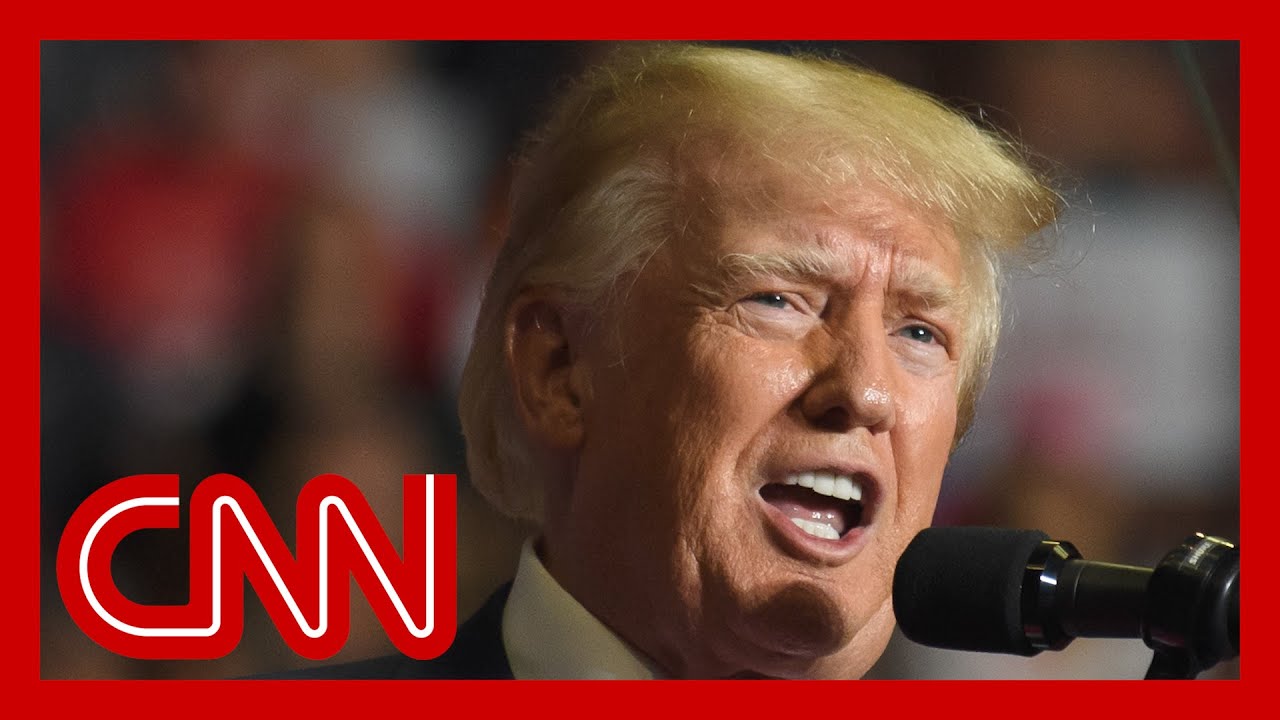 following the former president's speech. The event, which took place in Youngstown, Ohio, was a rally in support of Senate candidate J.D. Vance, someone who Trump has boosted heavily in recent months.
The speech was largely full of most of the same rhetoric that has been heard from Trump since he left office, and Comstock told CNN anchor Jim Acosta that the event was a "contribution to [Democratic challenger] Tim Ryan." She went on to say that Trump made "J.D. Vance look like a mouse, not a man."
"It was humiliating," Comstock added. "It was a QAnon fest, it was playing this strange QAnon music, they were all sort of, you know, bowing - I think Marjorie Greene was there talking about the one true leader." The event featured a number of bizarre outings, such as one moment when the rally attendees raised their hands to the former president in an apparent show of loyalty.
However, Comstock noted that, while Trump has often pushed the size of his rally crowds, the event was lightly attended.
"I think this is the last gasp of a dying cult...J.D. Vance is really a shell of a person to be there, bowing and scraping to somebody who he rightfully attacked just a few years ago," she said.
Watch video below or at this link.
note he does not say they all know each other, just him:
omg
https://www.nbcnews.com/think/opinion/i-knew-brett-kavanaugh-during-his-years-republican-operative-don-ncna907391
no lnx
I knew Brett Kavanaugh during his years as a Republican operative. Don't let him sit on the Supreme Court.
We were part of a close circle of cynical hard-right operatives being groomed for much bigger things.
Sept. 7, 2018,
By David Brock
I used to know Brett Kavanaugh pretty well. And, when I think of Brett now, in the midst of his hearings for a lifetime appointment to the U.S. Supreme Court, all I can think of is the old "Aesop's Fables" adage: "A man is known by the company he keeps."
And that's why I want to tell any senator who cares about our democracy: Vote no.
Twenty years ago, when I was a conservative movement stalwart, I got to know Brett Kavanaugh both professionally and personally.
Brett Kavanaugh proves the Supreme Court swing vote is dead
SEPT. 4, 2018]
Brett actually makes a cameo appearance in my memoir of my time in the GOP, "Blinded By The Right." I describe him at a party full of zealous young conservatives gathered to watch President Bill Clinton's 1998 State of the Union address — just weeks after the story of his affair with a White House intern had broken. When the TV camera panned to Hillary Clinton, I saw Brett — at the time a key lieutenant of Ken Starr, the independent counsel investigating various Clinton scandals — mouth the word "bitch."
But there's a lot more to know about Kavanaugh than just his Pavlovian response to Hillary's image. Brett and I were part of a close circle of cold, cynical and ambitious hard-right operatives being groomed by GOP elders for much bigger roles in politics, government and media. And it’s those controversial associations that should give members of the Senate and the American public serious pause.
[Related OPINION
GOP's maneuvering during the Kavanaugh confirmation hearings will seriously damage the Supreme Court's legitimacy]
Call it Kavanaugh's cabal: There was his colleague on the Starr investigation, Alex Azar, now the Secretary of Health and Human Services. Mark Paoletta is now chief counsel to Vice President Mike Pence; House anti-Clinton gumshoeBarbara Comstockis now a Republican member of Congress. Future Fox News personalities Laura Ingraham and Tucker Carlson were there with Ann Coulter, now a best-selling author, and internet provocateur Matt Drudge.
At one time or another, each of them partied at my Georgetown townhouse amid much booze and a thick air of cigar smoke.
In a rough division of labor, Kavanaugh played the role of lawyer — one of the sharp young minds recruited by the Federalist Society to infiltrate the federal judiciary with true believers. Through that network, Kavanaugh was mentored by D.C. Appeals Court Judge Laurence Silberman, known among his colleagues for planting leaks in the press for partisan advantage.
[Related OPINION
Tom Steyer and Ron Fein: Stop Kavanaugh's confirmation until Mueller's investigation is done]
When, as I came to know, Kavanaugh took on the role of designated leaker to the press of sensitive information from Starr's operation, we all laughed that Larry had taught him well. (Of course, that sort of political opportunism by a prosecutor is at best unethical, if not illegal.)
:{
}:
Another compatriot was George Conway (now Kellyanne's husband), who led a secretive group of right-wing lawyers — we called them "the elves" — who worked behind the scenes directing the litigation team of Paula Jones, who had sued Clinton for sexual harassment. I knew then that information was flowing quietly from the Jones team via Conway to Starr's office — and also that Conway's go-to man was none other than Brett Kavanaugh.
[Recommended OPINION
What could be Florida Gov. DeSantis’ undoing on the national stage? HBCUs.
OPINION
Trump's election plot was eye-opening. And the Senate is finally paying attention.]
That critical flow of inside information allowed Starr, in effect, to set a perjury trap for Clinton, laying the foundation for a crazed national political crisis and an unjust impeachment over a consensual affair.
But the cabal's godfather was Ted Olson, the then-future solicitor general for George W. Bush and now a sainted figure of the GOP establishment(and of some liberals for his role in legalizing same-sex marriage). Olson had a largely hidden role as a consigliere to the "Arkansas Project" — a multi-million dollar dirt-digging operation on the Clintons, funded by the eccentric right-wing billionaire Richard Mellon Scaife and run through The American Spectator magazine, where I worked at the time.
Both Ted and Brett had what one could only be called an unhealthy obsession with the Clintons — especially Hillary. While Ted was pushing through the Arkansas Project conspiracy theories claiming that Clinton White House lawyer and Hillary friend Vincent Foster was murdered (he committed suicide), Brett was costing taxpayers millions by pedaling the same garbage at Starr's office.
A detailed analysis of Kavanaugh's own notes from the Starr Investigation reveals he was cherry-picking random bits of information from the Starr investigation — as well as the multiple previous investigations — attempting vainly to legitimize wild right-wing conspiracies. For years he chased down each one of them without regard to the emotional cost to Foster’s family and friends, or even common decency.
[Related OPINION
Brett Kavanaugh's Supreme Court nomination is the result of years of unopposed conservative organizing]
Kavanaugh was not a dispassionate finder of fact but rather an engineer of a political smear campaign. And after decades of that, he expects people to believe he's changed his stripes.
Like millions of Americans this week, I tuned into Kavanaugh's hearings before the Senate Judiciary Committee with great interest. In his opening statement and subsequent testimony, Kavanaugh presented himself as a "neutral and impartial arbiter" of the law. Judges, he said, were not players but akin to umpires — objectively calling balls and strikes. Again and again, he stressed his "independence" from partisan political influences.
But I don't need to see any documents to tell you who Kavanaugh is — because I've known him for years. And I'll leave it to all the lawyers to parse Kavanaugh's views on everything from privacy rights to gun rights. But I can promise you that any pretense of simply being a fair arbiter of the constitutionality of any policy regardless of politics is simply a pretense. He made up his mind nearly a generation ago — and, if he's confirmed, he'll have nearly two generations to impose it upon the rest of us.
dem j wexton to run against 11/18
wapo
Republican primary, Comstock won around 61 percent of the vote against former Air Force pilot Shak Hill. She risked losing Republican voters by breaking with President Trump on health-care legislation and his desire for a government shutdown.
“Congresswoman Comstock gets results for the constituents she serves . . . . Barbara Comstock has beaten the DCCC picked candidates time and again,” her campaign manager, Susan Falconer, said in a statement.
The diverse, suburban 10th District is one of 23 GOP-held districts that Democrats feel they must win to take control of the House. Virginia Democrats hope for a repeat of the enthusiasm that carried Northam to a decisive win in 2017 and nearly flipped the state House of Delegates.
Anti-Trump voters in the district, which stretches from Loudoun and parts of Fairfax and Prince William counties to Clarke and Frederick counties in the west, unseated nearly every GOP state lawmaker representing the same territory as Comstock
==
pal of Barbara Olson?
Barbara Comstock: We first met through our mutual friend, Ginni Thomas, who brought Barbara to a breakfast in early 1995 with a group of women who were working on congressional investigations.
==
Comstock's vote against health-care bill seen as pragmatic in ...
https://www.washingtonpost.com/.../comstocks.../f4867cce-31a6-11e7-9dec-764dc7816...
May 5, 2017 - Barbara Comstock stood alone as a “no” vote among her Republican ... political analysts see her opposition as a pragmatic act of survival in the increasingly ... House GOP's Obamacare criticism comes back to haunt them ... about the economic effects of federal spending cuts and traffic-clogged roads.
Playing Dirty - The Atlantic
https://www.theatlantic.com/magazine/archive/2004/06/playing-dirty/302960/
1.
Can This Oppo Research Guru Survive the Mudslinging in Her GOP ...
www.motherjones.com/politics/.../barbara-comstock-bob-marshall-congressional-race/
1.
Former Top Clinton Nemesis Tries to Flee Trump – Mother Jones
www.motherjones.com/politics/2016/.../barbara-comstock-donald-trump-hillary-clint...
1.
http://www.rollcall.com/news/rothenblog/opposition-research-books-revealed-in-key-races
If Republican Barbara Comstock ever wonders what attacks are coming her way later this year, the Virginia congresswomancan read the entire 535 pp doc online? ... The independent expenditure arms of the campaign committees are technically independent, but strategists on both sides of the aisle use public signals to keep the party on the same page and avoid duplication of resources, such as paying twice for the same background information.
Publicly available opposition research is also evidence that there are few surprises in modern campaigns, where races are more likely to be decided by execution and quality of ads, money to put them in front of voters, the partisanship of a district, and the national political environment.
The two parties share research and talking points in slightly different ways.
The DCCC buries the information on its own site, DCCC.org, under “Races 2016 ” at the bottom of the home page. Readers can click on the map of the United States for race-specific information or look under “Recent Updates,” where information for five races, including California’s 24th District, Virginia’s 10th District, Nevada’s 3rd District, and Minnesota’s 8th District, is currently posted.
Comstock’s book is long enough to necessitate a table of contents. It also contains a front-page disclaimer that is similar to other books:
“The following report contains research on Barbara Comstock, a Republican member of Congress in Virginia’s 10th district. Research for this research book was conducted by the Democratic Congressional Campaign Committee’s Research Department between November 2015 and February 2016. By accepting this report, you are accepting responsibility for all information and analysis included. Therefore, it is your responsibility to verify all claims against the original documentation before you make use of it. Make sure you understand the facts behind our conclusions before making any specific charges against anyone.”
Democrats’ book on California Republican Justin Fareed is just 20 pages long . He is running in the crowded race to replace retiring Democratic Rep. Lois Capps in Southern California’s 24th District.
Since he is only 27, there isn’t a lot to hit Fareed on, and his opposition book reflects it in length and content. According to the book on him, the “Top Hits” include, “Worked As A Capitol Hill Staffer,” “Was A Running Back On The UCLA Football Team Between 2006 And 2010, But Did Not Play A Single Game,” and “His Former Boss, Rep. Ed Whitfield, Endorsed Him And Donated To His Campaigns.”
Democrats also posted the research book on the other credible Republican in the race, Assemblyman Katcho Achadjian. The 64-year-old businessman and legislator is more of a target-rich opponent for Democrats, as evidenced by the 224-page book against him.
....
http://www.rollcall.com/news/rothenblog/how-candidates-share-without-coordinating-with-outside-groups
==
related? Shawn Reinschmiedt and Dan Comstock will announce today the formation of M Street Insight
-----
queen of oppo res
http://www.theatlantic.com/magazine/archive/2004/06/playing-dirty/302960/
As voters turn their attention toward the coming presidential election, an abiding question from the previous one frustrates Democrats: How is it, they wonder, that Al Gore told small fibs and was branded a liar while George W. Bush told big ones and was elected President? Gore's many exaggerations may have been foolish—that he had somehow invented the Internet, that he grew up on a Tennessee farm, and so on. But surely, this line of thinking goes, they paled alongside Bush's audacious claim that he could cut taxes by $1.3 trillion, effortlessly privatize Social Security, and still balance the budget.
A large part of the answer can be found in a BBC documentary titledDigging the Dirt, which was filmed during the 2000 campaign and never aired in the United States. The film centers on a team of Republican opposition researchers —a species that has existed in politics for eons but had recently undergone an evolutionary leap. From deep within the Republican National Committee headquarters the BBC tracked the efforts of this team, whose job it was to discredit and destroy Al Gore.
Political campaigns always attempt to diminish their opponents, of course. What was remarkable about the 2000 effort was the degree to which the process advanced beyond what Barbara Comstock, who headed the RNC research team, calls "votes and quotes"—the standard campaign practice of leaving the job of scouting the target to very junior staff members, who tend to dig up little more than a rival's legislative record and public statements. Comstock's taking over the research team marked a significant change.
She was a lawyer and a ten-year veteran of Capitol Hill who had been one of Representative Dan Burton's top congressional investigators during the Clinton scandals that dominated the 1990s: Filegate, Travelgate, assorted campaign-finance imbroglios, and Whitewater. Rather than amass the usual bunch of college kids, Comstock put together a group of seasoned attorneys and former colleagues from the Burton Committee, including her deputy, Tim Griffin. "The team we had from 2000," she told me recently, to show the degree of ratcheted-up professionalism, "were veteran investigators from the Clinton years. We had a core group of people, and that core was attorneys."
Comstock combined a prosecutor's mentality with an investigator's ability to hunt through public records and other potentially incriminating documents. More important, she and her team understood how to use opposition research in the service of a larger goal: not simply to embarrass Gore with hard-to-explain votes or awkward statements but to craft over the course of the campaign a negative "storyline" about him that would eventually take hold in the public mind. "A campaign is a lot like a trial," Comstock explained. "You want people aggressively arguing their case."
Maligning an opponent, even with his own words and deeds, is a tricky business; voters take a dim view of "negative" politics, and are liable to punish the campaign carrying out the attacks rather than the intended target. Digging the Dirt provides a rare glimpse of how political operatives have learned to use the media to get around this problem, by creating a journalistic black market for damaging stories. During the first debate between Gore and Bush, in October of 2000, the BBC crew stationed itself inside the RNC's war room, filming researchers as they operated with the manic intensity of day traders, combing through every one of Gore's statements for possible misstatements or exaggerations.The researchers discovered two (Gore erroneously claimed never to have questioned Bush's experience, and to have accompanied a federal official to the site of a Texas disaster), and immediately Tim Griffin tipped off the Associated Press. Soon the filmmakers would catch the team exulting as the AP took the story.
Similar scenarios occurred countless times, on both sides, during the campaign. The operatives' sophisticated understanding of the media and their ability to manipulate the reporting of political news helps explain how Gore's public image shifted from that of stiff but competent technocrat at the outset of the campaign to that of serial exaggerator who would say anything to get elected. The steady stream of stories reinforcing this notion took its toll—a fact neatly documented by the filmmakers' shot of the New York Post after the debate: Gore beneath the headline "LIAR! LIAR!"
One film scene of the debate-night frenzy captures the prevalent attitude in national politics. As he directs the investigation of Gore's statements in real time, Griffin, standing next to a sign that reads ON MY COMMAND—UNLEASH HELL (ON AL), pauses for a moment to reflect on his role. "We think of ourselves as the creators of the ammunition in a war," he says. "We make the bullets."
The Gore campaign also deployed researchers, directed by Chris Lehane, who made his name spinning for the White House during the Clinton scandals and who by reputation is the most feared and loathed Democrat in the "oppo" world. Under Lehane the campaign portrayed Bush as an amiable dunce—a charge supported by many of Bush's actions but one that backfired, by so diminishing expectations that Bush prospered in the debates that doomed Gore.
After Bush's victory Comstock moved on to the Justice Department, and Griffin turned his considerable skills to prosecuting federal drug and firearms cases. Not long ago the RNC brought Griffin back in anticipation of this year's election, and in an indication of just how closely research and communications are intertwined, took the unusual step of bestowing two titles on him: director of opposition research and deputy communications director. From the same room in which he brought down Al Gore, Griffin is leading his team against John Kerry.
The campaign against Gore illustrates how what Bill Clinton referred to as "the politics of personal destruction" has become institutionalized and grimly respectable. Clinton popularized the phrase during his impeachment, when public disgust over years of scandal and partisan warfare had peaked. To avoid backlash, campaigns have become much more careful about attacking their opponents. Shrewd politicians can exploit this anger and still engage in hardball tactics—as Bush did by pledging to be "a uniter, not a divider," even as colleagues unleashed hell on Gore.
A decade ago opposition research was largely the domain of college kids. Today it is a profession run by seasoned investigators, most of whom learned their craft on one side or another of the Clinton scandals (Comstock, Griffin, and David Bossie for the Republicans; Lehane, his partner Mark Fabiani, and Kerry's research director Mike Gehrke for the Democrats). The elite purveyors of "personal destruction"—whom Clinton both feared and employed—have become the leading lights in the low-lit world of opposition research. The prosecutorial tactics and general savagery honed during the Clinton years are the hallmarks of their work. Instead of at high-profile congressional hearings, these battles are conducted from the shadows and waged mostly through the media. As the 2000 election showed, Republicans are particularly adept combatants. Moreover, in John Kerry they have the advantage of an opponent who is largely undefined in the public's thinking. And as in 2000, the election will depend a great deal on how successful Republicans are at the dark art of opposition research.
own petard
It was early April, debate night for the half-dozen Republican candidates vying to replace retiring Rep. Frank Wolf (R-Va.), and the front-runner, Del. Barbara Comstock, was getting a taste of her own medicine. That is, she was on the receiving end of some premium opposition research.
Comstock earned her stripes as the consummate Washington political operative by digging up dirt on the Clinton White House. She would later go on to hang out a shingle as a hired PR gun and lobbyist for some of DC's most controversial figures, including ex-Dick Cheney aide Scooter Libby and Blackwater's Erik Prince. She'd built a career out of driving the narrative.
But now, on stage at a middle school in Sterling, Virginia, all she could do was shake her head as Rob Wasinger, one of her opponents, went on the offensive. Wasinger, a onetime chief of staff to ex-Kansas Sen. Sam Brownback, invoked Comstock's lobbying work on behalf Carnival CruiseCorporation. The company, he explained, earned $236 million in taxpayer funding from the Hurricane Katrina relief bill in 2005, ostensibly to provide housing for evacuees. But the boats it sent to the Gulf Coast were never more than half full and the cruise company charged more than twice what it would have for an actual cruise.
"How can we possibly trust her to cut government spending when she's been first in line at the trough?" Wasinger asked.
It was the kind of political hit Comstock mastered as a political operative and opposition research guru.
Comstock's political ascent began after she attended Georgetown Law, when she returned home to Fairfax County to raise her three kids and take a job with Wolf, her local congressman. She soon moved up the ladder, to a spot on the House Oversight and Government Affairs Committee, working under Rep. Dan Burton (R-Ind.)—a Clinton antagonist so devoted to the cause he once shot a pumpkin to prove that White House chief of staff Vince Foster had been murdered.
From a windowless first-floor office, where she changed the locks to keep out even the cleaning staff, Comstock would hold all-night vigils to keep watch over boxes of subpoenaed Clinton administration documents she feared would be stolen by Democrats. Her fixation was the White House travel office, where employees who were considered disloyal were replaced with Clinton allies. It was the administration's first major scandal (although the president was absolved of wrongdoing), and it was in no small part driven by Comstock's marathon workdays. At one point, her onetime ally David Brock recalled in his 2001 book,Blinded by the Right, Comstock and a crew of fellow staffers cased a Clinton appointee's Georgetown house looking for evidence of wrongdoing.
"Working with Barbara Jean Comstock is like having the entire IBM mainframe working with you," Barbara Olson, a friend and colleague on Burton's committee,wrote in her memoir. (Olson, who was married to then-Solicitor General Ted Olson, was killed in the 9/11 attack on the Pentagon.) Karl Rove has called her a "walking, talking human computer."
When the Clinton years came to an end, Comstock jumped to the Republican National Committee's war room, where she ran the party's opposition research operation against Vice President Al Gore. Comstock called her unit "Chicks With Attitude"—a dig at the Gore campaign, whose dark arts department had branded itself as the "Men of Zeal"—and crafted a narrative, adopted by the press, of the vice president as a serial exaggerator. "She has a wonderfully devious mind," one reporter told the New York Post. The Washington Post called her a "one-woman wrecking crew." After Election Day ended in deadlock, Comstock moved to Tallahasseeto monitor the recounts.
After a stint as a spokeswoman for the Department of Justice in the early days of the Bush administration, Comstock cashed in. She started a crisis public relations firm, Corallo-Comstock, and marketed it toward the Bush administration's most beleaguered allies. Along with repping Scooter Libby and Erik Prince, she was also retained by House Majority Leader Tom DeLay (R-Texas) when he was indicted on charges of illegally laundering campaign contributions.
Comstock also lobbied for a collection of high-powered clients including the Recording Industry Association of America, Comcast, Koch Industries, Chiquita bananas, and the private-prison company GEO Group—which at the time was pushing her former employers in the Department of Justice for a new contract. "She has made extensive use of the revolving door both for self-enrichment and for the profits of her clients," says Craig Holman, a lobbyist for the government watchdog, Public Citizen.
But Comstock had political ambitions of her own. After working for Mitt Romney's 2008 presidential campaign, she challenged a Democratic member of Virginia's House of Delegates and became the only Republican to represent an inside-the-Beltway district.
When Wolf announced his retirement in December, Comstock entered the race to succeed him. She quickly became a target in the latest GOP turf war. As an anti-Comstock opposition research document leaked to the *Daily Caller* in February put it, "She completely represents what the new conservative movement…is moving away from."
At the debate in Sterling, Comstock fiddled with her smartphone and largely spoke past her competitors, positioning herself as a candidate who could bring suburban women voters back to the party in November. But the chatter kept coming back to her record. "All of us go to tea party meetings—except Barbara," said Howie Lind, a former state GOP official who is also running in the primary. He was referring to two scheduled meetings with a tea party group in the western part of her district that Comstock had canceled.
Her foes have also zeroed in on a vote she cast in 2008—for Barack Obama. At the April debate, Comstock explained her choice in that year's Democratic presidential primary by invoking Rush Limbaugh, whose "Operation Chaos" encouraged Republicans to support Hillary Clinton in order to prolong the Democratic nominating process. This explanation, however, made little sense. Virginia's primary that year predated Operation Chaos and, anyway, the entire point was not to vote for Obama. Days later, her campaign clarified to the Washington Post that her memory was mistaken.
Del. Bob Marshall, a conservative gadfly who came within a handful votes of being the party's US Senate nominee six years ago, represents Comstock's most serious challenge for the nomination. A 69-year-old prone to telling long-winded stories on stage, Marshall has a record of eyebrow-raising rhetoric. Sometimes "incest is voluntary," he said in 1980. And he observed in 2010 that "when you abort the first born of any, nature takes its vengeance on the subsequent children." Dubbed "Sideshow Bob" by his detractors, Marshall is one of the most right-wing state legislators east of the Mississippi River. Yet he has been reelected delegate 11 times in a district President Barack Obama won by 11 points.
Marshall, like Comstock, can trace his Republican lineage to revered conservative figures. He boasts that as a young Capitol Hill staffer in the 1970s he wrote the Hyde Amendment, which prohibits the federal government from paying for abortions. His mentor was Robert "B-1 Bob" Dornan, the Orange County congressman best known for outing a gay Republican colleague on the House floor. Marshall says he and Dornan keep in touch regularly. (To prove his point, he whipped out his cellphone to show me the call log.)
Despite the opposition research hurled her way, Comstock remains the favorite heading into Saturday's "firehouse" primary, a one-day affair paid for by the state party with fewer polling locations than a regular election. And her bank account is a big reason why.
Comstock's district is as close as K Street gets to official congressional representation. Her state delegate district includes McLean, the tony Virginia suburb that many GOP powerbrokers call home; as a consequence, her fundraising filings look like a roster of Republican convention speakers. Since 2009, she has received sizable contributions from: one former Republican National Committee chair, two former governors, four former senators, eight ex-congressmen, and three former cabinet officials—plus George W. Bush's White House counsel, his SEC chairman, his top strategist, his solicitor general, and his dad's campaign manager. Scooter Libby chipped in, too. Mitt Romney hosted a fundraiser for her first campaign for delegate, and is planning another one in the near future to boost her congressional bid.
Without a comparable Rolodex, Comstock's frustrated rivals can only sling insults at her donors. Paul Singer, a Republican donor who has given six-figure donations to Comstock's various campaigns, is in Marshall's estimation a "billionaire hedge fund manager whose son thinks he married a man"—a reference to Singer's gay son who has motivated Singer to promote marriage equality. (Comstock has not endorsed gay marriage.)
An April poll from Citizens United PAC gave Comstock a 30-point lead over Marshall. But in part due to her record as a GOP fixer, Democrats, who rarely gave Wolf a serious challenge, view the district—which Romney won by just 3 points—as a possible pick-up opportunity. Last month, House Minority Leader Nancy Pelosi (D-Calif.) headlined a McLean fundraiser for the district's Democratic nominee, Fairfax County supervisor John Foust.
After the debate in Sterling, Comstock made her way through a small crowd of supporters, most of whom want to extend their apologies for the accusations on stage. "They're bullies," Comstock said, harking back to another one-time Republican star whose career was derailed by a piece of well-placed oppo. "It's like George Allen said—you just have to smile."
http://www.motherjones.com/politics/2014/04/barbara-comstock-bob-marshall-congressional-race
RNC research (opps on Gore, she brought file to recount fight)
video bio http://www.youtube.com/watch?v=U3HlG7DPgAc
vote hist Va gen'l assembly
http://www.richmondsunlight.com/legislator/bjcomstock/
SW
Barbara Comstock is a "long time Republican political operative" [1] and former director of the Office of Public Affairs for the U.S. Department of Justice, who "serves clients both as a lobbyist and strategic communications specialist". [2]
- Executive Committee, Susan B. Anthony List [1]
WaPo: "one-woman wrecking crew"
In August 2001, John Mintzwrote of Comstock in the Washington Post:
"Since joining the GOP, Comstock has become a kind of one-woman wrecking crew targeting Democratic leaders. As a onetime senior aide to Rep. Dan Burton (R-Ind.) who directed numerous investigations of Clinton-era scandals, and now as head of research for the Republican National Committee, Comstock has perhaps done more than any other GOP operative to skewer Bill Clinton, Al Gore and their congressional allies."
David Brock, in his memoir, Blinded by the Right, "described Comstock as almost unhinged in her passion to bring down the Clintons." [3]
Joe Conason wrote November 15, 2005, in Salon, that "Comstock calmed down enough to serve as director of public affairs in John Ashcroft's Justice Department, to run opposition research for the Republican National Committee and, ultimately, after leaving government, to join the powerhouse lobbying firm of Blank Rome, best known for its huge contributions to the Republican Party, its close association with former Homeland Security Secretary Tom Ridge and other Bush appointees, and its lucky clientele of DHS contractors."
Mitt Romney 2008
Comstock is a member of 2008 presidential hopeful Mitt Romney's campaign team.
Resources and articles
Related SourceWatch articles
Profiles
- Profile: Barbara Comstock, Media Matters for America.
- Experts: Barbara Comstock, Independent Women's Forum.
- Barbara Comstock in the Wikipedia.
By Barbara Comstock
- "Gore’s Gone Wild. The former veep’s increasingly bizarre persona," National Review Online, May 27, 2004.
- "No Mother Teresa. John Kerry’s wife insults American mothers," National Review Online, October 21, 2004.
External articles
- John Mintz, "One-Woman Wrecking Crew Targets Democratic Leaders. Meticulous Comstock Helps RNC Skewer the Opposition," Washington Post, August 21, 2001.
- Joe Conason, "Libby's secret defense fund," Salon, November 15, 2005.
- Jane Hamsher, "It's Evil Harpie Time With Barbara Comstock," Firedoglake Blogspot, February 11, 2006.
- Jane Hamsher, "Late Nite FDL: Barbara Comstock, The Early Years," Firedoglake Blogspot, February 26, 2006.
- Pachacutec, "Barbara Comstock Named Washington Post Editor?" Firedoglake Blogspot, February 18, 2007.
- Christy Hardin Smith, "Conflicted," Firedoglake Blog, July 17, 2007.
Barbara J. Comstock (born June 30, 1959) is an American politician, currently a Republican member of the Virginia House of Delegates. She first won election to her seat in 2009, defeating Democratic incumbent Margaret Vanderhye.[1][2] She was formerly a spokesperson, lobbyist, political consultant; and a founding partner and co-principal of public policy and public relations firm Corallo Comstock.[3][4]
Contents |
Career
Comstock began her congressional career as an intern for Senator Ted Kennedy. After working as a lawyer in private practice, Comstock served from 1991-1995 as a senior aide to Congressman Frank Wolf. Comstock then served aschief investigative counsel and senior counsel for the U.S. House of Representatives Committee on Government Reform from 1995 to 1999.[5][met ^griffin there?
Comstock worked on behalf of the 2000 presidential campaign of George W. Bush. Her research team built massive stores of paper and electronic data, known as "The Gore File," that were a key source of information on the former vice president for GOP publicists and ad-makers.[5] Comstock is credited with writing the Republican "playbook" defending Bush nominees such as John Ashcroft for U.S. Attorney General.[5] Comstock later served as director of public affairs for the Justice Department from 2002 to 2003.[6]
Comstock's work in opposition research for the Republican National Committee has been praised as "meticulous and thorough," with her research being "one of the most successful parts of the RNC in 2000."[5] Former Solicitor General Theodore:{ Olson:(style="background-color:#ffff66;"):}: has said, "She is tireless. She has an encyclopedic mind and damn good judgment. Those qualities are at a real premium in Washington."[7]
Despite her reputation as a Republican partisan, Comstock has been described by critics such as journalist David Brock as a "very smart lawyer by training"[8] and maintains friendships crossing the political divide. Democratic consultant Donna Brazile said in a 2005 interview, "I've had my [political] battles with Barbara, and won some and lost some. But either way, she has kept her smile and her wit."[7]
Comstock assisted the defense teams of both I. Lewis "Scooter" Libby[3] and former House Majority Leader Tom DeLay.[9] In 2005, Comstock was hired by Dan Glickman to lobby on behalf of the Motion Picture Association of America.[10]
Comstock was a consultant on the presidential campaign of Mitt Romney[4] and is a consultant to theWorkforce Fairness Institute, which opposes the Employee Free Choice Act.[11]
Criticism
In his book Blinded by the Right, David Brock discusses Comstock's Whitewater investigative efforts against the Clintons, characterized as "almost unhinged" by other critics.[12] Brock notes that Comstock would regularly make late-night telephone calls with "the latest tidbit she had dug up in the thousands and thousands of pages of administration records she pored through frantically," and visited Brock to "watch the rerun of a dreadfully dull Whitewater hearing she had sat through all day."[8]
To Brock,Comstock seemed "especially intent on proving that Hillary [Clinton] had lied about her role" in Travelgate..."[a]s Constock’s leads failed to pan out, and she was unable to catch anyone in a lie, the Republican aide confided that the Clinton scandals were driving her to distraction, to the unfortunate point that she was ignoring the needs of her own family. A very smart lawyer by training and the main breadwinner for her charismatic, happy-go-lucky husband and kids, Comstock remarked that maybe she couldn’t get Hillary’s sins off her brain because 'Hillary reminds me of me. I am Hillary.'”[8]
References
- ^ DiCicco, Mike (4 November 2009). "Republican Comstock Ousts Vanderhye in Close Race". Connection Newspapers. Retrieved 5 November 2009.
- ^ Gardner, Amy (5 August 2009). "House Call!". WashingtonPost.com. Retrieved 19 August 2009.
- ^ a(http://en.wikipedia.org/wiki/Barbara_Comstock#cite_ref-Roll_Call_2-0) b(http://en.wikipedia.org/wiki/Barbara_Comstock#cite_ref-Roll_Call_2-1) Singer, Paul; Tory Newmyer (11 April 2007). "K Street Files". Roll Call: p. 7.
- ^ a(http://en.wikipedia.org/wiki/Barbara_Comstock#cite_ref-The_Hill_3-0) b(http://en.wikipedia.org/wiki/Barbara_Comstock#cite_ref-The_Hill_3-1) Bolton, Alexander; Brittney Moraski (20 December 2007). "Lobbyists on Obama's '08 payroll". The Hill. Retrieved 19 August 2009.
- ^ a(http://en.wikipedia.org/wiki/Barbara_Comstock#cite_ref-WaPo_Comstock_4-0) b(http://en.wikipedia.org/wiki/Barbara_Comstock#cite_ref-WaPo_Comstock_4-1) c(http://en.wikipedia.org/wiki/Barbara_Comstock#cite_ref-WaPo_Comstock_4-2) d(http://en.wikipedia.org/wiki/Barbara_Comstock#cite_ref-WaPo_Comstock_4-3) John Mintz (22 August 2001). "One-Woman Wrecking Crew Targets Democratic Leaders: Meticulous Comstock Helps RNC Skewer the Opposition". Washington Post: pp. A17.
- ^ Comstock, Barbara; Lanny J. Davis (20 October 2008). "What's Fair is Fair". National Review Online. Retrieved 19 August 2009.
- ^ a(http://en.wikipedia.org/wiki/Barbara_Comstock#cite_ref-Houston_Chronicle_6-0) b(http://en.wikipedia.org/wiki/Barbara_Comstock#cite_ref-Houston_Chronicle_6-1) Hedges, Michael (13 November 2005). "When GOP ails, ex-Houstonian has cure". Houston Chronicle.
- ^ a(http://en.wikipedia.org/wiki/Barbara_Comstock#cite_ref-Brock_7-0) b(http://en.wikipedia.org/wiki/Barbara_Comstock#cite_ref-Brock_7-1) c(http://en.wikipedia.org/wiki/Barbara_Comstock#cite_ref-Brock_7-2) David Brock, Blinded by the Right: The Conscience of an Ex-Conservative (2003), pp. 208-09, 227, 273
- ^ Allen, Mike (10 April 2005). "DeLay's Backers Launch Offense". Washington Post: p. A4. Retrieved 19 August 2009.
- ^ Mullins, Brody; Kate Kelly (24 August 2005). "Movie Lobbyist Reaches Across the Aisle". Wall Street Journal. Retrieved 19 August 2009.
- ^ "Highlights on the Show: Jan 12-16, 2008". The Thom Hartmann Program. Air America. 12 January 2008. Retrieved 19 August 2009.[dead link]
- ^ Joe Conason, *Libby's secret defense fund*, Salon, November 15, 2005
External links
- Comstock for Delegate official campaign website
- Independent Women's Forum biography for Barbara Comstock
Playing Dirty ... cloak-and-dagger world of opposition research—the updated version of "dirty tricks"
The Atlantic Monthly | June 2004
by Joshua Green
http://www.theatlantic.com/doc/200406/green
... Barbara Comstock ... taking over the research team marked a significant change.She was a lawyer and a ten-year veteran of Capitol Hill who had been one of Representative Dan Burton's top congressional investigators during the Clinton scandals...: Filegate, Travelgate, assorted campaign-finance imbroglios, and Whitewater.... Comstock put together a group of seasoned attorneys and former colleagues from the Burton Committee, including her deputy, Tim Griffin. "The team we had from 2000," she told... "were veteran investigators from the Clinton years. We had a core group of people, and that core was attorneys."
Griffin ... "We think of ourselves as the creators of the ammunition in a war," he says. "We make the bullets." ... campaign against Gore illustrates how what Bill Clinton referred to as "the politics of personal destruction" has become institutionalized ... a profession run by seasoned investigators, most of whom learned their craft on one side or another of the Clinton scandals ... have become the leading lights in the low-lit world of opposition research. ...
http://www.democraticunderground.com/discuss/duboard.php?az=show_mesg&forum=389&topic_id=1029113&mesg_id=1030550
Playing Dirty
This year's presidential campaign is already shaping up to be even more negative than the last. That's no accident. Our correspondent looks at the cloak-and-dagger world of opposition research—the updated version of "dirty tricks"
By Joshua Green
As voters turn their attention toward the coming presidential election, an abiding question from the previous one frustrates Democrats: How is it, they wonder, that Al Gore told small fibs and was branded a liar while George W. Bush told big ones and was elected President? Gore's many exaggerations may have been foolish—that he had somehow invented the Internet, that he grew up on a Tennessee farm, and so on. But surely, this line of thinking goes, they paled alongside Bush's audacious claim that he could cut taxes by $1.3 trillion, effortlessly privatize Social Security, and still balance the budget.
A large part of the answer can be found in a BBC documentary titled Digging the Dirt, which was filmed during the 2000 campaign and never aired in the United States. The film centers on a team of Republican opposition researchers —a species that has existed in politics for eons but had recently undergone an evolutionary leap. From deep within the Republican National Committee headquarters the BBC tracked the efforts of this team, whose job it was to discredit and destroy Al Gore.
Political campaigns always attempt to diminish their opponents, of course. What was remarkable about the 2000 effort was the degree to which the process advanced beyond what Barbara Comstock, who headed the RNC research team, calls "votes and quotes"—the standard campaign practice of leaving the job of scouting the target to very junior staff members, who tend to dig up little more than a rival's legislative record and public statements. Comstock's taking over the research team marked a significant change. She was a lawyer and a ten-year veteran of Capitol Hill who had been one of Representative Dan Burton's top congressional investigators during the Clinton scandals that dominated the 1990s: Filegate, Travelgate, assorted campaign-finance imbroglios, and Whitewater. Rather than amass the usual bunch of college kids, Comstock put together a group of seasoned attorneys and former colleagues from the Burton Committee, including her deputy, Tim Griffin. "The team we had from 2000," she told me recently, to show the degree of ratcheted-up professionalism, "were veteran investigators from the Clinton years. We had a core group of people, and that core was attorneys."
Comstock combined a prosecutor's mentality with an investigator's ability to hunt through public records and other potentially incriminating documents. More important, she and her team understood how to use opposition research in the service of a larger goal: not simply to embarrass Gore with hard-to-explain votes or awkward statements but to craft over the course of the campaign a negative "storyline" about him that would eventually take hold in the public mind. "A campaign is a lot like a trial," Comstock explained. "You want people aggressively arguing their case."
Maligning an opponent, even with his own words and deeds, is a tricky business; voters take a dim view of "negative" politics, and are liable to punish the campaign carrying out the attacks rather than the intended target. Digging the Dirt provides a rare glimpse of how political operatives have learned to use the media to get around this problem, by creating a journalistic black market for damaging stories. During the first debate between Gore and Bush, in October of 2000, the BBC crew stationed itself inside the RNC's war room, filming researchers as they operated with the manic intensity of day traders, combing through every one of Gore's statements for possible misstatements or exaggerations. The researchers discovered two (Gore erroneously claimed never to have questioned Bush's experience, and to have accompanied a federal official to the site of a Texas disaster), and immediately Tim Griffin tipped off the Associated Press. Soon the filmmakers would catch the team exulting as the AP took the story.
Similar scenarios occurred countless times, on both sides, during the campaign. The operatives' sophisticated understanding of the media and their ability to manipulate the reporting of political news helps explain how Gore's public image shifted from that of stiff but competent technocrat at the outset of the campaign to that of serial exaggerator who would say anything to get elected. The steady stream of stories reinforcing this notion took its toll—a fact neatly documented by the filmmakers' shot of the New York Post after the debate: Gore beneath the headline "LIAR! LIAR!"
One film scene of the debate-night frenzy captures the prevalent attitude in national politics. As he directs the investigation of Gore's statements in real time, Griffin, standing next to a sign that reads ON MY COMMAND—UNLEASH HELL (ON AL), pauses for a moment to reflect on his role. "We think of ourselves as the creators of the ammunition in a war," he says. "We make the bullets."
The Gore campaign also deployed researchers, directed by Chris Lehane, who made his name spinning for the White House during the Clinton scandals and who by reputation is the most feared and loathed Democrat in the "oppo" world. Under Lehane the campaign portrayed Bush as an amiable dunce—a charge supported by many of Bush's actions but one that backfired, by so diminishing expectations that Bush prospered in the debates that doomed Gore.
After Bush's victory Comstock moved on to the Justice Department, and Griffin turned his considerable skills to prosecuting federal drug and firearms cases. Not long ago theRNC brought Griffin back in anticipation of this year's election, and in an indication of just how closely research and communications are intertwined, took the unusual step of bestowing two titles on him: director of opposition research and deputy communications director. From the same room in which he brought down Al Gore, Griffin is leading his team againstJohn Kerry.
The campaign against Gore illustrates how what Bill Clinton referred to as "the politics of personal destruction" has become institutionalized and grimly respectable. Clinton popularized the phrase during his impeachment, when public disgust over years of scandal and partisan warfare had peaked. To avoid backlash, campaigns have become much more careful about attacking their opponents. Shrewd politicians can exploit this anger and still engage in hardball tactics—as Bush did by pledging to be "a uniter, not a divider," even as colleagues unleashed hell on Gore.
A decade ago opposition research was largely the domain of college kids. Today it is a profession run by seasoned investigators, most of whom learned their craft on one side or another of the Clinton scandals (Comstock, Griffin, and David Bossie for the Republicans; Lehane, his partner Mark Fabiani, and Kerry's research director Mike Gehrke for the Democrats). The elite purveyors of "personal destruction"—whom Clinton both feared and employed—have become the leading lights in the low-lit world of opposition research. The prosecutorial tactics and general savagery honed during the Clinton years are the hallmarks of their work. Instead of at high-profile congressional hearings, these battles are conducted from the shadows and waged mostly through the media. As the 2000 election showed, Republicans are particularly adept combatants. Moreover, in John Kerry they have the advantage of an opponent who is largely undefined in the public's thinking. And as in 2000, the election will depend a great deal on how successful Republicans are at the dark art of opposition research.
From the archives:
"The Front-Runner's Fall" (May 2004)
The Dean implosion up close, from the vantage point of the candidate's pollster. By Paul Maslin
Bush administration smear campaigns include attacks on John Forbes Kerry and his positions and voting record on Terrorism, Defense, and Homeland Security.
Due to the length of the original article Bush administration smear campaigns: John Forbes Kerry, it has been subdivided.
- For information regarding allegations currently appearing in the headlines, see Bush administration smear campaigns: John Forbes Kerry: Latest Headlines.
- For information regarding smears about Kerry's military service, and to provide a fair comparison to George W. Bush's military service, please see John Forbes Kerry's military service.
- For information regarding allegations made in the Drudge Report, see Drudge Report: John Forbes Kerry.
Contents[hide] |
Cheney Questions Kerry's National Security Judgement
- The April 26, 2004, Washington Post reported that "Vice President Dick Cheney said Monday that Sen. John Kerry 'has given us ample grounds to doubt' his judgment on national security, but at the same time the chairman of the Democratic National Committee (Terry McAuliffe) in Washington urged the White House to stop such criticism." [1]
"Cheney told a friendly crowd at Westminster College that Kerry, the presumptive Democratic presidential nominee, wavered in views to oust Iraqi leader Saddam Hussein as well as the strength of the Persian Gulf war coalition built by President Bush's father" George H.W. Bush. [2]"In a preview of his news conference, McAuliffe said Sunday that Cheney has 'zero credibility' when it comes to criticizing Kerry's national security credentials. Cheney as secretary of defense had proposed cuts to weapons programs being used by U.S. troops in Iraq, McAuliffe said. [3]"Cheney, who was defense secretary from 1989-1992, 'tried to kill' more than 81 weapons programs, including M-1 tanks, Apache helicopters, F-16 fighter planes and B-2 bombers, McAuliffe said. He also pushed for closing more than 70 domestic military installations, and reducing the size of the military by 500,000 active duty personnel and 200,000 reservists, McAuliffe said." [4]
- In his April 26, 2004, article "Bush campaign turns up heat on Kerry" for Reuters, Steve Holland writes that "President George W. Bush's re-election campaign has turned up the heat on Democrat rival John Kerry by accusing him of a troubling record on national security and inconsistent support of U.S. troops.
"In an indication the Iraq war was an increasingly important factor in the November 2 election, with U.S. forces caught up in an deadly conflict with insurgents, the Bush team's strategy was to raise questions about Kerry's commitment to the U.S. military and thus the country's defence."
- Westminster College President Fletcher Lamkin told Associated Press reporter Scott Charton on April 26, 2004, "that Cheney's staff approached him last week about using Westminster as the backdrop 'for a major foreign policy address. Nothing was said about a stump speech.'" [5]
Lamkin, a former administrator at West Point, "said he was not expecting a speech minus any mention of presidential politics during an election year, but that the second half 'was all about politics and a political stump speech and in that respect it was disappointing.' ... 'in the interest of balance and fairness and integrity, we will strongly encourage Senator Kerry to take advantage of this venue to make his views known as well.'"
- The DNC response: "Dick Cheney's Real Record: Cheney Lied About WMDs And Hussein's Links to Al Qaeda."
Kerry: "Opposed" Tanks & Planes "Revisited"
- On April 26, 2004, FactCheck.org addressed "More Bush Distortions of Kerry Defense Record" stating that the "Latest barrage of ads repeats misleading claims that Kerry 'repeatedly opposed' mainstream weapons." [6]
FactCheck says that Bush's April 26 ads "recycle some distortions of Kerry's voting record on military hardware" and FactCheck has "de-bunked these half-truths before but the Bush campaign persists."The ads -- many targeted to specific states -- repeat the claim that Kerry opposed a list of mainstream weapons including Bradley Fighting Vehicles and Apache helicopters, and also repeat the claim that he voted against body armor for frontline troops in Iraq. In fact, Kerry voted against a few large Pentagon money bills, of which Bradleys, Apaches and body armor were small parts, but not against those items specifically."See the FactCheck article for an analysis of the misleading claims and missing context expressed in Bush's ten new anti-Kerry ads.
- Previously, in a February 22, 2004, letter to Senator Kerry, "Bush's campaign chairman Marc F. Racicot ... accused Kerry of 'voting against the weapons systems that are winning the War on Terror' and says Kerry was for 'canceling or cutting funding for the B-2 Stealth Bomber, the B-1B, the F-15, the F-16, the M1 Abrams, the Patriot Missile, the AH-64 Apache Helicopter, the Tomahawk Cruise Missile, and the Aegis Air-Defense Cruiser.' Another Bush campaign spokesman said Kerry has a '32-year history of voting to cut defense programs and cut defense systems' (a clear impossibility since Kerry has been in office less than 20 years.)" [7]
- "But," writes *FactCheck*, "Kerry's votes against specific military hardware were mostly against strategic nuclear weapons including the B-2 bomber, Trident missile and anti-missile items, not against conventional equipment such as tanks. And Kerry has a point when he says 'I've voted for some of the largest defense and intelligence budgets in our history,' which is correct. He's voted for military spending bills regularly since 1997."
See remainder of February 26, 2004, *FactCheck* article "Kerry voted often against nuclear missiles and bombers in the '90s, but GOP claims that he opposed a long list of conventional weapons are overblown" for details and "facts" on Kerry's voting record.
- Fred Kaplan addresses Kerry's real voting record in his February 25, 2004, article "John Kerry's Defense Defense. Setting his voting record straight" for MSN's Slate. [8]
Kerry: Weak on Terrorism
- Paul Krugman admonishes in his March 15, 2004, New York Times Op-Ed, that when the "Bush campaign boasts of the president's record in fighting terrorism and accuses John Kerry of being weak on the issue, when Republican congressmen suggest that a vote for Mr. Kerry is a vote for Osama bin Laden, remember this: the administration's actual record is one of indulgence toward regimes that are strongly implicated in terrorism, and of focusing on actual terrorist threats only when forced to by events." [9]
- Associated Press reporter Mike Glover headlines on March 15, 2004, with "Kerry Criticizes Bush's Record on Homeland Security ... saying his Republican rival is 'big on bluster and short on action' in protecting the nation." Kerry further commented: "'I do not fault George W. Bush for doing too much in the war on terror, I believe he's done too little ... I think this administration has it backward. President Bush says we can't afford to fund homeland security. I say we can't afford not to.'" [10]
- In his March 16, 2004, article "Rational Security" in The American Prospect, Matthew Yglesias says that "The problem isn't that George W. Bush hasn't done enough in the war on terrorism -- it's that he's hardly fought it at all."
Kerry: Weak on Homeland Security
- Orcinus writes on March 17, 2004, "It would not take much to drive this point home. The Kerry campaign could easily point to Bush's serious lapses in handling domestic terrorism as symptomatic of the real shortcomings of his approach to 'homeland security':
- "The fall 2001 anthrax attacks, for which no one has yet been apprehended.
- "The Texas cyanide bomb case (and [11] [12] [13] [14] [15]).
- "The ricin attack on the Senate (and [16]).
- "Various cases of right-wing domestic terrorism since Sept. 11, ranging from plots to attack abortion clinics (and [17]) and gay bars to the bombing of local racial-relations offices." Also see "Tracking Hate Groups Aids Terrorism Fight. Federal Agents Turn to Domestic Front," by Maria Glod and Jerry Markon, Washington Post, May 19, 2003.
Kerry: Not Supporting the Troops in Iraq
- Josh Marshall, in his March 17, 2004, *Talking Points Memo*, comments on issues "from the latest Bush campaign ad ... This one uses last year's $87 billion Iraq supplemental, and the fact that Kerry voted against it, to accuse him of voting against each of the various line items for troop funding included in the bill.
"Now," Marshall writes, "this is inherently misleading since I believe Kerry, like many other Dems, voted for an alternative bill which would have funded these needs by rescinding part of Bush tax cuts. So to say he voted against these particulars is really a distortion of the legislative process."
- Surrounded by veterans in Charleston, WV, on March 17, 2004, Kerry "rebutted a new Bush ad criticizing him for voting last fall against $87 billion in additional funding for US troops in Iraq -- a supplemental appropriation that included money for body armor -- by saying he would have supported it if it had been financed by repealing a portion of the tax cuts implemented during the Bush administration. Kerry made that proposal in an amendment he cosponsored; the Senate rejected the amendment before approving the $87 billion. ... 'I actually did vote for the $87 billion before I voted against it,' he said." [18]
- The Army Times (subscriber only) (week including March 17, 2004), provides this blurb: "White House won't try to cut special deployment pays. The Bush administration will not repeat its highly publicized -- and ultimately unsuccessful -- attempt last year to cut benefits for deployed troops." [19]
- On the subject of "body armor" for the troops in Iraq, the October 14, 2003, *Washington Times* headlined with the Associated Press story "Armor shortfall hits U.S. troops."
According to the AP, "Nearly one-quarter of the 130,000 U.S. troops in Iraq still have not been issued a new type of ceramic body armor strong enough to protect against bullets fired from assault rifles."Delays in funding, production and shipping mean it will be December before all troops in Iraq will have the vests, which were introduced four years ago, military officials say."Congress approved $310 million in April to buy 300,000 bulletproof vests, with 30,000 destined to complete outfitting of the troops in Iraq. Of that money, however, only about $75 million has reached the Army office responsible for overseeing the manufacture and distribution of the vests."
Kerry: "Soft on Intelligence" [DUBYA IGNORED DAILY BRIEF BIN LADEN FLY PLANES INTO BLDG?!]
- With a wink and a nudge, on March 9, 2004, BuzzFlash's "The Angry Liberal" writes that, on the previous day, Bush, "in front of a room full of Texas fat cats, ... made perhaps the dumbest charge against Kerry that he could make: It turns out that John Kerry is (you might want to sit down for this) soft on military intelligence." A brief reader fill-in-the-blank quiz -- "Bush: Soft-Headed on Military Intelligence" -- is followed by supporting links on the real "intelligence" record.
- More on Kerry's alleged intelligence record comes from RNC Chairman Ed Gillespie's February 23, 2004, Republican National Committee rant "Senator Kerry's Specific Record - Again!" and Barbara Comstock's March 10, 2004, *National Review Online* article "Leading to Disaster. For John Kerry, gutting intel is 'common sense'."
- *FactCheck* reports on March 15, 2004, "Bush Strains Facts Re: Kerry's Plan To Cut Intelligence Funding in '90's.President claims 1995 Kerry plan would "gut" the intelligence services. It was a 1% cut, and key Republicans approved something similar."
- In his March 17, 2004, *Talking Points Memo*, Josh Marshall writes: "In that case, the President charged Kerry with a reckless plan to cut Intelligence spending in 1995, without mentioning that the agency targeted was mismanaging the funds in question or, much more importantly, that the Congress, then under Republican control, voted a substantially larger cut than the one Kerry had proposed."
- This is supported by Walter Pincus and Dana Milbank who debunk Bush's claims in their March 12, 2004, Washington Post article "Bush Exaggerates Kerry's Position on Intelligence Budget": "In terms of accuracy, the parry by the president is about half right. Bush is correct that Kerry on Sept. 29, 1995, proposed a five-year, $1.5 billion cut to the intelligence budget. But Bush appears to be wrong when he said the proposed Kerry cut -- about 1 percent of the overall intelligence budget for those years -- would have 'gutted' intelligence. In fact, the Republican-led Congress that year approved legislation that resulted in $3.8 billion being cut over five years from the budget of the National Reconnaissance Office -- the same program Kerry said he was targeting."
- Mike Allen, Washington Post staff writer, reported March 8, 2004, that Bush attacked Kerry "as dangerously indecisive and accused him of a 'deeply irresponsible' effort to weaken the nation's intelligence services before" September 11, 2001. ... However, Allen writes, "Bush reached back nine years to a bill introduced by Kerry to slow the rate of spending on intelligence gathering to argue that the presumptive Democratic nominee would weaken the nation's intelligence system if elected president." [20]
Kerry: Failed to Prevent Boston Hijackings
- The New York Post's Paul Sperry reports on March 16, 2004, that "Former FAA security officials say the Massachusetts senator had the power to prevent at least the Boston hijackings and save the World Trade Center and thousands of lives, yet he failed to take effective action after they gave him a prophetic warning that his state's main airport was vulnerable to multiple hijackings.
"'He just did the Pontius Pilate thing and passed the buck' on back through the federal bureaucracy, said Brian Sullivan, a retired FAA special agent from the Boston area who in May 2001 personally warned Kerry that Logan was ripe for a 'jihad' suicide operation possibly involving 'a coordinated attack.'" [21]
- Jesse Taylor at Pandagon comments: "By the way, doesn't this fly in the face of the contention that there was nothing that could be done to prevent September 11, 2001 that's been the Bush administration's crutch? Either it was preventable, or it wasn't, but it can't be preventable if you're a senator from Massachusetts and nonpreventable if you're in charge of the entire executive branch of the federal government." [22]
- Also see *Counterspin Central* to see what Brian Sullivan previously said on September 16, 2001, in an interview with NBC News. (Interview also here.) In essence:
- "Sullivan says he expressed his concerns to the FAA administrator's hotline. He also says he sent this letter to Massachusetts Senator John Kerry, a letter that now seems all too prophetic."
- "Sullivan says Senator Kerry responded to his letter and asked the Department of Transportation's inspector general to look into the matter.
- "Mr. SULLIVAN: I think Senator Kerry did get it to the right people and that they were about to take the right action.'"
Other external articles
Categories: Nuclear PR | Elections (U.S.) | Politics (U.S.) | Political dirty tricks
Barbara Olson, a friend and contributor to National Review and NRO was one of the thousands murdered on Sept. 11. In spite of her death, Regnery publishing has released her book, Final Days: A Behind the Scenes Look at the Last, Desperate Abuses of Power by the Clinton White House, which was originally set to hit book shelves only days after Sept. 11. Final Days, like her first book, Hell to Pay: The Unfolding Story of Hillary Rodham Clinton, is already a bestseller. NRO talked with Barbara's longtime friend and colleague Barbara Comstock, who is currently director of research and strategic planning at the Republican National Committee, about Barbara Olson's life and her book. For more on Final Days or on Barbara Olson, see Noemie Emery's review, and appreciations by Lucianne Goldberg, Michael Ledeen, and *NR*'s editors. Kathryn Jean Lopez: When did you first get to know Barbara Olson? Barbara Comstock: We first met through our mutual friend,Ginni Thomas,who brought Barbara to a breakfast in early 1995 with a group of women who were working on congressional investigations. At the time Barbara was working as deputy counsel and solicitor to the House of Representatives. Ginni thought Barbara should be working on the investigative matters given her U.S. attorney background and we all agreed. Shortly thereafter she joined the Committee on Government Reform (then chaired by Rep. Bill Clinger) as chief investigative counsel and I was her chief deputy counsel where we worked together on the Travelgate and Filegate investigations. She then moved over to the Senate side as general counsel to Senate Majority Whip Don Nickles where our work continued to overlap with the campaign-finance investigation,as well as impeachment. We also worked together on the Florida recountlast year and Ted Olson's solicitor-general nomination at the Justice Departmentthis year — a mutual favorite project of Barbara's and mine. The great thing about Barbara was that she worked hard, but she played hard too and our work life spilled over into lots of fun social get-togethers. Along the way, we gathered many shared "combat" stories and girlfriend moments, a couple of our favorites being that the president's lawyer, Bob Bennett, dubbed us "The Barbarellas" and we survived the Florida recount! Lopez: After Barbara's murder, were you concerned Final Days might not work? Comstock: It was never an issue. Barbara completed the book prior to September 11 and it was set to go to the publisher on September 13. The publisher spoke with Ted Olson, and Ted in turn spoke with family and friends about whether to go forward and the decision was unanimous. Ted said it best when he said, "For me to tell Barbara that her voice would be silenced because she was murdered by terrorists — I couldn't have lived with myself, and Barbara could not have tolerated that." Ted also has pointed out that Barbara believed that it was the duty of citizens to speak out, and those of us who loved Barbara believed that it would be a betrayal of her values and her beliefs if we didn't allow her final work to go forward. She felt she owed her fellow citizens the benefits of her insights on wrongdoing at the highest levels of government. In discussing the book on television and radio, I have found that people who would have agreed with Barbara, as well as those who probably wouldn't have agreed with much of anything she wrote, both understand that now would have been the worst possible time to silence Barbara's voice or cut her off from the people to whom she wished to speak and who were awaiting her voice. Lopez: How do you explain the amazing book sales? People don't want to read about the Clintons necessarily; or do they? Comstock: Barbara had a large following of people who enjoyed her analysis and respected her views. This book is in many ways a sequel to her first bestseller, *Hell to Pay*, and her readers wanted to continue to enjoy her wit and wisdom. Barbara spent 9 weeks on the New York Times bestseller list with her first book, when many people did not even know who she was. With this latest book, Barbara was already a best-selling author, very well known to many more Americans, and someone dearly loved by the people she touched through her many spirited television appearances. Now she is also seen as one of the many heroes who kept her fighting spirit in the face of the most terrifying of circumstances. The people who "knew" her want to keep her in their hearts and homes, they want to reach out to her, they want to touch her, they do not want her to die. I think they may see her as a symbol of what the terrorists have tried to destroy and they want to fight back through Barbara and read what she had to say. I know her husband, Ted, and her family are very gratified by the response to her book, but I am not too surprised. And finally, and most importantly, it is a heck of a good book, a spirited and lively read, and tells a story that Barbara thought was important to be told. Lopez: Is there anything in Final Days that surprises you? Comstock: Since Barbara and I had worked on so many of these investigations together, I have to say, we probably had stopped being surprised! What Barbara does so well in the book is provide a catalogue of the "greatest hits." Her book points out that many of these last-minute frenzied actions really were just part of a bigger pattern that she detailed in both of her books. That being said, when you put the facts together, the accumulation is stunning and communicates Barbara's strong belief that those who hold public office should treat those offices with the respect and dignity they deserve. Lopez: The most chilling line in Barbara's book, of course, is where she writes, "As many in his own cabinet had repeatedly stated, terrorism, both foreign and domestic, was the nation's primary security anxiety. Since the end of the Cold War, Soviet aggression had been replaced by a number of particularly venomous threats, from Timothy McVeigh to Osama bin Laden." Comstock: This certainly was a painful part of the book to read. This excerpt is from the chapter of the book where Barbara strongly protests the pardons given to the FALN terrorists in 1999. Barbara points out that the FALN terrorists had been involved in a "reign of terror that included 130 bombing attacks in the United States from 1974 to 1983." These pardons were opposed by Janet Reno's Justice Department, the FBI, and the U.S. attorneys involved in the cases and of course the families of the victims who were killed and maimed in these attacks. I think this reflects the fact that Barbara's concerns and the issues she wrote about were connected to bigger issues which she clearly saw as having the potential to profoundly affect our lives. Lopez: What is the Barbara Olson Memorial Scholarship Fund and how can people who are interested find out more or contribute? Comstock: An endowed memorial scholarship fund is being established at the Cardozo Law School in New York that will help women, who exemplify Barbara's ideals and vision, attend law school. Contributions may be made out to: |
wiki
On August 11, 1999, Clinton commuted the sentences of 16 members of FALN, a violent Puerto Rican terrorist group that set off 120 bombs in the United States, mostly in New York City and Chicago. There were convictions for conspiracy to commit robbery, bomb-making, and sedition, as well as firearms and explosives violations.[5] The 16 were convicted of conspiracy and sedition and sentenced with terms ranging from 35 to 105 years in prison. Congress, however, recognizes that the FALN is responsible for "6 deaths and the permanent maiming of dozens of others, including law enforcement officials." Clinton offered clemency on the condition that the prisoners renounce violence, seeing as none of the 16 had been convicted of harming anyone and they had already served 19 years in prison. This action was lobbied for by ten Nobel Laureates, the Archbishop of Puerto Rico and the Roman Catholic Cardinal of New York City. [6] The commutation was opposed by the U.S. Attorney's Office, the FBI, and the Federal Bureau of Prisons and was criticized by many, including former victims of FALN terrorist activities and the Fraternal Order of Police.[7] Hillary Clinton, then campaigning for her first term in the Senate, initially supported the commutation,[8] but later withdrew her support.[9]
Congress condemned this action by President Clinton, with votes of 95-2 in the Senate and 311-41 in the House.[10][11] The U.S. House Committee on Government Reform held an investigation on the matter, but the Justice Department prevented FBI officials from testifying.[12] President Clinton cited executive privilege for his refusal to turn over some documents to Congress related to his decision to offer clemency to members of the FALN terrorist group.