disaster capitalism
see TWO 3/20
see corps that profit on GW
is wider cat needed? shock doctrine?
narrower/more minor: predatory capitalism (charter/online school?)
aha chaos disruption pandemic --> extraction
promote primary 3/18 on puerto rico battlegnd
AHA PIC and MIC together at last cf 4 horse: pvtiz, military, financialization and criminalization
---
---
AN GUK 4 25
Naomi Klein and Astra Taylor tell The Guardian that corporate city-states are back in fashion thanks to Trump politics indulging tax-hating millionaires and billionaires to start their own high-tech fiefdoms.
A “glorified gated communit[ies]” like Próspera on a Honduran island and Elon Musk’s distant proposal of “a handful of people and robots eke[ing] out survival on two barren orbs (a radically depleted Earth and a terraformed Mars) appear to be catching on with ultra-wealthy members of the Trump circle.
End-time communities were on the rise in 2023, when a campaigning Donald Trump promised to hold a contest that would lead to the creation of 10 “freedom cities” on federal lands. And since election, “would-be country starters have been on a lobbying blitz, determined to turn Trump’s pledge into reality.” Próspera Chief of Staff Trey Goff called the new energy in DC “absolutely electric, and legislation “paving the way for a bevy of corporate city-states” complete by the end of the year, Klein writes.
READ MORE: 'And everybody cried': Trump hijacks Oval Office meeting to claim 'highest mark' on cognitive test
It’s a fantasy word evolved from the “doom-prepping” movement of the first Trump administration, only now fueled by ultra-wealthy “religious end-timers.” It also hastens the degradation of the only world humanity realistically has, Klein and Taylor say.
“Indeed, in a strange twist on the Old Testament tale, Musk and his fellow tech billionaires, having arrogated god-like powers to themselves, aren’t content to just build the arks. They appear to be doing their best to cause the flood. Today’s right-wing leaders and their rich allies are not just taking advantage of catastrophes, shock-doctrine and disaster-capitalism style, but simultaneously provoking and planning for them,” says Klein, a Canadian author.
There is no second planet to occupy, however, and reducing humanity to a tiny dome on a distant island or mountain peak requires a commitment to letting a huge swathe of humanity die. So, how do you break the apocalyptic fever?
“… We help each other face the depth of the depravity that has gripped the hard right in all of our countries,” Klein writes. “We must first understand … [that] we are up against an ideology that has given up not only on the premise and promise of liberal democracy but on the livability of our shared world – on its beauty, on its people, on our children, on other species. The forces we are up against have made peace with mass death. They are treasonous to this world and its human and non-human inhabitants.”
READ MORE:'Screw up royally': How 'ignorant' Trump has 'broken the cardinal rule in American politics'
Second, Klein advises countering “their apocalyptic narratives with a far better story about how to survive the hard times ahead without leaving anyone behind. A story capable of draining end times fascism of its gothic power and galvanizing a movement ready to put it all on the line for our collective survival. A story not of end times, but of better times; not of separation and supremacy, but of interdependence and belonging; not of escaping, but staying put and staying faithful to the troubled earthly reality in which we are enmeshed and bound.”
Read the full Guardian article at this link.
---
720 cmd
Virtual Charter School Company Says Covid-19 Is the ‘Tailwind’ It’s Been Waiting For
In These Times — 6/18/2020
==
// personhood? see alaso mcconn covid liability immunity
https://www.alternet.org/2020/05/corporate-lawyers-openly-discuss-suing-nations-over-profits-lost-to-covid-19-measures-ticking-time-bomb/
Corporate lawyers openly discuss suing nations over profits lost to COVID-19 measures: ‘Ticking time bomb’
no lnx
Jake Johnson / Common Dreams May 21, 2020
:{
}:
Prominent corporate law firms representing major businesses in the United States, Italy, Spain, and other nations are openly discussing the possibility of companies using a secretive and notorious legal process to sue countries over future profits lost due to government efforts to combat the coronavirus pandemic.
On Monday, the non-profit research group Corporate Europe Observatory (CEO) documented numerous examples of high-powered corporate law firms—including Ropes & Gray, Alston & Bird, and Quinn Emanuel Urquhart & Sullivan—publicly licking their chops over the lucrative opportunity presented by the Covid-19 crisis and government attempts to fight it.
Ropes & Gray wrote in an alert on its website on April 28 that “for companies with foreign investments,” the investor-state dispute settlement (ISDS) system enshrined by thousands of trade agreements across the world “could be a powerful tool to recover or prevent loss resulting from Covid-19 related government actions.”
“Governments have responded to Covid-19 with a panoply of measures, including travel restrictions, limitations on business operations, and tax benefits,” the alert reads. “Notwithstanding their legitimacy, these measures can negatively impact businesses by reducing profitability, delaying operations, or being excluded from government benefits.”
:{
}:
Lawyers from Sidley, a firm headquartered in Chicago, wrote on May 8 that “where a company prevails in its investment treaty claims, it may be able to recover all the losses that flowed from the government measures that damaged the company.”
CEO noted that the ISDS system hands “sweeping powers to foreign investors, including the peculiar privilege to sue states in an arbitration court system.”The ISDS chapter of the Trans Pacific Partnership was one of the most widely denounced components of the 12-nation trade deal that was ultimately never ratified by the U.S. Congress.
“In ISDS tribunals companies can claim dizzying sums in compensation for government actions that have allegedly damaged their investments, either directly through expropriation or indirectly through regulations of virtually any kind,” CEO wrote. The number of ISDS suits has skyrocketed in the last decade, and so has the amount of money involved.”
The research group highlighted several scenarios in which corporations could challenge countries over coronavirus-related government actions, including lowering drug prices, reducing rent and utility bills, temporarily nationalizing private hospitals, and providing access to clean water.
An Alston & Bird lawyer said during a recent webinar that “governments… forcing producers to sell drugs at significantly discounted prices and/ or taking the intellectual property for themselves and/or disseminating that intellectual property to third parties without permission”constitute “takings”that could be challenged under existing investment treaties.
“The lawyers’ enthusiasm is not based in fantasy,” CEO wrote. “In the past 25 years over 1,000 known investor-state lawsuits have been filed. Investors have won a significant amount of ISDS claims as arbitral tribunals ruled that it was illegal to interfere with prices of essential goods, restrict or tax the export of vital products, roll back incentives to investments—and the list goes on.”
“As states struggle with the pandemic and with rebuilding their economies,” the group warned, “ISDS cases could mean huge extra financial burden.”
CEO
@corporateeurope
In the midst of the #COVID19 crisis, corporations are preparing to sue states over pandemic measures.
Our latest report reveals how lawyers urge big business to defend its profits and challenge the emergency measures with #ISDS cases. https://corporateeurope.org/en/2020/05/cashing-pandemic-how-lawyers-are-preparing-sue-states-over-covid-19-response-measures … #stopISDS
View image on Twitter
David Dayen, executive editor of The American Prospect, wrote Wednesday that progressives have long viewed ISDS as a disastrous system that allows powerful corporations to “lock in a low level of regulation or extract cash if any country dares to try to protect their citizens.”
“It’s so unbelievably shocking to see corporate lawyers actively discussing having foreign investors use ISDS to challenge countries over their coronavirus lockdown measures, and try to extract ‘expected future profits’ from them,” Dayen wrote.
“There is no example yet of a foreign investor filing such a claim,” Dayen added. “This bears watching, or maybe a pre-emptive strike to defuse this ticking time bomb. Incidentally, the Columbia Center on Sustainable Investment has proposed an ISDS moratorium during the pandemic.”
David Dayen
@ddayen
If this is at all true it means that corporations will sue in extrajudicial super-courts for the expected profits they had to forego when countries put lockdown measures in place.
Oh. My. God.https://corporateeurope.org/en/2020/05/cashing-pandemic-how-lawyers-are-preparing-sue-states-over-covid-19-response-measures …
Cashing in on the pandemic: how lawyers are preparing to sue states over COVID-19 response measures
As governments take action to fight the COVID-19 pandemic and prevent economic collapse big law firms urge corportions to challenge governments' emergency measures in order to defend its profits. In...
corporateeurope.org
The Transnational Institute (TNI), a think tank based in Amsterdam, is calling on governments to “take urgent action to make sure that transnational corporations and investment lawyers do not become beneficiaries of this pandemic, at the expense of people’s well-being and health.”
In an April 20 report, TNI urged nations to:
Suspend all trade and investment treaty negotiations;
Take all necessary steps to terminate (unilaterally or multilaterally) existing treaties;
Institute a comprehensive review (cost-benefit analysis) of their current and planned investment agreements;
Withdraw consent to ISDS, to limit immediate exposure to investor lawsuits;
Default on the payment of outstanding debts as a result of ISDS awards. Or, at least, discuss ISDS debt relief and/or debt restructuring with creditors.
“Just as the pandemic is revealing profound health inequities and the dangers of agro-industrial food systems, it is also showing the dangers of trade and investment systems that put corporate profits above health and life,” TNI researchers wrote. “There is no place for trade and investment agreements that allow investors to profit from suing countries in crisis or seeking to cash-in from scarce public resources.”
==
https://theconversation.com/going-back-to-school-to-deal-with-hard-times-for-profit-schools-could-make-things-even-harder-134872
disaster cap'lism?
==
==
https://www.alternet.org/2020/03/disaster-capitalism-this-is-the-glaring-culprit-behind-italys-covid-19-catastrophe
==
Kushner once controlled the health insurance company that has launched a coronavirus testing website
One of the major complaints about President Donald Trump’s response…
==
https://www.alternet.org/2020/03/how-late-stage-capitalism-primed-us-for-this-pandemic
no lnx
How late-stage capitalism primed us for this pandemic
Written by Bob Hennelly / Salon March 15, 2020
No, this not a bad dream.
You really did just wake up in these “great” United States to find that no matter where you live, your freedom of movement is now constricted. Not by the military, but by the fear of the invisible — a virus you never heard of before it shackled you and your family in a form of self-imposed lockdown.
The power dynamic here is merely a biological progression of what we feel when some malignant cyber-force zeros in on our laptop computer and takes control of it, holding us hostage.
If you are a regular consumer of the corporate news media this unprecedented national public health crisis is being covered through the partisan prism over the incompetence and malevolence of the current occupant of the Oval Office, Donald Trump.
What is being avoided meticulously is any broader and essential discussion about how this precarious planetary moment is a gift to us from late-stage vulture capitalism,
which rents our national government as it subordinates the accumulation of wealth over every other human endeavor — including public health.
To start the coronavirus meltdown narrative with Trump’s efforts to deliberately play down the risks we faced, which hobbled the U.S. response and will lead to potentially thousands of deaths, is to miss the reality that this systemic failure has been decades in the making.
Subjugation of labor
As the concentration of wealth accelerated and the income gap opened up to a canyon, the balance of political power tilted increasingly to the forces of capital, costing organized labor its leverage. Over that time the world was increasingly made safer for U.S. multinationals who successfully played labor markets off of each other as they captured the regulatory and taxation regimes of sovereign nations.
Everything was measured and governed by what encouraged economic growth and the amassing of wealth. Other vital spheres, from the environment to the public health, became secondary to the private pursuit of profit. Consider how hard it was to overcome the entrenched interests of the tobacco industry to provide the public health warnings on cigarettes.
After the Second World War in the early fifties, over a third of the U.S. workforce was represented by a labor union. Though unions have had their issues with corruption, on the whole they offer countervailing pressure to the potential predations of capitalism.
By the time President Reagan fired all of the Air Traffic Controllers (PATCO) in 1981, organized labor represented just a fifth of American workers. By 2019, it was just barely over 10 percent.
What has followed as a consequence is the massive growth of a contingent workforce hovering by the phone or checking their email to see if they have a “gig” or work for the day. This ability of capital to so greatly limit its social contract with workers creates a race to the bottom and leaves tens of millions without health care, unemployment or disability insurance.
It also puts employers and small businesses at a distinct competitive disadvantage if they choose to provide those basic benefits to their employees.
This is where there is an intersection with labor’s marginal circumstance and our current national crisis —in which so many Americans will hesitate to get tested for coronavirus or stay home if they are sick. Millions upon millions of Americans cannot afford the expense or the loss of wages; they have absolutely no safety net in the event the test comes back positive and they are sidelined without work for 14 days, much less left with a hospital bill.
The essential role of labor unions as a countervailing pressure against the predations of unfettered capital is most clearly apparent in the airline industry, which is ground zero for many pandemics including this one.
Unions in the public interest
John Samuelsen is the president of the Transport Workers Union International (TWU) that represents 150,000 members in the airline, railroad, transit, university, utilities and service sector.
Last week, TWU had to back up the decision by a flight crew for a major national air carrier to refuse the orders they were given to go right back to work after they had successfully removed a passenger who had disclosed to crew after his flight landed that he had the coronavirus.
As reported by the Daily News, a Long Island man flew from New York to Florida while he had a test pending for the coronavirus. Upon landing in West Palm Beach, he got the call informing him of his status.
“Our crew facilitated the passenger’s removal in a very sophisticated way that limited everyone’s potential exposure out the back door of the plane with the help of medical professionals that escorted him off the flight,” said Samuelsen. “But the crew was ordered back to work by the air carrier to crew up another flight and they rightfully refused because they knew they were now potentially carriers of the virus.”
He continued. “They were still in shock and understandably concerned about their own health and when they were ordered to get back on another flight, they said no. The carrier had said the crew could work because they were asymptomatic and that’s when the union stepped in.”
Samuelsen recounted how, after the union’s intervention, elected officials called the air carrier, as did the Daily News.
“We negotiated a package for the crew that guaranteed their economic security with paid sick leave. Ironically, in the process of doing what was right by our members we helped preserve the public health, which was the original goal of the flight crew. Without the union. we would have had another few planes loads of hundreds of unsuspecting members of the public exposed to the virus.”
As Samuelsen sees it, proposals that were considered as radical ideas pre-coronavirus, like Senator Bernie Sander’s universal health care plan or former presidential candidate Andrew Yang’s proposal for a universal basic income, are no longer radical.
“Can you imagine how much less anxiety all American workers would feel right now if things like this were already in place,” he said. “It would be a 365 day-a-year economic stimulus plan.”
Public health versus private profit?
Such a realignment of the balance of power, where private capital’s interest and the public interest could be potentially reconciled in the face of something like our current existential crisis, is already happening elsewhere on the planet.
Professor Richard Wolff is an economist who teaches at the New School. He says there is no better example of harmonizing these tensions then in China and South Korea, which have gotten their public and private sectors to collaborate in the face of the current pandemic.
“Look at the percentage of the population that has been tested in these two places and you can see the results of the close coordination between the government and the private sector which we don’t have, and our testing numbers reflect that,” he said.
Wolff says that the current crisis brings into sharp relief the fundamental divergence between American capitalism and the public health. “There was just no profit incentive for the big drug companies to produce a million of these kinds of tests,” he added.
He continued: “Looking at the Center for Disease Control’s own press releases we see as of Jan. 17 they publicly acknowledged they were following this virus in China . . . . what we have seen since is this ad hoc, last-minute, under-the-gun response with one eye looking out for the interests of the profit making medical industrial complex and the other eye looking out for the re-election of the President.”
If there is a silver lining in the coronavirus moment, it is that it can serve as a teachable moment for our entire civilization. It can help us muster the will to make the lifestyle and economic changes required to face up to the challenge of global warming.
ref
no lnx
Vulture capitalists are picking us dry: Why consumer debt buyers are on the rise
The great recession laid waste to the U.S. economy. Now debt collectors are feasting on the carrion
JIM HIGHTOWER
MARCH 22, 2015
Good news, people: The "boom" is back! Yes, good times are here again, thanks to an economic boom that's being generated by (of all things) bad times.
As you might know from your own experiences, tens of millions of Americans have been hit hard, knocked down and held down in recent years by the collapse of jobs and wages. This calamity has led to a second blow for millions of the same families, who find themselves suddenly buried in piles of overdue bills for credit card charges, student loans and other consumer debt.
But the good news is that there's a bright silver lining in that dark financial cloud. Only, it's not for the indebted families, but for a booming breed of finance hucksters known as consumer debt buyers. Believe it or not, in the warped world of high finance,"There's gold in them thar hills" of bad debt, and where there's gold, there are diggers.
Whenever a corporation issues a statement declaring that it's committed to "treating consumers fairly and with respect," chances are, it's not.
After all, why say such a thing, when actually practicing it would make a statement unnecessary? Indeed, with names like Encore Capital Group and Sherman Financial, these miners of human misery buy bales of these unpaid bills from banks and other lenders, paying pennies on the dollar. Then they unleash packs of their hard-nosed, aggressive collectors on the families. If they still can't extract payment, the corporate debt profiteers turn to their meanest dog: The courts.
Debt firms routinely file thousands of lawsuits a day against financially devastated Americans. They know that most debtors can't understand the legal gibberish filed against them, can't afford a lawyer, can't take time off to go to a court hearing and can't mount an effective defense against the corporate lawyers. So, some 95 percent of these lawsuits produce default judgments against hapless borrowers -- meaning debt buyers can then confiscate the wages of borrowers or freeze their bank accounts.
This boom in vulture capitalism is disgusting -- but, worse, it's subsidized by us taxpayers! We pay for the judicial system -- the judges, courtrooms and endless rounds of hearings. Predatory debt corporations have perverted our so-called justice system into their own subsidiary for squeezing profits out of destitute debtors.
This is why New York Attorney General Eric Schneiderman has started going after these for-profit corporate debt collectors. He found that Encore, based in San Diego, filed nearly 240,000 lawsuits against debtors in a recent four-year period, using the courts as its private collection arm. Problem is, Encore's bulk filing of lawsuits against the hard-pressed borrowers are rife with errors, out-of-date payment data, fabricated credit card statements, etc. With debt buyers scooping up millions of overdue bills each year from lenders, tons of them are missing original loan documents, payment histories and other proof of debt.
Debt predators, however, scoot around this lack of facts by simply having their employees sign affidavits asserting that the level of money owed is accurate. Judges, overwhelmed by the unending flood of lawsuits filed by Encore et al, have accepted those affidavits as true, thus ruling in favor of the corporations. But Schneiderman found that -- Surprise! -- affidavits were simply being rubber-stamped by company employees, with no effort to ensure the truth of the information. An employee of one large debt-buyer testified that his corporation ran an assembly-line scheme in which he signed about 2,000 affidavits a day.
This is no minor scam -- 1 in 7 adults in the U.S. is under pursuit by debt collectors. It's hard enough for struggling families to claw their way out from under the economic crash without having lying, cheating predator corporations twist the court system to pick their pockets and shut off their hope of recovery.
JIM HIGHTOWER
Jim Hightower's most recent book is "Let's Stop Beating Around the Bush." He produces a monthly newsletter, The Hightower Lowdown, and a syndicated daily radio commentary.
NB DESMOG TRACKING IMPENDING BANKRUPTCY? KEPT AFLOAT BY BANKS?
aha ish // disaster cap'l, never waste a crisis to dustoff wishlist
Will an oil tycoon who donated $500,000 to support Trump’s re-election get bailed out by his administration?
https://www.alternet.org/2020/03/will-an-oil-tycoon-who-donated-500000-to-support-trumps-re-election-get-bailed-out-by-his-administration
no lnx
Will an oil tycoon who donated $500,000 to support Trump’s re-election get bailed out by his administration?
Written by Igor Derysh / Salon March 12, 2020
With oil prices plunging during the coronavirus outbreak, the Trump administration is weighing a federal bailout for oil and natural gas companies, according to a new report.
President Donald Trump has repeatedly touted a fracking boom under his administration, but oil and gas companies have seen profits drop amid an oil price war between Russia and Saudi Arabia.
“Alarmed” by the prospect that some of these companies, many of which are already in debt, [see desmog]could go out of business, White House officials have pushed for a federal bailout in the form of low-interest government loans, The Washington Post reported.
Among those pushing for the bailout is Harold Hamm, a billionaire Trump adviser who owns Continental Resources, an energy company which lost half of its market value Monday.
Hamm told The Post that although he had not made “direct” contact with the president, he advised the administration to consider “any action that the administration might take to protect and preserve American interests at this time from being unfairly disadvantaged.”
Hamm has given more than $500,000 to support Trump’s re-election effort since 2017, the government watchdog group Citizens for Ethics and Responsibility in Washington noted.
Some Trump advisers told The Post that the administration was eyeing “targeted assistance” for the companies. Though under consideration, another official warned that “political blowback over the idea may eventually lead campaign advisers and others in [the] administration to talk Trump out of it.”
Chris Rupkey, the chief economist at MUFG Union Bank, told the outlet that he expects significant political backlash.
“It’s difficult when governments selectively target individual industries,” he said. “And there’s going to be pushback on it, because it’s political and may be tied to the administration’s contacts and the people it knows.”
Cornell University professor Robert Hockett, who has advised Sen. Bernie Sanders, I-Vt., and Sen. Elizabeth Warren, D-Mass., on economic policy, added that it was ridiculous to look out for big fracking companies while millions need relief.
“We are in the midst of a crisis where people are literally having to skip work and may miss paychecks or face medical debt,” he said. “The idea you would look to help out shale companies now is like something out of a satire or a bad movie. It’s absurd.”
Trump also said that he was looking at bailing out airlines, cruise lines and the hospitality industryTuesday, as they reel from the impact of COVID-19, the disease spread by the novel coronavirus. But the bailout proposals have received public pushback from Republicans.
“They can take care of themselves,” Sen. Mike Braun, R-Ind., told The Washington Examiner. “Why do you overreact just when there’s a little pain? That doesn’t make sense.”
Nick Loris, an economist at the right-wing Heritage Foundation, said such a bailout “would not sit well” with fiscal conservatives.
“Not only would it potentially put taxpayers on the hook for future potential losses and bankruptcies, it would distort the risk-taking process that is so critical in making these investments,” he told the outlet. “We’ve seen the resiliency in the industry before, and I believe we’ll see it again.”
However, Alex Doukas, the lead analyst for advocacy group Oil Change International, predicted that Trump’s big-money donors would heavily pressure the administration to ignore the criticism.
“With oil prices in free fall, expect oil companies to turn to their age-old tactic of bullying governments for even more subsidies on top of the hundreds of billions they benefit from annually,” Doukas said. “Instead of more handouts to polluters, governments should make big investments in high-quality green jobs that will put people to work and ultimately end our dependence on the volatile fossil fuels that create climate chaos.”
Journalist David Cay Johnson described the lobbying effort as “corporate socialists” seeking “welfare from the Trump administration.”
“Bailing out the oil industry won’t help the workers who have to choose between their health and their paychecks. It won’t help the people who could go into medical debt from COVID-19,” Rep. Ro Khanna, D-Calif., tweeted. “We need paid family leave and Medicare expanded to every American.”
“The American people are worried about missing paychecks, affording coronavirus tests, & being able to afford healthcare period. But [Trump] wants to bail out the oil industry?” Rep. Mark Pocan, D-Wis., added. “Leave it to Trump to prioritize his friends over the American people.”
Igor Derysh is a staff writer at Salon. His work has also appeared in the Los Angeles Times, Chicago Tribune, Boston Herald and Baltimore Sun.
==
==
320
:{
}:
https://theintercept.com/2020/02/29/cronyism-and-conflicts-of-interest-in-trumps-coronavirus-task-force/
alex AZAR, the secretary of health and human services, admitted Wednesday that a vaccine for a new coronavirus might not be affordable for all Americans. “We can’t control that price,” Azar told Rep. Jan Schakowsky, D-Ill., during a congressional hearing about the novel strain, which has been spreading throughout the world and is widely expected to become a serious public health issue in the United States.
After a wave of criticism from Democrats, Azar walked the comment back the next day, saying that he would ensure public access to a vaccine for Covid-19, the disease caused by the virus, if one should be developed.But Azar, who served as the top lobbyist for Eli Lillybefore becoming president of the drug company’s U.S. operations in 2012 and the secretary of health and human Services in 2018, knows of what he unthinkingly speaks. Exorbitant drug pricing often leaves life-saving treatment out of reach for the poorest Americans. And to the extent that Azar and the other businessmen who make up the majority of the president’s coronavirus task force have any experience with pharmaceuticals, one of the most profitable sectors of the economy, it’s been making money off the system that keeps them out of reach.
In the case of Azar, who earned nearly $2 million during his last year at Lilly, that profit came at the expense of the people who needed the drugs, according to a lawsuit filed in 2017. While Azar was leading the pharmaceutical giant, the cost of its drugs went up significantly. In particular, insulin sold by the company more than doubled in price. According to the suit, which also names Novo Nordisk and Sanofi, Eli Lilly engaged in a scheme to artificially inflate the price of its drug, leaving some diabetic people unable to pay the cost and forced to use expired insulin or none at all. Eli Lilly did not immediately respond to a request for comment, but the company has told other publications that the suit has no merit and that it follows the “highest ethical standards.”
For another task force member, the profits could come from the coronavirus itself. Joseph Grogan was a lobbyist for the pharmaceutical giant Gilead Sciencesbefore he joined the Trump administration as director of the Domestic Policy Council and led the Drug Pricing and Innovation Work Group. On Wednesday, after Gilead announced that it would be starting two clinical trials of an antiviral drug that could be used to treat Covid-19, the company’s stock price surged.
As a former lobbyist for a company that stands to gain big from a possible treatment for the respiratory disease, Grogan’s participation on the task force poses a host of ethical problems, according to Robert Klitzman, professor of psychiatry and director of the bioethics master’s program at Columbia University. “Does he have a conflict of interest? Yes!” said Klitzman, who points out that the government is likely to spend money on both the research and purchase of treatments for the virus. “Gilead could help shape a government request for proposals so that they could have an unfair advantage.”
While Grogan appears to have sold his Gilead stock and, according to the Office of Management and Budget, has severed all financial relationships and taken “the Trump pledge,” the situation is still problematic, according to Klitzman. “When he gets out of office, they could give him a gift for doing a good job or just hire him again. And what about his buddies? I’m sure he is still close to people who work for Gilead who will benefit. These are all major ethical concerns.”
Although Grogan and his friends may have a lot to gain from his participation on the task force, it is not clear what expertise he and most of the others serving on the group bring to it. Of the task force’s 16 members — 17, if you include Vice President Mike Pence, who is heading the effort — only four have any training in science or medicine. The others mostly hail from the business world, including Treasury Secretary Steven Mnuchin, an investment banker who was sued for asset stripping; Ken Cuccinelli, a lawyer and self-described “opponent of homosexuality” now serving as acting deputy secretary of homeland security; and Christopher Liddell, a former executive at Microsoft and General Motors, who worked with Trump’s son-in-law Jared Kushner on the modernization of federal IT systems before directing the country’s response to what may be the biggest public health crisis in over a century.
Pence also named Larry Kudlow to the task force on Thursday. Kudlow, a top economic adviser to Trump who used to work for Bear Stearns, went on Fox Business to reassure the American public that reports of increasing coronavirus infections around the world don’t necessarily mean “that this thing is going to skyrocket in North America.” Kudlow then encouraged everyone to keep investing, saying, “Stocks look pretty cheap to me.”
Trump has fired many of the people who actually know how to coordinate government responses to epidemics. As Laurie Garrett reported in January, the president shut down the National Security Council’s global health security unit and cut $15 billion in national health spending, including funding for the management of infectious global diseases at the Centers for Disease Control and Prevention, Department of Homeland Security, and HHS. At the CDC, the funding cuts to the global health section were so severe, Garrett wrote, that “the number of countries it was working in was reduced from 49 to merely 10.”
While four doctors are on the task force, it’s not clear how much they will be allowed to direct the response to the virus. The White House reportedly told Anthony Fauci, an immunologist who directs the National Institute of Allergy and Infectious Disease and has extensive experience combating infectious diseases, not to speak publicly without clearance after he said at a meeting that the virus “has adapted extremely well to human species.”
On Thursday, Deborah Birx, a physician who has served as the U.S. Global AIDS Coordinator since 2014, was named as the White House coronavirus response coordinator, and Surgeon General Jerome Adams was added to the task force. Their appointments came after Sen. Bernie Sanders slammed Trump for putting “political cronies, not scientists” in charge of the government response to the virus.
===
==
micro-disaster cap'lism? scary use of AI dB? van jones free mkt evac plan katrina
Uber and Lyft price-gouge customers trying to flee Seattle shooting120 anNicole Karlis / Salon
==
==
‘If you are wondering who benefits’: Weapons makers see stocks surge as Trump moves closer to war with Iran
Almost immediately after the United States assassinated Iranian General Qassem Soleimani in a drone strike Thursday night, major American weapons manufacturers and defense contractors—from Northrop Grumman to Lockheed Martin to
==
==
aha-let: dis cap akin to crisis mgmt? difference in intent? degree? or merely timing:
The industry is gearing up for the fight of its life, which may explain why an expert in actual warfare gave the keynote at the plastics conference.
In 2000, U.S. Navy Cmdr. Kirk Lippold guided his crew through a terrorist attack on the USS Cole, in which 17 sailors were killed and 39 injured. Now a crisis management consultant, Lippold told the audience at the Plastics Industry Association meeting a grueling story of mass casualties, near-death experiences, and a shrapnel-filled vessel taking on water. His tale, which ended with Lippold piloting his hobbled ship back into the open seas with the national anthem blaring, suggested that with enough fierce determination, the plastics executives too might be able to sail past the threats facing them.
==
After Katrina, neoliberals replaced New Orleans' schools with charters, which are now failingCORY DOCTOROW
see disaster capitalism re wildfires (toxic ash?) eg ashbritt
==
CORY DOCTOROW / 4:26 AM MON, AUG 12, 2019
Rule of Capture: Inside the martial law tribunals that will come when climate deniers become climate looters and start rendering environmentalists for offshore torture
In 2017, science fiction author Christopher Brown burst on the scene with Tropic of Kansas, an apocalyptic pageturner about martial law in climate-wracked America; now, with his second novel, Rule of Capture, Brown turns everything up to 11 in a militarized, oil-saturated, uninhabitable Texas where private mercs, good ole boys, and climate looters have plans to deliver a stolen election to a hyper-authoritarian president. Read the rest
/ / 9 COMMENTS
BOOKS / CLIMATE / DISASTER CAPITALISM / GIFT GUIDE / GRIFTER CAPITALISM/ GUILLOTINE WATCH / HAPPY MUTANTS / MESS WITH TEXAS / REVIEWS / SCIENCE FICTION / ZEITGEISTY AF
https://www.alternet.org/2019/09/billionaires-prepping-for-an-apocalyptic-event-but-what-happens-to-everyone-else
no lnx
Billionaires prepping for an apocalyptic ‘event’ — but what happens to everyone else?
Written by Chauncey DeVega / Salon September 3, 2019
The Earth is in the midst of an environmental disaster. Humankind may not survive the Anthropocene.
Climatologists and other scientists are warning that if the Earth’s temperature rises more than 2 degrees Celsius that the human race may have reached a point of no return in terms of stopping global warming and the catastrophes it will cause.
Global warming is causing rising sea levels which threaten at least one billion people. Global warming is also generating a weather feedback loop which is causing hurricanes, blizzards, firestorms, and droughts to become more extreme. There is also a shortage of arable land and fresh water. Entire ecosystems are collapsing all over the planet.
The world’s militaries are preparing to fight “resource wars.” These conflicts will likely kill many thousands (if not millions of people). Resource wars will also create a global refugee crisis as entire populations are displaced. As global warming melts glaciers in Antarctica, Siberia, Greenland and elsewhere there will also be a mad scramble by the United States, Russia, China, and other nations to secure rare earth metals and other resources.
As the Earth’s climate and weather continues to worsen who will live and who will die?
The answer: the rich will find a way to survive while everyone else will experience gradations of misery and death depending on their socioeconomic status.
This is the logical and predictable result of extreme inequality where 1 percent own half the planet’s wealth. This inequality is also a function of neocolonialism where the West continues to enrich itself by siphoning a huge amount of resources and other wealth away from the Global South and the “Third World” every year. Rich countries also benefit disproportionately from destroying the world’s environment.
Neoliberal policymakers and other elites in the West and elsewhere have developed a language and ideology to justify doing everything and anything possible to survive environmental collapse and the global chaos it will cause.
Such a system of extreme self-interest is encouraged by how, at its core, neoliberalism is an example of Social Darwinism and Malthusian thinking: survival of the fittest is the guiding principle. All other people are expendable and viewed as being “surplus” under this form of human livestock management. The rich and powerful justify and naturalize such an outcome through a disproved theory known as “lifeboat ethics”.
How is “apocalyptic greed” fueling environmental disaster? What will human society look like in the aftermath of a global environmental disaster? How can we create a more humane and just society to both prevent such a dystopic outcome and/or to survive once it occurs? In what ways are human history and memory being turned into a commodity owned and controlled by the few as society becomes more digital and less analog? How are plutocrats and elites across the political spectrum working from the same playbook as they prepare for “the Event”.
In an effort answer these questions I recently spoke with Rob Sheridan. He is a futurist and former graphic designer for the band Nine Inch Nails. He is also the writer of the new science fiction graphic novel series “High Level” from DC Comics.
This conversation has been edited for clarity and length.
You are now writing a comic book. You were the web designer and artist for the bands Nine Inch Nails and How to Destroy Angels. Does the novelty and surprise of what you do for a living ever go away?
In the past I’ve worked mostly with other artists. “High Level” is my first foray into doing something that is entirely my own creatively. That has been a big career change for me. There are moments when I say to myself, “Oh my God, this is just me now.”
It is exhilarating and terrifying. There is the excitement of being able to guide a project in my own way. But there is also the terror of “now it is up to me”. You make something, you put it out into the world and you hope people like it.
Right now I’m riding on the high of feeling a sense of relief that readers have been responding so positively to the graphic novel series. I think it is really important for a creator to acknowledge that almost every artist and other creative people as well feels a certain sense of impostor syndrome. But in the end it is really satisfying to know that readers are enjoying the book.
How did you overcome the anxiety and decide to follow through on being an artist, a writer, and doing that creative work as your profession?
I don’t think I ever got over it. And I don’t think the vast majority of creative people ever truly get over that feeling. When I got asked by Nine Inch Nails if they wanted to work with me when I was a 19-year-old kid who’d only just done websites on my own in high school, there was this feeling of, “What are you talking about? I can’t do this.” But when you’re asked to take on a project, a big challenge, you can either step up and say, “Well, they asked me so there must be some value in what I’m doing and I should pursue it” or you can shrink away. I had similar feelings when DC Vertigo came to me and they said, “We like your work that you’ve done in the past. Do you have a pitch idea for a comic?”
When you are in that impostor syndrome headspace, you think immediately, I’m not a comic book writer, or I’m not this, or I’m not that, your immediate instinct is to say, “No, no, no, no, no.” But you have to overcome that voice. You have to step up to the challenge — or not. It’s very rewarding to find out that stepping up and conquering that impostor syndrome voice often works. And I think every creative person should remember that all of their heroes, all of the biggest artists, all the biggest musicians, no matter what they’ve achieved feel that way in one way or another.
What is the creative DNA of “High Level”? There is clearly some “A Boy and His Dog” in the story.
The first story arc is very much “A Boy and His Dog.” But it’s not the ultimate destination. But it is important to begin “High Level” that way for a number of what are mostly character-driven reasons. I love classic adventures where people are forced into a task they didn’t want to take on and then have to go from their small place in the world out into a much bigger and much more dangerous environment that they never wanted anything to do with. “Lone Wolf and Cub” is another example of the type of storytelling that inspires my work.
It is also my first comic book as a writer. I want to tell the type of story that I want to read. I want to tell the type of story that has inspired me since I was a kid. I’m not afraid to wear my influences on my sleeves. “High Level” is heading to a place that few readers are going to expect. I just want them to come along for the journey.
What are some of the other influences?
I’m a huge fan of 1980s retro futurism. And by that I mean specifically the way that science fiction in the 1980s and the 1970s shows how the future would be. I am specifically very interested in the predictions of the future made at the time which have now been shown to be incorrect.
For example a film such as “Blade Runner” has flying cars. But there are these tiny little boxy old televisions in the “Blade Runner” movies and that world still does not have the internet. They are still using pay phones, disks and analog hardwired technology. “Total Recall” is another film that I love which envisioned the future from an analogy perspective. The story I wanted to tell and the commentary I wanted to offer begins where we are right now in 2019.
Where are we heading as a global society? There is climate change that is going to completely disrupt society if we don’t do anything about it. Climate change impacts the power grid, infrastructure, and just about every aspect of human society. In this future I am imagining in “High Level” digital devices that rely on the cloud or other types of network connectivity are gone. They don’t exist anymore.
If human society is thrust into several generations where survival is all that matters then our technological comforts will fall by the wayside. This means that the beginning of “High Level” shows a society that is scavenger based. They’re rebuilding their own technology from old things they find from the past. This allows me to introduce a very tactile analog element to the world of “High Level.”
Because of digital technology we are going to know a lot more about the far past — paper and books will survive — than we will about the recent past. If there is a global disaster much of the digital information will be gone — or at the very least the means of accessing it will be.
That is exactly what “High Level” is grappling with. In the first issue the opening monologue is about the main character discovering a book that we, the readers, know is the Bible. But in the world of “High Level” they do not have any cultural context for what the Bible is or means. So to that character, it is just a book of gibberish.
How far are we really from that future right now? “High Level” is also about the erasure of history. All they have left are books. What if 50 years into our future there is a moment when our infrastructure and all of our digital technologies are disrupted in one way or another. As we increasingly put all of our media, all of our history, all of our thoughts, all of our memories onto the internet — we call it the cloud, but it doesn’t exist in the air. It exists on physical servers on the ground, and if the servers are destroyed we lose all of our history. Books will survive. And then maybe the only real true recorded history of what brought the world to that moment exists only for the people who had the money to preserve it. That is where “High Level’s” story is going.
Imagine how much control the very rich, the elites have over knowledge and information. If they wanted to delete all of our collective memories and history there are only so many people who really have the keys to all of that digital technology right now. And of course they are the very rich and powerful. When it comes down to who survives as Earth’s environment collapses, what are these plutocrats and other very rich and very powerful people going do? Are they going help us all or are they going to help themselves? That dichotomy about how the 1% survives versus how the 99% survives is really the core of the idea behind “High Level.”
The average person is just trying to survive under a regime of cruelty as well as distraction that is neoliberalism. Most people are not thinking about the future in a big picture way. Their lives are very much about the immediate present and getting dopamine hits to their brains from social media, smart phones, and other technology to combat their deep feelings of loneliness and social atomization. By contrast, the 1 percent and the other global plutocrats and oligarchs are planning for the future and what they see to be an inevitable calamity.
The differences between the “alt-right” conspiracy theorist types online and billionaires who are viewed as being liberal in some way or another are really not that great.
They both have a mutual priority which is survival. They want to preserve their way of life. The “alt-right” ideologically driven racial “ethno state” vision is not really that different than that of the private billionaire. They are going to keep all of their stuff and everyone else can go off and die. This is true even of those billionaires who are self-proclaimed philanthropists and who say that they’re liberal. At the end of the day when push comes to shove they are all going to preserve their way of life above anything else.
The secret billionaires— the ones who have huge sums of wealth and who keep a low profile — are now asking futurists, “What’s the best way for us to survive the Event?” They do not exactly know what the Event specifically is, as it could be global ecological disaster, mass migration, a class uprising, but the billionaires are planning for it. They feel like it’s coming. And they know that the cross-hairs are on them.
These questions include, “How do we build a super bunker? How do we hire militias to protect us and make sure that they won’t turn on us? Do we trust AI?”
If things do not change core questions of survival are going to dominate the future of humanity. That future will be very different for those who are allowed to hoard the wealth as opposed to the rest of humankind. The world is facing an apocalypse of greed, the intersection of income inequality and climate change.
What happens when there is no more arable land and readily accessible fresh water? What happens when the middle class, the lower working class and the poor can no longer access cheap consumer goods? The replacement of huge swaths of the American and European (and global) middle and professional classes with robots and AI? When global warming floods the world? These are the questions that we as a species will be forced to grapple with sooner rather than later.
Right now there is an American populace which has been convinced that they’re being betrayed somehow by immigrants or by having to pay taxes to maintain a minimum social safety net for “those people.” At the same time, these very same people are the ones who want to run out to Walmart every weekend and catch the cheapest deals on giant TVs.
So many Americans do not understand that the reason they can have all this cheap stuff is because it’s made on the backs of laborers from other countries. And if they got those precious American jobs that they want back, then those TVs at Walmart would cost three times as much — at least. Too many people in America have been conditioned to not think logically about these issues. When these huge system shocks hit it is going to be really ugly unless we can somehow turn the tide of American culture at present.
There is the Event, the global disaster. But then there is what happens after, that moment which some futurists, science fiction writers, social scientists and others have described as the “post-post-apocalypse”? How do we reestablish normalcy? What does that look like in your graphic novel series “High Level”?
For me, it is not so much about establishing normalcy as it is revolution.
“High Level” is a science fiction fantasy. But I want to draw a really strong parallel to where we as a country and species are right now. We need to take a critical look at certain aspects of our society that are working as well as the other ones which are tearing us down. There are so many people who have bought into an incorrect narrative about their own personal progress, the meaning of their lives, and ultimately what a “high level” is for them.
In “High Level” I wanted to show a world where there are people developing a community after the post-post-apocalypse. They are making things work. They are trying to solve problems and live in a communal way. They work with each other. The people in this new world are guided by communal values. The ultimate revolution is realizing that the real power is in us and it is not elsewhere in the hands of elites or some other higher system of control.
==
==
https://www.alternet.org/2019/08/how-the-teacher-movement-against-charter-schools-helped-send-puerto-ricos-governor-packing/
no lnx
How the teacher movement against charter schools helped send Puerto Rico’s governor packing
Written by Jeff Bryant / Independent Media Institute August 2, 2019
As Americans lament the current sorry state of democracy in Washington, D.C., government by the will of the people was very much alive recently in Puerto Rico, where a prolonged general strike that virtually shut down the island forcedGovernor Ricardo Rosselló to announce his resignation.
During the strike, huge crowds mobbed the governor’s mansion around the clock, closed highways in the capital of San Juan, and persuaded some presidential candidates in the Democratic Party to join in calling for the governor to resign.
Protesters had multiple grievances, but a “final straw” seems to have been a series of text messages leaked to an independent news organization in which the governor and his closest associates insulted political opponents and allies, members of the news media, and the LGBTQ community. Another notable target for insults in the text exchanges were the island’s public school teachers, whom the governor’s chief financial officer at the time, Christian Sobrino, called, “terrorists.” (Sobrino and other top officials participating in the chats have resigned since the messages went public.)
Puerto Rico’s school teachers have been a constant nemesis to the Rosselló regime, and the island’s largest teachers’ union, the Asociación de Maestros de Puerto Rico (AMPR), united with other labor unions on the island to organize the general strike. Randi Weingarten, the leader of the American Federation of Teachers, which AMPR is an affiliate of, joined in the calls for Rosselló’s resignation.
The teachers’ disagreements with Governor Rosselló started long before the release of the insulting texts.
“People in Puerto Rico felt betrayed by the governor,” says Myrna Ortiz-Castillo in a phone conversation. Ortiz-Castillo is a third-grade teacher and serves as finance secretary at the AMPR local in Bayamon. She insists, “He is supposed to be the person who takes care of the people. Instead he took care of his friends.”
One of the “friends” Ortiz-Castillo is referring to is the charter school industry. During his tenure, Rosselló pushed through the first law allowing charter schools on the island, and after the bill passed, he continued to press for opening more charters. Now it seems his ousting, and the legacy of corruption he leaves behind, will likely damage prospects for the charter industry in Puerto Rico for some time.
‘Friends’ of Charters Take Charge
Much of the teachers’ disillusion with Rosselló goes back at least to December 2016 when then Governor-elect Rosselló appointed Julia Keleher to be the Puerto Rico secretary of education.
Keleher, a native of Philadelphia who barely speaks Spanish, was effectively already on the government payroll, as her firm Keleher & Associates had been awarded almost $1 million in contracts to consult on the island’s education system. Her outsized salary—$250,000 to oversee a system where the average teacher pay is only $27,000—also created controversy.
Shortly after taking office, Keleher pushed for a plan to close nearly 200 public schools across the island, which would have led to thousands of teachers losing their jobs. She also pledged to decentralize the school system and delegate school services, terms often used to introduce the idea of charter schools and other forms of public-private education partnerships.
Keleher’s proposals drew immediate pushback from multiple political factions on the island, but barely nine months into her tenure, she got the perfect opportunity to turn her proposals into policies when Hurricane Maria slammed the island. The storm inflicted $142 million in damages to schools, and 40 days after the storm, only 109 of Puerto Rico’s 1,100 schools had reopened.
Keleher repeatedly referred to the catastrophe as an “opportunity.”
A New Orleans-Style Agenda
While Keleher worked the policy channels to introduce charter schools to the island, teachers were in communities delivering aid and comfort.
Ortiz-Castillo recalls being a first-line responder to the widespread destruction. In her phone call to me, she describes traveling to devastated communities as part of the union’s outreach effort to use its extensive membership network to identify where parents and their children were struggling and advise where to direct supplies, food, and drinking water. Many schools became, essentially, relief centers.
Keleher seemed to have other priorities.
As Education Week’s correspondent on the ground in Puerto Rico reported, she was “diving deep into the lessons of loss and opportunity in previous natural disasters, including Hurricane Katrina, which struck New Orleans in 2005.”
In a tweet, Keleher said New Orleans should be a “point of reference; we should not underestimate the damage or the opportunity to create new, better schools.”
After Katrina, a state-appointed board shut down New Orleans schools, fired over 7,000 teachers, and deposed the school board. Today, 100 percent of schools in New Orleans have been converted to privately operated charter schools.
With nearly a third of Puerto Rico’s schools still without power and hundreds more plagued with crumbling walls, leaky roofs, and spotty internet, Rosselló announced a new fiscal plan that included closing nearly 300 schools and introduced a new bill legalizing charter schools on the island.
Rachel Cohen, writing for the Intercept, described the bill as “vague,” a weakness that could invite the types of fraud and corruption that have dogged charter schools wherever they go. Cohen also noted Keleher had sought the advice of U.S. Secretary of Education Betsy DeVos, a charter school advocate, to help craft the bill.
Analysts at the National Education Association had similar concerns, saying the law “left unanswered” whether for-profit companies would be allowed to manage charter schools and whether charter schools would have to serve students with disabilities—services needed by 40 percent of the island’s students.
Teachers registered their opposition to the bill by holding a one-day strike that shut down schools across Puerto Rico.
The bill passed nevertheless.
Public Funds to Private Pockets
“Teachers have had big problems with the education secretary the governor hired,” says Ortiz-Castillo. “We suggested from the very start that she be investigated. We could see that money intended for school children wasn’t arriving in the classroom.”
Teachers had good reasons to be suspicious.
After justifying her call for closing schools by claiming a savings of $7 million, Keleher signed a $16.9 million contract with the California-based Josephson Institute of Ethics to teach “values” in Puerto Rican schools—an addition to the curriculum teachers believed was not needed, especially at a time when students didn’t have adequate supplies of basic materials and textbooks.
After the storm, Keleher barnstormed the island in a relentless marketing campaign to promote charter schools at a time when, according to a survey conducted by the teachers’ union, dozens of schools still had moldy classrooms, leaky roofs, unusable bathrooms, and rat infestations.
Keleher’s intention to redirect education funds to private enterprises seemed all the more obvious when the island opened its first new charter, a comparatively gleaming facility where teachers had smaller class sizes but were being paid $13,000 more than average teacher salaries. The fact that much of the school’s funding was being provided by a nonprofit did nothing to offset the resentment many teachers felt.
“Bringing charter schools to Puerto Rico is not a good thing,” says Ortiz-Castillo. “Charter schools are a way for politicians to redirect money to their friends. The money for the school should go to the school and to the children.”
Corruption Comeuppance
The backroom collusion between the Rosselló administration and those connected with charter schools continued even when Keleher decided to resign earlier this year.
As part of her departure, her consulting company received a contract to work with a law firm assisting parties interested in participating in the establishment of charter schools in Puerto Rico.The firm also employs Governor Rosselló’s brother Jay Rosselló,who serves as “contact person” to receive the requests for advice.
The law firm’s relationship with Keleher dates back to 2017 when the Puerto Rico Education Department under her leadership hired it for legal advice and technical assistance in education policy.
Keleher’s apparent propensity to steer public dollars to friends, however, seems to have finally caught up with her.
Days before the general strike would shut down the island and force out the governor, news outlets reported Keleher had been arrested for steering $13 million of education federal money to unqualified, politically connected contractors. She is alleged to have bypassed official bidding procedures to award contracts to her friends and to have committed money laundering and fraud.
In her statement calling on Rosselló to resign, Weingartendeclared, “Rossello and Keleher ignored repeated requests from the Asociación de Maestros de Puerto Rico and the AFT to use federal recovery money to fund and restore public education on the island” and instead “diverted much-needed funding from public schools to start charter schools.”
A Lesson About Democracy
Though Keleher is out of office and Rosselló is likely heading that way, Puerto Rico’s teachers are not about to let up.
According to Ortiz-Castillo, teachers intend to meet with the new secretary of education and demand to hear what changes are being planned for the schools. They also participated in protests against a possible successor to Rosselló, Justice Secretary Wanda Vásques, who has since expressed some reluctance to occupy the position. Rosselló has recently inserted another possible successor into the mix, the island’s former representative to the U.S. Congress Pedro Pierluisi, and it’s not clear, as of press time, how teachers would receive his nomination.
But what Ortiz-Castillo and her fellow teachers want people to understand most is the teachers “demonstrated that, without guns and violence, we can hold politicians accountable to the will of the people. Now, we want voters to be more aware of who they are voting for. Candidates need to demonstrate they’re going to do what’s best for all the people and not just what’s good for themselves or their friends. We also want people to understand they should never give up.”
That seems like a lesson all Americans can benefit from.
Jeff Bryant is a writing fellow and chief correspondent for Our Schools, a project of the Independent Media Institute. He is a communications consultant, freelance writer, advocacy journalist, and director of the Education Opportunity Network, a strategy and messaging center for progressive education policy. His award-winning commentary and reporting routinely appear in prominent online news outlets, and he speaks frequently at national events about public education policy. Follow him on Twitter @jeffbcdm.
To learn more about school privatization, check out Who Controls Our Schools? The Privatization of American Public Education, a free ebook published by the Independent Media Institute.
Click here to read a selection of Who Controls Our Schools? published on AlterNet, or here to access the complete text.
This article was produced by Our Schools, a project of the Independent Media Institute.
==
extraction?
3. ProPublica also reported this week on how **electronic monitoring devices such as ankle bracelets are driving defendants into debt**. Private companies charge defendants hundreds of dollars a month to wear the surveillance devices. If people can’t pay, they may end up behind bars. In Illinois, lawmakers recently passed a bill that would require the Illinois Department of Corrections and the Prisoner Review Board to collect data on how electronic monitoring devices are being used and post that information publicly. Learn more about that in this story from WILL-Illinois Public Media.
==
pompeo and bolton plunder anwr
omfg
https://www.nytimes.com/2019/05/27/us/politics/trump-climate-science.html
some lnx below
Trump Administration Hardens Its Attack on Climate Science
May 27, 2019
WASHINGTON — President Trump has rolled back environmental regulations, pulled the United States out of the Paris climate accord, brushed aside dire predictions about the effects of climate change, and turned the term “global warming” into a punch line rather than a prognosis.
Now, after two years spent unraveling the policies of his predecessors, Mr. Trump and his political appointees are launching a new assault.
In the next few months, the White House will complete the rollback of the most significant federal effort to curb greenhouse-gas emissions, initiated during the Obama administration. It will expand its efforts to impose Mr. Trump’s hard-line views on other nations, building on his retreat from the Paris accord and his recent refusal to sign a communiqué to protect the rapidly melting Arctic region unless it was stripped of any references to climate change.
And, in what could be Mr. Trump’s most consequential action yet, his administration will seek to undermine the very science on which climate change policy rests.
[Want climate news in your inbox? Sign up here for Climate Fwd:, our email newsletter.]
Mr. Trump is less an ideologue than an armchair naysayer about climate change, according to people who know him. He came into office viewing agencies like the Environmental Protection Agency as bastions of what he calls the “deep state,” and his contempt for their past work on the issue is an animating factor in trying to force them to abandon key aspects of the methodology they use to try to understand the causes and consequences of a dangerously warming planet.
As a result, parts of the federal government will no longer fulfill what scientists say is one of the most urgent jobs of climate science studies: reporting on the future effects of a rapidly warming planet and presenting a picture of what the earth could look like by the end of the century if the global economy continues to emit heat-trapping carbon dioxide pollution from burning fossil fuels.
The attack on science is underway throughout the government. In the most recent example, the White House-appointed director of the United States Geological Survey,James Reilly, a former astronaut and petroleum geologist, has ordered that scientific assessments produced by that office use only computer-generated climate models that project the impact of climate change through 2040, rather than through the end of the century, as had been done previously.
Image
President Trump has pushed to resurrect the idea of holding public debates on the validity of climate science.CreditDoug Mills/The New York Times]
Scientists say that would give a misleading picture because the biggest effects of current emissions will be felt after 2040. Models show that the planet will most likely warm at about the same rate through about 2050. From that point until the end of the century, however, the rate of warming differs significantly with an increase or decrease in carbon emissions.
The administration’s prime target has been the National Climate Assessment, produced by an interagency task force roughly every four years since 2000. Government scientists used computer-generated models in their most recent report to project that if fossil fuel emissions continue unchecked, the earth’s atmosphere could warm by as much as eight degrees Fahrenheit by the end of the century. That would lead to drastically higher sea levels, more devastating storms and droughts, crop failures, food losses and severe health consequences.
Work on the next report, which is expected to be released in 2021 or 2022, has already begun. But from now on, officials said, such worst-case scenario projections will not automatically be included in the National Climate Assessment or in some other scientific reports produced by the government.
“What we have here is a pretty blatant attempt to politicize the science — to push the science in a direction that’s consistent with their politics,” said Philip B. Duffy, the president of the Woods Hole Research Center, who served on a National Academy of Sciences panel that reviewed the government’s most recent National Climate Assessment. “It reminds me of the Soviet Union.”
In an email, James Hewitt, a spokesman for the Environmental Protection Agency, defended the proposed changes.
:{
}:
“The previous use of inaccurate modeling that focuses on worst-case emissions scenarios, that does not reflect real-world conditions, needs to be thoroughly re-examined and tested if such information is going to serve as the scientific foundation of nationwide decision-making now and in the future,” Mr. Hewitt said.
However, the goal of political appointees in the Trump administration is not just to change the climate assessment’s methodology, which has broad scientific consensus, but also to question its conclusions by creating a new climate review panel. That effort is led by a 79-year-old physicist who had a respected career at Princeton but has become better known in recent years for attacking the science of man-made climate change and for defending the virtues of carbon dioxide — sometimes to an awkward degree.
:{
}:
[Image
The Beaufort Sea in the Arctic, a region that is warming rapidly. The United States recently declined to sign a communiqué on protecting the Arctic unless it omitted references to climate change.CreditAndrew Testa for The New York Times]
:{
}:
“The demonization of carbon dioxide is just like the demonization of the poor Jews under Hitler,” the physicist, William Happer, who serves on the National Security Council as the president’s deputy assistant for emerging technologies, said in 2014 in an interview with CNBC.
Mr. Happer’s proposed panel is backed by John R. Bolton, the president’s national security adviser, who brought Mr. Happer into the N.S.C. after an earlier effort to recruit him during the transition.
:{
}:
Mr. Happer and Mr. Bolton are both beneficiaries of Robert and Rebekah Mercer,the far-right billionaire and his daughter who have funded efforts to debunk climate science. The Mercers gave money to a super PAC affiliated with Mr. Bolton before he entered government and to an advocacy group headed by Mr. Happer.
Climate scientists are dismissive of Mr. Happer; his former colleagues at Princeton are chagrined. And several White House officials — including Larry Kudlow, the president’s chief economic adviser — have urged Mr. Trump not to adopt Mr. Happer’s proposal, on the grounds that it would be perceived as a White House attack on science.
:{
}:
Even Stephen K. Bannon, the former White House strategist who views Mr. Happer as “the climate hustler’s worst nightmare — a world-class physicist from the nation’s leading institution of advanced learning, who does not suffer fools gladly,” is apprehensive about what Mr. Happer is trying to do.
:{
}:
“The very idea will start a holy war on cable before 2020,” he said. “Better to win now and introduce the study in the second inaugural address.”
But at a White House meeting on May 1, at which the skeptical advisers made their case, Mr. Trump appeared unpersuaded, people familiar with the meeting said. Mr. Happer, they said, is optimistic that the panel will go forward.
[Image
William Happer, who serves on the National Security Council, is pushing to create a climate review panel that would question scientific consensus.CreditPool photo by Albin Lohr-Jones]
The concept is not new. Mr. Trump has pushed to resurrect the idea of a series of military-style exercises, known as “red team, blue team” debates, on the validity of climate science first promoted by Scott Pruitt, the E.P.A. administrator who was forced to resign last year amid multiple scandals.
:{
}:
At the time, the idea was shot down by John F. Kelly, then the White House chief of staff. But since Mr. Kelly’s departure, Mr. Trump has talked about using Mr. Happer’s proposed panel as a forum for it.
:{
}:
For Mr. Trump, climate change is often the subject of mockery. “Wouldn’t be bad to have a little of that good old fashioned Global Warming right now!” he posted on Twitter in January when a snowstorm was freezing much of the country.
:{
}:
His views are influenced mainly by friends and donors like Carl Icahn, the New York investor who owns oil refineries, and the oil-and-gas billionaire Harold Hamm — both of whom pushed Mr. Trump to deregulate the energy industry.
[ImageThe Daily Poster
Listen to ‘The Daily’: The White House Plan to Change Climate Science]
...
==
==
aha: had not conn brexit to dereg
https://yyy.theguardian.com/commentisfree/2019/feb/07/disaster-capitalists-no-deal-brexit-environment
Why disaster capitalists are praying for a no-deal Brexit
George Monbiot
They want to tear up our green regulations so they can plunder and pollute the environment for profit
==
in New York City, activists from over 30 groups took over the prestigious Whitney Museum Friday to call for theremoval of Vice Chair Warren Kanders, CEO of tear gas manufacturer Safariland, from the museum’s board. The protest launched a 9-week series of actions organized by Decolonize This Place. Democracy Now! spoke to one of the activists at Friday’s action.
Marz Saffore: “My name is Marz Saffore, and I’m with MTL+ Collective and Decolonize This Place. Today we’re here for week three of the 'Nine Weeks of Art and Action' at the Whitney Museum, demanding the removal of Vice Chairman Warren Kanders. Warren Kanders is the CEO of Safariland, an international weapons manufacturer who manufactured the tear gas used against migrant families at the border, water protectors in Standing Rock, black folks in Ferguson, Palestine, Oakland, Turkey, Egypt, and the list goes on.”
https://news.littlesis.org/2018/12/10/chemical-weapons-profiteers-warren-kanders-and-david-rubenstein-sit-on-the-boards-of-major-art-and-cultural-institutions/
In recent weeks, a campaign organized byDecolonize This Place has emerged and gained momentum targeting multimillionaire Whitney Museum trustee Warren B. Kanders over his ownership and chief executive position at a weapons manufacturer whose tear gas product was recently used against migrants – including small children – at the United States-Mexico border.Kanders is a majority owner, and chairman and CEO, of Safariland LLC, whose 19 brands of riot gear and so-called “less lethal” weapons includes Defense Technology, the manufacturer of the tear gas canisters that Customs and Border Protection fired into Mexico against migrants seeking asylum in the US from violence in Central America.
Kanders is not the only tear gas profiteer with ties to the art world, however. David Rubenstein, the co-founder of the private equity behemoth Carlyle Group, is chairman of the John F Kennedy Center for the Performing Arts, vice chair of the Lincoln Center for the Performing Arts, a trustee at the National Gallery of Art, and a member of the board of regents of the Smithsonian Institute. Carlyle Group is an owner of Combined Systems, whose armaments have also been used by security forces in conflicts worldwide.
Defense Technology and Combined Systems products are favored by police and militaries around the world. In recent years they have been used against protesters on at least four continents – from Venezuela to Ferguson and Standing Rock and from Tunisia to Palestine. Though the Geneva Gas Protocol and other international treaties prohibit the use of gas and other “riot control agents” in warfare, the line between police and military actions has grown increasingly blurry. The use of military weapons, equipment, and training by police forces has rendered the difference mostly academic.
The chairman and CEO of Defense Technology’s parent company, Safariland, is Warren B. Kanders, an investor who Forbes estimates is worth $700 million. Kanders is a major donor to the Whitney Museum in New York City and is a member of its board of trustees – a role which has drawn unwanted attention as the museum has faced escalating protests as well as a call from more than 100 workers at the museum for Kanders to step down. Kanders is also a member of the advisory board to Brown University’s Institute for Environment and Society, a position that drew protest from students at the school earlier in 2018.
Kanders’ partner Allison sits on the board of directors of the Aspen Music Festival.
So far, Kanders has remained unapologetic for profiting off the use of chemical weapons to attack migrants and crush political dissent. “I’m very comfortable with our business – we’re technological leaders in every aspect of what we do. We expect to continue that. I feel good about it,” he told *Forbes* in December 2018.
Kanders got into the weapons and armor business in the 1990s after a career in investment banking. He identified the September 11, 2001 terrorist attacks as a watershed moment for those hoping to profit from global conflict. From Forbes’ December 6, 2018 profile of Kanders:
“I was looking out the window. I saw the first plane coming down,” he said on Monday. “There happened to be a person in our group who was a Holocaust survivor who just ran out of the building. He thought we were all going to die.I realized at that time that we needed to be ready for this,” by which he meant more conflict.
That bet has paid off big for Warren and Allison Kanders, who now own a swanky, art-filled, five story townhouse in Greenwich Village that garnered an extravagant write up in *Architectural Digest*. The descriptions of the Kanders’ home, floriferous garden, and art collection offer a stark contrast to the living conditions faced by those joining the migrant caravan.
...
==
omfg da goyim know
https://www.alternet.org/psychologist-explains-why-so-many-rich-people-are-preparing-end-days
salon
Many of the world’s richest seem to earnestly believe that some kind of apocalyptic “event” is coming, and have prepared accordingly. You might have read about this before — such as in the New Yorker’s deep dive back in January 2017 — but billionaire doomsday preppers are back in the news again thanks to a new viral article penned by professor and media theorist Douglas Rushkoff. In it, Rushkoff gives some insight on the grave manner in which some of the business elite are going about preparing for a doomsday, which he learned first-hand after receiving an invitation to speak with some one-percenters.
Rushkoff says that what was supposed to be a wholesome discussion about the “future of technology” quickly turned into a consulting session on an impending apocalypse.
As Rushkoff writes:
Slowly but surely, however, they edged into their real topics of concern. Which region will be less impacted by the coming climate crisis: New Zealand or Alaska? Is Google really building Ray Kurzweil a home for his brain, and will his consciousness live through the transition, or will it die and be reborn as a whole new one? Finally, the CEO of a brokerage house explained that he had nearly completed building his own underground bunker system and asked, “How do I maintain authority over my security force after the event?”
The Event. That was their euphemism for the environmental collapse, social unrest, nuclear explosion, unstoppable virus, or Mr. Robot hack that takes everything down.
This single question occupied us for the rest of the hour. They knew armed guards would be required to protect their compounds from the angry mobs. But how would they pay the guards once money was worthless? What would stop the guards from choosing their own leader? The billionaires considered using special combination locks on the food supply that only they knew. Or making guards wear disciplinary collars of some kind in return for their survival. Or maybe building robots to serve as guards and workers — if that technology could be developed in time.
There is a lot of wealth in this world, and it is extremely unevenly distributed. According to a January Oxfam report, 82 percent of the wealth generated in 2017 went to one percent of the global population. While the fat-cats of Earth are still going about doing regular rich-guy things, it is also peculiar that so many of the one percent are spending so much time and money thinking about the apocalypse. Don’t they have better projects or companies to invest in? Is there something specific to rich dude psychology that is making them behave this way?
It’s worth noting that the fear of doomsday is not specific to the world’s financial elite. It appears in splashy headlines. It is in the science fiction we read and watch. Apocalypse anxiety seems to be on everyone’s mind lately, and some psychologists have their own theories as to why.
Clay Routledge, a researcher who studies existential anxiety and has conducted studies specifically about drivers of apocalyptic beliefs, tells Salon these apocalyptic fears can be motivated by a number of different variables — one big one being technology.
“There are, of course, some very real threats to worry about, but our always-connected digital world can heighten anxiety because it is a constant and chaotic stream of information, and is often negative, and specifically fear-focused,” he explained.
Furthermore, his research suggests that such anxieties could be linked to existential concerns and a search for meaning.
“Though we tend to think of the apocalypse as negative, the idea may counterintuitively be attractive to some,” he said. “In a world in which life feels uncertain and often unfair, in which people struggle to find a sense of personal purpose, the idea of an apocalyptic ending, though terrifying, can also feel meaningful.”
“This is obvious when we think about certain religious apocalyptic beliefs, but even among more secular types or those who do not believe in a particular religious apocalyptic narrative, apocalyptic ideas can be seductive,” Routledge added, noting that such beliefs could be a result of people dreaming of a “better world.”
“Some are attracted to these ideas because they would be tested and could find their true purpose, maybe even emerge as heroes or people of importance in a new world,” he said. “And some like to imagine the possibility of a simpler life, what might be almost a form of nostalgia.”
Nathalie Theodore, JD, LCSW, who is a psychotherapist in Chicago, said the rise in concerns about an apocalypse is likely a result of the anxiety felt from the country’s current political state.
“We don’t feel as settled, safe or secure in our everyday lives and, when this happens, our minds tend to wander to the worst case scenario—for example, the apocalypse,” Theodore told Salon. “Because we don’t feel entirely safe in our environment, we imagine doomsday scenarios in which we have no control over our surroundings, and the world around us is falling apart.”
Mike Salas, a life and professional counselor based in Texas, said he has seen a rise in clients who have fear and anxiety about the end times since the 2016 U.S. presidential election.
“Where people are just in a very vulnerable place — not apocalyptic, but [not knowing] what to expect from our current governmental state,” he explained. “There are people that are worried [the state of politics] could lead to nuclear war and also the end of our democratic state, and I have a lot of clients who are fearful of that.”
Salas added that specifically his minority clients are anxious.
“There is a lot of anxiety about loss of rights and change in social structure,” he explained.
As to why, Salas explained he believes it has to do with the lack of abundance in the world.
“The theory I have on it is kind of based in scarcity,” he said. “It’s as if people feel like there isn’t enough of anything for all of us, and as if there isn’t enough equality to go around.”
Salas said he does have wealthy clients—but they appear to be anxious for other reasons.
“A lot of people I see are wealthy and conservative and many of them believe we’re on the right path with this president, and that liberals aren’t understanding of it,” he said. “When I hear the anxiety from these clients, it is about heading to the extreme left.”
https://www.alternet.org/naomi-klein-explains-how-gops-increasingly-savage-racial-and-gender-politics-will-lead-insidious-new
When Nikki Haley resigned this week as the United States’ ambassador to the United Nations, seemingly the political press’ first question was whether Donald Trump would name his daughter Ivanka as her replacement. Trump did little to discourage this speculation. “[It’s] nothing to do with nepotism,”he told reporters at the White House, barely concealing a smile. “But I want to tell you that the people that know, know that Ivanka would be dynamite.”
For “The Shock Doctrine” and “No Is Not Enough” author Naomi Klein, that the president’s offspring would even be considered for such a post is evidence enough that we’ve entered a frightening new era of capitalism—one in which the 1 percent so dominate our institutions that they consider political power to be their natural birthright. In her latest essay for The Intercept, she dubs it the “**Age of the Pampered Princeling”**:
The Koch brothers were raised in luxury and inherited Koch Industries from their father (who built his fortune constructing refineries under Stalin and Hitler). [Richard Mellon] Scaife was an heir to the Gulf Oil, Alcoa Aluminum, and Mellon Banks fortunes and grew up in an estate so lavish it was populated with pet penguins. [The late John M.] Olin took over his father’s weapons and chemicals company.
And so it goes, right down to Betsy DeVos, who was raised by billionaire Edgar Prince and married into the Amway fortune—and who has devoted her life to dismantling public education, now from inside the Trump administration. And let’s not forget Rupert Murdoch, who inherited a chain of newspapers from his father and is in the process of handing over his media empire to his sons. Or relative newcomer Rebekah Mercer, who has chipped off a chunk of her father Robert’s hedge fund fortune to bankroll Breitbart News, among other pet projects. In short, these people are Downton Abbey lords and masters, playacting as Ayn Rand heroes.
Klein urges her readers to consider the mental gymnastics required for our nation’s scions to convince themselves not just that they’re self-made, but that their attacks on the social safety net are inherently righteous. Whether implicit or explicit, she concludes, it comes down to a belief in their own fundamental superiority: “better values, better breeding, a better religion, or as Trump so often claims, ‘good genes.’ “
“And of course the even darker side is the often unspoken conviction that the people who do not share in this kind of good fortune must possess the opposite traits—they must be defective in both body and mind,” Klein continues. “This is where the Republican Party’s increasingly savage racial and gender politics merge seamlessly with its radical wealth-stratifying economic project. Convinced that people belong where they are on the economic and social ladder, the party can keep redistributing wealth upward to the … families that fund their movement, while kicking the ladder out of the way for those reaching for the lower rungs.”
Alarmingly, money and influence are only growing more entrenched. As part of the Trump administration’s latest tax plan, the mega-rich will be able to pass up to $22.4 million to their children without paying a cent in taxes, effectively locking in another generation of dynastic wealth. The consequences will be grave for the health of our society and the planet at large, especially as climate change threatens civilizational collapse.
“This is an intensely hierarchical worldview that is completely comfortable with a minority making decisions for a majority in a rigged electoral system, just as it feels no need to reconcile two totally different visions of justice—’innocent until proven guilty’ when it comes to Brett Kavanaugh’s job application and, as Trump told a gathering of police chiefs on Monday, ‘stop and frisk’ for anyone seen as a possible criminal in Chicago (obvious code for a black person walking down the street),” Klein concludes. “This is not seen as a contradiction: There are simply two classes of people—us and them, winners and losers, people deserving of rights and everyone else.”...
https://www.alternet.org/news-amp-politics/richard-sackler-purdue-pharma-opioid-crisis
Friday, the Financial Times reported thatbillionaire pharmaceutical tycoon Richard Sackler has secured a patent for a new drug to treat opioid addiction.
The drug, a reformulation of buprenorphine, is essentially just a milder opioid that can blunt the symptoms of withdrawal while a person is being weaned off — competing variants of which are already generating nearly $900 million in U.S. sales.
Sackler's family also happens to own Purdue Pharma, the company that first developed OxyContin — a powerful narcotic painkiller that has been blamed for spurring the epidemic of opioid addiction that has decimated communities all across America.
In other words, Sackler made millions off of sales of a drug that caused a massive public health crisis — and now he stands to make millions more by selling the public a solution.
Purdue, one of several drug companies that made a decades-long push for liberal prescription of opioids, is currently facing a mountain of lawsuits. Prosecutors in several states allege Purdue was aware of the risk of addiction and overdose, but deceived doctors and patients and downplayed the risks to increase their sales — a charge the company denies. Massachusetts Attorney General Maura Healey directly names several members of the Sackler family as defendants.
The National Institute of Drug Abuse estimates that up to 12 percent of patients prescribed an opioid develop an abuse disorder, and as many as 6 percent eventually switch to heroin. More than 115 people a day are now killed by opioid overdoses.
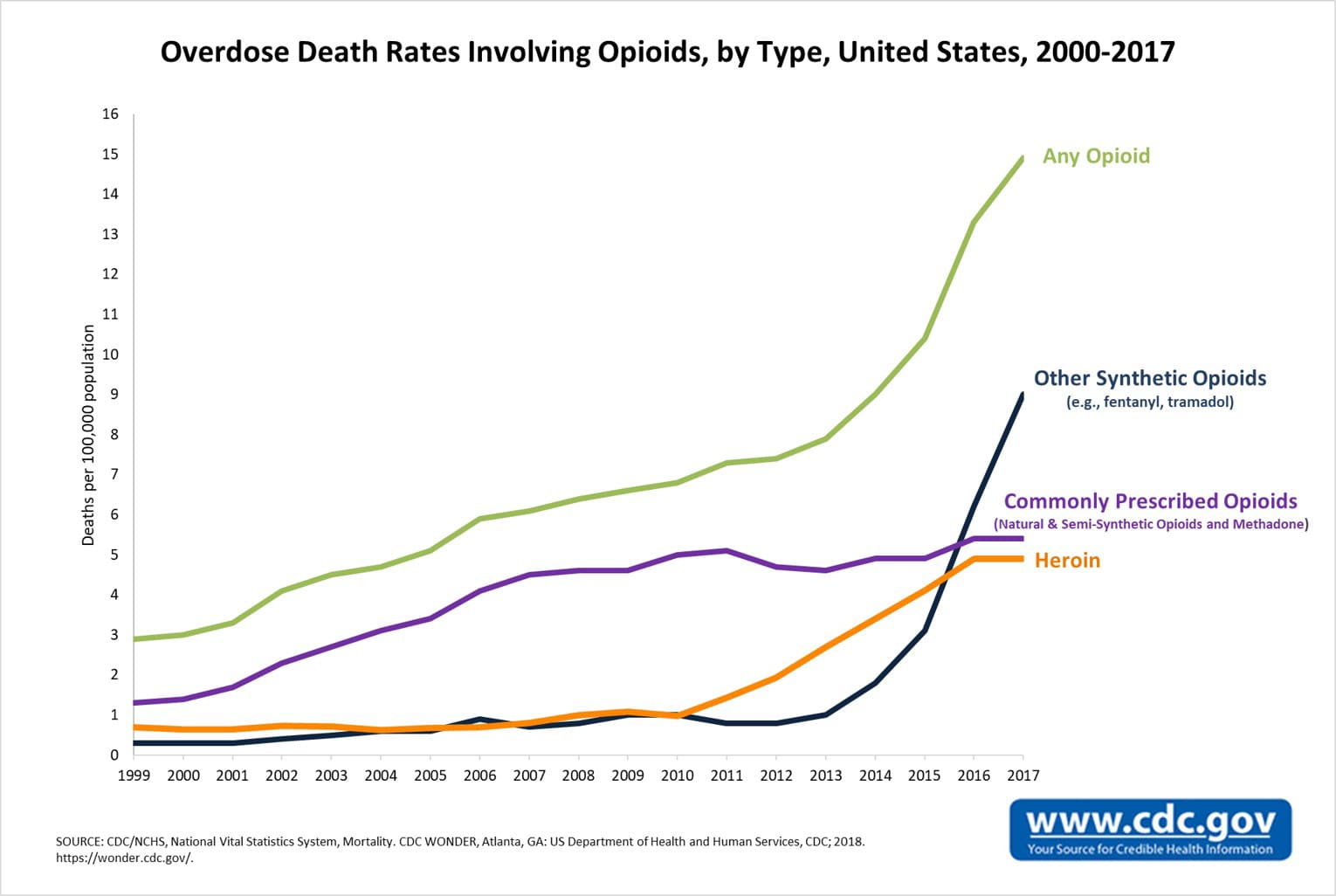
Rural areas have been especially impacted, with an astonishing 74 percent of farmers reporting they or someone they know is suffering from opioid addiction.
While increased availability of addiction treatment is a good thing, it is not a solution to the epidemic. Opioids remain a necessary tool to treat severe pain from surgery, cancer, and other serious conditions, but they must be used judiciously, and alternative therapies must be made available — particularly in lower-income rural areas where people are at higher risk.
==
https://www.ecowatch.com/shipping-arctic-ice-melting-2598089199.html
World's Largest Shipping Company to Send First Ship Through Melting Arctic
:{
Denmark's Maersk Line, the world's largest shipping company, will soon be the first to send a container vessel through Russia's Northern Sea Route, as the melting Arctic opens up new trade possibilities.
The Northern Sea Route has been historically impossible or prohibitively expensive to cross due to frozen sea ice. But the Arctic is warming at a rate twice as fast as the rest of the globe due to climate change and has significantly thawed the region's ice.
The Venta Maersk, which has a capacity to carry 3,600 shipping containers, will take off on its maiden voyage in the coming days through the polar waters north of Russia. The vessel will carry a load of frozen fish from Vladivostok in Russia's far east to St. Petersburg in the west, avoiding the traditional southerly Asia to Europe route through Egypt's Suez Canal, NPR reported.
Experts say the Northern Sea Route could reduce the east-west journey by two weeks.
...
}:
==
omg borders on dis cap'l, massive subsidies
PORT ARTHUR, Texas (AP) — As the nation plans new defenses against the more powerful storms and higher tides expected from climate change, one project stands out: an ambitious proposal to build a nearly 60-mile “spine” of concrete seawalls, earthen barriers, floating gates and steel levees on the Texas Gulf Coast.
Like other oceanfront projects, this one would protect homes, delicate ecosystems and vital infrastructure, but it also has another priority — to shield some of the crown jewels of the petroleum industry, which is blamed for contributing to global warming and now wants the federal government to build safeguards against the consequences of it.
The plan is focused on a stretch of coastline that runs from the Louisiana border to industrial enclaves south of Houston that are home to one of the world’s largest concentrations of petrochemical facilities, including most of Texas’ 30 refineries, which represent 30 percent of the nation’s refining capacity.
Texas is seeking at least $12 billion for the full coastal spine, with nearly all of it coming from public funds. Last month, the government fast-tracked an initial $3.9 billion for three separate, smaller storm barrier projects that would specifically protect oil facilities.
That followed Hurricane Harvey, which roared ashore last Aug. 25 and swamped Houston and parts of the coast, temporarily knocking out a quarter of the area’s oil refining capacity and causing average gasoline prices to jump 28 cents a gallon nationwide. Many Republicans argue that the Texas oil projects belong at the top of Washington’s spending list.
“Our overall economy, not only in Texas but in the entire country, is so much at risk from a high storm surge,” said Matt Sebesta, a Republican who as Brazoria County judge oversees a swath of Gulf Coast.
But the idea of taxpayers around the country paying to protect refineries worth billions, and in a state where top politicians still dispute climate change’s validity, doesn’t sit well with some.
“The oil and gas industry is getting a free ride,” said Brandt Mannchen, a member of the Sierra Club’s executive committee in Houston. “You don’t hear the industry making a peep about paying for any of this and why should they? There’s all this push like, ‘Please Senator Cornyn, Please Senator Cruz, we need money for this and that.’”
Normally outspoken critics of federal spending, Texas Sens. John Cornyn and Ted Cruz both backed using taxpayer funds to fortify the oil facilities’ protections and the Texas coast. Cruz called it “a tremendous step forward.”
Federal, state and local money is also bolstering defenses elsewhere, including on New York’s Staten Island, around Atlantic City, New Jersey, and in other communities hammered by Superstorm Sandy in 2012.
Construction in Texas could begin in several months on the three sections of storm barrier. While plans are still being finalized, some dirt levees will be raised to about 17 feet high, and 6 miles of 19-foot-tall floodwalls would be built or strengthened around Port Arthur, a Texas-Louisiana border locale of pungent chemical smells and towering knots of steel pipes.
The town of 55,000 includes the Saudi-controlled Motiva oil refinery, the nation’s largest, as well as refineries owned by oil giants Valero Energy Corp. and Total S.A. There are also almost a dozen petrochemical facilities.
“You’re looking at a lot of people, a lot of homes, but really a lot of industry,” said Steve Sherrill, an Army Corps of Engineers resident engineer in Port Arthur, as he peered over a Gulf tributary lined with chunks of granite and metal gates, much of which is set to be reinforced.
The second barrier project features around 25 miles of new levees and seawalls in nearby Orange County, whereChevron, DuPont and other companies have facilities. The third would extend and heighten seawalls around Freeport, home to a Phillips 66 export terminal for liquefied natural gas and nearby refinery, as well as several chemical facilities.
The proposals approved for funding originally called for building more protections along larger swaths of the Texas coast, but they were scaled back and now deliberately focus on refineries.
“That was one of the main reasons we looked at some of those areas,” said Tony Williams, environmental review coordinator for the Texas Land Commissioner’s Office.
Oil and chemical companies also pushed for more protection for surrounding communities to shield their workforces, but “not every property can be protected,” said Sheri Willey, deputy chief of project management for the Army Corps of Engineers’ upper Texas district.
“Our regulations tell us what benefits we need to include, and they have to be national economic benefits,”Willey said.
Once work is complete on the three sections, they could eventually be integrated into a larger coastal spine system. In some places along Texas’ 370-mile Gulf Coast, 18 feet is lost annually to erosion, threatening to suck more wetlands, roads and buildings into rising seas.
Protecting a wide expanse will be expensive. After Harvey, a special Texas commission prepared a report seeking $61 billion from Congress to “future proof” the state against such natural disasters, without mentioning climate change, which scientists say will cause heavier rains and stronger storms.
Texas has not tapped its own rainy day fund of around $11 billion. According to federal rules, 35 percent of funds spent by the Army Corps of Engineers must be matched by local jurisdictions, and the GOP-controlled state Legislature could help cover such costs. But such spending may be tough for many conservatives to swallow.
Texas “should be funding things like this itself,” said Chris Edwards, an economist at the libertarian Cato Institute. “Texans are proud of their conservatism, but, unfortunately, when decisions get made in Washington, that frugality goes out the door.”
State officials counter that protecting the oil facilities is a matter of national security.
The effects of the next devastating storm could be felt nationwide,” Rep. Randy Weber, a fiercely conservative Republican from suburban Houston who has nonetheless authored legislation backing the coastal spine.
Major oil companies did not return messages seeking comment on funding for the projects. But Suzanne Lemieux, midstream group manager for the American Petroleum Institute, said the industry already pays into programs such as the federal Harbor Maintenance Trust Fund and the Waterways Trust Fund, only to see Congress divert that money elsewhere.
“Do we want to pay again, when we’ve already paid a tax without it getting used? I’d say the answer is no,” she said.
Phillips 66 and other energy firms spent money last year lobbying Congress on storm-related funding post-Harvey, campaign finance records show, and Houston’s Lyondell Chemical Co. PAC lobbied for building a coastal spine.
“The coastal spine benefits more than just our industry,” Bob Patel, CEO of LyondellBasell, one of the world’s largest plastics, chemicals and refining companies, said in March. “It really needs to be a regional effort.”
==
==
34 giants: the global power elite PP
Amazingly, TCC/Global Power Elite money managers study
the transforming environment for new investment opportuni-
ties. Climate changeinvesting can be profitable, according to
Forbes, and getting in on low-carbon investments, and sectors
that will benefit should climate stress increase—such as defense,
health care, and property insurances—can prove lucrative.48
Increasing interest in new mining opportunities available due
to global warming is an important issue in Greenland.49 Private
investment in the control of water sources is seen as an increas-
ingly attractive opportunity for power elite speculation.50
==
https://theconversation.com/3-reasons-why-the-us-is-vulnerable-to-big-disasters-97592
big cities on coasts, lack of $, ...
==
baby jail
https://www.alternet.org/some-trumps-biggest-donors-are-profiting-big-time-immigration-detention-centers
no lnx
Some of Trump’s Biggest Donors Are Profiting Big-Time on Immigration Detention Centers
The plan to lock-up asylum-seeking migrants may seem like it happened overnight, but it has been years in the making.
By Jen Hayden / Daily Kos June 20, 2018, 1:51 AM GMT
The giant retail stores being converted into detention centers and these large tent cities cropping up to house immigrants, where did they come from? As always, it is important to follow the money. This plan to lock-up asylum-seeking migrants may seem like it happened overnight, but it has been years in the making. Only weeks after Donald Trump put his filthy hand on Lincoln’s Bible and took the Oath of Office, this was the February 24, 2017, headline at CNN Money:
The actions Donald Trump, his sycophant Stephen Miller and Minister of White Supremacy Jeff Sessions are taking today are a huge payoff to the prison lobbyists and the border security industry that spent millions helping to get Donald Trump elected. Private for-profit prison executives were furious that President Obama decided to end the practice of using private prisons. They poured everything into Donald Trump and his campaign, maxing out $250,000 donations and even helping Trump raise $100 million in sketchy, secret money for his “inauguration committee.” And it paid off, as one of the first decisions from the Trump administration was to rescind Obama’s order to phase out private prisons.
They didn’t stop there. These groups have been spending lavishly at Trump’s private business as well. The Miami New Times noted the private prison company GEO Group was one of the newest big spenders at Trump’s Doral property in Florida.
The GEO Group private-prison bash. Private-prison-company stock was cratering at the end of Barack Obama's time in office after his Department of Justice announced the federal government would no longer work with private, for-profit prison operators. But the Trump administration rapidly rolled those rules back after taking power. Then Boca Raton's GEO Group, the second-largest private-prison firm in America, moved its yearly company gathering to the Trump Doral.
At the core of it all, there are two factors that dovetail together when it comes to the immigrant detention centers: corruption and white supremacy. In fact, these are the core elements of the Trump administration overall.
In March of 2017, then Homeland Security chief John Kelly told Wolf Blitzer on CNN that he was considering a plan to separate families and detain them.
"We have tremendous experience of dealing with unaccompanied minors," he told CNN's Wolf Blitzer on "The Situation Room." "We turn them over to (Health and Human Services) and they do a very, very good job of putting them in foster care or linking them up with parents or family members in the United States."
It didn’t take long for Kelly to publicly walk back that statement, denying he meant it would be a cruel, intentional warning or deterrent to others who might be thinking of seeking asylum in the U.S. But we can clearly see now, they’ve been plotting this for quite some time. The sadistic, racist voices appear to have won over Donald Trump as we can clearly see he approved this action in April 2018, when he sent his attorney general out with a public statement and then began snatching children from their parents at the border.
Later in 2017, NPR highlighted the big money to be made from putting migrants and their children into detention centers. Money siphoned from our tax dollars to pay for their private profit cruelty.
:{
}:
The Trump administration wants to expand its network of immigrant jails. In recent months, Immigration and Customs Enforcement has called for five new detention facilities to be built and operated by private prison corporations across the country. Critics are alarmed at the rising fortunes of an industry that had fallen out of favor with the previous administration.
:{
}:
==
https://www.alternet.org/todays-capitalism-far-cry-what-it-was-intended-be
taher truthout
Capitalism is among the most controversial politico-economic terms to define, in part because myriad variations of “capitalism” have emerged throughout the centuries.
Neat and comprehensive definitions for any political term are either rare or defective. “Capitalism” is no exception.
To understand the theory of capitalism, we must begin with Adam Smith. In 1776, Smith authored An Inquiry into the Nature and Causes of the Wealth of Nations, simplified as Wealth of Nations, which remains understood as the foundation for the theory of capitalism.
Wealth of Nations came to life in the era of mercantilism, a style of economy over whose every aspect government imposed strict control, both for domestic and foreign trade. Many nations, chiefly the British Empire, were mercantilist.
Previously, trade (business) between nations occurred rarely, with sharp restrictions and deep suspicions towards each other. So, Wealth of Nationssought to resolve this through a systematic approach to international trade for the benefit of all involved.
Core to the theory of capitalism in Wealth of Nations was that trade must occur free of government intervention. This is the basis of “free” within “free markets” and “free trade,” assuring that no business is “cheating” via advantages or disadvantages imposed by government, thereby allowing real competition to occur.
Also core was the philosophy that business enterprise would self-regulate out of concern for the betterment of others, including “consumers,” “landlords,” “manufacturers” and even “labourers.” This was the “natural tendency” of capitalism, which would lead to a society “of perfect justice, of perfect liberty, and of perfect equality.”
Smith lived in the era of “enlightened self-interest,” in which people pursued their own wants and needs, but tied to the collective welfare of society as a whole. Therefore, he understood capitalism as an economic and moral system aimed to benefit the business class, but who would self-impose “limits” on their practices to support developing the life-quality and intellect of laborers and others. For the father of capitalism, such was prerequisite for a burgeoning economy. To this end, Smith condemned economies in which elites hoarded the “whole surplus” of earnings.But how could Smith be so naive to conceptualize capitalism as a pathway to liberty, justice and equality?
Limits imposed by government are regulations, which restrict or control the actions of a business entity to protect public interests from rapacious elites. In most cases, Smith opposed regulations as impingements on economic success.
Today, however, conservatives dogmatize the anti-regulation elements in Wealth of Nations for their agenda of deregulation to privatize ownership of everythingfor corporate profits — profits by sustaining archaic industries and subjecting workforces to uncreative, repetitive, tedious tasks with little or no worker-security, pay and hiring equity, or rights for collective-bargaining.
Never, however, does the right wing consult Wealth of Nations where Smith demands regulations against dehumanizing work conditions.
- Wealth of Nationsforewarned us that the “principal architects” of the political economy were “not the consumers … whose interest has been entirely neglected,” but the wealthy “merchants and manufacturers” whose interests have “been most peculiarly attended to.”“[H]e whose whole life is spent in performing a few simple operations … generally becomes as … ignorant as it is possible for a human creature to become. The torpor of his mind renders him not only incapable of relishing or bearing a part in any rational conversation, but of conceiving any generous, noble, or tender sentiment, and consequently of forming any just judgment … But in every … society this is the state into which … the great body of the people must necessarily fall, unless government takes some pains to prevent it.” —Book 5. Ch. 1. Line 178.*
Smith’s observations still apply. In a landmark 2014 political science study, leading researchers determined that the US is not a democracy, but a nation in which the masses of Americans are effectively disenfranchised, as “economic elites and organized groups representing business interests have substantial independent impacts on US government policy, while mass-based interest groups and average citizens have little or no independent influence.”
In condemning disproportionate power, Smith also warned that free competition can’t exist when any corporation dominates its industry, allowing them unbridled reign to set prices on the public for corporate profits, which never align with public interests.
Smith’s prescience was correct: Corporate mergers today continue toward monopolization of industry, while elites continue shaping policies in their own image, reinforcing plutocracy, since wealth dominance yields political dominance.
So, is today’s US truly an economy of capitalism?
After the final shots of the American Revolutionary War, the US consisted of only a de facto government, but no US Constitution, Bill of Rights, national economy or a common currency.
The US was pre-capitalist, an agrarian society predominated by farmers and plantations relying on chattel slavery, with the manufacturing industry grossly undeveloped. Meanwhile, the world’s superpower, the British Empire, was entering the Industrial Revolution with unprecedented industrial technology. These and other conditions left the US uncompetitive in foreign trade.
Opportunely, virtually all of the framers of the Constitution had read Smith’s Wealth of Nations, providing unprecedented research through which to create an economy of free-market capitalism.
But what course did the framers actually take?
Enter, Alexander Hamilton
To examine the origins of the American economy, we must turn to Alexander Hamilton, widely dubbed “the father of American capitalism” and financial system, and an architect of the US Constitution. What role did he play in today’s disproportionate wealth and power?
In the Constitutional Convention of 1787, Hamilton endorsed a “republican government” — a representative democracy modeled after Great Britain. Yet, he believed democracy was dangerous, viewing the public as injudicious and therefore to be distrusted with wielding political power.
To check the “turbulence” and “imprudence” of the public, Hamilton advocated that first in government must be the “rich and the well born” and second in government must be everyone else.
Hamilton’s style of democracy — plutocracy in all but name — provided the framework for the financial system he was soon to build.
Once the Constitution was ratified, a paramount task was to develop the economy through a new financial design. Hamilton was assigned to that task, which he composed through three reports: “The First Report on Public Credit,” “The Second Report on Public Credit” and the “Report on the Subject of Manufacturers.”
Contrary to common belief, Hamilton had no interest in capitalism, as his plutocratic and mercantilist ideals emerged throughout his reports, which have transferred into our reality today.
Pertinent to the unfolding argument are the second and third reports.
The second report focused on the formation of a “First Bank of the United States” (FBUS) of 1791. The FBUS achieved firmly establishing the power of federal government over states; creating a national legal tender in circulation; creating a management system of Revolutionary War debts; and building the nation’s credit score.
But these achievements were notdue to free competition, despite advice to bankers in Wealth of Nations.Instead, the FBUS was a federally chartered monopoly as the only bank allowed to expand nationally.
Hamilton began planning the FBUS in 1779, 12 years before it opened. Its earliest blueprints reveal that he determined it to “link the interests of the state in an intimate connexion with those of the rich individuals belonging to it.” As such, when the FBUS came to fruition, nearly 80 percent of its seed capital derived from private investors, and “two-thirds of thebank stockwas held by British interests” and other wealthy investors, soon paving the many roads toward risky speculation, the Panic of 1819 and eventually, the Great Recession.
Almost immediately after the FBUS launched, inflation began, partly from the sudden increase in money supply — skyrocketing “wholesale prices” on “all commodities” from an index of 89.7 in 1791 to an index well-above 110 until the year 1823. Inflation continued beyond the expiration of the FBUS charter in 1811, through the opening of the Second BUS, and up to the Tariff of Abominations.
In the “Report on the Subject of Manufactures,” Hamilton delivered blistering opposition to Smith’s free-market capitalism, arguing that economic success is notbuilt through free markets and mere ownership of private property.
Instead, Hamilton consciously modeled his system on British mercantilism, reasoning that the US economy would only flourish by protecting our agricultural and industrial enterprises, and that this “protecting” mustn’t be left to Smith’s “open and free market,” but must be surgically engineered by government. This was the early economic nationalism of President Trump’s “America First” ideology.
Hamilton formulated this “protection” into government “bounties” (subsidies) for US manufacturers and tariffs on imports to the US, namely from Britain. Yet, it’s widely mythologized that Hamilton’s “Report on the Subject of Manufacturers” was never adopted by Congress. Indeed, his propositions for subsidies failed to pass. However, virtually every protective tariff he proposed was adopted in the Tariff of May 1792, within six months after submitting this report.
This myth perpetuates that agrarian economy defenders Jefferson and Madison opposed “big-government capitalists” Hamilton and Washington. Worshipers of Jefferson hail him as a champion of small government for the sake of ordinary people. Similar myths circulate regarding Madison. Meanwhile, Hamilton remains the sole aristocrat in that mythology.
In rhetoric, Jefferson and Madison despised Hamilton’s protectionism, but not in practice. In 1789, Madison proposed the Tariff of 1789, which was the first protectionist policy passed by the new Congress. Then, in 1793, 1794, 1806, 1807 and 1811, Jefferson and Madison endorsed protectionist policies and even embargoes against British goods, radically expanding Hamilton’s big government ideology.
Hamilton’s system outlived him. With its core ideas intact, it was adopted as “The American System” following the War of 1812 during the Madison administration. Henry Clay named it as such to openly distinguish it from the free-market capitalism of Adam Smith. And this very system has since continued through virtually every single administration.
Today, the US leads the world with the highest volume of protectionist trade measures. This is no capitalism.
From Smith’s Capitalism to Globalization
Smith advocated for government regulations to protect the public, not corporations, yet his warning has drowned in the roaring Republican demands for corporate deregulation, giving rise to a recent phenomenon: “regulatory capture.”
Regulatory capture occurs when regulatory agencies employ members of the very businesses that government is supposed to regulate. The business gains internal control of the agency, then severs its chief purpose of restricting corporate tyranny over the public.
Perfect examples are found in the relationship between big banks and government, wherein banking lobbyists literally write the policies that regulate them, for the benefit of the banks; as also in the recent, appalling Dodd-Frank regulation rollbacks. More are found among the Trump administration. Just examine some recent deregulatory efforts byBetsy DeVos of the Department of Education, Scott Pruittof the Environmental Protection Agency and Steven Winberg of the Department of Energy. Combined with evidence that corporations have dominant power over our political economy, this does not reveal capitalism, but corporatocracy and plutocracy.
Another vehicle for protectionism is misleadingly called “free-trade agreements” — such as the North America Free Trade Agreement (NAFTA), the Central America Free Trade Agreement (CAFTA) and the Trans-Pacific Partnership (TPP), from which President Trump exited the US, but which he’s now interested in re-entering.
“Free-trade agreements” aren’t “free” at all. Quite the opposite. NAFTA is a generalizable example. It’s a legal agreement between nations for the protection of transnational and multinational corporations to operate in privileged conditions across foreign borders.
For example, Article 301 of Section A in NAFTA entitles corporations to “national treatment” which accords US corporations the legal rights of Mexican corporations, such as protection from taxation as a foreign entity. But corporations — “legal persons” — have far more rights than human beings. Therefore, NAFTA is legal doctrine for strengthening corporate power, not nations or human beings. Furthermore, as Corpwatch.org reports:
NAFTA includes an array of new corporate investment rights and protections that are unprecedented in scope and power. NAFTA allows corporations to sue the national government of a NAFTA country in secret arbitration tribunals if they feel that a regulation or government decision affects their investment in conflict with these new NAFTA rights. If a corporation wins, the taxpayers of the “losing” NAFTA nation must foot the bill.
In other words, “free-trade agreements” protect corporations from capitalism.
Moreover, free-trade agreements aren’t even “trade.” Most of the “trade” is actually transactions across physical borders, but through branches of the same corporation, economically termed “intra-firm transactions.”
A prominent example is the American auto industry, which has turned Mexico into an archipelago of interconnected auto assembly plants, primarily for the lower cost of labor in Mexico due to lower wages, fewer workers’ rights, and a less regulated environment and working conditions.
So, via NAFTA, American automakers manufacture their auto parts in one foreign country, send them to Mexico for assembly, then deliver finished cars to the US to be sold — all while maintaining financial transactions within their own corporation. This is neither “free” nor “trade” at all, yet it retains the label to sustain the illusion of capitalism.
This violates capitalism’s core principle of free competition, which demands a “survival of the fittest” landscape for businesses: Those that can’t compete on their own must die off.
Instead, we have welfare for corporations, in which government uses billions of taxpayer dollars to bail out private industries, as exhibited in massive automaker bailouts and the infamous Wall Street bailouts, which the American public is unknowingly still bailing out.
Old Wine, New Bottle
There’s widespread surprise at the incoherence spewing from President Trump about imposing tariffs on China in order to put “America First.” But today’s version of capitalism — which favors archaic industries, corporate behemoths and big banks — has been the US economic system since its inception.
Yet it remains misunderstood that, under capitalism as Smith intended it, the role of government is to intervene in the economy only to prevent or repair a problem, such as ending the Great Depression in the US — whose recovery was largely due to World War II — by temporarily creating a command economy to meet the sudden demand for wartime munitions. This generated widespread employment of hitherto unemployed populations. Together with multiple other factors, the war effort restored our economy.
WWII taught economists what Hamilton knew intuitively: Capitalism cannot exist; that an open, free-market system (therefore without protectionism) in the US would lead to the destruction of our economy, as US industries simply could not compete on the world stage, largely due to larger workforces with lower labor costs in nations with weaker labor rights, such as China, India and Mexico, whose weak labor rights are, in fact, pushed by US corporations.
Post-war politicians understood that if you can use government intervention for large-scale industry during wartime, then you could use it during peacetime. And the Pentagon — created during WWII — served quite useful for this endeavor.
The Pentagon has maintained two key functions: serving as headquarters for all US armed forces and their intelligence agencies, and serving as a channel for transferring public moneys into funding government research for revolutionizing high-tech industry, pharmaceutical industry, aviation industry, and so forth.
In The Entrepreneurial State, leading economist Mariana Mazzucato traces how government — not corporations or market forces — is the entrepreneurresponsible for the most impressive innovations in our economy.
Research and development (R&D) naturally demands among the largest costs for innovating high technology. But instead of corporations funding their own R&D, government does so with taxpayer dollars, often through branches of the Pentagon. Once R&D is complete, corporations cherry-pick that precious information at no cost.
As Mazzucato notes, this convoluted funneling of public funds into corporate profits enables divorcing the public from the title of “investor,” which we are in all but name. We provide the “capital base” for such innovation, but, unlike in capitalism, we “investors” receive no return-on-investment. Those gains are privatized by the corporations that cherry-pick the R&D in order to produce their products.
Although myriad examples are available, just one significant example is found in the iPhone, which Mazzucato explains in depth in her book.
In capitalism, since the public funded the iPhone’s technologies, each of us would get a check from Apple or the US government for our share of the profits. But in our actual economic system, those profits are not returned to the public, and are instead privatized by corporations.
What’s more, the public goes out and purchases the iPhone. Therefore, it’s like we pay for the iPhone twice: once when we “invest” in it, and then again when we purchase it from Apple. Unfortunately, this applies to countless other purchases we make as “consumers.”
When people understand that capitalism doesn’t exist in the US, they’re directed to discern what does, compelling us to unearth our socio-economy’s unjustness, which is vital in the pursuit to end poverty and other oppressions that intersect class oppression.
So, what exactly dowe name our economy? Whether neomercantilism, Keynesian capitalism, corporatocracy, fascism, really-existing-capitalism, or otherwise, it’s up to you, the People, who together toil, endure and persevere under the legacies of Hamilton’s system.
Hamilton understood correctly: Capitalism, as Smith intended it, could not sustain the United States in unbridled competition. This understanding diverged the US economy from the path of capitalism, not moral reasoning regarding its inherent subjugation of laborers to the capricious will of amoral “merchants and manufacturers,” nor that its envisioned outcome of “perfect equality” is unfeasibly reliant on conscientiousness from economic elites, whose modus operandi is not altruism, but profit maximization, even turning philanthropy into philanthrocapitalism. Indeed, Hamilton’s system has emerged the US as a world superpower, but it has inextricably given rise to massive unconscionable inequality, inequity and iniquity, both at home and abroad.
As such, neither system has justified existing. “We the People” must, together, move toward an economic system that coexists with democracy, designed bythe many and forthe many; the system fought for by theLowell Mill Girls, in which “those who work in the mills ought to own them, not have the status of machines ruled by private despots who are entrenching monarchic principles on democratic soil as they drive downwards freedom and rights, civilization, health, morals and intellectuality in the new commercial feudalism.”
If only we conceptualize ourselves as togetherbeneath this unjust system — with varying complexities and inequities — perhaps then we can move to aptly label it and create anew
https://www.democracynow.org/2018/6/6/the_battle_for_paradise_new_intercept
- Part 1: Naomi Klein: 4,645 Deaths in Puerto Rico from Hurricane Maria Were “State-Sponsored Mass Killing”
- Part 2: “The Battle for Paradise”: New Intercept Doc Goes Inside Struggle over Puerto Rico’s Future
- Part 3: Puerto Rico Is a “Playground for the Privileged”: Investors Move In as Homes Foreclose & Schools Close
==
storming the wall bk
haiti earthquake geo built camp for detainees from sea? many CC cutters deployed [gitmo?]
http://www.risingupwithsonali.com/can-democracy-survive-global-capitalism/
Hungary’s Prime Minister Viktor Orbán won re-election easily in yet another affirmation of authoritarian right wing policies in Europe. It is a troubling trend, not just in Europe but of course right here in the US, in Latin America, in Asia, and elsewhere. In a world that is more inter-connected than ever and where awareness of human rights is greater than ever, how do we explain the tilting toward demagoguery?
A new book by the co-founder of The American Prospect, Robert Kuttner, attempts to answer that question by pulling together various developments into a broader economic and social picture where capitalism has run so amok that it has undermined democracy.
For more information about the book visit www.prospect.org or www.robertkuttner.com.
electric and schools close/pvtize charter
6 mos anniv
https://www.democracynow.org/2018/3/21/the_battle_for_paradise_naomi_klein
cryptocurrency, voucher, charter, 4% tax haven 2 hotels hank [paulsen?
agro-ecology food as buffer/resilience
ppl's platform ppl together gente
cf wage theft: https://theintercept.com/2018/03/16/hurricane-harvey-disaster-recovery-wage-theft/
ABOUT A MONTH after Hurricane Harvey, Karla Lopez saw a post on Facebook about a job repairing a flooded apartment complex in north Houston. When she called to find out more, a man named Gilberto urged her to come into work that same day.
“He said he could pay me $11 an hour for a 10-hour day for six days a week, including Saturdays, with no overtime.” Lopez recalled. “But I was OK with what he offered because I really needed the work.”
She spent the next two weeks on a crew of mostly immigrant laborers, demolishing walls and carrying out trash, then “putting up sheetrock with the guys and caulking and even cutting up siding” on buildings. A 20-year-old undocumented immigrant from Honduras, she had never worked in construction before, but she learned quickly and “just focused on getting the work done.”
Halfway into her third week on the job, Lopez fell from a ladder that shifted as she was stepping down. At the hospital, a doctor told her she had ripped the tendons in her ankle. Lopez was stuck with the bill, and then, she says, “The company didn’t want to pay me for the time I had worked.” Others at the site were also waiting to be paid; some had been waiting for more than a month.
When Lopez complained, Gilberto gave her the phone number of the subcontractor handling the project. The man who answered the phone told her “he would pay me some of the money soon,” she recalled. “But I told him I needed all of the money because I’d had an accident and had bills to pay.”
She informed him that other workers were contacting lawyers in order to get paid and says he responded, “Do what you have to do,” and hung up.
Workers like Lopez lost thousands of dollars in the first month after Hurricane Harvey, according to a report commissioned by the Fe y Justicia Worker Center and the National Day Laborer Organizing Network, which found that more than a quarter of laborers doing recovery work in Houston had experienced wage theft since the storm. “After a natural disaster, there’s this huge risk of not only keeping the status quo of inequalities, but actually making them a lot worse,” said Marianela Acuña-Arreaza, executive director of the Fe y Justicia Worker Center.
The survey of storm recovery workers showed they were primarily undocumented immigrants from Mexico and Central America, although most were long-term residents of the Houston area. As The Intercept documented in November, a state law that lets police request the immigration status of anyone they detain or arrest has made many workers reluctant to report abuse. This week, the U.S. 5th Circuit ruled that most of the law can take effect even while it is appealed.
In the meantime, in a rare success, Lopez actually recovered the money she was owed — about $1,000. Labor advocates helped her bypass the web of subcontractors and directly pressure the project’s general contractor, Interstate Restoration, the second-largest disaster recovery firm in North America. Now other immigrants could use the same tactic to hold businesses accountable as they continue the slow work of rebuilding Houston.
==
==
opioid addicts PIC
https://www.alternet.org/human-rights/trumps-first-year-has-been-private-prison-industrys-best
Exactly 17 months ago, in August of 2016 -- back when most election polls had Hillary Clinton clinching the 2016 presidential election -- the Obama administration announced that it would end the Justice Department’s (DOJ) reliance on private prisons. The announcement came seven days after the DOJ’s inspector general (IG) called on the federal Bureau of Prisons (BOP) to more rigorously oversee its contracts with private prison companies. The IG’s report found that private prisons at the federal level consistently fail to measure up to federal standards in preventing dangerous conditions, intercepting contraband, and ensuring internal accountability for staff misconduct.
Shares of the private prison titans tanked.
CoreCivic and GEO Group’s stocks both ended the day down more than 35 percent and 39 percent, respectively -- an indication that the nation’s largest for-profit prison corporations' profitability might be on the wane. The day after the announcement, GEO Group CEO George Zoley stated in a conference call, “There’s been an overreaction to the news about the contracts. We think, in time, this will correct itself.” Even George Zoley couldn’t have predicted today’s turnaround.
With the election of Donald Trump to the White House a few months later, Zoley’s prescient statement of an “overreaction” made him look like a fortune teller.
On Nov. 7, 2016, when the closing bell of the American Stock Exchange rang and before any sense of who the 45th president of the United States would be, CoreCivic traded at 14.36 and GEO Group stood at 15.93. Following Trump's electoral victory, private prison company stocks skyrocketed. Today, CoreCivic is trading at 23.19 (a 61 percent increase) and GEO Group is trading at 23.03 (a 45 percent increase). And for good reason. The Trump administration is a godsend for the private prison industry.
First, there is the dangerous and misguided rhetoric that President Trump and Attorney General Jeff Sessions constantly spew -- despite evidence to the contrary -- about how the nation’s violent crime rate is rising and America’s streets are filled with carnage. Second, along with this bombastic language are their calls for harsher sentencing and draconian enforcement of drug and immigration offenses. Third, federal spending on private prisons has remained steady, despite Republican support for across-the-board budget cuts to other federal programs. Trump’s proposed fiscal year 2018 budget calls for $1.2 billion in new spending on detention, transportation and deportation of undocumented immigrants to expand detention capacity to more than 48,000 beds a day. Finally, in February of 2017, Attorney General Jeff Sessions revoked the Obama-era initiative to phase out the use of private contractors to run federal prisons, delivering the industry its biggest victory yet.
Private prison corporations have publicly expressed enthusiasm for the current administration’s aggressive stance on crime and immigration. In a 2017 third-quarter earnings call, a GEO official noted that the government’s need for additional detention space should benefit company revenues.
Here is how the private prison industry fared during Trump’s first year. Today, 65 percent of detainees held by the Department of Homeland Security are housed in privately run facilities.With the administration’s plans to increase the capacity to hold undocumented immigrants behind bars, the private prison industry’s revenues will surely follow suit. And in an unprecedented move, in late 2017, Immigration and Customs Enforcement (ICE) asked for information from contractors who can provide additional immigration detention space in the interior of the nation, in major cities such as Salt Lake City, Chicago, Detroit and St. Paul, along with an expected request for information on contractors who can provide additional capacity along the southern U.S. border in Texas.
CoreCivic’s CEO Damon Hininger publicly touted the administration’s move as a source of potential revenue to his company, noting in an August’s earnings call with investors, “ICE expects the average length of stay for detainees to increase as a result of increased interior enforcement. While immigrants arrested at the border typically are detained for 27 days, those arrested in the interior of the country are detained for roughly 52 days.” More days behind bars in their detention centers translates into more profits for the company.
The current administration and the private prison industry are also doing more than just merely talking. In April, ICE awarded GEO Group with a $110 million contract to build a new immigration detention center in Conroe, Texas, 40 miles north of Houston. At the time, the Associated Press reported that this contract award took many by surprise because GEO had “a surplus of 3,000 beds across its nationwide network of prisons.” And in December, CoreCivic filed plans with government officials in Elkhart County, Indiana, to construct an approximately $100 million detention facility. The move sparked candlelight vigils from area residents distraught by the development. CoreCivic has not yet received final approval from the Elkhart County Commissioners or ICE.
In April, the administration -- sticking to the message from Attorney General Sessions’ one-paragraph memo to the BOP reversing the Obama administration’s intent to reduce reliance on private prisons -- posted a notice requesting proposals from private prison companies to house prisoners in Criminal Alien Requirement (CAR) facilities. CAR prisons are privately managed prisons. There are 11 CAR prisons across the country run by three companies: GEO Group, CoreCivic and Management & Training Corp. The solicitation signaled a planned increase of 1,607 beds over BOP’s then-current population of privately imprisoned people -- 21,287 in total, as of May 2017. And on May 26, GEO Group announced that it had been awarded renewed contracts with the BOP for CAR facilities at the company’s prison complex in Big Spring, Texas. The 10-year agreement for 3,532 beds is worth up to $664 million.
My new book, "Inside Private Prisons: An American Dilemma in the Age of Mass Incarceration," notes that given today’s political realities, the private prison industry is not disappearing any time soon. Given the current administration’s penchant for privatizing government services -- including increasing its reliance on private prisons -- we owe the thousands of people who cycle into and out of private prisons and immigration detention centers a duty to constantly monitor their conditions and ensure that private entities that perform public functions should be subject to the same transparency, accountability and oversight as public entities. And for those worried about the private prison industry’s lack of transparency and accountability (in just one example, private prisons at the federal level are not subject to Freedom of Information Act Requests), if the first year of the Trump administration reflects the next three years, we need to act quickly to ensure that the ever-growing number of people behind bars in private prisons and immigration detention centers are the beneficiaries of improved conditions of confinement and better transparency. How? We need to ensure that state and federal laws are changed to require these corporations to comply with open records requests. And state and federal governments need to rewrite contracts with the private prison industry to require better programming, transparency, accountability and conditions of confinement.
While most of the coverage on private prisons has focused on the federal contracts, the administration’s rhetoric on reviving the war on drugs is starting to have a domino effect at the state level. Most recently, in Kentucky, the state signed a contract with CoreCivic to reopen a shuttered prison -- the Lee Adjustment Center in Beattyville -- and move about 800 inmates there. The opioid crisis in Kentucky pushed state policymakers to draft more draconian drug penalties that played a role in increasing its prison population to a record high of more than 24,000 inmates. With full prisons and jails, Kentucky felt it had no choice but to contract with CoreCivic to house almost 1,000 men it doesn’t have room to keep behind bars.
...
==
==
https://www.alternet.org/culture/visionary-sci-fi-author-sees-destruction-human-civilization-and-its-predatory-capitalism
==
katrina and then Puerto R
perfect storm
Representing billionaire Eli Broad, Bruce Reed celebrated the paralysis in local governance in post-Katrina New Orleans as key to pulling off the rapid expansion of charter schools, exploiting disaster without oversight by any “central office”:
“New Orleans is an amazing story — when you make it possible to get political dysfunction and sick a bunch of talent on the problem — it’s the one place where grand bargain of charters has been kept the best.”
New Orleans' "amazing" story resulted in the firing of 7,500 mostly black school employees, wiping out a substantial part of the city’s black middle class. Meanwhile, the “miracle” claims of boosters like Reed have fallen apart. A recent editorial in New Orleans’ African American newspaper called out the false promises and lack of results from the charter experiment.
==
bottled water shipped in after disaster
==
https://www.ecowatch.com/whitefish-energy-puerto-rico-2509056314.html
Congress, Trump Exploit Fire Tragedy to Promote Logging Agenda
By Chad Hanson
In the wake of the October 2017 fires in Northern California, which resulted in the loss of so many lives and homes, people affected by the tragedy are grieving and bewildered. Many people are searching for answers about what caused the fires, and a way forward to prevent similar loss of life and property.
It's frustrating, then, to watch Republican leaders in Congress and the Trump administration politicizing the recent tragedy as they push for a sweeping elimination of environmental laws on our national forests and other federal public lands to increase logging and backcountry fire suppression under the guise of community protection. On Nov. 1, the House voted 232-188 to allow for more "salvage logging" and other forms of tree-cutting on federal properties. According to the Associated Press, House Speaker Paul Ryan said the bill was needed to protect the nation's federal forests "from the kind of devastation that California experienced."
Wrong. Even a cursory examination of the science of forest ecology reveals that this plan would not only destroy vast acreages of public forests, but would also put communities at even greater risk.
The fires that occurred last month in California were in low-elevation foothill ecosystems dominated by oak woodlands and grasslands. The fires were far away from any national forests or other federal public lands. Eviscerating environmental laws on federal forestlands would do nothing whatsoever to help the affected communities now or in the future. Instead, what the tens of millions of Americans living in rural communities within fire-adapted ecosystems really need is for federal and state lawmakers to focus on directly protecting homes and lives from wildland fire.
The science is clear on how best to do this, and it involves a few basic steps. Most important, we need to help homeowners make their homes far more fire-safe. This includes measures such as using fire-resistant roofing and siding, installing rain gutter guards (to prevent flaming embers from landing in a dry bed of pine needles and leaves accumulating in rain gutters); using a fine-wire mesh on exterior vents to prevent embers from floating into interior spaces like attics; and replacing wood decks with fire-resistant composites. Homeowners also need assistance to create "defensible space" within 60 to 100 feet around their homes, which involves removing most small trees and shrubs, removing lower limbs on mature trees, and annually raking up and removing small twigs, needles and leaves from the ground. (Clearing vegetation away from larger distances from homes offers no added benefit for home protection, research shows.)
Further, we need to create an infrastructure to notify communities when wildland fires occur so that people and their animals can evacuate quickly. When these steps are properly implemented, the vast majority of homes can and do survive wildland fire, and lives are saved. Finally, we must focus wildland fire suppression and management activities around homes and communities, rather than in backcountry forests.
But the current leadership in Congress appears more interested in trying to find some kind of cover for allowing for increased logging. The recently passed bill—deceptively named the Resilient Federal Forests Act of 2017, and which was sponsored by one of the biggest recipients of logging-industry campaign contributions in Congress, Bruce Westerman, an Arkansas Republican—would divert more resources away from protecting communities in order to give a windfall to logging corporations.
If the Senate passes this bill and it becomes law, the legislation would eliminate most logging regulations in national forests, and severely curtail public participation in federal forest management decisions, allowing clearcuts thousands of acres in size. What's more, the bill would prohibit federal judges from issuing temporary restraining orders or preliminary injunctions against illegal logging projects on our public lands, which means giant logging projects would be completed before any judge could enforce existing laws.
Unfortunately, Senate passage could happen. Senator John Barrasso (R-WY) has introduced S. 2068, the so-called Wildfire Prevention and Mitigation Act. Similar to HR 2936, this bill would exempt massive logging projects from environmental laws and public participation on our national forests, and would prevent federal judges from being able to enforce environmental laws. Barrasso issued a statement misleadingly claiming that this massive rollback of environmental protections was needed to "remove excess brush" from federal forests.
Environmental leaders in Congress, including Representative Raúl Grijalva (D-AZ) who is the Ranking Member on the House Natural Resources Committee, are calling HR 2936 a shameful "giveaway" to the logging industry. "The Americans across the West whose homes burned to the ground this year aren't interested in whether Congress can make timber companies a few extra bucks," Grijalva said.
These logging bills represent both an attack on our public lands and an assault on science. Both pieces of legislation are predicated on a political tale known as the "catastrophic wildfire" narrative, which is a classic example of the politics of fear. The basic premise of this narrative is that wildland fires are "destroying" our forests—and that more intensive and widespread logging will "save" them. But the notion that fire "destroys" forests has been refuted by hundreds of scientists and peer-reviewed scientific studies. The current science tells us, for instance, that even in the same forest types, the forests with the fewest environmental protections and the most logging burn more intensely, not less.
There is now a broad consensus among forest scientists that we have considerably less fire in our forests today compared to the natural levels that occurred prior to fire-suppression policies. And, though it may seem counterintuitive, hundreds of scientific studies have concluded that, in the patches where forest fires burn more intensely and kill most of the trees, the resultant "snag forest habitat" is actually some of the best and most important wildlife habitat in the western U.S.—comparable to old-growth forest in terms of native biodiversity and wildlife abundance.
We also need our public forests to help mitigate climate change, since protected forests absorb huge amounts of carbon dioxide from the atmosphere and store it in growing trees and shrubs. In fact, if we protected our national forests from logging, it would be like taking 13 to 24 million cars off the road.
But the Trump administration and its allies in Congress don't really care about science. They live in a world of "alternative facts" in which clearcuts the size of cities are promoted as fire management, ecological restoration, and climate-resilience measures. Their proposed solution to the risks of wildfire is to destroy the forest in order to save it.
Reposted with permission from our media associate SIERRA magazine.
==
puerto rico maria: austerity --> fiscal control bd unelected // flint mich emergency mgr --> pvtization aha
3 Big Corporations Accused of Shamelessly Gouging Their Customers This Hurricane Season
Call it disaster capitalism in miniature.
By Jacob Sugarman / AlterNet September 8, 2017, 12:49 PM GMT
For Texas and large swaths of the Caribbean, Hurricanes Harvey and Irma have proven historic human catastrophes. At least 70 people were killed in the former, while the latter is presently on a collision course with Southwest Florida after leveling Anguilla, Cuba and the Bahamas, among other island nations and commonwealths. Barbuda, which bore the brunt of the Category 5 storm Irma, has been reduced to rubble.
For a handful of corporations, the death and destruction wrought by these tempests present an opportunity to turn a tidy profit. Call it disaster capitalism in miniature. In addition, these events help illustrate just how ill-equipped private industry is to meet the demands of a public safety crisis like a natural disaster.
Here are three apparent offenders, all accused of shamelessly gouging their customers at the worst possible time.
- Amazon
The online retailer has come under fire since it listed a 24-pack of bottled water for $99.99 via BestSource OfficeSupplies, a third party vendor. One shopper complained of a single gallon of distilled water being sold for $21.95. A spokeswoman for Amazon told CBS that the website's prices "do not fluctuate by region or delivery location." But the site has acknowledged that it relies on "dynamic pricing," an algorithmic model that incorporates what other merchants are charging, and tweaks its pages accordingly. During a natural disaster, when essentials like food, water and batteries are in short supply, this looks an awful lot like gouging.
- Delta
With Hurricane Irma bearing down on virtually the entire state of Florida, and Governor Rick Scott urging residents in areas susceptible to storm surges to evacuate (after years of climate denialism), traffic has spiked on travel sites like Expedia and Kayak by prospective passengers hoping to make their escape. Enter Delta, which has reportedly been charging four, five and six times the normal cost of a flight out of Miami.
Leigh Dow, a public relations executive with just under 19,000 Twitter followers, went viral earlier this week when she tweeted that the price of her ticket to Phoenix had been bumped from $547.50 to $3,258.50. Snopes is careful to note that Delta ultimately helped her find more affordable airfare, and the airline announced Friday it would be capping one-way reservations to and from South Florida at $399, but it remains unclear if it was simply bowing to public pressure.
3. Chevron
Reuters reports that as of Thursday, Florida Attorney General Pam Bondi had received 45 separate complaints of inflated prices at Chevron gas stations, despite the oil company's repeated claim that it will not tolerate price gouging. According to AAA, gas prices across the state have spiked to $2.725 per gallon, as thousands of motorists flee coastal areas before Irma makes landfall. Shortages have been especially acute in Southern Florida, one of the regions most vulnerable to the storm.
==
oops
... ;">over 65,000 students enrolled in New Orleans public schools, less than 1 percent in charter schools. There are now 44 governing bodies for public schools in New Orleans. There are seven types of charter schools in Louisiana. The public schools are 87 percent African American. Widespread charter school problems for students with disabilities are getting a little bit better according to a federal court monitor report. The public has very mixed feelings about the system reflected in the most recent poll, which shows 43 percent of whites think the schools are getting better, compared to 31 percent of African Americans; while 23 percent of African Americans thought schools were getting worse, in contrast to 15 percent of whites.
2,000. Black median income in New Orleans rose from $23,000 in 2005 to $25,000 eight years later, while white median income rose by $11,000 from $49,000 to $60,000 during the same time.
https://www.c-span.org/video/?328719-1/disaster-capitalism
10/15
Disaster Capitalism
Antony Loewensteintalked about his book, Disaster Capitalism, in which he takes a critical look at companies like Halliburton, G4S, and Serco that make money off of natural and man-made disasters around the world.
==
12/16 broaden to predatory home and student loans/ online colleges
==