tim wu
:{===
SEE BADASS WICKED SMART PENDING
see uber 1 on advert
---
Our digital lives are increasingly dominated by a handful of powerful tech platforms. Once promising prosperity and democracy, the internet has instead allowed companies like Google, Amazon and Meta to extract money, data and attention from users on an unparalleled scale. Tim Wu, a former technology advisor to President Biden, argues that the government is failing us while tech monopolies deepen wealth divides and enable authoritarianism. We talk to him about how we can take back power from Big Tech. Wu’s new book is “The Age of Extraction: How Tech Platforms Conquered the Economy and Threaten Our Future Prosperity.”
Guests:
Tim Wu,professor of law, Columbia Law School
---
video
bigthink (history) lost $ on penny paper, ads. revolts every 30 years, more sneaky. casino effect, who decides? Wm James: you are what you pay attn to.
Advertising Hazards: Your Attention is a Commodity That Can Be Manipulated | Tim Wu
9 min https://www.youtube.com/watch?v=uakWt0DTy7E
---
talks @ ggl 35 min
https://www.youtube.com/watch?v=tmR7tzrA28k
Tim is an author, policy advocate, and professor at Columbia University, best known for coining the term "net neutrality." In 2006, Scientific American named him one of 50 leaders in science and technology; in 2007, 01238 magazine listed him as one of Harvard's 100 most influential graduates; in 2013, National Law Journal included him in "America's 100 Most Influential Lawyers"; and in 2014 and 2015, he was named to the "Politico 50." He formerly wrote for Slate, where he won the Lowell Thomas Gold medal for Travel Journalism, and is a contributing writer for The New Yorker. THE ATTENTION MERCHANTS provide a revelatory look at the rise of "attention harvesting," and its transformative effect on our society and our selves. It serves as an illuminating, urgent look at how businesses commodify our attention, and what we lose when we give it to them.
---
carson wiki https://rachelcarson-wiki.lt.ucsc.edu/wiki/Counter-History#Technology
Big Data / Privacy
Dynamic maps: online privacy and Big Data.
Shoshana Zuboff, author of The Age of Surveillance Capitalism, talked about the growing business of collecting and selling consumer datavideo interview 2/19.
Zucked: Waking Up to the Facebook Catastrophe Roger Mcnamee, The Curse of Bigness: Antitrust in the New Gilded Age Tim Wu Video panel discussion 2/19 also Artificial Unintelligence Broussard.
Here’s What Google and Facebook Know About You—And What You Can Do About It: Both companies keep treasure troves of deeply personal data on users. 3/18.
Panel Discussion on Big Data Panelists included Cathy O’Neil, author of Weapons of Math Destruction: How Big Data Increases Inequality and Threatens Democracy, and Tim Wu, author of The Attention Merchants: The Epic Scramble to Get Inside Our Heads. 9/17. BookTV video (see also We are Data.
The CIA Document Dump Isn't Exactly Snowden 2.0. Here's Why hijacking devices to spy 3/17.
Big Data: A Revolution That Will Transform How We Live, Work, and Think Viktor Mayer-Schönberger and Kenneth Cukier, Eamon Dolan/Houghton Mifflin Harcourt.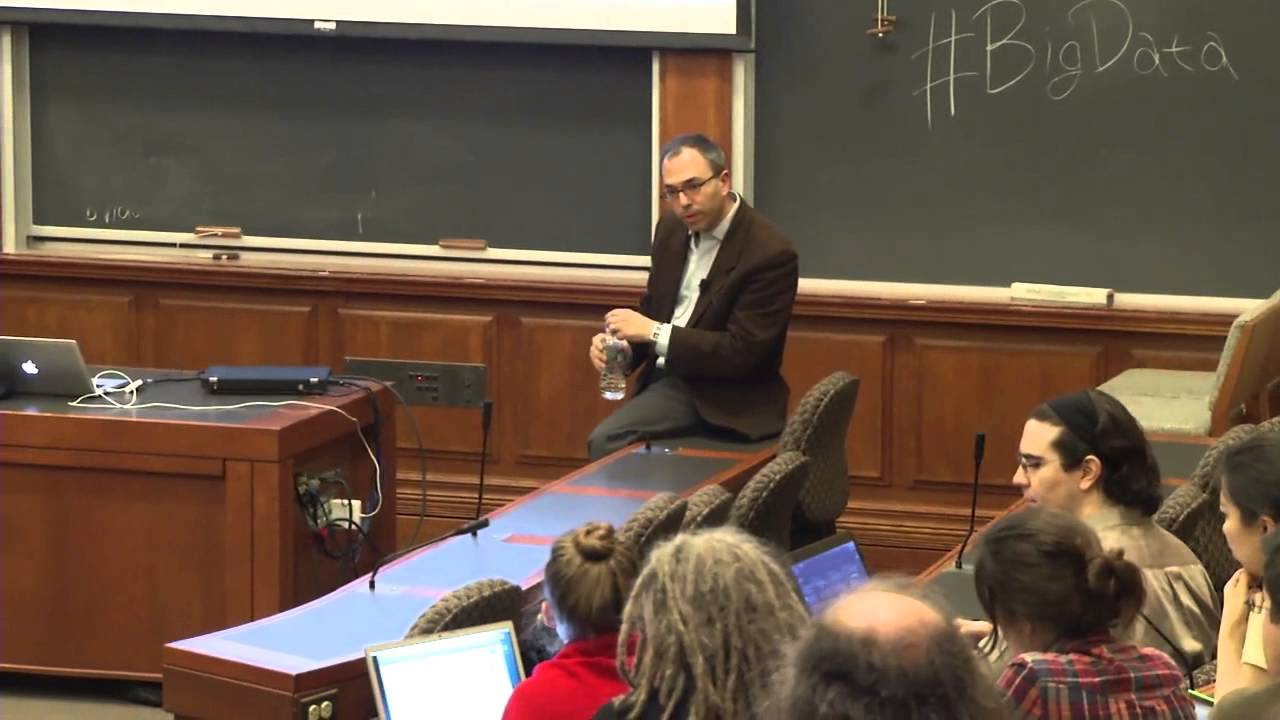 . (review).
Tim Wu talked about his book The Attention Merchants: The Epic Scramble to Get Inside Our Heads, in which he examines the history of advertising and how marketers are vying for attention over a variety of mediums from billboards to social media.(video). see Public Relations.
Tim Wu Curse of Bigness
new gilded age
audio interview: https://kpfa.org/episode/upfront-january-1-2020/
==
http://www.timwu.org/
==
https://kpfa.org/episode/the-ralph-nader-radio-hour-september-9-2019/
interview
anti-trust // gilded age, inequality
==
Tim Wu Explains Why He Thinks Facebook Should Be Broken ...
https://www.wired.com › story › tim-wu-explains-why-facebook-broken-up
1.
https://www.theatlantic.com/business/archive/2016/10/tim-wu/504623/
Does Advertising Ruin Everything?
"We have to get over our addiction to free stuff. Suck it up and pay,” says Tim Wu, the author of a new book on the history of ads.
Harvesting was perhaps the original U.S. industrial activity. Economic growth relied on the reliable conversion of plants and animals into salable products, like cotton and beef. But the 21st century’s most successful industrialists, like Facebook and Google, harvest another commodity as abundant as wheat or crude oil. In the new industry, the fields are media and entertainment, the harvesters are advertisers, and the crop is attention.
In his new book, *The Attention Merchants*, the Columbia University professor and writer Tim Wu traces the history of the advertising business from its origins in the 19th century to the modern phenomenon of ad-blocking software on websites. Wu is widely known for his previous bookThe Master Switch, a history of media companies, and his coining of the term “net neutrality.” We spoke earlier this week about advertising as the modern iteration of religious evangelism and the effect of advertising on journalism and television. This transcript has been edited for concision and clarity.
Derek Thompson: An important part of attention is focus, so let’s zoom all the way in. What is this book’s thesis?
Tim Wu: The descriptive thesis is that there is a strange business model called advertising-supported media that was once restricted to a small area of our life, like newspapers, but now it is taking over every area of our life. I wanted to understand the history of advertising, because it didn’t simply always exist this way. You typically would just pay for stuff, like newspapers or movies. The idea of selling a captive audience had to be invented.
-
And the normative question is: What are the costs of everything being free? Are we paying in other ways? There is a covenant that, in exchange for free stuff, we expose ourselves to advertising. But is that covenant broken?
Thompson: The idea that advertising is a strange idea is, frankly, a strange idea. I unlock my phone, and I’m swimming in ads. I walk outside: ads. I turn on the television: more ads. The first popular radio news programs were in the early 20th century, so literally nobody alive today can recall a period where they were not being constantly bombarded by commercial messages.
Wu: I think that most people think there has always been advertising, that it is a fact of nature. But modern advertising had to be invented. Somebody had to develop the techniques of getting people’s attention and then driving them to a product they wouldn’t otherwise want.
The history of advertising is not well known. Many of the early ad men specialized in selling medicine. Many were former preachers or related to preachers. In the 19th century, advertising drew from traditions of religious propaganda, and the idea that our advertising culture draws from religious practice is fascinating to me.
Thompson: You trace the origins of advertising to the story of an 1830s newspaper man named Benjamin Day. What was his genius?
Wu: Newspapers were once a sleepy business. They often sold for a relatively high price. Then in the 1830s, this fellow Benjamin Day, his paper was the New York Sun, and he was perhaps the first true attention merchant. Day had a brilliant idea to dramatically reduce the price, amass a large readership, and convert his customers into a product, which he could sell to an advertiser. This insight spread across media to become the dominant form of selling the news.
His story shows both the promise and the ethical challenges inherent to the advertising business model. Because once your goal is to gather the largest audience possible, that puts you in a race toward the more lurid, spectacular, and attention-getting media. Day’s paper included lots of violence crime and death, but it also very quickly got into fabricating stories.
Thompson: I can imagine some readers drawing a straight line from Day’s sensational 1830s papers to online clickbait today, concluding that advertising encourages a race to the bottom to maximize attention on a per-unit basis. But it’s also the case that advertising democratizes news and information, making freely available to the many that which used to be open only to the rich. And that sort of business model is good because it pays for more reporters and journalism.
Wu: I think it’s all there in the story of Benjamin Day. The potential and the risk of advertising. To Day's credit, he brought the news to everybody. Newspapers were a very elite product before the opening of the penny press. There is a democratizing element to advertising that makes these products cheap and available to the masses. That is is good. But it should be done very, very carefully. A business model that relies above all else on attention is always prone to the sensational.
Thompson: What is the most controversial idea in the book?
Wu: A subtle thesis of the book is that business overtook religion in the 20th century. For most of human existence, who told you what to think? Preachers did. Religion did. But I think that, through advertising, business has displaced religion as the primary instructor of human deliverance.
I tell the story of Claude Hopkins, who is famed as one of the inventors of modern advertising. He was a funny guy with a lisp, and he was socially awkward. He was a baptist preacher as a teenager, who quit and took his talent to copywriting and virtually invented the idea of the copy writer as a genius in the early 20th century. He invented the Don Draper figure. His strategy was very closely related to the protestant-preacher style of deliverance. He imported ideas of religious conversion directly into the advertising world. His autobiography, My Life in Advertising, is full of falsehoods. You can't decide if he was one of the most evil people of the 20th century or a lovable genius.
Thompson: Right now, we’re at an interesting inflection point in ad-supported media. On the one hand, you have Facebook and Google, two enormous ad-based companies that are collectively worth about $900 billion. On the other hand, you have structural decline in the broadcast-television business as more young people watch subscription television, like Netflix and HBO Now, where there are no commercials. So audiences, and especially young people, are simultaneously running away from advertising on television while running toward it on their phones. Is this a golden age for advertising? Or the beginning of an Ice Age? Or an unstable and unsure moment?
Wu: We are in a moment of revolt against major forms of advertising. You can see it in the decline in NFL ratings, the abandonment of traditional television. But some things are growing that are ad-based. Revolutions are confusing in real time. They’re often only clear in retrospect.
I would say that heavy advertising load hasn’t arrived at some of the social media yet. Snapchat and Twitter are still in their relatively early days, and the full load hasn’t arrived, unlike the barrage of ads you see in the fourth quarter of a football game. There is always this delay factor. Young people will always be running to these apps before they add advertising. YouTube got people hooked before they turned up the ad load. But you look at YouTube now, and I think the terms have gone beyond TV, where it feels like a third of the time spent on YouTube is watching ads. That is why there is this move among people who cannot stand advertising and are going to Netflix and Amazon Video.
Thompson: Yours is a testable hypothesis. If investors are reading this interview, they might say, “Tim Wu is seeing a cultural shift against ads that spells the long-term demise of ad-sponsored businesses.” Then they would place a huge bet on an ad-free media portfolio, including Netflix and Amazon and against Facebook and BuzzFeed. But how would websites survive that future? How would The Atlantic survive?
Wu: I have a personal theory about traditional media, like newspaper and magazine sites, which is that they are crazy to go it alone and try to build their own little army. They should be more focused on getting readers to subscribe to a one-pass for everything that’s worth reading before Facebook essentially does this for them.
Thompson: For example, you’re talking about a hypothetical product where readers could subscribe to The Atlantic, The New Yorker, the New York Times all at once with a discounted price and have special access to those print products and sites.
Wu: Right. Something like that.
Thompson: The whole idea that news should cost money has been a casualty of the Internet and the new abundance of free—or, ad-supported—sites. If The Atlantic puts up a wall, maybe readers will just go somewhere else.
==
Tim Wu talked about his book, The Curse of Bigness: Antitrust in the New Gilded Age, in which he questioned whether “big tech,” big pharma," and other corporations that are “too big to…
https://www.c-span.org/video/?454686-2/the-curse-bigness
https://www.brennancenter.org/our-work/analysis-opinion/how-big-business-bailed-out-nazis
How Big Business Bailed Out the Nazis
A tragic tale of what can go wrong when profits are entangled with politics.
Ciara Torres Spelliscy
The views expressed are the author’s own and not necessarily those of the Brennan Center for Justice.
Considering the outcome of this year’s presidential primaries, where the best-financed candidates were defeated, I’ve been asked repeatedly whether corporate money in politics really matters. And I’ll grant, corporate money so far mostly gone to losing candidates. But history may give us some greater perspective on how corporate money in politics can prove decisive.
It’s a largely forgotten piece of history, but in 1932 the German Nazi Party was facing financial ruin. How did the Nazis move from being broke to being in control of the German government just a year later? The Nazi Party was bailed out by German industrialists in early 1933.
The industrialists who led the way were two huge German firms, I.G. Farben and Krupp. Leaders of both of companies were among the few civilians who were later charged with war crimes at the Nuremberg Tribunals after World War II. These trials placed the story of their financial and moral support of the Nazis into the historical record. Krupp was a huge arms manufacturer. I.G. Farben was a vast chemical company which made everything from Bayer aspirin to Zyklon B, the poison used in the gas chambers.
According to The Arms of Krupp, the Nazi Party was essentially bankrupt in late 1932. Joseph Goebbels, who would later become the Minister of Propaganda, complained, “[w]e are all very discouraged, particularly in the face of the present danger that the entire party may collapse….The financial situation of the Berlin organization is hopeless. Nothing but debts and obligations.”
Regardless of the party’s financial problems, Hitler was named Chancellor in late January 1933. He called for elections in early March. With less than two weeks left before the vote, Herman Goering sent telegrams to Germany’s 25 leading industrialists, inviting them to a secret meeting in Berlin on February20, 1933. Attending the gathering were four I.G. Farben directors and Krupp chief Gustav Krupp. Hitler addressed the group, saying “private enterprise cannot be maintained in a democracy.” He also told the men that he would eliminate trade unions and communists. Hitler asked for their financial support and to back his vision for Germany.
According to Robert Jackson, the former Supreme Court Justice and chief U.S. prosecutor at Nuremberg, “[T]he industrialists…became so enthusiastic that they set about to raise three million Reichsmarks worth about [$30 million today] to strengthen and confirm the Nazi Party in power.”
Gustav Krupp was the first executive to speak at the Berlin meeting, and pledged one million marks. As the United Nations summarized in a 1949 report, Krupp was a key financier for the Nazi Party, including through his corporation:
It was clear from the evidence that Gustav Krupp embraced Nazism shortly prior to the seizure of power by the Nazi Party and continued his allegiance thereafter.He played an important part in bringing to Hitler’s support other leading industrialists and through the medium of the Krupp firm… from time to time made large scale contributions to the [Nazi] Party Treasury.
Hitler awarded Krupp the title of Fuhrer of Industry later in 1933.
Krupp acted in concert with other businessmen, including the directors of I.G. Farben, then Europe’s largest corporation. I.G. Farben’s full name was Interessen Gemeinschaft Farbenindustrie Aktiengesellschaft which translates to “Community of Interest of the Dyestuffs Industry, Incorporated” or as one of the Nuremburg prosecutors, Josiah DuBois Jr. in his book, The Devil’s Chemists, put it, the name was “like the cross between a service club and Easter eggs.” But what I.G. Farben did with the Nazis was no laughing matter, including using slave labor at a specially-constructed plant at Auschwitz called Monowitz.
In the opening of the tribunal against the directors of I.G. Farben, prosecutor U.S. Gen. Telford Taylor stated: “The indictment accuses these men of major responsibility for visiting upon mankind the most searing and catastrophic war in human history. It accuses them of wholesale enslavement, plunder, and murder.”
At the February meeting, the I.G. Farben executives gave the Nazis 400,000 marks, and a total of 4.5 million marks by the end of 1933, according to The Crime and Punishment of I.G. Farben. This infusion of corporate cash saved the Nazi Party from financial disaster. The rest, as they say, is history — tragic, tragic history.
As the book Hell’s Cartel explains, the history of the German industrialists’ support of Hitler shows “what can go wrong when political objectives and the pursuit of profit become dangerously entwined.” One can only surmise what might have happened if the businessmen had simply said “no” to Hitler that night.
libtard icle BS manne niskasen
https://www.alternet.org/2019/03/in-the-curse-of-bigness-author-tim-wu-makes-his-case-that-big-business-ushered-in-the-nazis/
salon no author name?
The recent increase in economic concentration and monopoly power make the United States “ripe for dictatorship,” claims Columbia law professor Tim Wu in his new book, “*The Curse of Bigness*.”With the release of Senator Elizabeth Warren’s proposal to “break up” technology companies like Amazon and Google, fear of bigness is clearly on the rise. Professor Wu’s book adds a new dimension to that fear, arguing that cooperation between political and economic power are “closely linked to the rise of fascism” because “the monopolist and the dictator tend to have overlapping interests.” Economist Hal Singer calls this the book’s “biggest innovation.”
The argument is provocative, but wrong. As I show below, the claim that big business contributed to the rise of the Nazi Party is simply inconsistent with the consensus among German historians. While there is some evidence industrial concentration contributed in Hitler’s ability to consolidate power after he was appointed chancellor in 1933, there is no evidence monopolists financed Hitler’s rise to power, and ample evidence showing industry leaders opposed his ascent.
Thomas Childers, a professor of history at the University of Pennsylvania, calls the idea that Hitler was bankrolled by big corporate donors a “persistent myth.” This, among myriad other reasons, should give us pause before comparing 1930s Germany to the present-day United States. If fascism does come to the United States, big business won’t be to blame.
A CLOSER LOOK AT WU’S SOURCES
To begin to unpack Professor Wu’s argument, let’s first dig into his sources. He summarized his argument in an essay adapted from the book for The New York Times opinion page:
Postwar observers like Senator Harley M. Kilgore of West Virginia argued that the German economic structure, which was dominated by monopolies and cartels, was essential to Hitler’s consolidation of power. Germany at the time, Mr. Kilgore explained, “built up a great series of industrial monopolies in steel, rubber, coal and other materials. The monopolies soon got control of Germany, brought Hitler to power and forced virtually the whole world into war.”
To suggest that any one cause accounted for the rise of fascism goes too far, for the Great Depression, anti-Semitism, the fear of communism and weak political institutions were also to blame. But as writers like Diarmuid Jeffreys and Daniel Crane have detailed, extreme economic concentration does create conditions ripe for dictatorship.
As economist Tyler Cowen points out, Diarmuid Jeffreys “does have a book on IG Farben and the making of the German war machine, but it does not demonstrate how economic concentration brings totalitarian regimes to power, instead focusing on how IG Farben profited from Nazi war aims and helped build the Holocaust.” The reference to Daniel Crane, a University of Michigan law professor, is for a working paper titled “Antitrust and Democracy: A Case Study From German Fascism.” Here is a key passage:
Farben played an early and critical role in developing the finances of the Nazi party. On February 27, 1933 — perhaps not coincidentally the day of the Reichstag fire — Farben deposited RM 400,000 in the Nazi Party’s coffers, the largest donation by any firm by a large order of magnitude.
But this donation came late in the development of the Nazi Party. As Crane writes,
With Hitler’s rise to power in the early 1930s, Farben initially resisted Nazification, worried about potential ill effects on its global business of becoming overly intertwined with a controversial political party. However, by the mid-1930s, the firm’s management had acceded to the reality that alliance with the Nazis was critical to the continued success of the Farben enterprise.
Elsewhere in his paper, Crane is even more circumspect. He emphasizes that pre-Nazi Germany had no antitrust laws and considers the counterfactual: “Would the presence of a consumer-welfare oriented antitrust law have prevented the economic dominance of I.G. Farben and hence the crucial role it played in supporting the rise and evils of Nazism? The answer is plainly yes.” Crane concludes his paper by noting the takeaway from this historical period is that the consumer welfare standard, which underpins American antitrust law, is sufficient to protect democracy from this particular kind of risk:
At least as to the German chemical industry, application of consumer-welfare oriented antitrust principles would have interdicted the steps leading to the Farben monopoly and hence its role as Hitler’s industrial facilitator. If the Farben story can be generalized — an important caveat since this is just the beginning of an inquiry — that would suggest that antitrust law need not be reformulated to safeguard political liberalism, that what is good for consumers is good for democracy.
BIG BUSINESS AND HITLER’S RISE TO POWER
Hitler’s rise to power is widely considered to have begun when he joined the fledgling Germany Workers’ Party (DAP) in September 1919 and culminated with the passage of the Enabling Act, which abolished most civil liberties and gave the German cabinet unilateral power to enact laws, on March 23, 1933. The DAP changed its name to the National Socialist German Workers’ Party, or Nazi Party, on February 24, 1920. On the same day, the party also released its 25-Point Program, which Childers explained in his book *The Third Reich: A History of Nazi Germany* (p. 38):
Working with (DAP co-founder Anton) Drexler, Hitler had rewritten the party’s program, producing the “Twenty-Five Points,” which would remain the core of the “unalterable” National Socialist platform throughout the party’s existence. The new program, echoed in hundreds of stump speeches, pamphlets, and later in Hitler’s “Mein Kampf,” called for the nationalization of trusts and cartels, the establishment of consumer cooperatives, “profit sharing in big business,” the “breaking of interest slavery” (whatever that meant — even Hitler seemed unclear), and the ennoblement of the German worker. Its language borrowed heavily from the left, referring to members as “party comrades,” invoking “German socialism,” and calling for a classless “Volksgemeinschaft,” a people’s community to overcome Germany’s traditional social, regional, and religious cleavages. The program also courted the middle class, especially small-business interests, calling for “the creation and maintenance of a sound Mittelstand.” It demanded “the immediate communalization of the big department stores and their leasing to small shopkeepers at low rents.” Since the major department store chains were Jewish-owned, the attack on them, the party believed, was a major selling point in its anti-Semitic agenda. In all government contracts and purchases, the party promised “the most favorable consideration to small businessmen . . . whether on the national, state, or local levels.” It also advocated the creation of corporatist “chambers based on occupation and profession” as a counterweight to the powerful labor unions and corporate giants.
Hitler was appointed party chairman on July 29, 1921. Over the following decade, the Nazis went from zero representation in parliament to becoming the single largest party in July 1932. Here is how Childers describes the relationship between big business and the Nazi Party during this period (p. 139):
For the most part, however, business leaders, with a few notable exceptions, remained at arm’s length from the party. Despite contemporary accusations, especially by the parties of the left, that big business was bankrolling the NSDAP, the business community continued to be wary of the Nazis and preferred the more predictable center-right parties, especially the DNVP and DVP… Modest contributions from business sources were made in 1931 and into 1932, but the Nazis were not in need of their contributions. They were proud of the fact that the party did not rely on donations from special interests to fund its activities but relied almost exclusively on grassroots sources of funding — membership dues, subscriptions to the party press, admission to party events, and so forth. Despite considerable investigation, the police authorities in the Ruhr, for example, could find no evidence of significant donations from big business to the NSDAP in 1931. Nazi propaganda — the dances, the “German Evenings,” the concerts, the speeches — was a moneymaking operation.
Childers also notes that during this time the party would ask “members to make contributions for special causes or occasions — 11 million reichsmarks, for example, were collected in celebration of Hitler’s birthday.” In the run-up to the presidential election in the spring of 1932, Hitler gave a speech to “a gathering of some 650 members of the Düsseldorf Industry Club in the grand ballroom of Düsseldorf’s Park Hotel.” British historian Sir Ian Kershaw recounts the event in :{Hitler: A Biography:(style="box-sizing:border-box;outline:none;margin:0px;padding:0px"):}: (p. 224):
Hitler’s much publicized address … did nothing, despite the later claims of Nazi propaganda, to alter the skeptical stance of big business. The response to his speech was mixed. But many were disappointed that he had nothing new to say, avoiding all detailed economic issues by taking refuge in his well-trodden political panacea for all ills. And there were indications that workers in the party were not altogether happy at their leader fraternizing with industrial leaders. Intensified anti-capitalist rhetoric, which Hitler was powerless to quell, worried the business community as much as ever. During the presidential campaigns of spring 1932, most business leaders stayed firmly behind Hindenburg, and did not favour Hitler … The NSDAP’s funding continued before the ‘seizure of power’ to come overwhelmingly from the dues of its own members and the entrance fees to party meetings. Such financing as came from fellow-travellers in big business accrued more to the benefit of individual Nazi leaders than the party as a whole. Göring, needing a vast income to cater for his outsized appetite for high living and material luxury, quite especially benefited from such largesse. Thyssen in particular gave him generous subsidies, which Göring — given to greeting visitors to his splendrously adorned Berlin apartment dressed in a red toga and pointed slippers, looking like a sultan in a harem — found no difficulty in spending on a lavish lifestyle.
As Ralph Raico, a professor of history at Buffalo State College, points out, the aim of these “relatively minor subsidies” to particular Nazis “was to assure (the donors) of ‘friends’ in positions of power, should the Nazis enter the state apparatus.” In *Hitler: Ascent, 1889-1939*, German historian and journalist Volker Ullrich details the extent of the industrialists’ support for center-right parties during the time of the Düsseldorf speech (p. 292):
[T]he American historian Henry A. Turner and others following in his footsteps have corrected this outmoded narrative about the relationship between National Socialism and major German industry. By no means had the entire economic elite of the Ruhr Valley attended Hitler’s speech… The crowd’s reaction to Hitler was also by no means as positive as (Nazi Press Chief Otto) Dietrich’s report had its readers believe. When Thyssen concluded his short word of thanks with the words “Heil, Herr Hitler,” most of those in attendance found the gesture embarrassing. Hitler’s speech also did little to increase major industrialists’ generosity when it came to party donations. Even Dietrich himself admitted as much in his far more sober memoirs from 1955: “At the ballroom’s exit, we asked for donations, but all we got were some well-meant but insignificant sums. Above and beyond that there can be no talk of ‘big business’ or ‘heavy industry’ significantly supporting, to say nothing of financing, Hitler’s political struggle.”On the contrary, in the spring 1932 Reich presidential elections, prominent representatives of industry like Krupp and Duisberg came out in support of Hindenburg and donated several million marks to his campaign.
The period immediately following Hitler’s speech to the Düsseldorf Industry Club was similarly fruitless for fundraising, as Richard J. Evans, a professor of history at the University of Cambridge, describes in *The Coming of the Third Reich* (p. 245):
Neither Hitler nor anyone else followed up the occasion with a fund-raising campaign amongst the captains of industry. Indeed, parts of the Nazi press continued to attack trusts and monopolies after the event, while other Nazis attempted to win votes in another quarter by championing workers’ rights. When the Communist Party’s newspapers portrayed the meeting in conspiratorial terms, as a demonstration of the fact that Nazism was the creature of big business, the Nazis went out of their way to deny this, printing sections of the speech as proof of Hitler’s independence from capital. The result of all this was that business proved not much more willing to finance the Nazi Party than it had been before.
Hitler lost the spring 1932 presidential election to Hindenburg. But the Nazi party achieved a plurality of seats in parliament for the first time in the July 1932 elections. Unable to form a government without Nazi cooperation after yet another round of elections in November 1932, Hindenburg appointed Hitler chancellor on January 30, 1933. With Hitler now in power, things changed. Ullrich describes a pivotal meeting the following month between business leaders and Nazi officials (p. 419):
That changed on 20 February, when Göring hosted a reception for twenty-seven leading industrialists, including the president of the Reich Association of German Industry, Gustav Krupp von Bohlen und Halbach, United Steelworks General Director Albert Vögler, IG Farben board member Georg von Schnitzler and Hoesch chairman of the board Fritz Springorum. Hitler, who spoke for an hour and a half, once again reaffirmed his belief in private property, denied rumours that he was planning any wild economic experiments and stressed that “only the NSDAP offers salvation from the Communist danger.” Fresh elections had been called, Hitler declared, to “allow the people to be heard once more.” And with rare frankness, he revealed the hollowness of his insistence upon remaining within the boundaries of the law. “He was no friend of illegal measures,” one of the industrialists recorded Hitler saying. “But he would not allow himself to be forced from power even if he could not reach his goal of an absolute majority.” Once Hitler had left, Göring declared without further ado that the “coffers of the party, the SS and the SA were empty” and that the business sector would have to bear the costs of the election, “which would be the last one for the foreseeable future.” After Göring, too, had withdrawn from the meeting, Hjalmar Schacht spoke up to present those in attendance with a bill for the campaign: 3 million reichsmarks were to be raised, of which three quarters would go to the NSDAP and one quarter to the “Battle Front Black, White and Red.”
Below is a copy from the Nuremberg Military Tribunals of Schacht’s ledger tracking the donations:
[doc]
According to Childers (p. 269), “With this donation, big business was helping consolidate Hitler’s rule. But the offering was less one of enthusiastic backing than of political extortion.” In his book *German Big Business and the Rise of Hitler*, historian Henry Ashby Turner described this meeting as “the first important material contribution of organizations of the big business to the Nazistic cause.” The Reichstag fire occurred on February 27, 1933, prompting parliament less than a month later to pass the Enabling Act, effectively marking the completion of Hitler’s rise to power.
In summary, Hitler’s rise to power began in September 1919. He was either ignored or actively opposed by most of the leading industrialists until after he was appointed chancellor on January 30, 1933 and his party was the largest in parliament. The next month, his advisors “asked” a group of Germany’s most prominent businessmen for a 3 million reichsmarks campaign fund, in what one historian describes as “extortion,” and were only able to secure 2 million before the election (and spent just two-thirds of it). So much for the idea that German big business “got control of Germany” and “brought Hitler to power.”
THE TRUMP PARALLEL
Trump has a soft spot for modern-day autocrats. A recent headline on an NPR article read “6 Strongmen Trump Has Praised — And The Conflicts It Presents.” In a piece for The Atlantic, David Frum argues the preconditions for autocracy are present in the United States today. Former Secretary of State Madeleine Albright released a book simply titled *Fascism: A Warning*. Trump’s continual interference in the Justice Department is the most telling piece of evidence, but far from the only one.
In The Curse of Bigness, Tim Wu recognizes these same risks, but ultimately places the blame in the wrong place. Big business is far from perfect, but most of the indicators of prosperity — wages, benefits, worker protections and diversity — increase with firm size. Big corporations are more productive than small businesses, and economic growth is what enables human flourishing.
But for the sake of argument, if we assume big business can contribute to the rise of fascism in the United States, what contemporary evidence do we have to evaluate that claim? Even if Trump isn’t a literal fascist, he may still be sowing the seeds for authoritarianism in America. So, which presidential candidate did the monopolists donate to in the 2016 election?
The tables below contain data from OpenSecrets — a nonprofit, nonpartisan research group that tracks the effects of money and lobbying on elections and public policy — on the political donations in the concentrated industries most commonly cited by Wu and others.
Big Tech
| Clinton | Trump | |
|---|---|---|
| Apple | $675,219 | $5,041 |
| Amazon | $411,955 | $5,502 |
| $480,466 | $4,815 | |
| $1,614,663 | $21,921 | |
| Microsoft | $865,134 | $33,628 |
Big Banks
| Clinton | Trump | |
|---|---|---|
| Bank of America | $495,265 | $78,192 |
| Citigroup | $295,486 | $11,214 |
| JPMorgan Chase & Co | $563,261 | $29,159 |
| Wells Fargo | $496,327 | $67,884 |
Big Telecom
| Clinton | Trump | |
|---|---|---|
| AT&T | $357,401 | $34,224 |
| Sprint (SoftBank Corp) | $89,452 | $5,246 |
| T-Mobile (Deutsche Telekom) | $67,380 | $4,252 |
| Verizon | $315,588 | $21,150 |
Big Pharma
| Clinton | Trump | |
|---|---|---|
| AbbVie | $41,788 | $3,135 |
| Johnson & Johnson | $148,792 | $14,165 |
| Merck | $90,749 | $4,305 |
| Pfizer | $216,092 | $7,550 |
Donations from the usual suspects, from Big Tech to Big Pharma, favored the Hillary Clinton campaign by an order of magnitude. Perhaps corporations were merely donating to the expected winner in order to curry favor with the future administration. But if big business only finances the favorites, Professor Wu’s theory still fails to explain the rise of fascism.
Quite the opposite: Trump actively campaigned on antitrust populism. At a 2016 campaign rally, Trump said “AT&T is buying Time Warner, and thus CNN,” calling it “a deal we will not approve in my administration.” In November of 2017, Trump’s Justice Department sued to block the merger. Trump has also directed the Justice Department to look into antitrust cases against Facebook, Google, and Amazon. The personal motivations behind these moves, like Trump’s belief that CNN and Google have a liberal bias, are particularly worrying. A plausible definition of fascism is the ad hoc application of state power to control the commanding heights of the economy. Expanding discretionary antitrust authority may therefore be less an antidote to creeping fascism than an enabler.
So what did cause the rise of fascism in Germany? In his own response to Professor Wu’s claims, the economist Tyler Cowen said he,
would instead stress that war, civil war, scapegoating, and deflation create the conditions ‘ripe for dictatorship.’ You might want to toss Russia and China into the regression equation, or how about Cuba and North Korea and Albania and Pol Pot’s Cambodia? How would the coefficient on industrial concentration end up looking?
In the contemporary debate, that coefficient would be small indeed. The history of fascism can teach us a lot about the ongoing rise of right-wing populism. But it’s important to draw the right lessons. The narrative provided by Professor Wu, on the other hand, uses the specter of fascism to advance a policy agenda that simply doesn’t follow from the facts.
==
wiki
...New York Attorney General">Office of the New York State Attorney General. He is currently on a leave of absence from Columbia Law School, where he is the Isidor and Seville Sulzbacher Professor of Law, director of the Poliak Center for the First Amendment at Columbia Journalism School, and a regular contributor for The New Yorker.[1] He is also a former Bernard L. Schwartz and Future Tense fellow at The New America Foundation.[2] He is best known for coining the phrase network neutrality in his paper Network Neutrality, Broadband Discrimination,[3] and popularizing the concept thereafter, leading in part to the 2010 passage of a federal Net Neutrality rule.[4][5][6] Wu has also made significant contributions to wireless communications policy, most notably with his "Carterfone" proposal.[7]
Wu is a scholar of the media and technology industries, and his academic specialties include antitrust, copyright, and telecommunications law. In 2013, Wu was named to National Law Journal's "America's 100 Most Influential Lawyers," and also to the "Politico 50" in years 2014 and 2015. Additionally, Wu was named one of Scientific American's 50 people of the year in 2006, and in 2007 Wu was named one of Harvard University's 100 most influential graduates by 02138 magazine.[1] His book The Master Switch was named among the best books of 2010 by The New Yorker magazine,[8] Fortune magazine,[9] Publishers Weekly,[10] and other publications.
From 2011 to 2012, Wu served as a Senior Advisor to the Federal Trade Commission.[11]
Wu has recently appeared on the television programs *The Colbert Report* and *Charlie Rose*.
Contents
- 1 Early life
- 2 Academic career
- 3 Influence
- 4 *The Master Switch*
- 5 2014 Lieutenant Governor's race
- 6 Appointment to the Office of the New York State Attorney General
- 7 Personal life
- 8 Selected publications
- 9 See also
- 10 References
- 11 Further reading and resources
Early life
Wu was born in Washington, D.C.[12] and grew up in Basel, Switzerland and Toronto, Canada.[13] His father, Alan Ming-ta Wu, was from Taiwan and his mother, Gillian Wu,[14] is British-Canadian.[15] They both studied as immunologists at the University of Toronto.[16] Wu and his younger brother were sent to alternative schools that emphasized creativity. At school, he befriended Cory Doctorow.[14] Wu's father died in 1980 and his mother bought him and his brother an Apple II computer using some of the insurance money, starting Wu's fascination with computers.[7] Wu attended McGill University, where he initially studied biochemistry[16] and later switched his major to biophysics.[14] He graduated from McGill with a Bachelor of Science degree in 1995 and received his law degree from Harvard Law School in 1998. At Harvard, he studied under copyright scholar Lawrence Lessig.[16]
Academic career
Wu worked with the U.S. Department of Justice, Office of Legal Counsel, after graduating from law school, and before starting a clerkship with Richard Posner on the Seventh Circuit Court of Appeals in 1998-1999.[17] He also clerked for Stephen Breyer, U.S. Supreme Court in 1999-2000.[17] Following his clerkships, Wu moved to the San Francisco Bay Area, worked at Riverstone Networks, Inc. (2000–02)[18] and then entered academia at the University of Virginia School of Law.[17]
Wu was Associate Professor of Law at the University of Virginia from 2002 to 2004, Visiting Professor at Columbia Law School in 2004, Visiting Professor at Chicago Law School in 2005, and Visiting Professor at Stanford Law School in 2005.[19] In 2006, he became a full professor at Columbia Law School[20] and started Project Posner, a free database of all of Richard Posner's legal opinions.[21] Wu called Posner "probably America's greatest living jurist."[21]
Influence
Wu is credited with popularizing the concept of network neutrality in his 2003 paper Network Neutrality, Broadband Discrimination. The paper considered network neutrality in terms of neutrality between applications, as well as neutrality between data and Quality of Service-sensitive traffic, and proposed some legislation to potentially deal with these issues.[4][5]
In 2006, Wu wrote "The World Trade Law of Internet Filtering", which analyzed the possibility of the World Trade Organization's treating censorship as a barrier to trade.[22] In June 2007, when Google Inc. lobbied the United States Trade Representative to pursue a complaint against China's censorship at the WTO, Wu's paper was cited as a "likely source" for this idea.[23] In 2006, Wu was also invited by the Federal Communications Commission (FCC) to help draft the first network neutrality rules attached to the AT&T and BellSouth merger.[7]
In 2007, Wu published a paper proposing a "Wireless Carterfone" rule for mobile phone networks;[24] the rule was adopted by the Federal Communications Commission for the 700 MHz spectrum auctions on July 31, 2007, with FCC Commissioner Michael Copps stating: "I find it extremely heartening to see that an academic paper—in this case by Professor Timothy Wu of Columbia Law School—can have such an immediate and forceful influence on policy."[25] In November 2007 BusinessWeek credited Wu with providing "the intellectual framework that inspired Google's mobile phone strategy."[7]
With his Columbia Law School colleagues Professors Scott Hemphill and Clarisa Long, Wu co-directs the Columbia Law School Program on Law and Technology, founded in 2007.[26][27] In August 2007, in collaboration with the University of Colorado School of Law's Silicon Flatirons Program, the Columbia Law School Program on Law and Technology launched a Beta version of AltLaw, which he produced.[28]
The Master Switch
Wu's 2010 book The Master Switch: The Rise and Fall of Information Empires described a long "cycle" whereby open information systems become consolidated and closed over time, reopening only after disruptive innovation. The book shows this cycle develop with the rise of the Bell AT&T telephone monopoly, the founding of the Hollywood entertainment industry, broadcast and cable TV industries, and finally with the internet industry. He looks at the example of Apple Inc., which began as a company dedicated to openness that evolved into a more closed system under the leadership of Steve Jobs, demonstrating that the internet industry will follow the historical cycle of the rise of Information empires (though Wu does discuss Google as an important counterpoint). The book was named one of the best books of 2010 by The New Yorker magazine,[8] Fortune magazine,[9] Amazon.com,[29] The Washington Post,[30] Publishers Weekly,[10] and others.
2014 Lieutenant Governor's race
Main article: New York gubernatorial election, 2014
Wu ran[31] for the Democratic nomination for Lieutenant Governor of New York against Kathy Hochul, a conservative Democrat, the running mate of incumbent Governor Andrew Cuomo. Hochul won, but Wu took 40% of the popular vote.[32] Wu campaigned alongside law professor and progressive activist Zephyr Teachout who ran for the Democratic nomination for governor of New York. In a Washington Post interview discussing his candidacy, Wu described his approach to the campaign as one positioned against the concentration of private power: "A hundred years ago, antitrust and merger enforcement was front page news. And we live in another era of enormous private concentration. And for some reason we call all these 'wonky issues.' They're not, really. They affect people more than half a dozen other issues. Day to day, people's lives are affected by concentration and infrastructure... You can expect a progressive-style, trust-busting kind of campaign out of me. And I fully intend to bridge that gap between the kind of typical issues in electoral politics and questions involving private power."[33]
In late August 2014, The New York Times editorial board endorsed Wu for lieutenant governor in the Democratic Party primary. Wu was the only one of the four candidates in the Democratic gubernatorial races (governor and lieutenant governor) whom the paper endorsed. The primary took place September 9.[34][35] The day after the Times endorsement, Wu was endorsed by the editorial board of Daily Kos.[36]
Appointment to the Office of the New York State Attorney General
In September 2015, the New York Times reported Wu's appointment to the Office of New York State Attorney General Eric Schneiderman.[37] Wu will focus on issues involving technology, including protecting consumers and ensuring fair competition among companies that do business online. Commenting on his appointment in the article, Wu stated: “If I have a life mission, it is to fight bullies, I like standing up for the little guy, and I think that’s what the state A.G.’s office does.”
Personal life
Search Results
###
https://www.youtube.com › watch
1.
Nov 2, 2016 - Uploaded by Big Think
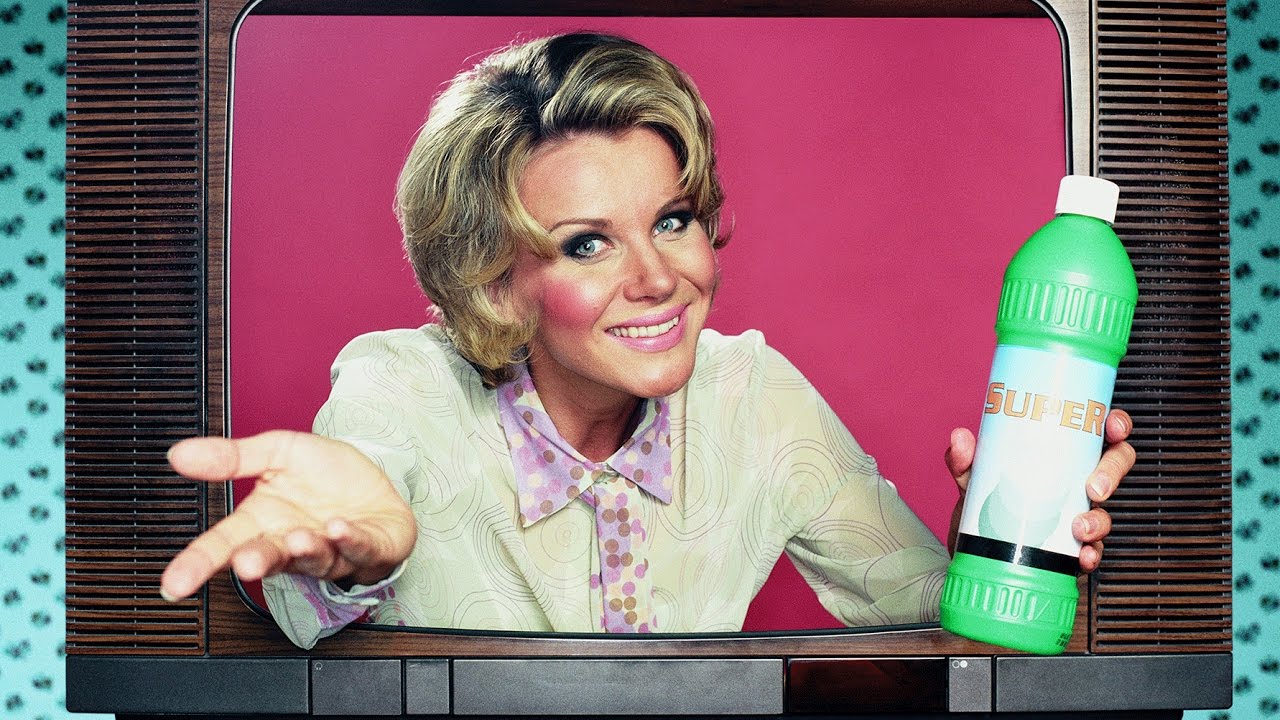
Advertising Hazards: Your Attention is a Commodity That Can Be Manipulated | Tim Wu. Big Think. Loading ...
After Words with Tim Wu | C-SPAN.org
https://www.c-span.org › video › after-words-tim-wu
Oct 29, 2016
Professor Tim Wu talked about his book The Attention Merchants: ... AND ADVERTISING ON CONSUMERS AND ...
###
https://www.youtube.com › watch
1.
Dec 13, 2016 - Uploaded by Talks at Google
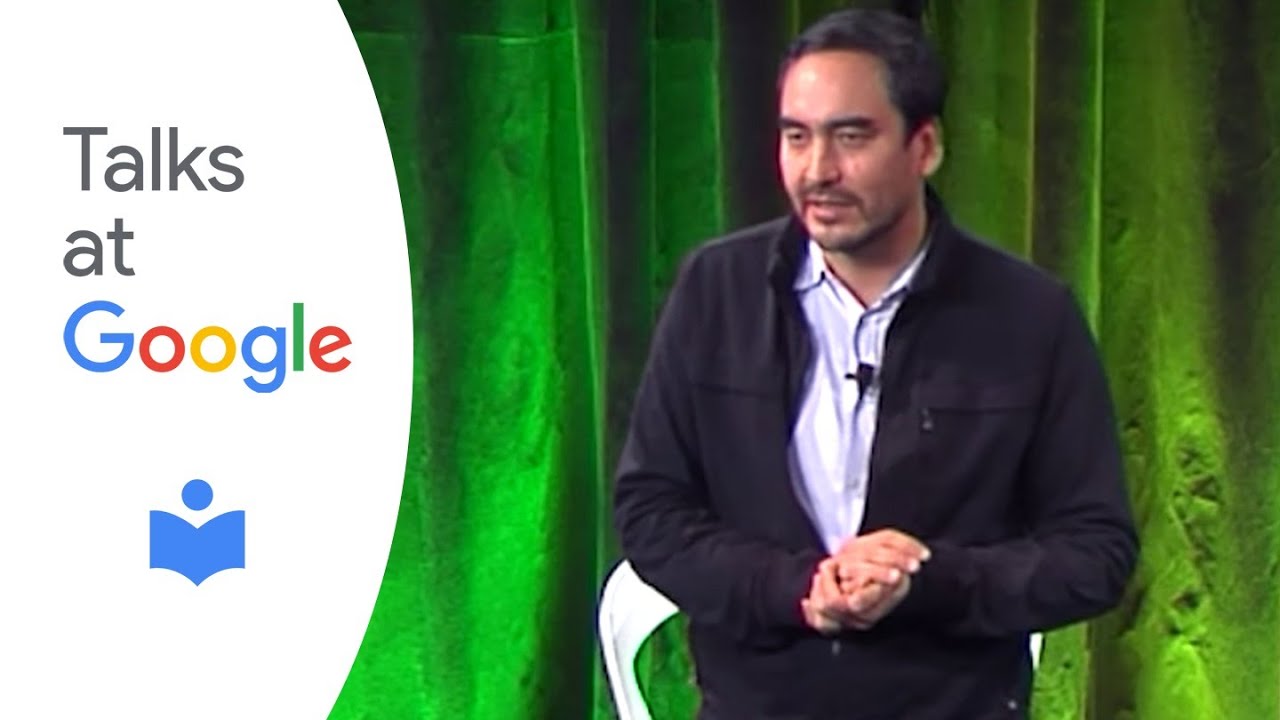
Tim is an author, policy advocate, and professor at Columbia University, best known for coining the term "net ...
###
https://www.youtube.com › watch
1.
Dec 19, 2016 - Uploaded by TWiT Tech Podcast Network
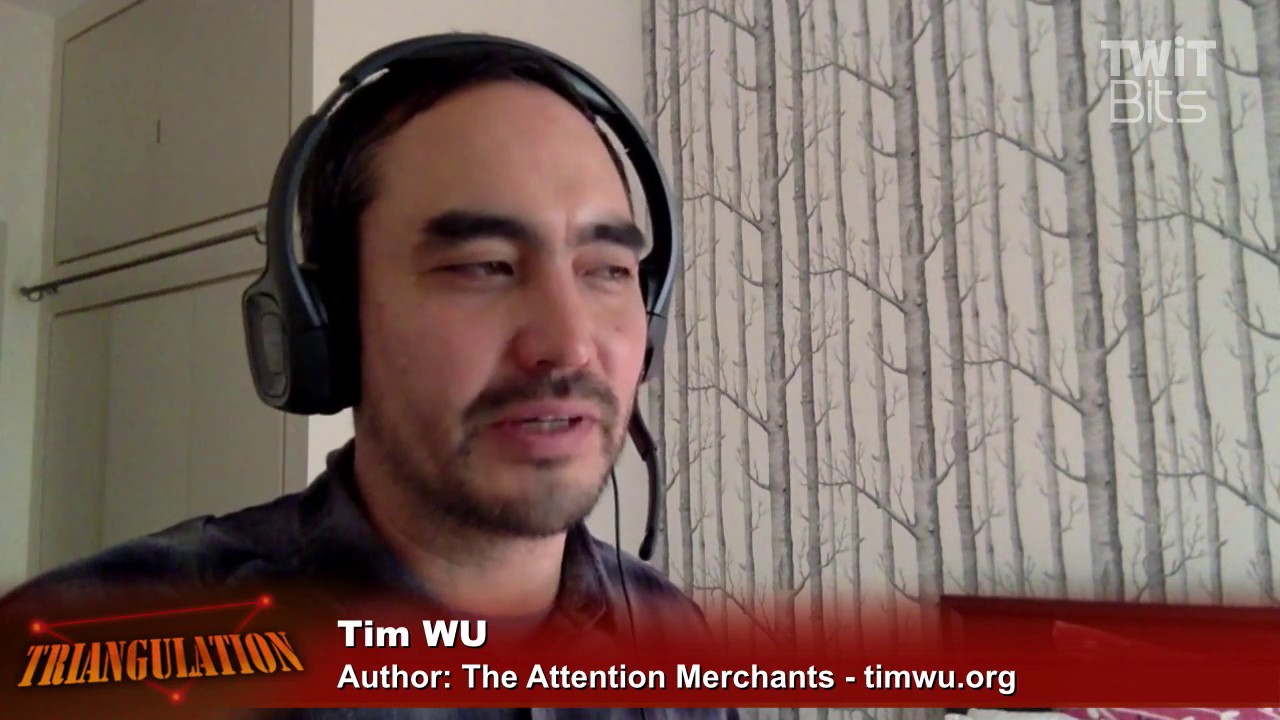
Tim Wu is the Author of The Attention Merchants: The Epic Scramble to Get ... Tim Wu: Dawn of the ...
###
https://www.youtube.com › watch
Oct 11, 2017 - Uploaded by Penguin Random House Speakers Bureau
Author Tim Wu speaks on the businesses who attract people's attention for resale or profit: from social media ...
Donald Trump's Political Strategy Is Inspired By Dark History ...
https://bigthink.com › videos › tim-wu-on-donald-trump-and-fascist-propaganda
Nov 3, 2016
If Donald Trump's political strategies look familiar, says Tim Wu, ... history of attracting attention using ...
###
https://www.youtube.com › watch
1.
Nov 21, 2016 - Uploaded by The Agenda with Steve Paikin
... full of websites competing for attention, and each click is another opportunity for users to view ...
###
https://www.youtube.com › watch
1.
Oct 31, 2016 - Uploaded by BookTV
Columbia law professor Tim Wu examines the history of advertising & how today's marketers are vying for ...
###
https://www.youtube.com › watch
Sep 20, 2017 - Uploaded by Signature Views
Tim Wu (author of THE ATTENTION MERCHANTS) looks at how our attention is being stolen by ...
###
https://www.youtube.com › watch
Feb 15, 2017 - Uploaded by Jacob Sanders
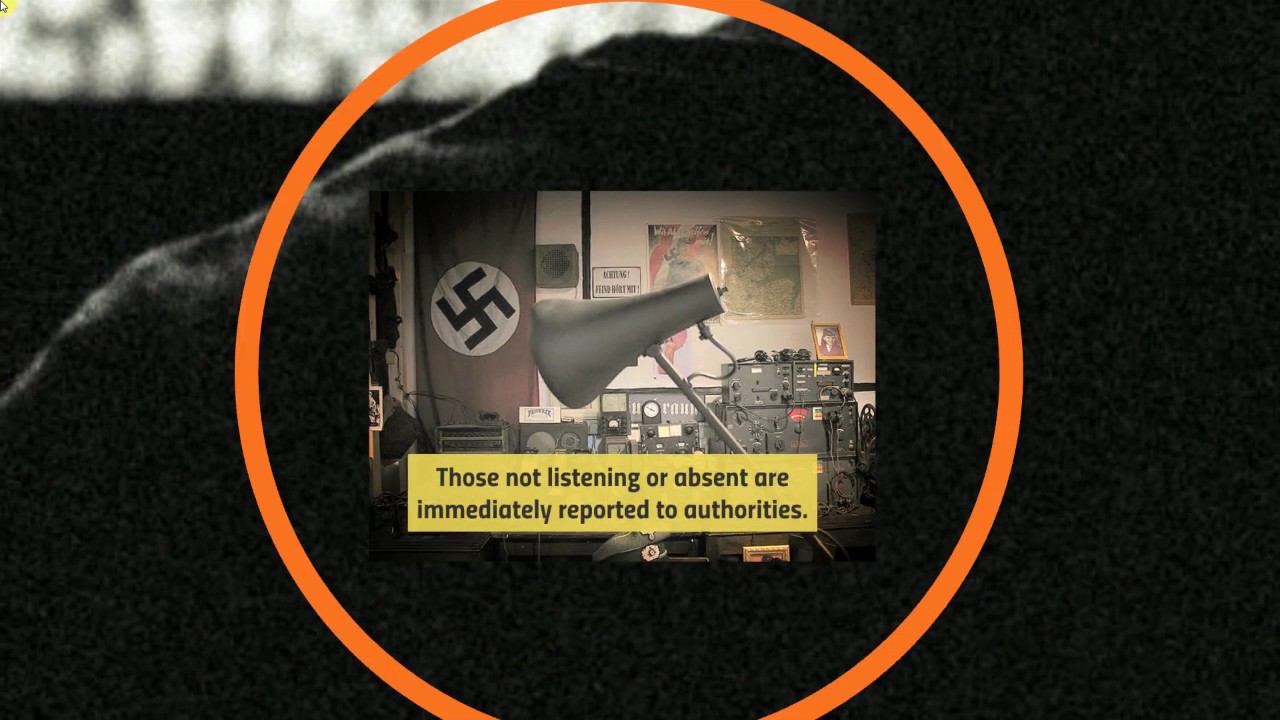
Advertising models run a... ... THE ATTENTION MERCHANT TIMELINE Fake News? Trump? ... Propaganda ...
==