stanley young
==
promote 2nd mofo on covid partic BS
acsh
AIER
sadistics
PARTIC HOLOC TONY COX PRUITT SCI SUPPRESS
---
casac-comments SAB NOM TRUMP 1.0
September 18, 2017 Aaron Yeow Designated Federal Officer U.S. Environmental Protection Agency Yeow.aaron@epa.gov Re: Public Comment on the List of Candidates for the EPA's Clean Air Scientific Advisory Committee (CASAC) Dear Mr. Yeow: The Environmental Integrity Project submits the following comments on the list of candidates for the Environmental Protection Agency (EPA, or "Agency") Clean Air Scientific Advisory Committee (CASAC).¹ Many of the candidates possess the characteristics that will make CASAC successful. Specifically, many of the candidates are eminently qualified through academic training and have extensive experience in dealing with the science of air pollution. In addition, many of the candidates appear to be objective in their approach to science. This third characteristic is particularly important at this moment in time, when science is too often politicized.2 CASAC members should always 'follow the science,' or let the most objectively defensible interpretation of the facts guide their conclusions. CASAC member should not, on the other hand, approach scientific questions with pre-established outcomes in mind. For that reason, we support EPA's inclusion of an additional criteria for selection, defined as "absence of an appearance of loss of impartiality," which could be more simply defined as "impartiality."
...
:{:{Although an individual candidate's affiliation with regulated industry or denial of the mainstream scientific consensus on a given issue should not automatically disqualify that candidate, EPA has ana impressive list of qualified and impartial candidates to choose from. We have specific concerns about the following candidates, and urge EPA to prioritize other, more suitable candidates:}:
Anthony Louis Cox Jr. has extensive experience working for private industries that are or may be affected by air pollution control policies, including the American Petroleum Institute, the American Chemistry Council, the National Pork Board, the Western States Petroleum Association, the Chemical Manufacturers Association, and others,3 and has questioned the association between particulate matter and mortality.4
Nan Hayworth, an ophthalmologist, politician, and private consultant, does not appear to have any relevant experience with air pollution science.5 Hayworth's biosketch states that she "speaks on television and radio in behalf of ... the Trump campaign" and "served as a media surrogate for EPA Administrator Scott Pruitt." Her close relationship with Pruitt should disqualify her because it violates one of the important goals of CASAC- to provide "independent scientific and technical peer review, consultation, advice and recommendations."7
:{:{ According to her biosketch, Carol Henry, a private consultant, "serves as the environmental health advisor to Cummins, Inc." Cummins, Inc. is an engine manufacturer with a financial stake in EPA air pollution policies. Henry may not be impartial.}:
:{:{ Jeffrey R. Lewis has an impressive resume, but is directly employed by ExxonMobil, and therefore suffers from a financial conflict of interest that undermines his impartiality. I light of the long list of candidates who have equally impressive resumes but are more likely to be impartial, we encourage EPA to prioritize other candidates.}:
Dean Waldman's biosketch does not suggest that he has any relevant experience. He works for a think tank that receives funding from many entities with a financial interest in the relaxation of environmental protections (e.g., Koch Industries, American Electric Power, others). Waldman's lack of experience and conflict of interest (lack of impartiality) should weigh heavily against his selection for CASAC.
S. Stanley Young receives funding from the American Petroleum Institute. He also serves as an advisor to fringe think tanks like the Heartland Institute, which aggressively seeks to undermine the scientific consensus on climate change and other health threats, and the American Council on Science and Health, which is funded by special interests and, predictably, does not believe that financial conflicts of interest are a problem. 10
Young is clearly aligned with special interests hostile to environmental regulation. His strong bias and lack of impartiality suggest that he would work hard to undermine sound science and would be a counterproductive CASAC selection. Finally, we are concerned that the EPA will use the "impartiality" criterion to exclude any candidates who have advocated for common-sense protections against air pollutants posing wellestablished threats to human health (e.g., particulate matter).
A scientific conclusion, particularly one that emerges after many years of study, which enjoys the support of an overwhelming majority of informed scientists can fairly be described as a scientific consensus. If EPA were to define "impartiality" as being undecided on a scientific consensus, it would be profoundly distorting the scientific process by tilting the scale away from objectivity and scientific integrity.
On a related note, if EPA were to seek some kind of "fifty-fifty" balance between people in support of or opposed to a scientific consensus, it would similarly be distorting the scientific process and seriously undermining CASAC's value to the Agency and to the public good. Dissenting voices can be valuable, but where there is a scientific consensus, that consensus should be reflected in the overall makeup of the Committee.}:
...
---
All articles by Stan Young
[
COVID-19 Pandemic Policy and Mistakes
(Nov 8, 2022 )
[
Shifting Sands: Unsound Science and Unsafe Regulation
(Jul 15, 2022 )
[
'Meat Kills' Study is Rotten to the Bone, But NYT Swallows it Anyhow
(Apr 24, 2019 )

Air Pollution and Deaths: Association Without Causation
(Jan 4, 2017 )
EPA Doublethink On Particulate Matter And Mortality
(Aug 19, 2016 )
3 Reasons To Be Wary Of Meta-Analyses
(Jan 26, 2016 ) ECIGS
By Stan Young — Jan 26, 2016
Related content:
Switched at Impregnation: When 2 IVF 'Mommies' Want the Same Baby
The Mask Mandate Goes to Court
The Future of Public Health Law Lies in the Past — And Lawyers Need to Learn It
Three Mile Island: A 20th Anniversary Remembrance
Like a Trojan Horse Creeping into NY Harbor, Carrying Infection and Death …
A recent meta-analysis concluded, counterintuitively, that e-cigarettes might actually increase smoking instead of reducing it. How could that be? Dr. Stan Young, a ACSH Scientific Advisory Panel member, details how a meta-analysis works, and how it is so often misused.
In the September 1906 issue of the North American Review, Samuel Clemens (Mark Twain) popularized the phrase, "There are three kinds of lies: lies, damned lies, and statistics."
More recently, and relevant to the increasing use of statistics in science and health issues, statistician Stephen John Senn wrote on Twitter
I'm a statistician. My motto is 'I haven't read your paper yet but I'm virtually certain your methods are flawed & your results are wrong.'
Stephen John Senn (@stephensenn) April 9, 2014
He said that because data are often tortured until they confess to exactly what a scholar wants the numbers to say. And then sometimes they are killed by accident. One of the key ways to intentionally put data on the rack is the meta-analysis.
In a meta-analysis, the scientific literature is searched, a subset of papers is selected and then a combined estimate is made. It is essentially "conducting research about previous research." As an example, I am going to use a recent e-cigarette paper published in The Lancet, because it provocatively makes the claim that e-cigarettes makes it less likely, not more likely, that smokers will quit, and e-cigarettes are a popular and controversial topic.
Controversial subjects lend themselves to strange methodologies and use of statistics so it is good to use for a discussion on the problems in meta-analyses. The paper, authored by Sara Kalkhoran, MD, and Stanton A. Glantz, PhD, of the Center for Tobacco Control Research and Education, University of California, San Francisco, CA, is not about the health issues, obviously e-cigarettes are better for health than smoking so harm reduction is clear, but it instead tackles their efficacy in "smoking cessation," which is the way nicotine gums and patches are used.
The statistical issues can be confusing and journalists fall prey to misunderstanding meta-analyses as well as anyone, but the worst thing that can happen for the public is that an unweighted, random effects meta-analysis gets mainstream attention and becomes the reason for policy decisions, without considering how valid the results are. Hopefully this article detailing the issues in methodology will prevent policy decisions being made incorrectly.
When tackling an issue that is controversial, there is always the chance that the data selected could be massaged into a result. That leads to Problem #1 in a meta-analysis that occurs in this paper: Selection Bias
Using keywords to get their selection pool, they say their initial search yielded 577 papers, from which the authors then chose (selected) about 20 papers. I did a simple Google Scholar search ("e-cigarette cessation") and got over 300,000 results, so anyone who uncritically accepts their results has to implicitly trust their winnowing process: namely that 20 out of 577, much less out of 300,000, was a truly representative sample.
As you can imagine, by changing the selection rules even slightly, you can get a different result, because the basic premise of meta-analysis is to average out errors. It can work well, even with only 20, if the studies are consistent in quality, but if selection bias instead causes papers that match confirmation bias to be selected, this "average" can be far from reality, due to outliers being included.
So we also have consider Problem #2 in a meta-analysis: Statistical Power
To have a legitimate meta-analysis, researchers must identify a common statistical measure the studies share -- the effect size -- and standard error that will allow computing a weighted average of that common statistical measure. For that, researchers consider issues like sample sizes of the individual studies and study quality.
Given that consideration, it is obvious that any shift in selection rules, as I mentioned in selection bias (#1 above), can produce a much different result. Results could have a great confidence interval and be completely wrong. (A famous recent example in physics was in 2011 when a group reported faster-than-light neutrinos with 6-sigma confidence. They had supreme confidence in flawed data and time travel is still not possible.)
The authors of the paper can readily see, using simple statistical analysis, that the 20 papers were not uniform enough to be combined: they don't vary slightly (due to chance); they vary a lot. For statistical experts, including (one hopes) peer reviewers, that would have put a halt to the paper because combining such dissimilar results is like combining apples and steak. No answer can be legitimate.
Why they proceeded knowing the results could not be combined is a mystery. How the submitted paper passed peer review at the journal is an even bigger mystery, but outside the scope of this article.
The answer may lie in Problem #3 with a meta-analysis: Using a too narrow and directed criterion in crafting the question. In this paper the question was crafted so narrowly it is logical fallacy: Is there an association between e-cigarette use and cigarette smoking cessation ¦ irrespective of their motivation for using e-cigarettes?
That crosses intoCirculus in Probando (a circular argument), Cum Hoc Ergo Propter Hoc (correlation implies causation), and Petitio Principii ("begging the question", where the conclusion of an argument is assumed in the phrasing of the question). Looked at by an objective participant, there are obviously a number of reasons a person might start using e-cigarettes, one of which could be smoking reduction. It could be a fad. It could be harm reduction. It could be they like a flavor.
By using such a narrow question they are, intentionally or not, making the perfect result, an end to smoking, the enemy of the good, such as smoking harm reduction or a transition to quitting smoking by using a particular smoking cessation tool.
Conclusion
Their own analysis says that the studies they chose are too diverse to be combined. One size does not fit all when it comes to changing behavior and creating a paper designed to eliminate one tool, which is shown to be as effective (and as ineffective, thus "one size does not fit all") as any other is not informing the public.
Obviously smoking exclusively is worse than smoking a little and having e-cigarettes, which is worse than having just e-cigarettes. The perfect result would be having no one inhale anything at all, but that approach does not work for most, which is why so many techniques are used in the broader goal of stopping smoking.
That is the broader problem with the article. It seems to be agenda-based against one product type, instead of objectively analyzing what works for smoking cessation. From a statistical validity point of view, this Lancet paper has to be ignored and instead there should be concern among the editorial staff as to why no reviewers caught these obvious problems.
But journals are not immune to personality issues and agendas any more than scholars are, so stay tuned, as research is active and better and more nuanced reviews of e-cigarettes should appear soon. However, while that happens, this paper should not be used to make policy.
Tags:
GGL 6 26
[### Stan Young

American Council on Science and Health
https://www.acsh.org › profile › stan-young](https://www.acsh.org/profile/stan-young)
Dr. S. Stanley Young is a Ph.D. in Statistics and Genetics and a member of the American Council on Science and Health Board of Scientific Advisors.Read more
[### Dr. S. Stanley Young

American Council on Science and Health
https://www.acsh.org › tags › dr-s-stanley-young](https://www.acsh.org/tags/dr-s-stanley-young)
Dr. S. Stanley Young · Hey Media, Even Harvard Can Get It Wrong · Popular articles · ACSH Podcasts · Latest from Josh · Latest from Chuck · Footer.
[### S. Stanley Young - The Heartland Institute heartland.org
https://heartland.org › Profiles](https://heartland.org/about-us/who-we-are/s-stanley-young/)
Dr. Young is a Fellow of the American Statistical Association and the American Association for the Advancement of Science. He is an adjunct professor of ...Read more
[### S. Stanley Young

AIER
https://aier.org › people › s-stanley-young](https://aier.org/people/s-stanley-young/)
Young is a Fellow of the American Statistical Association and the American Association for the Advancement of Science. He is an adjunct professor of statistics ...Read more
[### S. Stanley Young

National Institute of Statistical Sciences
https://www.niss.org › people › s-stanley-young](https://www.niss.org/people/s-stanley-young)
Dr. Young is a Fellow of the American Statistical Association and the American Association for the Advancement of Science. He is an adjunct professor of ...Read more
[### S. Stanley Young

Hoover Institution
https://www.hoover.org › profiles › s-stanley-young](https://www.hoover.org/profiles/s-stanley-young)
Dec 13, 2017 — With its eminent scholars and world-renowned library and archives, the Hoover Institution seeks to improve the human condition by advancing ...Read more
[### Stanley Young

CO2 Coalition
https://co2coalition.org › Team Members](https://co2coalition.org/teammember/stanley-young/)
He conducts research in data mining. Dr. Young is a Fellow of the American Statistical Association and the American Association for the Advancement of Science.Read more
[### Nomination of S. Stanley Young for [EPA-HQ-OAR-2019- ... Regulations.gov
https://downloads.regulations.gov › attachment_1](https://downloads.regulations.gov/EPA-HQ-OAR-2019-0316-0002/attachment_1.pdf)
He conducts research in data mining. Dr. Young is a Fellow of the American Statistical Association and the American Association for the Advancement of Science.Read more
[### Dr. Stanley Young

House.gov
https://docs.house.gov › meetings › HHRG-113-S...](https://docs.house.gov/meetings/SY/SY14/20130305/100386/HHRG-113-SY14-Bio-YoungS-20130305.pdf)
Dr. Young is a Fellow of the American Statistical Association and the. American Association for the Advancement of Science. He is an adjunct professor of ...Read more
1 page
[### Introducing Stanley Young, Director of the Shifting Sands ...

National Association of Scholars
https://www.nas.org › blogs › article › introducing-stanle...](https://www.nas.org/blogs/article/introducing-stanley-young-director-of-the-shifting-sands-project/)
Aug 30, 2019 — Young is currently the CEO of CGStat and previously worked at Eli Lilly, GlaxoSmithKline and the National Institute of Statistical Sciences on ...Read more
---
https://apps.publicintegrity.org/united-states-of-petroleum/fueling-dissent/
no lnx many? twt
FUELING DISSENT
How the oil industry set out to undercut clean air
After casting doubt on climate change for decades, industry consultants have turned their attention to air pollution
Illustration by Robert Fresson
by Jie Jenny Zou
Tom Dart of Guardian US contributed reporting
December 12, 2017
SAN ANTONIO, Texas ― On sunny days, when his classmates at St. John Bosco Elementary School run out to play, Gabriel Rosales heads to the school nurse for a dose of Albuterol. The fine mist opens his airways, relaxing the muscles in his chest. Without it, recess could leave the 9-year-old gasping for breath. He gets a second dose at the end of the day before heading home.
Over the past year, Gabriel’s asthma has worsened. Visits to the emergency room, shortened trips to the park, and reliance on inhalers have become his new norm. “It got to the point where I couldn’t even leave him with anybody,” said his father, Gabe, who works as a consultant to the National Association of Public Employees, a workers’ advocacy group, and a seasonal field director of the Bexar County Democratic Party. “One time he almost looked blue.”
Gabriel’s health is deteriorating alongside air quality in San Antonio, where oil and gas development, a hotter climate and a growing population have combined to spell misery for a city that once boasted clean air compared to other Texas metropolitan areas. Part of the problem lies southeast of the city in the Eagle Ford Shale, a 400-mile-long hub of hydraulic fracturing that unleashes microscopic particles and smog-causing, ground-level ozone.
The state’s environmental regulator — the Texas Commission on Environmental Quality — hasn’t made things better.In fact, it’s followed in the footsteps of Big Oil’s biggest lobby, the American Petroleum Institute, which has forestalled progress on ozone for decades. Using consultants also hired byAPI,the commission has spent millions of taxpayer dollars in an effort to undercut scientific evidence linking particulate matter and ozone with bronchitis, asthma and premature death.
Read more about API's history of climate denial and its ties to the White House ]
Air quality is the new frontier for climate-change skeptics long tied to API. The institute has fueled uncertainty on climate by producing what critics call misleading scientific and economic studies. Now, by attempting to discredit established research on ozone and fine particles, API and its cadre of doubters are trying to undermine the Clean Air Act — the landmark U.S. law credited with saving millions of lives. Working in concert with other free-market groups, they’re taking their message to Capitol Hill. API officials did not grant interview requests from the Center for Public Integrity.
Residents of San Antonio’s low-income, mostly Latino neighborhoods — like Hillcrest, where Gabriel Rosales lives — bear the brunt of poor air quality even if they aren’t in ozone hot spots, said Mario Bravo, an outreach specialist with the Environmental Defense Fund. “They have less access to health care,” Bravo said. “They have less access to transportation to get to the health-care providers.”
‘A lot like climate’
In June, two peer-reviewed studies trumpeted a conclusion at odds with years of solid science: fine-particle pollution long linked to premature death and chronic illness isn’t as dangerous as health advocates contend. If true, the findings would call into question health benefits claimed by the U.S. Environmental Protection Agency, which has set ever-tightening air-quality standards.
There was a catch, however. The articles — which were published within a week of one another — appeared in Critical Reviews in Toxicology and Regulatory Toxicology and Pharmacology, two journals favored by industry consultants alleged to promote pay-for-play science. And both studies were funded by API, a trade group that has spent $40 million since 2013 to lobby Congress on topics ranging from taxes to global warming.
“Our study is published...air quality does not kill. $600 million of EPA junk science up in smoke,” climate-change skeptic and Donald Trump acolyte Steve Milloy tweeted in June, linking to the Regulatory Toxicology article. During a congressional luncheon a month later, the former coal executive took credit for conceiving the study before turning it over to friend, S. Stanley Young,and two other statisticians, who authored the final article. No mention of Milloy’s involvement is made in the publication.
Read more about how Big Oil is trying to sow skepticism of science among judges ]
Some of the same data were used in the Critical Reviews article published by Louis Anthony “Tony” Cox Jr., which also disputed the link between fine particles and mortality. Cox, a biostatistician from Colorado, started consulting for API in 1988. Cox disclosed that his paper “benefitted from close proofreading and copy-editing suggestions from API” but denied in an interview that his findings were influenced.In November, he was named the next chair of the EPA’s Clean Air Scientific Advisory Committee, drawing criticism from groups like the Union of Concerned Scientists.
The science on particle pollution, much like the science on global warming, is exhaustive and widely accepted, with thousands of studies pointing to serious health implications. The World Health Organization notes that particulate matter “affects more people than any other pollutant,” with effects observed at even “very low concentrations.” The particles — found in automotive and industrial exhaust and smaller than one-fifth of the width of a strand of hair — form a toxic mix with ozone that lodges deep in the lungs. Unlike Cox, most researchers are no longer fixated on whether this form of pollution is fundamentally dangerous; they worry instead about whether it can cause — not just exacerbate — chronic illness.
Attacking the science is one way of undermining the Clean Air Act, said John Walke of the Natural Resources Defense Council, which advocates for more protective air-quality standards. The Clean Air Act is routinely hailed as one of the most cost-effective federal laws, even by business groups. In 2015, the EPA estimated that the law will have saved the U.S. economy $2 trillion by 2020 while costing $65 billion to implement. About 85 percent of the act’s benefits come from reducing fine-particle pollution, which raises the risk of early death. Opponents of the law “deny that air pollution is deadly … or even harmful in order to try to pretend that no benefits are delivered,” Walke said.
Steve Milloy
Milloy’s July luncheon at the Rayburn House Office Building — billed as a “congressional staff and media briefing” — was little more than a plug for his latest book, “Scare Pollution: Why and How to Fix the EPA,” which condemns the “echo chamber of deceptive science” on ozone and fine particles. The event was hosted by Myron Ebell, who chairs the Cooler Heads Coalition, a climate-skeptics’ group that began as an alliance of free-market think tanks. “It’s a lot like climate,” Milloy told the audience. “This stuff is pulled out of thin air.”
“It’s a lot like climate... This stuff is pulled out of thin air.”
Reached for comment, Milloy said the study is not an attack on the Clean Air Act but part of his 20-year effort to expose the EPA’s “garbage-in, garbage-out” air pollution research. He denied having any formal ties to API. “I am very, very disappointed in the American Petroleum Institute and all the oil companies for not defending their products, for leaving the science to people like me,” he said.
Young, who authored the study, stood behind its findings and disputed the idea that industry funding presents ethical conflicts. His study data are publicly available, he said, but the EPA isn’t as transparent. Ebell agreed, accusing the agency of using “junk science” to justify air-quality and greenhouse-gas regulation.
Despite their misgivings about the EPA, all three men have become tethered to the agency. Earlier this year, Ebell oversaw the EPA transition for Trump, leading a group that included Milloy. Young was named to the EPA’s Science Advisory Board in October.
Sen. Sheldon Whitehouse, D-R.I., co-founder of the Senate Climate Action Task Force, complained that such appointments have become all too common. “These people were fringe fanatics and industry stooges fighting on behalf of the industry a propaganda war against science,” he said.
Milloy and Ebell were listed among the authors of a $2 million plan to amplify uncertainty in climate science — as revealed in a 1998 API memo leaked to The New York Times. Both say the memo grew out of an API brainstorming session that never resulted in concrete action, with Milloy calling it “just a big joke.”
Years before, API had refuted the very concept of global warming under President Charles DiBona, who joined the institute shortly after a stint as energy policy advisor to Richard Nixon in the 1970s. White House communications show that DiBona regularly met with then-API President Frank Ikard, a close friend of Nixon’s, before becoming Ikard’s deputy in 1974.
“You heard that a scientific consensus now exists,” DiBona said during API’s annual meeting in 1996. “This claim is beyond misleading; it is dead wrong.” He borrowed an analogy from MIT physicist Richard Lindzen, who likened climate models to Ouija boards. By 2003, a group of scientists funded by API had turned out the first of several studies characterizing the warming trend as a natural phenomenon.
The same year, however, the United Nations was holding its ninth conference on climate change — focusing on how to mitigate warming. In 2001, an international consortium of scientists had delivered its third report on the trend, reaffirming findings that climate change was real and manmade.
Reached by phone recently, DiBona declined to answer any questions about the organization he led for 18 years. Months after retiring from API in 1997, DiBona joined the board of Halliburton, an oilfield-service company then headed by future vice president Dick Cheney. DiBona is now an API honorary lifetime director and an advisory chairman for a mining investment company based in the Cayman Islands.
In recent years, fringe views espoused by API have found a receptive audience in U.S. Rep. Lamar Smith (R-Texas), whose climate-denial credentials rival those of Republican Sen. James Inhofe of Oklahoma. Since Smith became chairman of the House Committee on Science, Space, and Technology in 2013, the panel has handed out dozens of subpoenas — many to scientists at regulatory agencies and environmental groups — aiming to debunk climate research.
Smith — whose district includes San Antonio — has opened the committee’s hearing rooms to Cooler Heads Coalition events such as Milloy’s book promotion and briefings that urged the United States to drop out of the 2015 Paris climate agreement. In February, he reissued a controversial subpoena to New York Attorney General Eric Schneiderman, who is investigating ExxonMobil’s historical knowledge on climate change. Since he joined Congress in 1989, Smith’s top campaign donors have been from the oil and gas sector, which gave him at least $764,000, according to the Center for Responsive Politics. Smith did not respond to requests for comment.
In 2016, Influence Map, a nonprofit environmental research group, estimated that ExxonMobil had spent about $27 million on “climate obstruction” lobbying and advertising campaigns. That amount was dwarfed by the $65 million API spent on similar efforts, the group found. ExxonMobil is one of the oldest and largest API members.
‘Tired, old industry argument’
In July, the House passed a bill targeting what its proponents called “job-killing regulations” — namely, bedrock air-quality standards. Its lead author was Rep. Pete Olson, a Republican from the ozone-plagued Houston area. All but four of the 229 “aye” votes were cast by Republicans, Lamar Smith among them.
Under Olson’s bill, states would have until 2025 to meet the EPA’s latest ozone limit, which was supposed to take effect in October. The agency, which is legally required to update air standards to keep pace with evolving science, would be obligated to review rules for pollutants once a decade, as opposed to once every five years.
The 2017 bill is the latest iteration of a proposal Olson first floated in 2015, seeking to delay regulation of ozone. The same day his bill passed, 144 trade groups, including regional offshoots of API, pledged their support in a letter to Congress. Oil and gas interests have been Olson’s top political contributors, donating more than $1 million to his campaigns since 2007. A Senate version of the bill has not come up for a vote.
In an email, Olson’s office wrote that the congressman “believes the Clean Air Act is critically important” but has “fundamental concerns” about Texas’ ability to meet tighter standards. Pollution control, the email said, “can be done rationally and with an eye on our economy.”
By law, the EPA is not allowed to consider cost when setting ozone standards, but that hasn’t stopped API and other industry groups from injecting economics into the policy debate. Much like scientists for hire, economists have provided API with grist to challenge regulations. Armed with seemingly authoritative studies from firms such as NERA Economic Consulting, the institute has recast issues such as action on climate change as reckless moves that could tank the U.S. economy. NERA, whose clients include API collaborators such as the National Association of Manufacturers and the American Chemistry Council, was co-founded by Irwin Stelzer, an economist who works at the Hudson Institute, a free-market think tank.
Such studies, like the NERA report Trump cited when he announced the U.S. exit from the Paris climate agreement earlier this year, can be “extremely misleading,” often tallying every conceivable cost and ignoring every possible benefit, saidBen Franta, a Stanford University researcher investigating API’s climate activities. Because data underlying these reports are proprietary, Franta said, in many cases they can neither be verified or debunked. What’s left are unsupported arguments: “New ozone rules could be the most expensive ever,” reads an API webpage linking to dozens of NERA findings.
The Texas Commission on Environmental Quality has taken a tack similar to API’s. Since 2013, the TCEQ has paid NERA more than $870,000 for economic research on ozone — a topic the firm studied earlier for API. More than $2.2 million in taxpayer funds have also been spent on contracts with Gradient — a consultancy previously hired by API to question the benefits of a stricter ozone limit. The TCEQ declined to comment on this story but on its website describes its mission as protecting the “state’s public health and natural resources consistent with sustainable economic development.”
Anne E. Smith, a managing director at NERA, did not respond to emails and phone calls seeking comment. She was among several industry-friendly voices at a 2015 TCEQ ozone workshop in Austin led by Michael Honeycutt, the agency’s director of toxicology. Other speakers included Gradient scientists, the editor of Critical Reviews in Toxicology, industry toxicologist Michael Dourson and air researcher Robert Phalen, known for saying the air “is a little too clean for optimum health.”
The group’s findings were later referenced by Honeycutt at a House Science Committeehearing, where he argued against a tighter EPA ozone standard. Honeycutt said the risks posed by the pollutant were “small” and any change could discourage people from “outdoor exercise.”
Speakers at the Austin workshop have risen to prominence in the Trump administration. This fall, Honeycutt, Anne Smith, Dourson and Phalen were all named to key EPA science positions as either advisers or staff. Their fringe views on ozone — championed by API — have alarmed public-health advocates and run counter to the EPA’s own findings. The agency strengthened its ozone standard in 2015 after reviewing more than 1,000 new studies.
Economics has long figured into API’s strategy to derail ozone rules. In 1971, the newly formed EPA set the ozone standard at 80 parts per billion, but in 1979 took an unexpected U-turn and weakened it to 120 ppb — angering industry and environmentalists alike. The latter called the reversal scientifically indefensible and accused the EPA of prioritizing economics over health. API promptly sued the EPA, with President DiBona claiming the relaxed standards would still cost “billions of dollars without significantly improving the quality of the environment or the health of the public.”
Spurred by lawsuits from the American Lung Association that compelled it to update air standards based on the latest science, the EPA reverted to its original 80 ppb ozone limit in 1997. The cap is now at 70 ppb, though even that number may not be protective enough, as some research has found health effects at 60 ppb.
Nonetheless, EPA Administrator Scott Pruitt — a former Oklahoma attorney general with deep ties to oil and gas — tried to keep the 70 ppb standard from taking effect. He backed off on the delay after 16 state attorneys [teAm BLUE] general sued the agency in August. In a lawsuit filed this month, however, environmental groups accused the EPA of failing to enforce the rule.
Pruitt had put forth what Dr. Greg Diette — a lung specialist at Johns Hopkins University who has testified in favor of tighter ozone standards — calls “a tired, old industry argument. They say, ‘It’s going to put us out of business,’ and it doesn’t,” Diette said. “All this stuff always comes down to who has to pay.”
But not all costs are economic. High ozone days are the hardest for Diette’s patients. “It can be terrifying — it’s the sensation of not being able to breathe,” he said. “Some feel as if they're going to pass out. Some feel as if they're going to die.”
Asthmatics can do little more than hide indoors in an air-conditioned environment. The only other option, Diette said, is to move.
Relocating isn’t possible for the Rosales family of San Antonio, who are uninsured and struggling to keep up with the cost of Gabriel’s medications. The air he breathes is expected to degrade further as oil prices rebound and drilling picks up in the Eagle Ford.
---
---
https://www.desmogblog.com/topics/dr-tony-cox
Slam Dunk’ Study Finds Trump EPA’s Move Not to Tighten Air Pollution Standards Would Prematurely Kill 140,000 Americans
:{:{By Dana Drugmand • Tuesday, June 30, 2020}:
A new study from public health researchers provides the strongest evidence yet that increased exposure to a type of air pollution from tailpipes and smokestacks that's known as fine particulate matter (PM2.5), or soot, can cause premature death. This peer-reviewed study of air pollution impacts on older Americans suggests that current air quality standards set by the U.S. Environmental Protection Agency (EPA) do not protect public health, and that strengthening the standards could save over 140,000 American lives over a decade.
In praising this study as a “slam dunk,” one former EPA air pollution scientist warned that the Trump EPA, which is trying to maintain the current standards, “ignores it at their peril.
==
https://www.latimes.com/local/california/la-me-epa-pollution-study-20190321-story.html
MARCH 21, 2019
The Trump administration’s reliance on industry-funded environmental specialists is again coming under fire, this time by researchers who say that Louis Anthony “Tony” Cox Jr., who leads a key Environmental Protection Agency advisory board on air pollution, is a “fringe” scientist and ideologue pushing policies detrimental to public health.
In a paper published Thursday in the journal Science, two air pollution scientists say that Cox is ignoring consensus viewpoints on the effects of smog and particulate pollution.
The scientists, Gretchen Goldman of the Union of Concerned Scientists and Francesca Dominici of Harvard University’s T.H. Chan School of Public Health, suggest that Cox risks upending “the time-tested and scientifically backed” process that has led to nationwide improvements in air quality and better protection of people’s health.
Cox is a Denver-based risk assessment consultant who has worked for the oil, chemical and healthcare industries — as well as international, federal and state government agencies. Former EPA Administrator Scott Pruitt appointed him to the seven-person Clean Air Scientific Advisory Committee in November 2017. Congress has charged the committee with providing the EPA with scientific advice and peer review on air-pollution-related issues.
The panel is reviewing the agency’s 1,800-page assessment of small-particle air pollution, also known as particulate matter, which most health experts suggest can lead to illness and death. Parts of California have some of the nation’s highest concentrations of fine particulate matter, so Cox’s recommendations could have implications for polluted regions of the state.
The assessment, which cited more than 2,800 papers, and was written by more than 50 of the world’s experts on air pollution and reviewed by an additional 52, concluded that even at very low concentrations, small-particle air pollution can be deadly.
But at a meeting in December, and in a draft letter written to Administrator Andrew Wheeler this month, Cox suggested his committee wasn’t convinced, and he accused the agency’s scientists of using bad science and subjectivity in their conclusion.
“My viewpoint on particulate matter science is that it should be held to the same standards as other types of applied science,” Cox said in an email, responding to questions from The Times.
Referring to the December meeting, Cox said his panel suggested the agency include more research in its draft,provide clearer definitions of key terms and adhere “to the scientific method.”
And in a draft letter to Wheeler, he recommended the EPA put together another draft and allow the committee access to other experts in the field to help them review the draft, as needed.
The committee, whose members have all been appointed since Trump came into office, is smaller than former air pollution committees. The panel is required to have seven members but in former iterations was padded with extra members to ensure a broad range of expertise.
In addition, last October, the EPA disbanded two air pollution committees — the particulate matter committee and the ozone committee — that, in the past, had contributed expertise and knowledge to the air pollution committee’s reviews and recommendations.
The current panel includes no statisticians, experts in modeling risk assessment or epidemiologists, for instance. And two of the seven panelists have explicitly called for the EPA to reconstitute the disbanded particulate matter committee, while a third noted at the meeting in December that he didn’t have the expertise to evaluate parts of the draft.
“Prior to the release of this draft ... without consulting” the committee, wrote Mark Frampton, a committee member and professor emeritus at the University of Rochester Medical Center, “EPA disbanded the expert PM review panel that had been previously appointed to assist.
“The seven chartered … members by themselves do not have the breadth and depth of knowledge or expertise in many areas that are necessary to adequately advise the EPA,” he wrote.
The authors of the Science journal paper say Cox is putting the EPA in a tenuous position: If they ignore consensus science on air pollution and accept his viewpoint, they will potentially set air pollution standards that could risk public health.
However, if they refuse to follow his committee’s advice, then the agency would be setting a dangerous precedent by not listening to “(what should be) its top science advisers” and thereby eroding confidence in the concept of peer review in policy decision making.
The EPA did not respond to questions about the Science paper. EPA spokesman John Konkus said in a statement, “We appreciate the work of the CASAC and we will review the report,” apparently referring to the committee’s upcoming report on particulate standards.
Since Trump took office, his EPA has repeatedly relied upon industry-funded scientists to set policy — including allowing a University of Massachusetts [amherst bozo hormesis] professor who believes low doses of radiation and toxic chemicals are good for people to write proposed rulings.
Some say Cox is part of that pattern.
“It’s a doozy,” said H. Christopher Frey, a professor of environmental engineering at North Carolina State University and former chair of the air committee.
Cox “is using his position as chair to advance an ideology he personally wants to see,” said Frey, who described Cox as being as far out of the mainstream as a scientist could be.
California has an outsize stake in air pollution science because it is home to the largest number of people exposed to the highest levels of fine-particle pollution. Tougher standards, and threat of federal sanctions for not meeting them, would force state and local regulators to pursue more aggressive measures to tackle emissions from everything from cars and trucks to agricultural operations.
In recent years, the number of bad air dayshas increased amid rising temperatures, stagnant weather conditions and a slowdown in the pace of emissions reductions.
Southern California still has the nation’s highest levels of ozone— the lung-searing gas in warm-weather smog, which triggers asthma and other respiratory illnesses — and does not meet federal standards for fine-particle pollution, composed of tiny health-damaging specks of pollution that build up in winter air, lodge deep in the lungs and are linked to cardiovascular disease.
The San Joaquin Valley in particular struggles with some of the nation’s worst fine-particle pollution, which builds up in the air in winter months and shrouds the area of 4 million people in an unhealthful pall.
But there is hope, health experts say. Health studies have shown that a long-term trend of improvement in fine-particle pollution is, over time, resulting in fewer early deaths and higher life expectancy. In communities across Southern California, researchers have in recent years measured children’s lungs growing bigger and stronger as air quality improves.
Scientists and medical experts have urged stricter health standards, based on the latest health studies, which they say are crucial if the nation is to continue making progress reducing the health damage from air pollution. They say Southern California — where millions are exposed to unhealthy levels of air pollution — would benefit more than anywhere in the country from tougher air quality standards on ozone and fine particulate matter.
Reducing air pollution below current federal limits would **prevent 3,632 deathsa year in California, more than one-third of the 9,320 early deaths linked to dirty air nationwide, scientists at New York University and the American Thoracic Society estimated in a 2016 study.
Cox’s draft letter will be reviewed by the rest of the committee March 28, when the panel meets again to finalize its comments to the EPA administrator.
==
ref to icn covid
https://www.washingtonexaminer.com/policy/energy/bogus-analysis-trump-appointed-epa-advisers-criticize-study-linking-air-pollution-and-coronavirus-death
Bogus analysis': Trump-appointed EPA advisers criticize study linking air pollution and coronavirus deaths
by Abby Smith, Energy and Environment Reporter | | April 27, 2020
Trump administration appointees to key panels that advise the Environmental Protection Agency on science are criticizing a study that concludes areas with higher levels of air pollution will experience higher death rates from the coronavirus.
The study, from the Harvard T.H. Chan School of Public Health, has led to increased public pressure on the EPA in recent weeks, threatening the agency's deregulatory agenda on air pollution rules.
The advisers to the Trump administration, including the chair of the committee advising the agency on air pollution, say they are skeptical of the Harvard study’s methodology and conclusions. Those same appointees have previously raised questions about the strength of connections between fine particle pollution and health effects.
The Harvard study hasn’t been peer reviewed yet, but it has been submitted to the New England Journal of Medicine for review.
“To me, this whole thing is a bogus piece of analysis,” said Tony Cox, who chairs the EPA’s Clean Air Scientific Advisory Committee. "It was rushed out without being properly vetted. It’s technically unsound. It has sensational policy implications, none of which are trustworthy."
“I would have zero confidence in the published results of this study because its interpretation, design, and analysis are fundamentally flawed,” Cox, a risk analyst and president of Cox Associates, said in an interview with the Washington Examiner.
Francesca Dominici, a senior author on the study, said the criticisms are inaccurate and invalid, and pointed to multiple other preliminary studies from researchers around the globe connecting long-term exposure to air pollution and increased risks from the virus.
The criticism comes as the EPA has convened a “rapid review” science advisory panel to inform the agency as it improves its ability to address the environmental and human health effects of COVID-19. The panel first meets Thursday.
One of the research questions they will consider deals directly with whether exposure to air pollution increases susceptibility to respiratory viruses or exacerbates existing COVID-19 infections.
The Harvard study concludes that just a small increase in long-term exposure to fine particulate matter, emitted primarily from fossil fuel combustion, leads to an 8% increase in the COVID-19 death rate. Thus, areas with higher levels of historical pollution are likely to experience higher death rates from the pandemic, according to the research.
Fine particulate matter has been linked to health effects such as nonfatal heart attacks, aggravated asthma, increased respiratory problems, and premature death in people with heart or lung disease, according to the EPA.
There is “definitely enough there to pose a red flag,” said Dominici, who co-directs Harvard’s Data Science Initiative. Several other preliminary studies in recent weeks have also linked higher levels of particle pollution with higher death rates in China and in Italy.
“We have a virus that is affecting our lungs, and I think it’s pretty undeniable that that’s happening,” Dominici told the Washington Examiner in an interview. Not prioritizing addressing air pollution “seems to me a very unwise decision."
The Harvard study has already made waves in policy discussions. It’s been cited by Democratic lawmakers in letters calling on the EPA to reverse policy decisions, by environmentalists in a lawsuit challenging the agency’s memo on enforcement flexibility during the virus, and by presumptive Democratic nominee Joe Biden in an updated fact sheet on his climate plan.
The research has also received heightened attention as the Trump EPA has continued its deregulatory agenda amid the pandemic. Just in the last few weeks, the EPA relaxed Obama-era fuel economy standards, reversed the legal underpinning of mercury limits for power plants, and proposed to maintain current levels for national limits on fine particle pollution, despite recommendations from the agency’s career staff to strengthen them.
Trump administration allies say the study shouldn’t be used in policy making decisions given its preliminary nature.
“The study does not appear to be ready for prime time and, if misused by policymakers, could needlessly divert critical health care and regulatory resources from areas that need them most,” a former EPA official told the Washington Examiner.
Stanley Young, a member of the EPA’s Science Advisory Board appointed by Trump officials, raised concerns the report’s language suggests a causal link between fine particulate matter pollution and COVID-19 deaths. The study, though, only concludes an association, he said.
“This is the proverbial butterfly in China causing a tornado in Alabama, and generally the world doesn’t work that way,” Young, a statistician and CEO of CGStat,said in an interview. “The paper is written in a way that strongly implies cause and effect,” he said, adding the authors “could have been a lot more circumspect than that.”
Cox suggested the Harvard study doesn’t control for the “urban-rural continuum,” which takes into account local-level population density as opposed to county averages.
“Everything in the Harvard paper to me appears to be completely consistent with the hypothesis that crowding matters, but there’s nothing to suggest, other than wishful thinking perhaps, that [fine particulate matter] has any effect at all,” Cox said.
Dominici, however, said Cox’s claim isn’t true.The researchers adjusted for population density and conducted separate analyses for urban counties and rural counties, she said. Those separate analyses had “very similar” results in terms of how fine particulate matter pollution affected the COVID-19 death rate, she added.
The researchers also accounted for more than 20 other confounding variables, such as age, stage of the epidemic, date of first confirmed case, and behavioral conditions like obesity and smoking, Dominici said.
Young noted the coronavirus outbreak is an “incredibly fluid” situation. Scientists are learning more about how many people the virus has infected as testing becomes available. Tests might show the virus isn’t as deadly as previously thought, which would affect the data in the Harvard study, he said.
Dominici, though, said a change in the death rate from COVID-19 wouldn’t affect the conclusions of their study. That's because the researchers use whatever the death rate is as a baseline to examine whether long-term fine particulate matter exposure had an effect on it, she said.
Overall, Cox and Young both suggested the Harvard study doesn’t make a direct enough link between higher levels of fine particulate matter and deaths from the coronavirus to influence policy decisions.
“Now of all times is the time to really pay attention and be very responsible in distinguishing between associations that are quite trivial to produce and don’t necessarily have implications for sound policy, and real valid scientific information empirically backed by data showing how changing exposure changes health consequences,” Cox said.
Dominici, though, said it’s always possible to find a hole in research because no data will ever be perfect. “It’s much harder to provide rigorous science at the time of a pandemic than criticize the science,” she said.
no lnx
---
---
https://desmog.co.uk/2020/05/18/epa-clean-air-committee-cox-harvard-air-pollution-covid
The head of a federal committee tasked with advising the Environmental Protection Agency (EPA) on air quality science recently disparaged a new Harvard study examining the link between air pollution and coronavirus fatalities across the country. The EPA adviser’s critical remarks appear consistent with his track record of disregarding robust science on air pollution and health risks in his consulting work for industry clients such as tobacco and fossil fuel interests.
Dr. Louis Anthony (Tony) Cox Jr., who is chair of EPA’s Clean Air Scientific Advisory Committee, criticized a preliminary study from the HarvardT.H. Chan School of Public Health in comments made to the Washington Examiner. Cox — who previously produced his own study on air pollution and health risks that was funded and edited by the American Petroleum Institute — questioned the validity of the Harvard study, which was released publicly in early April but has yet to undergo formal peer review.
The study, which links the type of fine particulate air pollution produced by cars and power plants to higher COVID-19 mortality rates, has been submitted for review and publication to the New England Journal of Medicine.
“It was rushed out without being properly vetted,” Cox said. He called the study a “bogus piece of analysis” and “technically unsound.” According to Cox, the study is “fundamentally flawed” and “has sensational policy implications, none of which are trustworthy.”
That study found that even small increases in fine particulate matter (PM2.5) exposure is associated with a statistically significant increase in the COVID-19 death rate. It is the first study to examine the link between long-term particulate matter exposure and coronavirus risks in the U.S., and the results are consistent with other peer-reviewed studies finding a correlation between COVID fatalities and air pollution in Europe and, most recently, a preliminary analysis in Louisiana's Cancer Alley. ...[twt]
Harvard study has already garnered attention in Democratic policy circles. A trio of Democratic Representatives cited it in a letter expressing concerns over an EPA policy to relax environmental compliance obligations during the pandemic. Massachusetts Attorney General Maura Healey’s office also cited it in a recent brief on environmental injustice and coronavirus.
Democractic presidential candidate Joe Biden referenced the study in an online fact sheet about his plan for a “clean energy revolution and environmental justice.” And in April the study authors discussed their findings with members of the House Select Committee on the Climate Crisis.
According to H. Christopher Frey, who has studied air pollution for over 30 years and chaired EPA’s Clean Air Scientific Advisory Committee from 2012 to 2015, the Harvard study linking fine particulate matter exposure and worsened coronavirus outcomes “is no doubt the first of more to come.” He said the Harvard researchers behind this study previously published epidemiological research showing the harmful effects of human exposure to fine particles, which is part of a robust science indicating deadly impacts of fine particulate (or particle) air pollution.
“What is lost in the media coverage of the recent Harvard study is the strong causal link between human exposure to fine particles — before, during, and after the pandemic — and premature death,” Frey told DeSmog via email. “There is strong evidence, based on multiple peer-reviewed studies that span a wide range of locations, population demographics, housing characteristics, and so on, that exposure to fine particles at levels below the current air quality standards causes premature death and numerous disease outcomes.”
But for Cox, who now leads the EPA advisory committee that Frey formerly chaired, the Harvard study’s findings are not convincing. “I would have zero confidence in the published results of this study because its interpretation, design, and analysis are fundamentally flawed,” he told the Washington Examiner.
“The statistical models developed by the Harvard team ignore crucial real-world interactions among risk factors, such as that PM2.5 cannot kill people where there are no people to kill,” Cox explained to DeSmog. He said the models also “omit crucial information and demographic variables” that could help explain reported associations. “For example, the model omits a variable, the 'rural-urban continuum,' that could help examine whether the reported association between PM2.5 and COVID-19 mortality risk is explained by the fact that both are higher in more crowded areas,” he said.
Francesca Dominici, Harvard biostatistician and senior author of the COVID study, defended Cox's critiques to the Washington Examiner, saying the team took into account potential confounding variables such as population density and separately analyzed urban and rural counties, with “very similar” results.
A group of 10 agriculture and biofuels organizations called out Cox’s dismissive comments in a May 8 letter to EPA Administrator Andrew Wheeler, a former coal industry lobbyist.
“The Harvard School of Public Health has done work with EPA for years. It is shocking to see the Clean Air Scientific Advisory Committee be so dismissive of such a highly respected independent party,” a spokesman for the group said in a press release. The letter also points to Cox’s close association with the American Petroleum Institute, with the letter describing him as “the proverbial ‘fox in charge of the chicken coop.’”
Longtime Industry Consultant
Tony Cox is a statistician focusing on risk analysis and is president of Denver-based consulting firm Cox Associates. He has a long history of consulting work on behalf of corporate clients including in the tobacco, fossil fuel, and chemical industries. His industry ties include work in service of tobacco giant Phillip Morris and trade associations such as the American Chemistry Council, National Mining Association, and the American Petroleum Institute (API).
Cox “has a history of attacking established research on the health risks of air pollution,” according to E&E News, and his approach has been to emphasize scientific uncertainty and to question standard risk assessment. He has published studies, for example, that question the relationship between levels of fine particulate matter (PM2.5) and mortality rates.
one of those studies, published in 2017 in the journal Critical Reviews in Toxicology, was not only sponsored, but also copy-edited, by API, a major oil and gas industry trade group. According to E&E News, “Cox denied that API influenced his work and said the organization did not suggest any substantive changes.” Cox has done other research backed by API into air pollution and health risks, as well as the carcinogenic risks of benzene, a chemical in gasoline.
When asked whether his past industry funding sources could affect his research approach and stance on health risks of air pollution, Cox said the short answer is no. He defended hisadherence to what he calls “sound science**” that demands a “more exacting” analysis and higher burden of proof compared to the traditional weight-of-evidence approach. “I believe that adhering to principles and methods of sound science, which leave no room for what funding sources believe or want, serves both science and the public interest far better than other approaches, and will continue to apply that approach in reaching conclusions,” Cox told DeSmog.
Studies show that industry-funded research may bias results and tends to produce more favorable results for its backers, in areas from psychology to medicine to sugar and obesity.
Cox acknowledged that his approach has been “met with enormous backlash.” Frey said Cox's treatment of air pollution risk assessment is “disregarding the law.”
“The Clean Air Act requires that EPA set air quality standards that protect public health with an adequate margin of safety. The standards should be set based not just on known, but also anticipated, adverse effects,” Frey explained. “With Dr. Cox leading the way, the current [Clean Air Scientific Advisory Committee] has imposed a burden of proof for evidence of adverse effects far beyond that required by the Clean Air Act.”
The U.S. Chamber of Commerce nominated Cox to chair EPA’s Clean Air Scientific Advisory Committee, and former EPA head Scott Pruitt ushered Cox into that role as part of a move that replaced many of the independent scientists on the agency’s Science Advisory Board with industry-affiliated experts.
Purging Independent Scientists From EPA Advisory Board
As noted in 2017, Cox was one of three nominees to the Clean Air Scientific Advisory Committee that raised red flags. The other two were S. Stanley Young, who is affiliated with climate science–denying Heartland Institute, and Deane Waldman, who directs the Koch, Exxon, and tobacco industry-funded Texas Public Policy Foundation’s Public Health Center. Cox became chair of the committee and both he and Young were put onto EPA’s Science Advisory Board.
Senators Tom Carper (D-DE) and Sheldon Whitehouse (D-RI) raised concerns about these two ultimate appointments in a January 9, 2018 letter to then-EPA Administrator Pruitt. “Specifically, it appears that public commenters warned that Drs. Louis Anthony (Tony) Cox, Jr. (a researcher for the petroleum industry) and S. Stanley Young (a researcher for the pharmaceutical and petroleum industry) may have financial conflicts of interest, may risk an appearance of impartiality, and may lack the scientific expertise necessary to serve on one or more Federal Advisory Committees,” they wrote.
The senators also expressed concern with Pruitt’s decision to bar scientists who received EPA grant funding from serving on EPA advisory committees and to instead appoint individuals with clear ties to regulated industries.
“We are concerned that some of the newly-appointed members of these nonpartisan scientific advisory committees and boards may have financial and ethical conflicts of interests,” they wrote. “In addition, some of these individuals may not possess the appropriate level of scientific expertise or credentials. This underscores our concern that your actions to replace many highly-qualified members of these committees — including the unprecedented action to remove any scientist who was a recipient of EPA grants from eligibility — has led to Federal Advisory Committees that are not balanced in viewpoints, and to the appointment of committee members who are either not qualified or not impartial. This approach undermines the process of providing sound, science-based advice that EPA can use as a basis for environmental regulations that are aimed at protecting human health and the environment.”
A federal court recently ruled that the EPA cannot prohibit its grant recipients from serving on its advisory panels.
EPA’s Science Advisory Board generally does have some industry-affiliated scientists — they made up 40 percent of the board under President Obama — but under Trump they have come to dominate the agency’s science board, comprising 68 percent of the members.
As Reveal News explained in 2017, “Pruitt transformed the board from a panel of the nation’s top environmental experts to one dominated by industry-funded scientists and state government officials who have fought federal regulations.”
'Sidelining Science'
In mid-April, just a week after the Harvard study came out, EPA posted a proposed decision to retain the current regulatory standards for fine particle pollution, a decision that ignored evidence showing that strengthening the standards would save lives.
“Leaving the standards alone is a threat to public health, because thousands of premature deaths each year could be prevented by a more stringent science-based standard that meets the legal requirements of the Clean Air Act,” Frey told DeSmog.
Gina McCarthy, president of the Natural Resources Defense Council and former EPA Administrator under the Obama administration, called EPA’s decision to retain the particle pollution (soot) standards “indefensible.”
“EPA’s own scientists say more than 12,000 lives could be saved every year by strengthening the national limits for soot,” she said in a statement. ...
[twt]
but as Frey explained, Trump’s EPA appears to have little interest in heeding the science.
“EPA political appointees are ignoring, disregarding, and sidelining science in pursuit of their ideological agenda of regulatory rollback,” he said.
“Mr. Wheeler’s proposal to retain the current fine particle standards is a floundering example of red herrings, strawmen, and other logical fallacies,” Frey added. “The danger is that the courts may not be able to sort this out and, even if they do, it will take time during which Americans will continue to suffer under an inadequate standard.”
==
---
https://insideclimatenews.org/news/15032019/air-pollution-trump-epa-science-advisers-health-risk-fossil-fuel-chemical-tobacco-industry
For two years, the Trump administration has been planting seeds of change in the Environmental Protection Agency—installing allies of regulated industries onto its elite panels of science advisers. That effort now has borne fruit in dramatic fashion.
The EPA's new science advisers, sweeping aside decades of research on the grave health risks of fine particle air pollution, have launched a drive to force the agency to give greater weight to a handful of contrarian studies that dispute the harmful effects of soot.
Particulate matter is the pollution caused by combustion, a mixture of solid and liquid droplets that forms in the burning of fossil fuels or wood. The health risks of particulate matter have been an underpinning of the EPA's cost-benefit analysis of a number of air pollution regulations, including those meant to address climate change, like the Obama administration's Clean Air Act.
The science is well-established—the World Health Organizationestimates that there are 4.2 million premature deaths a year due to fine particle pollution, making it one of the leading environmental health risks globally. But allies of the fossil fuel industry have vigorously disputed the validity of fine particle pollution studies since they first emerged in the 1990s.
Significantly, the health damages from particle and other pollution coming from the combustion of fossil fuels have also been used by the EPA to justify controls on carbon dioxide, the main greenhouse gas. Controlling climate change has important co-benefits, the agency has reasoned. The Trump administration and its industry allies oppose this logic.
More Weight for 'Discordant' Claims?
The latest scientific dispute centers around the EPA's draft assessment of the science on particulate matter (PM), a comprehensive review that the agency is required by law to conduct every few years to update the state of the science on several key pollutants. EPA released its draft review last fall.
It affirmed the agency's previous findings that the science points consistently and overwhelmingly to a "causal relationship" between PM pollution and premature deaths. The assessment concludes the greatest risk is due to particles less than 2.5 microns in width, and that PM2.5 is associated with a range of cardiovascular and respiratory effects.
For the first time, the EPA concluded that the evidence was strong enough to show a "likely" causal relationship between long-term PM2.5 exposure and cancer, as well as nervous system effects. The EPA concluded, as it has in the past, that there is evidence of health risks even at extremely low levels of PM exposure.
Now, in a harshly worded draft review, the Trump administration's science advisors are blasting those findings as based on "unverifiable opinions" and lacking in scientific support.
The advisers are members of a seven-member panel called the Clean Air Science Advisory Committee. Although it is clear the members are not unified in their critique—individual members attached separate letters—the document calls for "substantial revisions" to EPA's assessment of PM, including giving more weight to what it called the "discordant" evidence among the 2,800 published studies cited in the EPA's 1,900-page science assessment.
"Substantial discordant and conflicting evidence remains ignored or unresolved," the Trump administration-appointed CASAC wrote, "leading to repeated assertions that the literature shows consistent and coherent positive associations when in fact it shows a mixture of positive and negative results."
When asked for comment on the critique, a spokesperson for the EPA said by email: "We appreciate the work of the CASAC and we will review the report."
Who Are New Committee Members Listening To?
The CASAC, now chaired by Louis Anthony "Tony" Cox, Jr., a Denver-based consultant, offers a few examples of the studies it wants to see the EPA give more weight to. Among them are studies that are authored, in fact, by Cox himself—whose clients have included theAmerican Petroleum Institute, the tobacco industry and the chemical industry.
Other studies mentioned by the CASAC are byS. Stanley Young,a former pharmaceutical industry statistician based in Raleigh, N.C., who is an adviser to the HeartlandInstitute, a conservative think tank that has led a years-long campaign to discredit climate science. Young is now also an EPA science adviser.
The CASAC also pointed to the work of James Enstrom, a Los Angeles epidemiologist who for years has questioned the health risks of particulate matter. A former tobacco industry researcher, Enstrom was a plaintiff in a 2016 lawsuit brought by the fossil fuel industry-funded Energy and Environment Legal Institute that challenged the makeup of the previous CASAC.
Many of the environmental scientists who were appointed to EPA's advisory panels had received funding from EPA at some point in their careers, which the Enstrom suit said was a conflict of interest. In 2017, Trump's first EPA administrator, Scott Pruitt, made the same argument when he replaced scientific experts from the existing science advisory boards with new appointees—including a number of industry allies and consultants, like Cox and Young.
'CASAC Itself Lacks Necessary Expertise'
One scientist who was among those removed from the CASAC last year, H. Christopher Frey, an environmental engineer at the University of North Carolina, said the harsh science critique from the Trump administration-appointed committee comes amid "numerous major changes to the [air quality standards] review process that collectively undermine its quality, integrity and credibility."
"Most astonishing is the arrogant and insulting tone of this letter toward EPA scientific staff," Frey, a former chairman of the CASAC, said in an email to InsideClimate News. Frey dismissed as "patently absurd" the document's assertion that the EPA's approach on particulate matter was unscientific. "The statement is ironic given that the CASAC itself lacks necessary expertise," he said.
In fact, the CASAC recommended that it be given access to additional technical expertise in order to complete its review of EPA science on particulate matter. Two members of the CASAC called for the EPA to reconstitute a 20-member special review panel on particulate matter that EPA Administrator Andrew Wheeler disbanded in October, just prior to the start of the peer review. That panel included experts in the science of particulate matter and health effects—expertise that is now missing on the CASAC. Although much of the science on the health risks of particulate matter is from large human studies, there are no epidemiologists on the current CASAC.
In one striking passage of its draft peer review, the CASAC said it is unable to reach consensus on the link between particulate matter and mortality—the "causality determination of mortality from PM2.5 exposure." Some members "are of the opinion that, although uncertainties remain, the evidence supporting the causal relationship between PM2.5 exposure and mortality is robust, diverse, and convincing," the document said. But other committee members think EPA should provide a better justification for its determination that there is a causal relationship between PM exposure and premature death.
Daniel Greenbaum, president of the Boston-based Health Effects Institute (HEI), a research institute that has conducted major studies on air pollution, said that he was surprised at that passage.
"Given that there is more than a decade worth of work now looking at the epidemiology, the toxicology, and a number of other things to see whether or not PM can contribute to mortality, there's pretty robust literature that says that," said Greenbaum. HEI has offered its own critiques of some aspects of EPA's assessment—for example, it does not agree with EPA's conclusion on nervous system effects. But HEI does not dispute EPA's fundamental conclusion on mortality risk. "By most standards, people would say that the evidence has strengthened over the last 20 years," Greenbaum said.
But Greenbaum noted that the committee's review document is only a draft. The CASAC has set a conference call for March 28 to discuss the document and the next steps before submitting its final recommendations to Wheeler.
---
==
off bs
Dr. S. Stanley Young worked at Eli Lilly, GlaxoSmithKline and the National Institute of Statistical Sciences on questions of applied statistics. His current mission is the evaluation of statistical claims particularly from observational studies.
Dr. S. Stanley Young worked at Eli Lilly, GlaxoSmithKline and the National Institute of Statistical Sciences on questions of applied statistics. His current mission is the evaluation of statistical claims particularly from observational studies.His research indicates that well over 50% of claims made fail to replicate when tested rigorously. His current interest is air pollution environmental epidemiology.
Dr. Young graduated from North Carolina State University, BS, MES and a PhD in Statistics and Genetics. He worked in the pharmaceutical industry on all phases of pre-clinical research. He has authored or co-authored over 60 papers including six “best paper” awards, and a highly cited book, Resampling-Based Multiple Testing. He has three issued patents. He is interested in all aspects of applied statistics, with special interest in chemical and biological informatics. He conducts research in the area of data mining.
Dr. Young is a Fellow of the American Statistical Association and the American Association for the Advancement of Science. He is an adjunct professor of statistics at North Carolina State University, the University of Waterloo and theUniversity of British Columbia where he has co-directed thesis work.
==
reveal:
Another new board member, Stanley Young – a statistician who advises The Heartland Institute, an anti-regulatory think tank that showcases global warming deniers at itsannual conference – recently has questionedevidence underlying EPA regulations on air pollutants.
Young also is an adviser to the American Council on Science and Health, whichdescribes itself as a “pro-science consumer advocacy organization” but is funded by free-market foundations and the chemical, fossil fuel and tobacco industries and challenges evidence supporting regulations.
Young did not respond to a request for comment.
---
https://www.acsh.org/news/2017/01/04/air-pollution-and-deaths-association-without-causation-10669
bs gold in them hills on PM; one year time slice
US Environmental Protection Agency, the EPA, has been claiming that current air quality is causing deaths, thereby justifying the very expensive Clean Power Plan and other regulations.
Yet a new analysis of 1969-1974 data confirms the original finding that decreases in air pollution did not lead to reductions in deaths.
The data represent an "experiment" resulting from 1970 Federal "clean air" legislation, which mandated improved air quality in 257 counties and no intervention in another 276 counties. This quasi-experiment was a distinct step up from typical association studies. The total of 533 counties were used in the re-analysis and in both cases no significant changes in mortality were found.
The new analysis also formed subgroups of similar counties, called "clusters," and looked for an association of air quality with mortality within each cluster. The counties within a cluster can be thought of as statistical cousins; important variables that affect mortality, e.g. age, income, etc., are similar within a cluster so that these variables are effectively controlled out of the evaluation and we can focus on what is really important, like pollution.
If air quality was causing deaths, you should see an association within each cluster and any effect should also be consistent across clusters. As there was no overall reduction in mortality with improved air quality, causality is not supported. Yet the EPA does claim causation and even created a "one-size-fits-all" air pollution policy, even though various regions might not be similar at all. Since the association of air quality and mortality varied significantly across groups, a one-size-fits-all policy is not only lacking an evidence basis, it is doing more harm than good, by penalizing some areas without any benefit.
And the EPA knew of this negative finding in 2003, when the original study was published, and still ignored it. They could have asked for the data set and conducted their own analysis, but they chose to simply ignore it. If science-based policy-making is the goal, as stated by the government, The EPA should revisit the experiment they mandated via federal regulation and conduct their own analysis.
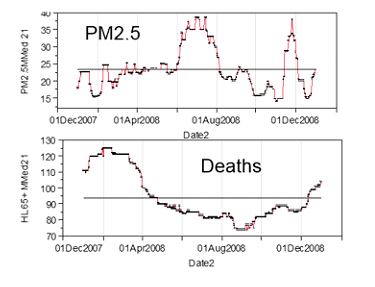
These re-analysis results, no effect of air quality on deaths, are also supported by two natural experiments. In June of 2002, forest fires in Canada blanketed the East Coast with smoke. Smoke can be tracked with PM 2.5, small particulate matter, so small that will pass through a 2.5 micron grid. PM 2.5 is used as a measure of air quality by the EPA. PM2.5 increased in Boston and New York City, yet daily deaths did not – but if air pollution caused deaths, and thousands would be saved by more regulations, then someone should have passed away.
The same no effect occurred in Los Angeles when lightning strikes started forest fires in May of 2008. Smoke, easily seen using satellite images, engulfed the city. PM2.5 levels increased verifying that the smoke had ground-level presence. PM2.5 increased, but again there was no increase in daily deaths. The re-analysis by Robert L. Obenchain and I, is upcoming in the journal Risk Analysis. The NYC and Boston analysis, which appeared in 2015, was done by researchers at Gradient. These non-effects are important because they should not be evident if air quality is causing deaths.
[purty pix of emission plumes from space?]
Image: Wikipedia

Both the old and new analyses can be verified, as data used in our re-analysis and from L.A. are available. These confirmed results undermine the claims that current air quality is causing deaths and so increased controls need to be mandated across the nation.
This article first appeared in Priorities magazine, which is sent free of charge to all American Council on Science and Health donors.
==
gwu dereg
https://www.citizen.org/wp-content/uploads/A-Key-Cog-in-Charles-Kochs-Master-Plan-3.pdf
...
D. The Trump administration has appointed a RSC scholar to key science panels Louis Anthony (Tony) Cox Jr. is listed as a scholar for the RSC. 195 In 2015, Cox submitted a comment under the auspices of the RSC criticizing the EPA’s proposed air quality standard on ozone as unwarranted.196 Cox disclosed in a December 2016 letter to the editor of a journal that his consulting firm, Cox Associates, had over the previous three years: received funding from the American Petroleum Institute and the American Chemistry Council and their members and from the Regulatory Studies Center at George Washington University, to investigate methods and to develop software for improved causal analytics for use in health effects research, including the health effects of crystalline silica, ozone, and fine particulate matter.197 [emphasis added]
Cox was appointed in November 2017 as chair of the Clean Air Scientific Advisory Committee (CASAC), which was established by the Clean Air Act amendments of 1977.198 Cox was nominated to the position by the U.S. Chamber of Commerce, which is a funder of the RSC. 199 Cox also was appointed to serve on the EPA’s Science Advisory Board,200 the duties of which include reviewing the quality and relevance of the scientific and technical information being used by the EPA or proposed as the basis for Agency regulations.201 Getting one of its scholars appointed to lead one of the EPA’s most important science panels and as a member of another must represent a win for the RSC.
E. The Trump administration enacted the RSC’s call for a “regulatory budget” At least as early as 2011, Dudley began touting the idea of a “regulatory budget,” or “regulatory PAYGO,” which would require agencies to eliminate a regulation of equivalent significance for every new regulation they issue.202 While the idea of a regulatory budget was proposed decades ago, it had mostly been dormant until recently. Dudley published an article discussing this proposal in 2016 in the N.Y.U. Journal of Legislation and Public Policy. 203
Weeks before the 2016 election, Republican presidential nominee Donald Trump pledged that he would eliminate two regulations for every one created.204 In December 2016, during the Presidentelect Trump’s transition period, RSC Professor Marcus Peacock issued a white paper outlining options to enact this proposal.205 Trump issued an executive order 10 days into his presidency stipulating that two regulations should be eliminated for every one issued.206 (As mentioned earlier, Public Citizen sued over that executive order.) 198
Members of the Science Advisory Board, ENVIRONMENTAL PROTECTION AGENCY (viewed on March 1, 2019), http://bit.ly/2NFwTAI; Request for Nominations of Candidates to the EPA’s Clean Air Scientific Advisory Committee (CASAC) and the EPA Science Advisory Board (SAB), A Notice by the Environmental Protection Agency, FEDERAL REGISTER (June 27, 2017), http://bit.ly/2SBubgh; and Juliet Eilperin EPA’s new science advisers add more industry experts, conservatives to the mix, THE WASHINGTON POST (Nov. 4, 2017), https://wapo.st/2INa7I9. 199 Scott Waldman, EPA science adviser allowed industry g...
---
Search Results
Web results
www.desmogblog.com › topics › dr-tony-cox
1.
EPA Clean Air Panel Chair Dismisses His Oil ... - DeSmog
www.desmogblog.com › 2020/05/18 › epa-clean-air-co...
1.
Top advisor to Trump's EPA is called out in major journal for his
www.latimes.com › local › california › la-me-epa-pollu...
1.
Missing: desmog | Must include:desmog
Trump's Air Pollution Adviser Actually Said That Clean Air ...
www.motherjones.com › environment › 2018/10 › ton...
1.
Missing: desmog | Must include:desmog
www.nationofchange.org › 2020/07/01 › slam-dunk-st...
1.
The latest travesty in 'consensus enforcement' | Climate Etc.
judithcurry.com › 2019/08/14 › the-latest-travesty-in-c...
1.