NEGAT ATTACK ADS 2A
916 lost of dark $ ends up in neg ads
see main
oops see similar name this 10 24 relabelled 2A SEE THREE
probably neglected b/c i think of this as TV ad during a campaign
used to all online ads dark posts, now just facebook ads
===
morn joe tons of ads football kamala sex surgery prisoners
10 24
===
-=-=
-=-=
Perry attack ad targets Stelson with allegation her campaign calls fabricated
-=-=
// WILLIE HORTON?
neg ad fuckery driven bc repeat fail eg doge or bad polls 10 26?
mma
Here are the right-wing media figures endorsing “despicable” ad from Ohio Republican gubernatorial nominee Vivek Ramaswamy
The ad features Democratic nominee Amy Acton’s estranged mother, who defended her husband’s reported sexual assault of Acton when she was a child
Written by Zachary Pleat
Research contributions from Gideon Taaffe
Published 10/21/26
Multiple right-wing media figures are promoting an ad released this week by Ohio Republican gubernatorial nominee Vivek Ramaswamy’s campaign targeting his Democratic opponent, Amy Acton, featuring her mother calling her a liar. However, Acton has been estranged from her parent since the age of 12 in 1978, when her mother defended the candidate’s stepfather against accusations he had sexually assaulted Acton for two years, then fled the state with him as he became a fugitive from charges of child sexual abuse.
In Ramaswamy’s ad, which right-wing media personalities praised as “brilliant” and “absolutely hilarious,” Acton’s estranged mother accused her of lying about her past. But court records accessed by ABC affiliate News 5 Cleveland back up Acton’s story, with the outlet reporting, “Mahoning County Court records we obtained show that Cledith Arthur was arrested and charged with sexually abusing Acton, then 12 years old. The abuse went from ages 10-12, she said.” The article continued: “After pleading not guilty, he posted bond and fled, becoming a fugitive of the state until his death in 2004. Police tried to find him for numerous years, documents state. He and Acton's mother moved to Pennsylvania, according to public records.”
Acton’s brother, Philip Stearns, issued a statement following the Ramaswamy ad’s release, saying, “It’s not surprising that Vivek Ramaswamy has stooped to such a despicable low as to attempt to turn the sexual abuse Amy endured at twelve years old from our birth mother’s husband into a political talking point. … After he was arrested and Amy and I were removed from their custody, our birth mother stayed married to Amy’s rapist until he died.”
Yet some right-wing media personalities are celebrating the ad, which Ramaswamy campaign manager Jonathan Ewing said “is a campaign-ending moment for Amy Acton.” Ramaswamy also shared commentary on the ad and Acton more generally from right-wing podcaster Megyn Kelly.
Daily Wire host Michael Knowles praised Ramaswamy’s ad as “brilliant, brilliant.” Knowles added: “I think it's a very, very effective ad. It's brutal.” [The Daily Wire, The Michael Knowles Show, 10/20/26]
Newsmax host Greg Kelly: “Everybody in Ohio and the country should be listening to Amy Acton's mom.” Kelly repeatedly praised Acton’s mother, saying, “The mother speaks with love here. I believe the mother loves Amy.” He continued: “And she seems like a very nice lady, actually.” Kelly concluded: “Wow, that's some — the mother, I believe her.” [Newsmax, The Greg Kelly Show, 10/20/26]
Video
Citation
From the October 20, 2026, edition of Newsmax's Greg Kelly Reports
Podcaster and former FBI deputy director Dan Bongino said of Ramaswamy’s ad: “This is the most destructive political ad I have ever seen.” Bongino added: “How do you vote for this lady? It's her mom. That's mom dukes. Ma, mommy, mom, ma. My kid goes, Ma. How do you vote?” [Rumble, The Dan Bongino Show, 10/20/26]
Trump political operative Roger Stone used the ad to smear Acton, saying, “Turns out she’s been lying for personal gain.” Stone claimed that Stearn’s statement “seems like a poor explanation.” [Red Apple Audio Network, The Stone Zone, 10/20/26]
Gateway Pundit’s Wayne Allyn Root called the ad “absolutely hilarious.” Root used the ad to say, “The more you meet these Democrat candidates, they’re all crazy. They’re all covering up for the fact that they’ve had mental illness their whole life. They’re crazy, whacked-out people.” [The Gateway Pundit, War Zone with Wayne Allyn Root, 10/20/26]
10/21/26 8:56 AM EDT
10/21/26 9:00 AM EDT
10/21/26
-=-=
-=-=
ads atl mo
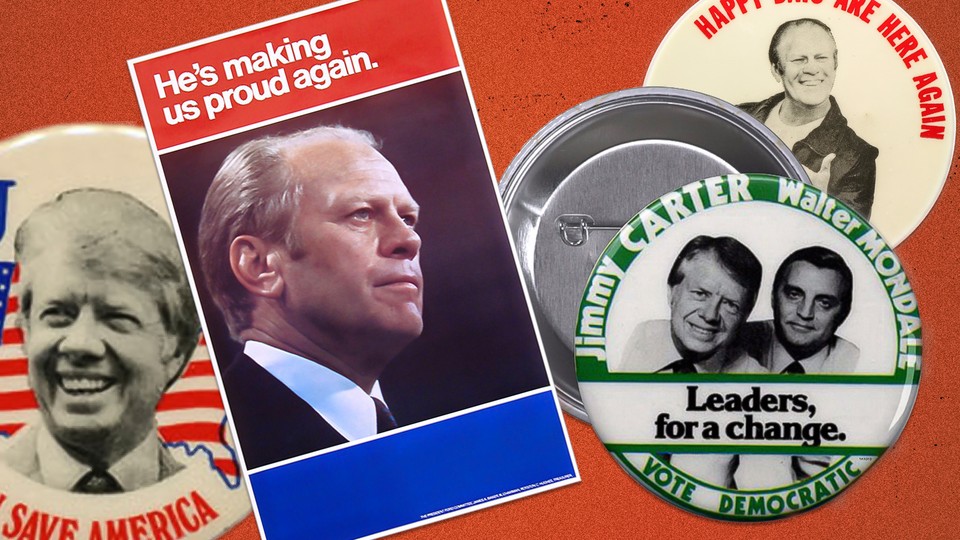
The Year Political Advertising Turned Positive
American campaigns embraced the spirit of 1976, stressing the virtues of candidates to a nation weary of war and Watergate.
The Atlantic
June 9, 2015
“Advertising agencies have tried openly to sell presidents since 1952,” writes Joe McGinnis in The Selling of the President 1968, a chronicle of the attempts to package Richard Nixon to make him more palatable to the American people. Typically, that process of promoting candidates has included a dual-pronged approach: bolstering a politician’s image while also tearing down the character and record of his or her opponents. But with the arrival of the 1970s, the tenor of political advertising suddenly shifted, in no small part thanks to Nixon himself. The Watergate scandal did more than end the Nixon presidency. It made the 70s notable as a decade in which political advertising became overwhelmingly positive. The great paradox of one of the worst presidential scandals of the 20th century was that it forced candidates to stop attacking each other and start persuading the nation that they could be trusted.
Before Watergate, campaign ads often had a hard edge. Nixon, for one, employed a 27-year-old media consultant named Roger Ailes to organize his television strategy, while his campaign crafted a series of jarring attack ads directed by Eugene Jones....
The Jones ads, which featured discordant music and disturbing scenes of bloodshed, and cited alarming statistics including a crime rate that was escalating “nine times as fast as population,” helped secure the election for Nixon. By contrast, ads for Humphrey—including one endorsement recorded by an unenthused Frank Sinatra—seemed to fall flat.
The political ads of the 1970s, by contrast, are notable for their general sense of optimism. Forget fearmongering, or vitriolic attack ads. Instead, politicians just wanted to prove they were regular, true-blue Americans who wanted to put the country back on the right path. “Watergate’s biggest impact actually came in 1974,” says Larry Sabato, a political scientist, and the director of the Center for Politics at the University of Virginia. “The most oft-heard words were ‘honesty’ and ‘integrity.’ Candidates stressed their normalcy. Younger Democratic politicians bragged about their lack of experience in the Washington cesspool, and promised a revolution in DC.” ...
...
---
121 guk
...In 2018, Club for Growth spent nearly $3m attacking the Democratic senator Claire McCaskill in Missouri, a race that was ultimately won by Hawley, the 41-year-old Yale law graduate with presidential ambitions who has amplified Donald Trump’s baseless lies about election fraud.
That year, it also spent $1.2m to attack the Texas Democrat Beto O’Rourke, who challenged – and then narrowly lost – against Cruz.
Other legislators supported by Club for Growth include Matt Rosendale, who this week called for the resignation of fellow Republican Liz Cheney after she said she would support impeachment of the president, and Lance Gooden, who accused Pelosi of being just as responsible for last week’s riot as Trump.
Dozens of the Republicans supported by Club for Growth voted to challenge the election results even after insurrectionist stormed the Capitol, which led to five deaths, including the murder of a police officer....
https://www.alternet.org/2020/12/georgia-senate-race/
kennis, really about camp fin ref need
On the eve of the general election, Russ Silva and his family, like many fellow Georgians, watched as the results started slowly pouring across his television set. It was becoming more and more apparent that Georgia was destined to become a focal point for the entire country, not just because it was a contested battleground state between Donald Trump and Joseph Biden, but also because it was setting the stage for an unprecedented situation.
As election night came to an end with many results still uncertain, Silva let out a sigh as he bemoaned to AlterNet what he suspected was inevitable: "Now I pretty much know I'm going to be barraged by endless ads."
By the time incumbent Senator David Perdue's slim advantage over challenger Jon Ossoff dipped to 49.9997 percent of the vote on November 5, it became all but official: a double-header runoff for two Senate seats and ultimately control of the chamber was going to happen in early January.
John Nichols, a veteran journalist,explained to AlterNet that, "We've never had a circumstance like this before with two seats up-in-the air while two seats are also needed for control of the Senate in two runoff elections before an inauguration with these kinds of stakes at play."
Unsurprisingly then, Georgia's unique double-header runoff has rapidly become ground zero for a legion of political consultants, pollsters and a blizzard of television advertising.
"There's a whole industry that does this from Washington and everyone is able to go to their donors and say, 'hey, I need 20 million dollars,' and then that money will then be found," says Nichols.
This unprecedented spending frenzy led Christian-right activist Ralph Reed to dub Georgia "crazytown" to the New York Times. It became that after Democrats suffered rough defeats in North Carolina (a race they lost by a mere 1.8 points), Iowa (where various polls showed the Democratic challenger leading through election night), Kentucky (where tons of money was spent in an unsuccessful effort to unseat Sen. Mitch McConnell, the Republican Majority Leader) and most devastatingly, in Maine (where the New York Timesprofiled the Republican incumbent, Susan Collins, as being a dinosaur out of touch with more polarized times and quite vulnerable to defeat).
Because of this string of defeats, Georgia's old southern-styled campaign system, which was originally fashioned to advantage white Democratic candidates in the Jim Crow era, wound up having greater relevance than ever before. No more than a mere percentage point separated the total Democratic and Republican Party votes in both Senate races, with all sides acknowledging that the Democrats are still facing steep odds of sweeping. By January, the double-header will decide not only party control of the Senate but also the future path to a potential economic recovery for both the U.S. and to a significant extent, the rest of the world.
While the anticipated record-breaking spending in Georgia's twin runoffs has gotten a lot of media coverage, the ramifications of so much hinging on contests that will likely be decided by a relative handful of voters is an under-explored aspect of the story. Leading researchers on politics, campaign finance and the media told AlterNet that the Georgia campaigns exemplify a system that is anti-democratic to its core.
Consulting and Pollster Industry Descends Upon Georgia
The numbers so far have been dizzying, and the campaign has only just gotten underway. According to AdImpact, by Thanksgiving week, $220 million had already been spent between all four campaigns (Ossoff has spent $41.6 million; Loeffler, $40.8; Warnock, $34.2 and Perdue, $30.1) while another $214 million in future buys had been reserved.
With this rate of spending, the campaigns are collectivelyon pace to reach a half a billion dollars in spending by Election Day or perhaps even more,according to Professor Thomas Ferguson, author of The Golden Rule.
"One private equity investor put a couple of million into the Maine senate race which clearly came during a late influx of money," Ferguson said. As a result, when it comes to Georgia, "you very well may not see what the real total spending will amount to until the end December."
You may be wondering what all of this money is even being spent on.
As Nichols explained to AlterNet, "party campaign committees, leadership PACs [political action committees], special interest PACs, political television advertising and hired gun political consultants and pollsters," form the bedrock of what he dubbed, "the media and election industrial complex, which Bob McChesney and I have written about because the truth of the matter is that there really is a huge industry that is solely dedicated to this."
The Atlanta metro area's television market, where three-fourths of Georgia's voters reside, is already approaching near total ad saturation well over a month before Election Day. Sen. Kelly Loeffler, who has embraced Trump even more than her fellow Republican incumbent, has already spent 23 million of her own personal funds on television advertising and has already reserved an additional 40 million.
Georgian voters have already registered their fatigue with the advertising onslaught. Echoing the thoughts of many Georgia users in the Twittersphere, one posted, "Here in Georgia, I can't watch anything without being POUNDED with political ads. I get it, but I'm sooooooo tired."
Rich Campaigns, Poor Democracy?
The Supreme Court has consistently ruled that campaign spending is the equivalent of protected political speech. As a result, each election year records for campaign spending set in previous cycles routinely fall, according to Gerald Sullivan, the author of Global Electioneering.
"Overall, more than $14 billion will have been spent on all Federal-level campaigns this year, doubling what was spent in 2016. The amount of money is abhorrent and disgusting," Sullivan told AlterNet, while adding that "the more professionalization of campaigns intervenes into the electoral process, the less democratic it will be."
To a whole generation of young people, it has become a fact of life that elections are synonymous with big spending. But to Sullivan, this is not consistent with a healthy democracy. "In the 1950s, things were done on a retail basis as politicians would have district and ward captains and everything was done locally." In modern times, however, "political consulting firms have centralized the whole process. Now it's just left up to the experts and professionals." Sullivan added that spending doesn't dominate the process in most democracies, which have relatively short campaign seasons. He pointed to the United Kingdom's six-week long election campaigns as a better model.
Ferguson also pointed to the British electoral process. "I would like to shorten them, of course. A British-styled system and election length would be much better," especially paired with a robust public campaign finance system.
Nichols told AlterNet that many of the tactics that are part and parcel of the election industry are at direct odds with basic tenants of democracy. "Polling isn't done to figure out what the voters want and instead, it's done to help figure out how to 'sell' candidates most effectively."
Pollsters and political consultants are mining for, "the fodder for negative ads," Nichols added. And indeed, Georgia has already been rife with some of the most brutal negative advertising this election cycle has seen.
"You have pollsters going in and asking if you'd vote against someone if you knew this and that," Nichols explained. "It's to figure out how best to manipulate people as opposed to deciphering what they truly want so as to get people to potentially vote against their own interests which is very, very anti-democratic."
Ferguson, whose research has shown that candidates who raise more money stand a much greater chance of winning election, added that "when you get that much money pouring into the election, it means that you have all these investors who decide which election is 'worth it' and that tends to pull even liberal democrats to the right. It is a somewhat subtle effect but a very real one and clearly an anti-democratic consequence of the system."
Much More at Stake than Control of the Senate
Because of the worst economic recession to have gripped the world since the Great Depression, and major partisan differences over pandemic policy, what happens in Georgia will have major ripple effects depending on which party ends up controlling the Senate. This has become a focal point of the campaigns.
Four months after the CARES Act's enhanced unemployment benefits expired, partisan lines have been drawn in the sand over another relief package to such an extent that the New York Timesreported that a Democratic-led Senate, even with Trump sticking around in the White House, had a larger chance of passing a robust relief bill than would a Biden administration if Republicans maintain control of the Senate.
Over 120 economists, including a former vice-chairman of the Federal Reserve Board, recently signed off on a letter calling for a second stimulus package to be, "big, immediate and direct."
"[The outcome of the Georgia runoffs are] everything on stimulus because if there is a Democratic-controlled Senate, they will be able to get a sizable package through reconciliation," Heidi Schierholz, the director of the Economic Policy Institute, told Business Insider.
Of the many uncertainties which continue to characterize this unexpectedly extended election season, one thing is clear: Georgia really is "crazytown" this cycle.
===
https://www.alternet.org/2020/11/trump-won-florida-after-running-this-false-ad-tying-biden-to-venezuelan-socialists/
In Florida, where President Donald Trump gained crucial support among Latino voters, his campaign ran a in Spanish making the explosive — and false — claim that Venezuela's ruling clique was backing Democratic nominee Joe Biden.
YouTube showed the ad more than 100,000 times in Florida in the eight days leading up to the election, even after The Associated Press published a fact-check debunking the Trump campaign's claim. Actually, Venezuelan President Nicolás Maduro expressed opposition to both presidential candidates.
The video was part of a broader Trump campaign strategy in heavily Latino South Florida that sought to tie Biden to Socialist leaders like Maduro and the late Cuban President Fidel Castro. Trump won Florida by about 375,000 votes, the largest margin in a presidential election there since 1988. He carried about 55% of the Cuban American vote, according to exit polls by NBC News.
“Latinos who live here in the U.S. have left socialist or communist regimes," said Diego Scharifker, a Venezuelan American lawyer, former city councilor in Caracas and co-founder of the pro-Biden group Venezolanos Con Biden. “There is of course a big impact or fear or scarring in the Latino community in the U.S. from communism. Trump with his false accusations and false information was fearmongering and playing on the pain to promote his agenda."
The ad illustrates gaps in the policing of misinformation by Google, which owns YouTube. While Google nominally prohibits all false claims in advertising, it rarely takes down political ads. In addition, shortcomings in its transparency tools make it harder for watchdogs and fact-checkers to scrutinize ads.
Google's political ad rules are “trying to have it both ways" with respect to fact-checking, said Bridget Barrett, a political communication researcher at the University of North Carolina. “In reality, basically everything stands." Google sees claims like the one about Maduro as being “within the public arena that should be contested by Biden's campaign or fact-checked by journalists," Barrett added.
YouTube approves ads by both human and machine review. Its policies prohibit any advertiser from making “a false claim — whether it's a claim about the price of a chair or a claim that you can vote by text message, that election day is postponed, or that a candidate has died."
Charlotte Smith, a company spokeswoman, told ProPublica in an email that “we don't make any special exceptions for politicians." Nevertheless, YouTube takes down only a “very limited" number of political ads making “demonstrably false claims that could significantly undermine trust in democratic or electoral processes," she said.
The Trump campaign ad “doesn't meet that bar," she said. “This video does not violate our policies. ... Political ads are known for being hyperbolic, and we're not going to attempt to adjudicate every claim or counterclaim."
Other platforms are at least somewhat more restrictive. While Facebook doesn't fact-check campaign ads, it banned new ones within a week of the election. (The Trump ad does not appear to have run on Facebook, according to its ad library. If it had, the ban may not have applied to it, because it began running on YouTube on Oct. 26, eight days before the Nov. 3 election.) Facebook's fact-checking partners do vet ads by political action committees and other third-party groups, some of which get removed. Twitter banned all political advertising. Although broadcast television stations aren't allowed to choose candidate ads by content, cable networks can, and sometimes do, reject ads. The Trump ad didn't appear on TV, according to Advertising Analytics, an ad-tracking firm.
The Trump campaign saw YouTube as a key to its strategy, according to a Politico report in September. It ran more than 18,000 video ads on YouTube this year. The campaign spent $106 million, including $37.2 million in the last month of the campaign, on Google's platform, including both YouTube ads and Google search ads.
The questionable video begins by describing Biden as “the candidate of Chavismo," referring to the brand of socialism associated with Hugo Chávez, the late leader of Venezuela, and Maduro's government. It then shows Diosdado Cabello, a Maduro ally and Venezuela's second-most powerful politician, saying on his television program that the “brisa Bolivariana," or the “Bolivarian breeze" of Latin American socialism, “is blowing, blowing, blowing, blowing. ... Let's see what happens. Maybe the Bolivarian breeze will reach the United States. In how much time? In 13 days until the elections." The term “Bolivarian" is an allusion to Simón Bolívar, the 19th-century revolutionary, claimed as an inspiration for many Latin American socialist movements.
Then the text on the screen reiterates that “the Chavistas" — the political party that controls Venezuela — “want Joe Biden to win." The video concludes with a statement that it was paid by the Trump campaign and Trump saying that he approved the message.
There's little doubt that the relationship between the Trump administration and the Maduro government is tense. Trump has imposed sanctions on Venezuela and on Maduro and Cabello personally. The U.S. government indicted both Maduro and Cabello on narco-terrorism and drug trafficking charges in March. Venezuelan state-run television has struck a “completely anti-Trump" tone, said Daniel Acosta-Ramos, an investigative researcher at First Draft, a nonprofit that tracks misinformation and an Electionland partner.
Yet Maduro said in late September that he didn't care who was elected. “If Trump wins the elections, we will confront him and defeat him, and if Biden wins, we'll confront him and defeat him too," he said. An AP fact-check of a video that resembles the one in the Trump campaign ad concluded that neither Biden nor Maduro “has declared that there is any kind of affinity between them or between their national projects."
In the television segment from which Cabello's “Bolivarian breeze" remark was clipped, he didn't explicitly mention Trump, Biden or the Democratic or Republican parties. While the remark could be interpreted as hoping that Biden would be elected and promote the agenda of his party's progressive wing, Cabello has a reputation for being a provocateur and saying unclear things on purpose, according to Acosta-Ramos. “That ambiguity creates an environment ripe for misinfo," he said.
The ad, Acosta-Ramos said, was “micro-targeted for people who know what the 'brisa Bolivariana' means. Not just Venezuelans, but also Cubans and Colombians."
Other YouTube ads from the Trump campaign reinforced the false message. They showed clips of Maduro referring to Biden as “Comrade Biden" in a 2015 speech. Although it was only a passing reference, and Maduro accused Biden shortly afterward of plotting to overthrow him, Donald Trump Jr. framed it as evidence that Biden was weak on socialism.
The Trump campaign's official bilingual Twitter account also claimed that Maduro's regime supported Biden. A tweet from President Trump called Biden a “PUPPET of CASTRO-CHAVISTAS." Trump ads on Facebook called Biden a “socialist" and pictured him with Rep. Alexandria Ocasio-Cortez and Sen. Bernie Sanders, both of whom refer to themselves as democratic socialists.
“There was a concerted effort by the Trump campaign and their allies to misrepresent Joe Biden and his values because they knew they couldn't win on Trump's disastrous record," a Biden campaign official told ProPublica.
Florida's Venezuelan population has grown to about 200,000, of whom an estimated 50,000 are registered to vote. In Doral, a city in Miami-Dade County that's home to many Americans of Venezuelan, Cuban and Colombian descent, Trump pulled in roughly 49% of voters in 2020, up from 29% in 2016. Overall, in Miami-Dade, Trump garnered nearly 200,000 more votes than he had in 2016, shaving the Democratic margin from 29% to 7%.
The Trump campaign, the White House and the Venezuelan Embassy did not respond to requests for comment.
The Trump ad may have attracted relatively little notice during the campaign because of inadequacies in the political ad report that Google established in 2018 to improve transparency. Unlike Facebook's political ad archive, Google's doesn't group identical ads together if, for instance, they were shown over different time periods. Google's transparency tools showed three different copies of the “brisa Bolivariana" ad, giving separate data for each. Google also doesn't make videos searchable or any ad content downloadable in bulk.
The design doesn't allow opponents, journalists or watchdogs to meaningfully analyze the 263,000 political video ads (and 361,000 other ads) that Google sold in 2020, Barrett said.
“You're just drowning in content and overwhelmed by these individual pieces of advertising content, and really many of them are the same, you're stuck trying to swim through this overwhelming sea of ads," Barrett said. Ads “can disappear into the depths of the ad library."
Google has said that it only allows advertisers to target political ads by users' location, age and gender, and that it discloses these targeting choices on its transparency website. The three copies of the “Bolivarian breeze" ad were targeted by location to Florida users.
Although it's not disclosed in Google's transparency tools, YouTube ads also may be targeted by language, for example to Spanish speakers, Smith said.
It's unclear exactly how much the Trump campaign spent on the ad and how many times it was shown. Google's data show that the Trump campaign spent between $1,000 and $5,000 on one copy of the ad; between $100 and $1,000 on another; and less than $100 on the third. Two of the copies were shown fewer than 10,000 times, and the third was shown between 100,000 and 1 million times. Facebook publishes more precise information.
Trump supporters amplified the campaign's message, professing to connect Biden and other Democrats to “Castro-Chavismo," a term linking Venezuelan socialism to Cuba's. False posts on social media, of undetermined origin, purported to show Jill Biden, Joe's wife, standing next to Fidel Castro. It was actually Jacqueline Beer, the wife of a Norwegian explorer.
“We saw a huge number of WhatsApp messages being shared in Venezuelan, Cuban groups, saying the governments of these countries that we escaped, [they] want Biden — so we should vote Trump," Acosta-Ramos said.
What a Biden staffer described as a flood of information put the Democrat's campaign on the defensive. The Biden campaign mounted its own fact-checking effort to push back against the claims about Biden and socialism. It invested heavily in outreach to Florida Latinos, including six-figure media buys in the last two weeks of the campaign targeting the community, a staffer said. At an early October rally in Miami, Biden said, “Maduro, who I've met, is a dictator, plain and simple, and he's causing incredible suffering among the Venezuelan people."
Ronny Rojas of Telemundo, Derek Willis and Ivette Leyva contributed reporting.
Filed under:
FROM YOUR SITE ARTICLES
- Florida Gov. DeSantis is pushing a last desperate gambit to remove ... ›
- Florida's economy is collapsing under COVID-19 — and they only ... ›
- The strange story behind the Democrats' failure to flip Florida ... ›
lincoln pjt has been kicking trump ass)
https://www.alternet.org/2020/08/the-republican-architect-of-the-2004-swift-boat-campaign-against-john-kerry-is-now-trying-to-swift-boat-biden-and-get-trump-reelected/
no vid
although Democrats have won the popular vote in six of the last seven presidential elections, 2004 is remembered as the year in which George W. Bush became the only GOP president to win both the electoral vote and the popular vote in a post-1980s election. Republican strategist Chris LaCivita, who coordinated the Swift Boat Veterans for Truth disinformation campaign against 2004 Democratic presidential nominee John Kerry, can take some of the credit for Bush’s reelection — and in 2020, journalist Alex Isenstadt reports in Politico, LaCivita is overseeing a new super PAC designed to help President Donald Trump win a second term.
The super PAC is called Preserve America and, according to Isenstadt, “is poised to begin a $30 million advertising blitz” and “is expected to draw the support of a range of GOP megadonors, including Las Vegas casino mogul Sheldon Adelson and Home Depot co-founder Bernie Marcus.”
“The move comes as Republicans express mounting concern over the drubbing Trump has been taking on TV,” Isenstadt explains. “The president, in August, went dark in several battleground states and, in Wisconsin, was outspent more than 8 to 1, according to the media tracking firm Advertising Analytics. In Florida, Trump was outpaced by Biden more than 3 to 1.”
Given LaCivita’s track record, the Democratic National Committee and the 2020 campaign of former Vice President Joe Biden should not take him lightly. In 2004, the George W. Bush Administration drew a great deal of criticism over the Iraq War and the overthrow of dictator Saddam Hussein — one of the worst foreign policy blunders in U.S. history. But the Swift Boat Veterans for Truth ran a campaign against Kerry that was both deceptive and effective. Although Kerry was a Vietnam veteran and Bush avoided the Vietnam War, the Swift Boat Veterans for Truth managed to convince many gullible voters that Kerry was anti-military.
to this day, “Swift Boat” is used as a slang expression to describe a deceptive political takedown of an opponent. LaCivita, in other words, would love to Swift Boat Biden just as he Swift Boated Kerry 16 years ago.
Preserve America’s anti-Biden ads are very Trumpian in tone, resorting to hysterical fear-mongering — something LaCivita has a long history of doing — and claiming that Biden is anti-law enforcement : [2 vids]
the super PACs that have been keeping busy in 2020 range from the pro-Trump America Action First to the pro-Biden Priorities USA. Trump supporters, Isenstadt notes, have been frustrated to see Priorities USA raising more money than America Action First — and Republicans are hoping that Preserve America will give Trump’s campaign a fundraising advantage.
Preserve America is already going after key battleground states. Isenstadt notes that its first commercials will begin airing this Tuesday, September 1 in “in Florida, North Carolina, Pennsylvania, Wisconsin, Arizona, Iowa and Georgia.”
“Roughly $25 million of the total buy will be invested on TV, a figure that nearly matches what America First Action and Priorities USA have spent on the airwaves over the course of the entire election cycle,” Idenstadt reports. “The remaining $5 million will appear on digital platforms.”
===
==
https://www.mediamatters.org/facebook/facebook-allowed-pro-trump-pac-run-hundreds-ads-false-information-about-joe-biden
pro-Trump PAC America First Action ran at least 397 ads on Facebook and Instagram since July 24 featuring a video that falsely suggests Democratic presidential candidate Joe Biden supported efforts to defund the police. While Facebook finally removed many of the ads on August 4, a number of them had already run for over 10 days, earning more than 5.7 million impressions -- and the false information will still be allowed in other posts on the platform.
The false claim that Biden supports defunding the police has been repeatedly promoted by President Donald Trump and right-wing media, seemingly meant to inspire fear about supposedly radical policies among centrist voters.
PolitiFact, which is one of Facebook’s trusted fact-checking partners, fact-checked the video in America First Action PAC’s ad on July 29, five days before Facebook reportedly removed the ads:
The 15-second ad, from conservative super PAC America First Action, selectively edits a clip from Biden’s interview with liberal activist Ady Barkan. While the text on the screen reads, “Defund the police?,” Biden is seen on a TV saying, “Yes. Absolutely, yes.”
Using Facebook Ad data from the Dewey Square Adwatch tool set, Media Matters found 397 ads that America First Action PAC ran with versions of the misleading video since July 24. The PAC spent at least $87,900 on these ads, most of which specifically targeted Wisconsin, North Carolina, and Pennsylvania -- states which are part of Trump’s reported priority list. At the time of publication, at least 17 of the ads are still active on Facebook [pix]
[pix: six of 397 Facebook ads from America First Action PAC with false information about Joe Biden]
Facebook has repeatedly allowed political ads with misinformation to run on its platform. In fact, Media Matters has previously reported on hundreds of Facebook ads with misinformation and hate speech from the Trump campaign, including 529 ads with false claims of voter fraud and 88 ads with an infamous Nazi symbol; and hundreds of misleading ads from pro-Trump PACs, including Judicial Watch and The Committee to Defend the President.
Facebook has reportedly considered banning political ads leading up to the 2020 U.S. election, but that move wouldn’t prevent organic posts containing political misinformation from spreading on the platform.
Case in point: Even though Facebook removed America First Action PAC’s ads after they were fact-checked and labeled as false information, a Facebook spokesperson reportedly told Fox News that “the videos can, instead, run as original content on the group's page.”
==
===
Bloomberg adviser previews ‘scorched-earth’ campaign to be aimed at Trump’s ‘grifter’ familyMatthew Chapman / Raw Stor
===
==
120 an moved way up in polls by dint of massive ad spend
How Michael Bloomberg is spending a fortune and driving Trump batty
Let me preface this post by acknowledging that billionaires trying to purchase the Democratic nomination represent an affront to democracy. (According to FiveThirtyEight, Tom Steyer had spent $120 million on TV ads…
===
===
Bernie predicted neg ads during debate and it happened
https://nowthisnews.com/videos/politics/bernie-sanders-predicts-health-care-industry-ads-during-debate
===
===
https://www.opensecrets.org/news/2019/12/political-ads-impeachment-fight-wesleyan/
Political candidates and groups shelled out millions on impeachment-related TV ads before the House impeached President Donald Trump Wednesday, according to a new report from the Wesleyan Media Project.
The analysis, produced in partnership with OpenSecrets, reveals that ads mentioning impeachment accounted for at least $16.9 million worth of TV ads in presidential, Senate and House races.
That spending is largely concentrated in the presidential contest. Billionaire Democratic presidential hopeful Tom Steyer spent $8.5 million on the air backing impeachment, with 18 percent of his ads mentioning the subject. Almost all of Trump’s TV ads since October — totaling $4.4 million — are focused on impeachment.
The Trump campaign is fundraising heavily off impeachment, sending out email blasts minutes after the House vote to impeach promising to triple-match donations during the next 24 hours with a hefty $4 million goal.
Impeachment has leaked into House races, too, where related TV ads are largely funded by “dark money.” Conservative dark money group American Action Network hammered swing district Democrats with roughly $2.4 million in .Pro-Trump nonprofit America First Policies, which also keeps its donors secret from the public, chipped in $664,000 to pressure House Democrats. This spending is not reported to the Federal Election Commission because the ads don’t expressly advocate for or against candidates.
America First operation also raked in significant cash fundraising off impeachment, raising a combined $6.9 million along with its affiliated super PAC America First Action in the week following House Democrats’ announcement of the impeachment probe.
Despite pressure from conservative groups, all but two Democrats voted to impeach Trump for abuse of power. Rep. Jared Golden (D-Maine), a freshman representing a conservative leaning district, voted for the first article but voted against the obstruction of Congress charge. Republicans believe they can take back House seats in Trump-won districts from Democrats who supported impeachment.
Defend American Democracy is the biggest pro-impeachment group spending on TV ads. The dark money group, which is backed by the liberal dark money network Sixteen Thirty Fund, spent at least $178,590 on TV ads urging House Republicans to impeach Trump.
No Republicans voted for impeachment Wednesday. Rep. Justin Amash (I-Mich), who left the GOP in July over its defense of Trump, voted for both articles of impeachment.
“It seems that Republicans are going on offense when it comes to the issue of impeachment, while Democrats are remaining mostly quiet on the issue,” said Travis Ridout, co-director of the Wesleyan Media Project. “The one exception here is Democrat Tom Steyer who has long advocated for impeaching the president.”
Limited transparency
Groups that do not disclose their donors sponsored more than 90 percent of all ads from outside groups in Senate races and at least three out of every four ads in House races.
Nearly three times as many Senate dark money airings in 2019 came from liberal groups than conservative. This follows the first election cycle where liberal dark money groups reported more spending than their conservative counterparts to the FEC.
A mysterious pop-up dark money group called Doctor Patient Unity has spent roughly $28 million on ads, purchasing more ads mentioning federal candidates than any other group this year, followed by American Action Network and America First Policies on the right then House Majority Forward and Majority Forward on the left. Not a single group in the top-10 list of ad sponsors based on the number of ads purchased discloses its donors.
Digital ads take on TV among presidential hopefuls
The 2020 election cycle has seen more than $150 million in political ad spending from presidential candidates on broadcast TV on top of another $40 million airing on cable, according to Welseyan’s report in partnership with OpenSecrets.
Digital ad spending by 2020 presidential campaigns alone has topped $100 million. Compared to TV and radio ad buys, digital ads make up more than a third of all 2020 presidential election ad spending.
Trump’s re-election campaign, boosted by its joint fundraising committee’s spending, continues to be the top-spending online ad sponsor in the 2020 election. Trump’s re-election effort spent more than $40 million on digital ads since tech companies and social media platforms started releasing their advertising data in 2017. But that dynamic may change now that other wealthy candidates like Michael Bloomberg and Steyer have thrown their hats in the ring.
Steyer has spent roughly $20 million on digital ads since his campaign launched in July, according to an OpenSecrets analysis of digital ad data from Google, Facebook, Twitter and Snapchat. In the weeks since his campaign launched, Bloomberg has already poured more than $12.7 million into digital advertising.
Bloomberg’s roughly $90 million combined TV and digital ad spending during the last month put his campaign ahead of every other presidential contender as well. The second biggest overall ad spender among presidential contenders during the last month and overall is Steyer.
Bloomberg and Steyer each spent more on ads than all other current presidential candidates combined this year, including Trump.
===
===
https://www.alternet.org/2019/11/on-tv-political-ads-are-regulated-but-online-anything-goes/
no lnx many
On TV, political ads are regulated – but online, anything goes
Written by The Conversation November 23, 2019
With the 2020 election just a year away, Facebook is under fire from presidential candidates, lawmakers, civil rights groups and even its own employees to provide more transparency on political ads and potentially stop running them altogether.
Meanwhile, Twitter has announced that it will not allow any political ads on its platform.
Modern-day online ads use sophisticated tools to promote political agendas with a high degree of specificity.
I have closely studied how information propagates through social channels and its impact on political messaging and advertising.
Looking back at the history of mass media and political ads in the national narrative, I think it’s important to focus on how TV advertising, which is monitored by the FCC, differs fundamentally with the world of social media.
The birth of political ads
Eisenhower was one of the first politicians to use TV as a medium to spread his message to the American public.
In 1952, Eisenhower met with Rosser Reeves, an American ad executive, to discuss how to use this relatively new medium. They created 20- to 30-second slots to run during prime-time, called “Eisenhower Answers America.”
These ads helped usher in how political campaigns would use new broadcast media to campaign.
An ‘Eisenhower Answers America’ ad.
TV ads were also used in the campaigns of Lyndon B. Johnson and Richard Nixon in the 1960s to shock viewers into going to the polls by catering to their fears of a world that might exist should their opponent win.
Over time, TV ads became more negative and critical of opponents’ ideology and positions. For example, in the late 1980s, George H.W. Bush attacked Michael Dukakis on his prison furlough program giving weekend passes to convicted criminals. They used convicted felon Willie Horton to provide added emphasis and provoke fear-mongering.
The Willie Horton ad.
From TV to Twitter
To understand how effective their ads have been, TV advertisers use measures of reach and frequency of views. These measures are based on a general understanding of the type of viewers that might be watching a given channel, show and time slot.
However, it’s hard to understand a given ad’s effectiveness in driving voters, especially as modern TV audiences migrate to video on demand and other streaming platforms.
In other words, TV political advertising today might provide highly skewed results based on demographics. That’s because the people who still watch live broadcast TV tend to be older than the average American.
With the advent of the web, political messaging went online. First, there were websites focusing on the campaign; then, videos on platforms like YouTube to show support for candidates; and now, political ads use social networks to campaign, create community and raise money.
Unlike TV, social networks offer the ability to hyper-target individuals by characteristics like geography, age and interests. They provide real-time measurable outcomes while rapidly disseminating political messages.
There is also the issue of cost. For example, a 30-second advertisement during the popular TV show “This is Us” cost about US$434,000 last year. Facebook political ads can run for a fraction of that cost and be much more effective at reaching specific audiences, due to targeting.
With a plethora of data on what drives people to click, share or pledge money, modern-day political strategists can now understand what messages help reinforce their base and slowly percolate them into the consciousness of those who might be swayed.
Hyper-targeting and tailoring messaging for individual users can reinforce a person’s deeply held beliefs. It also contributes to the spread of disinformation. This is a more fundamental issue than simply focusing on whether an ad is truthful or not.
The regulation gap
One of the other big differences between social network political ads and TV ads is the impact of regulation.
TV is regulated by the FCC, while social networks are self-regulated.
The FCC was established by Franklin Roosevelt with the assumption that the airwaves belonged to the people. With the growing popularity of TV in the 1950s, the FCC regulated obscene and indecent material. It also set out to ensure there would be balance and truth associated with political messaging.
FCC regulations stipulate that broadcasters must allow any qualified candidates for political office the opportunity to purchase an equal amount of advertising time at the lowest unit charge.
In addition, regulations required transparency from political groups running the ads, which includes mentioning in the ad the name of the group purchasing the commercial time, and whether the advertisement is part of the candidate’s campaign efforts, or if another political action group paid for the spot.
In contrast, without regulation, political ads on social networks can hide behind a cloak of secrecy. The Federal Elections Commission does provide guidance on advertising and disclaimers on any public communication made by a political committee – requiring, for example, statements such as “My name is [Candidate Name]. I am running for [office sought], and I approved this message.”
However, Katherine Haenschen, an assistant professor of communication at Virginia Polytechnic Institute, found that Google and Facebook often requested and received exemptions from requiring advertisers to include standard disclaimers.
Facebook recently decided on its own to require disclosures from advertisers when they purchased political ads, including the organization’s government-issued identification number.
However, social networks like Facebook will have a difficult time providing complete transparency on why members might be seeing a particular political ad. Financially, it is not in their best interest to do so. This is reflected in the company’s recent stance toward several petitions against posting false political ads on the network.
What the future holds
I think the future of political ads on social networks involves greater levels of checks and balances.
In my view, the networks’ efforts on self-regulation and transparency are steps in the right direction.
Senators Amy Klobuchar, Lindsey Graham and Mark Warner have proposed the Honest Ads Act, which would force online political advertising to adhere to the same stipulations as political ads on TV.
Independent media outlets, like ProPublica, are also taking steps to inform the public about the power of targeted political messaging.
However, the size and scope of the problem of political disinformation and hyper-targeting in social networks still needs to be addressed. This is simply too powerful for political campaigns and political operatives not to exploit. I fear that it will invariably lead to greater manipulation of public opinion in the runup to the 2020 campaign.
[ Like what you’ve read? Want more? Sign up for The Conversation’s daily newsletter. ]The Conversation
Ari Lightman, Professor of Digital Media and Marketing, Carnegie Mellon University
This article is republished from The Conversation under a Creative Commons license. Read the original article.
===
===
omg (dish/ direcTV)
https://theintercept.com/2019/09/09/koch-anti-immigrant-data-i360/
lee f
In RECENT YEARS, Charles Koch, the billionaire industrialist megadonor to Republicans and libertarian causes, has carefully recalibrated his public image, releasing a variety of statements to assert that he supports immigration and opposes President Donald Trump’s blatant scapegoating of undocumented immigrants and foreigners.
At the same time, however, Koch’s sprawling political network’s in-house technology company has mined consumer data to motivate Republican voters with dehumanizing messages that depict immigrants as an invading army of criminals and potential terrorists.
Last year, when many GOP candidates across the country turned to vicious anti-immigrant advertisements to turn out voters in the midterm elections, some turned to i360, Koch’s state-of-the-art data analytics company. The company is one of the several appendages of the Koch political machine — one that includes a suite of voter outreach organization, lobbying, and campaign messaging tools.
Dozens of GOP candidates for state and federal office contracted with the Koch data company to identify voter segments and push out targeted ads on television and social media in 2018. And the company looks to be expanding its role in GOP campaigns going into 2020; more than a dozen federal candidates list the firm as a contractor.
The path to one Republican’s successful 2018 Senate run is detailed on i360’s website. Then-Tennessee Rep. Marsha Blackburn aired at least four different television advertisements and a wave of social media advertisements focused on immigration, often with false or inflammatory language. She ended up beating out Tennessee Gov. Phil Bredesen, a Democrat, who had been leading in the polls for months.
“A CARAVAN OF 14,000 illegal immigrants is marching on America … gang members, known criminals, people from the Middle East, possibly even terrorists,”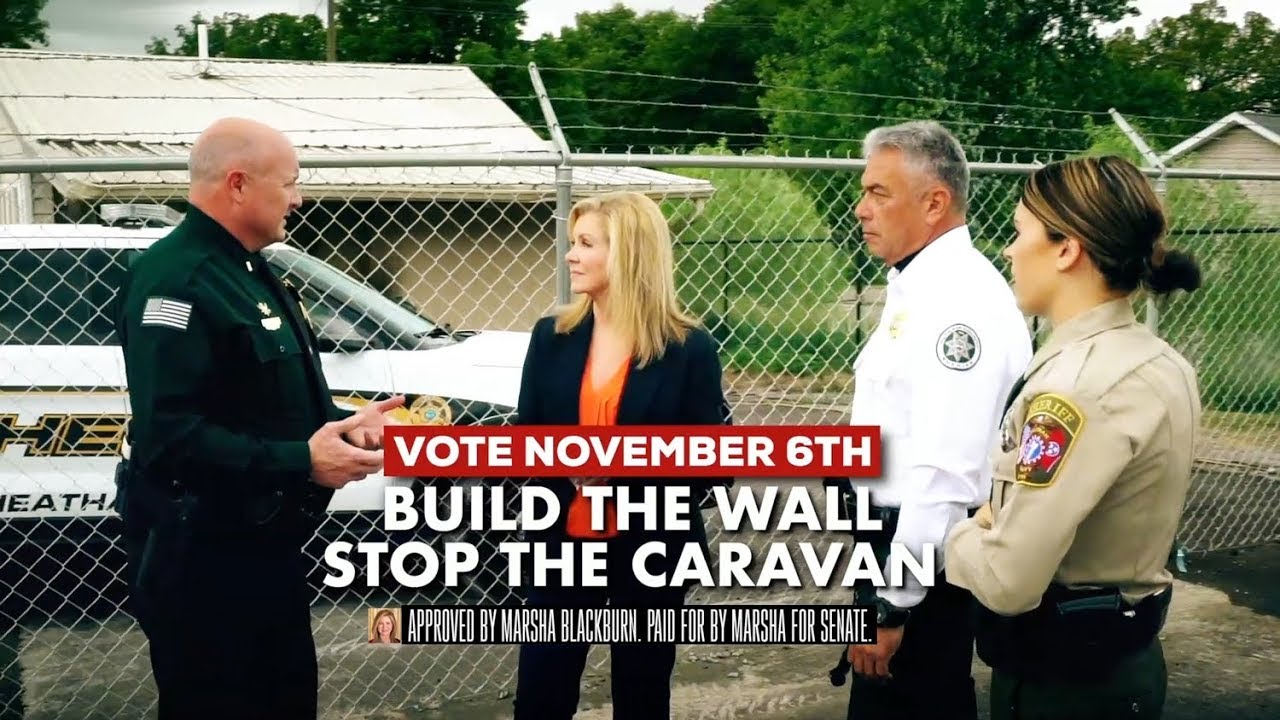 an ad for Blackburn, flashing images of Hispanic men and warning of a flood of immigrants welcomed by her Democratic opponent, Bredesen.
“Phil Bredesen gave driver’s licenses to illegal immigrants. Phil Bredesen opposes the Trump immigration ban,”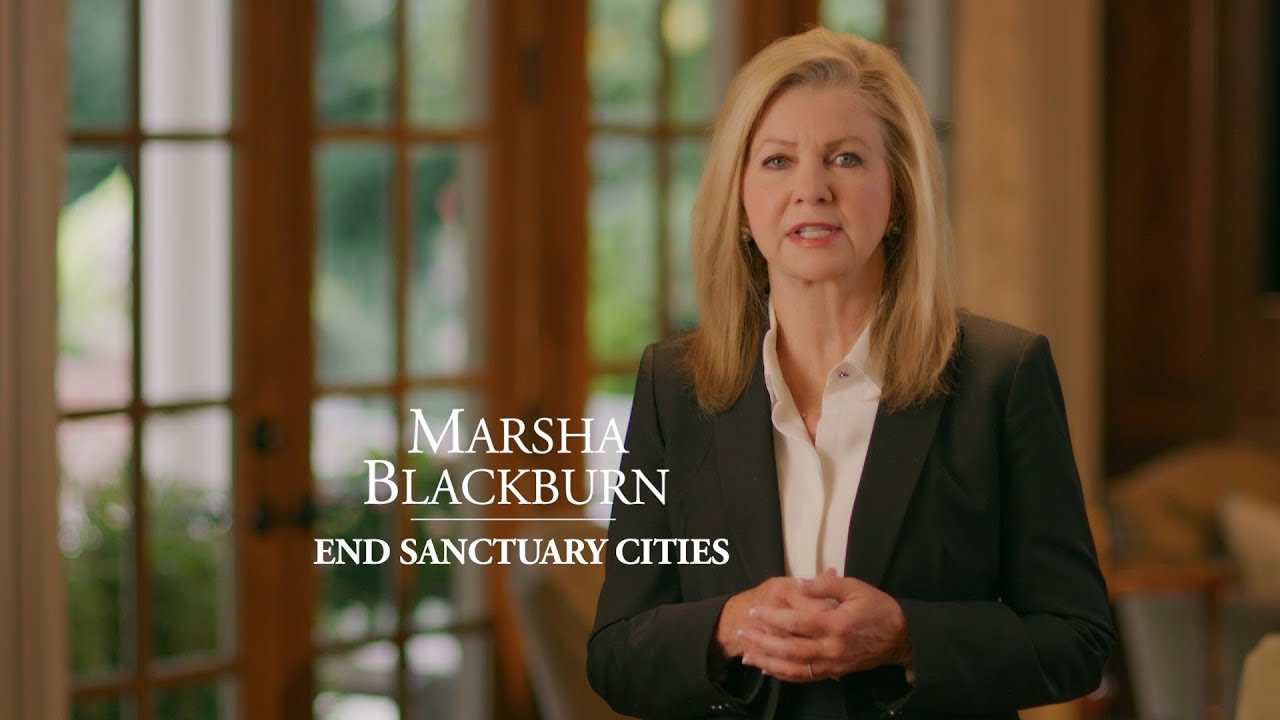 another Blackburn ad. At one point, the ad displays an image of the Middle East and Africa.
The messages about the caravan were far-fetched given the fact that there is no evidence that the migrant caravan from Honduras contained any terrorists or members from the Middle East, as fact-checkers noted during the campaign. The driver’s license claim was also misleading: Tennessee briefly offered driver’s licenses to those without a Social Security number through a 2001 law signed by former Republican Gov. Don Sundquist. The law was later amended and repealed under Bredesen’s tenure as governor.
“It was Phil Bredesen who lured illegal immigrants to Tennessee,” other Blackburn advertisements on television and social media .
“The invading force approaching our southern border is seeking to enter the country is wrong,” read a grammatically challenged paid advertisement on Facebook posted by the Blackburn campaign. Another promoted post from the Blackburn campaign decried the “illegal alien mob marching on our border.”
The ads, crude as they might have appeared, were distributed using an empirical approach to motivating Republican voters. The Blackburn campaign had turned to Koch’s i360 company to develop “a series of custom predictive models” to peel Republican voters away from Bredesen, according to a testimonial for potential clients.
Blackburn, a firebrand of the religious right who positioned herself as a steadfast ally to Trump and opponent of allowing Muslim refugees into the country, was clearly aligned with Koch priorities. Blackburn also supports judicial appointments favored by the business-friendly Federalist Society, corporate tax cuts, and scaling back most forms of environmental regulations, the criteria on which the Koch network has made its political endorsements historically.
Americans for Prosperity, the primary political advocacy arm of the Koch network, founded by Charles’s brother David,who passed away in August, and financed by Charles’s close-knit group of likeminded business owners, spent $5.6 million to Blackburn’s Senate run through its nonprofit and Super PAC arm. That much is well reported and public. But the role of i360 in guiding the campaign’s anti-immigrant messages did not become clear until after the election.
THE COMPANY SEGMENTED Republican supporters for Bredesen, a Democrat, using its vast database of voter profiles. The data suggested immigration could be used as a wedge. “From there,” the testimonial notes, “i360 further segmented the universe using the Sanctuary Cities model which identified voters likely to oppose Sanctuary City policies like allowing illegal immigrants to get drivers’ licenses — a policy Bredesen favored while Governor.”
The i360 database was integrated into the Blackburn campaign’s media strategy. The company’s television advertising service, i360 Rabbit Ears, allows campaigns to target television programs and schedules favored by various behavioral profiles. I360 sorts television programs by over 40 voter profiles, including anti-immigrant sentiment. The company refers to this voting bloc as: “Individuals who have a high likelihood of believing that undocumented immigrants should be required to leave the United States.”
Blackburn’s media consultants, through a company called Smart Media Group, not only relied on i360 data to inform its advertisement buying strategy, but its data findings were merged into Blackburn’s canvassing effort as well. Field staff used the i360 voter profiles to determine which messages to use when knocking on doors of potential voters and could “educate voters about Marsha’s positions by showing them videos right from their iPads.”
The i360 team also developed “140 unique segments,” an advertising term that refers to unique demographic profiles, “against which the campaign delivered millions of impressions across several different platforms including Google and Facebook.” The individual segments allowed the Blackburn campaign to send customized messages to each voter profile over a variety of platforms, a dynamic that allowed the campaign to “tailor their messaging to ensure they were talking about the issues that mattered to each voter.”
In the end, i360 boasts that the Blackburn campaign used its technology to shape 3 million voter contact calls, 1.5 million doors knocked, $8.4 million spent on television ads, and 314,000 campaign text messages — advocacy that led to Blackburn’s commanding victory over Bredesen, who had been favored in the polls for the months leading up to the election.
Federal Election Commission records show that Blackburn’s campaign paid $188,366 to i360 for a variety of services — a small price for the significant campaign services the company provided.
FOUNDED IN THE aftermath of the 2012 election, in which Republican candidates favored by Koch fared poorly, i360 was envisioned as a way to revolutionize right-wing pressure campaigns and election efforts by incorporating the latest in data science. The company, based in the same Arlington, Virginia, office complex that houses other Koch groups, harvests troves of data to build profiles of every voter and potential voter in the country. Over the course of four years, the Koch network poured $50 million into i360 to develop its capabilities.
Journalist Sue Halperin noted that i360 acts as somewhat of a data broker, combining “commercial sources, such as shopping habits, credit status, homeownership, and religious affiliation, with voting histories, social media content, and any connections a voter might have had with advocacy groups or other campaigns” to build its voter database.
The i360 profiles offer a dizzying array of ways to segment voter preferences. The company allows GOP campaigns to target voters based on equity held in their home, likelihood that an individual has been personally affected by the heroin crisis, views on gay marriage, interest in dogs, levels of religious devotion, and even psychological profiles that measure an individual’s ego, based on previous purchases of monogrammed clothing.
Notably, according to CNET, i360 partners with D2 Media Sales, a joint venture with DirectTV and Dish, “‘to push TV ads to specific households that meet a candidate’s criteria ‘no matter which stations or programs they’re watching.'”
And the firm appears to still be a central cog in the Koch advocacy machine. Demeter Analytics Services, the holding company that owns i360, is listed as a subsidiary of the Seminar Network Chamber of Commerce, the nonprofit that serves as the central clearing house for the Koch political spending, in its most recent tax filing.
Media attention has swirled over the role of technology firms that have harnessed sophisticated targeting methods to influence campaigns. Billionaire hedge fund investor Robert Mercer, once a participant in the Koch network, split off and formed his own array of groups, including an effort to fund Cambridge Analytica’s 2016 targeting methods. Less scrutiny has been paid to i360’s role in shaping the political climate. Both firms vacuum up incredible amounts of data to develop personalized voter outreach methods, allowing campaigns to peer deeply into the hearts of voters and trigger emotional responses — a revolution in campaign strategy that gives well-heeled donors with access to the technology a tremendous advantage.
Over the last year, Charles Koch has stated his support for lofty, high-minded goals such as ending over-incarceration, scaling back America’s military empire, defending free speech, and providing legal status for undocumented youth. These laudable positions, however, have not translated to changing the behavior of his political advocacy apparatus.
The Intercept has previously reported on Koch’s financing of tough-on-crime advocacy and support for Congress’ most militaristic, surveillance-friendly lawmakers. That the Koch political operation also deliberately fine-tunes anti-immigrant messages further undermines Koch’s purported beliefs. Neither Blackburn nor Mark Holden, the Koch Industries executive who simultaneously helps manage the company’s political and philanthropic investments, responded to a request for comment.
==
==
https://theintercept.com/2019/09/12/debate-alexandria-ocasio-cortez-new-faces-pac-ad
ThE STRANGE REPUBLICAN OBSESSION with attacking Rep. Alexandria Ocasio-Cortez reached a new low in a commercial break during the Democratic presidential debate in Houston on Thursday night.
:{
}:
The widely reviled commercial, which aired on ABC and was paid for by donors to the GOP New Faces PAC, opened with a photograph of the young Latinx congresswoman’s face being set on fire to reveal images of the 1970s genocide in Cambodia underneath.
[vid]
The attack ad was narrated by the Cambodian-American daughter of a survivor of the Khmer Rouge genocide, who offered the preposterous claim that Ocasio-Cortez’s democratic socialist ideals are the same as those of the radical Maoist militants who killed up to one-fourth of Cambodia’s population in the late 1970s.
“Does Alexandria Ocasio-Cortez know the horror of socialism?” the narrator, Elizabeth Heng, says. “My father was minutes from death in Cambodia, before a forced marriage saved his life. That’s socialism. Forced obedience. Starvation.”
Heng’s comparison of the Democrat’s ideology to that of the genocidal Cambodian regime is strongly ahistorical. In fact, as the journalist William Shawcross explained in his book, “Sideshow: Kissinger, Nixon and the Destruction of Cambodia,” the rise to power of the Khmer Rouge rebels in Cambodia was facilitated by the secret bombing campaign started in 1969 by a Republican president, Richard Nixon, and his secretary of state, Henry Kissinger. The Khmer Rouge finally seized power in Cambodia six years later, but its reign of terror, Shawcross wrote, was “born out of the inferno that American policy did much to create.”
The American assault on Cambodia, Shawcross wrote, was “not merely disproportionate but counter-productive and destructive of the values they were meant to defend.”
As Stanley Hoffmann observed in his review of “Sideshow” in the New York Review of Books in 1979, “Our methodical destruction of Cambodia and the swelling of the cities (once called ‘forced draft urbanization’) prepared the ground for the savage execution, by the Pol Pot regime, of the anti-city policy that Khieu Samphan, the future chief of state of that regime, had recommended in his Paris thesis of 1959.”
As Hoffman noted, the radical, totalitarian economic policies of the Khmer Rouge were devised by Khieu Samphan, an economist with a doctorate from the Sorbonne, who argued in his dissertation that the kind of work done in Cambodia’s cities by bureaucrats, merchants, and bankers was “unproductive.”
In his academic analysis of Cambodia’s economic structure, years before the genocide, Khieu Samphan had written: “These branches of activity add no value to the society from the perspective of the economy as a whole. They simply profit from a transfer of value issuing from other productive activities within society (agriculture, crafts, small industry). And the transfer of produce within society does not enlarge the total value of production obtained by society in any way.”
But the distinction “between productive and unproductive work,” which was later used to justify the Khmer Rouge’s radical experiment in which office workers were driven from Phnom Penh at gunpoint to perform forced agricultural labor in the countryside, was first described by the father of capitalism, the Scottish economist Adam Smith.
In his account of how the ensuing years of American bombing and invasion helped to radicalize the militants, Shawcross also focused on how Kissinger was able to evade blame from the Washington press corps for the mass slaughter of Cambodian civilians killed before the Khmer Rouge seized power in 1975.
“Washington is the only capital city in the world where information is so freely available that political and diplomatic reporting can be done without the gift of ‘access.’ But paradoxically, Washington is also the city where ‘access’ is both most easily obtained and most treasured,” Shawcross wrote. “Kissinger understood from the start that many of the town’s best-known journalists consider themselves essential to the business of government. When they are critical, it is in the most intimate sense; their comments are not intended to disrupt their relations with the men at the center whose opinions they seek to interpret and convey.”
At the end of the ad, Heng picks up on the Republican talking point that the progressive congresswoman of color is somehow racist for calling out white supremacy.
“Mine is a face of freedom,” Heng says, “my skin is not white, I’m not outrageous, racist nor socialist. I’m a Republican.”
Heng was a Republican candidate for Congress in 2018, losing to Democratic Rep. Jim Costa in California’s 16th Congressional District in Fresno. The Fresno Bee reported that Heng’s New Faces GOP PAC “so far has raised under $200,000, according to Federal Election Commission filings. Most of its top donors are from outside the Central Valley.”
“Republicans are running TV ads setting pictures of me on fire to convince people they aren’t racist. Life is weird!” Ocasio-Cortez responded on Twitter. “Know that this wasn’t an ad for young conservatives of color — that was the pretense. What you just watched was a love letter to the GOP’s white supremacist case.”
==
https://www.prwatch.org/news/2016/11/13169/republican-state-leadership-committee-spends-big-keep-state-houses-red
[map]
The little-known Republican State Leadership Committee (RSLC) is spending big this election cycle to maintain GOP control over state houses and is coordinating with dark money groups to fight off liberal ballot initiatives.
The RSLC is a 527 group which gained notoriety for its 2010 efforts to capture state houses and secure GOP control over decennial redistricting in a project called REDMAP.
This successful effort was spearheaded by President George W. Bush advisor Ed Gillespie, who is chairman emeritus of the RSLC for the 2016 election cycle. Gillespie founded American Crossroads with Bush campaign guru Karl Rove and Rove's Crossroads helped fund the 2010 REDMAP project.
Although little known to the public, the RSLC has been described by Politico as "one of the most influential outside players on the right." And New Yorker writer Jane Mayer describes the RSLC as a critical cog in the "shadow political machine" that emerged following the 2010 Citizens UnitedSupreme Court ruling. Emails and court filings unearthed by the Guardian showed that RSLC was being investigated for illegal campaign coordination by Wisconsin prosecutors due to its close contact with top campaign aides of Wisconsin Governor Scott Walker in 2011 and 2012.
What Industries and Interests Are Bankrolling RSLC?
So far in 2016, according to CMD analysis, the RSLC has raised $17.95 million, the vast majority of which has come directly from corporations. Roughly 94.4% or $16.9 million has been raised from corporations, special interests and CEOs.
This includes: $1.34 million from fossil fuels interests, $2.7 million from the FIRE industries (Finance, Insurance, Real Estate), $2.16 million frompharmaceutical and healthcare-related interests, $1.56 million from gambling and tobacco interests, and $3.52 million from the U.S. Chamber of Commerce.
Prominent corporate donors include Reynolds American, $427,335; Altria Group, $206,000; Koch Industries, $216,590; PhRMA, $243,700; Wal-Mart, $200,300; Exxon $100,000; Peabody Energy $36,000 and CitiGroup Management Corp. $120,000.
Individuals have also invested heavily in the group. The RSLC's second largest donor is the casino magnate Sheldon Adelson, who contributed $500,000, while eight members of the Michigan-based Devos billionaire family collectively gave $225,000.
Matching Up Secretaries of State with Donors to Talk Ballot Measures
Secretaries of State are charged with ensuring fair and accurate elections, but as the New York Times reported this week, under the leadership of RSLC, these state officials are working "to defeat liberal ballot initiatives on topics like the minimum wage, and to raise money from corporations that also wanted to kill these efforts."
The Times reported that on May 3, four Republican secretaries of state, Jon Husted of Ohio; Wayne Williams of Colorado; Barbara Cegavske of Nevada; and Kim Wyman of Washington, met with the National Restaurant Association to discuss minimum wage initiatives in Colorado, Washington and Ohio, as well as minimum wage battles in Cincinnati and Seattle. The NRA is a proponent of the $2.15 tipped minimum wage and a major corporate opponent to Fight for $15 and any effort to raise the wage.
That meeting was followed by one with Reynolds Tobacco to discuss tobacco tax ballot initiatives. What was decided at those meetings was not disclosed.
The Times also revealed that the RSLC created tiered sponsorship packages that rewarded its largest donors with "private briefings with Secretaries of State," and with regular ballot initiative briefings led by the Center for Conservative Initiatives, a project of the State Government Leadership Foundation, a "dark money" social welfare organization originally seed-funded by Exxon, Pfizer, and Time Warner, among other corporations.
RSLC Spending in the States
Most of the RSLC's contributions are funneled to state PACs that run vicious attack ads. By channeling their money through the RSLC, corporate interests are able to distance themselves from the ugliest aspects of electioneering, while providing the financial means to make it possible.
In Nevada, the RLSC has given $600,000 to the Nevada Jobs Coalition, a PAC running attack ads that critics on both sides of the aisle submit "just keep getting nastier and more deceitful--the things they say in these ads simply aren't true."
In Colorado, the RSLC has given $800,000 to Colorado Citizens for Accountable Government, an organization that is being sued for sending out fortune cookies attached to mailers that falsely accuse a Democratic senate candidate of taking a taxpayer-funded junket to China. ("I've never been to China," the candidate, Rachel Zenzinger has said repeatedly.)
In Minnesota, the RSLC has dumped $275,000 into Minnesota Jobs Coalition, an officially non-partisan dark money social welfare group that exclusively supports Republican candidates, and is spending big on attack ads against Democrats like State Representative Paul Marquart.
In North Carolina, the RSLC has given $500,000 to Truth and Prosperity Inc., a PAC formed "to support incumbent Republican Lt. Gov. Dan Forest," and is running ads touting, not coincidentally, Forest's pledge to eliminate corporate income taxes.
In Washington state, the RSLC has given $200,000 to the Leadership Council, which subsequently donated to the Working Families PAC, a group that is running ads against State Senator Mark Mullet in his race against Representative Chad Magendanz, a candidate who, unlike Mullet, opposes increasing the minimum wage to help real working families.
In New Mexico, the RSLC has given $100,000 to Advance New Mexico Now, a PAC that is supporting Republicans and their bid for stricter criminal sentencing laws. Of note, theRSLC filings show that the organization received over $70,000 from the private prison giants CCA and Geo Group.
In addition to funding state-based PACs, the RSLC has also contributed $2,695,223 to its own "Judicial Fairness Initiative," a project the RSLC started in 2014 that produces attack ads in judicial races.
In Montana, the RSLC's Judicial Fairness Initiative was reprimanded and forced into compliance by the state's campaign finance regulator for having "blatantly violated state law by not reporting $268,000 that was used for attack ads."
The Montana advertisements in question have been condemned across the board for their sensationalism, and other advertisements the organization has aired (see and

Although the Democrats have a partisan counterpart to the RSLC, the DLSC, the Republicans are far more eager, willing and systematically structured to solicit campaign donations from corporations.
By comparison to the RSLC numbers listed above, the DLSC has raised $8.25 million so far this year, with $3.14 million coming from trade unions, and $4.2 million coming from CEOs and corporations giving over $1,000 in aggregate contributions.
==