Klobuchar, A Sen
---
RUN GOR MINNE GOV 1 26 GOP LIAR DROPPED OUT
good on climate?
endorse joe biden
---
===
mta email 1 26
january 16, 2026
WATCH: On Senate Floor, Kelly Leads Colleagues in Marking 16 Years Since Citizens United Ruling, Highlighting Impact of Big Money in Politics on Working Families
*“The loudest voices in Washington became billionaires, not every day Americans.”
In case you missed it, Arizona Senator Mark Kelly led a series of floor speeches with his colleagues marking the 16th ^anniversary of the Supreme Court’s Citizens United v. FEC decision, which opened the floodgates for big, dark money in our politics.
In their remarks, Kelly and his colleagues connected the rise of dark money and super PAC spending to real-world consequences for Americans, highlighting how unlimited corporate and billionaire spending has warped priorities in Washington and driven up costs for working families, underscoring the need to restore accountability and transparency so that our democracy answers to voters—not special interests.
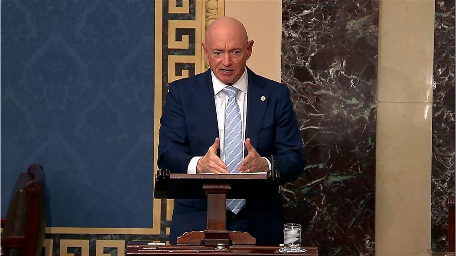
*Sen. Kelly speaks on Senate floor.
Watch Kelly’s full speech here. See key excepts from Kelly and his colleagues below:
*Sen. Kelly: “In 2010, the Supreme Court handed down a decision that put a ‘for sale’ sign on our democracy. The Citizens United ruling opened the door for corporations and billionaires to spend unlimited amounts of money to influence our elections, often without the public ever knowing who’s behind it. The Court decided that spending money in elections is the same as political speech, and that corporations should have the same political rights as individual Americans. The result was predictable – and it wasn’t limited to a courtroom. It changed how this place works. The loudest voices in Washington became billionaires, not every day Americans.
*Sen. Sheldon Whitehouse (D-RI): “I was here before the Citizens United decision. When robust meaningful bipartisan climate legislation was constant here in the Senate. I can think of four major bipartisan bills here in the Senate. And I remember my friend, John McCain, carrying the Republican banner into the presidential election with a respectable climate platform. Well, right after Citizens United, all of that stopped. The barrage of fossil fuel dark money into our politics killed bipartisanship on climate change instantly. It is still a problem today.”
*Sen. Jeff Merkley (D-OR): “The growth in dark money has been stunning because there’s so much money among the oligarchs and billionaires, they want to spend it to create laws that favor the oligarchs and billionaires and they are spending at an extraordinary rate. Six years ago, it was about $300 million, but according to the Brennan Center […] dark money hit a record high of $1.9 billion in the 2024 races. That’s a six-fold increase in six years. That’s the rich and powerful buying their government. It is an absolute travesty. No one in our founding community of our nation who wrote the Declaration of Independence, who wrote the Constitution, wanted to design a system where the mega rich ran the place as a cabal of elites. But that’s what we have and that’s what we have to change.”
*Sen. Amy Klobuchar (D-MN): “In the 2024 elections, secret money groups spent $1.9 billion – nearly double the amount spent just one cycle before. This undermines our democracy and shakes the public’s trust because unlimited, anonymous spending in our elections doesn’t encourage free speech – it drowns out the voices of American people who are seeking to participate. We must fight for a more transparent democracy where every voter’s voice is heard.”
*Sen. Andy Kim (D-NJ): “We live in the time of the greatest distrust in modern history. It doesn’t have to be this way. We can have a politics that restores and grows trust, instead of actively degrading it. This year is the 250th anniversary of the independence of our nation. This is our moment to free Americans from the influence of big money and give them their voice back in their democracy.”
*Sen. Cory Booker (D-NJ): “Since the Citizens United decision, I have watched how this body has seen clearly corrupt forces beginning to overrun the commonsense and the will of the people and policy, more and more be bent to the whim and the will of the wealthiest of the wealthy in our country, in the world, as well as corporations, many of them multinational corporations. We are in crisis. Our nation is in crisis. […] Trust is vital for a democracy to thrive. And there has been nothing more powerful in undermining that trust in the years I’ve been in the Senate that I’ve seen than the destructive force of money in our politics.”
*Sen. Dick Durbin (D-IL): “Under the current system that’s described by my colleagues on the floor, there is so much entrenched money that they virtually control the agenda and scare the living hell out of average individuals who don’t have a fortune to spend. And that’s the reality of what we face.”
*Sen. Chris Murphy (D-CT): “Individuals today make up to 16% of total spending in elections. 16%. 84% of all the spending in elections today are not done by citizens. 84% of spending are corporations and organizations. Much of that money is anonymous. You have no idea where that comes from. Let me tell you what the impact of that. The impact is corruption. Let’s just call it what it is.”
*Sen. Alex Padilla (D-CA): “Citizens United didn’t just change campaign finance law — it fundamentally altered our democracy. It was the moment where the voices of everyday Americans began to be drowned out by a small and powerful few, armed with unlimited money and unprecedented access. As Trump completely sidelines the Federal Election Commission — our country’s top campaign finance watchdog — we are entering a midterm election season with unlimited money allowed in our elections and a President who has regularly used the powers of the office to benefit his billionaire donors. I will continue to push my colleagues to enact legislation to overturn Citizens United so that our elections reflect the will of the people instead of corporations and the highest bidder.”
---
an 11 24
lnx
alternet-logo
Biden must use 'preemptive pardons' to protect these 6 people Trump singled out: columnist
President Joe Biden signs an Executive Order on protecting personal data, Wednesday, February 28, 2024, in the Oval Office. (Official White House Photo by Adam Schultz)
Alex HendersonNovember 26, 2024Frontpage news and politics
Sen. Amy Klobuchar (D-Minnesota) has been warning that Pam Bondi — former Florida attorney general and President-elect Donald Trump's new nominee for U.S. attorney general — will likely be all in on Trump's "revenge" campaign if confirmed by the U.S. Senate.
Klobuchar, during a late November interview, told ABC News, "Does it concern me that revenge would be part of her mission? Of course it does."
During an August 2023 appearance on Fox News, Bondi threatened, "The Department of Justice, the prosecutors will be prosecuted... The investigators will be investigated."
READ MORE:'Build your army': Trump’s Pentagon pick wants Christian nationalist 'boot camps' for kids
Journalist Eleanor Clift shares Klobuchar's concerns. Her solution: President Joe Biden must exercise his "preemptive pardon" powers while he still has a chance.
In a November 26 opinion column for the Daily Beast, Clift argues, "Trump knows how the game works, and he's been upfront for months about using every lever of government to seek retribution from those who he believes wronged him. His choice for attorney general, Pam Bondi, is an election denier who should be disqualified on that alone. Instead, she is expected to lead the charge purging the DOJ of anyone who worked on prosecuting Trump, while also wasting taxpayer money to dig up alleged fraud from the 2020 election."
Clift continues, "Trump has threatened many of his adversaries, and he will soon have the power to make good on his threats. President Biden must act and use his pardon power to safeguard a lengthening list of people who are on the receiving end of Trump's threats. They will say they've done nothing wrong, and they're right. Preemptive pardons are problematic, a get-out-of jail free card when you haven't committed a crime. But they're needed now that President-elect Trump is gearing up his revenge tour."
Clift cites special counsel Jack Smith as a likely target of Trump's "revenge" campaign.
READ MORE: 'Appalling': George Conway has a prediction about 'spineless' GOP senators
"Before he leaves office, Biden should pardon Liz Cheney, a profile in courage who we haven’t heard from since the election, and Nancy Pelosi, another unafraid leader and favorite target of Trump," Clift argues. "Then, the two generals deserve pardons: Mark Milley, who said he fears being recalled into service so Trump can court-martial him, and John Kelly, Trump's longest serving chief of staff who said Trump is a fascist."
Clift adds, "Also in the crosshairs are Adam Kinzinger, the former GOP congressman who served on the 1/6 committee, and Senator-elect Adam Schiff, who oversaw Trump's impeachment and is the butt of Trump’s nasty nicknames."
READ MORE: 'Build your army': Trump’s Pentagon pick wants Christian nationalist 'boot camps' for kids
Eleanor Clift's full Daily Beast column is available at this link (subscription required).
---
an 11 22 maker said better than hu b/c no compassion; team human tenant w/ perfect record booted b/c potential higher profit out there; encourage empty.
The senator tasked with overseeing federal antitrust enforcement is urging the U.S. Department of Justice to investigate whether a Texas-based company’s price-setting software is undermining competition and pushing up rents.
Amy Klobuchar, the Minnesota Democrat who chairs the Senate Subcommittee on Competition Policy, Antitrust and Consumer Rights, sent a letter to the DOJ’s Antitrust Division this month. It was also signed by two other Democrats, Sen. Richard Durbin of Illinois and Sen. Cory Booker of New Jersey.
“We are concerned that the use of this rate setting software essentially amounts to a cartel to artificially inflate rental rates in multifamily residential buildings,” the letter said. It encouraged the DOJ to “take appropriate action to protect renters and competition in the residential rental markets.”
In mid-October, a ProPublica investigation documented how real estate tech company RealPage’s price-setting software uses nearby competitors’ nonpublic rent data to feed an algorithm that suggests what landlords should charge for available apartments each day. Legal experts said the algorithm may be enabling violations of antitrust laws.
ProPublica detailed how RealPage’s User Group, a forum that includes landlords who adopt the company’s software, had grown to more than 1,000 members, who meet in private at an annual conference and take part in quarterly phone calls. The senators raised specific questions about the group, saying, “We are concerned about potential anticompetitive coordination taking place through the RealPage User Group.”
RealPage did not immediately respond to a request for comment.
RealPage has said that the company “uses aggregated market data from a variety of sources in a legally compliant manner” and that its software prioritizes a property’s own internal supply and demand dynamics over external factors such as competitors’ rents. The company has said its software helps reduce the risk of collusion that would occur if landlords relied on phone surveys of competitors to manually price their units.
The DOJ declined to comment on the letter.
The department five years ago reviewed RealPage’s plan to acquire its biggest competitor in pricing software, but federal prosecutors declined to seek to block the merger, which doubled the number of apartments RealPage was pricing.
The senators noted that transaction, saying RealPage has made more than 10 acquisitions since 2016. They said in data-intensive industries, “the ability to acquire more data can result in the algorithms suggesting higher prices and can also increase the barriers to entry” for other competitors. The lawmakers encouraged the department “to consider looking back at RealPage’s past behavior to determine whether any of it was anticompetitive.”
The letter follows two others sent by lawmakers urging the DOJ or Federal Trade Commission to investigate RealPage. Since ProPublica’s investigation was published, three lawsuits have been filed on behalf of renters alleging that the software is artificially inflating rents and facilitating collusion. RealPage has denied allegations in a lawsuit filed in San Diego, and it has not responded to calls for comment about the other two legal actions, filed in federal district court in Seattle.
---
https://www.mediamatters.org/jesse-watters/fox-news-host-uses-hurricane-ian-mock-action-climate-change
7 27 show
JESSE WATTERS (HOST): Florida's in a state of emergency tonight as it frantically hunkers down before Hurricane Ian makes landfall. And the storm's a big deal. So, did Joe Biden call Ron DeSantis to get on the same page?
...
Maybe the reason Joe isn't talking with the leader of the state that's about to be devastated by this natural disaster is because he's already got the whole thing covered with the Inflation Reduction Act. Senator Amy Klobuchar laid it out for us clearly. There's no need to worry, people, because the Inflation Reduction Act and voting for Democrats is going to stop hurricanes. Listen.
[CLIP BEGINS]
SEN. AMY KLOBUCHAR: We just did something about climate change for the first time in decades. That's why we've got to win this as that hurricane bears down on Florida. We got to win in the midterms. We understand that.
[CLIP ENDS]
Is it just me or is Amy saying if you vote Democrat, she'll drive to Florida and nuke the hurricane herself?Just asking.
---
==
aN 320
no lnx
How Democrats are trying to save the right to vote in a pandemic — and fight GOP suppression tactics
Written by Stephen Young / Religion Dispatches March 25, 2020
The Democrat-led House’s massive pandemic bill seeks to counter years of Republican voter suppression tactics that have shadowed swing states, a contrast to a more circumspect proposal from Senate Democrats who are seeking to expand voting by mail without specifying additional reforms.
Pages 856 to 918 of the House bill produced under Speaker Nancy Pelosi would not just expand early and absentee voting as part of creating emergency voting rules in a natural disaster or pandemic. It would replace many suppressive rules, procedures and technicalities that have emerged in recent years in red-run states with specific steps to encourage participation and make the process easier.
The House reforms include requiring all states to offer early in-person voting at accessible locations, beginning 15 days before an election. The bill removes paperwork requirements—such as affidavits, witness signatures and additional ID—when applying for absentee ballots. The reforms include being able to apply online in any state for an absentee ballot, requiring all states to offer online voter registration, and requiring all states to offer in-person Election Day voter registration.
The House bill also seeks to pull back the curtain around red-state technicalities that have been used to reject absentee ballot applications and ballot envelopes. It requires states to establish standards to verify signatures on envelopes. Absentee ballots would be tracked so voters could follow their progress. Voters would be notified, including by email, if problems arise and given time to resolve them.
:{:{}:
}:
The House bill’s proponents include national voting rights advocates who have been litigating red-state policies for years, such as the Brennan Center for Justice at New York University Law School, and seek national election laws and fairer voting procedures.
But the authors of a Senate proposal to expand absentee voting in 2020, Sens. Ron Wyden, D-OR, and Amy Klobuchar, D-MN, seem to recognize the constitutional decree that states will run elections means that Democrats would lose Republican support if the pandemic bill imposed additional specific election reforms.
“It’s either going to be vote-by-mail or nothing if we have to deal with a worst-case scenario,” Wyden said in a March 23 conference call with reporters.
While this difference has yet to be bridged, state election officials are scrambling to bolster voting by mail, starting with 2020’s remaining primaries. Consider this March 24 tweet from Craig Gilbert, Washington bureau chief for the Milwaukee Journal-Sentinel, about Wisconsin’s upcoming presidential primary:
“coronavirus effects: absentee ballot requests now up to 554,116 for WI April 7 election & prez primary. we were at 135,000 8 days ago. never happened before. can WI’s system handle it? can mail partly or mostly ‘replace’ election day voting in this case?”
==
https://www.alternet.org/2019/05/new-report-shows-how-trump-and-mitch-mcconnell-have-teamed-up-to-thwart-efforts-to-secure-u-s-elections/
Special Counsel Robert Mueller’s final report for the Russia investigation is full of elaborate details on Russian interference in the 2016 election, and members of Congress who have read Attorney General William Barr’s redacted version of the report are fearful that Russian operatives will interfere in the 2020 election as well. Various bills promoting election security have been proposed in the Senate, but according to an in-depth report by Vox’s Li Zhou, Senate Majority Leader Mitch McConnell has no interest in bringing them up for a vote.
Sen. Roy Blunt of Missouri explained McConnell’s opposition last week, saying, “I think the majority leader just is of the view that this debate reaches no conclusion.” And according to Zhou, McConnell’s decision is driven, in part, by “Trump’s aversion to the subject, which the president sees as too closely tied to questions about the outcome of the 2016 election.”
Zhou goes on to say that “McConnell’s unwillingness to tackle election security” is not only “sending a political message,” but also, “has massive consequences.” And because of McConnell’s inaction on election security, Zhou asserts, the U.S. Senate “is now effectively promoting a do-nothing approach to a subject that Special Counsel Robert Mueller and countless national security officials have raised as a serious threat that requires additional action.”
Together, Minnesota Sen. Amy Klobuchar—one of the many candidates competing for the 2020 Democratic presidential primary—and Republican Sen. James Lankford of Oklahoma recently co-sponsored an election security bill. And Zhou reports that opposition to their bill came from both McConnell and former White House Counsel Don McGahn. According to Klobuchar, McGahn “called Republicans about the bill, didn’t want them to do it,” while McConnell “also didn’t want the bill to move forward. So it was a double-edged thing.”
Zhou reports that “Trump’s position on such bills—and McConnell’s longstanding resistance to advancing them—could mean that they’ll remain stalled.” And when it comes to election security bills, Zhou writes, the Senate majority leader “is just fine following Trump’s lead.”
==
==
nyt
...===
NYT facebk
...Ms. Sandberg also reached out to Ms. Klobuchar.She had been friendly with the senator, who is featured on the website for Lean In, Ms. Sandberg’s empowerment initiative. Ms. Sandberg had contributed a blurb to Ms. Klobuchar’s 2015 memoir, and the senator’s chief of staff had previously worked at Ms. Sandberg’s charitable foundation.
But in a tense conversation shortly after the ad legislation was introduced, Ms. Sandberg complained about Ms. Klobuchar’s attacks on the company, said a person who was briefed on the call. Ms. Klobuchar did not back down on her legislation. But she dialed down her criticism in at least one venue important to the company: After blasting Facebook repeatedly that fall on her own Facebook page, Ms. Klobuchar hardly mentioned the company in posts between November and February.
A spokesman for Ms. Klobuchar said in a statement that Facebook’s lobbying had not lessened her commitment to holding the company accountable. “Facebook was pushing to exclude issue ads from the Honest Ads Act, and Senator Klobuchar strenuously disagreed and refused to change the bill,” he said.
In October 2017, Facebook also expanded its work with a Washington-based consultant, Definers Public Affairs, that had originally been hired to monitor press coverage of the company. Founded by veterans of Republican presidential politics, Definers specialized in applying political campaign tactics to corporate public relations — an approach long employed in Washington by big telecommunications firms and activist hedge fund managers, but less common in tech.
:{:{}:
}:
Definers had established a Silicon Valley outpost earlier that year, led by Tim Miller, a former spokesman for Jeb Bush who preached the virtues of campaign-style opposition research. For tech firms, he argued in one interview,a goal should be to “have positive content pushed out about your company and negative content that’s being pushed out about your competitor.”
:{:{}:
}:
Facebook quickly adopted that strategy. In November 2017, the social network came out in favor of a bill called the Stop Enabling Sex Traffickers Act, which made internet companies responsible for sex trafficking ads on their sites.
Google and others had fought the bill for months, worrying it would set a cumbersome precedent. But the sex trafficking bill was championed by Senator John Thune, a Republican of South Dakota who had pummeled Facebook over accusations that it censored conservative content, and Senator Richard Blumenthal, a Connecticut Democrat and senior commerce committee member who was a frequent critic of Facebook.
Facebook broke ranks with other tech companies, hoping the move would help repair relations on both sides of the aisle, said two congressional staffers and three tech industry officials.
When the bill came to a vote in the House in February, Ms. Sandberg offered public support online, urging Congress to “make sure we pass meaningful and strong legislation to stop sex trafficking.”
Opposition Research
In March, The Times, The Observer of London and The Guardian prepared to publish a joint investigation into how Facebook user data had been appropriated by Cambridge Analytica to profile American voters. A few days before publication, The Times presented Facebook with evidence that copies of improperly acquired Facebook data still existed, despite earlier promises by Cambridge executives and others to delete it.
Mr. Zuckerberg and Ms. Sandberg met with their lieutenants to determine a response. They decided to pre-empt the stories, saying in a statement published late on a Friday night that Facebook had suspended Cambridge Analytica from its platform. The executives figured that getting ahead of the news would soften its blow, according to people in the discussions.
:{:{}:
}:
They were wrong. The story drew worldwide outrage, prompting lawsuits and official investigations in Washington, London and Brussels. For days, Mr. Zuckerberg and Ms. Sandberg remained out of sight, mulling how to respond. While the Russia investigation had devolved into an increasingly partisan battle, the Cambridge scandal set off Democrats and Republicans alike. And in Silicon Valley, other tech firms began exploiting the outcry to burnish their own brands.
“We’re not going to traffic in your personal life,” Tim Cook, Apple’s chief executive, said in an MSNBC interview. “Privacy to us is a human right. It’s a civil liberty.” (Mr. Cook’s criticisms infuriated Mr. Zuckerberg, who later ordered his management team to use only Android phones — arguing that the operating system had far more users than Apple’s.)
Facebook scrambled anew. Executives quietly shelved an internal communications campaign, called “We Get It,” meant to assure employees that the company was committed to getting back on track in 2018.
Then Facebook went on the offensive. Mr. Kaplan prevailed on Ms. Sandberg to promote Kevin Martin, a former Federal Communications Commission chairman and fellow Bush administration veteran, to lead the company’s American lobbying efforts. Facebook also expanded its work with Definers.
On a conservative news site called the NTK Network, dozens of articles blasted Google and Apple for unsavory business practices. One story called Mr. Cook hypocritical for chiding Facebook over privacy, noting that Apple also collects reams of data from users. Another played down the impact of the Russians’ use of Facebook.
The rash of news coverage was no accident: NTK is an affiliate of Definers, sharing offices and staff with the public relations firm in Arlington, Va. Many NTK Network stories are written by staff members at Definers or America Rising, the company’s political opposition-research arm, to attack their clients’ enemies. While the NTK Network does not have a large audience of its own, its content is frequently picked up by popular conservative outlets, including Breitbart.
Mr. Miller acknowledged that Facebook and Apple do not directly compete. Definers’ work on Apple is funded by a third technology company, he said, but Facebook has pushed back against Apple because Mr. Cook’s criticism upset Facebook.
If the privacy issue comes up, Facebook is happy to “muddy the waters,” Mr. Miller said over drinks at an Oakland, Calif., bar last month.
On Thursday, after this article was published, Facebook said that it had ended its relationship with Definers, without citing a reason.
In public, Facebook was more conciliatory. Mr. Zuckerberg agreed to testify on Capitol Hill. The company unveiled a gauzy advertising campaign, titled “Here Together,” to apologize to its users. Days before Mr. Zuckerberg’s appearance in Congress in April, Facebook announced that it was endorsing Ms. Klobuchar’s Honest Ads bill and would pre-emptively begin disclosing political ad buyers. It also informed users whose data had been improperly harvested by Cambridge Analytica.
But Mr. Zuckerberg’s good-will tour was bumpy. Thanks to intensive coaching and preparation, the company’s communications team believed, he had effectively parried tough questions at the April hearing. But they worried he had come off as robotic — a suspicion confirmed by Facebook’s pollsters.
Mr. Zuckerberg spoke with Representative Greg Walden during a break in an April hearing, telling him he was surprised at the tough line of questioning.
]
Mr. Zuckerberg’s political instincts were no more well-tuned. During a break in one hearing, he buttonholed Greg Walden, an Oregon Republican who leads the House Energy and Commerce Committee, to express his surprise at how tough on Facebook Democrats had been.
Mr. Walden was taken aback, said people who knew of the remark. Facebook’s leader, Mr. Walden realized, did not understand the breadth of the anger now aimed at his creation.
Personal Appeals in Washington
Some colleagues believed that Ms. Sandberg — whose ambitions to return to public life were much discussed at the company — was protecting her own brand at Facebook’s expense. At one company gathering, said two people who knew of the event, friends told Ms. Sandberg that if Facebook did not address the scandals effectively, its role in spreading hate and fear would define her legacy, too.
So Ms. Sandberg began taking a more personal role in the company’s Washington campaign, drawing on all the polish that Mr. Zuckerberg sometimes lacked. She not only relied on her old Democratic ties, but also sought to assuage skeptical Republicans, who grumbled that Facebook was more sensitive to the political opinions of its work force than to those of powerful committee leaders. Trailing an entourage of as many as 10 people on trips to the capital, Ms. Sandberg made a point of sending personal thank-you notes to lawmakers and others she met.
Her top Republican target was Mr. Burr, whose Senate committee’s Russia investigation had chugged along. The two spoke by phone, according to a congressional staff member and a Facebook executive, and met in person this fall. While critics cast Facebook as a serial offender that had ignored repeated warning signs about the dangers posed by its product, Ms. Sandberg argued that the company was grappling earnestly with the consequences of its extraordinary growth.
She made the same case in June at a conference of the National Association of Attorneys General in Portland, Ore. At the time, several attorneys general had opened or joined investigations into the company. Facebook was eager to head off further trouble.
The company organized several private receptions, including what was billed as a conversation with Ms. Sandberg about “corporate citizenship in the digital age” and a briefing on Cambridge Analytica.
While Facebook had publicly declared itself ready for new federal regulations, Ms. Sandberg privately contended that the social network was already adopting the best reforms and policies available. Heavy-handed regulation, she warned, would only disadvantage smaller competitors.
Some of the officials were skeptical. But Ms. Sandberg’s presence — companies typically send lower-ranking executives to such gatherings — persuaded others that Facebook was serious about addressing its problems, according to two who attended the conference.
Facebook also continued to look for ways to deflect criticism to rivals. In June, after The Times reported on Facebook’s previously undisclosed deals to share user data with device makers — partnerships Facebook had failed to disclose to lawmakers — executives ordered up focus groups in Washington.
In separate sessions with liberals and conservatives, about a dozen at a time, Facebook previewed messages to lawmakers. Among the approaches it tested was bringing YouTube and other social media platforms into the controversy, while arguing that Google struck similar data-sharing deals.
Deflecting Criticism
...
---
==
Why are the Republicans trying it this time when they lost before? Because some Democrats have listened to the siren call of Monsanto and the other big chemical and major industrial food companies and have now voted to push the bill forward. And these Dark Act Democrats are led by Senator Amy Klobuchar who used to represent the interests of the people of Minnesota but now apparently has switched to being Senator Monsanto.
Why the big switch? Well Sen. Klobuchar is up for reelection in 2018 and maybe she is thinking of her campaign war chest. In the past she has been able to rely on campaign contributions by Monsanto, Dupont, Syngenta, Dow and Croplife (the Trade Association that represents all the big agrochemical companies), along with major U.S. food companies like General Mills, Coca-Cola and Pepsi2.
Sen. Klobuchar says that she is just being “scientific” when supporting the DARK Act but she must be talking about the science of fundraising. She has no scientific background in genetics or agriculture and is just reciting the talking points of Monsanto. Her claims have no basis in science, and are legally misguided. If Senator Klobuchar is serious about giving consumers the information they want about GE foods and avoiding a “patchwork” of state labeling laws, she should support the Merkley bill that would create national mandatory GE food labeling, not push the DARK Act.
What makes Senator Monsanto’s choice to lead Democratic support for the Dark Act even more damaging is that it could rescind the Minnesota wild rice protections which have profound cultural and economic impacts on Native Americans in Minnesota.
==
Special Report: How Washington went soft on childhood obesity
Related News
Thu, Apr 26 2012
Wed, Apr 25 2012
Mon, Apr 23 2012
Sun, Apr 22 2012
Fri, Apr 20 2012
Analysis & Opinion
- Undernourished and anaemic – the plight of India’s teen girls
- Essential reading: Amazon will collect Nevada sales tax, debating tax cuts, more
Related Topics
Related Video
Food Fight: How the food industry outsmarted Washington - Reuters Investigates
Thu, Apr 26 2012
Related Interactive

Food industry lobbying: Money on the menu


By Duff Wilson and Janet Roberts
Washington, D.C. | Fri Apr 27, 2012 9:03am EDT
(Reuters) - In the political arena, one side is winning the war on child obesity.
The side with the fattest wallets.
After aggressive lobbying, Congress declared pizza a vegetable to protect it from a nutritional overhaul of the school lunch program this year. The White House kept silent last year as Congress killed a plan by four federal agencies to reduce sugar, salt and fat in food marketed to children.
And during the past two years, each of the 24 states and five cities that considered "soda taxes" to discourage consumption of sugary drinks has seen the efforts dropped or defeated.
At every level of government, the food and beverage industries won fight after fight during the last decade. They have never lost a significant political battle in the United States despite mounting scientific evidence of the role of unhealthy food and children's marketing in obesity.
Lobbying records analyzed by Reuters reveal that the industries more than doubled their spending in Washington during the past three years. In the process, they largely dominated policymaking -- pledging voluntary action while defeating government proposals aimed at changing the nation's diet, dozens of interviews show.
In contrast, the Center for Science in the Public Interest, widely regarded as the lead lobbying force for healthier food, spent about $70,000 lobbying last year -- roughly what those opposing the stricter guidelines spent every 13 hours, the Reuters analysis showed.
Industry critics also contend that the White House all but abandoned a multi-agency effort that recommended healthier food be marketed to children, even after First Lady Michelle Obama told a grocery trade group two years ago that food manufacturers needed to "step it up" to protect children.
"I'm upset with the White House," said Senator Tom Harkin (D-Iowa), chairman of the Senate Health Committee. "They went wobbly in the knees. When it comes to kids' health, they shouldn't go wobbly in the knees."
The White House disputed the characterization. Sam Kass, an assistant chef there and senior policy adviser on food initiatives, said in a statement: "We are incredibly proud of the commitments that many food companies have made, and are continuing to work with others to advocate for even more change to make sure our children are getting the healthy, nutritious food they need."
The political battles over what children eat and drink are crucial to the nation's health, experts say, because the tripling in childhood obesity in the last three decades foretells diabetes, heart disease and other illness in decades to come. America is one of the fattest nations on earth, and the Institute of Medicine, in a 2006 report requested by Congress, said junk food marketing contributes to an epidemic of childhood obesity that continues to rise. The institute is the health arm of the National Academy of Sciences.
SHORTER LIFESPAN?
Health experts and Harkin say the food industry has employed some of the same tactics as Big Tobacco in its efforts to fight stricter regulations -- chief among them the argument that the industry should regulate itself.
Although no major legislative action on childhood obesity is pending during this election year, the public debate is expected to resume next month. The Centers for Disease Control and Prevention (CDC) will hold a conference in Washington from May 7-9 called "Weight of the Nation." It will include an Institute of Medicine update and the premiere of an HBO documentary series of the same name. Health advocates also plan a "Sugary Drinks Summit" in Washington from June 7-8.
"We haven't reversed the epidemic," Dr. William H. Dietz, director of the division of nutrition, physical activity and obesity at the CDC, said in an interview. "This may be the first generation of children that has a lower life span than their parents."
Food and beverage manufacturers and advertisers say they aren't to blame for obesity. Indeed, they say they are part of the solution.
The American Beverage Association says its members have cut 88 percent of the calories shipped to schools since 2004 by offering less sugary drinks and emphasizing water, low-fat milk and juice in elementary and middle schools. The drinks now list calories on the front of labels.
Sixteen major companies with about 75 percent of the food ads on TV aimed at children under 12 are regulating themselves under the Children's Food and Beverage Advertising Initiative of the Better Business Bureau. They are limiting ads for certain foods and adopting nutrition standards.
"It's made a big difference," said Elaine D. Kolish, the initiative director and a former head of enforcement at the Federal Trade Commission. More than 100 products have been changed or created to cut salt, fat, sugar or calories, she said. Tougher self-regulation is promised by 2014.
At the same time, Kolish said, there is no proof of "a causal effect between food advertising and obesity."
The Institute of Medicine had found strong evidence that TV watching was associated with child obesity. But researchers have found no proof that obesity is directly caused by ads for sweets or junk food.
Armed with those arguments and a bulging political war chest, the $1.5 trillion food and beverage industry has defeated soda taxes and marketing restrictions in cities and states across the nation, mounting referendums to overturn the taxes in the two states that passed them and persuading 16 states to prohibit lawsuits over fatty foods.
Reuters analyzed spending reported by more than 50 food and beverage groups that lobbied against the federal effort last year to write tougher -- but still voluntary -- nutritional standards for foods marketed to children.
The groups have spent more than $175 million lobbying since President Barack Obama took office in 2009 -- more than double the $83 million spent in the previous three years, during the Bush Administration.
The totals do not include broader lobbying efforts by the Chamber of Commerce, the National Association of Manufacturers, and media and advertising interests that also opposed the federal plan. Those groups lobby on other issues, and lobbying disclosure reports do not specify how much they spent targeting the food marketing proposal. The Reuters analysis was based on records from the Federal Election Commission, the Secretary of the Senate and the Center for Responsive Politics, a nonpartisan group that tracks money in politics.
In a stark example of lobbying muscle, PepsiCo Inc, Coca-Cola Co, bottlers and the American Beverage Association spent more than $40 million lobbying in 2009 when Congress was considering a soda tax. That was more than eight times the $4.8 million they had spent the previous year, the analysis showed. After the proposal died, the groups cut spending to $24 million in 2010 and $10 million in 2011.
In recent interviews, lobbyists, lawmakers, policy leaders and industry insiders described the power of money in politics and the appeal of self-regulation to explain how they have been so successful countering legislation backed by public health interests that they portrayed as overreaching.
The public health advocates "hit a nerve," said Marshall Matz, a Washington lawyer and industry lobbyist who advised the 2008 Obama campaign on agricultural issues. "There's a bipartisan feeling you can tell someone to eat less fat, consume more fiber, more fruits and vegetables and less sugar. But if you start naming foods, you cross the line."
WHITE HOUSE WITHDRAWAL
The effort to defeat the tougher food standards heated up late last spring and summer, when lobbyists said they went on high alert.
On July 12, White House visitor logs show a who's who of food company chief executives and lobbyists visited the White House. The group met with Valerie Jarrett, Obama's senior adviser, and Melody Barnes, then director of the president's Domestic Policy Council. Among the group at the meeting: CEOs of Nestle USA, Kellogg, General Mills, and top executives at Walt Disney, Time Warner, and Viacom, owner of the Nickelodeon children's channel -- companies with some of the biggest financial stakes in marketing to children. Those companies have a combined market value of more than $350 billion.
Two people who attended -- lobbyist Scott Faber of the Grocery Manufacturers Association and Kolish of the Better Business Bureau -- said the group told the White House that it opposed government action and favored voluntary initiatives. Other participants and the White House have declined to describe the meeting or did not respond to requests for comment.
Advocates for tougher standards tried to counter the lobbying surge, calling, emailing and visiting the White House scores of times last year.
Margo Wootan, director of nutrition policy at the Center for Science in the Public Interest, recalled an October 31 White House visit that included 11 other representatives of nonprofit groups who supported the food standards. The group met with Barnes, White House visitor logs show. Among the advocates there that day: the American Heart Association and Children Now.
The effort by the advocacy groups had little effect.
In the weeks after the meetings, proponents of tougher standards said, neither the president nor the First Lady spoke out for the work on healthy food guidelines that had been drafted by the administration's own agencies. And industry representatives said their White House lobbying -- which also included calls, letters and visits to the White House -- proved successful on a hot political issue.
Wootan concedes as much. "There was so much industry pushback that it led to a lot of foot-dragging," she said. "The president and White House were as much to blame as House Republicans."
Meanwhile, Michelle Obama's childhood-obesity campaign pivoted from criticizing foodmakers toward promoting exercise.
"We need you all to step it up," she told the Grocery Manufacturers Association in a March 2010 speech. "We need you not just to tweak around the edges but to entirely rethink the products that you're offering, the information that you provide about these products and how you market those products to our children."
By last November, Mrs. Obama was praising the manufacturers for product improvements -- "a fundamental shift in the Let's Move campaign," according to the widely cited blog Obama Foodorama. Instead, the First Lady (with free advertising from broadcasters) emphasized exercise -- a favored cause of companies that lobbied against stricter food guidelines.
Nicholas W. Papas, a spokesman for the White House, disputed the notion that it had failed to champion the work of its own agencies. "The Obama Administration consistently supported the Interagency Working Group and we were disappointed when Congress granted the food industry's requests and placed new demands on the working group," he said in a statement.
But Papas could not point to any specific example of the president or First Lady voicing support for the working group report. Lobbyists on both sides of the issue and two key members of Congress said the administration stood back at crucial junctures, allowing Congress time to thwart the effort.
Kelly D. Brownell, a Yale professor and director of the Rudd Center for Food Policy and Obesity, said he believes the First Lady has become too friendly with industry even as she has been a passionate, effective advocate for healthier food and exercise. He pointed to the possible influence of a 2010 Supreme Court decision, criticized by the president, that removed limits on corporate and union campaign spending.
"It does seem that there's been a shift in priorities in the Let's Move campaign in an election year," Brownell said. "And with the Citizens United case and the companies being able to lobby almost without limit, it's not surprising that the White House is more friendly toward the industry."
Wootan had a similar view: "I'd focus more on exercise, too, if my husband was up for re-election."
The First Lady's office declined to respond publicly to questions about its support for the agencies' proposed standards for foods marketed to children, or charges that Let's Move had changed focus. Kass, the Let's Move policy adviser, responded to similar criticism last year from New York University nutrition professor Marion Nestle by saying the emphasis on exercise added to previous work on nutrition and was not a pullback from topics that the industry opposes.
BIG TOBACCO'S PLAYBOOK
Although food and beverage companies say they are making dramatic strides in self-regulation, their critics say they are moving too slowly and trying to influence public opinion by using some of the same approaches that tobacco companies used to defend their products.
Kraft Foods, the nation's largest food company, was owned by Philip Morris, the nation's largest tobacco company, from 1988-2007. Philip Morris makes Marlboro cigarettes.
Brownell and Kenneth E. Warner, a professor and former dean of the University of Michigan School of Public Health, have written papers comparing Big Food to Big Tobacco.
Both industries dispute links between their products and ill health, Brownell said -- tobacco companies claiming cigarettes don't cause cancer and food companies saying there is no proof that sugar causes obesity. Both have rewritten product labels without making major changes, he said. And both emphasize self-regulation -- to Brownell, an effort to preempt government standards.
"I can't think of a single thing the food industry is doing that the tobacco industry hasn't done," Brownell said.
Both industries also have relied on marketing to kids, he said, and both use what Brownell called "front groups" with consumer-oriented names that would not show their industry connections.
The Center for Consumer Freedom is a nonprofit group led by Washington lawyer and public relations executive Rick Berman. Formerly known as Guest Choice Network, it was founded in 1995 with a $600,000 pledge from tobacco giant Philip Morris. Today, the center attacks "food radicals" and runs websites including obesitymyths.com. The group says it is funded by food and restaurant companies but declines to name specific benefactors.
A group called Americans Against Food Taxes, calling itself a "coalition of concerned citizens," was formed in 2007 and has been financed by sugary beverage makers to fight soda taxes. It bought a 30-second ad during the 2011 Super Bowl.
Spokesmen for the food and beverage industries say comparing their tactics to tobacco's is unfair.
"Food processing is not an evil thing," said Derek Yach, PepsiCo's senior vice president of global health and agricultural policy and a former World Health Organization official who was well-known as an adversary of sugar and tobacco interests. He was hired by Pepsi, which also owns snack-food maker Frito-Lay, five years ago.
"I might not agree with a lot of things we do, but are we on a track where we're struggling to get to the right place? Absolutely," Yach said. The industry is well-intentioned, he said, focused on improving products and transparent in its fight against higher taxes and marketing restrictions.
CANNING THE SODA TAX
Beverage companies showed their political clout in 2009 when they faced a proposed penny-an-ounce tax on sugary drinks in a Congress eager to raise money to pay for obesity-related health care costs. The soda tax died in committee.
Other plans to tax soda have fizzled from coast to coast in the past two years. Twenty-four states and five cities considered them, according to the beverage association. None passed except in Washington state, where legislators approved a 2-cent-a-can soda tax on the last day of the 2010 session.
Within a month, a trade group for Coca-Cola, PepsiCo and Dr. Pepper Snapple mounted a referendum campaign. It spent $16 million, a state record for an initiative effort, to gather signatures and flood the airwaves. The public voted 60 percent against the tax.
The pro-tax group, outspent $37-to-$1, grumbled that the soda group misled voters with TV ads that the Seattle Times concluded were "mostly false" because they suggested a wide range of grocery items also would be taxed. The beverage industry mounted a similar $3.5 million campaign that knocked out a soda tax in Maine in 2008.
When Governor David A. Paterson of New York proposed an 18 percent tax on sweetened drinks in 2009, he said he wanted to raise money to treat obesity-related disease. Soda makers spent $12.8 million lobbying and advertising against it, and PepsiCo said the tax could affect its decision on whether to move more than 1,000 bottling jobs to Connecticut. The governor withdrew the proposal, and the company decided to keep its headquarters in New York.
"We got smashed," Paterson said in an interview. Labor unions had joined the attack because they worried about losing the Pepsi jobs, he added, comparing the soda lobby to a Mack truck. Paterson also said soda makers "bought off" lawmakers with donations and advertising even in districts where 40 percent of minority children were overweight or obese.
"We ran into the machine the way anti-smoking activists did in the early '60s," he said. "It's not a fight you're going to win right away."
Pepsi spokeswoman Gina Anderson said the proposed soda tax was "a serious concern and consideration" in the company's siting plans before the proposal died. The company decided last year to renew its lease through 2015.
Michael Jacobson, executive director of the Center for Science in the Public Interest, also compared the industry tactics with those of alcohol, tobacco and nuclear power.
"It's all the same playbook, isn't it?" he said. "You lobby. You make campaign contributions. You buy advertising. You threaten to move your plant. You use your workers as lobbyists."
The beverage association rejects the analogy. Its website says, "If anyone is using the ‘tobacco playbook' in their tactics, it is some of these activists." The group pointed to two recent examples, both involving the New York City Department of Health and both first reported by The New York Times.
In one, an email showed a city official asking, "What can we get away with?" in anti-soda advertising. In the other, a photo was altered on a subway poster that warned of the risks of diabetes from sugary soda. It portrayed an overweight man as an amputee. His right leg had been photographically removed. The city health department declined to comment further on these incidents.
Christopher Gindlesperger, a spokesman for the beverage association, explained the group's success in staving off soda taxes this way: "People feel very confident they can decide what to eat or drink without government help."
SEMPER FRIES
Public health officials thought the least nutritional items would drop off the government's $10.5 billion school lunch program last year when they announced the first menu overhaul in 15 years. White bread: gone. Milk: low or no fat only. Fruits and vegetables: doubled. Portions: smaller.
Then Congress got involved -- at the behest of potato and pizza companies -- to preserve French fries as a menu staple and to declare pizza, with its tomato sauce, to be a vegetable.
Senator Amy Klobuchar (D-Minn.) was one champion of the pizza rollback.Minnesota is home to Schwan Food Co, a private company with nearly $3 billion in sales and 70 percent of the school frozen pizza market. Klobuchar, who is running for re-election this year, wrote a letter last June to the Department of Agriculture. One sentence in it was identical to that in a Schwan official's later testimony before a Senate committee. The similarity was first reported by Minnesota Public Radio.
Both documents contained this statement: "By changing the crediting, many tomato-based sauces and salsa-type applications would no longer be factored into the weekly requirements for vegetables."
Klobuchar's spokesman, Linden Zakula, said he could not explain how the same language was used in the senator's letter because the aide who drafted it had left. He said Schwan was among many constituents to contact the office. Schwan declined to comment.
In fighting the menu change, the American Frozen Food Institute spent $543,000 lobbying last year, up from $334,000 in 2010; Schwan spent $50,000, and ConAgra Foods Inc spent $400,000. The companies also financed a group called the Coalition for Sustainable School Meal Programs.
House Republicans, citing "overly burdensome and costly regulations," added language to a budget bill in November to keep French fries and frozen pizza on the school lunch menu. The measure took effect earlier this year.
FIRST AMENDMENT PROTECTION
James H. Davidson believes in the First Amendment. The former college newspaper editor turned lawyer turned Senate aide is now one of the most powerful lobbyists in Washington.
For two decades, Davidson has been the point man for the advertising industry in free speech issues. More recently his clients have also included food and beverage companies in alliance with advertisers. They have joined forces to lead the fight against the proposed government guidelines on sugar, salt and fat in food marketed to 2- to 17-year-olds.
Davidson also says there is no proof that food marketing causes obesity, and without it, there is no legal basis for restricting the ads.
"The First Amendment protects this type of speech," he said.
Other lobbyists pointed to the role of potentially unlimited political donations in explaining how industry has been able to so thoroughly defeat the proposed salt, sugar and fat guidelines.
In 2009, Congress passed a measure proposed by Harkin and Senator Sam Brownback (R-Kansas) to ask the FTC and three other agencies -- the CDC, the Department of Agriculture and the Food and Drug Administration -- to draft voluntary nutrition standards for children's food marketing. The two senators were motivated by studies showing that children develop lifelong preferences from watching ads that target them with saltier, sweeter foods than adults.
"We are calling on the food industry to tackle this threat and boldly reinvent the food marketplace," FTC Chairman Jon Leibowitz said at a hearing in December 2009. As for kids' marketing, he noted, not only Congress but some companies wanted government guidance. "We will have such a uniform framework in place, we expect, by this summer," Leibowitz said.
Summer came and went. Brownback left the Senate at the end of 2010. When the draft guidelines were finally published in April 2011 -- to praise from health groups -- business interests say they were shocked by the low sugar and salt suggestions.
"These are voluntary guidelines," Harkin said. "What's the industry so afraid of?" The companies said the recommendations could become requirements and kill marketing of 88 of the 100 most popular food products, including Cheerios, whole wheat bread and yogurt.
The industry mobilized. Food and media companies hired Anita Dunn, former White House communications chief under Obama, to run media strategy. The industry created a group called the Sensible Food Policy Coalition. And it paid for a report that said the restrictions would result in 75,000 lost jobs and $28.6 billion in lost revenue to companies -- estimates based on the supposition that the guidelines would cut one in five food ads.
Not true, government officials and public health advocates said, arguing that industry had five years to improve the products. A review of the report by three marketing professors for the website politifact.com and the Atlanta Journal-Constitution termed its findings "false."
Nonetheless the report was widely circulated in Washington and repeatedly cited in letters to the administration signed by about 200 members of Congress from both parties. As the effort gained momentum, congressional staff members and lobbyists described calls and visits from chief executive officers of companies.
The industry's campaign, lobbyists say, focused on Representative Jo Ann Emerson (R-Mo.) and Senator Dick Durbin (D-Ill.), who chaired the appropriations subcommittee in each chamber that funded the FTC.
Emerson knew Davidson, who had attended college in Missouri and who had worked for Senator Stuart Symington (D-Mo.). In an interview, Emerson said she opposed the food guidelines because they would inevitably become mandatory. She said she learned how that could hurt business while working for the National Restaurant Association in the early 1990s. "I felt very passionately about anything that's voluntary," she said.
Last December, Emerson wrote the budget bill provision that stopped the guidelines, and she insisted on keeping the language as the bill moved through a House-Senate conference committee. It was a 55-word sentence in a 130-page omnibus budget bill, requiring the agencies to do a cost-benefit analysis of their recommendations before finishing the report. The agencies said such a requirement was unprecedented for a voluntary guideline and would prove far too expensive.
In the Senate, a lobbyist involved with the issue told Reuters, Durbin simply needed to stay quiet so as not to make it a partisan issue and eventually nudge Harkin into accepting Emerson's House provision. A Durbin spokesman, Max Gleischman, said the senator agreed to the House language because the industry was moving to regulate itself.
Durbin's home state of Illinois is home to Kraft. Its political action committee has been a regular contributor to his campaign committee, donating $14,000 since 2007.
"There was an outcry across the spectrum of the business community," said Dan Jaffe, executive vice president of the Association of National Advertisers. The proposal was too extreme, Jaffe said, and in the end, "It fell of its own weight."
Said Jeff McIntyre, policy director for the advocacy group Children Now: "We just got beat. Money wins."
Harkin also pointed to the power of corporate money. "They've scared some Democrats," he said in an interview. "It just shows you how heavy the lobbying is on the part of the industry."
Food and beverage groups targeting the proposed marketing restrictions had given Harkin's campaign more than $75,000 from 2007 through 2009. In 2010, after he helped initiate the push for food marketing restrictions, they contributed nothing. They gave him only $3,000 in 2011.
Comparing the last three years of the Bush administration to the first three years of Obama's, total campaign contributions from the more than 50 food and beverage groups and companies analyzed by Reuters were about the same. But during the Obama administration, the contributions increased substantially to some candidates who played key roles in warding off regulation.
Klobuchar, whose state is home to a number of large food companies, benefitted most. Her campaign received more than $160,000 in donations from 19 food and beverage groups during the last three years, double what they had given her in the three years prior. Her spokesman said there is no link between the donations and policy.
Food companies tripled their contributions to Emerson, who received more than $88,000 from the groups from 2009 through 2011. She received $39,000 in 2010 alone as she was poised to become chair of a key House appropriations subcommittee.
Emerson said most Republicans probably got more contributions when they became the House majority. However, the Reuters analysis shows the food and beverage groups strongly favored Republicans over Democrats, both before and after the 2010 election. On average over the last six years, they gave GOP political committees $2 for every $1 donated to Democrats.