Alliance for Responsible Cit Arc
===
see JORDAN PETERSON
THIEL
NUKE ENERGY POVERTY BS
SHILLENBERGER LOMBORG
MIKE FUCKING LEE
SEE UK FARAGE TIFTON 55
NIAL VIVEK
DAVID BROOKS 6 25? see nyt jamelle
-=-=
yt 8 26
Is Climate Science "Unsettled"? This guy wants you to believe it is.
channel Just Have a Think
Oh..and me... Dave Borlace. Born 1969. BSc in Technology from the Open University in the UK. After a 30 year career in People and Project Management, I now work full time on the channel thanks to the amazing folks who support me on Patreon at patreon.com/justhaveathink
108,666 views Aug 9, 2026
For more than four years, Steve Koonin's book 'Unsettled' has been cited by politicians, commentators and climate sceptics as evidence that the scientific consensus on climate change has been exaggerated. Koonin recently gave a 15 minute summary lecture of his views at the UK 'Alliance for Responsible Citizenship'. But are his arguments a fair interpretation of the evidence, or is he simply relying on carefully selected facts, cherry-picked statistics and misleading comparisons? Help support this channel's independence at  / justhaveathink
-=-=
arc JORDAN PETERSON 6 25? OK NOT AN ASSHOLE
TRANSCRIPT: transcript-how-the-elite-rigged-society-and-why-its-falling-apart-david-brooks
XIAN 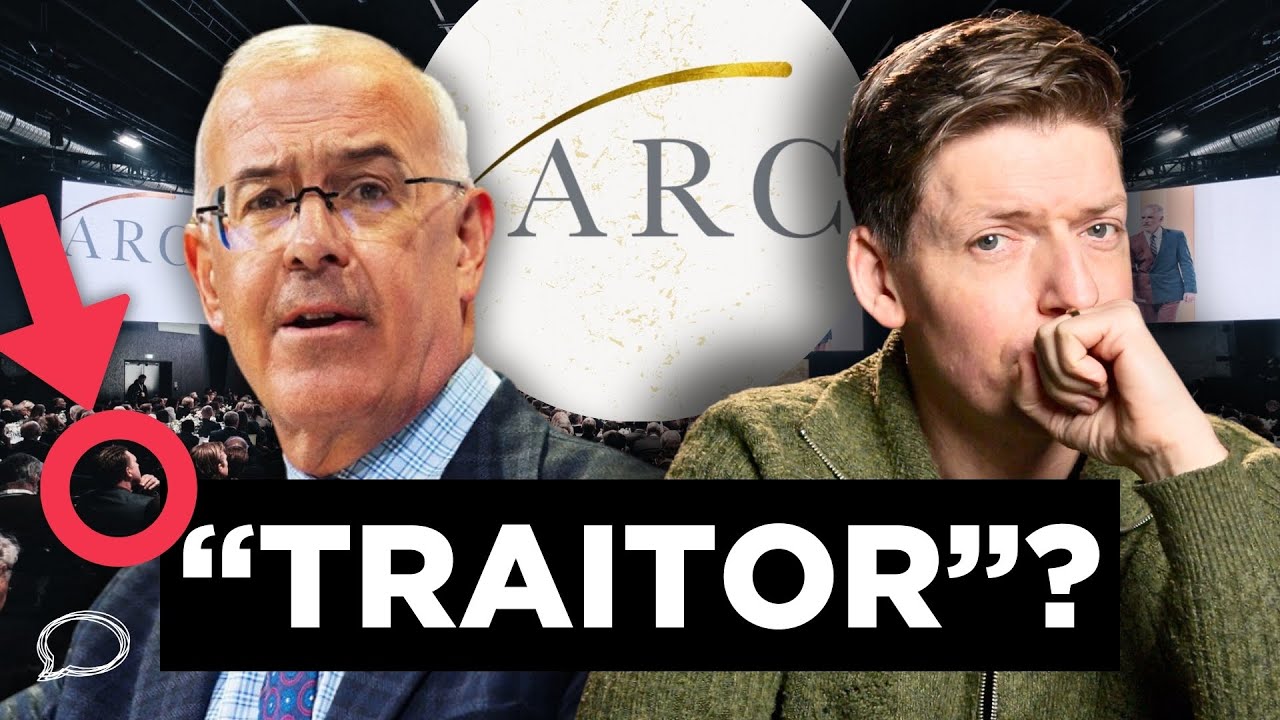
---
BROWN U 23 PP
Furthermore, since 2019, Environmental Progress
has accepted $125,000 from the Rodel Charitable
Foundation which is committed to the
“advancement of nuclear energy because our
current technologies (particularly wind, solar and
hydro power) will not produce enough energy
supply to significantly reduce the use of fossil fuel
sources.”83 84
Michael Shellenberger, the founding president of
Environmental Progress, has ties to the Nuclear
Energy Institute, which includes utilities and fossil
fuel-affiliated companies such as Dominion Energy
:{:{and Duke Energy.85 86}:
Shellenberger is also on the}:
advisory board of Alliance for Responsible
Citizenship, which has stated, “Nuclear +
petrochemicals...will keep us going” and includes
prolific climate obstructionist Bjørn Lomborg and
Republican presidential candidate Vivek
Ramaswamy on its board.87
---
YT 10 25 -->
trump-supporting Silicon Valley billionaire Peter Thiel is set to extend his financial reach into the UK, after Keir Starmer and the US President announced a new transatlantic tech partnership incorporating his data mining company Palantir. As part of the deal Thiel’s company will invest a further £1.5 billion into Britain, on top of its already extensive interests in the NHS.
However, a Byline Times investigation can reveal that Thiel’s far deeper impact on the country could be an ideological one, focused on a network seeking to rehabilitate discredited race science and authoritarian ideas into the Conservatives, Reform UK and Labour.
At the centre of the network is his friend, admirer, and leading figure in the “neo-reactionary” movement, Curtis Yarvin, the blogger known as Mencius Moldbug.
Thiel’s venture firm has already invested in Yarvin’s company Tlon, and his main political protégé JD Vance — now US vice president — is also a big admirer. What began on fringe blogs is increasingly embedded in Washington, and is now being exported to Britain.
The ‘Dark Enlightenment’
Yarvin is not well yet known among the UK public but his “Dark Enlightenment” writings have been deeply influential on the US right and increasingly in the UK right too. These ideas include calls for the end of democracy, with Yarvin arguing that Western democracies should be replaced by what he has referred to as a “monarchy” run by an unelected dictator, or “CEO”.
They have also included the endorsement of discredited ideas about the “natural inferiority” of black people.
In a 2009 essay Yarvin argued that “the obvious statistical differences in the average talents of human races” justified eliminating the system of representative government.
“Obviously, once you stop believing in democracy, it is easy to stop seeing the failure of this political design in societies with a high percentage of non-Eurasian genetic ancestry as a moral reflection on persons of non-Eurasian ancestry, and start seeing it as a mere engineering failure…” he wrote.
Yarvin is also known for his repeated use of the n-word. In an interview with Byline Times, his associate and founder of the ‘Blue Labour’ movement, Maurice Glasman, confirmed that Yarvin had shown the racial slur to him during a London portrait sitting. Glasman said that he had reacted with disgust but admitted he remained interested in Yarvin’s views on artificial intelligence.
EXCLUSIVE
Silicon Valley Whistleblowers Warn Elon Musk ‘Hijacking’ Republicans to Control Entire US Government
Former followers of the ‘Dark Enlightenment’ say a planned ‘neo-reactionary’ hollowing out of government is happening in real time
Nafeez Ahmed
In February 2025, Yarvin appeared at the Alliance for Responsible Citizenship (ARC) summit in London, co-founded by Jordan Peterson and funded by GB News investor Paul Marshall. Its advisory board includes Peterson, commentator Douglas Murray, Lord Glasman, and Reform UK policy chief James Orr. Both Peterson and Murray have defended The Bell Curve, which claimed racial hierarchies in intelligence. The event was addressed by other leading figures on the right of British politics, including Conservative leader Kemi Badenoch.
Yarvin is also scheduled to appear at this year’s How the Light Gets In festival in London, where he will take part in three panels, including one in which Tony Blair’s former press secretary Alastair Campbell says he will interview him for a “lively discussion” as the “philosopher behind JD Vance”.
The upcoming Byline Times investigation will show how Thiel’s ideological network cuts across Britain’s political spectrum:
- Conservatives: Yarvin admirer Dominic Cummings’ former adviser Andrew Sabisky, who argued Black people are predisposed to lower IQ, now influences Civic Future’s Conservative leadership pipeline.
- Labour: Glasman co-leads Policy Exchange’s Future of the Left programme, which feeds into No.10.
- Reform UK: James Orr, who hosted Bell Curve author Charles Murray at Cambridge, now heads Reform’s policy think-tank.
Together, these strands form a cross-party pincer movement: Thiel’s hard power through Palantir’s contracts, and his soft power through the normalisation of discredited pseudo-scientific neo-reactionary ideas.
As figures like Yarvin move alongside establishment names, Thiel’s network is shifting ideas once confined to the far-right fringe into the centre of mainstream debate.
*Byline Times will publish its full exclusive investigation into Thiel’s new transatlantic network and the Big Tech’s British Takeover, in the coming days.
---
---
desmog
7 February, 2025 – UK Edition
It’s not festival season, but anti-climate forces are in the party spirit following the election of their fossil fuelled friend Donald Trump.
And so, on 17 February, the new president’s admirers and acolytes will descend on London for this year’s Alliance for Responsible Citizenship (ARC) conference.
Like its Tufton Street forebears, ARC’s branding and mission appears to be intentionally nebulous. Is it a think tank? Is it an in-person LinkedIn network for new age authoritarians? Is it a good old fashioned lobby group for corporate interests?
We’ve been studying ARC for 18 months, and even we’re not entirely sure.
However, we do know a lot about the people funding ARC: hedge fund boss Paul Marshall, and the Legatum Group investment fund.
Marshall and Legatum are the brains behind GB News – the conservative TV channel that has repeatedly spewed out climate denial, platformed conspiracy theories, and boosted Nigel Farage since it was launched three and a half years ago.
Few have been more influential than Marshall and Legatum on the rise of anti-woke, anti-climate, anti-truth politics in Britain over recent times.
As of this week, we also know who will be speaking at ARC’s 2025 jamboree, aptly labelled “Glastonbury for climate deniers” by Hannah Greer at the Good Law Project.
The glittering lineup includes Tory leader Kemi Badenoch, Trump lackey Vivek Ramaswamy, House of Representatives Speaker Mike Johnson, tech bro Peter Thiel, and – of course – Nigel Farage.
In fact, we have digested the full list – documenting the innumerable ways in which these individuals have supported anti-climate, anti-science ideas.
Unlike at Glastonbury proper, I think I’d rather spend this particular festival stuck in the toilets.
omfg
Energy Switch
- Scott Tinker.
- Robert Bryce.
- Steve Koonin.
[### Energy Switch (TV Series 2022– ) - IMDb

IMDb
https://www.imdb.com › title](https://www.imdb.com/title/tt21196110/)
Feedback
[### Energy Switch

PBS
https://www.pbs.org › show › energy-switch](https://www.pbs.org/show/energy-switch/)
Energy and climate point-counterpoint talk show, featuring America's leading experts, moderated by energy scientist and television host Dr. Scott Tinker.
Missing: cast | Show results with: cast
---
algo YT diy -->
"Climate Change is a Myth" -- A Nobel Prize Winner's Embarrassing Ideas
Sabine Hossenfelder
722K views 1 month ago
The biggest problem with Climate Change | Konstantin Kisin
John Anderson Media
596K views 5 months ago
WATCH: An Honest & Sensible Conversation about Global Energy | Scott Tinker
Alliance for Responsible Citizenship
1.8M views 10 months ago
[### Scott W. Tinker

CERAWeek
http://ceraweek.com › speakers › scott-w.-tinker-19978](http://ceraweek.com/speakers/scott-w.-tinker-19978/)
Tinker is the host of PBS Energy Switch, an energy and climate talk show appearing on over 200 PBS stations nationwide, and Earth Date, featured weekly on over ...
no talk
Talk:Scott W. Tinker - Wikipedia
Media
Tinker has been interviewed and quoted by publications such as The New York Times, The Wall Street Journal, NPR, Forbes, The Hill, Nature, Scientific American, Bloomberg, USA Today, The Dallas Morning News, and Houston Chronicle. Select interviews include:
- The Dallas Morning News, February 9, 2020, by Scott Tinker, The 'zero-emissions' promise relies on magic math: The U.S. will meet Paris climate targets on time without a Clean Power Plan.
- RealClear Energy, May 15, 2020, by Robert Bryce, New Film 'SwitchOn' Spotlights Transformative Power of Energy.
- Scientific American, August 16, 2019, by Scott Tinker, Carbon Pricing Is Not a Fix for Climate Change / The problem: developing countries can't afford to go along.
- The Hill, April 12, 2019, by Scott Tinker, Climate and energy solutions require setting politics aside.
- The Hill, June 25, 2018, by Scott W. Tinker, Even 'clean' and 'green' energy have an environmental impact.
- Bloomberg, October 23, 2017 [interview], by David Wethe, Rise in Earthquakes Near Texas Oilfields Prompts New Monitoring.
- Forbes, August 10, 2017, by Scott Tinker, Why 'Keep It In The Ground' Is Not Necessarily Green.
- Forbes Opinion, January 19, 2017 [Guest Post], by Scott W. Tinker, We Need Secure Energy For America.
---
=
Alliance for Responsible Citizenship - Wikipedia
talk meh
Alliance for Responsible Citizenship (ARC) is an international centre-right organisation, associated with psychologist and political commentator Jordan Peterson.[1][2][3] Its founding was announced in June 2023, with a London conference held in October of that year.[4][5] One Australian journalist identified the purpose of ARC as follows: "to replace a sense of division and drift within conservatism, and Western society at large, with a renewed cohesion and purpose".[6]
History
In an interview with The Sydney Morning Herald, former Australian deputy prime minister John Anderson, who helped initiate the conference, said the group emerged as a response to a "civilisational" moment in which the Western world "is plagued by self-doubt and confusion" regarding its values and beliefs.[1] The "shaky ground" of depleted social institutions, such as the Christian Church, and the breakdown of cohesive social norms could be seen as part of this crisis.[1] The founders believe the West no longer has a binding narrative, as this has been "picked apart"; leaving it with a geostrategic vulnerability.[7] In the face of this crisis, Anderson characterised the goal of ARC was to "regroup, and put forward a positive agenda"[1] by providing a better narrative than one of inevitable doom and decline.
Others described ARC as being a response to problems in contemporary conservatism itself. That the global movement, at least in the English-speaking world, was "scrambling to define itself by what it opposes rather than what it believes". A report in The Telegraph saw the group as a corrective to the "chaos" and "excesses" in American conservatism during the rise of Donald Trump; the "muddle" of conservative beliefs in the UK; and the lack of a clear cause for conservatives in Australia.[4][6] The Financial Times said that the organisation's conference "included discussion of fringe, right-leaning ideology".[8]
Beliefs
 Baroness Stroud welcomes delegates to the first conference of the Alliance for Responsible Citizenship, London, 2023.
The organisation has no hard set of political statements.[6] Its organising ideas are reported to coalesce around responsible citizenship, motivated by "faith and hope" to ensure our "social fabric".[9] Founding documents focus on the strength of family structures, protecting "free exchange and good governance", reassessing energy and resources, and "environmental stewardship".[6][9][10] Overall, its concerns fall into five strands:[7][11]
Family, social fabric and population
Key figures in the group, such as Miriam Cates, identify the breakdown of the family as a cause of "economic stagnation".[12] The alliance emphasises family as the centre for bringing "flourishing and prosperity to their homes, communities, and beyond.[13] The fraying of "social fabric" is primarily addressed in the family context, which Peterson asserts, using conservative categories, will be "approximating the nuclear family" with "long-term, committed, stable heterosexual marriages sanctified by the community".[9]
Free enterprise and good governance
 (https://en.wikipedia.org/wiki/File:Panel_discussion_with_Niall_Ferguson,_Greg_Sheridan,_Rebecca_Heinrichs_and_Andrew_Hastie.jpg)Andrew Hastie responds to Niall Ferguson, joined by Greg Sheridan and Rebecca Heinrichs at the 2023 conference.
The group is highly critical of woke business practices, crony capitalism and "the spread of ESG into boardrooms" all of which are said to overlook actual shareholder interests.[6][14] Some figures in the group, such as Sir Paul Marshall, describe these phenomena as threatening "the end of the free market".[12] Other figures, such as Andrew Hastie have pointed to unbridled, globalised, free markets leading to the fragmentation of local communities.[6] As such the group intends to explore fresh ways that "open markets can be fostered to create prosperity for all, including those ‘left behind’ by globalisation, and the pursuit of "GDP at all costs".[10][14] While agreeing that “top-down solutions" have not worked, Hastie and others believe that there is a place for governance here as: “Government is not the problem. Bad government is the problem.”[6][14]
Affordable energy and environmental care
A concern for affordable energy, particularly amongst disadvantaged nations, was the key driver for the formation of the alliance.[11][15] In early conversations about the movement, Peterson stressed that climate change policies were making energy unaffordable which, in turn were threatening to cut food production and push people back into poverty.[11] The alliance "doesn't deny the importance of solving climate change" but rather "if you set back alleviation of hunger and poverty you'll end up with a whole chunk of people who don't care about climate and the environment".[5] Rejecting "fear-mongering" about climate change, Peterson wants to see the alliance to take up affordable energy as a conservative concern, saying there are "no excuses for putting forward energy policies that punish those who are absolutely poor".[5][7][16]
Promotion of Western civilisation
 (https://en.wikipedia.org/wiki/File:Jordan_Peterson_making_an_address_to_delegates_at_the_Alliance_for_Responsible_Citizenship,_2023.jpg)Jordan Peterson making an address to delegates, 30 October 2023.
:{Re-asserting "the west's confidence in its own core values" has been a central concern since the alliance was announced.[5] In her remarks at the first conference, Ayaan Hirsi Ali suggested that the crisis of confidence comes from the disconnection of democracies from their founding stories and values, that “Western civilisation is like a cut flower – and cut flowers die.”[17] Baroness Stroud, as CEO of the group, had previously said this weakness in the West's thinking creates its own “geostrategic threat".[7] Organisers such as Anderson, have argued that all civilisations need a public ethic that encourages its citizens in "living virtuous lives".[18] Similarly, Peterson wants to see the group promote the historic, Western virtues of courage, responsibility and strength, with Stroud emphasising the values of kindness, truth, gentleness, respect and goodness.[6]
Key Western concepts, such as freedom are being explored by the group; setting aside its conception “freedom from”, to make your own choices – therein lay hedonistic individualism. Rather, it was “freedom to” – to take responsibility for rebuilding family, community and nation from the ground up.[6] Likewise the Postmodern conception of truth being "relative or personal" is reported to be widely rejected by the group.[6] Instead, Stroud wants to advance the proposition that, "We possess the knowledge that truth does exist and can be found."[6]}:
Positive geopolitics
 Helena Morrissey speaks on panel discussion with Derek Kriefels at ARC Forum 2023.
While primarily interested in social and cultural issues, the group has been seen as providing an alternative to the World Economic Forum.[10][11] On global matters, the group says they "do not believe that humanity is necessarily and inevitably teetering on the brink of apocalyptic disaster."[5] One environmental journalist at The Guardian has characterised the group as not "worrying much at all about the climate crisis".[2] The founders say they are challenging "the declinist vision of the world" which is currently marked by a sense of "tense, permanent crisis".[12][10] Instead, in the words of Mike Lee, the ARC is "striving to create" a "positive future filled with hope and optimism".[10] They locate this optimism in a traditional view of humanity, that "men and women of faith and decisiveness, made in the image of God, can arrange their affairs with care and attention so that abundance and opportunity could be available for all."[5] With that outlook, the organization is looking at ways to balance global development, environmental stewardship and human flourishing.[10]
Organisation
Company records in the UK show ARC has two shareholders – the Dubai-based investment management group Legatum Ventures and the British investor and Brexiter Sir Paul Marshall.[5] The published advisory board members included the following:[1][13][19][20]
- Agu Irukwu
- Alan McCormick
- Amanda Stoker
- Andrew Hastie
- Arthur C. Brooks
- Barry S. Strauss
- Bjørn Lomborg
- Christopher Chandler
- Colin Brazier
- Dan Crenshaw
- Danny Kruger
- Erica Komisar
- Gudrun Kugler
- Helena Morrissey
- James Orr
- John Anderson
- John Howard
- Jonathan Pageau
- Jordan Peterson
- Katy Faust
- Leslyn Lewis
- Louis Gave
- Louise Perry
- Magatte Wade
- Manuel Stotz
- Maurice Glasman
- Michael Shellenberger
- Mike Johnson
- Mike Lee
- Miriam Cates
- Niall Ferguson
- Nicholas Boys Smith
- Nims Obunge
- Paul Marshall
- Philippa Stroud
- Rebecca L. Heinrichs
- Rick Geddes
- Riva Melissa Tez
- Robin Batterham
- Stephen J. Blackwood
- Tony Abbott
- Victor Davis Hanson
- Vivek Ramaswamy
- Warren Farrell
- Winston Marshall
Conference
 Kevin McCarthy addresses the conference, 2023.
The group's first conference was held in Greenwich, London, 30 October – 1 November 2023.[20] The platform featured 100 speakers, with delegates from 71 nations said to number between 1,000 and 1,500.[4][6][21] The journalist Fraser Nelson described it as one of the "largest gatherings of the global centre Right in recent British history".[4]
Among the speakers were Kevin McCarthy, former speaker of the US House of Representatives, John Anderson, former Deputy Prime Minister of Australia, Fraser Nelson, editor of The Spectator, and former Dutch politician and writer Ayaan Hirsi Ali.[14] Bishop Robert Barron gave a talk on "What is the True Nature of Freedom".[22] The English author and social critic Os Guinness featured on a panel discussion with Jordan Peterson, Ayaan Hirsi Ali and John Anderson.[23]
An evening event held at the O2 Arena attracted a crowd near to its capacity of 20,000.[24][25] Reviewed as "high-brow thought and unscripted conversation" it was headlined by Jordan Peterson, with several authors and commentators, such as Douglas Murray, Ben Shapiro, Bjørn Lomborg and Jonathan Pageau.[26][27] Event themes included the rejection of resentment, the problem of suffering, the pursuit of the common good, and the subsequent discovery of meaning.[27][26]
References...
LOMBORG bs germany
GRaph # death 9k down 98% (but not show costs] hurricane bangladesh not much warning not leave cattle drown
wm nordhaus only climaTE ECON NOBEL PROZE DOWN 1.9% GDP 3.1 % BUT GDp WILL GO UP 400%
climate policy has cost, opp costs 4.5 trillion 27 trillion 1/4 gdp
curent policy dumb cannot afford and that’s why ppl vote for trump
smart global co2 tax but china and russia won’t
green energy innovation get 11$
128,022 views Jul 17, 2024
Human ingenuity is the best climate policy. Bjorn Lomborg seeks to bring a balanced and thoughtful view to the climate conversation, where alarmist narratives have created policies that do more harm than good. As Bjorn says, “yes there are problems ahead, but we make more solutions than problems.” The results of one-sided storytelling are unrealistic ‘net-zero’ climate policies which drive up energy prices and carry costs that vastly outweigh their benefits. We are simply, in Bjorn’s words, “making the lifeblood of civilisation more expensive.” Bjorn’s call is for us to shift our focus away from making policies to appease the doomsday heralds and to instead fix our attention on energy innovation – the historic key that opened the door to our industrial revolution and brought us the prosperity we experience today. --
Subscribe to our Channel to be the first to catch the latest from this ARC | Forum event: / @arc_forumGO DEEPER: - ‘The Green Gamble: The Geopolitics of Net Zero’ by Doug Stokes - https://www.arcforum.com/energy-and-e...--- Dr Bjorn Lomborg researches the smartest ways to do good. With his think tank, the Copenhagen Consensus, he has worked to find and promote the most effective solutions to the world’s greatest challenges, from disease and hunger to climate and education. --- We are delighted to announce that the next ARC Conference will take place between 17-19 February 2025! Subscribe to our mailing list for updates and follow us on social media as we explore the better story:
Search in video
0:00
thank you that was a very great sort of
0:02
introduction to what we're really
0:03
talking about here today I'm going to
0:05
talk about how we in general think about
0:08
the big challenge of climate change I
0:10
would love to get up my slides if that's
0:12
possible um fundamentally our climate
0:15
policies and our energy policies are
0:17
failing I'm not an expert in uh in
0:20
Germany and I think we're going to get
0:22
four real experts up here afterwards and
0:25
talk about that so I'm going to talk
0:26
about something else namely get the
0:28
general story right and find what is the
0:30
better story but before we get to the
0:32
better story we really have to combat
0:36
what uh uh bearet also called this
0:39
doomsday event so I'm going to take you
0:41
through what I think is the better story
0:43
but we can only get people to listen to
0:45
the better story if we walk them through
0:48
reality first so look global warming
0:50
real it's man-made but it's often also
0:54
exaggerated and one-sided and that
0:56
leaves us badly informed that's one of
0:58
the reasons why pretty much everyone
1:00
believes global warming is going to be
1:02
the end of the world no it's not I'm
1:04
going to show you just two things but
1:06
I'm sure I would love to talk to you
1:07
afterwards about a lot of other things
1:09
of course I've written extensively about
1:11
this so I'm just giving you sort of two
1:13
ideas Wildfire we're often told my God
1:16
the world is burning more and more uh
1:17
New York Times had as its website a
1:21
world on fire and you saw this wonderful
1:23
animation of a world that was literally
1:25
unfired and this is what most people
1:27
think well let me show you the data
1:30
we actually know what how much fire has
1:33
burnt the world across the last century
1:36
and into the next so in 1900 we
1:39
estimated almost 4.2% of the global
1:41
surface used to burn since then it's
1:44
dramatically declined it's now down to
1:46
almost
1:48
3% we know this because the climate
1:51
models need this as input we're not
1:53
totally certain of this because it's a
1:55
historical reconstruction but since
1:56
we've had satellites we very very well
1:58
know that we've actually seen a
2:01
declining level of burn we're now down
2:03
to about 2 and a half or even lower than
2:06
that why because people don't like stuff
2:09
burning and so they actually make sure
2:11
things don't burn this is human
2:14
Ingenuity but we need to tell our kids
2:16
that what are we expecting in the future
2:18
actually if we do nothing if we have no
2:21
climate policy it'll still decline if we
2:23
have strong climate policy yes it will
2:26
decline more but the whole point here is
2:28
to say this is not a a situation where
2:31
the world is burning this is a situation
2:33
where we get more and more things under
2:35
control this will be a recurrent theme
2:38
in pretty much all that I'm going to be
2:40
telling you and not just because I
2:42
picked out those data that just shows us
2:45
this is the general story of pretty much
2:48
everything we do yes there are problems
2:50
ahead but mostly we make more solutions
2:54
then we make extra problems that's why
2:57
this is going down let me show you
2:58
another thing you hear lot about heat
3:00
waves actually we had a little bit of
3:02
that yesterday um but we fear a lot of
3:05
the heat waves but remember there's also
3:07
cold wave we need to have a sense of how
3:09
much does this affect us well if you
3:12
look at Europe we actually know this for
3:14
all nations in Europe heat kills
3:17
absolutely we estimate that more than
3:19
20,000 people die each year in Europe
3:23
from excessive
3:24
heat but we're not well informed if we
3:27
don't also tell people that every year
3:30
coal kills and it actually kills about
3:33
10 times as many about
3:36
220,000 people die each and every year
3:39
in Europe from cold if you look at
3:41
Germany which is just one of those bars
3:43
and I would wish I could actually point
3:44
it out but it's up there I trust me uh
3:47
and it basically shows that Germany sees
3:49
about 4,000 people die each year from
3:51
heat and 20,000 people from cold why is
3:55
it our politicians only talk about the
3:57
Heat and not the cold of course it's
3:59
because it's much more convenient but it
4:02
doesn't make it right we need to tell
4:04
people this whole story and of course
4:07
how do you comat
4:08
heat we know you do that with air
4:11
conditioning tip to uh the owners of
4:14
this place
4:19
um
4:20
well but had we come here in the winter
4:23
we would have appreciated if you also
4:25
had heating right and and the point of
4:28
course is both both of these are
4:30
possible if energy is cheap If energy is
4:34
expensive rich people can still keep
4:36
their homes heated and cooled but poor
4:38
people can't and that's why you know
4:42
Biden just came out and told us it was
4:45
uh a week ago this but extreme heat is
4:47
the number one weather related killer in
4:49
the United States extreme heat is the
4:52
number one weather related killer in the
4:54
United States New York Times tells us
4:56
the same thing pretty much everyone
4:57
tells us this and no it's not but the
5:01
important point is that everybody's
5:02
telling us this extreme heat is the
5:05
number one uh weather related killer in
5:08
the United States well if you actually
5:09
look at the numbers we have good numbers
5:11
for this about 6,000 people die almost
5:14
6,000 people die from extreme heat every
5:17
year in the US that is certainly a
5:19
number that we we should take care of
5:22
and be conscious of these are people we
5:24
want to save but just remember there is
5:28
about 152 2,000 people that die from
5:31
cold every year that's 25 times more
5:36
than the extreme heat that Biden just
5:38
told us why are we only being told that
5:41
one part of the story because it fits a
5:42
narrative but our goal has to be to
5:46
inform people correctly and I'm not just
5:48
showing you this for Europe and the us
5:50
because you could kind of imagine that
5:51
that would be true for EUR Europe and
5:53
the us but this is also true for every
5:56
continent in the world including Africa
5:58
many more cold deaths and heat deaths
6:00
we're surprised about this but this is
6:02
what lcet studies show over and over
6:06
again we need to know so the first point
6:09
is really to take you away from this oh
6:11
my God the world is ending remember
6:13
again there's a reason why you only hear
6:15
about all the extra fires because we
6:18
never send TV Crews down I'm here and
6:20
it's not burning right it's not a good
6:23
story but it does not mean that you're
6:26
not well informed unless you actually
6:28
know these numbers again you'll see lots
6:30
of pictures of people almost dying in
6:33
heat and that's all true but you're
6:35
forgetting to see all the people who
6:38
anonymously typically old people die in
6:40
their homes from cold we need to know
6:42
both so why is it we get it so wrong on
6:45
that on on global warming I think it's
6:47
fundamentally because we forget that
6:50
people are really good at adapting to
6:52
their stuff so look at the this I think
6:55
is possibly the strongest single graph
6:57
that I'm going to show you the number
6:59
people die from climate related
7:01
disasters so that's floods droughts
7:02
storms and wildfires we have pretty good
7:04
data for this over the last 100 years in
7:07
the 1920s almost half a million people
7:10
on this planet died from these four
7:12
disasters floods drought storms and
7:14
wildfires every year on
7:17
average if you believe the current story
7:21
you would think this would go
7:22
dramatically up of course I've actually
7:23
sort of I can't do that with a graph
7:25
I've just shown you so you can sort of
7:27
Imagine where this is going it's
7:29
dramatically dropped down so the last 10
7:31
years the average number of people dying
7:34
from these climate related disasters is
7:37
9,000 it's a reduction of more than
7:41
98% this has nothing to do with climate
7:43
it has everything to do with the fact
7:45
that we've lifted people out of poverty
7:47
that we've made sure we have much better
7:49
technology and we have much better
7:50
predictive Powers the biggest killer in
7:53
the whole world was the uh the hurricane
7:56
in 1970 that H hit Bangladesh that
7:58
killed 3 100,000 people a large part of
8:01
this was because we could not get the
8:04
information out there's a hurricane
8:05
coming you better seek a protection
8:07
another part of it was because they
8:09
didn't trust it was run by Pakistan back
8:12
then and the third thing was if you have
8:15
cattle and that's your main thing that's
8:17
your that's what you live off of of
8:19
course you don't actually want to leave
8:21
your cattle to get uh drowned so you
8:23
actually going to stay with your cattle
8:25
we have come so far and this is one of
8:27
the reasons why we don't die from this
8:29
anymore
8:29
it's possible that without climate
8:31
change this would have been 8,000 people
8:34
dying but the important point the better
8:36
story is this is not going upward as you
8:39
believe it's dramatically declining so
8:42
that's why we need to understand climate
8:44
is not the end of the world it's a
8:45
problem it's something that means things
8:48
get better but slightly slower let me
8:50
show you what I mean what is going to be
8:52
the impact of global warming well we
8:54
actually know there are two new studies
8:56
out this year from one of the most quota
8:59
climate Economist Richard T and the only
9:02
climate Economist to win the Nobel Prize
9:04
in climate economics uh William
9:05
nordhouse I'm going to show you both of
9:08
those studies what they show is if you
9:10
look across the temperature rise you can
9:13
see how much impact is this going to
9:15
have there's a lot of different studies
9:17
this is all the period studies that we
9:19
have in the world showing what's the
9:21
negative impact as you can see as
9:23
temperatures get worse and worse higher
9:25
and higher the impact tends to get worse
9:29
this is Richard tuls impact the U blue x
9:33
that you can see up here so if we
9:35
estimate it'll be about 3° warmer by the
9:37
end of the century we will see a
9:39
reduction of
9:40
1.9% GDP I'll show you what that means
9:42
in just a second nordhouse has a
9:45
slightly different assumption uh and
9:47
shows that it's minus
9:49
3.1% the important Point here is it's
9:52
not 100 is not where near 100 it's 2 to
9:57
3% how much problem is that well the UN
10:01
estimate the average person in this
10:03
world will over the rest of the century
10:05
become 4.5 times as Rich we'll be 450%
10:09
as rich on average as we are today
10:12
that's a fantastic story this is the
10:14
story we need to make sure our kids and
10:16
grandkids hear about but because of
10:19
global warming we're not actually going
10:21
to feel like we're 450% as Rich we'll
10:23
only feel like we're somewhere between
10:25
435 and 440 per as rich
10:30
[Music]
10:31
this
10:33
is this is important right because
10:36
that's a real problem but it's not the
10:39
end of the world this is a tiny bit less
10:43
amazingly better by the end of the
10:45
century we need to tell our kids that
10:48
you don't need to get be scared you need
10:50
to fix this yeah as one of the many
10:52
things you need to fix but of course you
10:54
have to be very careful if you're going
10:56
to try to fix a 2 to 3% problem that you
10:59
don't end up spending 10 to 15% fixing
11:02
it because that's a really bad deal and
11:04
that's really what our current problems
11:06
are current climate policy unrealistic
11:09
unsustainable just take a look this is
11:11
the eu's OWN statistics I I actually
11:14
want to Overlay it with Germany but they
11:15
haven't done it but you can sort of
11:17
imagine what that would look like uh but
11:19
fundamentally the EU Japan and UK all
11:23
have much higher energy costs than
11:26
anyone else they also show up with all
11:27
the others but you know just to show you
11:29
this I'm just sharing you us and China
11:32
which is much much lower and
11:35
crucially us and China is not increasing
11:38
the EU keeps going up it keeps creeping
11:41
up let me just show you and again I
11:43
don't have this data for Germany I don't
11:45
think anyone really has this but we have
11:47
great statistics for the last 200 years
11:50
from the UK and so I'm going to show you
11:51
this and this is really what we saw in
11:54
the graph over the last 200 years if you
11:56
look at gas prices they have declined
11:59
and declined and declined we've just
12:00
gotten better and better and better at
12:02
servicing people with gas until about
12:04
the year 2000 and since then it's gone
12:07
up not the the the spike is the Ukraine
12:10
war but most of this increase and the
12:13
dip is the co most of this increase is
12:16
climate policy we've simply decided to
12:19
say we're going to make it harder for
12:21
humans to do well in the world because
12:24
of climate policy now it's fair to say
12:26
that a climate policy which does some
12:28
good is also allowed to cost some money
12:30
but we need to be a aware of the real
12:33
tradeoff if you look at electricity
12:35
remember electricity is the thing that
12:37
drives most of our world today it used
12:39
to be phenomenally expensive I'm
12:41
actually not showing it it goes up to
12:42
about 80 so 10 times higher up around
12:45
the uh turn around 1900 uh but I just
12:48
want to show you this for uh so
12:51
basically again it came down to just
12:52
after 200000 and then since then it's
12:54
dramatically increased we are making the
12:57
lifeblood of civilization more expensive
13:00
it's fine to do something about climate
13:03
change it's not okay to do something
13:05
that's dumb this is what we need to
13:08
recognize that we believe and we have
13:10
this idea that oh we're going to go
13:12
renewable remember the world used to be
13:14
incredibly renewable in in 1800 most of
13:18
the world was running renewable we
13:20
estimate about 94% of the world ran un
13:23
renewable it was really only the UK that
13:25
started using coal by then then we've
13:28
spent the last 200 years getting rid of
13:32
Renewables right the last 50 years we
13:34
stayed at about 13 to 14% of global
13:38
energy from Renewables this was mainly
13:41
poor countries cooking and keeping warm
13:43
with dirty fuels like wood dunk carbon
13:45
so
13:46
on what you see since 2010 is all of the
13:51
impact of our climate policies we
13:54
believe that we're incredibly renewable
13:56
we've seen a slight increase from 13 14%
13:59
we're now up to
14:01
16% a lot of politicians will tell you
14:04
oh we're going to go you know renewable
14:06
by 2050 or even 2030 it gives you sort
14:09
of a sense of how ridiculous that is
14:12
given the current set but if you
14:14
actually look at the two primary
14:15
organizations that look at this so the
14:17
International Energy agency and the uh
14:20
Biden's Energy Information
14:22
Administration this is what they believe
14:24
we're going to get somewhere between 26
14:26
and 30 uh 33 3 3 34% sorry I can't
14:30
remember if you look at how long that
14:32
will take to get to 100% that's in the
14:35
middle of next Century to the middle of
14:37
two centuries from now so we're
14:39
somewhere around 150 to 250 years away
14:43
from being 100% renewable we're not
14:46
anywhere near and that's not going to
14:47
happen anytime soon U I just want to
14:50
share this one thing that I actually did
14:52
on on Germany uh you know the Germany's
14:55
very proud that it's actually tried to
14:57
get rid of fossil fuel so it's gone from
14:59
a share of Almost 100% uh down to about
15:02
80% uh and I actually know the exact
15:04
number because that'll turn out to be
15:05
very important for the story uh it's
15:09
79.6% of Germany's energy in 2010 came
15:12
from fossil fuels and since then when
15:15
they decided the in aend and spent half
15:18
a trillion uh Euros on this you have
15:20
managed to not get anywhere this is
15:24
actually n 79.3%
15:29
that's why I need the point uh right
15:31
this actually the trend will end in zero
15:35
in about
15:37
2500 so good luck with
15:40
that this shows you that we're basically
15:44
making fantasy arguments oh we're going
15:46
to go all Net Zero and all that stuff no
15:47
you're not remember if you do climate
15:51
policy yeah climate has costs that's
15:54
real but climate policy also have costs
15:57
and those are the things we need to
15:59
weigh against each other we've actually
16:02
never had estimates of what net seral
16:04
will cost until last year in climate
16:06
change economics which is a period uh
16:09
economics Journal where uh uh mendleson
16:12
uh Robert melon at Yale University
16:14
gather a lot of the world's preeminent
16:16
climate Economist to estimate what is
16:19
the cost of Net Zero by 2050 this was
16:22
the benefit the benefit is a substantial
16:25
$4.5 trillion do on average across acoss
16:29
the world across the 21st century that's
16:32
a substantial amount of money this is
16:33
why climate change is a real problem
16:35
it's something that we should be aware
16:37
of and think about how we fix smartly
16:39
unfortunately it turns out the cost is
16:42
phenomenally larger it's $27 trillion
16:45
that's about a quarter of global GDP
16:49
each and every year throughout the 21st
16:51
century that's not a smart thing to
16:54
do this is what our politicians is are
16:57
arguing that we should be doing and this
16:59
is what's done we need to walk people
17:02
through that whole conversation look
17:04
it's not the end of the world it's a
17:05
problem and you also need to get a sense
17:08
of it's not the you know we're not all
17:09
going to be poor by the end of the
17:11
century we're going to be phenomenally
17:12
much richer but we'll be slightly less
17:14
phenomenally richer and the current
17:17
policies are dumb beyond belief and we
17:19
won't be able to afford them and this is
17:21
the kind of thing that makes people vote
17:22
for Trump right so the point here is if
17:25
you actually want to do it smartly what
17:27
should you do and that's what I'm going
17:29
to oh wow I had 1 second left so I'm I'm
17:32
actually going to go literally I'm going
17:35
to go one minute over uh so we know what
17:38
works and what doesn't we know the EU
17:40
2020 climate policy one of the best
17:42
study policies for every dollar you
17:44
spend or let let me just say in Euros
17:46
but it says up there in dollars it's the
17:48
same thing for every Euro you spend you
17:50
will do three Euro cents of climate
17:52
benefits that's a bad deal that's a bad
17:55
way to help the world if you do the net
17:57
Ser the one I just showed you for every
17:59
Euros spent you'll do 17 EUR cents of
18:02
good that's also a dumb idea but there
18:05
are smart ways if we do a climate Global
18:08
Glo smart Global CO2 tax any Economist
18:12
would tell you that's a good idea it's
18:14
very unlikely that we can actually swing
18:16
this it's very unlikely that we can get
18:18
Russia on board uh it's probably also
18:20
unlikely we can get China on board but
18:22
in principle this would be a good idea
18:24
it would also be fantastically costly
18:26
and that's why we estimate for every
18:27
Euro you spend you'll do about two of
18:30
good so it's something we should
18:31
consider but we should also be very wary
18:34
of whether we can actually implement it
18:36
but by far the best solution and this is
18:39
the solution that's always been the best
18:41
solution is green energy Innovation
18:45
remember every problem that Humanity has
18:48
solved has always been about uh you know
18:51
Innovation we have never succeeded in
18:53
saying I'm sorry would you mind if you
18:55
were a little poorer and a little less
18:57
comfortable and a little colder in the
18:58
winter and a little warm in the summer
19:01
but at least we'll be doing a little bit
19:03
for climate change that surprisingly
19:05
doesn't go over very well in elections
19:08
we're not going to be able to do this
19:10
what we will be able to do is to
19:12
innovate future green energy to be so
19:15
cheap that not just Rich well-meaning
19:17
Germans but also Chinese and Indians and
19:20
Africans will want to do this this is
19:22
the solution we know this from economics
19:25
but it also happens to be the better
19:27
story and it's not just the better story
19:29
in the sense of we have a solution but
19:30
it's the better story all the way
19:32
through that we can take kids out of
19:34
being scared we can get them to
19:37
understand what works and say we
19:39
actually know what the solution is why
19:40
don't we do that thank you
===