Ferguson, Niall
---
NO MERRI
UATX
AUSTRIAN
wife hirsi ali aei
ggl 6 26
AI Overview
Niall Ferguson is a prominent conservative historian and the Milbank Family Senior Fellow at Stanford University's Hoover Institution. While best known for his academic and geopolitical scholarship, his tenure at Stanford has been punctuated by major political controversies, including ties to the Koch brothers' philanthropic network. [1, 2, 3, 4, 5]
In the spring of 2018, Ferguson organized a history conference that sparked major campus backlash after he tweeted a lineup featuring 30 white, male speakers. Shortly after, it was revealed via leaked emails that he had urged college Republicans to conduct "opposition research" on a left-wing student leader ahead of a campus debate series known as Cardinal Conversations. [1, 2, 3]
- The Resignation: Following widespread condemnation, Ferguson apologized for his "juvenile, jocular tone" and resigned from his leadership role in the Cardinal Conversations program. However, he retained his senior fellowship at the Hoover Institution. [1, 2, 3]
- Ties to the Koch Network
Ferguson has been a vocal critic of what he describes as a pervasive "woke mindset" and censorship at elite universities. To combat this, he co-founded the University of Austin (UATX) in Texas—an institution dedicated to freedom of inquiry. [1]
- Funding: The University of Austin has drawn scrutiny for its right-leaning and libertarian donor base, which includes major financial backing from the Koch brothers. Ferguson has defended these contributions, arguing that philanthropic support for free speech organizations does not equate to political interference. [1]
- Fallout from Leaked Emails
The fallout from the 2018 controversy generated significant academic and media scrutiny regarding free speech and political bias in higher education. [1, 2]
- Read the full reporting by The New York Times on how his political tactics fueled the debate over conservative free speech on campus.
- View the initial controversy surrounding the lack of diversity at his Stanford history event, as detailed in The New York Times.
- Review The Guardian's coverage of his resignation from the Cardinal Conversations role.
Sir Niall Ferguson is the Milbank Family Senior Fellow at the Hoover Institution at Stanford University. A prolific historian and author, his work heavily intersects with the free-market and libertarian principles long championed by the Koch family and networks like the Liberty Fund. [1, 2, 3, , 5]
Key connections and intersections:
- Hoover Institution: Ferguson joined the institution full-time in 2015, where he chairs the Applied History Working Group and co-leads the Hoover History Lab. He is also a frequent co-host of Hoover's GoodFellows podcast. [1, 2, 3, 4]
- The Koch Network Connection: Both the Hoover Institution and Ferguson have historically drawn support and engaged with Koch-affiliated donor networks and libertarian organizations, such as the Liberty Fund, which awarded Ferguson the George F. Will Award for the Advancement of Liberty and the Free Society. , [2, 3]
- Capitalism and Scholarship: Ferguson's academic and public commentary frequently focus on the virtues of free markets and Western civilization, which naturally aligns with the think-tank initiatives funded by the Koch family at institutions like Hoover.
 , 2, 3, 4, 5]
uatx politico
...
The anti-woke founders of UATX hated every aspect of cancel culture, but they had a particular, visceral enmity for the procedures surrounding the adjudication of sexual misconduct allegations under Title IX.
In December 2023, Ferguson published a manifesto of sorts in The Free Press— the “Treason of the Intellectuals.” Over his long career, Ferguson wrote, he’d witnessed “the politicization of American universities by an illiberal coalition of ‘woke’ progressives, adherents of ‘critical race theory,’ and apologists for Islamist extremism.” Still, he reserved some of his harshest language for the “armies of DEI and Title IX officers,” who, he said, seemed, at many colleges, to outnumber the students. Because these universities are rich, Ferguson said in an interview shortly after the article’s publication, “they’re allowed to grow these enormous bureaucracies of non-academics, people not engaged in research or in teaching, purely engaged in administration. They’re a huge part of the problem.”
Again, many, many people in academia would concede that Ferguson and his colleagues were onto something. In 2014, a group of 28 current and former Harvard Law School professors published a letter in the Boston Globe arguing that the university’s procedures for deciding sexual misconduct claims lacked basic due process and were stacked against the accused. In 2024, FIRE harshly criticized new regulations from the Biden administration which, among other things, eliminated an accused’s right to a live hearing, threw out their right to cross-examine their accuser and witnesses, and allowed a single administrator to act as prosecutor, judge and jury.
...
As UATX’s first semester ended and Trump reascended, the pluralists began to lose their grip on power.
In December 2024, Ferguson attended a fundraiser at Mar-a-Lago hosted by Marissa Streit, CEO of the conservative educational nonprofit PragerU, which, among other things, has produced material comparing climate change deniers to Jews who resisted the Nazis. Soon thereafter, Ferguson softened his previously harsh criticisms of Trump, saying that he’d been wrong to call him a “would-be tyrant,” that the system could contain whatever tyrannical impulses the once-and-future president might have, and that it would have been a “disaster” if Kamala Harris had won the election.
In January 2025, UATX experienced its second attempted coup in less than a year and a half. “A consortium led by Lonsdale convinced the board that everything was going in the wrong direction,” a former senior staffer told me. They argued that “our great books curriculum was misguided, we weren’t doing enough on tech and our founding president was the wrong person for the job.”
This time Kanelos wouldn’t escape unscathed. On Jan. 10, Ferguson and Lonsdale announced that Kanelos had “graciously accepted” an offer to be “elevated” to the newly created role of chancellor, modeled on Oxford University. Other major changes would follow.
...
But, Strossen said, none of her questions were on the agenda. “There was, in fact, no opportunity for meaningful input by members of the Board of Advisors,” she told me. “It was just a show-and-tell session, and it wasn’t even show-and-tell. It was like lecturing at us.”
Strossen said that she admired Ferguson — “he’s brilliant, he’s witty, he’s erudite” — but she strongly disagreed with his questioning how FIRE could defend Harvard. “It’s as absurd as saying, ‘How can the ACLU be defending the Nazis?’” she said. “There had never been a stronger critic of Harvard,” Strossen added, noting that FIRE had ranked Harvard at the bottom of its free-speech rankings. “We were defending the academic freedom principles that were threatened by what the Trump administration was doing.”
The next day, a Sunday, Strossen emailed several people including Kanelos, Ferguson, Rauch, and FIRE’s CEO Greg Lukianoff. “I believe it is critically important for UATX, with its signature mission of defending academic freedom principles, to weigh in as a defender of these principles in the current context,” she wrote in the email obtained by POLITICO Magazine. “Otherwise, UATX will subject itself to plausible criticism that it is less concerned about the neutral pursuit of truth/protection of academic freedom than about attacking existing universities and/or supporting the Trump Administration.”
Kanelos offered to sign onto a joint opinion piece with Strossen on the Trump administration’s actions, but no one else expressed support for the idea. Strossen had the sense that Kanelos would be speaking for himself rather than UATX, and nothing ever came of her email.
...
Over the summer, UATX drifted further away from pluralism and toward a more rigid, hard-right orthodoxy.
On July 15, the conservative Manhattan Institute issued a statement calling on Trump to draft a new contract with universities, violations of which should be punishable by revocation of all public benefit. “Beginning with the George Floyd riots and culminating in the celebration of the Hamas terror campaign,” the statement read, “the institutions of higher education finally ripped off the mask and revealed their animating spirit: racialism, ideology, chaos.” Universities had become tyrannical agents of “the Left” and forgotten that they and the state were “bound together by compact.” The signatories included Ferguson, Ali, Boghossian, now a faculty advisor at UATX, and UATX professor Alex Priou.
Two days later, the new president, Carvalho, issued a response on the UATX Substack. “This crisis is why UATX was founded,” he wrote, noting that the Manhattan Institute statement had been endorsed by “countless others — including members and supporters of UATX.”
...
HNN
by Dawn Foster
Powerful people used to express their views on others unopposed. Now their targets fight back, they find it intolerable.
==
---
a bunch like this: including game-over libtard cf nial f
https://www.alternet.org/2020/04/the-failures-and-inadequacies-of-neoliberalism-are-now-on-stark-display/
no lnx
The failures and inadequacies of neoliberalism are now on stark display
Written by Subin Dennis / Independent Media Institute April 10, 2020
It is a sign of how bad things are when the editorial board of the Financial Times, the world’s leading business newspaper, carries an editorial calling for “radical reforms… reversing the prevailing policy direction of the last four decades.” The FT editorial of April 3 has advocated, among other things, a more active role for governments in the economy, ways to make labor markets less insecure, and wealth taxes. The FT’s editorial board, increasingly concerned about saving capitalism from itself, had written about the need for “state planning” and a “worker-led economy” last year in August. But the April 3 editorial has garnered much more attention since it comes amidst a massive crisis.
By now it has become obvious that substantial state intervention in the economy—frowned upon by the apostles of neoliberal economics—is back to the center stage across the world.
The situation is such that the public sector, long maligned by neoliberal economists and weakened by governments beholden to neoliberalism, is playing a major role in the fight against coronavirus. Its role would have been much more effective and wide-ranging if it hadn’t been hit hard by decades of fund cuts and waves of privatization. Nevertheless, with the ineffectiveness of private production with profit motive as its driving force to handle a crisis becoming more evident, the public sector, production with state direction, and some amount of planning are making a major comeback.
Public Health Care
The case of the sectors that are directly concerned with health care provision is the most conspicuous, with the inadequacies of private health care during a crisis becoming evident to even right-wing leaders.
We see Boris Johnson, the Prime Minister of the UK, repeatedly talking about the need to protect the National Health Service (Britain’s publicly funded health care system). He even said, “there really is such a thing as society,” contradicting Margaret Thatcher, his conservative predecessor who batted for pure individualism in 1987 by saying “There is no such thing as society.”
Britain and many other countries in Western Europe have had relatively robust public health care systems. In many of these countries, such as Italy, Spain and the UK, public health care systems have suffered in recent years because of fund cuts and privatization of public facilities. Apart from the policy vision of the leaders of these countries themselves, they also came under pressure from the technocrats of the European Commission, who repeatedly demanded spending cuts on health care. Along with the easy-going attitude displayed by many of the Western governments in the early weeks of the coronavirus outbreak, such weakening of the public health care systems have made their response to the coronavirus outbreak a more arduous task. For now, the governments of Spain and Ireland have temporarily taken over their private hospitals to deal with the crisis.
The case of the United States, with its private, insurance-based health care system, is far worse.Not only was a sufficient number of testing kits unavailable in the United States for months, but the costs of testing and treatment remain prohibitive for a large section of the population, particularly to the 30 million uninsured and 44 million underinsured. This means that many people simply wouldn’t be able to afford to get tested and treated, endangering the health and lives of themselves and others.
The difference between the United States on the one hand, and China and South Korea on the other, comes readily into the picture here. Testing and treatment for coronavirus is free in China, which was crucial in the country’s success in bringing the epidemic under control. South Korea has done extensive testing, which was made available for free. Treatment costs were covered by the government and the insurance companies.
==
https://www.c-span.org/video/?442837-1/the-square-tower
...THE IDEA WAS TO TRY TO EXPLAIN KISSINGER'S TRANSFORMATION FROM PUBLIC INTELLECTUAL BY LOOKING AT HIS NETWORK. AND TRYING TO EXPLAIN HOW HE HAD BEEN ABLE TO BUILD HIS POSITION NOT ONLY WITHIN THE GOVERNMENT, BUT MORE BROADLY INTO THE MEDIA, AS FAR AFIELD AS HOLLYWOOD AND THEN ALL AROUND THE WORLD THROUGH A KIND OF INFORMAL RELATIONSHIP BUILDING AT WHICH HE EXCELLED AND STILL EXCELS. BUT IN ORDER TO DO THAT, I REALIZED THAT I HAD TO UNDERSTAND NETWORKS BETTER. SO "THE SQUARE AND THE TOWER" IS AN ATTEMPT TO TEACH ME NETWORK SCIENCE AND AT THE SAME TIME TO TEACH PEOPLE IN SILICON VALLEY HISTORY, BECAUSE THEY DON'T KNOW ANY AT ALL. [LAUGHTER] >>
SO YOU ARGUE IN YOUR BOOK THAT WE'RE LIVING IN A NETWORKED ERA, AND THIS MOST RECENT ONE GOT UNDERWAY IN THE 1970s, AND HIERARCHIES ARE SOMEWHAT ON THE WANE. AND THIS WAS HERALDED ORIGINALLY AS A NEW DAWNING OF INTERCONNECTEDNESS. AND CERTAINLY WITH SOCIAL MEDIA THAT WOULD LEAD TO PEACE AND HARMONY AND PEOPLE COMING TOGETHER IN ALL KIND OF NEW AND EXCITING AND CREATIVE WAYS. AND YOU QUOTE SOME OF THE PEOPLE WHO WERE CHAMPIONS OF THIS NEW ERA, AND YOU LAMPOON THEM UNMERCIFULLY IN THE BOOKS A WELL. SO WE FOUND OUT, SURPRISE, TURNS OUT SOCIAL NETWORKS HAVEN'T REALLY LED TO HARMONY, BUT THEY'VE ALLOWED PEOPLE TO DIG EVER DEEPER IN THEIR OWN INDIVIDUAL TRENCHES. CAN YOU TALK MORE ABOUT THAT PHENOMENON AS YOU'VE STUDIED IT IN THIS BOOK?
>> WELL, YOU PROBABLY REMEMBER BACK IN THE 1990s PEOPLE LIKE JOHN PERRY BARLOWE, THE LATE, LAMENTED PROPHET OF A LIBERTARIAN UTOPIA, DECLARATION OF THE INDEPENDENCE OF CYBERSPACE. AND YOU'LL HAVE HEARD ANY NUMBER OF VARIATIONS ON THE FOLLOWING THEME: WHEN EVERYBODY IS CONNECTED, EVERYTHING WILL BE AWESOME. I MEAN, THAT'S BASICALLY THE MESSAGE THAT SILICON VALLEY HAS BEEN PUMPING OUT FOR THE LAST 20-PLUS YEARS. AND I THINK THIS IDEA OF A CONNECTED WORLD IS SUPERPOTENTIALLY VERY APPEALING. -- SUPERFICIALLY VERY APPEALING. BUT IT TURNS OUT THAT'S NOT HOW SOCIAL NETWORKS WORK. AND JUST MAKING THEM BIGGER AND FASTER DOESN'T ALTER A FUNDAMENTAL PROBLEM. AND THAT FUNDAMENTAL PROBLEM IS THAT AS SOCIAL NETWORKS FORM, THEY DON'T FORM AS A LATTICE. IN A LATTICE EACH NODE -- I'M GOING TO USE THE JARGON -- HAS SAME NUMBER OF EDGES. IMAGINE IF WE FORMED THE LATTICE, EACH OF YOU JUST CONNECTED TO THE SAME NUMBER OF OTHER PEOPLE. SOCIAL NETWORKS AREN'T LIKE THAT EVER. WHETHER YOU GRASP THE NETWORK OF FRIENDSHIPS IN HIGH SCHOOL OR ALL THE NETWORKS ON FACEBOOK AND TWITTER WITH. THAT'S NOT HOW IT LOOKS. AND A COUPLE OF THINGS ARE REALLY STRIKING, ALTHOUGH I COULD MENTION MORE. I'LL MENTION JUST TWO. NUMBER ONE, NETWORKS OF PEOPLE TEND TO SELF-SEGREGATE. THIS PROBLEM OF POLARIZATION, OF COURSE, WASN'T CREATED BY SILICON VALLEY. IT PREDATES THE TECHNOLOGY. BUT CREATING VERY LARGE NETWORK PLATFORMS SEEMS TO MAKE THE PROBLEM OF POLARIZATION WORSE. AND THAT SHOULDN'T SURPRISE US BECAUSE IT'S SOMETHING THAT'S PREDICTED REALLY BY NETWORK SCIENCE.
AND IT'S ALSO HISTORICALLY, I THINK, QUITE EASY TO ANTICIPATE. THE SECOND POINT WHICH HAS BECOME MORE AND MORE A TOPIC OF DEBATE IN THIS TOWN AND ELSEWHERE IS THAT CRAZY STUFF GOES VIRAL AS WELL AS GOOD STUFF. WORSE STILL, CRAZY STUFF -- OR FAKE NEWS, AS IT'S OFTEN CALLED -- GOES VIRAL FASTER THAN TRUE STUFF. AND SO A BUILDING OF REALLY LARGE SOCIAL NETWORKS ALLOWS FAKE NEWS AND EXTREME VIEWS TO PROLIFERATE. AND NEEDLESS TO SAY, THIS DOESN'T RESULT IN THE TYPE OF UTOPIA THAT PEOPLE TALKED ABOUT BACK IN THE 1990s. OR, INDEED, IN THE GLOBAL COMMUNITY THAT MARK ZUCKERBERG OF FACEBOOK HAS OFTEN TALKED ABOUT. WE DON'T HAVE THAT. WHAT WE, IN FACT, HAVE IS A REALLY RATHER SHOCKINGLY POLAR SIZED POLITICAL -- POLARIZED POLITICAL LANDSCAPE WHICH LOOKS EVEN WORSE ON A PLATFORM LIKE TWITTER. >> SO YOUR BOOK PROVIDES FASCINATING BRIEF HISTORIES OF NETWORKS FROM THE ILLUMINATI TO THE 9/11 HAWAII JACKERS. BUT ONE OF -- HIJACKERS. BUT ONE OF THE GROUPS THAT YOU LOOK AT ARE THE CAMBRIDGE APPOSITIVES. BUT IT'S CAMBRIDGE AN HIT CA THAT -- ANALYTICA THAT DOMINATES THE WORLD TODAY. >> IT'S ALWAYS CAMBRIDGE. MUSIC TO MY EARS AS AN -- [INAUDIBLE] [LAUGHTER] >> YOU'VE BEEN CALLED UPON TO DISCUSS THIS ISSUE IN THE PRESS ON A REGULAR BASIS. THE STORY'S DEVELOPING FAST. WHAT CAN YOU TELL US AS OF RIGHT NOW AS THIS STORY CONTINUE CANS TO SWIRL? -- CONTINUES TO SWIRL?
>> WELL, PART OF THE POINTS OF "THE SQUARE AND THE TOWER WITH THE WAS -- "THE SQUARE AND THE TOWER" WAS TO ANTICIPATE A CRISIS. I'M PARTLY MOTIVATED AS AN HISTORIAN BY OTHER PEOPLE'S HUBRIS. SO WHEN I WAS IN NEW YORK SHORTLY AFTER LEAVING OX IN ORDER AND COMING TO THE UNITED STATES -- OXFORD AND COMING TO THE UNITED STATES IN THE MID 2000s, I WAS SHOCKED BY THE EXTRAORDINARY COMPLACENCY, NOT TO SAY ARROGANCE OF INVESTMENT BANKERS AND THEIR ILK. AND I THOUGHT, THAT'S ODD. THAT SEEMS LIKE THE KIND OF ATTITUDE YOU'D HAVE JUST BEFORE A REALLY DISASTROUS FINANCIAL CRISIS. [LAUGHTER] I WONDER IF THERE'S GOING TO BE ONE. SO I SAT DOWN, AND I THOUGHT I'D WRITE A HISTORY OF THE WORLD FROM THE FINANCIAL STANDPOINT. IT WILL HELP ME WHAT'S HAPPENING, AND IT MAY HELP OTHERS UNDERSTAND. SO THAT PROVED TO BE A PRESCIENT BOOK. IT CAME OUT JUST WEEKS BEFORE LEHMAN BROTHERS BLEW UP. AND IT'S INSPIRED BY THE SAME REVULSION AT ARROGANCE. I REALLY CAN'T BEAR PEOPLE WHO SAY RESISTANCE IS FUTILE, WE'VE SOLVED ALL THE WORLD'S PROBLEMS, JUST DON'T BOTHER ME WITH HISTORY, IT'S ALL IRRELEVANT NOW. AND MY IMMEDIATE REACTION IS SOMETHING TERRIBLE IS GOING TO HAPPEN TO YOU -- [LAUGHTER] BECAUSE THAT'S THE WAY HISTORY WORKS. FINISH AND PRIDE DOES COME BEFORE A FALL GENERALLY. SO I STARTED TO THINK ABOUT WHAT IT WAS THAT MIGHT GO WRONG. THE BOOK ANTICIPATES THIS LATEST DEVELOPMENT IN SOME DEPTH. IN FACT, I LOOKED OVER IT TODAY. I SPOTTED CAMBRIDGE ANALYTICA AS AN IMPORTANT PLAYER IN THE PLOT OF THE 2016 ELECTIONS.
I SHOULD SAY ELECTION ARES PLURAL BECAUSE IT WAS AS IMPORTANT TO BREXIT AS IT WAS TO TRUMP. BUT TO GIVE YOU A KIND OF DIGEST, IT TURNS OUT THAT WHAT CAMBRIDGE ANALYTICA DID WAS TO ACQUIRE VAST AMOUNTS OF PERSONAL DATA FROM FACEBOOK USERS AND THEN MAKE IT AVAILABLE TO THE TRUMP CAMPAIGN. AND I THINK SOMETHING SIMILAR HAD GONE ON WITH BREXIT AT LEAST ACCORDING TO DOMINIC CUMMINGS' ACCOUNT OF THE CAMPAIGN. A CAMBRIDGE ACADEMIC HAD ACTUALLY CREATED AN APP WHICH GOT SURVEY MATERIAL FROM A COUPLE OF HUNDRED THOUSAND PEOPLE. THOSE PEOPLE HAD SORT OF GIVEN UP THEIR DATA. BUT THROUGH THEIR DATA, HE WAS ABLE TO ACCESS ALL THEIR FRIENDS' DATA. AND WHEN YOU DO THE SUMS, IT COMES OUT TO ABOUT 50 MILLION PEOPLE WHICH IS A QUITE A LARGE NUMBER OF PEOPLE. THEY HAD ENOUGH INFORMATION ON 30 MILLION TO FIND OUT A LOT ABOUT THEM AND PUT IT TO POLITICAL USE. SO CAMBRIDGE AN LIT THAT'S -- ANALYTICA'S THE INTERMEDIARY WHICH GOT THOSE PEOPLE'S DATA FROM AN ACADEMIC RESEARCH PROJECT INTO POLITICAL OPERATION, INTO A CAMPAIGN. AND WHAT WASN'T CLEAR WHEN I WAS WRITING IT WAS WHAT EXACTLY CAMBRIDGE ANALYTICA HAD DONE. THEIR CHIEF EXECUTIVE WOULD GO AROUND BOASTING ABOUT HOW IMPORTANT HIS ROLE WAS WITHOUT IT BEING AT ALL CLEAR WHAT THAT ROLE ACTUALLY WAS, EXCEPT THAT HE WOULD USE LOTS OF PSYCHO BABBLE IN HIS POWER POINT PRESENTATIONS. TURNS OUT IT WASN'T THE PSYCHO BABBLE THAT MATTERED, IT WAS THE FACT THAT THEY'D GOT THE DATA. AND THEN THE DATA WERE AVAILABLE BECAUSE CAMBRIDGE ANALYTICA WAS AVAILABLE TO THE TRUMP CAMPAIGN AND STEVE BANNON. I SAID SHORTLY AFTER THE PUBLICATION OF THE BOOK THAT FACEBOOK WAS INDICES PENCE BL TO DONALD TRUMP'S ELECTION AND PROBABLY TO BREXIT TOO. THE RUSSIAN DIMENSION, WHICH WE MAY TALK ABOUT, IS A SUBPLOT EARLY. THE BIGGER PLOT IS THE WAY IN WHICH SOCIAL NETWORKS WERE USED MORE EFFECTIVELY BY THE TRUMP CAMPAIGN THAN BY THE CLINTON CAMPAIGN.
AND I STILL THINK PEOPLE ARE UNDERESTIMATING THE IMPORTANCE OF THAT VARIABLE. BUT MAYBE NOW THAT MAINSTREAM MEDIA HAVE COTTONED ON TO CAMBRIDGE ANALYTICA, MORE AND MORE PEOPLE WILL SEE MY POINT.
>> LET'S STAY IN THE PRESENT BEFORE WE HEAD BACK TO OUR MORE COMFORTABLE REGION OF THE PAST. DAMIAN COLLINS IS THE CHAIR OF THE PARLIAMENTARY, THE HOUSE OF COMMONS COMMITTEE, ACTUALLY HELD A MEETING HERE AT GEORGE WASHINGTON UNIVERSITY A FEW WEEKS AGO, THE FIRST PARLIAMENTARY MEETING IN HISTORY TO TAKE PLACE ANYWHERE OTHER THAN WESTMINSTER. THEY WERE TALKING ABOUT FAKE NEWS, THEY SUMMONEDDED FACEBOOK EXECUTIVES AND TWITTER EXECUTIVES TO TALK ABOUT THIS. AND NOW DAMIAN COLLINS IS IN THE NEWS SAYING HE WANTS TO SUMMON MARK ZUCKERBERG HIMSELF TO DISCUSS -- >> HE'LL HAVE TO FIND HIM FIRST. HE'S KIND OF GONE MISSING.
:{>> YEAH. FUNNY THAT. >> LATELY. >> WELL, YOU WERE ONE OF THE MORE ARTICULATE SPOKESMEN FOR THE IDEA THAT MORE REGULATION AFTER THE FINANCIAL CRISIS WASN'T NECESSARILY THE ANSWER AND, IN FACT, BAD REGULATION CAN OFTEN MAKE THINGS WORSE. BUT YOU SEEM MUCH MORE OPEN TO THE IDEA OF REGULATION OF SOCIAL MEDIA GIANTS IN THE CURRENT ENVIRONMENT. COULD YOU TELL US A BIT ABOUT FAKE NEWS? YOU'VE WRITTEN AND SPOKEN A LOT ABOUT THE EXTENT TO WHICH THESE SOCIAL NETWORKS REALLY DO GUIDE OUR PERCEPTIONS OF REALITY. >> WELL, REGULATION IS A DIRTY WORD IN SOME PARTS OF THIS TOWN, LIKE AMONGST REPUBLICAN CONGRESSMEN, FOR EXAMPLE. BUT IT'S CLEAR THAT WE HAVE REGULATION ALREADY OF THE MEDIA. IT'S JUST THAT IT DOESN'T APPLY TO THE MOST POWERFUL COMPANIES WHICH ARE NOW THE TECHNOLOGY COMPANIES. AND THAT'S REALLY BECAUSE OF AN ANOMALY IN LEGISLATION THAT GOES BACK TO THE MID 1990s.
AMAZINGLY, THE TECHNOLOGY COMPANIES ARE EXEMPT FROM ANY LIABILITY FOR THE CONTENT THAT APPEARS ON THEIR PLATFORMS. THAT'S SECTION 230 OF THE 1996 COMMUNICATIONS INDECENCY ACT OR TELECOMMUNICATIONS ACT AS IT'S NOW KNOWN. AND THAT IS COMPLETELY BIZARRE, WHEN YOU THINK ABOUT IT, BECAUSE IT'S ALLOWED THE NETWORK PLATFORMS TO YOU FAT ON OTHER PEOPLE'S CONTENT WITHOUT BEING IN ANY WAY LIABLE FOR IT WHEN IT APPEARS ON THEIR PLATFORMS. THAT'S A WAY IN WHICH WE HAVE STRANGE REGULATION THAT COULD BE IMPROVED UPON. I THINK THERE WILL NOW HAVE TO BE SOME SIGNIFICANT CHANGE IN THE REGULATORY FRAMEWORK. I THINK THE STATUS QUO IS UNSUSTAINABLE BECAUSE HERE WE ARE WITH OUR PUBLIC SPHERE ESSENTIALLY DOMINATED BY A HANDFUL OF COMPANIES. 80% OF NEWS CONSUMED IN THE UNITED STATES TODAY COMES TO THE CONSUMER VIA ONE OF TWO PLATFORMS, GOOGLE OR FACEBOOK. THAT IS FAR TOO MUCH POWER FOR PRIVATE COMPANIES TO WIELD ESPECIALLY AS IT NOW BECOMES CLEAR OR THAT THEY -- CLEAR THAT THEY HAVE NOT BEEN WIELDING THAT POWER IN A RESPONSIBLE FASHION. I MENTIONED THE POINT ABOUT EXTREME VIEWS AND FAKE NEWS.}:
:{THE EVIDENCE IS PILING UP THAT THESE NETWORK PLATFORMS AND THE ALGORITHMS THAT THEY USE ARE NOT GIVING PEOPLE THE KIND OF NEWS THAT IS GOING TO LEAD TO A WELL-FUNCTIONING DEMOCRACY. ON THE CONTRARY, IT'S AS BE WE CREATED ENGINES OF POLARIZATION THAT ARE DESIGNED TO SEND PEOPLE TO THE EXTREMES OF THE POLITICAL SPECTRUM, TO SAY NOTHING OF THE FACT THAT THE NETWORK PLATFORMS ALLOWED THEMSELVES TO BE HACKED BY RUSSIAN OPERATIVES DURING THE 2016 ELECTION. AND FOR ALL WE KNOW, THAT'S STILL GOING ON. THERE'S A FUNDAMENTAL SECURITY PROBLEM HERE WHICH I THINK IS GOING TO REQUIRE A SIGNIFICANT CHANGE IN THE REGULATORY FRAMEWORK. ONE CAN'T SIMPLY SAY, OH, IT'S ALL RIGHT, MR. ZUCKERBERG'S GOING TO FIX FACEBOOK. HE SAYS HE'LL FIX IT. THAT KIND OF SELF-REGULATION SIMPLY HASN'T WORKED. SO A ALTHOUGH IT'S NOT MY NATURAL DEFAULT SETTING TO CALL FOR REGULATION, MY ARGUMENT WOULD BE THERE HAS TO BE REGULATION OF THE MEDIA. WE CAN'T HAVE A COMPLETE FREE-FOR-ALL POSTING POLITICAL CONTENT TO THEIR HEARTS' CONTENT. LET'S STOP PRETENDING THAT FACEBOOK ISN'T A CONTENT PUBLISHER. IT'S PROBABLY THE BIGGEST CONTENT PUBLISHER IN ALL OF HISTORY, AND I THINK IT NEEDS TO BE REGULATED AS SUCH IF OUR DEMOCRACY IS TO FUNCTION. MARK MY WORDS, IF WE DON'T DO SOMETHING, WE ARE GOING TO FIND THE POLARIZATION CONTINUING. THERE IS A CULTURE WAR ONLINE.
AND IF YOU HAVEN'T BEEN ON TWITTER LATELY, A COUPLE OF MINUTES' GLANCING AT TWITTER OR WILL CONFIRM THIS. AND THE WAY THIS CULTURE WAR IS GOING, SEEMS TO ME, DEEPLY TROUBLING. DIVIDING US AND DRIVING US FURTHER APART. AND THAT SHOULDN'T SURPRISE US BECAUSE TWITTER, LIKE YouTUBE, LIKE FACEBOOK, HAS A TENDENCY TO POLARIZE. AND I THINK GIVEN THE PRIMARY MOTIVATION OF THESE COMPANIES IS SIMPLY TO ACT AS BROKERS TO ADVERTISERS SELLING, IN EFFECT, OUR DATA IN ORDER TO MONETIZE IT, TO LEAVE THE PUBLIC SPHERE IN THE HANDS OF PEOPLE WITH AN ENTIRELY MERCENARY MOTIVE FOR WHAT THEY DO WOULD BE A SUICIDAL ACT FOR OUR DEMOCRACY AND OUR CIVIL SOCIETY.}:
:{>> SO LET US THEN GO BACK INTO THE PAST WHEN THINGS WERE QUIETER AND EASIER. IN WORLD WAR II, FOR EXAMPLE -- [LAUGHTER] >> YES. I WAS GOING TO SAY, WHEN WAS THAT? IS. -- >> YOU WRITE IN "THE SQUARE AND THE TOWER" THE SECOND WORLD WAR COULD NOT HAVE BEEN WON BY A NETWORK EVEN IF SUPERIOR NETWORKS OF ATOMIC SCIENTISTS OR CRYPTOGRAPHERS PLAYED AN IMPORTANT PART IN THE ALLIED VICTORY. GIVEN OUR VENUE THIS EVENING, I'D LIKE TO HEAR YOUR THOUGHTS ABOUT WINSTON CHURCHILL'S USE OF NETWORKS THROUGHOUT HIS CAREER AND DURING THE SECOND WORLD WAR. >> THIS IS SUCH A RICH SUBJECT THAT I FEEL I SHOULD REALLY HAVE DELIVERED A LECTURE ON IT RATHER THAN JUST ANSWERED A QUESTION. CHURCHILL'S LIFE IS A KIND OF WONDERFUL WINDOW ON THE CENTRAL THEME OF THE BOOK WHICH IS THAT THROUGHOUT HISTORY THERE'S BEEN A TENSION BETWEEN HIRE AROUNDICLY STRUCTURED ORGANIZATIONS AND DECENTRALIZED NETWORKS, HUMAN ORGANIZATIONS. I MEAN, IF YOU WANT TO BE VERY PERSNICKETY, YOU CAN SEE THE TENSION IS BETWEEN HIERARCHICAL NETWORKS. BUT I THINK MOST OF US UNDERSTAND THE DISTINCTION BETWEEN THE CHART THAT TELLS YOU WHERE YOU ARE IN THE COMMAND STRUCTURE AND THE NETWORK. AND CHURCHILL CERTAINLY LIVED IN BOTH THOSE CONTEXTS. CHURCHILL WHO WAS, AFTER ALL, GRANDSON OF THE DUKE OF MARLBORO BELONGED TO THE BRITISH ARISTOCRACY WHICH LOOKED DOWN ON ABSOLUTELY EVERYBODY INCLUDING BRITISH ROYALTY FROM A GREAT HEIGHT. SO HE KNEW HIERARCHY. HE KNEW THE HIERARCHIES OF GOVERNMENT. HE SERVED IN PULSE BILLION OFFICES IN GOVERNMENT --
MULTIPLE OFFICES IN GOVERNMENT AND ULTIMATELY AS PRIME MINISTER AND WAS THE SAVIOR OF HIS NATION. CHURCHILL IN SOME WAYS SEEMS LIKE THE PERSONIFICATION OF THE HIERARCHICAL 19TH AND 20TH CENTURY, SOMEBODY WHO IS BORN WITH THE SILVER SPOON IN HIS MOUTH, BUT ALSO THROUGH THE DEMOCRATIC PROCESS ENDS UP BEING PRIME MINISTER IN A PARLIAMENTARY SYSTEM. AND YET AT THE SAME TIME, CHURCHILL'S NETWORK -- THAT INFORMAL STRUCTURE OF RELATIONSHIPS -- WAS, I THINK, JUST AS IMPORTANT TO THE STORY AS HIS PLACE IN THESE DIFFERENT HIERARCHIES. CHURCHILL MADE HIS REPUTATION IN SOME WAYS AS A WRITER. AND WHEN YOU LOOK AT THE LIFE OF A CONTEMPORARY, THESE WRITERS WERE A PART OF EXTRAORDINARILY DYNAMIC LITERARY NETWORK THAT COULD BRO PELL YOU FROM OBSCURITY -- PROPEL YOU FROM OBSCURITY TO FAME WITH A POLITICAL BESTSELLER. CHURCHILL WAS A DENIZEN OF THOSE CLUBS IN LONDON WHERE SO MUCH POLITICAL BUSINESS WAS DONE.}:
:{ONE DOESN'T SEE NEARLY ENOUGH CLUB LIFE IN DARKEST HOUR, THE MOVIE WHICH I HAVEN'T SEEN BUT WHICH THE PERSON NEXT TO ME ON THE PLANE INSISTED ON WATCHING SO I FEEL AS IF I'VE DREAMT IT -- [LAUGHTER] OR SORT OF QUARTER SEEN IT. THERE I WAS TRYING TO WORK WITH CONSTANT REMINDERS THAT I WAS GOING TO THE CHURCHILL LIBRARY. [LAUGHTER] SOMEHOW REALLY DISCONCERT ISING, THAT. -- DISCONCERTING, THAT. BUT CHURCHILL'S NETWORK, POLITICAL NETWORK, SOCIAL NETWORK SEEMED TO ME TO BE AS INTERESTING AS CHURCHILL'S MORE OFFICIAL DUTIES, IF YOU LIKE. IF I HAD HAD TIME, I WOULD HAVE LOVED TO GRAPH CHURCHILL'S NETWORK. PART OF WHAT THE BOOK DOES IS TO TAKE RESEARCH THAT OTHERS HAVE DONE FORMALLY TO GRAPH FAMOUS NETWORKS. YOU CAN GRAPH, SOME EXCELLENT WORK HAS BEEN DONE ON BLOOMSBURY, BUT NOBODY TO MY KNOWLEDGE HAS DONE CHURCHILL'S NETWORK, BUT YOU COULD. AND IT WOULD BE A FASCINATING GLIMPSE OF HOW THE BRITAIN OF HIS TIME WORKED. NOT ONLY BRITAIN, BUT THE BRITISH EMPIRE OF HIS TIME BECAUSE HE IS THE QUINTESSENTIALLY IMPERIAL FIGURE. SO THAT'S WORK THAT NEEDS TO BE DONE. AND BE IN SOME WAYS -- AND IN SOME WAYS, I DON'T KNOW WE REALLY UNDERSTAND THE 20TH CENTURY PROPERLY UNTIL WE REALIZE IT WAS AS MUCH ABOUT THESE SOCIAL NETWORKS AS IT WAS ABOUT THE GREAT HIERARCHICAL EMPIRES AND STATES THAT FOUGHT THE WORLD WARS. JUST TO MAKE ONE FINAL OBSERVATION, INSPIRE BY ANOTHER MOVIE, DUNKIRK. IT'S A COLOSSAL MILITARY DISASTER. BOTH THE FRENCH AND BRITISH ARMIES ARE ROUNDLY DEFEATED BY THE GERMANS. WHAT SAVES THE DAY IS AN INFORMAL FLOTILLA OF BOATS ACROSS THE CHANNEL. NOW, THAT'S A NETWORK IN ACTION. BECAUSE THAT HAD NOT BEEN PREPARED, THAT HAD NOT BEEN PLANNED FOR. IT WAS IMPROVISED.
AND I THINK BOTH THE MOVIES THAT HAVE RECENTLY BROUGHT THESE TIMES BACK TO MIND GET THAT RIGHT, THAT WHAT'S REALLY CRITICAL ABOUT CHURCHILL IS NOT JUST HIS EXTRAORDINARY LEADERSHIP, NOT JUST HIS EXTRAORDINARY RHETORIC, BUT THE FACT THAT HE WAS CHANNELING A POPULAR DETERMINATION TO KEEP THE WAR GOING EVEN WHEN IT SEEMED TO BE LOST. THE CONTRAST WITH THE EXPERIENCE IN FRANCE IS VERY STRIKING WHERE DEFEATISM MEANT THAT IN SOME WAYS THE WAR HAD BEEN LOST BEFORE A SHOT HAD BEEN FIRED. SO CHURCHILL, ALTHOUGH HE'S A HIERARCHICAL FIGURE -- PERHAPS PERSONIFIES A HIERARCHICAL ERA -- IS ALSO A NODE IN A HUGE NETWORK OF BRITISH AND, IT SHOULD BE SAID, IMPERIAL SENTIMENT NOT TO SURRENDER. HE ARTICULATES THAT, BUT HE'S CHANNELING THE FEELINGS OF A HUGE NETWORK OF MUCH LESS FAMOUS PEOPLE. >> WE HAVE HERE AT THE CHURCHILL LIBRARY THE ORIGINAL CALENDAR ENGAGEMENT CARDS ON WHICH THE PRIME MINISTER'S SCHEDULE WAS RECORDED DURING WORLD WAR II. SO THE DOOR IS ALWAYS OPEN TO YOU TO COME AND STUDY CHURCHILL'S NETWORK WHICH IS LAID OUT IN THE FOYER --}:
...
==
My guest today is renowned historian Niall Ferguson. His new book The Square and the Tower: Networks and Hierarchies, from the Freemasons to Facebook looks at the two ancient power structures that continue to move the world today.
http://bigthink.com/think-again-podcast/historian-niall-ferguson-nil-the-ghost-of-future-past-nil-think-again-a-big-think-podcast-135
==
https://www.youtube.com/watch?v=0Fqx3r_yDdk
The Ascent of Money (2008)
https://www.youtube.com/watch?v=fsrtB5lp60s
The Ascent of Money: A Financial History of The World by Niall Ferguson Epsd 1 5 Full Documentary RW?
--
The Ascent of Money: A Financial History of The World by Niall Ferguson Epsd 1 5 Full Documentary
==
This Sunday, the New York Times Book Review will publish a review of the first volume of Niall Ferguson’s authorized biography of Henry Kissinger,Kissinger: The Idealist. The reviewer is Andrew Roberts.
Roberts brings an unusual level of familiarity to the subject: It was Roberts whom Kissinger first asked, before turning to Ferguson, to write his authorized biography. In other words, the New York Times is having Kissinger’s preferred authorized biographer review Kissinger’s authorized biography.
Niall Ferguson’s ‘Kissinger. Volume I. 1923-1968: The Idealist’
An official biography’s first volume taps a huge archive dating to the statesman’s youth and…Read more nytimes.com
Here’s an interview/profile of Roberts from 2009:
He had previously, through his friendship with Henry Kissinger, been offered the job of writing his official biography, but faced with the 30 tons of material in the former secretary of state’s archive and his reluctance to employ researchers – preferring to sift himself – he passed it by. Niall Ferguson has now taken the job. [Says Roberts:] “Niall is a tenured professor and has a team of researchers – he’s also, and I’m the first to admit it, far, far cleverer than I am and will do a wonderful job.”
And now, in the New York Times, Roberts has confirmed his own forecast: If the second volume ends up being as good as he finds the first, Ferguson’s biography will be, Roberts says, a “masterpiece.”
Oh, and Roberts isn’t just close to the subject of the book he is reviewing. He has also been, for a quarter-century, a friend of the book’s author. In a 2006 profile of Ferguson, “The Empire Rebuilder,” The Guardian pointed out that Roberts, who is quoted calling Ferguson “the brightest historian of his generation,” might be “a little biased,” because Roberts had been, at that point, Ferguson’s “friend of 15 years.”
The Times, too, normally checks those things. When I’m approached about reviewing books there, I’m usually asked if I know the author or have a conflict of interest.
My friend Corey Robin had a relevant experience. When his book The Reactionary Mind was coming out in 2011, the Times contacted a widely respected intellectual historian to review it. The potential reviewer didn’t know Corey personally or professionally. Although they had never met, Corey had begun blogging that year, and he and the would-be reviewer began exchanging occasional comments on sites like Facebook. Minimal as the relationship was, the Times nixed the reviewer because of their putative entanglement.
Last May, the Times’ public editor, Margaret Sullivan, weighed in on the topic: How close a connection between reviewer and author (and in this case, between author, reviewer, and subject) is too close a connection? “It’s fine if readers disagree with our reviews,” the Times Book Revieweditor Pamela Paul told Sullivan, “but they should not distrust them.”
Paul also explained that the Book Review sometimes picks reviewers with strong opinions on the book’s subject, who might be able to write an engaging, provocative essay. Fair enough: writers with opinions are more interesting than those who hold to a “on the one hand, on the other” style. Still, it’s a “tricky challenge,” Paul said, “to get someone informed but not entrenched.”
If Roberts were any more entrenched, he’d be wearing a Brodie helmet and puttees.
A spokesperson for the New York Times offered the following statement to Gawker, on behalf of Pamela Paul:
“We always ask our reviewers about any potential conflict of interest, as we define it, and disclose any possible conflicts in the review if necessary. In this particular case, we asked Andrew Roberts and were satisfied with his assurances that no conflicts of interest existed that would sway his review one way or the other.”
The Times might as well have asked Kissinger to review his own biography. Or, better, Ferguson himself, since, along with Roberts, there’s not a nano-difference between the three men, at least when it comes to controversies about war. Like Ferguson and Kissinger, Roberts was an early advocate for a military invasion of Iraq. Kissinger supported torturers in Latin America; Roberts “approves,” according to The Economist, “of American support for some vile regimes and ghastly civil wars in Latin America.” Roberts also advocates torturing the West’s current enemies: “the defense of liberty requires making some pretty unpalatable decisions, but it was ever thus.”
So how is the review itself? Contrary to the bet that an opinionated yet informed expert might turn in an exciting piece, Roberts’s essay is ponderous, and, if possible, even more hagiographic than the authorized biography itself.
“Kissinger’s official biographer,” writes the man Kissinger first asked to be his official biographer, “certainly gives the reader enough evidence to conclude that Henry Kissinger is one of the greatest Americans in the history of the republic, someone who has been repulsively traduced over several decades and who deserved to have a defense of this comprehensiveness published years ago.”
Let me be clear: I think it would be totally legitimate if, say, Ferguson, with his well-known conservative politics, were to review my new, critical book on Kissinger. That might indeed make for an engaging, fun debate; readers would know where author and reviewer stand. However, asking Roberts to review Ferguson, without acknowledging their connections, not to mention Roberts’ history with Kissinger, is a trench too far.
Thus a new genre is born: the authorized review of the authorized biography.
---
Greg Grandin teaches history at New York University. He is the author ofFordlandia, a finalist for the Pulitzer Prize and National Book Award, andThe Empire of Necessity, which won the Bancroft Award in American History. His new book is*Kissinger’s Shadow: The Long Reach of America’s Most Controversial Statesman*.*
http://tktk.gawker.com/kissinger-biography-is-great-says-pal-of-author-and-ki-1733855423
==
==
Niall Ferguson, MA, D.Phil., "is Laurence A. Tisch Professor of History at Harvard University and William Ziegler Professor of Business Administration at Harvard Business School. He is also a Senior Research Fellow at Jesus College, Oxford University, and a Senior Fellow at the Hoover Institution, Stanford University.
"Born in Glasgow in 1964, he was a Demy at Magdalen College and graduated with First Class Honours in 1985. After two years as a Hanseatic Scholar in Hamburg and Berlin, he took up a Research Fellowship at Christ’s College, Cambridge, in 1989, subsequently moving to a Lectureship at Peterhouse. He returned to Oxford in 1992 to become Fellow and Tutor in Modern History at Jesus College, a post he held until 2000, when he was appointed Professor of Political and Financial History at Oxford. Two years later he left for the United States to take up the Herzog Chair in Financial History at the Stern Business School, New York University, before moving to Harvard in 2004.
"His first book, Paper and Iron: Hamburg Business and German Politics in the Era of Inflation 1897-1927 (Cambridge University Press, 1995), was short-listed for the History Today Book of the Year award, while the collection of essays he edited, Virtual History: Alternatives and Counterfactuals (Macmillan, 1997), was a UK bestseller and subsequently published in the United States, Germany, Spain and elsewhere.
"In 1998 he published to international critical acclaim The Pity of War: Explaining World War One (Basic Books) and The World’s Banker: The History of the House of Rothschild (Penguin). The latter won the Wadsworth Prize for Business History and was also short-listed for the Jewish Quarterly/Wingate Literary Award and the American National Jewish Book Award. In 2001 he published The Cash Nexus: Money and Power in the Modern World, 1700-2000 (Basic), following a year as Houblon-Norman Fellow at the Bank of England.
"He is a regular contributor to television and radio on both sides of the Atlantic. In 2003 he wrote and presented a six-part history of the British Empire for Channel 4, the UK terrestrial broadcaster. The accompanying book, Empire: The Rise and Demise of the British World Order and the Lessons for Global Power (Basic), was a bestseller in both Britain and the United States. The sequel, Colossus: The Rise and Fall of the American Empire, was published in 2004 by Penguin. His latest book is The War of the World: Twentieth Century Conflict and the Descent of the West, which was published to critical acclaim in September 2006. He is currently completing a biography of Siegmund Warburg and has recently begun researching the life of Henry Kissinger.
"A prolific commentator on contemporary politics and economics, Niall Ferguson writes and reviews regularly for the British and American press. He is a contributing editor for the Financial Times. In 2004 Time magazine named him as one of the world’s hundred most influential people.
"He and his wife Susan have three children. They divide their time between the United States and the United Kingdom." ^[1]
Ferguson compares climate change to eugenics in his new C4 series "Civilization"[2]
Contents [hide] |
Appointments
- Director, Centre for Policy Studies [3]
- Director, Belfer Center for Science and International Affairs
DENIER FRONT:
- Technical Advisory Group Renewable Energy Foundation ^[4]
His Website is http://www.niallferguson.com
Resources and articles
Related Sourcewatch articles
External Resources
- Niall Ferguson, Neocon Europe.
- Harvard Professor Trashes Keynes For Homosexuality[3]
References
- ↑ Biography, Niall Ferguson, accessed April 23, 2009.
- ↑ "[1]"
- ↑ Centre for Policy Studies Board, organizational web page, accessed April 11, 2013.
- ↑ "[2]"
AlterNet [1] / By *Lynn Stuart Parramore [2]
Famous Harvard Professor Gay-Bashes John Maynard Keynes, Suggests People Without Children Do Not Care About Future Generations
May 4, 2013 |
Austerity hawk and Harvard historian Niall Ferguson is known for his love of the media and his enthusiasm for the now-discredited austerity scholarship of fellow Harvard professors Reinhart & Rogoff, who were recently exposed in the homework assignment of a U Mass-Amherst grad student [3]. Not content with this embarrassment, Ferguson has just distinguished himself with a homophobic rant in which he claims that John Maynard Keynes' economic theories are invalid due to his sexuality. He also managed to suggest that anyone who does not have children (this would include, among others, Jesus) does not care about future generations.
Tom Kostigen of Financial Advisor broke the story [4] on Saturday:
"Speaking at the Tenth Annual Altegris Conference in Carlsbad, Calif., in front of a group of more than 500 financial advisors and investors, Ferguson responded to a question about Keynes' famous philosophy of self-interest versus the economic philosophy of Edmund Burke, who believed there was a social contract among the living, as well as the dead. Ferguson asked the audience how many children Keynes had. He explained that Keynes had none because he was a homosexual and was married to a ballerina, with whom he likely talked of 'poetry' rather than procreated. The audience went quiet at the remark. Some attendees later said they found the remarks offensive.
It gets worse.
Ferguson, who is the Laurence A. Tisch Professor of History at Harvard University, and author of The Great Degeneration: How Institutions Decay and Economies Die,says it's only logical that Keynes would take this selfish worldview because he was an 'effete' member of society. Apparently, in Ferguson's world, if you are gay or childless, you cannot care about future generations nor society."
Since the story hit the Internet, commenters have noted that Keynes was actually bi-sexual, and that his wife suffered a miscarriage. But facts apparently matter less than ad hominem attacks to Professor Ferguson.
Niall Ferguson apologized on Twitter [5], calling his remarks "stupid and tactless."
In the past, however, Ferguson has commented on Keynes' sexuality in his scholarly work in a tone that many would consider disparaging, for example, in his book The Pity of War -- see here [6].
Harvard austerity pushers seem to be doing a remarkable job of humiliating themselves publicly in recent weeks. Who is next?
See more stories tagged with:
austerity [7],
Bibliophiles [8],
Bloomsbury Group [9],
British people [10],
california [11],
Cambridge University Moral Sciences Club [12],
carlsbad [13],
Edmund Burke [14],
English people [15],
financial advisor [16],
harvard university [17],
harvard [18],
john maynard keynes [19],
keynesian economics [20],
Niall Ferguson [21],
Professor of History [22],
Quotation [23],
social issues [24],
Tom Kostigen [25],
twitter [26],
author [27],
financial advisors [28]
Source URL: http://www.alternet.org/economy/famous-harvard-professor-gay-bashes-john-maynard-keynes-suggests-people-without-children-do
Links:
[1] http://www.alternet.org
[2] http://www.alternet.org/authors/lynn-stuart-parramore
[3] http://www.alternet.org/economy/meet-28-year-old-student-who-exposed-two-harvard-professors-whose-shoddy-research-drove
[4] http://www.fa-mag.com/news/harvard-professor-gay-bashes-keynes-14173.html
[5] https://twitter.com/nfergus
[6] http://books.google.com/books?id=McfJaJ25lscC&pg=PA327&lpg=PA327&dq=keynes+sexuality+pity+of+war&source=bl&ots=-qLGPpbe7A&sig=bbD9ICL-qsw6TO4wD4dWQJfz7_U&hl=en&sa=X&ei=Q1iFUcanDsu2rgGrnoDQCg&ved=0CC0Q6AEwAA#v=onepage&q=keynes%20sexuality%20pity%20of%20war&f=false
[7] http://www.alternet.org/tags/austerity-0
[8] http://www.alternet.org/tags/bibliophiles
[9] http://www.alternet.org/tags/bloomsbury-group
[10] http://www.alternet.org/tags/british-people
[11] http://www.alternet.org/tags/california
[12] http://www.alternet.org/tags/cambridge-university-moral-sciences-club
[13] http://www.alternet.org/tags/carlsbad
[14] http://www.alternet.org/tags/edmund-burke
[15] http://www.alternet.org/tags/english-people
[16] http://www.alternet.org/tags/financial-advisor
[17] http://www.alternet.org/tags/harvard-university
[18] http://www.alternet.org/tags/harvard
[19] http://www.alternet.org/tags/john-maynard-keynes
[20] http://www.alternet.org/tags/keynesian-economics
[21] http://www.alternet.org/tags/niall-ferguson
[22] http://www.alternet.org/tags/professor-history
[23] http://www.alternet.org/tags/quotation
[24] http://www.alternet.org/tags/social-issues-0
[25] http://www.alternet.org/tags/tom-kostigen
[26] http://www.alternet.org/tags/twitter-0
[27] http://www.alternet.org/tags/author
[28] http://www.alternet.org/tags/financial-advisors
[29] http://www.alternet.org/%2Bnew_src%2B
https://en.wikipedia.org/wiki/Niall_Ferguson
| Niall Ferguson | Niall Ferguson | Niall Ferguson | Niall Ferguson |
|---|---|---|---|
[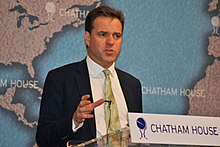 ](https://en.wikipedia.org/wiki/File:Niall_Ferguson_-_Chatham_House_2011.jpg) | [](https://en.wikipedia.org/wiki/File:Niall_Ferguson_-_Chatham_House_2011.jpg) | [](https://en.wikipedia.org/wiki/File:Niall_Ferguson_-_Chatham_House_2011.jpg) | [](https://en.wikipedia.org/wiki/File:Niall_Ferguson_-_Chatham_House_2011.jpg) |
| Born | Niall Campbell Ferguson 18 April 1964 (age 54) Glasgow, Scotland | Niall Campbell Ferguson 18 April 1964 (age 54) Glasgow, Scotland | Niall Campbell Ferguson 18 April 1964 (age 54) Glasgow, Scotland |
| Nationality | British | British | British |
| Alma mater | Magdalen College, Oxford | Magdalen College, Oxford | Magdalen College, Oxford |
| Known for | Empire: How Britain Made the Modern World, Civilisation: the West and the Rest | Empire: How Britain Made the Modern World, Civilisation: the West and the Rest | Empire: How Britain Made the Modern World, Civilisation: the West and the Rest |
| Spouse(s) |
|
|
|
| Children | 5 | 5 | 5 |
| Scientific career | Scientific career | Scientific career | Scientific career |
| Fields | International history, economic and financial history, American and British imperial history | International history, economic and financial history, American and British imperial history | International history, economic and financial history, American and British imperial history |
| Institutions | |||
| Influences | Thomas Hobbes, Norman Stone, A. J. P. Taylor, Kenneth Clark, Adam Smith, Friedrich Hayek, Milton Friedman, John Maynard Keynes, David Landes | Thomas Hobbes, Norman Stone, A. J. P. Taylor, Kenneth Clark, Adam Smith, Friedrich Hayek, Milton Friedman, John Maynard Keynes, David Landes | Thomas Hobbes, Norman Stone, A. J. P. Taylor, Kenneth Clark, Adam Smith, Friedrich Hayek, Milton Friedman, John Maynard Keynes, David Landes |
|
:{MENU:(style="position:relative;top:4px"):}: :{:(style="display:block;text-indent:-99999px;overflow:hidden;background:url("):}: :{:(style="display:block;text-indent:-99999px;overflow:hidden;background:url("):}: :{:(style="display:block;text-indent:-99999px;overflow:hidden;background:url("):}: Recorded June 2012 from the BBC Radio 4 programme the Reith Lectures | |||
| Website | www.niallferguson.com | www.niallferguson.com | www.niallferguson.com |
Niall Campbell Ferguson (/:{ˈniːl:(style="border-bottom:1px dotted"):}:/; born 18 April 1964)[1] is a conservative British historian and political commentator. He was a senior research fellow at Jesus College, Oxford and is a visiting professor at the New College of the Humanities. He is also a senior fellow at the Hoover Institution, Stanford University. Before Stanford, he was the Laurence Tisch Professor of History at Harvard University.
Ferguson writes and speaks about international history, economic and financial history, and British and American imperialism.[2] He is known for his contrarian views, like his defence of British empire [3], which has been considered "audacious", "wrong",[4] "ignorant", [5] "informative",[6] "ambitious" and "troubling".[7] He once called himself "a fully paid-up member of the neo-imperialist gang".[8]
He has been a contributing editor for Bloomberg Television[9] and a columnist for Newsweek. Ferguson was an advisor to John McCain's U.S. presidential campaign in 2008, supported Mitt Romney in 2012 and has been a vocal critic of Barack Obama.[10][11] Ferguson received the Ludwig Erhard Prize for Economic Journalism in 2013. In 2018 he resigned from a Stanford program, Cardinal Conversations, after leaked emails proved that he had conspired with members of the Stanford College Republicans to dig up "dirt on a progressive undergraduate", in order to force him out of the program.[12][13]
Contents
- :{1:(style="display:table-cell;padding-left:0px;padding-right:0.5em"):}::{Early life:(style="display:table-cell"):}:
- :{2:(style="display:table-cell;padding-left:0px;padding-right:0.5em"):}::{Career:(style="display:table-cell"):}:
- :{2.1:(style="display:table-cell;padding-left:0px;padding-right:0.5em"):}::{Academic career:(style="display:table-cell"):}:
- :{2.2:(style="display:table-cell;padding-left:0px;padding-right:0.5em"):}::{Business career:(style="display:table-cell"):}:
- :{2.3:(style="display:table-cell;padding-left:0px;padding-right:0.5em"):}::{Career as commentator, documentarian and public intellectual:(style="display:table-cell"):}:
- :{2.4:(style="display:table-cell;padding-left:0px;padding-right:0.5em"):}::{Books:(style="display:table-cell"):}:
- :{2.4.1:(style="display:table-cell;padding-left:0px;padding-right:0.5em"):}::{*The Cash Nexus*:(style="display:table-cell"):}:
- :{2.4.2:(style="display:table-cell;padding-left:0px;padding-right:0.5em"):}::{*Colossus* and *Empire*:(style="display:table-cell"):}:
- :{2.4.3:(style="display:table-cell;padding-left:0px;padding-right:0.5em"):}::{*War of the World*:(style="display:table-cell"):}:
- :{2.4.4:(style="display:table-cell;padding-left:0px;padding-right:0.5em"):}::{*The Ascent of Money*:(style="display:table-cell"):}:
- :{2.4.5:(style="display:table-cell;padding-left:0px;padding-right:0.5em"):}::{*Civilization*:(style="display:table-cell"):}:
- :{2.4.6:(style="display:table-cell;padding-left:0px;padding-right:0.5em"):}::{*Kissinger: 1923–1968: The Idealist*:(style="display:table-cell"):}:
- :{2.4.7:(style="display:table-cell;padding-left:0px;padding-right:0.5em"):}::{*The Square and the Tower*:(style="display:table-cell"):}:
- :{3:(style="display:table-cell;padding-left:0px;padding-right:0.5em"):}::{Opinions and research:(style="display:table-cell"):}:
- :{3.1:(style="display:table-cell;padding-left:0px;padding-right:0.5em"):}::{World War I:(style="display:table-cell"):}:
- :{3.2:(style="display:table-cell;padding-left:0px;padding-right:0.5em"):}::{Rothschilds:(style="display:table-cell"):}:
- :{3.3:(style="display:table-cell;padding-left:0px;padding-right:0.5em"):}::{Counterfactual history:(style="display:table-cell"):}:
- :{3.4:(style="display:table-cell;padding-left:0px;padding-right:0.5em"):}::{Henry Kissinger:(style="display:table-cell"):}:
- :{3.5:(style="display:table-cell;padding-left:0px;padding-right:0.5em"):}::{The British Empire:(style="display:table-cell"):}:
- :{3.6:(style="display:table-cell;padding-left:0px;padding-right:0.5em"):}::{Islam and "Eurabia":(style="display:table-cell"):}:
- :{3.7:(style="display:table-cell;padding-left:0px;padding-right:0.5em"):}::{Iraq War:(style="display:table-cell"):}:
- :{3.8:(style="display:table-cell;padding-left:0px;padding-right:0.5em"):}::{Trump election:(style="display:table-cell"):}:
- :{3.9:(style="display:table-cell;padding-left:0px;padding-right:0.5em"):}::{Trump's "New World Order":(style="display:table-cell"):}:
- :{3.10:(style="display:table-cell;padding-left:0px;padding-right:0.5em"):}::{Economic policy:(style="display:table-cell"):}:
- :{3.11:(style="display:table-cell;padding-left:0px;padding-right:0.5em"):}::{Stanford controversy:(style="display:table-cell"):}:
- :{4:(style="display:table-cell;padding-left:0px;padding-right:0.5em"):}::{Personal life:(style="display:table-cell"):}:
- :{5:(style="display:table-cell;padding-left:0px;padding-right:0.5em"):}::{Bibliography:(style="display:table-cell"):}:
- :{6:(style="display:table-cell;padding-left:0px;padding-right:0.5em"):}::{See also:(style="display:table-cell"):}:
- :{7:(style="display:table-cell;padding-left:0px;padding-right:0.5em"):}::{References:(style="display:table-cell"):}:
- :{8:(style="display:table-cell;padding-left:0px;padding-right:0.5em"):}::{External links:(style="display:table-cell"):}:
Early life
Ferguson was born in Glasgow, Scotland, on 18 April 1964 to Dr James Campbell Ferguson, a physician, and Molly Archibald Hamilton, a physics teacher.[14][15] He attended The Glasgow Academy.[16] He was brought up as, and remains, an atheist.[17]
Ferguson cites his father as instilling in him a strong sense of self-discipline and of the moral value of work, while his mother encouraged his creative side.[18] His journalist maternal grandfather encouraged him to write.[18] Ferguson cites his reading of War and Peace as persuading him to study history rather than English at university.
University of Oxford
Ferguson received a demyship (scholarship) at Magdalen College, Oxford.[19] While there he wrote the 90-minute student film The Labours of Hercules Sprote and befriended Andrew Sullivan, who shared his interest in right-wing politics and punk music.[20] He had become a Thatcherite by 1982. He graduated with a first-class honours degree in history in 1985.[19]
Ferguson studied in 1987 and 1988 as a Hanseatic Scholar in Hamburg and Berlin. He received his Doctor of Philosophy degree from Magdalen College in 1989, and his dissertation was titled "Business and Politics in the German Inflation: Hamburg 1914–1924".[21]
University of Cambridge
Ferguson continued his education and research at the University of Cambridge, serving as a research fellow at Christ's College, Cambridge for a number of years. It is during this period that he completed much of the research and writing for his first book. After this, Ferguson moved to Peterhouse, the oldest and most traditional college in Cambridge. He was elected as an official fellow and became a lecturer at Peterhouse, Cambridge from 1990 to 1992, teaching a number of undergraduate and postgraduate students who would go on to be influential in the Cambridge School of history.
Career
Academic career
In 1989 Ferguson worked as a research fellow at Christ's College, Cambridge. From 1990 to 1992 he was an official fellow and lecturer at Peterhouse, Cambridge. He then became a fellow and tutor in modern history at Jesus College, Oxford, where in 2000 he was a professor of political and financial history. In 2002 Ferguson was the John Herzog Professor in Financial History at New York University Stern School of Business, and since 2004 he has been the Laurence A. Tisch Professor of History at Harvard University and William Ziegler Professor of Business Administration at Harvard Business School. From 2010 to 2011, Ferguson held the Philippe Roman Chair in history and international affairs at the London School of Economics.[22] Ferguson is a senior research fellow at Jesus College, Cambridge and a senior fellow at the Hoover Institution, Stanford University.
In May 2010, Michael Gove, education secretary, asked Ferguson to advise on the development of a new history syllabus, to be entitled "history as a connected narrative", for schools in England and Wales.[23][24] In June 2011, he joined other academics to set up the New College of the Humanities, a private college in London.[25]
In 2018, Ferguson apologized after fellow historians criticized a Stanford conference on applied history which he organized for including only white men as speakers.[26]
Also in 2018, emails documenting Ferguson's attempts to discredit a student at Stanford University who had been critical of Ferguson's choices of speakers invited to the Cardinal Conversations program were released to the public and University administrators. He teamed with a Republican student group to find information that might discredit the student. Ferguson resigned from leadership of the program once university administrators became aware of his actions.[13][27]
Business career
In 2007, Ferguson was appointed as an investment management consultant by GLG Partners, to advise on geopolitical risk as well as current structural issues in economic behaviour relating to investment decisions.[28]GLG is a UK-based hedge fund management firm headed by Noam Gottesman.[29]
Career as commentator, documentarian and public intellectual
Ferguson wrote for The Sunday Telegraph, leaving in 2007 to become a contributing editor to the Financial Times.[30][31] He also writes for Newsweek.[23] In his commentary, Ferguson has described the European Unionas a disaster waiting to happen,[32] and has criticised President Vladimir Putin of Russia for authoritarianism.[33]
Television documentaries
- Empire (2003)
- American Colossus (2004)
- The War of the World (2006)
- The Ascent of Money (2008)
- Civilization: Is the West History? (2011)
- China: Triumph and Turmoil (2012)
- The Pity of War (2014)
BBC Reith Lectures

Niall Ferguson recording the third of his 2012BBC Reith Lecture at Gresham College
In May 2012 the BBC announced Niall Ferguson was to present its annual Reith Lectures – a prestigious series of radio lectures which were first broadcast in 1948. These four lectures, titled The Rule of Law and its Enemies, examine the role man-made institutions have played in the economic and political spheres.[34]
In the first lecture, held at the London School of Economics, titled The Human Hive, Ferguson argues for greater openness from governments, saying they should publish accounts which clearly state all assets and liabilities. Governments, he said, should also follow the lead of business and adopt the Generally Accepted Accounting Principles and, above all, generational accounts should be prepared on a regular basis to make absolutely clear the inter-generational implications of current fiscal policy. In the lecture, Ferguson says young voters should be more supportive of government austerity measures if they do not wish to pay further down the line for the profligacy of the baby boomer generation.[35]
In the second lecture, The Darwinian Economy, Ferguson reflects on the causes of the global financial crisis, and erroneous conclusions that many people have drawn from it about the role of regulation, such as whether it is in fact "the disease of which it purports to be the cure".
The Landscape of Law was the third lecture, delivered at Gresham College. It examines the rule of law in comparative terms, asking how far the common law's claims to superiority over other systems are credible, and whether we are living through a time of 'creeping legal degeneration' in the English-speaking world.
The fourth and final lecture, Civil and Uncivil Societies, focuses on institutions (outside the political, economic and legal realms) designed to preserve and transmit particular knowledge and values. It asks whether the modern state is quietly killing civil society in the Western world, and what non-Western societies can do to build a vibrant civil society.
The first lecture was broadcast on BBC Radio 4 and the BBC World Service on Tuesday, 19 June 2012.[36] The series is available as a BBC podcast.[37]
Books
The Cash Nexus
In his 2001 book, The Cash Nexus, which he wrote following a year as Houblon-Norman Fellow at the Bank of England,[31] Ferguson argues that the popular saying, "money makes the world go 'round", is wrong; instead he presented a case for human actions in history motivated by far more than just economic concerns.
Colossus and Empire
In his books Colossus and Empire, Ferguson presents a reinterpretation of the history of the British Empire and in conclusion proposes that the modern policies of the United Kingdom and the United States, in taking a more active role in resolving conflict arising from the failure of states, are analogous to the "Anglicization" policies adopted by the British Empire throughout the 19th century.[38][39] In Colossus, Ferguson explores the United States' hegemony in foreign affairs and its future role in the world.[40][41] The American writer Michael Lind, responding to Ferguson's advocation of an enlarged American military through conscription, accused Ferguson of engaging in apocalyptic alarmism about the possibility of a world without the United States as the dominant power and of a casual disregard for the value of human life.[42]
War of the World
In War of the World, published in 2006, Ferguson argued that combination of economic volatility, decaying empires, psychopathic dictators, racially/ethnically motivated and institutionalised violence resulted in the wars and the genocides of what he calls "History's Age of Hatred". The New York Times Book Review named War of the World one of the 100 Notable Books of the Year in 2006, while the International Herald Tribune called it "one of the most intriguing attempts by an historian to explain man's inhumanity to man".[43] Ferguson addresses the paradox that, though the 20th century was "so bloody", it was also "a time of unparalleled [economic] progress". As with his earlier work Empire, War of the World was accompanied by a Channel 4 television series presented by Ferguson.[44]
The Ascent of Money
Published in 2008, The Ascent of Money examines the history of money, credit, and banking. In it Ferguson predicts a financial crisis as a result of the world economy and in particular the United States using too much credit. He cites the China–America dynamic which he refers to as Chimerica where an Asian "savings glut" helped create the subprime mortgage crisis with an influx of easy money.[45] While researching this book, in early 2007, Ferguson attended a session at a conference in Las Vegas at which a hedge fund manager stated there would never be another recession. Ferguson challenged this, and later the two agreed on a $14,000, 7 to 1 bet, that there would be a recession within five years. Ferguson collected $98,000.[46]
Civilization
Published in 2011, Civilization: The West and the Rest examines what Ferguson calls the most "interesting question" of our day: "Why, beginning around 1500, did a few small polities on the western end of the Eurasian landmass come to dominate the rest of the world?" The Economist in a review wrote:
"Mr Ferguson starts with the overwhelming success of European civilisation. In 1500 Europe's future imperial powers controlled 10% of the world's territories and generated just over 40% of its wealth. By 1913, at the height of empire, the West controlled almost 60% of the territories, which together generated almost 80% of the wealth. This stunning fact is lost, he regrets, on a generation that has supplanted history's sweep with a feeble-minded relativism that holds “all civilisations as somehow equal”.[47]
Ferguson attributes this divergence to the West's development of six "killer apps" largely missing elsewhere in the world – "competition, science, the rule of law, medicine, consumerism and the work ethic".[23] Ferguson compared and contrasted how the West's "killer apps" allowed the West to triumph over "the Rest".[47] Thus, Ferguson argued the rowdy and savage competition between European merchants created far more wealth than did the static and ordered society of Qing China; that the tolerance extended to thinkers like Sir Isaac Newton in Stuart England had no counterpart in the Ottoman Empire where Takiyuddin's “blasphemous” observatory was demolished for contradicting the teachings of Islam which ensured that Western civilization was capable of making scientific advances that Islamic civilization never could; and because respect for private property was far stronger in British America than it ever was in Spanish America, which led to the United States and Canada becoming prosperous societies while Latin America was and remains mired in poverty.[47]However, Ferguson also argued that the modern West had lost its edge and the future belongs to the nations of Asia, especially China, which has adopted the West's "killer apps".[47] Ferguson argues that in the coming years will see a steady decline of the West and China and the rest of the Asian nations will be the rising powers.[47] A related documentary Civilization: Is the West History? was broadcast as a six-part series on Channel 4 in March and April 2011.[48]
Kissinger: 1923–1968: The Idealist
Kissinger The Idealist, Volume I, published in September 2015, is the first part of a planned two-part biography of Henry Kissinger based on unprecedented access to his private papers. The book starts with a quote from a letter which Kissinger wrote in 1972. The book examines Kissinger's life from being a refugee and fleeing Germany in 1938, to serving in the US army as a "free man" in World War II, to studying at Harvard. The book also explores the history of Kissinger joining the Kennedy administration and later becoming critical of its foreign policy, to supporting Nelson Rockefeller on three failed presidential bids, to finally joining the Nixonadministration. The book also includes Kissinger's early evaluation of the Vietnam war and his efforts to negotiate with the North Vietnamese in Paris. The Economist wrote in a review about The Idealist: "Mr Ferguson, a British historian also at Harvard, has in the past sometimes produced work that is rushed and uneven. Not here. Like Mr Kissinger or loathe him, this is a work of engrossing scholarship."[49] In a negative review of The Idealist, the American journalist Michael O'Donnell questioned Ferguson's interpretation of Kissinger's actions leading up to Nixon's election as President.[50]
The Square and the Tower
Ferguson proposed a modified version of group selection that history can be explained by the evolution of human networks. He wrote, "Man, with his unrivaled neural network, was born to network."[51] The title refers to a transition from hierarchical, "tower" networks to flatter, "square" network connections between individuals. John Gray in a review of the book was not convinced. He wrote, "He offers a mix of metaphor and what purports to be a new science."[52]
Opinions and research
World War I
In 1998, Ferguson published The Pity of War: Explaining World War One, which with the help of research assistants he was able to write in just five months.[19][20] This is an analytic account of what Ferguson considered to be the ten great myths of the Great War. The book generated much controversy, particularly Ferguson's suggestion that it might have proved more beneficial for Europe if Britain had stayed out of the First World War in 1914, thereby allowing Germany to win.[53] Ferguson has argued that the British decision to intervene was what stopped a German victory in 1914–15. Furthermore, Ferguson expressed disagreement with the Sonderweg interpretation of German history championed by some German historians such as Fritz Fischer, Hans-Ulrich Wehler, Hans Mommsen and Wolfgang Mommsen, who argued that the German Empiredeliberately started an aggressive war in 1914. Likewise, Ferguson has often attacked the work of the German historian Michael Stürmer, who argued that it was Germany's geographical situation in Central Europe that determined the course of German history.
On the contrary, Ferguson maintained that Germany waged a preventive war in 1914, a war largely forced on the Germans by reckless and irresponsible British diplomacy. In particular, Ferguson accused the British Foreign Secretary Sir Edward Grey of maintaining an ambiguous attitude to the question of whether Britain would enter the war or not, and thus confusing Berlin over just what was the British attitude towards the question of intervention in the war.[54] Ferguson accused London of unnecessarily allowing a regional war in Europe to escalate into a world war. Moreover, Ferguson denied that the origins of National Socialism could be traced back to Imperial Germany; instead Ferguson asserted the origins of Nazism could only be traced back to the First World War and its aftermath.
Ferguson attacked a number of ideas that he called "myths" in the book. They are listed here (with his counter-arguments in parentheses):
- That Germany was a highly militarist country before 1914 (Ferguson claims Germany was Europe's most anti-militarist country).[55]
- That naval challenges mounted by Germany drove Britain into informal alliances with France and Russia before 1914 (Ferguson claims the British chose alliances with France and Russia as a form of appeasement due to the strength of those nations, and an Anglo-German alliance failed to materialize due to German weakness).[56]
- That British foreign policy was driven by legitimate fears of Germany (Ferguson claims Germany posed no threat to Britain before 1914, and that all British fears of Germany were due to irrational anti-German prejudices).[57]
- That the pre-1914 arms race was consuming ever larger portions of national budgets at an unsustainable rate (Ferguson claims that the only limitations on more military spending before 1914 were political, not economic).[58]
- That World War I was, as Fritz Fischer claimed, a war of aggression on the part of Germany that necessitated British involvement to stop Germany from conquering Europe (Ferguson claims that if Germany had been victorious, something like the European Union would have been created in 1914, and that it would have been for the best if Britain had chosen to opt out of war in 1914).[59]
- That most people were happy with the outbreak of war in 1914 (Ferguson claims that most Europeans were saddened by the coming of war).[59]
- That propaganda was successful in making men wish to fight (Ferguson argues the opposite).[60]
- That the Allies made the best use of their economic resources (Ferguson argues that the Allies "squandered" their economic resources).[59]
- That the British and the French had the better armies (Ferguson claims the German Army was superior).[61]
- That the Allies were more efficient at killing Germans (Ferguson argues that the Germans were more efficient at killing the Allies).[62]
- That most soldiers hated fighting in the war (Ferguson argues most soldiers fought more or less willingly).[63]
- That the British treated German prisoners of war well (Ferguson argues the British routinely killed German POWs).[64]
- That Germany was faced with reparations after 1921 that could not be paid except at ruinous economic cost (Ferguson argues that Germany could easily have paid reparations had there been the political will).[65]
Another controversial aspect of The Pity of War is Ferguson's use of counterfactual history also known as "speculative" or "hypothetical" history. In the book, Ferguson presents a hypothetical version of Europe being, under Imperial German domination, a peaceful, prosperous, democratic continent, without ideologies like communism or fascism.[66] In Ferguson's view, had Germany won World War I, then the lives of millions would have been saved, something like the European Union would have been founded in 1914, and Britain would have remained an empire as well as the world's dominant financial power.[66]
The French historians Stéphane Audoin-Rouzeau and Annette Becker were dubious about much of Ferguson's methodology and conclusions in The Pity of War, but praised him for the chapter dealing with the executions of POWs, arguing that Ferguson had exposed a dark side of the war that until then had been ignored.[67] The American writer Michael Lind wrote about The Pity of War:
Like the historian John Charmley, who expressed the same wish in the case of World War II, Ferguson belongs to the fringe element of British conservatism that regrets the absence of a German-British deal in the first half of the 20th century that would have marginalized the United States and might have allowed the British Empire to survive to this day. According to Ferguson, Britain should have stayed out of World War I and allowed Imperial Germany to smash France and Russia and create a continental empire from the Atlantic to the Middle East. The joke is on Ferguson's American conservative admirers, inasmuch as he laments the defeat of the Kaiser's Germany because it accelerated the replacement of the British Empire by the United States of America and the eclipse of the City of London by Wall Street.[42]
The American historian Gerhard Weinberg in a review of The Pity of War strongly criticized Ferguson for advancing the thesis that it was idiotic for Britain to have fought a Germany that posed no danger.[68] Weinberg accused Ferguson of completely ignoring the chief foreign policy aim of Wilhelm II from 1897 onwards, namely Weltpolitik ("World Politics") and argued it was absurd for Ferguson to claim that allowing Germany to defeat France and Russia would have posed no danger to Britain.[68] Weinberg wrote that Ferguson was wrong to claim that Germany's interests were limited only to Europe, and maintained that if the Reich did defeat France in 1914, then Germany would have taken over the French colonies in Asia and Africa which would have definitely affected the balance of power all over the world, not just in Europe.[68] Finally, Weinberg attacked Ferguson for claiming that the Tirpitz Plan was not a danger to Britain and that Britain had no reason to fear Germany's naval ambitions, sarcastically asking if that was really the case, then why did the British redeploy so much of their fleet from around the world to the North Sea and spend so much money building warships in the Anglo-German naval arms race?[68] Weinberg accused Ferguson of distorting both German and British history and ignoring any evidence that did not fit with his thesis that Britain should never have fought Germany, stating that The Pity of War was interesting as a historical provocation, but was not persuasive as history.[69]
Rothschilds
Ferguson wrote two volumes about the prominent Rothschild family: The House of Rothschild: Volume 1: Money's Prophets: 1798–1848 and The House of Rothschild: Volume 2: The World's Banker: 1849–1999. These books were the result of original archival research.[70] The books won the Wadsworth Prize for Business History and were also short-listed for the Jewish Quarterly-Wingate Literary Award and the American National Jewish Book Award.[31]
The books were acclaimed by some historians,[70] although they did receive some criticism. John Lewis Gaddis, a Cold War–era historian, praised Ferguson's "unrivaled range, productivity and visibility", while criticising the book as unpersuasive and containing contradictory claims.[71] Marxist historian Eric Hobsbawm had praised Ferguson as an excellent historian, but criticised him as a "nostalgist for empire".[72][73] In a mixed review of a later book by Ferguson, The War of the World: History’s Age of Hatred, a reviewer for The Economist described how many regard Ferguson's two books on the Rothschilds "as one of the finest studies of its kind."[74]
Counterfactual history
Ferguson sometimes champions counterfactual history, also known as "speculative" or "hypothetical" history, and edited a collection of essays, titled Virtual History: Alternatives and Counterfactuals (1997), exploring the subject. Ferguson likes to imagine alternative outcomes as a way of stressing the contingent aspects of history. For Ferguson, great forces don't make history; individuals do, and nothing is predetermined. Thus, for Ferguson, there are no paths in history that will determine how things will work out. The world is neither progressing nor regressing; only the actions of individuals determine whether we will live in a better or worse world. His championing of the method has been controversial within the field.[75] In a 2011 review of Ferguson's book Civilization: The West and the Rest, Noel Malcolm (Senior Research Fellow in History at All Souls College at Oxford University) stated that: "Students may find this an intriguing introduction to a wide range of human history; but they will get an odd idea of how historical argument is to be conducted, if they learn it from this book."[76]
Henry Kissinger
In 2003, former U.S. Secretary of State Henry Kissinger provided Ferguson with access to his White House diaries, letters, and archives for what Ferguson calls a "warts-and-all biography" of Kissinger.[77] In 2015, he published the first volume in a two-part biography titled Kissinger: 1923–1968: The Idealist from Penguin Press.
The thesis of this first volume was that Kissinger was very much influenced in his academic and political development by the philosopher Immanuel Kant, and especially by an interpretation of Kant that he learned from a mentor at Harvard University, William Yandell Elliott.
The British Empire
Ferguson has defended the British Empire, historians and commentators have considered his views both "audacious" and "wrong", [78] "informative",[79] "ambitious" and "troubling".[80] Ferguson is critical of what he calls the "self-flagellation" that he says characterises modern European thought.
"The moral simplification urge is an extraordinarily powerful one, especially in this country, where imperial guilt can lead to self-flagellation," he told a reporter. "And it leads to very simplistic judgments. The rulers of western Africa prior to the European empires were not running some kind of scout camp. They were engaged in the slave trade. They showed zero sign of developing the country's economic resources. Did Senegal ultimately benefit from French rule? Yes, it's clear. And the counterfactual idea that somehow the indigenous rulers would have been more successful in economic development doesn't have any credibility at all."[23]
In the related TV documentary of 2003, Empire Ferguson argued that the mantle of the British Empire as the world's foremost power was passed on to the United States during the Second World War, which led to Ferguson favorably reciting Rudyard Kipling's poem "The White Man's Burden"—written in 1898 to praise the United States for becoming an imperial power by conquering the Philippines from Spain—as just as relevant today as it was in 1898.[81] Ferguson argues that the United States should celebrate being an imperial power comparable to Britain, conquering other people's countries for what Ferguson insists is their own good, and complains that far too often Americans refuse to accept that nation has an imperialist role to play in the modern world.[81]
Richard Drayton, Rhodes Professor of Imperial History at the University of London, has stated that it was correct of Seumas Milne to associate "Ferguson with an attempt to "rehabilitate empire" in the service of contemporary great power interests".[82][83]
Bernard Porter attacked Empire in The London Review of Books as a "panegyric to British colonialism".[84] Ferguson in response to this drew Porter's attention to the conclusion of the book, where he writes: "No one would claim that the record of the British Empire was unblemished. On the contrary, I have tried to show how often it failed to live up to its own ideal of individual liberty, particularly in the early era of enslavement, transportation and the 'ethnic cleansing' of indigenous peoples." Ferguson argues however that the British Empire was preferable to the alternatives:
The 19th-century empire undeniably pioneered free trade, free capital movements and, with the abolition of slavery, free labour. It invested immense sums in developing a global network of modern communications. It spread and enforced the rule of law over vast areas. Though it fought many small wars, the empire maintained a global peace unmatched before or since. In the 20th century too the empire more than justified its own existence. For the alternatives to British rule represented by the German and Japanese empires were clearly – and they admitted it themselves – far worse. And without its empire, it is inconceivable that Britain could have withstood them.[84]
In November 2011 Pankaj Mishra reviewed Civilisation: The West and the Rest unfavourably in the London Review of Books.[85] Ferguson demanded an apology and threatened to sue Mishra on charges of libel due to allegations of racism.[86]
Islam and "Eurabia"
Matthew Carr wrote in Race & Class that "Niall Ferguson, the conservative English [sic] historian and enthusiastic advocate of a new American empire, has also embraced the Eurabian idea in a widely reproduced article entitled 'Eurabia?',[87][not ^in ^citation given] in which he laments the 'de-Christianization of Europe' and the secularism of the continent that leaves it 'weak in the face of fanaticism'." Carr adds that "Ferguson sees the recent establishment of a department of Islamic studies in his Oxford college as another symptom of 'the creeping Islamicization of a decadent Christendom',"[citation needed] and that in a 2004 lecture at the American Enterprise Institute entitled 'The End of Europe?',[88]
Ferguson struck a similarly Spenglerian note, conjuring the term 'impire' to depict a process in which a 'political entity, instead of expanding outwards towards its periphery, exporting power, implodes – when the energies come from outside into that entity'. In Ferguson's opinion, this process was already under way in a decadent 'post-Christian' Europe that was drifting inexorably towards the dark denouement of a vanquished civilisation and the fatal embrace of Islam.[89]
In 2015, Ferguson deplored the Paris attacks committed by Islamic State terrorists, but stated he was not going to "stand" with the French as he argued that France was a lost cause, a declining state faced with an unstoppable Islamic wave that would sweep away everything that tried to oppose it.[90] Ferguson compared the modern European Union to the Western Roman Empire, describing modern Europe as not that different from the world depicted by Edward Gibbon in his book The Decline and Fall of the Roman Empire.[90] Ferguson wrote that:
Uncannily similar processes are destroying the European Union today...Let us be clear about what is happening. Like the Roman Empire in the early fifth century, Europe has allowed its defenses to crumble. As its wealth has grown, so its military prowess has shrunk, along with its self-belief. It has grown decadent in its shopping malls and sports stadiums. At the same time, it has opened its gates to outsiders who have coveted its wealth without renouncing their ancestral faith.[90]
Ferguson wrote the mass influx of refugees into Europe from Syria was a modern version of the Völkerwanderung when the Huns burst out of Asia and invaded Europe, causing millions of the Germanic peoples to flee into the presumed safety of the Roman Empire, smashing their way in as the Romans attempted unsuccessfully to stop the Germans from entering the empire.[90] Ferguson writes that Gibbon was wrong to claim the Roman Empire collapsed slowly and argues that the view among a growing number of modern scholars is that the collapse of the Roman empire was swift and violent; unforeseeable by Romans of the day, just as the collapse of modern European civilization would likewise be for modern Europeans.[90]
Iraq War
Ferguson supported the 2003 Iraq War, and he is on record as not necessarily opposed to future western incursions around the world.
It's all very well for us to sit here in the West with our high incomes and cushy lives, and say it's immoral to violate the sovereignty of another state. But if the effect of that is to bring people in that country economic and political freedom, to raise their standard of living, to increase their life expectancy, then don't rule it out.[23]
Trump election
On the rise of Republican Party presidential candidate Donald Trump, Ferguson was quoted in early 2016: "If you bother to read some of the serious analysis of Trump's support, you realize that it's a very fragile thing and highly unlikely to deliver what he needs in the crucial first phase of the primaries ... By the time we get to March–April, it's all over. I think there's going to be a wonderful catharsis, I’m really looking forward to it: Trump's humiliation. Bring it on."[91] Trump eventually won the nomination.
Three weeks before the 2016 United States presidential election, Ferguson said in an interview that it "was over for Donald Trump"; that "Trump had flamed out in all three Presidential debates"; that, "I don't think there can be any last minute surprise to rescue him [Trump]"; that there was no hope of Donald Trump winning Independent voters and that Trump was "gone as a candidate", adding that "it seems to me clear that she [Hillary Clinton] is going to be the first female President of the United States. The only question is how bad does his [Trump's] flaming out affect candidates for the Senate, candidates for the House, further down on the ballot."[92]Trump was elected president and the Republican Party, while losing seats, retained control of both houses of Congress.
Trump's "New World Order"
In an article from November 2016 in The Boston Globe, Ferguson advised that Trump should support the efforts of Prime Minister Theresa May to have Britain leave the European Union as the best way of breaking up the EU, and sign a free trade agreement with the United Kingdom once Brexit is complete.[93] Ferguson advised that Trump should give "recognition" to Russia as a "great power", and should work with President Vladimir Putin by giving Russia a sphere of influence in Eurasia and the Middle East.[93] In the same column, Ferguson advised Trump not to engage in a trade war with China, and work with President Xi Jinping to create a Sino-American partnership.[93] Ferguson argued that Trump and Putin should work for the victory of Marine Le Pen (who wants France to leave the EU) and the *Front national* in the 2017 French elections, arguing that Le Pen was the French politician most congenial to the Trump administration.[93] Ferguson argued that a quintumvirate of Trump, Putin, Xi, May and Le Pen was the world's best hope for peace and prosperity.[93]
Economic policy
In its edition of 15 August 2005, The New Republic published "The New New Deal", an essay by Ferguson and Laurence J. Kotlikoff, a professor of economics at Boston University. The two scholars called for the following changes to the American government's fiscal and income security policies:[94]
- Replacing the personal income tax, corporate income tax, Federal Insurance Contributions Act tax (FICA), estate tax, and gift tax with a 33% Federal Retail Sales Tax (FRST), plus a monthly rebate, amounting to the amount of FRST that a household with similar demographics would pay if its income were at the poverty line. See also: FairTax
- Replacing the old age benefits paid under Social Security with a Personal Security System, consisting of private retirement accounts for all citizens, plus a government benefit payable to those whose savings were insufficient to afford a minimum retirement income
- Replacing Medicare and Medicaid with a Medical Security System that would provide health insurance vouchers to all citizens, the value of which would be determined by one's health
- Cutting federal discretionary spending by 20%
In November 2012, Ferguson stated in a video with CNN that the U.S. has enough energy resources to move towards energy independence and could possibly enter a new economic golden age due to the related socio-economic growth—coming out of the post-world economic recession doldrums.[95]
Ferguson was an attendee of the 2012 Bilderberg Group meeting, where he was a speaker on economic policy.[96]
Ferguson was highly critical of Britain's vote to leave the European Union, warning that "the economic consequences will be dire".[97] Later, after backing the Remain campaign during the referendum, Ferguson changed his mind and came out in support of Britain's exit from the EU.
Exchanges with Paul Krugman
In May 2009, Ferguson became involved in a high-profile exchange of views with economist Paul Krugman arising out of a panel discussion hosted by PEN/New York Review on 30 April 2009, regarding the U.S. economy. Ferguson contended that the Obama administration's policies are simultaneously Keynesian and monetarist, in an "incoherent" mix, and specifically claimed that the government's issuance of a multitude of new bonds would cause an increase in interest rates.[98]
Krugman argued that Ferguson's view is "resurrecting 75-year old fallacies" and full of "basic errors". He also stated that Ferguson is a "poseur" who "hasn't bothered to understand the basics, relying on snide comments and surface cleverness to convey the impression of wisdom. It's all style, no comprehension of substance."[99][100][101]
In 2012, Jonathan Portes, the director of the National Institute of Economic and Social Research, said that subsequent events had shown Ferguson to be wrong: "As we all know, since then both the US and UK have had deficits running at historically extremely high levels, and long-term interest rates at historic lows: as Krugman has repeatedly pointed out, the (IS-LM) textbook has been spot on."[102]
Later in 2012, after Ferguson wrote a cover story for Newsweek arguing that Mitt Romney should be elected in the upcoming US presidential election, Krugman wrote that there were multiple errors and misrepresentations in the story, concluding "We're not talking about ideology or even economic analysis here – just a plain misrepresentation of the facts, with an august publication letting itself be used to misinform readers. The Times would require an abject correction if something like that slipped through. Will Newsweek?"[103] Ferguson denied that he had misrepresented the facts in an online rebuttal.[104] Matthew O'Briencountered that Ferguson was still distorting the meaning of the Congressional Budget Office report being discussed, and that the entire piece could be read as an effort to deceive.[105]
In 2013, Ferguson, naming Dean Baker, Josh Barro, Brad DeLong, Matthew O'Brien, Noah Smith, Matthew Yglesias and Justin Wolfers, attacked "Krugman and his acolytes," in his three-part essay on why he dislikes Paul Krugman.[106] The essay title originally comes from a post by Noah Smith.[107]
Remarks on Keynes' sexual orientation
investor conf
http://www.businessinsider.com/harvard-niall-ferguson-remarks-about-keynes-2013-5
At a May 2013 investment conference in Carlsbad, California, Ferguson was asked about his views on economist John Maynard Keynes's quotation that "in the long run we are all dead." Ferguson stated that Keynes was indifferent to the future because he was gay and did not have children.[108] The remarks were widely criticised for being offensive, factually inaccurate, and a distortion of Keynes' ideas.[109][110]
Ferguson posted an apology for these statements shortly after reports of his words were widely disseminated, saying his comments were "as stupid as they were insensitive".[111][112] In the apology, Ferguson stated: "My disagreements with Keynes's economic philosophy have never had anything to do with his sexual orientation. It is simply false to suggest, as I did, that his approach to economic policy was inspired by any aspect of his personal life."[113]
Stanford controversy
In 2018, leaked emails showed he told two College Republican student activists at Stanford University, John Rice-Cameron and Max Minshull, to coordinate "opposition research" on Michael Ocon, a left-leaning student leader. Ferguson resigned from his leadership role in the Cardinal Conversations program after the email chain became public knowledge.[13]