liz truss PM
---
PENSION?
neglected
HERITAGE
NAVARRO
---
===
liz truss cspan 5 24 heritage
~ biden but endorse trump, said he was better oN for policy?
===
JOHN OLIVER DID NOT OUTLAST HEAD OF LETTUCE
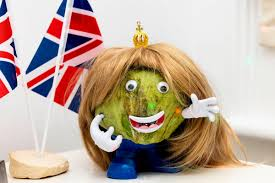
GGL 6 26
AI Overview
The concepts provided represent contrasting economic schools of thought, ranging from the radical deregulation of Liz Truss’s brief premiership to the laissez-faire principles of the Austrian School and the economic nationalism of Peter Navarro. [1]
These elements interact within modern economic debates through distinct ideological frameworks:
- Liz Truss and Free Market "Trussonomics"
Former UK Prime Minister Liz Truss attempted to implement a high-octane version of free-market economics. Her 2022 "mini-budget" aimed to shock the British economy into growth through massive unfunded tax cuts, supply-side deregulation, and removing caps on bankers' bonuses. However, because these tax cuts were paired with extensive government energy subsidies—rather than the immediate spending cuts advocated by true small-government purists—the plan triggered massive market turmoil and led to her swift resignation. [1, 2, 3]
- The Austrian School of Economics
The Austrian School (championed by thinkers like Friedrich Hayek and Ludwig von Mises) is a heterodox school of economic thought that takes free-market ideas to a more radical conclusion than mainstream economics. Key characteristics include: [1, 2]
- Anti-Interventionist: Asserts that government manipulation of interest rates and money printing causes artificial booms that inevitably lead to economic crashes. [1, 2]
- Spontaneous Order: Argues that the collective, subjective choices of individual consumers and entrepreneurs organize the market far better than any centralized government planning. [1]
- The Connection: While free-market think tanks influenced Liz Truss, some purist Austrian economists distanced themselves from her policies. They argued that her use of state borrowing to fund energy price caps violated the foundational Austrian principle of minimal state intervention. [1]
- Peter Navarro and Economic Nationalism
Peter Navarro, a prominent economic advisor during the Trump administration, represents a stark departure from both traditional free-market ideology and Austrian economics. [1, 2]
- Protectionist Trade Policy: Unlike Austrian and free-market theorists who advocate for completely open global trade, Navarro champions tariff-heavy "economic nationalism". [1, 2, 3]
- State Intervention: Navarro views trade as a zero-sum game and supports aggressive government intervention to protect domestic manufacturing, restrict imports, and combat globalist trade structures. [1]
Summary of Differences
| Ideological Force [1, 2, 3, 4, 5, 6, 7, 8, 9] | Core Principle | View on Trade | View on Government's Role |
|---|---|---|---|
| Austrian School | Spontaneous order driven by individual choice. | Unrestricted global free trade. | Extremely limited; no monetary manipulation. |
| Liz Truss | Supply-side growth through domestic tax incentives. | Pro-global free trade partnerships. | Low taxes and deregulation, but utilized state-backed subsidies. |
| Peter Navarro | Domestic manufacturing revival via trade defense. | Protectionist; heavy use of tariffs. | High intervention to protect national economic borders. |
AI Overview
Economic commentator and former Trump adviser Stephen Moore heavily praised former British Prime Minister Liz Truss during her 2022 economic agenda. He famously lauded her tax cuts for the wealthy as "exactly the right agenda". However, these policies triggered a severe market crash, leading to her resignation after just 49 days. [1, 2, 3]
The 2022 Policy Endorsement
In September 2022, Liz Truss introduced a sweeping economic plan known as a "mini-budget." It included massive, debt-funded tax cuts for top earners and corporations, which were intended to spur economic growth. [1]
Stephen Moore championed this approach on American media, calling it exciting and stating that "we finally got Thatcher back in Britain under the name of Liz Truss". He urged U.S. Republicans to replicate this supply-side "Trussonomics" strategy domestically. [1, 2]
Market Backlash and Fallout
Instead of stimulating growth, the unfunded tax cuts spooked global financial markets, sending the British pound plummeting and causing interest rates and borrowing costs to surge. [1]
The severe financial instability forced the Bank of England into an emergency intervention to stabilize pension funds. The resulting political crisis forced Truss to abandon her policies, sack her Chancellor of the Exchequer, and ultimately step down as Prime Minister on October 20, 2022, becoming the shortest-serving Prime Minister in U.K. history. [1, 2, 3, 4]
Ongoing Perspectives
Despite the historical market crash, Stephen Moore continued to engage with Liz Truss on economic ideas, even hosting her on his platform to discuss the ongoing fallout from the U.K.'s fiscal struggles. Moore's advocacy for supply-side, low-tax policies—and the cautionary tale of the Truss premiership—has remained a recurring topic in American economic policy debates. [1, 2, 3]
For context on why Liz Truss's economic strategy, which was supported by advisers like Stephen Moore, caused such a massive political and financial uproar in the U.K.:
GGL 6 26
---
LAT

Business Columnist Follow
Oct. 24, 2022
Fox Business talking head Larry Kudlow was over the moon on Sept. 23.
“The new U.K. Prime Minister Liz Truss has laid out a terrific supply-side economic growth plan, which looks a lot like the basic thrust of Kevin McCarthy’s ‘Commitment to America’ plan,” he told viewers of his daily program that day.
What got Kudlow vibrating was Truss’ release of a budget plan that included cutting corporate taxes and slashing the top tax rate on the wealthiest Britons to 40% from 45%.
It’s just very exciting that we finally got Thatcher back in Britain under the name of Liz Truss.
— Economist Arthur Laffer, shortly before Truss was ousted as Prime Minister
Kudlow, a former economic advisor to former President Trump, was correct that the Truss plan closely resembled Republican economic orthodoxy, which begins and ends with tax cuts for the rich.
What prompted him to mention House Minority Leader Kevin McCarthy (R-Bakersfield), was a bit of a mystery, however, since the published version of McCarthy’s program is devoid of the details needed to make the comparison.
Get the latest from Michael Hiltzik
Commentary on economics and more from a Pulitzer Prize winner.
No matter, no matter. The point is that far from being “terrific,” the Truss economic plan was a disaster from the start. The United Kingdom bond market plummeted, sending officials at the Bank of England scurrying to try to rectify the damage.
Britain’s entire political establishment, from right to left, was aghast at Truss’ proposal to pare the country’s tax revenues by about $3.4 billion a year without offering any clue to how she would make up the deficit. The idea that the largest tax cut since 1972 would inspire a wave of entrepreneur-driven growth was widely derided.
Truss and her then-Chancellor (or treasury chief) Kwasi Kwarteng reversed course on the tax cut plan on Oct. 3, nine days after they proposed it. Truss fired Kwarteng 11 days after that. And on Oct. 20, a mere 44 days after taking office, Truss herself was forced to resign, marking the shortest tenure of a prime minister in British history.
If there’s a lesson in all this, Kudlow hasn’t voiced it. Whether he has commented at all on the fall of Liz Truss isn’t clear — no clip of him doing so turns up in a search of the Fox Business channel website. (Fox Business did not immediately respond to a request for comment.)
Voices
Hiltzik: A billionaires tax is a necessity. Even the White House knows it
March 28, 2022
But the Fox Business archives are chockablock with praise for Truss by other right-wing economic pundits, all aired in the first days of her premiership.
Here’s economist Art Laffer on Kudlow’s show on Sept. 28: “Now you’re going to watch Britain perform — outperform — the rest of the world year-in, year-out going forward,” Laffer exulted. “It’s just very exciting that we finally got Thatcher back in Britain under the name of Liz Truss.”
On Kudlow’s Sept. 26 show, Stephen Moore, senior economist at the right-wing think tank FreedomWorks and another former member of the Trump economic brain trust, anointed Truss as a “hero” and a “superstar.” Moore said, “It’s hard to find anything not to like about what she has done so far.”
All this cocksure commentary was accompanied by smirking sideswipes at what Kudlow called “business lefties” who were sounding the alarm about Truss at the outset.
We’ve reported before on the unerring talent of Laffer and Moore for being wrong about economic policy. The burst of praise for Truss and the rapidity with which her program collapsed is something new, however.
To paraphrase the late Joan Didion, they were offering analysis in which “measurable cerebral activity is virtually absent.” The great press critic A.J. Liebling might have described it as “the futility of flapdoodle.”
Didion was taking a swipe at Bob Woodward’s vacuous books, Liebling at the lengthy period of uninformed speculation about the health of Joseph Stalin while he lay on his deathbed in 1953.
The wrong calls on the Truss program reflected a knee-jerk impulse of supply-siders to react to anything even remotely resembling the policies of Margaret Thatcher and Ronald Reagan with sedulous adoration.
Voices
Hiltzik: GOP promises to gut your Social Security, Medicare if it takes power
Oct. 19, 2022
This is a habit that only the most rock-ribbed conservatives in Britain itself continued to display, until “a new generation” of Conservative Party members of parliament, including Truss and Kwarteng, “called for a return to the free-market Thatcherite principles of low tax and supply-side reforms,” observed the Financial Times, which no one would mistake for a liberal newspaper.
Their thesis, as it was under Thatcher and Reagan, was that “tax cuts would pay for themselves if they enabled the economy to grow.”
The truth is that the Thatcher and Reagan revolutions did not allow the British and U.S. economies to grow in a way that benefited everyone. Their policies benefited only the rich. Moreover, today is not the 1980s and Truss is not Thatcher, whose nearly 12 years in office made her the longest-serving prime minister since 1885.
Among British economic observers, there were widespread doubts that the Truss tax cuts would have any measurable effect on growth, especially given the self-imposed head winds facing the British economy. Comparing the impact of Thatcher’s tax cuts to Truss’ was sheer folly.
“Under Thatcher, the top rate was slashed from 80 percent to 40 percent,” recalled Martin Wolf, the chief economics commentator of the Financial Times. “It is debatable whether even that improved performance significantly. This mouse of a change surely cannot do so.... For economic performance, these changes are totemic, not real. For income distribution, however, they will be perfectly real, not totemic.”
Added Paul Johnson, head of the London-based Institute for Fiscal Studies, “It is a lack of productivity growth that has led to the stalling of earnings and living standards.... To a large extent, that lack of growth has been a choice. We have chosen not to invest in education, liberalise the planning system or stay in the European single market. The combined cost of this is huge.”
Voices
Hiltzik: Proof the IRS targets the poor for tax audits while leaving millionaires alone
March 14, 2022
Truss and Kwarteng surely knew that their policy would be ineffective and ruinously expensive. Days before announcing their plan, they fired Tom Scholar, the top civil servant at the Treasury, presumably because they knew he would speak out against the tax cuts. They refused to allow the Office for Budget Responsibility, an independent government fiscal watchdog akin to our Congressional Budget Office, to examine the plan.
As a result of these maneuvers and its basic structure, the Truss plan almost produced an immediate political pushback. The reduction of the top tax rate would directly affect only about 600,000 Britons with annual incomes over about $170,000 — almost exactly the top 1%.
As Johnson calculated, the very richest households, the 0.1% with incomes over about $680,000, would get a tax cut of about $22,500 each. Everyone else would see their basic tax rates cut only to 19% from 20%.
Meanwhile, most Britons would face cuts in government services as the government struggled to cover its increased deficit.
There are lessons in all this for the U.S., particularly for Republican policymakers. One is that clinging to Reagan-style economic policymaking won’t help create growth. It didn’t do so in the past and won’t do so now. Another is that continuing to feed fat cats with tax cuts while impoverishing the rest of America has limited appeal, and eventually the public will get wise.
A third is that serious political leaders admit their mistakes. Truss did so, telling the BBC, “We went too far and too fast.” (Not that her confession was enough to save her job.)
Kudlow, Laffer and Moore were spectacularly wrong about Truss and her policies. If they were honest analysts, they’d admit it. Supply-side economics has been a failure for most Americans. They and their GOP followers should stop clinging to the wreckage.
---
POLITICO EU
September 10, 2024
LONDON — Britain’s shortest-serving prime minister is trying desperately to carve out a new place in the world. So far, it just isn’t happening.
Since becoming the third premier in a row to be ousted by her fellow Conservative MPs, Liz Truss has unsuccessfully sought to rehabilitate a reputation which lay in tatters by the end of her chaotic 49 days in 10 Downing Street.
In Britain she remains the butt of jokes. Labour, now in government after a landslide Tory election defeat under her successor Rishi Sunak, wheels out her ghost every time it needs to score political points.
Now political biographers are picking over the bones of her failure. Her attempts to crack America on a pro-Trump ticket have fallen flat. And Truss can’t even organize in parliament any more because she lost what should have been a safe Conservative seat at the election — the first former PM to suffer such ignominy for more than a century.
A former senior adviser to Truss, who like others in this piece was granted anonymity to speak candidly, said: “There was a time that, as her special advisers, we would have walked over hot coals for her. Not any more — nobody that worked for her in No. 10 wants anything to do with her these days.
“Unless you’re a free-market ideologue, an association with Truss post-No. 10 is a kiss of death for someone’s reputation.”
How not to be PM
It’s a far cry from the afterlife of other former British prime ministers, who have gotten used to racking up lucrative speaking gigs and earning rose-tinted reappraisals of their more controversial moves.
“In the past people like [Harold] Macmillan, [Winston] Churchill, [Harold] Wilson, [James] Callaghan and [Margaret] Thatcher did the decent thing, which was to sort of go off, write their memoirs and then pop their clogs,” said Anthony Seldon, the respected British political historian who has just released a warts-and-all biography of Truss subtitled “How not to be prime minister.”
Other former prime ministers have worked hard to salvage their reputation. Anthony Eden, for instance, attempted to use his time after No. 10 to repair the damage his handling of the 1956 Suez Crisis — seen as one of the great foreign policy debacles of the 20th century — had done to his standing. “He tried to rebuild his reputation on Suez by writing his memoirs, but he didn’t do so as shamelessly as Liz Truss,” Seldon said.
Truss’ memoir “Ten Years to Save the West” was published a mere 18 months after she left office and contained little in the way of regret — instead doubling down on her controversial policy agenda and blasting an economic establishment she argued wrong-footed her administration.
Truss has acknowledged she was not “blameless” for the debt-fueled, tax-slashing government budget that precipitated her downfall. But she has largely trained her fire elsewhere.
“Looking back, that afternoon [of the mini-budget] was probably my happiest moment as prime minister. Little did I know the establishment was about to use every tool at its disposal to fight back,” she wrote.
:{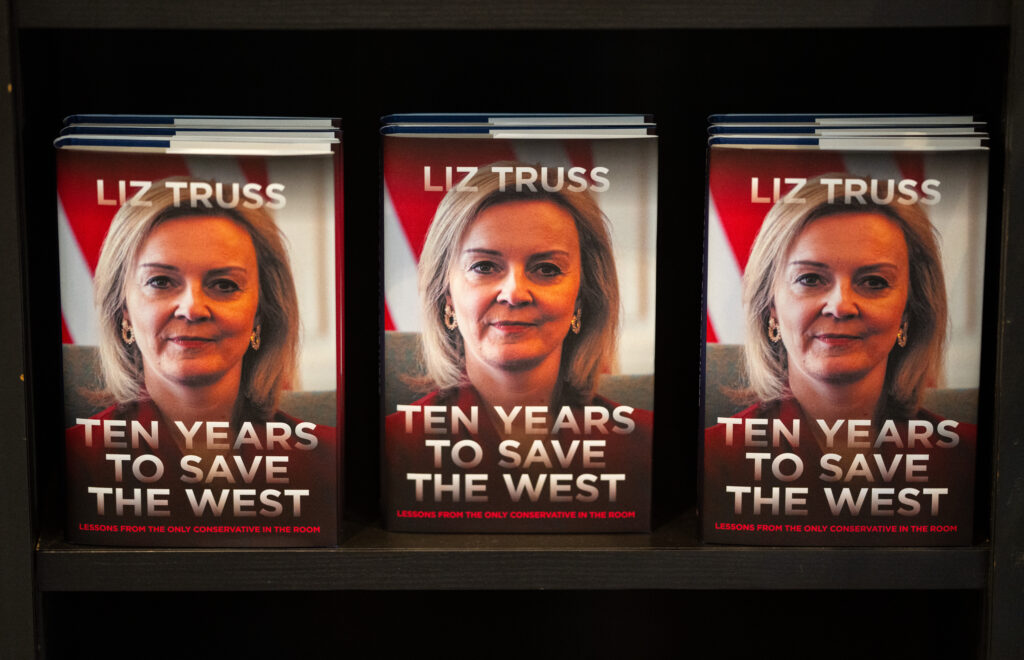 Liz Truss’ memoir “Ten Years to Save the West” was published a mere 18 months after she left office and contained little in the way of regret.
Seldon said prime ministers needed to couple their memoirs with continued “public good” if they were to have any hope of rehabilitation.
“They all write their memoirs, and that’s both a source of revenue for them, but also a chance to get their side of the story across,” he said, adding of the latter: “That never works.”
If Truss were able to use her status to accomplish something the world needs, in the manner of former Labour Prime Minister Gordon Brown’s interventions on global poverty, she would “earn a lot more respect,” Seldon argued.
Instead, Truss’s time in office seems to have become a global cautionary tale: French President Emmanuel Macron was recently reported to have cited her to explain his need to be careful not to upset the markets when appointing a new prime minister.
Team Truss strongly rejected this characterization of her premiership, however.
An ally of the former prime minister said: “The fact that so much more venom is still being directed at Liz than the man who just led the Tories to our worst defeat in history only goes to show that she is advancing an agenda at which her detractors evidently feel threatened.”
Taking aim at the “political and media class” for its focus on Truss, they added: “Frankly it would be a welcome change if they were merely to engage with the arguments she is making rather than indulging in the kind of harassment and intimidation which is condemned as a disgrace if the victim is a left-wing politician but which is apparently fair game if the target is a right-winger.”
Kiss of death
For those who worked for Truss during her decade in government, there is a sense of sadness at what she has become, with former aides saying she is unrecognizable from the politician they felt they got to know and believe in during her ascent to power.
Truss’ time as trade secretary and foreign secretary saw her at the forefront of post-Brexit trade deals. She secured the release of Nazanin Zaghari-Ratcliffe from an Iranian prison, a feat which had eluded multiple predecessors. And she was a key player in the U.K.’s robust response to Russia’s invasion of Ukraine.
Truss successfully read the mood of the Conservative Party after Boris Johnson was ousted, and proved a formidable campaigner who comfortably beat her main rival Sunak to the top job.
She was viewed as socially liberal by colleagues, and was a self-proclaimed LGBT+ ally — a position that won praise in some parts of the Conservative coalition.
Since leaving office, however, Truss has opted to go all in on her support for former U.S. President Donald Trump, declaring the world “safer” under his tenure. She shared the stage with former Trump aide Steve Bannon as he described the British far-right activist Tommy Robinson as a “hero.” She has loudly recanted her description of herself as an LGBT+ ally — and continued to blame the “deep state” for her ouster.
A second former aide who worked with Truss in Downing Street said it was “sad to see” what had happened to her, adding: “I don’t think she’s recovered from the trauma and shock of what happened in No. 10.”
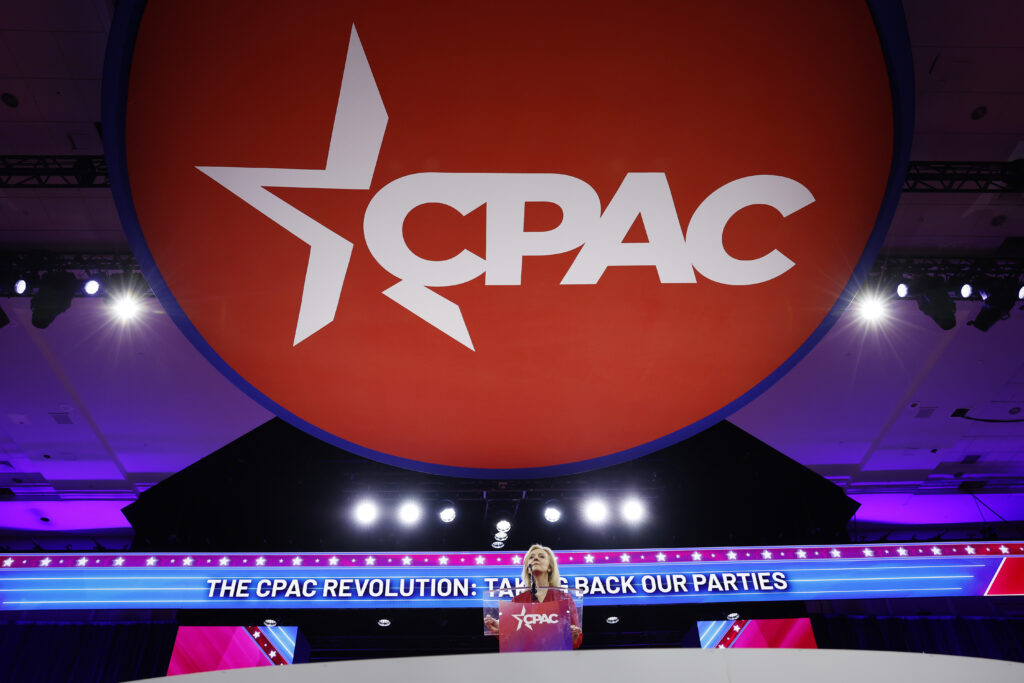 “Her play to the U.S. market and the alt-right scene is about making money. It’s the only place she can go politically. No one else will have her and it’s hard to see her returning to front line Tory politics here.” | Anna Moneymaker/Getty Images.
“She’s chosen to indulge in conspiracy theories, written a slapdash book with no new ideas, and cozied up to right wing populists who are anathema to many of the things she believes in as an economic and social liberal,” they added.
“Her play to the U.S. market and the alt-right scene is about making money. It’s the only place she can go politically. No one else will have her and it’s hard to see her returning to front line Tory politics here.”
The Truss ally quoted earlier in this piece said: “Since leaving office Liz has written a Sunday Times bestseller, convened the Growth Commission to help establish how to kickstart the stagnant economy, inspired the creation of the new Popular Conservatism movement and been warmly welcomed by audiences not only in the U.S. but also in places like Japan, Taiwan, India, numerous European locations and of course across the UK.
“I don’t doubt we can expect to hear much more from her in the weeks, months and years to come,” they added.
A gift for Labour
Britain’s newly-elected Labour government certainly hopes to hear more from Truss.
Her frequent media interventions are seen as a boost by an administration currently trying to explain away the more controversial parts of its policy platform by blaming Truss’ economic turmoil.
“She’s a constant reminder of the chaos the Tories wanted to inflict on the country and why they had to be stopped,” a senior Labour official said.
The government has even gone so far as to introduce a law aimed at preventing a repeat of Truss’ mini-budget, with ministers explicitly name-checking the former prime minister as they debated it last week. “The purpose of this bill is to ensure that never again do we find ourselves in a situation, like at the 2022 Liz Truss mini-budget, in which fiscally significant measures are announced without accompanying [Office for Budget Responsibility] analysis,” said Business Secretary Darren Jones.
His Conservative counterpart Andrew Griffith retorted that the “disreputable bill” would achieve little of substance, branding it a “piece of political theatre.”
As Labour does its best to repeatedly remind voters of the Truss years, some in the Conservative Party are praying for a period of silent reflection from the former prime minister.
“I think the sort of damage she did to the party, and to some extent the country as well, means that however long you duck out in public life for, as soon as you reappear, you remind everyone of what went wrong,” said a former Tory minister who lost his seat in July’s election wipeout.
“I think it was just such an extraordinary car crash, I’m not sure that there is ever a right time to come back.”
---
[### Truss is frantically blowing on the embers of neoliberalism. ...

The Guardian
https://www.theguardian.com › commentisfree › oct › li...](https://www.theguardian.com/commentisfree/2022/oct/14/liz-truss-neoliberalism-free-market-economics)
Oct 14, 2022 — “Attempting to introduce free-market reforms and doing it badly,” he said, “can poison the well for a generation.” The Truss government may be ...Read more
[### Have Liz Truss's 44 days in office destroyed 40 years of ...

The Guardian
https://www.theguardian.com › commentisfree › oct › li...](https://www.theguardian.com/commentisfree/2022/oct/23/liz-truss-kwasi-kwarteng-free-market-philosophy)
Oct 23, 2022 — Have Liz Truss's 44 days in office destroyed 40 years of free market philosophy? ... Bari Weiss is doing to CBS. 13h ago. Congress wants to ...Read more
[### The Observer view on Liz Truss's disastrous 'fiscal event'

The Guardian
https://www.theguardian.com › commentisfree › sep](https://www.theguardian.com/commentisfree/2022/sep/25/observew-view-liz-truss-disastrous-fiscal-event)
Sep 25, 2022 — The first major fiscal intervention by a new prime minister has surely never been greeted with such widespread disdain.Read more
AI Overview
Former UK Prime Minister Liz Truss and journalist Bari Weiss align in their outspoken advocacy for free-market conservatism, limited government regulation, and robust economic liberty. [1, 2]
Truss, known for her brief, low-tax 2022 premiership, and Weiss, founder of the independent media company The Free Press, frequently critique heavy-handed state intervention and champion the values of individual autonomy. The connection between them was highlighted when Truss appeared as a prominent guest at a high-profile gathering hosted by Weiss, where the two engaged on the global necessity of unburdened, supply-side economics. [1, 2, 3]
For further reading, explore The New York Times coverage of the event, or read critiques on Truss's economic legacy in The Guardian.
ATL MO
When Donald Trump launched his tariff war on April 2, lawmakers in Europe struggled to understand the strategy. Was it a bluff, or did he really mean to collapse global trade, stock markets, and the Western alliance in one reckless game of 4-D chess?
On April 9, however, the president discovered something that we in the United Kingdom already know: Against the bond market, there is only 2-D chess, and you always lose. Because the Brits have been here before.
In September 2022, after the ousting of Boris Johnson as Conservative leader, the new prime minister, Liz Truss, launched an unscheduled Budget statement designed to rip up the rules of fiscal policy. She would enact £160 billion worth of tax cuts over five years, funded entirely by borrowing, in defiance of advice from the U.K. Treasury’s most senior official, whom she sacked on day one of her administration.
The government’s fiscal watchdog, set up to prevent the kind of debacle that was about to happen, was sidelined. Commentators, myself included, who warned that the heavily indebted country might face a sudden stop of foreign investment were ignored.
The consequences came fast. The pound slid, the yield on 10-year government bonds soared close to 5 percent, and we then discovered that lenders’ margin...
GGL 5 25
The Washington Post
Opinion | Liz Truss: Elites killed my pro-growth agenda. Trump can’t let them stop his.
The White House's proposed tax cuts, tariffs and spending reforms are showing the West the way forward. May 22, 2025.
.5 days ago
Bloomberg.com
US Bonds Seen at Risk of Liz Truss Moment as Deficit Balloons
US officials negotiating trade deals aren't working to include currency policy pledges in the agreements, a person familiar with the matter said...
.2 weeks ago
The New York Times
Is This America’s Liz Truss Moment?
President Trump did all this with his across-the-board tariffs, announced last week, but before him, there was Liz Truss, Britain's former prime...
.1 month ago
The Guardian
Liz Truss tells CPAC UK is ‘failing’ and needs Maga-style movement to save it
Liz Truss tells CPAC UK is 'failing' and needs Maga-style movement to save it ... Liz Truss, the former British prime minister, told a rightwing...
.Feb 20, 2025
The Fulcrum
America’s Liz Truss Problem
Truss suffered from a self-inflicted political wound. She tried to push through an aggressive tax cut at a time when the financial markets were edgy and...
.1 month ago
Ipsos
One third of Britons say they would view Reform UK more negatively if Liz Truss were to join the party
A new Ipsos poll reveals that one third (34%) of Britons say they would view Reform UK more negatively if former prime minister Liz Truss...
.2 weeks ago
MarketWatch
Opinion: I was in London during the Liz Truss debacle. Here are 5 lessons for Trump — and the rest of us.
If people start calling Donald Trump 'Liz Truss in drag,' it will be because he blew up his government with a financial crisis entirely of his...
.1 month ago
POLITICO.eu
The tragedy of Liz Truss
Liz Truss has unsuccessfully sought to rehabilitate a reputation which lay in tatters by the end of her chaotic 49 days in 10 Downing Street.
.Sep 10, 2024
Business Insider
Larry Summers is really worried about the economy — and fears the US may face a 'Liz Truss moment'
Larry Summers is really worried about the economy — and fears the US may face a 'Liz Truss moment' · Larry Summers warned that the US could face...
.1 month ago
HuffPost UK
'Trussonomics On Steroids': Farage Compared To Failed Tory PM Over 'Unfunded' Reform Spending Spree
The right-winger said he would bring back winter fuel payments, lift the two-child benefit cap and cut taxes.
.8 hours ago
---
ymail desmog 4 24
April 19, 2024 – UK Edition
Two stories this week highlighted the way giddy Westminster journalism can provide saturation coverage and still miss the point.
Former Prime Minister Liz Truss toured media studios plugging her book and talking about how a shadowy “deep state” plotted her downfall. Despite the attention, it was left to DeSmog to reveal that her book calls for landmark climate laws to be “abolished”, and that she claims to have tried to stop the UK from hosting the COP26 climate summit.
Across the Channel, the row over a Belgian mayor’s attempt to shut down the National Conservatism conference made headlines. But as Sam Bright reported, one of the groups behind the far-right jamboree is bankrolled by a Hungarian oil company – a notable fact given the event’s attacks on climate action.
---
msnbc chris hayes shows navarro praise liz truss BS econ plan --> crash & burn
---
2 23
...om fossil fuels to their supporters. Following DeSmog’s story earlier this week about former Australian Prime Minister Tony Abbott joining the Global Warming Policy Foundation, The Guardian reports that Greenpeace and others are now urging the government to sack Abbott as an advisor on its board of trade.
Ex Australian Prime Minister Tony Abbott has joined the UK’s main climate denial group saying: “we need more science”.
Abbott announced he was “pleased” to join the board of the Global Warming Policy Foundation (GWPF), which had “consistently injected a note of realism into the climate debate”.
“All of us want to save the only planet we have but this should not be by means which impoverish poorer people in richer countries and hold poorer countries back,” he said in a GWPF press release today.
“We need more genuine science and less groupthink in this debate – that’s where the GWPF has been a commendably consistent if lonely voice.”
The GWPF, which was founded by former Chancellor Nigel Lawson, is known for consistently spreading climate disinformation and undermining net zero policies designed to tackle carbon emissions. The organisation is currently facing down a complaint to the UK Charity Commission, made by a cross-party group of MPs and the Good Law Project, who say the GWPF is not a charity, but rather a political lobbying group.
Abbott, who was appointed as a trade adviser to the UK during Liz Truss’s term as secretary of state, has been a supporter of the GWPF since at least 2017, when he gave a speech to the organisation in which he said climate change was “probably doing good”.
As prime minister of Australia from 2013 to 2015, Abbott’s centre-right Liberal Party was widely seen as hostile to climate policy.
Bob Ward, policy and communications director at the Grantham Research Institute on Climate Change and the Environment, told DeSmog Abbott would “find himself at home” at the GWPF.
“Tony Abbott’s government ignored the science of climate change and remained focused on a backward-looking agenda for the Australian power system and economy. He will no doubt find himself at home with lots of other blokes at the Global Warming Policy Foundation who have a backward-looking agenda for the UK’s economy,” Ward said.
Abbott will sit on the board alongside two other recent additions: Lord David Frost, former minister of state, and Michael John Cole, a businessman who claims there is “no causal link” between human-made carbon emissions and global warming.
Jerome Booth, the GWPF chairman, said the appointment brought “a global perspective and policy insight at the very highest level” and would “further assist our objectives and help our efforts to foster a culture of debate, respect and scrutiny in policy areas that are currently dominated by intolerance, high emotions, moral reasoning and confusion”.
DeSmog has approached the GWPF and Tony Abbott for comment.
---
---
desmog
Truss Campaign Funded by Donors From Pro-Fracking Groups and Climate Denier
Two are advisors to a well-connected "forum" set up by the BP-funded Institute of Economic Affairs that wants to see UK fracking regulations relaxed.
---
---
Liz Truss's think tank allies said mini-budget was 'fantastic'
https://www.opendemocracy.net › liz-truss-kwasi-kwart...
Sep 29, 2022 — Truss's think tank backers said her mini-budget would get the economy ... None of the think tanks discloses its funders, but the IE
when the UK’s new chancellor, Kwasi Kwarteng, announced a raft of tax cuts for high earners last week in his mini-budget, the response from the markets was damning. The pound fell to its lowest level against the dollar since decimalisation, and the cost of government borrowing jumped sharply.
But the announcements were cheered on by a group of secretive think tanks closely connected to Liz Truss and her advisers. After years of lobbying, a Conservative government had finally adopted their proposals to scrap the top rate of income tax, remove the cap on bankers’ bonuses, shelve a planned rise in corporation tax, and pledge a fresh crackdown on unions.
The Adam Smith Institute, where Truss’s political secretary Sophie Jarvis was head of government affairs, said the plans were “a welcome first step to getting the British economy back on track”.
The mood was particularly buoyant at the Institute of Economic Affairs (IEA), whose director general Mark Littlewood greeted the announcement by claiming: “This isn’t a trickle-down budget – it’s a boost-up budget."
truss and Kwarteng have faced accusations that their proposals are inspired by ‘trickle-down economics’, a term for a set of policies adopted by the former US president Ronald Reagan that cut taxes for the richest in the belief that wealth would then filter down to the poorest. The theory has been discredited by both the International Monetary Fund and Nobel Prize-winning economist Joseph Stiglitz.
None of the think tanks discloses its funders, but the IEA has received donations from BP and ExxonMobil and, along with the Adam Smith Institute and the Centre for Policy Studies, the tobacco industry. The IEA and the Adam Smith Institute have also received millions of dollars from US funders of climate denial.
Later, speaking at a post-budget briefing, Littlewood was asked by journalists if he was anxious about his policies being put to the test.
“We don't write policy ideas just for them to sit on the shelf – we write them in the hope that one day they're enacted,” he said. But he also admitted that: “If it turns out that these don’t work, I think the IEA has got a lot of hard thinking to do.”
Tim Montgomerie, a former adviser to Boris Johnson, wrote on Twitter that the budget was a “massive moment for the IEA”. “They’ve been advocating these policies for years,” he said. “They incubated Truss and Kwarteng during their early years as MPs. Britain is now their laboratory.”
Truss is particularly close to the IEA, having founded its parliamentary wing FREER in 2011 and hired its former communications director Ruth Porter to run her campaign, later rewarding her by making her deputy chief of staff.
The Taxpayers’ Alliance, which once shared a Westminster office with the IEA, predicted that the budget would boost economic output by £99bn over the next ten years and said it was the “most taxpayer-friendly budget in recent memory.”
The economic projections were produced in collaboration with another think tank, Europe Economics. Andrew Lilco, the organisation’s executive director, was later asked to respond to criticism that the budget would benefit the rich more than the poor in an interview on Sky News.
“I have no interest in equality. I think it’s an incorrect policy objective. I don’t think it’s morally or economically sound as a policy objective,” he said.
The Centre for Policy Studies, a think tank co-founded by former Conservative PM Margaret Thatcher, also claimed credit for many of the policies announced in Kwarteng’s budget.
Tom Clougherty, its ‘head of tax’, said on the earlier this week that: “I think that frankly both the overall message and the specific announcements contained within [the mini-budget] are fantastic. Exactly what we would have hoped for and what people like us have been calling for for a long time.”
The reaction from the markets and financial institutions has been in stark contrast to the celebratory rhetoric from Truss’s allies.
On Wednesday, the International Monetary Fund issued a stinging rebuke of the government’s tax cuts and called on the prime minister to reconsider them to prevent increasing inequality.
The United Nations fund, which monitors the international monetary system to identify risks and recommend economic policies, said the budget could undermine efforts to tackle already rampant inflation.
With turmoil continuing since Friday, the Bank of England was forced to step in to calm the markets. The same day, the bank announced it would buy £65bn of government bonds over the next fortnight as fears grew that pension funds could be affected.
The former Bank of England governor Mark Carney later accused the government of “undercutting” financial institutions and said its tax-cutting measures were “working at some cross-purposes” with the bank.
Speculation that the central bank will now increase interest rates to nearly 6% has prompted nearly 300 mortgage deals to be pulled by lenders. Millions of existing mortgage holders could now also face huge hikes to their monthly repayments.
---
Trussonomics: who were doomed mini-budget's biggest ...
https://www.theguardian.com › politics › oct › trussono...
4 days ago — Here is a reminder of the greatest champions of Liz Truss and her former chancellor Kwasi Kwarteng's economic project.
Missing: navarro | Must include: navarro
https://www.theguardian.com › politics › oct › liz-truss-...
6 hours ago — The hostile market reaction to the mini-budget led to most of the tax changes being reversed before Truss announced she was quitting. Kwarteng's ...
UK trade minister accused by opponents of hiding think-tank ...
https://www.reuters.com › article
Aug 19, 2020 — Two meetings with trade minister Liz Truss and the IEA had originally been included in quarterly transparency data published on the ...
Missing: budget navarro
Close friend of Liz Truss says: 'You won't like this budget if you ...
https://news.yahoo.com › liz-truss-friend-budget-poor-...
Sep 23, 2022 — The leader of a Liz Truss-linked think tank has said people won't like her package of financial support if they “care more about the poor”.
Missing: navarro | Must include: navarro
Liz Truss's think tank allies said mini-budget was 'fantastic'
https://www.opendemocracy.net › liz-truss-kwasi-kwart...
Sep 29, 2022 — Truss's think tank backers said her mini-budget would get the economy ... None of the think tanks discloses its funders, but the IEA has ...
Missing: navarro | Must include: navarro
Amid Turmoil, Can Truss Afford to Hold on to Tax-Cutting Plan?
https://www.nytimes.com › World › Europe
Oct 13, 2022 — Prime Minister Liz Truss and her chancellor of the Exchequer, ... https://www.nytimes.com/2022/10/13/world/europe/uk-budget-truss-kwarteng.
Missing: navarro | Must include: navarro
Britain's Liz Truss holds emergency talks with budget watchdog
https://www.cnbc.com › 2022/09/30 › britains-liz-truss-to...
Sep 30, 2022 — British Prime Minister Liz Truss and her Finance Minister Kwasi Kwarteng met the U.K.'s independent monetary watchdog for talks on Friday.
Missing: navarro | Must include: navarro
https://www.cnbc.com › 2022/10/17 › uk-pm-truss-face...
4 days ago — U.K. Prime Minister Liz Truss is facing calls to resign from within her own Conservative Party just six weeks after entering Downing Street.
---