Atwater
ATWATER
SEE WEDGE ISSUE --> CULTURE WAR POSTER BOY?
see hit man character ASS
Lee Atwaterhttp://www.sourcewatch.org/index.php?title=Lee_Atwater
---
625
Harvey LeRoy "Lee" Atwater (February 27, 1951 – March 29, 1991) was an American political consultant and strategist for the Republican Party. He was an adviser to Republican U.S. presidents Ronald Reagan and George H. W. Bush and chairman of the Republican National Committee. Atwater aroused controversy through his aggressive campaign tactics, especially the Southern strategy.
Early life
Atwater was born on February 27, 1951, in Atlanta, Georgia, the son of Alma "Toddy" (Page), a school teacher, and Harvey Dillard Atwater, an insurance adjustor.[1] He had two siblings, Ann and Joe,[2] and grew up in Aiken, South Carolina. When Lee was five, his three-year-old brother, Joe, died of third-degree burns when he pulled a deep fryer full of hot oil onto himself.[3]
As a teenager in Columbia, South Carolina, Atwater played guitar in a rock band, The Upsetters Revue. Even at the height of his political power, he would often play concerts in clubs and church basements, solo or with B.B. King, in the Washington, D.C., area. He released an album called Red Hot & Blue on Curb Records, featuring Carla Thomas, Isaac Hayes, Sam Moore, Chuck Jackson, and King.[4] In the Los Angeles Times of April 5, 1990, Robert Hilburn wrote about the album: "The most entertaining thing about this ensemble salute to spicy Memphis-style 1950s and 1960s R&B is the way it lets you surprise your friends. Play a selection such as 'Knock on Wood' or 'Bad Boy' for someone without identifying the singer, then watch their eyes bulge when you reveal that it's the controversial national chairman of the Republican Party, Lee Atwater."[5] During the 1960s, Atwater briefly played backup guitar for Percy Sledge.[4]
Atwater attended A.C. Flora High School.[6] In 1973, Atwater graduated from Newberry College, a small private Lutheran institution in Newberry, South Carolina, where he was a member of the Alpha Tau Omega fraternity and earned a bachelor of arts degree in history ^[7] At Newberry, Atwater served as the governor of the South Carolina Student Legislature. He earned a Master of Arts degree in communications from the University of South Carolina in 1977.[2]
Political career
During the 1970s and the 1980 election, Atwater rose to prominence in the South Carolina Republican Party, actively participating in the campaigns of Governor Carroll Campbell and Senator Strom Thurmond. During his years in South Carolina, Atwater became well known for managing hard-edged campaigns based on emotional wedge issues.[8]
1980 and 1984 elections
:{:{ Atwater talking with Lyn Nofziger in Nofziger's office in the White House on January 21, 1982.}:
}:
:{:{Atwater's aggressive tactics were first demonstrated during the 1980 Congressional campaigns. He was a campaign consultant to Republican incumbent Floyd Spence when he ran for Congress against Democratic nominee Tom Turnipseed. Atwater's tactics in that campaign included push polling in the form of fake surveys by so-called independent pollsters, to inform white suburbanites that Turnipseed was a member of the NAACP.[9] He also sent out last-minute letters from Senator Thurmond telling voters that Turnipseed would disarm the United States, and turn it over to liberals and Communists.[10]}:
At a press briefing, Atwater planted a fake reporter who rose and said, "We understand that Turnipseed has had psychiatric treatment". Atwater later told reporters off the record that Turnipseed "got hooked up to jumper cables", referring to electroconvulsive therapy that Turnipseed underwent as a teenager.[11] Spence went on to win the race.}:
 President Ronald Reagan during a trip via Air Force One to Alabama with Lee Atwater and Stu Spencer on October 15, 1984
After the 1980 election, Atwater went to Washington and became an aide in the Ronald Reagan administration, working under political director Ed Rollins. In 1984, Rollins managed Reagan's re-election campaign, and Atwater became the campaign's deputy director and political director. Rollins mentioned Atwater's work several times in his 1996 book Bare Knuckles and Back Rooms.[12] He stated that Atwater ran a dirty tricks operation against Democratic vice-presidential nominee Geraldine Ferraro, including publicizing the fact that Ferraro's parents had been indicted for numbers running in the 1940s. Rollins described Atwater as "ruthless", "Ollie North in civilian clothes", and someone who "just had to drive in one more stake".[13]
The day after the 1984 presidential election, Atwater became a senior partner at the political consulting firm of Black, Manafort, Stone and Kelly.[14]
During his years in Washington, Atwater became aligned with Vice President George H. W. Bush, who chose Atwater to manage his 1988 presidential campaign.[15]
As a member of the Reagan administration in 1981, Atwater gave an anonymous interview to political scientist Alexander P. Lamis. Part of the interview was printed in Lamis' book The Two-Party South, later reprinted in Southern Politics in the 1990s with Atwater's name revealed. Bob Herbert reported on the interview in the October 6, 2005, issue of The New York Times. On November 13, 2012, The Nation magazine released a 42-minute audio recording of the interview.[16] James Carter IV, grandson of former president Jimmy Carter, had asked and been granted access to the tapes by Lamis' widow. Early in the interview, Atwater argued that Reagan did not need to make racial appeals, suggesting that Reagan's issues transcended the racial prism of the 1968 "Southern Strategy":
Atwater: But Reagan did not have to do a southern strategy for two reasons. Number one, race was not a dominant issue. And number two, the mainstream issues in this campaign had been, quote, southern issues since way back in the sixties. So Reagan goes out and campaigns on the issues of economics and of national defense. The whole campaign was devoid of any kind of racism, any kind of reference. And I'll tell you another thing you all need to think about, that even surprised me, is the lack of interest, really, the lack of knowledge right now in the South among white voters about the Voting Rights Act.
Later in the interview, Atwater was questioned about the implicitly racist aspects of the "New Southern Strategy" carried out by the Reagan campaign:
Atwater: As to the whole Southern strategy that Harry S. Dent, Sr. and others put together in 1968, opposition to the Voting Rights Act would have been a central part of keeping the South. Now you don't have to do that. All that you need to do to keep the South is for Reagan to run in place on the issues that he's campaigned on since 1964, and that's fiscal conservatism, balancing the budget, cut taxes, you know, the whole cluster.
Questioner: But the fact is, isn't it, that Reagan does get to the Wallace voter and to the racist side of the Wallace voter by doing away with legal services, by cutting down on food stamps?
Atwater: Y'all don't quote me on this. You start out in 1954 by saying, "Nigger, nigger, nigger". By 1968, you can't say "nigger"—that hurts you. Backfires. So you say stuff like forced busing, states' rights and all that stuff. You're getting so abstract now [that] you're talking about cutting taxes, and all these things you're talking about are totally economic things and a byproduct of them is [that] blacks get hurt worse than whites. And subconsciously maybe that is part of it. I'm not saying that. But I'm saying that if it is getting that abstract, and that coded, that we are doing away with the racial problem one way or the other. You follow me—because obviously sitting around saying, "We want to cut this", is much more abstract than even the busing thing, and a hell of a lot more abstract than "Nigger, nigger". So, any way you look at it, race is coming on the back-burner.[17]
1988 election
[ ](https://en.wikipedia.org/wiki/File:George_H._W._Bush_watches_election_returns_in_Houston.jpg)Atwater (at left) with the Bush family on Election Night 1988
 Lee Atwater "jams" with President George H. W. Bush at Inaugural festivity on January 21, 1989
Atwater's most noteworthy campaign was the 1988 presidential election, when he served as campaign manager for Republican nominee George H. W. Bush.
[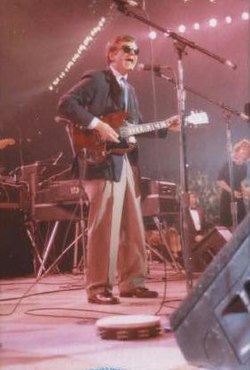 ](https://en.wikipedia.org/wiki/File:Bush_Contact_Sheet_P00138_%28cropped%29.jpg)Atwater performing at the inauguration of George H. W. Bush in 1989.
Democratic nominee Michael Dukakis supported a felon furlough program originally begun in 1972, under Republican Governor Francis Sargent. In 1976, the Massachusetts legislature passed a measure to ban furloughs for first-degree murderers, but Governor Dukakis vetoed the bill.[18] Soon afterward, Willie Horton, who was serving a life sentence for first-degree murder for stabbing a boy to death during a robbery, was released on weekend furlough, during which he kidnapped a young couple, tortured the man, and repeatedly raped the woman. Horton then became the centerpiece of Atwater's ad campaign against Dukakis.
The issue of furlough for first-degree murderers was originally brought up by Democratic candidate Al Gore, during a presidential primary debate. However, Gore never referred specifically to Horton. Dukakis had tried to portray himself as a moderate politician from the liberal state of Massachusetts. The Horton ad campaign only reinforced the public's general opinion that Dukakis was too liberal, which helped Bush overcome Dukakis' 17-percent lead in early public opinion polls, and win both the electoral and popular vote by landslide margins.[19][20]
Although Atwater approved of the use of the Willie Horton issue, the Bush campaign never ran any commercial with Horton's picture, running a similar but generic ad instead. The original commercial was produced by Americans for Bush, an independent group managed by Larry McCarthy, and Republicans benefited from the coverage it attracted in the national media. Referring to Dukakis, Atwater declared that he would "strip the bark off the little bastard" and "make Willie Horton his running mate".[2] :{:{ROGER AILES}:
Atwater's challenge was to counter the "where was George?" campaign slogan Democrats were using in an effort to create an impression that Bush was a relatively inexperienced and unaccomplished candidate. Furthermore, Bush faced criticism from the Republican base, who recalled his pro-choice positions from the 1980 primary. Additionally, it was believed that the harder the campaign attacked Dukakis's liberal positions, the larger Dukakis's base turnout would become.}:
During the election, a number of allegations were made in the media about Dukakis' personal life, including the unsubstantiated claim that his wife, Kitty, had burned a United States flag to protest the Vietnam War, and that Dukakis had been treated for a mental illness. In the film Boogie Man: The Lee Atwater Story, Robert Novak revealed that Atwater personally tried, but failed, to get him to spread these mental-health rumors.[21]
The 1988 Bush campaign overcame a 17-point deficit in midsummer polls to win 40 states.
During the campaign, future President George W. Bush took an office across the hall from Atwater, where his job was to serve as his father's eyes and ears. Bush wrote in his autobiography, "I was an allegiance enforcer and a listening ear."[22] In her memoir, Barbara Bush said Atwater and the younger Bush (whom Atwater called "Junior") became "great friends."[23]
RNC Chairman
After the election, Atwater was named chairman of the Republican National Committee. Shortly after Atwater took over the RNC, Jim Wright, a Democrat, was forced to resign as Speaker of the House and was succeeded by fellow Democrat Tom Foley.
On the day that Foley officially became speaker, the RNC began circulating a memo to Republican congresspeople and state party chairpeople called "Tom Foley: Out of the Liberal Closet". The memo compared Foley's voting record with that of openly gay Congressman Barney Frank, with a subtle implication that Foley, too, was gay. It had been crafted by RNC communications director Mark Goodin and by House Minority Whip Newt Gingrich. Gingrich had already been attempting to convince several reporters to print the rumor.[24] The memo was harshly condemned by both political parties. For instance, Republican Senate leader Bob Dole said in the Senate chamber, "This is not politics. This is garbage".[25]
Atwater initially defended the memo, calling it "no big deal" and "factually accurate". However, some days later, he claimed that he had not approved it.[24] Under pressure from Bush, Atwater fired Goodin, replacing him with B. Jay Cooper.[26]
:{:{Following Bush's victory, Atwater focused on organizing a public relations campaign against Arkansas governor Bill Clinton.[27] Atwater viewed Clinton as a serious threat to Bush in the 1992 presidential election.[27] At the time Atwater became ill in 1990, he was supporting the bid of Representative Tommy Robinson to gain the Republican gubernatorial nomination to oppose Clinton that fall. Robinson lost the primary to former Arkla Gas CEO Sheffield Nelson.[28]}:
In an indication of how much importance Atwater and the RNC placed on Robinson's bid, Missouri's John Ashcroft, attended an Arkansas event where he was scheduled to endorse Robinson, only to discover that he had a primary opponent. Up to that point, when he met Nelson, Ashcroft thought Robinson was running unopposed. After Atwater fell ill, Robinson's RGA support evaporated.[citation ^needed]}:
In 1989, Atwater became a member of the historically black Howard University Board of Trustees. The university gained national attention when students rose up in protest against Atwater's appointment. Student activists disrupted Howard's 122nd anniversary celebrations and eventually occupied the university's administration building.[29] Within days, both Atwater and Howard's president, James E. Cheek, resigned.[30]
Also in 1989, Atwater strongly criticized the candidacy of David Duke for the Louisiana House of Representatives. He said: "David Duke is not a Republican as far as I am concerned...He is a pretender, a charlatan, and a political opportunist who is looking for any organization he can find to legitimate his views of racial and religious bigotry and intolerance...We repudiate him and his views and we are taking steps to see that he is disenfranchised from our party."[31]
Musical career
...
marriage and children
[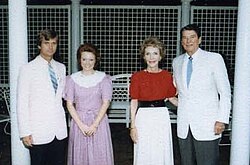 ](https://en.wikipedia.org/wiki/File:Reagan_Contact_Sheet_C22913_%28cropped%29.jpg)Atwater and his wife, Sally, with President Ronald Reagan and his wife, First Lady Nancy Reagan in 1984[
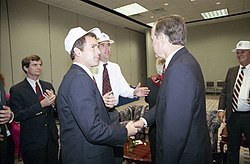
 ](https://en.wikipedia.org/wiki/File:Bush_Contact_Sheet_P15909_%28cropped%29.jpg)Atwater greeting President George H. W. Bush in 1990
Atwater married Sally Dunbar in 1978.[34][35] They had three daughters, Sara Lee, Ashley Page, and Sally Theodosia.[2] His widow ran for Superintendent of Education for South Carolina in 2014.[36] She was endorsed by former President George H. W. Bush.[37]
Illness
On March 5, 1990, Atwater suffered a seizure during a fundraising breakfast.[2] Doctors discovered a grade 3 astrocytoma, an aggressive form of brain cancer, in his right parietal lobe. He underwent interstitial implant radiation – then a new treatment – at Montefiore Medical Center in New York City, followed by conventional radiation therapy at George Washington University Hospital in Washington, D.C. The treatment left him paralyzed on his left side, disabled his tone discrimination, and made his face and body swollen.[38] In January 1991 he finally resigned from his chairmanship of the Republican National Committee.[39]
Conversion to Catholicism and repentance
:{:{In the months after the severity of his illness became apparent, Atwater said he had converted to Catholicism, with the aid of Fr. John Hardon.[40] (The Atwater family's pastor, James P. Rush, D. Min., disputed this in an editorial, claiming that Lee was under heavy sedation when he allegedly converted to Roman Catholicism and that he later renounced his conversion altogether.)[41] In an act of repentance, Atwater issued a number of public and written letters to individuals to whom he had been opposed during his political career.}:
In a June 28, 1990, letter to Tom Turnipseed, he stated, "It is very important to me that I let you know that out of everything that has happened in my career, one of the low points remains the so-called 'jumper cable' episode", adding, "My illness has taught me something about the nature of humanity, love, brotherhood, and relationships that I never understood, and probably never would have. So, from that standpoint, there is some truth and good in everything."[11] Turnipseed accepted Atwater's apology and later attended his funeral.}:
In a February 1991 article for Life, Atwater wrote:
My illness helped me to see that what was missing in society is what was missing in me: a little heart, a lot of brotherhood. The 1980s were about acquiring – acquiring wealth, power, prestige. I know. I acquired more wealth, power, and prestige than most. But you can acquire all you want and still feel empty. What power wouldn't I trade for a little more time with my family? What price wouldn't I pay for an evening with friends? It took a deadly illness to put me eye to eye with that truth, but it is a truth that the country, caught up in its ruthless ambitions and moral decay, can learn on my dime. I don't know who will lead us through the '90s, but they must be made to speak to this spiritual vacuum at the heart of American society, this tumor of the soul.[42]
In the article Atwater apologized to Michael Dukakis for the "naked cruelty" of the 1988 presidential election campaign.[42][43]
In the 2008 documentary, Boogie Man: The Lee Atwater Story, Ed Rollins stated:
[Atwater] was telling this story about how a Living Bible was what was giving him faith and I said to Mary [Matalin], "I really, sincerely hope that he found peace". She said, "Ed, when we were cleaning up his things afterwards, the Bible was still wrapped in the cellophane and had never been taken out of the package", which just told you everything there was. He was spinning right to the end.[21]
Unfinished memoir and other collected papers
When Lee's widow, Sally, died in 2021, she left his papers, including an unfinished handwritten memoir, to the University of South Carolina.[44]
Death
Atwater died after a yearlong fight against a brain tumor on March 29, 1991. He was 40 years old.
Funeral services were held at Trinity Episcopal Cathedral in Atwater's final place of residence, Columbia, South Carolina. Hundreds of friends, opponents, and admirers attended, including prominent politicians and major celebrities such Strom Thurmond and James Brown; President Bush, however, was on vacation in Florida and did not attend.[45] A memorial service was held at the Washington National Cathedral on April 4, 1991.[46] This service was also well attended, with an estimated 1,500 mourners present; Bush attended but did not speak.[47] Atwater, dressed in his jogging outfit and clutching his album, Red Hot & Blue, was buried in Greenlawn Memorial Park, Columbia, South Carolina – minutes from his childhood home.[48][45]
Legacy
Reflections
Sidney Blumenthal has speculated that, had Atwater lived, he would have run a stronger re-election campaign for Bush than the president's unsuccessful 1992 effort against Bill Clinton and Ross Perot.[49]
Tributes
Sally Atwater delivered opening remarks commemorating her husband on the first day of the 1992 GOP Convention; later that day, B.B. King performed a concert organized as a tribute to Atwater.[50][51][52]
Scholarships and foundation
In February 1991, mere weeks before Atwater succumbed to his illness, Strom Thurmond endowed Newberry College with funds to establish a scholarship in his honor.[53]
Several months after Atwater passed away, the University of South Carolina raised $200,000 in honor of Atwater and Thurmond to establish a graduate fellowship in their names.[54] The inaugural J. Strom Thurmond/Lee Atwater Fellowship in American Politics was awarded the following year.[55] The Fellowship is still active and listed on USC's website.[56]
In December 1991, associates of Atwater published a notice of incorporation in The State for The H. Lee Atwater Foundation, Inc., a charitable organization meant to "[p]rovide scholarships, grants, and other educational assistance in memory of H. Lee Atwater."[57] The Foundation awarded its first scholarship of $1,000 in 1992 to a sophomore at Wofford College.[58] In 1996, it donated $50,000 to Newberry College for the construction of a soccer field named after Atwater.[59][60] The Foundation was dissolved in 2011.[61]
In November 1995, Atwater protege Mary Matalin and her husband James Carville held a fundraiser on behalf of The Newberry College Foundation to establish a Lee Atwater Forum on Public Policy, intended to "bring four or five prominent political leaders to Newberry each year to discuss public policy in Atwater's honor."[62] The result of the fundraiser is unclear; the Forum itself appears to be defunct.
Film and TV
Atwater's political career is the subject of the 2008 feature-length documentary film Boogie Man: The Lee Atwater Story.[21]
College Republicans, a buddy comedy spec script written by Wes Jones about Lee Atwater and Karl Rove, topped The Black List (survey) in 2010.[63] Since then, multiple iterations of the film have stalled in pre-production (see Development hell). In 2010, Shia LaBeouf was reportedly considering one of the lead roles, with Richard Linklater rumored to direct; in 2011, Paul Dano was reportedly attached to play Rove and Linklater to direct; in 2014, Daniel Radcliffe and Dane DeHaan were reportedly set to star as Atwater and Rove respectively with John Krokidas to direct; and in 2020, Asa Butterfield and Logan Lerman were set to play Atwater and Rove respectively with James Schamus to direct — this is the cast and director currently listed on the film's IMDb page, which is labeled "Pre-Production."[64][65][66][67][68] In 2016, Black List Live! hosted a gender-swapped live staged reading of the script starring Alexis Bledel as Atwater and Mae Whitman as Rove, directed by Jones.[69]
Atwater appears in the second season of the 2019 alternate history television series For All Mankind, in which he is played by Dustin Seavey.
Plays
The one-man play Atwater: Fixin' to Die by Robert Myers premiered in 1992 with Dylan Baker at New York's West Bank Theatre, directed by Ethan McSweeny, and has been performed in various venues more than a dozen times since. Shortly after the play's debut, Myers entered talks with Home Box Office to develop a film adaptation with Dennis Quaid as Atwater; however, the film never materialized.[70][71] The following year, The University of South Carolina rejected a producer's request to stage a production of the play at Longstreet Theatre, citing concern for Atwater's family; this decision proved controversial among students and faculty alike, some of whom viewed the decision as an act of censorship.[70][72]
The play Son of a Bitch by Lucy Gillespie in 2019 at The Hollywood Fringe Festival with Ben Hethcoat as Atwater, directed by Billy Ray Brewton.[73][74]
The play Atwater by Fred Thompson premiered in 2023 at PURE Theatre in Charleston, SC with Brannen Daugherty in the titular role.[75]
See also
- Starve the beast (Policy)
- Karl Rove
References
---
On the cover of its June 2, 1987 edition,[16] the celebrity tabloid National Enquirer published a photograph of Rice sitting on Hart's lap. The pair were pictured on a dock during a yacht trip to Bimini that Hart, Rice and others took before he announced his campaign for President of the United States.[17] Hart is wearing a T-shirt bearing the words Monkey Business, the name of the yacht. The photo was published alongside the headline "Gary Hart Asked Me to Marry Him".[16] It was published weeks after Hart suspended his campaign, but has been subsequently collectively confused as the reason for Hart's exit.[15][18] There are allegations that the photo was a set up by Republican operative Lee Atwater to discredit Hart.[19]
---
https://www.theatlantic.com/magazine/archive/2018/11/was-gary-hart-set-up/570802/
fallows
In the spring of 1990, after he had helped the first George Bush reach the presidency, the political consultant Lee Atwater learned that he was dying. Atwater, who had just turned 39 and was the head of the Republican National Committee, had suffered a seizure while at a political fund-raising breakfast and had been diagnosed with an inoperable brain tumor. In a year he was dead.
Atwater put some of that year to use making amends. Throughout his meteoric political rise he had been known for both his effectiveness and his brutality. In South Carolina, where he grew up, he helped defeat a congressional candidate who had openly discussed his teenage struggles with depression by telling reporters that the man had once been “hooked up to jumper cables.” As the campaign manager for then–Vice President George H. W. Bush in 1988, when he defeated Michael Dukakis in the general election, Atwater leveraged the issue of race—a specialty for him—by means of the infamous “Willie Horton” TV ad. The explicit message of the commercial was that, as governor of Massachusetts, Dukakis had been soft on crime by offering furloughs to convicted murderers; Horton ran away while on furlough and then committed new felonies, including rape. The implicit message was the menace posed by hulking, scowling black men—like the Willie Horton who was shown in the commercial.
-
In the last year of his life, Atwater publicly apologized for tactics like these. He told Tom Turnipseed, the object of his “jumper cables” attack, that he viewed the episode as “one of the low points” of his career. He apologized to Dukakis for the “naked cruelty” of the Willie Horton ad.
And in a private act of repentance that has remained private for nearly three decades, he told Raymond Strother that he was sorry for how he had torpedoed Gary Hart’s chances of becoming president.
Strother, 10 years older than Atwater, had been his Democratic competitor and counterpart, minus the gutter-fighting. During the early Reagan years, when Atwater worked in the White House, Strother joined the staff of the Democratic Party’s most promising and glamorous young figure, Senator Gary Hart of Colorado. Strother was Hart’s media consultant and frequent traveling companion during his run for the nomination in 1984, when he gave former Vice President Walter Mondale a scare. As the campaign for the 1988 nomination geared up, Strother planned to play a similar role.
In early 1987, the Hart campaign had an air of likelihood if not inevitability that is difficult to imagine in retrospect. After Mondale’s landslide defeat by Ronald Reagan in 1984, Hart had become the heir apparent and best hope to lead the party back to the White House. The presumed Republican nominee was Bush, Reagan’s vice president, who was seen at the time, like many vice presidents before him, as a lackluster understudy. Since the FDR–Truman era, no party had won three straight presidential elections, which the Republicans would obviously have to do if Bush were to succeed Reagan.
Gary Hart had a nationwide organization and had made himself a recognized expert on military and defense policy. I first met him in those days, and wrote about him in Atlantic articles that led to my 1981 book, National Defense. (I’ve stayed in touch with him since then and have respected his work and his views.) Early polls are notoriously unreliable, but after the 1986 midterms, and then–New York Governor Mario Cuomo’s announcement that he would not run, many national surveys showed Hart with a lead in the Democratic field and also over Bush. Hart’s principal vulnerability was the press’s suggestion that something about him was hidden, excessively private, or “unknowable.” Among other things, this was a way of alluding to suspicions of extramarital affairs—a theme in most accounts of that campaign, including Matt Bai’s 2014 All the Truth Is Out.Still, as Bai wrote in his book, “Everyone agreed: it was Hart’s race to lose.”
Strother and Atwater had the mutually respectful camaraderie of highly skilled rivals. “Lee and I were friends,” Strother told me when I spoke with him by phone recently. “We’d meet after campaigns and have coffee, talk about why I did what I did and why he did what he did.” One of the campaigns they met to discuss afterward was that 1988 presidential race, which Atwater (with Bush) had of course ended up winning, and from which Hart had dropped out. But later, during what Atwater realized would be the final weeks of his life, Atwater phoned Strother to discuss one more detail of that campaign.
Atwater had the strength to talk for only five minutes. “It wasn’t a ‘conversation,’ ” Strother said when I spoke with him recently. “There weren’t any pleasantries. It was like he was working down a checklist, and he had something he had to tell me before he died.”
What he wanted to say, according to Strother, was that the episode that had triggered Hart’s withdrawal from the race, which became known as the Monkey Businessaffair, had been not bad luck but a trap. The sequence of events was confusing at the time and is widely misremembered now. But in brief:
In late March 1987, Hart spent a weekend on a Miami-based yacht called Monkey Business.Two young women joined the boat when it sailed to Bimini. While the boat was docked there, one of the women took a picture of Hart sitting on the pier, with the other, Donna Rice, in his lap. A month after this trip, in early May, the man who had originally invited Hart onto the boat brought the same two women to Washington. The Miami Herald hadreceived a tip about the upcoming visit and was staking out the front of Hart’s house. (A famous profile of Hart by E. J. Dionne in The New York Times Magazine, in which Hart invited the press to “follow me around,” came out after this stakeout—not before, contrary to common belief.) A Herald reporter saw Rice and Hart going into the house through the front door and, not realizing that there was a back door, assumed—when he didn’t see her again—that she had spent the night.
Amid the resulting flap about Hart’s “character” and honesty, he quickly suspended his campaign (within a week), which effectively ended it. Several weeks later came the part of the episode now best remembered: the photo of Hart and Rice together in Bimini, on the cover of the National Enquirer.
...
---
==
Mary matalin his aidesee JC hunting.1989 artwater wants to run T Robinson, recent demo and helped by BC? (or his gop opponent?) to run against him for gov for the purpose of wounding him so not a prez threat?! p3
--
https://www.nytimes.com/books/first/c/conason-president.html
The Hunting of the President
The Ten-Year Campaign to Destroy Bill and Hillary Clinton
By JOE CONASON and GENE LYONS
Thomas Dunne Books

---
THE GHOST
OF LEE ATWATER
The chances are that hardly anyone noticed the two political operatives from Arkansas who slipped in and out of Republican national headquarters on an autumn day in 1989. Neither had a famous face, unlike the man they had come to visit. They had flown in from Little Rock to meet secretly with Lee Atwater, the chairman of the Republican National Committee.
Discretion was of the utmost importance in this matter. No doubt that was why Atwater had brought his guests to Washington rather than traveling to Arkansas himself, much as he enjoyed pressing the flesh out in the hinterlands. But now he was a celebrity, often recognized in airports and on the street. As the outrageous party animal who ruled the Grand Old Party, Lee Atwater had been featured on the covers of national magazines and on countless news broadcasts. In Little Rock, he would have been spotted right away, and someone there might have realized what he was up to.
Honored traditions as well as party rules generally forbid the Republican National Committee and its chairman from taking sides in a state primary. But that was precisely what Atwater was preparing to do in Arkansas, where he was anything but neutral in the upcoming race for governor. The two operatives had come to discuss the prospects of Atwater's handpicked candidate, a flamboyant congressman and former county sheriff named Tommy Robinson.
Elected to the House as a Democrat, Robinson had switched parties only months earlier, and faced a serious challenge in the gubernatorial primary from a wealthy Little Rock businessman who had long been his benefactor. He needed the party chairman's advice and instructions.
Atwater was taking a risk in supporting Robinson. Any proof of his direct interference in the Arkansas primary might be used to embarrass him by rivals in the party hierarchy and the White House. More than a few powerful Republicans were irritated by his swaggering, Blues Brothers style and his lust for notoriety. Many also envied Atwater's close personal bond with George Bush, the president who had rewarded him with the power and prerogatives of the party chairmanship. But he had not become a national legend at the age of thirty-eight by obeying rules and avoiding risks.
In Arkansas he was trying to deal with a problem that dwarfed any nitpicking about neutrality. Though he would never say so publicly, he was worried about the future.
"Bush and this crowd are going to screw it up," he had told his former consulting partner Roger Stone a few months earlier. "Bush won't get reelected."
Atwater's clandestine meeting with J. J. Vigneault and Rex Nelson was informal but businesslike. He didn't pick up his guitar and start singing, as was his frequent habit in the daily staff meetings. There were no cigars or liquor, either, just Cokes brought in by Mary Matalin, Atwater's chief deputy. She remained in the room when the door was closed.
Atwater didn't know Nelson, whom he was trying to recruit to the Robinson campaign, nearly as well as he knew Vigneault, a longtime friend and associate who had overseen the successful Reagan and Bush campaigns in Arkansas. After Atwater had taken over as chairman early in 1989, he had brought Vigneault onto the RNC staff as a regional political director, based in Little Rock. It was a sign of Atwater's concern about the Arkansas race that his protégé Vigneault had abandoned a top party position so suddenly to manage an insurgent campaign in a small, overwhelmingly Democratic state.
Nelson, a former Little Rock political reporter who had signed on as Robinson's campaign press secretary, still remembers Atwater's blunt explanation of his interest in their candidate.
"You boys have to remember, I don't give a fuck who the governor of Arkansas is," he said. "My only job as chairman of the Republican National Committee is to get George Bush reelected. The media's full of talk about Mario Cuomo or Bill Bradley. We know how to paint them up as northeastern liberals like Dukakis. That's easy! What scares me is a southern moderate or conservative Democrat, and the scariest of all, because he's the most talented of the bunch, is Bill Clinton."
As Atwater understood, Clinton possessed qualities of mind and personality that could make him a formidable national candidate. During a political career that spanned two decades, the friendly young governor had established alliances across his party's ideological divide. Somehow, Clinton had sponsored the creation of the centrist Democratic Leadership Council without injuring his own long-standing ties to liberals, blacks, and women's organizations. Intellectually fluent in the public-policy issues that bored pols like Atwater, the ambitious, hardworking, opportunistic Arkansan also had the special unteachable gift for remembering the names, faces, and concerns of people he met that is characteristic of the most successful American politicians. For Bush's sake, it would be prudent to eliminate Clinton before he could exercise those talents in a presidential campaign.
"We're going to take Tommy Robinson and use him to throw everything we can think of at Clinton—drugs, women, whatever works. We may or may not win, but we'll bust him up so bad he won't be able to run again for years."
Rex Nelson was impressed by Atwater's political prescience. A native Arkansan with a shrewd knowledge of the game, Nelson understood and respected Clinton's political mastery. "Lee had his eyes on the prize. He saw Bill Clinton as the real hurdle to Bush's reelection.... He spotted Clinton way out ahead of anybody else in the national party. All we had to do was get Tommy into the general election." Atwater's commitment to this project was total, he told Nelson and Vigneault. "He promised us everything: top pollsters, consultants, media people, money."
The reference to Clinton's alleged "skirt problem" didn't surprise Atwater's guests. In Washington as well as Little Rock, insider gossip compared the young Arkansas governor with Gary Hart,another once-bright presidential prospect whose career had been ruined by exposure of an extramarital affair. Some even believed that Clinton would never run for president because he couldn't withstand the inevitable scrutiny of his personal life. "My friends in the Bush camp dismissed him with a single word whenever his name was mentioned," as consultant Ed Rollins, an Atwater rival, put it. "Women."
In the fall of 1989, Atwater's allusions to Clinton's misbehavior were more or less "generic," according to Rex Nelson. "There were no individual women mentioned at all." But when push came to shove, generic rumors wouldn't stop Bill Clinton, as Atwater probably understood; after all, they had never stopped him before.
Whether Clinton's rumored and real indiscretions came close to rivaling Atwater's own remained an open question. As early as 1984, the long-married Atwater's reputation for compulsive, reckless womanizing was so well known, at least among fellow Republicans, that George Bush's closest advisors had urged Bush to avoid him altogether. According to Atwater biographer John Brady, "He reveled in telling stories of conquests, sharing details with office colleagues.... Disposable sex without commitment was a huge piece of his ego, a badge of honor." Nothing changed after he was appointed Republican national chairman, wrote Brady, except that Atwater began using his new RNC credit card to pay for weekends with a girlfriend at a Virginia hotel. He told his wife he was traveling on business.
In late November 1989, Atwater weathered a brief crisis brought on by his flagrant misbehavior. A Washington Post reporter confronted him with photographs that showed Atwater at an apartment building where a female White House staffer lived. He was indeed having an affair with the woman, as he admitted to several senior RNC staff members—but the story never ran, Brady wrote, because Atwater "leaned on" the Post reporter with the plea that "innocent bystanders would be hurt." He thus escaped the same wound he was simultaneously planning to inflict on Bill Clinton. In the politics of sexual morality, hypocrisy was a common occupational hazard.
Lee Atwater's disreputable public image, however, owed nothing to his sexual adventures. He had cultivated a reputation as the meanest and most devious campaign strategist in the business, a man who would do anything to defeat an opponent. It was a persona he cherished, and he had no intention of changing his identity simply because he had reached the pinnacle of party leadership. "I don't want you to squeal on me," he once told an applauding crowd at a Republican cocktail fund-raiser, "but I'm not going to be kinder and gentler."
Kinder and gentler didn't win elections, a lesson Lee Atwater had learned well and taught the rest of the country by example. Born and raised in South Carolina, he had entered politics as an intern to Senator Strom Thurmond, the former Dixiecrat segregationistwho was the first important southern politician to defect to the Republicans. Young Lee's introduction to national politics came with the 1968 presidential campaign of Richard Nixon, whose darkly negative approach to politics influenced everyone around him. The men who made Nixon president routinely resorted to vicious pranks, spying, and underhanded personal attacks against the Democrats, those dirty tricks that the boyish Watergate trickster Donald Segretti memorably called "ratfucking." During Nixon's second term Lee had served as executive director of the College Republicans, where the same ethos prevailed. Back then Lee had blurted out to Nixon's RNC chairman, George Bush, that he wanted to be the party chairman someday.
Nor was kinder and gentler the way Atwater had finally won that job after fifteen years in the trenches. Sometimes he exaggerated his own viciousness to burnish his image. He liked to brag about how he had destroyed one early opponent's morale by mentioning the man's psychiatric history to a reporter. "I understand he once had to get hooked up to jumper cables," Atwater had quipped. In 1988 that story echoed again in the Republican campaign against Michael Dukakis, when rumors that the Democratic nominee once suffered from clinical depression were traced back to the Bush campaign. This canard was first raised by followers of the fringe political organization of Lyndon LaRouche, at the Democratic convention and then at a White House press conference. But conservative columnists Rowland Evans and Robert Novak reported that as Bush's campaign manager, Atwater had been "investigating the details and trying to spread the findings without leaving any vice-presidential footprints." That the rumors were utterly false didn't mean they couldn't be used. It only meant that someone else had to take the blame.
The same principle applied to the ugliest cheap shot of the 1988 campaign—the television attack ad that featured a mug shot ofWillie Horton, murderer, rapist, and escapee from a Massachusetts prison furlough. Its blatantly racial thrust was disavowed by the official Bush campaign, which pointed out that the commercials had been produced and aired by an independent committee called Americans for Bush. After a while, the Bush campaign counsel even sent a letter asking the commercial's makers to desist. By then, of course, all the damage had been done.
At least six months before Rex Nelson and J. J. Vigneault came to Washington, Atwater had begun formulating his plan to preempt Clinton's presidential campaign. In May 1989 he had stopped off briefly in Little Rock, ostensibly for other purposes, and dropped a hint during a press conference in the pillared and carpeted lobby of the downtown Capital Hotel, an elegantly refurbished establishment on the banks of the Arkansas River where President Ulysses S. Grant had sojourned in 1870. The Democrats would have to nominate a southerner for president if they were to have any hope of winning the White House in 1992, he told the rapt audience of local reporters. But, he warned, they had better not choose the governor of Arkansas—because unlike some of the region's other leading Democrats, Bill Clinton just wasn't a "good, solid Southerner."
Atwater didn't elaborate on Clinton's faults, but his tart observation elicited questions about the upcoming 1990 race for governor. Asked about growing speculation that Democratic representative Tommy Robinson might defect to the Republicans and run against Clinton, Atwater replied that the GOP would welcome Robinson. And if Robinson did run for governor, he added, the party had lined up an excellent candidate for the congressman's vacated seat. Atwater glanced over at Ron Fuller, a Republican state legislator of no particular distinction. Many months later, Fuller's name would come up again, along with that of J. J. Vigneault—on a surreptitious tape recording of a conversation between Bill Clinton and a former lounge singer named Gennifer Flowers.
Running Robinson against Clinton was an idea that appealed greatly to the Republican Party's most important patrons in Little Rock, eighty-year-old billionaire Jack Stephens and his second wife, Mary Ann Stephens. Unlike his older brother Witt, a traditional conservative southern Democrat who had run Arkansas like a country store during the six terms of segregationist governor Orval Faubus, Jack Stephens was quite literally a country-club Republican. He had long served as chairman of the nation's ultimate country club, the Augusta National Golf Club in Georgia, annual home of the Masters tournament. With its downtown Little Rock headquarters, Stephens, Inc., the nation's largest investment bank outside Wall Street, represented only a fraction of the family's multibillion-dollar holdings in oil, natural gas, and coal across several western states and a half dozen countries. Their corporate empire included considerable newspaper and broadcast holdings as well.
For decades a decisive power in Arkansas politics, the Stephens dynasty had seen its influence sharply reduced under Governor Bill Clinton, who had thwarted its wishes on any number of issues. Having financed the campaigns of Frank White, a Republican banker who had defeated Clinton in 1980 but lost two subsequent elections to the charismatic Democrat, Stephens, Inc., would have been delighted to replace the governor with Tommy Robinson.
But it was Jack Stephens's wife Mary Ann, a glossy, vigorous brunette married to a man thirty years her senior, who had found a calling in the Republican Party. She had helped win Arkansas for Bush in 1988, and the experience apparently had awakened a desire for a bigger, more glamorous role. "Mary Ann's plan was to become the Pamela Harriman of the GOP," according to a Little Rock political consultant who knew her well. "After Jack was gone, she saw herself maybe living in the Virginia horse country, having the Bushes over for dinner, hosting high-society party functions. Even an ambassadorship wouldn't have been out of reach." For the moment, Mary Ann's ambitions were tied to those of Tommy Robinson.
From Atwater's point of view, Robinson would have seemed perfect even without the Stephens endorsement. A rabble-rousing orator with an instinct for publicity, Robinson appeared to have discovered the universal solvent of southern politics: how to stir up blue-collar whites without alienating blacks. Plucked from obscurity as a small-town police chief by Governor Clinton in 1979 and appointed director of the Department of Public Safety, he had swiftly become embroiled in dramatic, highly publicized feuds with every agency in his department. In 1980 he abruptly resigned to run for sheriff of Pulaski County, which encompasses Little Rock, and won.
The glib, handsome lawman had a natural television presence and an instinctive feel for the hot-button issues of crime and drugs. His "supercop" exploits led the evening news night after night, turning him into a cartoonlike populist hero. Robinson hid armed deputies in liquor stores and convenience marts with orders to shoot to kill. Peering down the barrel of a 12-gauge shotgun, he bragged to the cameras: "My basic policy is to kick the butts of criminals. If I have to use excessive force, I will." Robinson once settled a dispute with state prison officials by chaining a busload of mostly black inmates to the penitentiary gates, then placing armed deputies around the county jail and defying state police to try to return them. Soon known statewide simply as "Tommy," the new sheriff often outraged judges, prosecutors, and other cops with his publicity-seeking antics.
What made "Tommy" a household word, however, was his prosecution of a Little Rock criminal defense lawyer named Bill McArthur for the murder of McArthur's wife. McArthur was ultimately cleared, but not before his life was shattered by Robinson's lurid and ultimately baseless accusations. Combining elements of murder mystery, soap opera, morality play, political crusade, and multimedia extravaganza, the McArthur case was all anybody in Arkansas talked about during 1982 and 1983. Playing an important bit part in the affair was a Little Rock municipal judge named David Hale, who did Robinson's bidding during one of the strangest court proceedings in the state's history. To law enforcement professionals and the majority of educated Arkansans, the outcome of the McArthur case revealed the sheriff as a demagogic buffoon and a menace. "May the Almighty save the people in Arkansas," prayed one newspaper editorial, "from themselves and their fascination with characters like the current occupant of the Sheriff's office in Pulaski County."
Still, most blue-collar Arkansans of both races embraced Robinson as the scourge of the lily-livered establishment. Few noticed that this populist's upward climb had been bankrolled by a consortium of wealthy backers with holdings in timber, banking, natural gas, and electric utilities. Dubbed "the Power Company" by local journalists, this elite group helped him win election to Congress as a Democrat in 1984. From the beginning, Tommy established himself as a "boll weevil" Democrat who voted on critical issues with the Reagan Republicans. Overtures from the other side of the aisle came soon enough, but Robinson resisted crossing over until, toward the middle of his third term, he responded to one from President Bush and Stephens, Inc. The former sheriff had never understood the appeal of Washington life. His family didn't relocate there. An ardent outdoorsman, he came home to his district to duck-hunt with his cronies at every opportunity.
On July 28, 1989, ten weeks after Lee Atwater's stopover in Little Rock, Robinson announced that he was changing parties at a nationally televised press conference in the White House Rose Garden with the president. At the time, such conversions were sufficiently rare to merit the same treatment as a visit by a foreign dignitary. The newest Republican congressman stood shoulder to shoulder with Bush as he explained his decision. "The hard fact is that there is and will be no room for conservative southern Democrats in today's national Democratic Party," Tommy declared. In the front row sat an applauding Mary Ann Stephens, resplendent in a Nancy Reagan red dress. Atwater stood to one side, grinning. The president praised the former sheriff as "a man of exceptional caliber."
Back in Little Rock, Clinton and other Democrats professed little sorrow over Robinson's departure from their ranks. But privately, many worried that with the backing of Lee Atwater and Stephens, Inc.—as well as his own undeniable knack for demagogy—the former sheriff might be virtually unbeatable.
The immediate obstacle to Atwater's anti-Clinton strategy was Sheffield Nelson (no relation to Rex Nelson), another former Democrat who had turned Republican in 1989. Nelson had coyly announced his candidacy for governor earlier that year without telling reporters under which party's banner he proposed to run. When he finally declared for the Republican primary, a fierce nomination battle was assured. A sharecropper's son who had risen from poverty under the tutelage of the Stephens family, Sheffield Nelson had grown accustomed to getting his way.
Blue-eyed, blond, and quite handsome, Nelson radiated a sartorial elegance and aristocratic bearing that belied hardscrabble origins. He had started out as a summer intern in Witt Stephens's office and worked his way up into a job as chief executive officer of Arkansas-Louisiana Gas Company, the state's largest natural gas utility. At Arkla he had demonstrated an unseemly independence by refusing to carry natural gas owned by the Stephens interests at what he deemed to be preferential rates, thus initiating a feud of Shakespearean malevolence with his onetime benefactors that played out in the 1990 election.
Sheffield Nelson had been an ally of Bill Clinton's, as well. In 1984, the governor had appointed him to head the Arkansas Industrial Development Commission, the state agency once used by Winthrop Rockefeller as a steppingstone to the governor's mansion. But by 1990, Nelson had grown impatient waiting in the shadows for Clinton to move on. He believed Clinton had reneged on a deal they had made in 1986, when Nelson first considered running for governor but didn't in return for Clinton's promise to step aside four years later. He had expected the governor either to make a presidential move in 1988 or to run for the U.S. Senate in 1990. Clinton's decision to run for reelection instead apparently triggered Nelson's abrupt switch to the Republican Party.
If Nelson saw little chance of defeating Clinton in a Democratic primary, his chances against Robinson in a Republican race at first seemed little better. Following Atwater's advice, the former sheriff went negative early with a classic populist theme. The Robinson campaign portrayed Nelson as a corporate fat cat who had enriched himself and his millionaire friend Jerry Jones while cheating the state's humble "biscuit cookers."
The specific accusations revolved around a 1982 deal between Arkla and Jones's natural gas exploration firm, Arkoma. The deal had made Jones wealthy enough to buy the Dallas Cowboys football team, but had almost ruined Arkla. In essence, Nelson had ignored the advice of Arkla geologists by selling rights to what turned out to be one of the richest natural gas fields in North America to Jones's exploration company for a paltry $15 million. Having also contracted to buy gas from Jones's company at what became ruinous rates after a worldwide glut sent prices plummeting, Arkla was ultimately forced to pay Jones almost $175 million in 1986 to buy the rights back—a transaction that drove the company's stock prices down sharply and left an enormous bill to be paid by the many thousands of households that cooked and heated with Arkla's gas.
Worse still, Nelson had retired from Arkla in 1984 and cashed out millions in stock options just before the roof fell in. Robinson charged that the Arkla-Arkoma disaster had been a corrupt sweetheart deal between Jones and Nelson. Observers more sympathetic to Nelson thought that Jones had simply won a huge gamble, and that Nelson, distracted by a contemporaneous family tragedy, had simply failed to predict the future and made an unwise business decision.
The corruption charges destroyed another longtime friendship. Tommy Robinson and Jerry Jones had been childhood pals in North Little Rock, and both Jones and Sheffield Nelson had been among the supporters of Robinson's early political career. For years, Tommy had been the high-salaried "manager" of a well-appointed duck-hunting club owned jointly by Nelson and Jones. Over the years the three men had hunted and partied together frequently, and they were the subject of rumors and tall tales as sensational as anything said about Bill Clinton until after he became president.
In the past, Jones had paid Robinson's children's medical bills and bought him life insurance. The grateful Robinson had hired Jones's daughter Charlotte, a recent Stanford graduate, to work in his congressional office. The twenty-six-year-old Charlotte was still on the job, earning $80,000 a year, on the day in November 1989 when the Robinson campaign launched its first public attack on Nelson and Jones over the Arkla-Arkoma deal. Jones reportedly became livid. "I paid that sumbitch's medical bills when his kids were sick!" he shouted at a Robinson adviser who had been sent to calm him. "Now he says I'm a crook?"
The inevitable payback was delayed to ensure the maximum effect on primary voters. A few weeks before the May 1990 primary, copies of Robinson's confidential medical records from the House of Representatives were leaked to the Little Rock news media. As a freshman member, Robinson had told the House's attending physician that he drank upwards of a pint of bourbon every day and used a powerful sedative suspected of causing paranoia in some patients. In a state whose two largest religious denominations, Baptist and Church of Christ, forbid alcohol and where forty-three of seventy-five counties remain dry by popular vote, this was a bombshell. Robinson accused Nelson of leaking the records, but his protests only kept the story alive.
The rancorous campaign took its toll on both Republicans, but a decisive factor may well have been the brain tumor that eventually killed Lee Atwater. Falling ill in March 1990, he could no longer provide guidance during the final crucial weeks as the May primary approached. Nobody in the Robinson camp paid sufficient attention to the fact that a significant number of Democrats were prepared to cross over into the Republican column for the sole purpose of ending Tommy Robinson's career. Under the state's open primary law, Republicans had been doing the same thing for decades—voting in Democratic primaries, then supporting Republican candidates in general elections. Statewide, Sheffield Nelson defeated Robinson by just over eight thousand votes out of eighty-six thousand cast.
Had the crafty Atwater not succumbed to cancer, he might have detected the plan in time to devise countermeasures. With well over five hundred thousand Democrats casting primary votes in 1990—across much of rural Arkansas, the Democratic primary is in effect the general election for most local offices—a populist appeal to Tommy's core constituency could have alerted them to their hero's peril. But it was not to be.
Clinton's Democratic primary opponent was an idealistic foundation executive and former Peace Corps volunteer named Tom McRae, whose great-grandfather had once occupied the governor's mansion. Poorly financed, and no match for Clinton as a campaigner, McRae was discounted as a serious threat to the incumbent governor. But before the primary ended, Clinton's enemies on the right quietly approached McRae with a deal.
A man whom McRae declined to identify showed up in his campaign office one day with a generous check and a file of smutty opposition research on Clinton. The main topics were women and drugs. Under the distinct impression that the messenger had come from Stephens, Inc., McRae said he had no use for that kind of material.
"Then you don't want to win," said this would-be benefactor. Angrily, McRae asked, "Has it ever occurred to you that there might be something more important than winning?"
"That's why I can't work with you," the man replied as he stood up and left McRae's office. The check left with him.
On the morning after Sheffield Nelson's primary victory, all talk of converting Arkansas to "New South" Republicanism stopped at Stephens, Inc. To the Stephens family and their allies, Bill Clinton at his worst was vastly preferable to the detested Nelson. Even the governor's successful effort to break the Stephens, Inc., near-monopoly on Arkansas municipal bonds, which had cost the company millions in revenue, didn't matter anymore.
"The Stephens people had spent thousands on anti-Sheffield research," said a Republican who was there. "They stuck it in boxes and carried it over to Clinton headquarters on the morning after the primary."
Never one to miss a winning campaign tactic, Clinton seized upon Tommy Robinson's accusations about the Arkla-Arkoma deal. He ordered a special state Public Service Commission Panel, all of whose members he had appointed, to begin a highly publicized probe of the deal and its impact on Arkansas ratepayers. Not long after the November election, Clinton's regulators criticized Arkla's deal and ordered the company to refund $17 million to ratepayers.
By all accounts, Clinton's exploitation of the Arkla-Arkoma charges left Nelson feeling doubly betrayed: first by the governor's abandonment of his supposed pledge to step aside, and then by his campaign tactics, which portrayed Nelson as a corporate shyster whose hard-earned success was actually achieved through a scandalous fraud. He stood to lose not only the election, he told campaign aides, but his reputation as well. With his hated enemies at Stephens, Inc., suddenly taking Clinton's side, an infuriated Nelson apparently thought no blow against the governor would be too low.
As Clinton's politicized probe of the Arkla-Arkoma deal continued to create headlines, the Nelson campaign decided to respond in kind. With the Republican lagging thirty points behind Clinton in the latest polls, Nelson's aides produced a pair of negative television commercials aimed at the governor. The first, which lifted and distorted a phrase from a budget speech by Clinton, backfired badly. The second was a sex-and-drugs smear, questioning Clinton's "character and moral judgment." Although that ad never aired, it had the more lasting impact.
The budget commercial was crude but initially effective. Addressing the state's budget problems, Clinton had once given a speech pointing out that unlike the U.S. government, the state of Arkansas was forbidden by law from running deficits or printing more money. Rather, he said, the state was obliged to "raise and spend" all the funds needed during each fiscal year. With a bit of editing, Nelson's advertising team turned the phrase into a seeming call for ever-higher taxes. The state soon resounded with radio and TV ads that featured Clinton's voice, repeating the words "raise and spend" over and over like a trained parrot. In less than a week, Clinton's poll ratings sank by as much as ten points.
The second ad played on long-standing rumors about the governor's personal life. Three years earlier, the annual "Gridiron Show" put on by the Pulaski County Bar Association had featured a skit with two lawyers impersonating Bill Clinton and Gary Hart, singing a duet of the Willie Nelson classic "To All the Girls I've Loved Before." Most knowledgeable observers thought that whatever Clinton's availability to adventurous women early in his marriage and political career, he had cleaned up his act in the wake of his brother Roger's 1984 arrest for cocaine possession and an ultimatum from Hillary. But nobody really knew. In a mostly rural state like Arkansas, populated by large numbers of fundamentalist Christians, sexual gossip about prominent people is epidemic. A list of leading political figures who had never been the subject of lurid fantasy would have been very short. Neither Sheffield Nelson nor Tommy Robinson would have been on it.
One of the Nelson aides who saw the sex commercial described it as "an innuendo-type ad" which "never named any names or made any concrete charges.... The idea was to make people think, `I wonder about all those rumors I've heard.'" It didn't even mention Clinton's name, but showed his face superimposed over shadowy silhouettes of anonymous women. The voiceover script asked voters to consider the "character and moral judgment" of the candidates. "They were scared to flat point a finger at Clinton," the Nelson aide said. "I thought it should have been a lot stronger."
Long after the 1990 election was history, Sheffield Nelson would tell ABC News correspondent Sam Donaldson that he had compiled evidence documenting Bill Clinton's moral lapses. Nelson's millionaire friend and backer Jerry Jones likewise boasted later to Texas reporters that he had hired private detectives, who uncovered a Clinton paramour. Neither ever released any documentation.
There are various explanations as to why the sex ad never aired. One is that the misleading "raise and spend" commercial did so much damage to Clinton that using the second ad was deemed unnecessary overkill. Another is that the Nelson campaign's internal polls showed that the ploy would backfire badly by emphasizing the ruthless image Nelson had earned during the primary fight against Tommy Robinson. A third is that Nelson's wife, Mary Lynn, vetoed the sex ad on the grounds that an attack on Clinton's family should be off-limits. There are no copies of the commercial, according to a former Nelson aide who said he had destroyed the videotapes.
Clinton reacted to the "raise and spend" ad with a last-minute ad blitz of his own. During the campaign's final week he took out an emergency $50,000 bank loan which he used to pay for TV and radio spots exposing the deceptive nature of his opponent's commercial. Clinton himself went into the studio and recorded ads telling voters that Nelson was trying to play them for suckers. On the Sunday before Election Day, he personally persuaded the Little Rock TV stations to replace previously scheduled spots with the new commercials, and spent an additional $100,000 on radio. Aides in borrowed single-engine planes dodged torrential thunderstorms that Sunday flying all over Arkansas to make sure the Clinton campaign's brand-new commercials aired everywhere. A last-minute loan was obtained from the Bank of Perryville, a tiny institution owned principally by former state Democratic Party chairman Herbie Branscum.
On November 7, the incumbent governor defeated the Republican challenger in a landslide with 59 percent of the vote. Sheffield Nelson had entered the 1990 gubernatorial race angry at Bill Clinton. Now his crushing defeat and personal humiliation left him seething. He would find sufficient opportunities for revenge.
---
intern to Strom T
http://www.anb.org.oca.ucsc.edu/articles/07/07-00747.html?a=1&n=atwater&ia=-at&ib=-bib&d=10&ss=2&q=6
In 1969 Atwater entered Newberry College, a small Lutheran institution in Newberry, South Carolina. A 1971 summer internship with the state's senior senator, RepublicanStrom Thurmond, ignited his political interest. When school resumed, he joined the College Republicans and soon became the group's state chairman. After graduating in 1973, he managed Karl Rove's successful race for the chairmanship of the College Republican National Committee. (During the presidential campaign of 2000, Rove would serve as a strategist for George W. Bush.) Rove made Atwater the committee's executive director. In that post, Atwater got to know the chairman of the Republican National Committee,George H. W. Bush....
The 1980 elections enlarged Atwater's reputation, for both good and ill. As southern regional director for the Republican presidential campaign, Atwater helped the Reagan-Bush ticket carry every southern state except Georgia. Working in the reelection campaign of Representative Floyd Spence (R-S.C.), Atwater openly noted that Democratic opponent Tom Turnipseed had once undergone electroshock therapy or, as Atwater put it, "was hooked up to jumper cables" (quoted in Brady, p. 84). The comment marked him as a practitioner of rough politics. Atwater often quoted Sun Tzu's ancient military text, The Art of War, which stressed deception and psychological harassment. "Everything in it you can relate to my profession, you can relate to the campaign," Atwater once said (quoted in Sewell, p. 20).
During the first Ronald Reagan administration, Atwater worked in the White House political office and then served as political director of the Reagan reelection drive. Atwater laid out the campaign's strategy, which included an effort to "drive a wedge between the liberal Democrats who run the national party and the Southern Democrats" (quoted in Goldman and Fuller, p. 386)--a close paraphrase of Sun Tzu's advice on dividing the enemy. After Reagan's landslide victory, Atwater joined a political consulting firm. In December 1985 he rejoined his old friend George H. W. Bush, who was now Reagan's vice president and likely to be the party's presidential candidate in 1988. As head of Bush's political action committee and then as manager of the Bush nomination campaign, Atwater convinced Bush that he should make peace with party conservatives and build a "firewall" of southern support that would sustain him even if he lost early nomination contests. Despite setbacks, Atwater's firewall held and Bush became the nominee.
During the 1988 general election campaign, Atwater was subordinate to former treasury secretary James A. Baker, III. Still, he set the tone of the effort, which included sharp attacks on the Democratic presidential nominee, Governor Michael S. Dukakis of Massachusetts. One such attack would follow Atwater to his grave. Massachusetts had a unique policy of granting furloughs to prisoners serving life sentences without the possibility of parole. A murderer named William R. "Willie" Horton, Jr., escaped while on furlough, later breaking into a Maryland home, where he beat a man and raped the man's fiancée. During the Democratic primary campaign, Senator Al Gore (D-Tenn.) used the issue against Dukakis.
Following Gore's lead, Atwater pounded the furlough program, producing a television ad showing a prison with a revolving door. Meanwhile, an independent group made its own ad featuring a photo of Horton, who was African-American. Atwater had no role in the latter ad, and, arguing that the issue was crime and not race, he took pains not to show Horton in any Bush campaign materials. Critics, however, angrily accused him of fanning racial fears, noting that he could rely on the mass media to highlight Horton's background.
After winning the presidency, Bush named Atwater chairman of the Republican National Committee. In an effort to reach out to African-American voters, Atwater joined the board of trustees of Howard University, a historically black institution. But when students criticized his use of the Horton issue, he withdrew from the board.
Atwater sought to make the Republican National Committee a new political powerhouse. But in early 1990 physicians discovered that he had an inoperable brain tumor. As his condition worsened, he apologized for certain incidents, though--contrary to a common belief--he did not voice regret for the content of the 1988 campaign or for his aggressive approach to politics. After thirteen months of illness, Atwater died at George Washington University Hospital in Washington, D.C. The program for his memorial service included an epigraph from Sun Tzu.
As the first chair of a national party committee who had made a full-time career of campaign consulting, Atwater advanced the professionalization of American politics. Although he did not invent any new techniques, he practiced politics with an intensity that made him a role model for some, a cautionary example for others.
---
Bibliography
The one full-length biography of Lee Atwater is John Brady, Bad Boy: The Life and Politics of Lee Atwater (1997). A particularly useful article, on which Brady and other writers have relied, is David Remnick, "Why Is Lee Atwater So Hungry?" in the Dec. 1986 edition of Esquire. For analysis of Atwater's use of Sun Tzu, see Dan Sewell, "'The Art of War': Learning How to Fight, According to the Book," Los Angeles Times, 23 Nov. 1989, as well as John J. Pitney, Jr., The Art of Political Warfare (2000). For several Atwater documents from the 1984 campaign, consult Peter Goldman and Tony Fuller, The Quest for the Presidency 1984 (1985). For a transcript of Atwater discussing strategy in the 1988 campaign, see David R. Runkel, ed., Campaign for President: The Managers Look at '88 (1989).
BB King
campaign chair for Rove to head college republ (stole it?)
404
http://www.democraticunderground.com/discuss/duboard.php?az=show_mesg&forum=385&topic_id=130
29&mesg_id=13029
John Joseph Brady, Bad Boy: The Life and Politics of Lee Atwater (1997), ISBN 0-201-62733-7.
Atwater's political career is the subject of the feature-length documentary film Boogie Man: The Lee Atwater Story.[16] transcript http://www.pbs.org/wgbh/pages/frontline/atwater/etc/script.html
backstabbed mentor ed rollins
http://www.sourcewatch.org/index.php?title=Lee_Atwater
Atwater's greatest success came in the 1988 presidential election. A particularly aggressive media program, including a television advertisement related to the case of Willie Horton, a convicted murderer who subsequently committed a rape while on a furlough from a life sentence in a Massachusetts prison, allowed George H.W. Bush to overcome Michael Dukakis's 17% lead in early public opinion polls and win both the electoral and popular vote. During the election, a number of false rumors were also spread about Dukakis, including the claim byIdaho Republican Senator Steve Symms that Dukakis's wife Kitty had burned an American flag to protest the Vietnam War, as well as the claim that Dukakis himself had been treated for a mental illness.
During the 1988 election, Atwater was assigned a "minder" by the Bush campaign, George W. Bush. The younger Bush's political strategist, Karl Rove, would later employ Atwater's tactics against John McCain in the 2000 Republican primary. After the election, Atwater was named chairman of the Republican National Committee.
---
Lee Atwater http://www.sourcewatch.org/index.php?title=Lee_Atwater
Roger Ailes
The first Horton ad had been run by the independent group, Americans for Bush, not the official Bush campaign itself. Indeed, when Bush media advisor Ailes put together his crime ad, he was careful not to use the name Horton or include any photos of the black felon. After Democrats protested Bush's blatant use of the race card, Ailes replied that outside group ads were using the Horton picture, not the "Revolving Door." This gave the Bush camp plausible deniability that helped its candidate avoid public condemnation for racist campaigning.
---
http://www.thenation.com/article/lee-atwaters-legacy
http://www.thenation.com/article/lee-atwaters-legacy?page=full sorta review of boogie
---
B1: duk: a card carrying member of ACLU Big Lies 58'' passport records of BCillegally looked at for dirt
---
Ratfucking Part II - Ratfucking with Lee Atwater
- Republican Playbook
- Department of No! They Would Never to Do That!
- dogwhistling.
- Lee Atwater
- ratfucking
Mon, 03/31/2008 - 11:11am — myiq2xu
In Part I we saw where the term "ratfucking" originated and met two of the most infamous ratfuckers. In this part we will see how ratfucking went from being a small part of GOP political campaigns during the Nixon era to being the centerpiece of campaigns under Bush I.
Harvey Leroy "Lee" Atwater (February 26, 1951 – March 29, 1991) was an advisor of Ronald Reagan and George H. W. Bush. As shown in Part I, He got his start as a ratfucker thanks to Karl Rove. Rove, then the National Chairman of the College Republicans, introduced Atwater to George H.W. Bush who was then the RNC Chairman.
Atwater invented or improved upon many of the techniques of ratfucking, including creating and spreading reputation-destroying rumors. Atwater's aggressive tactics were first demonstrated during the 1980 congressional campaigns. He was a campaign consultant to Republican candidate Floyd Spence in his campaign for Congress against Democrat Tom Turnipseed.
Atwater's tactics in that campaign included push polling in the form of fake surveys by "independent pollsters" to "inform" white suburbanites that Turnipseed was a member of the NAACP. He also sent out last-minute letters from Sen.Strom Thurmond telling voters that Turnipseed would disarm America and turn it over to liberals and Communists. At a press briefing, Atwater planted a "reporter" who rose and said, "We understand Turnipseed has had psychotic treatment." Atwater later told the reporters off the record that Turnipseed "got hooked up to jumper cables" - a reference to electroconvulsive therapy that Turnipseed underwent as a teenager.
"Lee seemed to delight in making fun of a suicidal 16-year-old who was treated for depression with electroshock treatments," Turnipseed recalled. "In fact, my struggle with depression as a student wasno secret. I had talked about it in a widely covered news conference as early as 1977, when I was in the South Carolina State Senate."
Atwater ran a ratfucking operation in 1984 against vice-presidential nominee Geraldine Ferraro. This included the allegation that Ferraro's parents had been indicted for numbers running in the 1940s.
Atwater's most notorious campaign was the 1988 presidential election, in which Atwater approved the infamous Willie Horton ad. This ad was one of two political ads in American history so powerful and devastating (LBJ's "Daisy" ad being the other) that few people ever saw the ads when originally run, they saw it or read about it in the news because of the stir they caused. This of course, is the ultimate in politics - free advertising.
During the election, a number of false rumors were reported in the media about Dukakis, including the claim by Idaho RepublicanSenator Steve Symms [unseated Church who was targeted b/c of CIA probe; now a lobbyist; succeeded by Larry Craig, bathrooom guy] that Dukakis's wife Kitty had burned an American flag to protest the Vietnam War, as well as the claim that Dukakis himself had been treated for a mental illness. Although there is no proof that Atwater initiated these rumors, it fits his M.O.
During that election, George W. Bush, the then vice president's son, took an office across the hall from Atwater's office, where his job was to serve as "the eyes and ears for my dad," monitoring the activities of Atwater and other campaign staff. In her memoir, Barbara Bush said that George W. and Atwater became "great friends."
After the election, Atwater was named chairman of the Republican National Committee. This appointment was controversial, but Atwater's time as chairman was short.On March 5, 1990, he collapsed during a fund raising event on behalf of Senator Phil Gramm. He was diagnosed with a brain tumor which ultimately proved fatal one year later. Before he died he repented for the things he had done.
As a member of the Reagan administration in 1981, Atwater gave an anonymous interview to Political Scientist Alexander P. Lamis. Part of this interview was printed in Lamis' book The Two-Party South, then reprinted in Southern Politics in the 1990s with Atwater's name revealed:
---
Atwater: "You start out in 1954 by saying, 'Nigger, nigger, nigger.'
By 1968 you can't say 'nigger' - that hurts you. Backfires. So you say stuff like forced busing, states' rights and all that stuff.
You're getting so abstract now that you're talking about cutting taxes, and all these things you're talking about are totally economic things and a byproduct of them is that blacks get hurt worse than whites.
And subconsciously maybe that is part of it. I'm not saying that. But I'm saying that if it is getting that abstract, and that coded, that we are doing away with the racial problem one way or the other.
You follow me - because obviously sitting around saying, 'We want to cut this,' is much more abstract than even the busing thing, and a hell of a lot more abstract than 'Nigger, nigger.'"
---
What Atwater was describing is commonly called "dogwhistling."
COMING SOON: Part III - Turdblossom
http://www.correntewire.com/ratfucking_part_ii_ratfucking_with_lee_atwater
---
1971: Rove drops out of college to devote full time to College Republicans, where
he becomes protégé of dirty trickster Lee Atwater, the group's Southern regional
coordinator. Rove becomes executive director, then national chairman.
1972: Under mentorship of dirty trickster Donald Segretti (who later went to jail
for Watergate), Rove paints McGovern as "left-wing peacenik," in spite of
McGovern's World War II stint piloting a B-24. Rove also works as staff assistant
to George Bush Sr., then chairman of Republican National Committee (RNC).
1973: Rove introduces Atwater to Bush Sr. Atwater later becomes "political attack
dog" for the Reagan-Bush team, helps Bush Sr. become president, himself becomes RNC
chairman, is struck by a brain tumor, and dies [after apololgizing to victims].