ROVE
===
see rove 2 and tag gps (2 will not load 2/22?)
karlrove bak
capt 521 html bracing
===
===
https://www.alternet.org/2022/03/madison-cawthorn-volodymyr-zelenskyy-thug/
badash
U.S. Rep. Madison Cawthorn continues to follow the same playbook as what some are calling the “Sedition Caucus,” far-right congressional Republicans who at times seem more aligned with extremists and Vladimir Putin than mainstream America or even the GOP.
The freshman North Carolina GOP congressman was caught on tape declaring over the weekend that Ukrainian President Volodymyr Zelenskyy, a hero to his own people and much of the world, is a “thug.”
“Remember that Zelenskyy is a thug,” Cawthorn says in video obtained and published by WRAL. “Remember that the Ukrainian government is incredibly corrupt and is incredibly evil and has been pushing woke ideologies.”
Republican strategist and Bush 43 Senior Advisor Karl Rove was the first to attack Cawthorn, in a Wall Street Journal op-ed Wednesday.
===
~ biden on al-q KIA
https://www.alternet.org/2022/02/karl-rove/
===
wiki:
College Republicans, Watergate, and the Bushes
In June 1971, after the end of the semester, Rove dropped out of the University of Utah to take a paid position as the Executive Director of the College Republican National Committee.[27] Joe Abate, who was National Chairman of the College Republicans at the time, became his mentor.[16] Rove then enrolled at the University of Maryland in College Park in the Fall of 1971, but withdrew from classes during the first half of the semester.[28]
Rove traveled extensively, participating as an instructor at weekend seminars for campus conservatives across the country. He was an active participant in Richard Nixon's 1972 Presidential campaign. A CBS report on the organization of the Nixon campaign from June 1972 includes an interview with a young Rove working for the College Republican National Committee.[29]
Rove held the position of executive director of the College Republicans until early 1973. He left the job to spend five months, without pay, campaigning full-time for the position of National Chairman during the time he attended George Mason University.[16] Lee Atwater, the group's Southern regional coordinator, who was two months younger than Rove, managed Rove's campaign. The two spent the spring of 1973 crisscrossing the country in a Ford Pinto, lining up the support of Republican state chairs.
The College Republicans summer 1973 convention at the Lake of the Ozarks resort in Missouri was quite contentious. Rove's opponent was Robert Edgeworth of Michigan.The other major candidate,Terry Dolan of California, dropped out, supporting Edgeworth. A number of states had sent two competing delegates, because Rove and his supporters had made credential challenges at state and regional conventions. For example, after the Midwest regional convention, Rove forces had produced a version of the Midwestern College Republicans constitution which differed significantly from the constitution that the Edgeworth forces were using, in order to justify the unseating of the Edgeworth delegates on procedural grounds,[16] including delegations, such as Ohio and Missouri, which had been certified earlier by Rove himself. In the end, there were two votes, conducted by two convention chairs, and two winners—Rove and Edgeworth, each of whom delivered an acceptance speech. After the convention, both Edgeworth and Rove appealed to Republican National CommitteeChairman George H. W. Bush, each contending that he was the new College Republican chairman.
While resolution was pending, Dolan went (anonymously) to the Washington Post with recordings of several training seminars for young Republicans where a co-presenter of Rove's, Bernie Robinson, cautioned against doing the same thing he had done: rooting through opponents' garbage cans. The tape with this story on it, as well as Rove's admonition not to copy similar tricks as Rove's against Dixon, was secretly recorded and edited by Rich Evans, who had hoped to receive an appointment from Rove's competitor in the CRNC chairmanship race.[30] On August 10, 1973, in the midst of the Watergate scandal, the Post broke the story in an article titled "GOP Party Probes Official as Teacher of Tricks".[31]
In response, then RNC Chairman George H.W. Bush, had an FBI agent question Rove. As part of the investigation, Atwater signed an affidavit, dated August 13, 1973, stating that he had heard a "20 minute anecdote similar to the one described in the Washington Post" in July 1972, but that "it was a funny story during a coffee break".[32] Former Nixon White House Counsel John Dean, has been quoted as saying "based on my review of the files, it appears the Watergate prosecutors were interested in Rove's activities in 1972, but because they had bigger fish to fry they did not aggressively investigate him."[33]
On September 6, 1973, three weeks after announcing his intent to investigate the allegations against Rove, George H.W. Bush chose him to be chairman of the College Republicans. Bush then wrote Edgeworth a letter saying that he had concluded that Rove had fairly won the vote at the convention. Edgeworth wrote back, asking about the basis of that conclusion. Not long after that, Edgeworth stated "Bush sent me back the angriest letter I have ever received in my life. I had leaked to the Washington Post, and now I was out of the Party forever."
As National Chairman, Rove introduced Bush to Atwater, who had taken Rove's job as the College Republican's executive director, and who would become Bush's main campaign strategist in future years. Bush hired Rove as a Special Assistant in the Republican National Committee, a job Rove left in 1974 to become Executive Assistant to the co-chair of the RNC, Richard D. Obenshain.
As Special Assistant, Rove performed small personal tasks for Bush. In November 1973, he asked Rove to take a set of car keys to his son George W. Bush, who was visiting home during a break from Harvard Business School. It was the first time the two met. "Huge amounts of charisma, swagger, cowboy boots, flight jacket, wonderful smile, just charisma – you know, wow", Rove recalled years later.[31]
==
This broad-based and even global acclaim for higher education in the United States is strangely at odds with the concentrated political attacks that Cole warns us about and that the academy is currently experiencing. It is particularly out of step with the dark and dysfunctional picture of the academy painted byDavid Horowitz and his Center for the Study of Popular Culture. [2] If Horowitz were simply a disaffected political crank, as many have hitherto regarded him, then his views on the academy could be easily dismissed. Such dismissal would seem to be all the more in order following his disastrous testimony before the legislative subcommittee inPennsylvania in which he was forced to recant as unsubstantiated [3] several of the cases that he had been widely circulating as documentation of alleged malfeasance in the academy.
Oddly, however, his campaign goes on. Horowitz, with assistance from Karl Rove and the former House majority whip, Tom DeLay, has briefed Republican members of Congress on his Academic Bill of Rights campaign and DeLay has even distributed copies [4] of Horowitz’s political primer The Art of Political Warfare: How Republicans Can Fight to Win to all Republican members of Congress. Rove refers to Horowitz’s pamphlet as “a perfect pocket guide to winning on the political battlefield."
==
i thought i made up a metaphor, but: There is so much money in conservatism these days that Karl Rove rightly boasts, “We can now go to students at Harvard and say, ‘There is now a secure retirement plan for Republican operatives.’” The young people who, like Jack Abramoff before them, have answered conservatism’s call over the past three decades were obeying their conscience, perhaps, but they were also making a canny career move. wrecking crew
==
rovesum
9/10/2013
6 q scott horton: of James Moore (2 bks): two prongs: direct mail and federal prosecutions (Hightower and Siegelman; in Texas Rove tipped reporters on subpoenas, in Hightower's case the day he declared to run again; moeover, prosecuted for common strategies that his clients nd he hilmself used, e.g., seeking donations on off hours of official trip. FBI agent Greg Rampton set up shop, twelve agants and his own xerox machine; found nothing (later tranferred to ID, fabricated evidence at Roby Ridge that wrecked prosecution). Investigated bug (Rove planted himself?)
adopted father gay?
red Milton Friedman, natinal review, collected Goldwater memorabilia as kid
avoids Viet Nam service.
Rove, Reed and Norquist all Morton Blackwell Leadership Institute alums ( 1970 Rove at 17 organizing in Illinois)
1970 stole letterhead from Dixon Chicago HQ and made thousand flyers "free beer, free food,girls and a good time for nothing" to homeless.
Drops out of college to work for Lee Atwater, who ran his campaign to run CR. Spring 1973 Rove and Atwater crisscross country in a Ford Pinto, campaigning for national chair CR; years later took another shot at college, one course on McKinley (myth of front porch campaign, actually innovative and aggressive mass mailings, demographic targetting (104 Architect). Abramoff-Norquist-Reed triumvirate at CRNC 1981 (Karl got Reed lucrative Enron consulting gig circa 2000 though he had worked for them in 1997]
Stole college rep election in 1972? () Mentor Segretti recruited Rove, exec dir of CR. McGovern, B-24 bomber pilot in WWII "left-wing peacenik". Staffer Bush 41 Chair of RNC. Introduces Atwater to Bush Sr. Trained in rat-fucking tour. Delivers car keys to Dubya 11/73, infatuated. Marries socialite 1976, divorced three years later. 1981 mom suicide; now remarried, but she cries when ultracompetitive Rove savages her ball into the weeds in croquet.
Built Texas GOP from scratch (never really needed one as the Democrats were conservative?); had his own Xerox machine in the Secretary of State's office to generate mailing lists [vs Vigurie feat]. Hightower ran for Land Commisioner;
Phil Gramm 1984 win senate (with Wendy, pretty much tee'ed up the 2008 crash?)
1986 "bugging" of rove's office
1989 Reed and Pat Robertson meet, Moral Majority defunct, so Christian Coalition; Ramption FBI investigation of Tx dems incl Hightower.
1994 B2 vs Ann Richards (push poll on lesbians?)
2000 South Carolina primary, on NH loss? surrogates claim McCain collaborated in Viet Nam prison and had illegitimate black daughter (adopted Bangldeshi).
MO: attack their strength: e.g., Richards tolerant, thus lesbian; attacks often via surrogates; Georgia's Saxby Chambliss beat triple amputee Max Cleland who had fought in Viet Nam, winning decorations (ad pictured him next to Saddam and Bin ladin). Chambliss had several stories about why he had not served, mostly relating to a knee football injury, wheras he actually requested and got five student deferments (sein huffpo), and is rated by Golf Digest as #2 golfer in Senate and 33rd in DC, which presumably offers stiff competition (her skipped theintel and armed services committee hearings on why WMD intel so wrong to play with Tiger Woods).[not finding dir conn to rove and roger stone; tom perdue] though $880K leaderhip pacs. Cleland attack provided proof of concept for Kerry Swift Boat? Cleland severe depression for couple years, back at Walter Reed.
Rove held 250K Enron stock 2001, along with several oil companies while energy policy was being made (rfk2 (p 97).also pharma ; Task Force?
Ran WHIG to sell Gulf War
Plame July 2003
On April 5th, 2003? Davis rejected raising customer rates to cope as Cheney and FERC head Hebert [pt Arthur ? And criticized the Feds for not looking at fraud or allowing price caps. Karl Rove worked with Cheney and Ed Gillespie (current member of secret task force representing Enron, former RNC, now Enron lobbyist , later B2 WH counselor) . Strategy was to blame Davis for biggest bankruptcy in US history for refusing to raise rates. Also Abramoff scandal broke around this time, so needed to divent attention from picture of him with Bush. Enron funelled money through Norquist to pay for Gillespie hit ads.
2004 Bush credits the "architect" with win, promoted to dep Chief of Staff, senior advisor (policy and politics blend in unprecedented way?). 2004 scoffed at "reality based community...who believe that solutions emerge from your judicious study of discernable reality" (Suskind).
2004 Organized bloggers to attack Rather
2/2005 Rove applauds Swift Boat at CPAC.
Coal states went GOP, huge 2000? coal slurry spill ruled act of God; mine and safety wanted to sue Massey but got fired after 26 years.
JUDICIAL
did well with unsexy tort reform, Phillip Morris helped, so funded B2 in return (Boss R)
Longstanding strategy to take over state legislatures (in part because if we have polarysis in Congress/Federal level, state level is a end-run); this is important for permanent majority,since allows gerrymandering.
But Rove also very keen to get control of state level Supreme Courts why? Just another end-run? need them to bless if not redistricting, but no doubr voter disenfranchisement. Tort reform
Rove seems to have been active in Alabama, only one of seven states that elect judges, (neal Cohen APCO, tort reform, PM) starting in 1994, by 2006 the most expensive campaigns in country, more than 50 million since 1993. (previous wins in Texas, later in Wisconsin?] Used FedSoc and U of Alabama law to smear Kennedy as pedophile (a juvenile and family court judge, he started foundations to prevent abuse). Also accused him of big tort reform abuse giveaways (took over state supreme court and appellate)[Glynn Wilson].
Siegelman/abramoff? Bill Canary is Rove's best friend? his wife prosecuted ("the girls" will take care of him). DJ Simpson changed sides? house burned, car run off road? Riley, Scanlon
Eight AG fired, Griffin protege Arkansas; House jud comm found Rove involved in firings July 2008 contempt of Congress for ignoring subpoena; caved and he and Mier tesitified; he said his role peripheral, but email proved otherwise. Thus it was discovered that Rove and many White House staffers were using RNC email, illegal. (Jennifer Farley told Abramoff not to use official White House email because it would limit what favors could be dispensed). 500 Rove emails sent to parody site, then forwarded to Palast. Five million may have been lost ot trashed, in 2009 estimate rose to 22 million.
Aug 2007 resigned to spend more time with the family.
---
CROSSROADS GPS 501(c)4
Supposedly independent, but
Staffed by former RNC (Gillespie) and Chamber of Commerce (Stephen Law); Forti, Dubke Black Rock Group (Americans for Job Security, 60 Plus)
In the wake of 2010 CU, AC is game-changer. in 2010 GPS filed with IRS, with suggested percentages for projected activity, no relation to actual. 9/10 Max Baucus askes IRS to investigate. Almost all its monery, over 90 percent, comes from a small number of uber-rich (Reese-Jones, Perenchio, Bob Perry [Swift Boat], Rowling, BW Hughes). targeted Tester (ad pulled by cable syste for gross distortion on non-existent ? EPA farm dust regulations), Baldwin, Warren (ad falsely claims she supported Occupy violence)
2010 (GPS at least 15 million dollars) coord w/ Kochs, but broke in 2011 over debt ceiling?
2012 Rove knocks off Romney rivals one at a time? (eg Gingich up by 13 points ends up 4th?!) One of the biggest spenders (started in 2011 bashing Obama, e.g., Solyndra).
GPS spent $70 million ($175 including related orgs) won nine, lost 21, blamed on "sub-optimal candidates." IRS accidentaly sent returns before decision on status made.
Writes for Weekly St'd and WSJ but do not point out his ties ("defacto head of Rep Party" (vanity fair via-----MMatters). Fox status, hired 2008 temporarily benched after fight over calling Ohio (Romney stalled on concession based on Rove's polling? Bart Simpson writes 100 times]. Rehired 1/13.
Analysis: Rove comes out of the fratboy anything to win tradition (BUT NEVER REALLY IN THE CLUB, NOT LIKED, SO LIT out for the territories in Tx, attracted to B 43 fratboy, good ol boy, fighter jock] which reifies into get and keep power at any cost using all means possible, and that includes coopting and corrupting government entities designed to protect the public good (eg FBI invents crime). An aspect of this is reward your friends (with political power and money) and damage your enemies as quickly and publically as oppible to imtimidate others (hence Plame). In some ways not innovative at all, Atwater dirty tricks and Vigurie direct mail (big data later?). His big contribution was harnessing Christian right (pals with Reed way before Jesus vistied him in pub];
Also end-run patient cultivation of state judges (changes the DNA/operating system of state, eg voter suppression/redistricting) [Texas and DeLay took the lead on this? Demographic Latino wave hit there sooner?].
GPS and ilk will dominate for foreseeable future since ATI kept CU intact. IRS cowed.
Reed said evangelicals a record 27% of electorate, 78% went for Romney. Before, could deliver as reliabler GOTV foot soldiers, plus energized by wedge issues no one really cares about? (Reed teflon, reinvents anotyher orgaization, newest Faith and Freedom , playing native Americans for Abramoff?
Iron Triangle with hughes and allbaugh (enforcer); What relation to Cheney?
==
JUDICIAL
Kennedy alabama SupCt candidate, non profit for abused kids (opponent H See, recruited by Biz Council). campaign on tort reform, got attn of Neal Cohen, Rove assoc, who created lawsuit abuse network. See side showed pix of Kennedy w kids, then used law school (kids from all over state) to start whisper/smear 41. sop is to attack positives.
Glynn Wilson
How did Karl “Turd Blossom” Rove, theadopted son of a gay man with pierced balls and a drunk, drug addict mother, become such a powerful and destructive force in American politics?
In the South we have a long history of asking people where they’re from, about their family. We have a need to know something about their mama. Yet as an American demographic, white Southern males over 50 have been listening to the politicians handled by Karl Rove and his ilk for three decades now. How did this happen?
While Karl Rove’s personal story may be a sad and tragic one, it may also explain why he became such a vicious, mean political animal. But that does not mean we have to listen to him.
Was it not clear enough in 2008 that Rove’s crowning political achievement, fooling the American establishment and the people into electing one of the worst presidents in U.S. history twice, George W. Bush, that his brand of Machiavellian, scorched-earth politics is bad for American democracy and the global economy?
Now, according to all the available evidence, including the reporting in Craig Unger’s book*:{Boss Rove:}::{ Inside Karl Rove’s Secret Kingdom of Power}:*, Rove sits on the largest political war chest in human history. He has usurped the National Republican Party’s fund raising authority. He’s using millions of dollars from billionaire donors to try to help Massachusetts Mormon Mitt Romney unseat President Barack Obama from the White House, and he’s now allowed to do it in a totally unaccountable way due to the conservative majority on the U.S. Supreme Court’s controversial ruling in *Citizens United vs. the Federal Election Commission*.
:{
How is it possible that no one in the American news media been able to bury this horrendous political animal and stop him from destroying what’s left of this experiment in government of, by and for “the people?”}:
If Rove’s client Mitt Romney wins the presidential election of 2012, chances are we will end up in another world war, perhaps a nuclear war, and a global depression, according to a variety of experts. But even the president of the United States can’t seem to effectively make that case with only two weeks to go before the Nov. 6 elections.
So we will make the case here.
Background
While Craig Unger was hobnobbing with the political brass in Dallas, Texas, and knows the Bush family political landscape where Rove got his first start in big time politics, and his book is highly recommended for anyone wanting to know the factual big picture of what happened, I know the other state where Karl Rove really cut his political consulting teeth, Alabama. When Rove was invited by Bill Canary of the Business Council of Alabama to come help Republicans take over the state Supreme Court starting in 1994, I had already worked as a political reporter for newspapers in South Alabama and North Alabama and covered the final term in office of George C. Wallace, one of the brilliant politicians who mastered the art of dirty tricks Rove would study and steal tactics from — especially using racism as a political weapon.
In 1994, however, I was not in a position to cover what became a Conservative Revolution in Alabama politics while House Speaker Newt Gingrich took over Congress and implemented his so-called “Contract With America.” I had my nose in books and academic research papers studying how the news media effects public opinion in a Master’s degree program at the University of Alabama, in the College of Communications and the Political Science department. In the very early days of the Internet and Web browsers, I was spending much of my time in Gorgus Library reading books and journals in paper form and making hundreds of copies of documents, which I still have in metal file cabinets all underlined from my extensive readings.
By 1995, I finished my Master’s thesis, earned my degree and left the state to teach in Georgia, then to work on a Ph.D. in Tennessee. By the year 2000, the year the U.S. Supreme Court handed George W. Bush the keys to the White House in the wake of the hanging chad controversy in Florida, I had moved to News Orleans to teach and conduct research at Loyola University New Orleans. By 2002, I was writing for The Dallas Morning News, however, and then the Christian Science Monitor and the New York Times.
In 2004, when Taylor Bright did one of the few stories on what Karl Rove was up to in Alabama for the now defunct *Birmingham Post-Herald,* and Joshua Green was working on his piece for Atlantic Monthly on Karl Rove in a Corner, I did my own investigation and told the definitive story on George W. Bush’s lost year in 1972.Bush was hiding out from a drug charge in Houston by working on the Senate campaign of Republican Red Blount in Montgomery, Alabama, while Karl Rove was stealing his first election — as president of the College Republicans.

I moved to Washington, D.C. in 2004 to get news work in the nation’s capital, and maybe find a way to help stop Bush from being re-elected to a second term. I already had a sense that the Bush-Rove style of politics was bad for America, but nobody would listen then. Nobody seemed to care until in early 2008, we found out that the country had already been in a Great Recession since the winter of 2007.
All of a sudden the political landscape was ripe for a Harvard educated black guy like Barack Obama, a one-term U.S. Senator from Chicago.
Since moving back to my home state, however, I finally got the opportunity to interview Mark Kennedy earlier this year on what really happened to him in 1994.
Kennedy, the son-in-law of George Wallace himself, was the first state Supreme Court Justice targeted by Karl Rove, who came to work for a University of Alabama Law School professor named Harold See at the behest of the Business Council of Alabama. It was and is still run by Bill Canary who had worked as a political operative for George H.W. Bush. We haven’t seen much of Canary since he was named prominently in all the stories about thepolitical prosecution of former Alabama Governor Don Siegelman.
Kennedy actually beat Rove and his candidate in that first race, barely, but he was so shaken by the dirty campaign tactics that he decided not to seek another term and face Rove again in 1998. He retired, but finally agreed in 2010 to get back into politics as head of the Alabama Democratic Party.
I caught up with him at an AFL-CIO convention in Prattville last fall and got him to tell me the story of what Karl Rove did to him. You can see the interview in the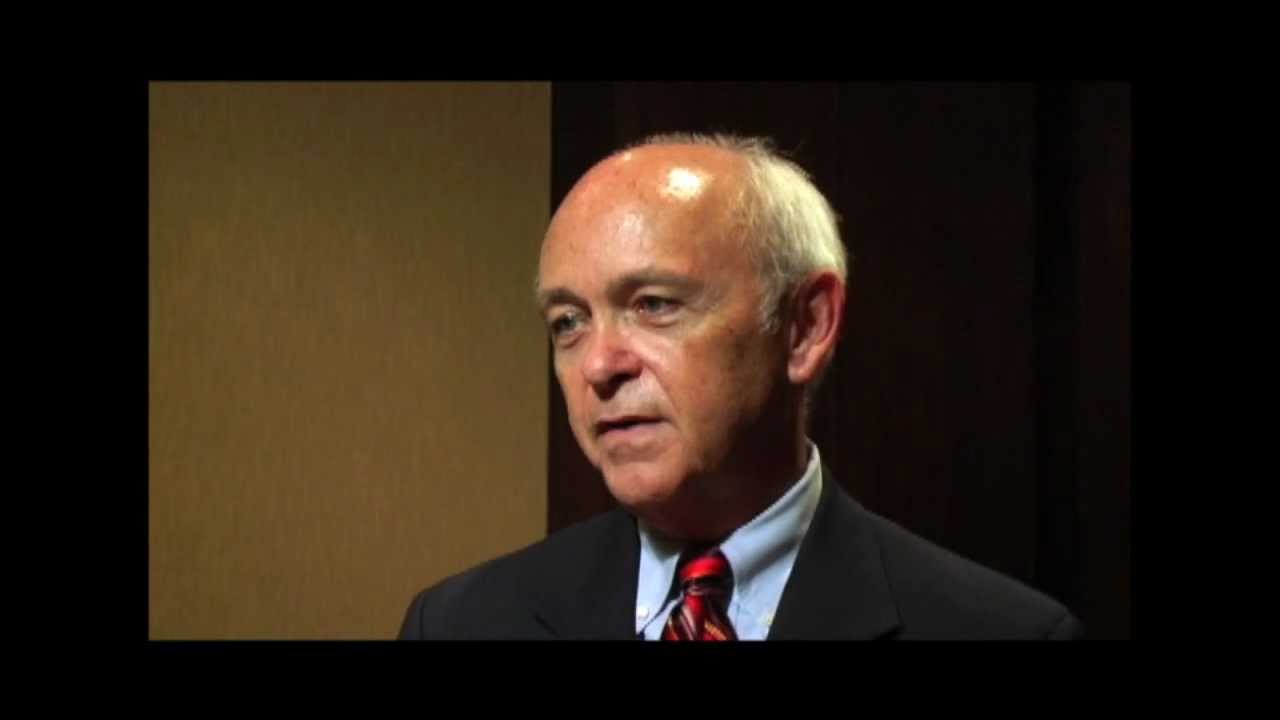 above.
Before being elected to the state Supreme Court, Kennedyserved as a juvenile judge and family-court judge, where he saw the negative plight of abused children who ended up in the justice system. In light of his experiences, he helped start the Children’s Trust Fund of Alabama and later the Corporate Foundation for Children and served as president of the National Committee to Prevent Child Abuse and Neglect. Kennedy’s campaign commercials showed his volunteer work, and included pictures of him holding hands with children he had helped.
Rove took those innocent pictures and, in the early days of the Internet, got Republican operatives at the University of Alabama Law School and the secretive, conservative FederalistSociety to e-mail around an attack ad claiming Kennedy was a gay pedophile. It was not unlike the “whispering campaign” he used in Texas to get Bush elected over Ann Richards, who he accused of being a lesbian in similar fashion.
“Karl Rove is a expert at turning what you believe to be your strongest suit into being your worst nightmare, kind of like the Swiftboat ads,” Kennedy said. “He accused me of being a pedophile.”
Rove also exaggerated the issue of large jury awards and turned “tort reform” into a campaign issue, accusing judges like Kennedy of being “too liberal” and guilty of “jackpot justice.” With those misleading tactics, he managed to take over the Texas and Alabama appellate court systems by getting pro-big business Republicans elected. Over time the Alabama Supreme Court and the Court of Civil Appeals became a “no win zone” for any average Alabamian seeking justice for a grievance against any corporate entity that wronged them.Big insurance companiesloved this, so they chipped in millions to Rove’s campaigns after that and still support him to this day in a big way.
While it is clear that even if there was an imbalance in the court system in favor of juries granting too much to defendants in trials in those days, the pendulum has swung way too far back in the other direction, and nobody in the mainstream media is telling that story.
So in the process of investigating this, to show how imbalanced the courts have become, we caught up with a Montgomery woman named Jo Ann Shiver. She is also interviewed in th.
How the Supreme Court Came Up With ‘Sovereign Immunity’ for Hospitals
Shiver’s mother was killed by a deadly staph infection she caught in a Baptist hospital that was ignored and even covered up by the hospital staff.
Her sister filed a lawsuit against the Montgomery hospital and actually managed towin a jury verdict in the lower court. But the case was thrown out by the state Supreme Court, by the judges Rove and his brand of dirty politics were instrumental in electing to the bench.
Ms. Shiver said she has no doubt politics played a role in the case. “Follow the money,” she said.
You could research the court dockets in this state and find hundreds of cases like this where justice was clearly not done. But this one is so strange it deserves special attention.
In this case, not only did the justices throw out the jury verdict and the award for damages. They actually set a precedent that unless reversed soon will result in thousands of unnecessary deaths by unaccountable doctors and hospitals. Here again, the University of Alabama plays a critical role in this part of the saga.
The Montgomery hospital had entered into a management agreement with the university on paper to handle some of the accounting due to some financial problems they were having, and as a result, the Supreme Court ruled that the hospital was a legal entity of the state and could not be sued under an old English Common Law tenant known as “Sovereign Immunity.” You could not sue the King in a Monarchy, and under certain circumstances, you can’t sue the state even today.
But somehow I doubt that even those who wrote the language for the English law would have envisioned a day when sovereign immunity would cover a private, for profit hospital owned by a church.
The court vacated a $3.2 million jury verdict in favor of the family of Lauree Durden Ellison. She died Nov. 8, 2005, after a stay at Baptist Medical Center East in Montgomery. She developed a staph infection from the hospital, but the church-state hospital administrators refused further treatment and denied liability or responsibility.
“They said she slipped through the cracks,” Ms. Shiver said, nearly tearing up.
I have searched high and low for an independent legal expert who could address this situation with insight. But so far, apparently the precedent is so strange that no one knows anything about it. It truly is one of those times when you have to throw up your hands and say, “only in Alabama.”
“Nobody knows the consequences of that opinion. It goes where no one has gone before,” Mark White, a former president of the Alabama Bar Association, told a Tuscaloosa newspaper reporter last year in one of the few news stories on the case to get reported in Alabama. No national news organization has touched the story.
Then-Chief Justice Sue Bell Cobb, the one Democrat on the court at the time who dissented in the case, said although Baptist Health retains an interest in its assets that are managed by the UAB health care authority, the court’s decision means the hospital is no longer “legally responsible for the harm that may be caused by its negligence.”
“Shouldn’t a hospital be responsible if they cut the wrong leg off?” Ms. Shiver asks. “It gives them license to be negligent.”
William Powell, an attorney for a friend-of-the-court group, said sovereign immunity is a powerful legal-protection device.
“You can only sue the king if the king lets you,” he said.
The Alabama Association for Justice and the :{Alabama }::{AFL-CIO}: have asked the court to grant a rehearing in the case, but so far, the high court has been non-responsive.
Morris Lilienthal, a trial lawyer in North Alabama who has reviewed the Ellison case, said the decision overreaches in a major way.
“It’s going to have dramatic effects on the law in Alabama,” he said.
The effect, in essence, is that all the health systems in Alabama, which already have “unbelievable, overreaching” protections under the Alabama Medical Liability Act, “may just be totally immune” from negligence or wrongful death claims from now on, Lilienthal said. “The doctors and staff there now have compete immunity from any accident.”
The Law as a Check on Greed
The law is supposed to be a leveler for and a check on “corporations out just for greed and money” and has made the world a safer place, he said. Even doctors should admit if they operate on the wrong limb of someone or leave medical instruments in a person and cause harm, for example, they should be held to a certain standard and be held accountable.
The Ellison case sets up a scenario where they are no longer held to a standard and are immune from any accountability. “It’s certainly not fair,” he said.
Tom Edwards, who ran for a state Supreme Court slot in 2010 as a Democrat and lost, said the Ellison case is a “clear example of how our Supreme Court will go out of its way to protect big business.”
When asked if he thought Rove’s takeover of the courts ended up creating a big corporation protection bureau and destroyed constitutional jury rights, making it impossible for average folks to get justice in the court system, he said: “That’s exactly what happened.”
“They do it very systematically,” he said. “The decision uses strained logic to set a legal precedent that grants state sovereign immunity to a private, profit-making operation competing in the private sector. It was a way for them to go out of their way to protect the medical industry.”
Activist Judges?
Another one of Rove’s tactics is to get his clients to rail against “activist liberal judges” who “legislate from the bench” to protect minorities and such.
But no one ever seems seems to talk about “activist conservative judges” who legislate from the bench to protect big corporations.
The Ellison case, Edwards said, is an example of “an activist court of an extreme nature. They write new laws from the bench every Friday, and they protect big corporations over the citizens of Alabama.”
Of course many doctors, hospitals, their PACs and their insurance carriers give millions of dollars in campaign contributions every year, mostly to Republicans.
Now ask yourself if your vote matters. If a hospital killed your mother, would you not want to sue somebody? Apparently you can’t do that anymore in Alabama.
For average working folks to vote Republican is “absolutely against their economic interest,” according to union officials such as Al Henley of the Alabama AFL-CIO and Auburn History Professor Wayne Flynt.
In addition, Lienthall added, most states have a tort claims act on the books where state entities can be held liable. But not in Alabama, he said, which is still operating under an outdated constitution written in 1901, updated in election years by constitutional amendments placed on the ballot at election time — and by judges. Those judges are elected as partisans who must raise millions in campaign contributions to get elected to jobs that qualify them for state retirement benefits — subsidized by the taxpayers, citizens who no longer possess full citizenship since they have no right to sue for damages or render judgements against corporations from the jury box.
Legal experts agree that where legislatures and courts intercede on these rights they violate the Sixth Amendment to the U.S. Constitution.
Yet again, Karl Rove and his clients are getting away with trampling on the constitution — seemingly without challenge. Only on the Web Press.
Why is it that the people who are getting screwed the worst keep voting for them?
“You can fool some of the people all of the time, and all of the people some of the time, but you cannot fool all of the people all of the time,” Lincoln said.
Unless you can convince them all to get their news from talk radio and Fox.
http://blog.locustfork.net/2012/10/how-karl-rove-took-over-the-alabama-supreme-court-and-created-a-no-win-zone-for-citizens/
===
| Karl Rove Linked to Obscene Cost of Alabama Judicial Electionsby: mooncatTue Oct 02, 2007 at 17:30:41 PM CDT |
|---|
It's amazing that so few Alabamians know this bit of political history. Karl Rove got involved in Alabama politics in 1994, at the behest of the Business Council of Alabama (BCA.) The BCA felt that Alabama Courts were too plaintiff friendly back then -- I believe they called it a "plaintiff's paradise" -- and wanted to get Republican judges elected to the state courts. Rove had a good track record of that in Texas, so the group hired him to handle somejudicial campaigns in Alabama. Janie Shores, a retired Associate Justice of the Alabama Supreme Court, marks that as the point when the cost of judicial races in the state began to skyrocket.
According to the article, Shores favors spending regulations to get the cost of judicial elections back under control. Alabama's current Chief Justice, Sue Bell Cobb has also expressed concern that judicial candidates have to spend too much time and effort raising campaign dollars. At a meeting of the Alabama Bar Association last summer she said
Speaking before the Women's Economic Development Council in Huntsville last month, Chief Justice Cobb
The Business Council of Alabama brought Rove into Alabama judicial elections and turned them into money contests where judicial experience, competence and good judgement are trumped by fundraising skills. This state of affairs doesn't inspire confidence in the impartiality of our courts -- all too often, the people a judge sees in court are the same ones the judge will need to ask for a campaign contribution. Other states have reformed judicial elections and Alabama can too, but Judge Cobb is right, it won't happen unless the business community sees the problem, repudiates Rovian election strategies and gets behind real reform. |
| mooncat :: Karl Rove Linked to Obscene Cost of Alabama Judicial Elections |
===
http://legalschnauzer.blogspot.com/2012/02/why-did-karl-rove-and-his-gop-thugs.html
Here in Alabama, all of this has me thinking about one of the great political mysteries of the past generation. It's a mystery that began to unfold before Bush ever took office, but it did not gain national attention until Dubya and his acolytes were in charge of the U.S. Department of Justice.
The mystery can be summarized by two questions: (1) Why did Karl Rove and his pro-business GOP thugs target Alabama Democratic Governor Don Siegelman? (2) Why did the Bush administration proceed with what has become the most notorious political prosecution in American history?
Those questions are particularly powerful now because Siegelman last week filed a petition with the U.S. Supreme Courtfor review of his 2006 convictions on bribery and obstruction of justice charges. This appears to be Siegelman's last crack at appellate review, and if it is denied, he probably is headed back to federal prison.
I've probably written more words about the Siegelman affair than just about anyone on the planet, so I might as well take a crack at answering those questions.
Those who believe that the Siegelman prosecution was legitimate, that the former governor and codefendant Richard Scrushy really did commit crimes over a contribution to an education-lottery campaign, often say something like this: "Why would Karl Rove and his associates worry about Don Siegelman? Alabama is a backwater state that nobody cares about, and its governor was not all that important. Why would Rove even care about a relative nobody like Don Siegelman?"
Folks who ask these questions underestimate Alabama's strategic importance. They also underestimate the grotesque greed and lust for power that has come to grip the modern GOP. Most importantly, they ignore the fact that Don Siegelman was a central figure in three financial and political scenarios that spelled potential danger for the Republican Party and the money men who support it. Let's examine these scenarios:
* The Duel Over An Air Force Refueling-Tanker Contract--Journalist/lawyer Andrew Kreig, of the D.C.-based Justice Integrity Project, has reported that the Siegelman prosecution was driven largely by the fierce competition between Boeing and EADSfor a $40-billion Air Force refueling-tanker contract. Republicans are known to wear patriotism on their sleeves, so you might expect them to support an American company such as Boeing. But EADS planned to build a manufacturing facility in Mobile, Alabama, and that meant the business forces that control our state strongly supported the European contender. Where does Siegelman fit into this picture? He had helped Boeing expand a plant in Huntsville, Alabama, and locate a new facility in Decatur, Alabama. Siegelman served as governor from 1998 to 2002, and business interests feared he would favor Boeing over EADS during a second term. How to get Siegelman out of the picture? About three months after Siegelman took office, Alabama Attorney General Bill Pryor launched an investigation that later would be taken over by federal officials. Key events in the investigation seemed to be timed around the 2002 election, which Siegelman lost to challenger Bob Riley, and the 2006 election--when Siegelman had appeared to be the strongest likely challenger to Riley. Who ran Bill Pryor's campaign for the attorney general's office? Why, none other than Karl Rove. Did Pryor's efforts eventually pay off? Bush appointed him to a lifetime seat on the U.S. Eleventh Circuit Court of Appeals. Did the effort to bring down Siegelman pay off? No, it did not; the tanker contract went to Boeing.
:{
}:
* The Battle Over Fraud and ExxonMobil--As early as 1995, Alabama conservation officials began to suspect that oil companies weren't paying the proper amounts under leases for natural-gas rights. The issue surfaced under Republican Governor Fob James but picked up steam when Siegelman took office in 1999. He hired the Mobile law firm of Cunningham Bounds Yance Crowder and Brown to represent the state in lawsuits involving oil companies. The firm must have done a pretty good job because it won a $3.5-billion jury verdict against ExxonMobil. But the punitive damages were overturned by the Republican-packed Alabama Supreme Court. Did Karl Rove and his buddies at the U.S. Chamber of Commerce want to make sure that Don Siegelman never again went after big oil? I would say the answer is yes.
* The Threat of a Pro-Gun Democrat in the Deep South--Siegelman built a relatively strong progressive record while holding four different statewide offices in Alabama--governor, lieutenant governor, attorney general, and secretary of state. But he was to the right of most Democrats on the issue of guns. And sources tell Legal Schnauzer this infuriated, and terrified, Republican politicos. Our sources say that Siegelman was not a hard-core supporter of gun rights, but he developed a relatively friendly relationship with the National Rifle Association for his support of guns in hunting and other sporting activities. In fact, NRA icon Charlton Heston signed a letter supporting Siegelman in the 2002 governor's race. Why would this cause considerable consternation among Republicans? Political scientists who studied the 2000 presidential race have noted that the NRA's massive spending that helped place normally Democratic West Virginia in the GOP column was a critical factor in winning the White House for George W. Bush. Had West Virginia remained a Democratic stronghold, the subsequent Florida vote-counting controversy would have mattered little; Al Gore already would have had the electoral vote sewn up. Republicans have made huge political strides from scaring sportsmen with the notion that Democrats are going to take away their guns. But there was Siegelman, in the heart of deep-red Dixie, winning an endorsement from the NRA. If other Southern Democrats had taken similar stances on guns, it could have spelled political calamity for Republicans. Is that the reason they had to take down Siegelman?
Our list of GOP motivations for the Siegelman prosecution is not all inclusive. It does not include, for example, the fact that Siegelman threatened Jack Abramoff and his Mississippi gaming clients by proposing an education lottery in Alabama.
So what is our No. 1 reason that Karl Rove and his thugs targeted Don Siegelman? The gun issue is perhaps the most interesting one because of its potential for national political implications; Democrats probably should ponder whether it's wise to come across as anti-gun in a country that clearly loves its firearms. The Boeing vs. EADS issue is intriguing because of the sheer volume of money involved. But when you consider the timing and the long-standing power of the players involved, I would say Siegelman's battles with the oil industry are the No. 1 reason he was targeted.
Siegelman sicced a Mobile law firm on big oil in 1999, and the Boeing/EADS battle didn't pick up major steam until about 2001. The gun issue and Charlton Heston did not become known until just before the 2002 election.
It's not enough for big oil to screw consumers at the pumps every summer. It also wants to defraud states out of the true value for their mineral rights. Could Alabama have used that $3.5 billion? It sure could have--for better schools, roads and bridges, health care, you name it.
Don Siegelman was fighting for that, and our guess is, that's why big oil decided he had to be stopped.
Posted by legalschnauzerat 6:39 AM 
Labels: Boeing, Charlton Heston, Don Siegelman, EADS, ExxonMobil, Karl Rove, NRA
3 comments:
==
SMOKEY JOE BARTON
WAS ROVE INVOLVED IN DELAY GERRYMANDER TEXAS ?
==
http://books.google.com/books?id=ZCJVojvhO_oC&dq=inauthor:%22Lou+Dubose%22&source=gbs_navlinks_s
Boy Genius: Karl Rove, the Architect of George W. Bush's Remarkable Political Triumphs (Google eBook)
Carl M. Cannon, Lou Dubose, Jan Reid
===
rove turned coal states gop (penn, w va, va, so ohio)
oct 2000 250 mil gal coal sludge spill (total of 2.2b) 20x exxon v spill, after election ruled an act of god (negligence 5 yrs old, thus stat of limit) 209 Mine and health safe wanted to sue massey, but fired, 26 yrs of great job
coal mine bonds don't need to prove solvency strat
===
took out Gray Davis:
Cheney Takes Aim at Davis
Meanwhile, Cheney continued to meet with energy company officials who were instrumental in drafting key aspects of the National Energy Policy. At the same time, the usually reclusive vice president was granting interviews to numerous reporters discussing his take on the California energy crisis which continued to spiral out of control.
In May 2001, the PBS news program "Frontline" interviewed Cheney who was asked by a correspondent whether energy companies were acting like a cartel and using manipulative tactics to cause electricity prices to spike in California.
"No," Cheney said during the "Frontline" interview, even though he was personally briefed about energy companies manipulating the state. "The problem you had in California was caused by a combination of things - an unwise regulatory scheme, because they didn't really deregulate. Now they’re trapped from unwise regulatory schemes, plus, not having addressed the supply side of the issue. They've obviously created major problems for themselves and bankrupted PG&E in the process."
The same month, May 2001, Davis met with Bush at a Century City hotel, not far from the offices he now works at as an attorney. He pleaded with Bush one last time to put price controls in place. Bush refused.
Behind the scenes, while Bush and Davis discussed the state of the energy crisis, Gillespie was emailing Enron officials on the status of Cheney's energy policy. He alerted Enron executives to the exact language that would appear on one of the hot-button issues revolving around price caps in California and the west and allowing energy companies free access to the nation's transmission lines.
"I believe this is the exact language that will appear under the 'energy supply' section of the report," Gillespiewrote. "Recommends that the President encourage the FERC to use its existing statutory authority to promote competition and encourage investment in transmission facilities," which Enron was lobbying heavily for. "Please keep this under wraps. We do not want to circulate this beyond the folks listed on this email. Please let me know any concerns. As we have known for several weeks, the report is not as explicit as we would want, but the White House, vice president, and [Department of Energy] have repeatedly but verbally assured us that they are making clear to FERC exactly what this means."
Another email Gillespie forwarded Enron officials, dated May 17, 2001, came from Cheney's spokeswoman, Juleanna Glover, who told Gillespie "you're really relied upon around here ... hear your name all the time in connection w. tough issues, but you know that already."
On May 21, 2001, five days after unveiling his energy policy, Cheney told Tim Russert on "Meet the Press" that Davis was to blame for the energy issues in the state.
"They knew over a year ago they had a problem, and Gray Davis refused to address that problem," Cheney said. "[They] kept putting it off and putting it off and putting it off, with the notion that somehow price caps could be maintained. Now, today, where are they in California?"
GOP Front Group Attacks Gray Davis, Shields Bush, Cheney
At the same time, Reed informed Rove and Cheney that his nonprofit, the American Taxpayers Alliance, a Republican front organization, would begin to air a series of scathing radio commercials taking aim at Davis's failure to tame the energy crisis in June 2001. The ads, Reed said, were aimed to shift attention away from Republicans in Washington and "back to Sacramento where it belongs." Reed added that the ads would leave Davis "bleeding like a stuck pig."
The ads, which began to air in June 2001, did in fact make an impact:
"He's pointing fingers and blaming others. Gray Davis says he's not responsible for California's energy problems; after all, the Public Utilities Commission blocked long-term cost-saving contracts for electricity. But who runs the PUC? The people Gray Davis appointed - Loretta Lynch and other Davis appointees who left us powerless. That's why newspapers say he just ignored all the warning signals and turned a problem into a crisis. Grayouts on Gray Davis."
The ads and the negative press Davis received helped set in motion a chain of events that would lead to a historic recall campaign and put Schwarzenegger in office.
What the public didn't know, however, is thatCheney and Rove recommended that Reed approach Reliant Energy, the firm that one of Cheney's energy task force advisers, Joseph Allbaugh, was affiliated with via his wife's lobbying for the company, to fund the radio spots, according to former Reliant executives involved in the matter. Reliant donated nearly $2 million of Reed's $3.2 annual budget, yet the company only reported spending a total of $340,000 on government lobbying in apparent violation of the law, according to the company's public records.
Gillespie also launched a public relations campaign against Davis. He took ads out in print publications attacking Davis. The ads were paid for by Gillespie's 21st Century Energy Project, which he formed in close coordination withKarl Rove less than a month after the National Energy Policy was released in May 2001, according to former Enron executives who worked closely with Gillespie. Enron funneled at least $75,000 to Gillespie to pay for the ads through Grover Norquist's Americans for Tax Reform, according to documents obtained by Truthout.
Russ Schriefer, who worked with Gillespie on Bush’s presidential campaign and formed Mosaic Media with Quinn Gillespie in February 2001 to produce advocacy ads for Republicans, wrote the Davis ads. The ads aired on ABC, Fox and CNN.
Norquist, a longtime friend of Cheney's, was personally tapped by Rove to assist Gillespie with the ad campaign. Norquist may be best known for his close relationship with disgraced lobbyist Jack Abramoff. One of Abramoff's clients, Raul Garza, chief of the Kickapoo Traditional Tribe of Texas, donated $25,000 to Norquist's organization in order to obtain an invitation to a reception with President Bush on May 9, 2001. Norquist and Abramoff were also in attendance and a photograph of Garza standing alongside Bush with Abramoff in the background was kept from public view when the Abramoff scandal blew up. Bush had denied publicly that he ever met Abramoff.
At the time, Gillespie said the ads were necessary "because Davis put all his time and energy into trying to shift responsibility and President Bush spent all his time and energy trying to accept responsibility. The president is trying to change the tone, but others of us have to point out that the crisis developed on the watch of Governor Davis and President Clinton."
Executive Privilege
Immediately following reports that Cheney relied upon the recommendations of 400 energy industry executives to draft the National Energy Policy, lawmakers began to demand that the vice president turn over documents regarding his task force meetings to Congress. The vice president vehemently refused.
===
Karl Rove
--
In a confidential 2010 filing, Crossroads GPS — the dark money group that spent more than $70 million from anonymous donors on the 2012 election — told the Internal Revenue Service that its efforts would focus on public education, research and shaping legislation and policy.
The group's application for recognition as a social welfare nonprofit acknowledged that it would spend money to influence elections, but said "any such activity will be limited in amount, and will not constitute the organization's primary purpose."
Political insiders and campaign-financ vwatchdogs have long questioned how Crossroads, the brainchild of GOP strategist Karl Rove, had characterized its intentions to the IRS.
Now, for the first time, ProPublica has obtained the group's application for recognition of tax-exempt status, filed in September 2010. The IRS has not yet recognized Crossroads GPS as exempt, causing some tax experts to speculate that the agency is giving the application extra scrutiny. If Crossroads GPS is ultimately not recognized, it could be forced to reveal the identities of its donors.
The tax code allows groups like Crossroads to spend money on political campaigns — and to keep their donors private — as long as their primary purpose is enhancing social welfare.
Crossroads' breakdown of planned activities said it would focus half its efforts on "public education," 30 percent on "activity to influence legislation and policymaking" and 20 percent on "research," including sponsoring "in-depth policy research on significant issues."
This seems at odds with much of what the group has done since filing the application, experts said. Within two months of filing its application, Crossroads spent about $15.5 million on ads telling people to vote against Democrats or for Republicans in the 2010 midterm elections...http://www.propublica.org/article/what-karl-roves-dark-money-nonprofit-told-the-irs
===
fight with TP
http://www.alternet.org/tea-party-and-right/gop-civil-war-continues-tea-party-groups-launch-campaign-against-karl-rove
March 8, 2013 |
Conservative organizationFreedomWorks is fundraising off of Fox News contributor Karl Rove's efforts to, in the group's words, "silence grassroots activists and make sure that only big-government RINO's call the shots in Washington."
Rove, along with allies from his Crossroads political groups, recently launched the Conservative Victory Project. According to The New YorkTimes,the group will work to "recruit seasoned candidates and protect Senate incumbents from challenges by far-right conservatives and Tea Partyenthusiasts." The project has sparked a civil war among conservative commentators, with some of Rove's own Fox News colleagues calling the group "absolutely repulsive" and "an incumbency protection racket."
FreedomWorks, which attacked Rove when the project was announced, has launched NotKarlsParty.com. In a  touting the effort, FreedomWorks spokeswoman and Fox News contributor Deneen Borelli says that "Karl Rove and his unprincipled establishment candidates" are trying to "take over the GOP." The message asks followers to visit NotKarlsParty.com to "file a petition to give Karl Rove a piece of your mind."
==
Rove, meanwhile, is racing full speed ahead on all fronts. On February 15, he trekked up to Capitol Hill to deliver a lesson on messaging to House Republican leaders. American Crossroads came out swinging early-and hard-in the Kentucky Senate race, bashing actress Ashley Judd for even thinking about challenging Senate Republican Leader Mitch McConnell. (Beyond the leader's obvious VIP status, there is a personal element to this: Crossroads' Law once served as McConnell's chief of staff.) And Rove just keeps on talking about the Conservative Victory Project, as media outlets devote vastly more ink and airtime to the subject than it could have garnered without the attendant controversy.
Of course, Rove isn't the only one poised to benefit from this spectacle. Even as he pokes purists in an apparent effort to jumpstart his 2014 money machine, the purists are looking to fill their coffers by poking back. "They need their shiny ball strategy too," observes the veteran strategist. "Everybody is trying to raise money." And just like Rove, these groups play rough-at times a little too rough. Last week the Tea Party Patriots had to issue an apology for a help-us-fight-Karl-Rove fundraising plea that included a Photoshopped image of their target dressed as an SS officer. (An outside vendor took responsibility for the pic.)
http://readersupportednews.org/news-section2/318-66/15868-karl-roves-war-on-the-tea-party
---
2012 election:
==
In the November election, a million more Americans voted for Democrats seeking election to the U.S. House of Representatives than Republicans. But that popular vote advantage did not result in control of the chamber. Instead, despite getting fewer votes, Republicans have maintained a commanding control of the House. Such a disparity has happened only three times in the last century.
(Here’s a chart comparing 2010 and 2012.)
Analysts and others have identified redistricting as a key to the disparity. Republicans had a years-long strategy of winning state houses in order to control each state's once-a-decade redistricting process. (Confused about redistricting? Check out our song.)
Republican strategist Karl Rove laid out the approach in a Wall Street Journal**column**in early 2010 headlined "He who controls redistricting can control Congress."
The approach paid off. In 2010 state races, Republicans picked up 675 legislative seats, gaining complete control of 12 state legislatures. As a result, the GOP oversaw redrawing of lines for four times as many congressional districts as Democrats.
How did they dominate redistricting? A ProPublica investigation has found that the GOP relied on opaque nonprofits funded by dark money, supposedly nonpartisan campaign outfits, and millions in corporate donations to achieve Republican-friendly maps throughout the country.Two tobacco giants, Altria and Reynolds, each pitched in more than $1 million to the main Republican redistricting group, as did Rove's super PAC, American Crossroads; Walmart and the pharmaceutical industry also contributed. Other donors, who gave to the nonprofits Republicans created, may never have to be disclosed.
While many observers have noted that mega-donors like Sheldon Adelson backed losing candidates, a close look at the Republicans' effort on redistricting suggests something else:The hundreds of millions spent this year on presidential TV ads may not have hit the mark, but the relatively modest sums funneled to redistricting paid off handsomely.
Where Democrats were in control, they drew gerrymandered maps just like Republicans. They also had their own secretive redistricting funding. (Last year, we detailed how Democrats in California worked to undermine the state's attempt at non-partisan redistricting.) But Democrats got outspent 3-to-1 and did not prioritize winning state legislatures. They also faced a Republican surge in 2010.
Exactly how the Republican effort worked has been shrouded in mystery until now. But depositions and other documents in a little-noticed lawsuit in North Carolina offer an exceptionally detailed picture of Republicans' tactics.
Documents show that national Republican operatives, funded by dark money groups, drew the crucial lines which packed as many Democrats as possible into three congressional districts. The result: the state's congressional delegation flipped from 7-6 Democratic to 9-4 in favor of Republicans. The combination of party operatives, cash and secrecy also existed in other states, including Wisconsin, Ohio and Michigan.
Redistricting is supposed to protect the fundamental principle of one-person-one-vote. As demographics change, lines are shifted to make sure everyone is equally represented and to give communities a voice. In order for Republicans to win in North Carolina, they undermined the votes of Democrats, especially African-Americans. (Party leaders in North Carolina say they were simply complying with federal voting laws.)
The strategy began in the run-up to the 2010 elections. Republicans poured money into local races in North Carolina and elsewhere. It was an efficient approach. While congressional races routinely cost millions, a few thousand dollars can swing a campaign for a seat in the state legislature
The Republican effort to influence redistricting overall was spearheaded by a group called the Republican State Leadership Committee, which has existed since 2002. For most of that time, it was primarily a vehicle for donors like health care and tobacco companies to influence state legislatures, key battlegrounds for regulations that affect corporate America. Its focus changed in 2010 when Ed Gillespie, former counselor to President George W. Bush, was named chairman. His main project: redistricting.
Soon after Gillespie took over, the RSLC announced an effort to influence state races throughout the country, the Redistricting Majority Project, or REDMAP. Fundraising soared. The group raised $30 million in 2010, by far its best year. (Its Democratic counterpart raised roughly $10 million.)
The RSLC is organized as a type of political group that can take in unlimited corporate donations. It must disclose its contributors. But that doesn't mean it's always possible to trace the origins of the money.
Along with Walmart and tobacco companies, the RSLC's largest funders in 2010 were the Chamber of Commerce and American Justice Partnership, which gave a combined $6.5 million. Those two groups raise money from corporations and others but don't have to disclose their donors.
As the 2010 North Carolina legislative elections heated up, the RSLC jumped into local races. But the way they made contributions kept their involvement away from the attention of state voters. Rather than running campaign ads under its own name, the RSLC distributed money to a newly formed local nonprofit. The RSLC declined to comment.
The RSLC gave $1.25 million to its vehicle of choice Real Jobs NC. The group calls itself a "non-partisan organization that believes we need to return to a reliance on the free enterprise system that made our country great for real answers." It was started in 2010 and got a hefty $200,000 boost from dollar store magnate and Republican supporter Art Pope, although Pope denies his donation was related to redistricting or REDMAP.
Real Jobs NC produced ads and mailers slamming more than 20 state Democrats.
"Steve Goss … nice guy," intoned the voiceover in in North Carolina, attacking then-Democratic State Senator Goss. "Too bad he's voting with the Raleigh liberals over hometown conservatives."
Goss lost, and Democrats lost control of North Carolina's General Assembly for the first time in a century. The pattern repeated itself across the country.
"Twenty legislative bodies which were previously split or under Democratic control are now under Republican control," said a triumphant RSLC REDMAP post-election analysis, highlighting its spending in Wisconsin, Ohio, Pennsylvania and North Carolina, among other states.
The next step for Republicans was to draw district maps, which can be expensive. The maps require expertise, extensive data and sophisticated software. Skillful map drawers can make even the most partisan gerrymander look reasonable.
To fund the work, the Republican State Leadership Committee used its previously dormant nonprofit arm, the State Government Leadership Foundation. Such dark money groups are increasingly popular because they are allowed to keep secret the identity of their donors. Federal tax law permits them to do this as long as they pledge that politics is not their primary focus.
Flush with anonymous donors' cash, the Foundation paid $166,000 to hire the GOP's pre-eminent redistricting experts, according to tax documents. The team leader was Tom Hofeller, architect of Republican-friendly maps going back decades.
"Our team would be happy to assist in drawing proposed maps, interpreting data, or providing advice," wrote Chris Jankowski, the head of both the RSLC and State Government Leadership Foundation, in a of introduction to North Carolina legislators. The letter was disclosed as part of the North Carolina lawsuit.
"We are engaged in a number of states and believe we are playing a meaningful role in helping draw fair and legal lines that will allow us to run competitive elections in 2012 and in future cycles," Jankowski added.
The same letter emphasized that the Republican redistricting push was being funded through its dark money nonprofit: "The entirety of this effort will be paid for using non-federal dollars through our 501c(4) organization."
Jankowski, representing both the RSLC and the Foundation, declined to comment.
Because Hofeller's team was paid with dark money and the redistricting process is so secretive, it is hard to know the full extent of its activities. In Wisconsin, the team provided technical assistance to an aide to Rep. Paul Ryan as he drew new districts that favored Republicans. In Missouri, Hofeller was the sole witness called by attorneys representing the Republican legislators who drew the maps there.
In the case of North Carolina, Hofeller made his first trip to Raleigh on Feb. 1, 2011, even before final state Census data had been released, the first of 10 trips that year.
From then on, two parallel redistricting processes unfolded in the state.
Through the spring and summer, legislators in charge of redistricting traveled the state holding public meetings at local colleges, soliciting comment and proposed maps from citizens — though the Republicans on the committee would not produce draft maps themselves.
"We are not here to answer questions. We are not here drawing maps," state Senate redistricting committee chairman Bob Rucho told the crowd at a hearing in Durham. "What we are here for is to basically hear your thoughts and dreams about redistricting."
But that input had little influence on the districts that were eventually drawn.
Instead, the real maps were being produced behind the scenes by a team that based its operations at Republican Party headquarters on Hillsborough Street in Raleigh. Armed with advanced mapping software, Hofeller and others crafted districts that would virtually guarantee big gains for the party.
Hofeller did not attend or read transcripts of any of the public meetings, according to his deposition. Hofeller did not respond to requests for comment.
A mysterious state dark money nonprofit that sprung up just in time for the process, called Fair and Legal Redistricting for North Carolina, hired a technician to operate the mapping workstation day-to-day, and another Republican mapping expert. The group did not respond to our requests for comment.
State-based nonprofits have been a vehicle for Republicans to funnel anonymous money into their map-drawing operations in a number of states, including self-proclaimed nonpartisan groups in Michigan and Minnesota.
Republican state legislators tasked with redistricting frequently visited and consulted with the mapping team, according to depositions. Even Art Pope, the most influential conservative donor in the state, was appointed "co-counsel" to the legislative leadership and allowed in the room to give direct instructions to the technician.
"We worked together at the workstation," said Joel Raupe, the technical expert paid by Fair and Legal Redistricting, in a deposition. "He sat next to me."
Pope, who is a lawyer but does not actively practice, was made co-counsel to the state legislature, offering his services pro bono. Now, because he was technically a legal adviser to the state, he says any information about his involvement in the redistricting is privileged.
(The New Yorker had a sweeping profile of Pope last year, detailing how he has used his fortune to dominate North Carolina politics.)
North Carolina's Republican incumbents in Congress pushed for a so-called "10-3 map," the majority they hoped to win in the state's delegation.
Hofeller, the mapping expert, delivered. His maps kept most of the districts from being competitive — or even remotely winnable — for Democratic candidates.
A key part of the redistricting strategy was to push minority voters into three districts. Republicans insisted their maps were "fair and legal," necessary to conform to laws protecting minority voting rights, although according to a well-known voting rights attorney, the opposite is true.
But federal voting rights law "doesn't require a jurisdiction to pack blacks in districts," said Laughlin McDonald, director of the American Civil Liberties Union's Voting Rights Project. "If you tried to pack minority voters into a district, that would arguably be a violation."
In two of those districts, African-American incumbents been already been winning by large margins for years. Republicans' maps added yet more African-Americans to the districts, what's known in redistricting parlance as "packing." As Hofeller wrote in an email about one of the districts, the plan was to "incorporate all the significant concentrations of minority voters in the northeast into the first district."
A third district was 120-mile long, and sea monkey-shaped, connecting pockets of African-Americans from three different, distant cities. Republicans justified it on the basis of a common media market.
The maps were designed to "segregate African-American voters in three districts and concede those districts to the Democrats," says Bob Hall of Democracy North Carolina, a nonpartisan public interest group that joined the lawsuit against the new maps.
In 2012, Democrats won the three districts by more than 70 percent of the vote. Another effect: the surrounding districts were much more Republican.
Rucho and other Republican legislators had presented the maps as advantageous to Democrats. Indeed, registered Democrats actually outnumbered registered Republicans in seven additional districts beyond those that were clearly slated to be Democratic.
Emails show Republicans decided to make that fact a major talking point.
But the stat was misleading, as the Republicans' own data indicates. An internal analysis of one of Hofeller's later drafts (code name "Blue Horizon 3") obtained by ProPublica shows that those seven allegedly "competitive" districts would have been landslide wins for John McCain in 2008, and for Republican Senator Richard Burr in 2010.
The carefully drawn maps worked. In this year's elections, Democratic candidates for the U.S. House of Representatives in North Carolina won 50.6 percent of the total vote. But the state's House delegation now has nine Republicans and just four Democrats. One of the Democrats won by just a few hundred voters, despite the fact that his newly drawn district skewed heavily Republican and that his own home had been drawn out of it. North Carolina's delegation before the election had seven Democrats and six Republicans
In addition to his pay from national Republican groups, invoices show Hofeller billed North Carolina taxpayers $77,000 for his services.
The Republican maps are still under threat by suits filed by Democrats and the NAACP. The lawsuits are headed to the state Supreme Court. But a flood of contributions tied to the RSLC have lowered the risk of the maps' being overturned.
While judicial elections in North Carolina are nominally nonpartisan, it was common knowledge that Republicans held a 4-3 majority on the court. One of those Republican incumbents was facing a tough challenge in 2012, potentially throwing the whole redistricting result in jeopardy.
Justice Paul Newby was running for re-election against appellate judge Sam Ervin IV, grandson of the famous North Carolina senator who investigated Watergate. With a few weeks left until the November election, Newby was trailing Ervin.
But then, in the final stretch, Newby was the beneficiary of a flood of late spending that can be traced back to the Republican State Leadership Committee.
Once again the contributions were funneled through homegrown groups. With only a few weeks to go, the RSLC gave more than $1.1 million to a group called Justice for All NC. Campaign finance filings show Justice for All NC in turn gave nearly $1.5 million to a super PAC running pro-Newby ads, the NC Judicial Coalition.
Most of the money spent by the super PAC went to pay for hundreds of airings of a featuring lines like, "Paul Newby / Justice tough but fair / Paul Newby / Criminals best beware" set to infectious banjo music.
The spending didn't end there: and Pope's fingerprints were also on the race. Two dark money groups affiliated with Pope — the state-based Civitas Action and Americans for Prosperity — spent another $300,000 on radio ads and mailers supporting Newby. Pope's company also gave to the RSLC in the run-up to this fall's elections.
Pope says he gave money to Americans for Prosperity for years before the judicial race even came up, and that he was not involved in the decision to run pro-Newby ads.
"I'm Republican, I support Republican groups," Pope said. "But just because you support something doesn't mean you're responsible for all they do."
It was an unusually large amount of outside spending for a judicial race. The outside pro-Newby groups had spent more on the race than the two campaigns combined.
In the end, Newby eked out a 52-48 victory, preserving the court's Republican majority.
When the groups contesting the maps called for Newby to recuse himself from redistricting litigation, lawyers for Republican legislators argued that because the campaign ads were paid for by "independent" groups, they did not jeopardize Newby's impartiality.
On Monday, the state Supreme Court rejected the motion for Newby to recuse himself.
"I've got no control over who contributes to an ad. I have no control over who endorses me," Newby — who did not respond to a request for comment — told a local TV station on the eve of the election. "You've got to put your blinders on like lady justice."
==
By Josh Israel, Think Progress
17 November 12
the non-partisan Citizens for Responsibility and Ethics in Washington (CREW) filed complaints Thursday with both the Federal Election Commission (FEC) and the Federal Bureau of Investigation (FBI) alleging that Karl Rove and his secretive Crossroads GPS violated election law and may have engaged in a criminal conspiracy to do so.
Under campaign finance law and FEC regulations, 501(c)(4) groups, like Crossroads GPS, can raise unlimited funds from wealthy individuals and corporations without having to disclose their donors. The only time donors to these secretive groups must be disclosed is when donors give more than $200 explicitly "for the purpose of furthering an independent expenditure."
According to CREW, Rove expressly asked for and received millions of dollars in contributions specifically to fund an independent expenditure effort in support of unsuccessful Republican Ohio Senate nominee Josh Mandel:
==
Rove’s defeat did not come from want of trying. Throughout the entire campaign, on the surface, he played the lofty pundit pontificating for Fox and the Wall Street Journal as if he had no role whatsoever in the campaign. But whenever one looked closely beneath the surface, one found the Mark of Rove. Under the radar, via his surrogates in the Romney campaign, Boss Rove orchestrated massive, multi-million dollar political ad campaigns that inundated the swing states with countless ads funded by his SuperPACs and “dark money” groups. He drummed up narratives portraying Obama as a latter day failed, weak, Jimmy Carter, and reawakening paranoid fantasies that suggested America still lived in the aftermath of 9/11, cringing in fear of the terrorist threat. In more than30 states there were attempts at voter suppression—Jim Crow 2.0– in one form or another, a strategy Rove had begun to employ by 2004. In Ohio, Republican Secretary of State Jon Husted, who had worked on Rove’s Ohio campaign in ’04, did everything he could to limit early voting. Nathan Sproul [5], a former Rove operative, launched nationwide schemes to disenfranchise Democrats, but was investigated by authorities for electoral misconduct and voter registration fraud. And various electronic voting machine companies were suspected [6] of positioning themselves to rig the vote... alternet
---
see new book boss rove: craig unger "Boss Rove: Inside Karl Rove’s Secret Kingdom of Power,"
ryan uses his strategy: attack them where strongest eg medicare
--
in 2004, Karl Rove (then an unnamed source for journalist Ron Suskind) pejoratively called “‘the reality-based community’ which he defined as people who 'believe that solutions emerge from your judicious study of discernible reality.'” Rove added -- that moment being the highpoint of Bush-era imperial self-celebration -- “We're an empire now, and when we act, we create our own reality. And while you're studying that reality -- judiciously, as you will -- we'll act again, creating other new realities, which you can study too, and that's how things will sort out. We're history's actors... and you, all of you, will be left to just study what we do.'”
---
weekly st'd does not disclose his PAC http://mediamatters.org/blog/2012/08/22/negligent-top-newspaper-editorial-editors-slam/189472
The Wall Street Journal's failure to disclose op-ed columnist Karl Rove's ties to political organizations raising hundreds of millions of dollars to defeat President Obama and other Democratic candidates is drawing harsh criticism from editorial page editors at America's top newspapers.
Even as he writes regular columns on the 2012 election for the Journal, Rove serves as what *Vanity Fair* calls "the defacto leader of the Republican Party." As the co-founder of the super PAC American Crossroads and its related organization Crossroads GPS, Rove is helping to assemble a massive war chest to run attack ads against Democrats this fall -- an obvious conflict of interest.
--
craig unger"Boss Rove:Inside Karl Rove’s Secret Kingdom of Power," DN http://www.democracynow.org/2012/8/22/boss_rove_how_karl_rove_went
one party state
no gop in tx b/c conserv demos doing the job; used pacs, tort reform, went on PM payroll? ; strip club hurt RNC $; superpac
ohio 2004 : smartech Chatanooga ; orig co funded by bill dewitt (fundraiser) reynolds balied out b2 oil; jeb, RNC; sec of state of ohio ken blackwell co-chair b2; server fails, votes shifted 6.7% diff between exit and "official" results (cf rove)
mike connell cyber guru hacked demos? rove's emails disappeared from smarttech
US atty 8 firing not as imp as what the rest did, prosc demos eg don siegelman (faces 8 yrs in jail) Gov Ala pros by rove's best friend's wife Canary; flipped TX and Ala sup ct
===
Rove vs. the Koch brothers By: Kenneth P. Vogel October 10, 2011 04:44 AM EDT |
|---|
Karl Rove’s team and the Koch brothers’ operatives quietly coordinated millions of dollars in political spending in 2010, but that alliance, which has flown largely under the radar, is showing signs of fraying. And with each network planning to dwarf its 2010 effort, Republicans worry that the emerging rivalry between the two deepest-pocketed camps in the conservative movement could undercut their party’s chances of taking the Senate and White House in 2012. The billionaire industrialist brothers David and Charles Koch plan to steer more than $200 million — potentially much more — to conservative groups ahead of Election Day, POLITICO has learned. That puts their libertarian-leaning network in the same league as the most active of the groups in the more establishment-oriented network conceived last year by veteran GOP operatives Rove and Ed Gillespie, which plans to raise $240 million. The fault lines revealed themselves this summer, when the camps split on the highest-profile conservative movement issue of the day: The biggest groups in the Rove-Gillespie network supported House Speaker John Boehner’s bill to increase the debt ceiling and the Koch brothers’ primary political group, Americans for Prosperity, pressured conservatives to oppose it. |
http://dyn.politico.com/printstory.cfm?uuid=571964E7-AE37-425F-97C5-C2127CB1E566
===
rfk2rove owned 250K enron stockearly 2001 while energy pol made; also BP, amoco, royal dutch shell 97 but involved in all decisons (scooter sold a bunch early
===
apr 12 2005 frontline
the architect:
given hillary's old office, policy and politics merge, in charge of 4 area
norquist
saxby chamblis beat war hero lost legs 2002? [roger stone?]
built tx gop from scratch; had own xx machine in sec of state --> mail list
50% attack, looked for anger pt eg tort reform covered by 60 Minutes!
100% sweep of tex sup ct?!
phil gramm early client
rove strategy is to attack opponent's strong points (eg Richards tolerant, so pro-gay; pattern repeated used surrogate or anoanymous
beat richards in 94, when he left, all tx state offices gop
mccain won NH by 19, next SC
vet said not backed on agent orange, gay issue won by 11
iraq war appropriation flipflop
swift boat DCI tony feather 2000 and 04 campaign
gay marriage state measure in 11 states, fed constit amend prosed by bush; he had courted gay vote in earlier election; mobilized indiv churches
dep chief of staff
wants to rework am gov, so went after social security
===
highlight section lost
sm sein huffpo
The Amazing Story Of Saxby Chambliss' Bum Knee
First Posted: 11-17-08 12:08 PM | Updated: 12-18-08 05:12 AM
Six years ago, Saxby Chambliss was able to win a seat in the United States Senate by deploying a series of highly personalized swipes at incumbent Democrat Max Cleland.
The attacks on Cleland's patriotism -- including running an ad that pictured the triple-amputee Vietnam veteran alongside Saddam Hussein and Osama bin Laden-- left a particularly bad taste in the mouths of observers, including Sen. John McCain, who called it "worse than disgraceful... reprehensible." Chambliss, after all, had never served in Vietnam. And the excuses he offered were so lame, he changed them on several occasions.
The most widely ridiculed yarn was that Chambliss' "bad knee" had kept him from serving.
"I was determined not to be physically fit," he explained during a debate in August 2002. "I had a bum knee. I had an old football knee that unfortunately they wouldn't take me."
It seemed all too unbelievable. And, generally, it was. Chambliss had sought and receivedfive student deferments from service in Vietnam. That he would, nevertheless, criticize Cleland's patriotism was a sharp dose of political chutzpah --- but one that ultimately worked.
Flash forward six years later and the dynamics of that race are in some respects being replayed once more. Chambliss currently finds himself in a runoff election against another Vietnam vet, Jim Martin, after neither candidate could secure 50 percent of the vote. John McCain, meanwhile, is campaigning on Chambliss' behalf, despite the harsh rebuke he offered during the Georgian's first run for higher office.
Cleland, meanwhile, is not exactly willing to let bygones be bygones. In an interview with the Huffington Post late October, the former Senator insisted that this current election was not about him. But he painted Martin's candidacy as a true opportunity for Peach State voters to right a wrong.
"The people in Georgia are still P.O.ed at the fact that [Karl] Rove and Ralph Reed and Chambliss and Bush, all of them have been totally discredited," he said. "People see [that the stuff in 2002 was a lie] and there is some regret out there that I am not still in the United States Senate. And so now they are taking that out in their support of Jim Martin who is a Vietnam veteran, who had a case of polio but overcame that to make sure he got into the military and serve in Vietnam. On the other side, you have Chambliss who got out of going to Vietnam with a trick knee."
Indeed, for Chambliss' critics, the notorious knee remains a symbol of the quibbles they have with the Senator: that the appearance he provides is removed from reality and that he has, at times, been an absentee Senator. Physical impairments aside, in October 2005, Golf Digest ranked Chambliss the #2 golfer in the Senate and the 33rd ranked golfer in Washington D.C. Sources close to Chambliss, in fact, once grew concerned that his reputation was suffering because of all the times he was spending on the links.
These sources didn't lack a legitimate reason. In a scathing column titled "Saxby Chambliss' Day Off," then-Roll Call reporter Mary Ann Akers wrote about how Chambliss once skipped work to play golf with Tiger Woods, while his colleagues held a closed door session in which they agreed to accelerate in inquiry into how the Bush administration handled intelligence about Iraq's weapons programs.
"Instead of being forced to talk about the uncomfortable issue of pre-Iraq war intelligence (or the lack thereof), Chambliss was 'the envy of golfers everywhere,' as the Atlanta Journal-Constitution put it," wrote Akers. "At least until he stepped up to what the newspaper called the club's 'unenviable first tee.' 'That was one of the more intimidating shots I have ever had,' the paper quoted Chambliss saying. 'Thank goodness it worked out.'"
"And thank goodness Chambliss, who sits on theSenate Select Intelligence and Armed Services committees, didn't have to suffer through the Democrats' tortuous questions about those elusive weapons of mass destruction and whether the Bush administration manipulated the truth and misled Congress into supporting the war."
http://www.huffingtonpost.com/2008/11/17/the-amazing-story-of-saxb_n_144307.html?view=print
=
http://www.counterpunch.org/madsen1101.html
Rove has practiced the same style of slash and burn politics as did his Nixonian mentor Segretti. Many of us remember the Lincolnesque Senator Ed Muskie breaking down in tears during the 1972 campaign over Segretti-planted false stories in a New Hampshire newspaper that accused Mrs. Muskie of being a heavy smoker, drinker, and cusser and accused Muskie of uttering a slur in describing New Hampshire's French Canadian population. Rove's hero also forged letters on fake Muskie campaign letterhead, disrupted rallies and fundraising dinners, and spread false stories about the sex lives of candidates. Segretti's brush also smeared George McGovern, George Wallace, Shirley Chisholm, and McGovern's first vice presidential choice, Senator Tom Eagleton.Segretti of course did not go on to a high-level White House job -- he was sentenced to six months in federal prison for distributing illegal campaign material.
tour http://www.villagevoice.com/news/0529,ridgeway,66005,6.html
FALL 1970: Rove pays visit to Chicago campaign headquarters of Alan Dixon, a Democrat running for state treasurer. Disguised as a volunteer, Rove steals official campaign letterhead and sends out 1,000 invitations to people in the city's red-light district and soup kitchens, offering "free beer, free food, girls, and a good time for nothing" at Dixon headquarters. When hundreds of homeless and alcoholic Chicagoans show up at a fancy Dixon reception, Rove succeeds in embarrassing the candidate. Dixon still wins the election.
1971: Rove drops out of college to devote full time to College Republicans, where he becomes protégé of dirty trickster Lee Atwater, the group's Southern regional coordinator. Rove becomes executive director, then national chairman.
1972: Under mentorship of dirty trickster Donald Segretti (who later went to jail for Watergate), Rove paints McGovern as "left-wing peacenik," in spite of McGovern's World War II stint piloting a B-24. Rove also works as staff assistant to George Bush Sr., then chairman of Republican National Committee (RNC).
1973: Rove introduces Atwater to Bush Sr. Atwater later becomes "political attack dog" for the Reagan-Bush team, helps Bush Sr. become president, himself becomes RNC chairman, is struck by a brain tumor, and dies [after apolgizing to victims].
AUGUST 10, 1973: The Washington Post says it received tape of Rove telling about some of his "dirty tricks." Rove is rumored to have participated in "dumpster-diving" (looking through opponents' trash for information to be used against them), crimes such as identity theft, petty larceny, and campaign fraud, and tours to teach other College Republicans how to perform these tricks.
NOVEMBER 1973: Rove first meets George W. Bush when Bush Sr. asks Rove to deliver a set of car keys to the younger Bush. Rove later recalls his initial impression: "Huge amounts of charisma, swagger, cowboy boots, flight jacket, wonderful smile, just charisma—you know, wow."
1976: Rove marries Houston socialite Valerie Wainwright.
1977-79: Rove starts raising money for Bush Sr.'s eventual presidential campaign, begins advising George W. Bush in his unsuccessful congressional bid, and as a Texan political consultant put it, has to "babysit Bush back when [he] was drinking."
1979: Wainwright divorces Rove.
1981: Rove's mother commits suicide. Rove forms direct-mail firm, Rove & Co., to back Republican candidates.
1982: Texas Republicans suffer heavy election losses. Rove, however, uses opportunity to develop campaign strategies targeting suburbs.
1984: Rove helps ex-Democrat Phil Gramm win Senate seat as Republican.
1986: Rove marries Darby Hickson, a graphic designer for his company. Advises Bill Clement in his tight but successful Texas gubernatorial race.
1988: Rove hits on "tort reform" as winning issue for Republicans. His candidates win five out of six open seats on the Texas Supreme Court.
1994: Rove becomes political adviser to George W. Bush in his race against incumbent governor Ann Richards. Bush aided by $1 million pumped into the race. Rove dreams up idea of staging calls to voters from supposed pollsters who ask such things as whether people would be "more or less likely to vote for Governor Richards if [they] knew her staff is dominated bylesbians."
2000: Rove is at heart of Bush's vicious smear job on John McCain in South Carolina primary: Thinly disguised Bush surrogates claim McCain was a stoolie while a P.O.W. Rove also credited with spreading rumor that McCain's adopted Bangladeshi daughter is black and illegitimate and his wife a drug addict.
2000: Rove is required to sell his Enron stock before Bush takes office. Reportedly still holds between $100,000 and $250,000 worth of shares when appointed.
2001: Rove launches "72-Hour Task Force" aimed at evangelicals, Hispanics, Catholics, and other faith-based groups.
JUNE 2002: A PowerPoint presentation Rove created to explain strategies for 2002 and 2004 elections is found without explanation in Lafayette Park. The presentation portrays war on terroras an important issue throughout the upcoming campaigns.
JULY 8, 2003: Syndicated columnist Robert Novak mentions to Rove that former ambassador Joseph Wilson's wife, Valerie Plame, is a CIA undercover operative. Rove's comment: "I heard that too."
JULY 14, 2003: Novak's syndicated column reveals publicly the classified information that, according to "two senior administration officials," Plame is an undercover CIA operative.
AUGUST 21, 2003: Wilson, who has already blamed Rove for the leak, says at a public forum in Seattle that he would like "to see whether or not we can get Karl Rove frog-marched out of the White House in handcuffs."
OCTOBER 2004: FBI begins investigating the Plame leak. Rove testifies, but his attorney, Robert Luskin, says Rove has been "assured" by special prosecutor Patrick Fitzgerald that "he is not a target of the probe."
NOVEMBER 3, 2004: In his victory speech, Bush calls Rove "the architect" of his re-election.
FEBRUARY 2005: Rove ispromoted to assistant to the president, deputy chief of staff, and senior adviser.
FEBRUARY 11, 2005: The Bush administration denies having had anything to do with the Swift Boat Veterans, who smeared John Kerry during the campaign and denounced his war stories as lies. But rumors persist when Rove pays tribute to the group at the Conservative Political Action Conference during the annual Ronald Reagan banquet in D.C.
Colson works with o'neill to discredit kerry
http://www.rotten.com/library/bio/usa/karl-rove/ w/ timeline Plame, Novak
---
book ch? http://works.bepress.com/cgi/viewcontent.cgi?article=1020&context=bill_israel
===
slater Bush's Brainon Rove
http://books.google.com/books?id=Ig-aodIl-HUC&dq=bush%27s+brain&source=gbs_navlinks
_s also video
http://www.hulu.com/watch/149014/bushs-brain
Bush Brain video
rove bugged own office in tex gov race Clements vs White (losing) 10 min on wall 2 hrs, removed (invest by rampton)
true believer thus any means necessary
young rep tricks al Dixon stationery caper. 73 ran for chair (offical pos w/ GOP? paid? fracas, wuz robbed, G1 B1 recogniz Rove new RNC, angry ltr, hired KR 22 min
Mauro Tx land commis Greg Rampton, 2-3 HT guys went to JAIL INNOCENT? KR talked rick perry (--> gov) to change parties and run against hightower;all dems got invesitigated, but esp ag comm. fbi 2 elderly empolyees asked for Hightower, told to stop, but did not end (KR had info) parents died '92
whisper campaign against richards (lesbian) // McC south carolina (NH trouced B2)
MCC mil career attacked, crazy 3rd party ad, flyer on fund church before election, black love child on talk shows (Mo teresa orphanage in bangldesh), cindy Mccain drug addict
max cleland, sec of vet, ad tied to saddam and obama (voted agaist homeland sec 11x) acutally only agaist gop version vs demo
saxby chamblis?
Plame 55 min
Novak outed (KR fired from GB campaign for leaking to RNovak?
wilson served B1, niger yellowcake, plame WMD agent
irqa war as pol ploy; war cabinet chickenhawks
===
http://www.dkosopedia.com/wiki/Karl_Rove
=
works with American Renewal, that went after tom dachle Big Lies 55
---
plame cia
http://www.sourcewatch.org/index.php?title=Treasongate:_Beyond_Karl_Rove
---
Going Dirty
kitty duk accused of flag burning 201
'80 atwater camp called Turnipseed commie, pushpoll,
'88 ferocious attacks on dole and kemp for Bush 203
Early Rove cleint Gramm 204 denied cic rumor Ann R
lesbian 204, bugged own phone
=
Part I
Ratfucking is an American slang term for political sabotage or dirty tricks. It was first brought to public attention during the Watergate scandal investigation that during the 1972 presidential campaign the Nixon campaign committee maintained a "dirty tricks" unit focused on discrediting Nixon's strongest challengers.
According to Woodward and Bernstein, Nixon aide Dwight Chapin hired fellow USC alumnus Donald Segretti to run a campaign of dirty tricks (which Segretti dubbed "ratfucking") against the Democrats in 1972. The purpose of the operation was to create as much bitterness and disunity within the Democrat primary as possible. One notable example of Segretti's wrong-doing was a faked letter on Democratic presidential candidate Edmund Muskie's letterhead falsely alleging that U.S. Senator Henry "Scoop" Jackson, a fellow Democrat, had had an illegitimate child with a 17-year-old.
Among the tactics were: canceling meeting-hall reservations just prior to rallies, putting out false press releases or "leaked documents" in the name of political opponents, spying on rival campaigns, putting plants into rival campaigns, purloining speeches and information, vote contracting, jamming phone lines, ordering vast quantities of food for delivery in the name of rival campaigns, hiring "rioters" and "activists, conducting deceptive or offensive get out the vote phone canvasses, push polls, and similar activities.
Before the 1972 election, Edmund Muskie was viewed as a frontrunner for the Democratic Presidential nomination. Although Muskie won the Iowa caucuses and went on to win the New Hampshire primary, his campaign faltered. The collapse of Muskie's momentum early in the 1972 campaign is partly attributed to dirty tricks. Prior to the New Hampshire primary, the so-called "Canuck Letter" was published in the Manchester Union-Leader. The letter claimed that Muskie had made disparaging remarks about French-Canadians—a remark likely to injure Muskie's support among the French-Canadian population in northern New England.
FBI investigators later determined that the Canuck Letter was a forged document and was part of the Nixon dirty-tricks operation.
Segretti recruited Karl Rove, the executive director of the College Republicans, to work in this dirty tricks campaign. In the fall of 1970, Rove had used a false identity to enter the campaign office of Democrat Alan J. Dixon, who was running for Treasurer of Illinois. He stole 1000 sheets of paper with campaign letterhead, printed fake campaign rally fliers promising "free beer, free food, girls and a good time for nothing", and distributed them at rock concerts and homeless shelters, with the effect of disrupting Dixon's rally.
From The Rise and Fall of Turd Blossom by Sidney Blumenthal (Salon, Aug 16 2007):
"Rove conducted one session training young Republicans to sift through the garbage of opponents. In the Watergate scandal,Segretti was sentenced to prison for forging campaign literature.The FBI questioned Rove, but dropped its investigation of the small fry. Yet he would become the greatest "ratfucker" of them all."
As a protégé of Segretti, Rove helped to paint Nixon opponent George McGovern as a "left-wing peacenik", in spite of McGovern's heroism during World War II piloting a B-24.
Rove held the position of executive director of the College Republicans until early 1973. He left the job to spend five months, without pay, campaigning full time for the position of national chairman of the organization. Lee Atwater, the group's Southern regional coordinator, managed Rove's campaign. The two spent the spring of 1973 crisscrossing the country in a Ford Pinto, lining up the support of Republican state chairs.
The College Republicans summer 1973 convention was quite contentious. Rove's opponent was Robert Edgeworth. A number of states had sent two competing delegates, because Rove and his supporters had made credentials challenges at state and regional conventions. For example, after the Midwest regional convention, Rove forces had produced a version of the Midwestern College Republicans constitution which differed significantly from the constitution that the Edgeworth forces were using, in order to justify the unseating of the Edgeworth delegates on procedural grounds. In the end, there were two votes, conducted by two convention chairs, and two winners — Rove and Edgeworth, each of whom delivered an acceptance speech. After the convention, both Edgeworth and Rove appealed to Republican National Committee Chairman George H. W. Bush, each contending that he was the new College Republican chairman.
While resolution was pending,Terry Dolan, a supporter of Edgeworth, went (anonymously) to the Washington Post with recordings of several training seminars for young Republicans where Rove discussed campaign techniques that included rooting through opponents' garbage cans. On August 10, 1973, in the midst of the Watergate scandal, the Post broke the story in an article titled "Republican Party Probes Official as Teacher of Tricks."
On September 6, 1973, three weeks after announcing his intent to investigate the allegations against Rove, George H. W. Bush chose Rove to be chairman of the College Republicans. Bush then wrote Edgeworth a letter saying that he had concluded that Rove had fairly won the vote at the convention. Edgeworth wrote back, asking about the basis of that conclusion. Not long after that, Edgeworth has said, "Bush sent me back the angriest letter I have ever received in my life. I had leaked to the Washington Post, and now I was out of the Party forever."
As National Chairman, Rove introduced Bush to Atwater, who had taken Rove's job as the College Republican's executive director, and who would become Bush's main campaign strategist in future years.
COMING SOON - Ratfucking with Lee and Karl
(Except as noted, all references are taken from Wikipedia.)
:{==
ROVE
The Architect
1st to conflate politics and policy,eg WHIG eternal campaign, deception and doubt p 5 becomes sop p4
Abramoff is taking $ from indians to shut down other indians casinos, then charging group 2 to fix, then paying r reed to shut down gambling p 10 and etc
Defund the left: take out funders and dismantle parts of gov't that serve poor and other demo constituets ([students?] p 12 also take out whatever sustains left ideology; inserted at every opp, eg Homeland security bill forbade unions or at least restrict p15
wife says so competative she cries when he smacks her croquet ball on vacation 21
CC
1989 reed and pat r meet. Falwell's MM defunct. CC had incubator leadership and rapid response networks (phone fax, modem) 27 big advantage is physical: all in church at least 1x wk [and megachurches?]
56 anti-sem (jews ang germans created communism pat rob quoting pat b
PNAC neocons pro Israel
JUDICIAL
Kennedy alabama SC candidate, noprofit for abused kids (opponent H See, recruited by Biz Council). campaign on tort reform, got attn of Neal Cohen, Rove assoc, who created lawsuit abuse network. See side showed pix of Kennedy w kids, then used law school (kids from all over state) to start whisper/smear 41. sop is to attack positives.
Ken Mehlman protege at RNC, prolly gay but attacked them. rose quickly (field dir b2 2000, WH pol dir, 2004 election, rnc
Issue One in Ohio gay bash; sec f state blackwel did robocalls for, to he is in charge of election 127 (black, so helped penetration into AA churches)
Dr laura biological mistake, predators p 64
Drudge accused kerry and edwards of being gay p 71
Kofman report of ME morale low got him outed 71
Canton OH trimtab, so mayor helped invisibly by KR 78
After 2000, KR relaized only got 15 or 19m white funds and prots
unpredented data gather and slicing
ID anget points 86
in Ohio big TV buys were swiftboat and Progress for Am voter fund 527, became permanent 90
PFA had website up for alito in 40 min 91 Gary Marx moved to Jud Confrim Network
White House Iraq Gp rove heads, to mkt war, w scooter, pressed for war resolution 9/02, 2 mos before offyear election 91 (1stx in 100 years gop pres got midterm gains.
p 100 phonics code word for back to basics vs dewey coddling of whole word.
rove took a shot at going back to school, took one? class on McKinley; front porch campign in fact sophist, sent 14 pieces of mail to every voter in 196 election 104, reaches out to worker immigtant demographic.
In ohio, strong union and w o mouth to neignbor, but gop shifted to demographics 113 eg church ; blend patriot, god and military
bush campaign requested ppl to sendf their church directories 115 got busted. kerry turned out 1/2 mil new voters, but not enough to offset b2 50.7% 122
LOBBY
health care 300m/yr bs trial lawyers 5 mil 142 tort gets worked into lots of bills, including ant0terorism. class ation sits moved to fed, tho already overwhelmed [cf new Supreme desicisin on wal-mart] blamed for high proce of (and anti-flu, mfg get blanket pass on all devices?! 183) health care drs on strike had spotty recs) 146 [even 60 min picked up?] in NJ 6% of drs had 60% of med mal suits 149. rates are based on region. W Va 250K caps means end, since experts are costly and evidence bar high 152 threat of strike got caps in 2 doz states 154
UNION
made tougher reporting req (could cost 1 bil) 5k under order, but only 120 nt'l 162-3
yet DOL did not go after walmart for 85 violation of child labor (allowed to useangerous machinery)
3 prong strategy to undemine unions 163, budget for enforecement cut. Not a conspiracy, tactic announced by Grover 164
one year break gone, so endless campaign to keep union? 165
1 mo ino ffice g2 igns 4 exec orders anti-u 165 (atc not gov't function) chao said wd work, but days later exec order; unions uted for minor stuff at same time worldcom and Enron free ride 167
afl-cio breaks up on campaigns, 53 mil lose overtime 169
---
Neal Cohen, Rove assoc 181 philip Mo wanted candidates in all 3 branches and KR had them, so 3K/mo retainer 1991 Cohen also on payroll thru his tort reform org; used as astroturf front "In order to be totally effective, the grasroots effort must appear to be spontaneous rather than a coordinated effort" 181 [multinat'l Monitor www mar 2003}:
Tex lawsuit on HMO aty Ted Olson 184, recused himslef a couple days before brief filed b/c his fim on both sides?! Scalia said HMO do not practice medicine;basically the ruling was buy better insurance 15. states rghts pres 86's 'em 186.
Michael Ledeen underdoug feithRome mtg (ART, pro-israel pprs) , ~ all treaties including oslo, abm etc. w/ rums, shulsky created office of Special Plans to ~ CIA intl on Iraq. 189 overseen by VP pal Luti (scarier than ollie). ML wants to work w/ murderers; brike billygate story Libiya in New Rep w Borchgrave (--> Wa times)/ OSP was amateur hour, academics and contractors doing war planning; luti direct conn to VP 204 unprecedented; vetting info that other agencis hs trashed, picking the rottten cheries" 204. Forged docs leaked to berlusconi panorama (ledeen worked there too?), repoter rejected, ordered to deliver to USA embassy.
Rove helped abramoffget richer, and he got gop pols to do what WH wanted (apparently Delay not a pal/team player?) 210
2004 election reverse of LBJ in terms of congress and governors 211 KR moved office to next to oval.campaign staffers moved out into infrastruture 213
Simon Rosenberg interview mar 2005: "Look, the conservatives invested billions and bilions in alternative infrastructure beause they had neither the United STates government not any other ways to communicate their values. Thay built a mgnificent machine to communicate, and they used it to tke over the government of our country. They have a very robust infrasructure, and we have neither government or infrastructure. Too many of our answers as Democrats have een tactical and not understanding that the game has been changed. We have to do that by doing some investing of our own" [!}
Aftr elections, 527 could coordinate (more) w. bush, andProg fro Amsold the social sec privacy issue, also by Compass (CoC, run by Terry Nelson b2 nat pol director. compass spent 20 mil, incl on APCO, run by Neal Cohen (w/ rove since early 90's) 217. at RNC mehlman says we have war room etc. supported by USA Next, which used swift boat tactics and ppl (lacivitas and rick reed sic. had ~ AARP ad w/ guys kissing 218 chls Jarvis
post katrina blame game (state and locals were dems) msg picked up by Fox
ed gill rove acolyte 232
delay laundered $ out for himself, a bully, so rove used abramoff to run him 236 (anb reed and grover CR pals, buten ussr flag abe says not to coixist w/ left "our job is to remove them power permanently" 236. JA exec asst Susan Ralston wetn to WH to wrok for KR, hired exstaffer Scanlon; had access to staffers to VP, AG, sec Int, trade reps 237 200 mtgs in 10 mos
JA paid Copely News Service col Doug Bandow 2K/art'l 240 (aslo a CTT guy, who does it all the time" 241 //to armstrong? on ed puff pieces?
randy duke cunningham took kickbks from 2 def contractors 242 set up culture of corruption charge 243
Mel Sembler, US amb to italy during niger deal? raised $ for scooter defense (docs cabled direct to WH) and routed to DIA, not CIA. recruited kmp, forbes, fred thomp, alan simpson, woolsey, jeane kirk. libby did jail time, then hired by Hudson 267 PENSION [checkcrimes vs CTT regnery]
after abramoff went down, KR et al scambled to round up all pix w/ B2 (NYT found one w/ rove, ja and indians) 271
a card leaves, bolten demotes KR (or to concentrate on 04 fight) replaced by joel kaplan BBR
lots of details on plame
etc 236
PLAME
1/1/01 breakin to niger embassy got letterhead and stamps
Nearly al the neocons lost clearances b/c of leaks eg to israelis 195
boho
In 1970, as a protégé of Donald Segretti (later convicted as a Watergate conspirator), Karl Rove sneaked into the campaign office of Illinois Democrat Alan Dixon and stole some letterhead, which he used to print fake campaign rally fliers promising "free beer, free food, girls and a good time for nothing," and distributed them at rock concerts and homeless shelters. Rove admitted the incident years later, saying "I was nineteen and I got involved in a political prank." Rove learned at age nineteen, during his parents' divorce, that the man who raised him, a mineral geologist, was not his biological father. Rove's mother committed suicide in Reno, Nevada, in 1981. Rove dropped out of the University of Utah in 1971 to become the Executive Director of the College Republican National Committee and held this position until 1972, when he became the National Chairman (1973-1974). In this role, Karl Rove had access to powerful politicians and government officials of the Republican party, and formed ties with George H. W. Bush, then Chairman of the Republican National Committee (1973-1974). For the next few years, Rove worked in various Republican circles and assisted George H. W. Bush's 1980 vice-presidential campaign. Rove is credited for introducing Bush to Lee Atwater, who would go on to play a critical role in Bush's 1988 presidential campaign. Like Atwater, Karl Rove is well known for his effective campaign tactics, employing push polls and frequently attacking an opponent on the opponent's strongest issue. In 1981, Rove founded direct mail consulting firm, Karl Rove + Company, based out of Austin, Texas.
This firm's first clients included Republican Governor Bill Clements and Democratic Congressman Phil Gramm, who later became a Republican Congressman and United States Senator. In 1993, Rove began advising George W. Bush's gubernatorial campaign. He continued, however, to operate his consulting business until 1999, when he sold the firm to focus his efforts on Bush's bid for the presidency. In 1986, just before a crucial debate in the election for governor of Texas, Karl Rove claimed that his office had been bugged by the Democrats
. The police and FBI investigated and discovered that bug's battery was so small that it needed to be changed every few hours, and the investigation was dropped. Critics alleged that Rove had bugged his own office to garner sympathy votes in the close governor's race.
Rove is thought to be behind misleading Swift Boat Veterans for Truth television ads that quoted Kerry as saying U.S. military personnel in Vietnam "had personally raped, cut off ears, cut off heads," "randomly shot at civilians," and "razed villages in a fashion reminiscent of Genghis Khan," without Kerry's qualification that he was reporting what others said at a Vietnam veterans' conference, and not what Kerry had personally witnessed. Another ad from SBVT accused Kerry of lying to win his Vietnam combat medals.
George W. Bush called Rove the "architect" of his 2004 Presidential Campaign in his 3 November 2004 acceptance speech. Rove has been accused of pulling many other dirty tricks over the years. In March 2001, Rove met with executives from Intel, successfully advocating a merger between a Dutch company and an Intel company supplier. Rove owned $100,000 in Intel stock at the time. In June 2001, Rove met with two pharmaceutical industry lobbyists. At the time, Rove held almost $250,000 in drug industry stocks. On 30 June 2001, Rove divested his stocks in 23 companies, which included more than $100,000 in each of Enron, Boeing, General Electric, and Pfizer. On 30 June 2001, the White House admitted that Rove was involved in administration energy policy meetings, while at the same time holding stock in energy companies including Enron. June 23, 2005, marked another controversial statement from Rove. "Conservatives saw the savagery of 9/11 in the attacks and prepared for war; liberals saw the savagery of the 9/11 attacks and wanted to prepare indictments and offer therapy and understanding for our attackers," said Mr. Rove at a fund-raiser in New York City for the Conservative Party of New York State. Presently embroiled in controversy concerning his involvement in revealing the identity of CIA employee Valerie Plame, allegedly in retaliation for her husband's criticisms of the administration.
Bossrove
1/28/13
unger, craig 2012 scribner
newsweek, fox wsj
white house percs to give, eg visits, build rolodex
scotus legit b2 election 2000, also CU allowed perm gop p3 schumer says one of 3 or 4 scotus that undermine democ (bigtime) p 4 KR never mentions; of 5justices , 3 b1&2
post CU teamed w/ ed Gill, ex RNC chr, 527 up in 2 wks; onw mo 30 mil 4x RNC
weaver; mostly operative, but also mary cheney, norm coleman, malek, Am act network, rnc chair duncan, fmr cochr, haleyb, steen j law uscoc (2009 coc lobby$ 120m$, 5x #2 exxon)
allied w/ aan, am action forum, resurgent republic, rwep state leadership comm; Biz Ind pol actuon comm greg casey; mirror of soros Democ Alliance, // to RNC
boy read milton f nat rev, goldwater memorabilia p8 Hanna handler of McKinley hero (most expensive campaign to date) 9
smarTech oddities post 11:14; millions of emails lost;
2005 house Jud comm invest of 2004 election “massive and unprecedented” irreg 18 raised “grave doubts”
YR foe said rove taught dirty trick courses, invest by fbi; b1 sent angry lettter and hired KR 21
KR rose slow (tho atwater protege, not liked); phil gramm win 84 and direct mail to Reagan campaign 84 put own xx machine in Tex sec of state office 22
made hay w/ obscure unsexy tort reform; Ala dr got 4m$ from bmw b/c acid rain hurt paint; 23 cash cow and wedge issue; in 80's Tx sup ct dems and favored plaintiff; kr reversed; perry, simmons, harte, nau 25 44 tort bills; tort helped client Pmorris, so $ for b2
kr got b2 to read olasky, jqw, etc
1994 push poll gov richards lez, had 67% approval, spoken of as pres cand vs b2 had never won, but he beat by 8 pts 33
chat choo choo led to fibre optic lines; mike cunnyngham bought smartech; voter vault dB microtarget, could call? All 110 m houses in US 1 day; best spam ever; 38 built by mike Connell ; model voter turnout to preceinct level; david horo, armey, kasich, boehner wetc taft gov ohio New Media co fla IT contracts; new media joined DCI RNC NRA, liddy dole, barbour, griffith & rogers, b2 jeb
synhorst had ten co's in Az alone;
b2 routed in NH by McC so he had to be destroyed in SC (mo teresa baby) 44 fad cand, wife on drugs, crazy pow smears by synhorst (worked in b2 gov camp)
DCI called KR Central, astroturf, pushpolls “dark arts”45 DCI could generate letters, even w/ handwritten ps sig // to Horo 2000 pamphlet art of pol war: destroy fighting ability 45.
heather? Wife synhorst spun GovTech as nonpart woman owned, but run by mike and synh
connell pal Barry Jackson gov tour for b2 w/ kr, worked w/ ed gill on astroturf (Brooks)11/22 disrupted recount; mercer reynolds 400K$ amb switz; bill dewitt on bd also wife 47
govtech: ike pense, delay led to contracts for comms; smartech gave email to evade rules records
ch4 b2 WH ppl had know knowledge of policy ad no desire to learn 51 just pure politics
KR invited to Ala to redo tex judic makeover; used u ala law school; w/ scotus, can do favors for big corps:(style="font-family:Merriweather"):
bill canary pol op paratrooper, wife Leura Garrett C power couple 53 did tort reform 8:1; alice marin and leaura AG
Don Siegelman protege of anti-war, star of anti-wallce dems; won gov landslie, only dem; 1st gov toback gore;
Dana Jill Simpson built law practice on storm gypsies; did ops res for KR; she tailed DS; he had been invest in bid rig but dropped; leura reoopened; clear conflict of Intr; Riley gop gov opp raed about indictments (theree were none?); FBI invest DS donors; b2 and DC stumped for riley; AP called for DS, 99% precinct reporting; rove aide and rnc kelly mccullogh caled riley and said no concede; vote # changed; law said wait period to cert, but AG Pryor did anyway, and said anyone who broke seal broke law (obscure), no point in going to gap state scotus; riley worried about rematch, but cabary said his girls wd take him out 61 w/ KR, who called simpson a lunatic; said his name was not in 143pp depos, but actually in 50x
ch 5 war on terr helps gop
KR is unnamed source of reality-based quote; 66
neocon rhetor Michael Ledeen, billy carter Z3 AEI, ollie north introed to arms dealer
Niger yellow cake 500 tons?! NIE declass to trash joe w; DC said not aware of mission but had sent him?KR close w/ novak20 yrs from Tx pal of david broder
govtech sec of state ohio fallover site; blackwell evangelical
diebold ez hack; gave 195K gop; eo pledge to deliver votes; gop state sen asked to not use diebold but blackwell did anyway 88 (40 of 88 counties in 2004
rove at boho grove (rummy, casy, kissenger in past0 89 wilde 1882
remarked on welldressed and fed bohos
ashcroft recuse as longtime KR cleint
2004 DS indicted; preB2 only few WH ppl could talk to DOJ, but huge increase b2 106
2000-03 200 pols n bribery etc inventigations; mayos of 15 big city; gov, lt gov, sens and cans; ALL DEMS 107 (actially 15% gop)
2002-5 18 convictions re voting ineleigible out of 120 votes
Connell new Media made swift boat site 112
Rather prouducer mary mapes had broke abu ghraib (rather had done tough interview of b1 1988 as vp
col killian said tought to sugercoat b2 bad actions as nat guard plot
harry macdougal said forgeries b/c font too new (not tried; KR organized blogger attack on dan; protege dan bartlett wrangled ex-guard in defense.
W/ mark hearne, kr did voter suppress (65 lawsuits in diff state to challenge) ; caging; gop dB had 225 datapoints
KR lawyer Bob Luskin of patton boggs; if rove nailed for outing NOC plame cd change outcome of election
House Jud comm saidr 3300 vote irreg in Ohio; thousands of absentess ballots req but not sent; threw out ballots ot on right card stock, even tho his office gave out some that were not; blackwell led effort to mobilze xians w/ KR 128
record turnout, 5.6 mill 65%; 15hr waits; 27 of 30 gop prec had good? Macines; 6 of 7 dem wards fewest machines; kenyon college 2 for 1300 voters, 11 hr wait; nearby xian college no wait; mightytex strike force in theory gotv but intimidate, liked to KR 131
12:21 cnn exit polls showed kerry up by 4; 17 min later KR said cooked.win; 3 min later Fox called for B2
10 of 11 battle states votes differ from exit poll, al for b2
all 14 cty after 11:14 suspect, none before
in pct 1806, obscure white nationalist got 10x votes as b2 (95% for gore)
---
DS judge mrk Fuller, appt b2, univ ala alum w/ simpson and riley; ds donor subpoenas; rico charges for coffee mug (samples?); charged w/ taking 500K$ from richard scrushy for lottery capaign xge for seat on state health bd 9that wd allow no coruoption? Unpaid gig? Also gave $ to opponent; witness biley coached in 70 mtgs, memorized; fuller a pol op, had camp against DS; fuller co did mil contracts, got 178mil$ just as trial was about to start; jury deadlocked, so jusge used Allen charge which bias to guilt; thretned to sequester for 1 yr 170 88 mos in jail; flown to mult states, manacled, incommunicado; clean latrine in LA gag order; mr2008 out on bond (sent june 2007)
John Conyers subpoena KR but cited exec priv, took q from Tx lamar 9 pg doc; voted to contempt of congr
AG scandal directed by WH
Vs B2 146 donors got gigs w/ over 100K$ 159
post katrina, KR gave itter talking pts; blame dem mayor nagin and gov; KR oversaw $200m in releif/ to some to bechtel and haliburton 161
b2 fired 8 atty g (10?) 12/06 iglsias domenici; ark grifftinKR protege
84 cts against dem coroner, incl 3.20 in postage, 24 cts of using fax for pvt
KR asst jennings used nongov emailabout griffin, RNC; dana perino said only a few had them but 88 did, incl andy c, KR mehlman; 5 mil emails 2003-5 lost; 4 yras of KR gone; only 130 saved from 1st term; eventually 22 mil found? Hosted by smartech; I semed to continue to delete after knew they were wanted? 178
saxby chamb won w/ rigged vote? 2002; conell asked spoon how to delete email? 181 for WH
new ohiosec of state[blackwell? husted?] found bigtime shred; 56 of 88 destroyed unused ballots tho ordered not to b/c essential to find fraud; 184
KR threatened Connell? 191 wife up on RICO
hse jd comm found KR involved in AG frings
/CU mayflower lunch w/ s law and ed gill.
Am act net same office gps
afp claimed 2 mil ppl but 8K; ran TP ad against lobbying 213
KR cord w/ koch, 60 plus etc;
gop found it working for fox, not vv; all cands confer w/ roger a cf gawker ailesfiles
bristol palin ex fiance playgirl, dtr by other wo breeze beretta; palin said n korea our ally, const based on bible and reverse warned brits; did not know who thatcher was;
fox pays so well that pundits delay announce running; palin got special pass; 5mil/yr, 1 m from fox
KR picked off non romney cands; had statred perry as agr comm (v hightower); cain radio tak?
Iowa newt had 13 pt lead, even by election day, came in 4th
KR called for romey 2 a, tho santorum ahead on fox, then next day in WSJ; 2 weeks later truth out
So caro dirty tricks on newt (asked wife to abort)
Forti rove pals restore our fut; ed left gps to mitt camp; beth meyers mitt office wife protege of kr; stuart stevens and h barbour on bd, so key ppl were KR's
kochs have 200m$ to rt cands 3.6M$neg ads BO Am Energy Alliance/IER
kochs laundreds thru RW nra, grover, rreed 60 plus, Am's Fut fund; walker 1st gov to survive recall?! 243
june 2012 scotus refused to hear DS, tho 113 ex-AG asked 243
KR got Voter Vault; year before election attack eliz warren, tim kaine, claire mckaskell, tester Montana; USCoC ~ sherrod brown OH
KR ran neg BO adf, got earned /free media = to paid, but fox ran on 7 shows in 24 hrs BO the cleb cand; prised by dana p at fox
KR lost itatacked jill simpson out of blue; but she never met bob Bauer (BO) and he never her lawyer 249 re DS
stone says long game for control of GOP 252 endit
The Atlantic Home
Karl Rove in a Corner
KARL ROVE IS AT HIS MOST FORMIDABLE WHEN RUNNING CLOSE RACES, AND HIS SKILLS WOULD BE NOTABLE EVEN IF HE USED NO EXTREME METHODS. BUT HE DOES USE THEM. HIS CAMPAIGN HISTORY SHOWS HIS WILLINGNESS, WHEN CHALLENGED, TO EMPLOY SAVAGE TACTICS
By Joshua Green
It is the close races that establish the reputations of great political strategists, and few have ever been closer than the 2000 presidential election. From the tumult of the lengthy recount, the absentee-ballot dispute, the charges of voter fraud, and, ultimately, the Supreme Court decision, George W. Bush emerged victorious by a margin of 537 votes in Florida—enough to elevate him to the presidency, and his chief strategist, Karl Rove, to the status of legend.
But the 2000 election was not Rove's closest race. That had come earlier, and serves as a greater testament to his skill. In 1994 a group called the Business Council of Alabama appealed to Rove to help run a slate of Republican candidates for the state supreme court. This would not have seemed a plum assignment to most consultants. No Republican had been elected to that court in more than a century. But the council was hopeful, in large part because Rove had faced precisely this scenario in Texas several years before, and had managed to get elected, in rapid succession, a Republican chief justice and a number of associate justices, and was well on his way to turning an all-Democratic court all Republican. Rove took the job.
The most important candidate among the four he would run that year was a retired judge and Alabama institution by the name of Perry O. Hooper, of whom it is still fondly remarked that in the lean years before Rove arrived he practically constituted the state's Republican Party by himself. A courtly man with an ornery streak and a stately head of white hair, Hooper seemed typecast for the role of southern chief justice, a role he hoped to wrest from the popular Democratic incumbent, Ernest "Sonny" Hornsby.
At the time, judicial races in Alabama were customarily low-key affairs. "Campaigning" tended to entail little more than presenting one's qualifications at a meeting of the bar association, and because the state was so staunchly Democratic, sometimes not even that much was required. It was not uncommon for a judge to step down before the end of his term and handpick a successor, who then ran unopposed.
All that changed in 1994. Rove brought to Alabama a formula, honed in Texas, for winning judicial races. It involved demonizing Democrats as pawns of the plaintiffs' bar and stoking populist resentment with tales of outrageous verdicts. At Rove's behest, Hooper and his fellow Republican candidates focused relentlessly on a single case involving an Alabama doctor from the richest part of the state who had sued BMW after discovering that, prior to delivery, his new car had been damaged by acid rain and repainted, diminishing its value. After a trial revealed this practice to be widespread, a jury slapped the automaker with $4 million in punitive damages. "It was the poster-child case of outrageous verdicts," says Bill Smith, a political consultant who got his start working for Rove on these and other Alabama races. "Karl figured out the vocabulary on the BMW case and others like it that point out not just liberal behavior but outrageous decisions that make you mad as hell."
Throughout the summer the Republican candidates barnstormed the state, invoking the decision at every stop as an example of "jackpot justice" perpetuated by "wealthy personal-injury trial lawyers"—phrases developed by Rove that have since been widely adopted. To channel anger over such verdicts toward the incumbent Democratic justices, Rove highlighted their long-standing practice of soliciting campaign donations from trial lawyers—just as Republicans (which Rove did not say) solicit them from business interests. One particularly damaging ad run by the Hooper campaign was a fictionalized scene featuring a lawyer receiving an unwanted telephone solicitation from an unseen Chief Justice Hornsby, before whom, viewers were given to understand, the lawyer had a case pending. The ad, and the unseemly practices on which it was based, drew national attention fromTom Brokawand NBC's Nightly News.
The attacks began to have the desired effect. Judicial races that no one had expected to be competitive suddenly narrowed, and media attention—especially to Hooper's race after the "dialing for dollars" ad—became widespread. Then Rove turned up the heat. "There was a whole barrage of negative attacks that came in the last two weeks of our campaign," says Joe Perkins, who managed Hornsby's campaign along with those of the other Democrats Rove was working against. "In our polling I sensed a movement and warned our clients."
Newspaper coverage on November 9, the morning after the election, focused on the Republican Fob James's upset of the Democratic Governor Jim Folsom. But another drama was rapidly unfolding. In the race for chief justice, which had been neck and neck the evening before, Hooper awoke to discover himself trailing by 698 votes. Throughout the day ballots trickled in from remote corners of the state, until at last an unofficial tally showed that Rove's client had lost—by 304 votes. Hornsby's campaign declared victory.
Rove had other plans, and immediately moved for a recount. "Karl called the next morning," says a former Rove staffer. "He said, 'We came real close. You guys did a great job. But now we really need to rally around Perry Hooper. We've got a real good shot at this, but we need to win over the people of Alabama.'" Rove explained how this was to be done. "Our role was to try to keep people motivated about Perry Hooper's election," the staffer continued, "and then to undermine the other side's support by casting them as liars, cheaters, stealers, immoral—all of that." (Rove did not respond to requests for an interview for this article.)
The campaign quickly obtained a restraining order to preserve the ballots. Then the tactical battle began. Rather than focus on a handful of Republican counties that might yield extra votes, Rove dispatched campaign staffers and hired investigators to every county to observe the counting and turn up evidence of fraud. In one county a probate judge was discovered to have erroneously excluded 100 votes for Hooper. Voting machines in two others had failed to count all the returns. Mindful of public opinion, according to staffers, the campaign spread tales of poll watchers threatened with arrest; probate judges locking themselves in their offices and refusing to admit campaign workers; votes being cast in absentia for comatose nursing-home patients; and Democrats caught in a cemetery writing down the names of the dead in order to put them on absentee ballots.
As the recount progressed, the margin continued to narrow. Three days after the election Hooper held a press conference to drive home the idea that the election was being stolen. He declared, "We have endured lies in this campaign, but I'll be damned if I will accept outright thievery." The recount stretched on, and Hooper's campaign continued to chip away at Hornsby's lead. By November 21 one tally had it at nine votes.
The race came down to a dispute over absentee ballots. Hornsby's campaign fought to include approximately 2,000 late-arriving ballots that had been excluded because they weren't notarized or witnessed, as required by law. Also mindful of public relations, the Hornsby campaign brought forward a man who claimed that the absentee ballot of his son, overseas in the military, was in danger of being disallowed. The matter wound up in court. "The last marching order we had from Karl," says a former employee, "was 'Make sure you continue to talk this up. The only way we're going to be successful is if the Alabama public continues to care about it.'"
Initially, things looked grim for Hooper. A circuit-court judge ruled that the absentee ballots should be counted, reasoning that voters' intent was the issue, and that by merely signing them, those who had cast them had "substantially complied" with the law. Hooper's lawyers appealed to a federal court. By Thanksgiving his campaign believed he was ahead—but also believed that the disputed absentee ballots, from heavily Democratic counties, would cost him the election. The campaign went so far as to sue every probate judge, circuit clerk, and sheriff in the state, alleging discrimination. Hooper continued to hold rallies throughout it all. On his behalf the business community bought ads in newspapers across the state that said, "They steal elections they don't like." Public opinion began tilting toward him.
The recount stretched into the following year. On Inauguration Day both candidates appeared for the ceremonies. By March the all-Democratic Alabama Supreme Court had ordered that the absentee ballots be counted. By April the matter was before the Eleventh Federal Circuit Court. The byzantine legal maneuvering continued for months. In mid-October a federal appeals-court judge finally ruled that the ballots could not be counted, and ordered the secretary of state to certify Hooper as the winner—only to have Hornsby's legal team appeal to the U.S. Supreme Court, which temporarily stayed the case. By now the recount had dragged on for almost a year.
When I went to visit Hooper, not long ago, we sat in the parlor of his Montgomery home as he described the denouement of Karl Rove's closest race. "On the afternoon of October the nineteenth," Hooper recalled, "I was in the back yard planting five hundred pink sweet Williams in my wife's garden, and she hollered out the back door, 'Your secretary just called—the Supreme Court just made a ruling that you're the chief justice of the Alabama Supreme Court!'" In the final tally he had prevailed by just 262 votes. Hooper smiled broadly and handed me a large photo of his swearing-in ceremony the next day. "That Karl Rove was a very impressive fellow," he said.
In the decade since, the recount and the court battle have faded into obscurity, save for one brief period, late in 2000, when they suddenly became relevant again. Almost as if to remind Al Gore's campaign of Rove's skill when faced with a recount, the case was revived in a flurry of legal briefs in the Supreme Court case of Bush v. Gore—including one filed by the State of Alabama on behalf of George W. Bush.
This summer, with the presidential race looking as if it would be every bit as close as the one in 2000, I spent several months examining the narrowest races in Karl Rove's career to better understand the tendencies and tactics of the man who will arguably have more influence than anyone else over how this election unfolds. Rove has already generated a remarkable body of literature, including several notable books and numerous magazine and newspaper articles. I spoke to many of Rove's former candidates and their opponents; to his past and present colleagues and the people who faced off against them; and to political insiders and journalists—primarily in Texas and Alabama, where Rove has done the majority of his campaign work. I learned much about Rove that hasn't made it into the public sphere.
One of the striking things about his record is how few close races Rove has been involved with—primarily because he usually wins in a walk. In the relatively rare instances when he is in a tight race, he tends to win that, too. Although Rove first rose to political prominence as a specialist in direct-mail fundraising (and worked on hundreds of races in that capacity), mail is only one facet of a campaign, and rarely the deciding factor. So I focused on races in which Rove was the primary strategist, and therefore in a position at least roughly analogous to the one he holds in this presidential race. The last strategist before Rove to win a Republican presidential election was his former colleague Lee Atwater, who by the time of the 1988 campaign had a career record of 28—4. To my knowledge, no one has calculated such a figure for Rove. As far as I can determine, in races he has run for statewide or national office or Congress, starting in 1986, Rove's career record is a truly impressive 34—7.
The mythologizing portrayals of a "boy genius" that characterized so much media coverage of Rove after 2000, and especially after the Republicans' triumphant sweep in the midterm elections, struck me as sorely out of date when I began this project. The Bush Administration was suffering through the worst of the fallout from the Abu Ghraib scandal, and the President's approval ratings were plummeting. Clearly, there are many differences between the circumstances in which Rove has been victorious in the past and those he faces now. But that is no reason to discount his record. By any standard he is an extremely talented political strategist whose skill at understanding how to run campaigns and motivate voters would be impressive even if he used no extreme tactics. But he does use them. Anyone who takes an honest look at his history will come away awed by Rove's power, when challenged, to draw on an animal ferocity that far exceeds the chest-thumping bravado common to professional political operatives. Having studied what happens when Karl Rove is cornered, I came away with two overriding impressions. One was a new appreciation for his mastery of campaigning. The other was astonishment at the degree to which, despite all that's been written about him, Rove's fiercest tendencies have been elided in national media coverage.
Democrats who want to feel sanguine about the coming election might well find comfort in the particulars of Rove's career. Several of his usual advantages are lacking this time around, conspicuously in geography. As a direct-mail consultant, Rove worked for races across the country, in blue states as well as red. The nature of that work mostly entailed identifying conservatives and motivating them to donate money—a fine skill for one in his current position as Bush's chief strategist, but not the equivalent of running a campaign. Rove compiled his stellar record in Texas and Alabama—and, of course, in the 2000 presidential election, even if his candidate lost the popular vote. During the period in which he rose to power, both states, deeply conservative, were transitioning from a firmly Democratic electorate to a firmly Republican one. A charge frequently levied against Rove by beleaguered Democratic consultants in Texas and Alabama is that he merely "surfed the wave" of the demographic change. This ignores his political talent. It's true, though, that for most of his career Rove has enjoyed a kind of home-field advantage, and in this election he does not.
A surprising number of Rove's former colleagues believe that his unprecedented success in Texas, where for years his candidates rarely faced serious challenges, has fostered what in the boxing world would be known as a "tomato-can" syndrome. Like a heavyweight champion who lets down his guard after beating up a series of hapless "tomato-can" opponents, Rove, they fear, may have been blinded to current national realities by hubris. "I think Karl's success in Texas is almost a hindrance," a veteran strategist who worked with him in that state told me. "The rest of the country doesn't emulate Texas in terms of voting behavior. But sometimes you see his southern roots in Texas and his experience in Alabama kind of overtake him, and he seems to think the United States is one big-ass Texas."
Several consultants pointed to the issue of gay marriage, which one described as a perfect Texas wedge issue because it would attract culturally conservative Democrats in the eastern part of the state—"the rednecks," as he put it—who are normally the key to winning statewide office. But he doubted that the issue would have the same effect in the less conservative battleground states that are expected to decide this election.
Rove is also riding on less of a decisive financial advantage than the one he normally enjoys. In their book Bush's Brain, James Moore and Wayne Slater explain how Rove's success as a fundraiser provided the impetus for his move into political consulting, and how, once established in that capacity, he consolidated his power by controlling candidates' access to major donors, usually ensuring that his clients were better funded than their opponents. This enabled him to engage in what amounted to asymmetric warfare against anyone who challenged his candidates. The authors recount an anecdote in which Priscilla Owen—then a Houston judge, later a controversial Bush appointee to the federal bench—approached a rich Republican donor whose job it was to vet candidates, and explained that she was thinking about running for the Texas Supreme Court. "Have you talked to Karl Rove?" he inquired. Taking the hint, she replied, "No, but I plan to." After Rove agreed to support her, she won handily, outspending her opponent. A similar imbalance applied in 2000, when Bush outspent Gore by a wide margin. But this year John Kerry's extraordinary and unexpected ability to raise money has largely closed the gap.
It will come as no surprise to anyone who has paid attention to the current campaign that Rove's most notable tendency in close races has been to go negative against his opponent, early and often. One of the first highlights of his career was the famously tight 1986 Texas governor's race, in which his candidate and mentor, the Republican oilman Bill Clements, sought to oust the Democratic incumbent Mark White. The race is legendary in Texas political lore for Rove's discovery that his office was bugged—news of which, coincidentally or not, distracted attention from an evening debate in which his candidate was expected to fare poorly. More pertinent to the current campaign is a strategy memo Rove wrote for his client prior to the race, which is now filed among Clements's papers in the Texas A&M University library. Quoting Napoleon, the memo says, "The whole art of war consists in a well-reasoned and extremely circumspect defensive, followed by rapid and audacious attack."
Though it is forever fashionable to denounce negative campaigning, every political expert understands that it can be extremely effective. Rove's career has borne this out perhaps better than any other modern political consultant's. But his very success leaves him precariously positioned if Bush stalls or founders. Once a negative course is set, it is nearly impossible to change; the perpetrator is usually stained for good. Furthermore, Rove's method is to plot out elaborate strategies well in advance of the campaign, and stick to them vigilantly. John Deardourff, Rove's media consultant for races in Texas and Alabama, says, "This rap Bush has of never changing his mind and never admitting a mistake—that's Karl! That's where it comes from." It is a tribute to Rove's strategic skill that he is so often right.
Throughout his career Rove has been able to stage-manage races to an extraordinary degree. This is possibly his least appreciated skill. The most revealing time in his career was 1994, when Rove fought more close races than in any other year, and managed to dictate the dynamic in every one of them. He pulled off highly unlikely upsets for Perry Hooper in Alabama (a race overwhelmingly about trial lawyer excesses) and George W. Bush in Texas (a race dominated by Bush's platform of welfare, juvenile-justice, tort, and public-school reform). However impressive, all but one of his races have been conducted at the state level, and thus have been comparatively insular affairs, unimpeded by the glare of the national media or a troublesome global issue like violence in Iraq—both of which could threaten Rove's ability to control this race.
In the rare instances when he has failed to set the terms of debate, Rove hasn't fared nearly so well. Four years ago, in a race to succeed Hooper, who was retiring as Alabama's chief justice, Rove lined up support from a majority of the state's important Republicans behind his candidate, an associate justice named Harold See. Like most of Rove's clients, See had an enormous financial advantage and ran a brutally negative campaign—but he was nonetheless trounced by Roy Moore, the "Ten Commandments" judge, who succeeded in making the race about religion. This loss may have helped Rove to recognize the power of religion as a political motivator: from the question of gay marriage to organizing churches for Bush, it features prominently in his playbook for the current election.
If there is any compelling reason to think that Rove may be out of his depth in this election, it is an odd lacuna in his storied career: no one I spoke with could recall his ever having to run an incumbent in a tough re-election race. This is partly a by-product of his dominance. Rove's power in Texas was such that he could essentially handpick his candidates, and once elected, they rarely lost. And he spent most of his career in the favorable terrain of the Deep South. One reason Rove was spared re-election fights is that as demographic changes swept across the South, and Republicans in Texas and Alabama began displacing Democrats, the likelihood that a Democrat could depose a sitting Republican became remote. Rove has long excelled at knocking off incumbents in tight races. Now, at last, he must defend one.
Despite all this, there are significant reasons to believe that Rove can pull it off this time. One is his prior experience in close races. Another is his preparedness and attention to detail, to which any discussion with a longtime Rove colleague invariably turns. "The thing that was most important to him was the mechanics: making certain that the campaign could block and tackle," recalls a staffer who worked for Rove's direct-mail firm in the 1980s and 1990s. Rove would typically begin a race by constructing seven-layer spreadsheets of the electoral history of a particular office, charting where votes for each candidate had originated and which groups had supplied them. In the 1980s these data led Rove to conclude that his candidates ought to target "ticket-splitters"—Texans who supported Ronald Reagan for President but voted Democratic in downballot races.
Rove's direct-mail experience had provided him with a nuanced understanding of precisely what motivates ticket-splitters. According to Karl Rove & Co. data on the 1994 Texas governor's race, Rove was aware, for instance, that households that received a single piece of mail turned out for Bush at a rate of 15.45 percent, and those that received three pieces at a rate of 50.83 percent. Turnout peaked at seven pieces (57.88 percent), after which enthusiasm for Bush presumably gave way to feelings of inundation, and support began to drop.
Rove's thirst for efficient advantage extended even to marketing. According to a former employee, rather than use costly dinners and Dallas Cowboys tickets to draw clients' attention, as other consultants did, Rove affixed antique stamps (though not valuable ones) to the weekly financial summaries he mailed to clients; he would send workers to estate sales to hunt out supplies.
When Rove arrived in Alabama, in 1994, his clients were initially puzzled as to why he was having them campaign in rural and less populated parts of the state rather than the urban areas they were accustomed to. It turned out that he had run an electoral regression analysis on each of the state's sixty-seven counties, and for efficiency's sake he put his four judicial candidates together on a bus trip to the counties with the highest percentage of ticket-splitters. "Karl got us focused on the fact that it was a matter of convincing Democratic voters who were already conservative to vote for Republican candidates," Mark Montiel, a candidate on the trip, explains, "because that was who best expressed their views."
Among Rove's other innovations was a savvy use of language, developed for speaking to the conservative base about judicial races. Candidates were to attack "liberal activist judges" and to present themselves as "people who will strictly interpret the law and not rewrite it from the bench." A former Rove staffer explained to me that the term "activist judges" motivates all sorts of people for very different reasons. If you're a religious conservative, he said, it means judges who established abortion rights or who interpret Massachusetts's equal-protection clause as applying to gays. If you're a business conservative, it means those who allow exorbitant jury awards. And in Alabama especially, the term conjures up those who forced integration. "The attraction of calling yourself a 'strict constructionist,'" as Rove's candidates did, this staffer explained, "is that you can attract business conservatives, social conservatives, and moderates who simply want a reasonable standard of justice."
As with direct mail, Rove was skilled at reaching specific voter segments with television commercials, buying air time only during programs that he believed would attract the audience he was trying to reach. In his Alabama races he was known particularly to withhold advertising from The Oprah Winfrey Show and similar afternoon programming—"trimming a media buy," as it is known in the trade. Bill Smith, who worked on a series of close races with Rove in Alabama, says, "There's a real overlap in what he specialized in professionally and what you need to do in a tight race." Whether he is seeking donors in a direct-mail fundraising campaign or manipulating a particular demographic sliver to win a close race, Rove's professional goal has been strikingly consistent: to reach the right people.
How Rove has conducted himself while winning campaigns is a subject of no small controversy in political circles. It is frequently said of him, in hushed tones when political folks are doing the talking, that he leaves a trail of damage in his wake—a reference to the substantial number of people who have been hurt, politically and personally, through their encounters with him. Rove's reputation for winning is eclipsed only by his reputation for ruthlessness, and examples abound of his apparent willingness to cross moral and ethical lines.
In the opening pages of Bush's Brain, Wayne Slater describes an encounter with Rove while covering the 2000 campaign for the Dallas Morning News. Slater had written an article for that day's paper detailing Rove's history of dirty tricks, including a 1973 conference he had organized for young Republicans on how to orchestrate them. Rove was furious. "You're trying to ruin me!" Slater recalls him shouting. The anecdote points up one of the paradoxes of Rove's career. Articles like Slater's are surprisingly few, yet as I interviewed people who knew Rove, they brought up examples of unscrupulous tactics—some of them breathtaking—as a matter of course.
A typical instance occurred in the hard-fought 1996 race for a seat on the Alabama Supreme Court between Rove's client, Harold See, then a University of Alabama law professor, and the Democratic incumbent, Kenneth Ingram. According to someone who worked for him, Rove, dissatisfied with the campaign's progress, had flyers printed up—absent any trace of who was behind them—viciously attacking See and his family. "We were trying to craft a message to reach some of the blue-collar, lower-middle-class people," the staffer says. "You'd roll it up, put a rubber band around it, and paperboy it at houses late at night. I was told, 'Do not hand it to anybody, do not tell anybody who you're with, and if you can, borrow a car that doesn't have your tags.' So I borrowed a buddy's car [and drove] down the middle of the street … I had Hefty bags stuffed full of these rolled-up pamphlets, and I'd cruise the designated neighborhoods, throwing these things out with both hands and literally driving with my knees." The ploy left Rove's opponent at a loss. Ingram's staff realized that it would be fruitless to try to persuade the public that the See campaign was attacking its own candidate in order "to create a backlash against the Democrat," as Joe Perkins, who worked for Ingram, put it to me. Presumably the public would believe that Democrats were spreading terrible rumors about See and his family. "They just beat you down to your knees," Ingram said of being on the receiving end of Rove's attacks. See won the race.
Some of Rove's darker tactics cut even closer to the bone. One constant throughout his career is the prevalence ofwhisper campaigns against opponents. The 2000 primary campaign, for example, featured a widely disseminated rumor that John McCain, tortured as a prisoner of war in Vietnam, had betrayed his country under interrogation and been rendered mentally unfit for office. More often a Rove campaign questions an opponent's sexual orientation. Bush's 1994 race against Ann Richards featured a rumor that she was a lesbian, along with a rare instance of such a tactic's making it into the public record—when a regional chairman of the Bush campaign allowed himself, perhaps inadvertently, to be quoted criticizing Richards for "appointing avowed homosexual activists" to state jobs.
Another example of Rove's methods involves a former ally of Rove's from Texas, John Weaver, who, coincidentally, managed McCain's bid in 2000. Many Republican operatives in Texas tell the story of another close race of sorts: a competition in the 1980s to become the dominant Republican consultant in Texas. In 1986 Weaver and Rove both worked on Bill Clements's successful campaign for governor, after which Weaver was named executive director of the state Republican Party. Both were emerging as leading consultants, but Weaver's star seemed to be rising faster. The details vary slightly according to which insider tells the story, but the main point is always the same: after Weaver went into business for himself and lured away one of Rove's top employees, Rove spread a rumor that Weaver had made a pass at a young man at a state Republican function. Weaver won't reply to the smear, but those close to him told me of their outrage at the nearly two-decades-old lie. Weaver was first made unwelcome in some Texas Republican circles, and eventually, following McCain's 2000 campaign, he left the Republican Party altogether. He has continued an active and successful career as a political consultant—in Texas and Alabama, among other states—and is currently working for McCain as a Democrat.
But no other example of Rove's extreme tactics that I encountered quite compares to what occurred during another 1994 judicial campaign in Alabama. In that year Harold See first ran for the supreme court, becoming the rare Rove client to lose a close race. His opponent, Mark Kennedy, an incumbent Democratic justice and, as George Wallace's son-in-law, a member in good standing of Alabama's first family of politics, was no stranger to hardball politics. "The Wallace family history and what they all went through, that's pretty rough politics," says Joe Perkins, who managed Kennedy's campaign. "But it was a whole new dimension with Rove."
This August, I had lunch with Kennedy near his office in Montgomery. I had hoped to discuss how it was that he had beaten one of the savviest political strategists in modern history, and I expected to hear more of the raucous campaign tales that are a staple of Alabama politics. Neither Kennedy nor our meeting was anything like what I had anticipated. A small man, impeccably dressed and well-mannered, Kennedy appeared to derive little satisfaction from having beaten Rove. In fact, he seemed shaken, even ten years later. He quietly explained how Rove's arrival had poisoned the judicial climate by putting politics above matters of law and justice—"collateral damage," he called it, from the win-at-all-costs attitude that now prevails in judicial races.
He talked about the viciousness of the "slash-and-burn" campaign, and how Rove appealed to the worst elements of human nature. "People vote in Alabama for two reasons," Kennedy told me. "Anger and fear. It's a state that votes against somebody rather than for them. Rove understood how to put his finger right on the trigger point." Kennedy seemed most bothered by the personal nature of the attacks, which, in addition to the usual anti-trial-lawyer litany, had included charges that he was mingling campaign funds with those of a nonprofit children's foundation he was involved with. In the end he eked out a victory by less than one percentage point.
Kennedy leaned forward and said, "After the race my wife, Peggy, was at the supermarket checkout line. She picked up a copy of Reader's Digest and nearly collapsed on her watermelon. She called me and said, 'Sit down. You're not going to believe this.'" Her husband was featured in an article on "America's worst judges." Kennedy attributed this to Rove's attacks.
When his term on the court ended, he chose not to run for re-election. I later learned another reason why. Kennedy had spent years on the bench as a juvenile and family-court judge, during which time he had developed a strong interest in aiding abused children. In the early 1980s he had helped to start the Children's Trust Fund of Alabama, and he later established the Corporate Foundation for Children, a private, nonprofit organization. At the time of the race he had just served a term as president of the National Committee to Prevent Child Abuse and Neglect. One of Rove's signature tactics is to attack an opponent on the very front that seems unassailable. Kennedy was no exception.
Some of Kennedy's campaign commercials touted his volunteer work, including one that showed him holding hands with children. "We were trying to counter the positives from that ad," a former Rove staffer told me, explaining that some within the See camp initiated a whisper campaign that Kennedy was a pedophile. "It was our standard practice to use the University of Alabama Law School to disseminate whisper-campaign information," the staffer went on. "That was a major device we used for the transmission of this stuff. The students at the law school are from all over the state, and that's one of the ways that Karl got the information out—he knew the law students would take it back to their home towns and it would get out." This would create the impression that the lie was in fact common knowledge across the state. "What Rove does," says Joe Perkins, "is try to make something so bad for a family that the candidate will not subject the family to the hardship. Mark is not your typical Alabama macho, beer-drinkin', tobacco-chewin', pickup-drivin' kind of guy. He is a small, well-groomed, well-educated family man, and what they tried to do was make him look like a homosexual pedophile. That was really, really hard to take."
Earlier this year the lone Democrat on the Alabama Supreme Court announced his retirement. There's an excellent chance that on Election Day the court will at last become entirely Republican.
Almost from the beginning Karl Rove has signaled that he expects a close 2004 election, and he has run George W. Bush's re-election effort accordingly. While John Kerry's campaign has made an extraordinary effort to gather moderate voters to his liberal base by stressing its candidate's decorated war record and centrist views, Rove—in contrast to 2000's invitingly gauzy message of "compassionate conservatism"—has returned to his traditional strength: motivating the base of conservative voters.
Bush's campaign has naturally focused on the battleground states, but Rove's strategy can be decoded by looking at the targets of emphasis within those states. They are predominantly solid Republican areas such as Pensacola, Florida, and Cincinnati, Ohio. Rove's gambit is to improve Bush's margins in places where the President fared well in the 2000 election, just enough—a few points higher among Catholics, evangelicals, Hispanics—to prevail once more. To achieve this he is following the lessons of tight races past, buying television time in solidly red Fargo, North Dakota, because the airwaves also reach the neighboring swing state of Minnesota, and in solidly blue Burlington, Vermont, so as to draw a few more voters to Bush in the battle for New Hampshire, next door.
Rather than soften Bush's appeal to reach moderates, Rove, as he has done throughout his career, is attempting to control the debate by expertly spotlighting issues sure to inspire his core constituency: the drive for a constitutional amendment to ban gay marriage, the pronouncements about love of country, the unremitting attack against anything in an opponent that seems impregnable. All these tactics stand out in Rove's most memorable past victories.
Privately, Rove has been challenged and even denounced for his approach. A common refrain I heard from Republican consultants a few months ago was that his approach is foolish, because for the sake of an ideologically intense campaign, Rove is ceding to the Democrats the moderates Kerry is pursuing. And, these consultants fear, it puts Bush in jeopardy of seeing outside events decide the race.
But an interesting thing happened as I worked on this piece. Early in the summer, as Bush was struggling, even Rove's allies professed to doubt his ability to control the dynamics of the race in view of an unrelenting stream of bad news from Iraq. Several insisted that he was in over his head—with an emphasis that seemed to go deeper than mere professional envy. Yet by August, when attacks by the anti-Kerry group Swift Boat Veterans for Truth were dominating the front pages, such comments had become rarer. Then they died away entirely.
If this year stays true to past form, the campaign will get nastier in the closing weeks, and without anyone's quite registering it, Rove will be right back in his element. He seems to understand—indeed, to count on—the media's unwillingness or inability, whether from squeamishness, laziness, or professional caution, ever to give a full estimate of him or his work. It is ultimately not just Rove's skill but his character that allows him to perform on an entirely different plane. Along with remarkable strategic skills, he has both an understanding of the media's unstated self-limitations and a willingness to fight in territory where conscience forbids most others.
Rove isn't bracing for a close race. He's depending on it.
This article available online at:
http://www.theatlantic.com/magazine/archive/2004/11/karl-rove-in-a-corner/303537/
The Atlantic Monthly