Blue States
primary 8 25 ca newsom, Pritzker, Hochul
SEE BLUE CITIES 8 25 ICE ATTACK LA, DC
TARGET DEMONIZATION, “URBAN”
brainfart: two americas, see polarization
see also polarization 2 am(ericas) and redstates
CA, Mass and NY are bellwethers
---
-=-=
AN 10 26
Trump enjoys inciting a crowd with talk, whether or not it has any ground beneath it. Much, of it, say critics, has to do with insulting others. And Trump’s insults came hot and fast in San Antonio, Texas, at a rally with Senate candidate Ken Paxton and House candidate Carlos De La Cruz.
Paxton is running a close race against Democratic state Rep. James Talarico in one of the highest-profile matches of the midterms. And Trump lit into Talarico and his fellow Democrats by calling them ‘Dirty.”
But not just dirty — filthy in every sense of the word.
No. 1. Dems Dirty Doorknobs.
“Texas has been the state people flee to escape the economic and social collapse of Democrat run California, New York, and other failing blue states, but if Talarico and the Democrats get their way, all of that squalor and misery, poverty, homelessness [will come to Texas],” Trump told the roaring crowd.
“When the blues get in everything becomes dirty,” said Trump. “The streets become dirty. The doorknobs going into stores are dirty. Sidewalks are filthy dirty. Everything becomes dirty and has a bad smell, but we're going to escape all that lawlessness corruption and dysfunction that's coming to destroy your beloved state of Texas.”
Trump added that “a vote for Talarico” will turn Texas into a “dirty, crime-riddled Third World dumping ground, and a vote for Ken Paxton is a vote to save Texas, defend Texas and defend everything that makes Texas great and makes America great. I want you to know the extreme danger of having someone like this Democrat in charge.”
-=-=
-=-=
AN 1026
Trump jokes about Iran destroying Los Angeles and San Diego
-=-=
AN 8 26
In August 2025 — roughly seven months into his second presidency — Donald Trump threatened Colorado officials with "harsh measures" if they didn't release former Mesa County Clerk Tina Peters from prison, where she was serving time for criminal charges related to her efforts to overturn 2020's presidential election results. Now, newly revealed e-mails, according to MS NOW's Steve Benen, shed light on the steps Trump took to punish the State of Colorado for Peters' incarceration.
Highlighting one of Benen's August 17 opinion columns in a post on X, formerly Twitter, journalist Kyle Griffin notes, "Emails revealed in court: As Trump publicly condemned Colorado for incarcerating convicted felon and election denier Tina Peters, the White House organized an urgent 'brainstorm call' with five federal agencies — with the goal of exploring ways to curtail federal support to Colorado. The next day, federal agencies announced they were canceling hundreds of millions of dollars in federal grants for Colorado projects."
Benen, in his column, points out that the "degree to which" Trump "was serious" about punishing Colorado because of Peters "is still coming into focus."
"The New York Times reported, late last week, for example, that as Trump publicly condemned the Rocky Mountain State for incarcerating a convicted felon, the White House organized an urgent 'brainstorm call' with five federal agencies, with the goal of exploring ways to curtail federal support to Colorado," Benen explains. "The meeting, evidently, was a success — at least as far as the administration was concerned."
Trump's "assault against the Democratic-run state," Benen observes, ranged from cutting off transportation funds to taking "steps to dismantle a renowned science lab in Colorado."
"But while the pattern is not new, what is new is the newly disclosed document: We're now aware of an e-mail, sent by White House special assistant Emily Underwood just days after the president published a series of messages related to Peters, which reinforces rather obvious suspicions that the administration's campaign against Colorado was not a mere coincidence: Team Trump set out to punish the state, and then took a variety of steps to execute that plan ... It's worth emphasizing that the gambit — what was effectively an extortion plot, hatched by the White House against an American state — proved effective."
Benen continues, "In mid-May, Polis succumbed to pressure and announced his commutation for Peters, a convicted felon who illegally tried to use her office in pursuit of pro-Trump election conspiracy theories. But the fact that the scheme worked doesn't make it any more defensible."
=0-=0-=
AN TC 7 26
The Trump administration announced on July 21, 2026, that it’s withholding US$867 million in federal healthcare funding for California and $200 million for Minnesota – a total of more than $1 billion.
Federal officials said the two states had failed to provide sufficient evidence that a number of disputed medical claims were legitimate. These include bills for in-home care and other services covered by the two states’ Medicaid programs for low-income residents.
Medicaid administrators say the funds can be recovered if the states supply the requested documentation.
But the action is highly unusual: Typically, Medicaid officials partner with states to conduct an audit when they suspect fraud, a careful process that often takes years.
It’s the second time in 2026 that the Trump administration has withheld or deferred federal Medicaid funds for several states, including California and Minnesota, because of alleged fraud and abuse. The Democratic governors of those states have called the decision a politically motivated attack on their constituents.
I’m a historian of social policy who led the first comprehensive historical overview of Medi-Cal, California’s statewide Medicaid system. I’ve found that U.S. leaders have long used the language of fraud and abuse to blur the line between correcting very real failures within Medicaid and – as I believe the Trump administration is currently doing – discrediting and defunding the program itself.
Who pays when Medicaid is cut? It affects children’s health care, nursing home care, disability services and health insurance.
Slashing the safety net
The Medicaid restrictions are part of the Trump administration’s overall efforts to slash federal funding for the safety net.
The large tax-and-spending bill that Trump signed into law in July 2025 as the cornerstone of his second-term agenda pared eligibility for Medicaid by introducing work requirements for some adults. It is cutting close to $1 trillion in federal spending on the program over the next decade.
Researchers estimate that almost 12 million people, on top of the estimated 28 million without health insurance in 2025, could become uninsured by 2034 due to these changes. By mid-2026, more than 3 million people had already lost their insurance coverage due to Republican changes to the Affordable Care Act.
‘Padlocking’ the ‘cookie jar’
In February 2026, Vice President JD Vance, Health Secretary Robert F. Kennedy Jr. and Dr. Mehmet Oz, the administrator of the Centers for Medicare & Medicaid Services, or CMS, announced a new anti-fraud initiative called Comprehensive Regulations to Uncover Suspicious Healthcare.
Also known by its rather unsubtle acronym, CRUSH, this initiative is taking unprecedented steps to withhold and defer funds in response to suspected fraud. “CMS is done trying to catch fraudsters with their hands in the cookie jar,” Oz said in announcing CRUSH’s formation. “Instead, we’re padlocking the jar and letting them starve.”
To be sure, Medicaid fraud, waste and abuse – such as providers billing Medicaid for services that are unnecessary or never rendered – are very real problems that cost taxpayers billions of dollars annually. They do divert funds from the low-income and disabled Americans enrolled in the program.
But the Trump administration’s latest moves are part of a much broader history of weaponizing Medicaid fraud and abuse – both real and imagined. I see them as a politicized attempt to prove that Medicaid itself is wasteful, that state governments cannot be trusted to administer federal money, and that public benefits inevitably invite dishonesty.
 Secretary of Health and Human Services Robert F. Kennedy Jr. speaks about alleged Medicaid fraud and charges in Minneapolis in May 2026. Christopher Juhn/Anadolu via Getty Images
Providing little oversight at the start
Medicaid was established, along with Medicare for older adults, in 1965 as part of President Lyndon B. Johnson’s “Great Society” reforms. Despite providing millions of Americans with health insurance coverage for the first time, these programs had few centralized mechanisms for the kind of federal oversight that could prevent and catch fraud and abuse.
And the sheer scale and complexity of the Medicaid system – joint federal-state funding, varying eligibility requirements, millions of enrollees and thousands of providers – created opportunities for questionable billing practices among providers.
The 1970s saw a number of highly publicized Medicaid scandals involving nursing homes, laboratories, pharmacies and so-called “Medicaid mills” – healthcare providers that sought to bill the government for large numbers of Medicaid patients for shoddy and often fraudulent care.
A series of high-profile congressional investigations spurred demand for stronger Medicaid oversight and enforcement. That led to the Medicare-Medicaid Anti-Fraud and Abuse Amendments of 1977, which established the national Medicaid Fraud Control Units program.
The state-run Medicaid Fraud Control Units received generous federal matching funds to investigate and prosecute fraud.
The most serious Medicaid fraud was generally committed by healthcare providers and contractors, not patients. Medicaid Fraud Control Units were principally responsible for investigating providers, while also prosecuting the abuse and neglect of patients whose care was billed to Medicaid.
At the same time, however, Medicaid was becoming entangled in a broader political debate over social spending, whether many Americans were becoming too dependent on government benefits, and the alleged use of benefits by people who should not have received them. In the 1980s and 1990s, widely circulated stories about Medicaid exposed fraud and malfeasance by providers.
But disproportionately, they also highlighted the comparatively few instances of fraud by people enrolled in the program, such as cases where they submitted false receipts for covered medically related travel or sold drugs they obtained through Medicaid for free or at low cost.
Using Medicare fraud to justify spending cuts
The distinction between Medicaid and cash assistance programs, such as the Aid to Families with Dependent Children “welfare” program, frequently disappeared in political rhetoric. False or exaggerated stories that portrayed African American single mothers living extravagantly while fraudulently claiming welfare benefits became potent symbols of supposed government failure.
While campaigning as a presidential candidate, Ronald Reagan seized on this trope of the “welfare queen” in his attacks on social spending.
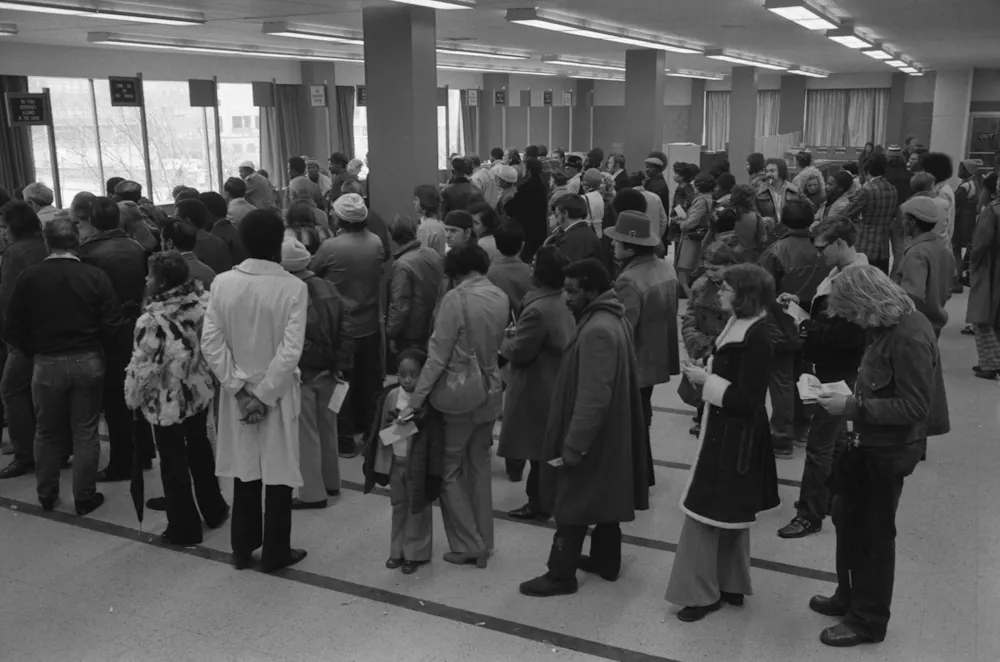 People line up at the Baltimore City Welfare Office in 1975, years before concerns about social spending led to big cuts to safety net programs. O'Halloran/Library of Congress via Getty Images
By the mid-1990s, opposition to welfare programs had become increasingly bipartisan. Politicians in both parties often used tales of Medicaid fraud on the part of providers and recipients to justify tighter eligibility rules and spending cuts.
Federal oversight expanded further with the Deficit Reduction Act of 2005, which created the Medicaid Integrity Program and strengthened federal oversight of state programs. The Affordable Care Act, the landmark healthcare legislation Congress passed in 2010, added new measures to screen providers and verify billing.
Concerns about Medicaid’s “integrity” became highly politicized in the debates surrounding the ACA. Critics of Medicaid expansion argued that increasing the number of people who could get health insurance through the program would increase fraud and improper enrollment. Supporters of expanding Medicaid to help more Americans gain health insurance maintained that anti-fraud rhetoric often disguised ideological opposition to the program’s expansion.
Blurring distinctions then and now
For the six decades that this program has helped millions of low-income Americans get healthcare, politicians have blurred the distinction between protecting Medicaid from abuse and using abuse to discredit Medicaid itself.
In my view, the Trump administration’s campaigns against California and Minnesota continue that pattern. It is using real weaknesses within Medicaid to advance much broader political arguments: that Democratic states cannot be trusted, that public benefits naturally invite abuse, and that withholding funds is itself a form of reform.
The result will no doubt be that fewer low-income Americans will be able to get the healthcare they need.
Ben Zdencanovic, Assistant Professor of U.S. History, University of Cambridge
This article is republished from The Conversation under a Creative Commons license. Read the original article.
-=-=-=
AN 7 26
Trump has made little secret of his disinterest in addressing the needs of blue states that did not support him in 2024, and now, Politico reports that emails have exposed how he overruled his own agencies to punish those states when they needed relief.
In a Wednesday morning report, Politico cited "Emails between state and federal officials" that it had obtained, as well as over 150 documents, outlining Trump's habit of denying disaster relief to states he considers to be among his "political adversaries." Some of these denials came after his own government agencies determined that those states did indeed meet the thresholds for government aid.
"Emails between state and federal officials obtained by POLITICO along with more than 150 pages of documents submitted to FEMA by three states — New Jersey, Massachusetts and Rhode Island — provide new details about Trump’s low rate of approving disaster aid for his political adversaries," the report detailed. "He also denied a request by New York after administration officials verified that it had met federal standards for approval, according to state officials. Trump’s rejections came after regional offices of the Federal Emergency Management Agency and NOAA determined that the states met government thresholds for receiving aid following a record-breaking snowstorm in February."
"The Blizzard of 2026 certainly achieved a pinnacle ranking in the memories of those who experienced it and climatologically in the historical rankings of snowstorms," a NOAA report about Rhode Island, among those obtained by Politico, explained.
While presidents have the sole authority to approve or deny disaster aid, Politico noted that it is "highly unusual" for them to deny requests after these agencies have already "verified that damage estimates exceeded preestablished levels," citing conversations with officials from past administrations, both Democrat and Republican.
"I can’t think of a time a declaration was denied," one anonymous ex-FEMA official said, referring to states that met certain agency disaster damage standards.
Since the administration of George W. Bush, Politico explained, presidents had "approved all 69 state requests for snow assistance that met FEMA." The one exception was a 2016 request from New Mexico, "which was being investigated for mishandling FEMA funds."
"The emails and documents, which haven’t previously been reported, shed new light on Trump’s decisions to reject an overwhelming number of requests for disaster aid from Democratic-led states, even as he has approved nearly 90 percent of requests from states that are governed by members of his own party," the report added. "The revelations also offer a fuller picture of Trump’s tenure over the most partisan distribution of FEMA aid since the agency was created in 1979. Trump’s recent rejections involving snow diverge from the actions of other presidents, including Trump in his first term, who routinely approved similar requests from governors of opposing parties."
In response to questions about these denials, a FEMA spokesperson attacked the notion that federal aid should be dispersed for "regular operations like snow removal." Snow removal was previously "targeted for elimination" as a possible way to reduce spending at FEMA under Trump's second administration.
“Without that aid, our local governments will be stuck with the costs of an unprecedented snowstorm that didn’t care about political boundaries,” Democratic Gov. Mikie Sherrill of New Jersey said in a statement to Politico.
-=-=-=
-=-=
an 7 26
Whether by intention, error or force of law, the Trump administration has owned up that Donald Trump sees himself president of MAGA, not of the nation.
A New York Times report this week disclosed a month-old court filing in which federal officials acknowledged that they cut $7.5 billion in clean energy programs selectively among states “based solely” on whether those stated had voted for Democratic candidate Kamala Harris in the 2024 presidential election.
In court answers about a lawsuit challenging the stated reasons of cuts based on “waste and fraud,” the government copped to the real reason – partisan politics. Indeed, the administration funded grants for states that had backed Trump in 2024, even though the Energy Department had recommended they be cancelled.
It may not be a specifically impeachable offence, but it certainly shows that Donald Trump is abusing his office, his oath – and weirdly even punishing the Trump voters in the states taking the cuts.
Trump certainly has been acting in a variety of ways as if he wants to target states that voted against him, but this court filing seemed a public acknowledgement that should get some serious attention.
As The Times concluded, “The admission showed how Trump has weaponized the provision of federal education, energy, health, housing and infrastructure aid in his second term. Far from rooting out the sort of misspending that Trump sees as rife in Washington, the White House has instead sought to leverage the budget as a tool to assist its allies — or as a cudgel to hurt the president’s foes.”
Trump certainly has no hesitation about collecting taxes from blue states or demanding voting rolls or demanding special treatment, just in spending the money disproportionately raised from those states.
President for Some, Not All
The White House and Russell Vought, director of the Office of Management and Budget , have remained silent about the government’s court arguments in a suit brought by the affected states. At the time of the cuts, Vought posted that “Nearly $8 billion in Green New Scam funding to fuel the Left’s climate agenda is being cancelled.”
Now, a government lawyer told the court that none of the cancellations were “based on any programmatic, statutory, cost-reduction or performance-based factor.”
Apart from all else, Secretary of Energy Chris Wright repeated the waste argument in sworn congressional testimony, telling House members in June, “No decisions (about the cuts) were made on politics.”
Someone might tell Jim Jordan, chair of the Judiciary Committee, who referred former special prosecutor Jack Smith to the Justice Department for investigation of perjury for not answering a question that Jordan had never asked.
Vought is seeking to finalize rules that would make political appointees the final arbiters of how the government would award more than $1 trillion in annual grants. He wants the power to block or revoke money if states do not conform to administration priorities. The White House has also sought to layer additional restrictions on grant recipients, limiting their political activities, memberships along with vague requirements that they cannot use the money for certain purposes, including those deemed “anti-American,” reported The Times.
Rather than combatting waste, it appears Trump and his cronies are trying to take control of the United States government, using the power of the American people for their own ends, argues historian Heather Cox Richardson in Substack.
Sen. Patty Murray. D-WA., and Rep. Marcy Kaptur, D-Ohio, said that politically minded grant cuts amounted to an “outright un-American” weaponization of government.
Illinois governor J.B. Pritzker pointed out that the cancelled grants included $583 million intended for Illinois “that would have gone toward lowering energy costs, strengthening grid reliability, and creating energy jobs.” He demanded the funds be restored. “Despite what he might think, Donald Trump is not the president of MAGA,” Pritzker said in a statement, but “the president of all America.”
Terry H. Schwadron retired as a senior editor at The New York Times, Deputy Managing Editor at The Los Angeles Times and leadership jobs at The Providence (RI) Journal-Bulletin. He was part of a Pulitzer Gold Medal team in Los Angeles, and his team part of several Pulitzers in New York.
AN 7 26
Legal expert tears apart Trump's 'extortion' of blue states - Alternet.org
SAME DAY 3 25 26 CONTEXT
Trump admin begs judge's forgiveness after another flub - Alternet.org
Firestorm erupts as Trump admin ridiculed after admitting lack of evidence - Alternet.org
Another judge obliterates Trump’s 'massive' attack on blue states - Alternet.org
===
AN 2 26
Another state agency is smelling weakness after President Donald Trump’s humiliating court loss over frozen funds, reports the Gothamist.
Earlier this month, a Manhattan federal judge ruled the Trump administration must release funding for an expensive road infrastructure project connecting New York and New Jersey, after Trump tried to use the funding to pressure the states to put his name on major travel centers.
Now, mere weeks after Judge Jeannette Vargas ordered the Trump administration to “unfreeze” the funding and NY AG Letitia James ordered him to be quick about it, another New York agency is threatening a lawsuit over yet another of Trump’s funding freezes.
This freeze involves a suit to release money for crucial subway construction if Trump doesn’t hand it over by March 6.
“If we don't have the resumption of reimbursements … We're going to have to actually follow our friends in the Gateway program and pursue a solution through the federal court, through the court process,” MTA Chair Janno Lieber said during a Wednesday board meeting.
In August, The Gothamist reports New York’s Metropolitan Transportation Authority approved a nearly $2 billion contract to complete most of the work for the project. Over the next year, MTA officials plan to issue two more contracts to complete the work, but Trump and his lieutenants are holding up that money for reasons similar to the unconnected project for which Judge Vargas dinged Trump.
Roughly a year into Trump’s second term, U.S. judges are beginning to turn on the president. Trump’s war on illegal searches and seizures of journalists took a blow in court this week after a judge blocked the Justice Department from conducting further action in the "outrageous" seizure of a journalist's phone. That judge also accused the administration of misleading him about the law to get the original warrant.
Another U.S. District judge invoked anti-totalitarian author George Orwell to rebuke the Trump administration’s removal of items recognizing the history of slavery in the United States from a Philadelphia exhibit.
In addition to countless little cuts, judges are delivering to Trump, his own conservative Supreme Court handed him a devastating blow over the illegality of his unilateral tariffs under emergency orders.
These many decisions appear to be emboldening Trump’s perceived enemies into further legal action.
---
---
AN 2 26
Judge shuts down Trump's attempt to defund blue states
The New York Times reports a federal judge in Illinois blocked the Trump administration’s plot to snatch $600 million in public health funds from four states led by Democrats.
“Judge Manish S. Shah of the Federal District Court in Northern Illinois wrote in a two-page order that the plaintiff states — California, Colorado, Illinois and Minnesota — had provided enough evidence that the cuts were ‘based on arbitrary, capricious or unconstitutional rationales’ to halt what would have been deep cuts in federal public health funding that had already been allocated while legal arguments continue in the case,” reports the Times.
Some of the $600 million in grants was intended to help specific populations, often communities of color or gay and bisexual men, which scratches against the Trump administration’s campaign against federal funding for underprivileged racial and socioeconomic groups.
This order, said the Times, is the latest ruling squashing President Donald Trump’s broader effort to impose politically motivated federal cuts to Democratic-led states. Just last week, another federal judge extended an unrelated order blocking the Trump administration from withholding $10 billion in child care and social services funding in the same four states, as well as New York — despite New York paying, on average, $20 billion more in taxes to the federal government than it gets back in federal spending.
The Times reports a court also blocked Trump’s plan to suspend funding of food stamps and other hunger relief programs in Minnesota.
Judge Shah did not specify the $600 million in grants in his decision, but applied his ruling broadly to block the Trump administration from terminating all public health grants “based on undisclosed agency priorities.”
While judges are heartily attacking Trump’s attempts to defund blue targets others are dismantling Trump’s other endeavors. On Thursday, GOP-appointed Judge Richard Leon issued a scathing ruling in Sen. Mark Kelly's (D-Ariz.) lawsuit against the Pentagon, which sought to demote him for appearing in a video reminding soldiers that they do not have to carry out unconstitutional orders.
A Manhattan federal judge, meanwhile, put an end to Trump’s attempted extortion of New York and New Jersey residents by ordering the administration to “unfreeze funding for a sprawling project paving the way for work to resume on a new set of Hudson River tunnels.”
---
AN 1 26
After pledging to deescalate tensions in Minnesota, President Donald Trump kicked off Wednesday by taking aim at the mayor of Minneapolis, asserting — incorrectly — that declining to enforce federal immigration laws is unlawful.
Legal analysts and administration critics have warned that the moves the president made this week in the wake of the second deadly shooting of a U.S. citizen by federal agents were simply a change in tone — not in strategy or tactics, and not an actual pivot. Trump has recalled Greg Bovino, the head of Operation Metro Surge, from Minneapolis, and sent in border czar Tom Homan.
“Surprisingly,” Trump wrote on Truth Social, “Mayor Jacob Frey just stated that, ‘Minneapolis does not, and will not, enforce Federal Immigration Laws.’ This is after having had a very good conversation with him.”
“Could somebody in his inner sanctum please explain that this statement is a very serious violation of the Law, and that he is PLAYING WITH FIRE!” the president declared.
The president declared Frey’s stance is unlawful but legal experts note that cities and states generally cannot be forced to carry out federal immigration enforcement.
Former U.S. Attorney Joyce Vance noted that “the feds can’t ‘commandeer’ state law enforcement resources to execute their policies.”
She also called the president’s statement, “More evidence Trump isn’t changing course on mass deportations.”
Politico senior legal affairs reporter Kyle Cheney offered some additional insight.
“Trump could not have designed a better statement to convince Judge Menendez that Operation Metro Surge is meant to coerce policy changes,” Cheney wrote.
He noted that courts have “ruled repeatedly” that the federal government “cannot coerce states to enforce federal law.”
“Nor is it illegal for states to decline to do so,” Cheney added.
“And the menacing ‘playing with fire’ is exactly the kind of statement (‘retribution is coming’) that worked against the administration in court earlier this week,” he added.
Indeed, ABC News interviewed the president on Tuesday and reported that Trump was suggesting federal agents would take a “more relaxed” approach in Minnesota after the two deadly shootings.
Trump said, “we can start doing maybe a little bit more relaxed,” and, “we’d like to finish the job and finish it well, and I think we can do it in a de-escalated form.”
ABC called it “a shift in tone.”
The New Republic’s Greg Sargent wrote on Wednesday, “The media narrative that Trump is ‘pivoting’ and ‘deescalating’ on his ICE raids … is wildly overstated. As long as the military occupations and the treatment of US cities as enemy territory continue, there’s no pivot. It’s that simple.”
“Trump wants to appear eager to minimize clashes between his govt militias and protesters. But he doesn’t want them to stop doing the things that are causing the clashes in the first place,” he continued. “There’s no Trump ‘pivot’ until we see real investigations into the government’s killings and real accountability for them.”
---
---
AN 1 26 FRAUD BS
Donald Trump and his administration have put a massive spotlight on welfare fraud in Minnesota in recent weeks, threatening to pull all federal welfare funds from the blue state, but according to a Thursday report from HuffPost, his administration "gave a red state a pass" after it had been caught up in "one of the biggest welfare fraud scandals of all time."
According to the report, in the waning days of Joe Biden's presidency, the Department of Health and Human Services’ Administration for Children and Families ordered Mississippi to pay a massive penalty fine after an investigation determined that it had allowed embezzlement from the federal Temporary Assistance for Needy Families program. The fine and the estimated cost of the fraud were the same, $100 million. The case, at one point, drew national attention when reports found that football legend Brett Favre had been among the recipients of these fraudulent payments.
That punishment did not last, however, as when Trump returned to office, his HHS department claimed to have found new materials linked to the case that "could validate some of its allegedly improper spending." As a result, the original Biden-era penalty was revoked, and the department told the state that it would issue a new one at a later date once the new total cost of the fraud had been determined.
As of now, no such new penalty has been issued, leaving the impression that the Trump administration has let Mississippi, one of the most heavily conservative states in the US, off the hook.
This report comes as the administration plans to cut off all federal welfare funding to several blue states, stemming from a renewed focus by right-wing media figures on fraud cases in Minnesota. Many of these cases in the state have already been prosecuted and led to convictions, but the story was reignited after a right-wing YouTube creator posted a video with new, and largely unsubstantiated, allegations against Somali-American daycare centers.
"In response to the fraud scandal in Minnesota — which includes dozens of well-documented and prosecuted criminal cases in addition to unproven allegations by a right-wing YouTuber — HHS announced a wholesale cutoff of funding under the Temporary Assistance for Needy Families program, as well as two other federal programs that help with child care," HuffPost's report explained. "And not just in Minnesota, but also in the blue states of California, Colorado, Illinois and New York."
“There’s certainly a disparate effect here, in terms of these five blue states and that one particular red state,” Nick Gwyn, an expert on federal-state welfare programs with the left-leaning Center on Budget and Policy Priorities, told the outlet.
In response to HuffPost's inquiry, HHS claimed that it was still “evaluating options to follow up with Mississippi.”
---
---
AN 1 26
Loss for Trump as federal judge rules budget chief broke the law to punish blue states
AN FAIL 1 12 26
Loss for Trump as federal judge rules budget chief broke the law to punish blue states
---
AN 1 26
The cities that President Donald Trump and his allies are targeting for U.S. Immigration and Customs Enforcement (ICE) raids — Chicago, Los Angeles, Washington, D.C. and now, Minneapolis — have something in common: They are run by Democrats. And the cities that Trump is singling out have Democratic governors such as California's Gavin Newsom, Illinois' JB Pritzker and Minnesota's Tim Walz.
In an article published on January 12, Politico reporters Blake Jones, Jeremy B. White and Nick Reisman cite fraud allegations as one of the tactics that Trump is using against blue states.
"Donald Trump has found a new way to bludgeon blue states: accuse them of fraud, then move to cut off their money," the journalists explain. "The attacks ramping up across the map — from Albany and Springfield to Denver and Sacramento — follow Minnesota Gov. Tim Walz ending his reelection campaign amid allegations of welfare fraud in his state — a case Trump's MAGA allies seized to cast similar aspersions at other Democratic leaders. The Trump Administration cited unproven fraud allegations last week as it put a hold on $10 billion in child care funding to five Democratic-run states."
Jones, White and Reisman add, "The Department of Justice announced it's launching a new division of fraud enforcement, pointing to Minnesota's 'fraud epidemic.' And in California, Acting U.S. Attorney Bill Essayli said he's pursuing additional charges of fraud involving state homelessness programs after railing for months against Gov. Gavin Newsom's management of state spending…. The spending-focused line of attack from Trump marks an escalation in Trump’s already red-hot war on blue states."
Democratic New York State Sen. Liz Krueger argues that Trump's attacks on blue states were easy to predict during the 2024 presidential election.
Kreuger told Politico, "I'll say one thing about our president: He told us he was going to do this. He told us he was going to punish blue states. We have to brace for impact, we have to use our legal skills, our amazing attorney general, and endless lawsuits to at least hold them back."
According to U.S. Rep. Brad Schneider (D-Illinois), Trump is using a range of methods to attack blue states.
Schneider told Politico, "He's attacking blue states out of revenge. If that's in the form of sending in ICE, he sends in ICE. If it's denying food and education to their children, which to be clear are America's children, he's gonna do that. What he is doing is seeking revenge at the cost of America's most vulnerable people, putting those communities at risk."
*Read the full Politico article at this link.
---
---
AN 12 25
President Donald Trump and his MAGA allies aren't shy about berating users of green energy, from Democrat-controlled states in the U.S. to countries in the European Union (EU). Trump believes that EU countries need to increase their use of fossil fuels, and he attacked the UK (which left the EU) for using wind energy during a meeting with Prime Minister Keir Starmer.}:
Part of the Trump administration's energy policy involves energy grants to individual U.S. states. And according to the Washington Post, government lawyers admitted, in a December 15 court filing, that the decision to cut energy grants was based on partisanship.
Post reporters Meryl Kornfield and Hannah Natanson, in an article published on December 17, explain, "The Trump Administration acknowledged, in a court filing this week, that a decision to cut energy grants during the government shutdown was influenced by whether the money would go to a state that tended to elect Democrats statewide or nationally. Government lawyers also wrote in the filing that 'consideration of partisan politics is constitutionally permissible, including because it can serve as a proxy for legitimate policy considerations.'"
The "remarkably candid admission" in the filing, according to Kornfield and Natanson, "echoes" Trump's "frequent vows to punish cities and states that he sees as his enemies, from withholding disaster relief for Southern California to targeting blue cities with National Guard troops."
The "admission," the Post reporters add, "could also raise the possibility that federal attorneys might make similar arguments in legal challenges to other unilateral cuts implemented by the (Trump) Administration for blue cities and states."
"A coalition of Minnesota clean energy groups and the city of St. Paul sued the Trump Administration last month in the U.S. District Court for the District of Columbia after the Energy Department announced it was slashing 321 grants of about $7.5 billion," Kornfield and Natanson report. "The cuts included projects to kick-start the hydrogen industry in California, upgrade the electricity grid serving Indigenous communities in New Mexico and generate new energy mostly from wind and solar in Minnesota. At the time, Trump's budget director, Russell Vought, touted the cuts on X, declaring 'nearly $8 billion in Green New Scam funding to fuel the Left's climate agenda is being canceled' and listed blue states."
Legal experts interviewed by the Post laid out some reasons why they find Trump allies' actions troubling.
Dan Farber, a law professor at the University of California, Berkeley, told the Post, "It really undermines the idea that you're passing neutral laws that you know are supposed to apply equally to everybody. I find it really startling they would make that concession."
David Super, a law professor at Georgetown University in Washington, DC, told the Post, "I cannot believe that the Supreme Court would want to allow a partisan tit-for-tat to develop with each party pulling grants from its perceived partisan foes, but one can never be entirely certain these days."
*Read Meryl Kornfield and Hannah Natanson's full article for the Washington Post at this link (subscription required).
---
THREAT JAIL PRITZKER CHIC MAYOR
AN 10 25
'Wannabe dictator': Governor dares 'unhinged' Trump to carry out threat to jail him
---
---
SHUTDOWN NY SUBWay and blue state climate vought 10 25
---
an 8 25
Trump may slap blue state's taxpayers with $1 billion charge over feud with governor
---
ANNO LOST
AN 10 25
Roosevelt University political science professor David Faris warned The Nation that blue states may have to resort to a ‘tax strike’ to stop being the MAGA regime’s ‘second tier’ Americans.
“Since his election, Trump has … treated blue states not as equals … but rather like defeated vassals who must pay tribute to their new emperor in the form of policy capitulations and abrogations of their constitutional rights,” said Faris, adding that Trump’s explicit mandate to make blue states suffer “is the gravest threat to the constitutional union since the Civil War.”
“Last week, Trump escalated this campaign of autocratic intimidation by screaming on his fourth-tier microblogging website that Illinois Governor J.B. Pritzker and Chicago Mayor Brandon Johnson should be imprisoned,” Faris said. “His corrupt henchman — er, ‘immigration czar’ — Tom Homan has distributed threats of arrest on cable news like he’s tossing paper towels to hurricane victims, against everyone from New York Democratic Representative Alexandria Ocasio-Cortez to California Governor Gavin Newsom.”
Meanwhile, Faris said Trump and his “Cabinet goons can count on the reliably servile U.S. Attorney General Pam Bondi to do whatever the administration asks.”
Faris said Trump is also using ICE to disproportionately target blue states and Democratic-run cities, with CNN reporting that Trump’s troops deliberately marching up and down Latino-majority streets is “killing business” and shutting down whole sections of Chicago.
“Citizens in blue states feel like they are living under a constant state of military siege, rhetorical harassment and punitive partisan budgetary cuts because that is in fact what is happening. And it is not sustainable for another three years,” said Faris. “The compact between the states is not magical or self-executing or ordained by divine providence to ensure that it can’t be undone by ruthless MAGA tyrants. It has fallen violently apart once before.”
Faris said blue state officials are already mulling a tax strike.
“In 2024, California and New York alone combined to send nearly $1.2 trillion in income and other taxes to the federal government, making up close to a quarter of all revenue. The reliance of many small, rural Republican-leaning states on federal funding is well known,” Faris said. “… By themselves, the states that voted for Kamala Harris — leaving aside the consensus battleground states — represent half of all federal tax revenue.”
The gamble, said Faris, is that Trump’s own diminished IRS would not be able to summon the resources or personnel to verify and punish citizens participating in a strike, even though Faris said Trump appears more than willing to muster some form of federal force to discourage a protest from taking “root on its own.”
Another option, said Faris, could be a national general strike with infuriated federal workers walking off their jobs and bringing society “to a screeching halt.”
“If workers in just the Social Security Administration, Internal Revenue Service, Federal Aviation Administration and the Department of Veterans Affairs went out at once (they would need to resign, take time out under the Family and Medical Leave Act, or find some other workaround to avoid prohibitions on striking), and if they were joined by, say, public school teachers, the country would be snarled in an almost unimaginably chaotic crisis within 24 hours.”
Read the Nation report at this link.
---
RWW
07/28/2025
by
Heritage Foundation President Kevin Roberts urged right-wing state legislators this month to “de-charter” liberal capital cities and replace them with “state municipal districts.”
In a speech to a gathering of the American Legislative Exchange Council in Indianapolis, Roberts asserted, “We are in the second American Revolution,” which he explained by saying “we are renewing sovereignty and self-governance and faith in fellow man.”
Roberts showed no apparent recognition of the glaring inconsistency between his declared support for “sovereignty and self-governance” and his demonstrated contempt for the democratic choices made by voters in cities who disagree with Heritage’s agenda.
"When we have cities like Austin, or Nashville, or other capital cities whose local government is not representative of the will of the people, de-charter them and establish them as state municipal districts in the name of common sense,” he urged.
Roberts called Austin, Texas his “adopted home town” and described it as “a once-great place that has been taken over by Marxists.”
Roberts’ justification for this brazen attack on democratic self-governance? He claimed that the biggest threat to the Trump-Vance agenda, which is essentially the Project 2025 agenda promoted by Roberts and Heritage, is “that there are government entities that illegitimately are imposing something other than the American dream on their people.”
Roberts promised the legislators that Heritage would provide “air cover” if they made this virtual declaration of war against their own capital cities.
Roberts’ recommendation was part of a ten-point policy agenda he urged the state legislators to adopt. Among his other recommendations:
- Roll back environmental regulations—“nonsense from the Green New Scam”—that he said are contributing to a crisis in affordable housing;
- End subsidies and preferential treatment for “fickle energy resources.” (He said nothing about the subsidies enjoyed by fossil-fuel industries);
- Force every local law enforcement agency to sign cooperation agreements with ICE’s 287 (g) program;
- Replace SAT and ACT tests with the Classic Learning Test, which is promoted by right-wing culture warriors like Christopher Rufo and favored by conservative Christian schools and homeschoolers; the test was approved for statewide use in Florida in 2023.
The Heritage Foundation is a deep-pocketed think tank that has spent 50+ years shifting the Republican Party to the right and making America less free, less fair, and less safe. It was the sponsor of Project 2025, which Trump falsely disavowed during his 2024 campaign before aggressively implementing its recommendations since taking power this year, putting the country on a fast road to fascism. The American Legislative Exchange Council functions as a sort of matchmaker between corporate lobbyists and right-wing interests and state legislators eager to do their destructive bidding.
---
:{===
ymail 6 24
These bills aim to make polluters pay
Climate superfund legislation is gaining traction in state legislatures across the country. How do the bills fit into the broader movement to hold Big Oil accountable?
EXXONKNEWS
JUN 27
Emily Sanders is senior reporter at ExxonKnews.
As communities across the United States grapple with the rising costs to protect residents and infrastructure from the worsening impacts of climate change, some state legislators are targeting a potential new source of resilience funding: fossil fuel companies.
Sometimes called “polluter pays” bills or “climate superfund” bills, a new wave of state legislation aims to make oil companies bear a portion of the expenses necessary to adapt to climate impacts and recover from climate disasters fueled by those companies’ greenhouse gas emissions. The bills are quickly gaining momentum in statehouses: Vermont passed one into law in May, another in New York awaits Governor Kathy Hochul’s signature, and similar proposals are under consideration in California, Massachusetts, and Maryland.
Oil and gas companies have generated the majority of the world’s climate pollution, the bill sponsors argue, and therefore they should help pay for the damage that pollution is inflicting on communities. While each state’s legislation has unique features and different mechanisms to determine how much oil and gas companies would pay, they all draw inspiration from the federal Superfund program, first enacted in 1980 and administered by the Environmental Protection Agency, which makes polluters pay to clean up hazardous waste they’ve dumped into the environment.
State climate superfunds established by these bills would function similarly by making fossil fuel companies pay for a portion of the damages caused by their greenhouse gas emissions.
“States and municipalities are suffering enormous costs from the damage associated with climate change and the money they have to spend now to prepare for the consequences they're going to face in the future, at the same time as fossil fuel industry actors are posting record profits from creating these harms,” said Martin Lockman, climate law fellow at the Sabin Center for Climate Change Law and associate research scholar at Columbia Law School. While the superfund bills would not cover the full amount states will spend on climate adaptation, he said, communities “are looking for any tools that they have available to make sure that the people who are profiting from causing them harm pay for [that] harm.”
So how exactly do the bills work, how do they interact with the growing number of distinct state and local lawsuits seeking to hold Big Oil accountable for climate deception, and what challenges will they face? Here’s what you need to know.
How climate superfund bills work
All of the currently proposed climate superfund bills would assess a dollar figure that companies owe to the fund based on the amount of emissions attributed to the fossil fuels they sold over a set period of time: 2000 to 2018 in New York’s case, or 1995 to 2024 in Vermont’s for example. The costs of those emissions, or how they are proportioned among companies, are calculated using attribution science — a growing field also tapped for climate accountability lawsuits. Those calculations rely on companies’ self-reported data to the Securities and Exchange Commission (SEC).
“It's looking at something they already did, and saying ‘this had a negative effect and now you have to clean up the mess you made,’” said Maggie Coulter, senior attorney at the Center for Biological Diversity, a group that supports a climate superfund bill in California that was recently shelved by its author but could be reintroduced later in the year.
Some of the bills direct a state agency to conduct a cost assessment of the climate harms companies’ emissions caused during a set time frame. In Vermont’s case, the state’s Agency of Natural Resources will have until the start of 2027 to conduct that assessment and determine each company’s appropriate share of the costs.
Those costs could include some portion of the estimated $1 billion response and recovery costs incurred after major floods devastated Vermont last summer, or the price of fortifying roads, bridges, and floodplains to lessen the damage caused by rain storms intensified by climate change. The agency will also help determine which resiliency programs — programs that could help municipalities, businesses, and farms in Vermont adapt to climate impacts — will be covered.
The law “is a common sense manifestation of a very well-established principle of American environmental law, which is that the polluter pays,” said Christophe Courchesne, assistant professor of law and director of the Environmental Advocacy Clinic at Vermont Law School, which voiced its support for the bill before it passed. “It's not new, even as the application of this policy to climate damages is new, and is an extremely important concept that we certainly hope will be a model to other states.”
Other bills have already set a total cost that would be divided up by companies — like New York’s, which would require the oil majors to pay into a $75 billion fund that could be used for projects such as air conditioning schools or upgrading roads, bridges, subways, and stormwater drainage systems to account for more extreme weather. Still, that $75 billion is nowhere near the total costs New York faces for climate adaptation; in 2021, the city estimated it would cost $100 billion just to “recalibrat[e] our sewers for storms like Ida.”
Proponents of the bills say their popularity reflects growing public demand for polluters to pay; polling last year found that 70% of likely voters supported making fossil fuel companies pay for climate disasters including wildfires, droughts, and floods. “The science is more than clear on the outsized impact these companies have had on the climate crisis,” said Cassidy DiPaola, communication director for Fossil Free Media, one of the groups behind that poll. “It's time for them to pay their fair share, and this is one step in the right direction, but still not nearly enough.”
“Very complimentary, parallel tracks”
The bills come at the same time that dozens of state and local lawsuits to hold Big Oil accountable for climate fraud and damages are steadily advancing through the courts. So how do the two mechanisms interact?
The two tracks have some fundamental differences and aim to accomplish different things. Unlike the bills, the lawsuits center on disinformation, not pollution. They accuse the companies of engaging in deceptive behavior, citing evidence that the fossil fuel industry has misled the public for decades about the harms their products cause. Through the courts, the cases aim to stop companies from lying to consumers and hold them accountable through a range of remedies, including paying for the damage their deception has caused.
Lawsuits can also help address past disinformation by forcing defendants to set the record straight. A Minnesota lawsuit brought against Exxon, Koch Industries, and the American Petroleum Institute under the state’s consumer protection laws, for example, seeks to make the companies “disclose, disseminate, and publish all research previously conducted directly or indirectly… that relates to the issue of climate change,” and “fund a corrective public education campaign in Minnesota relating to the issue of climate change, administered and controlled by an independent third party.”
Similar remedies came out of lawsuits brought against the tobacco industry by U.S. states and territories for misleading consumers about the connection between smoking and cancer. Through the 1998 Master Settlement Agreement, major tobacco companies were made to fund the Truth Initiative, a public education campaign that has drastically reduced youth smoking rates.
Discovery, the process of obtaining evidence for trial, can also produce internal company documents that shed further light on the industry’s deception about its products for legislators and the public — and can help inform a response. Such documents were obtained through litigation against the tobacco and opioid industries and made publicly available.
The climate superfund legislation, on the other hand, “does nothing to prevent [companies] from continuing business as usual if they want to,” said Coulter. “It's just saying that the business that you conducted has caused damage and you need to pay for that.” That’s why the bills and lawsuits, she emphasized, are “very complimentary, parallel tracks,” which together can both make the fossil fuel industry pay for a share of its pollution and bring an end to continued deceptive acts.
A similar dual strategy was applied in California, where the California Childhood Lead Poisoning Prevention Act of 1991 taxed manufacturers of products containing lead to fund evaluations and medical services for children who were exposed. In 2019, 10 California cities and counties were still able to recover a court settlement from lead paint manufacturers after they sued the companies under public nuisance claims.
“This is how our democracy works,” California’s Attorney General Rob Bonta recently told Politico when asked about the relationship between California’s proposed superfund bill and the accountability lawsuit his office brought against Big Oil companies last year. “Different leaders elected to do their jobs think about the authority that they have, the jurisdiction that they own, and the action that they can take to solve a problem that affects their constituents.”
Legal battles ahead
The bills will likely implicate many of the same major oil companies facing climate deception lawsuits in state courts, including Exxon, Chevron, Shell, and BP. The industry’s lead trade association, the American Petroleum Institute, has already expressed its strong opposition to the bills, calling them “a punitive new fee” that “represents yet another step in a coordinated campaign to undermine America’s energy advantage and the economic and national security benefits it provides.”
Legal experts expect API and others to challenge the laws in court.
In March, API sent a letter to Vermont lawmakers claiming that the state's bill “retroactively imposes costs and liability on prior activities that were legal” and “violates equal protection and due process rights by holding companies responsible for the actions of society at large.”
But experts and advocates refute those claims. “This bill is premised on a well-established, reasonable approach to assigning liability for pollution harms,” said Courchesne, of Vermont Law. “These issues around due process and the retroactivity of liability have been litigated and those laws have been upheld.”
Big Oil’s public communications have sought to shift the blame for climate change to consumers for years, despite growing evidence that the companies intentionally mislead the public about the harms their fossil fuel products cause.
While the superfund bills don’t rely on that evidence of deception like the lawsuits do, there is still plenty of precedent for laws that hold producers liable for their pollution, Lockman explained. “If you buy a product, and the company that made that product was dumping toxic chemicals into a river and killing off species, is the consumer responsible for that?” he asked. “Generally, as a society and a legal system, we’ve decided that it’s OK to hold the most immediate actors responsible for the pollution they’re causing.”
Thanks for reading ExxonKnews!
---
no lnx ya cheap bastard
Los Angeles Times
POLITICS
People live longer in blue states than red; new study points to impact of state policies
States that have pursued more liberal policies in education, environment and civil rights have a longer life expectancy.
States such as California that have pursued more liberal policies in education, environment and civil rights have seen a swifter rise in life expectancy than more conservative states. Above, the California Capitol in Sacramento.(Los Angeles Times)
By NOAM N. LEVEY STAFF WRITER
AUG. 3, 2020
WASHINGTON — Weak environmental protections, safety rules and labor and civil rights protections may be cutting lives short in conservative states and deepening the divide between red and blue states, according to a new study on links between life expectancy and state policy.
:{
}:
The report, published Tuesday in the health policy journal Milbank Quarterly, finds that states where residents live longest, including California, tend to have much more stringent environmental laws, tougher tobacco and firearms regulations and more protections for workers, minorities and LGBTQ residents.
Since the mid-1980s, the gap among U.S. states in how long their residents live has widened, reversing decades of progress toward greater equality.
One group of states, mostly in the Northeast and the West, have seen average life expectancies rise relatively steadily, placing them on par with the wealthiest nations of Western Europe. Those states tend to have more stringent regulations.
By contrast, the life expectancy in states with more conservative health, labor and social policies — concentrated in the South and Appalachia — have stagnated in recent decades, according to the study, which adds to growing research on health and political disparities between states.
California has among the highest average life expectancies in the country, at 81.3 years. It also had the most liberal policies in the nation in 2014, the most recent year the study analyzed, according to the system the authors developed to rank states.
Although the study’s authors note that they can’t prove that state policies caused the gap in life expectancy, the correlation is a persistent one across multiple states and several decades.
“It’s disheartening to see another example of a missed opportunity by policymakers,” said David Radley, senior scientist at the nonprofit Commonwealth Fund who studies differences in state health policies and the effects on people’s health. Radley was not involved in Milbank report.
[pix Bakersfield, CA., March 4, 2020 - Jenny Morones, 26, of Bakersfield poses for a portrait on Wednesday, March 4, 2020 in Bakersfield, California. Morones is working mother struggling to raise three children on a low income. Morones fled an abusive relationship and though in her twenties, has dealt with health challenges.Thanks to the Affordable Care Act, Morones had health insurance that protected her from financial ruin. (Jason Armond / Los Angeles Times)]
Coronavirus widens healthcare divide between red states and blue states
May 25, 2020
The new report may help shape efforts to rethink government policy in the wake of the coronavirus pandemic, which has exposed deep structural weaknesses in the U.S. as well as yawning gaps in many state safety nets.
“The overarching conclusion is clear: States that have invested in their populations’ social and economic well-being by enacting more liberal policies over time tend to be the same states that have made considerable gains in life expectancy,” the study’s authors wrote.
Even before the current public health crisis, life expectancy in the U.S. had been declining, setting America apart from most other wealthy nations. That decline has fueled tough questions about domestic policy.
The opioid epidemic, which has had a devastating impact on regions of the country already hit hard by economic stagnation, has been the focus of a lot of the discussion about that shift.
But Syracuse University sociologist Jennifer Karas Montez, the lead author of the new study, said the impact of opioids may be only part of the story.
“When we look at what is happening with life expectancy, the tendency is to focus on individual explanations about what Americans are doing,” she said, noting obesity and smoking behaviors as well as drug use. “But state policies are so important.”
To assess what role these policies may be playing, Montez and other researchers reviewed more than 120 policies enacted by states over the years and assessed whether each policy choice in each state was more liberal or more conservative.
Policies included housing rules such as rent control; health and welfare policies such as Medicaid eligibility and welfare limits; labor protections such as paid sick leave and minimum wages; and civil rights policies such as gender discrimination bans, hate-crime laws and same-sex marriage.
They also looked at state abortion restrictions, tax policy, education spending, immigration rules and gun control laws.
Each state was ranked by how liberal or conservative its policies overall have been, going back to 1970.
The researchers then compared these findings to trends in life expectancy in all 50 states.
Montez said the trends they saw were unmistakable. They also correlated with important points in the nation’s political history.
Through the 1960s and 1970s, for example, state life expectancies generally converged. That trend began to reverse in the mid-1980s, around the same time that a conservative movement, led by President Reagan and mirrored in many state capitols, became ascendant.
The gap between states accelerated further after 2010, when sweeping Republican victories in state elections shifted policies further to the right in many places.
By 2017, residents of the state with the highest life expectancy — Hawaii — were living on average seven years longer than residents of the state with the lowest life expectancy — Mississippi.
By contrast, the gap between the best- and worst-performing states in 1984 was less than five years.
The gap is not only about policy: States where people live longer tend to be wealthier and have better educated populations, for example.
But Montez noted that decisions by state leaders have helped shape those factors.
“States like Connecticutare investing in their population, investing in schools, setting an economic floor for their workers, discouraging behaviors like smoking that kill people,” she explained. “You have other states like Mississippi and Oklahoma that aren’t doing any of this.”
In Connecticut, whose policies have become steadily more liberal over the last half century, life expectancy increased 5.8 years between 1980 and 2017 to 80.7 years.
In Oklahoma, which has become markedly more conservative, life expectancy increased only 2.2 years over the same period, reaching 75.8 years in 2017.
Identifying which state policies may have the most impact on how long people live is difficult, the researchers concede. But the study points to a group of policies that appear to correlate most closely with longer lives.
These include some unsurprising candidates such as tougher environmental laws, which the authors note may protect people from toxic substances. The authors also found a correlation between longer life expectancy and labor policies that increase economic security, such as a minimum wage.
Tougher gun laws appear to track with longer life expectancies, the study notes, as do stricter tobacco controls.
The authors also point to civil rights laws, which they suggest may protect residents from ill health related to persistent stress.
And they found a correlation between longer life expectancy and better access to abortion, which the study notes may reflect other research that has linked abortion restrictions to women’s poverty and ill health.
Noam N. Levey writes about national healthcare policy out of Washington, D.C., for the Los Angeles Times. He covered passage of the 2010 Affordable Care Act and has written extensively about the landmark law and reported on its implementation from around the country. A former investigative and political reporter, he is a Boston native and a graduate of Princeton University. He joined the newspaper in 2003 and has reported from Washington since 2006.
==
==
IRS punish blue, also will send migrant prisoners to sanct city/state, we say yes pls
https://www.alternet.org/2019/04/trump-and-republicans-weaponized-the-tax-code-to-punish-blue-states-cnn-analyst/
On Monday’s edition of CNN’s “New Day,” political analyst John Avlon laid bare the way that President Donald Trump and the GOP have politicized the federal tax code.
“Whether you see your taxes go up or down will depend on whether you live in a red state or blue state, and that’s by design,” said Avlon. “First, a little history. December 22nd, 2017, that’s when President Trump’s tax plan was signed into law. Kind of a Christmas gift to corporations and red state residents. Passed entirely along party lines … it slashed the amount of state and local taxes you could deduct to $10,000, it limited the mortgage interest deduction and that’s where the representation of the tax code became evident.”
“According to data from H&R block, among states where refunds went up this year the top ten are all red states,” said Avlon. “Among states where tax refunds went down, you guessed it, the top ten are all blue states. Notice a pattern?”
“It’s no surprise in areas where most Americans live, it costs more to buy a house, and guess who is more likely to need a mortgage, again, red states deduct while new states are stuck,” Avlon continued. “This has become known as the blue state triple whammie because Trump’s tax code has made it more expensive to buy a home, more expensive to own a home and harder to sell your home.”
“But guess who does even better under Trump’s tax code, Trump’s own commercial real estate industry, the same industry which Jared Kushner’s company bought a white elephant of a building at a record price right before the market crashed and is still worth around $3 million and paid little or no federal income taxes or at least seven years,” Avlon added.
“President Nixon said never make taxation popular, but we can make it fair,” said Avlon. “With the politically weaponized tax code that punishes blue states, President Trump seems to have failed at both and that’s your reality check.”
Watch below:
==
4/19
http://www.ecowatch.com/renewable-energy-growth-2162122653.html
By Jessica Collingsworth
With the Clean Power Plan's future up in the air and concerns about how science might fare given the recent election results, some may think 2016 wasn't a great year for clean energy. However, lots of great state level policies were passed—some with bipartisan support—and there's even some good news on the national front. Looking back at the last year I see a lot of clear signs that the clean energy transition is moving forward in the U.S.
Here are eight states that really stepped up to become climate leaders:
- California
In August, the California legislature passed remarkable climate change legislation. SB 32 builds on Assembly Bill 32, the landmark Global Warming Solutions Act of 2006 that required California to reduce its greenhouse gas emissions to 1990 levels by 2020. SB 32 now sets the next target, to reduce greenhouse gas emissions to 40 percent below 1990 levels by 2030. Another bill, AB 197 increases legislative oversight and transparency for the state's climate change programs and emphasizes the state's commitment to ensuring these policies help communities most impacted by climate change and air pollution.
California is on track to meet its emissions reductions goals and its overall economy is growing. The Union of Concerned Scientists (UCS) brought in our scientists and passage of these two bills cemented the state's commitment to leading the fight against climate change.
- Illinois
On Dec. 1, Illinois passed the Future Energy Jobs Bill (SB 2814). The bill was passed with bipartisan support, and was signed into law by Republican Gov. Bruce Rauner. The Illinois Clean Jobs Coalition (which UCS is a member of) worked on the bill for nearly two years. The bill includes several big wins for clean energy including a meaningful fix to the state's existing Renewable Portfolio Standard (RPS) law that corrects flaws in the policy, new in-state renewable build requirements for wind and solar, the state's first community solar program, and a new Illinois Solar for All program which is a comprehensive low-income solar deployment and job training initiative. The bill also increased the state's energy efficiency policies; ComEd will achieve a 21.5 percent reduction and Ameren will achieve a 16 percent reduction in energy use by 2030.
- Maryland
The state passed landmark legislation, the Greenhouse Gas Emissions Reduction Act (SB 323), which was signed into law by Republican Gov. Larry Hogan. The law requires Maryland to reduce statewide greenhouse gas emissions by 40 percent from 2006 levels by 2030. This target was unanimously recommended by the state's bipartisan Climate Change Commission in fall 2015. The legislation was supported by a diverse group of stakeholders and is expected to create and maintain thousands of jobs.
- Massachusetts
This summer Massachusetts legislators passed an omnibus energy bill that will once again make Massachusetts a clean energy leader. The bill includes a large scale clean energy procurement requirement for hydro, wind, solar and other renewable sources and the necessary transmission to power the state. The legislation also calls for Massachusetts utilities to solicit contracts for 1,600 megawatts of offshore wind development by 2030. That's enough to meet 15 percent of Massachusetts's electricity needs. In all, up to 40 percent of the state's electricity could come from clean energy sources by 2030.
- Michigan
This month the state passed Senate bills 437 and 438, that make progress on Michigan's clean energy future. The legislation strengthens the state's renewable portfolio standard (RPS) from 10 percent by 2015, to 15 percent by 2021, and requires renewable energy resources to be built within the service territories of utilities that serve Michigan. The strengthened RPS ensures a baseline level of diversity in Michigan's energy mix.
For energy efficiency, the legislation changes the state's current standard to a regulatory-focused process in 2021, but it will preserve current levels of energy efficiency by requiring utilities to regularly submit efficiency plans that must maintain efficiency investments deemed reasonable and prudent. The legislation also removes the existing cap on energy efficiency program spending, and provides a new incentive structure that could drive utilities to achieve annual savings of 1.5 percent.
- New York
The New York Public Service Commission (PSC) gave approval to Gov. Cuomo's plan for New York to obtain 50 percent of its electricity from renewable sources by 2030, through the state's Clean Energy Standard. The PSC order established an overall legally binding renewables target for 2030, and requires New York state utilities to ramp up long-term purchases of renewable energy credits to meet those targets. This builds on the state's commitment to reduce greenhouse gas emissions by signing the Under 2 MOU in 2015, which sets a laudable target to reduce emissions 40 percent by 2030 and 80 percent below 1990 levels by 2050.
- Oregon
In March, the Oregon Legislature passed the Clean Energy and Coal Transition Act (Senate Bill 1547) with bipartisan support. The legislation doubles Oregon's existing renewable portfolio standard (RPS) from 25 percent by 2025 to 50 percent by 2040 and requires the state's two largest utilities (Portland General Electric and Pacific Power) to phase out coal generation imports by 2035. A huge advantage of Oregon's coal phase out is that it creates room in the power supply for cleaner energy sources. The legislation had true consensus with support from environmental groups, the state's consumer advocate, businesses and the state's two largest utilities.
- Rhode Island
The state passed HB 7413 that will increase the state's renewable energy standard by 1.5 percent each year, requiring 38.5 percent of the state's electricity to come from renewables by 2035. Also, the state's Block Island became the site of the first offshore wind project in the Western Hemisphere. The project consists of five wind turbines adding up to 30 megawatts which became operational this year and more offshore wind is coming!
Wait, There's More!
Sometimes good news comes in the form of stuff that didn't happen. Florida's Solar Amendment 1, an anti-solar ballot initiative, didn't pass. The amendment was backed by utilities and fossil fuel interests, and was an attempt to deceive voters and limit solar development in the state.
National Level
And on the national level, the five-year extension of federal tax credits for wind and solar signed into law late last year was a huge driver for clean energy development this year and in the coming years. One million solar installations are now turned on in the US. Solar is being installed throughout the U.S. thanks to falling prices and a vast supply of sunshine. And U.S. wind generation set new records in 2016 as costs continue to fall.
==
states with the biggest weight problems are:
Mississippi
Louisiana
West Virginia
Tennessee
South Carolina
Arkansas
Kentucky
Alabama
Oklahoma
North Dakota
The states with the least weight problems are:
Minnesota
Oregon
Vermont
Connecticut
Montana
Utah
Massachusetts
New Jersey
Colorado
Hawaii
"Blue wall" is a term that was used by some political analysts and pundits referring to the theory that in Presidential elections in the United States, the Democratic Partyhad, between the 1992 and 2012 presidential elections, established such an advantage in many states that the electoral map made a Republican victory an uphill battle from the start. The 2016 election showed this wall was not impregnable, when Donald Trump won 3 previously solidly Democratic states, as well as one electoral vote from a fourth state, in the area referred to as the rust belt.
The term "blue wall" and "red wall" refer to the colors associated with the Democratic and Republican Parties, respectively.
Contents
[hide]
- :{1:(style="display:table-cell;padding-left:0px;padding-right:0.5em"):}::{Creating of the Term:(style="display:table-cell"):}:
- :{2:(style="display:table-cell;padding-left:0px;padding-right:0.5em"):}::{States behind the blue wall:(style="display:table-cell"):}:
- :{3:(style="display:table-cell;padding-left:0px;padding-right:0.5em"):}::{Criticism:(style="display:table-cell"):}:
- :{4:(style="display:table-cell;padding-left:0px;padding-right:0.5em"):}::{See also:(style="display:table-cell"):}:
- :{5:(style="display:table-cell;padding-left:0px;padding-right:0.5em"):}::{References:(style="display:table-cell"):}:
- :{6:(style="display:table-cell;padding-left:0px;padding-right:0.5em"):}::{External links:(style="display:table-cell"):}:
Creating of the Term:{:(style="margin-right:0.25em"):}:[edit:{]}:
The earliest description of the forces creating the Blue Wall comes from a Houston Chronicle blogger, Chris Ladd.[1] A Republican, Ladd wrote in November 2014 that the seemingly impressive Republican win in that year's General Election had overshadowed another trend apparent in the results - a demographic/geographic collapse. The Blue Wall was a Democratic demographic lock on the Electoral College resulting from the GOP's narrowing focus on the interests of white, rural, and Southern voters. Ladd's analysis was popularized when it was picked up by MSNBC commentator Lawrence O'Donnell and featured on his show.[2]
A similar "red wall," behind which lie states solidly Republican, also exists, but having fewer votes it is easier for a Democratic candidate to win without breaching it. The Republican party has won just 13 states in each of the last 6 election cycles, totaling 102 electoral votes.
States behind the blue wall:{:(style="margin-right:0.25em"):}:[edit:{]}:
Behind this "blue wall" lay states, many carrying a high number of electoral votes, which appeared to be solidly behind the Democratic Party, at least on the national level, and which a Republican candidate appeared likely to have to write off, seeking a total of 270 votes from other regions. States behind this wall lay generally in the northeast, and west coast, and included some of the Great Lakes states. In each of the 6 election cycles prior to 2016, the Democratic Party had won 18 of these states (as well as the District of Columbia), totaling 242 of the necessary 270 votes need to win. The "big three" Democratic stronghold states include California, New York, and Illinois.
States falling behind this blue wall generally included those the Democrats had carried since the 1992 election,[3][4] and included (in order of decreasing population): California, New York, Illinois, Pennsylvania, Michigan, New Jersey, Washington, Massachusetts, Maryland, Wisconsin, Minnesota, Oregon, Connecticut, Hawaii, Maine, Rhode Island, Delaware, and Vermont, as well as the District of Columbia. The last time any of these states cast their votes for the Republican candidate before 2016 was when George H. W. Bush beat Michael Dukakis in 1988, and several of them go back to Ronald Reagan's landslide in 1984. One of these states, Minnesota, has not been carried by a Republican presidential candidate since 1972. (The District of Columbia has voted for the Democratic candidate in every election since it was admitted to the electoral college for the 1964 election.)
In the 2016 election, Donald Trump made major inroads into the wall, winning in Michigan, Pennsylvania, Wisconsin, and Maine's 2nd congressional district, giving him victory despite not winning certain swing states such as Nevada, Colorado, New Hampshire and Virginia.
Red Wall:{:(style="margin-right:0.25em"):}:[edit:{]}:
The states which Republicans have won in the last 7 cycles include Texas, Alabama, South Carolina, Oklahoma, Mississippi, Utah, Kansas, Nebraska, Idaho, South Dakota, North Dakota, Alaska, and Wyoming, giving a total of 102 votes. States with a 6-out-of-7 Republican record include Georgia, North Carolina, Arizona, Indiana, and Montana for a total of 158 electoral votes. Much of the south is probably safely Republican as well, as 6 other states from that general region haven't voted for a Democrat since southerner Bill Clinton in 1996, and the Deep South is solidly Republican in their senators and governors.
Criticism:{:(style="margin-right:0.25em"):}:[edit:{]}:
The Democratic "lock" on these states had been called into question prior to 2016, as several had been competitive in recent elections, and many had Republicans currently holding elected statewide office, generally either senator or governor.[5] Blue wall states with a Republican senator included Pennsylvania, Wisconsin, and Maine. Those with a Republican governor included Illinois, Michigan, New Jersey, Massachusetts, Maryland, Wisconsin, and Maine. In addition to these 18 states, three others, Iowa, New Mexico, and New Hampshire, had only voted for the Republican once in the same 6 election cycles, giving their votes to George W. Bush in either 2000 or 2004. If included in the total, the votes behind the blue wall numbered 257, just 13 short of what is needed to win. In 2016, the blue wall was broken by President-elect Donald Trump.
Nate Silver had criticized the idea of the blue wall, pointing to a larger "red wall" of states that voted Republican from 1968 to 1988. He argued that the blue wall simply represented a "pretty good run" in elections, and that relatively minor gains in the popular vote could "flip" some of its states to Republicans.[6] As seen in the 2016 election, where voters from manufacturing states and minorities traditionally behind the blue wall, voted for Donald Trump providing him the victory.
See also:{:(style="margin-right:0.25em"):}:[edit:{]}:
- Political culture of the United States
- Red states and blue states
- Sixth Party System
- Swing state
- Solid South
==
http://www.nytimes.com/2015/11/09/opinion/despair-american-style.html?_r=0
...
been a lot of comment, and rightly so, over a new paper by the economists Angus Deaton (who just won a Nobel) and Anne Case, showing that mortality among middle-aged white Americans has been rising since 1999. This deterioration took place while death rates were falling steadily both in other countries and among other groups in our own nation.
Paul Krugman
Even more striking are the proximate causes of rising mortality. Basically, white Americans are, in increasing numbers, killing themselves, directly or indirectly. Suicide is way up, and so are deaths from drug poisoning and the chronic liver disease that excessive drinking can cause. We’ve seen this kind of thing in other times and places – for example, in the plunging life expectancy that afflicted Russia after the fall of Communism. But it’s a shock to see it, even in an attenuated form, in America.
Yet the Deaton-Case findings fit into a well-established pattern. There have been a number of studies showing that life expectancy for less-educated whites is falling across much of the nation. Rising suicides and overuse of opioids are known problems. And while popular culture may focus more on meth than on prescription painkillers or good old alcohol, it’s not really news that there’s a drug problem in the heartland.
But what’s causing this epidemic of self-destructive behavior?
If you believe the usual suspects on the right, it’s all the fault of liberals. Generous social programs, they insist, have created a culture of dependency and despair, while secular humanists have undermined traditional values. But (surprise!) this view is very much at odds with the evidence.
For one thing, rising mortality is a uniquely American phenomenon – yet America has both a much weaker welfare state and a much stronger role for traditional religion and values than any other advanced country. Sweden gives its poor far more aid than we do, and a majority of Swedish children are now born out of wedlock, yet Sweden’s middle-aged mortality rate is only half of white America’s.
You see a somewhat similar pattern across regions within the United States. Life expectancy is high and rising in the Northeast and California, where social benefits are highest and traditional values weakest. Meanwhile, low and stagnant or declining life expectancy is concentrated in the Bible Belt.
==
lcv 2013
Highest Senate Delegations:
Connecticut 100% · Hawaii 100% · Massachusetts 100% ·
Michigan 100% · Minnesota 100% · New Mexico 100% ·
New York 100% · Oregon 100% · Vermont 100%
Senate Scores above 90:
California Boxer · Feinstein Colorado Bennet · Udall, M.
Connecticut Blumenthal · Murphy, C. Delaware Carper · Coons
Hawaii Hirono · Schatz illinois Durbin iowa Harkin Maine King,
A. Maryland Cardin · Mikulski Massachusetts Cowan · Kerry
- Markey · Warren Michigan Levin, C. · Stabenow minnesota
Franken · Klobuchar montana Tester Nevada Reid, H. New
hampshire Shaheen New Jersey Menendez New Mexico Heinrich
- Udall, T. New York Gillibrand · Schumer ohio Brown, Sherrod
Oregon Merkley · Wyden Rhode Island Reed, J. · Whitehouse
south dakota Johnson, Tim Vermont Leahy · Sanders Virginia
Kaine Washington Cantwell Wisconsin Baldwin
---
Highest House Delegations:
Connecticut 96% · New Hampshire 96% · Hawaii 95% · Maine
95% · Massachusetts 94% · Delaware 93% · Vermont 93% ·
Rhode Island 91%
House Scores above 95:
California Becerra · Capps · Chu · Davis, S. · Eshoo · Garamendi
- Hahn · Huffman · Lee, B. · Lowenthal · Matsui · Peters, S. ·
Sánchez, Linda · Sanchez, Loretta · Schiff · Sherman · Takano ·
Thompson, M. · Waters Connecticut DeLauro · Esty · Himes
- Larson, J. Florida Deutch · Frankel · Grayson · Wilson, F.
Georgia Johnson, H. Hawaii Gabbard Illinois Kelly, R. · Quigley
- Schakowsky · Schneider Maine Pingree Maryland Cummings
- Edwards · Van Hollen Massachusetts Capuano · Keating ·
Kennedy · Lynch · McGovern · Neal · Tierney · Tsongas Michigan
Kildee · Levin, S. Minnesota Ellison New Hampshire Kuster ·
Shea-Porter New Jersey Pascrell New York Clarke, Y. · Crowley
- Lowey · Maloney, C. · Nadler · Rangel · Velázquez North
Carolina Watt Oregon Blumenauer · Bonamici Pennsylvania
Cartwright Rhode Island Cicilline Tennessee Cohen Texas
Castro · Doggett · O’Rourke Virginia Connolly · Moran, James ·
Scott, R Washington DelBene · Heck, D. · McDermott
===
Blue states
- District of Columbia (D + 78.78)
- Massachusetts (D + 26.032)
- Rhode Island (D + 25.708)
- New York (D+ 22.966)
- Hawaii (D + 21.806)
- Vermont (D + 21.006)
- Maryland (D + 16.996)
- Connecticut (D + 14.954)
- Delaware (D + 13.814)
- Maine (D + 12.136)
- New Jersey (D + 11.656)
- California (D + 11.349)
- Washington (D + 10.774)
- Michigan (D + 9.120)
- Illinois (D + 8.230)
- Minnesota (D + 8.860)
- Oregon (D + 7.798)
- Pennsylvania (D + 7.040)
- New Mexico (D + 6.056)
- Wisconsin (D + 5.838)
- Iowa (D + 5.110)
- New Hampshire (D + 4.176)
(combined 2012 Electoral Votes: 257)
Electoral votes needed to win: 270