Chris Wright doe
---
primary 5 25 COI
SEE CWG RED TEAM BS
foto op venez post maduro
SEE SCI SUPPRESS 4 // VOUGHT NCAR
SEE HACKS BS STUDY RED BLUE TEAM
see BLUE STATE WASTE FRAUD CUT BS // VOUGHT
killed r and d
SEE PIELKE AEI
PUNKED CNN3? 8 25
Trump has selected Liberty Energy CEO Chris Wright as his pick to lead the U.S. Department of Energy.
Trump also said in a statement that Wright will serve on the newly-created National Energy Council, which will be chaired by North Dakota Gov. Doug Burgum, Trump's selection for secretary of the Interior.
---
RELATED? 8 26 GUK
What is the US-Saudi Arabia nuclear deal and why is it causing concern?
The US and Saudi Arabia have agreed a landmark deal that would use American technology and expertise to establish a civilian nuclear program in the Gulf country, a move that has caused alarm across the Middle East and through the corridors of power in Washington.
Much of the deal remains unclear, but concerns centre on whether Saudi Arabia would have the capability to enrich uranium domestically, and what that means for nuclear proliferation.
What is the nuclear deal that’s agreed?
The 30-year deal is designed to meet the “energy needs” of oil-rich Saudi Arabia, according to a statement from US energy secretary Chris Wright.
Under Crown Prince Mohammed bin Salman’s economic plan, Saudi Arabia aims to use nuclear power for some electricity generation, thereby boosting oil sales by freeing up more supplies for export. The deal would make American companies central in the development of the country’s nuclear infrastructure, while denying competitors like China and Russia a foothold in the country.
The deal is thought to be worth tens of billions of dollars, and is the continuation of a plan first conceived during the Biden administration. That deal would have seen the US agree to nuclear cooperation in exchange for Saudi Arabia establishing formal ties with Israel.
The prospect of normalisation between Israel and Riyadh has been derailed by the 7 October attack by Hamas, and the resulting years-long war in Gaza. The Trump administration has chosen to push the deal through without the wider agreement with Israel.
Will Saudi Arabia be able to enrich uranium on its soil?
The deal reportedly paves the way for the building of a uranium enrichment facility in Saudi Arabia, but this would be contingent on a joint US-Saudi study determining such a facility is necessary.
The study would run for two years, potentially leaving Donald Trump’s successor in the White House with the decision on whether to sign off on allowing domestic enrichment in Saudi Arabia.
Many countries with nuclear energy industries do not enrich uranium domestically – a process which could theoretically produce highly enriched uranium for a nuclear weapon. They instead rely on importing the fuel for reactors.
Part of the US justification for going through with the deal, is that Washington would have oversight of any enriched uranium and spent fuel from reactors, ensuring they could not be reused to make a bomb.
Why is it controversial?
Nuclear nonproliferation groups have warned for years that such a deal could set Saudi Arabia on the path to develop a nuclear weapon. Riyadh has in the past said it would need a nuclear weapon if its regional rival, Iran, acquired one.
The US is engaged in a war with Iran that is in part being fought to prevent Tehran from acquiring a nuclear bomb or enriching uranium to weapons-grade level.
US secretary of state Marco Rubio has dismissed concerns about the Saudi deal, saying the US is “not going to reach any agreement with any country in the world that leads to the risk of proliferation”.
The Trump administration’s nuclear cooperation agreement was signed alongside a separate “bilateral safeguards agreement” which it said would provide for adequate monitoring.
But experts have expressed alarm that Wednesday’s deal lacks the oversight and guardrails of previous nuclear agreements. Saudi Arabia will reportedly not be subject to the most rigorous monitoring from the UN nuclear watchdog, the International Atomic Energy Agency (IAEA).

24:00
Trump gifts Saudi Arabia a nuclear win | Politics Weekly America
The IAEA’s “Additional Protocol” has been implemented by dozens of countries, and was one of the requirements of the Obama-era nuclear deal with Iran from which Trump withdrew in 2018. It involves inspection and verification to ensure that countries are using nuclear material solely for peaceful purposes.
When the US struck a similar deal with the United Arab Emirates, the UAE agreed not to seek enrichment or process spent atomic fuel, a measure that became known as the “gold standard” for nations wanting atomic power. The Saudi-US agreement reportedly does not include this gold standard.
Can this deal be blocked?
Opponents have long argued that providing Saudi Arabia with a domestic nuclear program will set off a race across the Middle East for other countries to pursue similar capabilities. Israel – which is known to have a secretive nuclear weapons program – has reportedly raised concerns that the deal could launch a regional arms race.
Democrats in Congress have expressed similar concerns. Senator Chris Murphy said the agreement would “set off a nuclear race in the region, further disincentivizing Iran from limiting its own program”.
However, Murphy and his colleagues in Congress will probably have difficulty blocking the deal. The deal is expected to be submitted to Congress for approval in the coming days, but to block the agreement, Congress would need to pass a joint resolution and have a two-thirds majority to override the president’s veto.
-=-=
-=-=
an 7 26
Whether by intention, error or force of law, the Trump administration has owned up that Donald Trump sees himself president of MAGA, not of the nation.
A New York Times report this week disclosed a month-old court filing in which federal officials acknowledged that they cut $7.5 billion in clean energy programs selectively among states “based solely” on whether those stated had voted for Democratic candidate Kamala Harris in the 2024 presidential election.
In court answers about a lawsuit challenging the stated reasons of cuts based on “waste and fraud,” the government copped to the real reason – partisan politics. Indeed, the administration funded grants for states that had backed Trump in 2024, even though the Energy Department had recommended they be cancelled.
It may not be a specifically impeachable offence, but it certainly shows that Donald Trump is abusing his office, his oath – and weirdly even punishing the Trump voters in the states taking the cuts.
Trump certainly has been acting in a variety of ways as if he wants to target states that voted against him, but this court filing seemed a public acknowledgement that should get some serious attention.
As The Times concluded, “The admission showed how Trump has weaponized the provision of federal education, energy, health, housing and infrastructure aid in his second term. Far from rooting out the sort of misspending that Trump sees as rife in Washington, the White House has instead sought to leverage the budget as a tool to assist its allies — or as a cudgel to hurt the president’s foes.”
Trump certainly has no hesitation about collecting taxes from blue states or demanding voting rolls or demanding special treatment, just in spending the money disproportionately raised from those states.
President for Some, Not All
The White House and Russell Vought, director of the Office of Management and Budget , have remained silent about the government’s court arguments in a suit brought by the affected states. At the time of the cuts, Vought posted that “Nearly $8 billion in Green New Scam funding to fuel the Left’s climate agenda is being cancelled.”
Now, a government lawyer told the court that none of the cancellations were “based on any programmatic, statutory, cost-reduction or performance-based factor.”
Apart from all else, Secretary of Energy Chris Wright repeated the waste argument in sworn congressional testimony, telling House members in June, “No decisions (about the cuts) were made on politics.”
Someone might tell Jim Jordan, chair of the Judiciary Committee, who referred former special prosecutor Jack Smith to the Justice Department for investigation of perjury for not answering a question that Jordan had never asked.
Vought is seeking to finalize rules that would make political appointees the final arbiters of how the government would award more than $1 trillion in annual grants. He wants the power to block or revoke money if states do not conform to administration priorities. The White House has also sought to layer additional restrictions on grant recipients, limiting their political activities, memberships along with vague requirements that they cannot use the money for certain purposes, including those deemed “anti-American,” reported The Times.
Rather than combatting waste, it appears Trump and his cronies are trying to take control of the United States government, using the power of the American people for their own ends, argues historian Heather Cox Richardson in Substack.
Sen. Patty Murray. D-WA., and Rep. Marcy Kaptur, D-Ohio, said that politically minded grant cuts amounted to an “outright un-American” weaponization of government.
Illinois governor J.B. Pritzker pointed out that the cancelled grants included $583 million intended for Illinois “that would have gone toward lowering energy costs, strengthening grid reliability, and creating energy jobs.” He demanded the funds be restored. “Despite what he might think, Donald Trump is not the president of MAGA,” Pritzker said in a statement, but “the president of all America.”
Terry H. Schwadron retired as a senior editor at The New York Times, Deputy Managing Editor at The Los Angeles Times and leadership jobs at The Providence (RI) Journal-Bulletin. He was part of a Pulitzer Gold Medal team in Los Angeles, and his team part of several Pulitzers in New York.
AN 7 26
If you wanted to save some money by learning how to check your home for air leaks, poor insulation, and power-hungry lightbulbs, the Department of Energy’s website was ready to help. And if you needed an expert, the site guided you to another page for help lining up a professional energy assessment, a well-established first step to cut utility bills and curb pollution at the same time.
That is, until this summer, when both of those resources vanished from the agency’s site, each now redirecting to “Page not found.” They were taken down by July 3, around the same time that the Department of Energy deleted more than 1,600 pages from the Energy Saver section of its site, gutting a resource for people looking to conserve energy and lower bills.
“I can’t remember another time that, with DOE specifically, we’ve seen an entire domain go down the way that [it] has been reported on now,” said Izzy Pacenza, who monitors government websites for the Environmental Data and Governance Initiative.
Over a 30-day span this summer, as swaths of the country suffered under heat waves, more than 300 of the webpages had received 160,000 page views, according to an analysis from The Guardian.
The news coverage of the missing websites has focused on the disappearance of one recommendation in particular. Ahead of a heat wave that roasted New York City with 100-degree temperatures earlier this month, Mayor Zohran Mamdani asked businesses and residents to set their AC to 78 degrees to conserve energy, drawing the ire of Republicans who mocked the restrictions as “socialism.” Internet sleuths were quick to notice that similar guidance had vanished from the Department of Energy’s website, which used to direct people to keep their thermostat between 75 and 78 degrees. The timing suggested that the agency might have removed the pages as a rebuke to Mamdani’s advice.
The purge looked suspiciously timed for another reason: On July 2, the Energy Department announced a proposed rule to make it harder for future administrations to approve energy efficiency standards for household appliances, saying it would “permanently end Green New Scam appliance mandates.” The move was part of the Trump administration’s broader attack on energy efficiency requirements.
The Environmental Data and Governance Initiative has argued that Trump’s federal agencies tend to remove information from their websites related to regulatory changes they just announced, which limits access to information people could use to oppose agency proposals during the legally required public comment period. But the facts that would be most relevant here — the agency’s information about its Appliance and Equipment Standards Program — remain on the site, pointed out Andrew deLaski, the executive director of the Appliance Standards Awareness Project. “I haven’t seen things come down that are directly related to the appliance standards program,” he said.
The Department of Energy did not respond to questions about why it removed the webpages. But the purge could be understood as part of a broader pattern of removing the most accessible, actionable public information about climate change from federal government websites. Last summer brought an abrupt end to the government website that hosted the National Climate Assessment, a series of congressionally mandated reports that broke down how climate change affects the regions where people live. Around the same time, Climate.gov, the widely used site that translated the National Oceanic and Atmospheric Administration’s research into easy-to-understand resources, vanished too.
Energy Saver provided a similar service, distilling technical knowledge about conserving energy into advice for ordinary people: shopping for efficient appliances, installing “cool roofs,” and do-it-yourself guides to saving energy and money.
“These things are seen as authoritative resources and tools given to us by the government for us to think about how climate change interacts with our daily lives,” Pacenza said. “And now that interaction, and that relationship, is being broken or interrupted.”
This kind of consumer advice on how to save energy clashes with President Donald Trump’s “energy dominance” framing. The administration has promoted a narrative that energy use, powered by fossil fuels, “is a tenet of American values and of our identity,” Pacenza said. Telling people to be aware of their energy use is in tension with this narrative. Even if the DOE’s website purge wasn’t driven by Mamdani’s statements about conserving energy, a similar impulse may lie behind the decision.
The debate over asking Americans to adjust their thermostats to save energy is actually decades old: During a fuel shortage in the summer of 1979, President Jimmy Carter required retail stores, restaurants, and other public and commercial buildings to keep the thermostat no warmer than 65 degrees in winter and no cooler than 78 degrees in summer (sound familiar?). President Ronald Reagan reversed those restrictions in 1981, calling them “an excessive regulatory burden.”
In general, though, energy efficiency measures used to be in the realm of bipartisan agreement. Reagan went on to sign the National Appliance Energy Conservation Act of 1987 into law, establishing minimum efficiency standards for refrigerators, freezers, and other household equipment. But recent years have seen air conditioners, laundry machines, shower heads, and other items get roped into the culture wars. Republicans have argued that government efficiency standards interfere with “consumer choice” and have been undoing regulations passed by Democratic administrations.
“This administration isn’t doing anything to improve efficiency standards — they’re only trying to go backwards,” deLaski said.
The Wall Street Journal's coverage of threats to the power grid gets twisted on Fox Business
The Journal explicitly credits solar for reducing the risk of blackouts, but on Fox Business “blue state anti-fossil fuel policies” are “by far the biggest threat”
Special ProgramsClimate & Energy
Written by Allison Fisher
Published 07/08/26
During the July 7 edition of Fox Business’ Varney & Co., guest host David Asman claimed that a recent Wall Street Journal article warned that a “perfect storm” of “high temperatures, new A.I. data centers pulling a lot of energy and those blue state anti-fossil fuel policies” are threatening the stability of the electric grid.
In reality, the article explicitly cites “an influx of 58.5 gigawatts of new resources, dominated by solar and battery storage” for reducing “the widespread blackout risks the country faced in recent years.” In fact, nowhere in the article are “anti-fossil fuel policies” cited as a threat, nor does it suggest blue states are more vulnerable to blackouts than red states.
The Journal does make clear that “hotter-than-usual” temperatures and other climate-driven disruptions — like droughts, wildfires and hurricanes — are not only a threat to the grid but are driving up electricity costs. The article notes that “summer cooling costs have increased nearly 40% since 2020, driven by a combination of rising electricity prices and hotter summers.”
Relatedly, CNN reported yesterday on a new analysis that found “the collective impact of the administration’s actions will raise costs on American households by more than half a trillion dollars by 2040.” To date, “382 clean energy projects have been canceled or stalled since Trump’s election,” according toClimate Power. Even some Fox figureshave questioned killing renewable energy projects at a time of rising electricity cost and demand.
Video
Citation
From the July 7, 2026, edition of Fox Business' Varney & Co.
DAVID ASMAN [FOX BUSINESS HOST]: Take a look at this Wall Street journal article, “The ‘Five Alarm’ Risk Facing the Power Grid This Summer.” It talks about a perfect storm, if we have high temperatures, new A.I. data centers pulling a lot of energy, and those blue state anti-fossil fuel policies. People are really worried, particularly in blue states about blackouts because of all of this. Is that a possibility?
CHRIS WRIGHT: [US ENERGY SECRETARY]: David, and the last one is by far the biggest threat. These are blue state policies and they were Obama administration policies and Biden administration policies. Seventeen years ago, the Democrats decided they're the party of expensive energy. They're the party of unreality. We're going to oppose fossil fuels even though they're 80% of American energy and 80% of global energy, and we're going to close coal plants and make it hard to build new gas plants, close nuclear plants, and bet the farm on the sun and the wind. That was a disastrous bet that drove high electricity prices and stopped any growth of American electricity production.
Fortunately, with the working families tax cut, we just — July 4 — we just passed the day that those subsidies are no longer available if you start construction on a project today. Ironically spending hundreds of billions of dollars on government subsidies was a driver of increased electricity prices. Normally you have a huge subsidy and you push the price of something down. They lost twice: spend massive subsidies, make electricity more expensive. But the Trump administration is reversing all of that. You will see an end to the rise of the electricity prices and our pragmatic policies will keep the lights on and keep the air conditioners running this summer, but it will be a massive challenge given 17 years of Democrat policies degrading the quality of our electric grid.
---
abundance bros libtard
reving dr
Abundists haven’t been shy about their support for high level Trump toadies.
Secretary of the Interior Doug Burgum
A billionaire software magnate with a side hustle leasing his land to oil companies, Burgum has become a favorite of the Abundance crowd. When his name was announced, Politicoreported that much of the jubilation came from Burgum’s attention to “one of the abundance agenda’s key fixations, or bogeymen: permitting reform.”
In Open Philanthropy’s announcementof their $120 million Abundance And Growth Fund (funded largely by tech titans Dustin Moskovitz and Patrick Collison), they cite Burgum’s previous calls for zoning reform and infrastructure investment as proof that abundance ideas have been “gaining traction for some time on both sides of the U.S. political spectrum.”
Matthew Yglesias, who Derek Thompson described as the “OG grandfather” of the ideas in Abundanceand is a Senior Fellow at the Niskanen Center, reassured his liberal audience that Burgum is “a totally solid pick who’ll do good things.” Yglesias also previously supported Burgum for Secretary of Housing and Urban Development.
Alec Stapp, the co-founder and co-CEO of the Institute for Progress made his support for Burgum very clear, saying “Excited to see Burgum land a cabinet role in the new administration. He’s a YIMBY abundance guy.” Aidan Mackenzie, an infrastructure fellow at the Institute for Progress, also chimed in, adding “I think it was a really good pick.”
When speaking about Trump’s intent to nominate Burgum to lead the Department of the interior, CEO of theInclusive Abundance Initiative, Derek Kaufman said “We are excited for the abundance community to resume work with the new administration on electricity transmission and permitting reform, which came so close to becoming law at the end of 2024.”
Alex Trembathof the Breakthrough Institute celebrated Burgum’s first day in the Trump administration simply, posting a quote from Burgum that reads simply: “We are entering an era of abundance”
Armand Domalewski, a self-appointed abundance influencer with an increasingly prominent voice in the abundance world, celebrated Burgum’s appointment, posting “BURGUM BROS WE ARE SO BACK.”
Thomas Hochman of the Foundation for American Innovation has been particularly thrilled with Burgum’s inclusion in the Trump administration, declaring “In Burgum we trust” and celebrating Burgum’s role in exempting companies from the Endangered Species Act and in ensuring further fossil fuel exploitation.
Secretary of Energy Chris Wright
Oil and gas magnate Chris Wright is perhaps the single most popular Trump appointee among the Abundance crowd. Politicodescribed his nomination as having brought together “unlikely friends” to support “Chris Wright’s ‘energy abundance’ future” and as being backed by “the loose coalition of analysts and writers pushing for an ‘abundance agenda.’”
Inclusive Abundance’s Derek Kaufmanhas praised Wright’s appointment as a win for abundance and helpfully pointed out that “The word ‘abundance’ appears 11 times in the confirmation hearing transcript for President Trump’s nominee to run the Department of Energy, Chris Wright. It was invoked by Senators across the political spectrum, ranging from Mike Lee (R-UT) to Bill Cassidy (R-LA) to Lisa Murkowski (R-AK) to Martin Heinrich (D-NM).”
In their $120 million abundance grant announcement, Open Philanthropycelebrated the conservative embrace of abundist ideas, citing Wright’s appointment as evidence. “On the right, President Trump has issued an executive order focused on reducing energy costs […] and Secretary of Energy Chris Wright has argued for the removal of burdensome regulations on nuclear power.”
Institute for Progress’ Aidan Mackenziealso praised Chris Wright’s nomination, saying “Both Burgum and Chris Wright seem committed to an all-of-the-above approach to energy; they’re very pro-oil and gas, but they’re also excited about forms of clean energy, especially nuclear and geothermal.”
The Breakthrough Institute’s Alex Trembatheven defended Wright’s assertion that climate change is not a crisis, saying “Chris Wright’s claim that climate change is not a “crisis” is, while not the last word on the subject, much more scientifically defensible than the claims of his environmentalist critics.” Trembath later posted “Chris Wright: smart choice.”
Thomas Hochman summed up his opinion of the appointment simply: “Wright pursuing an all-of-the-above approach to energy production… pretty ideal”
NIH Director Jay Bhattacharya
The Trump administration has utterly dismantled the National Institutes of Health and is currently proposing a 40% cut, which would devastate scientific advancement for generations. But don’t worry, abundists have full confidence in Trump’s NIH Director, Jay Bhattacharya. While he does have a medical degree, Bhattacharya has never practiced medicine nor even completed a medical residency.
Open Philanthropy was bullish on Bhattacharya in March, when they said, “There is also cross-partisan interest in improving science policy, from newly nominated NIH director Jay Bhattacharya’s calls for a focus on reproducibility and funding high impact research, to the launch of the new Technology, Innovation, and Partnerships directorate at the NSF during the Biden administration.” Tragically, the Trump administration has proved less interested in funding research than cutting it, throwing the NSF that Open Philanthropy was so excited about into complete chaos.
The Foundation for American Innovation’sChief Economist, Samuel Hammond,said Bhattacharya’s appointment was cause for optimism, posting “That said, how many people do you know going into HHS? The folks I know around Jim O’Neill, Jay Bhattacharya and Martin Makary are extremely high quality and serious about reform. Doesn’t mean I’ll agree with all their ideas, but there are some genuine reasons for optimism if you know anything at all ahout [sic] the behind the scenes.”
Institute for Progress’co-founder and co-CEO, Caleb Watney, elevated Bhattacharya’s analysis of the “increasing difficulty of funding novel research and younger scholars at the NIH,” a hobbyhorse of the abundance community, and said he was “very glad to see a larger focus on this issue.”
---
reuters
WASHINGTON, Sept 23 (Reuters) - U.S. Senator Edward Markey sent a letter to President Donald Trump on Tuesday saying he is concerned U.S. Energy Secretary Chris Wright is working in the interest of nuclear power company Oklo (OKLO.N), opens new tab, of which he used to be a board member.
Markey, a Democrat, noted that the administration is moving ahead with plans to allow Oklo to build a nuclear waste reprocessing plant and transfer government-held plutonium from nuclear weapons to use as fuel in planned reactor projects.
The Reuters Power Up newsletter provides everything you need to know about the global energy industry. Sign up here.
"Oklo stands to benefit financially and Secretary Wright is acting in his former company's interest," Markey said.
The White House referred a request for comment to the Energy Department, which said Wright, who resigned from Oklo's board when he became energy secretary, is compliant with all ethics and financial disclosure requirements. Wright has never owned Oklo stock, it said.
Oklo had no comment.
Oklo said this month it plans to build and operate a plant in Tennessee to reprocess nuclear waste as the first phase of a nuclear fuel center costing up to $1.68 billion.
Reuters reported in August the government plans to make available 20 metric tons of plutonium to nuclear companies. Oklo has not said it wants to use the plutonium and the department has not announced plans on the material.
But an Energy Department source said Oklo has been in touch with the agency about using the radioactive metal and that top energy officials were having conversations with the company about it.
Markey asked Trump questions about Wright's connection to decision-making and the Republican secretary's financial interest in Oklo.
Trump in May ordered the government to halt much of its existing program to dispose of plutonium, and instead provide it as a fuel for reactors.
The idea of using surplus plutonium as fuel and extracting it from nuclear waste has concerned nuclear safety experts who say it could increase risks of proliferation and make it hard for the U.S. to tell other countries not to pursue similar technologies.
---
an grist 3 26
In January, the Trump administration announced that it had completed its dismantling of yet another Biden-era climate program. This time, the target was the Department of Energy’s Loan Programs Office, which Democrats had injected with almost $400 billion to support ambitious new clean energy projects.
The Biden administration pursued climate policy primarily by having Congress pass massive subsidies for solar power, wind energy, and electric vehicles. But much of the infrastructure needed to push the U.S. further away from fossil fuel dependence — like new nuclear power plants, high-voltage transmission lines, and battery factories — needed more than the tax credits at the core of Biden’s Inflation Reduction Act to get off the ground. The Loan Programs Office was meant to fill that gap by making prudent loans to ambitious projects that the private sector saw as too risky. With its $400 billion windfall, the once-obscure office became the largest energy lender in the world.
That ambition apparently put the office in the crosshairs of Trump’s Secretary of Energy, Chris Wright. He said the Biden administration “rushed [loans] out the door in the final months after Election Day,” and said he had rooted out projects that “do not serve the best interest of the American people.” Wright claimed to have scrubbed or “revised” around 80 percent of the Biden administration’s $100 billion loan portfolio, and he teased plans to advance new loans that would support President Donald Trump’s anti-renewable-energy agenda. He even rechristened the office as the “Energy Dominance Financing” program — a reference to Trump’s catchphrase for his fossil-fuel-friendly energy policy.
The truth, however, bears little resemblance to Wright’s combative rhetoric. Former federal officials and sources who have worked with the Loan Programs Office say that the program has survived the Trump-era purge in something close to its Biden-era form — and that it is still supporting the buildout of clean energy. Wright has vastly overstated his revisions and left untouched projects that will support emissions-free energy at the country’s utilities, including major transmission upgrades and nuclear power plants.
(The anonymous sources quoted below requested anonymity to avoid retaliation or because they have ongoing work with the federal government; the Department of Energy declined to answer questions or make Wright and other program leaders available for interviews.)
Republicans finally pushing back against 'problematic' signature Trump issue
Republicans finally pushing back against 'problematic' signature Trump issue
The quiet about-face by the Trump administration may signal a recognition that carbon-free energy can play a major role in managing the electricity price hikes that have angered voters in recent years.
“It sounds like the Trump administration seems to be responding to the energy affordability politics in a way that is, if not constructive, at least acknowledges that steel needs to get in the ground,” said Advait Arun, a policy analyst at the Center for Public Enterprise, a nonprofit that supports government-led economic development. “There are ways to reframe all these projects for their agenda.”
Here’s how the Loan Programs Office typically works: A utility or startup approaches the Department of Energy proposing to build a new power plant, transmission line, or battery factory. Once the applicant is approved, it borrows money from the U.S. Treasury at a lower rate than it could get from private banks, and the Department of Energy guarantees the loan. If the project falls through, the Department pays back the Treasury with the money appropriated by Congress. If the project succeeds, the government grows its pool of funding for future loans.
This program was first established during George W. Bush’s presidency in 2005, to help spur clean energy development. But under Bush’s successor, President Barack Obama, the Loan Programs Office became a magnet for controversy. That’s because the authority lent around $500 million to the solar cell manufacturer Solyndra, which later collapsed, leading the government to lose almost its entire investment. Republicans seized on the episode as evidence of the program’s failure — despite the fact that the loan authority also financed success stories such as Tesla, and its overall loss rate of 3 percent is much lower than that of many private sector lenders. The controversy was largely a distant memory by 2022, when Biden’s Inflation Reduction Act gave the office almost $400 billion — around 10 times its initial mandate — in guarantee authority to invest in battery startups, new renewables, and grid upgrades to support a clean energy transition.
But the office was slow to deploy its new authority, and former officials later said it suffered from an excess of post-Solyndra caution and bureaucracy. This led to long negotiations and risk analysis around every individual loan. A report from three former Energy Department staffers later found that the “executive branch machinery … defaulted to caution, process, and reactive strategies.” It took more than a year for the office to develop a fast-track process for major utility loans, and many deals weren’t completed until after Trump’s 2024 win. The projects that Wright claimed were “rushed out the door” had in fact suffered from too much due diligence, in the eyes of many observers, rather than too little.
When Secretary Wright arrived in D.C., he jammed up the program even more. The Loan Programs Office had three different leaders in the first six months of the Trump administration, lost more than half its staff to Elon Musk’s workforce reduction efforts, and halted almost all communication with borrowers.
“Moving any application through any milestone would require political appointee approval as part of a new consolidation of decision rights, and approvals were not granted,” said Jen Downing, who served as a senior adviser at the Loan Programs Office under the Biden administration and stayed on for the first few months of the Trump administration, in a letter to Congress last summer. Downing, who left the office last May and is now a partner at the clean tech investing firm Ara Partners, told lawmakers that the new Trump administration leadership spent months examining almost every loan made under Biden, in an apparent search for wrongdoing or poor lending decisions.
Wright did nix a few major loans such as the Grain Belt Express, a wind power transmission line in Missouri opposed by Republican senator Josh Hawley. But former Energy Department staffers said that many of the $30 billion in loans that Wright claimed to have shut down were in fact cancelled by the borrowers themselves, which is typical for risky and complex projects. Many withdrew even before Trump’s election, including a battery recycling plant project that fell apart due to market conditions.
“The number is fake,” said Jigar Shah, who led the Loan Programs Office under Biden. “I think in some ways, it’s to convince Trump that they’re shutting down loans.”
Other Biden-approved projects have survived, like a $1.45 billion loan to a solar panel manufacturer in Georgia called QCells, which has continued without interruption. In the case of a loan for a mine at Nevada’s Thacker Pass, which was supposed to produce lithium for electric vehicle batteries, the department doubled down and took an equity stake in the project, rather than cancelling the loan.
The new leader of the loan office is Greg Beard, a former executive at the private equity firm Apollo who also ran a crypto mining company. Thus far, Beard has only advanced projects that began under Biden. That includes the office’s most recent announcement of a massive $26.5 billion loan to Southern Company, the regional utility that serves Georgia and Alabama. The loan will fund upgrades at the utility’s new nuclear power plant in Georgia, new long-duration batteries that can store solar power, and upgrades to 1,300 miles of transmission lines.
That said, the final version of the loan also substitutes 5 gigawatts of new gas power in place of a solar project that was included under the Biden-era version of the deal, according to former Loan Programs Office officials. But this change isn’t as big a deal as it might sound; the utility was always planning to build both solar and natural gas as part of its response to surging power demand, and it will still build both. The only thing that changed between administrations is which power plants will receive low-cost federal financing. The Trump administration’s three other announced loans are also holdovers from Biden. They have little to do with fossil energy, despite Trump’s repeated promises to revive coal and oil. They include a new transmission line and the restart of another nuclear plant in Pennsylvania.
“I do think that it’s in many ways a branding exercise,” said another former Department of Energy official who worked in the loan division.
Beard has said he wants to use the office to “make energy more affordable,” “win AI,” “bolster the grid,” and “get us out from under the China strategy to dominate certain critical minerals.” But it’s unclear how much appetite utilities have for the reconfigured program. The Energy Department has held roadshow meetings with data center developers, courting hyperscalers such as Meta with the promise that they will build nuclear power for data centers on federal land. Beard told CNBC that he has a pipeline of around 80 projects waiting to move forward, but that’s less than half of the 191 projects that were in the pipeline in December of 2024, as Biden prepared to leave office.
Shah said that was in part due to the fact that Beard has applied similar standards to those he maintained in his private sector job at Apollo. Beard has suggested he wants all applicants to provide corporate guarantees for their debt, which makes it hard for many projects to qualify.
“Not only are they sending the signal that they’re canceling loans, but then the other side, they’re sending a signal that they’re only going to approve projects that a New York private equity firm would finance,” said Shah. Sources familiar with the program say that the office has already received at least one major new loan application, which is related to nuclear energy, but it’s still in the early stages. The loan office is also trying to coordinate multiple utilities to purchase nuclear reactor parts in bulk.
Thanks to a change in the One Big Beautiful Bill Act, the major tax law signed by President Trump last summer, the program can now directly support fossil generation such as natural gas. This federal loan support was illegal under the Biden administration, when projects had to reduce greenhouse gases. But it’s far from clear that Wright and Beard could succeed in repurposing the loan program for pure fossil fuel finance, if that’s their goal. Interest in new coal plants is almost nonexistent, and there is plenty of other capital available for new natural gas generation, including from data center developers themselves. A more likely outcome is that the revamped office will continue to support a handful of deals for “clean firm” energy projects that Trump and Wright find appealing, like nuclear, as well as critical minerals production.
Spokespeople for the Department of Energy and the Energy Dominance Financing office, as the loan program has been renamed, declined to answer questions or make Beard available for an interview.
Experts say that even if the deal flow in the office slows down, there’s still a silver lining for the energy transition. More important than the exact shape of the new loans is the fact that Congress did not slash the program altogether, as it did with other Inflation Reduction Act programs such as the electric-vehicle tax credits and the Environmental Protection Agency’s “green bank.” Still, the long-term future of the program is uncertain. When Republicans in Congress modified the loan office with Trump’s One Big Beautiful Bill Act last year, they also added an expiration date. Unless lawmakers choose to renew the program, the last date that the office can make loans is September 30, 2028.
Even so, the fact that two presidents with opposite views on climate policy have both made use of the program may bode well for its survival.
“I still think that the program is an important tool,” said a consultant in the energy field who has interacted with the loan office. “The technology areas that the current administration is prioritizing, all of those sort of squarely fit into the boundaries or the authorities that exist.”
This article originally appeared in Grist at https://grist.org/energy/trump-biden-chris-wright-loan-programs-office/.
---
ggl 3 26
Climate Deniers Expected More Resistance to Trump’s Fossil Fuel Blitz - DeSmog
*published in partnership with The Guardian.
As Donald Trump assaults the legal foundation of America’s ability to regulate global warming emissions, climate deniers have been privately celebrating what they claim is the “silent” acquiescence of billionaires, Democrats, climate activists and even reporters to the president’s aggressive pro-fossil fuel agenda.
“In my 26 years of being focused on climate, I’ve never seen anything like this. Trump is gutting everything they ever stood for,” Marc Morano, a long-time climate denier, said in January at the “World Prosperity Forum,” a five-day event in Zurich, Switzerland, billed as a right-wing alternative to the World Economic Forum in Davos.
The event’s sponsor was The Heartland Institute, a conservative think tank that has been at the forefront of spreading climate disinformation for decades, and was also a contributor to Project 2025, the policy blueprint for President Trump’s second administration.
“Billionaires are silent. Democrats in Congress have been silent. Climate activists. There has been no push-back on this,” Morano said — and he may have a point, according to some experts who research the climate denial movement.
“The Trump administration just marched in and destroyed the crown jewel of climate science in the United States,” said Robert Brulle, a professor of environment and society at Brown University, referring to the Trump administration’s dismantling of the country’s premier climate research center, the National Center for Atmospheric Research, in December.
“And nothing happened. There wasn’t even a whimper. I never thought I’d ever say this: Marc Morano is correct.”
Last month, the Trump administration repealed the 2009 “endangerment finding” establishing that greenhouse gas pollution endangers public health. It was a determination that undergirded the federal government’s authority to limit climate-heating pollution from automobiles and power plants.
Elimination of the endangerment finding had long been a core goal of the climate denial movement.
Its repeal is just the latest in a long line of President Trump’s climate-related destruction. Since taking office in January 2025, his administration has significantly curtailed the country’s weather forecasting organizations and climate science research facilities, published reports denying established climate science, and made deep cuts to funding for climate-related energy and community projects.
Under the leadership of Trump appointee Chris Wright, the Department of Energy last year all but banned its key renewable energy department from using terminology like “climate change,” “green,” and “sustainability.”
”Trump overturned Biden’s climate agenda at breakneck speed,” Morano said at the Heartland Institute’s Zurich forum.
Instead of pushing back on this blitz, many Democratic Party representatives have retreated from talking directly about climate change across social media, podcasts, speeches, and in Congress. The party is now embroiled in a debate about whether affordability is a better message than climate action, despite polling suggesting that 63 percent of the American public believes the president and Congress should prioritize clean energy.
This trend hasn’t gone without resistance in the party, however. “Anyone who cares about what fossil fuel pollution is doing to Earth’s natural systems needs to ignore these so-called ‘climate hushers’ — people who think Dems should stop talking about climate,” Sen. Sheldon Whitehouse (D-RI) posted on social media in January.
Genevieve Guenther, a climate communications expert and founding director of the advocacy group End Climate Silence, largely agrees. “The Democrats’ climate hushing is politically foolish,” she said in an email. “It only benefits the Trump regime’s agenda.”
At the Heartland Institute event, Morano expressed delighted “shock” over the “flips on climate” of tech moguls Jeff Bezos and Bill Gates, the founders of Amazon and Microsoft respectively, whose companies have abandoned once-ambitious climate promises as they confront the skyrocketing energy demands of their AI businesses.
Gates, whose foundation has donated millions of dollars to a think tank run by climate crisis denier Bjorn Lomborg, published a controversial memo in October arguing that climate change “will not lead to humanity’s demise” and advocating for ending climate funding in favor of direct humanitarian aid.
Microsoft and Amazon, which have donated large sums to Trump, have both recently embraced fossil-fuel powered AI data centers alongside Trump energy officials and fossil fuel industry players.
In early February, Bezos, who is also the owner of the Washington Post, slashed at least 14 reporters from the venerated paper’s climate desk. Just weeks later, the Post published an editorial board opinion, “EPA is right to reverse Obama overreach,” praising Trump’s repeal of the endangerment finding.
Morano noted that overall, journalists have been reporting less aggressively about Trump’s fossil fuel agenda. “When you have Lee Zeldin, the EPA chief, calling climate a cult, a scam, religion, he doesn’t even get push-back from reporters,” Morano said.
During Trump’s first term, by contrast, environmental officials like Scott Pruitt, who led the Environmental Protection Agency from February 2017 to July 2018, “would have to be very careful on climate,” Morano said. Otherwise “they would be beaten and browed by the media.”
The growing “climate hush” is not limited to the U.S. — a hushed silence about climate change has expanded across the globe.
At Davos in January, world leaders across business and government talked noticeably less about addressing climate change than in previous years.
Why? “In today’s deeply polarizing U.S. political stance, climate discussion has come to feel so radioactive that many leaders would rather avoid it,” Anjali Chaudhry, a business sustainability researcher at Dominican University, wrote about the silence in Forbes.
Even Canadian Prime Minister Mark Carney, who once served as a United Nations Secretary-General Special Envoy on Climate Action and Finance, limited his mentions of climate change at Davos to a quiet reference to the COP climate summit and a simple “Canadians remain committed to sustainability.”
Despite all this quiet, the vast majority of people worldwide, 89 percent, support climate action, even if they underestimate how much others care — a misperception that has added fuel to a “spiral of science.”
What can be done to counteract the trend towards silence? “In this time of ‘climate hushing,’ having conversations about climate change is more important than ever,” Katherine Hayhoe, a climate scientist and climate communications expert, advised in her influential blog.
For environmental sociologist Brulle, addressing the growing hush around climate must go beyond talking.
“I think the climate movement in the United States has failed. It has flat failed, and that means we need to rebuild this movement in a completely different manner,” he said.
Environmentalist Bill McKibben is more optimistic. “I think [the Trump administration] is whistling past the graveyard of their fossil-fueled dreams,” he said in an email. “The real story of the last year is how politicians, movements, entire nations are moving fast towards clean energy. They’re not all doing it in the name of ‘climate,’ but we’re making faster climate progress than we have at any point in the last 40 years.”
McKibben added a caveat: “Fast enough? Of course not. The deniers have delayed change and that continues. But it’s going far faster than they want it to — hence their resort to political gamesmanship.”
---
---
refmsnbc
:{Jan. 15, 2026,
By Lisa Rubin and Soorin Kim
As the 2026 midterm election year begins, MAGA Inc., a PAC aligned with President Donald Trump, boasts a war chest of almost $300 million built principally through deep-pocketed donors during the first year of Trump’s second term.
While public reporting on MAGA Inc.’s megadonors has focused on well-known tech and cryptocurrency figures, buried in the long list of the PAC’s 2025 contributors are two names that are lesser known in the usual Trump donor sphere — a New York-based oil heir and former executive who now sits on the board of directors of Chevron, the sole U.S. company currently operating in Venezuela, and his wife.
Federal campaign finance filings show that John Hess and his wife, Susan Hess, each contributed $1 million to MAGA Inc. on Dec. 12, 2025, just weeks before the U.S. took military action to capture Venezuelan President Nicolás Maduro.
On that same day, Trump raised eyebrows after a reporter asked if he intended to seize more oil assets from Venezuela after the U.S. seized an oil tanker off the Venezuelan coast earlier that week. “I mean, it wouldn’t be very smart for me to tell you that,” he started. But in continuing to talk about attacks on boats, he added, “[And] now we’re starting by land, and by land is a lot easier, and that’s going to start happening.”
By that point, the president for days had repeatedly said “we’re going to start doing those strikes on land too” as he spoke extensively about strikes on boats near the Venezuelan coast and in the Caribbean — a statement some interpreted to mean land strikes were imminent.
There is no indication that those comments factored into the sizable Hess donations on Dec. 12.
Although the couple have long been donors to various political causes and candidates, including occasionally to Democrats, their 2025 contributions to MAGA Inc. were rare seven-figure contributions from them. The Hesses’ $2 million contribution is dwarfed by other massive eight-figure dollar donations from tech giants and crypto companies to MAGA Inc. from the past year, but it’s nonetheless notable after their yearslong hiatus from contributions in support of Trump in the last few years.
John Hess’ last contribution to a Trump-affiliated fundraising vehicle was a $100,000 donation to the Trump campaign and the Republican National Committee’s joint fundraising committee in late 2017. Earlier that year, he gave $1 million to Trump’s first inaugural committee — his only other seven-figure donation at the federal level. And during the 2016 election, Susan Hess gave $170,000 in support of Hillary Clinton’s presidential campaign and the Democratic National Committee.
Prior to his recent seven-figure donation to MAGA Inc., John Hess’ federal political contributions have mostly gone to congressional campaigns and groups, including $500,000 to a Senate GOP-aligned super PAC in 2020.
Hess is perhaps best known as an heir to and a longtime executive of the former Hess Corp., which was acquired by Chevron last year in a transaction worth an estimated $53 billion. As a result of the merger, Hess was also appointed to Chevron’s board of directors.
Since 2007, when then-Venezuelan President Hugo Chávez seized assets from three major North American oil companies — Chevron, ConocoPhillips and Exxon Mobil — Chevron has been the only U.S. oil company involved in production within Venezuela through a joint venture with the country’s state-owned oil company. And MS NOW’s sister network CNBC has reported that Chevron exported approximately 140,000 barrels per day from Venezuela in the last quarter of last year.
Last week, in an interview with CNBC, Energy Secretary Chris Wright said he spoke with the CEOs of all three companies on Jan. 3, when the U.S. military struck Venezuela and removed Maduro from the country, to encourage their investment in Venezuela long-term.
But while he said Exxon and ConocoPhillips would need “normal, commercial business conditions, rule of law and some security to go back in” to Venezuela, he noted that Chevron is well-versed in this regime.
“Chevron has been there for over 100 years,” Wright told CNBC’s Brian Sullivan. “So with them, [the question for the administration is] how can we provide incremental tweaks or changes to allow their model to grow even more?”
In a response to questions from MS NOW about a possible connection between the Hesses’ MAGA Inc. contributions and Venezuela, White House spokesperson Taylor Rogers said after the U.S. took control there, “President Trump brokered a historic energy deal with Venezuela that will benefit both the American and Venezuelan people.”
“President Trump has called on all oil companies to make unprecedented investments and take advantage of this generational opportunity to restore Venezuela’s oil infrastructure,” Rogers said in a statement. “That’s why 20 different oil companies came to the White House last week to discuss this with President Trump.”
A spokesperson for MAGA Inc. declined to comment. Neither John Hess nor representatives for Chevron responded to MS NOW’s requests for comment.
---
AN 1 26
Trump energy secretary says US gov will take over Venezuela oil industry 'indefinitely'
DOE reframes climate consensus as a debate}:
:{By Scott Waldman, Benjamin Storrow | 07/31/2025
Energy Secretary Chris Wright handpicked five researchers to write a report that assaults what he called the “cancel culture Orwellian squelching of science.”
Energy Secretary Chris Wright (left) and Alaska Gov. Mike Dunleavy (R) listen during the annual Alaska Sustainable Energy Conference on June 3 in Anchorage, Alaska. Jenny Kane/AP
The Trump administration has given a government stamp of approval to the contrarian claims of a group of conservative researchers who for years have positioned themselves as being part of a Galileo-like quest to question mainstream climate science.
On Tuesday, those researchers appeared to reach the apex of that journey.
Less than two months after joining the Department of Energy, they produced a 141-page report that often conflicts with and distorts the consensus view of climate scientists to support President Donald Trump’s effort to repeal the endangerment finding, the scientific underpinning for greenhouse gas rules on carmakers, energy companies and other industries.
The group that helped with the DOE report includes: John Christy and Roy Spencer, climate scientists at the University of Alabama, Huntsville: Steve Koonin, a former DOE official in the Obama administration and former top scientist at the oil giant BP; Judith Curry, a former Georgia Tech climate scientist; and Ross McKitrick, an economics professor at the University of Guelph in Canada.
In a prologue to the report, Energy Secretary Chris Wright wrote that he intentionally assembled a “diverse team of independent experts” who were chosen for“their rigor, honesty, and willingness to elevate the debate.” That team did not include any of the hundreds of government climate scientists from NOAA or NASA, two of the world’s leading science agencies.
Climate scientists Judith Curry (left) and John Christy (center) are advising Energy Secretary Chris Wright. | Mike Theiler/UPI/Newscom MANN AND PIELKE?
DOE declined a request to comment. But in a Fox News interview on Tuesday, Wright said the report pushes back on the “cancel culture Orwellian squelching of science.”
Scientists say the DOE Climate Working Group’s findings sound a lot like the misleading climate claims Wright has made over the years and the fringe views he has elevated. Much of the report is based on the authors’ own disputed claims, research funded by the fossil fuel industry or assertions made by groups opposed to climate regulation. Some of its primary assertions were debunked years ago.
And while the report frequently draws on mainstream climate research as well, multiple scientists said their work was misrepresented.
That includes Robert Kopp, a climate scientist at Rutgers University, who said the report’s reliance on his sea-level rise research was misrepresented by “cherry-picking” a single tide gauge. It’s a common technique used by the report’s authors, he said.
Kopp emphasized that few scientists in the field agree with the authors’ sweeping assertions even after years of claims.
“They found like five people who’ve made their careers over multiple decades in climate skepticism,” he said of the DOE author selection. “They haven’t managed to bring anybody else along to think of, there’s still the same set of five people, most of whom are rather late in their careers at this point.”
The DOE report comes as the Trump administration seeks to eliminate federal climate jobs en masse through the deletion of billions of dollars of climate research, entire science divisions at multiple agencies, government climate information and climate data-gathering instruments, including satellites now in orbit.
The Trump administration has also ended work on the National Climate Assessment, a congressionally mandated, yearslong report produced by hundreds of scientists, and removed earlier versions of the report from government websites.
The assessment, which the DOE team repeatedly contradicts, involves scores of scientists, public comment and peer review from the National Academy of Sciences, said Phil Duffy, a physicist who studies climate change and served at the Office of Science and Technology Policy during the Biden administration.
“If the administration wanted to have a good review of climate science and the impact of climate change on the United States, then they shouldn’t have pulled the plug on that assessment,” Duffy said.
‘Red team’ ideas
Wright’s team began work in early April and finished before the end of May, with the explicit mission of producing a report that would “challenge the mainstream consensus.”
It is just the beginning of a more expansive process that will solicit public feedback, respond to that feedback and then produce a longer report that stands to serve as the final record, according to report co-author Curry, who wrote about it on her blog. The ultimate goal, she wrote, is “breaking the link between energy policy and human-caused climate change, whereby anthropogenic climate change currently ‘mandates’ emissions targets, preferred energy production methods, etc.”
At first glance, the report appears to be the “red team” review of climate science that Koonin began working on in the first Trump term, before it was shut down.
Climate scientist Steve Koonin pitched the idea of publicly debating climate scientist during the first Trump administration. | Charles Watkins/DOE/Flickr
Earlier this year, Koonin told POLITICO’s E&E News that he wanted to challenge the science behind the endangerment finding, while highlighting uncertainties in established bodies of science including the National Climate Assessment and the Intergovernmental Panel on Climate Change.
“I think that the science has for a long time not been well represented to nonexperts,” Koonin said. “The people who have been misrepresenting should be embarrassed by it, but they’re not.”
But the DOE report Koonin helped write omits the mainstream science part of the original “red team, blue team” idea.
“It’s a red team report without the blue team, and it’s explicit about that,” said Matt Burgess, an economist who studies environmental policy at the University of Wyoming.
Burgess is sympathetic to some of DOE’s claims. His research on the overcitation of worst-case climate scenarios is referenced in the report, and Burgess said he was cited accurately. He thinks assessments like the National Climate Assessment could do a better job of incorporating feedback from researchers outside of the mainstream.
In his view, the report raises legitimate concerns about the uncertainty in some climate research, like the economic costs of climate damage.
“There’s way more uncertainty in the social cost of carbon and in climate economic damages than sometimes the mainstream narrative gives it credit for,” Burgess said. “Where I would disagree a little bit with the report is uncertainty cuts both ways. You can’t say this is uncertain, and therefore we know there’s no problem.”
Burgess said he hopes the Trump administration will ultimately conduct a National Climate Assessment, including climate critics like the authors of the DOE report and people the president’s allies “don’t like.”
“The only way they’re going to change the narrative, the discourse scientifically, is to have some kind of an adversarial collaboration,” he said.
Scientific discourse?
The decision to attack the science underpinning the endangerment finding is part of a wider escalation in Trump’s attempts to rollback climate policies. EPA announced a plan to rescind the endangerment finding earlier this week, arguing it was based on faulty science.
Mark Menezes, who served as deputy Energy secretary during Trump’s first term, said he recalled the endangerment finding coming up in internal deliberations about “things you aim to accomplish.”
“The endangerment finding was probably on the list, but it was a ways down the list,” he said. A pair of subsequent Supreme Court decisions, one knocking back an Obama-era proposal to curb greenhouse gases from power plants and another concerning the legal deference afforded to federal agencies, have changed the political calculus, he said. Those decisions have collectively narrowed federal agencies’ ability to act without the express intent of Congress, Menezes said.
The report also fulfills Wright’s goal of reframing long-established climate science as a debate.
The Energy secretary rose to prominence in conservative political circles in VID] 2021, when he posted a criticizing North Face for refusing to make jackets for an oil and gas company. Wright, who was the CEO of the oil field service company Liberty Energy at the time, argued that North Face wouldn’t have been able to make any of its products without the oil and gas industry, and that people would not even have time for outdoor recreational pursuits without fossil fuels.
Now Wright’s five-person climate team is taking aim at the consensus of thousands of climate scientists scattered across the world’s top science agencies and universities. The DOE report attacks the extensive scientific record, conducted through thousands of studies around the world over decades, that shows fossil fuel use is pushing the planet toward dangerous climate tipping points, including more intense weather extremes.
“Attribution of climate change or extreme weather events to human CO2 emissions is challenged by natural climate variability, data limitations, and inherent model deficiencies,” the group concluded. “Moreover, solar activity’s contribution to the late 20th century warming might be underestimated.”
Such factors have been considered, studied, measured and addressed for more than two decades, and they don’t disprove clear evidence linking a warming planet to more extreme weather events.
Andrew Dessler, a climate scientist at Texas A&M University, saw his own research on how climate change affects mortality rates included in the report. But the report, he said, omits context and some key facts to create a misleading impression.
The report focused on Dessler’s finding that climate change could cut down on cold weather deaths, as could adaptation, but downplayed the forecast spike in heat deaths in some cities.
“As a general rule, what they say is correct, but it’s carefully filtered to give an impression that’s counter to a full reading of the analysis,” he said.
The DOE team “have shown no interest whatsoever in intellectually honest scientific discourse,” said Michael Mann, a climate scientist at the University of Pennsylvania and director of its Penn Center for Science, Sustainability and the Media.
“Instead, they have served as loyal soldiers in the ongoing war on science being waged by polluters, petrostates, and plutocrats, and the politicians — which includes the current administration and its enablers in Congress — who do their bidding.”
GRNWIRE
Climatewire
How Chris Wright recruited a team to upend climate science
By Benjamin Storrow | 08/11/2025 06:15 AM EDT
The Energy secretary handpicked climate contrarians to write a report that EPA is using to undermine U.S. regulation of greenhouse gases.
Energy Secretary Chris Wright addresses members of a Senate Appropriations subcommittee during a May 21 hearing.
Energy Secretary Chris Wright addresses members of a Senate Appropriations subcommittee during a May 21 hearing. Mark Schiefelbein/AP
It started with a call from Energy Secretary Chris Wright.
In late March, a little over a month into his job leading the Department of Energy, Wright phoned a research scientist named Roy Spencer at his home. Wright wanted to know if Spencer, a former NASA scientist, would be interested in contributing to a climate study.
Spencer said yes.
Advertisement
Other scientists received similar calls from Wright. They included Judith Curry, a climatologist and professor emerita at the Georgia Institute of Technology; John Christy, an atmospheric scientist at the University of Alabama, Huntsville; and Steven Koonin, a former chief scientist for BP who also served as an undersecretary at the Energy Department during the Obama administration.
All the researchers had one thing in common: Each had spent years questioning the mainstream consensus around climate science. Most have worked with conservative activists and fossil fuel interests to cast doubt over the dangers of a warming planet.
“He had been following my research for many years,” Spencer said, recalling his conversation with Wright in a recent blog post.
The end result of Wright’s hand-picked team was a 141-page DOE report released last month that questioned the basic tenets of climate science, including the accuracy of climate models, the threats posed by sea-level rise and the links between extreme weather events and humanity’s use of fossil fuels.
The document could serve as a legal battering ram for President Donald Trump’s efforts to eliminate climate regulations; EPA cited the study 16 times when it released a proposal last month to rescind the legal designation underpinning climate regulations.
The study also represents a personal triumph for Wright, a former executive at fracking services company who has spent years arguing that the benefits of burning fossil fuels outweigh the costs. In an interview on CNN, Wright said the study was intended to promote “a real debate and discussion about climate change, and get away from the cancel culture.”
He told a Wall Street Journal podcast that “these claims of disaster and impending meltdowns, they’re just at odds with the actual facts.”
Such assertions have attracted fierce criticism from many climate scientists, with some going as far to label the study “fossil fuel propaganda” and accusing its authors of cherry-picking scientific evidence to suit their narrative.
John Nielsen-Gammon, the Texas state climatologist and a professor of atmospheric science at Texas A&M University, struck a less strident tone.
Advocates and opponents of climate policy are both prone to making exaggerated claims about the science. But climate science itself is sound while the dangers posed by a warming planet are real, he said.
“There’s a risk that has real consequences in lives and property if society as a whole ignores the changes that are taking place,” Nielsen-Gammon said.
A priority for Wright
Vice President JD Vance (left) listens to Energy Secretary Chris Wright speak during a March 28 visit to the U.S. military's Pituffik Space Base in Greenland.
Vice President JD Vance (left) listens to Energy Secretary Chris Wright speak during a March 28 visit to the U.S. military’s Pituffik Space Base in Greenland. | Pool photo by Jim Watson
Just how much Wright personally invested in DOE’s study has become clear in his media appearances over the last week and in public comments by the report’s authors.
“Only one of the executive-level appointees in the Administration had the background knowledge and interest to invest in making this science report happen: Energy Secretary Chris Wright,” Spencer wrote on his blog.
In an email, Curry said she spoke with Wright three times, once when he invited her to participate, once regarding the White House vetting process and a third time with the wider group.
“He invited me because he regarded me as objective, and willing to listen to and consider a broad range of perspectives,” she wrote.
Wright also tapped Travis Fisher, an energy analyst at the libertarian Cato Institute, to coordinate the study.
“The secretary’s plan was simple,” Fisher wrote in a blog post on Cato’s website. “We would reorient the debate about climate science and climate policy by confronting the gatekeepers head-on.”
Fisher and Spencer did not respond to requests for comment.
DOE’s study comes at a time when the Trump administration has launched an attack on climate science, pulling down the National Climate Assessment from its government webpage, proposing deep cuts in scientific research and exploring a plan to end the mission of a pair of satellite’s used to measure carbon dioxide levels around the world.
DOE did not respond to a request to interview Wright or a list of written questions. But Wright told the Wall Street Journal he was seeking “honest, true scientists” who were “really driven by the data” to lead the study. In a forward to the study, Wright wrote that he had sought “a diverse team of independent experts” to review climate science.
“I exerted no control over their conclusions,” he wrote.
Yet all the researchers he selected were well known as outliers in the field of climate science with a reputation for questioning the dangers of a warming planet.
In 2017, when then-EPA Administrator Scott Pruitt proposed the idea of pitting climate contrarians against their mainstream counterparts in a “red team, blue team” exercise, the conservative Heartland Institute sent EPA a list of skeptics who could fill out the red team.
Four of the DOE study’s authors — Christy, Curry, Koonin and Spencer — were on it. The work of the fifth DOE researcher, the Canadian environmental economist Ross McKitrick, is cited on that list, but his name wasn’t put forth by Heartland for a red team position.
The decision to select a handful of scientists known for their skepticism of climate science fit a pattern for Wright, who over the years has pressed the idea that fossil fuels are key to human prosperity and that efforts to curtail their use is harmful.
Liberty Energy, the fracking services company Wright ran until becoming Energy secretary, released a report last year that argued climate policy threatened to slow human progress unleashed by fossil fuels. It listed 10 key takeaways.
No. 9 read, “Climate change is a global challenge but is far from the world’s greatest threat to human life.”
No. 10 said, “Zero Energy Poverty by 2050 is a superior goal compared to Net Zero 2050.”
The forward Wright penned to DOE’s study hits on those same points.
“Climate change is real, and it deserves attention. But it is not the greatest threat facing humanity,” it reads. “That distinction belongs to global energy poverty.”
Critics: It’s about advancing an agenda
(From left) Interior Secretary Doug Burgum, Energy Secretary Chris Wright and EPA Administrator Lee Zeldin pose for a photo with the Trans-Alaska pipeline in the background after a June 2 news conference in Alaska.
(From left) Interior Secretary Doug Burgum, Wright and EPA Administrator Lee Zeldin pose for a photo with the Trans-Alaska pipeline in the background after a June 2 news conference in Alaska. | Jenny Kane/AP
Scott Denning, a climate scientist who recently retired from Colorado State University and who debated Wright on a Denver television show in 2015, said he recognized many of Wright’s talking points.
It is telling that the secretary had personally phoned the report’s authors and asked them to conduct a study, he said.
“He has this shtick about how fossil fuels have made the world much better,” said Denning, who then paraphrased what he sees as Wright’s viewpoint: “Everything uses fossil fuels. If we don’t have fossil fuels, we’re going back to pre-modern times.”
But Denning said, “I think that’s just such a false choice.”
Nielsen-Gammon said there is “sensitivity” within the community of climate scientists about publishing results that might be viewed negatively.
But he said that feeling is counteracted by the sheer amount of scrutiny climate science receives and the “extraordinary process” used by the United Nations’ Intergovernmental Panel on Climate Change, “where international communities of scientists get together regularly and hash through the evidence and figure out what’s well supported and what isn’t.”
Nielsen-Gammon said he disagreed with the DOE report’s finding that extreme rainfall events were not increasing in frequency and intensity — his area of expertise — noting that the report did not cite a number of studies on the subject, including one he published last year.
Others have been even more strident in their criticism.
In a recent Substack post, the climate scientist Zeke Hausfather said the DOE study incorrectly cited his 2019 paper on the performance of climate models. That study compared climate models’ past emissions projections to observed emissions. DOE used it to bolster a claim that climate models had tended to overestimate emissions.
The only problem: the paper concluded just the opposite, Hausfather wrote.
“They scoured my paper on the performance of climate models to find the one figure (deep in the supplementary materials) to reinforce the point they were trying to make, and never actually referred to the broader conclusion of the paper that old models had by-and-large performed quite well,” he said.
The study’s authors largely have dismissed such criticisms. In an interview on the Heartland Institute’s ”The Climate Realism Show,” Curry called such critiques ”petty.”
“If we’re going to reference their paper, they would have liked us to make a different point,” she said, referring specifically to Hausfather. “Well, no, that’s not the point we’re making, but we do think that your graph is particularly informative, and we’re going to use that as part of our narrative.”
In her email, Curry called the cherry-picking claim “rather bizarre.”
“All of the issues that we supposedly ‘cherry picked’ were somehow not included in previous assessment reports (which were also arguably cherry picked),” she wrote.
Several prominent climate researchers argue the goal of DOE’s climate study is not to advance a scientific debate. Rather, it’s about advancing the Trump administration’s political agenda.
Andrew Dessler, a climate scientist at Texas A&M, wrote on X that the study “should be thought of as a law brief from attorneys defending their client, carbon dioxide.”
The study figures prominently in EPA’s recent proposal to revoke the endangerment finding, the legal designation obligating the agency to regulate greenhouse gas emissions.
DOE sent the study to EPA on May 27, after which it was reviewed by EPA Administrator Lee Zeldin as part of his deliberations over whether to repeal the endangerment finding, according to a copy of the proposal posted in the Federal Register.
EPA’s proposal cites DOE’s study 16 times, according to a review by POLITICO’s E&E News, using its conclusion to bolster the agency’s case that the endangerment finding should be repealed.
They include claims that “recent data and analyses suggest that aggregate sea level rise has been minimal,” that climate models “may be based on inaccurate assumptions, and that attributing anthropogenic emissions to extreme weather events “is more difficult than previously believed and demand additional analysis.”
In the Heartland interview, Curry said the DOE researchers were aware EPA was interested in their study. She said the report was completed in May, but its publication was delayed to coincide with the release of EPA’s proposal.
But she added: “We were not, you know, instructed in any way to deal with endangerment finding related issues. We figured these were on the table, but we didn’t focus on that at all.”
This story also appears in Energywire.
DUCK 12 25
rogerpielkejr.substack.com
https://rogerpielkejr.substack.com › p › energy-realism-and-climate-pragmatism
Energy Realism and Climate Pragmatism at the Department of Energy
Nov 19, 2024Chris Wright testifying before Congress in 2024. He's a climate denier! That is the standard reaction of many in the climate lobby when encountering views on climate and energy deviating from the monomaniacal view that climate is the world's single-most important issue.
Images for PIELKE CHRIS WRIGHT
AI images: show
"There Is A Design Problem In Climate Policy" Featuring Dr. Roger Pielke Jr. & Chris Wright ...
He’s a climate denier!
That is the standard reaction of many in the climate lobby when encountering views on climate and energy deviating from the monomaniacal view that climate is the world’s single-most important issue.
Reactions from climate advocates to the nomination of Chris Wright,1 CEO of Liberty Energy, to serve in Donald Trump’s cabinet as Secretary of Energy have followed this tired and lazy pattern. Here are some examples:
- Rep. Sean Casten (D-IL): “Chris Wright is a climate denier who prioritizes the wants of energy producers over the needs of American consumers.”
- Sierra Club: “Chris Wright is a climate denier who has profited off of polluting our communities and endangering our health and future.”
- The Washington Post: “Climate crisis skeptic is Trump’s top energy pick”2
[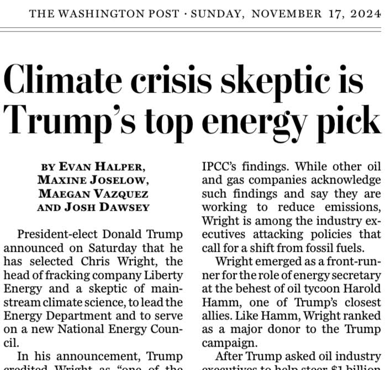 ](https://substackcdn.com/image/fetch/$s_!kRJb!,f_auto,q_auto:good,fl_progressive:steep/https%3A%2F%2Fsubstack-post-media.s3.amazonaws.com%2Fpublic%2Fimages%2F2ddeec4e-da1f-400c-af7a-0fe691a0d5e6_389x370.png)What even is a “climate crisis skeptic”?
The irony here is that Wright’s views on energy and climate, which he has expressed often and in detail, are largely consistent with the findings of the Intergovernmental Panel on Climate Change (IPCC). The views of his critics? Not so much.
Let’s take a look at what Wright has said about climate change in a recent 180-page report called Bettering Human Lives. Wright acknowledges two fundamental realities — climate change is real and fossil fuels have enormous benefits:
The expansion of the global energy supply by adding fossil fuels has greatly improved the human condition; it also brought the risk of climate change caused by increased atmospheric levels of carbon dioxide and other greenhouse gases.
Wright’s plain vanilla views on climate change are consistent with the most recent IPCC assessment:
Human industrial and agricultural activity increases greenhouse gas concentrations and is contributing significantly to a warming trend that earth has experienced over the past 150 years. Total warming over this period has been about 1.3°C (2.3°F).
Wright pulls no punches when characterizing the state of public discussion of climate change, and he is not wrong:
Climate change discourse is unfortunately rife with false claims and alarmist proclamations from all quarters.
Wright cites the IPCC on extreme weather, which — as THB readers know well — expresses findings that contradict many claims made in support of climate activism:
[R]eports from the Intergovernmental Panel on Climate Change (IPCC) actually show no increase in the frequency or intensity of hurricanes, tornadoes, floods, or weather-related droughts.
Wright supports pragmatic climate policies that reduce emissions:
Two things are required for positive progress on climate change: a sober understanding of the issue and the tradeoffs required, and massive improvements in energy technologies that can deliver low-carbon energy that is also low cost, reliable and secure.
Wright clearly differs from many climate activists in his view that while climate change poses real risks, it is one of many problems facing humanity, and not a crisis or existential threat:
LOMBORGIAN
Climate change is a real and global challenge that we should and can address. However, representing it as the most urgent threat to humanity today displaces concerns about more pressing threats of malnutrition, access to clean water, air pollution, endemic diseases, and human rights, among others.
As an energy executive, Wright has a deep understanding of the global energy economy, and he calls for “energy sobriety”:
:{Politicians, policymakers, pundits, and the press talk endlessly about how solar, wind, and batteries can transform our whole energy system and address the climate crisis. The reality is that these politically favored technologies have not, will not, and cannot replace most of the energy services and raw materials provided by hydrocarbons. Today they are deployed almost exclusively in the electricity sector, which delivers only 20% of total primary energy consumption. Manufacturing is the largest user of energy globally, mostly in the form of process heat that cannot effectively be supplied via electricity. Further, the ultra-high-power density required for the likes of aviation, global shipping, long-haul trucking, and mobile mining equipment have no viable replacements in sight.
Critical materials from hydrocarbons provide nitrogen fertilizer that is responsible for fully half of global food production. In addition, hydrocarbons supply critical materials to produce plastics and petrochemicals that are essential components of modern lives. They also provide asphalt, paints, lubricants, cosmetics, 60% of global clothing fiber, and thousands of other products. Without hydrocarbons we would have no way to produce the vast quantities of steel and cement that undergird our built world. Even wind turbines, solar panels, and batteries are made of hydrocarbon materials and require huge amounts of energy from hydrocarbons to supply the high-temperature process heat required for their fabrication. Energy sobriety is desperately needed.}:
What does DOE do, anyway? Here is a capsule summary:
In 1977, the establishment of the Department of Energy brought most Federal energy activities under one umbrella and provided the framework for a comprehensive and balanced national energy plan. While the Nuclear Regulatory Commission maintained its regulatory duties in areas like reactor safety and radiation protection, the Department of Energy undertook responsibility for long-term, high-risk research and development of energy technology, Federal power marketing, energy conservation, the nuclear weapons program, energy regulatory programs, and a central energy data collection and analysis program.
The figure below shows the major elements of the FY2025 DOE budget request to Congress.
[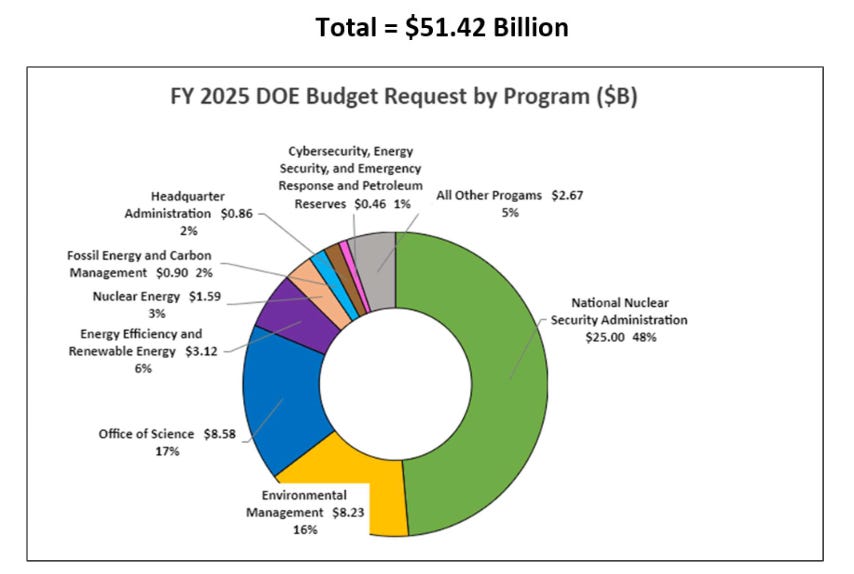 ](https://substackcdn.com/image/fetch/$s_!FOwV!,f_auto,q_auto:good,fl_progressive:steep/https%3A%2F%2Fsubstack-post-media.s3.amazonaws.com%2Fpublic%2Fimages%2F6f8c8f0d-a9cd-4807-8056-5a9ac332241a_854x574.png)DOE FY2025 Budget Request
DOE is not responsible for “drill, baby, drill” — That would be the Department of the Interior. DOE is however one of the leading science agencies of the federal government, overseeing more than $20 billion in research and development.
[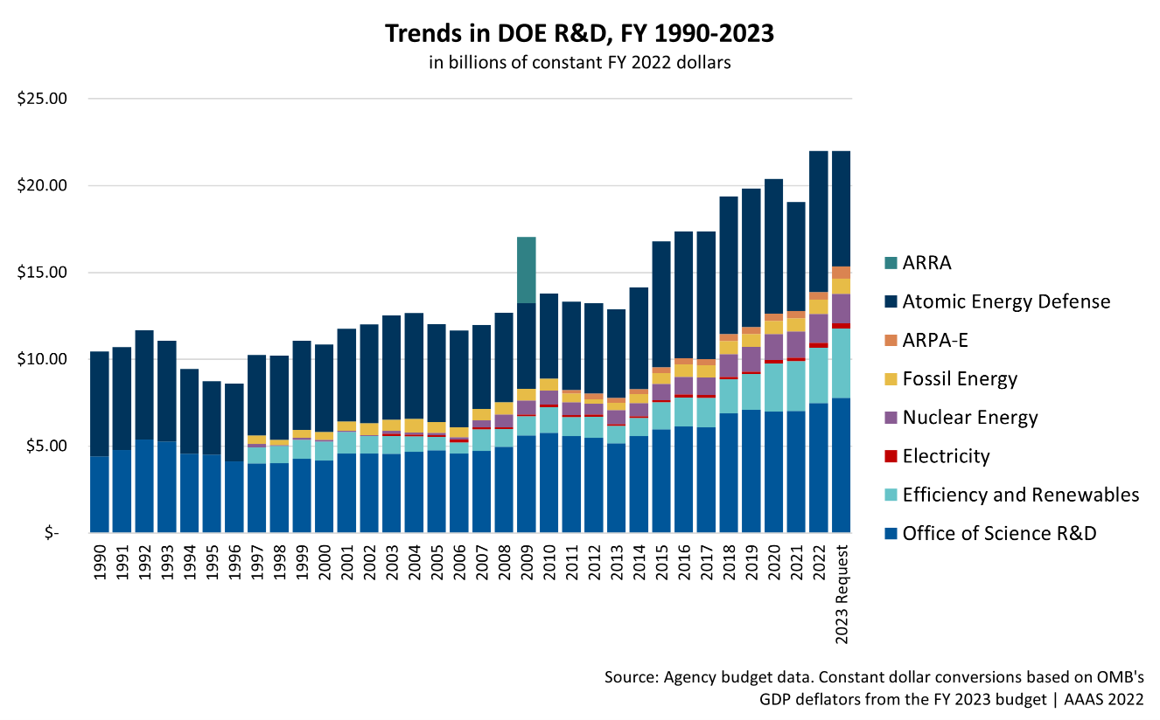 ](https://substackcdn.com/image/fetch/$s_!3bhU!,f_auto,q_auto:good,fl_progressive:steep/https%3A%2F%2Fsubstack-post-media.s3.amazonaws.com%2Fpublic%2Fimages%2F1c4061b2-f42b-48ee-b081-8d2e6cadc751_1160x720.png)Source: AAAS
DOE is also home to 17 national labs around the country.
[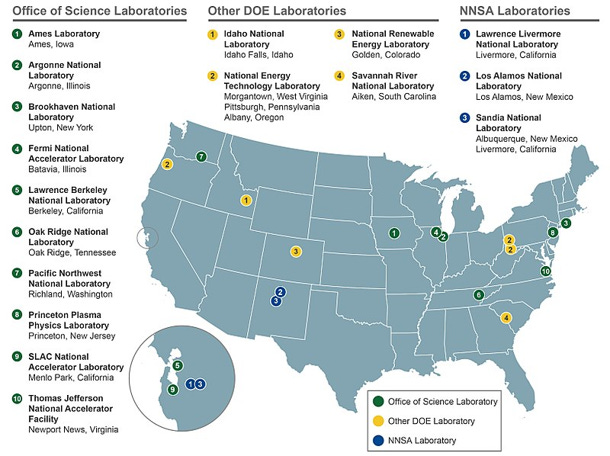 ](https://substackcdn.com/image/fetch/$s_!WqCU!,f_auto,q_auto:good,fl_progressive:steep/https%3A%2F%2Fsubstack-post-media.s3.amazonaws.com%2Fpublic%2Fimages%2Fc67e0f02-f8ba-45e0-ab47-52de3fe713bd_610x456.png)
DOE is focused on the science, technology, and policy dimensions of energy and not on the federal government’s oversight and management of energy resources. In that role, having a climate pragmatist and energy realist as DOE secretary will serve the agency and the nation well.
Rather than call Chris Wright silly juvenile names, the climate community should offer to work with Wright to help deliver — in his words — “massive improvements in energy technologies that can deliver low-carbon energy that is also low cost, reliable and secure.” That is a goal we all should support.
Bonus! Here is a video of me and Chris Wright talking energy and climate just over a year ago (for those who prefer to read, a transcript can be found here):
veriten.com
Chris Wright - en energiminister der ved noget om energi og klima | Klimarealisme.dk
klimarealisme.dk
Senate confirms fossil fuel CEO Chris Wright as energy secretary. He vows to 'unleash' US resources
Senate confirms fossil fuel CEO Chris Wright as energy secretary. He vows to 'unleash' US resources
cpr.org
Senate confirms Trump pick for Energy secretary Chris Wright
usatoday.com
Climate Depot
https://www.climatedepot.com › 2024 › 11 › 21 › roger-pielke-jr-on-chris-wright-energy-realism-climate-pragmatism-at-the-dept-of-energy
Roger Pielke Jr. on Chris Wright: Energy Realism & Climate Pragmatism ...
Nov 21, 2024By Roger Pielke Jr. Excerpt: He's a climate denier! That is the standard reaction of many in the climate lobby when encountering views on climate and energy deviating from the monomaniacal view tha…
Veriten
https://veriten.com › guest › chris-wright
Chris Wright Archives - Veriten
On Wednesday in Denver, we had the pleasure of joining Dr. Roger Pielke Jr. (UC Boulder) and Chris Wright, CEO and Chairman of Liberty Energy for a live discussion as part of Liberty Energy's "Liberty and Energy" Presentation Series.
Watts Up With That?
https://wattsupwiththat.com › 2024 › 11 › 20 › there-is-a-design-problem-in-climate-policy-featuring-dr-roger-pielke-jr-chris-wright-liberty-2
"There Is a Design Problem In Climate Policy" Featuring Dr. Roger ...
Nov 20, 2024Veriten On Wednesday in Denver, we had the pleasure of joining Dr. Roger Pielke Jr. (UC Boulder) and Chris Wright, CEO and Chairman of Liberty Energy for a live discussion as part of Liberty Energy's "Liberty and Energy" Presentation Series. Roger is a Professor in the Environmental Studies department at the University of Colorado Boulder and the author of "The Honest Broker ...
YouTube
https://www.youtube.com › watch?v=n4GULReQPFs
The Politics of Climate Science | Roger Pielke, Jr. - YouTube
"There Is A Design Problem In Climate Policy" Featuring Dr. Roger Pielke Jr. & Chris Wright, Liberty 1.8K views 1 year ago 43:06 Now playing
heatmap.news
https://heatmap.news › climate › chris-wright-mind?next_url= › climate › chris-wright-mind
Inside the Mind of Energy Nominee Chris Wright - heatmap.news
Jan 2, 2025Pielke called both Wright and Doug Burgum, Trump's nominee for Secretary of the Interior and the designated head of a planned National Energy Council "super competent. They know energy, and that's a fantastic starting point," he told me.
American Enterprise Institute - AEI
https://www.aei.org › articles › energy-realism-and-climate-pragmatism-at-the-department-of-energy
Energy Realism and Climate Pragmatism at the Department of Energy
Nov 19, 2024Reactions from climate advocates to the nomination of Chris Wright, 1 CEO of Liberty Energy, to serve in Donald Trump's cabinet as Secretary of Energy have followed this tired and lazy pattern.
https://www.linkedin.com › posts › chris-wright-b8370a17b_there-is-a-design-problem-in-climate-policy-activity-7113619155722924032-vnWd
Chris Wright's Post - LinkedIn
At our recent Liberty & Energy Breakfast, we hosted Roger Pielke Jr., a self-proclaimed "undisciplined academic" and leading expert on extreme weather phenomena.
Veriten
https://veriten.com › guest › roger-pielke-jr
Roger Pielke Jr. Archives - Veriten
"There Is A Design Problem In Climate Policy" Featuring Dr. Roger Pielke Jr. & Chris Wright, Liberty On Wednesday in Denver, we had the pleasure of joining Dr. Roger Pielke Jr. (UC Boulder) and Chris Wright, CEO and Chairman of Liberty Energy for a live discussion as part of Liberty Energy's "Liberty and Energy" Presentation Series.
rogerpielkejr.substack.com
https://rogerpielkejr.substack.com › p › a-red-team-climate-report
A Red Team Climate Report - by Roger Pielke Jr.
Jul 30, 2025DOE Secretary Chris Wright commissioned the report and characterizes it in the report's foreword as follows: The rise of human flourishing over the past two centuries is a story worth celebrating. Yet we are told—relentlessly—that the very energy systems that enabled this progress now pose an existential threat.
WRIGHT HACK STUDY BS
Climate | Department of Energy
DOWNLOAD DOE_Critical_Review_of_Impacts_of_GHG_Emissions_on_the_US_Climate_July_2025
The U.S. Department of Energy (DOE) has released a new assessment of climate science written by five scientists who have long-argued that climate science assessments have overlooked key issues.
The report — A Critical Review of Impacts of Greenhouse Gas Emissions on the U.S. Climate — was released yesterday accompanying the Trump Administration’s announcement that it was reconsidering the Environmental Protection Agency’s 2009 “endangerment finding” on greenhouse gases.
While the authors do not use this terminology, I’m calling this report a “red team” report because it explicitly seeks to challenge aspects of climate science and policy in order to motivate debate and discussion. One of the report’s authors, Steve Koonin, has long argued for a “red team” approach for improving climate science assessments.
I certainly agree with Koonin that legitimate views and voices have been excluded from major climate assessments, as leaders in the community have sought to present a tidy story, convenient for climate politics. However, rather than having dueling assessments, I would much prefer that scientific assessments be run as big tents, with the full diversity of views included, highlight not just areas of consensus, but also areas of uncertainty, disagreement, and ignorance. Climate science has seen far too much gatekeeping.
In the coming weeks I’ll provide several opportunities here at THB to discuss and debate the report — All are welcome, and substantive disagreement is encouraged.
DOE Secretary Chris Wright commissioned the report and characterizes it in the report’s foreword as follows:
The rise of human flourishing over the past two centuries is a story worth celebrating. Yet we are told—relentlessly—that the very energy systems that enabled this progress now pose an existential threat. Hydrocarbon-based fuels, the argument goes, must be rapidly abandoned or else we risk planetary ruin.
That view demands scrutiny. That’s why I commissioned this report: to encourage a more thoughtful and science-based conversation about climate change and energy. With my technical background, I’ve reviewed reports from the Intergovernmental Panel on Climate Change, the U.S. government’s assessments, and the academic literature. I’ve also engaged with many climate scientists, including the authors of this report.
What I’ve found is that media coverage often distorts the science. Many people walk away with a view of climate change that is exaggerated or incomplete. To provide clarity and balance, I asked a diverse team of independent experts to critically review the current state of climate science, with a focus on how it relates to the United States.
I didn’t select these authors because we always agree—far from it. In fact, they may not always agree with each other. But I chose them for their rigor, honesty, and willingness to elevate the debate. I exerted no control over their conclusions. What you’ll read are their words, drawn from the best available data and scientific assessments.
Wright explains his view of climate change:
Climate change is real, and it deserves attention. But it is not the greatest threat facing humanity. That distinction belongs to global energy poverty. As someone who values data, I know that improving the human condition depends on expanding access to reliable, affordable energy. Climate change is a challenge—not a catastrophe.
Today, I see on social media many climate scientists who often appear in the media responding to the report with name calling. We won’t do that here at THB and the comments will be tightly moderated.
:{:{One of the report’s authors, Judith Curry,:(style="background-color:#ffbb16ff"):}: has a very interesting blog post on the report. Curry explains that the DOE and the author team (the “Climate Working Group” or CWG) is interested in comments and critique:}:
DOE welcomes public comments on this report and is setting up a website for comments. The CWG expects to expend considerable time responding to the comments. We’ve already seen a pretty broad range of comments from the DOE scientists; it will be interesting to see what the what the public comments look like
Speaking from the perspective of individuals who have commented on the IPCC and NCA reports only to see our comments ignored, we plan to take a different approach. Rather than primarily seeking to defend our Report, we regard the open comments as an opportunity for dialogue, learning, and clarification of areas of disagreement. We expect to spend considerable time and effort in responding to the comments.
When you read the report you’ll see that my peer-reviewed work with colleagues is widely cited, and you’ll also see multiple references to THB.
The full report can be found here and I look forward to engaging with THB readers in the comments. Also, let me know any requests for future posts on the substance of the report.
*Before you jump into the DOE report, please click that “❤️ Like”. More likes mean that THB rises in the Substack algorithm and gets in front of more readers. Thanks!
*Comments invited!
*If you are looking for a fantastic speaker (that’s me!) at your event, be in touch.
---
===}:
an 10 25
After President Donald Trump returned to the White House almost nine months ago, his administration carried out an aggressive campaign to downsize a range of federal government agencies. And it did so with the help of the Department of Government Efficiency (DOGE), which was led by Tesla/SpaceX/X.com head Elon Musk at the time.
Agencies ranging from the Internal Revenue Service (IRS) to the U.S. Department of Veterans Affairs (VA) to the U.S. Social Security Administration (SSA) were targeted for mass layoffs. Another was the U.S. Department of Energy (DOE).
In a Canary Media article republished by Mother Jones on October 16, journalist Maria Gallucci details the Trump Administration's push to eviscerate the Energy Department's Office of Clean Energy Demonstrations (OCED) — a move that might have killed a lot of job creation.
"The Office of Clean Energy Demonstrations was supposed to be a launchpad for ambitious projects to help America lead the way on cleaner power and manufacturing. Now, it's been reduced to a shell of itself," Gallucci explains. "As the Trump Administration slashes spending and fires workers across the federal government, the U.S. Department of Energy has emerged as one of the hardest-hit agencies — and perhaps no other of its divisions has been singled out as deliberately as OCED…. The situation is best summarized by the budget the White House has requested for OCED for the next fiscal year: $0."
According to Gallucci, this is a "dramatic reversal" from former President Joe Biden's energy policies.
"During the Biden Administration," Gallucci explains, "Congress endowed it with nearly $27 billion to try to scale up cutting-edge technologies that could curb planet-warming pollution from industrial facilities and power plants. Trump officials have, in recent months, hollowed out the office, canceling billions in previously issued awards for everything from low-carbon chemical manufacturing to rural energy resiliency, while also dismissing over three-quarters of its employees…. Experts and insiders warn that the tumult within OCED and the DOE more broadly is eroding the private sector's trust in the federal government and its ability to drive energy innovation."
Advait Arun of the Center for Public Enterprise told Gallucci that the Trump Administration "has really created a chilling effect on the willingness of future early-stage technology developers to work with the Department of Energy."
A former OCED staffer, interviewed on condition of anonymity, told Gallucci, "We are eliminating ourselves as a leader in the clean energy space, especially for the industrial complex. What I'm seeing is China is about to slip right into that position. Just logically and economically, I don't understand the steps that are being taken."
*Read Maria Gallucci's full article at this Mother Jones link.
---
MMA 10 25
Frequent Fox appearances are central to the Trump administration's climate and energy misinformation strategy
Special ProgramsClimate & Energy
Written by Evlondo Cooper
Research contributions from Harrison Ray
Published 09/29/25
Fox News and Fox Business have not simply covered President Donald Trump’s destructive climate and environmental agenda — they have served as the administration’s preferred vehicles for selling it to the public.
Since late July, Environmental Protection Agency Administrator Lee Zeldin, Energy Secretary Chris Wright, and Interior Secretary Doug Burgum have made dozens of appearances across Fox News and Fox Business programs to defend the proposed repeal of the EPA’s endangerment finding, shift blame for soaring electricity bills away from fossil fuel volatility, and portray offshore wind projects as both unreliable and dangerous.
By turning to Fox networks, senior Trump officials gain a platform where destructive environmental deregulation is framed as common sense and basic policy questions are never asked. What emerges from these appearances is not legitimate debate or accountability journalism, but a symbiotic relationship that allows the Trump administration to launder harmful misinformation through Fox’s news and opinion programming — leaving viewers with a distorted picture of climate science, energy policy, and the real stakes of the administration’s environmental rollbacks.
Topline findings
- Doug Burgum, Chris Wright, and Lee Zeldin have appeared a combined 36 times on Fox networks from July 29 through September 21. Zeldin and Burgum are tied for the most appearances during this period, with 13 apiece, followed by Wright with 10.
- Fox Business’Mornings with Maria Bartiromofeatured the three Trump administration officials the most, with 8 total appearances, followed by the network’sVarney & Co.(7 combined appearances) and Fox News’America Reports(5 appearances). Kudlow, The Ingraham Angle, and Fox & Friends each hosted the Trump officials twice during the studied period.
- ## Trump officials used Fox appearances to push misinformation after the administration proposed repealing the EPA’s landmark endangerment finding
- While Fox networks have spread misleading claims about climate and energy for years, the appearances by administration officials in the weeks following the proposed repeal of the endangerment finding released on July 29 offer a snapshot of how they work hand-in-hand with the Trump White House to downplay the scientific basis for greenhouse gas regulation, distort the causes of rising electricity prices, and attack renewable energy.
EPA Administrator Lee Zeldin
Zeldin has leaned on Fox’s coverage to launder claims that climate regulations are illegitimate and that reliance on renewable energy is driving economic pain.
During the August 13 episode of Fox Business’ Kudlow, Zeldin argued that the endangerment finding — a 2009 scientific determination that provided the legal framework for the EPA to regulate greenhouse gas emissions — rested on “a lot of mental leaps” and claimed that “the Clean Air Act doesn’t make any reference to the greenhouse gases.” (In reality, the Supreme Court’s Massachusetts v. EPA ruling explicitly found that greenhouse gases qualify as air pollutants under the Act.) He paired that dismissal with charges that Obama-era scientific findings were exaggerated and “pessimistic,” and closed the segment by promoting natural gas pipelines as the only path to affordable energy and job growth.
- Video file
Video
Citation
From the August 13, 2025, episode of Fox Business' Kudlow
- During the September 1 episode of Fox News’ One Nation with Brian Kilmeade, Zeldin presented Trump’s deregulatory agenda as the backbone of U.S. “energy dominance,” dismissing offshore wind projects as inefficient and unreliable for consumers. In contrast, he again portrayed fossil fuel expansion — particularly natural gas — as both environmentally superior and essential for national security.
Energy Secretary Chris Wright
Wright has similarly leaned on Fox to attack renewable energy as too costly, unreliable, and an obstacle to America’s economic and technological ambitions. He also used his appearances to make sweeping claims that fossil fuel expansion is the only realistic path forward and to blame renewable energy for electricity price increases.
During a segment about the “importance of unleashing U.S. energy” to meet growing demand from artificial intelligence on the September 4 episode of Fox & Friends, Wright told viewers that artificial intelligence represents “perhaps the highest use of electricity.” Later that day on Fox News’ The Ingraham Angle, Wright described offshore wind projects as a “guaranteed” driver of higher electricity costs, telling host Laura Ingraham that wind and solar are “variable, parasitic sources” that make the power grid less reliable and more expensive. He also claimed that by adopting offshore wind, the United States would be “competing for the most expensive electricity in the world.” Ingraham did raise the issue of higher electricity costs during the Trump administration but allowed Wright to spin, evade, and double down on falsely blaming renewable energy.
- Video file
Video
Citation
From the September 4, 2025, edition of Fox News’ The Ingraham Angle
- On the September 19 episode of Fox Business’ Mornings with Maria Bartiromo, Wright labeled global investment and uptake of renewables such as wind and solar as a “complete trainwreck” and insisted that climate change is a “slow-moving, gradual phenomenon, nowhere near a crisis or a disaster.”
Interior Secretary Doug Burgum
Burgum has also used Fox appearances to promote the administration’s fossil fuel expansion agenda while attacking renewables as unreliable and costly.
During the August 2 episode of Fox Business' Maria Bartiromo’s Wall Street, Burgum defended the administration’s proposed rollback of the endangerment finding, agreeing with Zeldin and Wright that the EPA had overstepped its authority. He also blamed increased energy costs on Obama- and Biden-era climate regulations, pushed deregulation as a way to unleash economic growth, and attacked offshore wind.
- Video file
Video
Citation
From the August 2, 2025, episode of Fox Business' Maria Bartiromo’s Wall Street
- On the August 20 episode of Mornings with Maria Bartiromo, Burgum announced a sweeping offshore oil and gas leasing plan while continuing to attack offshore wind. He tied fossil fuel production to U.S. dominance in the race for artificial intelligence, claiming that only coal and gas could deliver the electricity needed for growth, and contrasted this with “blue state” reliance on renewables, which he described as intermittent, subsidized, and responsible for high electricity costs.
- ## The climate and energy realities Fox keeps from its audience
- Fox networks have repeatedly provided Zeldin, Wright, and Burgum with a platform to repeat administration talking points and propaganda without pressing them on the evidence that undercuts their claims. As a result, Fox viewers have been left with a curated narrative that omits the most important facts.
For example, on Kudlow, after Zeldin dismissed the endangerment finding as “a lot of mental leaps,” Fox host and former Trump economic adviser Larry Kudlow never pointed out that it was grounded in the Supreme Court’s 2007 Massachusetts v. EPA decision and decades of scientific consensus. Nor did viewers hear that it has prevented hundreds of thousands of premature deaths and delivered billions in net economic benefits.
And when Wright insisted that renewables drive up electricity prices on The Ingraham Angle, the Fox host did not mention that analysts instead point to fossil fuel volatility, surging demand from AI data centers, and Trump’s own decision to roll back and cancel renewable energy projects as the primary drivers of increased electricity costs.
On Mornings with Maria Bartiromo, as Burgum railed against offshore wind energy and celebrated coal and gas as the foundation of energy dominance, Bartiromo never noted that solar energy combined with battery storage is now the cheapest and fastest-to-build source of new power, or that clinging to coal plants saddles consumers with higher bills while increasing pollution. Instead, the segment cast fossil fuels as the only reliable option, ignoring the economic and health benefits of renewables.
The Trump administration’s reliance on Fox News and Fox Business is not incidental; it is a core communications strategy. By prioritizing their appearances on Fox networks, officials like Zeldin, Wright, and Burgum gain access to a powerful megaphone while shielding themselves from scrutiny or accountability. Fox’s “straight news” programs give their talking points the appearance of neutrality, and its opinion hosts repeat and amplify those same claims until they harden into conventional wisdom.
The result is the laundering of misleading talking points: Administration officials feed misinformation into Fox, the network recycles and legitimizes it, and audiences are left with a propagandistic narrative that obscures the public health costs of climate change and environmental deregulation and dismisses the economic benefits of clean energy.
- ## Methodology...
---
===
email 9 25
kirk ai FF ripff of
https://heated.world/p/charlie-kirks-extremism-was-fossil
no lnx
Charlie Kirk was a fossil fuel industry plant
Big Oil's money gave Kirk a larger platform to spread baseless climate conspiracy theories—as well as other extremist views.
Emily Atkin
Sep 18, 2025
The term “plant” is often used to describe someone whose success was not solely the result of a grassroots movement, but instead bolstered by powerful corporate interests who secretly poured massive amounts of money into ensuring their fame.
For example: Charlie Kirk was a fossil fuel industry plant. The right-wing activist murdered last week built his massive platform for racism, sexism, transphobia and climate denial in part by using anonymous funding from Big Oil.
Turning Point USA, the group Kirk founded to ignite a culture war on college campuses, has managed to hide much of its funding sources. Roughly half of the group’s $40 million in income in 2020 came from 10 anonymous donors, NBC News reported.
But in 2017, Kirk admitted that some of the group’s anonymous donors “are in the fossil fuel space.” Speaking to The New Yorker’s Jane Mayer, Kirk disclosed that he’d fundraised for TPUSA at the annual meeting of the Independent Petroleum Association of America (IPAA), as well as the 2017 board meeting of the National Mining Association.
In those meetings, Kirk promised oil and gas companies he’d fight “the myth that fossil fuels are dirty,” and target the “leftist professors” on college campuses who “perpetuated” the “myth.”
The meetings “went great,” Kirk told Mayer. The IPAA’s president, Barry Russell, wound up joining TPUSA’s advisory council, where he remains today. (Kirk had said that most advisory council members are also TPUSA donors).
How Kirk tried to re-popularize climate denial
Over the next nine years, Kirk worked to chip away at young Americans’ rising concerns about climate change. He did this by claiming climate science is still debated—and then peddling the conspiracy theory that all climate policies are a Democratic bid for government control.
“A tyrant’s fantasy is to have a massive green economy transition,” he said in 2023. “You can get rid of private property, you can control people’s movements. It’s fundamentally the abolition of civilization as we know it.”
To justify his claim that climate science is unsettled, Kirk would often cite “experts” who downplay the seriousness of planetary heating. For example, in 2023, Kirk claimed climate science is “debated” because “a Nobel prize winning scientist recently came out and said there is no real climate crisis.” Kirk also cited the opinions of John Coleman, the now-deceased founder of the Weather Channel, as evidence that climate change is a hoax.
But the experts Kirk cited were almost always unqualified. For example, Coleman was a meteorologist, not a climate scientist, and his claims were frequently debunked by publishing climate scientists. The Nobel-Prize-winning scientist Kirk referenced, John Clauser, is not a climate scientist, and won the Nobel for physics in the 1970s. No other Nobel Prize-winning physicist denies mainstream climate science; in fact, some of them are climate scientists themselves.
Coincidentally, Kirk never considered the opinions of publishing climate scientists to be credible. Instead, he reflexively dismissed their warnings as "garbage … designed for one thing: power and control.”
A YouTube caption for one of Kirk’s videos calls climate change “nonsense” and “boulder dash” [sic]
Kirk’s final climate segment
Kirk’s continued to frame climate change as a conspiracy in an interview with Trump’s Secretary of Energy Chris Wright three weeks before his death.
In the interview, Kirk and Wright spoke about the Department of Energy’s recently-released 151-page report claiming climate change is not a serious problem. That report was put together by five contrarian scientists personally recruited by Wright, a former fracking executive.
Kirk praised the report, and dismissed all criticism against it as politically motivated. “We think this is all politicized,” Kirk said. “This is driven towards a environmentalist agenda that is trying to weaken American energy dominance.”
Wright agreed, and said all the critics of his climate report only took issue with who wrote it—not the data within it. “They want to impugn the writers or impugn the way we reference people,” Wright said. “They want to find little things. What we want to talk about is the data.”
This, however, was objectively false. The data within Wright’s report was meticulously criticized by 85 publishing climate scientists, who issued a 439-page rebuttal pointing out various misrepresentations, messy citations, cherry-picking, and factual errors. In addition, many of the scientists cited in Wright’s report complained that their data was misrepresented, and explained their complaints in detail.
Perhaps the most mind-boggling part of Kirk’s final climate interview, however, was the argument he used to claim there can be no such thing as a scientific consensus about climate change.
”Science does not have consensus,” he said. “This is a very important thing. Right? Science says nothing. Scientists say things. Okay? Science never talks. Science is silent. This is a good thing that could apply to everything.”
Kirk was certainly correct that scientists say things. But over the course of his life, Kirk was set on ignoring most of them. For example, the vast majority of publishing climate scientists have been saying the same thing over and over for decades: That heat-trapping pollution from fossil fuels, industrial agriculture, and deforestation is steadily raising the average temperature of the planet—and that the warming poses an existential threat to human, animal and plant life.
Kirk ignored those scientists for a simple reason: Because listening to them would mean accepting that fossil fuels harm people. Neither Kirk nor his donors could accept that reality.
The inseparable connection between climate denial and right-wing extremism
The point of this newsletter is not to claim that Kirk was paid by the fossil fuel industry to say things he didn’t believe about climate change. I think most online political commentators genuinely believe what they’re saying, no matter who they’re funded by.
The point is to reinforce what has been true for decades: the fossil fuel industry is behind most of the climate disinformation you see and hear today.
Big Oil has spent billions sowing doubt about the reality and severity of climate change. They’ve done this for one reason: Solving climate change would require using less of their product, and using less of their product would hurt their bottom line.
Pretty much everyone with a massive following who spreads climate denial derives money or power from fossil fuels. The sooner everyone understands that, the better.
The other point here is to remind everyone about the inseparable connection between climate denial and other types of right-wing extremism. Often, you’ll hear climate activists debate whether it’s a good idea to get involved in larger movements for justice, or whether it’s better to just “stay in their lane” of climate policy.
The opposition to climate action is not having that debate. Instead, they are funding right-wing extremists who say things like the Civil Rights Act was "huge mistake;” that Supreme Court Justice Ketanji Brown Jackson was "a diversity hire;" that trans people are responsible for inflation; and that Taylor Swift should "submit to [her] husband." As long as “climate change is fake” is part of that rhetoric, they don’t care what the rest of it looks like.
Racism, sexism, and transphobia is being used to build the climate denier base. If you want climate action, you can’t pick and choose which you fight back against.
---
---
At Climate Week, The New York Times has an opportunity to hold Energy Secretary accountable for recent remarks downplaying climate change and disparaging renewable energy
Here are three remarks climate journalists should press Chris Wright on
Special ProgramsClimate & Energy
Written by Allison Fisher
Published 09/23/25 mma
- Energy Secretary Chris Wright, who recently called pledges to reduce greenhouse gases “silly” and said that climate change is “not incredibly important,” will speak at The New York Times’ “Climate Forward” event tomorrow — a forum about climate solutions meant to hold “newsmakers ... accountable in front of a live audience.” The Times should take the opportunity to hold Wright accountable for his commentary.
Wright often appears in supportive media, having appeared across Fox’s networks at least 57 times since his confirmation as head of the Department of Energy. Regularly giving interviews on networks known to be safe spaces for Trump administration officials has allowed Wright to shape the discourse around climate and energy issues while uncritically spinning some of the administration's most controversial actions, including its effort to overturn the endangerment finding and its all-out assault on clean energy.
And during a rare non-Fox appearance on CNN on August 5, Wright was allowed to spew climate denial, asserting that “nobody who is a credible economist or scientist” sees climate change as a major threat and characterized carbon dioxide as just “a fertilizer” that benefits plant growth.
But climate journalists at The New York Times who have covered these issues for years should be better positioned than TV anchors to challenge climate denial arguments, misinformation, and false narratives. And they must, as this interview represents a rare opportunity to set the record straight on the climate crisis, its impacts, and what we can do to mitigate them by demanding direct, public-facing accountability outside of the protective ecosystem Fox News creates for Trump administration officials.
Here are 3 things Secretary Wright recently said on Fox that The New York Times should hold him accountable for during his appearance at Climate Forward:
- ## 1. Wright claimed that a climate report his agency released was about restoring “confidence in science” — but the report has been widely criticized for misrepresenting climate science.
- On its July 29 episode, Fox News’ America Reports hosted Wright and Environmental Protection Agency Administrator Lee Zeldin to discuss the Trump administration's proposal to repeal the EPA’s 2009 endangerment finding, which affirmed that greenhouse gases endanger public health and welfare, and the Department of Energy’s recently released “critical review” of climate science.
To author that report, which would serve as the basis for the endangerment finding’s repeal, Wright tapped five climate contrarians whose discredited and debunked arguments have been promoted by right-wing media in order to manufacture doubt about the science that compels climate action.
During the interview, Wright claimed that the goal of repealing the endangerment finding was to “restore confidence in science, in data, in rationalism.” He then touted his agency’s climate report as a key objective in reaching that goal, saying, “So at the Department of Energy, we released a report, which is sort of a critical overview on what do we know today about climate science, about climate data, and what impacts that might have on the American people.”
But the DOE’s climate report has been widely criticized by the scientific community, including by climate scientist Zeke Hausfather, whose work was cited and reportedly “cherrypick[ed]” by the authors. On September 3, in response to a lawsuit alleging that the group’s formation violated federal law “in several ways,” Wright dissolved the working group, but he notably did not withdraw the report.
Meanwhile, the agency “dismissed hundreds of scientists and experts who had been compiling the federal government’s flagship analysis of how climate change is affecting the country,” known as the National Climate Assessment, and “deleted all previous congressionally mandated National Climate Assessment reports from government websites.” As The New York Times reported:
- > This year Mr. Wright handpicked a group of people who reject the scientific consensus on climate change to write a report downplaying global warming. Hundreds of the world’s top scientists gathered by the United Nations have found that greenhouse gases from the burning of coal, oil and gas are heating the planet and already having profound effects on communities by increasing the frequency and intensity of heat waves, wildfires, drought, floods and other extreme weather.
To avoid those worsening effects, those scientists say that a rapid transition from deriving energy from coal, oil and gas to nonpolluting sources is necessary.
- ## 2. Wright called the environmental impacts of offshore wind “massive” while ignoring the larger environmental impacts and damage of offshore drilling, which the Trump administration is expanding.
- On the August 31 edition of *Varney & Co.*, Fox Business host Stuart Varney invited Wright to respond to a Washington Post article on “Trump’s crusade against wind power,” asking, “Will the president’s approach to wind lead to higher costs?”
Wright dedicated substantial time in his response to the “environmental impacts” of the projects, as well as local opposition, claiming, “The problem with wind turbines, particularly offshore wind turbines, is their environmental impacts are pretty massive. You know, they’re out there in these critical fisheries, these breeding grounds for whales. Fishermen and local people who live near these projects do not like them. Those people were ignored and shut out of the conversation before.”
Meanwhile, the Trump administration is moving to expand offshore drilling, including by opening up 625 million acres along the Atlantic and Pacific coastlines for drilling. Offshore drilling, however, is significantly more harmful to the environment than offshore wind.
As the BBC reported: “Decades of research from around the world suggests that oil production affects birds, whales and other wildlife in many different ways. Apart from the climate factor, there is the risk of oil spills as well as smaller, chronic leaks, scientists say, which can harm seabirds, whales, dolphins and other wildlife.”
Politico reported that one oil and gas effort in particular, for example — a $44 billion Alaskan project to expand exports of liquefied natural gas — will harm the Beluga whale, resulting in “the same type of marine mammal disruption that Trump and his administration falsely claim is killing whales on the East Coast as developers build wind turbines.”
Pollution and spills are another risk associated with offshore drilling. According to the National Oceanic and Atmospheric Administration, thousands of oil spills occur annually in the U.S. alone, and the impacts of oil spills extend well beyond marine life. They are far-reaching, can last for decades, and include both harm to those exposed to the polluting materials and economic losses for coastal communities and industries that depend on clean beaches and oceans.
- ## 3. Wright claimed that Obama's and Biden’s clean energy policies “drove electricity prices up.”
- On the September 4 edition of Fox News' *The Ingraham Angle*, Wright responded to a question from host Laura Ingraham about rising electricity prices: “President Obama came in, told us the world was ending and we had to change how we got electricity somehow to save the world. … Biden doubled down on it and drove electricity prices up. That's not rocket science. That was guaranteed to happen.”
But Politico reports that states where wind and solar produce the greatest share of electricity are “among the 20 cheapest states for electricity, according to federal data,” and as Time reported, “A recent analysis by Heatmap found that, in states with higher adoption of renewables, prices have risen more modestly than average or even fallen."
In fact, per Forbes, solar energy combined with battery storage is the “cheapest and fastest-to-build option” to meet rising electricity demand. Clean energy technologies constituted93% of the new energy generation capacity added to the grid last year, and solar is the fastest growing source of new electricity generation — not only in the U.S., but across the globe.
In reality, a number of factors are impacting supply and demand in the electricity sector and driving up prices, including climate-fueled extreme weather events.
According to Heatmap: “In the Southeast, for instance, severe storms and hurricanes have knocked out huge swaths of the distribution grid, requiring emergency line crews to come in and rebuild. Those one-time, storm-induced costs then get recovered through higher utility rates over time.”
The New York Times also noted that, besides absorbing some of the costs incurred by data centers, utilities are also “spending billions of dollars to harden their systems against wildfires, hurricanes, heat waves, winter storms and other extreme weather.”
//
mma
07/21/25
---
e and e politico
Trump administration on Monday dismissed all of the scientists working on the newest version of the National Climate Assessment, a sweeping report that outlines the growing dangers of rising temperatures for lawmakers, policy experts and the public.
The sixth installment of the congressionally mandated report, which was due to come out by 2028, has typically been put together by about 400 researchers, many of whom are top scientists at universities who volunteer their time. The assessment is used to craft environmental rules, legislation and infrastructure project planning. It seen by experts as the definitive body of research about how global warming is transforming the country.
Work had already begun on the sixth version. The Trump administration ended that with a note sent to researchers Monday.
“At this time, the scope of the NCA6 is currently being reevaluated in accordance with the Global Change Research Act of 1990,” contributors were told in an email obtained by POLITICO’s E&E News.
The White House did not immediately respond to a request for comment.
The move was roundly criticized by climate scientists late Monday as the news spread. The assessments help Americans “understand how climate change is impacting their daily lives already and what to expect in the future,” said Rachel Cleetus, one of the researchers who was dismissed.
“Trying to bury this report won’t alter the scientific facts one bit, but without this information our country risks flying blind into a world made more dangerous by human-caused climate change,” said Cleetus, a senior policy director at the Union of Concerned Scientists, in a statement. “The only beneficiaries of disrupting or killing this report are the fossil fuel industry and those intent on boosting oil and gas profits at the expense of people’s health and the nation’s economic well-being.”
The plan closely tracks with a proposal by White House budget director Russ Vought, who has urged the Trump administration to toss out all work on the assessment that began under former President Joe Biden. Vought wants to help pick a new group of researchers to issue a report that reflects the administration’s claims that climate change is not a serious threat. That report might focus on how climate change “benefits” the U.S., according to a plan he outlined in Project 2025, the conservative policy proposal produced by the Heritage Foundation.
Earlier this month, the administration defunded the U.S. Global Change Research Program, which supports the assessment. The program, which coordinated the work of 13 federal agencies, had existed for 35 years through Republican and Democratic presidencies, including Trump’s first term.
Trump officials were caught by surprise by the timing of the fourth National Climate Assessment as it was being prepared for release in 2018. Some wanted to withhold the report and fire the scientists who worked on it, but that plan was scuttled. Instead, the White House tried to downplay the report by releasing it the day after Thanksgiving, but that only increased the attention it received.
It’s unclear whom Vought would try to recruit for the next assessment, if there is one.
There is a relatively small pool of credentialed researchers who downplay the scientific consensus that climate change could push the planet past a series of dangerous tipping points. Some have already told E&E News that they are willing to be involved with the new effort.
On Monday, some of the dismissed researchers pledged to continue their work in some fashion. That includes Bob Kopp, a climate scientist at Rutgers University, and an author of the chapter on ocean coasts that was being prepared for the sixth report.
“I know many of the authors would like to find a way to ensure that Americans can still have an updated, evidence-based assessment of our country’s climate,” he wrote on Bluesky.
---
ggl 9 25
American Enterprise Institute
A Close Look at Australia’s New Climate Assessments
Today's is the first in a series of posts for THB Australia Week. Coming soon, an update on trends in Australian normalized disaster losses...
.9 hours ago
Media Matters for America
At Climate Week, The New York Times has an opportunity to hold Energy Secretary accountable for recent remarks downplaying climate change and disparaging renewable energy
Energy Secretary Chris Wright, who recently called pledges to reduce greenhouse gases “silly” and said that climate change is “not...
.19 minutes ago
Science | AAAS
Contrarian climate assessment from U.S. government draws swift pushback
The report makes some points that mainstream climate scientists would acknowledge. It decries media hype and points out that global warming is...
.1 month ago
AGU Newsroom
AGU and AMS join forces on special collection to maintain momentum of research supporting the U.S. National Climate assessment
Congressionally mandated, the NCA draws on the latest scientific research to evaluate how climate change is affecting the United States.
.May 2, 2025
Washington State Department of Ecology (.gov)
Sept. 5 - Ecology debunks federal climate report, reaffirms commitment to real science
Today the Washington Department of Ecology issued an official rebuke of a draft report by the U.S. Department of Energy being used to...
.2 weeks ago
GlobeNewswire
NYAM and Yale Center on Climate Change and Health Partner to Address Sustainable Health Systems
Summit explores resilient healthcare systems that protect communities from climate-related health impacts...
.4 hours ago
NPR
White House dismisses authors of major climate report
The Trump administration dismissed all the scientists working on the next National Climate Assessment. The report is the most comprehensive...
.Apr 29, 2025
The New York Times
All Authors Working on Flagship U.S. Climate Report Are Dismissed
The Trump administration has dismissed the hundreds of scientists and experts who had been compiling the federal government's flagship report on how global...
.Jul 8, 2025
E&E News by POLITICO
Trump dismisses scientists writing the National Climate Assessment
The move was roundly criticized by climate scientists late Monday as the news spread. The assessments help Americans “understand how climate...
.Apr 29, 2025
Earth.Org
‘Maintain Momentum’: US Research Organizations to Keep National Climate Assessment Alive Amid Trump’s Cuts
Two major US research organizations have stepped up after the Trump administration dismissed all the scientists working on an assessment of climate change in...
.May 6, 2025
---
---
mma
August 19, 2025, edition of The Charlie Kirk Show SALEM
CHARLIE KIRK (HOST): You've taken on the entire kind of climate science world. Energy department attacks climate science in contentious report. By the way, you're in safe company here. We think this is all politicized. This is driven towards a environmentalist agenda that is trying to weaken American energy dominance. The agency asked five client skeptics to write a report criticizing the consensus on global warming.
First of all, science does not have consensus. This is a very important thing. Right? Science says nothing. Scientists say things. Okay? Science never talks. Science is silent. This is a good thing that could apply to everything. Scientists say things. And scientists, like we learned during COVID, we learned during the lockdowns, learned during the vaccines, can say a lot of different things with the data.
Now, again, global warming does not have consensus like the second law of thermodynamics. Global warming does not have consensus like a object at rest will stay at rest. Your reaction, Mr. Secretary, and how you think about this because they — again, let me read this New York Times article, The consensus on global warming. What an outrageous claim. Your thoughts, sir.
CHRIS WRIGHT (GUEST): Yeah. I always give the contrast between the science, which is what the left likes, which is the opposite of science. Science is a process of challenge and engagement and debate and wrestling with data. And if the data doesn't agree with your model, your model is wrong. Where the science is this top-down, authority-driven thing used with COVID to me was the climate movement in fast forward. The science told you what to do.
But as you said, Charlie, look at those critics. They critique the authors. Five skeptics. Well, skeptical of what? They presented — these are five highly distinguished scientists. One of them was undersecretary for science in the Obama administration, provost at Caltech, PhD from MIT. All of those scientists were accomplished scientists that are also tired of this censorship of the science, censoring real science and real process of engagement. But even on my CNN interview a couple weeks ago, I went on to talk about the climate report. There are zero questions about climate change. Zero. They want to impugn the writers or impugn the way we reference people. They want to find little things. What we want to talk about is the data.
Let's talk about climate science. Like, it's a real phenomenon. It's a slow-moving phenomenon, not even remotely close to the world's biggest problem, but it's used by the left to justify big government and top-down control of everything. Let's be honest. Let's engage in real science, as you said. That's what we're about. And I'm excited to have that debate over four years. We're going to end a lot of children's nightmares. We're going to end a lot of people trying to be pushed around and bullied by people that don't know what they're talking about. Like, I've spent twenty years studying climate science as physical data, and the people who were passionate about it never want to debate me because they don't know anything about it. But we're going to have that debate whether they want it or not.
KIRK: Science is a process. It doesn't tell you anything. People tell you. Science is a method. It's a methodology. And good science, which again is a verb, they they act as if, well, science, you know, puts something out. No. You do science. You go in exploration of truth. And then once you have a conclusion, you have to measure it, you have to analyze it, you have to inquire it, you have to cross-reference it. And by the way, we're bringing back that methodology to our government, RFK at HHS, and you at the Department of Energy.
mma
The Trump administration's “critical review” of climate science is authored by some of Fox News’ favorite climate deniers
Special ProgramsClimate & Energy
Written by Allison Fisher
Published 08/14/25
- On July 23, the Department of Energy released a so-called “critical review” of climate science to serve as a basis for the Environmental Protection Agency to stop regulating climate pollution. The New York Times reported:
- > Sea level rise is not accelerating. More carbon dioxide in the atmosphere will be good for plant growth. The computer models used to predict global warming tend to exaggerate future temperature increases.
These arguments, routinely made by people who reject the scientific consensus on climate change, were included in an unusual report released by the Energy Department on Tuesday. The report, which is meant to support the Trump administration’s sweeping efforts to roll back climate regulations, contends that the mainstream scientific view on climate change is too dire and overlooks the positive effects of a warming planet.
- The conclusions in the DOE report have been widely criticized by climate scientists. From The Washington Post:
- > Scientists argue that the new report, composed in less than two months by five authors known to have skeptical views on climate science, would not pass any peer review process. “If almost any other group of scientists had been chosen, the report would have been dramatically different,” Andrew Dessler, a climate scientist at Texas A&M University, said in a statement.
“There is a history of some of the authors of this document cherry-picking dates to show that there is no change, but they’re not providing the evidence to support that,” said Kristie Ebi, a professor of global health at the Center for Health and the Global Environment at the University of Washington.
- To author its new report, the Department of Energy tapped climate contrarians, including several who have been on the payroll of the fossil fuel industry and whose discredited and debunked arguments have been promoted by right-wing media to manufacture doubt about the science that compels climate action. In fact, four of the five authors of the report — Judith Curry, John Cristy, Steven Koonin, and Roy Spencer — have appeared on Fox News during key moments to dismiss climate science and deny the link between our warming planet and extreme weather.
- ## Climate deniers behind the Trump administration’s new climate report have appeared on Fox News to dismiss climate science during key moments
- Judith Curry
Judith Curry, former chair of the School of Earth and Atmospheric Sciences at Georgia Tech, consulted for oil and gas companies during her time in academia. She resigned from Georgia Tech in 2017 citing climate “craziness” and has been called out by other scientists for promoting debunked climate denial arguments.
As climate-fueled Hurricane Idalia barreled toward Florida in August 2023, Curry appeared on Jesse Watters Primetime to argue that scientists have “seriously mischaracterized” the threat of climate change. She claimed that the “dominant factor” in climate change is “far and away” the “natural climate variability” of the Earth. (Earlier that same month, Curry published an op-edin the New York Post, another Murdoch property, where she falsely claimed that the “overwhelming scientific consensus” on climate change is “manufactured” and suggested that scientists are incentivized by “fame and fortune” to push the idea that climate change is caused by human activity.)
John Christy
John Christy is “an atmospheric scientist who doubts the extent to which human activity has caused global warming,” according to The New York Times. (In reality, “more than 99.9% of peer-reviewed scientific papers agree that climate change is mainly caused by humans.”) He has regularly downplayed the link between climate change and extreme weather and has also pushed the false narrative — central to the Trump DOE climate report — that “CO2 is not the problem” because “carbon dioxide makes things grow. The world used to have five times as much carbon dioxide as it does now. Plants love this stuff. It creates more food.”
During a deadly global heat wave in July 2022, Christy appeared on The Ingraham Angle to falsely claim that extreme heat and other disasters are not “increasing in intensity or frequency.” He also repeated the common climate denial argument that “deaths from weather disasters and so on has gone down about 95% in the last hundred years.” But Reuters points out that the decrease in deaths since 1920 is largely due to “better forecasting and preparedness,” even while “the number, intensity, and cost of climatic and meteorological hazards have all increased over the last hundred years.”
Steven Koonin
Physicist Steve Koonin, a former scientist for the oil and gas giant BP who wrote a book chock-full of errors about climate change, appeared on the August 10, 2021, edition of Fox Business’ Kudlow to downplay the release of the U.N. Intergovernmental Panel on Climate Change’s sixth climate assessment. Koonin stated that “it is kind of absurd to think that another one degree over a century is going to create catastrophe.” But this would put the planet at over 2 degrees Celsius of warming, which climate scientists have long urged policymakers to prevent because it will be catastrophic for large parts of the globe.
Koonin also appeared on the August 10, 2021, edition of Special Report with Bret Baier to dismiss the connection between extreme weather and climate change, claiming that natural disasters were “on the face of it, weather. If they were climate, we would see trends over several decades in those phenomena, and we don't.”
In fact, climate scientists have been able to estimate how much climate change affects any given extreme weather event for years. Notably, researchers found that the heat wave that sent temperatures in the Pacific Northwest into triple digits just two months before the release of the 2021 report would have been “virtually impossible” without global warming.
Roy Spencer
Roy Spencer is a research scientist at the University of Alabama in Huntsville, an adviser to the Heartland Institute, and a former visiting fellow at the Heritage Foundation who was known as Rush Limbaugh's “official climatologist.” Politico reported that even while he has written that “climate change is big business” driven by a “marching army of climate scientists whose careers now depend on a steady stream of funding from governments” (a frequent claim among climate deniers), Spencer himself “has worked with organizations that have received funding from an interlinked network of fossil fuel companies — a multitrillion-dollar global industry — as well as wealthy foundations with billions of dollars in holdings that support groups opposing climate and energy regulations.”
After Hurricane Irma devastated parts of the U.S. in 2017, Fox & Friends hosted Spencer to undermine the science linking more intense storms to a warming planet. Spencer claimed: “As you go through time, there has been no increase in the number of major land-falling hurricanes in Florida, and there's been no increase in their intensity.” While climate scientists predict that “storm frequency will either decrease or remain unchanged” due to climate change and studies consistently show “no discernible trend in the global number of tropical cyclones,” data has confirmed that warmer temperatures have increased their intensity — including stronger wind speeds and greater precipitation.
- ## Energy Secretary Chris Wright has appeared on Fox and CNN to defend the report and its authors
- On August 5, CNN anchor Kaitlan Collins summarized the Trump DOE report’s conclusions “that more carbon dioxide in the air is good for plant growth, that [rising] sea levels are not accelerating,” and asked Secretary of Energy Chris Wright how the authors were selected. Wright responded:
“I've been in the climate debate and discussion for over 20 years, so I know certainly a lot of people in that world and I just made a list of who I think are the true, honest scientists,” Wright responded. “They follow the data and the facts where they lead them. They don't have a political agenda or a desired policy or a desired thing. They're just honest scientists. There's plenty of those. But I made a list of about a dozen of them that I thought were very senior and very well-respected. I called the top five and everyone said yes.”
Collins noted that “some people have criticized the report saying the information was cherry-picked by people who had already predetermined what they wanted to say in this report.” Notably, “some people” includes climate scientists whose work is cited in the report.
Wright also claimed that “the report references the Intergovernmental Panel on Climate Change reports over 100 times,” but it is worth noting that the well-known climate contrarians behind the Trump administration’s “critical review” contradict the findings of the hundreds of scientists who spent eight years developing the IPCC report.
On the August 7 edition of Morning with Maria, host Maria Bartiromo asked Wright to respond to The New York Times’ “pushback” from the article headlined “Energy Department attacks climate science in contentious report.”
“What a crazy headline, but I guess that’s par for the course for The New York Times — in fact we are doing the exact opposite,” Wright responded. “We are exposing the American people and the broader scientific community to what is actually in the Intergovernmental Panel on Climate Change reports, not the hyperbolic summaries for policymakers or media headlines that claim all sorts of crazy stuff. This is what we actually know.”
“How often do you hear that the planet is getting greener because there’s more carbon dioxide in the air that contributes to increased crop productivity and greener wilderness?” he continued. “How often do you hear that deaths from extreme weather have been falling like stone for a century? And that insured losses from extreme weather events have been on a multidecadal decline — those are just facts.”
All of these climate denial arguments have been debunked for years. Increasing CO2 is far more harmful to plants and farmers than any short-term benefit. Extreme weather deaths are falling because of better forecasting even while weather events are more intense due to our warming planet. And we are currently facing an insurance crisis because of climate-fueled events making some locations economically unviable and dangerously uninhabitable. But these stark realities were abandoned in the Trump administration’s climate report in favor of debunked arguments that support the fossil fuel industry’s campaign against climate action.
---
---
MMA EVLONDO C
The Trump administration’s repeal of the Environmental Protection Agency’s endangerment finding marks one of the most consequential climate and environmental rollbacks in modern U.S. history. In the aftermath of the announcement, CNN aired interviews with EPA Administrator Lee Zeldin and Energy Secretary Chris Wright, which are among the only major network appearances by either official since the repeal. Zeldin and Wright have seldom appeared on non-Fox outlets; their recent CNN interviews presented the network with rare opportunities to question senior officials directly about a coordinated policy campaign that threatens to undermine decades of climate and public health protections.
There is precedent for how the media can falter during these high‐stakes moments. For example, in 2018, after the first Trump administration attempted to bury a major federal climate report on Black Friday, all five Sunday morning political shows covered the story. However, much of that coverage featured climate denial, soft‐pedaled the findings, and framed the issue narrowly as partisan debate. The following month, in response to the outcry, then-host of NBC's Meet the Press Chuck Todd opened an episode dedicated to climate coverage by declaring that the program would no longer debate the existence of climate change, acknowledging that such framing misleads audiences and undermines urgency.
Unfortunately, in August 2025, as the Trump administration moved to erase the legal foundation for regulating climate pollution, those same dynamics resurfaced. CNN’s interviews with senior officials framed their positions as one side of a conventional political debate rather than as part of a governance strategy with immediate, material consequences for the climate, public health, and environmental enforcement.
CNN was offered rare access to top Trump climate officials at a moment of extraordinary policy consequence
CNN’s interviews with Wright and Zeldin aired a few days after the administration proposed repealing the EPA’s 2009 endangerment finding — the legal foundation for regulating greenhouse gas emissions. Rescinding the finding would gut the agency's core climate authority and open the door to deregulating emissions across multiple sectors.
These segments represented a rare opportunity for direct, public-facing accountability outside of the protective ecosystem Fox News creates for Trump administration officials. Media Matters has documented how Fox has repeatedly provided Zeldin a friendly platform to reframe deregulatory moves as economic reform and to portray climate funding as partisan waste. Fox has played the same role for other senior Trump officials, most recently including Department of Homeland Security Secretary Kristi Noem, who used the network to defend FEMA’s response to catastrophic flooding in Texas.
These appearances, in which administration officials have often gone unchallenged, serve to reframe and defend policies that weaken environmental protections, limit federal disaster response accountability, and risk significant harm to public health. CNN’s interviews were among the few opportunities to press the officials advancing this agenda at a moment of extraordinary policy consequence.
Chris Wright’s CNN interview allowed him to spew climate denial under the guise of scientific neutrality, while Zeldin's reframed a regulatory gutting as legal housekeeping
During the August 5 episode of CNN’s The Source with Kaitlan Collins, Energy Secretary Chris Wright used a solo, prime-time interview to promote an anti-science Department of Energy report — one designed to undercut the climate consensus and is already being cited to justify rollbacks on environmental protections. The report disputes the urgency of climate change, downplays sea level rise, and frames increased carbon dioxide as beneficial for plant growth. Wright echoed and amplified these points in the interview, adding that “nobody who is a credible economist or scientist” sees climate change as a major threat and repeating that carbon dioxide is “a fertilizer.” The interview aired again during the August 9 episode of The Source: Weekend.
:{Video
Share
Citation
From the August 5, 2025, episode of CNN's The Source with Kaitlan Collins
Collins raised substantive issues: the report’s rushed timeline, hand-picked, climate-contrarian authors, the fact that “the EPA is already using this [report] to change its policy,” and that scientists said their work was misrepresented. But these points were handled in isolation, without sustained follow-up to clarify that the DOE document diverges sharply from the consensus positions of federal agencies such as the National Aeronautics and Space Administration and the National Oceanic and Atmospheric Administration, as well as the Fifth National Climate Assessment, which was produced by the U.S. Global Change Research Program.
Wright sidestepped Collins’ EPA point by insisting the report wasn’t “radical” and was in “the conventional lines,” invoking the Intergovernmental Panel on Climate Change report citations to give the appearance of rigor and alignment with established science, even as its conclusions distort that science. He leaned on process language — “open for public comment,” “part of a dialogue” — to shift the frame toward procedural disagreement, casting objections from scientists as normal debate rather than evidence of distortion. Collins’ choice to frame those objections as “some people say” made them easier for Wright to dismiss and reinforced the idea that this was simply another area where reasonable people can disagree.
Instead of forcing a clear accounting of the report’s aims and its role in advancing anti-climate science policy, the interview became mired in procedural talk. That shift blurred the stakes for viewers and left the core of the report — an ideologically driven, anti-science document already being used to justify rolling back climate and environmental protections — largely unexamined. In the absence of sustained scrutiny, Wright was able to present it not as a political weapon against climate science, but as a credible contribution to policymaking.
During the August 4 episode of CNN’s State of the Union, guest host Kasie Hunt opened her interview with EPA Administrator Zeldin by explaining the purpose of the EPA’s endangerment finding and asking Zeldin about climate science. She also raised the issue of the insurance crisis tied to climate risk and, toward the end of the interview, noted that Zeldin had the power to leave the rule in place. Although Hunt pressed for clarity around certain questions, most of them landed as isolated challenges rather than part of a sustained effort to correct or contextualize misleading claims.
:{Video
Citation
From the August 3, 2025, episode of CNN's State of the Union
When asked about rising insurance costs, Zeldin pivoted, saying that “there has been a greening of the planet that’s been taking place” and “it’s important to note that emissions have been down.” The first statement reframes rising carbon dioxide as a net benefit, sidestepping the severe and widespread harms associated with climate change. The second tacitly concedes the desirability of reducing emissions, yet uses that very point to argue against retaining the EPA’s core climate authority. These two points undercut each other, but more importantly, both misrepresent the stakes of the repeal. Hunt did not press Zeldin to reconcile the contradiction or to explain how either point justified removing the agency’s central regulatory tool.
The interview ended with Hunt asking, “Do you think the federal government should have a role in trying to combat climate change?” followed by her observation that Zeldin was “taking an action” and “could just leave it alone.” By then, the moment to draw clear lines between his rhetoric and the consequences of his policy had passed. Without sustained clarification, viewers were left with Zeldin’s account — one that misrepresented both the scope of the endangerment finding and the implications of its repeal.
In both interviews, the hosts surfaced substantive issues but left them as isolated exchanges, allowing senior Trump officials to reframe the stakes, deflect from the core science, and leave viewers without a clear accounting of how their actions would weaken climate protections.
A pattern of deference lets Fox-fortified narratives pass unchallenged
CNN’s handling of the Wright and Zeldin appearances reflects a broader pattern in which media figures conducting high-stakes interviews with senior Trump officials avoid sustained challenges to the administration’s narratives. During Earth Month this year, CBS’ Face the Nation hosted Zeldin and asked about his efforts to clawback $20 billion in climate funding — but offered no pushback when he relied on vague economic justifications, procedural deflections, and claims that had already been dismissed by a federal judge. The exchange also never addressed the environmental justice consequences of Zeldin’s actions or the public health costs of EPA workforce cuts.
In June 2024, Face the Nation gave Doug Burgum space to deny that then-candidate Trump had asked oil executives to direct campaign contributions to him. Fox News later celebrated the segment as a rhetorical win for Burgum, citing the host’s passivity as proof he had neutralized the issue. That reaction underscores how Fox functions as both a refuge for Trump officials and a megaphone for their preferred narratives. For years, the network has given these officials space to frame regulatory rollbacks as economic reform and climate funding as partisan waste.
When administration officials appear on mainstream platforms, the bar must be higher
Although CNN and other major TV outlets have produced strong reporting on the administration’s anti-climate actions, that reporting did not surface during these interviews. Instead, Wright and Zeldin were not pressed on documented harms or contradictions. When mainstream interviews fail to apply sustained, adversarial questioning, they create accountability gaps that allow harmful narratives to go unchallenged.
Live interviews with senior officials driving climate rollbacks are rare moments for direct, public accountability. These are also moments when weak framing or deference can shape public understanding long after the segment ends. The stakes are material: The decisions under discussion affect emissions, public health, and the resilience of vulnerable communities. Here are a few dos and don’ts for meeting those stakes in real time.
Don’ts:
- Don't frame regulatory dismantling as a routine policy disagreement. False balance treats harmful rollback agendas as acceptable political variance.
- Don't allow legal deflection to replace accountability. Citing precedent or public comment does not absolve responsibility for outcomes.
- Don't underplay the stakes of live appearances. Deference in the moment can’t be undone after the fact.
Dos:
- Do anchor questions in real-world consequences. Climate policy must be discussed in terms of its impact on emissions, health, and vulnerable communities.
- Do hold officials to their records, not their rhetoric. Framing actions as legally constrained or procedurally neutral cannot erase their material impacts.
- Do integrate existing reporting into the interview. Investigations that have already found harm or wrongdoing must inform live questioning.
Holding the most powerful decision-makers to account in these moments is not just good journalism — it is essential to making the stakes of their actions visible to the public.
//
07/31/25 12:45 PM EDT
07/21/25 5:18 PM EDT
07/17/2
===
---
OMFG
note temp
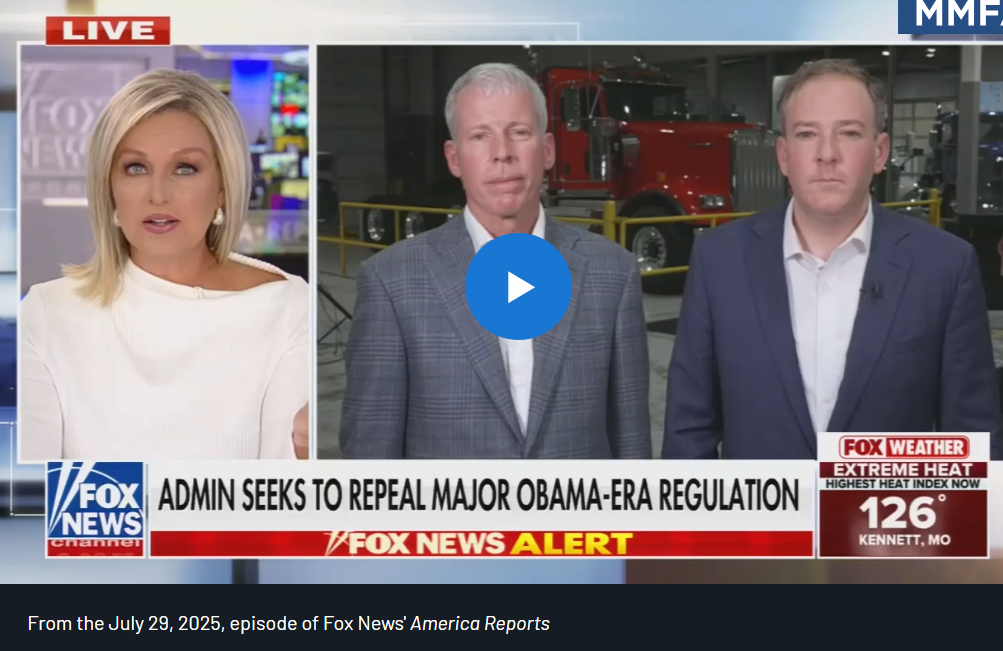
MMA 7 25
Fox News’ America Reports hosted Environmental Protection Agency Administrator Lee Zeldin and Energy Secretary Chris Wright to discuss the Trump administration's proposal to repeal the EPA’s 2009 endangerment finding, which affirmed that greenhouse gases endanger public health and welfare and which has served as the legal foundation for regulating emissions under the Clean Air Act.
Zeldin and Wright used the appearance to frame the repeal as a return to scientific integrity and regulatory restraint, ignoring the harms that this repeal would have on vulnerable communities. Fox anchor Sandra Smith did not challenge the claims and made no mention of the public health implications or regulatory consequences of revoking the finding. The exchange typified Fox’s pattern of amplifying Trump administration narratives about climate and energy while downplaying their real-world impacts.
Video
Citation
From the July 29, 2025, episode of Fox News' America Reports
The segment typified Fox’s role in obscuring the consequences of climate deregulation
During their appearance, Zeldin and Wright were not pressed on the public health, environmental, or legal implications of the proposal to reverse the endangerment finding. Instead, the host framed the discussion around economic themes and legal processes, asking whether repeal would make it easier to “undo a lot more of the Biden-Obama era climate rules.” Viewers heard nothing about the policy’s real-world impacts, but they did hear climate advocates characterized as ideological or extreme. Zeldin referred to them as “climate zealots,” while Wright framed the repeal as a return to “rationalism” — signaling to Fox’s audience that those who defend public protections are unserious.
This approach mirrors Fox’s longstanding pattern of covering regulatory actions through the lens of efficiency, growth, and personal freedom, while sidelining the communities most affected by the Trump administration's harmful actions. The result is a consistent minimization of climate risk and a distorted narrative in which climate and environmental outcomes are treated primarily as a political liability rather than a public necessity.
By allowing unchallenged repetition of misleading claims, and by omitting the central consequences of the policy under discussion, Fox News once again advanced a message strategy that serves to normalize and obscure the dismantling of basic climate and environmental protections.
Zeldin and Wright advanced a series of unsupported or misleading claims
During their appearance on the July 29 episode of Fox News' America Reports, Zeldin and Wright made a series of unsupported or misleading claims about the endangerment finding and what its repeal would mean for Americans.
Zeldin, for example, asserted that repealing the endangerment finding would yield “$1 trillion in savings”—a figure with no grounding in published EPA analyses or historical regulatory assessments. In contrast, EPA data has consistently shown that rules issued under the endangerment finding and the broader Clean Air Act generate substantial net benefits.
The agency’s Second Prospective Study of the Clean Air Act found that “the central benefits estimate exceeds costs by a factor of more than 30 to one," with most benefits stemming from reduced mortality linked to particulate pollution. By 2020, Clean Air Act programs were projected to prevent over 230,000 premature deaths, as well as millions of asthma attacks, heart attacks, and lost workdays annually.
More recently, the EPA’s Regulatory Impact Analysis for vehicle greenhouse gas standards projected net societal benefits of $272.7 billion between 2022 and 2050, with annualized gains of more than $14 billion, driven by fuel savings, reduced emissions, and avoidance of climate damages. These figures underscore that, far from being a financial burden, regulations grounded in the endangerment finding generate substantial and enduring public and economic value.
Similarly, Wright’s claim that the repeal reflects a return to scientific rigor collapses under scrutiny, relying on a report authored by a small group of contrarian scientists, including Steven Koonin and John Christy, who reject the well-established conclusion that greenhouse gas emissions from human activity are driving global warming and endangering public health. Their views stand in opposition to the broader scientific community, which includes the consensus positions of federal agencies such as the National Aeronautics and Space Administration and the National Oceanic and Atmospheric Administration, as well as the Fifth National Climate Assessment, which was produced by the U.S. Global Change Research Program.
Beyond economic distortions and scientific misrepresentation, Zeldin and Wright also ignored the far-reaching legal consequences of repeal — including for the fossil fuel industry itself.
As Grist reported, rescinding the endangerment finding would not only eliminate the federal government’s core authority to regulate greenhouse gases, it could also expose fossil fuel companies to a wave of climate liability lawsuits previously blocked by federal preemption. Some industry groups have reportedly urged the administration not to proceed, warning that repeal could unravel their legal defenses and leave them vulnerable to a patchwork of state regulations and courtroom challenges.
Fox viewers heard nothing about how repeal would harm the very communities most at risk
Zeldin and Wright also failed to mention what rescinding the endangerment finding would mean for public health, environmental protection, or the EPA’s ability to respond to pollution that threatens the air we breathe, the water we rely on, and the land we depend on to live and work. Viewers were not told that the standards targeted for repeal are central to reducing industrial emissions that worsen heat, flooding, and wildfire risk — or that dismantling these protections would increase illness, displacement, and hardship for older adults, children, low-income households, and rural communities, including many in Fox’s own audience.
REF 1
epa-endangerment-finding-repeal-proposal
NO LNX
In Game-Changing Climate Rollback, E.P.A. Aims to Kill a Bedrock Scientific Finding
The proposal is President Trump’s most consequential step yet to derail federal climate efforts and appears to represent a shift toward outright denial of the scientific consensus.
By Maxine Joselow and Lisa Friedman
Reporting from Washington
July 29, 2025
Lee Zeldin, the administrator of the Environmental Protection Agency, said on Tuesday the Trump administration would revoke the scientific determination that underpins the government’s legal authority to combat climate change.
Speaking at a truck dealership in Indianapolis, Mr. Zeldin said the E.P.A. planned to rescind the 2009 declaration, known as the endangerment finding, which concluded that planet-warming greenhouse gases pose a threat to public health. The Obama and Biden administrations used that determination to set strict limits on greenhouse gas emissions from cars, power plants and other industrial sources of pollution.
“The proposal would, if finalized, amount to the largest deregulatory action in the history of the United States,” Mr. Zeldin said. He said the proposal would also erase limits on greenhouse gas emissions from cars and trucks on the nation’s roads.
Without the endangerment finding, the E.P.A. would be left with no authority under the Clean Air Act to regulate the greenhouse gas emissions that are accumulating in the atmosphere from the burning of fossil fuels.
The proposal is President Trump’s most consequential step yet to derail federal climate efforts. It marks a notable shift in the administration’s position from one that had downplayed the threat of global warming to one that essentially flatly denies the overwhelming scientific evidence of climate change.
It would not only reverse current regulations, but, if the move is upheld in court, it could make it significantly harder for future administrations to rein in climate pollution from the burning of coal, oil and gas.
Without the United States working to reduce emissions, it becomes far tougher for the world to collectively prevent average global temperatures from rising by more than 1.5 degrees Celsius, or 2.7 degrees Fahrenheit, above preindustrial levels. That is the threshold beyond which climate scientists say there is significantly greater risk from increasingly destructive storms, droughts, wildfires and heat waves, as well as from species extinction.
In recent weeks, the Trump administration has also moved to scrap restrictions on pollution from power plants, halt key measurements of greenhouse gases in the atmosphere and delay approvals of wind and solar energy projects on federal lands.
“Today’s E.P.A. announcement ignores the blindingly obvious reality of the climate crisis and sidelines the E.P.A.’s own scientists and lawyers in favor of the interests and profits of the fossil fuel industry,” former Vice President Al Gore said in a statement.
To justify the proposal, the E.P.A. cited a report that the Energy Department commissioned from five scientists known for their rejection of the overwhelming scientific consensus on climate change, namely that it is being driven by the burning of fossil fuels, which releases greenhouse gases into the atmosphere.
The New York Times first reported that the Energy Department had hired these scientists, including Steven E. Koonin, a physicist and author of a best-selling book that calls climate science “unsettled,” and John Christy, an atmospheric scientist who doubts the extent to which human activity has caused global warming.
In their report, the scientists criticized the computer models used to predict climate change, saying they tend to overestimate warming. They also wrote that carbon dioxide, the most prevalent greenhouse gas in the atmosphere, has positive effects by helping plants grow and increasing agricultural productivity. And they asserted that overall, government climate regulations have a limited effect on global temperature rise.
The E.P.A. echoed this last argument in the proposed rule, saying greenhouse gases from cars on American roads do not contribute significantly to climate change because they are a small share of global emissions. Reducing these emissions to zero “would not have a scientifically measurable impact” on global climate trends or on public health and welfare, the agency said. Instead, the agency said, climate regulations are what pose the true threat to public health and welfare, because they increase the price of new vehicles and leave fewer choices for car buyers.
Many environmental activists and lawyers criticized those arguments, noting that transportation is the largest source of greenhouse gases in the United States. If the U.S. motor vehicle sector were a country, it would be the fourth-largest emitter of greenhouse gases in the world, according to the E.P.A.’s own data.
“If vehicle emissions don’t pass muster as a contribution to climate change, it’s hard to imagine what would,” said Dena Adler, a senior attorney at the Institute for Policy Integrity at New York University School of Law.
Dan Becker, who leads transportation policy for the Center for Biological Diversity, an environmental group, called the E.P.A. proposal a “cynical one-two punch” that will lead to more gasoline-burning vehicles on the road and fewer tools to reduce tailpipe pollution. He said that the auto-emissions rules being rescinded were projected to prevent 7 billion metric tons of emissions from entering the atmosphere while saving the average American driver about $6,000 in fuel and maintenance over the lifetime of vehicles built under the standards.
“The E.P.A. is revoking the biggest single step any nation has taken to save oil, save consumers money at the pump and combat global warming,” Mr. Becker said.
The administration’s plan has its backers. Daren Bakst, who directs the Center for Energy and Environment at the Competitive Enterprise Institute, a free-market research organization, said, “It is unreasonable to claim that pollutants contribute to endangerment if emissions are de minimis.”
Mike Braun, the governor of Indiana, said at the event in Indianapolis that the Biden administration’s vehicle emissions rules had burdened the auto industry in the state. “As a lifelong entrepreneur for 37 years actually in the automotive business, I think I know a thing or two about it, and you can count on Indiana being for common sense and reining in government,” he said.
John Bozzella, chief executive of the Alliance for Automotive Innovation, a lobbying group for most major carmakers, said in a statement that he was still reviewing the E.P.A.’s announcement. “At the same time, there’s no question the vehicle emissions regulations finalized under the previous administration aren’t achievable and should be revised to reflect current market conditions, to keep the auto industry in America competitive,” he said.
While the Chamber of Commerce and fossil fuel groups had fought the endangerment finding when it was first written, none have been clamoring in recent years for its reversal. This year Marty Durbin, who leads the chamber’s energy institute, called the finding “settled law” and said his group, which is a major business lobbying organization, was not seeking its repeal.
“I’m not aware of anyone in industry who has been pushing for it,” said Jeffrey Holmstead, an energy attorney with the law firm Bracewell who served in the E.P.A. during the administration of the first President George Bush and, later, that of President George W. Bush.
The plan to eliminate the endangerment finding showcases the political evolution of Mr. Zeldin, who for years took moderate positions on climate change and other environmental issues.
A former congressman from a coastal community on Long Island that is struggling with rising sea levels linked to global warming, Mr. Zeldin once joined a bipartisan caucus to address climate change. In 2019 he broke with fellow Republicans to vote against an amendment that would have prohibited the E.P.A. from reducing greenhouse gas emissions.
An ally of Mr. Trump who prominently defended him during House impeachment hearings, Mr. Zeldin moved to the right on energy and other issues during his unsuccessful bid for governor of New York in 2022. Just weeks after his nomination to lead the E.P.A., Mr. Zeldin declared that he would be “driving a dagger through the heart of climate-change religion” by repealing regulations on greenhouse gas emissions
“There are people who, in the name of climate change, are willing to bankrupt the country,” Mr. Zeldin said on the conservative podcast “Ruthless” earlier on Tuesday. One of the co-hosts of the program called the endangerment finding “the left’s tent pole to begin the whole climate grift,” to which Mr. Zeldin agreed.
The proposed repeal of the endangerment finding is all but certain to draw legal challenges, and David Doniger, a senior attorney at the Natural Resources Defense Council, an environmental group, said he expected that it would eventually be struck down in court. He noted that climate science has advanced significantly since 2009, when the finding was issued.
After the proposal is published in the Federal Register, the E.P.A. will solicit comments from the public for 45 days, Mr. Zeldin said. The agency will then finalize the rule, most likely in the next year.
Maxine Joselow reports on climate policy for The Times.
Lisa Friedman is a Times reporter who writes about how governments are addressing climate change and the effects of those policies on communities.
A version of this article appears in print on July 30, 2025, Section A, Page 1 of the New York edition with the headline: E.P.A. To Retract Bedrock Finding On Climate Crisis. Order Reprints
---
REF ALSO NYT
Trump Hires Scientists Who Doubt the Consensus on Climate Change
The three scientists joined the administration after it dismissed hundreds of experts who were assessing how global warming is affecting the country.
Steven E. Koonin, dressed in a dark suit and yellow tie, gestures as he speaks while sitting on a stage.
Steven E. Koonin, a physicist and author, was hired by the Energy Department. He previously worked as a physicist at New York University, as a scientist for the oil and gas company BP and as an under secretary at the Energy Department during the Obama administration.Credit...Aaron M. Sprecher/Bloomberg
By Maxine Joselow
Reporting from Washington
July 8, 2025
The Energy Department has hired at least three scientists who are well-known for their rejection of the overwhelming scientific consensus on climate change, according to records reviewed by The New York Times.
The scientists are listed in the Energy Department’s internal email system as current employees of the agency, the records show. They are Steven E. Koonin, a physicist and author of a best-selling book that calls climate science “unsettled”; John Christy, an atmospheric scientist who doubts the extent to which human activity has caused global warming; and Roy Spencer, a meteorologist who believes that clouds have had a greater influence on warming than humans have.
Their hiring comes after the Trump administration dismissed hundreds of scientists and experts who had been compiling the federal government’s flagship report on how climate change is affecting the country. The administration has also systematically removed mentions of climate change from government websites while slashing federal funding for research on global warming.
In addition, Trump officials have been recruiting scientists to help them repeal the 2009 “endangerment finding,” which determined that greenhouse gases pose a threat to public health and welfare, and which now underpins much of the government’s legal authority to slow global warming, according to two people briefed on the matter who spoke on the condition of anonymity because they were not authorized to comment publicly.
It was not immediately clear what the three scientists were working on or whether they were being paid. Representatives for Dr. Koonin, Dr. Spencer and the Energy Department did not respond to requests for comment.
In a brief phone interview and follow-up email, Dr. Christy said he was not working on the endangerment finding nor collecting a government salary. He declined to comment further.
A vast majority of scientists around the world agree that human activities — primarily the burning of fossil fuels such as oil, gas and coal — are dangerously heating the Earth. That has increased the frequency and intensity of heat waves, droughts and colossal bursts of rain like the storm that caused the deadly flooding now devastating central Texas.
A small minority of scientists, however, rejects this consensus. Dr. Koonin, who has said he is a friend of Energy Secretary Chris Wright, has been one of the loudest critics.
During President Trump’s first term, Dr. Koonin proposed that the Environmental Protection Agency conduct a “red-team, blue-team” exercise to challenge mainstream climate science. A “red team” of climate skeptics would critique major scientific reports on global warming, and a “blue team” of climate scientists would then rebut these claims. At the time, mainstream climate scientists said the proposal would make a mockery of scientific research and create a platform for marginal views that had already been disproved in the normal course of scientific debate.
Image
Roy Spencer, in a dark suit, blue shirt and tie, holds a microphone in one hand and points to a projection on a screen with the other hand.
Roy Spencer, a former NASA scientist and researcher at the University of Alabama, in 2012. He has argued that while human activity has caused some warming, its influence has been smaller than that of natural variations in global cloud cover.
Scott Pruitt, the E.P.A. administrator at the time, told coal industry executives that he planned to conduct the exercise. But John F. Kelly, then the White House chief of staff, ultimately blocked the effort.
Now, Dr. Koonin is listed as a “special government employee” in the Energy Department’s internal email system, the records show. Federal law says special government employees are executive branch appointees named to “perform important, but limited, services to the government, with or without compensation, for a period not to exceed 130 days” during a one-year period. Elon Musk had that classification when he began Mr. Trump’s cost cutting initiative, the so-called Department of Government Efficiency.
Dr. Koonin also serves as a fellow at the Hoover Institution, a conservative-leaning research organization on Stanford University’s campus. He previously worked as a physicist at New York University, a scientist for the oil and gas company BP and an under secretary at the Energy Department during the Obama administration.
In his 2021 book, “Unsettled: What Climate Science Tells Us, What It Doesn’t and Why It Matters,” Dr. Koonin argued that while the planet was warming and human activities had played a role, the scientific consensus was not as certain or as dire as it was frequently portrayed.
In a phone interview in November, Dr. Koonin said that the book had made an impression on Mr. Wright, who ran the oil and gas company Liberty Energy before he was confirmed as energy secretary in February.
“He reached out when I wrote the book and said, ‘This is great,’” Dr. Koonin recalled. “He asked me to come talk to his company at one point — it was a couple years ago — and we got to know each other.”
He added, “Chris and I have talked quite a bit over the last couple years, and I think he is well aligned with what I wrote in the book.”
Dr. Spencer, a research scientist at the University of Alabama in Huntsville, also has a connection to Mr. Wright. In a report published last year by Liberty Energy, Mr. Wright cited atmospheric temperature records that Dr. Spencer had collected. (The overall report, titled “Bettering Human Lives,” made the case that fossil fuels were “essential” to solving global poverty, a claim that some experts have called misleading.)
In addition to his role at the University of Alabama, Dr. Spencer is a policy adviser at the Heartland Institute, a conservative group that rejects mainstream climate science. He previously served as a scientist at NASA and as a visiting fellow at the Heritage Foundation, a right-wing group responsible for creating Project 2025, a conservative blueprint for the new administration.
Dr. Spencer has argued that while human activity has caused some warming, its influence has been smaller than that of natural variations in global cloud cover. While some of Dr. Spencer’s past work has been funded by the government, he has accused federal climate researchers of being biased because they receive taxpayer money.
“The popular opinion that government-funded research is unbiased must be considered quite naïve,” he wrote in his 2010 book “The Great Global Warming Blunder: How Mother Nature Fooled the World’s Top Climate Scientists.”
Image
John Christy, dressed in khaki shorts, sneakers and a blue polo shirt, sits on a chair in front of a large wall map of the world.
:{John Christy, an atmospheric scientist who doubts that human activity has caused global warming, in 2014
Dr. Christy has worked closely with Dr. Spencer to maintain atmospheric temperature records at the University of Alabama. He has also served as Alabama’s state climatologist since 2000. A vocal critic of climate models, he championed the “red-team, blue-team” exercise and served on an E.P.A. scientific advisory board during the first Trump administration.
When asked about his Energy Department role in a brief phone interview, Dr. Christy said he was an “unpaid person who’s available to them if they need it.”
Michael Mann, a climate scientist at the University of Pennsylvania, expressed alarm that the Energy Department had hired the three scientists.
“What this says is that the administration has no respect for the actual science, which overwhelmingly points in the direction of a growing crisis as we continue to warm the planet through fossil-fuel burning, the consequences of which we’ve seen play out in recent weeks in the form of deadly heat domes and floods here in the U.S.,” Dr. Mann wrote in an email.
Dr. Mann added that the Trump administration appeared to have fired hundreds of “actual government science experts” and replaced them with “a small number of reliable foot soldiers.”
Andrew Dessler, a climate scientist at Texas A&M University, said it would be troubling if these three scientists were involved in repealing the 2009 endangerment finding, which cleared the way for the government to regulate the planet-warming gases emitted by cars, power plants and other industrial sources.
On his first day back in the White House, Mr. Trump signed an executive order that charged the E.P.A. with reviewing the “legality and continuing applicability of” the endangerment finding. And last week, the agency sent a proposal to reconsider the finding to the White House budget office, a first step in repealing it.
An E.P.A. spokesman, Mike Bastasch, declined to comment on the proposal before its public release.
Brad Plumer contributed reporting from Washington.
Maxine Joselow reports on climate policy for The Times.
A version of this article appears in print on July 9, 2025, Section A, Page 16 of the New York edition with the headline: Energy Department Hires Skeptics of Climate Change
===
---
---
2 25
When only a small group of people with extraordinary wealth have power over the government, our system is not responsive to the will of the people, but rather to the will of a handful of wealthy donors whose biggest concerns are lining their own pockets.
Yet, President Trump is rewarding his biggest donors with political favors and countless opportunities to enrich themselves at the expense of the American people.
In addition to funding his 2024 campaign, billionaires — with a combined net worth exceeding $1.2 trillion — also bankrolled President Trump’s inauguration.
But this was only the beginning. Case in point: Despite not being elected by the American people, billionaire Elon Musk's rise to power represents a dangerous new way Trump is manipulating our system so his biggest donors can use the government to line their own pockets.
Our government should not work this way. Presidents creating positions of power for and granting access to wealthy special interests as a thank you for their political donations is corruption and makes the executive branch less responsive to the will of the people.
Campaign Legal Center (CLC) has pushed for stronger campaign finance laws because the American people deserve a government that is transparent and responsive to all Americans, not just a tiny group of billionaires.
We hold all government actors — including Elon Musk — accountable to the laws that make sure public servants serve Americans and not their own business interests.
Elon Musk being gifted a position of power after financially supporting the Trump campaign makes our work fighting corruption more important than ever.
We must ensure that wealthy special interests cannot gain power through illegal coordination schemes, and we must hold all government officials to high ethical standards.
Americans are far too familiar with the ultra-rich using their wealth to access the halls of power. Campaign Legal Center has repeatedly sounded the alarm on the longstanding trend of presidents rewarding their biggest donors with powerful positions such as ambassadorships in their administration.
Now we’re witnessing President Trump reward his wealthy donors not only with ambassadorships, but also with positions in the Cabinet and new roles such as Musk’s unelected position that is influencing government decisions in the shadows.
While the public has little clarity on President Trump’s newly established “U.S. DOGE Service” (CLC has filed public records requests to bring clarity to the matter), Musk has already begun to exert sweeping control over agencies and the sensitive information they hold.
The experts in government agencies, like engineers, economists and scientists, help improve Americans’ daily lives and shouldn't be subject to threats and harassment by an unelected donor.
The Trump administration has already signaled that avoiding conflicts of interest will not be a priority for its political appointees.
The ethics pledge signed between his appointees and the Office of Government Ethics (OGE) has raised eyebrows by allowing several wealthy members of his administration to oversee matters they clearly have a vested interest in.
Perhaps nowhere are the dangers of conflicts of interest more apparent than with Elon Musk clearly standing to gain personal wealth from holding influence over the government’s approach to the federal budget and setting regulations.
He has many business interests intertwined with federal policy — from the hefty government contracts with his SpaceX rockets to the regulation of his electric vehicle company.
Now, in his largely undefined role with DOGE, Musk even has access to information about his company’s competitors.
While Musk only has money to gain, the American people have everything to lose — allowing a private citizen with billions in personal interest to dictate government actions threatens the public service mandate of our agencies.
The Supreme Court’s weakening of our campaign finance laws, the Federal Election Commission’s refusal to hold bad actors accountable and the lack of independent and enforceable ethics enforcement in our government have all played a key role in our country’s allowing only a few wealthy individuals to consolidate power.
However, we have the ability to uphold a government by the people and for the people before it is too late.
CLC will continue to hold the Trump administration accountable by uncovering and exposing corruption and self-dealing. We will also strenuously advocate for strong ethics laws and transparency requirements that ensure our officials remain beholden to the public good, not personal gain.
Now is the time to enforce the guardrails of democracy that will ensure that executive power cannot be auctioned off to the highest bidder by any president to come.
Campaign Legal Center will continue to push for transparent, accountable government at every turn.
Support CLC's work to make sure our government serves the American people, not the business interest of wealthy donors.
---
cnn
CNN —
Nearly three dozen of President-elect Donald Trump’s picks to serve in his incoming administration donated to his campaign or to the deep-pocketed outside groups that worked to elect him, a CNN analysis of federal campaign records shows.
They range from tech multibillionaire Elon Musk – who has emerged as the single largest, disclosed political donorof the 2024 presidential election – to others close to Trump tapped for key roles throughout government.
In all, eight of his Cabinet picks – led by Linda McMahon, the billionaire wrestling magnate Trump has selected to oversee the Education Department – and their spouses donated more than $37 million combined from their personal accounts to aid Trump, the review found, underscoring the proliferation of ultra-rich Americans now poised to shape US policy in the incoming second Trump administration.
(Two other Cabinet choices, New York Rep. Elise Stefanik and Florida Rep. Mike Waltz, transferred money from their campaign accounts to the pro-Trump effort.)
Musk has not been selected for a formal Cabinet job but is helping guide a new Department of Government Efficiency initiative and has played a pivotal role in the presidential transition – offering his views on job candidates, talking to world leaders and meeting with lawmakers on Capitol Hill as he weighs how to downsize the federal government.
In all, the SpaceX and Tesla chief executive donated more than $277 million to federal elections this cycle, the lion’s share of which – more than $262 million – benefited Trump. Most of Musk’s pro-Trump dollars flowed to a super PAC that the world’s richest man created to help turn out voters on the Republican’s behalf in key swing states.
Outside of self-funded presidential candidates, no individual has donated more to shape federal contests in a single election cycle, said Brendan Glavin, research director of OpenSecrets, a nonpartisan organization that analyzes money in politics.
Trump’s donors “are not just getting these sort of plum ambassadorships on the side,” Glavin said. “Major donors are getting positions that affect policy.”
The CNN analysis researched the more than 90 people that Trump had announced for high-level positions in the administration through Tuesday, which marked five weeks since his election victory. More than 30 of them had donated to his campaign or to one of the leading Trump-aligned outside groups, the review of FEC records found.
“Millions of Americans fed up with failure in the White House and federal government joined President Trump in the movement to restore our nation’s greatness. Some who will work with President Trump are among those millions of people who supported the campaign and helped the President win a decisive electoral victory,” Brian Hughes, a Trump transition team spokesman, said in a statement in response to CNN’s inquiry about donors joining the administration.
The total donations from Trump’s current Cabinet picks marks a surge from Trump’s first term. Five members of his original Cabinet had donated nearly $8 million to his committees or to the major outside groups supporting him, a review of campaign reports shows.
Donations from McMahon, who served as Trump’s SBA administrator in his first White House term, accounted for more than 90% of that total in the 2016 election.
The sums spent to aid Trump in 2024 far exceed the donations that President Joe Biden’s Cabinet members contributed to help him win the White House in 2020, FEC records show.
A dozen members of Biden’s Cabinet reported donations to his campaign or major super PACs involved in the 2020 election, giving less than $100,000 in total.
Billionaires in the administration
Musk’s spending dwarfed that of other supporters.
McMahon was the largest donor among Trump’s Cabinet picks and the second most generous contributor, after Musk, among the administration members announced through Tuesday, the review found.
Most of the $21.2 million she donated went to Make American Great Again, Inc., the main Trump-affiliated super PAC that spent heavily on advertising to aid his campaign.
Other seven-figure donors among Trump’s Cabinet picks include Cantor Fitzgerald chief Howard Lutnick, whom Trump has tapped to serve as Commerce secretary; Scott Bessent, the hedge fund executive Trump has selected to oversee the Treasury Department; and former Georgia Sen. Kelly Loeffler, his choice to head the Small Business Administration.
Loeffler’s husband, Jeff Sprecher, also was a major donor, contributing more than $2 million to the pro-Trump MAGA Inc. super PAC and Trump’s joint fundraising committee.
Sprecher is the CEO of the Intercontinental Exchange, which owns the New York Stock Exchange, and was at Trump’s side when the president-elect rang the opening bell at the exchange Thursday.
In an email, Loeffler’s communication director Caitlin O’Dea said, “Senator Loeffler is proud to be one of President Trump’s strongest supporters for the same reason a historic landslide of Americans voted to put him back in the White House: he will restore American prosperity, security, and opportunity.”
The billionaire embrace marks a turnaround of sorts for Trump, who saw corporate America recoil from him after the violent January 6, 2021, attack on the US Capitol. And he has seen new support from tech leaders who are pushing for fewer regulations from the federal government.
The staggering sums spent by Musk in this year’s election helped Trump close the financial advantage of his Democratic rival, Vice President Kamala Harris, who swiftly raised $1 billion after becoming her party’s standard-bearer in late July.
Super PACs face no limit on the size of donations they can receive or spend, but technically are not allowed coordinate their advertising decisions with the candidates they support.
However, a ruling this year by the FEC granting campaigns the ability to coordinate with outside political action committees on paid canvassing efforts freed up Musk to guide a ground game for Trump.
“The campaign finance system is a joke,” said Fred Wertheimer, who heads the Democracy 21 watchdog group and is a longtime advocate for limits on money in politics. “Musk is the example now of how campaign finance laws have failed.”
He said he worries about government departments led by billionaires who have no “interest in doing the job that the agency was assigned.”
Musk did not respond to inquiries from CNN.
But Tom Davis, a former congressman from Virginia who chaired the House Republicans’ campaign arm for several years, argues “there is nothing inherently wrong about people who made a lot of money wanting to give back through government.”
“The fact that they have contributed shows a degree of loyalty,” he added.
Friends and family
Presidents often reward donors and allies with plum positions – often dispatching them to glamorous, low-conflict posts in Europe or the Caribbean.
Some of Trump’s early picks for ambassadorships follow that pattern and include billionaires who donated to his reelection effort. Among them: Arkansas investor Warren Stephens, named as the US’ envoy to the UK, and Charles Kushner, Trump’s choice for ambassador to France – one of several extended family members or close friends who has been chosen for diplomatic gigs.
Kushner, who donated $2 million to pro-Trump efforts and received a presidential pardon at the end of Trump’s first term, is the father-in-law of Trump’s daughter, Ivanka. Another donor, Tom Barrack, who oversaw the fundraising for Trump’s first inauguration, is his choice as ambassador to Turkey.
And incoming special envoy to the Middle East, real-estate tycoon Steve Witkoff, is a longtime Trump friend and a partner in the cryptocurrency businesses that Trump launched with his sons earlier this year.
He donated $250,000 to a pro-Trump super PAC.
//
White House billionaires have no idea how Americans live (and don’t seem to care)
---
no lnx
Trump staffed his Cabinet with wealthy advisers. Some stand to gain even more from recent policy shifts
By Isabelle Chapman, Curt Devine, Majlie de Puy Kamp, Casey Tolan and Kyung Lah, CNN
Thu April 24, 2025}:
CNN
After staffing the wealthiest presidential Cabinet in modern American history with energy and banking titans, President Donald Trump has spent his first three months in office boosting those industries while dismantling long-established guardrails against government corruption.
A CNN review of Trump’s actions as he approaches the 100-day mark of his presidency found that as his administration has slashed the federal workforce and shaken the global economy with tariffs, the president’s team has made changes that could also directly benefit his Cabinet members or their former companies.
At the same time, by gutting traditional oversight bodies and embracing historically lax ethics rules, Trump has enabled conflicts of interest and greased the revolving door between government and the private sector. At least eight nominees for executive branch positions would have been banned or had limited roles under previous administrations – including Trump’s first term – due to their recent work as lobbyists, according to an analysis by the watchdog Campaign Legal Center that was reviewed by CNN.
Some potential conflicts have played out in plain view – like when Trump used the White House lawn last month to produce what seemed like an elaborate ad for key adviser and top donor Elon Musk’s struggling Tesla brand. The Trump administration has also cleared the way for Musk’s Starlink business to win new government contracts.
President Donald Trump and Elon Musk depart after looking at Tesla vehicles on the South Lawn of the White House on March 11, in Washington, DC.:
But other examples of possible conflicts are found deep in Cabinet members’ ethics reports, such as Energy Secretary Chris Wright’s disclosure that he would receive a million-dollar bonus – after his swearing-in – from the fracking company he founded, led and now plays a role in regulating.
Even as they’ve agreed to divest, some Cabinet members have found a loophole: giving control of certain assets to their adult children. Commerce Secretary Howard Lutnick handed the reins of his financial services firm Cantor Fitzgerald to his 27-year-old son, while Health and Human Services Secretary Robert F. Kennedy Jr. has said he would give his interest in litigation against a vaccine maker – part of an industry he is now tasked with regulating – to his adult son.
Some of Trump’s policies also could help his own business interests. By establishing a strategic Bitcoin reserve, the president is backstopping the value of the cryptocurrency, enriching existing holders of the asset, some of whom spent millions helping reelect the president. Meanwhile, Trump and his family have moved to expand their own crypto interests. And this week, Trump sent the value of his personal meme coin soaring by promising its top buyers a chance to dine with the president next month.
Many of the Trump administration’s early actions have pushed priorities that Republicans have sought for years, and the White House says its moves to slash regulations are needed to reduce spending and eliminate government inefficiency.
“The people elected me to do the job, and I’m doing it,” Trump said in March. “My administration will reclaim power from this unaccountable bureaucracy.”
But from cryptocurrency and energy policies to efforts as niche as rural internet access, some of the administration’s moves also closely align with the financial interests of his top advisers and the president himself.
“This administration seems entirely indifferent to ethics, and that contrasts certainly with the past several administrations, including Trump one,” said Richard Briffault, a Columbia University law professor who studies government ethics. “The level of complete indifference to it takes us back to before Watergate.”
‘Tearing down’ ethics rules
In the wake of the Watergate scandal, Congress passed sweeping ethics legislation to hold the executive branch more accountable.
Within weeks of beginning his second term, Trump flouted many of those decades-old protections – including by firing more than a dozen inspectors general and dismissing the head of the government’s ethics watchdog. He also signed an order making it easier for lobbyists to join agencies overseeing industries they used to represent.
The United States has spent years building up an “ethics infrastructure,” Briffault said. “In less than 90 days, this administration has been tearing (it) down.”
Trump’s unprecedented moves come as his Cabinet includes some of the richest people to ever hold the reins of power in the federal government. Many came straight from positions of power in key industries.
CNN analyzed dozens of financial disclosures and ethics statements filed by presidential appointees to track the wealth and potential conflicts of interest among Trump’s Cabinet members. The disclosures offer a limited picture of nominees’ finances: Officials are only required to list their assets in broad ranges.
Still, Trump’s leadership team appears to eclipse the wealth of any previous Cabinet going back decades. Of 21 Cabinet members, seven reported holding at least $10 million in assets, and some are even billionaires.
Lutnick – who has been a Wall Street power player since the mid-1990s – has an estimated net worth of $3.1 billion, according to Forbes. That’s roughly 15 times as much as the combined maximum reported net worth of former President Joe Biden’s entire outgoing Cabinet.
Five Trump Cabinet members reported holding individual assets worth more than $50 million, the highest range on disclosure forms. And that doesn’t include Musk, the world’s richest person with a net worth of about $371 billion, who as a special government employee is not required to publicly report anything about his wealth.
While Biden filled his Cabinet mostly with bureaucrats and politicians, Trump’s team also includes former CEOs who ran major energy and financial services companies before joining him in Washington.
“We’re seeing industry officials coming into the executive branch in a way that we’ve never seen in past administrations, including the first Trump administration,” said Danielle Caputo, senior ethics counsel for the Campaign Legal Center.
While supporters of Trump’s efforts say industry expertise helps officials better understand the fields they regulate, ethics watchdogs fear actions undertaken by highly-connected officials could benefit their former companies and colleagues instead of the American public.
Some moves could particularly benefit the super-wealthy. Musk’s Department of Government Efficiency, for instance, has taken a chainsaw to the Internal Revenue Service, which includes a unit that audits America’s ultrawealthy. Data obtained by CNN and first reported by the International Consortium of Investigative Journalists revealed that the Global High Wealth unit was hit by layoffs at a far higher rate through March of this year than the IRS as a whole.
Trump has also rescinded a Biden-era executive order creating ethics requirements for political appointees.
Members of the past three administrations — including those who worked under Trump during his first term — previously had to commit not to accept gifts from lobbyists. They were also banned from working on issues they lobbied on in the two years before their appointment, and after leaving government, couldn’t lobby on behalf of industries they’d recently regulated.
Those rules would have banned or limited the roles of eight Trump nominees, including three officials tapped for Environmental Protection Agency roles who lobbied for fossil fuel groups in recent years, according to an analysis by Campaign Legal Center shared with CNN.
Additionally, CLC found Trump has named at least six political appointees to serve as senior ethics officials, a role normally held by nonpartisan career officials.
Inspectors general across more than a dozen different agencies were fired during Trump’s first week in office. The IGs act as independent watchdogs, and the president is supposed to provide a 30-day notice to Congress before removing them, which Trump failed to do. Trump defended the move by suggesting some IGs had been “unfair” and firing them was “a very standard thing to do.”
The crypto stakes
On the campaign trail, Trump promised to make America the “crypto capital of the planet.” He kicked off his second term with moves to boost the crypto industry such as establishing a national bitcoin reserve, dissolving a Biden-era task force that investigated crypto criminals, installing a Musk ally as “crypto czar” and revoking a banking rule that discouraged financial institutions from owning crypto.
At the same time, Trump and his family have gotten deep into crypto by launching a new firm and the president’s own meme coin, a digital asset that has no underlying value and trades largely on hype. Trump also installed Lutnick, a banker who before his swearing-in was overseeing more than $1.5 billion in crypto-related investments, as his commerce secretary.
Lutnick has long pushed to legitimize bitcoin and other cryptocurrencies. Last October, while he was still CEO of Cantor Fitzgerald, he told a podcast host he had “hundreds and hundreds of millions” of exposure to bitcoin, presumably through crypto assets held by his firm.
Cantor Fitzgerald is now run by his son, which ethicists say leaves Lutnick with an improperly close tie to the firm’s success.
“By turning it over to a family member, you may not benefit directly, but you surely have an interest in the well-being of your child,” said Briffault.
Cantor Fitzgerald didn’t respond to requests for comment.
Howard Lutnick listens as President Donald Trump delivers remarks before Lutnick is sworn in as Commerce Secretary in February.
Meanwhile, Trump’s sons launched a digital currency company, World Liberty Financial, in 2024, and took an ownership stake in a bitcoin mining venture called American Bitcoin last month. Trump’s own media company announced plans earlier this year to potentially buy bitcoin and other cryptocurrencies.
At least eight top officials in the executive branch disclosed crypto holdings in their financial disclosures, although some agreed to divest the assets. Transportation Secretary Sean Duffy, HHS Secretary Kennedy and Center for Medicare & Medicaid Services Administrator Mehmet Oz each reported owning more than $500,000 in crypto assets.
An HHS spokesperson told CNN that “Secretary Kennedy continues to adhere to all ethical and legal requirements.”
So far, the Trump administration’s crypto moves haven’t led to a boom in valuations for digital assets. While the price of bitcoin, a bellwether for the $3 trillion crypto market, skyrocketed nearly 50% between Trump’s election victory and inauguration, it has fallen about 9% since then, mirroring broader stock market declines.
Still, Eric Talley, a Columbia University professor who studies corporate law, said he saw the Trump administration’s efforts to promote crypto, and specifically the strategic bitcoin reserve, as “particularly suspicious.”
“The economic stakes — if you were a heavy holder of crypto — would be huge and profoundly positive if you could cause the US government to essentially guarantee a big chunk of the stability of the market of at least some of the crypto issuances,” he said.
‘Energy dominance’
During his time in the private sector, former fracking executive Chris Wright was a zealous and vocal critic of government regulations meant to curb global warming. His company Liberty Energy filed a lawsuit that challenged a federal rule requiring companies to disclose details about greenhouse-gas emissions. In one video he posted on social media, Wright declared, “There is no climate crisis.”
Now, as energy secretary, Wright has authority to reverse some of the policies he railed against as Liberty’s CEO.
Wright has ordered the department to “build energy infrastructure and remove barriers to progress,” among other steps, to achieve US “energy dominance.” Under his leadership, the agency has ceased its pursuit of a net-zero carbon future, cut fossil fuel regulations and accelerated numerous natural gas export projects.
Inside the department, Wright has alarmed some staffers with his embrace of fracking over other energy projects. Four current Department of Energy employees, who spoke to CNN on the condition of anonymity for fear of retribution, described a general attitude of hostility toward most renewable energy. One staffer pointed to webpages that once promoted solar energy and have now been taken offline, and other employees described circulating lists of renewable energy programs that could be on the chopping block.
Having a former fracking executive run the energy department is “absolutely a conflict of interest,” one staffer said.
Some of Wright’s former Liberty colleagues have also followed him into the department, including his current scheduling director, one of his advisers and a Liberty board member who has been nominated to serve as an assistant energy secretary.
President Donald Trump holds an executive orders after signing a series of orders on American energy production during a ceremony in the East Room of the White House on April 8 in Washington, DC.
:
In the short term, falling oil prices due to economic turmoil under Trump could hurt fracking companies. But leaders at Wright’s former company have applauded the policy shifts. “We have an administration now that is working hard to remove some of the impediments that have been challenges,” Liberty Energy CEO Ron Gusek said at the New York Stock Exchange in March. “Those things give us a path forward to invest in our business.”
According to his ethics documents, Wright owned about $54 million worth of Liberty stock as of February, though disclosures show he sold off Liberty shares in recent weeks and moved money into general investment funds. He also disclosed that he would receive a roughly $1 million performance bonus for his work last year from the fracking company in March, after his swearing-in. A Liberty filing last month stated he received his bonus.
A Liberty spokesperson said, “To our knowledge, there has been no communication with Secretary Wright or any representative from the Department of Energy regarding Liberty Energy business.”
While the fossil fuel industry cheers Wright’s successes, some communities that expected financial help from the Department of Energy have faced roadblocks. Under a program funded by the bipartisan infrastructure law, for example, the department planned to disperse $500 million in grants to help schools in disadvantaged regions across the US improve their energy efficiency.
But multiple school district administrators told CNN that since Wright took over, the department has largely stopped communicating with them about federal funding from the program. Now, some districts fear they won’t receive all the money they were promised.
Brent Foster, who heads a committee to upgrade infrastructure at Mosier Community School in Oregon, points to the school’s century-old heater.
Mosier Community School, a public charter school in a rural Oregon county that voted for Trump, was awarded a roughly $870,000 grant from the program. That money could help replace the school’s unreliable century-old heater and windows that are currently held closed with tape, said Brent Foster, who leads a committee to upgrade the school’s infrastructure.
This year, the DOE has canceled meetings with the school about the grant and has not been processing requests related to the project, according to Foster, who said he doesn’t know whether the funds will ever come through.
Winning the grant “felt like a miracle,” Foster said. “The idea that the federal government would sign a contract… then pull the rug out from under us, it’s difficult to understand.”
An Energy Department spokesperson said the agency is reviewing all activities to ensure they follow the law and align with the administration’s priorities. “President Trump’s administration is advancing a strategy of energy addition – embracing all forms of energy that are affordable, reliable, and secure,” said the spokesperson, who added that Wright has complied with department ethics requirements.
A change that could help SpaceX
The federal government has earmarked tens of billions of dollars to close the digital divide, connecting millions of rural Americans to fast, reliable internet. And for years, Musk’s SpaceX has tried to become eligible for the funds, at times without success.
In 2022, the Federal Communications Commission rejected a nearly $900 million grant application by Starlink, SpaceX’s satellite internet system, saying the company failed to show it could deliver on the promised service.
Similarly, the $42 billion Broadband Equity Access and Deployment Program was specifically designed to prioritize the gold standard of broadband internet – fiber-optic cables – over other technologies such as satellite service.
But that changed rapidly after Trump took office. Lutnick announced last month that the Commerce Department would end “woke mandates” and “favoritism towards certain technologies.” In practice, that means potentially opening up billions in funding for satellite internet companies.
Lutnick’s directive could enable Musk’s company to earn up to $20 billion from the amended BEAD program, according the Wall Street Journal. Today, Starlink is uniquely positioned to provide commercial satellite-based internet. However, other companies, including Amazon, may compete for BEAD grants in the future.
Musk has long criticized the federal government’s rural internet efforts, claiming that had the FCC not rejected Starlink’s grant application in 2022, “it would probably have saved lives in North Carolina” after Hurricane Helene decimated the area. The BEAD program, Musk said, is an “an outrageous waste of taxpayer money” that is “utterly failing to serve people in need.”
SpaceX did not respond to requests for comment.
Experts say satellite-based internet service could play a useful role in connecting low-density remote areas. But many argue a fiber-optic connection is more reliable and weather resistant than what satellite service can offer today.
“Fiber can handle an almost unlimited amount of bandwidth. Fiber is scalable in terms of speed. Fiber is what we call ‘future proof,’” said Christopher Ali, a professor of telecommunications at Penn State University.
Lutnick’s move to change the program is now prolonging delays in getting shovels in the ground, even as the GOP has blasted the Biden administration over its failure to spend the money more quickly. Senate Majority Leader Sen. John Thune and 12 additional Republican senators, for example, have said the program has “onerous regulations” and moves slowly due to “unnecessary government interference.”
The Commerce Department didn’t respond to requests for comment.
Some states with approved BEAD proposals are waiting for the green light from the federal government before starting work while others are amending their proposals.
A final draft proposal dated March 2025 from West Virginia obtained by CNN details a plan to bring a fiber-optic internet connection to every resident in the state. But after Gov. Patrick Morrisey met with Lutnick later that month, he announced West Virginia would revise the proposal to “evaluate a broader range of technology options, including satellite.”
“The West Virginia Broadband Enhancement Council has always supported fiber deployment and continues to do so,” said Bill Bissett, who heads up the council.
“Every day we delay is another day that West Virginians who are underserved or unserved will not have access to this critical resource,” he added.
Because of Lutnick’s change, government officials will “re-run a process they’ve already completed solely to put satellite service in places that were going to get fiber,” said Evan Feinman, who until recently oversaw the rollout of the BEAD program. “That service will be dramatically slower, less reliable in bad weather … and will cost at least $800 more per year (per household) than the fiber connections would have been.”
The change in direction of the BEAD program is the “poster child for why people should be concerned about conflicts of interest” in this administration, said Briffault, the Columbia law professor, who spoke about how members of Trump’s inner circle could be putting a thumb on the scale.
“You cannot be confident that the decision is being made on the policy merits, as opposed to the influence of a self-interested individual who stands to make a ton of money on it,” he said.
CNN’s Yahya Abou-Ghazala and Anna-Maja Rappard contributed to this report.
---
---
an pp 4 25
Trump makes no secret of his loathing for regulations that limit water and energy use by home appliances. For years, he has regaled supporters at his campaign rallies with fanciful stories about their impact. He is so exercised by the issue that, even as global stock markets convulsed Wednesday in response to his tariff plans, Trump took time out to issue an executive order titled “Maintaining Acceptable Water Pressure in Showerheads.”
Contemporary shower fixtures are only one of the items that rankle the president, who complains that “there’s no water coming and you end up standing there five times longer,” making it difficult to coif his “perfect” hair. He has frequently denounced dishwashers that he claims take so long and clean so poorly that “the electric bill is ten times more than the water”; toilets that require flushing “ten or 15 times”; and LED lightbulbs, which he faults for making him look orange.
In his first term, Trump pursued an array of gimmicks to try to undermine the rules. His moves were opposed by industry and environmental groups alike. If it’s possible for regulations to be popular, these ones are. They have cut America’s water and energy consumption, reduced global-warming emissions and saved consumers money. Legal prohibitions stymied most of Trump’s maneuvers back then, and the Biden administration quickly reversed the steps Trump managed to take.
Trump’s executive order on showerheads generated headlines, but it’s likely to have little effect (more on that later). Far more consequential steps have been taken outside the Oval Office.
With the aid of Elon Musk’s Department of Government Efficiency team, Trump appears to be attempting an end run that could succeed where his past attempts failed: by simply terminating the consulting contract that the Department of Energy relies on to develop and enforce the rules. In late March, DOGE’s “wall of receipts” stated that it had “deleted” a Department of Energy contract for Guidehouse LLP (a PricewaterhouseCoopers spinoff) for “Appliance Standards Analysis and Regulatory Support Service,” producing a listed savings of $247,603,000. That item has now disappeared from the DOGE website, and its current status remains unclear.
This has produced confusion for everyone from appliance manufacturers to government officials to the contractors paid to enforce the rules. If the contract is indeed canceled, experts told ProPublica, it would cripple the government’s efficiency standards program, which relies on the consulting firm’s technical expertise and testing labs to update standards, ensure compliance and punish violators.
“It would have a huge impact,” said George Washington University law professor Emily Hammond, who helped run the program as deputy general counsel at the Department of Energy and now serves on its appliance standards advisory committee. “DOE does not have the internal capacity to do that work. Taking that away pulls the rug out from under the agency’s ability to run that regulatory program.”
Appliance manufacturers seem almost as concerned. “This is not a positive development,” said Josh Greene, vice president for government affairs at A.O. Smith, the largest manufacturer of water heaters in the U.S. Terminating the Guidehouse contract, he said, would create “a wild Wild West” where “upstart manufacturers” are free to import poor-quality products because “they know there’s no one to enforce the rules. That’s not good for American manufacturing and it’s not good for consumers.”
The Department of Energy has made no public attempts to clarify the matter. An agency spokesperson did not respond to ProPublica’s requests for comment. Emails to DOGE and the White House brought no reply. And Guidehouse officials, reportedly eager to lay low, also offered no response to multiple requests for comment.
The government’s efficiency requirements originated with the Energy Policy and Conservation Act, signed into law in 1975, when the concern was an energy shortage, not global warming. Today, the Department of Energy is required to set rules for energy and water use by more than 70 appliances and commercial products sold in the U.S. The agency must consider imposing stricter standards for each product every eight years, based on what is “technologically feasible and economically justified.” Manufacturers then have three to five years to make their products measure up.
The Energy Department typically stiffens a requirement only after years of study, comment, negotiation and testing (and sometimes litigation) among industry, consumer and environmental groups. The law also includes an “anti-backsliding” provision that bars relaxation of standards that have been finalized. Guidehouse and its subcontractors have for years performed virtually all the necessary technical work; they also maintain a certification database that U.S. authorities use to keep illegal products from being imported.
Republican lawmakers, anti-regulation advocates and right-wing media have long decried the efficiency rules as an impingement on personal freedom, limiting product choice. The early rollout of water-throttling products produced some of the issues Trump complains about, lampooned in a titled “The Shower Head.”
But in the decades since, the standards have been widely embraced, dramatically cutting energy and water consumption, reducing emissions and providing plenty of attractive consumer choices. In 2023, Consumer Reports found that “even the simplest and least expensive showerheads can provide a satisfying shower.” Dishwashers and clothes washers clean better while using less than half as much water and energy as they once did. The transition to LED light bulbs, nearly complete, is estimated to have cut energy bills by $3 billion a year and eliminated the need for about 30 large power plants.
In January, days before Trump returned to office, a Department of Energy report estimated that the efficiency standards are now saving the average American household about $576 a year on their utility bills, while cutting the nation’s energy consumption by 6.5% and water consumption by 12%. A 2022 survey by the Consumer Federation of America found that 76% of Americans support the government setting efficiency standards for appliances.
None of that has slowed Trump’s attacks. During his first term, the Department of Energy ignored legal deadlines for considering efficiency updates on 28 products, blocked the long-planned rollout of new lightbulb rules and sought to bypass finalized appliance standards through byzantine legal maneuvers. Among other things, the Energy Department announced special new “product classes” for dishwashers, clothes washers and dryers that completed their “normal” cycle in an hour or less. This would exempt any such “short-cycle” devices that were introduced from the existing limits on water and energy use.
Manufacturers never brought those models to market. Most existing appliances already had a “short cycle” option that did their job well; those short on time simply had to push that button. And by mid-2022, Biden’s Energy Department had reversed Trump’s regulatory moves. The department went on to issue an array of tightened home appliance rules jointly recommended by industry and consumer groups; most were finalized early enough to be immune from congressional rollback.
This didn’t stop Trump from boasting on the 2024 campaign trail that he had changed everything during his first term. He vowed to fix it all again when he returned to the White House. “Eliminate energy efficiency standards for appliances” was on Project 2025’s list of “needed reforms.”
Sure enough, on his first day back in the White House, Trump issued two executive orders targeting the efficiency rules. On Feb. 11, he posted on Truth Social: “I am hereby instructing Secretary Lee Zeldin to immediately go back to my Environmental Orders, which were terminated by Crooked Joe Biden, on Water Standard and Flow pertaining to SINKS, SHOWERS, TOLIETS, WASHING MACHINES, DISHWASHERS, etc., and to likewise go back to the common sense standards on LIGHTBULBS, that were put in place by the Trump Administration, but terminated by Crooked Joe. I look forward to signing these orders.” (In fact, the rules Trump cited were issued and enforced by the Department of Energy, not the Environmental Protection Agency, where Administrator Zeldin presides.)
None of the standards Trump listed were subject to an executive order, or any other kind of rapid rollback. In simple terms, Trump did not have the legal authority to change these rules.
No matter. Energy Secretary Chris Wright — who had listed “affordability and consumer choice in home appliances” among his top nine priorities — took up the cause. Three days after Trump’s Truth Social post, Wright announced that the Department of Energy was postponing “seven of the Biden-Harris administration’s restrictive mandates on home appliances,” which “have driven up costs, reduced choice and diminished the quality of Americans’ home appliances.” Wright’s list of seven affected “home appliances” actually included three types of commercial equipment and three other regulations long past the point where they could be undone.
That left only one household-product regulation that could be challenged. It involved an item that seemed like an improbable symbol of “freedom” and “consumer choice”: the tankless, gas-fueled hot water heater.
The vast majority of U.S. homes have traditional water heaters with 40- to 50-gallon tanks. By contrast, tankless gas products represent 10% of sales. They are about the size of a carry-on suitcase and heat a stream of water on demand. They’re energy-efficient and roughly twice as expensive as standard heaters.
But the rules governing tankless gas water heaters were vulnerable because they were issued in the final weeks of Biden’s term. That meant lawmakers could reverse them under the Congressional Review Act, which allows lawmakers to block a recently enacted agency rule, if a resolution to do so passes both houses and is signed by the president.
Appearing at the Conservative Political Action Conference on Feb. 20, Wright drew cheers as he offered a Trumpian litany — “My dishwasher has to run for two hours now, and at the end I got to clean the dishes” — before turning to hot water heaters. “We have a factory in the southeastern part of the United States that employs hundreds of people to build a particularly popular product these days,” Wright said. “It is a tankless water heater powered by natural gas,” which he described as “selling like hotcakes.” So, what did the Biden administration do, he asked. “They passed a regulation that would make that product illegal, and that company would be dead.” But under Trump, declared Wright, waving his arms, “we are fixing that problem. That factory is staying open. … America is back, baby!”
Wright returned to “the hot-water thing” in a FoxBusiness interview a month later. Assailing “nanny-state, crazy, top-down mandates that makes it more expensive for American consumers and businesses to buy what they want,” he said the new rule was going to shut down a factory “just built in the southeast United States.” Wright acknowledged that U.S. law bars elimination of other efficiency updates that he and Trump have targeted because they’ve already been finalized. “We can’t officially get rid of them,” he commented. “So we just pushed back the enforcement date, hopefully, to never.”
Wright’s portrayal omitted significant details. The administration’s actions involve a single beneficiary: Rinnai, a Japanese appliance company with $3.3 billion in revenues last year. In 2022, Rinnai opened a $70 million factory south of Atlanta, where about 250 U.S. workers build “non-condensing” tankless gas water heaters, a major moneymaker for the company.
“Non-condensing” tankless heaters are less efficient and less expensive than “condensing” tankless heaters, which reuse heat from their exhaust gases. As a result, Rinnai wouldn’t be able to continue selling them when the new standards went into effect in December 2029.
That, however, wasn’t going to put the company out of business; it wasn’t likely to shut down its U.S. factory, either, though Rinnai raised that specter in government filings where its U.S. president warned the new standards would make the Georgia plant “largely obsolete … eliminating” all its jobs.
Rinnai sells a broad array of products across the world. It also already sold condensing tankless heaters in the U.S. that met the new standard and were imported from Japan. And Rinnai had plans to make them in Georgia, according to the company’s most recent annual report. (Rinnai agreed to make its U.S. chief, Frank Windsor, available for an interview with ProPublica, then canceled twice at the last minute. The company ultimately declined to respond to questions about its public representations.)
Nonetheless, the company, now backed by the Trump administration, has pursued a multitrack campaign to roll back the new standards. Its efforts appear to be on the point of success. A resolution has passed the House and won Senate approval on Thursday. Rinnai has spent $375,000 on Washington lobbyists since 2023, according to disclosure reports. The company also joined with Republican attorneys general in a court challenge to the energy rule.
Three major Rinnai competitors supported the Biden-era regulations. Wisconsin-based A.O. Smith has actively lobbied against Rinnai’s effort to win a congressional rollback. Greene said blocking the standard will “disadvantage” U.S. companies, which have already invested in more efficient condensing technology, by allowing continued sale of Rinnai’s less expensive competing products. “In this time of ‘America First,’ it just seems to us a shame that where we’re heading is rewarding foreign manufacturers,” Greene said. “There should be a level playing field.”
Meanwhile the administration’s campaign has expanded to multiple fronts. On Wednesday, the Department of Energy announced a review of its procedures for energy standards, which one expert described as a reprise of the first Trump administration’s attempts to create procedural hurdles to updating efficiency standards.
Then there was the executive order on showerheads that same day. It, too, seeks to revive a move by the first Trump administration: to circumvent the limits on waterflow by redefining “showerheads” to include multiple nozzles, each of which could emit as much water as the entire showerhead was previously allowed. The Biden-era Energy Department killed that regulation, and Trump is attempting to bring it back while proclaiming that “notice and comment is unnecessary because I am ordering the repeal.”
That order will have virtually no effect because manufacturers have little interest in making showerheads that exceed the current limits, according to Andrew deLaski, executive director of the Appliance Standards Awareness Project, a nonprofit coalition of groups that support the efficiency rules. “The president is asserting king-like authority,” he added, about Trump’s claim that he does not have to follow administrative procedures.
In the end, DOGE could have more of an impact than a would-be monarch, if it’s able to kill the Guidehouse contract. Then, deLaski said, “it would be next to impossible for DOE to enforce its efficiency standards.”
Doris Burke, Mark Olalde and Pratheek Rebala contributed research.
---
---
ref
Trump has selected Chris Wright, a campaign donor and fossil fuel executive, to serve as energy secretary in his upcoming, second administration.
CEO of Denver-based Liberty Energy, Wright is a vocal advocate of oil and gas development, including fracking, a key pillar of Trump's quest to achieve U.S. "energy dominance" in the global market.
Trump also said in a statement Saturday that Wright will serve on the newly-created National Energy Council, which will be chaired by North Dakota Gov. Doug Burgum, Trump's selection for secretary of the Interior.
Burgum will oversee a panel that crosses all executive branch agencies involved in energy permitting, production, generation, distribution, regulation and transportation, Trump said in a previous statement.
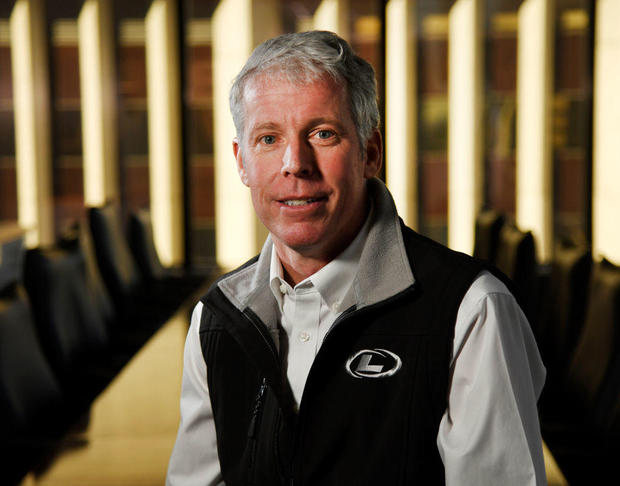 File photo: Liberty Oilfield Services CEO Chris Wright.Andy Cross/The Denver Post via Getty Images
Wright has been one of the industry's loudest voices against efforts to fight climate change and could give fossil fuels a boost, including quick action to end a year-long pause on natural gas export approvals by the Biden administration.
Wright also has criticized what he calls a "top-down" approach to climate by liberal and left-wing groups and said the climate movement around the world is "collapsing under its own weight."
"There is no climate crisis and we are not in the midst of an energy transition either," he says in a video posted on LinkedIn.
Consideration of Wright to head the administration's energy department won support from influential conservatives, including oil and gas tycoon Harold Hamm.
Hamm, executive chairman of Oklahoma-based Continental Resources, a major shale oil company, is a longtime Trump supporter and adviser who played a key role on energy issues in Trump's first term.
Hamm helped organize an event at Trump's Mar-a-Lago resort in April where Trump reportedly asked industry leaders and lobbyists to donate $1 billion to Trump's campaign, with the expectation that Trump would curtail environmental regulations if re-elected.
The Energy Department is responsible for advancing energy, environmental and nuclear security of the United States. The agency is in charge of maintaining the country's nuclear weapons, oversees 17 national research laboratories and approves natural gas exports, as well as ensuring environmental cleanup of the nation's nuclear weapons complex. It also promotes scientific and technological research.
Republican Sen. John Barrasso, who is expected to become chairman of the Senate Energy and Natural Resources Committee, said Trump promised bold choices for his Cabinet, and Wright's nomination delivers.
"He's s an energy innovator who laid the foundation for America's fracking boom. After four years of America last energy policy, our country is desperate for a secretary (of energy) who understands how important American energy is to our economy and our national security,″ Barrasso said of Wright, adding: "Wright will help ensure America remains committed to an all-of-the-above energy policy that puts American families first."
Thomas Pyle, president of the American Energy Alliance, a conservative group that supports fossil fuels, said Wright would be "an excellent choice" for Energy secretary. Pyle led Trump's Energy Department's transition team in 2016.
Liberty is a major energy industry service provider, with a focus on technology. Wright, who grew up in Colorado, earned undergraduate degree at MIT and did graduate work in electrical engineering at the University of California-Berkeley and MIT. In 1992, he founded Pinnacle Technologies, which helped launch commercial shale gas production through hydraulic fracturing, or fracking.
He later served as chairman of Stroud Energy, an early shale gas producer, before founding Liberty Resources in 2010.
---
heated email 2 25
during his Senate confirmation hearing last month, Chris Wright put on a moderate face.
To secure his bid to lead the Department of Energy, Wright—the CEO of fracking company Liberty Energy—assured senators that he understands fossil fuels are the primary cause of climate change. He also said he takes the problem seriously. “Climate change is a global challenge that we need to solve,” he said.
The statements were apparently enough to earn Wright the votes of seven Democrats who campaigned on climate action: Maggie Hassan, Jeanne Shaheen, John Hickenlooper, Michael Bennett, Ben Ray Luján, Martin Heinrich, and Ruben Gallego. “He believes in science,” Hickenlooper said in a statement explaining his vote.
But now that Wright’s secured the job, the mask is quickly slipping off.
”There’s pluses to global warming”
In an interview on Fox Business on Wednesday, the new Energy Secretary said there are upsides to raising the Earth’s temperature to levels not witnessed since before the last ice age.
“Everything in life has trade-offs,” he began:
A warmer planet with more CO2 is better for growing plants. The world has been getting greener for decades—[there’s] 14 percent more greenery around the planet today than there was 40 years ago. And we have far more people die of the cold than die of the heat.
So everything has a trade-off, but yeah. There’s pluses to global warming as well as negatives.
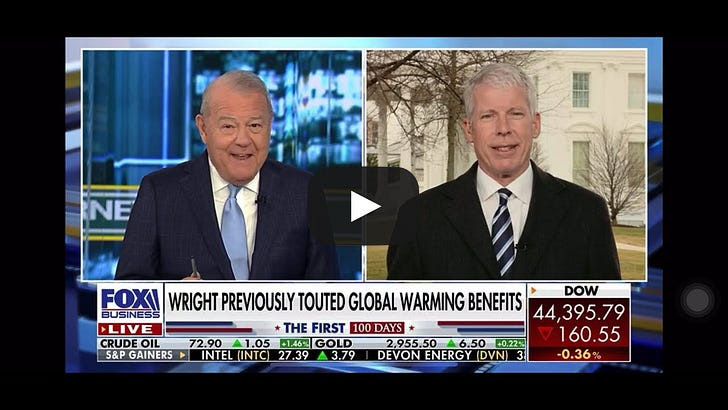
It was almost like listening to Richard Sackler tell the world there are pluses to opioid withdrawal as well as minuses. (To make matters worse, The Department of Energy posted the video on its official YouTube channel).
But in addition to being morally repugnant, Wright’s statements were just wrong. Let’s take each point one by one.
- “A warmer planet with more CO2 is better for growing plants.”Setting aside the complex dynamics of plant growth, in general, higher concentrations of CO2 are only better for plants if you maintain all other environmental factors, like soil nutrients, weather stability, and water availability. And guess what climate change is screwing up? Soil nutrients, weather stability, andwater availability. (Read more here and here)
- “The world has been getting greener for decades—[there’s] 14 percent more greenery around the planet today than there was 40 years ago.”Yes, but “greener” in this definition does not mean “more biodiverse” or “more healthy” or even necessarily “better.” It literally just means the world has more of the color green, both on land and in the ocean. This can be good, but it can also be bad, depending on where the green is and why it’s there. Scientists think some greening might be because of CO2, but they’re not sure how much. They do know at least a third is because of intense tree-planting and agricultural policy in China and India. (Read more here).
- “We have far more people die of the cold than die of the heat.”That’s currently true, but climate change doesn’t just cause death by heat. It causes death by wildfire, floods, tropical storms, vector-borne disease, infectious disease, water-related illness, rising sea levels, malnutrition, and conflict. Also, peer-reviewed researchpublished last month showed that without extreme mitigation and adaptation efforts, the rise in heat deaths will substantially outweigh the decrease in cold deaths over time. (Read more here)
Climate scientists I spoke to also agreed that Wright’s statements were misleading. “This is just a regurgitation of disinformative talking points,” said Michael Mann, a climate scientist at the University of Pennsylvania. “It’s total antiscientific nonsense in service of a fossil fuel industry-driven administrative agenda.”
But for Wright, these three made-up “plus sides” were enough to dismiss the threat of climate change completely. “The bottom line is, it’s just nowhere near the world’s biggest problem today,” Wright said. “Not even close.”
Perhaps he’s right. Sure, there are downsides to the climate track we’re currently on: Nearly all the world’s coral reefs dying; widespread population displacement from extreme weather and rising seas; worldwide food production dropping by as much as half; and hundreds of thousands of animal and plant speciesfacing extinction, to name just a few.
But hey, at least the ocean will look greener from space, and Chris Wright will be rich. Everything in life has trade-offs!
HEATED has been publishing ad-free, unbossed climate accountability journalism since 2019. Keep our work alive—become a subscriber today.
Other stories I’m following:
- Earlier this week, Chris Wright suggested that climate action is just a ploy to “grow government power.”Speaking at a conference full of oil executives and well-known climate deniers, the new Department of Energy secretary this week vowed to “get out of the way” of coal, oil and gas development; called the UK’s 2050 net zero target “a sinister goal” that would “impoverish” people; and downplayed the threat from extreme weather, DeSmog reports.
- Did I mention that seven Democratic Senators voted for this man?I’m particularly surprised by New Mexico’s Martin Heinrich, who literally brags in his X profile about being “one-third of the Three Climateers.”
- Earthjustice has filed “the first environmental lawsuit against the Trump administration.”The environmental law firm sued “to stop the Trump administration from opening up vast new areas to offshore oil and gas drilling,” the New York Times reports. “The suit is an opening shot in what is likely to be a series of cases aimed at thwarting the White House’s push for what it calls “energy dominance” by pivoting toward fossil fuels and away from cleaner energy sources like solar and wind.
- Minnesota’s lawsuit seeking to hold Big Oil financially responsible for climate change is moving forward. A state judge denied a motion seeking to dismiss Minnesota’s 2020 lawsuit accusing Exxon, the American Petroleum Institute, and Koch Industries of running a “campaign of deception” to mislead consumers about climate change.
- “Sustainable” investors are moving away from talking about climate change.“I’ve given up on anyone ever caring about that,” said Jabusch, investment chief of Green Alpha Investments, which manages about $300 million.
---
INDUSTRY BS
GUEST VIEW: Trump energy pick signals new direction
GUEST VIEW: Trump energy pick signals new direction
By
-
November 30, 2024
By Taylor Millard
Energy groups and advocates described President-elect Donald Trump’s selection of Liberty Energy CEO Chris Wright as energy secretary as a return to normalcy for an agency that, under the Biden administration, has been more of an obstacle than an ally.
“There’s nobody more qualified, intelligent, passionate and also deeply caring about people and the consumer, and understands both the complexities of energy and cost to consumers,” said energy consultant Trisha Curtis of PetroNerds.
A self-described tech nerd, Wright entered the energy industry by founding Pinnacle Technologies. The company pioneered hydraulic fracture mapping that revolutionized shale gas production. In 2010, he founded Liberty Energy, now valued at more than $2.8 billion. Trump called Wright an energy pioneer whose work in shale “fueled American energy independence.”
Wright isn’t the first energy executive to lead the Energy Department. That was Samuel Bodman, who was Cabot Corp. CEO in the 1980s.
Craig Stevens, partner at DCI Group and a former senior adviser to Bodman, said Wright and Bodman share a similar philosophy, embracing the “all of the above” energy approach.
“(They see) we have tremendous untapped energy resources in the U.S. that we should be able to develop and deploy to help grow our economy, create jobs, and support our allies,” Stevens said.
“What’s also important is that these men both recognize that they were not elected, but that they serve at the pleasure of the president,” Stevens added. “Having a cohesive energy strategy, that is driven from Trump’s stated goal of establishing U.S. energy dominance will help create the technical and regulatory pathways for increased energy production to combat energy poverty and support economic growth around the world.”
American Petroleum Institute president and CEO Mike Sommers said Wright’s experience as an energy CEO gives him a perspective typically not seen within the Department of Energy.
“We look forward to working with him, once confirmed, to bolster American geopolitical strength by lifting DOE’s pause on LNG export permits and ensuring the open access of American energy for our allies around the world,” Sommers said.
Trump made energy development a vital plank in his campaign platform. He hammered Vice President Kamala Harris for endorsing a fracking ban and supporting the Green New Deal in 2019.
Like his future boss, Wright isn’t shy about expressing his views.
Two years ago, Wright purchased billboards in Denver criticizing The North Face for refusing to do business with energy companies despite using synthetic oil-derived materials. “That North Face puffer looks great on you. And it was made from fossil fuels,” the billboards read.
Wright also criticized the Biden administration and other governments for setting unrealistic climate goals and demonizing fossil fuels. He called the Net Zero 2050 campaign “unachievable and, frankly, unadvisable” due to its cost and reliance on unreliable technology.
Environmentalists aren’t happy.
Greenpeace USA Deputy Climate Program Director John Noel likened Wright’s nomination to “putting a pyromaniac in charge of the fire department.” He suggested the appointment was part of a disturbing trend of oil and gas executives being nominated for critical government roles.
“This pattern not only threatens to derail the urgent transition to a clean energy future, prioritizing fossil fuel profits over the health and well-being of Americans,” Noel said.
Although portrayed as a climate change skeptic, Wright acknowledged last year the Earth was getting warmer and that sea levels were rising. “Since the end of World War II, human burning of fossil fuels has increased atmospheric CO2 concentration by about 50 percent,” he said.
However, Wright argued that the danger of climate change through energy consumption was “clearly overwhelmed” by its benefits to the human race through increased life expectancy, wealth and health.
He’s also advocated for politicians and advocates to stop using phrases like “climate crisis,” “dirty energy” and “clean energy,” and suggested they cause regulators to oppose the construction of pipelines and liquid natural gas export terminals. Wright argued that such terms create unnecessary anxiety in children and distract them from practical, solvable problems.
“The only thing resembling a crisis with respect to climate change is the regressive, opportunity squelching policies justified in the name of ‘climate change,’” Wright said.
He thinks the green energy push resulted in higher prices, destabilized grids and displaced high-paying jobs.
Curtis defended Wright’s comments by pointing toward Germany. The European country has experienced energy price shocks as it pivoted from nuclear and fossil fuels to renewables. “(Americans) don’t want to be that,” she said.
Stevens, now a spokesman for Grow America’s Infrastructure Now, a coalition that wants to protect U.S. energy security, lauded Wright as the perfect person for energy secretary. He said Wright would reduce regulations and unnecessary delays in critical energy projects.
---
---
2 25 heated email
At a dinner for Big Oil executives last year, Donald Trump promised to give the fossil fuel industry essentially anything it wanted in exchange for $1 billion toward his re-election effort. The dinner was organized by Harold Hamm.
The fossil fuel industry went on to donate $96 million directly to Trump’s campaign; spend $80 million on political advertising; and pour God-knows-how-much cash into dark money groups that don’t have to reveal their donors. Most of the fundraisers were organized by Harold Hamm.
After the election, Trump quickly nominated North Dakota Governor Doug Burgum to lead the Department of Interior, which oversees fossil fuel and renewable development on federal lands and waters. Burgum is close personal friends with Harold Hamm.
Trump went on to nominate fracking executive and climate denier Chris Wright to lead the Department of Energy, which oversees energy policy and research. Wright was hand-selected for the position by Harold Hamm.
While most national media has be understandably fixated on Elon Musk’s takeover of the federal bureaucracy, another billionaire’s influence on the Trump administration has slid by largely unnoticed. Hamm, the founder and executive chairman of fracking company Continental Resources, has been instrumental in driving Trump’s full-speed campaign to deregulate the fossil fuel industry and crush its main competition: renewables.
HEATED is 100 percent reader-supported, independent climate journalism. To receive new posts and support my work, consider becoming a free or paid subscriber today.
Long-deemed Trump’s “energy whisperer,” Hamm enjoys a close personal relationship with the president. “He’s my original oil guy that taught me so much about oil,” Trump said at a fundraiser last year. The fracking tycoon had dinner with Trump during his New York hush money trial, and offered to help pay Trump’s $454 million bond during his civil fraud case. Hamm also partied with Trump on election night, and toasted with soon-to-be-Interior-Secretary Burgum—who happens to make about $50,000 a year leasing 200 acres of farm land to Hamm’s fracking company.
 |
Donald Trump points to Continental Resources CEO Harold Hamm on Wednesday, Oct. 23, 2019, in Pittsburgh. (AP Photo/Evan Vucci, File)
Now, just weeks into the new administration, Hamm is watching as his personal wish-list is fulfilled. In May, a Trump advisor told the New York Times that Hamm “wants that LNG pause gone, he wants the California waiver and the tailpipe rule gone.” On his first day in office, Trump signed an executive order that targeted all three of those things.¹
In addition, in August, the Washington Post reported that Hamm’s policy priorities for a Trump administration would include “opening up more federal lands to drilling, easing the Endangered Species Act and curbing numerous regulations at the Environmental Protection Agency.” Coincidentally, on his first day in office, Trump’s signed another executive order that targeted all those things, too.²
Hamm also encouraged other oil executives to share their policy priorities with Trump, the Post reported, and they did. Since then, Hamm’s hand-picked Cabinet leaders have issued a slew of Big Oil-approved policies designed primarily to boost fossil fuel industry profits and destroy competition from renewables. They include:
- The Interior Department suspended all clean energy development on federal land, while continuing development for oil and gas. (Heatmap, Jan. 24)
- The Energy Department abruptly stopped paying out grants from its climate and clean energy programs, halting billions of dollars in funding for states and companies to protect the environment and advance renewables. (E&E, Feb. 7)
- Burgum, on his first day as Interior Secretary, issued a seven-page directive weakening protections for national monuments, migratory birds, endangered and threatened species in order to further fossil fuel development. (Inside Climate, Feb. 5)
- Burgum also issued an order reversing the Biden administration’s protection of most of the U.S. coastline and parts of Alaska from oil drilling. (E&E, Feb. 4)
- Wright said the Department of Energy has started re-started the permit consideration process for new liquified methane gas facilities. The process had previously been paused so the government could consider whether the projects were in the best interest of the climate. (Oil and Gas Journal, Feb. 7)
I point out Hamm’s influence in these areas for three reasons. The first is that it’s a necessary, yet often overlooked, way to expose Trump’s lies about his energy agenda. The president and his supporters love to frame Trump’s pro-fossil fuel policies as some sort of benevolent act for ordinary Americans—simply a means to lower inflation. But aside from the fact that that argument doesn’t actually make sense, it’s a distraction from the bigger picture. The primary goal of Trump’s energy policies is to drive profits for Hamm and the other oil billionaires who donated lavishly to his campaign. Let’s keep our eye on the oligarchical ball.
The second is to encourage other media outlets and creators to remember that Musk isn’t the only billionaire whose self-serving actions may have devastating consequences for the rest of us. Dismantling renewable energy development and climate regulation doesn’t just pose a threat to the United States. It poses an existential threat to the ecological and economic stability of the world.This deserves equally frequent and urgent coverage, if not more.
The third is simply to remind everyone that the people destroying the planet have names and faces. Hamm has said he does not want a job for himself in the administration, and enjoys his current set-up, in which Trump “calls on me for advice and help.” This is a clear indication he’d prefer to remain in the shadows. That alone feels worth bringing his influence to light.
Some spare thoughts:
- Hamm is not the only oil billionaire with influence over Trump, he just appears to be the closest. You can read about some of the others here.
- During his Senate confirmation hearing to lead the Department of Energy, Wright said he still stands by previous comments that ‘wildfires are just hype.’
- Seven Democrats in the Senatevoted in favor of confirming Wright to lead the Department of Energy, despite Wright’s outspoken climate science denial. They are: Maggie Hassan, Jeanne Shaheen, John Hickenlooper, Michael Bennett, Ben Ray Luján, Martin Heinrich, and Ruben Gallego.
- Wright tried to walk back his climate denial during his confirmation hearing, saying he thinks climate change is real but that global energy poverty is a more urgent issue. This is an incredibly tired and well-debunkedtalking point. The two problems are not mutually exclusive.
- Wright’s oil services company, Liberty Energy, is public. I don’t know what can be done with that information, but it felt like something worth pointing out.
---
-----
tools lil sis
mapping-the-billionaire-winners-of-the-2024-election
December 12, 2024
Author(s): Derek Seidman
Issues: Billionaires, Money in Politics
This is the first in a new series of LittleSis posts mapping out billionaire power in current U.S. politics, including the new Trump administration. To see the latest posts in this LittleSis series, sign up for our newsletter and follow us on*X*,*Bluesky*,*Facebook*, and[Instagram
no charts
It’s nothing new that, in 2024, billionaires once again plowed massive amounts of cash into the presidential and congressional elections. Dozens upon dozens of billionaires backed Trump and Harris with huge donations. According to one study, billionaire families spent a mind-boggling $2 billionon the recents elections.
That said, the sheer amount of cash flowing from just a tiny handful of billionaire donors — with $994 million from the top ten contributors alone, measured beforefinal-quarter contributions of 2024 were even disclosed — is astronomical. Moreover, the crassness of Trump’s open embrace of the ultra-wealthy feels shocking even by the standards of U.S. billionaire rule. Trump’s transition is refusing to disclose donors, and Trump’s authoritarian style and total disdain for any ethics around conflicts of interests, will give billionaires even more unchecked power.
The extent of directbillionaire influence within the administration is seen in the very make-up of Trump’s transition team and top appointees, whose ranks include multiple billionaires. Two of those billionaires — Linda McMahon and Howard Lutnick — are co-chairing Trump’s transition team, and thus overseeing the set-up of his incoming administration. Trump has further nominated McMahon for Education secretary and Lutnick for Commerce Secretary. Meanwhile, billionaire Scott Bessent is set to become Treasury Secretary, meaning two billionaires — Lutnick and Bessant — will occupy core positions overseeing financial and economic policy.
Trump has also appointed two billionaires, Vivek Ramaswamy and Elon Musk, as co-chairs of the new Department of Government Efficiency, which is tasked with advising the administration on government cuts and austerity. Musk, of course, is the wealthiest person alive, and Musk, Lutnick, and McMahon are known to be especially close with Trump.
All told, according to a November 2024 Americans for Tax Fairness report, “the combined wealth of President-elect Trump’s wealthiest nominees and transition team officials,” amounts to $313 billion — and this number has since climbed well over $400 billion with Elon Musk’s net worth skyrocketing. As former labor secretary Robert Reich has said, Trump’s regime “will be a billionaires’ ball.”
This post looks at some of the billionaires and billionaire groups — Wall Street elites to crypto tycoons, fossil fuel barons to Elon Musk — that are set to benefit from the incoming Trump administration.
Wall Street Billionaires
A host of powerful Wall Street billionaires lined up behind Trump as major donors and fundraisers toward his reelection and as donors to his GOP allies.
These Wall Street billionaires, concentrated in private equity and hedge funds, included Stephen Schwarzman of Blackstone (worth $53.8 billion), Ken Griffin of Citadel (worth$47 billion), Paul Singer of Elliott Management (worth $6.2 billion), John Paulson of Paulson & Co. (worth $3.8 billion), and Nelson Peltz of Trian Partners (worth $1.7 billion).
Two Wall Street billionaires — Howard Lutnick and Scott Bessant — are also set to become Commerce Secretary and Treasury Secretary, respectively. Other financial billionaires, like JPMorgan CEO Jamie Dimon, have reportedly been serving as a “sounding board” for Trump.
All told, according to *Sludge*, “[d]onors from the securities and investment industry contributed a total of $193.8 million to the Trump campaign and outside spending groups supporting him, more than any other industry,” as of September 22, 2024.
Wall Street’s support for Trump has not been entirely smooth. Some billionaires like Schwarzman, Peltz, Griffin and others had previously disavowed Trump, especially after the January 6, 2021 capitol insurrection, before crawling back.
Moreover, there are tensions between Wall Street and Trump over issues like tariffs (which Wall Street opposes) and mass deportations (which Wall Street also opposes, but for purely economic reasons, not any humanitarian grounds). Overall, the financial industry is not a fan of the volatility and unpredictability that can come with a Trump regime.
But all this is rivalled — and indeed, for most Wall Street barons, outweighed — by the enormous potential to enrich themselves under Trump.
Trump has promised to reduce the corporate tax rate and to weaken regulatory bodies like the Securities and Exchange Commission (SEC) and Consumer Financial Protection Bureau (CFPB), and Wall Street is salivating over a potential mergers and acquisitions boom under Trump.
There’s also the potential for Wall Street to cash in on the privatization of public assets. For example, Trump backers John Paulson and Bill Ackman are big investors in the federal government’s housing finance companies, Freddie Mac and Fannie Mae, which, theNew York Times reports, could be privatized under Trump and deliver huge windfalls to investors.
One private equity executive, commenting before the election, summed up Wall Street’s perspective on Trump: “We’ll get richer if he wins.”
To be sure, many Wall Street barons, from Michael Bloomberg to Jonathan Gray, backed Kamala Harris. But they will not be hurting under the new Trump administration (Gray, in fact, is President and Chief Operating Officer of Blackstone, where he’s second-in-line to the Trump-backing Schwarzman).
*Crypto Billionaires
The 2024 election cycle signaled the clear emergence of the crypto elite as a major political player. Prominent crypto billionaires — such as Cameron and Tyler Winklevoss (worth $2.7 billion each), Coinbase’s Brian Armstrong (worth $13.7 billion), investor Marc Andreessen (worth $1.9 billion), Ripple Labs’ Brad Garlinghouse, and others — plowed millions towards pro-crypto PACs while crypto billionaires donated and fundraised for Trump.
All told, a triad of crypto-led PACs — Fairshake, Project Progress, and Defend American Jobs — spent more than $265.5 million dollars during the 2024 election cycle, according to the Lever,who declared that “the cryptocurrency industry is perhaps the biggest winner of the 2024 election cycle.”
The crypto industry has been volatile and faced fines, with growing calls, including from the Biden administration, for stronger regulation. Many crypto billionaires backed Trump, who courted the industry and said he’d be the first “crypto president,” betting that he’d stem these regulatory calls and also replace current SEC head Gary Gensler.
It appears the Trump-backing crypto barons will now get their wish, with top Trump cabinet appointees and power players who are very friendly to the industry. Howard Lutnick, the billionaire Trump ally who Trump nominated as Commerce Secretary, is deeply pro-crypto and personally tied to the industry. Trump also tapped pro-crypto billionaire Scott Bessent as Treasury Secretary, who one crypto executive called the “perfect pick” who will be “most pro-innovation, pro-crypto Treasury [secretary] we’ve ever seen.”
Many crypto leaders want the Commodity Futures Trading Commission (CFTC), rather than the more powerful SEC, to supervise the industry, and Trump has signaled support for this. Trump has also nominated the crypto-allied Paul Atkins to head the SEC, fulfilling the crypto billionaire bloc’s wish to ditch Gary Gensler, who it sees as an ardent foe.
The denizens of Trump World are adamantly pro-crypto, with numerous figures — JD Vance, Howard Lutnick, Elon Musk, Robert Kennedy Jr., Pete Hegseth, Tulsi Gabbard, and others — tied to or invested in the industry. Trump’s own media company, Trump Media and Technology Group, which operates Truth Social, and which Trump has a 53% stake in that he says he’ll retain, is in talks to buy Bakkt, a cryptocurrency trading venue, while the Trump family has a newly-created crypto project called World Liberty Financial. The former CEO of Bakkt is Kelly Loeffler, who Trump has nominated to head the Small Business Administration, and Loeffler’s husband still runs Bakkt’s parent company.
Crypto saw a major downturn in 2022, and one of its shining stars, Sam Bankman-Fried, was arrested on fraud charges and subsequently found guilty and sentenced to 25 years in prison. But the industry’s started to bounce back, with Bitcoin hitting record highs and surging more after Trump’s victory. The industry and its billionaires have also attained cultural cachet in the Trumpian conservative universe as edgy, rule-breaking, and futuristic.
Another tech and crypto billionaire investor, David Sacks, publicly flipped toward supporting Trump during the election and helped line up Silicon Valley donors behind him with a fundraiser Sacks’ personally hosted. Now, Trump has named Sacks his artificial intelligence and cryptocurrency czar.
All told, crypto’s massive backing of Trump is reaping major rewards for industry billionaires, who will have pro-crypto regulators and close access to the administration, and who are set to see their wealth bloom even higher.
The rise of an aggressive, anti-regulatory pro-Trump donor bloc deeply overlaps with a split in Silicon Valley that turned some tech billionaires toward Trump. The Guardianestimates that the tech industry spent at least $394.1 million on the election, with the bulk of that coming from Elon Musk.
Tech’s Trump backers are already getting one top demand from their wishlist: Trump is replacing Federal Trade Commission chair Lina Khan, a tough regulator of AI and corporate mergers, with a more industry-friendly chair.
But to be sure, Kamala Harris and the Democrats had their own massive bench of Silicon Valley billionaire donors, including Reid Hoffman, Eric Schmidt, Bill Gates, Sheryl Sandberg, Ben Horwitz, and Laurene Powell Jobs. And while they wanted Harris to win, as Hoffman made clear in a somewhat conciliatory post-election Financial Times op-ed, his ilk will try to find a way to do just fine under a Trump administration.
*Elon Musk
Among Trump’s billionaire backers, Elon Musk is in a class of his own. Musk is worth over $433 billion. He is, by far, the world’s richest person. He owns and runs a constellation of influential, omnipresent corporations, including X (formerly Twitter), Tesla, and SpaceX. Few people in the world are more famous — or more powerful and wealthy — than Elon Musk.
When Musk endorsed Trump and threw himself into Trump’s election, it represented more than a mere endorsement. Musk is fusing the vast business operation, influence machine, and popular following that runs through him with the MAGA movement and Trump himself. Through this, he stands to benefit financially, but also attain higher heights of influence for his reactionary conspiracy-peddling and hyper-libertarian ideology. In short, Musk is fomenting true oligarchic power.
Musk spent at least $264 million to reelect Trump, according to investigative news outlet *Sludge*. He plowed the money into his very own America PAC, which focused on new voter turnout for Trump in swing states. Musk oversaw the PAC’s day-to-day operations. He even offered a $1 million daily giveaway to voters (for this, he’s being sued for fraud) and workers for America PAC have complained of horrible treatment.
Musk has now emerged as a close confidant of Trump and his family. And with Trump’s reelection, Musk stands to benefit as much as anyone. Since Trump was elected, Musk’s net worth has skyrocketed by around $130 billion.
There are several ways that Musk stands to benefit from the Trump administration. Musk oversees a truly massive business empire of electric vehicles, space satellites and space rockets, social media, artificial intelligence, and more. All these business interests are deeply impacted by government regulations and government contracts.
Though Musk pushes a hard libertarian ideology, he benefits from vast government subsidies. “Mr. Musk’s rocket company, SpaceX, effectively dictates NASA’s rocket launch schedule,” notes the *New York Times*. “The Defense Department relies on him to get most of its satellites to orbit. His companies were promised $3 billion across nearly 100 different contracts last year with 17 federal agencies.”
The New York Timesalso notes Musk’s “numerous and adversarial” entanglements with federal regulators. “His companies have been targeted in at least 20 recent investigations or reviews, including over the safety of his Tesla cars and the environmental damage caused by his rockets,” they write.
As the premier Trump insider, Musk will now have direct influence within, and allies overseeing, the government agencies — from the Securities and Exchange Commission (SEC) and the Federal Communications Commission (FCC) to Office of Management and Budget (OMB) and the Consumer Financial Protection Bureau (CFPB, which Musk wants to “delete”) — that carry out regulation, oversee investigations, and reward government contracts.
All this, of course, poses enormous conflicts of interest, with Musk openly influencing the very government entities that impact his own business operations and wealth.
Musk’s influence and cultural cachet also stand to grow further. His social media platform, X, which Musk dominates as a user and content shaper, will likely deepen as basic communications and media infrastructure for the MAGA movement.
Moreover, Trump has appointed Musk to head up the new Department of Government Efficiency (DOGE) with billionaire Vivek Ramaswamy. It’s an advisory body, not an official government agency, and it remains to be seen how much power and influence DOGE will actually have. It could be a lever for implementing hyper-austerity, or it could be a plaything for two libertarian billionaire bros. But the precedent of awarding a huge donor, and the world’s wealthiest person, with their own “department,” is ominous.
It’s worth noting that while Musk also has discrete interests tied to specific companies, his vast business empire gives him a larger, generalized power and set of interests located at the very heart of U.S. capitalism and its future. Space technology, electric vehicles, AI, social media: this is all at the center of research and development and hardening geopolitical rivalries. Like Amazon and Jeff Bezos, Musk business operations dominate, and are even synonymous with, the very infrastructure that billions of people and governments worldwide depend on.
*Fossil Fuel Billionaires
Trump rode to reelection promising to “drill, baby drill” and achieve U.S. “energy dominance” in the world. He sought $1 billion from the fossil fuel industry in exchange for advancing its interests. While the $1 billion mark fell short, Trump was strongly backed by oil and gas billionaires, and the fossil fuel industry will benefit from an ultra-friendly administration.
The industry gave more than $75 million to Trump and his allies in 2024, with $15 million of this coming from three oil billionaires who own private companies: Harold Hamm (Continental Resources), Kelcy Warren (Energy Transfer) and Jeffery Hildebrand (Hilcorp Energy).
Other billionaire fossil fuel donors included George Bishop of GeoSouthern Energy and coal magnate Joseph Craft III, as well as fossil fuel-tied “mine operators, shipbuilders, engineering firms, hedge funds and little-known oil producers,” said theNew York Times.
Trump has promised to ramp up fossil fuel production in the U.S., reapprove the Keystone XL oil pipeline, pull the U.S. out of the Paris Agreement, reauthorize oil drilling in Alaska’s Arctic National Wildlife Refuge in Alaska, and weaken EPA regulations, among other things.
Trump has signaled his clear intention to follow through with these promises by making industry-friendly appointments tied to top energy and environment positions. These include fracking executive (and drinker of fracking fluid) Chris Wright as Energy Secretary, Lee Zeldin as Environmental Protection Agency head, and Doug Burgum as Interior Secretary.
Wright is a fossil fuel zealot who, as Energy Secretary, will run the department with huge influence over U.S. energy, environmental and nuclear policies. The American Petroleum Institute, the industry group for Big Oil, praised the appointment of Wright and congratulated Trump on his victory.
Lee Zeldin is a Chair of America First Policy Institute (AFPI), a policy group backed by Christian Nationalist oil baron Tim Dunn, a major Trump donor who has publicly stated he wants to end the classification of CO2 as a pollutant.
But Doug Burgum, who served as governor of the fracking powerhouse state of North Dakota and has deep ties to the fossil fuel industry, stands to be the major player directing Trump’s energy policy. As Interior Secretary, he’ll oversee hundreds of millions of acres of federal land that oil companies are itching to drill on. But even more, he’ll be coordinating the administration’s “energy dominance” agenda as Trump’s “energy czar,” heading up Trump’s National Energy Council and occupying a seat on the National Security Council.
All told, oil billionaires like Hamm stand to benefit greatly from a new Trump administration that promises to be a close ally of fossil fuel interests, even if this means intensifying the climate chaos that’s destabilizing the world and causing massive human dislocation and suffering.
*Potential Fractures in Billionaire Rule?
There are other billionaire and corporate blocs set to benefit from Trump’s rule, such as private prison and detention companies like CoreCivic and GEO (who Trump Attorney General nominee Pam Biondi lobbied for). And there are a slew of massive individual billionaire donors, from the railroad heir magnate Timothy Mellon to ultra-right shipping barrons Richard and Elizabeth Uihlein, who gave enormous sums to Trump and other Republicans.
While we face daunting challenges in a period of intensified direct billionaire rule, it’s also worth remembering that there is potential for fissures within the billionaire class. Trump’s cabinet contains blocs that are in tension with each other: neocons versus isolationists, austerity backers who also want vast government subsidies for corporate elites, and people who want to calm markets versus people who want to impose tariffs or just seek political revenge. Trump is notoriously capricious and volatile and is quick to turn on those who were once insiders.
And of course, there’s the fundamental conflict between Trump’s mere rhetoric of populism and his true agenda of billionaire rule that will further immiserate the working class. This will be a challenging period for progressive forces, but the left should seek to monitor and, to the extent possible, exploit divisions among billionaires.
Note: Maps in this post may be updated as new information comes along
This is the first in a new series of LittleSis posts mapping out billionaire power in current U.S. politics, including the new Trump administration. To see the latest posts in this LittleSis series, sign up for our newsletter and follow us on X, Bluesky, Facebook, and Instagram.
---
ymail cnd 1 25
soc media grf]
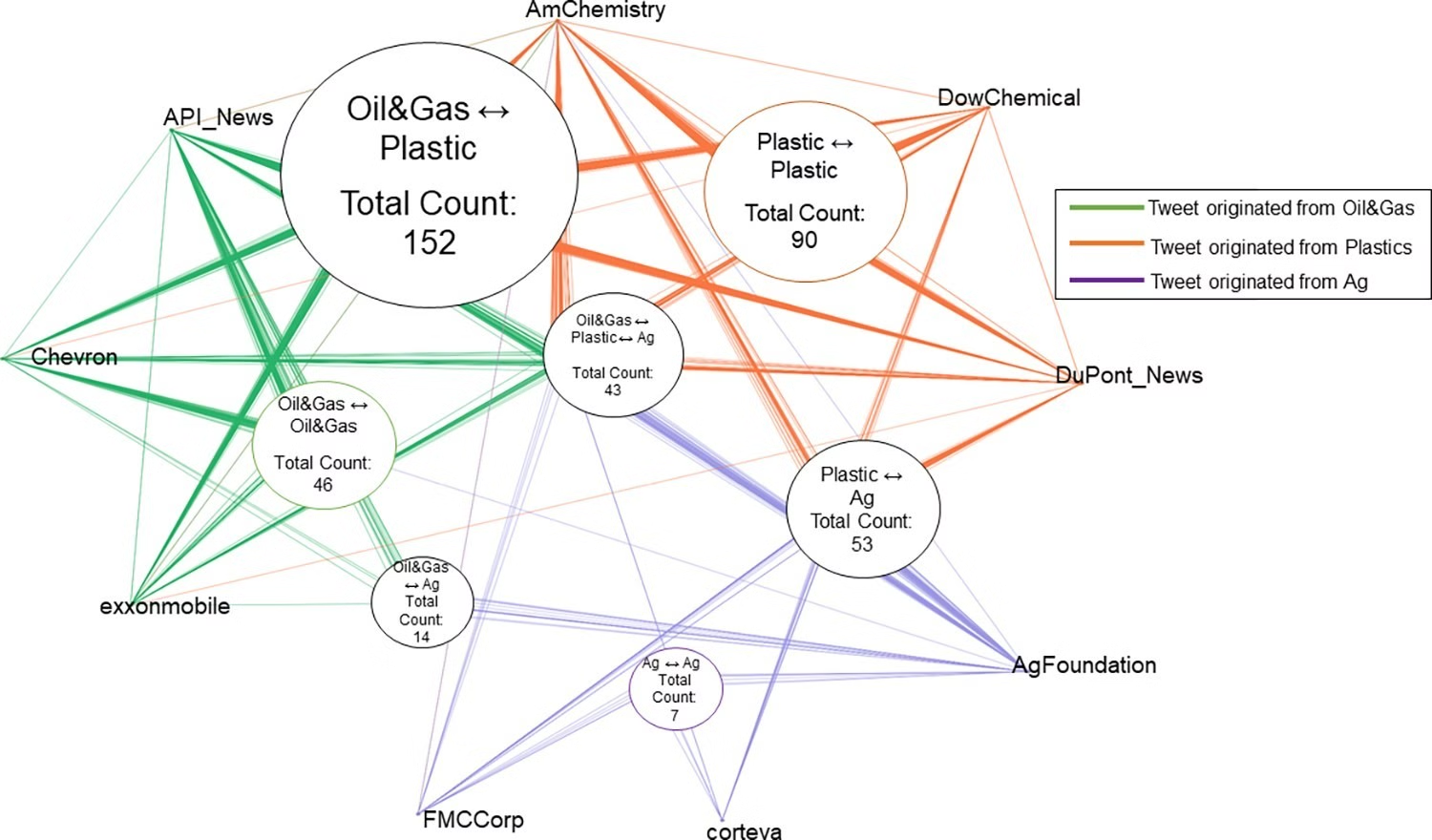
We are just days before Donald Trump becomes president of the United States, and if his cabinet confirmation hearings this week are any indication, climate denial will be an unapologetic source of pride for this upcoming administration.
During Senate questioning of Chris Wright, Trump’s pick to be energy secretary, Republicans tossed the fracking CEO softball questions and helped elevate Wright’s previous climate denial comments into badges of honor. “If you believe we can’t live without fossil fuels, you’re living in a cave,” West Virginia Sen. Jim Justice claimed before he went on to heap praise on Wright, who once said the concept of carbon pollution is “outrageous.”
Wright and Justice are pleased with their climate denial bona fides, which ultimately sows confusion about what really is happening with global warming. But DeSmog is prepared for this kind of chaos that the Trump administration will whip up to distract us from the urgency of fixing our planet, and aim to keep pointing out the lies behind the deny and delay tactics.
Take, for instance, a new study that DeSmog’s Sharon Kelly wrote about this week that highlights how fossil fuel companies and their allies use social media to form an echo chamber of denial on social media. Researchers found signs of “coordinated climate obstruction efforts” among oil, plastics, and agrichemical industries that downplay the critical need to transition to renewable energy.
Is this coordination intentional? Are these industries engaging in a joint enterprise to deceive consumers and the public about petrochemical products and climate change? One source said, “We may need legal discovery to answer those questions,” Kelly wrote.
DeSmog writes a lot about how fossil fuel organizations engage in climate obstruction as well as false solutions. In Europe, Norwegian oil giant Equinor retracted a claim that it stores about a million tons of carbon dioxide annually at its flagship carbon capture project after DeSmog found data showing the real figure was as little as a tenth of that amount.
Equinor had doubled down, making false claims about a false solution. Read on for more on the exclusive exposé.
---
an 11 24
Although some of President-elect Donald Trump's picks for his incoming administration are almost certain to be confirmed by the U.S. Senate without significant delay — including Sen. Marco Rubio (R-Florida) for secretary of state and North Dakota Gov. Doug Burgum for secretary of the U.S. Department of the Interior — others are way more controversial.
Critics of former Rep. Tulsi Gabbard (D-Hawaii), Trump's pick for national intelligence director, are attacking her as an apologist for Russian President Vladimir Putin and Russia's invasion of Ukraine. In the medical field, opponents of Trump's choice for director of the U.S. Department of Health and Human Services (HHS), Robert F. Kennedy Jr., are slamming him as an anti-vaxxer conspiracy theorist with dangerous, unscientific ideas.
Trump's picks are also drawing condemnation for being climate change deniers.
READ MORE:'Comeback of polio': Expert warns Trump picks will have 'major impact' on public health
In an article published on November 27, The Guardian's Oliver Milman explains, "Donald Trump's cabinet picks have been eclectic and often controversial, but a unifying theme is emerging, experts say, with the U.S. president-elect's nominees offering staunch support to fossil fuels and either downplaying or denying the climate crisis caused by the burning of these fuels."
The nominees Milman specifically mentions include Lee Zeldin as Environmental Protection Agency (EPA) administrator and Chris Wright as energy secretary. Wright, Milman notes, once claimed that "there is no climate crisis."
Milman, however, described Burgum as a "moderate compared to these other picks, having accepted that the climate crisis is real and even, as governor of North Dakota, setting a target for the state to be carbon-neutral."
Daniel Esty, who focuses on environmental policy at Yale University in Connecticut, described Wright as "the most worrisome of these folks."
READ MORE:'Gaslighting': Mehdi Hasan unleashes on 'centrists' who say Harris was too 'left-wing'
Etsy told The Guardian, "Some people didn't think Trump would actually try to execute this, but it looks like he really is going to pull back on climate change commitments, against the tide of history."
READ MORE:Robert Reich: The last tariff increase 'ended up worsening the Great Depression'
*Read The Guardian's full report at this link.
---
---