Authoritarian
818 disambiguation
NO MERRI
:{SEE AUTHORITARIAN 3
primary promote 719 on bolsonaro press and active suppress
proto-dictator
see press suppression
Capt 220
bak 1119 CAPT 11 25
see strict father (vs nurture mother/ nanny state)
---
fascism lite
---
---
https://theconversation.com/nobel-peace-prize-for-journalists-serves-as-reminder-that-freedom-of-the-press-is-under-threat-from-strongmen-and-social-media-169579
PI ~ duterte, ~ vlad
---
---
an 921
September 11 marked the 20th anniversary of 9/11, the deadliest terrorist attack in United States history. With the Taliban back in control in Afghanistan, Islamist extremism has been in the news a lot recently. Examining the history of terrorism and extremism in the U.S., liberal economist and New York Times columnist Paul Krugman does something that most of the far-right pundits at Fox News will never do: He looks at the big picture. And Krugman stresses that when it comes to terrorism in the U.S., most of the violence has come from domestic extremists — not foreign terrorists and radical Islamists.
"It may seem like a terrible thing to say," Krugman writes, "but a fair number of people — especially in the news media — are nostalgic about the months that followed 9/11. Some pundits openly pine for the sense of national unity that they imagine prevailed in the aftermath of the terrorist attack. More subtly, my sense is that many long for the days when the big threat to America seemed to come from foreign fanatics, not homegrown political extremists."
The anti-Islam hysteria that followed 9/11, Krugman argues, ignored the threat of domestic extremism.
"To his credit," Krugman explains, "President George W. Bush tried to tamp down the anti-Muslim backlash, visiting an Islamic center just six days after the attack and calling on Americans to respect all religions. Try to imagine Donald Trump doing something similar."
Krugman adds, "It's also notable that some of the most prominent neocons — intellectuals who promoted the invasion of Iraq and called for an even wider set of wars — eventually became eloquent, even courageous Never Trumpers. This suggests that their belief in spreading democratic values was genuine even if the methods they advocated — and the political alliances they chose to make — had catastrophic results."
During the 2000s, Krugman argues, many Republicans used the horrors of 9/11 to "seize domestic political advantage."
"This cynicism in the face of the horror tells us that even at a time when America truly was under external attack, the biggest dangers we faced were already internal," Krugman recalls. "The Republican Party wasn't yet full-on authoritarian, but it was willing to do whatever it took to get what it wanted and disdainful of the legitimacy of its opposition. We were well along on the road to the January 6 putsch — and toward a GOP that has, in effect, endorsed that putsch and seems all too likely to try one again."
Krugman ends his column on a disturbing note, pointing out that far-right Republicans are a much greater threat to the U.S. than foreign terrorists.
"It's not an accident that Republicans today have left both tolerance and respect for democracy behind," Krugman warns. "Where we are now, with democracy hanging by a thread, is where we had been heading for a long time. America was viciously attacked 20 years ago. But even then, the call that mattered was coming from inside the house. The real threat to all this nation stands for is coming not from foreign suicide bombers, but from our own right wing."
---
==
520
aha: see zinn on sacrifice, //austerity (= tough, discipline, rational, male)
free mkt FUNDAMENTALISM: = METAPHOR // STORY WORLDVIEW
https://www.alternet.org/2020/05/its-time-to-reject-the-gods-of-commerce-america-is-a-society-not-an-economy/
david m
The “economy” does not exist. Human beings do. What nearly everyone understands, except Republican officials and economists on television, is that there is no singular, shared experience within one large-scale economic system. Leilani Jordan, a 27-year-old woman with a developmental disability, who worked as a grocery clerk at a satellite store of Giant Food — a chain throughout three states — died from the coronavirus infection she contracted when earning her final paycheck. That check was for $20.64. She worked without a facial mask, and lived in an entirely different universe than Nick Bertram, Giant’s CEO, who collects a salary in the high six figures.
The majority of Americans have less than $500 in savings. They simply do not experience the same “economy” as Rep. Trey Hollingsworth of Indiana, a Republican who described Americans dying as a result of “opening the economy” as the “lesser of two evils.” Hollingsworth is the 12th-richest member of Congress, with a net worth of $50.1 million, most of it coming from his father — the “silent partner” in Hollingsworth’s investment firm.
Americans as disparate as Trey Hollingsworth and Leilani Jordan, whose death the congressman would presumably regard as collateral damage, might not share an economy in any substantive sense, but they do share a society.
The ideological disease that cripples the United States is the belief that society does not exist beyond its commercial activity. President Calvin Coolidge famously remarked that “the business of America is business,” while Joel Millman, a formerreporter for the Wall Street Journal, once wrote, “America is not a nation … America is a market.”
Millman was making a neutral, analytical observation, but a similar thesis has guided America’s long succession of disastrous policy decisions that treat the “economy” — meaning profits for corporations and their owners or shareholders — as sacred. An entire set of religious assumptions follow, most significantly that people like Jordan are martyrs for the God of profit. Their deaths are acceptable losses in the name of God and country, which mutate together into the bloodless idol of commerce.
Human sacrifices at the altar of the idol have become almost commonplace. Millions of children of color in the inner cities develop asthma and suffer from other respiratory problems because they breathe heavily polluted air; 26,000 Americans die every year because they lack health insurance; public health experts have concluded that poverty — and the lack of robust social services — causes tens of thousands of deaths a year.
The fatalities caused by environmental injustice, denial of health care and outright deprivation never provoke widespread scrutiny because, unlike the daily stock market report or reports of marginal GDP growth rates, they are largely out of sight and out of mind.
The COVID-19 pandemic has forced the United States to confront its market-based theology. Americans now must consider whether their country is anything more than an engine of commerce, and whether human life has value separate from a financial calculus. For the first time in most of our lifetimes, the question of priorities is direct and implicates almost everyone....
==
==
INFLECTION PT? POST IMPEACH TRIAL see bannon The Movement
when did he cave to trump cult?
omfg
omg 1st guaido sotu and now:
https://www.rightwingwatch.org/post/cpac-to-feature-authoritarian-brazilian-politician-eduardo-bolsonaro/}:
no lnx
Organizers of the annual Conservative Political Action Conference portray themselves as lovers of freedom, but among this year’s speakers will be Eduardo Bolsonaro, son of Brazil’s authoritarian President Jair Bolsonaro and the leader of a right-wing party in the Brazil’s Chamber of Deputies. In January, the Brazilian government filed criminal charges against American journalist Glenn Greenwald, who has been a harsh critic of the Bolsonaro administration.
The American Conservative Union, the group that puts on CPAC, heralded the younger Bolsonaro. Tweeting last week about Eduardo Bolsonaro’s planned appearance, ACU chair Matt Schlapp wrote, “In 2019 ACU hosted several international CPAC events, one of which was #CPACbrazil, thanks to @BolsonaroSP. At #CPAC2020 he’ll share how our conservative movement inspires freedom-loving people across the globe & how the US & Brazil can work together to stop socialism.”
But Eduardo Bolsonaro seems keen to “stop socialism” with authoritarianism. Eduardo Bolsonaro, who is also the regional representative of former White House strategist Steve Bannon’s global right-wing group The Movement, warned recently that the government could resort to repression to deal with protests and leftists “via a new AI-5.” The Guardian’s Tom Phillips explained:
That was a reference to one of the most traumatic events in recent Brazilian history – December 1968’s Institutional Act Number Five (AI-5) – when Brazil’s military rulers moved to extinguish growing political unrest by indefinitely outlawing freedom of expression and assembly and closing congress.
“The AI-5 was an instrument intended to intimidate people … It allowed the dictatorship to repress all opposition and dissent,” the historians Lilia Schwarz and Heloisa M Starling wrote in their recent “biography” of Brazil.
Eduardo Bolsonaro’s comments reportedly shocked many Brazilians, but they aligned with previous statements made by his father, who also served in the legislature before being elected president in 2018 During his presidential campaign, the theme of which was “Brazil before everything, and God above all,” Jair Bolsonaro supported the torture carried out by the military dictatorship that ran the country from 1964 to 1985, and warned that under his regime, minorities would have to “bow to the majority … or disappear.”
Right Wing Watch noted last year, a week after Jair Bolsonaro’s inauguration, that he “didn’t waste much time issuing executive orders and taking other actions going after the people he had targeted in his campaign rhetoric: the LGBTQ community; indigenous people; descendants of former slaves; civil servants deemed not on board with Bolsonaro’s ideological agenda; nonprofit organizations; and the media.”
Just this week, Eduardo Bolsonaro launched a social media attack on filmmaker Petra Costa, whose documentary “The Edge of Democracy” has been nominated for an Academy Award, The Guardian reported. Eduardo Bolsonaro tweeted that Costa was a “scumbag” and a liar. He and other government officials are angry about the movie and an interview in which Costa criticized? government policies encouraging the plunder of the Amazon region, a spike in police killings, ?the administration’s anti-gay actions and increased government censorship?.
In August 2018, months before the election that made his father president, Eduardo Bolsonaro met with Bannon and announced that Bannon would be offering suggestions on online strategy and data analysis for his father’s presidential campaign. He declared that he and Bannon would “join forces” against “cultural Marxism.”
Jair Bolsonaro’s campaign was backed by U.S. religious-right leaders, including former Rep. Michele Bachmann, who met with Eduardo Bolsonaro and recorded a video message to Brazilian Christians urging them to vote “only for a candidate for the president of Brazil who will support moving the Brazilian embassy ?[in Israel] to Jerusalem.” Trump-supporting “prophet” Cindy Jacobs and her husband Mike Jacobs declared that Jair Bolsonaro is establishing God’s kingdom in Brazil—turning it from a “goat nation” into a “sheep nation.” ?(There’s a biblical passage that refers to Jesus’s second coming when all the nations will be gathered before him and he, like a shepherd, will separate the sheep from the goats.)...
---
---
https://www.alternet.org/2020/02/noam-chomsky-we-must-confront-the-ultranationalist-reactionary-movements-growing-across-the-globe/
bannon
GOODMAN: Today, a Democracy Now! special, an hour with Noam Chomsky, the world-renowned dissident and father of modern linguistics. In April, Noam Chomsky visited his hometown of Boston, where he was a professor at the Massachusetts Institute of Technology for more than half a century. He now teaches at the University of Arizona, Tucson. Over 700 people packed into the Old South Church to hear him speak. Later in the broadcast, we’ll air my on-stage interview with him, but first we turn to his speech....
==
---
aha-let: trump says usa is broken and the system is rigged (ripped off bernie?) then offers hims self as the only strong man who can fix it (to those who feel economically and politically dis-em POWERED, this might seem like a ood bet, esp if BS braINWASHED by govt is bad, free mkt will fix all bs? he then breaks system more, undermines norms/moderation, makes a mess tha makes ppl more desperate and disillusined? death spiral?
https://theconversation.com/trump-the-transgressor-the-psychological-appeal-of-leaders-who-break-the-rules-130247
==
---
https://theconversation.com/unrest-in-latin-america-makes-authoritarianism-look-more-appealing-to-some-127774
no lnx grafs
Months of sustained, sometimes violent anti-government protest in South America may have increased popular support for authoritarianism.
That’s the startling finding of a still-unpublished study I conducted using data from the AmericasBarometer, a survey undertaken every two years in Latin American countries.
Although the massive demonstrations that have shaken Ecuador, Chile, Bolivia, Peru, Colombia and Paraguay since late 2018 have distinct origins and impacts – from transportation prices to election fraud – there are some commonalities.
All are an expression of deep frustration with the political status quo, and many demonstrators cite corruption, poverty and economic inequality as overlooked issues facing their nation.
Some South Americans, particularly young people and leftists, see these mass protest movements as positive. In Chile, 80% of people surveyed in October 2019 said they approved of demonstrators’ actions. In more conservative Colombia, 34% did.
But the protests have also been polarizing. For months, marches have disrupted people’s day-to-day activities and turned capital cities into conflict zones, creating some resentment – even fear that the social order is unraveling.
...
==
Chrissy Stroop, co-editor of the new anthology, “Empty the Pews: Stories of Leaving the Church,” was perhaps the most pessimistic respondent. She was deeply disturbed by the rise of a budding theocracy under Trump, and how few in the media take it seriously as a threat to democracy.
“It feels like all of America is turning into the kinds of authoritarian Christian schools I attended as a child and graduated from,” Stroop said. She is “deeply disappointed in America’s pundit class, which, as a whole, has failed to understand why the support of white evangelicals and other mostly white, right-wing Christians for an authoritarian strongman like Donald Trump was entirely predictable. In my view, only if we can get the gatekeepers of our major news outlets to take seriously the theocratic threat to democracy and human rights do we have a shot at saving American democracy.”
Yet she bristles with ideas about how to be effective. “Individually, some evangelicals and Trump supporters are reachable,” Stroop said, “so of course we should all be talking to those we have pre-existing relationships with, if it’s possible and safe to do so.” But mass outreach to white evangelicals, she believes, is misguided.
“Democratic efforts at ‘faith outreach’ and other projects directed at peeling off some of these voters are for the most part a waste of resources that would be better spent on get-out-the-vote initiatives,” Stroop continued. “My public work is engaged not toward reaching authoritarian evangelicals, but rather toward exposing them.” Hence the rationale behind “Empty the Pews,” which Stoop called “an intervention aimed … at elevating the voices of those of us who know toxic Christianity from the inside and are now trying to sound the alarm.”
---
https://www.democracynow.org/2019/12/19/headlines/cpj_25_journalists_killed_in_2019
Committee to Protect Journalists says at least 25 journalists were killed in 2019 and over 250 are in jail in relation to their work in countries around the world. The deadliest countries for journalists in 2019 were Syria and Mexico. The biggest jailers of journalists are China, Turkey, Saudi Arabia and Egypt.
---
==
http://www.risingupwithsonali.com/2019/11/21/the-new-authoritarians-convergence-on-the-right/
DAVID RENTON – A new and terrifying wave of authoritarianism veering toward fascism has taken hold of the leadership in many nations today. From Trump in the US to Boris Johnson in the UK, Modi in India, Bolsonaro in Brazil, and many others it seems as though the right is dangerously ascendant. My next guest is a historian who says that although today’s right wing radical movements are more moderate than classical fascism, there are many similarities.
David Renton, Barristor, historian, and anti-fascist activist. His earlier books include Fascism: Theory and Practice. His latest book is ‘The New Authoritarians: Convergence on the Right.‘
---
majority of americans favor impeach?! 1219 but see 10 things wrong believe
https://www.alternet.org/2019/12/this-disturbing-psychological-analysis-of-trump-supporters-has-exposed-key-5-traits-about-them/
no lnx
This disturbing psychological analysis of Trump supporters has exposed key 5 traits about them
Written by Bobby Azarian / Raw Story December 16, 2019
The lightning-fast ascent and political invincibility of Donald Trump has left many experts baffled and wondering, “How did we get here?” Any accurate and sufficient answer to that question must not only focus on Trump himself, but also on his uniquely loyal supporters. Given their extreme devotion and unwavering admiration for their highly unpredictable and often inflammatory leader, some have turned to the field of psychology for scientific explanations based on precise quantitative data and established theoretical frameworks.
Although analyses and studies by psychologists and neuroscientists have provided many thought-provoking explanations for his enduring support, the accounts of different experts often vary greatly, sometimes overlapping and other times conflicting. However insightful these critiques may be, it is apparent that more research and examination is needed to hone in on the exact psychological and social factors underlying this peculiar human behavior.
In a review paper published in the Journal of Social and Political Psychology, Psychologist and UC Santa Cruz professor Thomas Pettigrew argues that five major psychological phenomena can help explain this exceptional political event.
1. Authoritarian Personality Syndrome
Authoritarianism refers to the advocacy or enforcement of strict obedience to authority at the expense of personal freedom, and is commonly associated with a lack of concern for the opinions or needs of others. Authoritarian personality syndrome—a well-studied and globally-prevalent condition—is a state of mind that is characterized by belief in total and complete obedience to one’s authority. Those with the syndrome often display aggression toward outgroup members, submissiveness to authority, resistance to new experiences, and a rigid hierarchical view of society. The syndrome is often triggered by fear, making it easy for leaders who exaggerate threat or fear monger to gain their allegiance.
Although authoritarian personality is found among liberals, it is more common among the right-wing around the world. President Trump’s speeches, which are laced with absolutist terms like “losers” and “complete disasters,” are naturally appealing to those with the syndrome.
While research showed that Republican voters in the U.S. scored higher than Democrats on measures of authoritarianism before Trump emerged on the political scene, a 2016 Politico survey found that high authoritarians greatly favored then-candidate Trump, which led to a correct prediction that he would win the election, despite the polls saying otherwise.
2. Social dominance orientation
Social dominance orientation (SDO)—which is distinct but related to authoritarian personality syndrome—refers to people who have a preference for the societal hierarchy of groups, specifically with a structure in which the high-status groups have dominance over the low-status ones. Those with SDO are typicallydominant, tough-minded, and driven by self-interest.
In Trump’s speeches, he appeals to those with SDO by repeatedly making a clear distinction between groups that have a generally higher status in society (White), and those groups that are typically thought of as belonging to a lower status (immigrants and minorities).
A 2016 survey study of 406 American adults published this year in the journal Personality and Individual Differences found thatthose who scored high on both SDO and authoritarianism were those who intended to vote for Trump in the election.
3. Prejudice
It would be grossly unfair and inaccurate to say that every one of Trump’s supporters have prejudice against ethnic and religious minorities, but it would be equally inaccurate to say that many do not. It is a well-known fact that the Republican party, going at least as far back to Richard Nixon’s “southern strategy,” used strategies that appealed to bigotry, such as lacing speeches with “dog whistles”—code words that signaled prejudice toward minorities that were designed to be heard by racists but no one else.
While the dog whistles of the past were more subtle, Trump’s are sometimes shockingly direct. There’s no denying that he routinely appeals to bigoted supporters when he calls Muslims “dangerous” and Mexican immigrants “rapists” and “murderers,” often in a blanketed fashion. Perhaps unsurprisingly, a new study has shown that support for Trump is correlated with a standard scale of modern racism.
4. Intergroup contact
Intergroup contact refers to contact with members of groups that are outside one’s own, which has been experimentally shown to reduce prejudice. As such, it’s important to note that there is growing evidence that Trump’s white supporters have experienced significantly less contact with minorities than other Americans. For example, a 2016 study found that “…the racial and ethnic isolation of Whites at the zip-code level is one of the strongest predictors of Trump support.” This correlation persisted while controlling for dozens of other variables. In agreement with this finding, the same researchers found that support for Trump increased with the voters’ physical distance from the Mexican border.
5. Relative deprivation
Relative deprivation refers to the experience of being deprived of something to which one believes they are entitled. It is the discontent felt when one compares their position in life to others who they feel are equal or inferior but have unfairly had more success than them.
Common explanations for Trump’s popularity among non-bigoted voters involve economics. There is no doubt that some Trump supporters are simply angry that American jobs are being lost to Mexico and China, which is certainly understandable, although these loyalists often ignore the fact that some of these careers are actually being lost due to the accelerating pace of automation.
These Trump supporters are experiencing relative deprivation, and are common among the swing states like Ohio, Michigan, and Pennsylvania. This kind of deprivation is specifically referred to as “relative,” as opposed to “absolute,” because the feeling is often based on a skewed perception of what one is entitled to. For example, an analysis conducted by FiveThirtyEight estimated that the median annual income of Trump supporters was $72,000.
If such data is accurate, the portrayal of most Trump supporters as “working class” citizens rebelling against Republican elites may be more myth than fact.
Bobby Azarian is a science writer with a PhD in neuroscience. His research has been published in journals such as Cognition & Emotion and Human Brain Mapping, and he has written for The Atlantic, The New York Times, BBC Future, Scientific American, Psychology Today, and others. Follow him on twitter @BobbyAzarian.
---
==
aha-ish:?
https://www.scientificamerican.com/article/environmental-activists-have-higher-death-rates-than-some-soldiers/
Claudelice Silva dos Santos was shocked but not surprised when her brother and his wife were murdered. For years José Cláudio Ribeiro da Silva and Maria do Espírito Santo da Silva had been on the receiving end of death threats and attacks for their work combatting illegal logging and deforestation in Brazil’s Amazon rain forest, where they lived. “We knew that there was a high risk that it could happen,” Santos says. “But we always believed that it never would happen, that the resistance, the visibility of our fight—all the things we did to prevent the killing—would work out.”
Santos’s relatives were among more than 1,500 people across 50 countries to be murdered in retaliation for protecting land, water, forests and other natural resources between 2002 and 2017. The annual death toll doubled over that 15-year period, and the killings tended to take place in countries with high levels of corruption and weak rule of law, according to study findings published Monday in Nature Sustainability. As the authors report, in that period, murders of environmental defenders outweighed the combined deaths of soldiers from the U.K. and Australia deployed to overseas war zones.
“These cases include everything from award-winning people who were successful in garnering international support to others who were very much operating at the local level,” says Mary Menton, a research fellow in environmental justice at the University of Sussex in England and a co-author of the new study. “Oftentimes it’s individuals killed, but there have also been cases of massacres.”...
==
https://www.alternet.org/2019/12/trump-is-a-malignant-cult-leader-who-employs-universal-mind-control-techniques-former-cult-member
no lnx
Trump is a ‘malignant’ cult leader who employs ‘universal mind control’ techniques: Former cult member
Written by Brad Reed / Raw Story December 13, 2019
A former member of the Unification Church cult led by Sun Myung Moon sees a lot of similarities between the man he once blindly followed and President Donald Trump.
In an interview with Vox, author Steven Hassan, who has written a new book called The Cult of Trump, explains why he believes Trump fits the exact profile of a malignant cult leader.
“I began this book with the assumption that Trump is a malignant narcissist,” he tells Vox. “Actually, watching him and listening to him reminded me of Sun Myung Moon, the leader of the cult I joined in college, in that both have a kind of God complex where they’re the only one with the answers, the only one who can fix things.”
He then points to statements by prominent evangelical leaders who believe that Trump was chosen by God to lead the United States, and also dives into how Trump was exposed at a young age to a prosperity gospel preacher named Norman Vincent Peale.
“Peale preached a cultish prosperity gospel, where everything’s about how God is going to bless you with material rewards,” he said. “It’s not about spirituality or Christ or anything like that. It’s all about turning self-confidence into a religion.”
Hassan concludes that the religious devotion Trump inspires is akin to mass brainwashing.
“The bottom line is that I see very sophisticated mind-control techniques being used through the media, through religious broadcasters and radio talk-show hosts,” he says. “It’s a black-and-white, all-or-nothing, good-versus-evil, authoritarian view of reality that is mostly fear-based. And there’s a deliberate focus on denying facts in order to protect the image of the leader. These are universal mind-control techniques common to all destructive cults, and something I call “phobia introduction.” Irrational fears are drilled into people’s minds so that they can’t even imagine leaving the group or questioning the leader without terrible things happening to them.”
Read the whole interview here.
==
==
paul ortiz ltx says strong man wave ~ failure of global capitalism; US did not go nazi in 30's b/c union organizing; Little steel strike, chic cops killed 10, but only mex and bolshi
behind the news 12/12/19
==
see defiance
==
https://www.alternet.org/2019/12/trump-brings-pardoned-us-war-criminals-onstage-at-florida-republican-fundraiser/
aha-let hedges said poor wht go for trump b/c he is strong enough to defeat big force(s) they face; thus we need strong guys rogue cop who does not play by the rules
==
https://journals.sagepub.com/doi/10.1177/0305829818775817
Petro-masculinity: Fossil Fuels and Authoritarian Desire
First Published June 20, 2018 Research Article
https://doi.org/10.1177/0305829818775817
As the planet warms, new authoritarian movements in the West are embracing a toxic combination of climate denial, racism and misogyny. Rather than consider these resentments separately, this article interrogates their relationship through the concept of petro-masculinity, which appreciates the historic role of fossil fuel systems in buttressing white patriarchal rule. Petro-masculinity is helpful to understanding how the anxieties aroused by the Anthropocene can augment desires for authoritarianism. The concept of petro-masculinity suggests that fossil fuels mean more than profit; fossil fuels also contribute to making identities, which poses risks for post-carbon energy politics. Moreover, through a psycho-political reading of authoritarianism, I show how fossil fuel use can function as a violent compensatory practice in reaction to gender and climate trouble.
Global warming poses a problem for fossil fuel systems and those who profit from them; leaving fossil fuels in the ground likely means leaving trillions of dollars of profit in the ground.1 Vast networks of privilege that are sustained by fossil economies are likewise threatened. As Jairus Grove reflects, ‘environmental justice will require unequal roles: significantly constraining, even repressing, the powers of the Eurocene’.2Similarly, the ‘Planet Politics Manifesto’ reminds us that ‘the planet is telling us that there are limits to human freedom; there are freedoms and political choices we can no longer have’.3 Perhaps not surprisingly, given the amount of money and privilege at stake, the tragic ethos demanded by global environmental justice is being resisted. Those regions that have emitted the most carbon dioxide are positioning themselves to profit from a warming earth by advancing a militarised and corporatised version of climate security.4 The result, as Christian Parenti foresees it, is the likelihood of a ‘politics of the armed lifeboat’, given that, already,
the North is responding with a new authoritarianism. The Pentagon and its European allies are actively planning a militarized adaptation, which emphasizes the long-term, open-ended containment of failed or failing states – counter-insurgency forever. This sort of ‘climate fascism’ – a politics based on exclusion, segregation and repression – is horrific and bound to fail.5
‘Climate fascism’, with its camps, barbed wire and police omnipresence, is a likely outcome of climate (in)security.6
A nascent fossil fascism is already evident in the wake of the 2016 election of Donald Trump as President of the United States and the conservative capture of the US Congress. In a short time, the Trump Administration and the Republican Party have shored up fossil fuel systems by denying climate change and dismantling a host of environmental policies including: withdrawing from the Paris Climate Agreement, installing a climate denier (Scott Pruitt) to lead the Environmental Protection Agency, taking steps to kill the Clean Power Plan, weakening the Clean Air Act and the Clean Water Act, lifting a moratorium on new coal leases on federal land, ending a study on the health effects of mountaintop coal removal, and moving to open nearly all US coastal waters to offshore drilling for oil.
Climate denial obviously serves fossil-fuelled capitalist interests. However, coal and oil do more than ensure profit and fuel consumption-heavy lifestyles. If people cling so tenaciously to fossil fuels, even to the point of embarking upon authoritarianism, it is because fossil fuels also secure cultural meaning and political subjectivities. Since the new imperialism of the 19th century, fossil fuels have become the metaphorical, material, and sociotechnical basis of Western petrocultures that extend across the planet.7 In other words, fossil fuels matter to new authoritarian movements in the West because of profits and consumer lifestyles, but also because privileged subjectivities are oil-soaked and coal-dusted. It is no coincidence that white, conservative American men – regardless of class – appear to be among the most vociferous climate deniers, as well as leading fossil fuel proponents in the West.8 [INTERSTING, ^I ^THOUGHT ^us ^BS ^SPREAD ^TO ^ANGLOPHONE ^WORLD ^VIA CTT]
This article undertakes a feminist reading of climate denial and fossil fuel boosterism in new authoritarian movements in the West in order to interrogate the entanglement of masculinity and fossil fuels. Through the concept ofpetro-masculinity, I emphasise the relationship – both technically and affectively, ideationally and materially – between fossil fuels and white patriarchal orders.While misogyny and climate denial are often treated as separate dimensions of new authoritarian movements, a focus on petro-masculinity shows them to be mutually constituted, with gender anxiety slithering alongside climate anxiety, and misogynist violence sometimes exploding as fossil violence.9
^...^
==
https://www.alternet.org/2019/11/why-christian-nationalism-is-an-existential-threat-to-democracy/
no lnx
Why Christian nationalism is an existential threat to democracy
Written by Nancy LeTourneau / Washington Monthly November 26, 2019
It probably shouldn’t surprise us that, after hearing from witnesses who testified consistently that the president attempted to bribe a foreign head of state in order to get dirt on a political opponent, the needle hasn’t moved on those who oppose impeachment. We’ve been here before. On several occasions, hopes have been raised that this is the moment Trump’s enablers will finally abandon him. But it has never happened.
Given that the president’s base of support comes primarily from white evangelicals, it is important to understand Christian nationalism in order to explain their loyalty. One of the court evangelicals, Franklin Graham, recently gave us a window into that world.
During his November 21 interview with Graham, Metaxas, a Salem Radio Network talk-show host, asked the son of the late evangelist Billy Graham, “What do you think of what is happening now? I mean, it’s a very bizarre situation to be living in a country where some people seem to exist to undermine the president of the United States. It’s just a bizarre time for most Americans.”
Franklin Graham, president and CEO of the Billy Graham Evangelical Association, responded, “Well, I believe it’s almost a demonic power that is trying—”
At which point Metaxas interjected, “I would disagree. It’s not almost demonic. You know and I know, at the heart, it’s a spiritual battle.”
Graham agreed…
As Peter Wehner summarized, the message is that, in this “spiritual battle,” we all have to chose sides.
For Graham and Metaxas, it appears that agreeing with them equates to agreeing with God—and disagreeing with them, at least when it comes to Donald Trump, means doing the work of the evil one.
For these Christian nationalists, it’s not enough to say, “God is on our side.” If you don’t agree with them, you are engaged with a demonic power. There is no authoritarian tool more controlling than the one that wields the power to define the playing field like that. It is a pronouncement that leaves no room for debate or nuance. You’re either all in or all out. Anyone who buys into what they’re saying has no choice but to defend Trump. To do otherwise is a pathway to eternal doom with the devil.
To further the argument that God is on Trump’s side, Rick Perry recently opined about how the president is the “chosen one.”
Courtney Hagle
@CourtneyHagle
Fox & Friends preview an interview with Rick Perry, where he says that Trump is "the chosen one" and "sent by God to do great things"
Pete Hegseth: "God has used imperfect people forever," but what Trump "has withstood is unlike what really any other mortal could understand"
Embedded video
Apparently, Perry also said that Obama was chosen by God. It’s funny how we never heard that when Obama was actually president. But what Perry was articulating is a theological argument for the omnipotence of God, who has unlimited power to control everything. Leaving that one aside for the moment, it is worth examining the rhetoric Perry used.
“I actually gave the president a little one-pager on those Old Testament kings about a month ago, and I shared it with him,” he continued. “I said, ‘Mr. President, I know there are people that say you said you were the chosen one, and I said, ‘You were.’”
“I said, ‘If you’re a believing Christian, you understand God’s plan for the people who rule and judge over us on this planet in our government,’” he added.
He was comparing Trump to kings in the Old Testament and referred to God’s plan for those who rule over us. That goes to the heart of something Katherine Stewart wrote about Christian nationalists.
The great thing about kings like Cyrus, as far as today’s Christian nationalists are concerned, is that they don’t have to follow rules. They are the law. This makes them ideal leaders in paranoid times…
I have attended dozens of Christian nationalist conferences and events over the past two years. And while I have heard plenty of comments casting doubt on the more questionable aspects of Mr. Trump’s character, the gist of the proceedings almost always comes down to the belief that he is a miracle sent straight from heaven to bring the nation back to the Lord. I have also learned that resistance to Mr. Trump is tantamount to resistance to God.
This isn’t the religious right we thought we knew. The Christian nationalist movement today is authoritarian, paranoid and patriarchal at its core. They aren’t fighting a culture war.They’re making a direct attack on democracy itself.
As you can see, Graham wasn’t the first one to claim that “resistance to Trump is tantamount to resistance to God.” Stewart has been hearing that one for a few years.
We have to grapple with the fact that Christian nationalists are launching a “direct attack on democracy itself.” That is because real democracy poses a threat to the kind of authoritarianism they embrace. The roots of that were explained by William Barr during his speech to the law school at Notre Dame. He began by articulating his own view of human nature.
Men are subject to powerful passions and appetites, and, if unrestrained, are capable of ruthlessly riding roughshod over their neighbors and the community at large.
No society can exist without some means for restraining individual rapacity.
Barr goes on to suggest that, when the founders talked about self government, they didn’t mean what we think they did.
In the words of Madison, “We have staked our future on the ability of each of us to govern ourselves…”
This is really what was meant by “self-government.” It did not mean primarily the mechanics by which we select a representative legislative body. It referred to the capacity of each individual to restrain and govern themselves.
But if individual rapacity is the problem, what is the source of those restraints?
[T]o control willful human beings, with an infinite capacity to rationalize, those moral values must rest on authority independent of men’s will – they must flow from a transcendent Supreme Being.
In short, in the Framers’ view, free government was only suitable and sustainable for a religious people – a people who recognized that there was a transcendent moral order antecedent to both the state and man-made law and who had the discipline to control themselves according to those enduring principles.
When you combine that with the belief among Christian nationalists that the only true religion is Christianity, you have the antithesis of democratic pluralism. Instead, you have authoritarian theocracy. That loops us back to Franklin Graham and the rest of the court evangelicals, who take it upon themselves to define who is on God’s side and who is doing the work of the devil.
Years ago, Sara Robinson captured what it takes to leave that kind of authoritarian mindset.
We must never, ever underestimate what it costs these people to let go of the beliefs that have sustained them…Externally, it always means the loss of your community; and often the loss of jobs, homes, marriages, and blood relatives as well. Internally, it requires sifting through every assumption you’ve ever made about how the world works, and your place within it; and demands that you finally take the very emotional and intellectual risks that the entire edifice was designed to protect you from. You have to learn, maybe for the first time, to face down fear and live with ambiguity.
While the loss of community can be traumatic, the prospect of “sifting through every assumption you’ve ever made about how the world works” is overwhelming. As she points out, the entire edifice is designed to protect you from fear and the threat of ambiguity. For most people, scaling that one is too much to ask.
I’m not going to suggest that it is impossible for Trump’s supporters to change their minds. But when we watch them reject one rational case after another, it is important to understand the depths of what binds them, as well as the threat that poses to our democracy.
==
==
https://www.alternet.org/2019/11/far-right-white-evangelicals-despite-impeachment-and-the-ukraine-scandal-still-see-trump-as-the-chosen-one/
no lnx
Far-right white evangelicals — despite impeachment and the Ukraine scandal — still see Trump as ‘the Chosen One’
Written by Alex Henderson November 27, 2019
In the 1980s, the late Sen. Barry Goldwater — who was considered an arch-conservative in his day — famously asserted that the Republican Party was making a huge mistake by embracing the Christian Right, which he described as a “terrible damn problem” for the conservative movement. But President Donald Trump, on the other hand, enthusiastically welcomes the support of far-right white evangelicals — some of whom are declaring that the impeachment inquiry he is facing is against God’s will and that demonic forces are trying to remove the president from office.
On November 21, evangelist Franklin Graham (son of the late Rev. Billy Graham and a strident Trump supporter) discussed impeachment when he appeared on fellow wingnut Eric Metaxas’ radio show. Graham told Metaxas that it’s “almost a demonic power that is trying” to remove Trump from office — to which Metaxas responded, “I would disagree. It’s not almost demonic. You know and I know, at the heart, it’s a spiritual battle.”
When far-right evangelicals speak of a “spiritual battle,” they typically mean one between God and Satan — and clearly, Graham and Metaxas believe that Trump is working for God, while his political opponents are working for Satan.
Republican Rick Perry, secretary of energy in the Trump Administration and former governor of Texas, has also claimed that Trump is on a mission from God. Perry, during a recent appearance on Fox News, described Trump as “the chosen one” and claimed he has been “sent by God to do great things.”
Many of Trump’s critics have had a hard time understanding why he is so popular with the Christian Right, which wanted to see President Bill Clinton impeached in the late 1990s for having an extramarital affair with White House intern Monica Lewinsky. Trump, according to his former personal attorney, Michael Cohen, had extramarital affairs with a porn star (Stormy Daniels) and a Playboy model (Karen McDougal) and paid them hush money to keep quiet. But the Christian Right is extremist tribalist in its thinking; so, even though Trump has never been especially religious (he’s a non-practicing Presbyterian) and former President Barack Obama has a long history of going to church, far-right white evangelicals view Trump as an ally and Obama as an enemy.
Similarly, white Christian fundamentalists detest South Bend, Indiana Mayor Pete Buttigieg, a churchgoing Episcopalian and Democratic presidential candidate who often talks about his faith. Buttigieg is obviously more religious than Trump, but he is a non-fundamentalist Mainline Protestant — and the Christian Right doesn’t see him as part of their tribe. In fact, the Christian Right view Obama and Buttigieg as infidels, not unlike Islamic fundamentalists who view non-jihadist Muslims as infidels.
Journalist Chris Hedges, a non-fundamentalist Christian who has written a lot about the role that faith can play in left-wing politics, uses the term “Christian fascists” to describe the Christian Right. Hedges considers the Christian Right a dangerous authoritarian movement, often stressing that Trump appeals to the Christian Right’s authoritarian tendencies.
Such tendencies were evident in October after the death of Rep. Elijah E. Cummings, who chaired the House Oversight Committee. Cummings was quite religious: his association with the New Psalmist Baptist Church in Baltimore spanned at least 40 years, and the Maryland Democrat would sing the Christian hymn “This Little Light of Mine” at civil rights marches. Yet some far-right evangelicals celebrated his death, insisting that God struck him down for opposing Trump.
Christian fundamentalist Stacey Shiflett, for example, said of Cummings, “Everything that he’s done has been nothing but trying to take this president out. I believe that God had had enough, and God moved.”
Hanna Selinger, in a November 26 article for The Independent, delves into the Christian Right’s unwavering adoration of Trump and explains why white Christian fundamentalists hold him in such high regard despite his not-so-Christian behavior.
“For evangelicals,” Selinger explains, “Donald Trump offers deliverables. The conservatives who follow the letter of the law when it comes to the Bible count among their most important issues ‘family values’: abortion, gay marriage, and so on. On these issues, Trump has offered a far-right tack. Despite who he actually is as a person, he checks the boxes — enabling evangelicals to look the other way and toward a perceived ‘greater good.’”
Christian Right voters, Selinger observes, “are willing to separate morals in a president from morals in a country. These voters will pull the lever for a man who prevaricates daily, who has had multiple wives and even more affairs. That’s because they believe that those characteristics outweigh the things they want done in Washington.”
Selinger adds, “Rick Perry is no different. He too is willing to overlook gross misconduct, of which he was part, simply because he likes the president’s policies.”
If a Democratic president had asked Ukrainian President Volodymyr Zelensky to investigate a political revival and made that investigation a condition of military aid, far-right theocrats like Graham, Perry, Metaxas and Liberty University’s Jerry Falwell, Jr. would be demanding his impeachment. But because Trump become an honorary member of the Christian Right, he gets a pass.
The Christian Right, Selinger asserts, is unlikely to turn against Trump.
“This is the problem with Trump and his allies, and it begins with religion: what it means to follow God has been lost in a political game that places legislative wins over moral losses,” Selinger writes. “Will evangelicals ever see the light? As Rick Perry demonstrates in his ruthless sycophancy, the odds are slim.”
==
wm barr uses doj as protection racket vs russia probe fbi
no lnx
House committee sues AG Barr in wake of judge’s ruling that declared ‘presidents are not kings’
Written by David Badash / The New Civil Rights Movement November 26, 2019
The House Oversight Committee wasted no time in filing a lawsuit against Attorney General Bill Barr and Commerce Secretary Wilbur Ross, suing both Trump appointees for failure to respond to subpoenas demanding documents.
Declaring “President Trump and his aides are not above the law,” Oversight Chairwoman Carolyn Maloney on Tuesday announced, “I am filing this enforcement action today because the Trump Administration’s brazen obstruction of Congress must not stand.”
Politico reports Maloney is seeking documents related to the 2020 Census, and the Trump administration’s attempts to add a citizenship question to the constitutionally-mandate survey.
That question was the brainchild of a Republican strategist, now deceased, who wrote it would depress participation in the Census by minorities, effectively granting Republicans greater representation in the House and other areas – including where $675 billion in federal funds are spent.
One federal judge declared if the citizenship question made it onto the census, “hundreds of thousands — if not millions — of people will go uncounted.”
The Trump administration has ignored many subpoenas from House Democrats. On Monday a federal judge ruled former White House Counsel Don McGahn could not ignore a subpoena and must testify before Congress.
“Stated simply, the primary takeaway from the past 250 years of recorded American history is that Presidents are not kings,” Judge Ketanji Brown Jackson wrote in her 118-page ruling Monday.
==
==
aha confluence of forces, eg racism...
https://www.alternet.org/2019/11/stephen-miller-proves-the-trump-regime-is-a-white-supremacist-enterprise-will-americans-choose-to-save-our-multiracial-democracy/
no lnx
Stephen Miller proves the Trump regime is a white supremacist enterprise. Will Americans choose to save our multiracial democracy?
Written by Chauncey DeVega / Salon November 25, 2019
Like the president he serves, White House senior adviser Stephen Miller is a white supremacist. Miller believes that white people should be the most powerful group in the United States and around the world. He has worked diligently and enthusiastically to advance that goal through public policy.
Miller is not a “white nationalist.” To use such language is to legitimate the ways white supremacists have tried since the 1970s to repackage themselves so as to appear more “mainstream” and “reasonable” in order to win over more white Americans.
As though more evidence is necessary after three years of Stephen Miller’s influence on Donald Trump’s regime and its unrepentant and enthusiastic cruelty against nonwhites, 900 emails recently obtained by the Southern Poverty Law Center offer further proof of Miller’s white supremacist ideology.
In his communications with a former editor of the right-wing website Breitbart, Miller — then an aide to Sen. Jeff Sessions, who went on to become Trump’s first attorney general — advanced talking points from white supremacist websites that advocate eugenics against nonwhites and a general belief in the inferiority of black people and others.
Miller praised the notorious white supremacist novel “The Camp of the Saints” (also a favorite of former Trump adviser Steve Bannon) which depicts nonwhite immigrants and migrants in Europe as subhuman, murderous invaders.
In these emails Miller also channeled white supremacist talking points about nonwhite immigrants being “invaders” in “white countries” and the premise that white people are somehow being “replaced.”
Writing at the New York Times, Jamelle Bouie observes that “there’s no way to spin these emails into something innocuous”:
The evidence is overwhelming: Miller was immersed in white power ideology. He was fluent in the language of white nationalism, attuned to its ideas. He was an obvious sympathizer who brought that sympathy to the federal government, where he has a direct hand in making immigration policy and choosing personnel.
For three years, Miller has used his perch to inflict fear and anxiety on refugees, asylum-seekers and unauthorized immigrants. Maybe, if you were charitable to Miller and sympathetic to restricting immigration, you could frame this as a misguided but good faith attempt to pull back from a more liberal status quo. No longer. These emails show that Miller’s views flow from his commitment to racist exclusion and the protection of a white demographic majority.
As a practical matter, Miller views nonwhite people as his enemies. In other words, a senior adviser to the president of the United States is crafting public policy that both directly and indirectly hurts tens of millions of nonwhite Americans. This is a treacherous betrayal of America’s multiracial democracy and a direct threat to its future, and provides more evidence that Donald Trump and his regime are illegitimate.
In response to Miller’s emails, more than 100 Democratic members of Congress have called for him to resign. No senior Republican elected officials, to my knowledge, have done the same.
These “revelations” about Stephen Miller’s white supremacist emails are not secondary to the current impeachment inquiry, or somehow coincidental to a rogue regime’s assault on the rule of law and the Constitution
Indeed, Miller’s emails are better understood as huge flashing road signs that illustrate how racism and the ideology of white supremacy made Trump’s presidency possible and continue to fuel the Republican Party’s fascist and authoritarian crusade against American democracy.
There are many examples. Social scientists and others have shown that white racism in combination with nativism and hostile sexism (and assisted Russian interference) that gave Donald Trump the White House in 2016.
Vladimir Putin’s spies and other agents launched a sophisticated psy-ops campaign, via social media and other means, to exacerbate racial tensions. The goal was to mobilize Trump’s voters and demobilizing those more likely to vote for Hillary Clinton.
Research shows that Trump’s racially intolerant white voters reject the very idea of democracy if it means that white people will no longer be the dominant and most powerful group in America. A large proportion of Trump’s voters are racial authoritarians....
==
https://www.alternet.org/2019/11/fundamentalism-and-authoritarianism-how-the-party-of-law-and-order-become-the-party-of-crooks-and-crime
no lnx many
Fundamentalism and authoritarianism: How the party of ‘law and order’ became the party of crooks and crime
Written by Paul Rosenberg / Salon November 24, 2019
Whatever happened to the Republicans as the “party of law and order”? True, Richard Nixon, who first branded the party that way, was lying when he famously said, “I am not a crook.” Both Watergate and the Iran-Contra scandal rank among the most notorious examples of executive branch lawlessness in our nation’s history. But through it all, the narrative commitment to the brand never wavered. It was a source of moral and political strength, always to be contrasted with “soft on crime” Democrats, however contrary the front-page facts might be.
But not anymore. As noted here by Jennifer Mercieca, a historian of rhetoric whose book, “Demagogue for President: The Rhetorical Genius of Donald Trump” (table of contents here), will be published next year, it’s the Democrats who are the party of law and order in the impeachment drama, while the GOP is the party of conspiracy:
Democrats, led by Speaker Nancy Pelosi, are betting that public opinion will move toward impeachment and removal once more information is made public. To try to shape public opinion they are relying on a law-and-order frame that tells Americans that the impeachment inquiry is legitimate and legally justified.
Democrats are positioning themselves as the only ones willing to uphold the rule of law and the Constitution.
Republicans, led by President Trump, are counting on their power to frame reality to prevent the public from moving toward impeachment.
The GOP is relying on a conspiracy frame that tells Americans that the impeachment inquiry is illegitimate and part of a plot to destroy America.
Of course the rhetoric of conspiracy isn’t entirely synonymous with that of crooks and criminals — but when you start to insist that career law-enforcement officials are all in on it, and you’ve abandoned the “law and order” frame to the Democrats, the crooks and criminals stench is difficult to dispel. And it’s not happening in isolation, either — above and beyond the plethora of scandals Trump generates, and the lockstep support Republicans are giving him.
That lockstep support is perhaps the most striking difference between now and Watergate-a difference most readily understood via the role of asymmetric polarization and negative partisanship, which cautions us not to expect the kind of gradual but inexorable opinion shift seen 45 years ago in response to the buildup of evidence.
In turn, dramatically increased polarization is a predicted result of historical trends described by structural demographic theory (SDT), which I wrote about previously in October 2016, reviewing “Ages of Discord,” an analysis of American history by evolutionary anthropologist Peter Turchin. SDT identifies three underlying factors contributing to increased levels of political instability: mass immiseration (stagnant or falling wages, worsening health, declining well-being), elite overproduction (increased competition for wealth and power), and fiscal distress (a product of both public debt and trust in public institutions). Mass immiseration helps fuel elite overproduction, since stagnant or falling wages leaves more money for elites, and the increased competition that results reduces broad cooperation and intensifies elite fragmentation (which also contributes to fiscal distress). In America, political polarization is a prime indicator of that fragmentation.
The fact that polarization has been asymmetric deserves special attention, as it’s not yet implicated in SDT. But it can be credibly explained. In “The Authoritarian Dynamic,” Karen Stenner presented compelling evidence that expressed intolerance resulted primarily from two factors: an innate predisposition to intolerance, demanding obedience and conformity, (“authoritarianism”) interacting with increased societal threat, particularly dissension in public opinion and loss of confidence in political leaders. Thus, there is both a logical reason for the expression of authoritarianism to increase as political instability rises, and motivation for either authoritarian or opportunistic elites to strategically manipulate conditions to intensify this process.
One can read “The Long Southern Strategy” (Salon interview with co-author Angie Maxwell here) as a coherent history of how GOP-affiliated elites have pursued just such a strategy over the past 50-plus years.
“Authoritarian attitudes peak not only when social conditions change, but also if folks are made to feel like social conditions are changing (even if they aren’t),” Maxwell said. “The threats are recycled, renewed with a sense of urgency, stoking a fire that is always smoldering. It isn’t a natural rise in authoritarian attitudes, it is an orchestrated rise in authoritarian attitudes.”
SDT suggests that it may be both, but without the orchestration it would be much more manageable, and much less prone to produce lawless behavior.
One can also view conservative legal activism as a key component in that process, as well as a profound influence on elite politics as a whole. At the time of Watergate, authoritarians were more evenly divided between the parties, but they’ve become much more concentrated in the GOP since then. As their experience of threat has risen, they’ve become more inclined to lawlessness — although it’s not tolerated on the part of others, of course!
In short, the lawlessness at the top of the GOP isn’t new — just vastly more blatant than it was during Watergate. But the infrastructure supporting, defending and excusing it is dramatically more powerful and robust, and the authoritarian mass base is much more consolidated within their voter base.
Aside from impeachment itself, three other developments this month underscores the GOP’s broader embrace of lawlessness, in contrast to its decades-long self-branding. First, there is Trump’s pardoning of three war criminals, burnishing his brand of support for official lawlessness and thuggish brutality. He may mistakenly believe this endears him to the military — which wants nothing to do with them — but it’s also meant to hype authoritarian support among his most rabid supporters.
Second, hisRoy Cohn-style attorney general, William Barr, delivered a widely criticized authoritarian screed to the Federalist Society, portraying the impeachment inquiry as dangerous to the rule of law, rather than warranted by Trump’s self-professed crimes. Third, legal scholar Steven Calabresi, chair of the Federalist Society’sboard of directors, wrote a pair of opinion articles accusing Democrats of violating Trump’s rights, one of which, according to Steven Mazie, the Economist’s Supreme Court correspondent, “reads like the first draft of an op-ed by a MAGA middle-schooler who was inspired by Jacob Wohl’s erstwhile Twitter account.”
The combination of Trump’s blatant endorsement of lawlessness and the double-whammy high-profile embarrassments of Calabresi and Barr reflects something much broader and profoundly troubling. The latter two offer striking indicators of just how seriously this is impacting establishment conservatism, in a way that can’t be fobbed off on Trump alone, while Trump’s pardons of war criminals — following earlier pardons, including that of ex-Sheriff Joe Arpaio — not only enable brute lawlessness in uniform, but points towards outright valorization in the future, especially if performed in direct support of Trump himself.
To better understand the role of the conservative legal movement, I turned to two law professors I’ve interviewed before: Eric J. Segall, author of “Originalism as Faith,” to help illuminate the role that faith has played in this process, and David Pozen, co-author (with Joseph Fishkin) of the paper, “Asymmetric Constitutional Hardball,” which starts making sense of how the political asymmetry discussed above impacts norm-violating practices, with profound systemic results. In that paper, Fishkin and Pozen write:
The “restorationist” constitutional narratives and interpretive theories promoted by Republican politicians and lawyers, [this] Essay suggests, serve to legitimate the party’s use of constitutional hardball.
While this has surely been the elite focus of the actors involved, movement conservatives have also made remaking the Supreme Court and the entire judicial branch central to their politics in ways progressives have not, and this means engaging in authoritarian mobilization via threat manipulation, as described in “The Long Southern Strategy.”
Originalismplays a key role in this, but the meaning of that term shifted sharply in the process. At first, Segall told me, the originalist position argued that judges shouldn’t be engaged in moral reasoning:
It’s not for judges to select the best moral position for a country, it’s for people who are elected to do it. Unless judges can point to something in the text of the Constitution or something clear in the history, then judges should say look, the Constitution doesn’t speak to this, vote on it.
Originalism, at first, “was inextricably tied to deference. That’s the only way that works.”
But that all changed when conservatives gained control of the court in the late ’80s and early ’90s, Segall says: “After 12 years of Reagan-Bush judges, the people who embraced originalism dropped the deference part.” That meant a return of moral reasoning, “because history cannot answer modern problems,” and while conservatives won’t admit that, “it’s true and they act that way.” The Constitution is silent about the rights of transgender people or the definition of marriage, to cite obvious examples....
quite long]
==
==
https://www.alternet.org/2019/10/political-scientist-explains-how-authoritarian-regimes-co-opt-institutions-to-work-for-the-leader-that-is-happening-even-more-rapidly-under-trump/
no lnx
Political scientist explains how authoritarian regimes co-opt institutions to work for the leader: ‘That is happening even more rapidly under Trump’
Written by Chauncey DeVega / Salon October 23, 2019
Donald Trump is a human maelstrom of chaos, disorder, lies and destruction — as has at least partly been exposed by Tuesday’s damaging Capitol Hill testimony from Bill Taylor, the top U.S. diplomat in Ukraine.
Trump’s supporters are addicted to the chaos and lies. They too want to “burn it all down”. Trump and his supporters are the political beast with two backs, linked forever by insatiable lust.
The recent examples are too numerous to fully detail and list. Trump has encouraged and aided ethnic cleansing, and possible genocide, against the Kurds in Syria. He has engaged in multiple abuses of power, including obstruction of justice. He has tried to bribe and extort the Ukrainian president. He has violated the emoluments clause of the United States Constitution in any number of ways. He has ordered administration officials not to comply with subpoenas issued by Congress. He has spread racist or anti-Semitic conspiracy theories. He has threatened violence against leading Democrats, the news media and others who dare to criticize him.
Nonwhite migrants and refugees continue to be abused in Donald Trump’s concentration camps and by his enforcers in the Border Patrol and ICE.
New reporting by William Cohan at Vanity Fair suggests that Trump, may be manipulating the stock market for his (or his friends’) personal financial gain. Given Trump’s overall profligate nature, greed and utter disregard for the law, the possibility that the president of the United States is involved in such a brazen criminal scheme is not as preposterous as it should be.
Ultimately, it would be better for the United States and the world right now if we replaced Donald Trump with nobody and nothing. A power vacuum is infinitely preferable to this human chaos machine.
Given his statements and deeds, will there be violence if Donald Trump is removed from office? How is Trump’s regime weakening the United States abroad and encouraging global chaos including the possibility of major new wars? What types of reforms are necessary to prevent someone like Donald Trump from taking power in the United States ever again? And then, a terrifying question: If Donald Trump is re-elected in 2020 will American democracy survive?
In an effort to answer these questions I recently spoke with Brian Klaas. He is an assistant professor of global politics at University College London and the author of several books, including “The Despot’s Apprentice: Donald Trump’s Attack on Democracy” and “The Despot’s Accomplice: How the West is Aiding and Abetting the Decline of Democracy.” His most recent book (written with Nic Cheeseman) is “How to Rig an Election.”
In September, The Washington Post featured Klaas’ widely-read op-ed “Everyone knows the 2020 election will be divisive. But will it also be violent?”
This conversation has been edited for clarity and length. You can also listen to my full conversation with Brian Klaas through the player embedded below.
Several weeks ago you wrote an op-ed in the Washington Post where you shared your concerns about how Donald Trump may inspire political violence, especially if he loses the 2020 election. Given the recent developments with impeachment, how do you feel about your earlier assessment?
The only addendum I would add is that the dynamics I spoke about in the Washington Post essay regarding the election and violence could be moved forward as volatility around the impeachment proceedings. It’s also worrying to hear some prominent right-wing voices like Ben Shapiro and Roger Stone talk openly about the risk of violence if they don’t get their way on certain things. Even flirting with endorsing violence can cause people on the fringes to view that as a call to arms, and that’s very, very dangerous.
At this point in Trump’s presidency, are matters better or worse than you expected?
There are two levels of analysis. On one hand, in 2017 when I wrote “The Despot’s Apprentice,” I said that if the next election, meaning the 2018 midterms, went the right way, that there was a good fighting chance for American democracy to be salvageable and to not suffer serious damage from the Trump presidency.
Of course the 2018 midterms did not go perfectly, but they went the right way in the sense that the Democrats got a key foothold by taking back the House. Consider the last few weeks: If voters hadn’t shown up in 2018 and given Democrats formal power in the House of Representatives ,Republicans would have buried the Ukraine call. The Republicans would have buried all of Trump’s scandals. And Trump’s behavior would be even worse without any checks on him.
So, on the one hand, that is a very positive story. On the other hand, America is still not out of the woods yet, because Donald Trump could get away with all of his misconduct in the form of not being impeached or removed from office. Trump could also get re-elected. What I really worry about is how Donald Trump will respond if he gets voter endorsement by getting re-elected. Because, as authoritarian figures do, he tends to ratchet up his behavior as soon as he gets away with something. Trump tests the limits, gets away with it, matters get worse, Trump then repeats the cycle. It is going to be a very long year or so until the 2020 presidential election.
Did the Mueller report and its outcome actually encourage Donald Trump and his apparent lawbreaking and other assaults on American democracy?
If you read the Mueller report, it is extraordinarily damning. It outlines a horrific series of abuses of power, obstruction of justice, and Trump’s willingness to play with national security for his own personal gain. The framers worried about all of those things. But for Trump and for his acolytes, the Mueller report somehow exonerated him. And the way that Attorney General William Barr spun the report with his memo, I hate to say it, was brilliant. It worked extremely well as a political tactic. It set the narrative in a way that the Democrats didn’t have a good counter for.
And so by getting away with that, Donald Trump appeared to be vindicated. It’s not a surprise that the Ukraine call comes right after this period in which Trump believes that he’s gotten away with the Mueller investigation.
The question then becomes, “OK, let’s imagine Trump survives impeachment? What’s the next thing where he feels vindicated? What’s the next thing where he ratchets up his bad behavior?” There are already many other matters that we are not aware of, given the pattern of behavior from Trump’s White House. What the world has seen from Trump when the curtains have been pulled back just a little bit is horrifying.
I’m not confident that we’re out of the woods in terms of future abuses if Donald Trump feels, as he did with the Mueller report, that he’s been vindicated by the Ukraine scandal.
How do these claims about Donald Trump being a de facto king or emperor, through the “unitary executive theory,” fit into your research on how democracies fail and then become authoritarian regimes?
In authoritarian governments, particularly when they were democracies before, the regime consolidates power by slowly co-opting institutions to work for the leader rather than for the country or the citizens. That is happening even more rapidly under Trump than even I anticipated with this Ukraine scandal.
Two major institutions of United States policy have been co-opted for Trump’s personal and political gain. That is, rule of law through the Department of Justice as well as United States foreign policy. Barr is going around the world trying to get allies to basically discredit U.S. intelligence agencies and U.S. federal investigators from the FBI because he thinks it would help Trump undermine the Mueller report. At the same time Barr is doing that he is also using his full weight of his office as attorney general to try to protect Donald Trump by going after Trump’s political rivals.
Donald Trump is shamelessly using U.S. foreign policy and national security as a bargaining chip in order to force and leverage investigations of political opponents. This is absolute textbook behavior in an authoritarian regime. The way that you go after your rivals, if you’re a despot in an authoritarian regime, is by basically bending the institutions to work for you against them. In countries where corruption is rampant, only the president’s rivals get investigated and prosecuted for corruption. In the developing world, anti-corruption crackdowns are really purges of the authoritarian leader’s enemies.
Are you surprised by how Trump’s norm-breaking has become so normalized so quickly?
The American people appears to be numb to Trump’s behavior. Trump has recently suggested that Joe Biden should be put in the electric chair. He’s called Adam Schiff treasonous, implying, therefore, that he should be executed. Trump has threatened Nancy Pelosi the same way. It’s not even a news story. Trump’s threats of murder and violence are objectively the most insane behavior of any U.S. president in history, at least in modern history, and it’s just a blip on the radar.
The news stories that traditionally define presidencies are now the news stories that define one hour on Monday morning until the next what-was-once-unthinkable thing happens. That is the death of accountability, because if you can behave in such a way as Trump is behaving and the American people don’t even pay attention for longer than an hour until the next crazy tweet, then you can get away with anything because you know it’s just a ratcheting effect where you shock people.
And if you keep shocking the public and the news media and other institutions of society, then they all become used to it. The unthinkable becomes routine. And then the unthinkable that became routine is no longer unthinkable. The leader and the regime then have to do something even more egregious and extreme to get press attention. And that’s what Trump is doing. It is a hallmark of an authoritarian regime.
How does “state capture theory” help to explain Trump’s political corruption, such as brazen violations of the emoluments clause of the Constitution — and that of his inner circle and other allies?
The organs of the state are being co-opted for Trump’s personal gain. Personal financial interests are now the national interest. There are two angles to this. The one is that obviously Trump is corrupt. He’s getting paid off and it is negatively impacting U.S. national security. It’s hurting U.S. diplomacy.
I believe that there is a realistic possibility that if the transcripts of the Trump call with the Saudis are made public — and if it’s at all around the time that Jamal Khashoggi was murdered — that Trump telegraphed that he wasn’t going to go after the Saudis for committing that heinous act. And then of course you have the murky business interests of $270,000 being funneled through Trump’s hotel to him shortly after the inauguration. There are also the bailouts of Trump’s yachts in the 1990s, when a Saudi prince bought them.
Now, with Donald Trump’s decision to pull U.S. troops out of Syria and effectively abandon the Kurds, the American people and the world do not know where the next national security crisis is going to be. We are left hoping that such a crisis and the country’s reaction to it, policy-wise, does not conflict with Trump’s personal financial interests.
In 1941, the world would have been very different if Franklin D. Roosevelt had “Roosevelt Tower Berlin” and “Roosevelt Tower Tokyo.”
The fact that Donald Trump does not have a coherent ideology of foreign policy, but does have financial interests dotted around the globe, means that every time there’s a decision to be made, one must credibly ask, “Is Donald Trump making a decision for the United States’ national interests, or is he instead making a decision for his own selfish personal or political interests?”
What does Trump’s ability to continually assault democracy, with few if any repercussions from the American people, reveal about the country’s character?
I think the two great disappointments of the Trump era are the lack of backbone from Congress and the lack of pushback in the streets in terms of peaceful protest. The Trump presidency — if it sustains itself for eight years in total — is an existential threat to American democracy as we know it.
We have to have some introspection about the character of our democracy. There are children being abused at the U.S.-Mexico border. Life and death decisions are being made with corrupt intent by the president. There is one Trump scandal after another. Yet there are not spontaneous mass protests. There are not mass marches.
The last one that was really spontaneous and big was the “Muslim ban” protests, early on in his presidency, where people showed up at airports. I do not know why that has not happened since. Maybe the American people feel that they’ve just been beaten into submission by the helplessness they feel under this Trump presidency. It is a very disappointing thing that here in the United States we have to question ourselves on why the barrier to action, even in taking to the streets to protest, seems so high for so many millions of people.
How can we create a politics in America that empowers people to believe that it’s worth protesting? Because right now it is not happening.
The one silver lining of the Trump presidency — whether it ends soon through impeachment or in 2020 at the ballot box — is that I hope there are a range of reforms that will be passed in the next Congress to change democracy for the better. Donald Trump has certainly exposed many of the weaknesses of America’s democracy as it presently exists.
What are some of those specific reforms?
One of them is ethics: Presidential divestment should be the law. It is obviously clear that a president should never be able to make a national security decision at a time when he has financial stakes in play. Mandatory release of tax returns should also be enacted. The American people need to know what the financial entanglements are for somebody who’s going to be making the country’s foreign and domestic policy.
Restrictions on a president’s pardon power need to be considered. The idea that the president can simply sign a paper and absolve anybody of criminal wrongdoing should be re-evaluated.
The crucial Department of Justice memo from the 1970s that says a sitting president cannot be indicted needs to be changed. There is the cliché that nobody is above the law in the United States. If that memo is the law of the land, then that is not in fact true. It is understandable that one would want to protect the president from frivolous lawsuits while he or she is in office. But if things rise to the level of credible allegations of serious felony wrongdoing, then the president should be indictable.
Donald Trump has done things in public that would have ended almost any other American presidency. He publicly enlists hostile foreign powers and others to interfere in elections on his behalf. He makes clear allusions to the violence and death that will be suffered by his political enemies. And of course, the obstruction of justice, the corruption, the conspiracy theories, the overt racism and white supremacy, the sexual assault allegations, etc. But Trump then accuses the Democrats and other people who dare to stand up against him of those same things. It is classic psychological projection. It is also shrewd political strategy.
It’s a very smart strategy. It’s the core of how disinformation works. Disinformation is separate from misinformation. Misinformation is false information. Disinformation is deliberately false information that’s spread with an agenda behind it.
Trump’s disinformation campaign relies on human psychology, where even hearing something that is not true and being told it’s not true raises a nugget of possibility in a person’s mind that it could in fact be true.
This means that there is a risk in debunking Trump’s lies that by doing so the lies are actually reinforced. Fact-checking, for people who start with a belief that something is true and then are told it’s not, sometimes actually may end up driving a stronger belief in the incorrect information and lie. There is a large amount of political science research on that phenomenon.
If people don’t know what’s true and what’s false, then they don’t believe that what the press says is necessarily true. That provides a level of protection for a president who is constantly being exposed in the press for genuine wrongdoing.
You do many interviews with the international press. What is the view of America from abroad right now?
There is a lot of variation in the U.S. press in terms of how they have dealt with the Trump presidency. There is everything from “Fox & Friends,” which is just a dangerous joke of journalism, all the way to genuine interviewers who will press Trump and his allies hard on their lies.
In the U.S. media, there is a temptation to try to be seen as balanced rather than as objective. For example, when the Department of Justice calls Trump “Individual One” in committing a criminal conspiracy — a felony regarding Stormy Daniels’s hush money payments — the starting point in international news is not, “Is this good or bad?” The starting point is the fact that the president of the United States committed a crime.
If you were to explain to the average American why events abroad in places such as Turkey, Syria, the Ukraine and elsewhere should matter to them, what would you say?
I would tell them that the world is a very dangerous place. When you think about geopolitical risks, some really bad things can happen. We have not had World War III. World War III did not happen because the better angels of our nature have taken over and caused countries to be benevolent and cooperative, but rather because we built a system that prevents such a horrible thing from happening. America has had sound leadership, such that when we lurched towards those moments of international crisis we pulled back, acting in a sane way, and did the right thing.
The real problem with Trump’s foreign policy is that it is completely rudderless. It is driven by self-interest. Donald Trump is ill-equipped to understand how much risk he’s playing with. We have nuclear weapons at play in North Korea. We have the possibility of a Russian invasion of Eastern Europe to a greater degree than has already happened in Ukraine. We have the risk of the Middle East going into a regional war that drags in world powers and starts World War III. These are not far-fetched scenarios.
Matters can get much worse in America and around the world. I would tell the average American that you might be pissed off about how politics functions today. You might be pissed off about the state of the world. You might be upset about the fact that the way the world economy is working has screwed over quite a lot of people. Those are all legitimate grievances, but it can get much worse. That’s not an inspiring rallying call, but it is a reason to pay attention because we live in an extremely dangerous world.
Donald Trump has been extraordinarily lucky. Foreign relations and global affairs are a type of ticking time bomb, in the sense that there are always massive international crises that we, the United States, do not necessarily create but that happen on a president’s watch. Trump has not had one yet. But how long is that luck going to last? What’s going to happen when Trump’s luck runs out and we have this man as president who is delusional, unhinged, dangerous and willing to sacrifice just about anything to save himself? What happens when those massive crises come to America and Donald Trump is president?
Chauncey DeVega is a politics staff writer for Salon. His essays can also be found at Chaunceydevega.com. He also hosts a weekly podcast, The Chauncey DeVega Show. Chauncey can be followed on Twitter and Facebook.
some fissures on kurds/isis and ukraine but
Any resistance there may have been to Donald Trump's worst impulses inside the White House has gone by the wayside. This week, The Washington Post reported that administration officials, fearing retaliation or diminishing influence, have all but given up trying to temper the president's authoritarian instincts.
Effectively, a nation governed by Trump's worst impulses is one governed by Fox News. Media Matters' Matt Gertz highlighted the various ways Fox News has influenced domestic and foreign policy, as well as the Justice Department investigations.
Additionally, Trump and White House officials are now parroting the network's language regarding impeachment, calling the inquiry led by House Democrats a "coup." Impeachment, by definition, is not a "coup." It is the legal process laid out in the Constitution for holding a president accountable for alleged crimes.
However, the urgency of this language is extremely dangerous. In just the past several years, we have seen several violent attacks or attempted attacks carried out in some part due to right-wing media's increasingly urgent anti-immigrant rhetoric about an "invasion" or a "great replacement." However, as Gertz pointed out, this "has not given Trump pause as he continues to amp up his rhetoric, nor has it led Fox to reflect on the influence its programming has on the most powerful person in the world."
==
https://www.alternet.org/2019/09/democrats-make-a-huge-mistake-by-abandoning-their-farm-labor-roots-and-risk-empowering-fascism/
no lnx
Democrats make a huge mistake by abandoning their farm-labor roots — and risk empowering fascism
Written by Martin Longman / Washington Monthly September 20, 2019
In most circumstances, it’s a sign of health and success if the members of an organization are flourishing financially. It means they’re producing a product or service that people want and they have a solid and profitable process. People are buying their cars. The mutual fund is getting great returns. The movie studio is making hit films. The toy company is making popular games. The doctor’s office is adding many new clients. The law firm is winning big cases.
Yet, we’re all familiar with the story of the wealthy and successful person who gives it all up to live a simpler life. The popular 1980’s sitcom Newhart was an extended dream a Chicago psychologist had about moving to Vermont to be an innkeeper. There have been many movies and books with the same theme. There are now countless detective shows premised on the city cop moving to a small town in the hope of having a safer and lower pressure job. Another popular theme is the Wall Street trader who has a midlife crisis and takes a job serving the people, often as a teacher. People recognize the obvious moral of these stories, which is that life is about more than the rat race and it’s nobler to look after the needy than it is to spend your life working on ways to separate them from their money.
Real life isn’t bifurcated in this way between soulless strivers and capitalists and virtuous social workers and nuns. But there is a tension between these two very real human impulses. In a general sense, right-wing parties emphasize the first and left-wing parties the second. When it comes to the proper role of government, some think it should provide basic safety and the conditions that best allow commerce to thrive. Others believe it should assure that as few people as possible are left behind and that those on the bottom have a decent opportunity to rise to the top. Traditionally, Republicans have been the party for folks at the apex of the capitalist food chain and the Democrats have represented the small farmers and factory workers.
But that is now changing, as we can see in a pair of current articles. Writing for CNBC, John Harwood looks at the results of a new Brookings Institute study:
TheHouse Democratic majority, which represented 39% of the U.S. land area in 2008, now represents just 20%.The House Republican minority 80% of U.S. territory.
That widening red-blue economic divide in turn drives the parties’ starkly different policy agendas. It helps explain why Democrats lavish more attention on education, technology and protecting immigrants, for example, while President Donald Trump and other Republicans place mining, manufacturing and border control on center stage.
That coincides with a sharp increase in incomes and economic output for the constituencies Democrats represent in Congress. Today, the $61,000 median income of blue districts substantially exceeds the $53,000 median income of red ones, reversing the order from 2008.
The average gross domestic product for Democratic districts, near parity with Republican ones in 2008, has grown 50% higher. Output per worker has followed the same pattern…
…The share of professional and digital services jobs in Democratic districts more than doubles the share in Republican districts; a significantly higher proportion in blue areas now holds college degrees. By contrast, Republican districts now boast the lion’s share of work in basic manufacturing, agriculture and mining. They also have a slightly higher proportion of residents age 65 or older – 16.6%, compared to 14.7% in Democratic districts.
The Wall Street Journal tells the same story in infographic form. The Republican Party is morphing into a farmer-worker party, and that’s changing to nature of the Democratic Party too.
One problem here is clear from the fact that I didn’t say that the GOP is becoming a farmer-labor party. They are still hostile to unions and don’t support class-based solidarity at all. Instead, they support race-based solidarity and a cultural unity based on white-dominant traditional small-town values. They seek to hold modest income people together by appealing to their worst instincts rather than their common aspirations. And they have an easier time doing this precisely because they’ve been so successful in undermine organized labor in this country and offshoring manufacturing jobs.
But it’s also easier for them because the Democrats are getting easy pickings from professional and college-educated voters who live mostly in cities and near suburbs. The Democratic Party is changing not only because they are representing more affluent constituents but because they no longer feel the need to represent small farmers or a dwindling manufacturing base.
In 2016, Trump pulled off a miracle election victory by winning this swap. He lost millions of traditional Republican votes in the suburbs but won even more traditional Democratic votes in small towns and rural areas. The trade didn’t benefit him on the whole. He lost the popular vote by a good margin. But it helped him win in enough Rust Belt states to take the Electoral College.
But I am less concerned about election results than the culture of the country. When I talk about fascism, I don’t typically have in mind death camps like Auschwitz. That’s the extreme. Fascism arises when the right wins the support of working people based on a resentment-based solidarity. Typically, scapegoats are found to explain why a war was lost or the economy is in the shitter. Normally this involves racial or religious minorities, as well as intellectuals and cultural elites.
Militarism is often a feature, but opposition to immigration and hostility to education are mainstays of fascism. The encouragement of vigilantism and street violence are recurring themes. The sense that the culture is under threat and that people should use any means to fight back is stoked, and in extreme cases results in the formation of politicized paramilitaries or militias.
These factors are glaringly present in our current environment, and I do not believe they will improve if there is no left-wing alternative seeking to unite famers and workers around economic principles that transcend racial or religious differences.
A successful left-wing party in present-day rural America may look quite different from the Democratic Party, but it doesn’t have to pander to people’s prejudices. It should actually exist primarily as an alternative to the familiar fascist impulses we see when workers are under stress. What it would absolutely have to do, though, is put their constituents’ concerns first on their list of priorities....
==
nb an alarming # of authorit stories laTELY AN
eg
gop authoritarian, so dump trump not enuf
https://www.alternet.org/2019/09/nobel-prize-winning-economist-republicans-show-a-total-contempt-for-democracy-and-constitutional-government/
==
That same month, after Trump pledged to move the capital of Israel from Tel Aviv to Jerusalem, Netanyahu compared Trump to King Cyrus the Great, from 2,500 years ago, who “proclaimed that the Jewish exiles in Babylon could come back and rebuild our Temple in Jerusalem.”
As in the case of Nigeria and South Korea, Trump’s popularity in Israelseems to be a reversal of his predecessor. Frosty personal relations plagued Obama and Netanyahu, beginning with Obama’s first major foreign policy address to the Arab world in Cairo in 2009. This culminated in Netanyahu’s visit to Congress in 2015, when he urged Congress to oppose the Iran nuclear agreement.
In 2016, prior to the rise of Trump, Israelis ranked Obama as the worst U.S. president for Israel in the last 30 years....
==
https://www.alternet.org/2019/09/trump-a-wannabe-dictator-in-training/
no lnx
Trump: A wannabe dictator-in-training
Written by John C. Waugh / History News Network September 16, 2019
In a view shared by many, it is easy to believe that what Donald Trump really wants is not to be president of the country, but dictator of it.
Indeed, he has suggested how good it might be for him to enjoy a third term, perhaps more, even though the Constitution forcefully forbids it.
In a Fathers Day tweet he fantasized over the possibility, suggesting the public might “demand” that he serve a third term. The [good news], he wrote, “is that at the end of six years, after America has been made GREAT again and I leave the beautiful White House (do you think the people would demand that I stay longer? KEEP AMERICA GREAT)….”
After Chinese president Xi Jingping abolished term limits in his own country, Trump said he liked the sound of that. “President for life. No, he’s great. And look, he was able to do that. I think it’s great. Maybe we’ll have give that a shot some day.” Just joking? It is not all that laughable. [The quotes in these two paragraphs are from an article by Gabrielle Bruney in Esquire, July 16, 2019. They have also appeared in the New York Times and Washington Post.]
So what does a wannabe dictator who wants to give that a shot some day have to do day-by-day to reach his miserable goal? And how is Trump measuring up?
It is not an easy jump from democracy to dictatorship in our country. There is that dratted Constitution in the way. There are laws to be violated. There are critics, opponents, Democrats, immigrants, and the unfaithful to be purged.There is the critical mainstream media to be done away with. There are many lies to be told. It is hard, nasty work and Trump is fast running out of time.
A dictator must as soon as possible, by any means, shut down the media or control it. No dictatorship can exist in the presence of a free press. So far Trump has only been able to call the media names—”the fake news media,” “the enemy of the people,” “the opposition party.” From the time of announcing his candidacy to the end of his second year in office he had tweeted 5,400 times. Some 1,339 of those tweets were attacks of some kind on the media or individual reporters. This doesn’t count the times he has harangued the media in his speeches. He has turned many of his supporters into media haters like himself.
He is particularly incensed by the Washington Post and the New York Times, both of them highly critical of him. He has said that in the event that the public did demand that he stay, “both of these horrible papers will quickly go out of business & be forever gone!”
A dictator must be an avid hater of some minority group and wanting to purge it. Trump hates Muslims. He is not too crazy about blacks and Hispanics either. But there are now many of them, a very tall purging job. On the other side of this coin, Trump seems in no mind to purge white supremacists, who love him as one of their own.
A dictator must tell lies, lots of lies. Trump is far and away the champion liar in presidential history. It is said by news outlets who keep track of such things, that Trump averages about six lies per day.
A dictator must be willing to exterminate people, lots of people. Since this is forbidden in a democracy, Trump can only slander them with a tweet or in a speech or fire them. In a successful dictatorship you just shoot anybody you want any time you want. Trump can only fire them, or tweet insults at them. But it is not a far jump to think of Trump’s firings and insults as symbolic exterminations. Nor is it a far leap to think of the would-be immigrants pinned up and families separated on our southern border as concentration camps.
A dictator often has an affinity with other established dictators. Trump admires and is on friendly footing with two elite of the world’s dictators—Vladimir Putin of the Soviet Union and Kim Jong-Un of North Korea. He has met and spoken kindly of both. And there is that admiration of China’s Xi Jinping for making himself president for life.
A dictator is narcissistic, in love with himself and glory seeking, demanding and getting total obedience and acclamation from his followers. In his first cabinet meeting Trump invited each member to praise and celebrate his greatness. He loves his many rallies out in the country, where he basks in the acclamation of his many avid followers, which are said to be a strong third of the country’s population.
A dictator is lawless, often pushing the limits of his power. Breaking a law seems meaningless to Trump.Whether intentionally or ignorantly, he has violated a host of laws, many later challenged or overturned by the courts, thwarted by the judiciary. That is why it is so important for Trump and the Republican Party to appoint sympathetic judges to as many courts as possible. As for the Constitution, it can perhaps be questioned whether he has ever read it, much less whether he worries about violating it.
A dictator questions the legitimacy of his opponents, demonizing them and curtailing or abolishing their rights. In the 2016 campaign for president, Trump suggested he might not accept the legitimacy of his opponent, Hillary Clinton, if she won the election, and suggested several times that she ought to be thrown in prison. He has tweeted hatred of many of his detractors and has encouraged brutality against anti-Trump demonstrators at his rallies.
As a wannabe dictator in training he has been doing reasonably well.
John C. Waugh is the author of One Man Great Enough: Abraham Lincoln’s Road to Civil War.
==
==
aha-let inequality leads to polarization and instability
919
https://www.alternet.org/2019/09/autocrats-do-not-need-a-majority-to-destroy-democracy-a-divided-opposition-helps-them/
no lnx
Autocrats do not need a majority to destroy democracy. A divided opposition helps them
Written by Claudia Koonz / History News Network September 16, 2019
As we witnessed in the third Democratic primary debate last week, Democratic presidential candidates are struggling to distinguish themselves from their party rivals and competing for endorsements. Their horizontal vision in these disagreements diverts their gaze from the peril we face as Donald Trump dismantles the norms that have guided our political life since 1776.
Whatever their differences, Democratic candidates must agree to broad principles related to key issues, for example, immigration, health care, and the growing wealth gap. A general consensus would leave plenty of room for healthy debates about implementation, but failure to emphasize shared ideals in relationship to two or three major questions will blunt Democrats’ offensive against a candidate whose campaign is based on slander and fear.
Although we Americans like to think our nation is exceptional, the choices made by defenders of democracy in 1922 Italy and 1933 Germany are worth revisiting. The parallels are not perfect. Our two-party tradition sets us apart from Germany and Italy, each of which had five major parties. But legislative gridlock and voter cynicism today are reminiscent of conditions that marked the last months of democracy in Italy and Germany. The threat to our democracy does not command militias, but hate groups incite violence. Our economy is stable but many Americans feel left behind. Most worrying, Republicans march in lockstep behind Donald Trump, while Democrats fragment – like opponents of authoritarianism in interwar Europe. Of course, we can’t know whether different strategies in Italy and Germany would have preserved democracy, but since hindsight is 20-20, let’s use it.
In economically devastated post-World War One Italy, labor unions and peasant leagues clashed violently with Mussolini’s Black Shirt militias.Voters in 1921 gave Socialist and Christian Democratic candidates almost half of the vote – compared to seven percent for the Fascist Party. Fearing a revolution from the left, the King used his constitutional power to appoint Mussolini as prime minister in 1922. Mussolini manipulated the election of 1924 to create a Fascist majority. An exposé of Fascist electoral interference by journalist Giacomo Matteotti touched off massive demonstrations. After Fascist thugs murdered Matteotti, 150 deputies protested by walking out of the Chamber of Deputies. After Mussolini expelled them and won the King’s approval, erstwhile critics in the Chamber calculated that opposition to “il Duce” would be futile. Superficially, the trappings of democracy remained.
Fast forward to the German elections of 1932, when Marxist parties won 38 percent of the vote, compared to the Nazis’ 33 percent. Instead of forming an anti-Nazi phalanx, Communists and Social Democrats fought about tactics and theory. In January 1933, the President appointed Adolf Hitler as chancellor. On February 27, after arsonists set the Reichstag on fire, Hitler called it the beginning of a communist revolution. Despite massive repression of leftist rivals, on March 4, Nazi Party candidates won only 43 percent. Two weeks later, the Catholic Center Party legislators joined conservatives and moderates in granting Hitler four years of dictatorial power. As in Italy, the handover was technically legal.
Mussolini and Hitler promised to restore national glory and depicted themselves as the last defense against radical socialism. Neither appealed to racism at first. Not even Hitler, who muted his virulent anti-Semitism in public to attract middle-class voters during the late 1920s. New followers told themselves he had mellowed, but his base and his Jewish targets never doubted his true intentions.
President Trump has violated many of the norms and laws on which our democracy depends. He circumvents Congress by declaring the “crisis” at the border a national emergency. He orders his staff to ignore subpoenas. He uses his presidential status to enhance his family’s wealth. He demands absolute loyalty from his appointees. He treats truth like a despot and jokes with Vladimir Putin about his “fake news” problem. He boasts about his misogyny and spews racist insults.
Trump is not a despot. But neither were Mussolini and Hitler early on. No black or brown shirts march in our streets. President Trump’s enablers wear white shirts and black robes. They are unified. Democrats are not.
Claudia Koonz is the author of The Nazi Conscience and Peabody Family Professor of History Emerita at Duke University.
==
|
Democracies don’t necessarily cease to be democracies because of violent… |
sharpiegate
// CA cafe threat? authoritarian
https://www.alternet.org/2019/09/internet-demands-trump-fire-wilbur-ross-over-news-commerce-secretary-threatened-to-fire-noaa-officials/
omg
https://www.alternet.org/2019/09/the-entire-us-federal-government-is-becoming-trumps-glorified-fixer/
no lnx
The entire US federal government is becoming Trump’s glorified ‘fixer’
Written by Nancy LeTourneau / Washington Monthly September 10, 2019
Last Friday, the Wall Street Journal reported that the Justice Department had opened an anti-trust investigation into four automakers. The issue wasn’t that the companies were colluding to fix prices or eliminate competition, it was that they had all agreed to abide by the fuel efficiency standards imposed by the state of California.
The Trump administration has been attempting to write a new rule to roll back the fuel efficiency standards adopted by Obama’s EPA. However, Coral Davenport and Hiroko Tabuchi reported that those efforts were running into problems.
In the Trump administration, three senior political officials working on the rollback, a complex legal and scientific process, have all left the administration recently. A senior career official with years of experience on vehicle pollution policy was transferred to another office.
That means the process is now being run by Francis Brooke, a 29-year-old White House aide with limited experience in climate change policy before moving over from Vice President Mike Pence’s office last year. Given the lack of experienced senior staff members, people working on the plan say it is unlikely to be completed before October.
They went on to write that, during White House meetings on the topic, Trump was prepared to drop the roll back of Obama’s fuel efficiency standards and had shifted his focus to coming up with ways to retaliate against both the automakers and the state of California.
According to a more recent report from Davenport, the rollback now appears to have been put on hold, but retaliation efforts are going full steam ahead. The anti-trust investigation appears to be the way the administration is taking on the automakers, which is why the editorial board of the New York Times issued this stinging rebuke.
President Trump’s Justice Department — for it is increasingly clear that the department has been reduced to an arm of the White House — has opened an antitrust investigation of four auto companies that had the temerity to defy the president by voluntarily agreeing to reduce auto emissions below the level required by current federal law.
The investigation is an act of bullying, plain and simple: a nakedly political abuse of authority…
The investigation is particularly striking because the department has shown little interest in preventing corporations from engaging in actual anticompetitive behavior. This summer, for example, the department blessed T-Mobile’s acquisition of Sprint, a deal likely to harm mobile phone consumers and workers, and to impede innovation.
If the Justice Department wants to get serious about antitrust enforcement, there are plenty of places to get started. This investigation is an embarrassment. It might as well wheel out the statue of Lady Justice and replace it with a bronze marionette.
According to the WSJ, the state of California also received a letter that threatened legal action.
On Friday, top lawyers at the Transportation Department and Environmental Protection Agency sent a letter to California’s top air regulator, Mary Nichols. It urged her to dissociate the state from the four auto makers, saying the commitment may result in undefined legal consequences.
“The purpose of this letter is to put California on noticethat this framework agreement appears to be inconsistent with Federal law,” the letter states. “Congress has squarely vested the authority to set fuel economy standards for new motor vehicles, and nationwide standards for (greenhouse-gas) vehicle emissions, with the Federal government, not with California or any other State.”
That last sentence is the kicker, because it’s not true. Robinson Meyer provides some historical background.
When Congress amended the Clean Air Act in 1970, it empowered the EPA to set new national standards on air pollution from cars and factories. It was the federal government’s most aggressive attempt ever to address the dangers of smog and toxic air pollution.
But this was old hat for California, which had already been dealing with smog for two decades…When Congress began drafting the 1970 Clean Air Act, the state fought to maintain its ongoing regulatory scheme. It argued that its program should be left alone, since it was successful, and that its air problems were naturally worse than other states’…
California succeeded—and dramatically so. California is written into the Clean Air Act by name: At any time, it can ask the EPA administrator for a waiver to restrict tailpipe pollution more stringently than the federal government. If its proposed rules are “at least as protective of public health and welfare” as the EPA’s, then the administrator must grant the waiver…
Under the same provision, any other state can choose to adopt California’s more stringent standards. Fifteen states currently opt for the tougher rules, including Georgia, Pennsylvania, North Carolina, and the entire New York metro area. This means that California’s rules actually cover 135 million people, more than 40 percent of the U.S. population.
So what the lawyers at the Transportation Department and the EPA should have said in that letter to Mary Nichols is that they are preparing a plan to revoke California’s authority to set its own vehicle greenhouse gas standards. But I suppose that wouldn’t have sounded as threatening.
What we are seeing in all of this is that the Justice Department, as well as the Transportation Department and the EPA, are being used to retaliate against institutions on behalf of the president. This is the same kind of corruption of the federal government we’ve seen recently on everything from the NOAA’s defense of “sharpie gate,” to the Air Force being used to prop up a failing Trump business, and the State Department withholding funds from Ukraine in order to pressure that country into investigating a potential Trump opponent.
As Jonathan Chait notes:
This is the story of 2019, as Trump has replaced institutionalists attempting to curtail his grossest instincts with loyalists happy to indulge them. It is playing out across multiple dimensions. This is the through-line between several seemingly disconnected episodes from the last several days…Trump’s stench is slowly seeping into every corner of government.
In other words, the entire federal government has been corralled into being nothing more than a glorified “fixer” for Donald Trump.
==
https://www.alternet.org/2019/09/trumps-disturbing-plan-to-address-mass-shooting-has-nothing-to-do-with-gun-safety-its-a-sign-of-his-authoritarianism/
no lnx
Trump’s disturbing plan to address mass shooting has nothing to do with gun safety — it’s a sign of his authoritarianism
Written by Nancy LeTourneau / Washington Monthly September 3, 2019
Less than an hour after Eric Harris and Dylan Klebold started shooting people at Columbine High School, they killed themselves. The same is true for Adam Lanza, who killed himself at Sandy Hook Elementary School after his shooting rampage.
That is not an uncommon end for mass shooters, according to research done by the Associated Press.
More than half the perpetrators of mass shootings since 2006 have ended up dead at the scene of their crimes, either killed by others or dying by suicide, according to a database compiled by The Associated Press, USA Today and Northeastern University…Of the 82 public mass shootings since 2006, 30 gunmen killed themselves and 16 were killed.
While the specifics can be controversial, of the 16 who were killed at the scene, it is possible that many of them would fit the description of“suicide by cop,” which is “a method of suicide that occurs when a subject engages in threatening behavior in an attempt to be killed by law enforcement.
We can assume that a gunman who engages in a mass shooting expects (or wants) to die. At a minimum, he is not concerned with the consequences of his behavior. But that kind of basic logic has escaped this administration.
The Justice Department has drafted legislation to expedite the death penalty for those convicted of mass murder and the provision will be included in a larger White House package designed to address recent incidents of gun violence, a top aide to Vice President Mike Pence said Monday.
Pence has been directly involved in conversations with Attorney General William Barr about the death penalty initiative, Marc Short, the vice president’s chief of staff, told reporters traveling with Pence between Poland and Ireland on Monday.
Since imposing the death penalty happens only after a gunman has taken lives and spread terror, the only possible justification for it is deterrence. But as Matt Stein explains, the administration is once again ignoring the evidence.
One study from 2009 found that 88 percent of criminologists did not consider the threat of execution as a deterrent, a level of consensus that matched the scientific consensus on human involvement in global warming.
Meanwhile, the Trump administration is ignoring research about policies that could actually save lives.
Children living in states with strict firearm laws are less likely to die from gun violence than those in states with more lax restrictions, according to a study in Pediatrics published Monday. The more rigorous the rules, the lower the risk, the researchers showed.
Given the involvement of Donald Trump and William Barr in this decision to push for the death penalty in response to mass shootings, it should come as no surprise that they have ignored the facts. After all, it was the president who called for the reinstatement of the death penalty against the Central Park Five before they even stepped footin a courtroom. He has also referred to our criminal justice system as a “laughingstock” because it isn’t strong enough. Similarly, the attorney general doesn’t seem to know the difference between justice and revenge, suggesting that because our system is a process, it doesn’t achieve justice very often.
Confirming what we would expect, studies have shown that “authoritarianism is a leading predictor of death penalty support.” Perhaps that is why, prior to this move by the Trump administration, the United States already “ranked in the top five countries in terms of state killings, along with Saudi Arabia, China, Iraq, and Iran.” Additionally, “the vast majority of executions in America (81 percent) have been carried out by Southern states,” with Texas—where two mass shootings recently took place—leading the way. It is clear that Trump and Barr want to inflict the death penalty more often because they are authoritarians, not because it works.
==
https://www.alternet.org/2019/08/not-all-republicans-are-neo-nazis-but-are-they-still-evil-for-not-fighting-the-neo-nazis
no lnx
Not all Republicans are neo-Nazis — but are they still evil for not fighting the neo-Nazis?
Written by Frank Vyan Walton / Daily Kos August 25, 2019
In previous articles, I’ve discussed how the GOP has openly become the party of racism, white supremacy, and nationalism; why you can’t be nice to neo-Nazis or their enablers in the GOP; and how the recent racism leading to violent acts of terrorism and mass murder wasn’t started by Donald Trump himself—he just brought the kerosine and the s’mores to the fire. What I’ve always wondered is: At what point would the majority of the GOP finally come to their senses and recognize all of this, and begin to denounce Trump’s many bigoted statements and policy positions? When will they reach the breaking point?
But It seems as though waiting for Trump to go too far, or to say too much,is a fool’s errand. The rank-and-file Republicans have repeatedly said they don’t care what Trump says, or for that matter what he does, as long as they themselves are economically alright. Not that there hasn’t been a slow trickle of converts, including former Republicans and never-Trumpers like Joe Walsh, Max Boot, Jennifer Rubin, Justin Amash, Jeff Flake, Bill Kristol, Michael Cohen, George Conway, and lately Anthony Scaramucci. But the basic bread-and-butter Republicans still don’t give a shit, even when there are neo-Nazi Proud Boys marching in the streets wearing #MAGA hats, or when thousands of children and families are being held by Trump’s immigration forces indefinitely at concentration camps in crowded unsafe conditions, without proper sanitation, and without flu shots, in violation of federal court orders and international law.
If they can’t stand up against any of this, does this mean they are providing a tacit endorsement for it? Are they not willfully permitting this abject evil?
There is danger in saying that “all Republicans” are bigots, because it’s clearly not true. It couldn’t possibly be true. It’s understandable that making such a broad and unfounded claim would clearly generate outrage and a backlash for the person making such an outlandish claim. As I’ve said before, however, there are worse things than just being a racist.
Unfortunately, it’s becoming more and more difficult to observe Trump and not see that he traffics in bigotry and that each time he has an outburst of bias, members of the GOP scramble to ignore it, excuse it, justify it, and rationalize it.
Worse, it’s become more common that they echo the themes of supremacy by supporting ideas such as the “great replacement.”
In July 2017, white nationalist Youtube star Lauren Southern posted a video called “The Great Replacement” that has since garnered more than 670,000 views.
In the monologue, Southern blends fear-mongering about the supposed Islamification of Europe with specifically American concerns about automation and disappearing jobs to create a narrative of whites being replaced.
“The future of Europe looks pretty halal,” she says, before discussing how technology makes jobs — and people — redundant. “It’s all replaceable and there’s nothing particularly significant about the thing being replaced.”
According to Keegan Hankes, the interim research director of the Southern Poverty Law Center’s Intelligence Project, the theory is a “dressed-up version” of older ideas that white nationalists have peddled about supposed conspiracies to destroy the white race.
“It’s not that the ideas are new, it’s new packaging,” he said.
But the idea has caught fire on the U.S. far-right since Trump’s election.
Rather than remaining on the fringe, these ideas have been echoed within the mainstream GOP.
Fox News has begun to propagate aspects of the racist narrative over the past year, without necessarily adhering to the theory itself. The Fox News version is more narrowly focused on domestic electoral politics, accusing Democrats of pushing for replacement for partisan political advantage.
Laura Ingraham has subscribed to the notion that Democrats are trying to use “chain migrants” to replace Americans. She said in one appearance last year that Democrats “want to replace you, the American voters, with newly amnestied citizens and an ever-increasing number of chain migrants.”
Tucker Carlson has also echoed elements of the theory — “demographic replacement” is his term — using it as a partisan bludgeon to accuse Democrats of trying to seed the country with liberal constituencies.
After the Brett Kavanaugh hearings, for example, Carlson claimed that leftists were advocating for a “genocide” of white men. He has also characterized the difference between U.S. policy towards immigrants and towards its native-born citizens as “it’s like, shut up, you’re dying, we’re gonna replace you.”
Trump himself has promoted this idea with his rallies and ads about the scary migrant “caravan” during the midterm elections.
The “Great Replacement” was a specific idea that was espoused by the Pittsburgh synagogue and the Christchurch shooters last year.
Only 19 minutes before 911 was first alerted that a terrorist shooting had occurred in El Paso, Texas on Saturday, the suspect posted a 2300-word manifesto online that outlined his motives. The suspect spoke of a “Hispanic invasion of Texas,” asserting, “If we can get rid of enough people, then our way of life can be more sustainable.” At the heart of the manifesto, titled “The Inconvenient Truth,” was a belief that is central to modern white nationalist and white supremacist ideology: the Replacement Theory, which argues that whites are being replaced by “non-whites” around the world. And the Replacement Theory has been a primary motivation in a series of deadly terrorist acts, from Pittsburgh to New Zealand to Virginia.
In “The Inconvenient Truth,” acts of terrorism are characterized not as extremism or murdering innocent people, but as acts of self-defense against a non-white “invasion.” And the manifesto openly praises the worst act of terrorism in New Zealand’s history: an attack on two mosques in Christchurch on March 15, 2019 that left 51 people dead. In the manifesto written before that attack, the Replacement Theory was specifically mentioned as a motive — and “The Inconvenient Truth,” in solidarity, asserts, “In general, I support the Christchurch shooter and his manifesto. This attack is a response to the Hispanic invasion of Texas.”
The Christchurch terrorist specifically thanked Donald Trump, but somehow the National Review thought it was totally unfair to link Trump to his actions.
I do not recall hearing President Donald J. Trump urge anyone to enter a mosque and gun down Muslims. Still, Trump’s critics — whose volcanic rage makes Vesuvius resemble Old Faithful — hold him responsible for March 15’s mayhem in Christchurch, New Zealand.
Police say that an Australian white supremacist opened fire inside two local mosques, killing 50 worshipers and wounding some 50 more. Yet, somehow it’s all Trump’s fault — his detractors argue.
Senator Tim Kaine (D., Va.) said: “The president uses language often that’s very similar to the language used by these bigots and racists, and if he’s not going to call it out, then other leaders have to do more to call it out.”
“Time and time again, this president has embraced and emboldened white supremacists,” said Senator Kirsten Gillibrand (D., N.Y.). “Instead of condemning racist terrorists, he covers for them.”
[…]
These scathing attacks raise this philosophical question: If the president of the United States speaks, and the Trump-loathing media and his critics ignore his words, has he made a sound?
In fact, President Trump has praised Muslims at home and abroad. He has denounced white supremacists. And he has embraced the two groups whom Klansmen, neo-Nazis, and their ilk detest the most: blacks and Jews. This news may shock most Americans, since anti-Trump journalists conceal these facts like classified data.
Oh sure, Trump said that he “condemns” all types of violence, and he’s criticized white supremacists once or twice. But frankly, nobody, including the white supremacists, believe any of that because he’s also criticized the “alt-Left” and Antifa. They said so during the recent Portland Proud Boys rally.
The organizer of a far-right rally in Portland, Oregon claimed the event was a “success” after President Donald Trump attacked Portlandiers protesting the group.
“A confluence of protesters on opposite ends of the ideological spectrum merged on Portland’s waterfront Saturday in a tense but relatively uneventful face-off that brought national attention, including a tweet in the hours before the protest by President Trump decrying the city’s signature anti-fascist movement,” the Oregonian reported Saturday.
[…]
“Joe Biggs, a former InfoWars staffer and the organizer of Saturday’s right-wing demonstration, was asked by The Oregonian/OregonLive what message the effort got across,” the newspaper reported.
“Go look at President Trump’s Twitter,” Biggs said. “He talked about Portland, said he’s watching antifa. That’s all we wanted. We wanted national attention, and we got it. Mission success.”
In recent weeks, white supremacists have murdered dozens of people in El Paso, Texas, and Gilroy, California. Several others have been thwarted before they attacked, including one who praised Trump as he threatened to kill Hispanics and blacks.
Eric Lin, 35, was charged with interstate transmission of threatening communications. According to the criminal complaint against him, Lin targeted an unnamed victim who lives in Florida but is from Spain with threatening Facebook messages, repeatedly indicating he identified with Hitler’s views. He also referenced the President.
“Our Great President Donald John Trump is too Nice of Man. But I will say it,” Lin allegedly wrote on July 15 to his victim, before unleashing a series of racial slurs and saying that Hispanic, black and Muslim Americans “will be Killed!”
“I Thank God everyday President Donald John Trump is President and that he will launch a Racial War and Crusade to keep [various slurs] and any dangerous non-White or Ethnically or Cultural Foreign group ‘In Line,’” he allegedly wrote a few days later.
Another white nationalist was arrested for planning an attack in Ohio.
The FBI raided the home of James Reardon, 20, on Friday and found a stockpile of weapons that included dozens of rounds of ammunition, several semi-automatic weapons and protective gear like a gas mask and bulletproof vest, according to multiple reports. Police also found white nationalist and anti-Semitic imagery in his home.
Reardon was initially flagged by authorities last month when he posted a video on Instagram that showed a man shooting a semi-automatic rifle. Sirens and screams were heard in the background of the video, according to ABC News and Reardon tagged Jewish Community Center of Youngston in the Instagram post.
And yet another anti-trans, racist Trump fan from Connecticut was arrested for making violent threats.
A Connecticut man who had amassed an arsenal of tactical weapons and body armor, and who police say may have been preparing for a mass shooting, left a trail of virulently racist and anti-trans postings online.
TPM found that social media accounts registered to Norwalk, Connecticut resident Brandon Wagshol both reflected elements of the police accusations against him and contained rants against minorities.
[…]
In January 2018, for example, after Trump complained that immigrants were coming into the U.S. from “shithole countries,” Wagshol posted memes riffing on the term.
In one post, a meme appears to show the popular 23andme genetic testing kit offering consumers the opportunity to discover “which shithole country are you from?”
And these three were just the tip of the floating turdberg.
It’s impressive that all of these whack jobs were caught before things went completely off the rails, but none of that was thanks to Trump or the White House ,who have been repeatedly ignoring the threat of growing white nationalism.
“Homeland Security officials battled the White House for more than a year to get them to focus more on domestic terrorism,” one senior source close to the Trump administration tells CNN. “The White House wanted to focus only on the jihadist threat which, while serious, ignored the reality that racial supremacist violence was rising fast here at home. They had major ideological blinders on.”
The National Counterterrorism Strategy, issued last fall, states that “Radical Islamist terrorists remain the primary transnational terrorist threat to the United States and its vital national interests,” which few experts dispute. What seems glaring to these officials is the minimizing of the threat of domestic terrorism, which they say was on their radar as a growing problem.
“Ultimately the White House just added one paragraph about domestic terrorism as a throw-away line,” a senior source involved in the discussion told CNN. That paragraph mentions “other forms of violent extremism, such as racially motivated extremism, animal rights extremism, environmental extremism, sovereign citizen extremism, and militia extremism.” It made no mention of white supremacists. (A separate paragraph in the report mentions investigating domestic terrorists with connections to overseas terrorists, but that does not seem to be a reference to white supremacists.)
Also, Homeland Security has been struggling to deal with domestic terrorists because of the White House’s obsession with immigrants.
An unnamed current DHS official told the Daily Beast on Tuesday that the department is “scrambling” to deal with domestic terrorism following the mass shootings in El Paso, Texas and Dayton, Ohio.
“These two shootings have caused a mad scramble where they are pulling every publication and book off the shelf in an attempt to figure out what they can do to address this problem,” a former DHS official told the Daily Beast.
Former DHS deputy Counterterrorism Coordinator John Cohen said the struggle is a “direct result” of “no serious planning efforts by the department” to fight domestic terrorism.
“That’s due in large part because of the insistence by the White House that the department first and foremost focus on immigration and border security,” he said.
Under President Donald Trump, who’s fixated on immigration and Islamic terrorism, the department’s seen major cuts in resources for addressing domestic terrorism.
Trump has ignored asylum law, which allows people to legally enter the nation from any port of entry. He’s detained asylum seekers, even though as many of 99 percent of them make it to all of their court dates. Now he’s both implementing indefinite detention for families and children while denying them flu shots, when several kids have already died as a result of the flu. Remember that Anne Frank didn’t die in a gas chamber: She died of typhus while at the Bergen-Belsen concentration camp.
Trump’s goal is simple: to make the risk of trying to enter the U.S. so painful, dangerous, and perilous that it’s not worth it, even when the alternative is death as a result of crime, gangs, and drug lords.
And all this came after acting DHS Secretary Kevin McAleenan revealed that domestic terrorism is now a greater threat to the U.S. than al-Qaida or ISIS.
Acting Department of Homeland Security Secretary Kevin McAleenan stated that domestic terrorism is “absolutely” a bigger threat than international terrorism on Sunday.
“Is it fair to say that you want to change the priority–that your priority needs to be domestic terrorism?” NBC host Todd asked during an interview with McAleen. “Is that a greater threat, right now, than international terrorism?”
“Absolutely,” the acting DHS secretary replied, adding that the DHS “has to balance threats.”
McAleenan said that his department’s emphasis is providing support for “prevention, awareness, and response capability” regarding domestic terrorism on a local and state level.
Just to re-emphasize: As the threat of foreign terrorism slows, the Trump administration would rather continue to focus on that and immigration issues (such as their sudden huge raid at a chicken plant in Mississippi) instead of address terrorists that are right here, right now, and who are killing Americans by the dozens.
And then you have the House GOP caucus, which concocted talking points about white supremacy intended to minimize the issue and instead attack so-called “left-wing” violence.
In an email to constituents reported by the Tampa Bay Times, Rep. Gus Bilirakis (R-FL) included a series of talking points that his spokesperson told the paper were “provided by the House Republican Conference.”
If asked, “Do you believe white nationalism is driving more mass shootings recently?” the talking points falsely respond that the El Paso shooter and the man who shot Congresswoman Gaby Giffords were politically “from the left.”
“White nationalism and racism are pure evil and cannot be tolerated in any form,” the talking points included in the email said, according to the Tampa Bay Times. “We also can’t excuse violence from the left such as the El Paso shooter, the recent Colorado shooters, the Congressional baseball shooter, Congresswoman Giffords’ shooter and Antifa.”
Rather than address these terrorists, the right would rather attack Reps. Ilhan Omar and Rashida Tlaib for their support of human rights in Palestine, by arguing that doing so “supports terrorism.” This tactic is shown in the video below, where The Atlantic’s Peter Beinart engages in an amazing shouting match with the National Review’s Rich Lowry. He repeatedly denies that they or he support Palestinian terrorism, but repeats that the basic humanity of the Palestinians itself is inherent. Beinart argues powerfully that Palestine is an apartheid state, and that you can’t understand how bad conditions are for the those on the West Bank until you visit there and see that it is as bad and tragic as the Jim Crow South. Lowry blows all that off.
During the civil rights movement, Dr. Martin Luther King jr. and groups like SNCC, led by John Lewis, were called “communist.” The same went for Nelson Mandela’s African National Congress, which fought against South Africa’s apartheid system—and not always with nonviolent methods.
This basic and clear inhumanity was what Tlaib and Omar were attempting to highlight and unveil by visiting Israel, but Trump asked Prime Minister Benjamin Netanyahu to block them. Netanyahu did just that, with frankly bogus claims of “anti-Semitism” and support for terrorism on their part.
The irony of that is just delicious.
Rather than admit the truth that Beinart speaks or call out domestic terrorists, conservative columnists have instead claimed that Trump has been the “victim’ of racism, and that bringing up these white supremacist terrorists is mere “identity politics.”
Writing in the Wall Street Journal, conservative columnist Heather Mac Donald says that Trump himself is a victim of racist attacks.
In a story headlined “Trump Isn’t the One Dividing Us by Race,” Mac Donald claims that “He hardly mentions it, while his adversaries are obsessed with ‘whiteness’ and ‘white privilege.’”
“It is the media and Democratic leaders who routinely characterize individuals and groups by race and issue race-based denunciations of large parts of the American polity,” Mac Donald claims. […]
“Identity politics dominate higher education: Administrators, students and faculty obsessively categorize themselves and each other by race. “White privilege,” often coupled with “toxic masculinity,” is the focus of freshmen orientations and an ever-growing array of courses.” […]
“To note the inevitability of white identity politics in no way condones the grotesque violence of men like the El Paso killer,” she says. “But the dominant culture is creating a group of social pariahs, a very small percentage of whom—already unmoored from traditional sources of meaning and stability, such as family—are taking their revenge through stomach-churning mayhem,” Mac Donald argues.
And many conservatives, including Newt Gingrich and Erick Erickson, apparently lost their minds over The New York Times’ 1619 Project, which is a series of essays about the impact of slavery in America published on the 400th anniversary of the first Africans landing on North American soil.
Some commentators, like Elie Mystal, have noted the absurdity that all these complaints seem to center on the idea that no one would like America if a full and complete history of slavery and its brutality was debated publicly.
But there is another, deeper common thread that runs through all these complaints. Conservatives seem to be bristling at the idea that slavery is not just something in our past, but something that shapes what our nation is to this day.
They don’t want to grapple with the structures we have cyclically built and rebuilt to reduce black Americans to a state “almost” like slavery, from mass incarceration to attacks on voting rights. They don’t want to talk about how stereotypes we formed about black people during slavery affect everything from how willing employers are to hire them to how willing doctors are to prescribe them pain medicine. And they also don’t want to hear how white people were not, in fact, selfless saviors who swooped in and ended slavery in 1863, because that forces them to confront how unwilling they are to address its lasting effects now, from civil rights to reparations.
Admitting and acknowledging the experience of African Americans is a threat. It validates the evil, discriminatory, and bigoted acts of (some) white people during the past four centuries, and if those acts are admitted then it requires action—largely by white people—to change and correct those actions. That’s exactly what the GOP doesn’t want. It’s certainly what Trump doesn’t want.
Instead of correcting the consequences of discrimination, Trump’s Labor Department has been establishing rules to legalize LGBTQ discrimination for “religion-exercising organizations.”
Labor officials have made public a new rule—no Congress, needed, thank you—to allow companies contracting with the federal government who are “religion-exercising organizations” to ignore federal laws protecting the rights of gays, transsexuals, and who knows who else in hiring or workplace practices. Religious employers and companies with “closely held” religious ties now will be shielded from claims of bias in court or other law enforcement actions, says the rule..
Trump supporters like goofy game show host Chuck Woolery claim “racism has nothing to do with race.” Yeah—okay, Chuck.
Rather than point advocate against any of this, other Trump supporters are instead holding rallies against “hate” directed at Trump.
Trump supporter Tammy Curry, who sells log cabin accessories and CBP products at a pair of local shops, organized a “Make America Great Again” rally Friday evening at a picnic grounds, where supporters gathered to celebrate the president.
“We have to do something about all the hatred,” Curry said. […]
The 61-year-old Curry was instead concerned about criticism against one of the most unpopular presidents in modern history.
“I just think right now the president is being attacked unjustly,” Curry said. “People don’t respect the office of the president. Never have I seen this much hate. It scares me.”
Most of Trump’s supporters are just as oblivious, if not more so. His base’s support hasn’t wavered, remaining in the 80 percent range both before and after his “very fine people” reaction to the neo-Nazi rally in Charlottesville. They fail to see these events, his disgusting treatment of immigrants, and his dismissive attitude toward the dangers of white supremacist terrorism as being relevant to them.
His support among the GOP actually increased after his attacks on Reps. Omar, Tlaib, Alexandria Ocasio-Cortez, and Ayanna Pressley, which were launched to tamp down their criticism of his inhumane immigration policies.
Support for U.S. President Donald Trump increased slightly among Republicans after he lashed out on Twitter over the weekend in a racially charged attack on four minority Democratic congresswomen, a Reuters/Ipsos public opinion poll shows.
The national survey, conducted on Monday and Tuesday after Trump told the lawmakers they should “go back and help fix the totally broken and crime infested places from which they came,” showed his net approval among members of his Republican Party rose by 5 percentage points to 72%, compared with a similar poll that ran last week.
They don’t really mind any of this, because they like his immigration policies. But that doesn’t make them all racist. It just makes them racist-adjacent.
One of the key things learned from the 1619 Project is the fact that there was never any point in time when most Americans were racist. I believe they were not. The issue of slavery something that only impacted the slave owners themselves, and few people (even among Southerners) belonged to that class. If you read the letters of Civil War soldiers, rarely are the issues of slavery or abolition discussed. More often, their issues are personal and more prosaic. Union soldiers were, at least originally, not fighting to free the slaves, despite what Newt Gingrich says. In fact, they were somewhat concerned with the ramifications of the Emancipation Proclamation.
One of those new measures that is taken to fight the war is the Emancipation Proclamation. The preliminary Emancipation Proclamation had been issued on September 22nd of 1862 and the Emancipation Proclamation really changed the whole aim of a war that had been begun to save the Union. Now it becomes a war also to end slavery. Now those two goals had never been completely separable but the official line had always been “This is a war to save the Union” and not to have really much of anything to do with slavery. Those changes really rocked much of the Civil War North, particularly the Northern home front.
You have quite a lot of dissent among white Northerners over the Emancipation Proclamation. Black Northerners, there is no dissent. They think this is exactly what has been needed since well before the war began. There are a number of issues at stake in the 1862 elections. There are economic issues, there are issues having to do with civil liberties, what actions can and cannot the United States government take during wartime and there’s the war and of course there’s the Emancipation Proclamation.
All of those from the North weren’t abolitionist heroes, and all those from the South weren’t slaver bigots. Then, as now, most people were largely trying to get on with their lives and not so much concerned with the matters of others.
This is why it is only the threat of a looming recession that has Trump starting to worry he just might lose the support of his base. Trump can use the exact same anti-Semitic trope of suggesting that Jews aren’t “loyal” that Rep. Ilhan Omar was slammed for when she criticized AIPAC, and his base won’t care one wit. What they care about is their own pocketbook, and hardly anything else.
Former White House communications director Anthony Scaramucci, who has always supported Trump’s policy positions (even though they are all still based on bigoted ideas) is someone who reached the breaking point with Trump’s racist attacks on “the Squad” when he said they should “go back where they came from.” He believes there are other Republicans who are merely in the closet on their moral objections to Trump’s behavior.
He claims he can take five points off of Trump’s support using his new SuperPAC and gathering Republicans who supposedly have the strength of moral conviction to try and primary Trump in 2020. The goal is to continue Trump’s policies without all the embarrassing, silly, and racist parts.
Oh, really?
We’ll have to see how he does with that effort, but I’m not optimistic.The problem is the core of the “Great Replacement” idea is that it’s not just racial, it’s also economic. It’s about jobs and opportunities being supposedly taken or blocked from white people who because of immigration now have to compete on the level that the market actually demands. To keep their jobs and avoid being “replaced,” they’d have to accept a cut to their pay or their benefits, which migrants are willing to tolerate. According to the paranoid theory, white people would likely have to move to another state, or possibly even out of the country because that’s where their jobs just might be going.
Trump has been selling his base the idea that he’s going to bring those overseas jobs back, and he’s going to get rid of all those pesky immigrants (even a lot of the legal ones!) and that’s what is going to “Make America Great Again.” The economic and the racial have always been linked in his vision; it’s not really possible to separate them.
In order to bring about his economic vision, Trump has to totally amp up the cruelty toward immigrants. He has to attack even our allied nations and portray China and the E.U. as taking “unfair advantage” of us on trade, because you see “those other people” are always the problem. “They” are the issue. We just need to put all those other people in their proper shithole place, and America will be better off—the “real” America, that is: not Baltimore and all its rats and rodents, of course.
This is why the white supremacists love him. This is why they feel emboldened by him. This is why they are acting out, and have become radicalized at increasing rates: because of him.
Meanwhile, the rest of the GOP stands idly by, in denial—and often, in delusion.
During the height of the civil rights struggle, the Rev. Dr. Martin Luther King Jr. famously stated that his largest challenge wasn’t with the KKK, but with white moderates who remained idle in response to injustice.
I must confess that over the past few years I have been gravely disappointed with the white moderate. I have almost reached the regrettable conclusion that the Negro’s great stumbling block in his stride toward freedom is not the White Citizen’s Counciler or the Ku Klux Klanner, but the white moderate, who is more devoted to ‘order’ than to justice; who prefers a negative peace which is the absence of tension to a positive peace which is the presence of justice […]
It’s often said that all that’s required for evil to flourish, is for good men to do nothing.
Then, as now, the greatest challenge we have aren’t the white supremacists and racists who have rallied to Trump’s side: It’s the other loyal supporters of the GOP who have placed their own personal gain and comfort above the damage that Trump’s tragic trade, immigration, and domestic terrorism policies are doing to the lives of tens and hundreds of thousands. They just don’t care, because they don’t think they’re in the path of the wrecking ball.
I think they’re wrong about that.
They aren’t moved by pictures of children in cages. They aren’t moved by pictures of Americans dead and dying on the ground as a result of white supremacist terror. They aren’t moved by seeing throngs of Proud Boys marching in the streets of Portland, or by the “very fine people” in Charlottesville. They aren’t moved by Trump saying black and brown congresswomen should “go back where they came from,” and they aren’t moved by Trump saying that Jews that support Democrats are “disloyal.”
They’re more concerned about being called “racist” for supporting Trump. They’re more concerned with being blamed for something, or being responsible for anything. They’re more concerned with their own 401(k). They’re more concerned with their own pension.
Technically, there’s nothing wrong with that. Obviously, people can make their own choices about what they’re going to care about. But I do wonder: When there is clear and obvious evil taking place on their behalf, on their watch, and under their nose; when terrorists are being radicalized by the rhetoric of the current White House resident, when does their standing on the sidelines become an act of enabling that evil?
Are you truly innocent if you only act when your own financial interests are threatened by a recession?
And naturally, in anticipation of this Trump is already scapegoating the news media for creating a recession if there is one, so he won’t have to take the blame.
“The Fake News Media is doing everything they can to crash the economy because they think that will be bad for me and my re-election,” Trump tweeted Thursday, apparently seeking to spread the outrageous theory that shadowy forces would wreck the economy for the sole purpose of damaging him politically.
“Mr. Trump has repeated the claims in private discussions with aides and allies, insisting that his critics are trying to take away what he sees as his calling card for re-election,” Haberman writes
Because of course, their money is all they truly care about. As for the rest of it, they’re just not interested or worse yet, they really do believe that wackadoodle conspiracy theory that Hillary Clinton (on her day off from running the Comet Pizza teenage human trafficking ring and selling Benghazi secrets to Q-anon while laughing over Seth Rich’s grave) hired Christopher Steele to pay off a bunch of Russians to lie about Trump, and then used that information to manipulate the Deep State of Comey, Strzok, Page, Clapper, and Brennan to illegally spy on Carter Page and Trump in his tower. Then they called up Bigfoot and the Sasquatch for an Illuminati clam bake at Chappaquiddick and any minute now—literally any second—Attorney General Barr is gonna have them all, including Mueller, Hillary, and Jeffrey Epstein’s best friend Bill Clinton, in handcuffs and leg irons. Just you wait.
They think Trump saying that he’s the “King of the Jews” and the “chosen one” is cute and the best thing they’ve heard since the last chosen ones, Neo of the Matrix and Anakin Skywalker.
Scaramucci is betting that GOP rank-and-file will get up off the sidelines and support his alternative candidate to Trump in 2020 on essentially moral grounds. He’s not the first to try and make this argument. Former Sen. Jeff Flake tried to stand up to Trump too, and it didn’t work out so well for him. Rep. Justin Amash is trying to do it, but the verdict is still out on how that’s going. The Mooch might have a better shot if he was willing to go third-party rather than try and work inside the GOP, because I think that the rank-and-file Republicans are frankly long, long gone from being who and what he seems to think they are. The cancer of the Trump cult —which Trump claims is a “movement based on love”—has already metastasized.
At its core, Donald Trump’s love is filtered through fascism and authoritarianism. His form of tainted love rests upon moral inversion, a state of being in which truth is replaced by lies, empirical reality itself is usurped, and the evil and immoral are transformed into the good and the noble. As Hannah Arendt warned in her landmark book “The Origins of Totalitarianism”:
The ideal subject of totalitarian rule is not the convinced Nazi or the convinced Communist, but people for whom the distinction between fact and fiction (i.e., the reality of experience) and the distinction between true and false (i.e., the standards of thought) no longer exist.
In this malignant reality, people who are in thrall to Donald Trump (or the other ignominious fascist and authoritarian leaders whom he adores and imitates) do not know what right and wrong are anymore. When these distinctions are pointed out, Trump’s supporters double down on their investment in the Great Leader and “the Movement,” focusing their rage and violence against the political truth-teller.
Donald Trump’s love is exclusive rather than inclusive, narrow rather than broad. It is focused inward on the in-group as a way of legitimating violence and meanness towards the out-group. Trump’s love is not a celebration of the best of humanity but is itself inhumane.
They have become an authoritarian cult. Maybe they already were after the days of George W. Bush and decades of Limbaugh, O’Reilly, Hannity, Ingraham, Carlson, Pirro, the rest of Faux Snooze, Sinclair, Newsmax, Breitbart and RT. They don’t flinch at his crazed, inhumane, and racist actions because they support his inhumane and racist actions. They like it. They think every little time the media has a bovine birth over his latest nutball action like trying to buy Greenland like it’s on sale at Walmart is great. He’s just trolling the media, and also “pwning the libs,”, ha ha! He called the prime minister of Denmark “nasty”? Just like Meghan Markle and Elizabeth Warren? Fine. He also said London’s Mayor Saddiq Khan was a “Nasty guy” and a “total loser” but since he’s a dude, that makes it fine.
I don’t think they’re ever coming back from being enablers for Trump’s bigotry. They like that he says out loud what they’re afraid to admit they think. He says pretty boldly what Limbaugh and Ann Coulter only hinted at previously. His supporters have completely lost their moral compass down the garbage disposal if they can’t see this man is totally bankrupt not only six times financially, but also morally and ethically. And I when Trump is finally gone—whenever that maybe—they’ll still be here, raging about immigrants and foreigners, and enabling and rationalizing monsters.
And if I’m wrong, nobody is stopping them from proving this isn’t the case.
==
https://www.alternet.org/2019/08/russian-history-gives-america-an-ominous-warning/
no lnx
Russian history gives America an ominous warning
Kremlin
Written by History News Network August 17, 2019
Russia is often in the news these days – corrupt and repressive at home, aggressive and malevolent in relation to neighbors and rivals. Yet this Russia is heir to a country that shaped the twentieth century and had a formative impact on the cultural and political history of the modern world. It cannot be dismissed as a plaything of Vladimir Putin’s arrogant ambitions. Over the past hundred years, Russia has been a bellwether, not an exception. We should take heed.
Russia has more than once demonstrated the ease with which complex societies can fall apart. It has shown how difficult it is to uphold the legitimacy of nations and to install and sustain democratic regimes. The country we know as the Russian Federation changed names, borders, and political systems twice in the course of the twentieth century. We remember the collapse of the Soviet Union in 1991. A megapower suddenly vanished–the ideology that sustained it deflated like a punctured balloon. The periphery defected – fourteen former Soviet republics emerged as independent nations. Nevertheless, Moscow remains the center of a multiethnic territory that continues to span the Eurasian continent. Democratic in form, authoritarian in practice, Russia is still a major player on the international stage.
In 1991 the center not only held, but other structures also persisted. Positions of power within the Soviet hierarchy translated into opportunities to amass personal fortunes. Alumni, like Putin, of the Soviet political police, the former KGB, used their insider status and institutional leverage to shape a new form of authoritarian rule.A pseudo-capitalist oligarchy arose on the ashes of Soviet Communism, while the welfare of the majority of the population eroded. What we now deplore as the increasing disparity between rich and poor in the developed industrial nations in Russia was an instant product of Communism’s collapse. Much has improved in the post-Soviet sphere; open borders, an uncensored press, freedom of speech and assembly (though increasingly imperiled), prosperity for the better off, not just the elite. But the rule of law is a mere fig leaf and the hope that free markets would result in a free society has not been fulfilled.
This recent transition – by now thirty years old – was not the first time the center held, against all odds, and the promise of liberation was disappointed. Seven decades earlier, between 1917 and 1921, an entire civilization collapsed and a new one was founded. In 1913 Tsar Nicholas II celebrated the three-hundredth anniversary of the Romanov dynasty; in August 1914 he took Russia into World War I on the side of the Allied powers. In March 1917 mutinies in the imperial armed forces, bread riots by working-class women, industrial strikes in the key cities, and peasant revolts in the countryside led to the defection of the military and civilian elites. For years, a burgeoning civil society and a disaffected radical fringe had been dreaming of change – the one of the rule of law, the other of socialist revolution. When Nicholas renounced the throne, a seven-month experiment in democratic politics ensued – at the grass roots in the form of elected soviets (councils), on the scale of empire in the form of elections to a Constituent Assembly. Millions voted at every level; democracy was in the air. Yet, the Provisional Government, which honored Russia’s commitment to the Allied cause, could not cope with the same war that had proved the monarchy’s undoing. In October 1917, the Bolshevik Party, under the leadership of Vladimir Lenin, arrested the liberal ministers, took control of the soviets, and heralded the installation of the world’s first socialist government.
...
==
==
https://www.alternet.org/2019/08/history-shows-that-protest-is-not-enough-to-topple-a-dictator-the-army-must-also-turn
Brazil’s far-right President Jair Bolsonaro threatened journalist Glenn Greenwald with possible imprisonment Saturday, following recent reporting by Greenwald’s news website The Intercept implicating Justice Minister Sérgio Moro in a possible plot to smear and convict former Brazilian President Luiz Inácio Lula da Silva. Speaking to a reporter, Bolsonaro said Greenwald could not be deported because he was married to a Brazilian, but that he might be imprisoned instead. Journalists and press freedom activists blasted Bolsonaro’s threats, and Greenwald responded via Twitter: “Contrary to what the president says, he is not (yet) a dictator. He doesn’t have the power to order people to stop. To detain someone, you need to present evidence to a court showing that a crime was committed. That evidence does not exist.” Click here to see our interview with the Pulitzer Prize-winning Glenn Greenwald on The Intercept’s exposé of Sérgio Moro and the Operation Car Wash scandal.
In northern Brazil, residents of a remote indigenous village say at least 10 heavily armed gold miners in military uniforms raided their community last week, stabbing a leader to death. The assault on the Wajãpi village came as new government data show that deforestation in the Amazon has dramatically increased since President Bolsonaro took office in January, losing more than 1,300 square miles of forest cover—a 39% increase over the same period last year. The drastic change is due to Bolsonaro’s rolling back of regulations and punitive measures on illegal logging. In May, a group of former Brazilian environment ministers warned, “We’re facing the risk of runaway deforestation in the Amazon.” One former minister said that Brazil was becoming an “exterminator of the future.”
cf lakoff strict FATHER, the fasciststrong man alone can save us
.but chaos will increase b/c of global weirding, and perhaps other (converging?! in unexpected ways, cascade effects b/c our commons/resilience is being degraded?!) but b/c bannon's alt rt disruption model is catching on, and can piggyback/hijack the chaos?!
no lnx
https://www.alternet.org/2019/07/democratic-2020-strategy-must-be-gloves-off-and-abandon-all-subtletytrump-will-kill-your-dog/
Democratic 2020 strategy must be gloves off and abandon all subtlety: ‘Trump will kill your dog!’
sounds like a joke, but it's sort of jiu jitsu, using trump strength (here literally) against him: the Dems will take care of you (health care, school student debt etc)
Written by Lucian K. Truscott IV / Salon July 27, 2019
When he’s finished putting down your dog, Trump is going to take away your health care, raise your taxes, eliminate your job, take away your right to an abortion, limit your right to vote, turn your air and water brown, cut your Social Security and Medicare, and tell you if you don’t like it, you can leave.
It doesn’t matter who’s the nominee. This is the message Democrats have to carry to the country in 2020. Is it an exaggeration? A scare tactic? Are you kidding? We already know all this stuff is true, and we don’t need “facts” to surmise that if given half a chance Trump and his minions will find some way to make euthanizing shelter animals easier and more profitable. For Donald Trump and the Republican Party he leads, money and cruelty is who they are. It’s what they do.
Democrats had better wake up to the fact that the 2020 campaign, on every level from the presidential race on down, is going to take place in the gutter. It’s long past time to take the gloves off. Republicans never put them on. They’ve been out there stealing, lying and cheating their way into office for decades. They don’t have a concept of playing fair. They play dirty. They play to win. They’ll do anything it takes to do it.
They’ve already gerrymandered electoral districts so that Democrats get a majority of the vote and a minority of House seats like they do in states like Wisconsin and North Carolina. They’ve passed laws restricting the right to vote in 25 states since 2010, according to the Brennan Center for Justice, which tracks voting laws. Fifteen states have more restrictive voter ID requirements, and ten have passed laws making it harder for citizens to register to vote. Every state with new voting restrictions is controlled by Republicans, and a Republican-backed lawsuit succeeded in defenestrating the Voting Rights Act in Shelby County v. Holder. And I hardly need to go into what they’ve done to campaign finance laws. Mitt Romney’s cri de coeur in 2012, “Corporations are people too!” is all you need to know.
Now they’re floating shit like this: all Democrats are Socialists. That whiny little Trump-pilot-fish Lindsey Graham recently asserted that AOC and the rest of the “Squad” are communists. Every other time Trump opens his mouth he’s chirping that Democrats are for “open borders.” They’re out there daily pushing the lie that Democrats want to come right into your homes and take away your guns. And don’t you know that they’ll get around to some bullshit about how Democrats want ISIS to win in Syria and Iraq and then they’ll turn Afghanistan over to the Taliban.
Do you think Republicans care if it’s all complete bullshit? Hell no. They’re going to run on this crap, and anything else they can think up over the next 15 months, and they’re going to laugh all the way to the ballot box. You want to know what else Trump and his lily-livered bunch of chicken hawks are going to do? They’re going to sell the idea that Donald Trump, who had five draft deferments, skipped out of Vietnam with his bone spurs, capitulated to Vladimir Putin at Helsinki, writes “love letters” to Kim Jung Un, ripped babies out their mothers arms along the southern border, and has been charged by multiple women with rape as well as sexual assault is a tough guy.
I’ll wait for you to reach down and pick your jaw up from the floor on that one. You okay now? Is your jaw reattached?
Here’s why Republicans are pushing the lie that Trump is a tough guy. Because it works. Historian Rick Perlstein, author of a series of books on the rise of Republican conservatism, was interviewed in The New Yorker last week and said something I think the Democratic Party has forgotten over the last decade or so. “Toughness is a core primary value,” Perlstein said, referring to red states that Democrats have failed to carry in recent elections. “All of us remember 2004, when George W. Bush won reelection explicitly on this rationale of saying we know people disagree with his issue positions, but we are going to position him as the guy who sticks with his gut no matter what.”
Sound familiar? Bush, who famously avoided Vietnam by joining the Air Force National Guard and then failed to show up for duty during the war years, was sold as “tough.” Ronald Reagan was awarded the Bronze Star for Toughness when he yelled out that he “paid for this microphone” at some long-forgotten debate in New Hampshire in 1980. And now we’ve got Donald Trump, whose boasting about grabbing women “by the pussy” on the infamous Access Hollywood tape is what passes for Republican toughness today.
The appearance by a real-life tough guy on Capitol Hill got me thinking about what the Democrats’ problem has been when it comes to this “toughness” thing. Robert Mueller, a Marine veteran of Vietnam who earned a Bronze Star medal and a Purple Heart, has been roundly criticized for his halting and seemingly imprecise testimony before the House Judiciary and Intelligence committees this week. The contrast between the serious, taciturn Mueller and such bellowing “bomb throwers” as Representative Jim Jordan of Ohio couldn’t have been starker.
:{
}:
Mueller’s problem on Wednesday is the same as the problem Democrats have when they run for office. Mueller was careful, nuanced, and he stuck to the facts. His testimony, when it came right down to it, was imperfect in the way that any sane person must be if he or she is bound by a sense of duty, propriety, and an urge to abide by accepted norms. He came across as a somewhat reluctant, hesitant witness, while if you read his testimony, he was anything but. He was measured, he was accurate, and he was truthful.
Republicans on the two committees were almost uniformly the opposite. Their speechifying and questioning was impertinent, premised on lies, and intended to distract from the truth. In short, they conducted themselves at the Mueller hearings in the manner that they run for office.
There is a lesson Democrats running for office can learn from the Mueller hearings. It does you little good to stick to the rules of good order and behavior when the other side has abandoned both. I’m not saying that Democrats should adopt Republican ways by joining them in lying, cheating and stealing. But I am saying that Democrats can learn something from Republican imprecision.
Take health care as just one example.Ever since the debates over Obamacare, Democrats have been lost in a blizzard of confusing and often contradictory details about how to handle the nation’s healthcare crisis. Obamacare was an imperfect compromise, and now they’re torn between defending a muddled status quo or going for one variation or another on Medicare for all, and nobody really understands one plan from another. Meanwhile, Republicans have spent the last several decades firing potshots at Democrats and proposing no plan of their own.
How about this: what if Democrats took a page out of the Republican playbook and simply said, “Don’t worry, you can trust us. We’re going to take care of your health care.” That’s the plan, the whole thing. It would have the advantage of being both simple and true. They could apply this approach across the board. Here’s what we’re going to do: we’re going to lower your taxes, raise your pay, protect your jobs, reduce your student loan payments, protect Social Security and Medicare, maintain your right to an abortion, reform the immigration laws, and protect the southern border. And we’re going to end the wars in Iraq and Afghanistan.
What plan do we have for all of this? You know us, we’re on your side, and we’re going to do what we say....
https://www.alternet.org/2019/06/how-the-white-evangelical-worldview-is-pulling-us-toward-authoritarianism/
no lnx
How the white evangelical worldview is pulling us toward authoritarianism
written by Nancy LeTourneau / Washington Monthly June 18, 2019
A recognition of the fact that the American right has soured on the whole notion of democracy in favor of authoritarianism comes with the implicit recognition that conservative white evangelicals have willingly joined that movement. As poll after poll has demonstrated, the one group that has remained loyal to the GOP during its descent into Trumpism is white evangelicals.
To understand how that happened, we should note that court evangelical Franklin Graham is fond of equating progressives with godlessness. That is first and foremost his attempt to exclude anyone who doesn’t agree with him politically from calling themselves “Christian”—which is why he constantly challenged the faith of Barack Obama.
But Graham’s pronouncement is about a lot more than that. It also encapsulates his worldview, which is shared by many white evangelicals.
Almighty God is a sovereignGod, ruler over nations, states, empires and governments. He is to be worshipped and obeyed through the precepts and principles revealed in His infallible Word. He not only exists, but He is sovereign over all of history according to His wisdom and purposes, and He is intimately involved in every aspect of life.
The Biblical worldview also asserts the existence and reality of sin and evil. “All have sinned and fall short of the glory of God” (Romans 3:23). War, disease, violence, injustice and the myriad of problems that beset the world are the result of man’s rebellion against God. No amount of higher education, no enlightened political agenda or social program can cancel or remove the devastating consequences of sin.
The root of everything wrong in the world is sin, which relegates any attempt to improve things outside of the parameters set by the “Biblical worldview” to the dustbin of abject failure. According to Graham, human beings who don’t submit to the authority of the Bible are incapable of behaving morally.
The secular worldview dismisses God as irrelevant in the affairs of men and government, and views critical moral issues as independent of God’s moral character and principles. Clear definitions of right and wrong are impossible to determine, having been replaced by cultural whims and situational ethics…
Any attempt to create a utopian society, to permanently solve global problems, is doomed to fail.
That is where the authoritarianism comes in. Graham began the article I’ve been quoting by referencing the fact that Congress failed to pass legislation banning abortion after 20 weeks, the movement towards equal rights for LGBTQ Americans, and the so-called “foothold” that Islam has gained in Europe. Those are all meant to indicate that white evangelical Christians are losing the culture war.
Graham posits that the ultimate solution will only come at the rapture when Jesus returns to eliminate sin and mete out judgment to those who have rebelled against him. But in the meantime, the intent is clear. Since any effort to mitigate the consequences of sin—war, disease, violence, injustice, etc.—outside of adherence to the authority of the Bible is doomed to failure by the godless secularists, Graham’s view of Biblical authority must be imposed by the state in order to contain chaos.
When Sohrab Ahmari counsels conservatives to eschew civility and decency in political discourse in order to “fight the culture war with the aim of defeating the enemy and enjoying the spoils in the form of a public square re-ordered to the common good and ultimately the Highest Good,” he is joined in that advice by Franklin Graham. During a speech in North Carolina, Graham warned that those “godless progressives” will call you names and get in your face, so Christians need to have thick skin and say, “there’s more of us than there are of you, so shut up and sit down.”
As with any group, there are those in the white evangelical community who disagree with some elements of Graham’s worldview, just as, contrary to his claims, there are a whole host of Christian progressives. But overall, what Graham has articulated is embraced by Trump’s enablers among the court evangelicals and their followers. It abandons the idea of a democracy where neutral ground is found among a pluralistic society in favor of an authoritarian system that imposes its Biblical worldview on everyone.
==
https://www.alternet.org/2019/06/lazy-stupid-and-dangerous-this-ex-republican-explains-how-he-enabled-right-wing-populism-and-it-went-completely-off-the-the-rails/
...“I used to think right-wing anti-elitism against the intellectuals — in contrast to the left-wing anti-elitism against the rich — was innocuous and even well-warranted,” he wrote. “While warning of the dangers of populism, I sometimes indulged in this kind of posturing myself. Like a lot of conservative eggheads, I imagined that, even though I lived among the coastal elite, I was expressing the wisdom of the heartland.”
He added: “I now realize that these stereotypes are lazy, stupid and dangerous.”
It’s dangerous, of course, because anti-intellectual rhetoric is a common tool of authoritarians seeking to undermine anyone who could challenge them. Boot noted that Joseph Stalin, Pol Pot, and Mao Zedong all demonized and went after intellectuals they feared. These actions mirror Trump’s attacks on experts and the media, whom Trump calls “the enemy of the people,” echoing Stalin himself.
Of course, intellectuals and commentators aren’t without their faults. Boot himself, as a backer of the Iraq War, would be a prime example of their failings. But anti-intellectualism — denunciations of the “chattering class” — was itself a disturbing trait of the second Bush administration as it devised to bring the country to war, with horrifying consequences. Public intellectuals aren’t above criticism, but a political ideology that denounces them as illegitimate should be feared.
When someone like Trump wields anti-intellectualism and hostility to public figures who can challenge him, it’s a clear sign we’re on a perilous path.
“In the United States, to be sure, it will not lead to Stalinist show trials, a Cultural Revolution or the ‘killing fields,’ but it could conceivably lead to the kind of soft authoritarianism that Viktor Orban has imposed in Hungary,” wrote Boot. “President Trump shows his eagerness to imitate the dictators by calling the news media ‘the enemy of the people’ and denouncing his critics as traitors. The president’s hateful rhetoric encouraged one supporter to mail pipe bombs to prominent liberals and journalists, and could yet spark greater violence.”
He also speculated that Trump’s anger toward the media and others comes not just from cynical political motives but arises from his fragile ego.
“More than a political threat, the chattering classes are a psychological threat: They feed Trump’s insecurities because he knows they view him as a buffoonish ignoramus, not as the 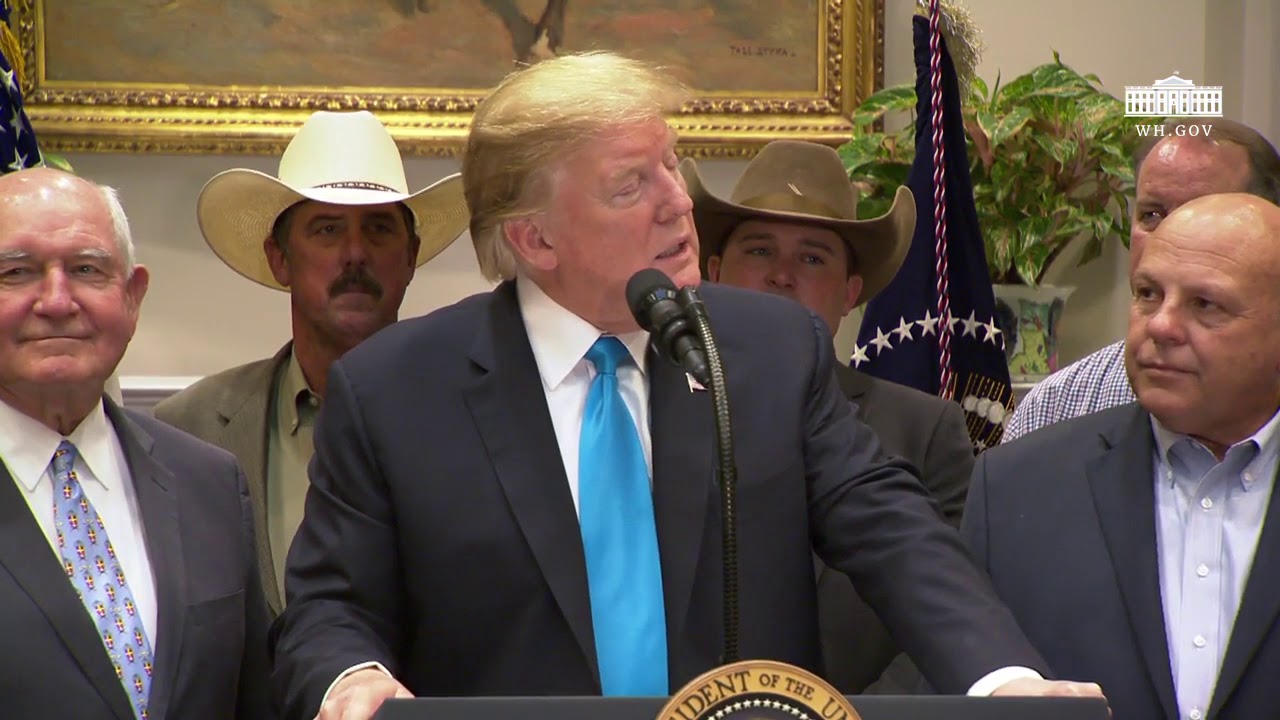 that he so desperately wants to be,” said Boot.
...
==
==
In Utah, Judge Michael Kwan has made it clear that…
https://www.alternet.org/2019/05/democracy-is-in-a-global-crisis-revealing-the-structural-flaw-at-the-heart-of-classical-liberalism/
All over the world, alarm bells are ringing for democracy. Everywhere we find strongmen in charge, enraged citizens and a desperate search for explanations and remedies. Rodrigo Duterte’s Philippines. Viktor Orbán’s Hungary. Benjamin Netanyahu’s Israel. Maybe something’s even going wrong in the United States.
In 1992, political theorist Francis Fukuyama declared there was finally a solution to the riddle: “Who should rule, and why?” The answer: liberal democracy.
A generation later, Fukuyama’s declaration is not wearing well.
As it turns out, the structural flaw that would hobble liberal democracy had actually been identified 30 years earlier, in a study called *Possessive Individualism* by University of Toronto political scientist Crawford Brough Macpherson.
He pointed out that liberal democracy was a contradiction in terms. From the 16th century to the 20th, classical liberals of the British tradition had argued for the rights of the “individual.” In theory and practice, though, they only counted a person as an individual (almost always male) who had command over himself and his possessions, including human ones.
...For all his inspiring words about government created by and responsive to “the people,” supposedly liberal philosopher John Locke, investor in the slave trade, had a narrow view of who got to be considered a rights-bearing individual.
The key was property. Society was little more than an agreement among the privileged to respect each other’s property rights.
Hardly pro-democracy
These liberals were not democrats, but after the rise of industrial capitalism, they had to respond to growing populations of working people with their own, often democratic, ideas. Generations of liberals, with John Stuart Mill at the helm, struggled to reconcile their assumptions about free-standing individuals who owned property with the democratic demands of the exploited and excluded.
Until the 1960s, a softer, gentler liberalism seemed to gain ground. The privileges of propertied individuals were preserved, but at a price: welfare programs, unions, public education, housing and health and, worst of all, taxes.
Still, liberals ultimately had to choose between democracy and capitalism. They might find themselves defending both the rights of workers to unionize and of factory owners to fire them, for example. Which should prevail? Macpherson feared the fall-back answer for liberals, whatever their democratic posturing, would often be the owners.
Macpherson’s critics painted him as “yesterday’s thinker.” Didn’t he realize, they asked, that liberals had found a sweet spot — harmonizing the public and the private, the people and the propertied, the many and the few?
Macpherson’s prescience
Today, more than three decades after his death, Macpherson’s diagnosis — that the acquisitive drive of unfettered capitalism poses a stark challenge to liberty and democracy — seems very prescient.
Liberal democracy has fallen into a world crisis.
Liberal democrats were working to make democracy safe for property, but to their right were hard-nosed businessmen, economists and politicians working on an extreme makeover of liberal democracy that came to be called “neo-liberalism.”
Outraged by infringements on capital, determined to roll back socialism and seeing the market as near-infallible, this determined cadre of conservative intellectuals created a movement of reactionary resistance.
Regulations impeding the free flow of capital were demolished. Once-powerful labour movements were eviscerated.
Liberated from effective regulation, financial institutions developed global chains of indebtedness and speculation which, even after the crisis of 2007, have attained pervasive influence.
After three decades of pious liberal hand-wringing, the world is set to warm by three to five degrees Celsius by 2100, a catastrophe attributable to unregulated capitalism.
Liberal toolbox of no use
The propertied patterns underlying these civilization-threatening developments cannot be grasped, let alone resisted, using a liberal toolbox.
In the possessive individualism of classical liberalism, we find the seeds of today’s democracy crisis. A devotion to property over people is democracy in chains and a planet in peril.
Countless people experience the precariousness wrought by this extreme makeover of the world’s liberal order. A neoliberal world, by design, offers minimal security —in employment, social stability, even in reliable networks of knowledge helping us reach reasoned understandings about the world in the company of our fellow citizens.
People longing for security confront, instead, an unintelligible, turbulent world seemingly bent on destroying any prospect of it. Insecurity breeds acute and often angry anxiety. It prompts a search for sanctuary in anti-depressants, opioids and alcohol. A deliberately starved state sector leaves only a few short steps between you and social and economic ruin.
Even the reasoned consideration of factual evidence recedes in a neoliberal world where every institution — newspapers, universities, the state itself — is rethinking itself in neoliberal terms. This very precariousness is represented, not as culturally and psychologically damaging, but as freedom itself.
In this climate, a pervasive culture of militarism offers beleaguered individuals at least the solace of an imagined national community. Our daily work may be regimented, pointless and insecure, but at least we can imagine, beyond it, a world of collective noble endeavour and selfless courage in defence of the nation.
In this militarized culture, many people are plainly looking for strongmen who can stand up for the nation. And around the world, including our corner of it, they’re finding them.
Responding to nationalism
The sovereign political paradox of our time is that a global army of people — precarious, harried, anxious, angry, disenfranchised and above all divested of all social rights to reasonably secure and prosperous livelihoods — is responding avidly to nationalist movements that, on closer inspection, are likely offer them more extreme versions of the hardships they are already enduring.
The Macpherson challenge — to liberate democracy from its neoliberal chains by rethinking property relations right down to their foundations — is daunting, but not unprecedented.
There will be conflict, pain and sacrifice in the long revolution to retrieve democracy and the liberties once sincerely defended by liberals. There will also be excitement and energy. The 21st century is already echoing with cries of dynamic, often youthful participants in such struggles, as they challenge the extreme makeover that has so convulsed contemporary life and placed liberal democracy in question.
They know the hour is late. The stakes could not be higher.
Ian McKay, Director of the Wilson Institute for Canadian History, McMaster University
This article is republished from The Conversation under a Creative Commons license. Read the original article.
==
==
The man who is the most unpredictable American president of all time lives in what is, if you stop to think about it, a remarkably predictable world. Each of his seemingly strange and unexpected acts, tweets, bizarre nominations, lies and misleading claims, rallies, gestures (or those of his circle of fawning officials, advisers, and family members) is promptly seized upon by a media desperate for eyeballs. All those cable news talking heads, all those reporters assigned to a presidency in numbers never before seen run with whatever he does as if there were neither a yesterday nor a tomorrow, as if there were nothing in the world but him and his cronies (and those who oppose him). The Mueller report, Attorney General William Barr's testimony before the Senate, his unwillingness to testify before the House, the latest phone conversation with Vladimir Putin or a Trump lawsuit, or... well, you name it. Though he calls the media the “enemy of the people,” there’s never been anything in our history like its collusion with him. In pure attention terms, can there be any doubt that the media he loves to denounce is his for the asking or that it's creating a bizarre cult of personality around him? In that sense, it’s everything he ever wanted and it’s now ineradicably fused to him and only him. Each of his acts plays out in a surging torrent of publicity, reportage, and a blizzard of tweets and social media attention. It's no longer the news as we once knew it, but a kind of continuous news seizure, a spasm of nothing but him.
It matters not at all that you could essentially have guessed what William Barr was going to say in that Senate hearing or that the president’s strange acts are, in some fashion, curiously predictable and repetitive or that so much about the world he looms over remains similarly predictable. Even his popularity in the polls varies remarkably little, month by month, year by year, with his base eternally loyal and so many others outraged.
In such a world, always in your face, always in close-up -- and what a close-up that face of his is (reminding me, at least, of every belligerent father of the 1950s I ever knew!) -- it’s hard to get perspective on much of anything. That's why John Feffer, author most recently of the dystopian novel Frostlands, is such a useful figure, whether in his weekly columns at Foreign Policy in Focus or, as today, at *TomDispatch*. He reminds us regularly that, whatever the evidence of our daily media lives, there’s still a world out there, a planet distinctly in distress that needs thought and attention. Tom
The Threat of Political Climate Change
Countering the Bannon Archipelago
By John Feffer
In the Americas, the Trump tsunami has swept across both continents and the “pink tide” of progressivism has all but disappeared from the southern half of the hemisphere. In Europe, with the recent exception of Spain, the left has been banished to the political margins. In Africa and Asia, socialism has devolved into nationalism, authoritarianism, or just plain corruption. And forget about the Middle East.
In this planet-wide rising tide of right-wing populism, the liberal left commands only a few disconnected islands -- Iceland, Mexico, New Zealand, South Korea, Spain, Uruguay. In so many other places, increasingly illiberal leaders are in charge. Add up the numbers and significantly more than half the world’s population currently lives under some form of right-wing populist or authoritarian rule, courtesy of Donald Trump in the United States, Jair Bolsonaro in Brazil, Narendra Modi in India, Recep Tayyip Erdogan in Turkey, Vladimir Putin in Russia, and Xi Jinping in China, among others.
Optimists cling to the pendulum theory of politics: conservatives are now basking in the limelight, but the day will come when the right inevitably falls on its face and the left swings back into action; witness the results of the 2018 mid-term elections in the United States.
In addition, pragmatists point out that many of these latter-day autocrats, for all their anti-democratic tendencies, came to power through elections. Yes, they have since sought to change constitutions, pack courts, muzzle the media, and crack down on civil society, but they remain constrained by the guardrails of the more-or-less liberal political systems they still run. In the end, so goes such thinking, democracy will prevail. Look at how, over time, some right-wing populists have been dislodged at the polls (Vladimir Meciar in Slovakia), brought down by corruption scandals (Alberto Fujimori in Peru), or forced to resign in disgrace (Silvio Berlusconi in Italy).
Optimists and pragmatists alike ultimately have faith that democracies are self-regulating organisms, not unlike the Earth’s ecosystem. The planet has managed to survive countless asteroid strikes, solar flares, and extreme weather conditions. Democracy, too, will outlast Hurricane Donald and all the other examples of extreme political weather, thanks, sooner or later, to woke voters and resilient mechanisms of checks and balances.
Unfortunately, given the malign impact humans are having on the planet, this analogy is far less reassuring than it once might have been. Only the willfully ignorant expect that some natural oscillation in global temperature or the Earth’s own adjustments to its climate feedback loops will arrive in time to save us. Humankind has clearly thrown a spanner into the works and now faces a distinctly difficult, if not disastrous, future. Similarly, across the globe, the electoral pendulum appears to be stuck on the side of reaction and the new generation of right-wing populists could well be on the verge of changing the political playing field, just as humans are in the process of irrevocably transforming the planet.
Bolsonaro, Erdogan, Putin, Trump, and their ilk should indeed be understood as the political equivalent of global warming. Instead of deadly carbon, they spew hateful invective and show a remarkable determination to destroy a far-from-perfect status quo. Moreover, they are the product not of farting livestock or extraterrestrial events but of the self-interested acts of blinkered humans. In an increasingly restrictive political space, liberals and progressives are looking ever more like so many polar bears on ever fewer ice floes, with diminishing room for maneuver.
Don’t bet on politics as usual to lower the temperature and put a stop to this moment’s tidal surge of ugly intolerance. Because the nature of the game has changed, those who oppose the global New Right must engage in a strategic rethink -- or we’ll all drown in the rising waters.
The Game Changers
Today’s autocrats are, at first glance, a diverse band of brothers.
In the Philippines, Rodrigo Duterte has attacked the Catholic Church for defending the sanctity of human life and challenging his campaign of extrajudicial murder. In Nicaragua, one-time revolutionary Daniel Ortega has courted the Catholic Church as a pillar of his undemocratic rule. Vladimir Putin presents himself and his country as saviors of Christianity, while Turkey’s Recep Tayyip Erdogan continues to promote his own brand of political Islam, Narendra Modi has ridden to power thanks to Hindu nationalism, and Xi Jinping eschews religion altogether. Some right-wing nationalists like Bolsonaro have ambitious plans to privatize state assets, while others, like those in Italy’s current leadership, want to nationalize major properties. Hungary’s Viktor Orban is concerned about climate change, but most right-wing populists like Donald Trump insist that the threat doesn’t exist and want to extract ever more fossil fuels.
Don’t be fooled, though. While these leaders may not rhyme, they all dance to the same rhythm.
These illiberal politicians have uniformly come to power by attacking globalization. They have criticized the neo-liberal transformations of the recent past that enriched the few at the expense of the many, while challenging the major political parties of the center left and center right that implemented the economic reforms that unleashed such forces. They have taken aim at the corruption that has metastasized in political systems already ill equipped to handle a massive uptick in cross-border financial transactions. When politically useful, they have demonized immigrants and refugees who are one side effect of, as well as victims of, that very burgeoning globalization movement. They have championed national sovereignty against the interventions of multilateral organizations, while blasting multicultural values and the human-rights groups that promote them. And they have taken advantage of social media like Facebook and Twitter that promote a version of participatory totalitarianism in which individuals can freely relinquish their privacy and abandon conventional news media for daily dispatches from their favorite celebrity autocrat.
Election results in the world’s most populous democracies suggest that liberalism -- in its free-market economic form and its more tolerant, inclusive, and statist political version – has become discredited at a popular level. A quick glance at the titles of some recent books (*Why Liberalism Failed*, *The Retreat of Western Liberalism*, *How Democracies Die*,*What Was Liberalism*) reveals that the chattering classes, too, have noticed this global trend.
The Trumps of this world have cannily identified a fundamental shift in the political playing field, rushing into the gap created by the declining popularity of liberal values. Viktor Orban set an early example of such opportunism when, in the 1990s, he jettisoned his liberal past and opted instead for the right side of the Hungarian political spectrum. In the aftermath of the collapse of communism in Eastern Europe, the left and right had alternated in power as voters became disgusted with whatever party controlled the levers of state. By successfully linking all the ills facing the country to liberals and their follies, however, Orban became the one to preside over a genuine transformation of the political landscape. The premier liberal party, the Alliance of Free Democrats, effectively disappeared when he became prime minister in 2010 -- and formally dissolved three years later. Almost a decade after he first took office, the only serious opposition to Orban is to his right.
The last time globalization transformed the world so thoroughly, in the early twentieth century, the ensuing backlash led to liberalism’s first catastrophic fail. In those years, liberals consistently failed to understand that the ground had shifted under them. In Russia, Bolsheviks took power from the weak crew of potential democratic reformers that had overthrown the tsar, inspiring a handful of movements in Europe that attempted something similar. In Germany, illiberal politicians took aim at the cosmopolitan values of the Weimar Republic. In Italy and Spain, leaders adopted virulent nationalism, challenging incipient global institutions like the League of Nations. In the wake of the Great Depression, Japanese ultra-militarists easily dispatched the weak Taisho democracy. Meanwhile, in the United States, right-wing demagogues like Father Charles Coughlin built large followings by railing on the radio against communists, Wall Street, and “the international money-changers in the temple,” though they failed to take power in the era of a charismatic liberal president, Franklin Delano Roosevelt.
Where liberalism survived, it did so largely by absorbing some of the strategies of the illiberal communists and fascists, namely relying on the state to keep the economy afloat, as Roosevelt did with his New Deal policies. This lesson carried over into the post-World War II-era in which American liberals continued to embrace New Deal principles that would culminate in President Lyndon Johnson’s Great Society programs and European liberals embraced the compromises that would eventually produce the European Union. At the global level, nations of various ideological dispositions came together to create a set of institutions -- the United Nations, the World Bank, the International Monetary Fund -- meant to ensure some degree of permanent stability. Economic globalization resumed, but this time in a regulatory environment that, initially, seemed to spread the benefits more equally.
That all changed in the 1970s when, in one country after another, a new generation of liberals and conservatives began to dismantle those very regulations in hopes that an unfettered market would jump-start growth globally. However, only after China embraced capitalism and the Soviet Union collapsed did economic globalization take a quantum leap to true globalization. With it the world returned to Gilded Age levels of concentrated wealth and inequality. No surprise, then, that the instability and intolerance of that long-gone era has returned as well.
Leaders like Putin, Erdogan, and Trump aren’t just politically savvy, nor have they simply been lucky or unusually ruthless. Instead, they sensed the changing mood of a moment and were able to capitalize on a profound discontent with the status quo that liberals had built, a discontent that won’t disappear simply because right-wing populists are exposed as frauds, incompetents, or cheats. Worse, crafty operators with even more ambitious agendas stand ready to destroy the liberal status quo once and for all.
The Bannon Archipelago
A Nationalist International should be a contradiction in terms, but that hasn’t stopped Steve Bannon from trying to create one. The erstwhile publisher and moviemaker, darling of the alt-right, and one-time Trump whisperer is on an extended world tour aimed at building a loose network of right-wing populists that he calls the Movement. It’s centered in -- of all places -- Brussels, the home of the European Union.
Bannon hopes to take advantage of post-Brexit Euroskepticism to roll his Trojan horse of a movement into the very heart of the enemy’s camp. With the encouragement of various right-wing oligarchs like financier John Thornton, he’s already met with neo-fascists associated with groups like the Belgian Vlaams Belong, France’s National Rally (the rebranded National Front), and Sweden’s Democratic Party, as well as more conventional right-wing populists in Italy and Hungary. He’s out to take the EU from the social democrats and pallid conservatives, the Vatican from the too-permissive Pope Francis, and the West from the clutches of immigrants and multiculturalists.
Elections for the European Parliament at the end of May should prove a testing ground for Bannon’s Movement. Right now, if the polling is accurate and the Euroskeptic, populist, and far-right parties combine their efforts, they could, staggeringly enough, become the largest coalition in that body. True, some prominent right-wing parties, like Poland’s Law and Justice, remain unseduced by Bannon. But it’s a mistake to underestimate him, just as it was a mistake to dismiss Trump in 2016. Success can be very persuasive, as The Donald proved in his takeover of a Republican Party whose leaders initially and almost universally despised him.
But Europe is only part of Bannon’s plan. For someone who has vented so much spleen at “globalists” like financier and philanthropist George Soros, Bannon is quite the internationalist. In Latin America, he’s already appointed Jair Bolsonaro’s youngest son as his regional representative to help build on the right’s electoral successes in Brazil, Colombia, Guatemala, Honduras, and Paraguay. Bannon has also partnered with a Chinese billionaire to create a Rule of Law Fund that’s meant to be the point of a spear aimed at the regime in Beijing.
In search of a stable of princes, that would-be Machiavelli has also visited Japan at the invitation of the fanatical Happiness Realization Party, a political cult that embraces Japanese militarism. Israel, too, is to be part of Bannon’s alt-right archipelago because the self-professed “Christian Zionist” sees Prime Minister Benjamin Netanyahu as a key link in a future anti-Islamic front. Also figuring prominently in his thinking is Russia, a vast, mostly white country led by a critic of Western liberalism and “radical Islam,”though Bannon acknowledges that the Mueller report has temporarily set back his efforts.
Bannon didn’t create the new right-wing populist wave, but he’s been clever enough to grab a surfboard, dive into the waters, and try to guide the swell further to the right. Toward that end, he’s creating what he calls a “war room.” He says:
“It’s what we did for Trump in the U.S.: writing op-eds, booking people on media, surrogate media -- all that. The last part of it is to do with grassroots social media and getting organized physically and getting out the vote.”
This isn’t, however, just a global version of Richard Nixon’s “Southern strategy,” an opportunistic attempt to solidify a political realignment. Bannon and his ilk have a much more ambitious project in mind. Having dismissed the current resident of the Vatican as far too liberal, Bannon has put himself forward as the pope of a new movement to fight the barbarians (as he defines them).
A lifelong Catholic and former military man, he harkens back to a much earlier papal tradition, that of Pope Urban II, who launched the First Crusade to retake Jerusalem at the end of the eleventh century. Bannon wants to recreate a pre-EU, whiter, more martial and nationalistic Europe. Like the popes and princes of the eleventh century, the right-wing populists in Europe have already been conjuring up external enemies to unify the like-minded. Islam remains a suitable adversary, whether in the form of ordinary immigrants or extraordinary terrorists. But there’s China, too, which poses the greatest challenge to the West since the Middle Kingdom last ruled the world of commerce, innovation, and culture so many centuries ago. Finally, there’s the enemy within: the globalists who have no patience for nationalism, the secularists who want to hold religion at arm’s length, and the multiculturalists who campaign against white privilege.
This crusade of Bannon’s and the far right is a last-ditch effort to maintain the United States and a large swath of Eurasia as bastions of white Christendom. For decades, those who held such views populated the extremes where they belonged. However, the economic failures of globalization, a huge uptick in refugee flows, and a general decline in faith in democratic institutions have proved fertile ground for such a new crusade to take shape.
Movement vs. Movement
In the United States, organizations like Indivisible, a progressive group created by former congressional staffers in the wake of the 2016 elections that now has 5,000 local chapters, are not waiting for the political pendulum to swing by itself. They’re already working hard to push politics back to the left -- and their organizing produced results in the 2018 midterm elections when the Democratic Party retook the House of Representatives.
The 2020 presidential election, however, is a different matter. Trump now has the incumbent’s advantage and, for the time being, the tailwind of a strong economy. In fact, some economic forecasters predict a landslide for him as long as the economy doesn’t tank. The president’s team has also made sure that areas of the country where his base is strong are experiencing greater job growth than in Democratic Party strongholds.
In addition, Trump and his minions are hard at work eroding the foundations of a democratic society -- demonizing the media, working to suppress voter turnout, chipping away at the barriers between church and state, and packing the courts with ideologues who support their agenda. The vast majority of the groups mobilizing to defeat Trump in 2020 are working with traditional tools to effect political change. Having learned from past masters of populism like Orban and Erdogan, Team Trump is instead busy changing the playing field.
That’s what makes the current political moment different. The pendulum theory of political change only applies if the major electoral actors play by the same rules. The right-wing populists have, however, been busy transforming the rules of the game so that they can stay in power as long as possible, while using the levers of the state to enrich themselves and their cronies. Putin has ruled Russia for two decades. Erdogan has held onto power for 16 years. Orban is closing in on a decade in office. Even in an undemocratic country like China, Xi Jinping has altered the collective rules of succession to ensure that he will remain leader for life.
One possible response to right-wing populism would, of course, be to ramp up left-wing populism.This was a winning strategy in 2015 for the Greek political party Syriza, which has been in charge of that country for four years now. It also worked for Evo Morales, who has captained Bolivia for more than a dozen years. And, of course, Bernie Sanders came close to being the Democratic Party’s standard bearer in the 2016 election while promoting his version of left-wing populism, which capitalizes on an essential political reality: passion often moves people more effectively than policy.
But it’s hard to see left-wing populism as a long-term answer to the New Right. It either fails electorally, as Jean-Luc Melenchon, the standard bearer for the movement France Unbowed, discovered in that country’s last presidential election; or it faces the kind of “economic realities” that forced Syriza to accommodate the austerity demands of European bureaucrats and banks; or, as Morales has demonstrated in Bolivia, it ends up presiding over the same erosion of democratic practices as its right-wing counterparts.
Yes, the nuts-and-bolts organizing of groups like Indivisible is indispensable. Yes, the passion of left-wing populists is essential. But such politicking and the mirror-image populism that sometimes goes with it are mere life preservers. They may keep us afloat, but they won’t rescue us. The New Right requires a far more original kind of response.
After all, the forces that gave rise to this tidal wave of right-wing populism remain in place: widening economic inequality, surging migrant flows, ballooning corruption scandals. Parties of the center remain discredited, and liberals have not come up with convincing alternatives to the policies and institutions of globalization they created. Trying to nudge the political pendulum out of the emergency zone is a necessary but ultimately insufficient approach. It’s the equivalent of expecting that a conventional fix like a gasoline tax will stop climate change. Environmentalists understand that unprecedented change requires an unprecedented response. To deal with the threat of political climate change, a similarly international, broad-based, and fundamentally new approach is called for.
So don’t wait for the pendulum to swing. Don’t put your faith in the guardrails. It’s not time for a manifesto or a 10-point plan. It’s time for a movement to counteract Bannon’s Movement, a global coalition that joins people and politicians in a united, international effort to respond to the true global problems -- climate change, endless war, and economic inequality -- that threaten to overwhelm us all. Absent such a movement, the rising tide of populism will sink all boats, life preservers and all.
John Feffer, a TomDispatch regular, is the author of the dystopian novel Splinterlands and the director of Foreign Policy In Focus at the Institute for Policy Studies. His latest novel is Frostlands, a Dispatch Books original and book two of his Splinterlands series.
==
U.S. technology giant Microsoft has teamed up with a Chinese military university to develop artificial intelligence systems that could potentially enhance government surveillance and censorship capabilities. Two U.S. senators publicly condemned the partnership, but what the National Defense Technology University of China wants from Microsoft isn’t the only concern.
As my research shows, the advent of digital repression is profoundly affecting the relationship between citizen and state. New technologies are arming governments with unprecedented capabilities to monitor, track and surveil individual people. Even governments in democracies with strong traditions of rule of law find themselves tempted to abuse these new abilities.
In states with unaccountable institutions and frequent human rights abuses, AI systems will most likely cause greater damage. China is a prominent example. Its leadership has enthusiastically embraced AI technologies, and has set up the world’s most sophisticated surveillance state in Xinjiang province, tracking citizens’ daily movements and smartphone use.
Its exploitation of these technologies presents a chilling model for fellow autocrats and poses a direct threat to open democratic societies. Although there’s no evidence that other governments have replicated this level of AI surveillance, Chinese companies are actively exporting the same underlying technologies across the world.
Increasing reliance on AI tools in the US
Artificial intelligence systems are everywhere in the modern world, helping run smartphones, internet search engines, digital voice assistants and Netflix movie queues. Many people fail to realize how quickly AI is expanding, thanks to ever-increasing amounts of data to be analyzed, improving algorithms and advanced computer chips.
Any time more information becomes available and analysis gets easier, governments are interested – and not just authoritarian ones. In the U.S., for instance, the 1970s saw revelations that government agencies – such as the FBI, CIA and NSA – had set up expansive domestic surveillance networks to monitor and harass civil rights protesters, political activists and Native American groups. These issues haven’t gone away: Digital technology today has deepened the ability of even more agencies to conduct even more intrusive surveillance.
For example, U.S. police have eagerly embraced AI technologies. They have begun using software that is meant to predict where crimes will happen to decide where to send officers on patrol. They’re also using facial recognition and DNA analysis in criminal investigations. But analyses of these systems show the data on which those systems are trained are often biased, leading to unfair outcomes, such as falsely determining that African Americans are more likely to commit crimes than other groups.
AI surveillance around the world
In authoritarian countries, AI systems can directly abet domestic control and surveillance, helping internal security forces process massive amounts of information – including social media posts, text messages, emails and phone calls – more quickly and efficiently. The police can identify social trends and specific people who might threaten the regime based on the information uncovered by these systems.
For instance, the Chinese government has used AI in wide-scale crackdowns in regions that are home to ethnic minorities within China. Surveillance systems in Xinjiang and Tibet have been described as “Orwellian.” These efforts have included mandatory DNA samples, Wi-Fi network monitoring and widespread facial recognition cameras, all connected to integrated data analysis platforms. With the aid of these systems, Chinese authorities have, according to the U.S. State Department, “arbitrarily detained” between 1 and 2 million people.
My research looks at 90 countries around the world with government types ranging from closed authoritarian to flawed democracies, including Thailand, Turkey, Bangladesh and Kenya. I have found that Chinese companies are exporting AI surveillance technology to at least 54 of these countries. Frequently, this technology is packaged as part of China’s flagship Belt and Road Initiative, which is funding an extensive network of roads, railways, energy pipelines and telecommunications networks serving 60% of the world’s population and economies that generate 40% of global GDP.
For instance, Chinese companies like Huawei and ZTE are constructing “smart cities” in Pakistan, the Philippines and Kenya, featuring extensive built-in surveillance technology. For example, Huawei has outfitted Bonifacio Global City in the Philippines with high-definition internet-connected cameras that provide “24/7 intelligent security surveillance with data analytics to detect crime and help manage traffic.”
Hikvision, Yitu and SenseTime are supplying state-of-the-art facial recognition cameras for use in places like Singapore – which announced the establishment of a surveillance program with 110,000 cameras mounted on lamp posts around the city-state. Zimbabwe is creating a national image database that can be used for facial recognition.
However, selling advanced equipment for profit is different than sharing technology with an express geopolitical purpose. These new capabilities may plant the seeds for global surveillance: As governments become increasingly dependent upon Chinese technology to manage their populations and maintain power, they will face greater pressure to align with China’s agenda. But for now it appears that China’s primary motive is to dominate the market for new technologies and make lots of money in the process.
AI and disinformation
In addition to providing surveillance capabilities that are both sweeping and fine-grained, AI can help repressive governments manipulate available information and spread disinformation. These campaigns can be automated or automation-assisted, and deploy hyper-personalized messages directed at – or against – specific people or groups.
AI also underpins the technology commonly called “deepfake,” in which algorithms create realistic video and audio forgeries. Muddying the waters between truth and fiction may become useful in a tight election, when one candidate could create fake videos showing an opponent doing and saying things that never actually happened.
...
aha MIC and PIC merge; note systemic solution // new green deal
“People often point to the London Metropolitan Police, who were formed in the 1820s by Sir Robert Peel,” Vitale said. “They are held up as this liberal ideal of a dispassionate, politically neutral police with the support of the citizenry. But this really misreads the history. Peel is sent to manage the British occupation of Ireland. He’s confronted with a dilemma. Historically, peasant uprisings, rural outrages were dealt with by either the local militia or the British military. In the wake of the Napoleonic Wars, in the need for soldiers in other parts of the British Empire, he is having more and more difficulty managing these disorders. In addition, when he does call out the militia, they often open fire on the crowd and kill lots of people, creating martyrs and inflaming further unrest. He said, ‘I need a force that can manage these outrages without inflaming passions further.’ He developed the Peace Preservation Force, which was the first attempt to create a hybrid military-civilian force that can try to win over the population by embedding itself in the local communities, taking on some crime control functions, but its primary purpose was always to manage the occupation. He then exports that model to London as the industrial working classes are flooding the city, dealing with poverty, cycles of boom and bust in the economy, and that becomes [its] primary mission.”
“The creation of the very first state police force in the United States was the Pennsylvania State Police in 1905,” Vitale said. “For the same reasons. It was modeled similarly on U.S. occupation forces in the Philippines. There was a back and forth with personnel and ideas. What happened was local police were unable to manage the coal strikes and iron strikes. … They needed a force that was more adherent to the interest of capital. … Interestingly, for these small-town police forces in a coal mining town there was sometimes sympathy. They wouldn’t open fire on the strikers. So, the state police force was created to be that strong arm for the law. Again, the direct connection between colonialism and the domestic management of workers. … It’s a two-way exchange. As we’re developing ideas throughout our own colonial undertakings, bringing those ideas home, and then refining them and shipping them back to our partners around the world who are often despotic regimes with close economic relationships to the United States. There’s a very sad history here of the U.S. exporting basically models of policing that morphs into death squads and horrible human rights abuses.”
The almost exclusive alliance on militarized police to deal with profound inequality and social problems is turning poor neighborhoods in cities such as Chicago into miniature failed states, ones where destitute young men and women join a gang for security and income and engage in battles with other gangs and the police. The “broken windows” policy shifts the burden for poverty onto the poor. It criminalizes minor infractions, arguing that disorder produces crime and upending decades of research about the causes of crime.
“As poverty deepens and housing prices rise, government support for affordable housing has evaporated, leaving in its wake a combination of homeless shelters and aggressive broken-windows-oriented policing,” Vitale writes. “As mental health facilities close, police become the first responders to calls for assistance with mental health crises. As youth are left without adequate schools, jobs, or recreational facilities, they form gangs for mutual protection or participate in the black markets of stolen goods, drugs, and sex to survive and are ruthlessly criminalized. Modern policing is largely a war on the poor that does little to make people safer or communities stronger, and even when it does, this is accomplished through the most coercive forms of state power that destroy the lives of millions.”
The accelerated assault on the poor and the growing omnipotence of the police signal our transformation into an authoritarian state in which the rich and the powerful are not subject to the rule of law. The Trump administration will promote none of the conditions that could ameliorate this crisis—affordable housing; well-paying jobs; safe and nurturing schools that do not charge tuition; better mental health facilities; efficient public transportation; the rebuilding of the nation’s infrastructure; demilitarized police forces in which most officers do not carry weapons; universal, government-funded health care; an end to the predatory loans and unethical practices of big banks; and reparations to African-Americans and an end to racial segregation. Trump and most of those he has appointed to positions of power disdain the poor as a dead weight on society. They blame stricken populations for their own misery. They seek to subjugate the poor, especially those of color, through police violence, ever harsher forms of punishment and an expansion of the prison system....
==
https://www.alternet.org/2019/04/welcome-to-the-fourth-reich-donald-trumps-assault-on-the-rule-of-law-will-not-end-well/
Donald Trump is not an ideologue or a person who possesses a coherent or sophisticated understanding of political theory, history or philosophy. He is all impulse and id, a man gifted in manipulating the fears of ignorant and insecure white people in the service of expanding his power and his fortune. Trump’s enforcers, including Attorney General William Barr, White House senior adviser Stephen Miller and the right-wing media machine, are then tasked with transforming the president’s most base impulses into public policy.
As we have seen throughout Trump’s presidency — and as we see now in Robert Mueller’s report, with its extensive litany of borderline corruption and its numerous instances of blatant obstruction of justice — the president and his allies disregard the law whenever it is inconvenient, and enforce it with callous cruelty when it serves their goals.
This strategic arbitrariness weakens and delegitimizes the rule of law until, at some point, it can be totally rejected and dispensed with. The Trump administration’s ultimate goal is a “permanent state of exception” in the service of racial authoritarianism.
This administration’s collective assault on nonwhites — in particular refugees, migrants and immigrants from Latin America — as well as Muslims and other groups deemed to be “un-American” is one of the principal areas where its contempt for the law and democracy is most apparent.
Last week Trump fired Kirstjen Nielsen from her position as secretary of the Department of Homeland Security because she was not cruel enough to immigrants, refugees and migrants — apparently breaking up families and putting people in concentration camps was insufficient for Donald Trump and Stephen Miller. Even more troubling, Trump fired Nielsen because she was not willing to violate the law at his command.
Trump also reportedly told Kevin McAleenan, who was then head of the Border Patrol and is now acting DHS secretary, to break the law by denying asylum seekers entry to the United States. It has also been reported that Trump promised McAleenan a pardon if he find himself in legal trouble for following Trump’s orders.
Trump also told U.S. soldiers at the Mexican border that they should brutalize immigrants, refugees, and migrants. This too is a violation of civilian law, international law, as well as the U.S. Code of Military Justice.
Donald Trump’s handpicked attorney general, William Barr, has decided that refugees can be held in detention indefinitely. This appears to be a violation of federal law and constitutionally protected rights to due process.
Trump has also suggested using human beings as political weapons by transporting migrants, refugees and immigrants from Latin America — a group of people Trump has slurred as a “race” of rapists and murderers and a human infestation — to “sanctuary cities” as a way (as he sees it) to punish Democrats.
Historian Ruth Ben-Ghiat, a professor at New York University and an expert on fascism, authoritarianism and propaganda, explained the danger of Trump’s recent actions to me in a recent email:
This latest threat, and asking officials not to obey the law, and assuring them of a pardon, is just a new threshold of the contempt for law and democratic norms Trump has always shown, and an escalation of his white nationalist ideology and governing-by-vendetta leadership style. He wants to put mayors on the defensive, and create “crises” about immigration on city peripheries — migrants will pay the price.
Historian Richard Frankel, an expert on modern Germany and the rise of the Nazis, provided additional context for Trump’s new initiative, also by email:
When Trump thinks of migrants he thinks of criminals, rapists, drug dealers, thugs, carriers of disease, people so fundamentally alien that they could never assimilate into American society and, in fact, threaten to destroy the country. And when you add his anti-Semitism to the mix, then the problem is not just that they’re coming to destroy America, but that they’re actually being sent by Soros, the “International Jew,” to destroy it.
When the history of Trump’s presidency is chronicled by some future scholar, these events over the last few weeks — including Barr’s partisan whitewashing of the Mueller report — will likely be described as some of the most ominous and important in America’s surrender to authoritarianism and fascism.
Unfortunately, said events have already been thrown down the memory hole, both by the public and the corporate media, who have been trained and conditioned like Pavlov’s dogs by the orchestrated chaos and confusion of Trump’s regime. As historian Gore Vidal observed back in 2004 about the George W. Bush presidency, “the ‘United States of Amnesia’ will be worse than an amnesiac; it will be — have suffered a lobotomy. There will be no functioning historical memory of our history.” What has transpired under Donald Trump is far worse.
This behavior feels new to most Americans. But in reality, such an assault on the rule of law, and the elevation of a man and a movement above the normal political process, are common around the world in failing democracies. Moreover, Trump’s regime is echoing one of the most grotesque examples of a failed democracy in modern history: the fall of the Weimar Republic and the rise of the Third Reich and the Nazis.
There is overwhelming evidence to support such a claim.
In addition to the examples of lawlessness and cruelty detailed above, the Trump administration has conducted a campaign of “soft” ethnic cleansing against nonwhite immigrants, refugees and migrants. In a ruling last Friday, a federal judge in New York described the administration’s efforts to deport Haitian refugees as evidencing “a discriminatory purpose of removing non-white immigrants to the country.”
Trump’s regime has threatened to remove judges who will not follow his orders.
Trump has not appointed permanent replacements for key cabinet positions in order to subvert the congressional approval process. This allows Trump to undermine checks and balances on his power by putting his hand-picked minions in control of federal departments and agencies on a temporary, rotating basis. Trump has also chosen to leave senior positions unstaffed as a way of extending his ability to rule by fiat.
Trump and his supporters in the news media routinely use eliminationist and genocidal language to describe nonwhites and others whom they view as a type of enemy Other in America.
Much of Trump and his allies’ rhetoric directly channels that of the Nazis and the Third Reich, used to described Jewish people and others who would be annihilated during the Holocaust.
The Trump administration is ordering the United States military to build more concentration camps for nonwhite immigrants, migrants, and refugees.
In their fundraising emails and other materials, Trump describes his supporters as constituting a “movement” that will somehow “restore” and “protect” America against liberals, progressives, Democrats, nonwhite people, and others who are a threat to his American Apartheid “renewal” project. Absolute devotion and loyalty to Donald Trump is required for this plan to be successful. Trump is now offering membership cards to his supporters to cement their cult-like devotion to him.
Because they see it as their natural home, neo-Nazis and members of other right-wing hate organizations are running for public office as Republicans.
There has been a documented increase in right-wing political violence–some of it lethal –both during Donald Trump’s 2016 presidential campaign and now through to his third year in office.
Investigative journalist Andrea Pitzer, who is the author of One Long Night:A Global History of Concentration Camps,told me via email how the Trump administration’s new plans to abuse nonwhite immigrants, migrants, and refugees are a violation of international law that will likely end in violence and death.
She explained how, “This idea that there have been discussions of setting up dedicated trains for migrants whose humanity the government disputes and shipping them to designated cities they’re not allowed to leave–especially as some kind of political stunt–is beyond disturbing. And talk of the military running detention camps for migrants on American soil is also horrific. Even the shameful detention program for Japanese Americans during WWII was run by a civilian agency.”
Pitzer warns that:
The current administration seems bent on finding a way to use old and discredited forms of civilian detention against vulnerable groups–the kind of detention we’ve seen degenerate into atrocities again and again worldwide. The schemes emerging from the White House are a threat to our democracy as a whole and can’t be squared with either the Constitution or our obligations under international law.
As new public opinion research by PRRI and Pew shows, the American people are extremely divided between those who understand the value of a more cosmopolitan, forward-thinking, “racially” diverse, and inclusive society and those others (mostly white Republicans and other Trump supporters) who want America to be a white conservative Christian country where other people are subordinated to second-class citizenship, and thus considered peripheral to and therefore outside of the national community.
Donald Trump and his allies are warping and breaking the law to advance this grotesque vision of the American democratic project by mining white rage and white backlash identity politics for personal financial and political gain.
In that same email conversation, professor Frankel describes what Trump’s version of America, when fully realized, will look like:
Trump clearly sees the law as an impediment to achieving his goals. He believes he knows what’s best for the country (at least for those people he considers to be members of the real national community) and so anything he does in the service of the nation is (or should be), by definition, legal. The promise of pardons for those who work toward his goal indicates the extent to which he’d go to undermine the current legal system in favor of one that is in tune with his will. As Goering put it, “The law and the will of the Fuehrer are one.” Trump’s vision of America is a white Christian male-dominated Herrenvolk democracy. How to make that vision real is up to those below him, and no law should stand in the way.
Once the law is transformed into the expression of the leader’s will, there’s not much we can do to stop him.
The myth of American Exceptionalism will not save American democracy or its citizens from Trump’s machinations and the global dystopia his agents are so feverishly working to create. In 1935, Sinclair wrote his famous novel “It Can’t Happen Here” about the rise of authoritarianism and fascism in the United States. His warning was eight decades prescient about the Age of Trump. But unfortunately Sinclair’s question is being asked too late, the tragedy is already unfolding and the answer is a plain and clear “yes”. William Barr’s distorted version of the Mueller Report is all just scribbling on the epithet of America’s democracy and empire. The American people decided to be bystanders to their own history and destiny. This is very pathetic. It is also the truth and a tragedy.
Allan Nairn: Indonesian General Tied to Mass Killings Plots to Arrest Critics If He Wins Presidency
https://www.democracynow.org/2019/4/15/allan_nairn_indonesian_general_tied_to
Indonesian President Joko Widodo, who is better known as “Jokowi,” is up for re-election on Wednesday. His chief rival is Prabowo Subianto, a former special forces military commander and the former son-in-law of Indonesia’s longtime dictator Suharto. It is a rematch of the 2014 election that Jokowi won by almost 6 percentage points. Investigative journalist Allan Nairn has just uncovered shocking plans made by Prabowo for if he wins the presidency. According to minutes of a campaign strategy session obtained by Nairn, Prabowo has made plans to stage mass arrests of political opponents and his current allies. Nairn reports Prabowo also wants to restore Indonesia’s Army to the role it played in the U.S.-backed Suharto dictatorship which lasted from 1967 to 1998. Indonesia is the world’s largest Muslim nation and the third-largest democracy in the world behind India and the United States. We speak with Allan Nairn in Indonesia.
==
https://www.alternet.org/2019/04/these-laws-are-chipping-away-at-democracy-around-the-world/
hmmn, maybe miscat?
Democracy seemed ascendant after the rivalry between communist and democratic states subsided in the wake of the Soviet Union’s collapse in 1991. As elected governments replaced many toppled totalitarian and authoritarian regimes, the number of democracies rose.
Yet with rare exceptions, authoritarian leadership and other undemocratic governments have been the norm throughout human history. So perhaps it shouldn’t be surprising that democracy seems to be losing ground after its post-1991 surge. The rise of Recep Tayyip Erdoğan in Turkey, Viktor Orbán in Hungary, Jair Bolsonaro in Brazil, and Donald Trump in the U.S. are among the most visible examples.
As a human rights attorney completing my Ph.D. in international relations, I’m researching why democracy appears to be declining around the globe. In addition to the growing number of far-right, authoritarian-leaning leaders who certainly bear responsibility,lawmakers in historically strong democracies are proposing and passing legislation that adds new layers of red tape, restricts access to foreign financial support, and makes it harder and riskier to engage in peaceful protests.
From India to Poland to Israel, legislators are limiting the freedom of independent nonprofit and nongovernmental organizations. Many of these groups are responsible for holding governments to account, standing up for minority rights and providing services to the indigent, among other critical roles.
New restrictions
My research focuses on the spread of undemocratic civil society laws in historically democratic states. These laws include bills that impose new restrictions on forming, operating and funding civil society organizations. They are limiting the activities of charities, watchdog organizations, protest movements and nonprofit service providers, such as health care clinics depended on by people lacking access to affordable health care.
For nearly a decade I’ve tracked and documented the spread of these laws. By my count, at least 58 percent of the world’s strongest democracies have adopted at least one restrictive civil society law since 1990. Counting proposed laws, another 5 percent are in this growing category.
I’m not talking about similar legislation passed in non-democratic and weakly democratic states like Russia, Egypt and Turkey. These laws are also problematic and troublesome for global civil society, but are not the primary focus of my research.
Consider what happened after Russia enacted a law in 2012 that requires all nonprofits wishing to receive any amount of foreign donations and that are engaged in what the government defines as political activities to register as “foreign agents” – a toxic term in the Russian context.
Since then, elected politicians have passed measures with similar objectives in countries with democratic governments, including Israel, India, Austria, Hungary and Poland.
In trouble
Democracy experts like the independent watchdog Freedom House generally agree that democracy is in trouble around the world. They no longer debate whether democracy is imperiled, but by how much and whether it’s reversible.
Democracy scholars, such as William Galston at the Brookings Institution – a centrist think tank, political scientist Yascha Mounk and columnists like Nicholas Kristof tend to focus on the rise of populist and far-right leaders when explaining global democratic decay.
But in democracies, the law, not the president or prime minister, is critical to maintaining the pillars and foundations upon which democracy rests. That is why I consider an Austrian law that curbs access to foreign funding to all Muslim organizations so troubling.
I’m also concerned about a Polish law that consolidates all power over nongovernmental organization funding, whether foreign or domestic, into the hands of a single individual appointed by its prime minister. And I find a Hungarian law, which requires nongovernmental organizations that get more than $28,000 of their funds from other countries to label themselves as funded from abroad on all of their publications, worrisome.
When laws are passed that undermine democracy’s critical foundations, democracy weakens. Laws restricting the independence and strength of nonprofits are one example of this.
[dynamic list ]
United States
Restrictive laws are even appearing here in the United States, so far only at the state rather than the federal level – aside from a handful of obscure measures. These laws are designed to curb what nonprofits and activists can do.
For example, over the past decade, more than half of all states have introduced so-called“ag-gag laws,” measures designed to silence whistleblowers who reveal animal abuses on industrial farms. However, the U.S. system of checks and balances is slowing and reversing their impact. American courts are finding many of these laws to be in violation of the Constitution.
At the same time, ag-gag laws remain on the books in at least seven states.
[map]
Initiatives at the state and federal level since November 2016 that aim to restrict the rights of Americans to protest are all over the map.
International Center for Not-for-Profit Law (ICNL), CC BY-SA]:{
}:
Similarly, since November 2016, legislators in 35 states have considered more than 91 bills designed to restrict protest activities. For example, a growing number of states, including Missouri, North Dakota, Ohio and Washington have introduced harsh new criminal penalties for protesters who wear hooded jackets or otherwise disguise their identities while protesting. What’s more, states, including Florida, Kentucky, North Carolina and Texas, have proposed laws shielding motorists from liability if they end up injuring or killing protesters who block traffic.
Few of these anti-protest measures, only 11 of 91 considered, have been enacted. Legal challenges could topple many if not all of them. But these measures do, in my view, have the potential to erode American democracy.
Chrystie Flournoy Swiney, Doctoral Fellow at Georgetown and Human Rights Attorney, Georgetown University
This article is republished from The Conversation under a Creative Commons license. Read the original article.
==
==
https://kpfa.org/episode/talkies-april-3-2019/
roots in neo-lib
“Fascism in Donald Trump's United States,” by Henry A. Giroux, via
https://monthlyreview.org/.../fascism-in-donald-trumps-united-states-by-henry-giroux...
Henry A. Giroux | The Ghost of Fascism in the Age of Trump | Tikkun
https://www.tikkun.org/henry-a-giroux-the-ghost-of-fascism-in-the-age-of-trump
Missing: jacobin | Must include: jacobin
Henry A. Giroux | Fascism in Donald Trump's United States - Truthout
https://truthout.org/articles/fascism-in-donald-trump-s-united-states/
Missing: jacobin | Must include: jacobin
Henry A. Giroux | Challenging Trump's Language of Fascism - Truthout
https://truthout.org/articles/challenging-trumps-language-of-fascism/
Missing: jacobin | Must include: jacobin
American Nightmare: Facing the Challenge of Fascism (City Lights ...
https://www.amazon.com/American-Nightmare-Facing...Fascism.../B0778W8WT7