Lomborg, B
---
SEE TWO COPENHAGEN
11 21 tag bigthunk
capt 916 html friel fog?
seralini hit
see shuffle, shill
wasn't he outed/busted? behind the bastards?! yup see below
bak 211 21
html broadside
===
tiny effect denier meme?
no lnx grfx date
https://www.lomborg.com/press-release-research-reveals-negligible-impact-of-paris-climate-promises
Paris climate promises will reduce temperatures by just 0.05°C in 2100(Press release)
A new peer-reviewed paper by Dr. Bjorn Lomborg published in the Global Policy journal measures the actual impact of all significant climate promises made ahead of the Paris climate summit.
Governments have publicly outlined their post-2020 climate commitments in the build-up to the December’s meeting. These promises are known as “Intended Nationally Determined Contributions” (INDCs).
Dr. Lomborg’s research reveals:
The climate impact of all Paris INDC promises is minuscule: if we measure the impact of every nation fulfilling every promise by 2030, the total temperature reduction will be 0.048°C (0.086°F) by 2100.
Even if we assume that these promises would be extended for another 70 years, there is still little impact: if every nation fulfills every promise by 2030, and continues to fulfill these promises faithfully until the end of the century, and there is no ‘CO₂ leakage’ to non-committed nations, the entirety of the Paris promises will reduce temperature rises by just 0.17°C (0.306°F) by 2100.
US climate policies, in the most optimistic circumstances, fully achieved and adhered to throughout the century, will reduce global temperatures by 0.031°C (0.057°F) by 2100.
EU climate policies, in the most optimistic circumstances, fully achieved and adhered to throughout the century, will reduce global temperatures by 0.053°C (0.096°F) by 2100.
China climate policies, in the most optimistic circumstances, fully achieved and adhered to throughout the century, will reduce global temperatures by 0.048°C (0.086°F) by 2100.
The rest of the world’s climate policies, in the most optimistic circumstances, fully achieved and adhered to throughout the century, will reduce global temperatures by 0.036°C (0.064°F) by 2100.
Overview in Celsius and Fahrenheit by the year 2100....
===
https://theconversation.com/the-five-corrupt-pillars-of-climate-change-denial-122893
no lnx many
The Conversation
The five corrupt pillars of climate change denial
November 28, 2019 8.00am EST
Author
Mark Maslin
Professor of Earth System Science, UCL
Disclosure statement
Mark Maslin is a Founding Director of Rezatec Ltd, Director of The London NERC Doctoral Training Partnership and a member of Cheltenham Science Festival Advisory Committee. He is an unpaid member of the Sopra-Steria CSR Board. He has received grant funding in the past from the NERC, EPSRC, ESRC, Royal Society, DIFD, DECC, FCO, Innovate UK, Carbon Trust, UK Space Agency, European Space Agency, Wellcome Trust, Leverhulme Trust and British Council. He has received research funding in the past from The Lancet, Laithwaites, Seventh Generation, Channel 4, JLT Re, WWF, Hermes, CAFOD and Royal Institute of Chartered Surveyors.
Partners
University College London
The fossil fuel industry, political lobbyists, media moguls and individuals have spent the past 30 years sowing doubt about the reality of climate change - where none exists. The latest estimate is that the world’s five largest publicly-owned oil and gas companies spend about US$200 million a year on lobbying to control, delay or block binding climate policy.
Their hold on the public seems to be waning. Two recent polls suggested over 75% of Americans think humans are causing climate change.School climate strikes, Extinction Rebellion protests, national governments declaring a climate emergency, improved media coverage of climate change and an increasing number of extreme weather events have all contributed to this shift. There also seems to be a renewed optimism that we can deal with the crisis.
But this means lobbying has changed, now employing more subtle and more vicious approaches – what has been termed as “climate sadism”. It is used to mock young people going on climate protests and to ridicule Greta Thunberg, a 16-year-old young woman with Asperger’s, who is simply telling the scientific truth.
Anti-climate change lobbying spend by the five largest publicly-owned fossil fuel companies. Statista, CC BY-SA
At such a crossroads, it is important to be able to identify the different types of denial. The below taxonomy will help you spot the different ways that are being used to convince you to delay action on climate change.
Do experts have something to add to public debate?
1. Science denial
This is the type of denial we are all familiar with: that the science of climate change is not settled. Deniers suggest climate change is just part of the natural cycle. Or that climate models are unreliable and too sensitive to carbon dioxide.
Some even suggest that CO₂ is such a small part of the atmosphere it cannot have a large heating affect. Or that climate scientists are fixing the data to show the climate is changing (a global conspiracy that would take thousands of scientists in more than a 100 countries to pull off).
All these arguments are false and there is a clear consensus among scientists about the causes of climate change. The climate models that predict global temperature rises have remained very similar over the last 30 years despite the huge increase in complexity, showing it is a robust outcome of the science.
Read more: Five climate change science misconceptions – debunked
[grapf] Model reconstruction of global temperature since 1970. Average of the models in black with model range in grey compared to observational temperature records from NASA, NOAA, HadCRUT, Cowtan and Way, and Berkeley Earth. Carbon Brief, ]
The shift in public opinion means that undermining the science will increasingly have little or no effect. So climate change deniers are switching to new tactics. One of Britain’s leading deniers, Nigel Lawson, the former UK chancellor, now agrees that humans are causing climate change, despite having founded the sceptic Global Warming Policy Foundation in 2009.
It says it is “open-minded on the contested science of global warming, [but] is deeply concerned about the costs and other implications of many of the policies currently being advocated”. In other words, climate change is now about the cost not the science.
2. Economic denial
The idea that climate change is too expensive to fix is a more subtle form of climate denial. Economists, however, suggest we could fix climate change now by spending 1% of world GDP. Perhaps even less if the cost savings from improved human health and expansion of the global green economy are taken into account. But if we don’t act now, by 2050 it could cost over 20% of world GDP.
We should also remember that in 2018 the world generated US$86,000,000,000,000 and every year this World GDP grows by 3.5%. So setting aside just 1% to deal with climate change would make little overall difference and would save the world a huge amount of money. What the climate change deniers also forget to tell you is that they are protecting a fossil fuel industry that receives US$5.2 trillion in annual subsidies – which includes subsidised supply costs, tax breaks and environmental costs. This amounts to 6% of world GDP.
The International Monetary Fund estimates that efficient fossil fuel pricing would lower global carbon emissions by 28%, fossil fuel air pollution deaths by 46%, and increase government revenue by 3.8% of the country’s GDP.
3. Humanitarian denial
Climate change deniers also argue that climate change is good for us. They suggest longer, warmer summers in the temperate zone will make farming more productive. These gains, however, are often offset by the drier summers and increased frequency of heatwaves in those same areas. For example, the 2010 “Moscow” heatwave killed 11,000 people, devastated the Russian wheat harvest and increased global food prices.
Geographical zones of the world. The tropical zones span from the Tropic of Cancer in the North to the Tropic of Capricorn in the South (red shaded region) and contains 40% of the World population. Maulucioni/Wikipedia, CC BY-SA
More than 40% of the world’s population also lives in the Tropics – where from both a human health prospective and an increase in desertification no one wants summer temperatures to rise.
Deniers also point out that plants need atmospheric carbon dioxide to grow so having more of it acts like a fertiliser. This is indeed true and the land biosphere has been absorbing about a quarter of our carbon dioxide pollution every year. Another quarter of our emissions is absorbed by the oceans. But losing massive areas of natural vegetation through deforestation and changes in land use completely nullifies this minor fertilisation effect.
Climate change deniers will tell you that more people die of the cold than heat, so warmer winters will be a good thing. This is deeply misleading. Vulnerable people die of the cold because of poor housing and not being able to afford to heat their homes. Society, not climate, kills them.
This argument is also factually incorrect.In the US, for example, heat-related deaths are four times higher than cold-related ones. This may even be an underestimate as many heat-related deaths are recorded by cause of death such as heart failure, stroke, or respiratory failure, all of which are exacerbated by excessive heat.
US weather fatalities for 2018 alongside the ten- and 30-year average. National Weather Service, ]
4. Political denial
Climate change deniers argue we cannot take action because other countries are not taking action. But not all countries are equally guilty of causing current climate change. For example, 25% of the human-produced CO₂ in the atmosphere is generated by the US, another 22% is produced by the EU. Africa produces just under 5%.
Given the historic legacy of greenhouse gas pollution, developed countries have an ethical responsibility to lead the way in cutting emissions. But ultimately, all countries need to act because if we want to minimise the effects of climate change then the world must go carbon zero by 2050.
[graf Per capita annual carbon dioxide emissions and cumulative country emissions. Data from the Global Carbon Project. Nature. Data from the Global Carbon Project]
Deniers will also tell you that there are problems to fix closer to home without bothering with global issues. But many of the solutions to climate change are win-win and will improve the lives of normal people. Switching to renewable energy and electric vehicles, for example, reduces air pollution, which improves people’s overall health.
Developing a green economy provides economic benefits and creates jobs. Improving the environment and reforestation provides protection from extreme weather events and can in turn improve food and water security.
5. Crisis denial
The final piece of climate change denial is the argument that we should not rush into changing things, especially given the uncertainty raised by the other four areas of denial above. Deniers argue that climate change is not as bad as scientists make out. We will be much richer in the future and better able to fix climate change. They also play on our emotions as many of us don’t like change and can feel we are living in the best of times – especially if we are richer or in power.
But similarly hollow arguments were used in the past to delay ending slavery, granting the vote to women, ending colonial rule, ending segregation, decriminalising homosexuality, bolstering worker’s rights and environmental regulations, allowing same sex marriages and banning smoking.
The fundamental question is why are we allowing the people with the most privilege and power to convince us to delay saving our planet from climate change? grafs
===
===
https://newrepublic.com/article/154879/misogyny-climate-deniers
no lnx
Martin Gelin/August 28, 2019
The Misogyny of Climate Deniers
Why do right-wing men hate Greta Thunberg and Alexandria Ocasio-Cortez so much? Researchers have some troubling answers to that question.
Teenage activist Greta Thunberg (Kirsty Wigglesworth/AFP/Getty Images)
Climate skeptic Bjørn Lomborg has built his global brand on keeping his cool. “Cool it,” his best-selling book told those worried about the warming planet. For some reason, however, he seems to have difficulty sticking to the blasé tone when it comes to a 16-year-old climate activist from Sweden.
Lomborg has repeatedly mocked and criticized Greta Thunberg, the prominent young activist who has been sailing across the Atlantic to attend the UN’s Youth Climate Summit and other meetings in the U.S. In June, he tweeted out a cartoon that implied Greta was only useful to climate activists because being young made her unassailable—in four years, it joked, she’d be replaced with someone younger still. Earlier in the year, he’d asked why the World Economic Forum was listening to her at all, and approvingly shared a Quillette article which called Thunberg a fanatic and “absolutist” and which argued adults had a duty to correct her childlike naiveté.
And Lomborg’s on the more civil end of Thunberg’s critics. In April, while tweeting that her policies were “unrealistic” and “costly,” he added that, “of course, she should be treated respectfully, just like all participants in the climate debate.” Several of his followers didn’t seem to care for the caveat, attacking Thunberg with comments about her age and mental health in replies.
As Thunberg approached America, she was followed by a tsunami of male rage. On her first day of sailing, a multi-millionaire Brexit activist tweeted that he wished a freak accident would destroy her boat. A conservative Australian columnist called her a “deeply disturbed messiah of the global warming movement,” while the British far-right activist David Vance attacked the “sheer petulance of this arrogant child.”
In the U.S., former Trump staffer Steve Milloy recently called Thunberg a “teenage puppet,” and claimed that “the world laughs at this Greta charade,” while a widely shared far-right meme showed Trump tipping The Statue of Liberty to crush her boat. We can expect a surge of similar attacks in the U.S. as she arrives in New York this week.
While these examples might feel like mere coincidence to some, the idea that white men would lead the attacks on Greta Thunberg is consistent with a growing body of research linking gender reactionaries to climate-denialism—some of the research coming from Thunberg’s own country. Researchers at Sweden’s Chalmers University of Technology, which recently launched the world’s first academic research center to study climate denialism, have for years been examining a link between climate deniers and the anti-feminist far-right.
In 2014, Jonas Anshelm and Martin Hultman of Chalmers published a paper analyzing the language of a focus group of climate skeptics. The common themes in the group, they said, were striking: “for climate skeptics … it was not the environment that was threatened, it was a certain kind of modern industrial society built and dominated by their form of masculinity.”
The connection has to do with a sense of group identity under threat, Hultman told me—an identity they perceive to be under threat from all sides. Besieged, as they see it, both by developing gender equality—Hultman pointed specifically to the shock some men felt at the #MeToo movement—and now climate activism’s challenge to their way of life, male reactionaries motivated by right-wing nationalism, anti-feminism, and climate denialism increasingly overlap, the three reactions feeding off of one another.
Climate science, for skeptics, becomes feminized—or viewed as “oppositional to assumed entitlements of masculine primacy.”
“There is a package of values and behaviors connected to a form of masculinity that I call ‘industrial breadwinner masculinity.’ They see the world as separated between humans and nature. They believe humans are obliged to use nature and its resources to make products out of them. And they have a risk perception that nature will tolerate all types of waste. It’s a risk perception that doesn’t think of nature as vulnerable and as something that is possible to be destroyed. For them, economic growth is more important than the environment” Hultman told Deutsche Welle last year.
The corollary to this is that climate science, for skeptics, becomes feminized—or viewed as “oppositional to assumed entitlements of masculine primacy,” Hultman and fellow researcher Paul Pulé wrote in another paper.
These findings align with similar ones in the United States, where there is a massive gender gap in views on climate change, and many men perceive climate activism as inherently feminine, according to research published in 2017. “In one experiment, participants of both sexes described an individual who brought a reusable canvas bag to the grocery store as more feminine than someone who used a plastic bag—regardless of whether the shopper was a male or female,” marketing professors Aaron R. Brough and James E.B. Wilkie explained at Scientific American. “In another experiment, participants perceived themselves to be more feminine after recalling a time when they did something good versus bad for the environment,” they write.
In the past year, young women such as Alexandria Ocasio-Cortez in the U.S. and Thunberg in Europe have become the global faces of climate activism, often with tremendous political impact. In the United States, Ocasio-Cortez has helped transform what was once considered a bit of fringe rhetoric—the Green New Deal—into a topic of regular conversation. Across the Atlantic Ocean, in a recent poll, one out of three Germans said that Thunberg has changed their views on climate change.
The rise of Thunberg and Ocasio-Cortez has generated a predictable backlash among conservative men. In the U.S., Ocasio-Cortez has become an obsession on right-wing media. Fox News mentioned her an average of 76 times a day during her first month in Congress. Now, Greta Thunberg is becoming a similar target for European nationalists. In Germany, the far-right Alternative für Deutschland party seems to have coordinated their attacks on Thunberg with the right-wing European Institute for Climate and Energy think tank.
Climate change used to be a bipartisan concern, the first Bush senior presidency famously promising to tackle global warming. But as conservative male mockery of Thunberg and others shows, climate politics has quickly become the next big battle in the culture war—on a global scale.
As conservative parties become increasingly tied to nationalism, and misogynist rhetoric dominates the far-right, Hultman and his fellow researchers at Chalmers University worry that the ties between climate skeptics and misogyny will strengthen. What was once a practical problem, with general agreement on the facts, has become a matter of identity. And fear of change is powerful motivation.
This article has been updated with specifics on Lomborg’s writings on Thunberg, as well as the removal of a reference to an April 24 tweet by Lomborg. The tweet referred to the author of an article defending Thunberg—not to Thunberg herself, as this story originally stated.
Martin Gelin @M_Gelin
Martin Gelin is a journalist based in New York.
==
no lnx
ENVIRONMENT
Clash: Bjorn Lomborg
Bjorn Lomborg is a political scientist and adjunct professor at the Copenhagen Business School in Denmark. His latest book is entitled Cool It: The Skeptical Environmentalist's Guide to Global Warming.
By David Biello on November 26, 2007
Scientific American: Is climate change a problem?
Bjorn Lomborg:Yes, it's a problem and it's man-made because of the burning of fossil fuels. We need to fix it but we need to fix it smartly.
SA: In your 2001 book The Skeptical Environmentalist you concluded that the threat of climate change was overblown. What has since convinced you that it is indeed a real threat?
BL:I don't agree with that assessment, already then I pointed out that it was a real problem. But for both books, it was theUnited Nations Intergovernmental Panel on Climate Change, which has thousands of scientists and experts determining what is the best knowledge we have of this problem. They have spent 17 years poring over data and are telling us that it is mankind that is the cause.
SA:What are sound estimates of the damage from climate change?
BL:Impact estimates range from a couple percentage points plus or a couple percentage points minus global gross domestic product [, or GDP]. There is a pretty big diversity in the estimates. The most likely estimate, if you look at Richard Tol and Gary Yohe's overview of all the peer-reviewed studies, is probably around 1 percent damage. Around 1 percent of our future GDP will be lost to climate change.
SA:What should be done about the problem?
BL:Basically, we need to stop burning fossil fuels before the end of the century.We need to find a way to deal with climate change within this century. Most people seem to say that means that we need to cut emissions right now. But cutting very much right now is a very expensive way of doing no good.Cuts like those in the Kyoto Protocol cost $180 billion annually and only postpone global warming by seven days at the end of the century. It's a very expensive way of doing very little. We need to cut the cost of cutting carbon dioxide. That is, we need to invent solutions, invest in research and development of noncarbon-emitting energy technologies like solar power and wind, carbon capture and storage as well as, most likely, fusion and fission.
SA:Where do cost estimates of the Kyoto Protocol, like $180 billion, come from?
BL:$180 billion is the average of all the macroeconomic energy models out of Stanford Energy Forum, the biggest collection of peer-reviewed published studies. It ranges from about $50 billion up to $450 billion. I take the average, which is probably a reasonable indicator. Since we never got the full Kyoto Protocol [with U.S. participation], it's very unclear what the actual cost would be. But $180 billion assumes that politicians worldwide are smart about how they are dealing with it. If they're not—like insisting that reductions happen inside their own country [instead of in whatever country they can happen most cheaply]—it could be much more expensive.
SA:Should this be viewed as an insurance or risk management problem?
BL:It's not an insurance question. You are not going to get your money back if climate change happens like you would if your house burns down. It could be a risk reduction policy. If there's a huge risk, it means that intuitively we should be buying more carbon cuts, but the ones that we have actually identified are not big risks. The last couple of predictions of big risks have been pretty poor. If you look back, we've had many predictions of these kinds of risks and they've all been wrong. The West Antarctic ice sheet collapsing was put to rest in 2001 IPCC report. El Niños getting much worse after 1998 was also wrong. We were worried about the Gulf Stream stopping and that was wrong. Now we worry about Greenland. Perhaps we should be a little more careful before we accept these as risks. But what if there is something lurking out there that could be bad? Well, that goes both ways. It could also happen that if we don't keep on pounding out CO2 emissions it could be bad. Unless we have good information that tells us this will be a problem, then it's really not an argument for going either way.
For the catastrophic outcomes out there now, there is not a very good sense of whether these are even plausible or just theoretical. And theoretical risks are present for anything that spans a century. If we don't do something about HIV / AIDS we could theoretically have regime collapse across sub-Saharan Africa, with widespread terrorism, armed with both nuclear and easily accessible biological weapons. You can throw in risks in any scenario. I'm skeptical of this argument when it only focuses on climate change and not on other issues that also have huge uncertainties.
SA:Don't we have some responsibility to preserve the well-being of future generations?
BL:Yes, but we also have responsibilities to the present generations. If you look at what we actually do, we care about the future a little but not a lot. We do save some things, but not everything. If you look at actual behavior it implies the discount rate [a measure of how much goods in the future are worth today] should be around 4 or 5 percent. If you argue that we should be worrying more about future generations, then you should lower this discount rate, which has the benign effect of making doing something about climate change more affordable. But it should be consistently applied across all issues. If you do the same for HIV / AIDS or malaria, not only will you save lives today, which is what is counted in a cost–benefit analysis, but you will also make societies much, much richer in the future and save many more lives way into the future.
SA:What is an appropriate policy then?
BL:Negotiations for the successor to the Kyoto Protocol will conclude in Copenhagen in 2009. We should spend 0.05 percent of world GDP on research and development into noncarbon-emitting energy technologies. That would be 10 times what we spend today.
SA:Isn't that already happening?
BL:Well, it would be 10 times more than what we do now. Moreover, our present policies are more focused on cutting emissions right now than making better choices available later. We are buying lots of inefficient solar panels but I want us to focus on making them much cheaper and more efficient later. In Denmark we put up lots of windmills in the 1970s and 1980s and 1990s. They were hugely inefficient. So we cut down all the inefficient windmills, about 10,000 of them, and replaced them with efficient ones. Maybe we should predominantly have put up the efficient ones. Yes, you need some demonstration models but the focus should be on making better windmills. Only once they are efficient should you buy a lot of them. It's the same thing with solar panels.
Of course, you can make solar panels efficient now by simply taxing coal, but that would result in enormous cost to the economy. We spend roughly 4 percent of GDP on energy. If solar panels are 10 times as expensive as fossil fuels, you spend 40 percent more on solar panels and go carbon neutral but it would have huge cost to the economy.
This is a nonlinear process. As long as solar panels or other technologies are more expensive, it doesn't matter whether they are 10 times more expensive or twice as expensive. It really only matters when it becomes cheaper than fossil fuels. When should you buy all the solar panels? When they are most efficient and cost the least. So spend a lot on research and development.
SA:You are arguing for spending on problems like malaria or HIV / AIDS rather than climate change because of your cost–benefit analysis. But can't we do both?
BL:This is not a zero-sum game, but it is a finite game. You can only spend money once. The money that Richard Branson offered as a prize for climate change is not money that he can also offer for malaria. As long as you don't have enough money to do everything, spending on climate is a fairly poor way of helping in the world.
SA:What about the fact that spending on global warming can also have a positive impact on other problems, such as malaria?
BL:Of course, that should be included. That is a good argument, but you have to quantify and qualify it.Spending on climate change is going to reduce incidence of malaria, that's true. But the Kyoto Protocol will reduce malaria by 0.2 percent in 100 years, whereas we know how to avoid 100 percent right now. So it seems like a very, very minor impact. It really has to be qualified and couched. When you do that, a lot of the benefits that people claim, while true, are small and / or could be obtained much better by other, more practical strategies. It turns out that for every person you can save from dying from malaria through Kyoto, the same resources spent on malaria directly could have saved 36,000 people.
SA:Why should people trust your analysis rather than say the Stern Review or the IPCC?
BL:In his review, Stern very clearly skewed both his cost and benefit analyses compared to all peer-reviewed published studies. He underestimated the cost of doing something and dramatically overestimated the benefits. He has been hugely criticized [for that] in the peer-reviewed economic literature. We shouldn't trust Stern simply because it was a political report that, not surprisingly, came out in support of the exact government policy of Britain, which asked for the review.
We should definitely trust the IPCC on its first working group [which assesses the physical science of climate change]. But we should be curious why the other working groups didn't want to engage in a cost–benefit analysis. At least cynically, you could argue that's perhaps because it was not very favorable for them. The U.N. climate panel now says we should reduce greenhouse gas emissionsin the cheapest possible way. Of course, you cannot disagree with that. Anyone would accept that to whatever extent you should do something you should do it cheaper rather than more expensive. But the real question still remains to what extent should this be the place where we invest most or many of our resources—and here it's not surprising that the U.N. climate panel will tell you: Please spend money in our area. Just like if you ask a malaria expert, should we do something about malaria, he or she is likely to say: Yes, please spend lots of money in my area. That's why we need cost–benefit analyses—to compare the efficiency of spending on climate with spending on all the other areas. There, unfortunately, it turns out that the present-day solutions for climate change are pretty poor compared to all the other things where we can do lots of good in the world.
SA:How do you view your erstwhile companions on this side of the climate change argument?
BL:This debate has a very curious air about it. It essentially means that you end up with friends that you don't particularly like and you alienate a lot of people you really would like to be friends with. In this debate, people keep pulling arguments apart and just use what fits themselves.Publishing Cool It, I had a lot of people write me and say, "What do you mean climate change is real?" So at least I'm pissing off as many people on one side as on the other.All you can do it seems to me is make your argument powerful, persuasive and keep repeating it—and making sure that people hear the whole argument. I'm not saying we shouldn't do anything about climate change, I'm saying we should do the smart things about climate change. I'm not saying that there is a zero-sum game, but whatever money there is we should have a conversation about how best to spend it. And it turns out that with any reasonable amount of money, we can spend it much better on HIV, malaria, malnutrition and all these other issues than we can on traditional ways of dealing with climate change.
ABOUT THE AUTHOR(S)
author-avatar
David Biello is a contributing editor at Scientific American. Follow David Biello on Twitter
Recent Articles by David Biello
China's Xi Outshines Trump as the World's Future Energy Leader
Cleaning the Air with Plastic [Excerpt]
Fact or Fiction?: Premium Gasoline Delivers Premium Benefits to Your Car
===
https://www.desmog.com/bjorn-lomborg/
Credentials
- Ph.D., Department of Political Science, University of Copenhagen (1994).1
- M.A., political science (1991).
Background
Bjørn Lomborg is a political scientist, economist, and the founder and president of the Copenhagen Consensus Center (CCC).2 Lomborg’s Copenhagen Consensus Center (CCC) was founded in 2006 in Denmark and registered as a non-profit organization in the United States in 2008.3 The Center has attracted more than $4 million in funding since 2008. A DeSmog investigation found that the CCC received at least**$200,000 in 2013 from “vulture capitalist”**Paul Singer’s charitable foundation.4
According to his website,Lomborg.com, Bjorn Lomborg is also a visiting professor at the Copenhagen Business School. He received his Ph. D. in Political Science at the University of Copenhagen in 1994.5
Lomborg is listed as a ”Speaker” by The Sweeney Agency, which works to make “the speaking business more client focused,” by booking speakers for clients “based solely on [their] needs.” The Sweeney Agency describes Lomborg as an “Author and Speaker on the Environment and Climate Change,” noting that one of the topics Lomborg speaks about is “The Truth About Global Warming”:6
“This thought-provoking talk is based on Dr. Lomborg’s bestselling book and film, Cool It. Here, Lomborg will demonstrate how we’re often told very one-sided and exaggerated claims about the environment and climate change, leading to unwarranted panic, instead of rationally assessing where and how we can do the most good. He argues that to tackle global warming we need smarter solutions focused on getting long-term solutions like cost-competitive renewables and that many of the impacts of global warming would be better addressed through adaptation.”
Lomborg is best known as the author of The Skeptical Environmentalist and Cool It, two books that downplay the risks of global warming. Lomborg does not have a background in climate science and has published no peer-reviewed articlesin journals devoted to climate change research. He has, however, authored policy studiesarguing against climate change prevention measures. He wrote a similar article in the peer-reviewed journal Technological Forecasting and Social Changewhere he claimed, “Climate policies also have costs that often vastly outweigh their climate benefits.”
*:{TFSC:(style="box-sizing:border-box"):}:*describes itself as a “major forum for those wishing to deal directly with the methodology and practice of technological forecasting and future studies as planning tools as they interrelate social, environmental and technological factors.”7
Lomborg’s Errors
Lomborg’s errors in his discussion of climate change have been documented by many sources including a 2010 book published by Yale University Press titled The Lomborg Deception: Setting the Record Straight About Global Warming.
Lomborg-errors.dk is a website focused on documenting his errors, although it does not appear to have been recently updated. It also maintains a timeline documenting the events leading to Lomborg’s fame, and how he is regarded among his fellow Danes.8
Stance on Climate Change
In a 2010 report in The Guardian, Lomborg acknowledged that global warming is “a challenge that humanity must confront.” Lomborg goes as far as calling for a carbon tax and a $100 billion investment in clean technologies.9
However, in his new book Smart Solutions to Climate Change, Lomborg argues that it would be too expensive to implement any major carbon reduction policy, and that “drastic carbon cuts would be the poorest way to respond to global warming.”10
As Desmog reports, Lomborg appears to be directly contradicting himself.11
On December 6, 2013 (three days after Lomborg wrote an op-ed for The New York Times Opinion page), The Guardian released an article entitled, “Is Bjorn Lomborg right to say fossil fuels are what poor countries need?”12 where Lomborg’s latest solution to climate change is again to give the globe more access to cheap fossil fuels. This has developed into a term which was coined “energy poverty.”13
Green Energy
Lomborg has described solar panels as inefficient and states this is “why you have to subsidize them.”14
In what appears contradictory, Lomborg then advocates for investments in green energy technologies, “…At the same time, wealthy Western nations must step up investments into research and development in green energy technologies to ensure that cleaner energy eventually becomes so cheap that everyone will want it.”15 16
Geo-Engineering
Lomborg has promoted the controversial idea of geo-engineering to address climate change.17 In one instance, Lomborg envisioneda fleet of 1900 robotic ships that will patrol the ocean while releasing spouts of ocean water to reflect the sun’s rays in an attempt to reduce global warming.18
Geoengineering research proponent Ken Caldeira has said “the vision of Lomborg’s Climate Consensus is ‘a dystopic world out of a science fiction story … Geoengineering is not an alternative to carbon emissions reductions … If emissions keep going up and up, and you use geoengineering as a way to deal with it, it’s pretty clear the endgame of that process is pretty ugly’.”19
Key Quotes
October 9, 2018
In anarticle at the *Wall Street Journal*, Lomborg criticized the recent United Nations report on climate change:20
“The new report has no comparison of the costs and benefits of climate targets. Mr. Nordhaus’s most recent estimate, published in August, is that the ‘optimal’ outcome with a moderate carbon tax is a rise of about 6.3 degrees Fahrenheit by the end of the century. Reducing temperature rises by more would result in higher costs than benefits, potentially causing the world a $50 trillion loss.”
December 7, 2017
Lomborg has consistently criticized the Paris climate Treaty. For example, he wrote at the *Herald Sun*:21
“By the United Nations’ own estimates, all of the promised cuts up to 2030 will reduce emissions by less than 1 per cent of what would be needed to keep temperature rises under 2C. Paris will deliver far less than politicians promise and cost more than most people are willing to pay.”
June 2016
“[J]ust like every other issue, there’s both positives and negatives to global warming. Overall, and in the long run, the negatives will outweigh the positives, but there is a lot of positives to global warming right now.”22
April 6, 2016
Bjorn Lomborg wrote an article in The Wall Street Journal titled “An OverheatedClimate Alarm” which claims that cold temperatures are more deadly than heat, following the publication of the:{US}: Global Change Research Program’s (:{US}: :{GCRP}:) overview of the impact of climate change on public health:23
“Climate change is a genuine problem that will eventually be a net detriment to society. Gradually rising temperatures across decades will increase the number of hot days and heat waves. If humans make no attempts whatsoever to adapt—a curious assumption that the report inexplicably relies on almost throughout—the total number of heat-related deaths will rise. But correspondingly, climate change will also reduce the number of cold days and cold spells. That will cut the total number of cold-related deaths.”
“In pushing too hard for the case that global warming is universally bad for everything, the administration’s report undermines the reasonable case for climate action. Focusing on only the bad side of the ledger destroys academic and political credibility.”
January 2, 2015
Lomborg was quoted in a piece titled, “Climate change real, deadly says David Attenborough,” in which Lomborg says that “the UN should focus on more cost-effective environmental policies,” and increase their global target for limiting warming from 2C to 3C:24
“Pursuing this 2C target is very costly and not guaranteed to be successful. Much better, then, to target a maximum of, say, 3C rise, which will cost about $40 trillion but avoid most damages.
“If we insist on 2C, we will pay an extra $60,000 billion, but only prevent a stream of $100 billion damages that begins in 70 to 80 years. Moreover, all of these estimates assume cost-effective climate policies, whereas in real life they have often become many times more expensive.”
April 29, 2014
In an opinion piece written by Lomborg in The Australian entitled, “Renewables pave path to poverty,” Lomborg encourages everyone engaged in the debate [of Australia’s Renewable Energy Target (RET)] to “recognise:”25
“The Australian government recently released an issues paper for the review of the renewable energy target. What everyone engaged in this debate should recognise is that policies such as the carbon tax and the RET have contributed to household electricity costs rising 110 per cent in the past five years, hitting the poor the hardest.”
Further on, he states:
“In 1971, 40 per cent of China’s energy came from renewables. Since then it has lifted 680 million people out of poverty using coal. Today, China gets a trifling 0.23 per cent of its energy from wind and solar. Africa gets 50 per cent of its energy today from renewables — and remains poor. New analysis from the Centre for Global Development shows that, investing in renewables, we can pull one person out of poverty for about $US500. But, using gas electrification, we could quadruple that. By focusing on our climate concerns, we deliberately choose to leave more than three out of four people in darkness and poverty. Addressing global warming requires long-term innovation that makes green energy affordable. Until then, wasting enormous sums of money at the expense of the world’s poor is no solution at all.”
February 2014
“A new paper by Todd Moss and Ben Leo from the nonprofit think tank, Center for Global Development, puts it very clearly. If Obama spends the next $10 billion on gas electrification, he can help lift 90 million people out of poverty. If he only uses renewables, the same $10 billion can help just 20 million-27 million people. Using renewables, we will deliberately choose to leave more than 60 million people in darkness and poverty…Our development aid should be used to help 60 million more people out of poverty, not as a tool to make us feel virtuous about facile, green choices.”26
December 2013
In an op-ed in The New York Times, Lomborg writes:
“There’s no question that burning fossil fuels is leading to a warmer climate and that addressing this problem is important. But doing so is a question of timing and priority.For many parts of the world, fossil fuels are still vital and will be for the next few decades, because they are the only means to lift people out of the smoke and darkness of energy poverty.”27
November 12, 2013
Lomborg hosts a TED Blog video titled, “What do global problems cost us?” as a follow up to his previous :{TED}: Talk in 2005:
#:30-10:20 “If you look at the time period from 1900 to 2050, surprisingly, for a lot of people, the net impact of most global warming was actually positive. That’s because CO2 is actually fertilizer, that means it increases our agricultural production. Of course, in the long run increasing temperatures is also going to reduce agricultural production. We will also see more people die from heat, but many more people will avoid to die from cold, again with moderate global warming. We are also seeing the lower costs of heating outweigh the extra costs of cooling. So, actually, if you look at what the cost is [of global warming] it turns out to be a slight negative around 1900 at about 0.5% and across the most of the century, mostly a negative.”28
March 2007
“We have to ask ourselves: what do we want to do first? Do we want to focus on cutting CO2, at fairly high costs and doing fairly little good a hundred years from now? Or would we rather want to fix some of the many obvious problems in the world, where we could do a lot more good and do it now?”29
Key Actions
September 30, 2021
Writing at the *Wall Street Journal*, Lomborg provided what the editor described as “some important background so readers can have a better understanding of the true effects of climate change and thereal costs of climate policy” prior to the global climate conference in Glasgowcoming up in November 2021.30
“Even if all electricity turned green, most of the world would still run on fossil fuels,” Lomborg wrote. “Though renewables are often touted as the cheapest energy source, it’s only true when the sun is shining and the wind is blowing. If it’s a still night you need backup power, typically from fossil fuels—which makes electricity costlier because you need to pay for both the solar panel and the gas turbine.”
He concluded: ”In 2021 emissions would have to drop by more than double the [Covid-]lockdown-induced decline. By the end of 2030, they’d have to have fallen by 11 times what they did in 2020. Not exactly realistic.”
August 5, 2021
Lomborg wrote an article at the Wall Street Journal titled “Climate Change Doesn’t Cause All Disasters,” where he suggested, “climate change annually causes almost 120,000 additional heat deaths but avoids nearly 300,000 cold deaths.”31
“Every death is a tragedy, yet current warming is avoiding many more tragedies,” Lomborg claimed in the article.
May 22, 2021
Lomborg wrote an article for The Australianclaiming climate activists were undemocratic and climate policies “enormously expensive”. Arguing that no popular mandate existed for such policies, Lomborg wrote: “climate campaigners have increasingly pursued a new strategy by forcing climate policy through courts,” adding: “Unfortunately, such cases undermine democracy, harm the poor and sidetrack us from smarter ways to fix the climate.”32
Disputing the effectiveness of decarbonisation policies, Lomborg argued that they would fail because “strong climate policy is enormously expensive and delivers minuscule climate benefits.” Elsewhere in the article, he suggested that: “Ramping up climate policies in court will mean even more people left in poverty because of slower economic growth.”
April 26, 2021
Lomborg wrote an article for The Australianarguing that G7 countries’ strategies for decarbonising their economies by 2050 were expensive and inadvisable. He wrote: “As climate policies reduce growth further, this will threaten long-term social coherence as people realise their children won’t be better off and pensions wither.”33
Lomborg argued that carbon tariffs represented an attempt to shift the burden of decarbonisation onto poorer countries by preventing them from developing, and would “lead to profound resentment towards a rich world that claims to implement climate policies to help,but really shifts the costs onto the world’s poor.” He added: “It could lead to a tariff war and the developing world shaping their separate free trading regime.”
April 25, 2021
Lomborg was interviewed on Sky News Australia,[MURDOCH] discussing a climate summit at the White House which comprised 40 world leaders and was led by Presidential Envoy John Kerry. Stating that the US plan, which would involve cutting carbon emissions by at least 50% of their 2005 levels by 2030, would do “virtually nothing” for climate mitigation, Lomborg argued that “Biden is setting himself up to do something that is very hard,that is phenomenally costly, and that will probably not happen, and even if it did, would not actually cut carbon emissions enough to make a difference to temperatures by the end of the century.”34
April 24, 2021
Lomborg wrote an article for The Australianarguing that G7 countries’ strategies for decarbonising their economies by 2050 were expensive and inadvisable. He wrote: “As climate policies reduce growth further, this will threaten long-term social coherence as people realise their children won’t be better off and pensions wither.”35
Lomborg argued that carbon tariffs represented an attempt to shift the burden of decarbonisation onto poorer countries by preventing them from developing, and would “lead to profound resentment towards a rich world that claims to implement climate policies to help, but really shifts the costs onto the world’s poor.” He added: “It could lead to a tariff war and the developing world shaping their separate free trading regime.”
April 22, 2021
Lomborg wrote an article for The Financial Postarguing that concern over climate change was “vastly exaggerated.” He added: “This pervasive climate alarmismis the culmination of persistent eco-anxiety over the past few decades.”36
Elsewhere in the article, Lomborg disputed the causal link between climate change and incidents of extreme weather, writing: “Such irresponsible exaggerations are destroying our ability to make sensible decisions for the future. The evidence actually shows that climate-related disasters are killing far fewerpeople than ever before.”
April 20, 2021
Lomborg was interviewed on Fox News, discussing proposals by progressive US Democrats including Congresswoman Alexandria Ocasio Cortez and Senator Edward Markey to reintroduce the Green New Deal, a spending plan intended to achieve net zero carbon emissions by 2050.37
Lomborg described the Green New Deal as “throwing lots of money at it (climate change) and not actually achieving very much.” He argued that genuine climate mitigation would cost “trillions of dollars per year,” stating “of course, people are not actually going to live up to that, they’re not going to vote for those types of guys, and of course, it won’t solve the problem.”
March 15, 2021
Lomborg wrote an article for Fox Newswhich claimed that the severity of climate change was “typically vastly exaggerated,” adding: “the resulting alarmism is exploited to justify the wasteful spending of trillions”.38
Arguing that climate change mitigation measures were expensive and authoritarian, Lomborg stated: “The easiest way to get societies to authorize the spending of tens of trillions we don’t have is to scare us.” He added: “The academic and activist faction that sets the threatening tone in the climate conversation want dissent eliminated, leaving themselves the only ones authorized to tell you how scared you should be.”
March 8, 2021
Lomborg wrote an article for The Australianwhich criticised pledges made by several developed nations including the United States to achieve net zero carbon emissions by 2050. He described these policies as“fantastically expensive” and “an unsustainable and ineffective Western world approach,” stating: “If all the rich countries in the world were to cut their carbon emissions to zero tomorrow and for the rest of the century, the lack of energy would devastate societies.”39
Lomborg also disputed the efficiency of renewable energy, stating: “Solar panels in some places make cheaper electricity at noon, but at night the cost is infinite. That is why across Europe, the higher the share of wind and solar, the higher the household cost of electricity.”
February 26, 2021
Lomborg was interviewed onFox Businessdiscussing US President Joe Biden’s climate change plans, which included the creation of a carbon-free power sector by 2035. Lomborg stated that Biden’s plans “are not sustainable because people are not willing to pay that amount of money.”Lomborg also criticised the Paris Climate Agreement, which theUShad recently rejoined under Biden, stating: “Paris by itself will actually be fairly costly…and will have virtually no impact even in eighty years’ time.”40
February 16, 2021
Lomborg was interviewed on Fox News discussing power outages that had occurred in Texas following an ice storm. He stated that the event “does tell us the very hard point that we’re going to have to face if we want to switch over to 100% renewable, that’s going to be wind and solar,” adding: “when the sun is not shining or the wind is not blowing, you’re up the creek.” Lomborg also stated that the implementation of predominantly renewable energy would lead to “rolling blackouts,” and “worse outcomes for higher costs.”41
According to a fact check from Reuters: “The use of wind turbines in Texas does not appear to be the primary cause of statewide power outages amid historic cold weather. The state’s woes mainly stem from issues surrounding its independent power grid.”42
February 9, 2021
Lomborg wrote an article for The New York Postcriticising US President Joe Biden’s climate change spending plans, which he characterised as “an unsustainable and ineffective First World approach”. He wrote: “Growth-killing ‘fixes’ would delight a few job-secure academics, but they would lead to tragic outcomes of stagnation, strife and discord for ordinary people.”43
Disputing the effectiveness of policies aimed at decarbonisation, Lomborg stated: “The last 30 years of climate policy have delivered high costs and rising emissions. The only reliable ways to cut emissions have been recessions and the COVID-19 lockdowns, both of which are unpalatable.”
February 5, 2021
In an interview on Fox News, Lomborg criticised US Presidential Envoy for Climate John Kerry for taking a private jet to Iceland.He stated: “nobody wants to give up their car or their ability to heat or cool their home, or fly. Most people actually like these things, and that’s why lots of people make these promises, but the actual impact is going to be a lot less because when you realise it, you actually don’t want to give up your car or when you have a private jet, your private jet.”44
When asked about the economic viability of renewable energy, Lomborg responded: “There are certainly a lot of concerns around electric cars, and they only cut a little bit of emissions right now, because as you say, we get a lot of our power from coal,” adding: “most of the choices that we can make actually have very small impacts.”
Lomborg disputed the impact of taking personal measures to counteract climate change, stating: “If everyone in the world who used to fly stopped flying for the rest of the century, the impact would be miniscule.”
February 2, 2021
Lomborg was interviewed on Sky News Australiacriticising US President Joe Biden’s climate plan, stating that it would do “virtually nothing” to combat climate change. He added: “fundamentally, climate is a problem, but the way we are trying to tackle it right now is typically incredibly expensive and will do very little to actually fix the problem.”45
Lomborg also disputed that climate change had caused more extreme weather, stating: “most of us heard that 2020 was a record-breaking hurricane year, but actually if you look at the amount of damage from hurricanes around the world, there was no such thing,” adding: “actually, 2020 was one of the weakest hurricane years in satellite history.”
Disputing the cost implications of decarbonising economies by 2050, Lomborg stated: “If you actually want to fix climate change, you’re not going to do this by these incredibly expensive policies because you’re going to run out of money and willingness to pay.”
December 14, 2020
An article in The New York Post46 discussing President -elect Joe Biden’s approach to climate change cited a piece written by Lomborg entitled: “How Climate Change Alarmists are actually Endangering the Planet,” which described warnings about sea levels rising as “spectacularly misleading.”47
November 26, 2020
In an article forThe Financial Post,Lomborg disputed the effectiveness of electric cars in reducing emissions. Commenting on proposals to incentivise electric car usage by world leaders including Prime Minister Boris Johnson, who proposed a ban on the sale of new petrol and diesel cars by 2030, Lomborg stated: “Electric car subsidies are something wealthy countries can afford to give to rich elites to show virtue.” He added: “Electric cars are certainly fun, but almost everywhere cost more across their lifetime than their gasoline counterparts.”48
November 2, 2020
In an article for Euractiv, Lomborg criticisedthe EU’s decarbonisation plans, describing them as “a costly way of achieving almost nothing”. Lomborg argued that “this does not mean that the EU should do nothing. It should do something smarter. The fundamental problem with climate policy is that switching to zero-carbon now is expensive. That means rich, well-meaning Europeans can afford a bit, but globally little will happen”. Lomborg also stated that, “climate change is a real and man-made problem that should be tackled sensibly. Yet, the impacts are often dramatically exaggerated.”49
September 8, 2020
Lomborg appeared in a podcast forThe Spectator alongside self-described climate “lukewarmer” Matt Ridley and Kate Andrews of the Institute of Economic Affairs (:{IEA:(style="box-sizing:border-box"):}:), discussing whether tackling climate change ought to be considered a top priority.50
Lomborg disputed that counteracting climate change was a priority for the world’s poorest nations, stating: “If you actually want to help the world’s poor, they have many other much, much more important issues they want us to fix first, and fortunately, we can also fix them much cheaper and much more effectively.” He also stated that the Paris Agreement would achieve “almost nothing in 100 years,” and that “we probably won’t be able to measure the difference even if we continue to stick to the Paris agreements throughout the 21st century.”
August 25, 2020
Lomborg featured alongside Matt Ridleyin a six-part podcast series about climate change presented by economics correspondent for the Spectator and former Associate Director of the Institute of Economic Affairs, Kate Andrews.
In the first episode of the series, Lomborg claimed that climate change was “a problem” but “not the end of the world” and criticised statements from the U.N Secretary General, Antonio Guterres and Democratic presidential candidate, Joe Biden, suggesting that climate change posed an existential threat to humanity. Lomborg said that to present climate change in this way was “alarmism” and “wrong.”51
July 2020
Lomborg published an article in Technological Forecasting and Social Change titled “Welfare in the 21st century: Increasing development, reducing inequality, the impact of climate change, and the cost of climate policies.”52
He wrote in conclusion:
“As municipalities, counties, and even countries declare a “climate emergency,” it is apparent that global warming is often being presented as an existential challenge requiring urgent and strong climate policies to avoid devastation.
“This article has shown that these claims are misleading and often incorrectly describe the issue and its future. While climate change is real, human caused, and will have a mostly negative impact, it is important to remember that climate policies will likewise have a mostly negative impact. Thus, we must account for the effects of both to find the policies that will achieve the highest welfare gains.”
*Daily Kos* discussed the article in an issue of its “ClimateDenierRoundup”:53
“By focusing solely on GDP as the only measure of humanity’s wellbeing, Lomborg disregards the reality of what 3.75C of warming would mean. Regardless of whether he thinks it’s “realistic,” it’s only “optimal” when money matters more than human life,” Daily Koswrote. “Warming of 3.75C would be genocidal: it would not only lead to millions of deaths across the planet, but would also directly cause the destruction of many island nations and their cultures.”
Roger Pielke Jr., who Lomborg also cites multiple times in the paper, promoted the article on Twitter in April 2020.
July 2020
Lomborg published a book titled False Alarm: How Climate Change Panic Costs Us Trillions, Hurts the Poor, and Fails to Fix the Planet.It was promoted by the Institute for Energy Researchand the Hoover Institutionamong other groups.54
The thesis of the book, reported in a review at the *New York Times*, was that “Activists have been sounding a false alarm about the dangers of climate change. If we listen to them, Lomborg says, we will waste trillions of dollars, achieve little and the poor will suffer the most.”55
Joseph E. Stiglitz of The New York Times notes that, “Somehow, missing in his list of good policy measures are easy things like good regulations — preventing coal-burning electric generators, for example.” Stiglitz adds that Lomborg, “exhibits a naïve belief that markets work well — ignoring a half-century of research into market failures that says otherwise — so well, in fact, that there is no reason for government to intervene other than by setting the right price of carbon.”
“A second mistake — which biases the results in the same way — is Nordhaus’s and Lomborg’s underestimation of the damage associated with climate change.” Examples of that damage include ocean acidification and sea level rise. “Climate change also includes more extreme weather events — more intense hurricanes, more droughts, more floods, with all the devastation to life, livelihood and property that accompanies them.”
A third mistake identified in the article is “not taking due account of risk.”
“As the atmospheric concentration of carbon increases, we are entering uncharted territory. Not since the dawn of humanity has there been anything like this. The models use the ‘best estimate’ of impacts, but as we learn more about climate change these best estimates keep getting revised, and, typically, in only one direction — more damage and sooner than had been expected.”
Stiglitz concluded:
“This book proves the aphorism that a little knowledge is dangerous. It’s nominally about air pollution. It’s really about mind pollution.”
IER disagreed with Lomborg’s case of a tax on carbon, suggesting “a no-carbon-tax policy is better than the ‘optimal’ carbon tax.”56
Lomborg was also interviewedat the Hoover Institution, where he is a visiting fellow, on July 24 to discuss the book.57
January 16, 2020
Lomborg posted a graph on his Facebook page claiming that “Over the past hundred years, annual climate-related deaths have declined by 96%”. He said that although the data “does *not* mean that there is no global warming or that possibly a climate signal could eventually lead to further deaths”, it showed that “our increased wealth and adaptive capacity has vastly outdone any negative impact from climate when it comes to human climate vulnerability.”58
September 2019
Lomborg debated Dutch investor Mark van Baal on the dangers and solutions to climate change at an event hosted by EV Equity.59
While he admitted climate change was real, Lomborg also claimed it was an exaggerated threat that does not pose an existential crisis for humanity, and dismissed concerns (found in a recent YouGov poll) about humanity’s potential for extinction as “just silly.”
He equated the impacts of climate change, given increased wealth in the world, as not much worse than a recession:
“It’s the equivalent to about one recession over the next 50 years,” he said. “That’s a problem, but it’s certainly not the end of the world.”
“If you want to help people,” he said, “you have to ask yourself do we want to help future generations by cutting carbon emissions and hence having them experience less climate change or do we want them to be more resilient against climate change by making sure they get out of poverty and get richer?”
In response, van Baal, said:
“I think the only way to do so is to make sure the oil and gas industry changes its course, stops investing in exploring for even more oil and gas and start exploring new business models. It’s simple as that.”
September 2019
*The Australian* reported Lomborg was among those named in a statement by academic website The Conversation, which said it would ban comments from climate change deniers.60 The list was drawn from researchpublished in the journal *Nature*, tracking the academic publications of climate change deniers and expert scientists across research in digital and print media on climate change. Those on the list included Richard Lindzen, Jennifer Marohasy, Judith Curry, Richard Tol, Bjorn Lomborg, Ian Plimer, and Maurice Newman.61
Alex Petersen, lead author of the study, said: “It’s time to stop giving these people (contrarians) visibility, which can be easily spun into false authority. … By tracking the digital traces of specific individuals in vast troves of publicly available media data, we developed methods to hold people and media outlets accountable for their roles in the climate change denialism movement, which has given rise to climate change misinformation at scale.”
Curry said the paper “does substantial harm to climate science … There are a spectrum of perspectives, especially at the knowledge frontiers. Trying to silence or delegitimise any of these voices is very bad for science.”
The Conversation‘s editor and executive director Misha Ketchell commented: “We moderate anything that is a deliberate misinformation and distortion of facts or attempts to misrepresent arguments or community members. We know climate sceptics are very good at derailing constructive conversations, so we’ll remove comments that attempt to hijack threads or to push an agenda or argument irrelevant to the discussion.”
June 12, 2019
Lomborg was quoted in a :{BBC:(style="box-sizing:border-box"):}: article reporting the news that the UK was set to adopt a target of “net zero” emissions by 2050. Lomborg supported a warning from the Chancellor Philip Hammond the week before that the policy could cost £1 trillion, saying:62
“Mr Hammond is right to highlight the cost – and in fact, he is likely to be underestimating the real price tag.”
June 10, 2019
Lomborg wrote an article for The Telegraph entitled “Theresa May is about to spend £1 trillion on a pointless policy. This climate madness has to end.”63 Lomborg was quoted in a Telegraph editorial three days later which called a “net zero” target for the UK the “wrong approach to climate change.”64 Lomborg’s article was criticized by Bob Ward, Policy and Communications Director at the London School of Economics’ Grantham Institute, in a blog entitled ”UK newspaper ‘The Daily Telegraph’ duped by Bjorn Lomborg’s climate propaganda.” Ward wrote that Lomborg’s article was “characteristically filled with false claims, yet was obviously not fact-checked by the newspaper.”65
December 6, 2018
Lomborg issued a critical assessment of the COP-24 climate summit by claiming that the IPCC’s stated goal of limiting global temperature increase to less than 1.5 degrees Celsius is “infeasible and unrealistic.” He also stated that abiding by the Paris agreement to meet this goal would negatively affect global GDP growth to the tune of up to $2 trillion annually after 2030 while having a negligible impact on temperature reduction.66
Lomborg also criticized news reporting of the U.S. Climate Assessment, released by the Trump administration the day after Thanksgiving, as portraying a bleaker picture than the report actually revealed. The true cost to the global economy, from Lomborg’s perspective, would come not from extreme weather events and increased mortality rates, but from the imposition of “immature energy sources” to replace fossil fuels.
Minimizing the effect that rising global temperatures will have on mortality rates, Lomborg said:
“It is true more people die when it is unusually hot, but lives are not shorter in hotter places. (Otherwise, everyone would move from Texas to Alaska). Studies of migrants show people adapt quickly, within weeks. They also take actions like getting an air conditioner or adapting their houses that reduce their risk of overheating.”
October 9, 2018
Lomborg, writing at The Wall Street Journal, criticized the recent United Nations report on climate change:67
“Limiting temperatures to 2.7 degrees Fahrenheit above preindustrial levels, as the U.N.’s Intergovernmental Panel on Climate Change urges, is economically and practically impossible,” Lomborg claimed, citing economist William Nordhaus as evidence.
Lomborg is one of several individuals and groups—including the industry-backed Institute for Energy Research (:{IER:(style="box-sizing:border-box"):}:)—that selectively cited Nordhaus’s work as evidence that the IPCC’s targets are unrealistic.68
The IER article, giving a hat tip to David Henderson, pointed to research done by Nordhaus in 2007. However, in a more recent discussion paper from 2016, using an updated 2016 DICE model, Nordhaus “confirms past estimates of likely rapid climate change over the next century if there are not major climate-change policies.”69
In his 2016 paper’s introduction, Nordhaus wrote:
“[W]e must take stock of what we know now as well as the implications of our actions. And the bottom line here is that this most recent taking stock has more bad news than good news, and that the need for policies to slow climate change are more and not less pressing.”
The August 2018 revision of Nordhaus’s paper that Lomborg appears to be citing includes the identical paragraph as above. In his paper, Nordhaus also notes that uncertainties surrounding the damages of climate change make it more important to act sooner and with stronger policies:70
“The ranges of uncertainty for future emissions, concentrations, temperature, and damages are extremely large. However, this does not reduce the urgency of taking strong climate change policies today. When taking uncertainties into account, the desirable strength of policy (as measured by the social cost of carbon or the optimal carbon tax) would increase, not decrease,” Nordhaus wrote.
July 14, 2018
Lomborg published an article in The Australian criticising the Paris Agreement on climate change. In the article, he argues that:
“The Paris treaty, fully implemented, would achieve one hundredth of the reduction to 2C (a level at which there are still significant impacts), and hence achieve benefits worth perhaps only one tenth of 1 per cent of global GDP 100 years from now”.
Lomborg’s figures are based on a single study by Professor Richard Tol, an academic formally associated with the UK‘s premier climate science denial campaign group, the Global Warming Policy Foundation — as pointed out in a blog post by Bob Ward of the London School of Economics’ Grantham Institute. Ward points out many other errors in Lomborg’s analysis including that the Paris Agreement is not legally binding (it is), that the target to keep warming to 1.5 degrees is out of reach (many academics have concluded the target is still possible), and that coal will be cheaper than renewable energy in 2040 (in contrast with generally conservative International Energy Agency projections).
January 4, 2018
“Climate-Change Policies Can Be Punishing for the Poor,” an article by Lomborg in The Wall Street Journal,suggests that climate policies “bear an unfair burden” on “the rich world’s energy poor.” Lomborg claims the often-repeated talking point that “Policies aimed at addressing climate change can easily end up punishing the poor,” pointing a finger at Germany and citing a study by the fossil-fuel-funded Institute for Energy Research (:{IER:(style="box-sizing:border-box"):}:), claiming that renewable energy targets and emissions caps have resulted in “energy poverty.”71
September 7, 2017
“Talking about climate is confusing, causally incorrect and diverts important resources away from more effective interventions,” Lomborg wrote in an article titled “The Climate-Change Distraction” at The Wall Street Journal.72
According to Lomborg, “Climate change has been blamed for a dizzying array of absurd woes from the dwindling number of customers at Bulgarian brothels to the death of the Loch Ness monster” as well as “the recent assertion by Unicef’s Bangladesh head of mission that climate change leads to an increase in child marriages.”
“Focusing on what we could achieve in the future through global-warming policies takes our attention away from what we could accomplish today,” Lomborg wrote, using the spread of malaria-carrying mosquitoes as an example.
July 25, 2017
Lomborg is a conributor to the Institute for Public Affairs (:{IPA:(style="box-sizing:border-box"):}:) book “Climate Change: The Facts 2017.”73 Prior versions of the book featured contributions from a range of prominent climate change deniers, and describes mainstream climate change research as “pseudo-science.”74
According to the :{IPA:(style="box-sizing:border-box"):}:‘s media release, “Climate Change: The Facts 2017 contains 22 essays by internationally-renowned experts and commentators, including Dr Bjorn Lomborg, Dr Matt Ridley, Professor Peter Ridd, Dr Willie Soon, Dr Ian Plimer, Dr Roy Spencer, and literary giant Clive James. The volume is edited by Dr Jennifer Marohasy, Senior Fellow at the Institute of Public Affairs. Fourteen of the contributors currently hold or have held positions at a university or a scientific research organisation.”75
Contributors include:
- Jennifer Marohasy – Senior Fellow, Institute of Public Affairs
- John Abbot – Senior Fellow, Institute of Public Affairs
- Bjørn Lomborg– Copenhagen Consensus Center
- Jo Nova– Author of The Skeptic’s Handbook
- Ian Plimer – Emeritus Professor, University of Melbourne
- Peter Ridd – James Cook University
- Matt Ridley – Author of The Rational Optimist
- Willie Soon– Harvard Smithsonian Center for Astrophysics
- Roy Spencer – University of Alabama in Huntsville
- Anthony Watts – Watts Up with That?
- Clive James
May 20, 2017
Lomborg’s Australian Consensus Center concludedthat investment in keeping global temperature rises below 2C would return less than $1 for every $1 spent. It rated climate change prevention measures “poor” compared with other possible investments.76
Under the heading “poor targets,”The Copenhagen Consensus Center’s report reads:77
“Global annual carbon emission reduction targets for example, 2°C reduction below preindustrial level are extremely costly compared to benefits due to a lack of low-carbon energy sources. Returns less than one dollar for every dollar spent.”
In May, 2017, *The Guardian* reported that experts had rejected Lomborg’s claims, noting that the 2014 paper that Lomborg had based his claim on had underestimated the potential harm of CO2 exceeding 450 parts per million, and also has not taken into account recent advances in renewable energy technology.78
The 2014 paper’s author, Isabel Galiana, herself said that the “the paper does not explicitly undertake a benefit/cost analysis of keeping climate change to two degrees,” and also noted that if certain “tipping points” were passed, then climate-change induced damage could also increase.
Peter Howard, a Climate economist and economics director at New York University’s Institute for Policy Integrity said that the assessment paper gave “insufficient reasons for abandoning a 2°C limit.”
January 18, 2017
Writing at *Project Syndicate*, Bjorn Lomborg argues that geoengineering is a viable solution to combatting climate change.79
“Geoengineering means deliberately manipulating the Earth’s climate. It seems like something from science fiction. But it makes sense to think of it as a prudent and affordable insurance policy,” Lomborg writes.
According to Lomborg, renewable energy is too expensive, and this is the reason that “Climate summit after climate summit has failed to affect global temperatures.”
“Solar and wind power are still too expensive and inefficient to replace our reliance on fossil fuels. The prevailing approach, embodied by the Paris climate agreement, requires governments to try to force immature, uncompetitive green technologies on the world. That’s hugely expensive and inefficient,” he writes.
January 16, 2017
Bjorn Lomborg published a video at PragerU titled “The Paris Agreement Won’t Change the Climate.”80 View the complete transcript (:{PDF}:), or see the video below.81
according to Lomborg, “the [Paris] agreement will cost a fortune, but do little to reduce global warming.” He later describes the Paris agreement as “the wrong solution to a real problem,” suggesting that instead of reducing greenhouse gas emissions we should look at research and development in energy technology.
Lomborg then lists hydraulic fracturing (Fracking) as more beneficial than climate policy, without mentioning any of the potential environmental impacts of the process:82
“The U.S. already shows the way. With its pursuit of fracking, making it safer and more efficient every year, America has drastically reduced the cost of natural gas. This momentous switch from coal to lower-CO2 gas as a source of energy has done far more to drive down carbon dioxide emissions than any recent government climate policy,” he writes.
October 13, 2016
Bjorn Lomborg write on Op-Ed in The Wall Street Journal titled “About Those Non-Disappearing Pacific Islands”83 citing a September 2015 study and claiming that the Marshall Islands have been gaining land area.84
While Lomborg says “this doesn’t mean that global warming isn’t real, or that world leaders and scientists shouldn’t tackle the adverse effects of climate change,” he accuses journalists of “hype and exaggeration.”85
In September 2016, *The Guardian* reported first-hand accounts of Marshall Islands residents who had been directly affected by sea level changes. They noted that about a fifth of the population had left the islands between 1999 and 2011.86
According to Lomborg, “doom-mongering” from issues like the Marshall Islands “makes us panic and seize upon the wrong responses to global warming.” He argues the Paris climate agreement “will slow the world’s economic growth to force a shift to inefficient green energy sources” and will “achieve almost nothing.”87
September 16, 2016
Bjorn Lomborg writes in*The Telegraph*that “one of the key benefits of the vote to leave the European Union is that Britain will not longer have to cooperate with overzealous regulations on shale gas extraction, or fracking, which has the potential to transform the energy market.” Lomborg adds that “We need to ditch our unrealistic expectations for renewables” because “A much better course is now possible: to focus on cheaper gas through fracking.”88
June 19, 2016
Bjorn Lomborg appeared on CBC radio, where he discussed why he believes there are “a lot of positives to global warming,” although the long-term negatives would outweigh those positives. Audio below.89
[audio]
"Half the world’s area has greened because of global warming. So we’re basically seeing a gigantic greening […]” Lomborg says.
He also argues that global warming will reduce temperature-related deaths:
“Another issue: most people die from cold deaths, not heat deaths. And so when temperatures increase, we’re going to see about 400,000 more heat deaths because of global warming by mid-century, you hear a lot about those, but you’re probably going to see 1.8 million fewer cold deaths.”
According to Lomborg, implementing policies to combat climate change right now “end up doing a lot less good than we could do if we were a lot more rational about it.” He cites the Paris Agreement as an example of doing “Basically nothing, for a lot of money.”
April 6, 2016
Bjorn Lomborg wrote an article in The Wall Street Journal titled “An Overheated Climate Alarm” which claims that cold temperatures are more deadly than heat, following the publication of the:{US:(style="box-sizing:border-box"):}: Global Change Research Program’s (:{US:(style="box-sizing:border-box"):}: :{GCRP:(style="box-sizing:border-box"):}:) overview of the impact of climate change on public health.90
Lomborg claims the report, “hypes the bad and skips over the good.” He writes, “It also ignores inconvenient evidence—like the fact that cold kills many more people than heat.”91
*Daily Kos*‘s ClimateDenier Roundup suggested that Lomborg was “deliberately being deceptive about the report’s representation of the cold deaths.”92
In response to Lomborg’s article, *SkepticalScience*published an open letter to the *Wall Street Journal*93 summarizing anin-depth analysis of Lomborg’s op-ed that concluded “his account of the available evidence is misleading your readers.”94
“While the US GCRP report is based on thousands of scientific publications, Lomborg cherry-picked only a few to support his case that 1) ‘cold kills many more people than heat’ and 2) ‘climate change will reduce the number of cold days’ and ‘that will cut the total number of cold-related deaths.’” the open letter reads.95
February 8, 2016
Bjorn Lomborg is featured in a PragerU Video titled “Are Electric Cars Really Green?”96
Video and transcript below[ vid]
transcript
Do electric cars really help the environment? President Obama thinks so. So does Leonardo DiCaprio. And many others.
The argument goes like this:
Regular cars run on gasoline, a fossil fuel that pumps CO2 straight out of the tailpipe and into the atmosphere. Electric cars run on electricity. They don’t burn any gasoline at all. No gas; no CO2. In fact, electric cars are often advertised as creating “zero emissions.” But do they really? Let’s take a closer look.
First, there’s the energy needed to produce the car. More than a third of the lifetime carbon-dioxide emissions from an electric car comes from the energy used make the car itself, especially the battery. The mining of lithium, for instance, is not a green activity. When an electric car rolls off the production line, it’s already been responsible for more than 25,000 pounds of carbon-dioxide emission. The amount for making a conventional car: just 16,000 pounds.
But that’s not the end of the CO2 emissions. Because while it’s true that electric cars don’t run on gasoline, they do run on electricity, which, in the U.S. is often produced by another fossil fuel – coal. As green venture capitalist Vinod Khosla likes to point out, “Electric cars are coal-powered cars.”
The most popular electric car, the Nissan Leaf, over a 90,000-mile lifetime will emit 31 metric tons of CO2, based on emissions from its production, its electricity consumption at average U.S. fuel mix and its ultimate scrapping.
A comparable Mercedes CDI A160 over a similar lifetime will emit just 3 tons more across its production, diesel consumption and ultimate scrapping. The results are similar for a top-line Tesla, the king of electric cars. It emits about 44 tons, which is only 5 tons less than a similar Audi A7 Quattro.
So throughout the full life of an electric car, it will emit just three to five tons less CO2. In Europe, on its European Trading System, it currently costs $7 to cut one ton of CO2. So the entire climate benefit of an electric car is about $35. Yet the U.S. federal government essentially provides electric car buyers with a subsidy of up to $7,500.
Paying $7,500 for something you could get for $35 is a very poor deal. And that doesn’t include the billions more in federal and state grants, loans and tax write-offs that go directly to battery and electric-car makers
The other main benefit from electric cars is supposed to be lower pollution. But remember Vinod Khosla’s observation “Electric cars are coal-powered cars.”
Yes, it might be powered by coal, proponents will say, but unlike the regular car, coal plant emissions are far away from the city centers where most people live and where damage from air pollution is greatest. However, new research in Proceedings of the National Academy of Sciences found that while gasoline cars pollute closer to home, coal-fired power actually pollutes more – a lot more.
How much more?
Well, the researchers estimate that if the U.S. has 10% more gasoline cars in 2020, 870 more people will die each year from the additional air pollution. If the U.S. has 10% more electric vehicles powered on the average U.S. electricity mix, 1,617 more people will die every year from the extra pollution. Twice as many.
But of course electricity from renewables like solar and wind creates energy for electric cars without CO2. Won’t the perceived rapid ramp-up of these renewables make future electric cars much cleaner? Unfortunately, this is mostly wishful thinking. Today, the U.S. gets 14% of its electric power from renewables. In 25 years, Obama’s U.S. Energy Information Administration estimates that number will have gone up just 3 percentage points to 17%. Meanwhile, those fossil fuels that generate 65% of U.S. electricity today will still generate about 64% of it in 2040.
While electric-car owners may cruise around feeling virtuous, the reality is that the electric car cuts almost no CO2, costs taxpayers a fortune, and, surprisingly, generates more air pollution than traditional gasoline cars.
I’m Bjørn Lomborg, president of the Copenhagen Consensus Center.
According to their website, PragerU’s mission is to “spread what we call ‘Americanism’ through the power of the Internet. Our five-minute videos are conservative sound bites that clarify profoundly significant and uniquely American concepts for more than 100 million people each year.” They focus on “Judeo-Christian” values including “freedom of speech, a free press, free markets and a strong military to protect and project those values.”97
According to Conservative Transparency, PragerU has received $215,000 from the conservative Lynde and Harry Bradley Foundation.98
December 2015
In a new paper, Lomborg argued that pledges made ahead of the United Nations climate change summit in Paris would only reduce global warming by 0.17°C by 2100.99
“Paris is being sold as the summit where we can help ‘heal the planet’ and ‘save the world’. It is no such thing. If all nations keep all their promises, temperatures will be cut by just 0.05°C (0.09°F). Even if every government on the planet not only keeps every Paris promise, reduces all emissions by 2030, and shifts no emissions to other countries, but also keeps these emission reductions throughout the rest of the century, temperatures will be reduced by just 0.17°C (0.3°F) by the year 2100,” Lomborg commented in a press release.100
Bob Ward of the Grantham Research Institute on Climate Change and the Environment published early criticism of Lomborg’s work.101 According to Ward’s full commentary, accepted for publication in the same journal as Lomborg’s paper, “Projections of global mean surface temperature for the period up to 2100 are based on cumulative annual global emissions of greenhouse gases up to the end of the century. While Lomborg (2015) purports to analyse the temperature changes associated with policies affecting emissions up to 2030, the author fails to acknowledge that the temperature projections to 2100 are determined primarily by assumptions that are made about cumulative annual global emissions over the 70-year period after 2030, rather than cumulative annual emissions during the period up to 2030.”102
December 2015
Bjorn Lomborg has been writing a daily blog during the Paris climate change conference (COP21) where he has been consistently criticizing wind and solar energy.103
In acolumn for *The Australian*, Lomborg wrote:104 105
“The reality is that even after two decades of climate talks, we get a meagre 0.5% of our total global energy consumption from solar and wind energy, according to the leading authority, the International Energy Agency (IEA). And 25 years from now, even with a very optimistic scenario, envisioning everyone doing all that they promise in Paris, the IEA expects that we will get just 2.4 per cent from solar and wind.”
RenewEconomy earlier countered this claim, citing the International Energy Agency (the same source that Lomborg refers to). According to RenewEconomy,the IEA‘s reports show that “wind and solar will overtake coal as the biggest source of electricity by around 2030, and by 2040 will provide more than 8,200 terrawatt hours of electricity a year – twice as much as coal.”106
Paulo Frankl, the IEA‘s own head of renewable energy, also took issue with Lomborg’s statement:
“That is absolute rubbish,” Frankl told RenewEconomy at a side-event at the Paris climate talks.
Frankl point to graphs from the recent World Energy Outlook, the ones that show that the IEA, itself criticized for a conservative outlook on wind and solar, expected that wind and solar will provide 27 per cent of global electricity demand by 2040 in its most optimistic scenario.
November 30, 2015
Bjorn Lomborg is featured in a PragerU video titled “Is Climate Change Our Biggest Problem?” Video and transcript below.107
[vid] transcript:
One of the most persistent claims in the climate debate is that global warming leads to more extreme weather. This is a common concern expressed by those who fear a dangerously warming planet. President Barack Obama did so eloquently in his 2013 State of the Union Address when he talked about “the devastating impact of raging fires, and crippling drought, and more powerful storms.” Many others have offered similar sentiments.
Global warming is a problem that needs to be addressed, but exaggeration doesn’t help. It often distracts us from simple, cheaper and smarter solutions. To find those solutions, let’s address the three horsemen of the climate apocalypse to which President Obama referred.
Historical analysis of wildfires around the world shows that since 1950 their numbers have decreased globally by 15%. Estimates published in the Proceedings of the National Academy of Sciences shows that even with global warming, the level of wildfires will continue to decline until midcentury and won’t resume on the level of 1950 – the worst for fire – before the end of the century.
Claiming that droughts are a consequence of global warming is also wrong. The world has not seen a general increase in drought. A study published in Nature in March 2014 shows globally that there has been little change in drought over the past 60 years.
The U.N. Climate Panel in 2012 concluded: “Some regions of the world have experienced more intense and longer droughts, in particular in southern Europe and West Africa, but in some regions droughts have become less frequent, less intense, or shorter, for example, in central North America and northwestern Australia.”
And finally, the third horseman: hurricanes. Global hurricane activity today, measured by total energy, hasn’t been lower since the 1970s.
While it is likely that we will see somewhat stronger (but fewer) storms as climate change continues, damages will be lower because we’ll be better adapted. A March 2012 Nature study shows that the global damage cost from hurricanes will be 0.02% of gross domestic product by 2100 – down 50% from today’s 0.04%.
Let me make this clear: this does not mean that climate change isn’t an issue. It means that exaggerating the threat concentrates resources in the wrong areas.
Consider hurricanes (though similar points hold for wildfire and drought). If the aim is to reduce storm damage, then first focus on resilience – better building codes and better enforcement of those codes. Ending subsidies for hurricane insurance to discourage building in vulnerable zones would also help, as would investing in better infrastructure (from stronger levees to higher-capacity sewers).
These solutions are quick and comparatively cheap. Most important, they would diminish future hurricane damage, whether climate-induced or not. Had New York and New Jersey focused resources on building sea walls and adding storm doors to the subway system and making simple fixes like porous pavements, Hurricane Sandy would have caused much less damage.
In the long run, the world needs to cut carbon dioxide because it causes global warming. But if the main effort to cut emissions is through subsidies for chic renewables like wind and solar power, virtually no good will be achieved – at very high cost.
The cost of climate policies just for the European Union – intended to reduce emissions by 2020 to 20% below 1990 levels – are estimated at about $250 billion annually, or about $20 trillion over the century. And the benefits, when estimated using a standard climate model, will reduce temperatures only by an immeasurable one-tenth of a degree Fahrenheit by the end of the century.
Even in 2040, under its most optimistic scenario, the International Energy Agency estimates that just 2.2% of the world’s energy will come from wind and solar. As is the case today, almost 80% will still come from fossil fuels. As long as green energy is more expensive than fossil fuels, growing consumer markets like those in China and India will continue mostly to be powered by them.
Solar, wind, and other renewables are still inefficient because they require subsidies of more than $120 billion a year. And even in 2040, they won’t be efficient. The International Energy Agency estimates they will still require more than $200 billion dollars annually.
Instead of pouring money into subsidies for existing, inefficient wind and solar energy, we’d be far better off supporting research and development of green energy technologies to make them cheaper, faster.
When innovation eventually makes green energy as cheap or cheaper than fossil fuel energy, everyone will use it, including China and India. Until then, let’s cool the fear mongering and make practical decisions that will help people now.
I’m Bjorn Lomborg, President of the Copenhagen Consensus Center.
July–October, 2015
Bjorn Lomborg courted federal funding, to the tune of $4.4 million, to establish a “Australian Consensus Center” (australiaconsensus.com). The contract would require Bjorn Lomborg to conduct seminars across the country titled “The Australian Rational Conversation.”108
The University of Western Australia’s (UWA) Business School initially picked up the project, but backed out109 shortly after Guardian Australiarevealed the federal grant in April.110
*The Guardian* reported that after UWA pulled out of the deal, the Department of Education encouraged universities to speak directly with Lomborg:
They “had some informal approaches from universities who might be interested and suggested to them and Dr Lomborg they might want to talk.”111
As of October, 2015 :{the federal government had withdrawn funding:(style="box-sizing:border-box;font-weight:600"):}:offered to Bjørn Lomborg for the creation of the Australia Consensus centre in any university.112 113
The Guardian reported guk] in December, 2016, referring to new documents that had come to light, that the Australian government had signed an agreement to make a $640,000 grant to Lomborg’s Copenhagen Consensus Center nine months after plans to establish the Center had been abandoned. $482,000 of the funding was set aside for professional fees including research, “outreach,” and forums, according to a breakdown of the costs.114
February 1, 2015
Bjorn Lomborg writes an opinion piece in The Wall Street Journal titled, “The Alarming Thing About Climate Alarmism.” Lomborg writes the United Nations Intergovernmental Panel on Climate Change’s (UNIPCC) most recent report “found that in the previous 15 years temperatures had risen 0.09 degrees Fahrenheit,” and that “the average of all models expected 0.8 degrees [Fahrenheit]. So we’re seeing about 90% less temperature rise than expected.” 115
Later on in the opinion piece, Lomborg states that climate “alarmism has encouraged the pursuit of a one-sided climate policy of trying to cut carbon emissions by subsidizing wind farms and solar panels,” referring to renewable energy policies and technology as “expensive, feel-good measures that will have an imperceptible climate impact.”
ClimateFeedback.org, a website for “Scientific feedback for Climate Change information online,” had seven climate scientists evaluate Lomborg’s piece in *The* *Wall Street Journal* for “overall scientific credibility” and estimated it to be “’very low’ to ‘low’.”116
ClimateFeedback.org explains the negative evaluation: “The main reason for this negative evaluation is that the author [Bjorn Lomborg] practices cherry-picking: he [Lomborg] is selecting limited evidence to support his thesis that ‘much of the data about climate change are…encouraging’. The evidence provided is insufficient: several examples are either inaccurate or only speak about one aspect of the problem, ignoring much of the published literature on the subject.”
October 3, 2014
Bjorn Lomborg publishes an article in TIME‘s “Ideas” section titled, “How Indoor Stoves Can Help Solve Global Poverty.” Lomborg writes that “rich countries are already finding the move away from coal and oil to be a difficult one, and there are no easy answers for developing economies,” leading Lomborg to ask “today’s crucial question,” which is, “what should the world prioritize?”117
Lomborg contends there are some “targets we should be wary of,” like the doubling of the World’s renewable energy output, which he describes as “intermittent and unpredictable,” and its cost, “likely to be higher than the benefits.”
July 29, 2014
Bjorn Lomborg testified in front of the U.S. Senate Committee on Environment & Public Works, Subcommittee on Clean Air and Nuclear Safety in a hearing titled, “Examining the Threats Posed by Climate Change: The Effects of Unchecked Climate Change on Communities and the Economy.”118
April 16, 2014
Lomborg was quoted in an a web-piece entitled, “Earth Daze,” written by news correspondent John Stossel in Real Clear Politics, “The amazing number that most people haven’t heard is, if you take all the solar panels and all the wind turbines in the world, they have (eliminated) less CO2 than what U.S. fracking (cracking rocks below ground to extract oil and natural gas) managed to do.”119
Stossel writes that even if America reaches Obama’s “absurd” pledge to put 1,000,000 electric vehicles on the road by 2015, the impacts of climate change would only be delayed by “one hour,” according to Lomborg, and the mitigation measure was merely a “symbolic act.”
February 8, 2014
Lomborg published an article in USA Today’s Columnists’ Opinions section entitled, “Lomborg: Obama energy policy hurts African poor,” where he suggests that investing in renewable energy, instead of gas, would let “millions of poor go unserved,” again referencing the recurring theme of “energy poverty.”120
December 3, 2013
Lomborg publishes an op-ed in The New York Times titled, “The Poor Need Cheap Fossil Fuels,” where he advocates maintaining the status quo of “reliable, low-cost fossil fuels, at least until we can make a global transition to a greener energy future.”121
October 20, 2013
Just a few weeks following the partnership announcement between Slate and the American Prosperity Consensus Project, Lomborg releases a piece on Slate entitled, “Of Course the World Is Better Now Than It Was in 1900.”122
Within it, he describes a “scorecard spanning 150 years,” developed by him and “21 of the world’s top economists,” to see, through standard “economic valuations,” if the world was “doing better or worse.” In the closing statement of the piece, Lomborg writes, “realists should now embrace the view that the world is doing much better … We should guide our future attention not on the basis of the scariest stories or loudest pressure groups, but on objective assessments of where we can do the most good.”123 124 125
October 7, 2013
Lomborg is quoted in aThinkProgressarticle explaining “why the Copenhagen Consensus Center is launching the American Prosperity Consensus project in partnership with Slate”:126
“In 2040, the United States will differ greatly from the country we know today. Demographics trends will continue to reshape it, making it an older, more ethnically diverse nation. It will also become a denser, more urban population, which will affect the way we eat, work, shop, and relax. The policies the U.S. pursues at home will also affect the role that the nation plays in the world as a dynamic society and economy. These internal and external pressures create the need for robust policy solutions that address the country’s most vexing challenges and transcend today’s hyperpartisan, short-term decision making … The American Prosperity Consensus is designed as a competition of sorts. After we determine the most pressing issues according to reader input, we will ask economists and academics to propose policy solutions that best address these challenges while enabling America’s prosperity to continue and expand. With your help and with the guidance of Nobel laureates, we will create a list of top proposals. A final ranking will emerge from ongoing online debates and from the American Prosperity Summit, to be held in May 2014.”
Environmental communications and public health expert Robert J. Brulle, from Drexel University, told ThinkProgress that it appeared Slate has decided to no longer engage in “serious journalism,” as seen in the “gimmick” with Bjorn Lomborg.
April 2013
Lomborg appeared on an} : where he criticized subsidies for renewable energy:127
[vid]Global warming is real and it is something we need to fix, but we should fix it smartly and not in a very, very costly way as we are doing right now,” Lomborg said in the interview.
“When you say, you know, we’re creating green jobs. Sure. If you give lots and lots of subsidies, you’re inevitably going to get jobs. But where are you going to pay it from?”
November 12, 2010
Lomborg appeared in the documentary film *Cool It* which focused on his views regarding climate policy where he suggests “that there’s a well-financed effort underfoot to spin the failure of climate action into a new political strategy for high-tech mega-investments.” Lomborg said that “independent investors” financed the film.128
September 9, 2009
Lomborg publishes a blog post in Reuters UK‘s Analysis and Opinion section entitled, “We Need a Fresh Approach On Climate Change.”129
In the opinion piece, Lomborg links back to the Copenhagen Consensus Center’s research results, which were conducted by an “Expert Panel of five world-class economists – including three recipients of the Nobel Prize;” their duty: “to form conclusions about which solution to climate change is the most promising.” The panel concluded, “the most effective use of resources would be to invest immediately in researching marine cloud whitening technology,” a form of geoengineering.130
August 7, 2009
The Copenhagen Consensus Center launched its new project on global warming:
:{
}:
===
https://www.mediamatters.org/fox-news/window-meaningful-climate-action-closes-climate-change-skeptic-bjorn-lomborg-tells-right
Around the early days of the 2021 United Nations Climate Change Conference (COP26) on November 1, climate change contrarian Bjorn Lomborg was near ubiquitous in right-wing media. He appeared on Fox News and Fox Business a combined seven times, published an opinion piece in the New York Post, and wrote a series of op-eds in the Wall Street Journal since September. Washington Post columnist Marc Thiessen even published an opinion piece on November 2 that drew heavily on Lomborg’s writings and statements.
This campaign fits a familiar pattern of right-wing and even mainstream news outlets promoting Lomborg to downplay the seriousness of climate change during a time when the world is focused on the need for climate action. Lomborg’s true value for the polluter industry and its fellow travelers in right-wing media is that he provides a thin veneer of seriousness and sincerity about climate change on one hand, while advocating climate inaction on the other. This cynical stance mirrors that taken by the fossil fuel industry, which has shifted tactics away from outright denial toward subtler forms of climate delay.
Lomborg has zero credibility on climate change
Lomborg’s prominent appearances to dismiss action on climate change rest less on his repeatedly debunked talking points and more on the fact that his narrative serves the interest of the powerful polluter lobby and its allies in right-wing media. His three main points -- climate change isn't that serious, the way to solve climate change is through technological innovation, and climate action as it’s currently conceived is too expensive -- all have one thing in common: They give license to industry and policymakers to kick the can down the road on fighting climate change.
Climate change is a serious threat to global humanity. Each degree of additional warming poses increasing risks for humanity in terms of health, economic well-being, and social cohesion. Staving off the worst consequences requires rapid decarbonization and transition to renewable energy sources; even with difficult tradeoffs, the technology to decarbonize by 2035 currently exists. And considering the cost of inaction far outweighs the cost of action, it is clear that the time to act is now.
Lomborg’s history of promoting soft climate denial in right-wing media
Lomborg is a long-time climate contrarian with connections to the fossil fuel-backed Koch network via his organization, the Copenhagen Consensus Center. As Media Matters noted in 2019:
Since its registration in the U.S. in 2008, the Copenhagen Consensus Center has received $170,000 from the conservative Randolph Foundation, whose director, Heather Higgins, has ties to multiple groups within the Koch network. Copenhagen Consensus Center also received $300,000 from the Ewing Marion Kauffman Foundation, which is part of the Koch network’s attempt to influence state and federal judges. The group also received $200,000 from conservative Republican billionaire Paul Singer, who had previously given more than $1 million to the oil billionaire Koch brothers. The Koch network has donated lavishly to climate denial efforts.
With this backing, Lomborg became a media darling, given ample space in both mainstream and right-wing news outlets to promote his brand of climate skepticism. For example, to promote the release of his book last July, Lomborg was able to publish op-eds in the New York Post and The Wall Street Journal, while getting favorable profiles in The Epoch Times and Climate Depot. He was also interviewed by fellow . No climate-denier press run would be complete without stops on Fox. During this same period, Lomborg appeared on Fox Business’ :{Varney & Co.:(style="box-sizing:border-box"):}: and Making Money with Charles Payne.
When he isn’t promoting a book, Lomborg often receives airtime and print coverage to downplay the seriousness of climate change when an important climate story makes headlines. At the beginning of the year, after President Joe Biden announced the United States’ reentry into the Paris climate accord, Lomborg was invited on Fox & Friends and asserted that rejoining the Paris agreement would “cost a fortune and cut almost nothing, so basically achieve almost nothing to fix climate change,” before downplaying both the severity of future climate impacts and the record-breaking 2020 hurricane season. He appeared on Fox News again in February to falsely blame the Texas blackouts on renewable energy.
More recently, Lomborg published an op-ed in the New York Post in August downplaying the urgency of the United Nations Intergovernmental Panel on Climate Change’s Sixth Assessment Report and accused the media of “hyperventilating” about its finding that climate change is a “code red for humanity.” Ahead of COP26, Lomborg once again made the rounds on Fox News and Fox Business to claim climate change isn’t driving wildfires, even as new research finds a direct connection, and to downplay the need for global climate action.
Why Lomborg’s climate skepticism is so valuable to the polluter industry and its right-wing media allies
Even though Lomborg is “spectacularly wrong” about nearly everything, he’s the perfect poster child for an industry that knowingly drove climate change, engaged in a campaign to hide this fact, and is currently funding sophisticated greenwashing campaigns to fool the public about its meager efforts to mitigate a crisis it is primarily responsible for.
His faux-serious dismissal of the climate crisis allows companies such as News Corp. and Fox News Media, for example, to pretend to be serious about climate change, via a net-zero campaign and weather app, while their core news media property continues coverage that denies or mocks the reality of climate change. As long as climate deniers and skeptics such as Lomborg are given space to promote soft climate denial and climate inaction, one should not take conservative news outlets’ public statements about their supposed commitment to cover climate change seriously.
Lomborg’s siren song would lull us into a sense of complacency -- especially during pivotal moments such as COP26, which represents one of the few remaining chances to advance a framework that could stave off the worst climate consequences. And that's precisely why the polluter lobby and its right-wing media allies are singing his tune.
---
11 21
DeSmog › Database Entries
Thumbnail image
Lomborg is best known as the author of The Skeptical Environmentalist and Cool It, two books that downplay the risks of global warming. Lomborg does not have a ...
The Millions Behind Bjorn Lomborg's Copenhagen Consensus ...
DeSmog › 2014/06/25 › millions-behind-bjorn-lomborg-copenh...
Thumbnail image
Jun 25, 2014 ... In early 2012, it seemed like the future of Bjørn Lomborg's influential think tank was in serious doubt. The Danish Government had changed ...
Exclusive: Bjorn Lomborg Think Tank Funder Revealed As ...
DeSmog › 2015/02/05 › exclusive-bjorn-lomborg-think-tank-fu...
Thumbnail image
Feb 5, 2015 ... New York-based hedge fund manager Paul Singer's charitable foundation gave $200,000 to Lomborg's Copenhagen Consensus Center (CCC) in 2013, ...
"Seven Nobel Laureates" Behind Climate Contrarian Bjorn ...
DeSmog › 2015/05/26 › seven-nobel-laureates-behind-climate-c...
Thumbnail image
May 26, 2015 ... "Seven Nobel Laureates" Behind Climate Contrarian Bjorn Lomborg's Think Tank Are Not All They Seem, Or Even All Alive.
Bjørn Lomborg Sings WSJ's Same Old Climate Change Song: Don't ...
DeSmog › 2015/02/02 › lomborg-sings-wsj-s-same-old-climate-c...
Thumbnail image
Feb 2, 2015 ... In the book, Lomborg's many sloppy citations and misleading myths are thoroughly debunked, but that hasn't stopped him from repeating the same ...
Bjorn Lomborg's Copenhagen Consensus Center - Real Charity Or ...
DeSmog › 2015/04/26 › copenhagen-consensus-center-real-chari...
Thumbnail image
Apr 26, 2015 ... Lomborg and the Copenhagen Consensus Center are known to DeSmog readers for efforts to downplay the importance of addressing climate change, a ...
Bjorn Lomborg and the Anti-Climate Crowd - DeSmog
DeSmog › bjorn-lomborg-and-the-anti-climate-crowd
Thumbnail image
Apr 10, 2008 ... Lomborg continues to tour the world delivering his message of “don't worry – be happy” around environmental issues – particularly global warming ...
New Danish Government Axes Bjorn Lomborg's $1.6 Million In ...
DeSmog › 2011/09/28 › new-danish-government-axes-bjorn-lo...
Thumbnail image
Sep 28, 2011 ... Lomborg is notorious for touting economic woes pertaining to the costs of mitigating climate change. He has often suggested that it is ...
Academics Want University To Pull Plug On Climate Contrarian ...
DeSmog › 2015/04/24 › academics-want-university-pull-plug-cli...
Thumbnail image
Apr 24, 2015 ... DeSmogBlog investigations have found that Lomborg's US arm has received funding from foundations with links to the billionaire Koch brothers and ...
How Bill Gates and Peabody Energy Share Vision For Coal ...
DeSmog › 2014/10/28 › how-bill-gates-and-peabody-energy-sha...
Thumbnail image
Oct 28, 2014 ... In the videos Lomborg said it was “hypocritical” for the developed world to try and deny poor countries access to fossil fuels when so much ...
===
https://www.mediamatters.org/sean-hannity/fox-misidentifies-bjorn-lomborg-scientist
2x?
On his Fox Business show yesterday Stuart Varney hosted Bjorn Lomborg to denounce the 2007 light bulb efficiency standards, which House Republicans are currently attempting to repeal. Varney introduced Lomborg as “our favorite rational environmentalist and a real scientist.” Moments later, Varney added: “You're a scientist. What do you make of this?”
But Lomborg, who is known for opposing large-scale efforts to reduce greenhouse gas emissions, is not a scientist but a business school professor with a PhD in political science.
It appears the mistaken notion that Lomborg is a scientist is widely held among conservative media figures. In 2007 Glenn Beck hosted Lomborg on his HLN show to discuss climate change and introduced him by stating: “Bjorn Lomborg, he is a scientist”:
Appearing on Fox in May 2007, Jason Mattera, now editor of Human Events, cited “Richard Lindzen of MIT and Bjorn Lomborg” to support his claim that “there's many scientists” who disagree with the scientific consensus on global warming.
And in March 2009, Fox News' Sean Hannity promoted Lomborg to “world renowned scientist”:
HANNITY: Al Gore is confronted by a world renowned scientist and challenged to debate global warming. So did Mr. Nobel Prize accept?
[...]
HANNITY: Now one of the people who was not prepared to hear Mr. Gore in an accepting way was an actual scientist, Bjorn Lomborg, who was in the audience. Now he challenged Mr. Gore to a debate about the existence of manmade global warming.
As you might imagine, the vanquished vice president doesn't really like debates. According to the Wall Street Journal Mr. Gore said it's, quote, “Well, kind of silly to keep debating the science.” Now I'm sure the scientist was surprised to hear that. [Fox News, Hannity, 3/6/09, transcript via Nexis]
Fox's misidentification of Lomborg is the latest indication of just how far away from the scientific world Fox really is.
Previously:
Scientist Calls Fox's Global Warming Headline “Patently False”
Fox News Maligns Scientists With Baseless Accusation Of “Doctoring” Sea Level Data
Fox Twists Scientific Research To Announce A “Mini Ice Age” -- Again
Stanford Scientist Criticizes Fox Distortion Of His Climate Study
Fox Again Hosts Sussman's Confused Climate Analysis
Fox Tries To Debunk Global Warming, Fails Miserably
FOXLEAKS: Fox boss ordered staff to cast doubt on climate science
===
2x?
who is Bjorn Lomborg? Wash. Post doesn't really tell
03/21/07 5:41 PM EDT
===
koonin blurb:
William W. Hogan jfk sch harv
Jean-Lou Chameau caltech emeritus
BJorn Lomborg pres of cop consesnus visit fellow hoover
Vaclav Smil dist emeritus manitoba
===
desmog
Farris Wilks is one of the billionaire Wilks brothers. Dan and Farris Wilks made their fortune selling their hydraulic fracking business, Frac Tech, for $3.5 billion to the Singapore government in 2011. According to *Forbes*, Farris Wilks and hisbrother are each worth $1.4 billion as of December 2017. [1]
The Wilks brothers have been described as “the Koch brothers of the Christian right” for their funding of anti-abortion and anti-:{LGBT:(style="box-sizing:border-box"):}: groups. In addition to a variety of groups on the Religious Right, the brothers have funded organizations associated with the Koch brothers’ political network such asthe American Legislative Exchange Council (:{ALEC}:) and the State Policy Network (:{SPN}:). Farris Wilks runs The Thirteen Foundation, which has been described as “one of the biggest and quietest anti-abortion donors in the United States.” [2],[3], [4]
“The Wilks brothers worry that America’s declining morals will especially hurt the younger generation, so they’re using the riches that the Lord has blessed them with to back specific goals,” the Christian Broadcasting Networks’ David Brody reported from an event run by “Christian-Nation extremist“David Lane in 2013. Farris Wilks said they want to “bring the Bible back into the school and start teaching our kids at a younger age and focus on the younger generation.” [5], [6]
In 2011, Farris and wife Jo Ann each contributed $50 million to help found The Thirteen Foundation. According to The American Prospect, the foundation then gave gifts that “amount to a massive infusion of funds into some of the most aggressive right-wing organizations that are fighting legal equality for LGBT people, access to contraception and abortion services for women, and promoting the Tea Party’s vision of a federal government that is constitutionally forbidden from protecting American workers, consumers, and communities by regulating corporate behavior.” [7]
Some of those funded included American Majority, the Franklin Center, theHeritage Foundation, and the SPN, allpart of the Koch brothers’ political network.[8]
Farris Wilks is a pastor for the Assembly of Yahveh 7th Day Church near Cisco, Texas. The church was founded by his parents, Voy and Myrtle, in 1947.The church holds that the Bible is “true and correct in every scientific and historical detail” and that “homosexuality is a serious crime.” Abortion is also a serious crime, “It is murder” including cases of pregnancy from rape or incest, *Reuters*reported. [9], [10], [11]
The Wilks family made headlines when they gave $15 million to back the 2016 presidential bid by**Ted Cruz**,and reportedly set up a private fundraising gathering for Cruz a Farris Wilks’ ranch. The brothers are also among the largest landowners in Montana, the *Billings Gazette* reported in 2014. [11], [19], [12]
The Wilks Brothers and PragerU
Dan and Farris Wilks aretwo of the largest funders of PragerU (:{AKA:(style="box-sizing:border-box"):}: “Prager University”). Farris’ Thirteen Foundation gave $1 million to the foundation in 2015, while Wilks has given at least $120,000 through the Heavenly Fathers Foundation, according to publicly available 990 forms reviewed by DeSmog. [13]
PragerU, which is not an accredited academic institution, was created by conservative radio talk show host Dennis Pragerwho has “historically fought against what he describes as ‘liberal’ evils—marriage equality, feminism, and multiculturalism.” According to its 2014 annual report, PragerU was advancing with the specific goal of targeting middle school and high school children. [13]
The group’s “Environmental Science” course is dominated by climate change deniers such as Alex Epstein,**Bjorn Lomborg**,Patrick Moore, and Richard Lindzen.[14]
Dennis Prager has called campus rape a “gargantuan lie to get votes” and “nonsense” promoted by the “feminist left.”[15]
Stance on Climate Change
July 2013
“If [God] wants the polar caps to remain in place, then he will leave them there,” Wilks said, according to sermons reviewed by *Reuters*. [11]
Key Quotes
September 2015
“We support (Cruz) because he believes in the morality of the free market, in keeping our country safe, and in the right of the unborn not to be killed in their mother’s womb,” Farris Wilks said in an email to Reuters. [11]
February 2014
===
see simon pow
Simon-Ehrlich wager[
Main article: Simon-Ehrlich wager
Julian Lincoln Simon, a Cornucopian economist has argued that overpopulation is not a problem in itself, and that humanity will adapt to changing conditions. Simon argued that in the long run, human creativity would constantly improve living standards, and that the Earth's resources were, in effect, infinite.[27] Ehrlich called Simon the leader of a "space-age cargo cult" of economists convinced that new resources would miraculously appear and re-asserted the idea that population growth was outstripping the earth's supplies of food, fresh water and minerals.[6] This exchange led to the Simon-Ehrlich wager, a bet about the trend of prices for certain metals that he made in 1980 with, and lost to, Julian Simon.[6] Economists later showed that Ehrlich would have won in the majority of 10-year-periods over the last century.[28][29]
===
Simon was skeptical, in 1994, of claims that human activity caused global environmental damage, notably in relation to CFCs, ozone depletion and climate change, the latter primarily because of the perceived rapid switch from fears of global cooling and a new ice age (in the mid-1970s) to the later fears of global warming.[6]
Simon also listed numerous claims about alleged environmental damage and health dangers from pollution as "definitely disproved". These included claims about lead pollution & IQ, DDT, PCBs, malathion, Agent Orange, asbestos, and the chemical contamination at Love Canal.[7]He dismissed such concerns as a mere "value judgement."
But also, to a startling degree, the decision about whether the overall effect of a child or migrant is positive or negative depends on the values of whoever is making the judgment – your preference to spend a dollar now rather than to wait for a dollar-plus-something in twenty or thirty years, your preferences for having more or fewer wild animals alive as opposed to more or fewer human beings alive, and so on.[8]
Influence
Simon was one of the founders of free-market environmentalism. An article entitled "The Doomslayer"[9] profiling Julian Simon in Wired magazine inspired Danish Bjørn Lomborg to write the book The Skeptical Environmentalist.
--
https://www.cato.org/publications/economic-development-bulletin/julian-simon-was-right-half-century-population-growth
==
==
mma no tag
NY Times uncritically cited “statistician” and discredited global-warming skeptic Bjorn Lomborg
03/22/07 4:09 PM EDT
Fox Misidentifies Bjorn Lomborg As A Scientist
07/12/11 12:06 PM EDT
Scientist says Lomborg's geoengineering proposal to cool Earth could cause “huge threat to the food supply” in India, China
12/09/09 9:17 PM EST
===
https://www.mediamatters.org/fox-news/right-wing-medias-favorite-climate-contrarians-go-fox-shows-bash-bidens-climate-plan
ted mcD
Climate contrarians Michael Shellenberger and Bjorn Lomborg both got airtime on Fox shows this week to attack Joe Biden’s recent climate planand promote their new books, which similarly downplay the seriousness of the climate crisis. This claim is wrong, of course, and plays right into the hands of the right-wing media which is all too eager to use their message to delay necessary climate action.
On July 14, Environmental Progress founder Shellenberger appeared on Fox News’ Tucker Carlson Tonight to discuss Biden’s new climate plan. With his recent book Apocalypse Never: Why Environmental Alarmism Hurts Us All in the background behind him, Shellenberger falsely accused renewable energy of being costly and inefficient, lamented why natural gas and nuclear power weren’t taken seriously by the Biden campaign, and accused “United Nations officials and some scientists” of wanting to “control energy and food production around the world.”
On July 15, Danish political scientist Lomborg appeared on Fox Business’ Varney & Co. to discuss Biden’s new climate plan and to promote his new book, False Alarm: How Climate Change Panic Costs Us Trillions, Hurts the Poor, and Fails to Fix the Planet.He called Biden’s plan “a very poor deal” that is “phenomenally expensive,” stated that “we need to get out of this ‘it’s the end of the world’ sense” on climate change, and promoted continued investment in research and development of new energy technologies as the sensible solution to climate change.
On July 16, Lomborg appeared on Fox Business’ Making Money with Charles Payne. He referred to Biden’s climate plan as “a phenomenally large cost for not very much benefit” and dismissed dire climate claims, stating that “we've been so force-fed with all these stories that are a little true and a lot of false.”
Shellenberger is a pro-nuclear advocate who has a history of criticizing renewable energy, singing the praises of natural gas, and pushing contrarian and bad-faith views about the environmental movement. He’s espoused deliberately misleading claims on recent issues including the Amazon fires of 2019 and the recent Australia wildfires. Similarly, Lomborg has his own history of downplaying the dangers of climate change. As Media Matters wrote last year, he’s “been long discredited within the climate science community,” including being “caught downplaying the risks of sea level rise and even misrepresenting Intergovernmental Panel on Climate Change reports.” His claim to fame, the book The Skeptical Environmentalist, was so riddled with errors that a Danish government committee found him guilty of “scientific dishonesty,” and a website was created specifically to debunk these errors.
Neither of these individuals, of course, are climate scientists.
Their appearances on Fox shows, which have been notorious purveyors of climate misinformation, were the culmination of a slew of op-eds and appearances by Shellenberger and Lomborg in various right-wing media outlets. Although their arguments have been picked apart by actual climate experts, that won’t stop right-wing media from using their works to continue pushing for delay on climate action.
Both books are being heavily promoted by climate deniers and right-wing media
Shellenberger has claimed, “No book on the environment has ever been praised by a more prestigious group of scientists & scholars than ‘Apocalypse Never.’” However, a look at the discourse surrounding his book showed that the praise largely came from climate skeptics within right-wing media.
In the days before and after the release of his book on June 29, climate denier and Fox News staple Marc Moranopraised Shellenberger, lumping Apocalypse Never, in with another set of contrarian climate works as “A Winning Trifecta for Climate Science & Rationality.”
The conservative, climate-denying Committee for a Constructive Tomorrow (CFACT) shared an op-ed Shellenberger wrote for Forbes that teased some of the arguments made in the book -- the article has since been taken down by Forbes due to violating its standards of self-promotion (and not, as Shellenberger has claimed, due to censorship).
The climate-denying CO2 Coalition also tweeted in support of his new book.
Breitbartwrote an article on it, and noted how Shellenberger “issued a public apology for the unfounded panic caused by environmentalists over the fabricated horrors of global warming.” This was followed by a fawning profile of Shellenberger’s claims by James Delingpole, who has called climate change “the biggest scam in the history of the world.”
Jack Posobiec, a pro-Trump conspiracy theorist with white supremacist ties, called Shellenberger’s book “really a big deal.” The Daily Wire republished an excerpt of his since-deleted Forbes article in which, “on behalf of environmentalists,” he apologizes for the “climate scare.”
Zero Hedge, whose recent climate screeds have included “Global Warming Fraud Exposed In Pictures” and “Climate Change is real, but its manufactured. Weather is the new battlefield,” also tweeted about Forbes’ removal of Shellenberger’s piece. Finally, Sen. Ted Cruz (R-TX), who recently and falsely claimed that “the data are mixed” on climate change, tweeted a Wall Street Journal review that praised Shellenberger’s book, calling it “worth reading.”
Prior to appearing on Fox News, Shellenberger made the conservative media rounds, appearing on Glenn Beck’s right-wing ,
 * podcast, the Murdoch-owned Sky News Australia, and the podcast of The Heartland Institute, a group that has “been at the forefront of denying the scientific evidence for man-made climate change.”
Lomborg’s book, published roughly two weeks after Shellenberger’s, has also run the right-wing media gamut. He published op-eds in both the New York Post and The Wall Street Journal. His book has been promoted by The Epoch Times, nihilistic Trump defender Scott Adams, and Climate Depot’s Morano. He conducted an interview with uber-conservative radio host and major climate misinformer Dennis Prager on July 16, and he is scheduled to discuss his book on July 23 with the Competitive Enterprise Institute, a group with a long history of fossil-fuel backed climate denial.
Actual experts have thoroughly debunked Shellenberger and Lomborg’s arguments
Shellenberger’s Forbes article was admonished by seven climate scientists at Climate Feedback, which bills itself as “a worldwide network of scientists sorting fact from fiction in climate change media coverage.” They referred to many of Shellenberger’s claims as “inaccurate” and made “in support of a misleading and overly simplistic argumentation about climate change.” Climate scientist Peter Gleick reviewed Shellenberger’s book for Yale Climate Connections, calling it “bad science and bad arguments,” and noted its propensity for “strawman arguments, cherry-picking facts, and ad hominem attacks on scientists, media, others.”
Lomborg’s book was given a scathing review in The New York Times by Nobel laureate economist Joseph Stiglitz,noting the “many contradictions within the book” and taking to task his “underestimation of the damage associated with climate change.” (Indeed, during Lomborg’s appearances on both Varney & Co.and *Making Money with Charles Payne*, he did not once mention the cost of inaction on climate change, which is estimated to be many trillions of dollars -- much greater than actually taking action.) The Times’ review closed by saying “Lomborg’s work would be downright dangerous were it to succeed in persuading anyone that there was merit in its arguments.”
Unfortunately, climate deniers within right-wing media are all too eager to use these false arguments to contradict the prevailing scientific consensus: Bold and immediate climate action is necessary if we want to maintain a livable climate.
These false claims play right into the hands of those who want to delay climate action
The arguments made by Lomborg and Shellenberger -- who both identify themselves as environmentalists and acknowledge the reality of man-made climate change -- represent a very insidious form of climate skepticism. Doubting the urgency of climate change is one of the three main themes of spreading climate misinformation.
Shellenberger here is just following in the footsteps of Lomborg, who has been at this schtick for years (and making a lot of money in the process). But Shellenberger’s case is particularly egregious because he took the authority to speak on behalf of the entire environmental movement. By painting himself as some sort of reformed environmentalist, he gains a lot of credibility and legitimacy with his readers who either outright deny climate change or are skeptical about it in the first place.
In fact, Shellenberger’s book was explicitly tailored for climate skeptics -- as journalist and meteorologist Eric Holthaus pointed out, Shellenberger’s publicist admitted that the book’s purpose was to get “people to think of climate change as a ‘100 year problem’ not a ‘10 year problem.’” Obviously, climate change is a serious problem that needs to be taken care of right now -- to argue otherwise is to encourage inaction on the issue.
By appearing on Fox to promote their books, they are just showing who their true audience really is -- those who want to kick the can down the road and avoid taking necessary action to address climate change.
==
720 ggl
Search Results
Web results
False Alarm: How Climate Change Panic Costs ... - Amazon.comwww.amazon.com › False-Alarm-Climate-Change-Trilli...
"Bjorn Lomborg is that rare thing: a clear-sighted realist about climate change. In False Alarm, he argues that it would be foolish to do nothing to prepare for a warmer planet, but it would be more foolish to pretend that we are doing things that will significantly reduce carbon dioxide emissions when we are not.
False Alarm by Bjorn Lomborg | Basic Bookswww.basicbooks.com › titles › false-alarm
False Alarm. How Climate Change Panic Costs Us Trillions, Hurts the Poor, and Fails to Fix the Planet. by Bjorn Lomborg. The New York Times-bestselling ...
Are We Overreacting on Climate Change? - The New York ...www.nytimes.com › Books › Book Review
4 days ago - The thesis of Bjorn Lomborg's “False Alarm” is simple and simplistic: Activists have been sounding a false alarm about the dangers of climate ...
Videos
47:24
Bjorn Lomborg: False Alarm: How Climate Change Panic ...
Hoover Institution
YouTube - 5 days ago
Bjorn Lomborg on Twitter: "??Today is the day. False Alarm is finally out and I am excited for you to all enjoy my new book! False Alarm will convince you that everything you think about climate change is wrong. Pick up your copy today and learn why: https://t.co/E8O3zcHKEe… https://t.co/R5Vl9ZPEKb"
Twitter - 5 days ago
PREVIEW
3:20
False Alarm - Bjorn Lomborg's New Book will Free You from ...
Friends of Science
YouTube - Jun 26, 2020
PREVIEW
6:24
Bjorn Lomborg: The Climate False Alarm!
The Dennis Prager Show
YouTube - 3 days ago
1:05
Bjørn Lomborg - False Alarm
Facebook - Jul 11, 2020
0:15
Bjørn Lomborg - ??Today is the day. False Alarm is finally...
Facebook - 5 days ago
PREVIEW
19:11
Bjorn Lomborg Talks About His New Book "False Alarm"
Chicago's Morning Answer
YouTube - 4 days ago
6:52
Bjorn Lomborg and Ben Shapiro on climate alarmism
Copenhagen Consensus
YouTube - 5 hours ago
Web results
Bjorn Lomborg: False Alarm: How Climate Change Panic ...www.hoover.org › events › bjorn-lomborg-false-alarm-...
6 days ago - A Hoover Virtual Policy Briefing with Bjorn Lomborg: False Alarm: How Climate Change Panic Costs Us Trillions, Hurts the Poor, and Fails to ...
False Alarm - Barnes & Noblewww.barnesandnoble.com › Books
Danish statistician and political scientist Lomborg (Cool It) brands climate change warnings as alarmist, and argues that a massive reduction in fossil fuels would ...
Examining the Latest False Alarm on Climate | Bjorn Lomborgwww.lomborg.com › news › examining-the-latest-false-...
Examining the Latest False Alarm on Climate. 2019-05-30. You've probably seen the latest alarming headlines: Rising sea levels from climate change could ...
False Alarm Book Forum featuring Bjorn Lomborg - Online Eventcei.org › content › false-alarm-book-forum-featuring-b...
In the just published False Alarm: How Climate Change Panic Costs Us Trillions, Hurts the Poor, and Fails to Fix the Planet, skeptical environmentalist Bjorn ...
==
https://www.mediamatters.org/climate-deniers/dallas-morning-news-editorial-board-conducted-rare-climate-change-focused-qa
ted mcd 12/19
The Dallas Morning News’ editorial board conducted an interview with discredited climate contrarian Bjorn Lomborg and published an edited version without explaining his background or contextualizing his claims. He used the opportunity to push for minor solutions that do not adequately address the scale of the climate crisis.
On December 1, The Dallas Morning News -- a top 15 U.S. newspaper by circulation -- published a condensed interview about climate change solutions with Bjorn Lomborg, a Danish political scientist and director of the think tank Copenhagen Consensus Center. Lomborg criticized current spending on climate change as inadequate and instead proposed that leaders “look at where can you spend a dollar and do the most good” -- which he suggested should include implementing a carbon tax, increased spending on clean energy research and development, investment in climate adaptation, and consideration of “geoengineering,” or using technology to purposefully change the climate.
Those proposals sound relatively benign, and Lomborg has been making these arguments for quite some time. But they are not nearly enough to tackle climate change, and they allow for the continued burning of fossil fuels when what is really needed is a drastic cut in carbon emissions. Lomborg, who has a long history of downplaying the climate crisis, offers relatively minor approaches to solving this massive problem. Unfortunately for readers of the piece, the editorial board does not provide any of this context.
What’s worse, it’s extremely rare for climate change to come up in a Q&A with The Dallas Morning News’ editorial board. Media Matters reviewed Dallas Morning News Q&As going back to January 2017, and just one -- a July 2017 interview with Rep. Eddie Bernice Johnson (D-TX) -- included a substantive mention of climate change. When the topic of climate change was finally addressed again in a Q&A format, instead of reaching out to a climate scientist, activist, or policymaker, the paper chose to talk to serial climate misinformer Lomborg.
Lomborg is a climate contrarian who has connections to the Koch network
The only information provided about Lomborg in this interview reads: “Bjorn Lomborg is an academic and author of the book ‘The Skeptical Environmentalist.’” The interview gives the impression that Lomborg is a credible climate expert, but there are many issues with his climate-related work.
Lomborg is a contrarian who “represents an insidious form of climate change denial,” according to The Washington Post. Lomborg has been long discredited within the climate science community. He’s been caught downplaying the risks of sea level rise and even misrepresenting Intergovernmental Panel on Climate Change reports. His work showing that it’s a poor investment to limit global temperatures to 2 degrees C under the Paris climate agreement has been scrutinized and rejected by scientific experts.
He’s also been credibly accused of misinforming about climate change’s effects on both poverty and extreme weather. NASA climate scientist Gavin Schmidt has said that Lomborg is “totally undermined by his whole career of cherry picking whatever the most favorable reading is and refusing to countenance any possibility of something worse.”
His book is rife with scientific inaccuracies. The one major disclosure about Lomborg in this piece is that he is the author of The Skeptical Environmentalist. This best-selling book published in 2001 helped launch Lomborg to fame, but its main claims have been debunked by the climate science community. In 2003, a Danish government committee found him guilty of “scientific dishonesty,” concluding, “Based on customary scientific standards and in light of his systematic one-sidedness in the choice of data and line of argument, [he] has clearly acted at variance with good scientific practice.” Climate news site Grist spoke with scientific experts in eight environment-related fields, and all of them found his analyses in The Skeptical Environmentalist to be fundamentally flawed -- with one expert noting that Lomborg lacks even “a preliminary understanding of the science in question." Scientific American also shared critical responses to his work. There is even a website that takes down the errors in Lomborg’s book one by one.
Groups connected to the shadowy Koch network have generously donated to Lomborg’s think tank.Since its registration in the U.S. in 2008, the Copenhagen Consensus Center has received $170,000 from the conservative Randolph Foundation, whose director, Heather Higgins, has ties to multiple groups within the Koch network. Copenhagen Consensus Center also received $300,000 from the Ewing Marion Kauffman Foundation, which is part of the Koch network’s attempt to influence state and federal judges. The group also received $200,000 from conservative Republican billionaire Paul Singer, who had previously given more than $1 million to the oil billionaire Koch brothers. The Koch network has donated lavishly to climate denial efforts.
Lomborg generally appears in right wing media to make his case
Climatologist Stefan Rahmstorf said in 2015 that Lomborg’s “propaganda message is not only popular with fossil fuel interests, but continues to get ample space in the media.” Since then, and after Lomborg was thoroughly shut down by the climate science community, he has been generally relegated to right-wing media outlets to make his points (save for a few USA Today op-eds).
Lomborg regularly publishes op-eds in the conservative Wall Street Journal and New York Post. As noted above, he generally downplays the seriousness of climate change, avoids calling for a reduction in carbon emissions, and argues in favor of focusing on milquetoast approaches like increasing clean energy research and development spending.
He’s also appeared on Fox News three times in 2019 -- twice on Tucker Carlson Tonight and once on The Ingraham Angle. In all of these appearances, he’s downplayed the risks of climate change. For example, in an April appearance on Tucker Carlson Tonight, he stated, “They’re telling us global warming is a problem. But it’s also a moderate one.”
His various debunked climate views have largely kept him out of the mainstream media -- until now.
The Dallas Morning News’ news team has done a decent job with climate coverage over the past year: The September youth climate strike and the IPCC land report were important enough for the paper to feature them on its front page. They also took a look at climate change’s role in amplifying extreme weather in Texas and elsewhere. The paper’s opinion section has stepped up, too, with an op-ed from climate scientist Andrew Dessler and an op-ed linking global warming to racial equity. That’s why it’s so disheartening to see that when the editorial board conducts a rare climate-focused interview, it gives that space to such a dishonest actor.
==
punked GUK then
https://yyy.theguardian.com/australia-news/2016/sep/24/bjrn-lomborg-centre-got-640000-for-report-saying-limiting-warming-rise-to-2c-not-worth-it
guk no lnx
Bjørn Lomborg centre got $640,000 for report saying limiting warming rise to 2C not worth it
This article is more than 3 years old
Exclusive: Revealed under freedom of information, cost came before Copenhagen Consensus Centre’s controversial $4m Australian program dropped
Paul Karp
@Paul_Karp
Fri 23 Sep 2016 18.03 EDTLast modified on Wed 14 Feb 2018 12.09 EST
Bjørn Lomborg
Bjørn Lomborg’s Copenhagen Consensus Centre was paid $640,000 before its Australian program was dropped. Photograph: Adrian Dennis/AFP/Getty Images
Australia’s education department paid Bjørn Lomborg’s Copenhagen Consensus Centre $640,000 to help produce a report that claimed limiting world temperature increases to 2C was a “poor” use of money.
The $640,000 cost, incurred before the CCC’s controversial $4m Australian program was junked, is revealed in the 2016 incoming ministerial brief published under freedom of information laws.
An education department spokeswoman told Guardian Australia the $640,000 represented the Australian government contribution to the CCC for the Smarter UN Post-2015 Development Goals project.
Bjørn Lomborg's $4m centre rejected by Flinders University academics
Read more
The project concluded that for every dollar spent on keeping global temperatures to the 2C target, less than $1 of social, economic or environmental benefit resulted, which it described as a “poor” result.
Other spending with “poor” returns included cutting outdoor air pollution, increasing protected biodiversity areas, better disaster resilience for the poor and reducing child marriages.
Projects with “phenomenal” returns included reducing world trade restrictions through the Doha trade round, which it said would produce $2,011 for every dollar spent, and universal access to contraception which would return $120 on the dollar.
Some environmental projects rated as good investments, with “more energy research” rating an $11 return, and phasing out fossil fuel subsidies likely to yield $15 or more.
The education department spokeswoman said the CCC had provided a comprehensive report on 169 funding possibilities across 22 core issues, which was published as the Nobel Laureates’ Guide to the Smartest Targets for the World, 2016-2030.
Australian taxpayers funding climate contrarian's methods with $4m Bjørn Lomborg centre
Graham Readfearn
Read more
The project explained its conclusions were “based on peer-reviewed analyses from 82 of the world’s top economists and 44 sector experts”.
Its brochure notes financial support was provided by the Australian government. A spokesman for the CCC said the $640,000 was for costs incurred and that the intended work of the Australian Consensus Centre, which included the development goal project, was a matter of public record.
In April 2015 Guardian Australia revealed the then Abbott government’s plan to spend $4m over four years to bring the Copenhagen Consensus Centre methodology to Australia at a new centre in the University of Western Australia’s business school.
UWA rejected the funds after a public backlash leading to a search for a new home for the Australian Consensus Centre.
The project was axed later in 2015 when Malcolm Turnbull became prime minister, which the brief explains was caused by the government’s conclusion it was “unlikely to enjoy success and that the funds could be better utilised elsewhere”.
Flinders University staff and students keep fighting Bjørn Lomborg centre
Read more
The brief notes the centre’s Australian program was to cost $4m to provide “policy information and advice on smart, cost-effective solutions to national and international challenges” before it was dropped in mid 2015.
“The department has negotiated a funding agreement which will provide a one-off payment to the CCC for a total of $640,000 to cover costs incurred in relation to the establishment of the Australian Consensus Centre prior to the decision to cancel this project,” it said.
The shadow innovation, industry, science and research minister, Kim Carr, questioned why the government had “felt the need to keep [the $640,000] secret”.
“The department of education needs to explain why in one document the secretary is told that this money was establishment costs around the centre, but now states that the $640,000 was for a specific research project,” he said.
The Liberals must explain their actions.
Kim Carr
“When government research money is in such sort supply for Australia’s best and brightest scientists and researchers, the Liberals must explain their actions here.”
Carr accused the Abbott and Turnbull governments of “using taxpayers’ money in an attempt to promote an anti-science conservative agenda”.
An education department spokeswoman refuted the suggestion it had sought to hide the payment, and cited the fact the $640,000 grant was also disclosed in a log of education grants created on 2 July 2015 and made public on 22 April 2016.
===
Bjorn Lomborg: Patient Zero of Climate Denial
Oct 15, 2019
In Episode 89, Robert is joined by Eric Lampaert to discuss Bjorn Lomborg.
FOOTNOTES:
1. Bjorn Lomborg’s lukewarmer misinformation about climate change and poverty
2. BJORN LOMBORG: PERFORMANCE ARTIST EXTRAORDINAIRE
5. On Bjorn Lomborg and extinction
6. The Skeptical Environmentalist: A Case Study In The Manufacture Of News
7. Bjørn Lomborg: the dissenting climate change voice who changed his tune
8. Bjørn Lomborg WSJ Op Ed Is Stunningly Wrong
9. Who’s Behind Trump’s Claim the Green New Deal Will Cost $100 Trillion?
11. Common Core’s Global Warming Agenda
12.James Harff
14.Bjørn Lomborg centre got $640,000 for report saying limiting warming rise to 2C not worth it
15. Atmospheric engineering may help reverse global warming
16. SCIENTIST AT WORK/Bjorn Lomborg; From an Unlikely Quarter, Eco-Optimism
18.UCS Examines 'The Skeptical Environmentalist'
#
==
==
A billionaire “vulture capitalist” and major backer of the US Republican Party is a major funder of the think tank of Danish climate science contrarian and fossil fuels advocate Bjørn Lomborg, DeSmogBlog has found.
New York-based hedge fund manager Paul Singer’s charitable foundation gave $200,000 to Lomborg’s Copenhagen Consensus Center (CCC) in 2013, latest US tax disclosures reveal.
The grant to Lomborg’s think tank is revealed in the tax form of the Paul E. Singer Foundation covering that foundation’s activities between December 2012 and November 2013.
Singer, described as a “passionate defender of the 1%”, has emerged as a major force in the Republican party in recent years and was a key backer and influencer during Mitt Romney’s failed tilt at the Presidency.
The $200,000 grant represented almost one third of the $621,057 in donations declared by the Copenhagen Consensus Center in 2013.
A spokesperson for the think tank told DeSmogBlog that “not one dollar” of the Singer grant had been spent.
Lomborg, a Danish political scientist, is often cited on lists of the world’s most influential people.
He writes extensively on climate change and energy issues with his columns appearing in many of the world’s biggest news outlets.
The CCC think tank produces reports that consistently argue that cutting greenhouse gas emissions and increasing the roll-out of current renewable energy technologies should be low priorities for policy makers.
Most recently, Lomborg wrote a column for the Wall Street Journal arguing climate change was not the urgent problem that many thought.
He wrote that “the narrative that the world’s climate is changing from bad to worse is unhelpful alarmism”.
Lomborg argues the poorest countries need fossil fuels to lift themselves out of poverty – a position that gained support from the world’s richest man, Bill Gates.
At a G20 side event in Brisbane last year, Lomborg appeared at an event sponsored by the world’s largest private coal company, **Peabody Energy**, where he again argued that the world’s poor needed fossil fuels.
The CCC’s keystone project is the Post 2015 Consensus that is trying to influence the formulation of the next set of global development goals being discussed by the United Nations. Those goals will replace the millennium development goals.
Lomborg’s CCC think tank was registered as a not-for-profit in the US in 2008 and has attracted almost $5 million in donations since then. In 2013, the CCC paid Lomborg, its founder and president, $200,484 for his work. The previous year Lomborg was paid $775,000.
The think tank has insisted that its funders, most of which are anonymous, do not influence its research. The think tank says it does not accept funding from the fossil fuel industry.
Despite being registered in the US, Lomborg has admitted that all but one of the think tank’s seven staff are based elsewhere. The think tank’s address is a parcel service in Lowell, Massachusetts.
The discovery of support from Paul Singer comes after a DeSmogBlog investigation last year found that CCC’s early funders included conservative think tanks with links to the network of organisations funded by the Koch brothers, who have pushed millions into organisations denying climate science and blocking action to cut fossil fuel emissions.
In the 2014 US political spending cycle, data presented by OpenSecrets shows Singer spent $9.4 million influencing Republicans – the biggest disclosed individual spender on the conservative side of US politics.
Singer, whose Elliott Management hedge fund manages about $25 billion in assets, has been branded a “vulture capitalist” enterprise due to investment strategies employed by his firm that targets foreign economies in trouble.
A 2011 summary of “vulture funds” in The Guardian said Elliott Management’s “principal investment strategy” was “buying distressed debt cheaply and selling it at a profit or suing for full payment”.
Greg Palast, the author of Vulture’s Picnic, documented in The Guardian how Singer’s firm had managed to pocket $1.29 billion from the US Treasury after a “brilliantly complex” financial manoeuvre in 2009 that saw Singer lead a consortium to buy the parts supplier of General Motors and Chrysler before claiming cash from a government bailout of the struggling auto industry.
Singer, who according to Forbes is personally worth $1.8 billion, remains in conflict with the Argentinian government over debt bought by an Elliott affiliate and other investors.
As well as the generosity shown to Bjorn Lomborg’s think tank, Singer’s foundation gave $500,000 to the Manhattan Institute for Policy Research, where Singer is chairman of the board of trustees.
The Manhattan Institute is also known for downplaying the impacts of climate change while promoting fossil fuels.
In October 2014, Manhattan senior fellow Robert Bryce wrote a report Not Beyond Coal arguing that the future for the coal industry was bright and the fossil fuel was “essential” for addressing poverty in developing countries — a position identical to that pushed by Lomborg.
Bryce also attacks the wind industry claiming it cannot cut emissions, describing wind turbines as “climate change scarecrows”. :{In testimony to the } :{ Bryce said wind turbines were “slaughtering wildlife” and killed 600,000 birds every year in the US.}:
A review of studies and data into US bird deaths has found about 600 million birds are killed annually in collisions with windows and buildings, but even this high number was only a quarter of the birds killed annually in the US by feral cats.
Another large donation from Singer’s foundation went to the Moving Picture Institute – an organisation that says it produces films that promote understanding of “individual rights, limited government, and free markets”.
The MPI helped fund the 2004 pro-mining documentary Mine Your Own Business by Irish filmmakers Phelim McAleer and Ann McElhinney.
The two would go on to make the 2009 climate science denial film Not Evil Just Wrong, which was partly funded through a grant from DonorsTrust – a fund which stockpiles cash from conservative philanthropists and that has pushed millions into organisations promoting climate science denial while fighting action to cut emissions.
Roland Mathiasson, Executive Vice President at the Copenhagen Consensus Center, told DeSmogBlog: “Not one dollar of this grant has been spent. It's for a potential future project, pending support from a broad range of political perspectives to underline the non-political nature of the project.
“It is a project for the public conversation, so obviously there will be a lot of communication once broad support is secured, and the project is launched.”
Mathiasson declined to provide further details.
DeSmogBlog attempted to contact the Paul E Singer Foundation to ask about their donation to CCC, but email requests went unanswered.
===
===
Bjorn Lomborg: Eight Op-Eds. Bjorn Lomborg, director of the Copenhagen Consensus Center -- which was launched in the U.S. with funding from the Koch-linked Randolph Foundation -- wrote six op-eds in The Wall Street Journal and two in USA Today about climate or energy. In them, Lomborg frequently distorted climate science or deceptively criticized climate action. For instance, in one Journal op-ed in which he suggested that fewer people will die as the planet warms, Lomborg “misrepresent[ed] the results of existing studies” and “rel[ied] on flawed reasoning,” according to climate scientists who analyzed his claims for Climate Feedback. He also cited the global warming “hiatus” to dismiss concerns about future climate change, and falsely claimed that spending resources on climate aid to poor countries will deprive those countries of "medicine, mosquito nets or micronutrients." Additionally, he frequently cited a Copenhagen Consensus Center study to claim that the Paris climate agreement would reduce global warming by only 0.17 degrees Celsius. However, this study was debunked by multiple experts, and Lomborg’s findings were contradicted by several more reputable analyses, which found that the Paris climate agreement would limit global warming by approximately 1 degree Celsius and could lead to further global warming reduction. In USA Today:{, Lomborg again cited his study to call the Paris climate agreement a “hugely expensive way of doing very little.” He also twisted facts to claim that ceasing production of electric cars would keep people from dying. }:*Media Matters*:{, }:[Frequent Misinformers Spreadsheet:{; }:Climate Denial/Misinformation Spreadsheet:{, }:Fossil Fuel Disclosure Spreadsheet:{, }:12/3/15:{,}:2/24/15;:{ Climate Feedback, }:4/6/16:{]}:
Matt Ridley: Two Op-Eds And One Essay. Matt Ridley frequently contributes to The Wall Street Journal’s op-ed pages about climate change and sometimes discloses that his family leases land for coal mining in northern England. During the time period examined for this study, Ridley authored two climate-related Journal op-eds -- and one additional piece published for “The Saturday Essay” in the Journal’s Life section, where he asserted that fossil fuels “will save the world.” One Ridley op-ed co-authored with Benny Peiser, director of the U.K.-based climate denial organization Global Warming Policy Foundation, was titled “Your Complete Guide to the Climate Debate” and released shortly before the international climate talks in Paris. Dozens of scientists criticized and debunked this op-ed on Climate Feedback, calling it a “very biased and misleading presentation of the science,” and adding that it contained “rampant cherry-picking, misleading statements, and flawed logic.” Climate Feedback assigned the op-ed an overall credibility score of “Low” to “Very Low.” A previous Media Matters analysis found that between January 2011 and October 15, 2012 -- when Ridley was a columnist for the Journal -- he authored 18 columns about climate change in which he frequently distorted climate science and compared climate scientists to eugenicists because eugenicists "insist[ed] that its tenets were beyond reasonable challenge." In one 2012 Journal column, Ridley asserted that global warming will be a “net good” for the planet. *Media Matters*, [Frequent Misinformers Spreadsheet, Climate Denial/Misinformation Spreadsheet, 10/29/12, 12/20/12; The Wall Street Journal, 3/13/15; Climate Feedback, 11/27/15]
===
6/15
“STOP ACADEMIC CENSORSHIP” screamed the full caps headline on the half-page advert in the Murdoch-owned The Australian newspaper earlier this week.
Referring to the Danish climate change contrarian and US think tank boss Bjorn Lomborg, the advert claimed: “We stand for academic freedom. We stand with Dr Lomborg.”

For those playing catch-up, a research centre based on the methods ofLomborg’s Copenhagen Consensus Center think tank was to be established at the University of Western Australia (UWA).
After it emerged the centre was being funded with $4million of taxpayer cash, academics and students at UWAprotested at Lomborg’s apparent lack of academic credentials and the questionable methodology of his centre, particularly when it came to how it dismissed the urgency of cutting greenhouse gas emissions.
In a statement, the university’s Vice Chancellor Paul Johnson said Lomborg’s centre was in an “untenable” position and so he would be handing back the $4 million. Lomborg would no longer take an adjunct professor role at the university.
This, as I wrote on The Guardian, was the cue for Australia’s conservative commentariat to lose the plot. Now the Australian Government has pledged to find a new home for Lomborg.
Placing the advert was the Australian Taxpayers’ Alliance – a private company run from a Sydney apartment unit by its “executive director” Tim Andrews.
The ATA had been fundraising for just over a week on the GoFundMe website with a $22,500 target before the advert was placed in The Australian. The campaign came with a fundraising video voiced by Melbourne-based Christopher Field, who also directed a video project based on work by climate science denialist Lord Christopher Monckton (that included interviews with a who's who of climate science misinformers, included Marc Morano, Fred Singer, Donna Laframboise and blogger Anthony Watts).
According to one supporter of the ATA ad campaign, “these climate fascists need to confronted” while another reckoned “green religion bigots” had been exposed. Another suggested there should be more adverts “to challenge the climate hoax”.
Koch Ties Among Bjorn Lomborg's Fan Network
So what is the Australian Taxpayers' Alliance and who is Tim Andrews?
Andrews is a graduate of the Koch Associate Program in the US – an effort by the billionaire Republican activist Koch brothers to train activists to push their free market libertarian ideals.
The Koch’s and the foundations they control have pushed millions into organisation that push climate science denial and campaign to block laws cutting greenhouse gas emissions.
Andrews also spent time as an intern at the Koch-linked Cato Institute. In a 2011 article in the right-wing The Spectator magazine, Andrews was described as one of the “masterminds” of Australia’s anti-carbon tax protests of that year.
When Andrews created the stopgillardscarbontax.com website to help drive the 2011 protests, he recruited Cato Institute climate science denialist Patrick Michaels as an advisor.
Michaels, who once admitted that about 40 per cent of the funding for his work came from the fossil fuel industry, is now a member of an academic advisory board at the ATA.
According to its website, the ATA is a “unique grassroots advocacy & activist organisation comprised of over 25,000 members dedicated to standing up for hardworking Australian taxpayers”. The site states:
We oppose the high taxes, wasteful spending, and crippling red tape that are hurting Aussie families and businesses, and provide a voice for everyone who opposes the big-government agenda.
The ATA is a private company registered to a unit address in Sydney. Records provided to the Australian Securities and Investments Commission show two shareholders – Tim Andrews and his mother.
Free market activists
As the ATA was gathering support before its early 2012 launch, its business plan, written by Andrews, explained how the organisation was driven by a particular ideology, rather than what was necessarily good for “hardworking taxpayers”.
According to the business plan, ATA had a goal “to become Australia’s leading and most influential centre-right grassroots advocacy body in order to transform Australia to a new level of free market public policies by focusing on cutting tax, regulation and waste”.
For close watchers of the network of US think tanks backed by the Koch brothers, the language is glaringly familiar.
When the ATA launched its Perth chapter in November 2012, the special guests were climate science denialist bloggers JoNova and David Evans and fellow denier, David Archibald, who has a background in oil and mineral exploration.
The ATA is also listed as a sponsor of the Heartland Institute’s upcoming conference for climate science denialists to be held in Washington DC next month.
From the start, the ATA has engaged with climate science denialists while opposing any plans to put a price on greenhouse gas emissions. It seems to me inconsistent that a group supposedly there to stand up for taxpayers is barracking in favour of a $4million taxpayer-funded grant handed out secretively and arbitrarily with no competitive process and no consultation whatsoever.
Rather than representing “hard working taxpayers” it appears the ATA is instead representing climate science denial and the interests of free market activist billionaires like the Koch brothers.
http://www.desmogblog.com/2015/05/28/climate-science-deniers-and-free-market-activists-backing-bjorn-lomborg
==
Senior academics at an Australian university are asking their bosses to pull the plug on a $4 million taxpayer funded research centre fronted by climate science contrarian Bjorn Lomborg.
The University of Western Australia (UWA) was given $4 million to establish the Australia Consensus Centre — a new arm of the Copenhagen Consensus Center, the US-registered think tank headed by Lomborg.
The cash grant came after more than $400 million was slashed for sciencefunding in the government’s 2014 budget.
Bjorn Lomborg, a favourite among conservatives and climate science deniers for his contrarian views on climate change, has claimed that while global warming is a problem, it should be placed well down a list of global priorities for aid and development spending.
DeSmogBlog investigations have found that Lomborg’s US arm has received funding from foundations with links to the billionaire Koch brothers and to billionaire “vulture capitalist” and major Republican donor Paul Singer.
UWA announced on April 2 that Lomborg would be given an adjunct Professor role at the university, but did not disclose the $4 million of taxpayer funding.
While Lomborg told the Australian Broadcasting Corporation that he had worked with UWA to prepare a proposal for the government, it has been reported that the idea came from the office of Prime Minister Tony Abbott, who has said that “coal is good for humanity”.
UWA has also said it was approached by the government to house Lomborg’s centre, not the other way around.
Academics from UWA and elsewhere have expressed frustration that the $4 million was handed over without any apparent competitive process being carried out.
The university’s Student Guild launched a “Say NO to Bjørn Lomborg” campaign, saying the decision to offer the money toUWA was “politically motivated, and it is an insult to the staff and students” at the university.
The Copenhagen Consensus Center claims to do cost-benefit analysis of policies to tackle global problems and claims that targets to cut greenhouse gas emissions are too expensive and that climate change won’t begin to have negative impacts on the world’s economy until near the end of this century.
Dr Frank Jotzo, a leading climate economist at the Australian National University in Canberra, claimed in The Guardian that the Copenhagen Consensus Center methodology “has no academic credibility” and pointed to fundamental flaws in the way the CCC assessed the impacts of climate change.
On Friday, staff from across the University of Western Australia’s schools and departments packed out a lecture theatre for a special meeting in an attempt to get some answers from university administrators.
Professor Stuart Bunt, of the School of Anatomy, Physiology and Human Biology, and vice president of the UWA Academic Staff Association, told DeSmogBlog:
Given the strength of feeling, many wanted to know if it was possible to cancel this. The question was rather ducked by the VC, Professor Paul Johnson. Our university prides itself on having high academic standards and selects staff very carefully. Some very young applicants, for example to our own school, have better publication records than Lomborg.
He said during the meeting, some were concerned how much academic freedom the Australia Consensus Centre might be able to have, given the reliance on government funding. “We were not reassured,” he said. “There’s a fear that people won’t be able to work without fear or favour.”
Bunt, who served 12 years on the university’s main decision-making Senate board, said academics were angry there had been a lack of consultation about the centre and Lomborg's appointment. He said it appeared the decision to appoint Lomborg and to establish the centre had been taken within a small group of university executives.
Bunt said he was also concerned that Lomborg’s work had been heavily criticised in the past. He said there appeared not to have been a risk analysis done on the impact that engaging with Lomborg might have on the university’s reputation.
Dr David Glance, the director of the Centre for Software Practice, told DeSmogBlog that some academics wanted to know if it was too late to cancel the centre entirely.
The main focus was staff wanting to know if there was an opportunity to reverse the decision. There was a lot of non-committal answers from Paul Johnson, the Vice Chancellor.
Glance said while the meeting started cordially, “it became less so towards the end” as frustrations began to rise. “People came out more depressed than when they went in,” he added.
DeSmogBlog was told by others in the meeting that academics expressed “shame and embarrassment” at the appointment of Lomborg and were “frustrated that they couldn’t get answers to their questions.”
In a highly critical letter released on the Conservation Bytes blog of Adelaide academic Corey Bradshaw, Professor Sarah Dunlop, Head of the School of Animal Biology at UWA, told university administrators that Lomborg’s academic record did not merit his appointment. The letter said:
Aside from the concerns expressed by others, the School is facing a difficult reputational challenge in terms of attracting high quality staff and students as well as establishing and maintaining national and international collaborations as a consequence of these events. As an example, an international Research Fellow has just informed us that, if Dr Lomborg’s adjunct appointment is confirmed, they will not bring their Fellowship to UWAbut, rather, transfer it to a more reputable University.
Additionally, existing PhD students in the School are concerned that this appointment will tarnish their accomplishments as graduates from this University. In addition, staff in the School have been inundated by correspondence from collaborators and stakeholders concerned about the University’s decision.
Professor Bunt said he was aware that other schools within UWA were considering drafting similar letters critical of the university’s decision.
UWA Adjunct Professor Paul Wills, of the School of Earth and Environment, told Fairfax media the appointment of Lomborg “tarnishes the reputation of the university.”
Dr Frank Jotzo, director of the Centre for Climate Economics and Policy at ANU, told The Guardian:
Within the research community, particularly within the economics community, the Bjorn Lomborg enterprise has no academic credibility. It is seen as an outreach activity that is driven by specific set of objectives in terms of bringing particular messages into the public debate and in some cases making relatively extreme positions seem more acceptable in the public debate.
Jotzo also said he believed the Copenhagen Consensus Centre was guilty of filtering out dissenting voices from its final recommendations.
The CCC has defended its methods, saying that Nobel Laureates and top economists have been engaged in the work.
UWA has said it will look to raise further funds for the Australia Consensus Centre. The CCC has said it would not accept cash from the fossil fuel industry.
==
http://www.desmogblog.com/2015/02/09/exclusive-bjorn-lomborg-think-tank-funder-revealed-billionaire-republican-vulture-capitalist-paul-singer
billionaire “vulture capitalist” and major backer of the US Republican Party is a major funder of the think tank of Danish climate science contrarian and fossil fuels advocate Bjørn Lomborg, DeSmogBlog has found.
New York-based hedge fund manager Paul Singer’s charitable foundation gave $200,000 to Lomborg’s Copenhagen Consensus Center (CCC) in 2013, latest US tax disclosures reveal.
The grant to Lomborg’s think tank is revealed in the tax form of the Paul E. Singer Foundation covering that foundation’s activities between December 2012 and November 2013.
Singer, described as a “passionate defender of the 1%”, has emerged as a major force in the Republican party in recent years and was a key backer and influencer during Mitt Romney’s failed tilt at the Presidency.
The $200,000 grant represented almost one third of the $621,057 in donations declared by the Copenhagen Consensus Center in 2013.
A spokesperson for the think tank told DeSmogBlog that “not one dollar” of the Singer grant had been spent.
Lomborg, a Danish political scientist, is often cited on lists of the world’s most influential people.
He writes extensively on climate change and energy issues with his columns appearing in many of the world’s biggest news outlets.
The CCC think tank produces reports that consistently argue that cutting greenhouse gas emissions and increasing the roll-out of current renewable energy technologies should be low priorities for policy makers.
Most recently, Lomborg wrote a column for the Wall Street Journal arguing climate change was not the urgent problem that many thought.
He wrote that “the narrative that the world’s climate is changing from bad to worse is unhelpful alarmism”.
Lomborg argues the poorest countries need fossil fuels to lift themselves out of poverty – a position that gained support from the world’s richest man, Bill Gates.
At a G20 side event in Brisbane last year, Lomborg appeared at an event sponsored by the world’s largest private coal company, Peabody Energy, where he again argued that the world’s poor needed fossil fuels.
The CCC’s keystone project is the Post 2015 Consensus that is trying to influence the formulation of the next set of global development goals being discussed by the United Nations. Those goals will replace the millennium development goals.
Lomborg’s CCC think tank was registered as a not-for-profit in the US in 2008 and has attracted almost $5 million in donations since then. In 2013, the CCC paid Lomborg, its founder and president, $200,484 for his work. The previous year Lomborg was paid $775,000.
The think tank has insisted that its funders, most of which are anonymous, do not influence its research. The think tank says it does not accept funding from the fossil fuel industry.
Despite being registered in the US, Lomborg has admitted that all but one of the think tank’s seven staff are based elsewhere. The think tank’s address is a parcel service in Lowell, Massachusetts.
The discovery of support from Paul Singer comes after a DeSmogBlog investigation last year found that CCC’s early funders included conservative think tanks with links to the network of organisations funded by the Koch brothers, who have pushed millions into organisations denying climate science and blocking action to cut fossil fuel emissions.
In the 2014 US political spending cycle, data presented by OpenSecrets shows Singer spent $9.4 million influencing Republicans – the biggest disclosed individual spender on the conservative side of US politics.
Singer, whose Elliott Management hedge fund manages about $25 billion in assets, has been branded a “vulture capitalist” enterprise due to investment strategies employed by his firm that targets foreign economies in trouble.
A 2011 summary of “vulture funds” in The Guardian said Elliott Management’s “principal investment strategy” was “buying distressed debt cheaply and selling it at a profit or suing for full payment”.
Greg Palast, the author of Vulture’s Picnic, documented in The Guardian how Singer’s firm had managed to pocket $1.29 billion from the US Treasury after a “brilliantly complex” financial manoeuvre in 2009 that saw Singer lead a consortium to buy the parts supplier of General Motors and Chrysler before claiming cash from a government bailout of the struggling auto industry.
Singer, who according to Forbes is personally worth $1.8 billion, remains in conflict with the Argentinian government over debt bought by an Elliott affiliate and other investors.
As well as the generosity shown to Bjorn Lomborg’s think tank, Singer’s foundation gave $500,000 to the Manhattan Institute for Policy Research, where Singer is chairman of the board of trustees.
The Manhattan Institute is also known for downplaying the impacts of climate change while promoting fossil fuels.
In October 2014, Manhattan senior fellow Robert Bryce wrote a report Not Beyond Coal arguing that the future for the coal industry was bright and the fossil fuel was “essential” for addressing poverty in developing countries — a position identical to that pushed by Lomborg.
Bryce also attacks the wind industry claiming it cannot cut emissions, describing wind turbines as “climate change scarecrows”. :{In testimony to the }:{ Bryce said wind turbines were “slaughtering wildlife” and killed 600,000 birds every year in the US.}:
A review of studies and data into US bird deaths has found about 600 million birds are killed annually in collisions with windows and buildings, but even this high number was only a quarter of the birds killed annually in the US by feral cats.
Another large donation from Singer’s foundation went to the Moving Picture Institute – an organisation that says it produces films that promote understanding of “individual rights, limited government, and free markets”.
The MPI helped fund the 2004 pro-mining documentary Mine Your Own Business by Irish filmmakers Phelim McAleer and Ann McElhinney.
The two would go on to make the 2009 climate science denial film Not Evil Just Wrong, which was partly funded through a grant from DonorsTrust – a fund which stockpiles cash from conservative philanthropists and that has pushed millions into organisations promoting climate science denial while fighting action to cut emissions.
Roland Mathiasson, Executive Vice President at the Copenhagen Consensus Center, told DeSmogBlog: “Not one dollar of this grant has been spent. It's for a potential future project, pending support from a broad range of political perspectives to underline the non-political nature of the project.
“It is a project for the public conversation, so obviously there will be a lot of communication once broad support is secured, and the project is launched.”
Mathiasson declined to provide further details.
DeSmogBlog attempted to contact the Paul E Singer Foundation to ask about their donation to CCC, but email requests went unanswered.
===
seralini
===
http://ecowatch.com/2014/08/29/bill-gates-jigar-shah-carl-pope-renewables/ debate
==
http://www.desmogblog.com/2014/06/25/millions-behind-bjorn-lomborg-copenhagen-consensus-center
Tue, 2014-06-24 23:28Graham Readfearn
The Millions Behind Bjorn Lomborg's Copenhagen Consensus Center US Think Tank
In early 2012, it seemed like the future of Bjørn Lomborg [1]’s influential think tank was in serious doubt.
The Danish Government had changed its political stripes and the millions in public funds that had poured into his Copenhagen Consensus Center [2] had come to an abrupt halt.
Lomborg told The Ecologist [3] magazine he was worried there would be a limited pool of donors willing to part with cash to support his work.
“We have to make sure that that funding, if it’s going to go forward, is unassailable,” Lomborg said.
The impression back in 2012 might have been that Lomborg’s think tank was struggling for cash, but a DeSmogBlog investigation suggests the opposite.
The nonprofit Copenhagen Consensus Center (CCC) has spent almost $1 million on public relations since registering in the US in 2008. More than $4 million in grants and donations have flooded in since 2008, three quarters of which came in 2011 and 2012.
In one year alone, the Copenhagen Consensus Center paid Lomborg $775,000.
Lomborg is the blonde-haired political scientist, economist and “skeptical environmentalist [4]” who is a beacon for many climate change contrarians and so-called “luke warmists” around the world.
While Lomborg accepts the fact that human emissions of greenhouse gases cause climate change, he argues the net economic impacts will not turn negative for more than 50 years.
If the world is to spend big money combating climate change, it should do it by “making green energy cheaper”.
His stated aim is fighting global poverty and he frequently argues that deploying renewable energy generation and cutting emissions should be well down any list of the world’s priorities.
Lomborg’s name regularly appears in lists of international influencers. In 2002, Time magazine named him as one of the 100 most influential people in the world.
Esquire magazine named him as one of the 75 most influential people of the 21st century.
According to Lomborg [5], his syndicated columns are read by more than 30 million people around the world in more than 30 newspapers translated into 19 different languages.He has written books, made documentary films, given TED talks and been invited to share his controversial views on television shows across the world.
The Copenhagen Consensus Project
The headline act for Lomborg’s Copenhagen Consensus Center is to bring together a group he describes as “the world’s top economists” to prioritise spending “to do the most good in the world”.
In 2008, Lomborg’s project ranked mitigating global warming at the bottom of a list of 30 [6] issues.
In its latest 2012 report [7], climate change featured three times. Ranked sixth was spending on research to improve crop yields, in 12th was research spending on geoengineering and in 17th place was money for “green energy” research.
When Lomborg told The Ecologist about his cash concerns, there was no mention that four years earlier his organisation had been quietly registered as a nonprofit think tank in Washington DC.
Documents filed with the Internal Revenue Service show that by the end of 2011, some $2 million in donations had already hit CCC’s US bank account.
Since registering as a US-based non-profit organisation in 2008, tax records show the Copenhagen Consensus Center has attracted $4.3 million in donations with almost half that coming in 2012, the most recent year where public records are available.
Lomborg’s compensation for his CCC work that year was $775,000, according to the tax records [8].
[
[click image to enlarge]](http://www.desmogblog.com/sites/beta.desmogblog.com/files/lomborg%20990.jpg) [9]
So where is the money coming from and who are the people pulling the strings?
Big PR spending
A strapline at the bottom of a page on the Copenhagen Consensus Center’s website [10] reads “Cutting out special interest groups and lobbyists”.
But in 2006, when the CCC first started to look at gaining support for its efforts in the United States, the person they turned to was long-time Washington lobbyist and PR veteran James Harff [11].
Harff had previously served as president of global public affairs at international PR firm Ruder Finn, where his clients included the republics of Bosnia-Herzegovina and Croatia as well as the Kosovan opposition during the Bosnian war in the early 1990s.
In March 2006, Harff declared to the US Department of Justice [12] under its Foreign Agents Registration laws that he was acting on behalf of the Copenhagen Consensus Center.
Harff declared his company, Harff Communications, would offer Copenhagen Consensus Center “advice, counsel, media relations, logistical support and related tasks” and this work could include scheduling or attending meetings on CCC’s behalf.
A further declaration made in June 2006 [13] stated Harff was being paid $5000 a month by the CCC.
As well as media relations, the document said Harff’s work would include identifying and arranging meetings with members of Congress, the Bush administration and policy makers.
Harff and his PR company Global Communicators, a subsidiary of Harff Communications, continue to work with Copenhagen Consensus Center.
In 2009 and 2010, the CCC paid another public relations company — 42West [14] — more than $800,000. One of 42West’s tasks was to help spruik Lomborg’s 2010 film Cool It, based on his book of the same name.
Conservative funders
The only income for the CCC in its first year in the US came in the form of a $120,000 grant from the New York-based Randolph Foundation [15].
The foundation, seeded by money from the Richardson family’s sale of the Vick Chemical Company [16] in 1985, gave CCC another $50,000 in 2012 [17].
The main trustee at Randolph is Heather Higgins [18], the president and CEO of Independent Women’s Voice and the chairman of its sister organisation Independent Women’s Forum [19]. Higgins is the daughter of R. Randolph Richardson, a member of the family that sold Vick Chemical Company to Procter & Gamble for $1.2 billion [20].
Staff writers of both organisations regularly express scepticism about the science of human-caused climate change and cite Lomborg’s views approvingly.
A recent article from IWF senior fellow Vicki Alger claimed [21] “a majority of scientists believe that global warming is largely nature-made” — ignoring several studies that show the vast majority of research from scientists studying climate change believe exactly the opposite.
IWF funders include the Charles R. Lambe Foundation [22], controlled by Charles Koch, and Donors Trust [23], a fund for conservative philanthropists that has pushed millions into organisations promoting climate science denial and fighting laws to cut greenhouse gas emissions.
Higgins is also board member at the Philanthropy Roundtable [24], another route for conservative philanthropy which shares two members of personnel with Donors Trust or its partner organisation Donors Capital Fund [25].
Also on the board of trustees at Randolph is Polly Freiss, the daughter-in-law of conservative Christian businessman Foster Freiss.
Foster Freiss put more than $2 million into Republican Senator Rick Santorum’s 2012 run for his party’s nomination for the presidency. Freiss also bankrolled conservative news outlet The Daily Caller [26], which regularly publishes articles supporting the views of climate science denialists.
On his personal web page, Freiss promotes climate science denial sources [27] including Climate Depot and The Heartland Institute [28]. Friess’s website has also promoted Lomborg’s views.
Foster Freiss and his daughter Polly attended the Koch brother’s secretive 2010 strategy meeting in Aspen [29], along with Heather Higgins and a host of other conservative activists.
The tax records of the Kansas-based Ewing Marion Kauffman Foundation indicate it has given the CCC two $150,000 grants — one in 2011 [30] and another in 2012 [31].
The foundation is the legacy of pharmaceutical entrepreneur Ewing Kauffman and currently holds $1.89 billion in assets.
The only other known funder of Lomborg’s think tank is the Sevenbar Foundation — a group that gave Copenhagen Consensus Center $50,000 in 2009 [32] but otherwise supports micro-finance initiatives to empower women using money raised from lingerie shows.
DeSmog’s analysis of the tax records of not-for-profit groups and foundations donating to CCC accounts for only $520,000 of the total $4.3 million income of the CCC since it was launched in the US. The center’s new website makes no mention of its funding.
When so little is known about the funding for CCC, it is hard for anyone to know if Lomborg’s hope to find “unassailable” donors has come true.
Roland Mathiasson, executive vice president at CCC, told DeSmogBlog the think tank's website was being modernised and some statements about funding had not yet been transitioned.
He said where donors agreed, they would be identified on specific projects. Funding for the “Third Copenhagen Consensus [33]” came from the Rush Foundation [34], he said, while a “Scorecard for Humanity [35]” project was financed through legacy funding from the Danish Government.
He said: “Some donors stipulate that we are not allowed to advertise the name of the foundation or donor. Donors routinely decide to be anonymous, for a variety of reasons. Given how some parts of the blogosphere vilify Dr. Lomborg and certain research from the Center, it is something donors can understandably live without.
“We work with more than a hundred of the world's top economists and seven Nobel Laureates. It is the work of these people that assure the public of the quality of the output of the Copenhagen Consensus.
“We do not take funding from fossil fuel industry and we are explicit that no funding will have any influence on our research. This statement should be on our website - we'll add this to the new website.”
Tags:
bjorn lomborg [37]
heather higgins [38]
foster freiss [39]
polly freiss [40]
Koch [41]
independent women's voice [42]
Independent Women's Forum [43]
IWF [44]
james harff [45]
harff communications [46]
global communicators [47]
climate change [48]
climate denial [49]
desmogblog [50]
Copenhagen Consensus Center [51]
copenhagen consensus centre [52]
Read more: The Millions Behind Bjorn Lomborg's Copenhagen Consensus Center US Think Tank [53]
---
Source URL: http://www.desmogblog.com/2014/06/25/millions-behind-bjorn-lomborg-copenhagen-consensus-center
Links:
[1] http://www.desmogblog.com/bjorn-lomborg
[2] http://www.theguardian.com/environment/2012/jan/23/bjorn-lomborg-climate-thinktank-close
[3] http://www.theecologist.org/News/news_analysis/1212685/climate_change_sceptic_bjorn_lomborg_im_the_victim.html
[4] http://www.lomborg.com/publications/the_skeptical_environmentalist/
[5] http://www.lomborg.com/about/biography
[6] http://www.copenhagenconsensus.com/copenhagen-consensus-ii/outcomes
[7] http://www.copenhagenconsensus.com/sites/default/files/outcome_document_updated_1105.pdf
[8] http://dynamodata.fdncenter.org/990_pdf_archive/261/261214521/261214521_201212_990.pdf
[9] http://www.desmogblog.com/sites/beta.desmogblog.com/files/lomborg%20990.jpg
[10] http://www.webcitation.org/6QSZlE4Ir
[11] http://www.sourcewatch.org/index.php?title=James_Harff
[12] http://www.fara.gov/docs/5744-Exhibit-AB-20060405-1.pdf
[13] http://www.fara.gov/docs/5744-Exhibit-AB-20060622-2.pdf
[14] http://www.42west.net/
[15] http://conservativetransparency.org/wp/assets/The-Randolph-Foundation-2008.pdf
[16] http://en.wikipedia.org/wiki/Vicks
[17] http://dynamodata.fdncenter.org/990pf_pdf_archive/470/470892971/470892971_201212_990PF.pdf
[18] http://www.philanthropyroundtable.org/who_we_are/board/heather_higgins
[19] http://www.sourcewatch.org/index.php?title=Independent_Women%27s_Forum
[20] http://articles.latimes.com/1985-10-02/business/fi-16298_1_white-knight
[21] http://www.iwf.org/blog/2794034/Common-Core%E2%80%99s-Global-Warming-Agenda
[22] http://conservativetransparency.org/donor/claude-r-lambe-charitable-foundation/
[23] http://www.desmogblog.com/who-donors-trust
[24] http://www.sourcewatch.org/index.php?title=Philanthropy_Roundtable
[25] http://www.greenpeace.org/usa/en/media-center/reports/Donors-Trust-Laundering-Climate-Denial-Funding/
[26] http://www.desmogblog.com/tucker-carlson%E2%80%99s-daily-caller-website-bankrolled-climate-change-denier
[27] http://fosterfriess.com/key-issues/climate-change/leading-the-cause/
[28] http://www.desmogblog.com/heartland-institute
[29] http://images2.americanprogressaction.org/ThinkProgress/secretkochmeeting.pdf
[30] http://pdfs.citizenaudit.org/2012_12_PF/43-6064859_990PF_201112.pdf
[31] http://pdfs.citizenaudit.org/2013_12_PF/43-6064859_990PF_201212.pdf
[32] http://990s.foundationcenter.org/990pf_pdf_archive/752/752912550/752912550_200912_990PF.pdf
[33] http://www.copenhagenconsensus.com/copenhagen-consensus-iii
[34] http://www.rushfoundation.org/
[35] http://www.copenhagenconsensus.com/scorecard-humanity
[36] https://www.flickr.com/photos/worldtravelandtourismcouncil/
[37] http://www.desmogblog.com/directory/vocabulary/707
[38] http://www.desmogblog.com/directory/vocabulary/16990
[39] http://www.desmogblog.com/directory/vocabulary/16991
[40] http://www.desmogblog.com/directory/vocabulary/16992
[41] http://www.desmogblog.com/directory/vocabulary/5968
[42] http://www.desmogblog.com/directory/vocabulary/16993
[43] http://www.desmogblog.com/directory/vocabulary/10875
[44] http://www.desmogblog.com/directory/vocabulary/10876
[45] http://www.desmogblog.com/directory/vocabulary/16994
[46] http://www.desmogblog.com/directory/vocabulary/16995
[47] http://www.desmogblog.com/directory/vocabulary/16996
[48] http://www.desmogblog.com/directory/vocabulary/939
[49] http://www.desmogblog.com/directory/vocabulary/3062
[50] http://www.desmogblog.com/directory/vocabulary/2540
[51] http://www.desmogblog.com/directory/vocabulary/2140
[52] http://www.desmogblog.com/directory/vocabulary/14580
[53] http://www.desmogblog.com/2014/06/25/millions-behind-bjorn-lomborg-copenhagen-consensus-center
==
big pict exxon china
http://www.tomdispatch.com/post/175848/tomgram%3A_michael_klare%2C_what%27s_big_energy_smoking/#more
==
USA Today Lets Go Top Climate Reporter, Embraces Confusionist Bjorn Lomborg
BY JOE ROMM ON NOVEMBER 24, 2013 AT 11:41 AM
Bjorn Lomborg has a plan to help poor low-lying countries from Kiribati (featured above) to Bangladesh threatened by rising seas and worsening storm surges. Delay real climate action, but invest in R&D to develop artificial floating islands for them to live on.
OK, that isn’t literally his plan, but it is figuratively.Lomborg argues that: 1) there is a trade-off between efforts to fight poverty and efforts to fight climate and 2) the best way to fight climate change is to let emissions keep rising while spending gazillions of public dollars on R&D.
Both are false. When unrestricted carbon pollution forces tens of millions of people to flee rising seas and Dust-Bowlification, who do you think will suffer the most — the rich or the poor? Worse, when unrestricted carbon pollution makes it all but impossible to feed 9 billion people post-2050, who is going to suffer the most malnutrition — the rich or the poor? One analysis just of the impact of temperature rise on food security finds “Half of world’s population could face climate-driven food crisis by 2100.” Which half of the population do you think will be in crisis, the richer or poorer?
But the sub-hed in Lomborg’s latest USA Today op-ed asserts, “The recent storm in Philippines was not a result of global warming, but about poverty.”
No, I’m not going to link to the piece because the only possible reason USA Today keeps running op-eds from someone as widely debunked as Lomborg is to get page views. Worse, while the paper is embracing Lomborg, they have let go one of the top climate reporters in the country, Dan Vergano. That’s the worst trade since the Boston Red Sox sold Babe Ruth to the Yankees for $100,000.
For Lomborg, climate change doesn’t actually cause the climate to change or raise sea levels or anything that might make extreme weather events more and more devastating the longer we ignore the problem. For a good response from actual scientists, see the UK Guardian piece on super typhoon Haiyan by Dana Nuccitelli and John Abraham, which explains, “The strongest hurricanes are becoming stronger, fueled by warmer oceans caused by climate change.”
Worse, Lomborg has a second piece on why we should stop supporting renewable energy deployment and shift the money to “investments in research and development into new energy sources.” He writes:
The economics show that the smartest long-term solution is to focus on innovating green energy through R&D, rather than merely subsidizing its use. Such innovation would push down the costs for future generations of wind, solar and other amazing possibilities.
Huh? Lomborg’s do-little strategy doesn’t merely reflect a complete lack of understanding ofenergy technology and markets. His “strategy” would strangle the renewable energy transition in the cradle.
You’d never know from reading Lomborg that thanks to a quarter-century of deployment policies that he criticizes, photovoltaic panels have dropped in price a staggering 99 percentand can compete with grid power unsubsidized in many countries around the world.

The R&D-only strategy was first advanced publicly by GOP strategist Frank Luntz and then embraced by Pres. George W. Bush as a way for conservatives to seem like they care about the issue while continuing to do nothing serious about it (see Bush climate speech follows Luntz playbook: “Technology, technology, blah, blah, blah”). It’s probably why Lomborg’s calls for inaction are so widely reprinted by climate science deniers.
Former Carbon War Room CEO Jigar Shah, a solar-industry rock star who founded the pioneering solar company SunEdison, told CP in 2011 why doubters of today’s renewable energy technologies are so wrong:
It depends on the person … but often they’re just too ignorant to know better. For some people, technology is not their sweet spot. They have other skills. And so when someone tells them, “technology is not ready,” they just eat up those words … hook, line and sinker and then decide that’s what their talking points are going to be. And with those people it’s just sad that they don’t read more.
Then there are actually people who are diabolical … This is by far the most interesting way to foil the progress of new technologies. That is, by saying that they’re not ready. You know, you see this with the big oil companies. They’ll say: “we need all of the above.” Or they say: “we are huge supporters of solar and wind if only their costs would come down by 20 percent. Then, you know, if there were big breakthroughs in the technology, we’d be huge supporters.”
No, that actually just means that they don’t love solar and wind. It actually means that they hate those technologies and that, in fact, they are trying to figure out, using white lies, how to undermine those technologies. So we just have to call their bluff, as opposed to saying: “Oh my god, they’re our friends because they said something that seems to resonate with me.” They’re not your friend. They’re actually trying to figure out how to play a nice PR trick to marginalize you.
At the heart of Lomborg’s diabolical argument is the false choice that we can’t fight climate change and poverty at the same time, that somehow money spent on climate action comes at the expense of money spent fighting poverty. There’s no evidence that’s actually true, but there is an abundance of analysis suggesting that delaying investment in clean energy is the costliest possible strategy for responding to threat of catastrophic climate change.
The tragedy of Lomborg’s campaign of inactivism is that the cost of climate action is so low, one tenth of a penny on the dollar, not counting co-benefits (see “Introduction to climate economics“) — while the cost of inaction is nearly incalculable, hundreds of :{trillions:(style="box-sizing:border-box;margin:0px;padding:0px;border:0px;font-variant:inherit;font-weight:inherit;vertical-align:baseline"):}: of dollars.
As far back as 2009, the International Energy Agency (IEA) warned, “The world will have to spend an extra $500 billion to cut carbon emissions for each year it delays implementing a major assault on global warming.”
Then in 2011, the IEA explained November that on our current path, “rising fossil energy use will lead to irreversible and potentially catastrophic climate change” — warming of an almost unthinkable 6°C [11°F] — whereas
“Delaying action is a false economy: for every $1 of investment in cleaner technology that is avoided in the power sector before 2020, an additional $4.30 would need to be spent after 2020 to compensate for the increased emissions.”
It’s hard to think of a better two-word summary of Lomborg’s entire argument than “false economy.”
==
in contrast to climategate attacks on Mann etc, BO found to be sloppy and dishonest?
:{
---
Let’s turn to the Slate reader findings. Here they are:
===
The Danish statistician, a self-proclaimed "skeptical environmentalist" who has spent the past decade downplaying the risks of global warming, has long been the darling of do-nothing politicians who cite his bogus numbers to justify their inaction on climate change. The good news is that last year Lomborg finally admitted we have a problem, arguing that world leaders should invest $100 billion annually to develop clean energy. The bad news is that Lomborg still fails to grasp the urgency of the threat, blithely insisting that global warming is "not the end of the world." Instead of pushing to cap carbon pollution immediately, he continues to cite research that is a decade out of date, asserting that "global sea levels are not likely to rise more than about 20 inches by 2100." In fact, the latest research shows that sea levels will likely rise by three to six feet. Lomborg is also wrong when he claims that most polar bears aren't threatened by global warming, that the lives saved by warmer winters will outnumber the deaths caused by heat waves and drought, and that the breakup of the Larsen B Ice Shelf in Antarctica is unrelated to rising temperatures. "He's a performance artist disguised as an academic," says Howard Friel, an independent researcher who has systematically debunked Lomborg's work. RS
---
http://www.desmogblog.com/bjorn-lomborg
Credentials
- Ph.D., Department of Political Science, University of Copenhagen (1994).
- M.A., political science (1991).
Source: [1]
Background
According to his website, Bjorn Lomborg is an adjunct professor at the Copenhagen Business School. He received his Ph. D. in Political Science at the University of Copenhagen in 1994.
He is best known as the author of The Skeptical Environmentalist and Cool It, two books on global warming. Notably, Lomborg does not have a background in climate science and has published no peer-reviewed articles in the area.
Lomborg's errors in his discussion of climate change have been well-documented by many sources. For example, here's a notable website dedicated to documenting his errors (the site also maintains a timeline documenting the events leading to Lomborg's fame, and how he is regarded among his fellow Danes).
Lomborg has recently been pioneering the controversial idea of geo-engineering to solve the issue of climate change. In one instance, Lomborg envisioneda fleet of 1900 robotic ships that will patrol the ocean while releasing spouts of ocean water to reflect the sun's rays in an attempt to reduce global warming. [2]
Geoengineering research proponent Ken Caldeira has said "the vision of Lomborg’s Climate Consensus is 'a dystopic world out of a science fiction story . . . Geoengineering is not an alternative to carbon emissions reductions . . . If emissions keep going up and up, and you use geoengineering as a way to deal with it, it's pretty clear the endgame of that process is pretty ugly'." [3]
Stance on Climate Change
In a :{2010 report}: in The Guardian, Lomborg acknowledged that global warming is "a challenge that humanity must confront." Lomborg goes as far as calling for a carbon tax and a $100 billion investment in clean technologies. :{[4]}:
But Lomborg's "new" view on climate change, presented prominently in his new book Smart Solutions to Climate Change, isn't exactly new. He still :{argues}: that it would be too expensive to implement any major carbon reduction policy, and that "drastic carbon cuts would be the poorest way to respond to global warming." :{[5]}:
At this point, Lomborg appears to be directly :{contradicting himself}:.
Key Quotes
"We have to ask ourselves: what do we want to do first? Do we want to focus on cutting CO2, at fairly high costs and doing fairly little good a hundred years from now? Or would we rather want to fix some of the many obvious problems in the world, where we could do a lot more good and do it now?" [6]
Key Deeds
November 12, 2010
Lomborg appeared in the documentary film Cool It which focused on his views regarding climate policy where he suggests "that there's a well-financed effort underfoot to spin the failure of climate action into a new political strategy for high-tech mega-investments."
Lomborg said that "independent investors" has financed the film. [7]
April, 2008
David Sassoon wrote a series of postings at Solve Climate on Lomborg’s media tours to the US. They are available here:
- "Global Warming’s Danish Denialist Coming to America: Part 1"
- "Global Warming’s Danish Denialist Coming to America: Part 2"
- "Global Warming’s Danish Denialist Coming to America: Part 3"
- "Bjorn Lomborg Delivers Nihilist Message at Manhattan Institute Climate Talk"
2007
In 2007 Lomborg published his second major book skeptical about climate change titled Cool It. His book tour in Canada was sponsored by the **:{Fraser Institute}:**, an organization which has received **:{$120,000}:** from ExxonMobil since 1998.
Alanna Mitchell, the Science Reporter for the Globe and Mail wrote a review:
"It would be possible to go point by point through the many similar flaws in each of Lomborg’s arguments, but frankly, the book is too pitiful to merit it. It’s not that his analysis is controversial - that would be fun - but that it is deeply dissatisfying, ignorant and shallow. I remember wondering, after I interviewed Lomborg, whether he was intellectually dishonest or just not very bright. Cool It has convinced me that it doesn’t matter. Lomborg has now proved beyond a doubt that he is incapable of contributing anything of merit to scientific discourse." [8]
More recently, Dr. Frank Ackerman of Tufts University wrote a detailed and critical analysis for the peer-reviewed journal Climatic Change, outlining the many errors and biases in Lomborg's book:
"The book is riddled with small inaccuracies, and because it displays a pervasive bias in its coverage and evaluations of climate issues. To begin with, Lomborg has a weak grasp of some of the essential details and commits elementary mistakes, with little or no citation of sources that would explain his results." [9]
2004
Lomborg hosted the Copenhagen Consensus conference, partially funded by the Danish government. Eight economists selected by Lomborg were asked to prioritize ten global problems based on a hypothetical budget of $50 billion and a timeline of five years. Based on those constraints, the panel concluded that climate change was the least cost-effective area to invest public money.
The conference was hosted through the Danish Environmental Assessment Institute, of which Lomborg was the director. When the conference was announced, five of the seven board members resigned en masse in a dispute over the event.
Ackerman also provides a detailed rebuttal to the methodology of this conference in his peer-reviewed paper. [9]
Professor John Quiggin is a Senior Research Fellow of the Australian Research Council, based at the Australian National University and Queensland University of Technology. He wrote a series of articles critical of the process, participants and perceived bias of the conference. [10], [11]
He concludes that "the Copenhagen Consensus project was created as a political stunt. It was designed, in every detail, to produce a predetermined outcome. Having got the desired outcome, the organizer has shown little or no interest in pursuing any of the other issues raised by the project."
Jeffery Sachs was also critical of the Copenhagen Consensus conference in his analysis (PDF) for the prestigious journal Nature. [12]
Tom Burke similarly wrote a scathing review of the Copenhagen Consensus, titled "This is neither scepticism nor science - just nonsense" in The Guardian. [13]
2001
In 2001, Lomborg published his first major book, The Skeptical Environmentalist. In response, The Danish Ecological Council published an 225-page book titled Skeptical Questions and Sustainable Answerswhich documents the many errors and omissions in Lomborg's work.
The Danish Committee for Scientific Dishonesty also received numerous complaints regarding the accuracy of Lomborg's first book. After investigating, they concluded:
"The publication is deemed clearly contrary to the standards of good scientific practice…there has been such perversion of the scientific message in the form of systematically biased representation that the objective criteria for upholding scientific dishonesty . . . have been met."
Lomborg later had this overturned after appealing to the Danish Government, who was sympathetic to his message, ordered the body to review this decision. [14]
Scientific American later published their own 10-page article, written by four leading experts, that was critical of The Skeptical Environmentalist and which described Lomborg's work as "deeply flawed." [15]
They further described Lomborg's text as having "misrepresented the actual positions of environmentalists and scientists" with an analysis that was "marred by invalidating errors that include a narrow, biased reading of the literature, an inadequate understanding of the science, and quotations taken out of context."
John P. Holdren, one of the Scientific American authors noted: "It is instructive that [Lomborg] apparently did not feel he could manage an adequate response by himself (In this, at least, he was correct. But he could not manage it with help, either)."
For his part, Lomborg sent a plea to his supporters asking for help in forming a rebuttal. It read:
"Naturally, I plan to write a rebuttal to be put on my web-site. However, I would also love your input to the issues — maybe you can contest some of the arguments in the Scientific American, alone or together with other academics. Perhaps you have good ideas to counter a specific argument. Perhaps you know of someone else that might be ideal to talk to or get to write a counter-piece."
The Union of Concerned Scientists also authored a highly critical analysis of Lomborg’s first book. They state: [16]
"Lomborg’s book is seriously flawed and fails to meet basic standards of credible scientific analysis. The authors note how Lomborg consistently misuses, misrepresents or misinterprets data to greatly underestimate rates of species extinction, ignore evidence that billions of people lack access to clean water and sanitation, and minimize the extent and impacts of global warming due to the burning of fossil fuels and other human-caused emissions of heat-trapping gases. Time and again, these experts find that Lomborg’s assertions and analyses are marred by flawed logic, inappropriate use of statistics and hidden value judgments. He uncritically and selectively cites literature—often not peer-reviewed— that supports his assertions, while ignoring or misinterpreting scientific evidence that does not. His consistently flawed use of scientific data is, in Peter Gleick’s words 'unexpected and disturbing in a statistician.'"
Grist magazine also asked eight leading experts to critique the book based on their particular areas of knowledge. Their critical analysis, titled "A Skeptical Look at the Skeptical Environmentalist," thoroughly discredits many of Lomborg's claims. [17]
Affiliations
Publications
Apart from the Skeptical Environmentalist and Cool It, Lomborg was also the editor of a 2010 book titled Smart Solutions to Climate Change: Comparing Costs and Benefits.
According to a search of Google Scholar, Lomborg has not published any articles in the area of climate science, although he has published numerous articles on economics.
Resources
- "Biography," http://www.lomborg.com. Accessed January, 2012.
- "Lomborg says armada could halt global warming," The Copenhagen Post Online, August 7, 2009. Archived August 11, 2010.
- Joe Romm. "Lomborg flip-flop: 'Climate change is undoubtedly one of the chief concerns facing the world today'," Climate Progress, August 31, 2010.
- Juliette Jowit. "Bjørn Lomborg: $100bn a year needed to fight climate change," The Guardian, August 30, 2010.
- Howard Friel. "Bjørn Lomborg's missing questions," The Guardian, August 30, 2010.
- "Perspective on Climate Change" (PDF), Testimony prepared by Bjorn Lomborg for the Subcommittee on Energy and Air Quality joint hearing with the Subcommittee on Energy and Environment of the Committee on Science and Technology on Wednesday March 21, 2007.
- Robert Collier. "Bjorn Lomborg film offers new convenient truth," San Francisco Chronicle, November 7, 2010.
- Allanna Mitchell. "The Pollyanna of global warming," Globe and Mail, September 29, 2007.
- Frank Ackerman. "Hot, It's Not: Reflections on Cool It!, by Bjorn Lomborg" (PDF), Tufts University. Accessed January, 2012.
- John Quiggin. "Copenhagen: conned again," Crooked Timber, December 13, 2004.
- "Copenhagen review," John Quiggin, January 21, 2005.
- Jeffrey D. Sachs. "Seeking a global Solution" (PDF), Nature, Vol. 430 (August 12, 2004). Archived November 17, 2008.
- Tom Burke. "This is neither scepticism nor science - just nonsense," The Guardian, October 23, 2004.
- "THE DECISION OF THE DANISH MINISTRY OF RESEARCH ON DEC. 17TH, 2003, concerning A COMPLAINT LODGED BY BJØRN LOMBORG ON FEBRUARY 13TH, 2003," Republished by lomborg-errors.dk.
- "Skepticism toward The Skeptical Environmentalist," Scientific American, April 15, 2002.
- "The Skeptical Environmentalist," Union of Concerned Scientists.
- "Something Is Rotten in the State of Denmark: A skeptical look at The Skeptical Environmentalist," Grist Magazine, December 12, 2001. Archived December 25, 2001.
- "Heartland Experts: Mr. Bjorn Lomborg," The Heartland Institute. Accessed January, 2012.
- "Bjørn Lomborg: Director," Copenhagen consensus center. Accessed January, 2012.
- "Bjorn Lomborg," SourceWatch Profile.
- ExxonSecrets Factsheet: Bjorn Lomborg.
- "Bjørn Lomborg," Wikipedia entry.
- "The Skeptical Environmentalist," Wikipedia entry.
- Stacy Feldman. "Why Isn't Anyone Laughing at Bjorn Lomborg?", Solve Climate, October 26, 2007. Archived January 5, 2009.
Tags:
===
trashed earth hour
One person who won't be participating is Bjorn Lomborg, the Danish academic, author of the 2001 book The Skeptical Environmentalist, and seemingly tireless critic of what he perceives as empty green dogma. In an essay published in Slate this week, Lomborg delivers a broadside against Earth Hour, calling it "exactly what is wrong with today's feel-good environmentalism."
Lomborg's organization, the Copenhagen Consensus, is also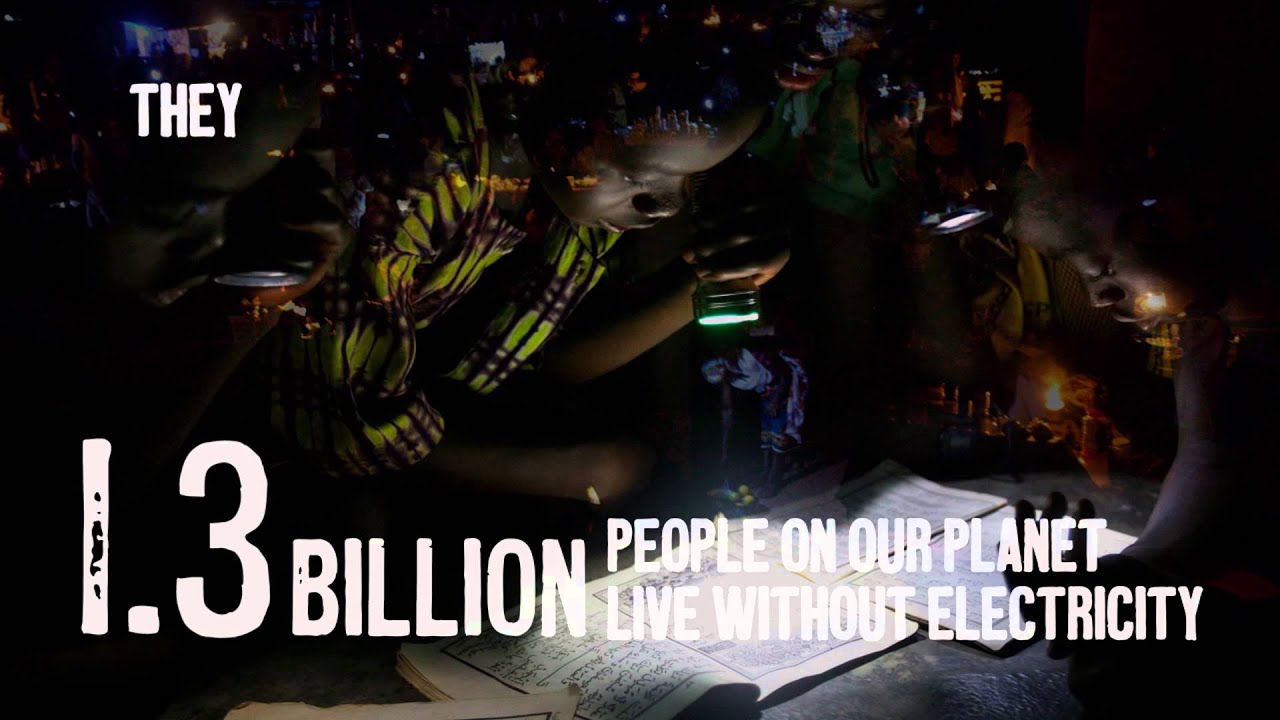 on Friday that aims to pick apart what he considers to be Earth Hour's errant messaging:
http://www.huffingtonpost.com/tom-zeller-jr/earth-hour-waste_b_2928892.html
===
http://www.lomborg-errors.dk/
:{ Bjørn Lomborgis a well-known personality in the environmental debate. He is the author of several books which, due to their copious lists of notes and references, appear very technical and scientific and therefore trustworthy. Unfortunately, those reading his books or listening to his lectures or seeing his film are rarely aware that the facts and statements presented by Lomborg are often not reliable. When experts in the fields covered by Lomborg check his texts, they most often find that the evidence has been distorted. Danish biologist Kåre Fog has systematically over many years checked Lomborg´s texts against his sources and references and against other scientific literature. His conclusion is that Lomborg´s texts are systematically manipulated to fit a certain agenda. The web site Lomborg-errors has been established to document this claim. It gathers and publishes errors found in Bjørn Lomborg´s books, especially "The Skeptical Environmentalist" (2001) and Cool it! (2007).}: :{ In addition, it gives information on cases and activities related to Bjørn Lomborg, attempts to describe his methods, and points out cases where the claims about Lomborg´s dishonesty seem to hold true. From January 2008, the page also comments on errors made by Al Gore, to allow a comparison where the two persons are judged by the same standards. The web site is set up by, written by and hosted by Kåre Fog.}: |
|---|
=
}: