RYAN, P REP
main node forgotten?
accidental tag not implemented?
see BAK 11/19
capt 218 txt 719
neglected in trump chaos
bailling out, iron stache? pension plan bet?___
pension plan
no lnx
Paul Ryan Is Poised to Earn Millions When He Retires Next Year
BY
BLOOMBERG
April 12, 2018
Paul Ryan will easily add to his already considerable net worth if he opts to stray from his native Wisconsin to join a corporate board or dabble in Washington power struggles when he retires next year as speaker of the U.S. House of Representatives.
“The kind of board that he would go after would probably pay between $250,000 and $300,000 a year and he could probably get three or four of them,” said Fred Foulkes, a professor of at Boston University’s Questrom School of Business. “There would be dozens that would like to have him, particularly companies that have part of their business in key relationships with certain parts of government.”...
Ryan, 48, who said he was retiring to be more than a “weekend dad,” could easily follow the path of previous congressional leaders, including Newt Gingrich and Richard Gephardt, who became corporate directors. Former Speaker John Boehner, his immediate predecessor, recently joined the advisory board for U.S. cannabis producer Acreage Holdings and is already serving on the board of Arizona Mining Inc. and the advisory board to JBS USA, the American arm of a Brazilian food giant. That’s in addition to being a senior strategic adviser at the law firm of Squire Patton Boggs LLP.
Ryan cannot jump right into lobbying, there’s a one-year cooling-off period for representatives, two for senators. But nothing bars him from joining boards.Since 1992, 44 percent of senators and 11 percent of representatives who’ve departed Capitol Hill have ended up in boardrooms, according to research from Harvard University and Boston University that was published before the 2016 election.
From Capitol to Capital
A Bloomberg analysis before that election showed that among directors who had previously served in Congress there were 31 Democrats and 33 Republicans, with the average pay more than $330,000.
Ryan will no longer be making his speaker’s salary of $223,500, but he will be eligible for a pension in a few years, and has an estimated net worth of slightly more than $6 million, according to a Center for Responsive Politics analysis of his 2016 financial filings. AshLee Strong, a Ryan spokeswoman, didn’t respond to an email seeking comment on her boss’ potential future employment.
Bloomberg Data: The Lucrative Road From Congress to Corporate Boards
When he accepted the speaker’s post in 2015, Ryan said he would do so only under certain conditions — including that he would reduce the amount of travel involved. He said he wanted to spend most weekends at home in Janesville, Wisconsin, where he and his wife, Janna, have three school-age children.
Ryan managed to spend most weekends sleeping in his brick home on a quiet street, although it meant his political team had to schedule fundraising and other events during the week.
“Basically, the guy is viewed as Mr. Middle America — he’s a capitalist who wants companies to do well — board service would make a lot of sense for him,” said Tom Flannery, who leads the global chief executive board services practice at Boyden, the executive recruiter. “It’s something he could do very well and still get to spend a lot of time with his family and hunting and fishing and whatever else he does.”
Corporations aren’t the only option. Since giving up the gavel in 1998, Gingrich has had more than a dozen books on the New York Times bestseller list and earned millions in consulting fees from health care, financial and other interests. When he ran for the Republican presidential nomination in 2012, he released his 2010 tax return, which showed adjusted gross income of $3.2 million.
Ryan would have no trouble finding work back in Washington, even if he chose to limit the time he spent in the capital, said Ivan Adler, principal at the McCormick Group Inc., an executive search firm. “A part-time Paul Ryan is better than full-time of lots of other people in Washington,” he said.
“He’s very well-connected to the business community and he’s a substance-based thinker on policy issues,” Adler said. That kind of experience will earn a premium. “He’s a million-dollars-plus easily, and people will be glad to pay it.”
Former New York congressman Thomas Reynolds, who entered the House in the same 1999 freshman class as Ryan and is now a lobbyist, said he believes Ryan’s immediate post-congressional aspirations will be different from that of his recent predecessors.
“At 48, I don’t see him going to work right away as a lobbyist, though he certainly is capable of that,” said Reynolds, a senior policy adviser at Holland & Knight LLP.
Rather, Reynolds said he expects Ryan to “keep his options open” for a re-entry into politics. And he said that could be as a highly paid speaker, or as a policy expert at a think-tank, and possibly serving on some corporate boards.
look at Paul Ryan’s illustrious career as a cash grab for billionaires
Peter Certo / TruthdigDecember 24, 2018
Paul Ryan was never a serious thinker and he didn’t care about debt. He was a frat bro from a wealthy family who read a lot of Ayn Rand.
... five straight years before Ryan took over, deficits had declined. By the time he gave his self-satisfied farewell, they’d increased by $343 billion— a product of Ryan’s tax breaks for corporations and millionaires, which will cost $2 trillion over the next decade...
thanks to the very deficit he created, Ryan then left office warning that Congress needed to cut — you guessed it — Medicare and Social Security. (No doubt he’s still stinging from his 2017 failure to throw 24 million Americans off their health care — a feat of pure sociopathy he actually said he’d been dreaming about since he “was drinking out of kegs.”)
Ryan was never a serious thinker and he didn’t care about debt. He was a frat bro from a wealthy family who read a lot of Ayn Rand, a writer who called it “a disease” to do anything good for “the primordial savages” who made up “the collective” — i.e., the public....
==
a look at Paul Ryan’s illustrious career as a cash grab for billionaires
Peter Certo / TruthdigDecember 24, 2018
Paul Ryan was never a serious thinker and he didn’t care about debt. He was a frat bro from a wealthy family who read a lot of Ayn Rand.
no lnx
A look at Paul Ryan’s illustrious career as a cash grab for billionaires
Written by Peter Certo / Truthdig December 24, 2018
Each New Year’s, my wife and I indulge one of our favorite traditions: the household purge. We scour our closets for stuff that’s just taking up space, quietly draining our home’s energy, and move it along. I can’t recommend it enough.
This year, America’s doing the same thing — and putting House Speaker Paul Ryan out on the curb.
For years, the ten-term Wisconsin Republican — who’s retiring as Democrats prepare to take over the House — enjoyed an improbable reputation as a “deficit hawk” and “deep thinker” about fiscal issues.
Year after year, as House budget chairman, Ryan would roll out his latest “blueprint.” He’d literally roll up his sleeves for the cameras and detail his latest plans to slash rich people’s taxes and scale back public services for everyone else.
For a while, mainstream liberals greeted Ryan as a serious interlocutor.
They treated his plans to privatize Medicare, eviscerate Social Security, and shred the safety net as valid viewpoints in the Adult Conversation they wanted politics to be. Even if you didn’t agree with him, they said, you had to admit Ryan “had a plan” to “deal with the debt.”
That scam propelled Ryan to the House speakership in 2015. Then the long con really took off.
For five straight years before Ryan took over, deficits had declined. By the time he gave his self-satisfied farewell, they’d increased by $343 billion — a product of Ryan’s tax breaks for corporations and millionaires, which will cost $2 trillion over the next decade.
Thanks to the very deficit he created, Ryan then left office warning that Congress needed to cut — you guessed it — Medicare and Social Security. (No doubt he’s still stinging from his 2017 failure to throw 24 million Americans off their health care — a feat of pure sociopathy he actually said he’d been dreaming about since he “was drinking out of kegs.”)
Ryan was never a serious thinker and he didn’t care about debt. He was a frat bro from a wealthy family who read a lot of Ayn Rand, a writer who called it “a disease” to do anything good for “the primordial savages” who made up “the collective” — i.e., the public.
A bad model for public servants, if you ask me.
True to his training, Ryan presided over a massive cash grab by America’s billionaires and left the rest of us “savages” to pick at the scraps. No wonder Ryan never mounted that “principled conservative” challenge to Donald Trump in 2016 — on this they agreed entirely.
Ryan’s crimes go beyond what fits in spreadsheets. After signing off on over $700 billion for the Pentagon — no austerity for that agency, which has never passed an audit — Ryan concluded his speakership with an act of pure villainy. He tucked a provision into this year’s Farm Bill that prevented even a debate on ending U.S. support for the Saudi war in Yemen.
The UN calls that war the greatest humanitarian crisis on the planet. It’s caused over 85,000 children to starve to death. Almost miraculously, after years of inaction, the U.S. Senate just concluded a remarkable bipartisan vote to get the U.S. out of it.
In stymieing that effort with low procedural tricks, Ryan “used the Farm Bill to starve children,” as The American Conservative put it.
The silver lining is that Ryan’s villainy — like Trump’s — spurred the growth of powerful movements to expand health care, rebalance the economy, and get the U.S. out of immoral wars. Lawmakers from those movements — Alexandria Ocasio-Cortez, Ilhan Omar, Rashida Tlaib, and others — and a new House majority can now get to work burying Ryan’s legacy forever.
No one who isn’t a billionaire — or a bombmaker — will miss him.
==
https://www.alternet.org/2019/09/life-after-trump-paul-ryan-is-now-embarrassed-by-the-president-and-is-pushing-fox-news-to-dump-the-him
report describes the behind-the-scenes crisis emerging at Fox, which has been thrown into turmoil as the Democrats’ rapid impeachment push knocks the network off-kilter. Most dramatically, that disruption has played out in an on-air feud between hosts Shep Smith and Tucker Carlson. Sherman found that Fox News CEO Suzanne Scott and President Jay Wallace felt compelled to intervene and tell Smith to back off, though a spokesperson for the network denied this claim.
The report continued:
The ultimate referee of this fight will be Lachlan Murdoch. In recent months, Rupert’s oldest son has been holding strategy conversations with Fox executives and anchors about how Fox News should prepare for life after Trump. Among the powerful voices advising Lachlan that Fox should decisively break with the president is former House speaker Paul Ryan, who joined the Fox board in March. “Paul is embarrassed about Trump and now he has the power to do something about it,” an executive who’s spoken with Ryan told me. (Ryan did not return a call seeking comment.) But a person more sympathetic to Trump has told Lachlan that Fox should remain loyal to Trump’s supporters, even if the network has to break from the man.
==
Former House Speaker Paul Ryan has been appointed to the board of the new Fox Corp., which began trading publicly Tuesday following the completion of Walt Disney’s purchase of 21st Century Fox.
Fox Corp. is now parent company to Fox News and Fox Business as well as broadcast TV stations, several sports channels and other holdings.
Ryan will be joining the board along with Anne Dias, founder of the investment firm Aragon Global Holdings and the ex-wife of hedge fund billionaire Ken Griffin; Chase Carey, chairman and CEO of Formula One; and Roland Hernandez, CEO of Hernandez Media Ventures, the company announced Tuesday. Previously announced board members include Rupert Murdoch and his son Lachlan and Jacques Nasser, a former Ford executive.
“We look forward to working with and being guided by them as we begin a new chapter, steadfastly committed to providing the best in news, sports and entertainment programming,” said Lachlan Murdoch, chairman and CEO of Fox Corp.
Class B shares of the new Fox Corp. were down more than 3 percent by late morning Tuesday. Disney announced in 2017 that it was purchasing many parts of 21st Century Fox for $52.4 billion in stock. Under the deal, a new holding company called New Disney became the parent company of Disney and 21st Century Fox.
Ryan, 49, was House speaker before Democrats took control in January. The Wisconsin Republican announced early last year that he was retiring from Congress to spend more time with his family. After leaving his post, he rebuked Washington’s “broken politics.”
Ryan recently faced criticism from fellow Republicans for claiming he believed that some Democrats could beat President Donald Trump in the 2020 presidential elections. He has since walked back his statements, saying the United States is “clearly” better off because of Trump.
Trump has been a longtime fan and avid watcher of Fox News and has close ties with some of the personalities on the network, including Sean Hannity and Jeanine Pirro.
A spokesperson fo...
==
passed voodoo tax cut
==
https://www.vanityfair.com/news/2019/07/paul-ryan-admits-he-was-a-fraud-all-along-tim-alberta-book
no lx
After the release of the Access Hollywood tape, which featured the future president bragging to Billy Bush about how his celebrity entitled him to sexually assault women, Paul Ryan canceled a scheduled appearance with Donald Trump and announced he would not campaign on behalf of the Republican nominee. “I am not going to defend Donald Trump,” then-House Speaker Ryan reportedly told his party at the time. “Not now, not in the future.” Ryan probably assumed he wouldn’t need to defend Trump in the “future,” as the prevailing wisdom was that Hillary Clinton would send him back to the bowels of reality TV from whence he came. But it was still a notable disavowal even if, in true Ryan form, it made no move to rescind his tortured Trump endorsement.
Of course, Ryan would break his promise after Trump’s shock victory. The self-styled wonk would, again and again and again, defend the president, enable him, and respond to his daily outrages with feeble handwringing. But the Wisconsin Republican is now trying to rehabilitate his doormat reputation. In a new book, portions of which were reported by the Washington Post on Thursday, Ryan tees off on the president, depicting him as a narcissistic, divisive loon and “uneducated about the government”—revelations that only further highlight how Ryan was knowingly complicit in Trump’s nightmare government.
“We’ve gotten so numbed by it all,” Ryan tells Tim Alberta in American Carnage, which examines how Republicans came to embrace Trump after an acrimonious 2016 race. “Not in government, but where we live our lives, we have a responsibility to try and rebuild. Don’t call a woman a ‘horse face.’ Don’t cheat on your wife. Don’t cheat on anything. Be a good person. Set a good example.”
Ryan, who tells Alberta that he viewed his retirement as an “escape hatch” to get away from Trump, plays up the “adults in the room” myth, suggesting his deference allowed him to steer Trump on a better course.“I told myself I gotta have a relationship with this guy to help him get his mind right,” Ryan recalls. “Because, I’m telling you, he didn’t know anything about government…I wanted to scold him all the time. Those of us around him really helped to stop him from making bad decisions. All the time,” Ryan continues. “We helped him make much better decisions, which were contrary to kind of what his knee-jerk reaction was. Now I think he’s making some of these knee-jerk reactions.”
It’s a line Ryan has echoed before. “I can look myself in the mirror at the end of the day and say I avoided that tragedy, I avoided that tragedy, I avoided that tragedy. I advanced this goal, I advanced this goal, I advanced this goal,” he told the New York Times in a lengthy exit interview last August. And of course, it’s intended to paint Ryan in the best possible light, similar to John Kelly, Rex Tillerson, and others who suggested they only stood by Trump out of some high-minded sense of duty to the country. Of course, none actually succeeded in serving as a real moderating influence. They may be better than the sycophants he’s surrounded himself with now, but Kelly, Tillerson, and Ryan consistently failed to keep the president’s impulses in check. Worse, they lent a veneer of normalcy to a president who was decidedly not. Ryan makes clear in Alberta’s book that he knew Trump to be an unqualified jackass. In one anecdote, the House Speaker receives an early-morning phone call from then-chief of staff Reince Priebus asking him to read a tweet the president had just fired off.
“Terrible!” Trump wrote. “Just found out that [Barack Obama] had my ‘wires tapped’ in Trump Tower just before the victory. Nothing found. This is McCarthyism!”
The tweet, offered without proof or basis in reality, sent Ryan into “maniacal, punch-drunk laughter,” according to Alberta. This behind-the-scenes Ryan hardly squares with the public Ryan, who repeatedly came to the president’s defense and downplayed his maddening Twitter addiction. “I actually don't pay that much attention to it,” Ryan once said of the president’s incessant shitposting.
That Ryan is now back to bashing Trump is, perhaps, a step above some of his former colleagues, who have turned into rabid, mindless supporters of the president. But it’s hardly courageous to point out Trump’s plainly obvious defects after the fact. So far, just one Republican—Justin Amash, who left the party earlier this month—has openly criticized the president. “These guys have all convinced themselves that to be successful and keep their jobs, they need to stand by Trump,” Amash tells Alberta in the book. “But Trump won’t stand with them as soon as he doesn’t need them. He’s not loyal. They’re very loyal to Trump, but the second he thinks it’s to his advantage to throw someone under the bus, he’ll be happy to do it.”
Aftr the release of the Access Hollywood tape, which featured the future president bragging to Billy Bush about how his celebrity entitled him to sexually assault women, Paul Ryancanceled a scheduled appearance with Donald Trump and announced he would not campaign on behalf of the Republican nominee. “I am not going to defend Donald Trump,” then-House Speaker Ryan reportedly told his party at the time. “Not now, not in the future.” Ryan probably assumed he wouldn’t need to defend Trump in the “future,” as the prevailing wisdom was that Hillary Clintonwould send him back to the bowels of reality TV from whence he came. But it was still a notable disavowal even if, in true Ryan form, it made no move to rescind his tortured Trump endorsement.
Of course, Ryan would break his promise after Trump’s shock victory. The self-styled wonk would, again and again and again, defend the president, enable him, and respond to his daily outrages with feeble handwringing. But the Wisconsin Republican is now trying to rehabilitate his doormat reputation. In a new book, portions of which were reported by the Washington Post on Thursday, Ryan tees off on the president, depicting him as a narcissistic, divisive loon and “uneducated about the government”—revelations that only further highlight how Ryan was knowingly complicit in Trump’s nightmare government.
“We’ve gotten so numbed by it all,” Ryan tells Tim Alberta in American Carnage, which examines how Republicans came to embrace Trump after an acrimonious 2016 race. “Not in government, but where we live our lives, we have a responsibility to try and rebuild. Don’t call a woman a ‘horse face.’ Don’t cheat on your wife. Don’t cheat on anything. Be a good person. Set a good example,"
Ryan, who tells Alberta that he viewed his retirement as an “escape hatch” to get away from Trump, plays up the “adults in the room” myth, suggesting his deference allowed him to steer Trump on a better course. “I told myself I gotta have a relationship with this guy to help him get his mind right,” Ryan recalls. “Because, I’m telling you, he didn’t know anything about government…I wanted to scold him all the time. Those of us around him really helped to stop him from making bad decisions. All the time,” Ryan continues. “We helped him make much better decisions, which were contrary to kind of what his knee-jerk reaction was. Now I think he’s making some of these knee-jerk reactions.”
It’s a line Ryan has echoed before. “I can look myself in the mirror at the end of the day and say I avoided that tragedy, I avoided that tragedy, I avoided that tragedy. I advanced this goal, I advanced this goal, I advanced this goal,” he told the New York Times in a lengthy exit interview last August. And of course, it’s intended to paint Ryan in the best possible light, similar to John Kelly, Rex Tillerson, and others who suggested they only stood by Trump out of some high-minded sense of duty to the country. Of course, none actually succeeded in serving as a real moderating influence. They may be better than the sycophants he’s surrounded himself with now, but Kelly, Tillerson, and Ryan consistently failed to keep the president’s impulses in check. Worse, they lent a veneer of normalcy to a president who was decidedly not. Ryan makes clear in Alberta’s book that he knew Trump to be an unqualified jackass. In one anecdote, the House Speaker receives an early-morning phone call from then-chief of staff Reince Priebus asking him to read a tweet the president had just fired off.
“Terrible!” Trump wrote. “Just found out that [Barack Obama] had my ‘wires tapped’ in Trump Tower just before the victory. Nothing found. This is McCarthyism!”
The tweet, offered without proof or basis in reality, sent Ryan into “maniacal, punch-drunk laughter,” according to Alberta. This behind-the-scenes Ryan hardly squares with the public Ryan, who repeatedly came to the president’s defense and downplayed his maddening Twitter addiction. “I actually don't pay that much attention to it,” Ryan once said of the president’s incessant shitposting.
That Ryan is now back to bashing Trump is, perhaps, a step above some of his former colleagues, who have turned into rabid, mindless supporters of the president. But it’s hardly courageous to point out Trump’s plainly obvious defects after the fact. So far, just one Republican—Justin Amash, who left the party earlier this month—has openly criticized the president. “These guys have all convinced themselves that to be successful and keep their jobs, they need to stand by Trump,” Amash tells Alberta in the book. “But Trump won’t stand with them as soon as he doesn’t need them. He’s not loyal. They’re very loyal to Trump, but the second he thinks it’s to his advantage to throw someone under the bus, he’ll be happy to do it.”
==
https://www.politico.com/magazine/story/2019/07/16/donald-trump-paul-ryan-feud-227360
Inside Trump's Feud With Paul Ryan - POLITICO Magazine
https://www.politico.com/magazine/story/.../donald-trump-paul-ryan-feud-227360
:{
1.
}:
6 days ago - It was barely 2 o'clock in the afternoon and Paul Ryan was offering me a beer. We stood in a cramped break room — microwave, sink, ...
-----no lnx
politico
Tim Alberta is chief political correspondent at Politico Magazine.
It was barely 2 o'clock in the afternoon and Paul Ryan was offering me a beer.
We stood in a cramped break room — microwave, sink, refrigerator stocked with Miller Lite — on the third floor of a brick building in Janesville, Wisconsin, making small talk before sitting down in his adjacent office for a lengthy interview. Ryan was relieved to be home. A few weeks earlier, he had packed up his final belongings and left Washington for good, ending a 20-year career in Congress that saw him occupy roles ranging from right-wing wunderkind to vice presidential candidate to unifier of a fractured party to chief enabler of President Donald Trump.
That final leg of Ryan's political journey had been the most exhausting. Once upon a time, he had been mortified at the prospect of Trump as the GOP nominee, spending much of 2015 and 2016 telling anyone who would listen that the reality TV star was immoral and unfit for office. Even after Trump vanquished the Republican primary field, Ryan refused to muffle his objections, at one point memorably rebuking the party’s new standard-bearer for making “the textbook definition of a racist comment.” Yet when the time came for choosing on November 8, 2016 — to risk his speakership by continuing to hold the new president accountable or preserve his standing in the party by taking a vow of silence — Ryan did not think twice. There was historic work to be done, he told friends, and quarreling with Trump would prove wholly counterproductive. He could not afford to be both the speaker of the House and the conscience of the Republican Party.
What ensued was a bruising, mortifying, tortured 26-month partnership between two men who disliked one another but had become convinced of the necessity of a ceasefire. It was, Ryan told friends, at once the most auspicious and agonizing stretch of his adult life. Even while securing enormous new funding for the military and rewriting the tax code, he knew history would remember Republicans for operating in the shadow of a president whose performance eclipsed their hardest-won legislative accomplishments.
Ryan’s dilemma was much like the conundrum the Republican Party faces today: Do we condemn Trump’s latest offensive comments — in this case a string of tweets and remarks urging a quartet of Democratic lawmakers of color to “go back” to their countries of origin — or do we swallow our tongues and work with the man? Should we look to history’s judgment, or just try to get as much done as possible despite our distaste? Most Republicans have chosen the latter, even if they might regret it later.
Does Ryan have regrets? A few. Having remained acquiescent until the day he left office — including during our first interview for my new book, in the fall of 2018, when the speaker uttered nary a negative syllable about the president — he was ready to unleash in retirement. There was no mistaking the look in his eye or the tone in his voice; having covered the former House speaker for many years, talked with him countless times and studied his mannerisms, I could sense immediately when we met in Janesville that he was both liberated (hence the afternoon beer offering) and deeply, visibly agitated. He was ready, at long last, to unpack his conscience.
He started with some throat-clearing, touting the “legal substance that stands a longer test of time” than Trump's demagoguery — a restructured tax code, a bigger military, a conservative judiciary. But Ryan’s grimace gave him away. It was obvious, as he went on talking about the “disruption" roiling the nation and how America has endured “ugly” periods before, that Ryan had begun to reckon with the legacy of Trumpism and his role in accessorizing it. It didn’t take much poking for the dam to burst.“We’ve gotten so numb to it all,” he told me. “Not in government, but where we live our lives. We have a responsibility to try and rebuild. Don’t call a woman a ‘horse face.’ Don’t cheat on your wife. Don’t cheat on anything. Be a good person. Set a good example. And prop up other institutions that do the same. You know?”For a man who ascended to the speakership, two heartbeats away from the American presidency, Ryan has never possessed finely tuned political antennas. His aides have long joked, and often cringed, about a certain aloofness that accompanied his self-projected image as a “policy guy.” But I got the sense that Ryan knew what he was doing in that moment. It was not a momentary lapse when he invoked the president's former porn-star mistress. Nor was it a slip of the tongue when, time and again as the interview wore on, he described Trump’s clumsiness as a chief executive, detailed the measures taken to keep the government from falling apart, and emphasized how often he’d held back on scolding the president publicly for fear of making a bad national situation worse.
Ryan recognized the gravity of what he was saying and the backlash it would invite from the most powerful man in the world. He also seemed to anticipate the outrage it would elicit from critics who would demand to know: Why not push back on the president's misdeeds while still holding the second-most powerful job in government?
“I felt a major onset of responsibility to help the institutions survive,” Ryan recalled, telling me how he didn't sleep one wink on election night 2016. “So, from the next day on, my mantra was: ‘Only one person can be speaker of the House. I’m not a pundit, I’m not a think-tanker. Our job from now on is to build up the country’s antibodies ... to have the guardrails up, to drive the car down the middle of the road, and don’t let the car go off into the ditch.’"
Ryan added: “I told myself, I got to have a relationship with this guy to help him get his mind right. Because, I’m telling you, he didn’t know anything about government. So I thought, I can’t be his scold, like I was. ... I wanted to scold him all the time. What I learned as I went on, to scratch that itch, I had to do it in private. So, I did it in private—all the time. And he actually ended up kind of appreciating it. We had more arguments with each other than pleasant conversations, over the last two years. And it never leaked.”
His justification for this approach is simple: The alternative could have been worse.If Ryan went after Trump every day, and the president went nuclear and pushed him out of the speakership, then who would be left to lead the House? Kevin McCarthy, a yes-man with far less inclination to tangle with Trump? Or perhaps one of the Freedom Caucus honchos, Jim Jordan or Mark Meadows, hard-liners known to encourage the president's most self-destructive impulses? Like many of his allies in the administration — then-Defense Secretary Jim Mattis, then-White House chief of staff John Kelly, then- Secretary of State Rex Tillerson — Ryan believed that only by avoiding public confrontation with the president could he retain his influence and that only by retaining his influence could he help mitigate the damage being done by Trump.
“Those of us around him really helped to stop him from making bad decisions. All the time,” Ryan said. “It worked pretty well. He was really deferential and kind of learning the ropes. ... We helped him make much better decisions, which were contrary to kind of what his knee-jerk reaction was.”
Of course, Mattis and Kelly and Tillerson served at the pleasure of the president. Ryan did not. He was charged with leading a co-equal branch of the federal government, the one assigned primacy under Article I of the Constitution, the one responsible for checking the excesses and abuses of the executive. It's true that speaking out might have cost him his job. But it's also true that Ryan's silence — and the silence of so many Republicans, from party leaders to rank-and-file members — emboldened Trump to push his rhetoric into ever-darker places.
The day I conceived of writing this book was Friday, January 8, 2016. I was in Columbia, South Carolina, having dinner with a friend and former colleague, Ron Brownstein, who pushed the idea of a reported narrative on the long-running Republican “civil war.” Ron and I were both in Columbia to cover an event Saturday morning: "The Poverty Summit," as it was called, a forum co-hosted by Speaker Ryan and Senator Tim Scott meant to showcase the GOP's outreach to poor and minority voters. In front of the most multiethnic crowd I'd ever seen at a Republican event, numerous presidential hopefuls — Marco Rubio, Jeb Bush, John Kasich — took turns joining Ryan and Scott onstage to discuss the imperative of expanding the party's message, becoming more inclusive, embracing diversity and empathy as core American characteristics.
Donald Trump didn't show up that day. He rejected the invitation to attend. That was just fine with Ryan: He told friends that weekend that it was their mission to neutralize Trumpism or else risk losing control of their party."We have a bifurcated country, we have a polarized country,” Ryan told me that weekend, sitting inside a downtown hotel conference room. “One of the reasons I think it’s polarized is because of identity politics on the left. Now some on the right are playing it.”
When I asked who on the right was guilty of playing identity politics, Ryan just smiled. It was a confident smile: Given what he knew about Republican politics, given the energy in Columbia that weekend, given the hunger he saw for unity and aspirational politics, he was going to lead the charge to vanquish Trumpism and deliver the GOP into a new era.
As we sat together three years later in Janesville, that smile had vanished. And it was Ryan — along with his vision for the party — who had been vanquished. He acknowledges he could have done more to push back against Trumpism, but knowing what we know now, he doubted it would have altered the outcome.As I wrote in the book:
For a long stretch of the 2016 campaign, Ryan refused to accept Trump’s takeover of the GOP. He traversed the stages of grief: denial (no way can Trump win), anger (“I called him a racist!”), bargaining (the RNC PowerPoint slides), and depression (“This is fatal,” he told Reince Priebus) before finally coming to terms with it. This resistance was grounded in a basic belief that the Republican Party was still his party. Looking back, Ryan says, he should have known better. Having considered the converging political, cultural, and socioeconomic events of the twenty-first century and reflected on them in the context of historical intraparty ideological swings, he recognizes now that the American right was primed, even overdue, for revolution.That revolution produced a president who has remade conservatism, and the GOP itself, in his own image: "isolationist, protectionist, and kind of xenophobic, anti-immigrant," as Ryan describes it. The party has fallen in line: The reason so few Republican lawmakers are willing to challenge Trump when he espouses hateful, bigoted rhetoric — as he did this week — is that they recognize the party is now Trump's, and to challenge him is to suffer the sort of excommunication Ryan feared.The irony, of course, is that Ryan wound up on Trump's enemies list anyway — called "weak" and "stupid" and a "failure" by a president who leaned heavily on the speaker to pass the party's legislative agenda through a fratricidal Congress.
If the past week has taught Republicans anything, it's that history will not recall fondly those who wait until their time in government has expired to warn the world of the president's inadequacies. Many will remain silent because they view his custody of the party as fleeting and unsustainable, believing that his eventual exit from office will allow them rehabilitate the Republican brand. And yet, that silence is what solidifies Trump's chokehold on the American right — a lesson Ryan had to learn the hard way.
“Trumpism is a moment, a populist moment we’re in, that’s going to be here after Trump is gone. And that’s something that we’re going to have to learn how to deal with,” Ryan said. “I’m a traditional conservative, and traditional conservatives are definitely not ascendant in the party right now. ... We called our wing ‘the growth wing,’ and we won for a good 20 years. And now their wing is winning. But it’s cyclical. We beat the paleocons in the early '90s; they’re beating us now.
“The Reagan Republican wing beat the Rockefeller Republican wing,” Ryan concluded. “And now the Trump wing beat the Reagan wing.”
This article tagged under:Paul Ryan Donald Trump Primary Source---
In New Book, Paul Ryan Admits He Was a Fraud All Along | Vanity Fair
https://www.vanityfair.com/.../paul-ryan-admits-he-was-a-fraud-all-along-tim-alberta-...
1.
whatever happened to gop breif we care about poor ppl scam?
no lnx
Lately, one argument that’s been making the rounds is that people should worry less about inequality and more about opportunity. Arthur Brooks, head of the conservative American Enterprise Institute, said, “I don’t care about income inequality per se; I care about opportunity inequality.” Senator and presidential candidate Marco Rubio believes that inequality is but a symptom of immobility and constrained opportunity. Tyler Cowen argued in the New York Times that what matters is not the fact that the top 1 percent is capturing a much larger share of total income growth than they used to, but that the poor are stuck in poverty.
These individuals have identified a worthy goal. Unequal access to opportunity offends deeply held American values, and poverty is not only a matter of near-term material deprivation—too often, it also robs low-income children of the chance to realize their intellectual and economic potential.
But it’s not possible to effectively address either poverty or inadequate opportunity if America hives off its opportunity concerns from the broader problem of inequality (nor, as Senator Rubio intimates, can America reduce inequality by focusing solely on increasing mobility). Boosting mobility will require reductions in wage, income, and wealth inequalities.
For many in the opportunity-not-inequality camp, the relationship between the two concepts is an inconvenient truth. Concerns about inequality smack of “class warfare,” of “going after” the top 1 percent and Wall Street.Cowen is revealing in this regard: “The inequality focus tends to draw us to redistribution, whereas a mobility focus is more conducive to ideas for wealth creation.”
Many politicians and analysts would rather not address the power imbalances that have channeled so much of our economic growth to the highest-income families. They are much more comfortable focusing on the benign-sounding theme of “wealth creation” or insisting that economic growth alone can improve mobility without any redistribution of resources or political power, as if “a rising tide can lift all boats” matters when a few people are in yachts and many are stuck in dinghies.
But a growing body of research shows strong links among inequality, poverty, and opportunity. For example, new research by Elise Gould of the Economic Policy Institute reveals that of the factors most commonly cited as driving poverty in America—education, family structure, race and more (see chart below)—the number-one factor by far is the growth in inequality, which added seven percentage points to the poverty rate since the late 1970s.
So why is that? How is it that inequality reduces mobility and deepens poverty?
* * *
The relationship between childhood family income and life outcomes is well-established. Socioeconomic status is unfortunately the strongest predictor of a child’s academic achievement, as decades of social science research have found. A child’s income rank—her family’s income relative to the household income of other families—makes a difference for that child’s future adult-income rank as well. Research by Raj Chetty of Harvard and his colleagues links every 10-percentile-point gain in childhood income rank with a 3.4-percentile-point gain in income rank as an adult. Since inequality by definition means that less income will reach poor and middle class Americans for any given rate of economic growth, these facts alone highlight inequality’s relevance to mobility discussions.
In addition, a large and growing body of evidence, recently reviewed by Katharine Bradbury and Robert Triest of the Federal Reserve Bank of Boston, directly connects inequality of outcomes to inequality of opportunity. As shown in the figure below, Bradbury and Triest find a significant, negative relationship between living in an area with greater income inequality and children’s expected upward mobility.
The Relationship Between Inequality and Mobility
[no grafs]
Commuting zones with greater inequality have reduced expected upward mobility for low-income children (Center on Budget and Policy Priorities)]
It’s critical to understand the fundamental difference between these findings and the Cowen, Rubio, et al. view that America can address poverty without addressing inequality. As just noted,rising inequality implies that the income and wealth generated by GDP and productivity growth increasingly flow to those at the very top of the scale. As a result, relatively fewer resources reach everyone else. One thus would expect to see low-income families less able (relative to the wealthy ones) to invest in children’s futures, more indebted if they tried to go to college, more likely to be stuck in neighborhoods that lack opportunity, and more likely to experience the stressors that do permanent damage to children’s later educational and earnings outcomes.
And that’s exactly what happens.
Research indicates at least three causal pathways via which inequality constrains opportunity for those at the lower end of the economic spectrum.
First, inequality is driving increasing residential segregation by income. The shares of families in neighborhoods of concentrated poverty and neighborhoods of concentrated wealth both more than doubled between 1970 and 2009, while the share of families in middle-income neighborhoods declined from 65 percent to 42 percent. Those high-poverty neighborhoods—where more and more families are living—create lasting disadvantages for many who grow up there: If a family with young children (less than age 13) relocates from a high- to a low-poverty neighborhood, the kids achieve better academic and economic outcomes later in life, as new work by Chetty et al. indicates.
Second, inequality leads to unequal access to quality educational experiences throughout a child’s lifetime. Over the period of growing inequality, these disparities have increased. In 1995, for example, families with education debt in the bottom half of the net worth distribution (a broader definition of income, including assets minus liabilities) had a mean debt-to-income ratio of around 0.26, meaning that for every dollar of their income, they owed 26 cents in college debt. For families in the top 5 percent, that ratio was eight cents on the dollar. But by 2013, the debt-to-income ratio had more than doubled to 0.58 for the bottom half (some of whom are poor but many of whom are middle class) while remaining unchanged for those at the top.
Third, and most importantly, inequality directly undermines equality of opportunity, likely through a variety of mechanisms.As the gap between the rich and poor widens, lower-income families have less ability relative to their rich counterparts to invest in enrichment goods for their children. Children from families with less income have relatively less extensive and privileged social networks and, compared to their rich peers, are more likely to experience the type of "toxic" stress that can hamper brain development and long term academic, health, and economic outcomes.
In short, inequality entrenches immobility not just by enabling increasingly unequal transfers of wealth from one generation to the next, but also through a number of more subtle pathways that affect opportunity on a daily basis. It may not yet be possible to explain all of these subtle pathways with great certainty, but the fact that “rich and poor children score very differently on school readiness tests before they enter kindergarten” should be viewed as an unsurprising consequence of the high levels of inequality American society currently tolerates.
Members of the “don’t-mess-with-the-rich-to-help-the-poor” crowd also ignore the political dimension of inequality. While Rubio, Paul Ryan, and others are professing their concern for the poor, they’re busy trying to repeal the estate tax (at a cost of $270 billion over 10 years) and writing budgets that gut the safety net. These policies restrict mobility at both the bottom and top by exacerbating the burdens of being poor, increasing the privilege of being born into riches, and eliminating revenue sources for investments that might begin to reverse the inequality of opportunity. Why do politicians pursue such policies? Because they are nudged along by the interests of wealthy donors. Inequality begets greater inequality.
In other words, disadvantages faced by children in low- and middle-income families and advantages held by their wealthy peers are two sides of the same coin. The lack of opportunity for those in poverty is not some separate problem from the unequal distribution of wealth and income across society.
* * *
Boosting mobility therefore requires directly addressing residential segregation, educational access, and other barriers described above. Here are some ideas that hold promise:
One conclusion that stems from the Chetty et al. findings regarding the benefits of moving from high- to low-poverty areas is to improve the Department of Housing and Urban Development’s Housing Choice Vouchers (HCV) program. Housing analysts Barbara Sard and Doug Rice recently detailed a number of specific, straightforward changes that could eliminate barriers for voucher recipients to move into low-poverty areas, including tying voucher subsidies to rent in specific zip codes instead of entire metropolitan areas. Importantly, such a change could be implemented without significant funding or even congressional action, and HUD has just announced that it is considering doing so.
...
https://www.alternet.org/2019/04/paul-ryans-behind-the-scenes-reaction-to-trumps-win-revealed-report/
Sunday, Axios reported on the new revelations about the relationship between President Donald Trump and former House Speaker Paul Ryan (R-WI) as detailed in the upcoming book, “A Hill to Die On.”
Among the revelations were that after the release of the “Access Hollywood” tapeshowing Trump bragging that he could sexually assault women because he’s famous, Ryan explicitly told his fellow Republicans to feel free to abandon him: “He couldn’t shake the fact that Trump was so vulgar. People just don’t talk like that where I’m from,he thought.”
While Republicans have by now almost totally justified Trump’s remarks about women to themselves, at the time, many in the GOP decided to un-endorse Trump and condemn the behavior. That all changed after Trump won the election.
The book also details how Ryan was shocked by Trump’s unexpected victory, thinking to himself, “Oh my God … This guy might’ve done it,” and telling him “This is unbelievable … it looks like you’re going to win.”
Though Ryan held power he had not imagined during the first two years of the Trump presidency and backed nearly all of his agenda in the House, he reportedly found life miserable and frequently argued with the president on things like birthright citizenship. All of this may have contributed to Ryan’s decision to retire from the House ahead of the election that cost his party control of the chamber.
==
Fox Corp. board member Paul Ryan has been the subject of fawning praise from Fox News
Fox Corp., the parent company of Fox News, announced on March 19 that former Speaker of the House Paul Ryan (R-WI) will serve on its board of directors. Ryan had been the recipient of fawning praise from Fox News personalities in the past for his right-wing budget proposals and his selection by Mitt Romney as his vice presidential pick for the 2012 presidential election.
no lnx
fox Corp. board member Paul Ryan has been the subject of fawning praise from Fox News
Research ››› 42 min 17 sec ago ››› ZACHARY PLEAT
Fox Corp., the parent company of Fox News, announced on March 19 that former Speaker of the House Paul Ryan (R-WI) will serve on its board of directors. Ryan had been the recipient of fawning praise from Fox News personalities in the past for his right-wing budget proposals and his selection by Mitt Romney as his vice presidential pick for the 2012 presidential election.
Then-News Corp. chairman and CEO Rupert Murdoch on Ryan being selected as Mitt Romney’s running mate in 2012: “Thank God! … Paul Ryan almost perfect choice.”
[Twitter, 8/11/12]
Former Fox correspondent James Rosen described Ryan as having “a politically savvy intellect that is the equal to” that of then-President Barack Obama. [Fox News, Special Report with Bret Baier, 8/11/12]
Fox & Friends co-host Brian Kilmeaderaved that Ryan “can answer all the questions” about policy and is “the guy that snuck out in college to sneak back into his dorm room because he wanted to work on federal budget ideas.”
BRIAN KILMEADE (GUEST CO-HOST): This is the one thing about Paul Ryan which I find intriguing, and I didn't know about Sarah Palin, wasn't sure about Dan Quayle, and you wonder at times with others, with maybe President Bush sometimes -- he can answer all the questions. I've seen him in the sparring sessions; he knows the numbers inside and out. He's the guy that snuck out in college to sneak back into his dorm room because he wanted to work on federal budget ideas. He's the guy who leaped over seven different people with seniority to become budget director and senior member at Congress. So it's very intriguing to see a 41-year-old, who’s been in Congress since 28, who has these ideas that are new and that it’s created such anger on the other side. [Fox News, The Five, 8/11/12]
Kilmeade: “I’ve got to give Paul Ryan a ‘C’ for courage” for releasing a “forward-leaning budget proposal.” [Fox News, Fox & Friends, 3/20/12]
Kilmeade to Ryan: “Everyone respects the work you’re doing and how you’re attacking the debt and deficit.” [Fox News, Fox & Friends, 3/21/12]
Kilmeade on Ryan’s 2011 budget proposal: “He might be a genius, I’m pretty sure.” [Fox News, Fox & Friends, 4/4/11]
Former The Five co-host Andrea Tantaros ticked off praise for Ryan: “He sounds very Reagan-esque, he has a very positive message, and he's likeable.” [Fox News, The Five, 8/11/12]
Tantaros praised Ryan for having “some courage to start a discussion about” cutting government benefits. [Fox News, The Five, 3/20/12]
Former Fox contributor Pete Snyder said Ryan is a “rock star” on critical issues. [Fox News, America's News HQ, 8/11/12]
Former Fox contributor Peter Johnson Jr.: Ryan was a “bold, transformational pick” for Romney and “set the world on fire” with his policy ideas. [Fox News, Fox & Friends Saturday, 8/11/12]
Johnson Jr. also said Ryan “kind of looks like Jimmy Stewart in Mr. Smith Goes to Washington.” [Fox News, Fox & Friends Saturday, 8/11/12]
Johnson Jr.: Ryan is “kind of the rock star of American politics.” [Fox News, Fox & Friends Saturday, 8/11/12]
Former Fox contributor Charles Krauthammer in 2012 praised Ryan as “Kennedy-esque” and “the future” of the Republican Party. [Fox News, Fox & Friends Saturday, 8/11/12]
Former Fox chief political correspondent Carl Cameron described Ryan as “an Energizer Bunny” who “rocketed to the top of Republican politics.” [Fox News, Fox & Friends Saturday, 8/11/12]
Former Fox contributor Monica Crowley on Ryan pick for Romney’s VP: “Brilliant choice” and “the coolest. Period.”
Fox host Sean Hannity: Ryan pick for VP was an “outstanding choice.”
Hannity said of Ryan’s 2011 budget: “I love the budget.” [Fox News, Hannity, 4/5/11]
A Fox promo for a Hannity appearance by Ryan asked, “So how much does Paul Ryan think he can save America?” [Fox News, Fox & Friends, 4/5/11]
Hannity offered his shows to Ryan to promote Obamacare repeal: “You have my TV and radio show to do anything you want.” [Premiere Radio Networks, The Sean Hannity Show, 3/9/17]
Fox contributor Mike Huckabee: Paul Ryan will “look like the adult in the room” during the 2012 election. [Fox News, Fox & Friends Saturday, 8/11/12]
Former Fox contributor K.T. McFarland: The Romney-Ryan ticket is “like Reagan again.” [Fox News, America's Election HQ, 8/11/12]
Former Fox contributor Michelle Malkin gushed over Ryan on her website: “Fresh, young, energetic, smart, courageous, and ready for prime time.” [MichelleMalkin.com, 8/11/12]
Former Fox host Glenn Beck: “Thank God for Paul Ryan.” [Fox News, Glenn Beck, 4/12/10, via archive.org]
Beck called Ryan “a god among conservatives” and said to him during an interview: “I love you.” [Premiere Radio Networks, The Glenn Beck Program, 4/12/10]
Beck and Ryan told each other during an interview: “I love you.” [Premiere Radio Networks, The Glenn Beck Program, 4/5/11]
Beck proclaimed “man-on-man love” for Ryan over his 2011 budget proposal. [Premiere Radio Networks, The Glenn Beck Program, 4/5/11]
Fox News Sunday gave Ryan a birthday cake. During a January 2012 appearance by Ryan on Fox News Sunday, Fox anchor Chris Wallace ended the interview by noting that it was Ryan's birthday, and a staffer brought out a cake to mark the occasion. Wallace joked that the dollar sign on the cake represented the "federal dollar" and said Ryan should "cut into that sucker." [Fox News, Fox News Sunday, 1/29/12]
Fox anchor Bill Hemmer: Ryan releasing his 2012 budget plan "is going to go down as the single most important event in government history in our lifetimes." [Fox News Radio, Kilmeade & Friends, 3/21/12]
Fox host Dana Perino: Ryan “stands up on the merits” and “knows more about” Medicare “than anyone.” [Fox News, America's Newsroom, 5/25/11]
Former Fox host Juliet Huddy: Ryan was “breaking a lot of hearts” by “announcing he is not going to be running for the White House.” [Fox News, Fox & Friends, 8/23/11]
Former Fox host Gretchen Carlson praised Ryan as courageous for his 2011 budget proposal: “Isn't this all about the fact that ... no politician has ever gone where you have gone before?” [Fox News, Fox & Friends, 5/25/11]
Short Link
http://mm4a.org/424
copy link
Network/Outlet
Fox News Channel, Fox, Fox News Radio, michellemalkin.com, Premiere Radio Networks
Person
Paul Ryan, Rupert Murdoch, Sean Hannity, Glenn Beck, Carl Cameron, Peter Johnson Jr., Charles Krauthammer, Michelle Malkin, Juliet Huddy, James Rosen, Brian Kilmeade, Bill Hemmer, Andrea Tantaros, Pete Snyder, Monica Crowley, Mike Huckabee, KT MacFarland, Dana Perino, Gretchen Carlson
Show/Publication
FOX & Friends, Kilmeade & Friends, FOX News Sunday, The Glenn Beck Program, Glenn Beck show, America's Election HQ, Fox & Friends Saturday, The Sean Hannity Show, Hannity, America's News HQ, The Five, Special Report with Bret Baier
==
AN
'Good riddance' to Paul Ryan: A 'coward who sold our economy to highest bidders'
==
https://www.alternet.org/heres-why-paul-ryan-will-go-down-worst-house-speaker-ever
There’s considerable pathos and dramatic irony to the end of Paul Ryan’s political career — if you are able to view him from a distance, like a character in a Jonathan Franzen novel or a Netflix drama set in Norway. He’s a guy who believed he was out in front of history and positioned to shape it, but wound up being dragged behind the emperor’s chariot while the populace laughed at him and threw unpleasant objects. Until a few years ago, I bet he didn’t even know what “cuck” meant!
As an actual human player in the real world of American politics, however — assuming for the moment that anything about that world is real — Paul Ryan is pretty much contemptible. He was given a sort of parting valediction this week, in the form of a chummy conversation with Washington Post reporter Paul Kane that was broadcast on C-SPAN, and it was one of those strange D.C. spectacles that splits the difference between deadly dull and flat-out horrifying.
There was a rueful, semi-apologetic tone to the whole thing, as well there might be in the circumstances under which Ryan leaves the capital. Michael Cohen and Robert Mueller were mentioned, more or less in passing; Ryan acknowledged that he had heard of those people, but didn’t appear to have an opinion about them one way or another. This guy has been speaker of the House of Representatives throughout the period when the president of the United States has vigorously labored to undermine democracy and the rule of law, while being investigated for various kinds of corruption and conspiracy. That has been Ryan’s survival mode the whole time: What crisis? He hasn’t heard about any crisis; it’s all distant and vaguely irritating family gossip about an aunt he barely knows.
As Jonathan Chait of New York magazine put it,Ryan was allowed to depict himself in the Post interview as a “wonk-statesman” who had “pointed the way toward a brighter and more responsible future” and, at worst, had “failed only to achieve the ideals for which he strived.” Chait’s principal complaint is that Ryan’s posture of sad-eyed fiscal responsibility is utter hogwash, since he has consistently pursued policies that have massively increased the federal debt. That’s unquestionably true, but I would say the hypocrisy, mendacity and all-around fakery of Ryanism runs much deeper than that.
If Paul Ryan isn’t the worst House speaker in living memory, that might be because he only got to do it for three years. Mind you, the competition for that title is stiff, considering that the list includes a convicted child molester (Denny Hastert) and the vainglorious and self-destructive Newt Gingrich. But Ryan merits a special award for failure when you consider his inflated reputation for political genius, his built-in advantages — Republican majorities in both houses throughout his tenure, a Republican president for two-thirds of it — and his record of accomplishing virtually nothing.
In fact, to say that Ryan accomplished nothing with the speakership is to give him either too much credit or not enough. He damn near wrecked the place, but because he possesses a genial manner, a furrowed brow and a vague air of disapproval about Donald Trump’s most egregious racist outbursts, he was halfway understood not to be the problem. Ryan’s major legislative “achievements” were an Obamacare repeal bill that failed in the Senate and a tax giveaway to the rich that was supposed to be a political bonanza but became poisonous instead. Taken together, those things further damaged an already broken health care system, blew up the already engorged deficit and led his party to a historic and richly deserved drubbing in the 2018 midterms, which now appear to have been the biggest Democratic win since Watergate.
Arguably, the destructive or self-destructive legislation was the good part. Ryan will be remembered, if anyone bothers to do so, as a craven coward and collaborator: Janesville, Wisconsin’s apple-cheeked answer to Marshal Pétain. I don’t doubt that Ryan takes a baleful view of Donald Trump in private, or that at every step of the path that led him from Trump critic to Trump lickspittle, he found some sort of justification. Doesn't that makes it worse rather than better? Ryan told Kane in the C-SPAN interview that he showed Trump a chart for a two-year political agenda, presumably right around the time the latter took office:
The guy builds skyscrapers. He related to the chart. I saw a chance of getting a lot of good policy done that wasn’t a long time coming. You get a better outcome by keeping it that way [than] by posturing.
I take it we are supposed to think, as Ryan’s interlocutors appeared to think, that this was a reasonable, politician-type calculation — it’s the way grownups get things done, dammit! — even if "a lot of good policy" wasn't exactly the outcome in this instance. Well, I’m sorry, but it doesn’t make me feel better about Paul Ryan that he ditched his so-called principles and tolerated an authoritarian zombie white-nationalist takeover of his own political party in order to pass a dreadful tax bill and get rid of some environmental regulations the Koch brothers didn’t like.
Some of the Trump loyalists in Congress empowered or enabled by Ryan — who helped cover up the Russia scandal or apologized for the semi-fascist assault on democracy — at least have the excuse of being who they are: Devin Nunes is a power-drunk moron, Jim Jordan is a true believer, Matt Gaetz is both things at once. Ryan was supposed to have ideas and integrity and vision, whether or not you shared them, yada yada. He was believed to be intelligent and serious. He does not personally appear to be a bigot or a misogynist. He made the pundit class, always eager to be seen as fostering dialogueand taking on the hard issues — well, he made them ache and yearn and feel a little restless in their chinos, let’s put it that way.
I’m pretty sure it was all a scam. If Paul Ryan is just a con man running a game of apparent sincerity — which, OK, may have started out as actual sincerity — he perhaps recognized in Donald Trump a fellow con man who took it to the next level, or six levels up. Trump is a master of the art because he is blatantly insincere. He has never been sincere and believes sincerity is total bullshit, whereas Ryan sees it as an important element of the political performance.
Trump’s con is so effective because there is no adequate way to respond without being ridiculous. You can revel in his outrageous lies and embrace the yawning chasm at the heart of existence, or you can stand there with a clipboard and argue about facts. Ryan understood there was no way to compete with that without becoming the Poindexter cuckservative par excellence, which is what happened to him anyway.
My point here is that Paul Ryan’s total capitulation to Donald Trump makes clear that by 2016 Ryan had become a hollow man, a vessel emptied of its Reaganite ideology with no principles left to surrender. He already knew that the conservative movement was in ruins and that while there were plenty of Republican voters, they didn’t actually support the Republican Party as its Washington leaders understood it.
Ryan came to Washington as an Ayn Rand fanboy and purported policy-wonk intellectual, with visions of radically downsizing government and rehabilitating his party’s image for the 21st century. I remember seeing him on Fox News on the night of Barack Obama’s election in 2008, a moment that made him a Republican rising star: He was cheerful and funny and vowed that conservative ideas, presented in optimistic terms and connected to ordinary Americans' lives, would ultimately carry the day. It was decent shtick, and at the time he seemed to believe it. Four years later he was the GOP’s vice-presidential nominee at age 42, supposedly as the vector that would connect patrician “moderate” Mitt Romney to the libertarians and tax-cutters and movement conservatives.
In retrospect, the fact that the Romney-Ryan ticket was a bust, at a moment when Republicans believed they had channeled a current of Tea Party-fueled, anti-Obama populist outrage, was telling. That was an upside-down early indicator of gathering Trumpitude, and of something more fundamental that none of us quite grasped at the time: The American conservative movement, as it had perceived itself for 50 or 60 years, had run out of gas.
Culture-war politics had previously been seen as the glue that stuck together a disparate coalition of voters behind a party whose real agenda was to support big business, “law and order,” low taxes on the rich and expansionist foreign policy. But as Pat Buchanan astutely perceived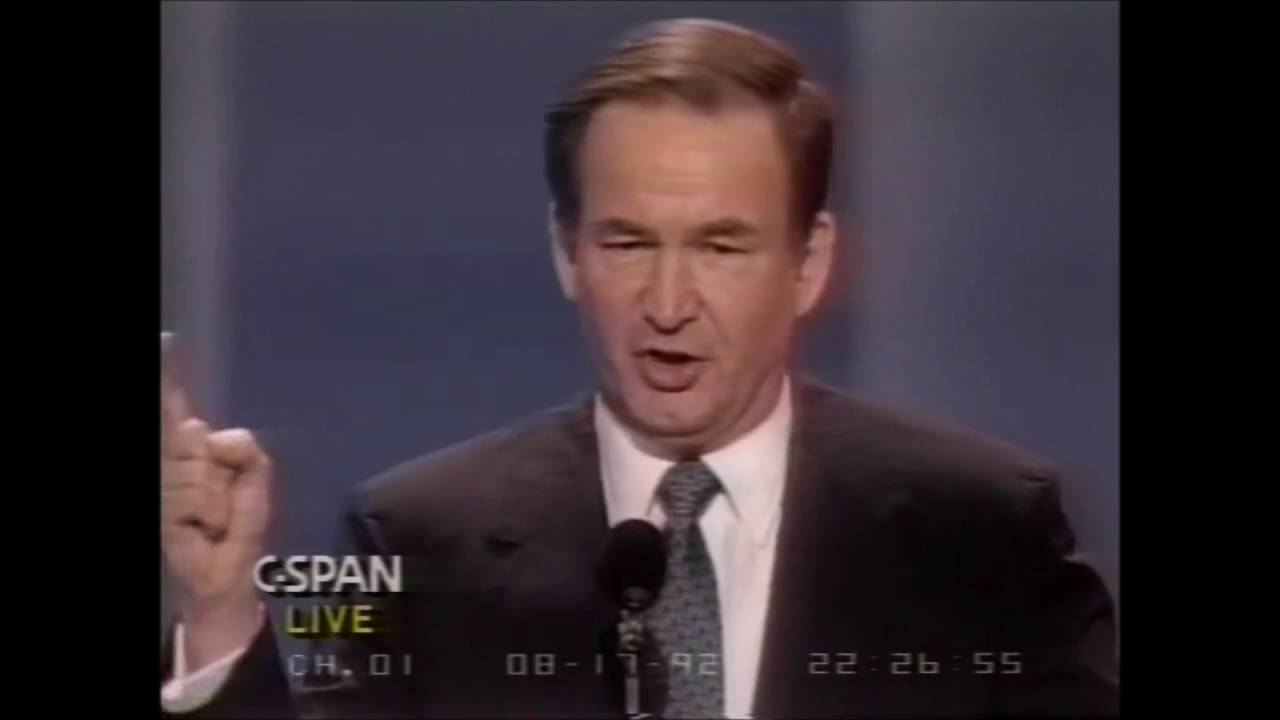 (in a truly terrifying speech I witnessed in person), ground-level Republican voters only wanted the culture war and barely tolerated that other stuff. In fact, except for unleashing cops against poor people, they actively disliked it: They were totally fine with government spending for programs they actually used, as long as the money could be steered away from black people and immigrants.
This is what my colleague Amanda Marcotte describes as the descent into “Troll Nation,” bringing us to the current moment when “conservatives” no longer hold any ideology worthy of that name, and possess no policy goals beyond public spectacles of cruelty and “owning the libs.” I imagine Ryan finds that regrettable, and longs for a day when earnest discussions of Friedrich Hayek’s theories of market perfection will come back into vogue. But he’s probably smart enough to understand that the game is up, which is why he’s crawling out of Washington now, not just defeated (there’s no shame in that) but thoroughly disgraced.
After the 2012 defeat, Ryan had a brief window as the Republican Party’s apparent moral and political leader; he backed a now-infamous “autopsy” urging the party to reach out to minority voters, women and young people or risk irrelevance. Remind me again how that worked out? Post-2016, Donald Trump has done his best to get that report scrubbed from the internet, although you can still find an archived copy in the cloud.
Whether or not a conventional, managerial center-right party could be constructed to appeal to those demographics is anyone’s guess. Amanda Marcotte would argue that it wouldn't work because those ideas have effectively been defeated; others might suggest that party already exists and is known as the Democrats. (Oh snap!) Anyway, that prescription was just wishful thinking or nostalgia by that point: The GOP had drunk deep from the poisoned well of whiteness for more than 40 years, and its fabled “base voters” were more than ready to gaze into the mirror and chant Donald Trump’s name.
Ryan makes plenty of preposterous assertions in that Post/C-SPAN interview, including the claim that Republicans have now mastered being a “governing party,” that people really liked his tax bill but somehow didn't vote for his party anyway, and that history will look back fondly at his brief and disastrous regime of supposedly united government. But the really big lie isn’t about his fiscal hypocrisy or his willful political blindness or his collaboration with a regime of corruption and destruction and the “Everything Must Go!” sell-off of the conservative movement’s soul. It’s the entire architectural premise of that conversation, in which Paul Ryan is a sober and serious political leader whose ambiguous legacy is worthy of a deep ponder.
He’s just not. He’s a second-rate grifter who came up short and got pimped out by a much better one. Now that his street value is down to nothing, he's being driven out of town with an empty suitcase and his last suit of clothes. That’s metaphorical, of course; you can always fail upwards on the American right, and no doubt Ryan will be richly rewarded for espousing policies he no longer believes in and have been proven not to work. Back in Janesville, they’ll keep on pretending he’s a big man.
https://www.alternet.org/news-amp-politics/republican-pac-publishes-security-application-former-cia-agent-running-democrat
Abigail Spanberger is the Democratic candidate in Virginia’s 7th district, and a former officer in the CIA. The Congressional Leadership Fund is a Republican Super PAC associated with Paul Ryan, which plans to hand out over $100 million to GOP candidates for the election this fall. But money isn’t the only thing that the PAC is handing out. They’ve also produced the application Spanberger submitted in seeking security clearance with the CIA, making her personal information public. How the PAC obtained this form is an open, and important, question.
:{
}:
According tothe New York Times, theRepublican Congressional Leadership Fundhas both published the form, with some personal information redacted, and made it available to reporters. Security applications, by their nature, provide highly detailed background information. They may require that the person involved produce information on actions that could potentially be embarrassing, even if not illegal.
As an example, since obtaining Spanberger’s form, a polling company connected with the Republican PAC has conductedpush pollsasking voters if they would be less likely to support the Democratic candidate “if she knew that the candidate had taught at a school funded by the Saudi royal family that had ‘numerous students arrested for terrorism.’” The Republican PAC has also put out a “news release” on this topic.
Spanberger is currently running strongly against Republican Representative Dave Brat in what the GOP had regarded as a “safe” district. With a broad range of endorsements and support, this represents another district that Republicans are finding a challenge in 2018 after a series of walk-over elections. So it’s understandable that Republicans are desperate to find an edge.
The problems is: Where did they find it? The Congressional Leadership Fund claims that the form was obtained through a FOIA request to the Post Office,where Spanberger worked briefly while waiting for clearance from the CIA. But the version of the document, and the fact that the copy given to reporters seems to be unredacted, does not square with the version that should be produced through a FOIA request. In fact, the unredacted form cannot be released under the Privacy Act.
The Democratic candidate has sent a cease-and-desist letter to the executive director of the Congressional Leadership Fund, demanding that the PAC destroy all copies of the form and “agree to not use the information in any fashion.” And the real question boils down to: Is someone within the Trump White House handing out classified information to be used against Democratic candidates?
The Richmond Times-Dispatch shows how Republicans are attempting to use even the controversy about how they obtained this document to harm Spanberger. A spokeswoman for the Congressional Leadership Fund replied to questions that “It should surprise no one that Ms. Spanberger would want to hide from voters that she worked at a school that produced some of the world’s most dangerous terrorists.”
Spanberger was a substitute teacher at a prep school for wealthy students, filling in for a teacher on maternity leave, between the time she finished her Masters degree and before she took her Post Office job. No student she taught has been connected to terrorism in any way. She also waited tables. Republicans have not yet produced a news release claiming that she served a plate of eggs to Osama bin Laden … but there’s still time.
Daily Kos Elections rated the VA-7 race as “Leans Republican” on Aug 22. The Cook Report has moved the race to “Toss up.”
==
He's Failed in the Face of Adversity': Former GOP Congressman Tears into Paul Ryan's Shameful Legacy
By Matthew Chapman, AlterNet
Ex-Rep. David Jolly did not mince words: he considers Paul Ryan an utter failure. READ MORE»
allowed vote on right and hard right immig bill goodlatte?
==
https://www.alternet.org/trumps-gop-house-henchmen-lay-groundwork-hold-top-doj-official-overseeing-russia-probe-contempt
Ryan caved to Donald Trump's Russia hatchet squad and now the GOP caucus is closer than ever to delivering Deputy Attorney General Rod Rosenstein an ultimatum: hand over every sensitive document they want on the Russia probe or be held in contempt and possibly impeached. Bloomberg writes:
Passing the resolution would escalate pressure on Deputy Attorney General Rod Rosenstein to hand over material, including some related to the origins of the investigation into whether Donald Trump’s presidential campaign colluded with Russian meddling in the 2016 election. The measure would give Rosenstein and other officials until July 6 to comply.
The resolution itselfdoesn't explicitly reference impeachment or even contempt and it's effectively unenforceable, but the House henchmen have been hanging that threat over Rosenstein's head for months. GOP Reps. Mark Meadows and Jim Jordan, so-called Freedom Caucus staples, now say the resolution is coming to the House floor on Thursday, contingent on the Rules Committee giving it final approval Wednesday afternoon.
full House vote would supercharge a battle that has primarily been waged by a handful of GOP zealots into potentially having the imprimatur of the entire Republican caucus. The showdown comes as both Rosenstein and FBI director Christopher Wray prepare to testify before the House Judiciary Committee Thursday morning about the agency's Inspector General report on the Clinton email investigation.
Rosenstein does not appear to be without some recourse. He has already threatened to request that the House conduct an internal investigation of the House Intelligence Committee staff. Though it's unclear where that stands, doing so would give him the ability to subpoena the internal communications of the staff.
...
==
https://www.alternet.org/holy-grail-republican-tax-cuts-about-paul-ryans-parting-gift-rich
==
ryan tried to fire for point out hypocrisy tax cut
https://www.alternet.org/news-amp-politics/house-chaplain-remain-work-after-issuing-scathing-letter-paul-ryan
==
am promise
3/18
The 28th Amendment is winning everywhere, not just in New Mexico and New Hampshire. In Wisconsin, Citizen Leaders are pushing their legislature to put a resolution on the ballot after nearly 100 local communities passed resolutions – including one in Speaker Paul Ryan’s hometown, Janesville, WI, where it passed with 84 percent support.
==
==
https://www.alternet.org/election-03918/house-speaker-paul-ryan-ousts-head-us-elections-assistance-commission-because-he
Top congressional Republicans really don’t want to safeguard or improve voting in America.
This week, Republican House Speaker Paul Ryan revealed that he was not re-nominating Matthew Masterson, the current chairman of the four-member U.S. Election Assistance Commission (EAC) who was known for taking non-partisan approaches and led the agency’s efforts to help states enhance cyber-security and anti-hacking protocols.
Ryan’s decision came a few weeks after both chambers of Congress passed a two-year federal budget that did not have any new funds for replacing the nation’s aging voting machinery, which is running on operating systems older than the first iPhones. (In contrast, House Democrats proposed legislation to spend $1 billion on upgrades.)
But Masterson’s apparent forced retirement has prompted a range of groans from an unusually broad spectrum of election lawyers, technology experts and top state officials. He was, by many accounts, a civil servant who put the public interest before political party, which, apparently, is not what Ryan and the Trump administration seek.
“All in all, this is terrible news if true,” wrote Rick Hasen, a University of California Irvine election law scholar and curator of the best-read election law blog, in response to Reuters’ scoop. “And it suggests he’s being canned because he’s not a party hack.”
“Masterson, a Republican appointee has been completely nonpartisan and professional, and willing to work across the aisle on issues (unlike the other Republican commissioner, Christy McCormick, who was a member of Trump’s now-disbanded sham election fraud commission),” Hasen noted. “His work with Democratic Commissioner Tom Hicks and others is a rare bright spot of bipartisan professional cooperation in an otherwise politicized field.”
The reactions to Ryan’s decision—he recommends the next EAC nominee; the White House then appoints that person—showed that Masterson was a Republican who put country before party. Democrats like Connecticut Secretary of State Denise Merrill, a National Association of Secretaries of States past president, was mortified.
“The news that President Trump and Speaker of the House Ryan are choosing this moment to oust Matt Masterson from the Election Assistance Commission is frankly alarming, and gives lie to everything that the Director of National Intelligence and the Secretary of the Department of Homeland Security have said about the importance of cybersecurity and protecting the sanctity of free and fair United States elections from foreign interference,” Merrill said in a statement. “Coming just weeks after the Ryan-led Republican House majority voted to eliminate the EAC, and just days after President Trump undercut his own intelligence agencies to again downplay Russia’s interference in the 2016 election, it is clear that Republican Congressional leadership and the Trump administration simply aren’t interested in ensuring that our elections are protected from Russian interference.”
“This is insanity,” Joseph Lorenzo Hall, an election security expert who is the chief technologist at the Center for Democracy & Technology, told Politico. “Matt is extremely capable and has been a champion of more secure and better elections the entire time he's been on the EAC.”
The EAC is a little-known federal agency that has been in GOP crosshairs for years. The Help America Vote Act of 2004 created the EAC. Its purpose was to help disperse multimillion-dollar grants to the states for new voting machines, and to create voting system guidelines and technical standards.
In its early years, many Republican secretaries of states were very frustrated that the EAC would not readily approve upgrades to the largely paperless systems that the privatized voting machine industry pushed on states—but didn’t perform as advertised. For years, Republicans sought to defund or dismantle the agency. When Masterson, an ex-election official from Ohio, became EAC chairman 14 months ago, the House had just passed a bill to shut down the agency.
Under his chairmanship, the EAC went from being in survival mode to assisting states with better practices to improve cyber security and to adopt higher standards for auditing the results to verify the vote. That shift included a greater reliance on paper ballots—not entirely electronic systems, which are still used by one-fifth of the country.
Masterson’s departure means the four-member EAC will have two vacancies, with a much more partisan Republican representing the GOP. As the Sierra Club noted it its press release condemning Ryan’s decision, “Christy McCormick, the only other GOP member of the EAC, served on the highly controversial Pence-Kobach [election reform] commission and previously called the report on Russian interference in the U.S. election ‘deceptive propaganda.’”
That work will surely continue, but it won’t have the head of a federal election agency proactively championing it—at least not under the current regime in Washington.But Masterson’s legacy was not just taking cyber security issues seriously. He also championed what’s called risk-limiting audits, which are a better way to ensure the accuracy of vote counts, and went to Colorado to observe its first statewide risk limiting audit and see what lessons were to be learned. He blogged about doing these kinds of vote checks in higher-stakes elections, like primaries, and mentioned other states, like Rhode Island, that were about to implement the practice.
Steven Rosenfeld
==
==
On television news, net neutrality dies in silence Trump's FCC voted this week to end net neutrality. This could have sweeping consequences and end the internet as we know it. The move will allow telecoms to control the internet, undermine the infrastructure of every website, and disproportionately hurt those not big enough to stand up to them. While pro-Trump media cheered on this consolidation of corporate power, television networks ignored the story for the most part, even though it was clearly possible to cover it in a compelling way. | Republicans push astroturfed op-eds on corporate taxes Republican leaders, including Paul Ryan's office, touted op-eds praising the Republican tax bill. The problem was the op-eds were virtually identical, having been placed in a series of newspapers with different authors by a right-wing lobbying group. Newspapers told Media Matters' Eric Hanonoki that if they had known that, they would not have run them. And this wasn't the only case. Proctor & Gamble placed nearly identical op-eds across the country in various newspapers. One of the op-eds were praised by Trump's press secretary. Two editors also told Hananoki that if they had known about this, they would not have run them. |
https://www.alternet.org/economy/3-noxious-myths-about-poor-republicans-are-using-slash-social-safety-net
Republicans continue to use long-debunked myths about the poor as they defend lower taxes for the richand deep cuts to the social safety netto pay for them. In so doing, they are essentially expressing scorn for working class and low-income Americans.
:{
}:
Sen. Chuck Grassley,for example, recently justified reducing the number of wealthy families exposed to the estate tax as a way to recognize “the people that are investing, as opposed to those that are just spending every darn penny they have, whether it’s on booze or women or movies.”
Similarly, Sen. Orrin Hatchraised concerns about funding certain entitlement programs. “I have a rough time wanting to spend billions and billions and trillions of dollars to help people who won’t help themselves, won’t lift a finger and expect the federal government to do everything,” he said.
These statements, the likes of which I expect we’ll all hear more of in coming months, reinforce three harmful narratives about low-income Americans: People who receive benefits don’t work, they don’t deserve help and the money spent on the social safety net is a waste of money.
Based on my research and 20 years of experience as a clinical law professor representing low-income clients, I know that these statements are false and only serve to reinforce misconceptions about working class and poor Americans.
Food participants get an average of $125 a month, hardly enough to feed a family without earning money as well.
Most welfare recipients are makers not takers
The first myth, that people who receive public benefits are “takers” rather than “makers,” is flatly untrue for the vast majority of working-age recipients.
Consider Supplemental Nutrition Assistance Program benefits, formerly known as food stamps, which currently serve about 42 million Americans. At least one adult in more than half of SNAP-recipient households are working. And the average SNAP subsidy is $125 per month, or $1.40 per meal – hardly enough to justify quitting a job.
As for Medicaid, nearly 80 percent of adults receiving Medicaid live in families where someone works, and more than half are working themselves.
In early December, House Speaker**Paul Ryan** said, “We have a welfare system that’s trapping people in poverty and effectively paying people not to work.”
Not true. Welfare – officially called Temporary Assistance to Needy Families – has required work as a condition of eligibility since then-President Bill Clinton signed welfare reform into law in 1996. And the earned income tax credit, a tax credit for low- and moderate-income workers, by definition, supports only people who work.
Workers apply for public benefits because they need assistance to make ends meet. American workers are among the most productive in the world, but over the last 40 years the bottom half of income earners have seen no income growth. As a result, since 1973, worker productivity has grown almost six times faster than wages.
In addition to wage stagnation, most Americans are spending more than one-third of their income on housing, which is increasingly unaffordable. There are 11 million renter households paying more than half their income on housing. And there is no county in America where a minimum wage worker can afford a two-bedroom home. Still, only 1 in 4 eligible households receive any form of government housing assistance.
To be sure, there are recipients of public benefits who do not work. They are primarily children, the disabled and the elderly – in other words, people who cannot or should not work. These groups constitute the majority of public benefits recipients.
Society should support these people out of basic decency, but there are self-interested reasons as well. To begin with, all working adults have been children, will someday be old and, at any time, might face calamities that take them out of the workforce. The safety net exists to rescue people during these vulnerable periods. Indeed, most people who receive public benefits leave the programs within three years.
Moreover, many public benefits pay for themselves over time, as healthier and financially secure people are more productive and contribute to the overall economy. For example, every dollar in SNAP spending is estimated to generate more than $1.70 in economic activity.
Similarly, Medicaid benefits are associated with enhancing work opportunities. The earned income tax credit contributes to work rates, improves the health of recipient families and has long-term educational and earnings benefits for children.
The current federal minimum wage is hardly enough to feed a family. AP Photo/Kiichiro Sato
What the needy deserve
Congress, Trump Exploit Fire Tragedy to Promote Logging Agenda
By Chad Hanson
In the wake of the October 2017 fires in Northern California, which resulted in the loss of so many lives and homes, people affected by the tragedy are grieving and bewildered. Many people are searching for answers about what caused the fires, and a way forward to prevent similar loss of life and property.
It's frustrating, then, to watch Republican leaders in Congress and the Trump administration politicizing the recent tragedy as they push for a sweeping elimination of environmental laws on our national forests and other federal public lands to increase logging and backcountry fire suppression under the guise of community protection. On Nov. 1, the House voted 232-188 to allow for more "salvage logging" and other forms of tree-cutting on federal properties. According to the Associated Press, House Speaker Paul Ryan said the bill was needed to protect the nation's federal forests "from the kind of devastation that California experienced."
Wrong. Even a cursory examination of the science of forest ecology reveals that this plan would not only destroy vast acreages of public forests, but would also put communities at even greater risk.
The fires that occurred last month in California were in low-elevation foothill ecosystems dominated by oak woodlands and grasslands. The fires were far away from any national forests or other federal public lands. Eviscerating environmental laws on federal forestlands would do nothing whatsoever to help the affected communities now or in the future. Instead, what the tens of millions of Americans living in rural communities within fire-adapted ecosystems really need is for federal and state lawmakers to focus on directly protecting homes and lives from wildland fire.
The science is clear on how best to do this, and it involves a few basic steps. Most important, we need to help homeowners make their homes far more fire-safe. This includes measures such as using fire-resistant roofing and siding, installing rain gutter guards (to prevent flaming embers from landing in a dry bed of pine needles and leaves accumulating in rain gutters); using a fine-wire mesh on exterior vents to prevent embers from floating into interior spaces like attics; and replacing wood decks with fire-resistant composites. Homeowners also need assistance to create "defensible space" within 60 to 100 feet around their homes, which involves removing most small trees and shrubs, removing lower limbs on mature trees, and annually raking up and removing small twigs, needles and leaves from the ground. (Clearing vegetation away from larger distances from homes offers no added benefit for home protection, research shows.)
Further, we need to create an infrastructure to notify communities when wildland fires occur so that people and their animals can evacuate quickly. When these steps are properly implemented, the vast majority of homes can and do survive wildland fire, and lives are saved. Finally, we must focus wildland fire suppression and management activities around homes and communities, rather than in backcountry forests.
But the current leadership in Congress appears more interested in trying to find some kind of cover for allowing for increased logging. The recently passed bill—deceptively named the Resilient Federal Forests Act of 2017, and which was sponsored by one of the biggest recipients of logging-industry campaign contributions in Congress, Bruce Westerman, an Arkansas Republican—would divert more resources away from protecting communities in order to give a windfall to logging corporations.
If the Senate passes this bill and it becomes law, the legislation would eliminate most logging regulations in national forests, and severely curtail public participation in federal forest management decisions, allowing clearcuts thousands of acres in size. What's more, the bill would prohibit federal judges from issuing temporary restraining orders or preliminary injunctions against illegal logging projects on our public lands, which means giant logging projects would be completed before any judge could enforce existing laws.
Unfortunately, Senate passage could happen. Senator John Barrasso (R-WY) has introduced S. 2068, the so-called Wildfire Prevention and Mitigation Act. Similar to HR 2936, this bill would exempt massive logging projects from environmental laws and public participation on our national forests, and would prevent federal judges from being able to enforce environmental laws. Barrasso issued a statement misleadingly claiming that this massive rollback of environmental protections was needed to "remove excess brush" from federal forests.
Environmental leaders in Congress, including Representative Raúl Grijalva (D-AZ) who is the Ranking Member on the House Natural Resources Committee, are calling HR 2936 a shameful "giveaway" to the logging industry. "The Americans across the West whose homes burned to the ground this year aren't interested in whether Congress can make timber companies a few extra bucks," Grijalva said.
These logging bills represent both an attack on our public lands and an assault on science. Both pieces of legislation are predicated on a political tale known as the "catastrophic wildfire" narrative, which is a classic example of the politics of fear. The basic premise of this narrative is that wildland fires are "destroying" our forests—and that more intensive and widespread logging will "save" them. But the notion that fire "destroys" forests has been refuted by hundreds of scientists and peer-reviewed scientific studies. The current science tells us, for instance, that even in the same forest types, the forests with the fewest environmental protections and the most logging burn more intensely, not less.
There is now a broad consensus among forest scientists that we have considerably less fire in our forests today compared to the natural levels that occurred prior to fire-suppression policies. And, though it may seem counterintuitive, hundreds of scientific studies have concluded that, in the patches where forest fires burn more intensely and kill most of the trees, the resultant "snag forest habitat" is actually some of the best and most important wildlife habitat in the western U.S.—comparable to old-growth forest in terms of native biodiversity and wildlife abundance.
We also need our public forests to help mitigate climate change, since protected forests absorb huge amounts of carbon dioxide from the atmosphere and store it in growing trees and shrubs. In fact, if we protected our national forests from logging, it would be like taking 13 to 24 million cars off the road.
But the Trump administration and its allies in Congress don't really care about science. They live in a world of "alternative facts" in which clearcuts the size of cities are promoted as fire management, ecological restoration, and climate-resilience measures. Their proposed solution to the risks of wildfire is to destroy the forest in order to save it.
Reposted with permission from our media associate SIERRA magazine.
==
evil tax reform: https://www.alternet.org/news-amp-politics/paul-krugman-gops-biggest-con-man-isnt-donald-trump
... Friday column, Paul Krugman warns this is what happens when you hand federal government over to the country's biggest con man. No, not Donald Trump—Paul Ryan, who has successfully duped the media establishment into believing he's some kind of policy wonk. For evidence of his fraud, one need look no further than House Republicans' so-called tax reform bill, which appears as slapdash, ill-conceived and just plain cruel as the GOP's attempts to repeal and replace the Affordable Care Act.
"What we’re witnessing now is the end of the charade," Krugman writes. "The political equivalent of what happened when graduates of Trump University tried to get some value in return for their money."
Details remain murky—House Republicans have introduced the legislation without a single hearing or meaningful independent analysis—but a few things are known. The bill's proposed tax cuts disproportionately benefit multinational corporations, foreign investors and the country's wealthiest families, which just so happen to include the Trumps. It also "[blows] a multitrillion-dollar hole in the budget," offset only in part by a 250 percent tax hike on millions of Americans.
Krugman is dubious the legislation passes the House much less the Senate, which prompts the question: Why are Republicans doing this? And why are they even considering tax cuts for the rich when the U.S. is running a deficit in the trillions?
"The answer," he continues, "is that this week’s debacle was predictable from the moment, more than seven years ago, that Ryan began establishing himself as a media darling by publishing impressive-looking blueprints for fiscal reform with titles like 'Roadmap for America’s Future.'"
...
koch 1st choice over romney?
==
http://www.exposedbycmd.org/2017/03/10/paul-ryan-fundraised-health-insurance-lobbying-firm-just-powerpoint/
Just hours before House Speaker Paul Ryan held a press conference to sell his health care overhaul legislation — using a PowerPoint presentation mocked for misrepresenting basic facts — he was doing something he’s much better at: fundraising.
The two things were related. The Thursday morning breakfast fundraiser he attended was hosted by a lobbying firm working to unwind the Affordable Care Act on behalf of health insurance company Blue Cross Blue Shield, one of the big winners of Ryan’s proposed legislation.
The breakfast, according to an invitation, was sponsored byMcGuireWoods PAC, the political action committee for the lobbying firm McGuireWoods. Blue Cross Blue Shield, an Anthem company, pays McGuireWoods $120,000 a year to lobby on changes to health reform, records show. Attendees of the event paid were asked to pitch in as much as $10,000.

Ryan’s American Health Care Act (AHCA), which rolls back most of the revenue-generating provisions of the ACA, reduces premium subsidies, and imposes deep cuts to Medicaid, has largely been panned by medical professionals, health policy experts, and political advocacy groups from across the ideological spectrum.
But the bill enjoys enthusiastic support from some corners of the health care industry — primarily health insurance firms and medical device companies that directly benefit from the legislation.
America’s Health Insurance Plans, the trade group that lobbies on behalf of health insurance companies, wrote a letter to Congress on Wednesday praising much of the AHCA.
“The proposed legislation includes a number of positive steps to help stabilize the market,” wrote AHIP president Marilyn Tavenner, citing the bill’s provisions on “continuous coverage” and added flexibility for “health plans to offer consumers more choices.”
Alissa Fox, the senior vice president for the Blue Cross Blue Shield Association, another health insurance lobby group, also provided a statement praising the bill.
The ACHA includes a special 30 percent premium surcharge insurers can charge anyone who has gone without health coverage for at least two months. The bill also reduces the types of medical coverage Medicaid policies are required to cover — the type of flexibility insurers have sought in order to cover less health care costs.
As we reported earlier this week, insurance lobbyists are particularly fond of a tax change made by the Republican health bill that removes limitations on deductions for executive compensation. That reversal will reduce the tax bill for health insurance companies while incentivizing higher pay for insurance employees.
The ACHA would also permanently repeal the 2.3 percent excise tax on medical device tax, which was imposed by Obama’s health reform law. AdvaMed, the lobby group representing the largest medical device firms, released a statement commending the Republican-led House Ways and Means Committee for the repeal of the tax.
While some media outlets praised Ryan’s “wonky” style and use of bar graphs to make his case for the bill on Thursday, many reporters noted that the speaker stumbled when asked basic questions about the legislation.
Ryan notably called the ACA system of younger, healthier people helping to subsidize the insurance of elderly, sick patients a “fatal conceit.” But that general principle — of high- and low-risk consumers alike pooling their resources — is a fundamental element of all health insurance programs. Ryan also “made a series of misleading statements,” noted Politico’s Danny Vinik, who pointed out that the speaker cherry-picked data to exaggerate ACA premium increases.
Despite the perception of Ryan as a policy expert — a brand carefully manufactured by friendly D.C. reporters — the speaker has devoted himself to relentless fundraising. Records show Ryan spent much of the year flying to resorts and huddling with lobbyists to raise huge amounts of cash to maintain his party’s control of the House of Representatives. The Team Ryan joint fundraising committee, hosted by McGuireWoods on Thursday morning, is allowed to raise as much as $244,200 per person.
==
cheddar mafia wi
ryan, sykes, preibus, okeefe, john doe, cfg
http://www.prwatch.org/news/2016/04/13083/dark-money-is-contested-convention-paul-ryan
apr 2016
Madison – With Donald Trump on the news every day declaring that the "rules are rigged" and speculation rampant that the GOP may see a contested convention, the Wisconsin GOP can be forgiven for getting all starry-eyed about the possibility that native son Speaker Paul Ryan might throw his hat into the ring.
After all Ryan is working on his own "parallel platform," says the *New York Times*; he is fundraising with major GOP donors, he is releasing videos that look a heck of a lot like campaign ads and he just jetted to Israel to kiss the ring of Benjamin Netenyahu, a ritual only candidates undertake.
But Ryan dashed the hopes of many when he held a press conference at the RNC yesterday to declare:
"Let me be clear: I do not want, nor will I accept the Republican nomination."
This would have been more convincing had Speaker Ryan not told us that he would "never" become House Speaker a short time ago.
Ryan will Chair the GOP Convention in Cleveland in July. What else could he say? "Yes, the rules are rigged and they are in my hands, mwahahahaha?"
It is his job to talk about rules, right up until the moment they change, and if he decides to throw his hat into the ring to save the GOP from Donald Trump, he will have powerful players at his side including Wisconsinite and RNC Chair Reince Priebus; dark money man Eric O'Keefe, who was key to Donald Trump's loss in Wisconsin; head of delegation Wisconsin Governor Scott Walker; and even the Koch Brothers, who have long supported Ryan's career.
And these folks don't always play by the rules.
Dark Money Don Dreams of Smoke Filled Back Rooms
Nostalgic for the smoke-filled back rooms of yesteryear, Wisconsin's dark money don Eric O'Keefe was given almost a full page in the *Wall Street Journal's* opinion section over the weekend to call upon GOP convention delegates to seize the nominating process to stop Trump and ensure that the right kind of candidate is chosen. The paper's opinion page, of course, is run by Green Bay native Paul Gigot.
O'Keefe "sees a contested convention as a once-in-a-lifetime opportunity for the delegates of a private political party to assert their power," writes the paper.
And when asked if allowing delegates to decide means a return "to the smoke-filled backroom bargaining of the past?" O'Keefe opined, "And what's wrong with that process? It worked well. Those rooms were full of engaged citizens."
O'Keefe is no stranger to back rooms. He has deep ties to the Koch brothers going back to David Koch's 1980 run for VP on the Libertarian ticket. O'Keefe and his Wisconsin Club for Growth (WCFG) dark money group were previously under investigation for secretly funneling the money of millionaires and billionaires into the Wisconsin recall campaigns. After almost 1,000,000 Wisconsin residents signed recall petitions, WCFG funneled $20 million into multiple committees with names like "Citizens for a Strong America" to give the impression that Walker had broad support from the community. Combined groups and committees fighting the recall outspent pro-recall forces $59 million to $22 million. O'Keefe's bank of lawyers succeeded in getting a compromised Wisconsin Supreme Court (elected to office with $10 million in expenditures by the parties under investigation) to shut down the investigation, but the case is likely to be appealed to the U.S. Supreme Court.
O'Keefe did not say who his perfect candidate was for the GOP convention in Cleveland, but given his history, Paul Ryan and Scott Walker would be on a very short list.
The Kochs seem to be leaning in that direction as well. An unnamed source "close to" the Koch brothers told the Huffington Post that Charles Koch believes Ryan is a "shoo-in" for the nomination at a brokered GOP convention.Koch Industries has long been one of Representative Ryan's top contributors, and now is one of Speaker Ryan's biggest boosters. This quarter, the Koch's are helping to fuel his staggering $17 million war chest, reports *Politico*. Charles Koch, CEO of Koch Industries, and his wife gave his "Team Ryan" fundraising vehicle $488,400 in March alone; Koch Industries gave $71,000.
Cheddar Mafia Wants to Stop Trump, Elect Ryan
In the run-up to Wisconsin's April 5 primary, the state's GOP machine worked in lockstep to throw their support behind Ted Cruz in a last ditch effort to block Trump.
First, Scott Walker suggested that with an open GOP convention, "it's very likely [the nominee] would be someone who's not currently running."
Then right-wing radio hosts lead by WTMJ's Charlie Sykes . In Sykes' view, it is Ryan who represents Wisconsin's "sort of inclusive, aspirational style of conservatism" that could win support.
Then Walker made a last minute, tepid endorsement of Cruz on Sykes' show, saying Cruz was "the best positioned by far" to beat Trump.
Then national Club for Growth spent instructing the GOP faithful to skip John Kasich and support Ted Cruz as the only way to stop Trump.
Watching all this U.S. Rep. Scott Krug, a bemused Kasich supporter, explained: "I think this is a three-corner bank shot." Krug told the right-wing outlet Breitbart, "I don't think there's that much of a lovefest for Ted Cruz, but they're just using him to keep Trump below 1,237 delegates so they can broker the convention for Paul Ryan."
In the end, Trump won the majority of Wisconsin counties, 44 out of 72, but lost the key counties where the right-wing radio hosts had the best opportunity to pound home the Club for Growth message.
Beware "Wisconsin Nice"
If the anti-Trump wing of the GOP coalesces around Ryan, it won't be because the Ayn Rand fan represents a moderate, "inclusive" conservatism when it comes to policy. Ryan just puts a smiling face on the same extremist policies the Kochs and their allies have been pushing all along.
For years, Ryan has been in charge of producing the GOP budget, and he has trotted out budgets so extreme and damaging, nuns had to take to the road to educate the public about how harmful they would be. They made a stop in Ryan's home town some years ago and were part of the reason Ryan lost his hometown of Janesville in the 2012 election, his county, and even his precinct.
Economist Dean Baker has read every one of the Ryan budgets and writes that Ryan is willing to cut government to an astonishing degree: "In addition to wanting to privatize both Social Security and Medicare, Ryan has indicated that he essentially wants to shut down the federal government in the sense of taking away all of the money for the non-military portion of the budget."
While Ryan tends to avoid controversial statements when it comes to issues like immigration and reproductive health, his stated positions are hardly less extreme than Cruz's or Trump's. Ryan's "immigration reform" policy would spend hundreds of millions more on border security and would increase deportation of child refugees.
Anti-abortion groups were elated when Ryan became House Speaker. Ryan is "proud" of his anti-abortion record and has strong support from anti-abortion groups, thanks to his consistent voting record and the occasional photo ops at rallies.
As Trump works to make sure his delegates make it into the convention, he should be aware that they will be up against a very sophisticated crew that does not always play by the rules.
==
==
cmd
REINCE PRIEBUS PROMOTION ANOTHER BIG WIN FOR THE KOCH CAUCUS
Mary Bottari
By Mary Bottari | November 15th, 2016 at 8:34 AM (CST)
Featured Investigations, Koch
In his first major signal of how he will govern post-election, Donald Trump chose Republican National Committee Chair Reince Priebus as his Chief of Staff. The flame throwing Breitbart executive Steve Bannon will hold an unspecified position as “chief strategist and senior counselor.”
The move came to name Priebus to the top spot as a bit of a shock to Trump’s base, some of whom referred to Priebus as #Ryansboy, but it is another big win for the Koch wing of the Republican Party. The Kochs already have deep ties to Trump’s running mate Mike Pence who took over the Trump transition team this weekend. Top Koch advisor Marc Short, who worked for Pence before heading the Kochs’ Freedom Partners, is also aiding the transition effort reports Politico.
Kenosha native Priebus has long been considered the right-hand man of Janesville’s Congressman Paul Ryan, who rose to be Speaker of the House when John Boehner retired. Friends and virtual neighbors, they have worked together for decades in Wisconsin and in Washington.
Bannon on the other hand has hammered Speaker Ryan as “the enemy” of the nationalistic alt-right agenda he has championed.
When Ryan took over as Speaker, Bannon told the Breitbart staff he wanted Ryan “gone” by spring. As Trump’s Chief Executive, Bannon was furious that Ryan disinvited Trump to Wisconsin and refused to back him in a meeting with the Republican caucus. Trump slammed Ryan on Twitter “Our very weak and ineffective leader, Paul Ryan, had a bad conference call where his members went wild at his disloyalty.” Bannon was criticized by both Democrats and Republicans for his site’s extreme writings on race and immigration. The Southern Poverty Law Center characterized Breitbart under Bannon as the media arm of the nationalistic “alt-right.”
The selection of Priebus for the top job as Chief of Staff most certainly means that Trump is taking a more conciliatory tone with Congress and Speaker Ryan.
While this will be celebrated by the Kochs, it is a disaster for Trump supporters who want to shake up Washington and “drain the swamp.” It is also a disaster for any Trump plans to actually create jobs.
PAUL RYAN’S BUDGET IS THE BIGGEST THREAT TO TRUMP’S PROMISE TO CREATE JOBS
Trump was disdained by the billionaire Koch brothers who refused to share their vaunted data base with him and decided to withhold their support in the presidential race, while spending heavily on down ballot races.During the GOP primary, the Kochs’ Americans for Prosperity, Wisconsin Club for Growth and Wisconsin GOP all conspired together to defeat Donald Trump in Wisconsin and elected Ted Cruz. Priebus and Ryan did little to discourage the #NeverTrump movement.
Ryan on the other hand is beloved by the Koch brothers. They share the desire to slash and burn the government so that is it too feeble and too small to regulate health care, the big banks and fossil fuel companies or do any good for ordinary Americans.
In its expose of the criminal investigation of Scott Walker and dark money recently published by the Guardian,Americans for Prosperity leader Matt Seaholm waxed poetic about Ryan.“Despite all of the attention that is currently on Madison, we have one of the brightest and strongest conservative minds in America in Paul Ryan. A poll just released today shows him with an approval rating at 38 percent in his district. While he is doing the heavy lifting for our cause in Washington, we can’t let him slip back home. Supporting him through educational efforts across the state will help him and our two vulnerable freshman members of Congress (Duffy, Ribble) to vote for the bill and be a champion for Congressman Ryan’s Budget bill,” wrote the Koch operative in an email.
And it is precisely the Ryan budget that threatens Trump’s signature issue — jobs. While Trump has promised to put $1 trillion into infrastructure jobs, cancel the Trans Pacific Partnership trade pact and renegotiate NAFTA, Ryan’s budget would eviscerate almost the entire federal government except for the U.S. military. An austerity bomb from the Koch caucus could blow up our already weak economy, which some economists say is already overdue for a recession. General Motors laid off 2,000 workers right after the election, the first layoff in six years.
Ryan is also Trump’s enemy on trade. Ryan was greeted by whoops and standing ovation at the swank Koch summit in August when he suggested it was incumbent upon the Party to “repudiate” the views of Republican voters who do not support the free trade agenda. Ryan was fighting Trump “for the soul of the party,” he said.
The fissures between the Trump wing of the party and the Koch wing of the party will soon show. For instance, the U.S. Chamber of Commerce is still pushing for a lame duck vote on the TPP behind the scenes. Democrats like Sanders and Schumer are looking for opportunities to exploit these splits to advance infrastructure spending.
==
bannon and later 8/16
http://www.alternet.org/election-2016/gop-war-itself
==
http://www.salon.com/2016/02/11/wingnuts_have_a_death_grip_on_congress_why_paul_ryan_cant_control_the_house_gop/
==
http://www.desmogblog.com/2016/01/19/flint-michigan-suffers-republicans-attack-clean-water-act
It isn’t often that a state of emergency is declared over a disaster that is 100% man-made and intentional, but that’s exactly what has happened in the city of Flint, Michigan. As residents in the city struggle to find drinkable water, the National Guard has been deployed to help distribute bottled water to residents.
The crisis actually began about 18 months ago when Republican governor Rick Snydermade the decision to balance the city’s budget at the expense of the health and safety of residents of Flint.
The governor and his appointed “budget experts” decided to save the city some money by switching their water supply from the city of Detroit’s supply to the Flint River, and according to Occupy Democrats, this river was known to be both highly polluted and carried an unusually high salt content.
The high salinity of this water caused the city’s pipes to begin eroding, which then leached lead into the city’s water.
Again, the governor and state officials were aware of the lead problem the entire time it was happening, according to internal emails between the governor and officials.
In spite of that knowledge, they waited 18 months before declaring a state of emergency. And the public would have remained in the dark had it not been for medical professionals coming forward to explain what was happening to Flint residents and their children.
The entire problem could have been avoided at a cost to the city of less than $100 per day.
In the midst of this crisis, and just days before the state of emergency was declared,Republican House Speaker Paul Ryan wrote an op-ed attacking the EPA’s Clean Water Rule. In the op-ed, Ryan declares that the stricter rules (finalized by the EPA this past summer which gives the agency authority to regulate smaller bodies of water to limit pollution) are a prime example of government overreach and that the only goal of the agency is to micromanage how citizens use water.
Ryan points out in his fact-free article that 32 governors have filed lawsuits against the EPA and the Obama administration in order to block the rule from ever taking effect, and a Circuit Court temporarily blocked implementation of the rule back in October.
While Speaker Ryan claims that he objects to the rule because it does damage to small farmers and ranchers, his real goal is to protect the corporate powerhouses who lobbied against the new rules. Those wealthy interests include the U.S. Chamber of Commerce, the National Association of Manufacturers, mining company owners, and several businesses owned by the Koch brothers.
These groups have little to no interest in farming activities, but they are all either major polluters through their dirty energy businesses, or they represent the interests of polluters from both the energy and industrial manufacturing sectors. And according to a guy like Paul Ryan, the desire of companies to pollute entire towns is more important than the health and safety of American citizens.
Those health concerns are not hypothetical, either. Thanks to medical professionals in the city of Flint, we know exactly what kind of adverse health effects we’re looking at as a result of Republican-sponsored pollution: impaired cognitive development, behavioral problems, and nervous system damage.
These are not short-term effects either, these problems will plague the residents of Flint — especially young children exposed to high amounts of lead — for the rest of their lives. Lead exposure and consumption at such a young age is also linked to increased crime among the exposed, and anti-social behavior.
The crisis in Flint, Michigan will likely repeat itself if corporations continue to influence the behavior of our elected officials. It could become the new normal.
==
death squad: early staffer for Kemp and Kasten, both supporters:
==
If you read even a few of the many articles about how Rep. Paul Ryan (R-Wis.), the incoming speaker of the House, faces implacable opposition from the far right of the Republican caucus, you might get the impression that Ryan is a moderate. Last week, National Journal reported that moderate House Republicans demandedRyan be made speaker or else they would quit, while The Huffington Post reportedthat conservatives were “not sold” on Ryan. After appealing directly to the far-right “Freedom Caucus,” Ryan managed to win over most of them, but not enough for an outright endorsement.
Now the political chatter has shifted to how Ryan can manage this unruly bunch of zealots. “Some House Republicans are threatening that they won’t raise the debt ceiling unless Democrats in Congress and the White House agree to massive cuts in key social programs, including Social Security, Medicare and Medicaid,” writespolitical scientist Julian Zelizer on CNN.com. “There is little doubt that the party’s right wing will be causing problems in the near future.”
That’s all true, but it doesn’t mean that Ryan is a moderate. Rather, he too is a right-wing extremist.
As Adele Stan argues in The American Prospect, “were Ryan to win the speaker’s gavel, the Koch brothers’ control of Congress will be virtually complete.” Ryan is totally on board with the Kochs’ agenda of preventing climate action, rolling back environmental, labor, and public health regulation, slashing social spending, and handing out huge tax breaks to the rich.
Ryan does not accept the scientific consensus on climate change, and he has voted to revoke the EPA’s authority to regulate greenhouse gases. Despite claims on his website that he is an “avid outdoorsman” who cares about conservation, he has repeatedly opposed efforts to protect the environment. He has voted against increased funding for Amtrak and against incentives for developing renewable energy. But don’t mistake Ryan for any sort of consistent small-government advocate: He has also voted against removing federal subsidies for oil and gas development.
“He is your typical, run-of-the-mill, extremely conservative guy who hews to the party line on drilling, fracking, coal and no more funding for renewables,” R.L. Miller, founder of the Climate Hawks Vote super PAC, told InsideClimate News.
Ryan gained wide admiration in his caucus for his work drafting budget outlines, though none of them came close to being implemented. In 2010, he laid out a budget vision of extreme austerity, a shredded social safety net, and regressive tax cuts. As the Center on Budget and Policy Priorities found, it “provides [the] largest tax cuts in history for [the] wealthy, raises middle class taxes, ends guaranteed Medicare, [and] privatizes Social Security.” It would also eliminate health insurance for low-income children, severely cut Medicaid, and raise revenue by selling off federal land. Ryan was praised by centrist pundits for this plan — The Economist called it “a brave vision” — because centrist pundits make a fetish of “new ideas,” even if the ideas are terrible.
From 2011 to 2014, Ryan chaired the House Budget Committee, and during each of those years, he proposed a budget following this vision. Here’s how The New York Times described his last one in 2014:
Mr. Ryan … laid out a budget plan that cuts $5 trillion in spending over the next decade. He said it would bring federal spending and taxes into balance by 2024, through steep cuts to Medicaid and food stamps, and the total repeal of the Affordable Care Act just as millions are reaping the benefits of the law.
Defense spending would increase. Domestic programs would be reduced to the lowest levels since modern government accounting. And Medicare would be converted into a “premium support” system, where people 65 and older could buy private insurance with federal subsidies instead of government-paid health care.
Some of those budget cuts would have fallen hard on environmental programs: spending for parks and public lands would have been cut, and the Obama administration’s clean technology and strategic climate funds, which assist foreign energy-efficiency efforts, would have been eliminated. Ryan’s budget would also have rolled back environmental regulations such as the EPA’s Clean Power Plan, forced approval of the Keystone XL pipeline, and kept subsidies for oil and gas even as it cut money for mass transit.
Under Ryan’s vision, our shift away from relying on fossil fuels and cars would be impeded, our air and water quality worsened, and our ability to build affordable, transit-oriented housing nonexistent.
Of course, if Congress really moved to implement Paul’s budget plan, members would face extreme pressure from angry constituents, so instead of sticking with unpopular drastic cuts to social spending, they might be inclined to restore some discretionary spending and raise the value of Medicare vouchers. The result would be that some programs, probably the ones that the least powerful constituencies rely on, would be dramatically cut, while the really big-ticket items that benefit Republican-leaning elderly middle-class voters wouldn’t. Farmers would get their subsidies but the poor wouldn’t get food stamps. Rural white areas would get their clean water loan guarantees but urban brownfields wouldn’t get funds to clean the toxins from their soil. We’d get more poverty, more inequality, more environmental injustice, and more deficit spending.
Ryan did not arrive at these proposals through an open-minded inquiry into how to create a more just society or even merely how to balance budgets. As Stan notes, “In 2005, at a meeting of an Ayn Rand fan club known as the Atlas Society, Ryan voiced his contempt for Social Security, decrying it as a ‘collectivist system.’” He is an ideologue, a devotee of far-right libertarian social ideology combined with right-wing religious opposition to gender equality. He opposes paycheck fairness legislation to prevent economic discrimination against women, civil rights for gays, paid family leave, and reproductive freedom for women.
It wasn’t too long ago that Ryan’s vision of scrapping the social contract represented the right-wing pole of the national political debate. In 2011, former House Speaker Newt Gingrich — himself an intense partisan — accurately observed that Ryan’s budget vision amounted to “right-wing social engineering.” But the plan had become so popular among conservatives that Gingrich was forced to apologize for that comment. When congressional Republicans proposed a budget this year, they kept many of Ryan’s ideas even though he was no longer chair of the Budget Committee.
One might argue, as Gingrich initially did, that undoing the most popular existing government programs is not actually conservative in the old-fashioned sense of cautious or careful. It is immoderate and reactionary.
Ryan has suckered the media — and apparently the supposed “moderate” flank of his own Republican caucus — with an aw-shucks, regular-guy-from-the-Midwest act. In fact, he is a scion of a wealthy family who has spent his whole career working to lower their taxes on the backs of the poor. During his 2012 vice presidential campaign, in a moment that perfectly encapsulated Ryan-ism in all its dishonesty, he barged into a soup kitchen and pretended to volunteer cleaning pots and pans for the cameras, to demonstrate that somehow private charity could replace the welfare programs he would destroy. He’s not a moderate, he just plays one on TV.
omg
Abrams Key Denier of Human Rights Abuses by Salvadoran Government
Of the Romero assassination, Abrams told the Washington Post in 1993 [9] that "anybody who thinks you're going to find a cable that says that Roberto d'Aubuisson murdered the archbishop is a fool." But as the Post noted in that same article, theU.S. Embassy sent at least two such cables to Washington fingering d'Aubuisson -- the December 21, 1981 cable, for example, describes: "A meeting, chaired by Maj. Roberto d'Aubuisson, during which the murder of Archbishop Romero was planned. During the meeting, some of the participants drew lots for the privilege of killing the archbishop."
But Abrams is perhaps best known for denying one of the worst atrocities of the war, the massacre at El Mozote, where in December 1981 U.S-trained government soldiers marched into a village and murdered around 800 civilians, many of whom were women and children. The men were tortured before being shot, and girls as young as 10 were raped before having their throats slit. Abrams, who at the time was Assistant Secretary of State for Human Rights and Humanitarian Affairs, dismissed reports published in the New York Times and Washington Post about the massacre, telling a Senate committee tasked with certifying the Salvadoran government's human rights record that the reports of deaths "were not credible" and suggesting the guerrillas had "significantly misused" the stories for propaganda. The U.N. Truth Commission later confirmed the newspapers' reports on the massacre, and the Salvadoran government (which elected its first left-wing president ever in 2009) officially apologized for the event in December of last year.
These and other denials helped justify another ten years of United States funding for the Salvadoran military and its death squads.The tiny country would receive$6 billion from the U.S. over the course of its civil war, making it the second-highest recipient of U.S. aid behind Israelduring that period, despite mounting death tolls and continued atrocities.
Elliot AbramsAbrams has remained unrepentant about U.S. policy in El Salvador, calling it [9] "one of fabulous achievement." He was convicted in 1991 of two misdemeanors forunlawfully withholding information from Congress during the Iran-Contra scandal but was pardoned by the first President Bush.
Abrams, Neocons Passing the Torch to VP Pick Ryan
This week,The Daily Beastfirst reported [10] that Abrams' latest act is advising Republican GOP candidate Ryan on foreign policy. Abrams told the website Ryan "knows more about foreign policy than people may think, in view of his concentration on the economy." Other right-wing foreign policy experts told The Daily Beast that despite Ryan's professed fiscal conservatism, he, like Reagan, supports spending billions or trillions to preserve U.S. military power and international influence.
Ryan has long been mentored by neoconservative Republican leaders who advanced U.S. policy in El Salvador. His first job in D.C. was as an aide to Sen. Bob Kasten of Wisconsin, a cheerleader for sending billions to El Salvador's brutal military government and who in the 1980s chaired the Senate foreign operations appropriations subcommittee responsible for approving those funds.
After Kasten lost his seat to Russ Feingold in 1992, Ryan became a speechwriter for the right-wing think tank Empower America, which was founded by Jeane Kirkpatrick and Jack Kemp. As a foreign policy adviser to Reagan in 1980 Kirkpatrick famously defended the rape, murder, and torture of four American Catholic missionaries (three of whom were nuns and one a lay missionary) at the hands of El Salvador's government forces, claiming "the nuns were not just nuns. The nuns were also political activists." Kirkpatrick went on to become Reagan's UN Ambassador. Kemp, who Ryan recently identified [11] as a key mentor, was also a major supporter of U.S. funding to El Salvador's military government.
==
lcv 2013 4%/lifetime 13%
==
came to dc right out of college to be staffer, elected at 28 tho plays outsider this town 320
==
**Paul Ryan Says Climate Change Is Just An Excuse For Obama To Raise Taxes**
BY ARI PHILLIPS POSTED ON JULY 31, 2014
Rep. Paul Ryan (R-WI) said Wednesday that “climate change occurs no matter what,” but that the EPA’s recent efforts to reduce emissions from existing power plants are “outside of the confines of the law,” and “an excuse to grow government, raise taxes and slow down economic growth.”
Speaking at a breakfast hosted by the Christian Science Monitor in Washington, Rep. Ryan said that he would argue that the “federal government, with all its tax and regulatory schemes” can’t do anything about climate change. He said that what climate regulations “end up doing is making the U.S. economy less competitive.”
The EPA’s proposed rules to curb carbon emissions from existing power plants do not fall outside the confines of the law but rather adhere strictly to the wording and intent of the Clean Air Act while at the same time attempt to accommodate state-level flexibility. Congress passed the law, the President is enforcing it, and the courts have upheld it. Section 111(d) of the Clean Air Act requires the EPA to develop regulations for “air pollution which may endanger public health or welfare.” In 2007 and again in 2011, the Supreme Court ruled that carbon pollution fits under that category.
EPA chief Gina McCarthy recently said that she wouldn’t put forth a rule that “doesn’t respect the Clean Air Act and isn’t legally solid,” and that she is confident the regulations will survive any legal challenge.
Ryan is merely the latest Republican in Congress to calculate that disparaging the Administration’s efforts to confront climate change will play well in election year politics. With a split Congress unable to move basic legislation, let alone anything that would require actual cooperation across the aisle, the Obama Administration has focused on mitigation and adaptation efforts at the executive level through their Climate Action Plan.
This week Sen. Jim Inhofe (R-OK) blocked a Senate resolution simply stating that climate change is real before receiving a highly informative rebuttal from Sen. Sheldon Whitehouse (D-RI). Earlier this summer another potential Republican presidential candidate, Sen. Marco Rubio (R-FL), said he doesn’t agree with the notion that “there are actions we can take today that would actually have an impact on what’s happening in our climate.”
This climate defeatist tact is a part of the Republican’s overall strategy this year — yesterday the House**voted**to sue President Obama for overstepping his legal authority, i.e. trying to get stuff done. The strategy also runs counter to international efforts to mitigate and adapt to climate change. Investment in clean energy globally is at its highest point in several years and major economies like India and China are looking ramp up even further in the near term. China is also setting up pilot carbon reduction plans and Mexico recently hinted at possibly considering a carbon scheme of their own.
However, fossil fuel invested politicians in Canada and Australia have also managed to regress the conversation from how to make progress to how to maintain the status quo. In the meantime, greenhouse gas emissions continue to climb at an alarming rate and the world continues to see record high temperatures.
==
school lunches dangerous
http://nymag.com/daily/intelligencer/2014/03/paul-ryan-free-lunches-make-kids-soulless.html?imw=Y&f=most-viewed-24h10
==
http://abcnews.go.com/Politics/wireStory/senator-caterpillar-avoided-billions-taxes-23132918
==
http://www.sourcewatch.org/index.php/Paul_Ryan
Paul D. Ryan, Jr. (born January 29, 1970) has been a Republican member of the United States House of Representatives since 1999, representing the First Congressional District of Southeastern Wisconsin. He is currently the chairman of the House Budget Committee, and is best known for his 2011, 2012 "Path to Prosperity" budget blueprints and his 2010 deficit reduction plan Roadmap for America's Future. Republican Presidential candidate, Mitt Romney announced on August 11, 2012 that he had chosen Ryan as his running-mate at a rally in front of the USS Wisconsin battleship in Norfolk, Virginia.[1] Ryan lost his V.P. bid in 2012 but retained his congressional seat against challenger, Rob Zerban.[2]

Rep. Ryan is the primary author of the "Path to Prosperity" blueprint embodied in the the FY 2013 House Budget Resolution, also known as the "Ryan budget." The Ryan budget passed the House on April 15, 2011 by a vote of 235-193.[3] A motion to proceed to debate in the Senate on May 25, 2011 failed by a 40-57 margin, with five Republicans voting no[4]. The Ryan budget would slash the top tax rate for corporations and individuals from 35% to 25%, while implementing massive cuts in social safety net program spending. It would repeal Obamacare, cut Medicaid, transform Medicare into a voucher system, cut student loans, end the Earned Income Tax Credit program for the poor, and reverse Wall Street financial reforms covering "too big to fail" financial institutions. [5] President Barack Obama offered an alternative deficit reduction plan and a comparison of the two programs can be found here.
Rep. Ryan was chosen to give the Republican response to President Barack Obama's State of the Union address on Tuesday, January 25, 2011. [6]
Rep. Ryan was a vocal supporter of the 2008 Wall Street bailout and convinced fellow Republicans to vote for the bill. His impassioned speech in support of the $800 billion plan earned him a place in Michael Moore's documentary Capitalism: A Love Story. While the Tea Party arose, in part, as an angry response to the expensive bailout, Rep. Ryan has positioned himself as a defender of the movement's calls for fiscal responsibility.
See also Roadmap for America's Future.
Contents
- 2 On the Campaign Trail for Romney/Ryan 2012
- 2.1 Romney/Ryan Lose 2012 Bid for the Presidency
- 2.2 Ryan Loses His State, County, City and Ward in 2012 Presidential Election
- 2.3 Ryan Wins Congressional Seat in 2012, But Suffers 14% Slide
- 2.4 Ryan's PAC Donated to Richard Mourdock
- 2.5 Ryan Criticized for Photo-Op at Soup Kitchen
- 2.6 Ryan Dodges Fox News Questions on the Cost of the Romney Tax Plan
- 2.7 Ryan: 60 percent are Takers not Makers
- 2.8 Ryan Requested ACA Funds
- 2.9 No Ryan Bounce
- 2.10 Stimulus Money
- 2.11 Rep. Todd Akin's “Legitimate Rape” Controversy and Ryan’s Record
- 2.12 Ryan Blames Obama for GM Plant that Closed Under Bush
- 2.13 Ryan and Romney “Haven’t Run the Numbers” on Their Budget
- 2.14 Fundraiser with Sheldon Adelson
- 2.15 RNC Convention: Controversy Surrounds Ryan's Speech
- 2.16 Blaming Obama for GM Plant Closing
- 2.17 The US Credit Rate Downgrade
- 2.18 Medicare Costsavings
- 2.19 Simpson Bowles Commission
- 2.20 Strong to Protect the Weak
- 3 Rep. Ryan's "Path to Prosperity" Budget Proposal
- 3.1 "Path" Assumes Incredible Growth and Focuses Only on Spending, Not Raising Taxes to Increase Revenue
- 3.2 Ryan Cites Flawed Analysis by the Heritage Foundation
- 3.3 Medicaid Reforms
- 3.4 Food Stamps
- 3.5 Medicare Slowly Eliminated
- 3.6 Ambiguous Cuts to Non-Discretionary Spending
- 3.7 Religious Groups Criticize Ryan's Budget
- 3.8 Other Criticisms of the "Path to Prosperity"
- 3.9 House Votes on "Path to Prosperity"
- 4 Roadmap For America's Future
- 5 Rep. Ryan and the Koch Brothers
- 6 Rep. Ryan and Ayn Rand
- 7 Congressional Record
- 7.1 Ryan Voted for Obama's 'Fiscal Cliff' Plan
- 7.2 2 Bills Passed in 14 Years
- 7.3 Social Security Privatization
- 7.4 2008 Wall Street Bailout
- 7.5 Health Care Votes
- 7.6 War Votes
- 7.7 Offshoring of U.S. Jobs
- 7.8 Unions
- 7.9 Support for the Patriot Act
- 7.10 Abortion
- 7.11 Taxes On The Rich
- 7.12 Insurance Industry Regulation
- 12 Funding
- 12.1 Campaign Finances
- 12.1.1 Top 20 Career Contributors^[140]^
- [12.1.2 Top Contributors by Industry (as of January 2011) [94]](http://www.sourcewatch.org/index.php/Paul_Ryan#Top_Contributors_by_Industry_.28as_of_January_2011.29_.5B94.5D)
- [12.1.3 Top Individual Contributors (as of January 2011) [94]](http://www.sourcewatch.org/index.php/Paul_Ryan#Top_Individual_Contributors_.28as_of_January_2011.29_.5B94.5D)
- 12.1 Campaign Finances
Reinhart-Rogoff Error Explodes Empirical Evidence for Austerity
In 2010, Harvard economists Carmen Reinhart and Kenneth Rogoff released a study (“Growth in a Time of Debt”) that presented empirical evidence from 44 nations over a 200 year time span to demonstrate that countries with a public debt over 90 percent of GDP have much lower average growth rates than other nations. The study has been cited by Ryan and many other politicians to justify their continued push for cuts during an economic downturn.
When a team of economists at UMass Amherst got a hold of the data used by Reinhart and Rogoff, they uncovered numerous errors. In 2013, they released their own report which found that "coding errors, selective exclusion of available data, and unconventional weighting of summary statistics lead to serious errors that inaccurately represent the relationship between public debt and GDP growth." Adjusting for these errors, the Amherst team contends that "the average real GDP growth rate for countries carrying a public debt-to-GDP ratio of over 90 percent is actually 2.2 percent, not -0.1 percent." [7]
Time and time again, economists tried to replicate the Reinhart-Rogoff results, but to no avail. Now, Thomas Herndon, Michael Ash, and Robert Pollin at UMass Amherst show us why. One mistake, admitted by the authors and gaining the most attention, is an Excel spreadsheet error. Check out the screen shot of the year. As the authors put it: "A coding error in the RR working spreadsheet entirely excludes five countries, Australia, Austria, Belgium, Canada, and Denmark, from the analysis. [Reinhart-Rogoff] averaged cells in lines 30 to 44 instead of lines 30 to 49... This spreadsheet error... is responsible for a -0.3 percentage-point error in RR's published average real GDP growth in the highest public debt/GDP category." Belgium, in particular, has 26 years with debt-to-GDP above 90 percent, with an average growth rate of 2.6 percent (though this is only counted as one total point due to the weighting above). [7]
Mother Jones dubbed it "the Excel Error Heard Round the World.” But there are multiple errors in the study detailed here by financial writer Mike Konczal of the Roosevelt Institute. [8]
Study Used to Justify Harmful Cuts and High Unemployment
It is hard to understate the importance of the flawed Reinhart-Rogoff study. It has been cited around the globe by academics, politicians, and the mainstream media. In the United States, it is one of Paul Ryan's favorite justifications for his draconian Path to Prosperity budget, for GOP rejection of further stimulus, and the Fix the Debt crowd's frenzied calls for urgent action. Simpson-Bowles, Pete Peterson and "Fix the Debt" have all cited this study to justify harmful cuts and a stalemate on stimulus currently condemning millions to mass unemployment.
Ties To Pete Peterson
The economists both have ties to Wall Street billionaire Pete Peterson. As the Center for Media and Democracy detailed in the online report, "The Peterson Pyramid," the Blackstone billionaire turned philanthropist has spent half a billion dollars to promote this chorus of calamity. Through the Peter G. Peterson Foundation, Peterson has funded practically every think tank and non-profit that works on deficit- and debt-related issues, including his latest 2012 astroturf supergroup, "Fix the Debt.” Reinhart, described glowingly by the New York Times as "the most influential female economist in the world," was a Senior Fellow at the Peterson Institute for International Economics founded, chaired, andfunded by Peterson. Reinhart is listed as participating in many Peterson Institute events, such as their 2012 fiscal summit along with Paul Ryan, Alan Simpson, and Tim Geithner, and numerous other Peterson lectures and events available on . She is married to economist and author Vincent Reinhart, who does similar work for the American Enterprise Institute, also funded by the Peterson Foundation. Kenneth Rogoff is listed on the Advisory Boardof the Peterson Institute. The Peterson Institute bankrolled and published a 2011 Rogoff-Reinhart book-length collaboration, "A Decade of Debt," where the authors apparently used the same flawed data to reach many of the same conclusions and warn ominously of a "debt burden" stretching into 2017 that "will weigh heavily on the public policy agenda of numerous advanced economies and global financial markets for some time to come." (Note that not everyone associated with the Institute touts the Peterson party line.)
Economists Continue to Make Errors Defending Themselves...
Ryan Blames Obama for GM Plant that Closed Under Bush
At a campaign stop in August 2012, Rep. Ryan criticized President Obama, blaming him for the closing of the GM plant in Rep. Ryan's hometown of Janesville, Wisconsin. "I remember President Obama visiting it when he was first running, saying he'll keep that plant open... One of the reasons that plant got shut down was $4 gasoline. You see, this costs jobs. The president's terrible energy policies are costing us jobs." He referred to it as "one more broken promise" from the Obama administration.[31] Rep. Ryan's statements have been criticized after it was pointed out that the GM plant actually closed during President George W. Bush's last year in office.[32]
Ryan and Romney “Haven’t Run the Numbers” on Their Budget
In his first one-on-one interview after being chosen as Romney’s running mate, Rep. Ryan sat down with Fox News’ Birt Hume. “Asked by Hume when the Romney plan would balance the budget, Ryan said he didn't know because ‘we haven't run the numbers on that specific plan.’”[33]
This admission contrasts with Ryan’s image as a policy wonk who rose to prominence after introducing his own budget, which became the Republican’s alternative to President Obama’s budget.
Fundraiser with Sheldon Adelson
Rep. Ryan held a fundraiser in Las Vegas, Nevada on August 14, 2012 with billionaire casino mogul Sheldon Adelson. The press was not allowed to cover the event, and the Romney/Ryan campaign justified this decision by calling the event a “finance event” rather than a fundraiser.[34] Adelson has committed to spending $100 million to defeat President Obama in the lead up to the November 2012 election.[35] Adelson has also been under scrutiny lately when his casino empire became “the subject of a federal investigation into whether his company, Las Vegas Sands, bribed Chinese officials to help him expand into the mainland.”[35]
This meeting with Adelson and other G.O.P. donors highlights the fact that Rep. Ryan is expected to help boost fundraising. The Romney/Ryan campaign said that within 24 hours of the announcement of Rep. Ryan being picked as Romney’s running mate, they raised $3.5 million.
RNC Convention: Controversy Surrounds Ryan's Speech
Paul Ryan gave a keynote speech to the Republican National Convention in Tampa, Florida on August 29, 2012. Numerous assertions Ryan made in his speech have come under scrutiny. A contributor to Fox News wrote an article deeply critical of Ryan's speech, saying "Ryan’s speech was an apparent attempt to set the world record for the greatest number of blatant lies and misrepresentations slipped into a single political speech." [36]
...
food stamp cut
Ryan's "Path" would phase- out traditional pay-for-service Medicare, the government program providing health insurance coverage to persons 65 and older, and replace it with government subsidies for the elderly to obtain healthcare through private insurers. According to Ryan, "this is not a voucher program but rather a premium-support model." [60] The plan would be phased-in and only take effect for persons currently under age 55.
The Congressional Budget Office estimates that seniors will be paying on average 68% of their health care costs by 2030, more than twice as much than under current law.[51] The economist Dean Baker points out seniors would end up spending most of their income on healthcare. [61]
In his Wall Street Journal op-ed announcing the plan, Ryan writes: "starting in 2022, new Medicare beneficiaries will be enrolled in the same kind of health-care program that members of Congress enjoy. Future Medicare recipients will be able to choose a plan that works best for them from a list of guaranteed coverage options."[60]
Rep. Paul Tonko (D-NY) points out that this is an unfair comparison: members of Congress are only expected to pay 28% of their health care costs, in contrast to the 68% seniors will be paying under Ryan's "Path." What's more, with seniors' medical costs being even higher than the broader population, and the amount of the voucher fixed and not based on healthcare costs, the difference is even more striking. He writes: "when the plan takes effect in 2022, the average senior would receive $8,000 to buy insurance. Plans for Members of Congress cost $9,012 in 2010. What kind of health care plan will $8,000 buy in 2022 for our sickest and oldest seniors, when $9,000 can't buy a plan for a Member of Congress today?"[62]
With healthcare costs rising, the Medicare reforms have been criticized by Democrats such as Rep. Chris Van Hollen, D-Md, who says "all the risk of increased costs will be borne by seniors." He says "they're ending Medicare as we know it. They take away the Medicare guarantee for seniors." [63]
Ryan has claimed the "Path's" Medicare proposal resembles the one he developed with Alice Rivlin, Brookings scholar and former advisor to President Bill Clinton, but Rivlin has said she does not support Ryan's plan. [64] Rivlin says she does not want to eliminate Medicare entirely, and would increase the value of the vouchers at GDP+1 (inflation plus productivity growth (which is what GDP represents) plus one additional percentage point). She also states that she supports upholding the Affordable Care Act ("Obamacare"), particularly in regards to its promotion of research and pilot programs aimed at reducing healthcare costs. [65]
...
Rep. Ryan and the Koch Brothers
According to the Center for Responsive Politics, Koch Industries has been one of Ryan's top contributors throughout his career[77]. The company's PAC and employees have given him $65,000 in donations during his Congressional career. This makes Koch Ryan's biggest energy-related donor.[78]
The Koch's political arm Americans for Prosperity (AFP) has also embraced Ryan. Ryan has made dozens of appearances at AFP events and rallies in Wisconsin and in Washington, DC. In 2008, he was granted the Wisconsin AFP chapter's "Defending the American Dream" award[79], handed to him by then County Executive Scott Walker. AFP touted their ties to Ryan while applauding his ascent into the limelight as Mitt Romney's VP pick: "We have been proud to work with him on restoring economic freedom to our nation."[80]
Rep. Ryan and Ayn Rand
....
2008 Wall Street Bailout
Rep. Ryan was a major supporter of President George W. Bush's $800 billion Wall Street bailout, the Emergency Economic Stabilization Act of 2008 (Division A of Pub.L. 110-343). Ryan rallied Republican votes for the bill, managing to overcome the instincts of many fiscal conservatives.
Ryan's impassioned speech in support of the bailout ("If we fail to do the right thing, heaven help us - if we fail to pass this I fear the worst is yet to come") earned him a featured spot in Michael Moore's film Capitalism: A Love Story. [91]
John Nichols writes: "There was nothing fiscally responsible -- let alone necessary -- about the bailout. Indeed, it was such a bad deal that it spawned a popular revolt that gave rise to the tea party movement. Now Ryan positions himself as the champion of the tea party's call for debt relief." [92]
Health Care Votes
Ryan voted against the Patient Protection and Affordable Care Act ("Obamacare"), and also voted in favor of repealing the bill, despite the independent, non-partisan Congressional Budget Office declaring that repeal will add $230 Billion more to the deficit. [93]
Rep. Ryan has accepted over $660,000 in contributions from the insurance industry and over $1 million from the healthcare industry (Health Professionals $431,013, Pharmaceuticals/Health Products $230,592, Hospitals/Nursing Homes $180,477, Health Services/HMOs $161,392). [94]
War Votes
On October 10, 2002 Rep. Ryan voted for the Authorization for Use of Military Force Against Iraq Resolution of 2002, also known as the Iraq War Resolution.[95] The bill authorized military action in Iraq. Rep. Ryan went on to "ratif[y] every troop escalation and every supplemental appropriation" for the wars in Iraq and Afghanistan, even though the war is a major contributor to the U.S. deficit.[96]
Carl Cameron a Fox News reporter, asked Rep. Ryan how he would respond to critics who question his weak national security resume. Rep. Ryan responded by citing his support of the Iraq War. He said "I've been in Congress for a number of years... That's more experience than Barack Obama had when he came into office." He went on to say "I voted to send people to war."[96]
Offshoring of U.S. Jobs
Rep. Ryan voted to allow "permanent normal trading relations with China" in 2000, the most significant trade vote of the decade. Since establishing free trade with China between 2001 and 2010, 2.8 million U.S. jobs were lost or displaced according to the Alliance for American Manufacturing.[97] Rep. Ryan voted for H.R. 4444, To Authorize Extension of Nondiscriminatory Treatment (Normal Trade Relations Treatment) to the People’s Republic of China, on May 24, 2000.[98]
Ryan was not in Congress to vote on NAFTA, but he voted for an expansion of NAFTA called the Central American Free Trade Agreement CAFTA in 2005. (Roll Call 443, H 3045, 07/28/2005)[99] He also voted for the South Korea, Panama, and Colombia Free Trade Agreements. (H.R. 3080, Vote 24, 10/12/11[100]; H.R. 3079, Vote 23, 10/12/11[101]; H.R. 3078, Vote 22, 10/12/11[102])
Unions
Ryan opposed the Employee Free Choice Act in Congress, which would make it easier for workers to form a union (Roll Call 118, H 800, 03/01/2007)[103]; and voted for a two month waiting period for a unionization vote after a petition is filed to allow for management intimidation. (Roll Call 869, H 3094, 11/30/2011)[104]
Support for the Patriot Act
Rep. Ryan voted for the 2001 USA Patriot Act.[105] Ryan also voted to re-authorize the USA Patriot Act in 2006.[106]
...
Rep. Ryan's "Fan Club"
- Scott Walker, the Governor of Wisconsin, said at a rally in Wauwatosa, Wisconsin that "If there was a Paul Ryan fan club, I'd be president."[116]
- Dick Cheney said in an interview: "I worship the ground that Paul Ryan walks on. I think he's an enormously talented individual and he deserves all the support we can provide him. I hope he doesn't run for President because that would ruin a good man."[117]
- Glenn Beck said to Rep. Ryan in an interview "I love you." He went on to say, in response to Rep. Ryan's views on progressivism: "Oh, my gosh. Oh, my gosh... I don’t think I’ve ever heard anybody ‑‑ I need to find out more about you, Paul. I don’t think I’ve ever heard anybody...that is articulating the problem in this country and knows what the root is like you have." After Rep. Ryan ended the interview, Beck's producer jokes that "[if] you weren’t already married, I think you would have proposed to him... I think you would have proposed to him then. I saw the look in your eye."[118]
- Grover Norquist said in an interview with Bloomberg Television’s “Political Capital With Al Hunt,” that if elected Rep. Ryan would influence economic and tax policy in a way "similar" to the way Vice President Dick Cheney helped guide national security matters during George W. Bush’s administration.[119] Norquist said "I think that [Rep. Ryan] would certainly have a large footprint. I was actually publicly an advocate of not having Ryan be the vice presidential nominee, not because I don’t think Ryan’s key or important, but because I think he’s so key and important."[120]
Views on Progressivism
In 2010 Rep. Ryan did an interview with Glenn Beck in which they talk about progressivism[121]:
Beck: It’s a cancer.....
Campaign Finances
Rep. Ryan has never had a challenger of any stature or a race of any signficance, yet in 2012 he is a top fundraiser in Congress.[138] "About $3 out of every $4 raised by Ryan since 2009 has come from individuals and groups outside Wisconsin." "In the past 3½ years, the Janesville Republican has raised $8.3 million - almost exactly as much as he had collected in his first six campaigns."[139]
Top 20 Career Contributors[140]
- Northwestern Mutual ($89,300)
- National Beer Wholesalers Association ($75,000)
- AT&T Inc. ($74,850)
- National Auto Dealers Association ($68,500)
- National Association of Home Builders ($67,750)
- Koch Industries ($65,500)
- National Association of Insurance and Financial Advisors ($65,000)
- Abbott Laboratories ($61,700)
- Blue Cross/Blue Shield ($58,150)
- Carpenters & Joiners Union ($57,500)
- Credit Suisse Group ($52,200)
- Investment Company Institute ($51,999)
- American Bankers Association ($51,795)
- Associated General Contractors ($51,200)
- Massachusetts Mutual Life Insurance ($51,200)
- Pricewaterhouse Coopers ($50,943)
- National Association of Realtors ($49,560)
- United Parcel Service ($48,537)
- Operating Engineers Union ($48,500)
- Credit Union National Association ($44,050).
Top Contributors by Industry (as of January 2011) [94]
- Insurance $660,571
- Retired $644,246
- Securities & Investment $515,049
- Health Professionals $431,013
- Misc Manufacturing & Distributing $301,400
- Real Estate $272,434
- Commercial Banks $260,995
- Automotive $250,150
- Lawyers/Law Firms $248,716
- Pharmaceuticals/Health Products $230,592
- Oil & Gas $205,150
- Accountants $201,602
- Leadership PACs $194,699
- Hospitals/Nursing Homes $180,477
- General Contractors $175,400
- Misc Finance $174,339
- Health Services/HMOs $161,392
- Building Materials & Equipment $160,449
- Retail Sales $152,009
- Telephone Utilities $151,305
Top Individual Contributors (as of January 2011) [94]
(total reflects both individual and PAC contributions)
- Northwestern Mutual $70,300
- National Beer Wholesalers Assn $70,000
- AT&T Inc $65,350
- National Auto Dealers Assn $63,500
- National Assn of Home Builders $62,500
- Koch Industries $60,500
- Natl Assn/Insurance & Financial Advisors $60,000
- American Bankers Assn $51,045
- Blue Cross/Blue Shield $48,650
- Carpenters & Joiners Union $47,500
- United Parcel Service $47,443
- Abbott Laboratories $47,250
- Associated General Contractors $46,200
- Investment Co Institute $45,999
- National Assn of Realtors $44,560
- Credit Suisse Group $44,200
- Massachusetts Mutual Life Insurance $41,200
- SC Johnson & Son $41,092
- PricewaterhouseCoopers $38,693
- American Hospital Assn $36,025
Bio...
==
murray cited by paul ryan
==
Click here for26 full quotes by Paul Ryan OR click here for Paul Ryan on other issues.
- Build new refineries; drill for our own oil. (Aug 2012)
- Drill ANWR & use its $200B in revenue for alternative energy. (Aug 2012)
- Support renewable portfolio standard for electric suppliers. (Aug 2012)
- Cap-and-trade bureaucratically rations conventional energy. (Apr 2012)
- Automaker bailout abused process to force new fuel standards. (Apr 2012)
- Develop all American-made energy, including nuclear. (Apr 2012)
- Voted YES on opening Outer Continental Shelf to oil drilling. (May 2011)
- Voted YES on barring EPA from regulating greenhouse gases. (Apr 2011)
- Voted NO on enforcing limits on CO2 global warming pollution. (Jun 2009)
- Voted NO on tax credits for renewable electricity, with PAYGO offsets. (Sep 2008)
- Voted NO on tax incentives for energy production and conservation. (May 2008)
- Voted NO on tax incentives for renewable energy. (Feb 2008)
- Voted NO on investing in homegrown biofuel. (Aug 2007)
- Voted YES on criminalizing oil cartels like OPEC. (May 2007)
- Voted NO on removing oil & gas exploration subsidies. (Jan 2007)
- Voted NO on keeping moratorium on drilling for oil offshore. (Jun 2006)
- Voted YES on scheduling permitting for new oil refinieries. (Jun 2006)
- Voted YES on authorizing construction of new oil refineries. (Oct 2005)
- Voted NO on passage of the Bush Administration national energy policy. (Jun 2004)
- Voted NO on implementing Bush-Cheney national energy policy. (Nov 2003)
- Voted NO on raising CAFE standards; incentives for alternative fuels. (Aug 2001)
- Voted NO on prohibiting oil drilling & development in ANWR. (Aug 2001)
- Voted NO on starting implementation of Kyoto Protocol. (Jun 2000)
- Rated 0% by the CAF, indicating opposition to energy independence. (Dec 2006)
- Bar greenhouse gases from Clean Air Act rules. (Jan 2009)
- Drill the Outer Continental Shelf; & license new nuke plants. (Mar 2011)
Pete Peterson Linked Economists Caught in Austerity Error
by Mary Bottari [1] — April 18, 2013 - 11:59am
- Topics: Economy [2]
- Projects: Real Economy Project [3]
A team of economists at the Political Economy Research Institute (PERI) at UMass Amherst broke a huge story this week that was promptly picked up by the New York Times, the Washington Post, the Financial Times, and newspapers around the globe. The economists proved that the essential underpinning "of the intellectual edifice of austerity economics," as Paul Krugman put it, is based on sloppy methodology and spreadsheet coding errors.
Reinhart-Rogoff Study Debunked
Three years ago, Harvard economists Carmen Reinhart and Kenneth Rogoff released a study [5] that presented empirical evidence from 44 nations over a 200 year time span to demonstrate that countries with a public debt over 90 percent of GDP (the United States is at about 100 percent, Japan at 200 percent) have average growth rates one percent lower than other nations.
Forty-four countries, 200 years, Harvard -- pretty convincing, huh?
Except it was wrong.
When the PERI team finally got a hold of the data used by Reinhart and Rogoff, they uncovered gaping problems [6]. They found that "coding errors, selective exclusion of available data, and unconventional weighting of summary statistics lead to serious errors that inaccurately represent the relationship between public debt and GDP growth." Adjusting for these errors, the Amherst team contends that "the average real GDP growth rate for countries carrying a public debt-to-GDP ratio of over 90 percent is actually 2.2 percent, not -0.1 percent."
It would all be a Massachusetts "Ivory Tower" kerfluffle if the Reinhart-Rogoff study were not cited by practically everyone in Washington, including Paul Ryan, Simpson-Bowles, and the entire "Fix the Debt" crowd, to justify harmful cuts and a stalemate on stimulus currently condemning millions to mass unemployment.
And it should come as no surprise that the economists have ties to Wall Street billionaire Pete Peterson.
Study Used to Justify Harmful Cuts and High Unemployment
It is hard to understate the importance of the study. It has been cited [7] around the globe by academics, politicians, and the mainstream media. In the U.S., it is one of Paul Ryan's favorite justifications for his draconian Path to Prosperity [8] budget, for GOP rejection of further stimulus, and the Fix the Debt crowd's frenzied calls for urgent action. President Obama is now on the austerity bandwagon, enacting numerous cuts and proposing new cuts to programs like Social Security in order to achieve a "Grand Bargain" on deficits. As a consequence, mass unemployment is a new normal.
In Europe, "R&R's work and its derivatives have been used to justify austerity policies that have pushed the unemployment rate over 10 percent for the euro zone as a whole and above 20 percent in Greece and Spain. In other words, this is a mistake that has had enormous consequences" for real people, says economist Dean Baker in a piece called "How Much Unemployment Did Reinhart and Rogoff's Arithmetic Mistake Cause?" [9]
Time and time again, economists tried to replicate the Reinhart-Rogoff results, but to no avail. Now, Thomas Herndon, Michael Ash, and Robert Pollin show us why [6]. One mistake, admitted by the authors and gaining the most attention, is an Excel spreadsheet error. Check out the screen shot [10] of the year.
As the authors put it: "A coding error in the RR working spreadsheet entirely excludes five countries, Australia, Austria, Belgium, Canada, and Denmark, from the analysis. [Reinhart-Rogoff] averaged cells in lines 30 to 44 instead of lines 30 to 49... This spreadsheet error... is responsible for a -0.3 percentage-point error in RR's published average real GDP growth in the highest public debt/GDP category." Belgium, in particular, has 26 years with debt-to-GDP above 90 percent, with an average growth rate of 2.6 percent (though this is only counted as one total point due to the weighting above).
Mother Jones dubbed it "the Excel Error Heard Round the World."
Pete Peterson's Fingerprints
It will come as no surprise that Reinhart and Rogoff have ties to Wall Street billionaire Pete Peterson, [11] a big fan of their work. Peterson has been advocating cuts to Social Security and Medicare for decades in order to prevent a debt crisis he warns will spike interest rates and collapse the economy. (Peterson failed to warn of the actual crisis building on Wall Street during his time at the Blackstone Group.)
When Washington Post writer Suzy Khimm pointed out to Peterson [12] that the U.S. built significant deficits during the financial crisis but maintained very low interest rates, Peterson responded that America still needed to be on high alert: "you know [Kenneth] Rogoff and [Carmen] Reinhart -- I've talked to them, and they say [debt crises] are sudden, they're sharp, they're very substantial. The risk is simply too big. At some point, if we lurch from crisis to crisis, then confidence will decline on our economy in general."
As the Center for Media and Democracy detailed in the online report, "The Peterson Pyramid," [13] the Blackstone billionaire turned philanthropist has spent half a billion dollars to promote this chorus of calamity. Through the Peter G. Peterson Foundation, Peterson has funded practically every think tank and non-profit that works on deficit- and debt-related issues, including his latest astroturf supergroup, "Fix the Debt," which has set a July 4, 2013 deadline for securing an austerity budget [14].
Reinhart, described glowingly by the New York Times as "the most influential female economist in the world," was a Senior Fellow at the Peterson Institute for International Economics [15] founded, chaired, and funded [16] by Peterson. Reinhart is listed as participating in many Peterson Institute events, such as their 2012 fiscal summit [17] along with Paul Ryan, Alan Simpson, and Tim Geithner, and numerous other Peterson lectures and events available on [18]. She is married to economist and author Vincent Reinhart, who does similar work for the American Enterprise Institute, also funded by the Peterson Foundation [19].
Kenneth Rogoff is listed on the Advisory Board [20] of the Peterson Institute. The Peterson Institute bankrolled and published [21] a 2011 Rogoff-Reinhart book-length collaboration, "A Decade of Debt," where the authors apparently used the same flawed data to reach many of the same conclusions and warn ominously of a "debt burden" stretching into 2017 that "will weigh heavily on the public policy agenda of numerous advanced economies and global financial markets for some time to come." (Note that not everyone associated with the Institute touts the Peterson party line.)
Bankrupt Analysis
The authors have issued two rebuttals to the Amherst study. In their latest [22], they object that anyone would think they were "misconstruing analysis to support austerity" or a political agenda. Perhaps it had to do with pieces like this one entitled "Too Much Debt and the Economy Can't Grow" [23] that warns against further stimulus at a time when mass unemployment is wreaking devastation on the lives and livelihoods of workers young and old.
Economists like Herndon, Ash, Pollin, Baker, and Krugman have never bought the argument that economies can cut their way out of a crisis, and now data from the Reinhart-Rogoff study, from numerous European countries, from the IMF [24], and even from CMD's home state of Wisconsin (now ranked an astonishing 44th in job creation) [25], support their contentions.
If only they had half a billion to spread the word.
Center for Media and Democracy • 520 University Avenue, Suite 260 • Madison, Wisconsin 53703
Phone: 608-260-9713 • Fax: 608-260-9714
==
On Wednesday, Paul Ryan echoed Mitt Romney’s opposition to extending a tax credit for the wind industry:
We think these tax credits are important to get industries up and running, but we don’t think they should continue on indefinitely. … We also want to make sure our tax code isn’t one that has too many loopholes, which rewards some industries and not the others.
Subsidies for the oil and gas industry were instituted in the U.S. in 1918. Those subsidies comprise about two-thirds of all energy subsidies ever given. Ryan has voted for the indefinite extension of oil industry subsidies on multiple occasions.

===
U.S.-Funded War in El Salvador Casts Shadow over Romney/Ryan Campaign
by Brendan Fischer [1] — August 16, 2012
Amidst reports that Mitt Romney launched Bain Capital with funds from investors tied to 1980s Salvadoran death squads, his new running mate Rep. Paul Ryan (R-WI) is getting foreign policy briefings from a man who actively covered-up some of the worst atrocities committed by those same death squads. The GOP's vice-presidential candidate also earned his political stripes working under neoconservative Republicans who funneled billions in U.S. aid to those military hitmen. Though the war in El Salvador was just one chapter in history, Romney and Ryan's relationship with that war may provide a snapshot into their worldview.
Between 1979 and 1992, an estimated 75,000 people were killed in the conflict in El Salvador and countless others were "disappeared" or displaced, an astonishing number for a country the size of Massachusetts. A United Nations Truth Commission estimated [6] that the right-wing, military-led government was responsible for 85 percent of the violence while the left-wing insurgency fighting against vast economic and political inequality, including farmers, teachers, priests and union activists, was responsible for only 5 percent. Much of the violence was attributable to clandestine military or paramilitary death squads, which committed countless assassinations and acts of brutal violence against suspected political dissidents.
Recent reports suggest that some of the same members of the Salvadoran oligarchy that backed the death squads gave Romney the startup funds for Bain Capital.
Romney's Early Bain Capital Funders Tied to Salvadoran Death Squads
Photo from El Salvador's civil warLast week, the Huffington Post's Ryan Grim and Cole Stangler reported [7] on how Romney went to Miami in 1983, at the height of El Salvador's civil war, to raise $9 million from Salvadoran expatriate families to start Bain Capital. This seed money amounted to 40 percent of Bain's startup funds. Although Romney claimed that he had vetted the backgrounds of the investors, some of their families had been identified by the U.S. ambassador and others as closely tied to either death squads or death squad leader and ARENA Party founder Roberto d'Aubuisson (known as "Blowtorch Bob" for his use of blowtorches to torture political prisoners).
Archbishop Oscar RomeroD'Aubuisson was later found responsible for ordering the assassination of Salvadoran Archbishop Oscar Romero, a prominent advocate for the poor and critic of the Salvadoran government (who the Vatican has now placed in the process of canonization to become a saint). In the United States, though, the Reagan administration foreign policy team would actively deny d'Aubuisson's involvement in the assassination, as well as the Salvadoran government's involvement in other human rights atrocities, so as to justify a heavy flow of military aid to the country's government as part of Reagan's Cold War-era policy to suppress any chance of another Cuba emerging in Latin America. A key player in those official denials was Elliot Abrams, an Assistant Secretary of State under President Ronald Reagan who still boasts that he "supervised U.S. policy in Latin America and the Caribbean." [8]
In recent months, Abrams has been advising Romney's Vice Presidential candidate Paul Ryan on foreign policy.
Abrams Key Denier of Human Rights Abuses by Salvadoran Government
Of the Romero assassination, Abrams told the Washington Post in 1993 [9] that "anybody who thinks you're going to find a cable that says that Roberto d'Aubuisson murdered the archbishop is a fool." But as the Post noted in that same article, theU.S. Embassy sent at least two such cables to Washington fingering d'Aubuisson -- the December 21, 1981 cable, for example, describes: "A meeting, chaired by Maj. Roberto d'Aubuisson, during which the murder of Archbishop Romero was planned. During the meeting, some of the participants drew lots for the privilege of killing the archbishop."
Memorial at El MozoteBut Abrams is perhaps best known for denying one of the worst atrocities of the war, themassacre at El Mozote, where in December 1981 U.S-trained government soldiers marched into a village and murdered around 800 civilians, many of whom were women and children. The men were tortured before being shot, and girls as young as 10 were raped before having their throats slit. Abrams, who at the time was Assistant Secretary of State for Human Rights and Humanitarian Affairs, dismissed reports published in the New York Times and Washington Post about the massacre, telling a Senate committee tasked with certifying the Salvadoran government's human rights record that the reports of deaths "were not credible" and suggesting the guerrillas had "significantly misused" the stories for propaganda. The U.N. Truth Commission later confirmed the newspapers' reports on the massacre, and the Salvadoran government (which elected its first left-wing president ever in 2009) officially apologized for the event in December of last year.
These and other denials helped justify another ten years of United States funding for the Salvadoran military and its death squads. The tiny country would receive $6 billion from the U.S. over the course of its civil war, making it the second-highest recipient of U.S. aid behind Israel during that period, despite mounting death tolls and continued atrocities.
Elliot AbramsAbrams has remained unrepentant about U.S. policy in El Salvador, calling it [9] "one of fabulous achievement."He was convicted in 1991 of two misdemeanors for unlawfully withholding information from Congress during the Iran-Contra scandal but was pardoned by the first President Bush.
Abrams, Neocons Passing the Torch to VP Pick Ryan
This week,The Daily Beastfirst reported [10] that Abrams' latest act is advising Republican GOP candidate Ryan on foreign policy. Abrams told the website Ryan "knows more about foreign policy than people may think, in view of his concentration on the economy." Other right-wing foreign policy experts told The Daily Beast that despite Ryan's professed fiscal conservatism, he, like Reagan, supports spending billions or trillions to preserve U.S. military power and international influence.
Ryan has long been mentored by neoconservative Republican leaders who advanced U.S. policy in El Salvador. His first job in D.C. was as an aide to Sen. Bob Kastenof Wisconsin, a cheerleader for sending billions to El Salvador's brutal military government and who in the 1980s chaired the Senate foreign operations appropriations subcommittee responsible for approving those funds.
After Kasten lost his seat to Russ Feingold in 1992, Ryan became a speechwriter for the right-wing think tank Empower America, which was founded by Jeane Kirkpatrick and Jack Kemp. As a foreign policy adviser to Reagan in 1980 Kirkpatrick famously defended the rape, murder, and torture of four American Catholic missionaries (three of whom were nuns and one a lay missionary) at the hands of El Salvador's government forces, claiming "the nuns were not just nuns. The nuns were also political activists." Kirkpatrick went on to become Reagan's UN Ambassador. Kemp, who Ryan recently identified [11] as a key mentor, was also a major supporter of U.S. funding to El Salvador's military government.
Even if Romney can distance himself from the death squad-linked Salvadoran investors that provided the seed money for his vast wealth, Ryan's political upbringing and his being mentored by a man of Abrams' pedigree makes it clear that the tragedies of El Salvador's civil war and this dark chapter in U.S. history will continue to cast a shadow over the Romney - Ryan campaign.
Center for Media and Democracy • 520 University Avenue, Suite 260 • Madison, Wisconsin 53703
Phone: 608-260-9713 • Fax: 608-260-9714
Source URL: http://www.prwatch.org/news/2012/08/11710/us-funded-war-el-salvador-casts-shadow-over-romneyryan-campaign
Links:
[1] http://www.prwatch.org/users/35275/brendan-fischer
[2] http://www.prwatch.org/topics/us-government/election-2012
[3] http://www.prwatch.org/topics/democracy
[4] http://www.prwatch.org/topics/politics
[5] http://www.addtoany.com/share_save?linkurl=http%3A%2F%2Fwww.prwatch.org%2Fnews%2F2012%2F08%2F11710%2Fus-funded-war-el-salvador-casts-shadow-over-romneyryan-campaign&linkname=U.S.-Funded%20War%20in%20El%20Salvador%20Casts%20Shadow%20over%20Romney%2FRyan%20Campaign
[6] http://www.usip.org/publications/truth-commission-el-salvador
[7] http://www.huffingtonpost.com/2012/08/08/mitt-romney-death-squads-bain_n_1710133.html
[8] http://www.speakersaccess.com/elliott-abrams
[9] http://www.prwatch.org/files/Anybody_who_thinks_you_re_go.doc
[10] http://www.thedailybeast.com/articles/2012/08/11/defense-hawks-rejoice-paul-ryan-s-your-man.html
[11] http://www.cbsnews.com/video/watch/?id=7417864n
==
Ryan supports $40 billion in subsides for big oil. In 2011, Ryan joined all House Republicans and 13 Democrats in his vote to keep Big Oil tax loopholes as part of the FY 2011 spending bill. His budget would retain a decade’s worth of oil tax breaks worth $40 billion, while cutting “billions of dollars from investments to develop alternative fuels and clean energy technologies that would serve as substitutes for oil.” For instance, it “calls for a $3 billion cut in energy programs in FY 2013 alone” and would spend only $150 million over five years — or 20 percent of what was invested in 2012 — on energy programs.
8. Ryan has ownership stakes in companies that benefit from oil subsidies . Ryan “and his wife, Janna, own stakes in four family companies that lease land in Texas and Oklahoma to the very energy companies that benefit from the tax subsidies in Ryan’s budget plan,” the Daily Beast reported in June of 2011. “Ryan’s father-in-law, Daniel Little, who runs the companies, told Newsweek and The Daily Beast that the family companies are currently leasing the land for mining and drilling to energy giants such as Chesapeake Energy, Devon, and XTO Energy, a recently acquired subsidiary of ExxonMobil.”
---
gore huffpo:
He has also said there is "growing disagreement among scientists about climate change and its causes."
In addition to his opposition to meaningful action to reduce global warming pollution, Paul Ryan's budget called for "drastic cuts in federal spending on energy research and development and for the outright elimination of subsidies and tax breaks for wind, solar power and other alternative energy technologies."
Solving the climate crisis requires political leadership that recognizes the serious reality of global warming and fights for policies that move us toward a clean energy economy, not backward.
===
ayn rand: http://front.moveon.org/is-ayn-rand-really-the-person-republicans-want-to-imitate/?rc=daily.share+**
got him into pol: collectivism vs indiv "moral case for capitalism" was doing talk at catholic school, so got a letter, he went to nat rev? to recant
dn: lives in mansion of parker pen co (rip) on street where he grew up; smallish city so no media, flew under radar. local ppl did not understand his policy. true town hall uprisings. ~ min wage;
Rep. Paul Ryan (R-WI), Mitt Romney’s vice-presidential pick, is a virulent denier of climate science, with a voting record to match.
A :{favorite of the Koch brothers:(style="background-color:#fff200;"):}:, Ryan has accused scientists of engaging in conspiracy to “intentionally mislead the public on the issue of climate change.” He has implied that snow invalidates global warming.
Ryan has voted to :{prevent:(style="background-color:#fff200;"):}: the Environmental Protection Agency from limiting greenhouse pollution, to :{eliminate:(style="background-color:#fff200;"):}: White House climate advisers, to :{block:(style="background-color:#fff200;"):}: the U.S. Department of Agriculture from preparing for climate disasters like the :{drought devastating his home state:(style="background-color:#fff200;"):}:, and to :{eliminate:(style="background-color:#fff200;"):}: the Department of Energy Advanced Research Projects Agency (ARPA-E):
Paul Ryan Promoted Unfounded Conspiracy Theories About Climate Scientists. In a December 2009 op-ed during international climate talks, Ryan made reference to the hacked University of East Anglia Climatic Research Unit emails. He accused climatologists of a “perversion of the scientific method, where data were manipulated to support a predetermined conclusion,” in order to “intentionally mislead the public on the issue of climate change.” Because of spurious claims of conspiracy like these, several governmental and academic inquiries were launched, all of which found the accusations to be without merit. Paul Ryan, [12/11/09]
Paul Ryan Argued Snow Invalidates Global Warming Policy. In the same anti-science, anti-scientist December 2009 op-ed, Ryan argued, “Unilateral economic restraint in the name of fighting global warming has been a tough sell in our communities, where much of the state is buried under snow.” Ryan’s line is especially disingenuous because he hasn’t been trying to sell climate action, he’s been spreading disinformation. Paul Ryan, [12/11/09]
Paul Ryan Voted To Eliminate EPA Limits On Greenhouse Pollution. Ryan voted in favor of H.R. 910, introduced in 2011 by Rep. Fred Upton (R-MI) to block the U.S. Environmental Protection Agency from regulating greenhouse gas pollution. Roll Call 249, [4/7/11]
Paul Ryan Voted To Block The USDA From Preparing For Climate Change. In 2011, Ryan voted in favor of the Scalise (R-LA) Amendment to the FY12 Agriculture Appropriations bill, to bar the U.S. Department of Agriculture from implementing its Climate Protection Plan. Roll Call 448, [6/16/11]
Paul Ryan Voted To Eliminate White House Climate Advisers. Ryan voted in favor of Scalise (R-LA) Amendment 204 to the 2011 Continuing Resolution, to eliminate the assistant to the president for energy and climate change, the special envoy for climate change (Todd Stern), and the special adviser for green jobs, enterprise and innovation. Roll Call 87, [2/17/11]
Paul Ryan Voted To Eliminate ARPA-E. Ryan voted in favor of Biggert (R-IL) Amendment 192 to the 2011 Continuing Resolution, to eliminate the Department of Energy’s Advanced Research Projects Agency (ARPA-E). Roll Call 55, [2/17/11]
Paul Ryan Voted To Eliminate Light Bulb Efficiency Standards. In 2011, Ryan voted to roll back light-bulb efficiency standards that had reinvigorated the domestic lighting industry and that significantly reduce energy waste and carbon pollution. Roll Call 563, [7/12/11]
Paul Ryan Voted For Keystone XL. In 2011, Ryan voted to expedite the consideration and approval of the construction and operation of the Keystone XL tar sands pipeline. Roll Call 650, [7/26/11]
Paul Ryan Budget Kept Big Oil Subsidies And Slashed Clean Energy Investment. House Budget Committee Chairman Paul Ryan’s (R-WI) proposed FY 2013 budget resolution retained a decade’s worth of oil tax breaks worth $40 billion, while slashing funding for investments in clean energy research, development, deployment, and commercialization, along with other energy programs. The plan called for a $3 billion cut in energy programs in FY 2013 alone. CAP, [3/20/12]
In short, Paul Ryan stands with Big Oil against scientific fact and the future of human civilization.
This piece has been updated.
Related Post:
Tags:
==
Paul D. Ryan, Jr. (born January 29, 1970) has been a Republican member of the United States House of Representatives since 1999, representing the First Congressional District of Wisconsin. He is currently chairman of the House Budget Committee, and is best known for his deficit reduction plan Roadmap for America's Future.
On April 5, 2011, Ryan introduced a House budget plan called the "Path to Prosperity" that includes many elements of his Roadmap, including cutting the top income tax rate by nearly a third, from 35 percent to 25 percent, dismantling Medicaid and cutting Medicare, among other budget cuts.
Rep. Ryan gave the Republican response to President Barack Obama's State of the Union address on Tuesday, January 25 2011. [1]
Rep. Ryan was a vocal supporter of the 2008 Wall Street bailout and convinced fellow Republicans to vote for the bill. His impassioned speech in support of the $800 billion plan earned him a place in Michael Moore's documentary Capitalism: A Love Story. While the Tea Party arose, in part, as an angry response to the expensive bailout, Rep. Ryan has since positioned himself as a defender of the movement's cries for fiscal responsibility.
See also Roadmap for America's Future.
Contents[hide]
|
House Budget Committee Chair Paul Ryan's (R-Wis.) proposed fiscal year 2012 budget resolution is a backward-looking plan that would benefit Big Oil companies at the expense of middle-class Americans. It retains $40 billion in Big Oil tax loopholes while completely eliminating investments in the clean energy technologies of the future that are essential for long-term economic growth.
This budget would lock Americans into paying high, volatile energy prices. It would ensure that millions of clean energy jobs are created oversees -- not here in the United States. It is a path backward to Bush-Cheney Big Oil energy policies that cost jobs and harm American competitiveness. In short, the Ryan plan ensures that we lose the high-stakes competition for the $2 trillion worldwide cleantech market.
Ryan claims in an April 4 Wall Street Journal op-ed that his plan "rolls back expensive handouts for uncompetitive sources of energy, calling instead for a free and open marketplace for energy development, innovation and exploration." This is false. Ryan's proposal actually violates his assertion in two ways. It maintains wasteful subsidies for Big Oil, while cutting valuable investments in the clean energy technologies of the future....
http://www.grist.org/politics/2011-04-06-paul-ryans-big-oil-budget-halts-energy-innovation
Rep. Ryan's April 5, 2011 "Path to Prosperity" Budget Proposal
Ryan announced his budget proposal in an April 5, 2011 press conference and in an op-ed in the Wall Street Journal. With Democrats controlling the Senate, the proposal is not expected to become law in the near future but explains the Republican agenda. Ryan claims the national debt would be $1.1 trillion less over the next five years than Obama's budget, [2] but his assumptions and numbers have been called into question. [3]
The plan would mostly privatize Medicare, and convert Medicaid from a guaranteed benefits program to a block grant state-managed program that would likely limit eligibility and benefits. Medicare and Medicaid currently account for 25 percent of the federal budget, but spending on those health programs and Social Security is expected to grow substantially in coming years; Ryan's plan is one of the first to suggest substantial reforms to these programs.[4] Defense spending and Social Security are mostly unchanged from President Obama's proposed budget.
Ryan's plan would reduce the top income tax rate for both individuals and corporations from 35 percent to 25 percent, repeal estate taxes, and institute a national sales tax that would likely have the greatest impact on America's poor-and middle-class. The plan's budget calculations rest on the assumption that the Affordable Care Act ("Obamacare") will be repealed (even though the Congressional Budget Office has said the healthcare reforms will produce budget gains over the next decade).
The "Path to Prosperity" does not consider raising revenue to reduce the deficit, and does not confront spending on the military and America's two wars (the most expensive parts of the federal budget). Ryan says "I do want higher revenues but I want to get them through economic growth," and that "if you raise revenues you take the pressure off of spending." [5] However, critics such as Paul Krugman say Ryan's assumptions for economic growth reflect a "belief in the impossible:" the projections assume "unemployment will plunge right away; that by 2015 it will be down to the levels at the peak of the 1990s boom (and far below anything achieved under the sainted Ronald Reagan); and that by 2021 it will be below 3 percent, a level we haven’t seen in more than half a century."[6]
Krugman also points out that most of the "savings" from Ryan's ambiguous and severe spending cuts will not be directed at reducing the deficit, but financing the very large tax cuts that will primarily benefit the wealthy. [7] Considering that Ryan's assumptions on economic growth and employment rates are unrealistically rosy, the fall in revenue will likely be even larger than the plan anticipates. Krugman writes "the bottom line is obvious: this is not the budget of a deficit hawk. It’s the budget of a deficit exploiter, someone who is trying to use fears of red ink to push through a political agenda that includes major losses of revenue."[7]
The full plan can be found here. Ezra Klein has a brief summary of the "Path to Prosperity" here. The Congressional Budget Office has its analysis of the plan's budgetary impact (but not a cost estimate) here.
Ryan Cites Flawed Analysis by the Heritage Foundation
In his Wall Street Journal op-ed supporting his "Path to Prosperity," Ryan writes:
"A study just released by the Heritage Center for Data Analysis projects that The Path to Prosperity will help create nearly one million new private-sector jobs next year, bring the unemployment rate down to 4% by 2015, and result in 2.5 million additional private-sector jobs in the last year of the decade. It spurs economic growth, with $1.5 trillion in additional real GDP over the decade. According to Heritage’s analysis, it would result in $1.1 trillion in higher wages and an average of $1,000 in additional family income each year."
The Heritage Foundation Analysis was called "simply outlandish" by The Economist. [8] David Weigel at Slate writes "Heritage sees unemployment falling, by 2018, to the lowest level since the roaring 20s -- and then going lower!" [9] The Economist points out "when the Obama administration projected a 5.9% unemployment rate in 2015 falling to 5.3% by the end of the decade, the Congressional Budget Office chided it for excessive optimism. . . [the Heritage Foundation's] assumption, in other words, [is] unrealistic enough to be considered somewhat bizarre. Everyone puts a positive spin on their policy proposals. But fundamentally worthy policies shouldn't need to promise laughably overoptimistic outcomes to win support.[8] Bruce Bartlett, a former Treasury official under President George H.W. Bush, told TPMDC that analysis from the nonpartisan Congressional Budget Office "is what they use on the budget side -- as a matter of procedure, any numbers from the Heritage Foundation or anybody else are essentially worthless . . . You can assert whatever you want to assert, but you can always find some half-baked tax think tank that will make up any number you feel like."[10]
Paul Krugman also points out that the Heritage analysis Ryan relies on assumes "housing investment in 2015 would be back to its level in 2006 — at the height of the housing bubble," and would continue rising. "You can’t have this kind of housing boom without massive borrowing," Krugman writes. [11]
Matthew Yglesias points out that the Heritage Foundation also predicted in 2001 that President George W. Bush's tax cuts "would lead the country into a brave new era of prosperity." [12]
Medicaid Reforms
The "Path" aims to turn Medicaid into a "block grant" program that gives state governors wide discretion on how it is spent. Healthcare advocates say this will lead to reduced benefits and make fewer people eligible for the program.[4]
Ezra Klein at the Washington Post points out that, even though Ryan lists Medicaid under "welfare reform," two-thirds (67%) of Medicaid payouts go towards seniors and the disabled, not the poor. This is despite the fact that seniors and the disabled are only 25% of Medicaid's members. [13] Klein notes that Medicaid is 20 percent cheaper than a private-insurance plan, and that converting Medicaid into block grants is not intended to reduce costs, but to limit eligibility and benefits. [13]
Food Stamps
The "Supplemental Nutrition Assistance Program," otherwise known as the food stamp program, is treated the same as Medicaid: block grants to states, indexed for inflation and population growth.[14]
Medicare Slowly Eliminated
Ryan's "Path" would phase- out traditional pay-for-service Medicare, the government program providing health insurance coverage to persons 65 and older, and replace it with government subsidies for the elderly to obtain healthcare through private insurers. According to Ryan, "this is not a voucher program but rather a premium-support model." [15] The plan would be phased-in and only take effect for persons currently under age 55.
The Congressional Budget Office estimates that seniors will be paying on average 68% of their health care costs by 2030, more than twice as much than under current law.[6] The economist Dean Baker points out seniors would end up spending most of their income on healthcare. [16]
In his Wall Street Journal op-ed announcing the plan, Ryan writes: "starting in 2022, new Medicare beneficiaries will be enrolled in the same kind of health-care program that members of Congress enjoy. Future Medicare recipients will be able to choose a plan that works best for them from a list of guaranteed coverage options."[15]
Rep. Paul Tonko (D-NY) points out that this is an unfair comparison: members of Congress are only expected to pay 28% of their health care costs, in contrast to the 68% seniors will be paying under Ryan's "Path." What's more, with seniors' medical costs being even higher than the broader population, and the amount of the voucher fixed and not based on healthcare costs, the difference is even more striking. He writes: "when the plan takes effect in 2022, the average senior would receive $8,000 to buy insurance. Plans for Members of Congress cost $9,012 in 2010. What kind of health care plan will $8,000 buy in 2022 for our sickest and oldest seniors, when $9,000 can't buy a plan for a Member of Congress today?"[17]
With healthcare costs rising, the Medicare reforms have been criticized by Democrats such as Rep. Chris Van Hollen, D-Md, who says "all the risk of increased costs will be borne by seniors." He says "they're ending Medicare as we know it. They take away the Medicare guarantee for seniors." [18]
Ryan has claimed the "Path's" Medicare proposal resembles the one he developed with Alice Rivlin, Brookings scholar and former advisor to President Bill Clinton, but Rivlin has said she does not support Ryan's plan. [19] Rivlin says she does not want to eliminate Medicare entirely, and would increase the value of the vouchers at GDP+1 (inflation plus productivity growth (which is what GDP represents) plus one additional percentage point). She also states that she supports upholding the Affordable Care Act ("Obamacare"), particularly in regards to its promotion of research and pilot programs aimed at reducing healthcare costs. [20]
Ambiguous Cuts to Non-Discretionary Spending
Paul Krugman writes "the biggest source of supposed savings in the plan isn’t actually health care, it’s an assumption that federal spending on everything except health and Social Security can somehow be squeezed, as a percent of GDP, to a small fraction of current levels . . . Ryan is assuming that everything aside from health and SS can be squeezed from 12 percent of GDP now to 3 1/2 percent of GDP. That’s bigger than the assumed cut in health care spending relative to baseline; it accounts for all of the projected deficit reduction, since the alleged health savings are all used to finance tax cuts. And how is this supposed to be accomplished? Not explained. This isn’t a serious proposal; it’s a strange combination of cruelty and insanely wishful thinking." [6]
Other Criticisms of the "Path to Prosperity"
In response to claims that Paul Ryan was "courageous" for confronting budget issues with difficult cuts, Chris Van Hollen said:
“To govern is to choose, and it is not courageous to protect tax breaks for millionaires, oil companies, and other big money special interests while slashing our investments in education, ending the current health care guarantees for seniors on Medicare, and denying health care coverage to tens of millions of Americans. That’s not courageous, it’s wrong.”[21]
Robert Greenstein of the Center on Budget and Policy Priorities writes that Ryan's plan is expected to "shrink federal spending to about 20 percent of Gross Domestic Product (GDP) by 2015 and to 14.75 percent of GDP by 2050 — the lowest level since 1951, a time when Medicare and Medicaid did not exist."
"Yet, Medicare and Medicaid would actually fare better than most of the rest of the budget. Perhaps the single most stunning piece of information that the CBO report reveals is that Ryan's plan "specifies a path for all other spending" (other than spending on Medicare, Medicaid, Social Security, and interest payments) to drop "from 12 percent [of GDP] in 2010 to 6 percent in 2022 and 3½ percent by 2050." These figures are extraordinary. As CBO notes, "spending in this category has exceeded 8 percent of GDP in every year since World War II."Defense spending has equaled or exceeded 3 percent of GDP every year since 1940, and the Ryan budget does not envision defense cuts in real terms (although defense could decline a bit as a share of GDP). Assuming defense spending remained level in real terms, most of the rest of the federal government outside of health care, Social Security, and defense would cease to exist." [22]
2011 Republican Response to President Obama's State of the Union address
Rep. Ryan delivered the Republican response to the 2011 State of the Union address, where he claimed that reducing spending is "imperative" because: "We face a crushing burden of debt. The debt will soon eclipse our entire economy, and grow to catastrophic levels in the years ahead."Ryan criticized President Obama's calls for "investments" to improve the economy, calling them tools of a "government that controls too much; taxes too much; and spends too much in order to do too much." [23]
Rep. Ryan also said: "Just take a look at what’s happening to Greece, Ireland, the United Kingdom and other nations in Europe. They didn’t act soon enough; and now their governments have been forced to impose painful austerity measures: large benefit cuts to seniors and huge tax increases on everybody."[23]
Paul Krugman took issue with Ryan's depiction of Europe, and wrote: "Greece maybe fits that description. But if you’d read anything about the euro crisis . . . you’d know that Ireland was running a budget surplus on the eve of the crisis, and had quite low debt. Its problems now have nothing to do with fiscal irresponsibility in the past; they’re the consequence of weak financial regulation and the government’s too-generous bank bailout."[24]
"On the eve of the financial crisis, conservatives had nothing but praise for Ireland, a low-tax, low-spending country by European standards. The Heritage Foundation’s Index of Economic Freedom ranked it above every other Western nation. In 2006, George Osborne, now Britain’s chancellor of the Exchequer, declared Ireland “a shining example of the art of the possible in long-term economic policy making.” And the truth was that in 2006-2007 Ireland was running a budget surplus, and had one of the lowest debt levels in the advanced world.So what went wrong? The answer is: out-of-control banks; Irish banks ran wild during the good years, creating a huge property bubble. When the bubble burst, revenue collapsed, causing the deficit to surge, while public debt exploded because the government ended up taking over bank debts. And harsh spending cuts, while they have led to huge job losses, have failed to restore confidence.The lesson of the Irish debacle, then, is very nearly the opposite of what Mr. Ryan would have us believe. It doesn’t say “cut spending now, or bad things will happen”; it says that balanced budgets won’t protect you from crisis if you don’t effectively regulate your banks — a point made in the newly released report of the Financial Crisis Inquiry Commission, which concludes that “30 years of deregulation and reliance on self-regulation” helped create our own catastrophe. Have I mentioned that Republicans are doing everything they can to undermine financial reform?"[25]
Krugman also takes issue with Ryan's depiction of the UK's financial situation, noting that British Prime Minister David Cameron has implemented austerity measures voluntarily, not in response to market pressure; "underlying that choice was the new British government’s adherence to the same theory offered by Republicans to justify their demand for immediate spending cuts here — the claim that slashing government spending in the face of a depressed economy will actually help growth rather than hurt it." However, the British economy has not recovered as hoped. "Mr. Ryan is widely portrayed as an intellectual leader within the G.O.P., with special expertise on matters of debt and deficits. So the revelation that he literally doesn’t know the first thing about the debt crises currently in progress is, as I said, interesting — and not in a good way." [25]
Roadmap For America's Future
Visit the Roadmap for America's Future SourceWatch entry for information on Paul Ryan's "Roadmap."
The Washington Post's Ezra Klein has said "Ryan's Roadmap . . . is a timebomb for [the Republican party]: It doesn't just privatize Medicare, but it holds costs down by giving seniors checks that won't keep up with the price of health care. It privatizes much of Social Security. It cuts taxes on the rich while raising them on many in the middle class." [26] Despite raising taxes on nearly 90% of Americans and cutting entitlement programs, the Roadmap's massive tax cuts for the rich are expected to result in a budget deficit of between $1.3 and 2 trillion over the next decade. [27] [28]
House Budget Committee
Rep. Ryan is the Chairman of the powerful House Budget Committee.
January 2011 House Budget Rules
In January 2011, newly-sworn in House Republicans (who had just taken control after the 2010 midterm elections) passed a number of new rules that will greatly empower Rep. Ryan in his role as Budget Committee Chair. [29]
The rules will make it easier for Ryan to almost unilaterally force reductions in spending, granting him what the Economic Policy Institute calls "“interim” authority to set committee allocations and revenue and spending levels for the remainder of FY2011 without any vote of approval. Using this power, Chairman Ryan is expected to slash the non-security discretionary budget for the remainder of this fiscal year by more than 20% relative to the president’s budget request (the Departments of Defense, Veterans Affairs, and Homeland Security will be exempted)." [30] The rules give Rep. Ryan the ability to refuse "Senate appropriations bills exceeding the levels set by Ryan could be ruled out of order in the House, essentially allowing the House Budget Committee chairman to hold the government’s operating budget hostage to his preferences or face a government shutdown."[30]
The 2011 rules overturn rules governing "reconciliation" (a procedure used to circumvent filibuster votes) that were aimed at avoiding increases in the deficit; under the new rules, Ryan has the power to pass a budget resolution for sweeping, unfunded tax cuts. According to EPI:
"Through the 1990s, reconciliation instructions (which originate from the budget committees) were intended and used as a tool to reduce deficits. In the early 2000s, the reconciliation process took a U-turn and was used to pass legislation first draining surpluses and the then increasing deficits. Notably, reconciliation was used to pass the unpaid for Bush-era tax cuts, which the Center on Budget and Policy Priorities notes added $2.6 trillion to the public debt between 2001 and 2010.After watching surpluses turn to chronic deficits, the 110th Congress in 2007 ruled that budget resolutions would be out of order if they included reconciliation directives that would increase the deficit. But now that rule has been reversed, and Ryan has the power to pass a budget resolution instructing sweeping, unfunded tax cuts." [30]
According to the Washington Post, the rules "make it easier to increase the national debt by exempting trillions of dollars in GOP priorities from pay-as-you-go rules put in place by Democrats. For example, House Republicans could extend Bush administration tax cuts for the wealthy past their 2012 expiration or create a significant new tax break for businesses without regard for the holes those policies would blow in the nation's finances."[29] The Pay-As-You-Go (PAYGO) rules were instituted to prevent new legislation from widening deficits or squandering surpluses; any piece of legislation that increased mandatory spending or decreased revenue had to be fully offset with spending cuts and/or tax increases to ensure deficit-neutrality (unless granted an emergency designation). According to the Economic Policy Institute: "Under the new House rules, PAYGO has been replaced with a bizarre Cut-As-You-Go (CUTGO) rule, which requires that new mandatory spending be offset only by spending decreases and explicitly exempts all tax cuts from requiring offsets." [30]
EPI states that "[u]nder the new House rules and leadership of Chairman Ryan, it will be easier to pass massive unfunded tax cuts, easier to slash domestic investments, harder to pass routine legislation that tangentially increases mandatory spending, and impossible to use sensible reform of wasteful tax expenditures as offsets for public investments."[30]
Other Issues
Health Care
Ryan voted against the Patient Protection and Affordable Care Act ("Obamacare"), and also voted in favor of repealing the bill, despite the independent, non-partisan Congressional Budget Office declaring that repeal will add $230 Billion more to the deficit. [31]
Rep. Ryan has accepted over $660,000 in contributions from the insurance industry and over $1 million from the healthcare industry (Health Professionals $431,013, Pharmaceuticals/Health Products $230,592, Hospitals/Nursing Homes $180,477, Health Services/HMOs $161,392). [32]
Insurance Industry Regulation
In 2010, John Nichols wrote in the Capital Times that Ryan "was one of just 19 members of the House who voted against a proposal to strip antitrust exemptions for insurance companies. According to the American Medical Association, most local markets in the U.S. are dominated by a single insurer. What that means is that there is no real competition, a circumstance that allows big insurers to impose radical rate hikes." [33] Rep. Ryan has accepted over $660,000 in contributions from the insurance industry. [32]
2008 Wall Street Bailout
Rep. Ryan was a major supporter of President George W. Bush's $800 billion Wall Street bailout, the Emergency Economic Stabilization Act of 2008 (Division A of Pub.L. 110-343). Ryan rallied Republican votes for the bill, managing to overcome the instincts of many fiscal conservatives.
Ryan's impassioned speech in support of the bailout ("If we fail to do the right thing, heaven help us - if we fail to pass this I fear the worst is yet to come") earned him a featured spot in Michael Moore's film Capitalism: A Love Story. [34]
John Nichols writes: "There was nothing fiscally responsible -- let alone necessary -- about the bailout. Indeed, it was such a bad deal that it spawned a popular revolt that gave rise to the tea party movement. Now Ryan positions himself as the champion of the tea party's call for debt relief." [35]
Social Security (see also Roadmap to America's Future)
Ryan voted for the Social Security Protection Act of 2003 [1], designed to help the Social Security Administration's ability to protect it's program. He is working for reform, in particular limiting the ability of other branches of government to appropriate Social Security surplus funds, because the surplus will disappear as the Baby Boomers age. [2]
In 2004, he introduced a reform bill [3] that would allow workers to shift a large portion of their Social Security payroll tax to financial index funds managed by private investment firms. Individuals exercising the private investment option would still receive SS benefits based only on the past amount they already paid into the traditional system. Critics argue that Ryan's plan would eventually defund traditional SS by discouraging participation at the expense of added risk for the promise of greater returns. Thereby circumventing the primary purpose and original intent of Social Security.
Ryan refused to respond to citizens on issues through the National Political Awareness Test (NPAT).[36]
Earmarks [37]
- Over a recent three-year period, Ryan obtained more than $5.3 million in earmarks, according to Taxpayers for Common Sense.
- He requested no earmarks in 2009 or 2010
- In 2008, Ryan’s earmarks included $3.2 million for the Wisconsin statewide bus system, about $1.3 million for the Ice Age National Scenic Trail in Wisconsin, and $750,000 for the Janesville City Transit System
- Ryan, along with nine other senior House Republicans, in March 2010 urged a moratorium on earmarks as the “only way to wipe the slate clean and allow us to start getting spending under control”
Funding
Top Contributors by Industry (as of January 2011) [32]
- Insurance $660,571
- Retired $644,246
- Securities & Investment $515,049
- Health Professionals $431,013
- Misc Manufacturing & Distributing $301,400
- Real Estate $272,434
- Commercial Banks $260,995
- Automotive $250,150
- Lawyers/Law Firms $248,716
- Pharmaceuticals/Health Products $230,592
- Oil & Gas $205,150
- Accountants $201,602
- Leadership PACs $194,699
- Hospitals/Nursing Homes $180,477
- General Contractors $175,400
- Misc Finance $174,339
- Health Services/HMOs $161,392
- Building Materials & Equipment $160,449
- Retail Sales $152,009
- Telephone Utilities $151,305
Top Individual Contributors (as of January 2011) [32]
(total reflects both individual and PAC contributions)
- Northwestern Mutual $70,300
- National Beer Wholesalers Assn $70,000
- AT&T Inc $65,350
- National Auto Dealers Assn $63,500
- National Assn of Home Builders $62,500
- Koch Industries $60,500
- Natl Assn/Insurance & Financial Advisors $60,000
- American Bankers Assn $51,045
- Blue Cross/Blue Shield $48,650
- Carpenters & Joiners Union $47,500
- United Parcel Service $47,443
- Abbott Laboratories $47,250
- Associated General Contractors $46,200
- Investment Co Institute $45,999
- National Assn of Realtors $44,560
- Credit Suisse Group $44,200
- Massachusetts Mutual Life Insurance $41,200
- SC Johnson & Son $41,092
- PricewaterhouseCoopers $38,693
- American Hospital Assn $36,025
Bio
Background
Ryan was born January 29, 1970 in Janesville, Wisconsin. He graduated from Joseph A. Craig High School and later he attended Miami University in Ohio before entering the family construction business (Ryan Incorporated Central, founded in 1884 by his great-grandfather).
Ryan worked as an aide to U.S. Senator Bob Kasten in 1992 and as legislative director for Sam Brownback of Kansas from 1995 to 1997. He served as a speech writer at Empower America to Jack Kemp and William Bennett.
Congressional Career
He was first elected to the House in 1998 at the age of 28 running as a conservative in a heavily Democratic congressional district, when he defeated highly-profiled Lydia Spottswood 57%–42% to inherit the seat left by Mark Neumann.
He defeated perennial candidate Jeff Thomas in 2000, 2002 and 2004 by margins of 65%–34%, 67%–31% and 60%–38%. He was re-elected in 2008 by defeating Marge Krupp with 64% to 36% of the vote.
Ryan won the 2010 general election with 68% of the vote, defeating both Democratic nominee John Heckenlively (30%) and Libertarian nominee Joseph Kexel (2%).
Boards and other Affiliations
- Member, Ducks Unlimited
- Member, Janesville Bowmen, Incorporated
- Board of Directors, Rock County Junior Achievement
- Member, Saint Mary's Parish
Contact
DC Office:
1113 Longworth House Office Building
Washington, D.C. 20515-4901
Phone:202-225-3031
Fax:202-225-3393
District Office- Janesville:
20 South Main Street, Suite 10
Janesville, WI 53545
Phone: 608-752-4050
Fax: 608-752-4711
District Office- Kenosha:
5712 7th Avenue
Kenosha, WI 53140
Phone: 262-654-1901
Fax: 262-654-2156
District Office- Racine:
304 6th Street
Racine, WI 53403
Phone: 262-637-0510
Fax: 262-637-5689
Campaign Contact Information
Official Ryan for Congress website
Ryan for Congress
P.O. Box 1919
Janesville, WI 53547
paul@ryanforcongress.com
Articles and resources
| This is a profile of a U.S. Representative. (See the Wisconsin portal for all incumbents, candidates and blogs.) | This is a profile of a U.S. Representative. (See the Wisconsin portal for all incumbents, candidates and blogs.) |
|---|---|
 | **Things you can do:**
|
Sources
- ↑ David Lightman, GOP Taps Paul Ryan to Give Rebuttal to Obama's Speech, Miami Herald, January 21, 2011.
- ↑ Jon Ward, Paul Ryan's Budget Proposal: Analysis of the Numbers, Huffington Post, Apr. 5, 2011.
- ↑ Jonathan Bernstein, But Are Paul Ryan's Numbers Real?, Washington Post (Plum Line), Apr. 5, 2011.
- ↑ 4.0 4.1 Donna Smith, Republican to Call for Sweeping Medicare Changes, Apr. 4, 2011, Reuters.
- ↑ Adam Sorensen, Q&A: Paul Ryan on His Path to Prosperity, TIME (online), Apr 6, 2011.
- ↑ 6.0 6.1 6.2 Paul Krugman, Paul Ryan's Multiple Unicorns, NYTimes (blog), Apr. 6, 2011.
- ↑ 7.0 7.1 Paul Krugman, Where the Spending Cuts Go, NYTimes (blog), Apr. 6, 2011.
- ↑ 8.0 8.1 Ryan Avent, Best Budget Ever, Apr. 5, 2011, The Economist.
- ↑ David Weigel, GOP/Ryan Budget Analysis Predicts 2.8 Percent Unemployment by 2021, Apr. 5, 2011, Slate.
- ↑ Benjy Sarlin, Paul Ryan's Absurdly Optimistic Budget Projections Draw Widespread Ridicule, TPMDC, Apr. 6, 2011.
- ↑ Paul Krugman, And a Housing Unicorn, Too, NYTimes (blog), Apr. 6, 2011.
- ↑ Matt Yglesias, Paul Ryan's Tax Plan Based on Discredited Heritage Foundation Anaysis That Forecast Bush Boom, Think Progress, Apr. 5, 2011.
- ↑ 13.0 13.1 Ezra Klein, Cutting Medicaid means cutting care for the poor, sick and elderly, Apr. 5, 2011, Washington Post.
- ↑ Ezra Klein, http://www.washingtonpost.com/blogs/ezra-klein/post/paul-ryans-budget-in-summary/2011/03/28/AFnwrZkC_blog.htm Paul Ryan's Budget in Summary], Washington Post (blog), Apr. 5, 2011.
- ↑ 15.0 15.1 Paul Ryan, The GOP Path to Prosperity, Wall Street Journal (op-ed), Apr. 5, 2011.
- ↑ Dean Baker and David Rosnick, The Ryan Medicare Plan: Winners and Losers, Center for Economic and Policy Research, April 2011.
- ↑ Rep. Paul Tonko, The Republican Budget Hypocrisy, Rep. Paul Tonko webpage, Apr. 7, 2011.
- ↑ AP, Budget Plan Would Revamp Medicare, Medicaid, Apr. 5, 2011, FOX News online.
- ↑ Jonathan Cohn, Rivlin's Rebuke and Why It Matters, The New Republic, Apr. 6, 2011.
- ↑ Ezra Klein, Rivlin: ‘I don’t support the version of Medicare premium support in the Ryan plan’, Washington Post (blog), Apr. 6, 2011.
- ↑ Quinn Bowman, Ryan's 'Path to Prosperity' Met With Immediate Opposition, PBS Newshour, Apr. 5, 2011.
- ↑ Robert Greenstein, CBO Report: Ryan Plan Specifies Spending Path That Would Nearly End Most of Government Other Than Social Security, Health Care, and Defense by 2050, Center on Budget and Policy Priorities], Apr. 7, 2011.
- ↑ 23.0 23.1 GOP State of the Union Response: Full Paul Ryan Text, Jan. 25, 2011 at CBS news, accessed Feb. 4, 2011.
- ↑ Paul Krugman, The Ryan Response, Jan. 25, 2011, NY Times Online (blog), accessed Feb. 4, 2011.
- ↑ 25.0 25.1 Paul Krugman, Their Own Private Europe, NYTimes, Jan. 28, 2011, accessed Feb. 4, 2011.
- ↑ Ezra Klein, Did Republicans Just Take Ownership of Ryan's Roadmap?, Washington Post, January 21, 2011.
- ↑ Paul Krugman, The Flim-Flam Man, NYTimes, August 5, 2010.
- ↑ Rep. Ryan's House GOP Budget Plan, Citizens for Tax Justice, March 9, 2010.
- ↑ 29.0 29.1 Lori Montgomery, House Republicans adopt new rules for tax and spending legislation, Washington Post, January 5, 2011.
- ↑ 30.0 30.1 30.2 30.3 30.4 Andrew Fieldhouse, Welcome to Paul Ryan’s House – and budget, Economic Policy Institute, January 24, 2011.
- ↑ Rep. Jan Schakowsky A Frightening "Roadmap" for America in the Republican Rebuttal to the State of the Union, Huffington Post, January 24, 2011.
- ↑ 32.0 32.1 32.2 32.3 Paul Ryan's Top Contributors by Industry, Open Secrets, accessed January 24, 2011.
- ↑ John Nichols, 17.2% insurance rate increase? Thank Paul Ryan, Capitol Times, February 28, 2010.
- ↑ John Nichols, Michael Moore Exposes Paul Ryan's Bank Bailout Bluster, Capitol Times, October 6, 2009.
- ↑ John Nichols, Paul Ryan will say whatever Wall Street wants him to say, Capitol Times, January 24, 2011.
- ↑ "Project Vote Smart page on Paul Ryan," Project Vote Smart.
- ↑ Paul Ryan, Budget Committee, Center for Responsive Politics, November 4, 2010.
External resources
Local blogs and discussion sites
Retrieved from "http://www.sourcewatch.org/index.php?title=Paul_Ryan"
Categories: Wisconsin and the U.S. Congress | Members of the U.S. Congress from Wisconsin | Congresspedia