venez2
SEE THREE 1 26
2/19 rename 2 5/19
merri ok
SEE EXTRA JUD KILL FOX NOTICIAS
see main for older
---
---
AN 1 26
Early Saturday morning, January 3, the news broke that leftist Venezuelan President Nicolas Maduro had been captured by U.S. forces. Maduro, transported to the U.S., is now being held in a New York City detention center while in Venezuela, Vice President Delcy Rodríguez is in charge — not opposition leader María Corina Machado.
Although Machado is applauding the ousting of Maduro, Trump is saying that she doesn't have enough "respect" in Venezuela to lead the troubled South American country.
The fact that Venezuela is, for now, being led by an ally of Maduro and the late Venezuelan President Hugo Chávez is raising questions about Trump's motivations. Those questions are addressed by reporters Adam Taylor, Samantha Schmidt, Natalie Allison and Karen DeYoung in an article published by the Washington Post on January 4.
One of journalist Jonathan Chait's main takeaways from their reporting is Trump's desire to win the Nobel Peace Prize.
Chait, in a January 4 post on X, formerly Twitter, writes, "Why did Trump pick a left-wing authoritarian to rule Venezuela? Because the opposition leader won his peace prize."
According to the Post reporters, "Two people close to the White House said the president's lack of interest in boosting Machado, despite her recent efforts to flatter Trump, stemmed from her decision to accept the Nobel Peace Prize — an award the president has openly coveted. Although Machado ultimately said she was dedicating the award to Trump, her acceptance of the prize was an 'ultimate sin,' said one of the people."
One of the White House-adjacent sources told the Post, "If she had turned it down and said, 'I can't accept it because it's Donald Trump's,' she'd be the president of Venezuela today."
*Read the full Washington Post article at this link (subscription required).
---
HUH?
MMA
12/16/25
---
---
VENEZ TANKER GRABBED IRAN OIL TO CUBA?
- ### Fox Noticias host suggests military buildup in the Caribbean could lead to a US invasion of Cuba
12/11/25
---
---
AN 12 254
White House Press Secretary Karoline Leavitt on Wednesday amplified an op-ed article calling for a Trump-backed regime change in Venezuela as administration continues to float the possibility of a ground war in the country.
The New York Post, a notably MAGA-friendly outlet often described as President Donald Trump's "favorite paper," published the piece Leavitt's official government X account shared on Wednesday. It was written María Corina Machado, an Venezuelan activist and leader of the country's opposition against President Nicolás Maduro. She was the recipient of the 2025 Nobel Prize, and has frequently praised Trump for his opposition to Maduro and attempted to court his help in removing the Venezuelan president from office.
Leavitt's account shared a link to the piece alongside its headline, "President Trump is a champion in the fight for ‘Venezuelan freedom.'"
"White House press secretary amplifies column calling for US-led regime change in Venezuela," Olivier Knox, a senior political reporter for U.S. News & World Report, wrote in comment responding to Leavitt's.
In the piece, Machado characterized the Maduro government as hijacking the country by way of a regime-backed drug cartel, Cartel de los Soles. The Trump administration recently designated the group as a terrorist organization, though critics have pointed out that the term "Cartel de los Soles" does not refer to a specific, distinct organization, but it rather used as a catch-all term for corrupt government officials involved in drug trafficking.
She further accuses the Maduro government of "crimes against humanity and other grave atrocities," and of running Venezuela "the way mobsters control territory: through fear, torture and the systematic destruction of the nation’s democratic pillars."
She also praises Trump's actions against Maduro as "decisive action" and dismisses criticisms that military intervention would destabilize Venezuela.
Critics have accused the Trump administration of seeking to gain access to Venezuelan oil fields by deposing Maduro, not pursuing regime change to support democracy. Machado has also been criticized overall for her enthusiastic support of Trump, raising concerns the country would become overly deferential to him with her in power.
---
---
MMA
As Trump threatens regime change in Venezuela, right-wing media embrace opposition figure María Corina Machado
Conservative pundits have given Machado a platform to agitate in favor of Trump’s aggressive military campaign, while she’s given them fuel for discredited conspiracy theories
Written by John Knefel
Research contributions from Alex Kaplan, Sophie Lawton, Monica Rodriguez & Ben Van Bloem
Published 12/03/25
Right-wing media figures have spent the last year championing Venezuela opposition figure María Corina Machado, who has supported President Donald Trump’s threats of regime change in her home country.
The relationship between Machado and conservative media is mutually reinforcing: She provides right-wing outlets with inflammatory claims about President Nicolás Maduro — including exaggerated or false accusations of tampering in U.S. elections and running narcotics enterprises — and in return these outlets provide her with a platform to agitate for his ouster. As The New York Times reported, Machado recently endorsed the debunked conspiracy theory that Venezuela interfered in the 2020 U.S. election, further ingratiating herself to MAGA by adopting one of the movement’s core tenets. She has also claimed without evidence that Maduro is the leader of two drug cartels, one of which doesn't even exist as a discrete or coherent organization, according to many experts.
Since early September, President Donald Trump has ordered airstrikes on at least 21 boats, killing at least 83 people, in the Caribbean Sea and Pacific Ocean — part of a larger pressure campaign aimed at removing Maduro from office. In October, the administration ended diplomatic outreach to the country, though Trump and Maduro reportedly spoke over the phone in late November. Secretary of State Marco Rubio, a key Machado-backer, has been pushing for Maduro’s ouster for months with what some believe is an eye toward eventually collapsing the government of Cuba as well.
Right-wing media responded to Trump’s escalation by defending the extrajudicial boat strikes and pushing for even greater incursions into Venezuela, including toppling Maduro’s government. Many in conservative media have told their audiences that regime change in Venezuela would be easy, despite all evidence to the contrary.
- ### Right-wing media celebrate Machado
Right-wing coverage of Machado often relies on a blurry distinction between supporting Machado and cheering the removal of Maduro on the one hand while misleadingly claiming to oppose U.S.-led regime change on the other — arguably a distinction without a difference. Sometimes Machado employs this sleight-of-hand rhetorical device herself, seemingly to assure her audience that attacking Maduro’s government would not result in a replay of George W. Bush’s unpopular forever wars.
Fox News’ Rachel Campos-Duffy is perhaps Machado’s most significant ally in right-wing media, having interviewed her in both English- and Spanish-language media. Campos-Duffy’s colleagues at Fox have also praised Machado, as has Donald Trump Jr. on his Triggered podcast. Other conservative figures celebrated her even prior to Trump’s election in November 2024.
- In July 2024, Sebastian Gorka discussed Machado on hisAmerica Firstshow with a guest who said Machado “has been the real leader of Venezuela for years.” Guest Joseph Humire was, at the time, executive director of a think tank focused on national security issues and now serves as deputy assistant secretary of war for Western Hemisphere affairs, according to his LinkedIn page. A later analysis of Humire’s think tank found that it spread false information about Tren de Aragua, a criminal organization in Venezuela. Gorka, now a counterterrorism adviser to Trump, and Humire were discussing the recent election in Venezuela, in which Maduro claimed victory despite international observers determining the election did not meet democratic standards. Salem Media Group, *America First with Sebastian Gorka*, [7/29/24; LinkedIn, accessed 10/7/25; C-SPAN, 8/21/25; The Carter Center, 7/30/24; The Guardian, 8/13/25]
- In January, just days before Trump’s second inauguration, Campos-Duffy said Machado is “considered Venezuela’s liberator” and floated the possibility of regime change within the year. Campos-Duffy then paraphrased Trump’s approach to the Western Hemisphere, saying, “We will control our backyard, our neighborhood. And that is what you’re seeing play out right now.” She continued: “Venezuela couldn’t be happier that Donald Trump won, but it’s going to be difficult to take this dictator out of power. It’s going to be a very interesting year for Venezuela.” Fox News, *Fox & Friends*, [1/10/25]
- In March, Donald Trump Jr. interviewed longtime U.S. mercenary and Blackwater founder Erik Prince, who said the Maduro government is “going to have to be pushed out. And it doesn’t require U.S. military — it can be covert action from the intelligence community or covert action from Venezuelan patriots helped by outsiders.” Earlier in the interview, Prince said: “María Corina Machado is a brave woman and deserving of our help and our support. And they did to her what they tried to do to your dad.” Prince added that “the Maduro regime” is “effectively a narco-state,” and accused it of “exporting leftist, communist money to all the other political parties all across the continent.” Earlier, in February, Trump Jr. gave Machado a friendly interview on his program as well. Rumble, *Triggered*, [3/17/25, 2/26/25; The Wall Street Journal, 8/16/25]
- Trump Jr. returned to the subject in April in an interview with Secretary of State Marco Rubio, during which Trump referred to Machado as “clearly the choice of the Venezuelan people.” Rubio added that Machado was “one of the bravest people in the world.” Rumble, *Triggered*, [4/8/25]
- :{:{In July, former GOP congressman and current One America News host Matt Gaetz interviewed right-wing activist Roderick Navarro, who has long supported the overthrow of Maduro and now said that “it is necessary that María Corina Machado, which is the leader of the opposition, the true opposition, can be aligned with the Secretary of State Marco Rubio, to end this situation as soon as possible.” Navarro’s statement came in response to a question from Gaetz about how change could come to Venezuela following the disputed election the previous year. One America News,:(style="background-color:#ffff00ff"):}: *The Matt Gaetz Show*, [7/20/25; The Guardian, 12/14/18]}:
- In August, Trump Jr. interviewed Deputy Secretary of State Chris Landau, who said Machado is “somebody that I admire tremendously, and clearly she won the election last year.” Landau continued: “I very much look forward to a day, very soon, when we have constitutional order restored in Venezuela.” Earlier in the interview, Landau cautioned against U.S.-led regime change. Rumble, *Triggered*, [8/11/25]
- The same month, Campos-Duffy interviewed Machado, giving her an opportunity to persuade Americans who support Trump “taking on Nicolás Maduro” but worry that “this kind of smells like regime change.” Machado responded: “This has nothing to do with regime change for two reasons. First, because the change of the regime was already mandated by the presidential election we won by a landslide. And secondly, because this is about dismantling a criminal terrorist enterprise that has taken the power of Venezuela by force.” She added: “We are ready to take power — the legitimate government, elected. Venezuela will move orderly and peacefully to the transition.” Fox News, *Jesse Watters Primetime*, [8/13/25]
- Two days after Trump’s initial boat strike on September 2, Machado said in an interview with Campos-Duffy that Maduro “is understanding, finally, that the time of impunity is over and it is in his best interest to accept the will of the people that voted against him. It’s time to go.” Campos-Duffy replied, “The pressure is mounting and he is feeling more and more like a caged animal.” Fox News, *Fox & Friends*, [9/4/25; The New York Times, 9/2/25]
- On September 6, Campos-Duffy argued that “Latin American social media” was proof of “cries from the entire hemisphere of, yes, do it, we need to get rid of these cartels, we need to have our countries back, liberate us President Trump” because “they know it can only happen with him.” During her appearance on Fox & Friends Weekend, which replayed her Machado interview, Fox’s Brian Brenberg added, “Machado is one of the most impressive leaders around the globe, and your interview with her was awesome. Following that story is like following the story of liberty, and I hope it has a very successful ending.” Fox News, *Fox & Friends Weekend*, [9/6/25]
- On September 30, Campos-Duffy again interviewed Machado, who said outright that “Maduro is not the president.” Machado added, “Maduro is illegitimate, as the secretary of state, Marco Rubio, has repeated so many times,” and said that “regime change was demanded last year with the vote of the Venezuelans.” Fox Deportes, *Fox Noticias*, [9/30/25]
- :{:{In October, Fox News host Sean Hannity said Machado “sounds like a pretty good leader to me for the people of Venezuela and the end of narco terrorism.” Fox News:(style="background-color:#ffbb16ff"):}:, *Hannity*, [10/20/25]}:
- A few days later, Campos-Duffy hinted that the Rubio-led campaign against Venezuela could expand to other Latin American countries. “A lot of people saying, we’ve heard María Corina Machado say it on our show as well, if Venezuela returns to the people who won the election last July, to the opposition party, and the Marxist, you know, socialist government of Maduro goes down, so will Cuba and so will Nicaragua. It will essentially get all of the communists out of our hemisphere,” Campos-Duffy said. Fox News, *Fox & Friends Weekend*, [10/25/25]
- OnSunday Night In America with Trey Gowdy, after Rep. Maria Salazar (R-FL) mentioned that Venezuelan opposition leader Maria Machado is planning to “open the oil rigs” to U.S. companies, host Trey Gowdy mentioned that “she may be leading that country here in the not-too-distant future.” Fox News, *Sunday Night in America with Trey Gowdy*, [10/26/25]
- On November 19, Campos-Duffy teased an upcoming interview with Machado, arguing that “unlike other countries where you’ve seen regime change and the U.S. has been in some way involved, Brian, this is a country that doesn't need to be stood up economically.” Earlier in the segment, host Brian Kilmeade asked: “Rachel, it looks like she’s preparing to take over. Does she know something that we don’t?” Fox News, *Fox & Friends*, [11/19/25]
- The interview aired a few days later on November 22, with Machado predicting that Venezuela “will see an orderly and peaceful transition … that will happen very soon.” During a separate segment of the interview, Machado argued that “regime change was already mandated by the Venezuelan people by a landslide.” She said “Maduro started this war; President Trump is ending this war,” adding that “we are solving and dismantling a criminal structure that has produced great pain and turn our country, our nation, into the best ally of the United States — a security shield for the Americas and a huge opportunity for energy security.” Fox News, *Fox & Friends Weekend*, [11/22/25, 11/22/25]
Machado’s rise has also given election deniers an opportunity to revive the long debunked conspiracy theory that Venezuela interfered in the 2020 U.S. election against Trump. Machado — who had recently been awarded the Nobel Peace Prize — repeated that false claim during an October 31 interview on a Bloomberg podcast. “I have no doubt that Nicolás Maduro, Jorge Rodríguez, and many others are, you know, the masterminds of a system that has rigged elections in many countries, including in the U.S.,” Machado said. “I have no doubt about that.”
Former Overstock CEO and "prominent election denier" Patrick Byrne mocked a post criticizing Machado’s interview on his Telegram channel, writing that people who say the 2020 U.S. was fair “doth protest too much.” In August, Byrne claimed that Smartmatic, which provides electronic voting systems, is “a spinoff of the Venezuelan government” and that the company “has been rigging elections for people around the world.” In October, Bryne said the United States had to “overthrow the governments of Venezuela and Cuba" because they “overthrew our republic.”
In November, Trump promoted a right-wing show on social media during which a guest said “there are at least a dozen people in Venezuela that have more money and power” than the CIA, adding: “This is the largest transnational criminal organization in the world that no one knew about, or no one wanted to talk about, until they stole our election in 2020."
- ### What comes next
For all of the right-wing media claims that Maduro interfered in the 2020 election, it’s worth underscoring that in 2002 the United States at least tacitly supported a failed coup against then-President of Venezuela Hugo Chavez. During Trump’s first term, his administration engineered an unsuccessful campaign to oust Maduro and install opposition figure Juan Guaidó.
:{:{Despite those failures, conservative media have embraced Machado in a way that’s reminiscent of earlier episodes in U.S. foreign policy, when media and government officials celebrated opposition figures in the early years of the invasions and occupations of Afghanistan and Iraq.}:
As The New York Times notes, Machado has been a “darling” of Washington for decades, and her people are in constant contact with Secretary Rubio, the Trump administration figure leading the charge to topple Maduro. One possible reason Washington has been enthralled with her for so long is that, according to Bloomberg, she “favors privatizing all industries in Venezuela,” including the state-owned oil company, if the United States takes out Maduro. Ian Bremmer noted that U.S. action in Venezuela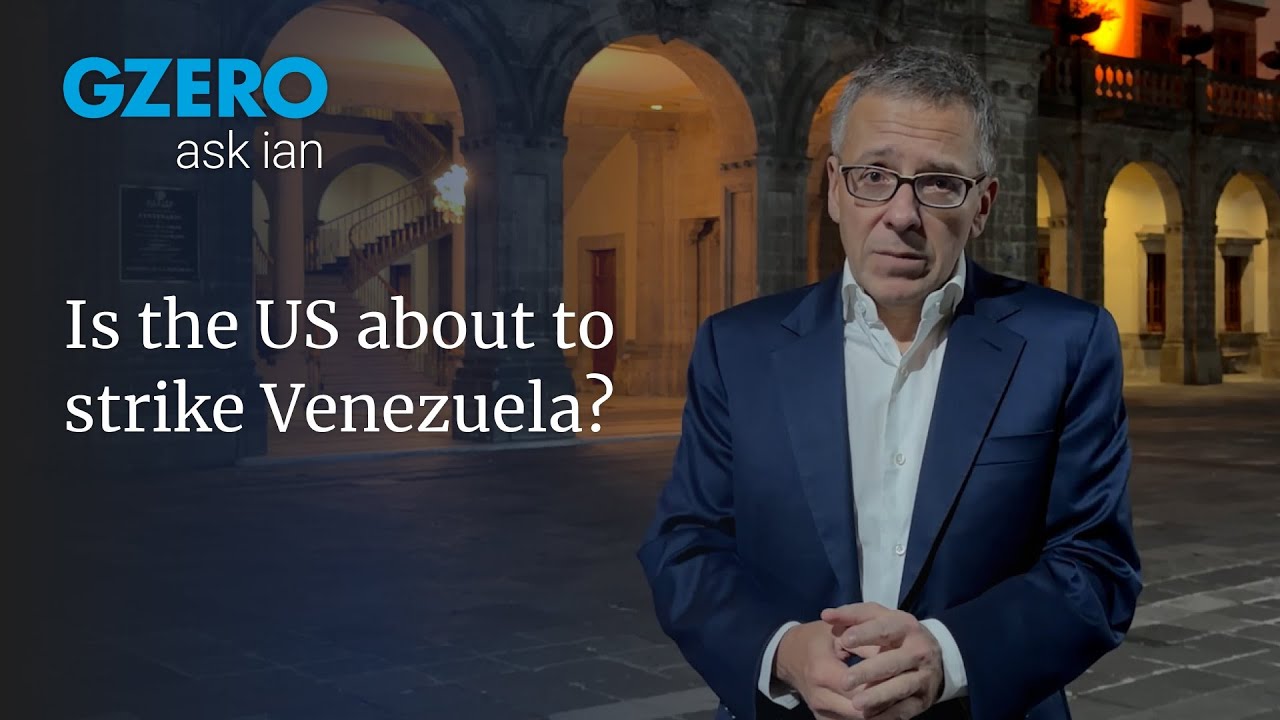 “in large part about the oil.”}:
Should Trump's plan move forward, Machado is the most likely candidate for his administration to rally behind. She’s already won over right-wing outlets — but as U.S. campaigns in Iraq and Afghanistan showed, sometimes an opposition figure’s charm offensive is the easiest battle of the war.
---
MMA
Right-wing media outlets are claiming regime change in Venezuela would be easy. Evidence and history suggest otherwise.
Conservative pundits are promising a small US footprint and an easy transition should the Trump administration topple Maduro, but the reality would likely be much more complicated
Written by John Knefel
Research contributions from Sophie Lawton
Published 10/29/25
Right-wing media outlets have spent months telling their audiences that a U.S. military campaign to topple the Venezuelan government would be simple and straightforward, requiring a minimal military footprint or lasting commitments to the country. In some cases, these outlets have suggested that the transition to a new government, following the toppling of President Nicolás Maduro, would be easy and organic.
Even if the United States were able to defeat the Venezuelan military fairly quickly in a conventional war, many experts warn that regime collapse would likely lead to an extended, bloody conflict that could have lasting ramifications throughout Venezuela, the surrounding region, and potentially the entire hemisphere. To date, the United States has carried out 13 known strikes on boats the Trump administration has alleged, without evidence, were engaged in the drug trade, killing at least 57 people, and has amassed the largest show of force in the region since the Cuban missile crisis.
Right-wing media suggest U.S.-supported “indigenous regime change” in Venezuela would be simple
According to numerous media outlets, Secretary of State Marco Rubio is leading the Trump administration’s campaign to topple the Maduro government, a long-running obsession of his. Rubio nominated opposition leader María Corina Machado for the Nobel Peace Prize, which she won this year, and praised her in Time magazine’s 2025 list of 100 most influential people in the world. Machado, in turn, has been a rallying point for U.S. interests seeking Maduro’s ouster.
Right-wing media figures have frequently cited Machado’s standing as evidence that Maduro could be overthrown and replaced with few complications.
In March, Erik Prince, arguably the United States’ most prominent mercenary, appeared on Donald Trump Jr.’s Triggered podcast to make that argument. Prince said the Maduro government is “going to have to be pushed out.”
“And it doesn’t require U.S. military,” he continued. “It can be covert action from the intelligence community or covert action from Venezuelan patriots helped by outsiders.” It’s not hard to imagine Prince considering himself or his allies as the “outsiders” in question, given his reported ties to anti-Maduro forces.
“María Corina Machado is a brave woman and deserving of our help and our support,” Prince said earlier in the interview.
Video
Citation
From the March 17, 2025, edition of Triggered
In August, as conservative outlets began beating the drums of war, Fox News’ Rachel Campos-Duffy — a vocal opponent of Maduro — conducted an interview with Machado. Campos-Duffy asked her to persuade Americans who support Trump “taking on Nicolás Maduro” but worry that “this kind of smells like regime change.”
“This has nothing to do with regime change … because the change of the regime was already mandated by the presidential election,” Machado replied. She added: “We are ready to take power — the legitimate government, elected. Venezuela will move orderly and peacefully to the transition.”
Video
Citation
From the August 13, 2025, edition of Fox News' Jesse Watters Primetime
The same month, The Daily Wire’s Matt Walsh pushed to escalate in Venezuela based on what he referred to as “American chauvinism."
“They're a small, weak, pathetic, puny, poor country, and so they just have to do what we say,” Walsh said. “A war with Venezuela would last about four minutes.”
On September 10, following the Trump administration’s initial boat strike, Campos-Duffy appeared in a breezy segment with Defense Secretary Pete Hegseth aboard a U.S. naval ship in the region.
“I was literally in awe of what I saw. And it's not just the military equipment,” Campos-Duffy said.
“It's the soldiers. It's how well-trained they are. How fit they are,” she continued. “How well-fed they are, which I say ‘well-fed’ because Maduro, of course, is threatening with his own militia, which we know is starving over there — they don't have anything that even comes a fraction of close to what we saw here on the USS Iwo Jima.”
The more recent U.S. invasions of Iraq and Afghanistan should serve as cautionary tales of American hubris
As Trump’s extrajudicial killing spree escalated in mid-September, The Wall Street Journal’s editorial board argued that “disgruntled military who want to liberate their country are living under the repressive arm of Mr. Maduro’s military counter-intelligence.”
In October, Fox News host Jesse Watters predicted that “there is going to be major action against Maduro pretty soon.” Even as he acknowledged it could go “sideways,” he stressed that it could be a “layup” to depose Maduro. Watters went on to pun on the Monroe Doctrine — referring to the “Don-roe Doctrine” — to argue that the United States has the right to interfere in Latin American countries’ internal affairs virtually at will.
On October 20, Fox News host Sean Hannity made that case directly, arguing that Machado “sounds like a pretty good leader for the people of Venezuela and the end of narco terrorism.”
A week later, The Daily Wire’s Ben Shapiro argued that a “full-scale ground invasion of Venezuela” would not “be a good policy for the United States.” But, he countered, “if some sort of covert CIA action were to topple the regime in Venezuela, that would be a good thing.”
Shapiro argued there is a “bizarre idea that the best available scenario is always to leave the worst dictator in power because: Saddam Hussein,” but that that analysis “is benighted.” He added: “Sometimes the analogies work and sometimes they just don’t.”
Video
Citation
From the October 27, 2025, edition of The Daily Wire's The Ben Shapiro Show
The same day, former Trump Deputy National Security Adviser KT McFarland said in an interview on Newsmax that she gets “really nervous” when “people start talking about regime change and implying that it's going to be the American Marines who do it.” She then reassured viewers that Trump has “always been very, very hesitant about American military force, American Marines’ boots on the ground.”
“Now, he's been very much in favor of regime change,” McFarland continued. “But how does that come about? That comes about because of the people of every country want a regime change.”
“It's an indigenous regime change,” she said.
McFarland escalated her rhetoric just two days later on Fox News. “Behind Maduro, there’s a very strong opposition leader, who, if — and that’s not with the U.S. Marines — but if there was a regime change in that country, there’s a very credible, powerful, potential Trump ally waiting in the wings as the new leader.”
What Venezuela regime collapse could look like
At a baseline level, the U.S. military could likely overwhelm the Venezuelan army in a conventional war fairly quickly, though Venezuela’s air and missile defenses are robust and could pose a threat to U.S. fighters, bombers, and ships in the area.
Even if the Trump administration opted for a “shock and awe”-style bombing campaign that decimated Maduro’s government, what comes after that is anybody’s guess. Reporting from The Guardian suggests that U.S. or aligned forces would not only come up against Venezuela’s official military, but could also face substantial informal resistance.
The history of Latin America is rife with examples of U.S. intervention leading to extended periods of civil war and brutal crackdowns on civilians
If Maduro were assassinated or forced to flee, factions within his government and outside armed forces would likely attempt to assert power over parts of the country. The history of Latin America is rife with examples of U.S. intervention leading to extended periods of civil war and brutal crackdowns on civilians. The more recent U.S. invasions of Iraq and Afghanistan should serve as cautionary tales of American hubris; in both cases elites were convinced that an opposition leader could simply be installed with few complications — assumptions that proved to be catastrophically wrong.
And while pro-war conservative pundits point to Venezuela’s 2024 election, which failed to meet free and fair standards, as proof of mass support for the opposition, those dynamics could shift if Caracas’ new government were installed on the back of U.S. tanks or as a result of a CIA-backed coup. The United States gave tacit approval, at least, for a coup attempt in 2002 that briefly removed Hugo Chavez from power, and in Trump’s first term he tried to install then-opposition leader Juan Guaidó into office in a pressure campaign. Both efforts ultimately failed.
The Monroe Doctrine and a Fox pundit’s dream of a right-wing Latin America
MAGA media figures have pushed to reinvigorate their version of the Monroe Doctrine, which conceives of the Western Hemisphere as the rightful dominion of the United States, for years. The escalation against Venezuela is a key part of this ideology, as is right-wing media’s support for Argentine President Javier Milei and its defense of former President of Brazil Jair Bolsonaro, both MAGA favorites. At the same time, Trump has waged a pressure campaign against President Gustavo Petro of Colombia, a leftist, by imposing sanctions on him and his family for alleged involvement in the drug trade. Trump has additionally threatened Colombia with increased tariffs and cutting off aid.
A recent comment from Fox’s Campos-Duffy suggests that the Rubio-led campaign against Venezuela is in fact even larger in scope than is currently appreciated.
“A lot of people saying, we’ve heard María Corina Machado say it on our show as well, if Venezuela returns to the people who won the election last July, to the opposition party, and the Marxist, you know, socialist government of Maduro goes down, so will Cuba and so will Nicaragua. It will essentially get all of the communists out of our hemisphere,” Campos-Duffy said. (Some observers believe Rubio’s campaign to remove Maduro is a precursor to his goal of overthrowing Cuba’s communist government.)
Video
Citation
From the October 25, 2025, edition of Fox News' Fox & Friends Weekend
Campos-Duffy’s scheme, if put into practice, would not represent the first time the United States has tried to crush left-wing governments and social movements in Latin America. As journalist Vincent Bevins details in The Jakarta Method, which examines the history of U.S.-supported anticommunist efforts around the world, forces backed by the U.S. military and CIA have been responsible for the deaths of hundreds of thousands of people suspected of leftist sympathies across Central and South America.
That bloody history doesn’t fit neatly within the current right-wing media fantasy of a quick and easy operation in Venezuela. So, like the many victims of U.S.-backed regimes in Latin America, that context simply gets disappeared.
---
Fox praised and validated Trump's legally questionable boat strikes in the Caribbean
Some at the network have been pressing for further US intervention – even regime change in Venezuela
Written by Jack Winstanley & Emma Mae Weber
Published 10/29/25
Fox News has celebrated the Trump administration's lethal strikes against supposed drug smuggling boats in the Caribbean, despite concerns from legal experts over the strikes’ legality and bipartisan warnings from congressional members that they have seen no evidence to support the administration's claims that the strikes are targeting drug traffickers.
Along with championing the strikes — many of which have targeted boats coming from Venezuela — as “pretty spectacular” and a “great move” and praising the administration’s “aggressive” approach, some Fox figures and guests have gone so far as to suggest they would support regime change in Venezuela, claiming that the Maduro government is “part of the cartel.”
\Trump’s attacks on boats in the Caribbean draw legal questions from experts and legislators
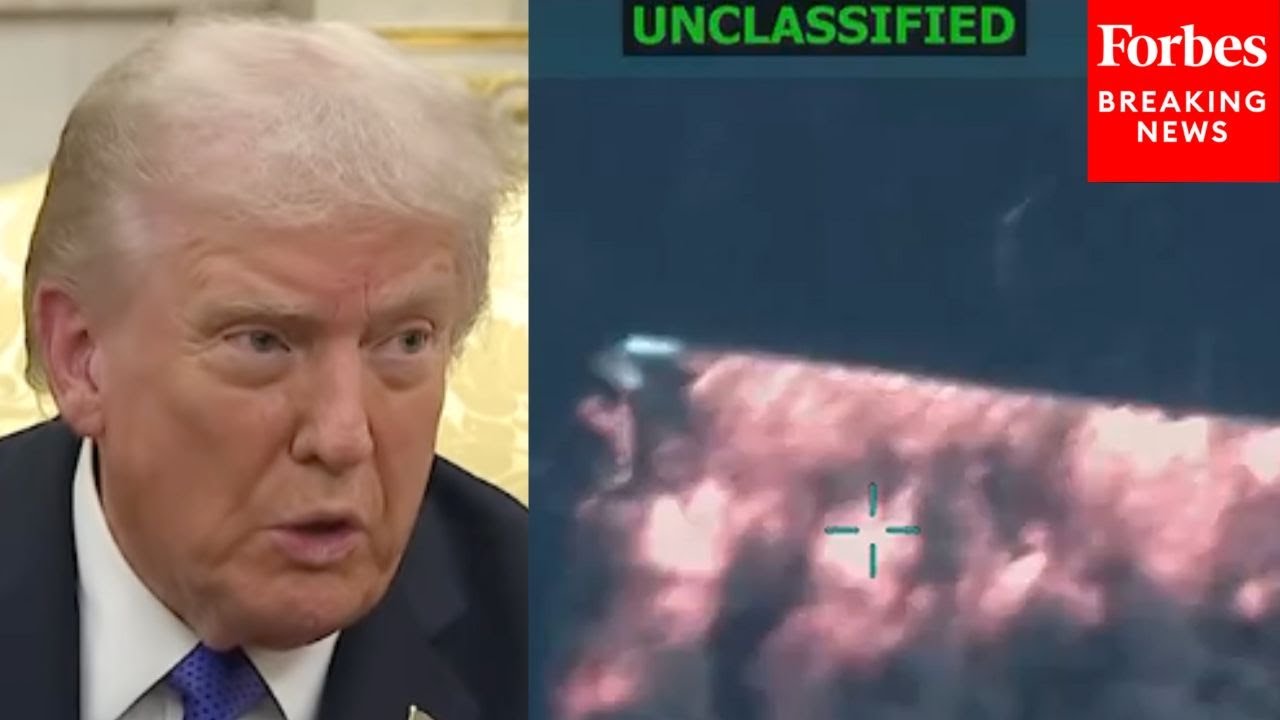
- The Trump administration has conducted numerous strikes in the Caribbean, attacking at least 13 boats and killing at least 51 people, claiming they are targeting the drug trade. President Donald Trump said of the strikes, many of which targeted Venezuelan boats, “It is violent and it is very — it’s amazing, the weaponry.” He has also hinted at further escalation, saying, “The land is going to be next.” Trump additionally authorized covert CIA action in the region, while the buildup of U.S. military assets in the region grows. The Guardian, [10/28/25; AP News, 10/24/25; YouTube,
 ; Twitter/X, 10/23/25; The New York Times, 10/15/25, 10/8/25]
- The Trump administration has conducted numerous strikes in the Caribbean, attacking at least 13 boats and killing at least 51 people, claiming they are targeting the drug trade. President Donald Trump said of the strikes, many of which targeted Venezuelan boats, “It is violent and it is very — it’s amazing, the weaponry.” He has also hinted at further escalation, saying, “The land is going to be next.” Trump additionally authorized covert CIA action in the region, while the buildup of U.S. military assets in the region grows. The Guardian, [10/28/25; AP News, 10/24/25; YouTube,
- :{:{Numerous legal experts say the killings are illegal.As The New York Times writes, “A broad range of specialists in laws governing the use of lethal force have called Mr. Trump’s orders to the military patently illegal. … The administration insists that the killings are lawful, invoking legal terms like ‘self-defense’ and ‘armed conflict.’ But it has offered no legal argument explaining how to bridge the conceptual gap between drug trafficking and associated crimes, as serious as they are, and the kind of armed attack to which those terms can legitimately apply.”}:
NPR noted that the Trump administration “has designated several South and Central American drug cartels and gangs as foreign terrorist organizations, but Congress has not authorized the use of force against them” and quoted a former State Department legal adviser, who said, “Outside of armed conflict, there is a word for the premeditated killing of people, and that word is 'murder.'" He added, “And just because the administration puts together this fig leaf of a legal justification does not legitimize these premeditated killings in the Caribbean.” The New York Times, [10/24/25; NPR, 10/24/25]}:
- Trump has repeatedly claimed that the strikes are saving thousands of Americans from drug overdoses, but there’s no evidence to support the claim. According to Trump, “Every boat that we knock out we save 25,000 American lives.” Trump has used this figure multiple times to defend the strikes, but the administration has not provided evidence showing drugs were destroyed during the attacks. Additionally, as PolitiFact notes, drug experts have said it is difficult to calculate how many lives are saved as a result of drug interception efforts but that Trump’s claim is “mathematically dubious.” “For Trump’s statement to be accurate, the drugs on five boats would have been responsible for 125,000 deaths, nearly double the number of overdose deaths in one year,” PolitiFact wrote. PolitiFact, [10/16/25]
- The strikes have drawn bipartisan concern, as legislators question the Trump administration's claims and their lack of supporting evidence. On Fox News Sunday, according to The Hill, Sen. Rand Paul (R-KY) stated that Congress has seen “no evidence presented” to support the administration's claims that the targets are drug traffickers. Similarly, Sen. Mark Kelly (D-AZ) stated that the evidence he has seen in support of the strikes “does not back up” the administration's claims that the boats were transporting fentanyl. The Hill, [10/26/25]
- ## Fox figures and guests cheered on the strikes and celebrated the administration's actions
- Fox host Laura Ingraham called the strikes “pretty spectacular” and concluded, “I love this” and “Trump is actually trying to do something.” Former Army Special Forces member Jim Hanson said the “reward” for bringing “that poison into our country” is “getting turned into an oil slick on the Caribbean.” Jason Redman, a former Navy SEAL, applauded the U.S. for taking the “lead” and said we have to “break the will” of “individuals who are willing to go out in those boats and smuggle drugs into America.” Fox News, *The Ingraham Angle*, [10/24/25]
- In the week prior, Ingraham stated that “Trump's working overtime on issues that really matter,” such as “taking out deadly threats before they even arrive on our shores.” Ingraham played a video of a boat being bombed, adding her own “boom” sound effect. After playing a bleeped clip of Trump saying Venezuelan President Nicolás Maduro “doesn’t want to f— around with the United States,” Ingraham concluded, “Bombs and the f-bombs. At least we know President Trump will never stop trying to save American lives.” Fox News, *The Ingraham Angle*, [10/17/25]
- OnAmerica’s Newsroom, former FBI agent Dan Brunner called the strikes a “great move,” adding, “Let’s go on offense. Let’s push the envelope.” Brunner added that “we need to utilize” the FBI, Homeland Security, and CIA. He said: “We’ve got a lot of experience in conducting investigations into these cartels. … Blowing up a boat, yes, that stops that shipment. But we need to find out where all the shipments are coming from and going through the root system.” Fox News, *America’s Newsroom*, [10/17/25]
- After a guest argued Trump should “keep pushing forward” as it's “the only way these traffickers will stop,” Fox host Lara Trump replied: “I think a lot of people agree with you. … Fortunately we have a president who is doing just that, meeting them with strength.” Trump also praised her father-in-law for dubbing his targets “ISIS of the Western hemisphere,” saying, “What a great name for these narco-terrorists. That’s exactly what I think they should be identified as.” Fox News, *My View with Lara Trump*, [10/25/25]
- Host Jesse Watters described a strike by saying: “Trump just smoked another coke boat in the Caribbean, and he’s just getting started.” In the segment that followed, correspondent David Spunt reported: “We can confirm the Pentagon deploying massive help in support of the operation to root out drugs being smuggled into the United States.” The chyron read, “Pentagon drops the hammer on smugglers.” Fox News, *Jesse Watters Primetime*, [10/24/25]
- OnAmerica’s Newsroom, former acting Drug Enforcement Administration Administrator Derek Maltz called fentanyl “a weapon of mass destruction” and said he’s “very thankful” for the administration's “aggressive” approach. He also claimed that “of course it's fair game” to attack cartels on land. Fox News, *America’s Newsroom*, [10/24/25]
- OnFox Noticias, guest Jesus Romero claimed that Trump is deploying “a military contingent to carry a message, not only to President Maduro, but also to all the criminals.” Romero added, “This is the message, and this is the response of the president of the United States“ to “return peace and tranquility and to stop the flow of drug trafficking into the United States.” Fox Deportes, *Fox Noticias*, [9/26/25]
- ## Fox justified the strikes and repeated Trump's unproven claim that they save large numbers of American lives
- Fox & Friendsco-host Ainsley Earhardt repeated the claim that “every boat that we strike is 25,000 American lives that have been saved.” Earhardt elaborated, saying, “We’re talking about … fentanyl pills, we’re talking about fentanyl powder, illegal guns, methamphetamine, cocaine, pounds of heroin.” Co-host Lawrence Jones, taking aim at naysayers, added, “You are going to have to choose a side. Are you going to be on the side of the cartels, which is the new ISIS, or are you going to be side of the American people?” Fox News, *Fox & Friends*, [10/24/25]
- Host Laura Ingraham claimed, “Countless American lives will be saved because of our aggressive posture.” Ingraham praised Trump, saying he is “working overtime … targeting drug cartels that poison and kill hundreds of thousands of Americans with fentanyl and cocaine.” Fox News, *The Ingraham Angle*, [10/23/25]
- OnThe Story with Martha MacCallum, Derek Maltz claimed of the cartels: “We’ve never had any terrorist organizations, even if you combine Al Qaeda, ISIS, Hezbollah, killing this many Americans.” He also argued of the supposed drug trafficking, “It's not even just a threat to our country, but once again President Trump is helping keep the world safe.” Fox News, *The Story with Martha MacCallum*, [10/20/25]
- Fox Noticiashost Rachel Campos-Duffy said, “If you are a criminal trafficking lethal drugs into this country that kill its people, you will face lethal consequences.” She added that “President Trump is not sorry” about the boat strike. Fox Deportes, *Fox Noticias*, [9/4/25]
- ## Fox hosts and guests called for further violence and US intervention – with some even supporting Venezuelan regime change
- OnThe Five, co-host Jesse Watters said the boat strikes are “more about regime change in Venezuela,” adding later, “There is going to be major action against Maduro pretty soon.” Watters said the action might be “a layup” and if it is, and “Maduro is deposed, we’re basically Monroe Doctrine-ing — we call it the Don-roe doctrine-ing — out of Latin America and China and Russia,” which would add up to Trump “wielding a lot of power internationally.” Fox News, *The Five*, [10/16/25]
- Jim Shedd, a former DEA agent, argued on Fox that “we should be striking the Venezuelan military outposts.” Shedd added that “the national guard of Venezuela and the Venezuelan army and the air force has to be destroyed because they are co-conspirators in the distribution of narcotics into this country, which has been causing death and havoc for decades.” Fox News, *The Story with Martha MacCallum*, [10/24/25]
- OnFox Noticias, Jovel Alvarez, an independent journalist, said, “I hope that President Donald Trump takes the initiative to remove Maduro from power.” He added that Trump could “practically” become the “liberator of Venezuela.” Fox Deportes, *Fox Noticias*, [10/15/25]
- OnFox & Friends, retired Gen. Jack Keane said of Venezuela, “I think it’s high time we went after this thing that was polluting our population so much.” Keane argued that the Venezuelan government is “supporting the cartel in the sense the government is part of the cartel. Because they take the revenue from that source.” Fox News, *Fox & Friends*, [10/24/25]
- OnSunday Night In America with Trey Gowdy, after Rep. Maria Salazar (R-FL) mentioned that Venezuelan opposition leader Maria Machado is planning to “open the oil rigs” to U.S. companies, host Trey Gowdy mentioned that “she may be leading that country here in the not-too-distant future.” Fox News, *Sunday Night in America with Trey Gowdy*, [10/26/25]
- OnFox Report, Manhattan Institute fellow Daniel Di Martino described Trump’s actions against Venezuela as “the same as fighting ISIS,” arguing the U.S. needs “to do everything possible.” He said: “And if that means striking inside Venezuela where Maduro is, who is a cartel leader, that the U.S. government doesn't recognize as president, this is the same as fighting ISIS, except that they’re actually bringing drugs and terrorism to America directly right now.” Di Martino also claimed, without citing evidence, that “80% of Venezuelans support” the strikes. He added that he is “very happy about hearing about the CIA operations in Venezuela, about bringing the carrier.” Fox News, *Fox Report with John Scott*, [10/26/25]
mma //
:{:{05/28/25}:
:{:{09/05/25}:
09/05/25
---
---
mma
10/24/25
===
---}:
digby an 10 25
President Donald Trump's former "tormenter" turned Secretary of State, Marco Rubio, has become a "MAGA powerhouse," driving an "illegal war on Venezuela," writes Salon's Heather Digby Parton.
Digby Parton recalls Rubio's "most-cringe prime time performances" when he gave the rebuttal to President Barack Obama's 2013 State of the Union speech and , "cementing his reputation as the thirstiest man in the U.S. Senate."
What was viewed by many as the end of Rubio's career has long been forgotten, or at least ignored, and, Digby Parton writes, "it’s a testament to his limitless ambition that he came back from that and is now one of the most powerful people in the world."
The former Florida senator, she writes, "showed early on an aptitude for sensing which way the wind was blowing," and "over the years he held both moderate and conservative positions on most issues."
Rubio, she says, initially "rejected the scientific consensus on climate change and then, a few years later, decided it was true." He was also "once one of the Republican Party’s most vocal advocates for comprehensive immigration reform and even sponsored the DREAM Act," she writes.
"Now he energetically supports Donald Trump on the most draconian deportation program in American history," she writes, adding that "he broke with the GOP on more than one occasion when it came to budget battles, at times striking a pose as populist defender of the little guy, but overall he was a standard-issue right-wing conservative on taxes and spending."
Rubio's focus, she says, has always been national security and foreign policy as an "unreconstructed hawk," but has also taken a hard-line stance against human rights violations in China, Turkey and Venezeula.
Rubio also served as co-chair of the Senate Select Committee on Intelligence with Sen. Mark Warner (D-VA), with whom he led a three-year investigation that found clear evidence of Russian interference on Trump’s behalf in the 2016 election, exactly as Robert Mueller’s investigation had established, Digby Parton notes.
Rubio even once taunted Trump about his "small hands," something that Digby Parton says "for a man who carries around grudges like precious offspring, it’s odd that Trump has apparently decided to overlook all that, but Rubio worked hard to abase himself and get into the inner circle."
And while the political establishment and many Democrats were "relieved" when Trump chose Rubio as Secretary of State, thinking he would "keep Trump foreign policy from going off the rails," Digby Parton writes, "little did they know that Rubio had happily made a deal with the devil and now seems to relish the idea of ripping up the world order in Trump’s image."
"They certainly couldn’t have anticipated how eagerly Rubio would join in thedeportationcrusade by targeting foreign students for visa violations, as well as for unauthorized opinions about Israel and Charlie Kirk," she writes.
Among Rubio's other turns include his endorsement of the Trump administration's shutdown of medical and food programs of the U.S. Agency for International Development (USAID), of which Rubio had always been supportive.
"It came a something of a shock," she writes, adding "he even agreed to betray informants under U.S. protection to Salvadoran President Nayib Bukele in exchange for an agreement to lock up purported Venezuelan gang members in El Salvador’s gruesome gulag."
When Russia first invaded Ukraine, Rubio condemned President Vladimir Putin's aggression, but then quickly "changed his tune," "voting against military aid early on and adopting the Trump line that a negotiated settlement was the only way out."
Rubio's stance on Venezuela, she says, comes from his background as a member of "the anti-Castro Cuban-American community of South Florida."
"Rubio has a strong strain of anti-left ideology which has made him especially obsessed with Nicolás Maduro, Venezuela’s socialist authoritarian president," Digby Parton says.
According to recent reports in the *Wall Street Journal*, "the extrajudicial killings, CIA covert actions and pending war plans against Venezuela are all being driven by Rubio," she writes. "Rubio and deputy White House chief of staff Stephen Miller have carried the day with a full-fledged plan to pressure and perhaps depose the Venezuelan leader."
Rubio's future ambitions, she says, is the driving force in all of his actions.
"Marco Rubio almost certainly intends to run for president in 2028 and sees his service in that cause as the best way to fulfill his own agenda and expand both his power and his political profile," she says, adding "He’s a fully paid-up MAGA fanatic now, and no one should think otherwise."
---
---
troll? an 10 25
Fox News host Sean Hannity that President Donald Trump should forget Canada and make Venezuela America's 51st state, according to The Daily Beast.
This suggestion comes after the winner of the Nobel Peace Prize, Venezuelan opposition leader María Corina Machado, dedicated it to Trump and “the suffering people of Venezuela." Trump and his supporters relentlessly campaigned for him to win the prize.
“I dedicated this award to the Venezuelan people and President Trump because I believe that’s absolutely fair,” Machado, a Trump supporter, said. “We, the Venezuelan people, are absolutely grateful to President Trump for the way he has supported democracy and freedom in the Americas.”
“This opposition leader in Venezuela that won the Nobel Prize, and said it really deserved to go to Donald Trump, sounds like a pretty good leader to me for the people of Venezuela, and the end of narcoterrorism, and a better relationship with the U.S.,” Hannity said to Sen. Lindsey Graham (R-SC). “Or, if they choose, maybe the 51st state.”
“Sounds good to me!” Graham exclaimed.
While Trump may not 'get' Venezeula as the 51st state, he does think he still has a shot at the Nobel Peace Prize.
"So the person who actually got the Nobel prize called today, called me and said, I’m accepting this in honor of you because you really deserved it,” he said at a press conference. “I didn’t say, ‘Then give it to me,’ though. I could have. I think she might have.”
---
---
RWW 3 WAY POw XGE? INCL ANDRY
07/23/2025
by
- Steve Benen @ The Maddow Blog: Justice Department reportedly told Trump in May that his name is in the Epstein files
A new Wall Street Journal report said the president's name "appeared multiple times" in the Jeffrey Epstein files — and he was told that during a briefing.
- Kiera Butler @ Mother Jones: Did Christian Nationalist Leaders Prompt Mike Johnson’s Epstein Flip-Flop?
Forget about putting “everything out there and let the people decide it.” That was last week.
- Sarah K. Burris @ Raw Story: First lady of France sues right-wing firebrand Candace Owens over claims she's a man
First Lady Brigitte Macron is suing right-wing firebrand Candace Owens for a “relentless and unjustified smear campaign” that alleges Macron is secretly a man.
- Hemant Mehta @ Friendly Atheist: Textbook publishers are largely rejecting Ryan Walters' MAGA curriculum in Oklahoma
Ryan Walters' far-right curriculum changes are getting snubbed by publishers who refuse to rewrite history.
- Teo Armus, Samantha Schmidt, Helena Carpio and Arelis R. Hernández @ The Washington Post: U.S. deportees, freed from Salvadoran prison, describe ‘horror movie’
Three Venezuelans, released last week from the Terrorism Confinement Center, said they were repeatedly beaten and denied access to lawyers.
- Julie Turkewitz, José Bautista and Frances Robles @ The New York Times: American Convicted of Murder Is Freed by Trump From Venezuela Prison
The Trump administration said it was protecting Americans unjustly held abroad. One of the rescued men, Dahud Hanid Ortiz, killed three people, according to court documents.
- Global Project Against Hate And Extremism: Tulsi Gabbard’s “Claims” that the Obama Administration Staged a “Coup” Fuel Far Right’s Fantasies of Political Violence
On July 18, Director of National Intelligence Tulsi Gabbard made a post on Twitter alleging “the most powerful people in the Obama administration,” including former President Barack Obama, were involved in a “years-long coup” and a “treasonous conspiracy” against Donald Trump. Her post quickly went viral, amassing over 13 million views over the weekend, and galvanized the online fringe to fantasize about violence against their political enemies. Trump fanned Gabbard’s flames, sharing a racist AI-generated video of Obama being arrested on Truth Social, which Trump owns.
---
guk no lnx
guk
maga since forever’: mercenary mogul Erik Prince pushes to privatize Trump deportation plans
Notorious Blackwater founder is lobbying allies in White House for private contractors to assist in mass deportations
Ben Makuch
Sun 16 Mar 2025
Silicon Valley has played a sizable part in the early days of Donald Trump’s new administration, but another familiar face in the Maga-verse is beginning to emerge: businessman Erik Prince, often described by his critics as a living “Bond villain”.
Prince is the most famous mercenary of the contemporary era and the founder of the now defunct private military company Blackwater. For a time, it was a prolific privateer in the “war on terror”, racking up millions in US government contracts by providing soldiers of fortune to the CIA, Pentagon and beyond.
Now he is a central figure among a web of other contractors trying to sell Trump advisers on a $25bn deal to privatize the mass deportations of 12 million migrants.
Erik Prince and Daniel Noboa
Ecuador enlists founder of Blackwater private army as ally in ‘war’ on crime
Read more
In an appearance on NewsNation, he immediately tried to temper that his plan had any traction.
“No indications, so far,” said Prince about a federal contract materializing. “Eventually if they’re going to hit those kinds of numbers and scale, they’re going to need additional private sector.”
But the news had people wondering, how is Prince going to factor into the second Trump presidency?
Sean McFate, a professor at Georgetown University who has advised the Pentagon and the CIA, said: “Erik Prince has always been politically connected to Maga, the Maga movement, and that’s going back to 2015.”
Prince, himself a special forces veteran and ex-Navy Seal, is a known business associate of Steve Bannon, the architect of Trump’s first electoral win. Prince even appeared with him last July at a press conference before Bannon surrendered to authorities and began a short prison sentence for defying a congressional subpoena.
“He comes from a wealthy Republican family,” said McFate, who has authored books on the global mercenary industry and is familiar with Prince’s history. “His sister, Betsy DeVos, is the former education secretary, and he’s been a Maga, not just a Maga, he’s been a Steve Bannon, Maga Breitbart Republican, since forever.”
Beginning during the two Bush administrations, Blackwater was a major recipient of Pentagon money flowing into wars in Iraq and Afghanistan. But a massacre in Baghdad at the hands of some of his contractors led to prison sentences, congressional inquiries and blacklistings of the firm.
Years later, Trump would come to the rescue: pardoning all of the Blackwater mercenaries involved in the massacre.
Now, with the current administration, which is doling out free advertising to Elon Musk and other Maga loyalists, Prince has a new and familiar ally in Washington.
“This is a big market time for him,” said McFate. “He’s very quiet when there’s a Democrat in the White House and gets very noisy when a Republican, especially Trump, is in the White House; I expect this to be one of many things he will try to pitch.”
Do you have tips about private military contractors or the world of Erik Prince? Tip us securely here or text Ben Makuch at BenMakuch.90 on Signal.
McFate said Prince is nothing if not an “opportunist” and an “egotist” with a penchant for getting into media cycles.
“If Trump or somebody says ‘That’s an interesting idea,’ he will pump out a PowerPoint slideshow proposing an idea, whether or not he can do it,” he said. Prince also has the ear of Tulsi Gabbard, the director of national intelligence, and was a character witness for her Senate confirmation.
There’s no denying Prince is a relentless pitchman, offering world governments billion-dollar plans to privatize wars or other less expensive espionage activities. For example, he was recently named to the advisory board of the London-based private intelligence firm Vantage Intelligence, which advises “sovereign wealth funds” and other “high-net-worth individuals”.
Post-Blackwater and under new companies, he has proposed missions in Afghanistan, Ukraine, Congo, Libya and, purportedly, Venezuela – a country he often mentions as ripe for overthrow on his podcast, Off Leash. rare earth minerals?
A senior commander in an alliance of former Venezuelan soldiers who defected from the Chavista regime told the Guardian his organization has been asking Prince for help against the country’s current president, Nicolás Maduro.
“We have sent messages to Mr Erik Prince to try to see if we can meet,” said Javier Nieto Quintero, a Florida-based former captain in the Venezuelan military and leader of the Venezuelan dissident organization Carive. “If he wants, we can provide help, support in terms of information, intelligence, or any other area based on the freedom of our country.”
Nieto Quintero, who said Prince has yet to respond, and Carive was used in a failed operation against Maduro in 2020 led by a former Green Beret. In what is notoriously known as the “Bay of Piglets”, six of Nieto Quintero’s men were killed and close to 100 captured, including two former US servicemen recruited for the job who were freed two years ago from a Caracas prison.
Prince’s eye has undoubtedly been focused on Venezuela, a country with vast oil reserves that has long been in the crosshairs of Trump’s retinue. In recent months, Prince has supported a Venezuelan opposition movement called Ya Casi Venezuela, claiming to have raised more than $1m for it over the summer. The Maduro regime is now investigating Prince’s links to the campaign, which it paints as a sort of front for western governments fostering its downfall.
Venezuela has reason to fear Prince and his connections to American spies: the CIA, with a rich history of covert actions in Latin America, was at least aware of a plot to overthrow Maduro’s predecessor Hugo Chávez in 2002.
“We were in contact with Ya Casi Venezuela, but a meeting never took place,” said Nieto Quintero. “We have continued to grow and strengthen our ranks and our doctrine, our plans, our institutional, military, security and defense proposals.”
Prince is officially active in the region. Last week, Ecuador announced it would be partnering with Prince in a “strategic alliance” to reinforce the country’s controversial “war on crime” with his expertise.
Prince did not respond to a request for comment sent through his encrypted cellphone company, Unplugged. Ya Casi Venezuela did not answer numerous emails about its relationship with Prince. As of now, no business deal between the Trump administration and Prince has been signed or publicly disclosed.
But across his career as both a shadowy contractor and a political figure, who just graced the stages of the latest Conservative Political Action Conference (CPAC) to applause and then spoke to Harvard Republicans, the public and private sides of Prince remain somewhat antithetical.
“He likes to be in the news, which makes him a very bad mercenary,” said McFate. “Frankly, most mercenaries I talk to in Africa, the big ones, despise him.”
---
all purpose bogeyman? anti-commie, anti-drags ...hugo chavez ghost smartmatic
gang human traffickers
---
==
badash an 9 24
With less than six weeks until Election Day and early voting already underway in four states, Donald Trump seems to have locked in on his closing message for what he acknowledges will be his final presidential campaign if he loses in November. It’s the same message that launched his political career nine years ago: attacking immigrants.
In a sign anti-immigrant sentiment is the highest it’s been in over two decades, Gallupreports as of June, 55% of Americans want to see immigration decreased. In October of 2001, following the September 11 terror attacks, 58% wanted immigration decreased.
Trump’s anti-immigrant attacks reached a crescendo two weeks ago during the presidential debate against his Democratic opponent, Vice President Kamala Harris. Seemingly out of nowhere, he dropped his “pet-eating” lie that would lead to dozens of bomb threats across more than 20 facilities in the small town of Springfield, Ohio.
“What they have done to our country by allowing these millions and millions of people to come into our country,” Trump said, attacking Vice President Harris and President Joe Biden. “And look at what’s happening to the towns all over the United States. And a lot of towns don’t want to talk — not going to be Aurora or Springfield. A lot of towns don’t want to talk about it because they’re so embarrassed by it. In Springfield, they’re eating the dogs. The people that came in. They’re eating the cats. They’re eating — they’re eating the pets of the people that live there. And this is what’s happening in our country. And it’s a shame.”
READ MORE: ‘Ain’t Taking Anybody’s Jobs’: Trump Blasted Over Haitian Lies, This Time in Pennsylvania
That lie was quickly debunked but Trump and his vice-presidential running mate, U.S. Senator JD Vance, continued to spread it.
This week Trump excised his pet-eating derangement, adding in another element: machine guns.
“We can’t have factories being built where you have criminals walking down the street with the worst weapons that you’ve ever seen, with machine guns and everything else,” Trump declared Tuesday at an event billed as a manufacturing policy speech in which he appeared to come out in favor of an assault weapons ban.
On Wednesday, the ex-president, a convicted felon who legally cannot own even a pistol, standing in front of banner that read “Jobs Jobs Jobs,” expanded his claims at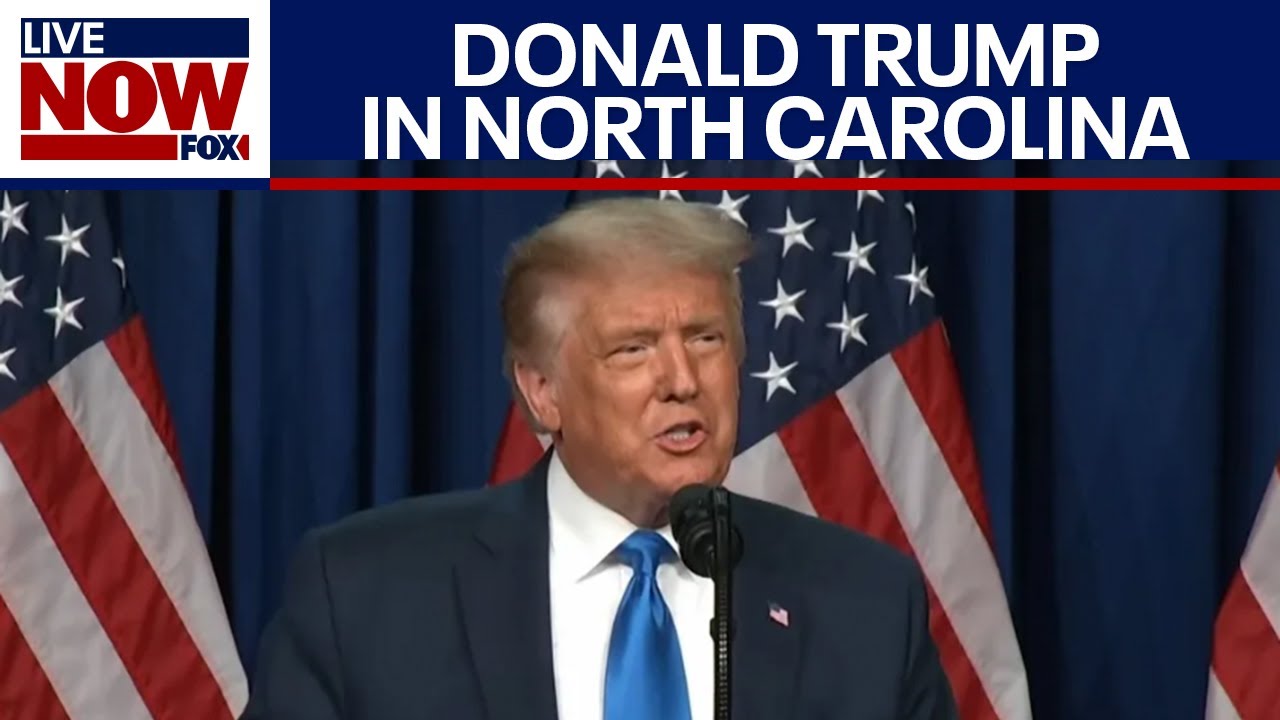 (video below).
“But Kamala should have closed the border years ago, and we wouldn’t have hostile takeovers of Springfield, Ohio, Aurora Colorado, where they’re actually going in with massive machine gun-type equipment. they’re going in with guns that are beyond even military scope, and they’re taking over apartment buildings, they’re taking over, real estate – they’re in the real estate development business. Congratulations,” Trump said sarcastically. “These are, in that case, people from Venezuela. Young street gang members that were sent here by the Venezuelan government.”
Mark Jacob, an author and former Chicago Tribune editor turned media critic, blastedTrump and the mainstream media: “Trump’s lies to foment hatred against immigrants keep getting more vivid and unhinged, and major media are DOING A TERRIBLE JOB of explaining how dangerous this is.”
Luis Moreno, a former U.S. Ambassador to Jamaica, remarked: “Besides eating cats, Haitian immigrants are now deploying crew served laser beam systems. We need to find out who is training these people!”
READ MORE: ‘Hellscape’: Women Increasingly Charged With Pregnancy-Related Crimes After Roe’s End
Trump had made similar, false claims during the debate, saying, “we have millions of people pouring into our country from prisons and jails, from mental institutions and insane asylums. And they’re coming in and they’re taking jobs that are occupied right now by African Americans and Hispanics and also unions. Unions are going to be affected very soon. And you see what’s happening. You see what’s happening with towns throughout the United States. You look at Springfield, Ohio. You look at Aurora in Colorado. They are taking over the towns. They’re taking over buildings. They’re going in violently. These are the people that she and Biden let into our country. And they’re destroying our country. They’re dangerous. They’re at the highest level of criminality. And we have to get them out. We have to get them out fast.”
The New York Times reported Trump’s claims of hostile takeovers by Venezuelan gangs appeared to originate from allegations made by a landlord.
“As far back as May 2023, Aurora officials had been trying to force an out-of-state landlord to fix up three blighted apartment complexes,” The Times reported earlier this month. “In July 2024, the landlord, CBZ Management, which says it is based in Colorado and Brooklyn, offered a new argument for why it couldn’t repair the buildings: Venezuelan gangs had taken over, and the property managers had been forced to flee.”
Those claims were quickly repeated, and later, a public relations agent hired by the landlord sent an even more elaborate story to a local Fox affiliate as a “tip.”
On Tuesday a nonprofit representing Haitian immigrants filed criminal charges against Trump and Vance, through its attorney, thanks to Ohio state law that allows private individuals to do so. They have asked a judge to issue an arrest warrant.
Watch Trump’s remarks from earlier Wednesday below or at this link.
:
mma 7 24
During the June 27 CNN presidential election debate between former President Donald Trump and President Joe Biden, Trump made false and misleading claims about immigration and migrants seemingly drawn straight from the right-wing media echo chambers.
Trump falsely claimed that Biden “wants open borders” and “wants our country to … be destroyed,” as migrants are supposedly violent criminals stealing American jobs. He also pushed the “great replacement” theory, saying Biden wants to import migrants to vote Democratic.
Below are some of Trump’s debate claims and recent instances of right-wing media making the same points.
- ## Claim: Biden has opened up the border
- During the debate, Trump claimed that Biden “decided to open up our border, open up our country” and said he wants “open borders.” CNN [6/27/24]
- Numerous debunks have explained that the U.S. border is not open.NPR, [6/28/24; The Nation, 11/22/23; Axios, 10/17/23; Newsweek, 1/24/22]
- Fox News host Sean Hannity claimed that “there are terror cells here because of [Biden’s] wide-open borders — 11 million unvetted people from countries with terrorist ties and our top geopolitical foes.” Hannity also said Biden has “blood on his hands.” Fox News, *Hannity*, [6/24/24]
- After the Francis Scott Key Bridge in Baltimore collapsed, Fox Business anchor Maria Bartiromo suggested it could be due to a “wide-open border.” Although she acknowledged that the White House issued a statement “saying that there is no indication of a nefarious intent,” she went on to discuss “the potential for wrongdoing or potential for foul play given the wide-open border.” Fox Business, *Mornings with Maria*, [3/26/24]
- Fox guest T.W. Shannon said that Biden’s “open border” is “poisoning the bloodline in this country because we’re allowing illegals to vote.” Fox News, *The Faulkner Focus*, [4/10/24]
- Fox guest Sheriff Mark Dannels said that we’ve had “three and a half years of leaving the border open.”He continued, “People come into the country that don't respect our cultures, our rule of law, and the people within.” Fox News, *Your World with Neil Cavuto*, [6/21/24]
- The Real America’s Voice X account posted, “Joe Biden and his administration, along with Obama, are using the open border as a tool to allow millions of immigrants and God only knows how many terrorists in to the country.” Twitter/X, [6/19/24]
- Fox News contributor Larry Kudlow penned a Fox News online op-ed titled “Biden's open border is killing innocent Americans.” Kudlow claimed, “Brutal gang warfare has come across the southern border into our sanctuary cities where blue state mayors and governors will not, in most cases, cooperate with border authorities to deport them.” Fox News, [6/18/24]
- ## Claim: Biden wants to import migrants as voters
- At the debate, Trump claimed Biden “wants open borders. He wants our country to either be destroyed or he wants to pick up those people as voters."CBS News, [6/28/24]
- In recent years, right-wing media have been pushing the xenophobic “great replacement” conspiracy theory, which alleges that “elites” encourage illegal immigration to bring nonwhite people into the country to “replace” white voters. This false narrative has led to real-world violence, including mass shootings in El Paso, Texas, and Buffalo, New York. Media Matters, [5/15/23, 1/12/24; Southern Poverty Law Center, 5/12/23]
- Fox News contributor Paul Mauro asked, “Does it not seem like we’ve hit a point where somebody in Washington has made a decision that there is an acceptable level of collateral damage in order to get a permanent Democratic voting bloc into this country?”The discussion was around the killing of 12-year-old Jocelyn Nungaray that led to the arrest of two recent Venezuelan migrants. Mauro also suggested that if migrants “were calculated to vote Republican, the [border] wall would be 60 feet high.” Fox News, *Outnumbered*, [6/21/24; The New York Times, 6/25/24]
- Turning Post USA’s Charlie Kirk claimed that “the left” “won't stop until you and your children and your children's children are eliminated.”Kirk also said, “They hate those of you that own land and have guns and believe in a better country, and they have a plan to try and get rid of you.” Real America’s Voice, *The Charlie Kirk Show*, [3/1/24]
- Fox host Jesse Watters alleged that the “far left” wants an “illegal alien nation where they can blow up the welfare state and just increase their political power. Same with the corporate class.” Fox News, *The Five*, [6/12/24]
- Pro-Trump troll Laura Loomer claimed that “to the radical left, the replacement of the American core is essential to their ideology and their communist takeover of America.” She went on to say that Biden and the radical left view “traditional America” as something to be “destroyed and relegated to the dustbin of history.” Rumble, *Loomer Unleashed*, [6/6/24]
- ## Claim: Migrants are violent criminals, and millions are coming from jails and mental institutions in South America
- Trump said at the debate, “Because of his [Biden’s] ridiculous, insane and very stupid policies, people are coming in and killing our citizens at a level we’ve never — we call it migrant crime. I’d call it Biden-migrant crime.” The New York Times, [6/27/24]
- Trump also said that Biden “allowed millions of people to come in here from prisons, jails, and mental institutions — to come into our country and destroy our country.” Trump made similar claims on at least three occasions in 2023, according to CNN, which reported that he “claimed the leaders of unnamed South American countries are deliberately emptying their ‘insane asylums’ and ‘mental institutions’ to send the patients to the United States as migrants.” His campaign was unsuccessful in finding evidence for the claim. Trump made a similar claim in February, saying that “jails … throughout the world” are “emptying out” because countries are “dumping” migrants here and that others are coming from “mental institutions and … insane asylums.” The New York Times, [6/27/24; CNN, 4/29/23, 2/29/24]
- Studies show no link between immigration and high levels of crime, and evidence shows immigrants are less likely to commit crime than U.S.-born citizens. According to the Brennan Center, “Numerous studies show that immigration is not linked to higher levels of crime, but rather the opposite. Studies [also show] … immigration is associated with lower crime rates and an increase in structural factors — such as social connection and economic opportunity — that are linked to neighborhood safety.” NPR, [3/8/24; Brennan Center for Justice, 5/29/24]
- Border security expert Adam Isacson told PolitiFact that “‘millions’ would mean one in eight was someone released from a jail or a mental institution, a claim too ridiculous to dignify.”He also said that it “‘strains belief’ … that someone with serious mental illness could navigate the route to the U.S. after release from an institution.” Politifact, [6/6/24]
- Former Trump adviser Stephen Miller claimed on Fox that migrants are “above the law” and “being dumped into this country by the millions as they rape and pillage and murder.”Miller continued, “Joe Biden’s flying them in day after day, busing them in, escorting them in to rape and pillage and murder more Americans.” Fox News, *Jesse Watters Primetime*, [6/21/24]
- Loomer said the migrant “invaders” “just disappear … only to be seen again when their faces are plastered on the news after they commit heinous crimes like murder, rape, human trafficking, assault, and drug dealing.” Loomer also suggested that Democrats embrace immigration because they want “white America” to be “punished by being replaced.” Rumble, *Loomer Unleashed*, [6/7/24]
- Tomi Lahren of Fox’s OutKick said that migrants including men from “Venezuelan gangs” in the U.S. are “preying on young women” and targeting them because they are “the most vulnerable among us.” Fox News, *Outnumbered*, [6/21/24]
- Watters said Biden is “catching and releasing killers and rapists,” saying they’re “serial sexual predators, they’re serial killers, and they don't belong here.These are third world animals.” Watters also claimed, “Biden migrants are exploding all inside our country like IEDs. It feels like a terror attack to me.” Fox News, *The Five,* [6/21/24]
- In a discussion about the killing of 12-year-old Jocelyn Nungaray, whose alleged attackers were migrants, Fox news host Lawrence Jones claimed, “They’ve emptied the jails and now we have to deal with it.” Fox News, *Fox & Friends*, [6/26/24]
- Jones also complained that people are calling “the former president crazy for saying they were emptying their jails, and what do you know, Venezuela, crime rate is going down.” While talking about the killing of Rachel Morin, allegedly by an immigrant, Jones continued, “There is actual proof of people that have criminal records, that have committed murders in their country now coming to our country to do the same thing.” Fox News, *Fox & Friends,* [6/21/24]
- Fox News contributor Tyrus claimed,“They are emptying their jails and their psych asylums to America and we don't have asylums for anybody.”He added: “The floodgates are wide open.” Fox News, *Gutfeld!*, [6/24/24]
Claim: Migrants are stealing jobs from Americans
In the debate, Trump claimed that migrants “are taking Black jobs and they’re taking Hispanic jobs. And you haven’t seen it yet.” The New York Times, [6/27/24]|}:
- Research is mixed on the impacts of migrants on jobs, but some research shows that “immigrants raise wages and boost the employment of U.S.-born workers.” Forbes reported on research that looked at 2000-2019, also noting: “Even simulations for the most recent 2019-2022 period suggest small positive effects on wages of non-college natives and no significant crowding out effects on employment.” Additionally, as Brookings senior fellow Vanda Felbab-Brown explained in 2017, “Undocumented workers often work the unpleasant, back-breaking jobs that native-born workers are not willing to do.” The New York Times’ fact check of the debate says that “whether or not immigrants depress wages or displace some workers has been examined by economists for decades, and there is no clear conclusion.” Forbes, [5/1/24; Brookings Institution, 8/24/17; The New York Times, 6/27/24]
- Right-wing media have been lying for at least a decade about migrants stealing jobs from U.S. workers.Media Matters reports from 2013 and 2015 gathered right-wing media commentary claiming migrants steal U.S. worker jobs, countering that “there is no evidence that immigrants crowd out U.S.-born workers in either the short or long run.” Media Matters, [2/1/13, 10/27/15]
- Right-wing influencer Amuse posted that “military aged” Chinese migrants “are here to steal our jobs, our information, our welfare benefits, our elections, and our freedom.” Twitter/X, [2/5/24]
- Fox Business host Sean Duffy said, “The Biden White House keeps bragging about the strong economy, pointing to the job market as evidence, … but a closer look under the hood reveals that all those job gains — they’re going to immigrants.” Duffy’s co-host Dagen McDowell further added: “Why are all the jobs going to these people and not people born here in the United States? Hmm. Is it DEI? Maybe.” Fox Business, *The Bottom Line*, [2/14/24]
- The Center for Immigration Studies’ Steven Camarota wrote a piece for The New York Post complaining that “job gains are going to immigrants, and keeping young US-born men out of the workforce.”Camarota further claimed, “Allowing millions of immigrants into the country to fill lower-wage jobs means we have little incentive to undertake the difficult task of getting more men back into jobs.” The New York Post, [2/13/24]
- Fox Business host Maria Bartiromo said, “When you look at the jobs numbers, they look really strong -- they do -- every month. We seem to have a strong jobs market. But when you peel back the onion, a lot of those jobs are going to noncitizens; a lot of those jobs are part time.” Fox News, *America’s Newsroom*, [6/20/24]
---
https://sethabramson.substack.com/p/the-trump-brazil-scandal-did-donald
no pix twt with kush jan 8?
Introduction
When Proofpublished a major exposé on the potential involvement of the Brazilian government in the planning of the January 6 insurrection—in the form of significant evidence that the son of the Brazilian president, Eduardo Bolsonaro, as well as many Trump donors with significant ties to Brazil, attended a secretive January 5 meeting at Trump’s private residence at Trump International Hotel—a shrewd Proof reader asked (I here paraphrase), “How would the Brazilians have been able to aid Trump and his political team so close to the day of the insurrection?”
One possible answer is that, as we know from major-media reporting, the Brazilians had been working with Team Trump since early 2019 on weakening Venezuela, even as Trump personal attorney Rudy Giuliani and a gaggle of top Trump advisers (including now-Congressman Pete Sessions of Texas and notorious Trump national security adviser Erik Prince) were secretly negotiating with Venezuela’s government in ways they believed would benefit both themselves and Donald Trump’s political career. This possibility forms the basis of the following article, which includes, as well, a bundle of new evidence suggesting that the January 5 “war council**” involving all of Trump’s top advisers—an event lied about by a number of them—may in fact have involved not just one but two locations, and possibly the President of the United States himself.
{Note: See the national bestseller Proof of Corruption, published by Macmillan in mid-2020, for a whole chapter on the clandestine negotiations between top Trump agents and Maduro’s socialist regime in Venezuela.}:
Sidney Powell and Rudy Giualiani
When Trump legal adviser Sidney Powell, who for weeks had been working alongside Trump’s personal lawyer, Giuliani, announced nearly two months before the January 6 insurrection that she had secret sources in South America who were working with her to uncover smoking-gun evidence of voting-machine manipulation in the 2020 presidential election, the curtain suddenly rose on a large rogues’ gallery of possible Trumpist accomplices in Brazil and Venezuela. Tellingly, Giuliani began to publicly distance former president Trump from Powell the moment Powell began referring to clandestine political operations allegedly under way in South America. So why did Powell’s references to that continent necessitate a public split from the president and his family, when months and even years of QAnon conspiracy theories spilling from Sidney Powell’s lips had failed, apparently, to necessitate that critical political pivot?
According to a report in the New York Times, at a time post-election when Trump was working with Brazilian president Jair Bolsonaro to support dissident elements in Venezuela—particularly on the question of whether Venezuela’s recent elections had been rigged to aid the nation’s current socialist president (unrecognized by the U.S.), Nicolas Maduro—members of Trump’s legal team suddenly gained access to “an affidavit…signed by a former military official from Venezuela about elections there”, as well as evidence (now widely believed to be manufactured) that “elections software company Smartmatic helped the Venezuelan government rig its [recent] elections by switching votes and leaving no trail.”How in the world would an obscure former federal prosecutor from Texas get connected to Venezuelan dissidents? What channels would a private citizen use to get in touch with elements of a hostile foreign governmentnot recognized by the United States, indeed the hostile foreign government Trump had publicly mused about invading? No one knows, and not only wouldn’t Powell say, but per the New York Times she would only show partial screenshots of the evidence in her possession—perhaps concerned that providing entire documents to the media might reveal their provenance.
It is worth repeating here that her legal partner in Trump’s scurrilous post-election lawsuits, Giuliani, presently represents and for some time has represented one of the most powerful—and corrupt—dissidents in Venezuela, Alejandro Betancourt, who is currently a wanted man in the United States, and whose Spanish castle was used by Giuliani as he was secretly trying to rig the 2020 presidential election as part of what is now known as the “Trump-Ukraine scandal.” Moreover, that Sidney Powell’s longtime client Michael Flynn is an Erik Prince associate; that Prince had in December of 2019 held secret talks with both Venezuelan dissidents and representatives of the socialist government of Nicolas Maduro; that Trump had expressed little admiration for Juan Guaidó,implying that he is resigned to a Maduro government in Venezuela;and that Trump had himself ostensibly spent 2019 working with Jair Bolsonaro to undermine Maduro—but only enough to put pressure on Maduro, not to effectuate any significant change in the governance of Venezuela, all point toward a coordinated Trump effort to acquire evidence of election fraud in Venezuela that began with Bolsonaro’s 2019 rise to power in Brazil and coincided with Trump’s own preparations to falsely announce evidence of voter fraud if he lost the 2020 presidential election.
{Note: Keep in mind that Trump and his closest associates have a long history of preparing voter fraud claims well in advance of an election. For instance, it was in mid-2016 that top Trump political adviser Roger Stone launched the so-called “Stop the Steal” movement—doing so many, many months before the 2016 presidential election to poison the well of Americans’ faith in their national elections’ integrity in the event Hillary Clinton was elected.}:
Daniel Beck and Eduardo Bolsonaro
As has just been reported by Revista Fórum in Brazil, it was shortly after Bolsonaro came to power in 2019, after having been elected at the very end of 2018, that the fortunes of certain top Trump allies started to rise in Brazil as part of—according to reports by local media—the newly elected president’s bid to strengthen his ties with Donald Trump.
According to Revista Fórum, a company run by QAnon conspiracy theorist, Txtwire CEO, and January 5 “war council” attendee Daniel Beck—the son of Doyle Beck, a powerful GOP official in the blood-red state of Idaho who may also have been at the war council—“won in December [2019] a bid of [$2,041,700 U.S. dollars] to arm vehicles of the Federal Highway Police (PRF), under the [Bolsonaro] Ministry of Justice.”
Beck’s company, Combat Armor Defense, also won, after Bolsonaro’s election but before he had assumed power, a contract from the Brazilian Ministry of Defense: a more modest $50,000 contract, one that would soon be dwarfed by the one earned after the Bolsonaro administration was in place. Just so, according to Revista Fórumthe Trump-donor-run company only “installed itself in Brazil after the election of Jair Bolsonaro, in 2019. Combat Armor’s headquarters are [now] in Vinhedo, in the interior of São Paulo.” The Brazilian media outlet notes that Beck and his company plan to soon“open a new [facility] in Indaiatuba [in Brazil]”, the clearance for which would likewise have been granted by the Bolsonaro administration prior to the January 6 insurrection in the United States.
Notably, the most powerful member of the Brazilian House from São Paulo is none other than Eduardo Bolsonaro—the son of Jair Bolsonaro and the head of the House Foreign Relations Committeein Brazil. The younger Bolsonaro is, therefore, as important to the future of Daniel Beck’s company as any government official in Brazil with the sole exception of the President of Brazil himself.
It’s under these circumstances that the FBI will undoubtedly be asking the following question: if Daniel Beck was invited, for no reason anyone can fathom, to participate in a twenty-person secret meeting about the January 6 plan-of-attack at Trump’s private residence at Trump International Hotel on January 5—an illicit event that we know included two members of Trump’s family, Donald Trump Jr. and Eric Trump, and concerned the political, legal, financial, professional, and personal future of the then-President of the United States, their father Donald Trump—and if the Brazilian official most significant to the livelihood of the aforementioned Daniel Beck was at that very moment in D.C. meeting with the aforementioned President of the United States and Donald Trump’s other politically active adult child, Ivanka Trump, exactly what are the odds that at some point these two meetings were conjoined via video teleconference or speaker phone?
{Note: I am leaving out of this essay—as it’s a topic worthy of its own article—the longtime and highly controversial links between late Trump donor Sheldon Adelson and special treatment for his casino plans in Brazil. Jair Bolsonaro was working to aid those plans when Adelson died.}:
Charles Herbster and Layne Bangerter
Before the FBI gives a final answer the question above—about the possibility that the now-infamous January 5 “war council” was held simultaneously in two locations—it will first need to wrestle with another, damnably thorny one: why did one of the self-admitted attendees at the January 5 Trump International Hotel meeting, Charles W. Herbster, originally report on Facebook that the meeting was in fact taking place at the White House? For that matter, when Herbster then edited his post to change the location from the White House to Trump International Hotel, why did he delete the name “Rudy Giuliani” from his post but make no other edits? In other words, why did Herbster consider it accurate to say that Giuliani was at the meeting, but not accurate to pin Giuliani’s location during the meeting as Trump International Hotel? Or, in the alternative, why was it deemed important to keep Rudy Giuliani—he of the top-shelf South American connections related to prior Trumpist attempts to steal the 2020 election, and the only person present at the January 5 war council with a professional duty to report out its result to the President of the United States, were the president not to attend himself—out of the January 5 pre-insurrection picture altogether?
We know that there were “call-ins” to the January 5 Trump International Hotel meeting during its run-time, as Stop the Steal organizer Ali Alexander says he spoke to top Trump political adviser and Donald Trump Jr. girlfriend Kimberly Guilfoyle at a time she was in the Trump International Hotel meeting. We also know, as previously reported by Proof, that there were others besides Daniel Beck inside Trump’s private residence at Trump International Hotel who would have good cause to know Eduardo Bolsonaro, including powerful GOP official Layne Bangerter, whose connections to not just Brazil generally but São Paulo specifically go back decades. And we know that Michael Lindell—and possibly, per a January 6 livestream by the MyPillow CEO and former crack addict, Rudy Giuliani, Sidney Powell, and Michael Flynn—were all with Eduardo Bolsonaro at some point on January 5. So how much sense would it make for there to be no January 5 uplink between Donald Trump’s public residence (the White House) and his private residence (Trump International Hotel), at a time when so many interconnected persons were meeting at these two locations to discuss the same topic[pix w 5 ? ppl blurred]
Note: Everything about the above January 5 social media post, made at a time when Daniel Beck couldn’t have known it would be controversial—lending it important indicia of reliability from an investigative standpoint—contradicts recent statements by Senator Tommy Tuberville of Alabama, who claimed his presence at the meeting lasted only five or ten minutes, not “the evening”, and that the topic of discussion was “2022”, not “the elections [of 2020], illegal votes [in 2020], court cases [in 2020], the republics’ [sic] status [in 2020] and what to expect on [Capitol Hill] tomorrow [January 6, 2021].” Proof has asked before and will ask again: having already been caught lying about his presence at the January 5 Trump International Hotel meeting, why would Tuberville continue lying? Who that was present at that meeting—either live or via teleconference uplink—would be worth Tommy Tuberville lying to protect at a moment that he would reasonably believe himself to be under aggressive FBI investigation?}:
Donald Trump and Jair Bolsonaro
It’s worthwhile, now, to return for a moment to the Trump-Bolsonaro relationship.
It’s not just that Trump and Jair Bolsonaro purportedly share the same goals with respect to Venezuela—I say “purportedly” because of the evidence that Trump used Giuliani, Prince, and Sessions to try to strike some sort of murky deal with Maduro that would allow him to remain in power (see Proof of Corruption), though it’s not clear what information or other assets Maduro would have had to provide Trump in return—it’s that Bolsonaro’s particular focus in his dealings with Trump has been on the matter of election integrity, and how the issue of election integrity could be cynically leveraged to undermine (in, one notes, a classic neo-fascist irony) election integrity.
Per a report by WSWS, on the evening of Insurrection Day Jair Bolsonaro declared,
“I followed everything [that was happening at the Capitol]. You know I’m connected to Trump. You know my answer [about whether I think the 2020 election was stolen]. Now, [there have been] a lot of [voter] fraud allegations, a lot of [voter] fraud allegations.”
But Bolsonaro didn’t stop there. In the shadow of an armed insurrection against the U.S. government that had only just ended, he opined about his own recent election: “Mine [my 2018 ‘first-round’ election] was defrauded. I have proof of it. I should have won in the first round.”
On January 7, the day after the insurrection, President Bolsonaro continued railing about election fraud: “What was the problem [in the United States on Insurrection Day]? Lack of trust in the vote. So there, the people voted [in November] and the mail vote was boosted because of the so-called pandemic, and some people voted three or four times. Dead people voted. If we don’t have printed ballots in 2022 [in Brazil], some means to audit the vote, we are going to have a problem worse than in the U.S.”
In view of the foregoing, the FBI must now investigate whether Trump’s legal team—present at the January 5 war council at Trump International Hotel—believed that the Bolsonaros, both father and son, were key allies in getting evidence of “voter fraud” in Venezuelan elections. Such evidence would have been critical to Trump’s publicly confirmed, twelve-part pre-inauguration plan to hold onto the American presidency.
{Note: On Wednesday, March 10, Proof will publish the details of this twelve-part plan, which prominently includes the absolute necessity that Rudy Giuliani and Sidney Powell publicly present new and compelling evidence of voter fraud in the 2020 presidential election in the days immediately following Eduardo Bolsonaro’s visit to the United States.}:
Eduardo Bolsonaro
As much as Eduardo Bolsonaro may have billed his several-day trip to Washington as a “vacation” from his official duties, and as much as he may have attempted to double down on this thin ruse by posting a picture of himself at the White House with Ivanka Trump holding his newborn daughter Georgia Bolsonaro (with his wife, Heloísa Bolsonaro, claiming that the purpose of the trip to the White House was simply to visit “Aunt Ivanka”) all of the available evidence suggests that Bolsonaro did nottravel to Washington 48 hours before an armed insurrection against the United States Capitol and leave Washington 48 hours after an armed insurrection against the United States Capitol—meeting with Trump family members, Trump administration officials, Trump campaign officials, Trump lawyers, and Trump political advisers at various locations throughout his stay—just to take a photo of a family friend holding his baby.
Consider the following facts:
- WSWS reports that Bolsonaro’s trip to the White House was “on the evening of January 5,” meaning that it coincided with the Trump International Hotel war council attended by at least one of Bolsonaro’s key foreign “constituents.”The timing of the meeting—approximately sixteen hours before the most important moment in Donald Trump’s life, given the repercussions he stood to face legally and politically and financially if he lost the White House—is not consistent with a social visit, nor is the simultaneous (and otherwise inexplicable) invitation of two men Eduardo Bolsonaro would have reason to know, Daniel Beck and Layne Bangerter, to Trump’s private residence inside Trump International Hotel.
- Bolsonaro brought the outgoing Brazilian ambassador to the United States with him to the White House on January 5. By bringing Nestor Forster Jr., Brazil’s outgoing ambassador, with him to the White House, Bolsonaro ensured that Trump would spend the last few hours before a potential civil insurrection—one whose potential dangers Trump was already aware of, given the public lies he had already told about going to the Capitol the next day, when in fact he had no intention of doing so—with the two most important diplomats from the nation of Brazil, by January 5 Trump’s most staunch ally in the entire Western Hemisphere. Forster’s presence also gives the lie to Heloísa Bolsonaro’s patently silly “Aunt Ivanka” story. Moreover, given that President Bolsonaro had wanted Eduardo to be his ambassador rather than Forster, and given that Forster was on his way out of his role, and given that (say it with me) Eduardo’s dad is the President of Brazil, the delegation Jair Bolsonaro sent to the White House on January 5 not only had to be received by President Trump himself but could not possibly be seen by Trump and/or his family as having anything less than the full authority of the Bolsonaro administration behind them. Indeed, Eduardo’s social media posts from January 5, while hiding the full scope of his visit to the White House, acknowledged his visit’s significant and indeed undeniable diplomatic import.
- Eduardo Bolsonaro had met with President Trump before, suggesting that it would’ve been a “snub” if Trump had refused to meet with him on January 5. Jair Bolsonaro brought his son with him, rather than his foreign minister, when he met with Trump and Trump’s home in Florida, Mar-A-Lago, in March 2019, less than 90 days after Bolsonaro’s inauguration. It is nearly impossible to conceive of Trump refusing to see Eduardo Bolsonaro when the son of one of his top foreign allies in the world was in the White House. So why didn’t Eduardo Bolsonaro’s social media postings on January 5 acknowledge a visit with the President of the United States? Why, instead, did Bolsonaro—and for that matter his wife—use social media to create the cover story that they were only at the White House to introduce their daughter to “Aunt Ivanka” in her suspiciously-close-to-the-Oval-Office personal office inside the White House? {Note: Trump has a history, documented in the Proof trilogy, of “dropping in” on meetings that aren’t on his schedule in order to meet privately with individuals without having these meetings appear in any records. In one of the most damning examples of this, Trump “dropped in” on a meeting between his lawyers, Paul Manafort, and Manafort’s lawyers by suddenly showing up on speakerphone to tamper with a federal witness—urging Manafort to “stay strong” as the FBI was trying to get him to flip. This event is detailed in the Proof trilogy.}:
- Eduardo Bolsonaro didn’t go to the White House just once during his 120 hours in America—he went at leasttwice. Most don’t realize that not only did Eduardo Bolsonaro travel to the White House, the seat of the Trump administration and Ground Zero for January 6 planning, on the evening of January 5, he also returned to the White House on January 8 to meet with—perhaps among unnamed others—Jared Kushner (see photo below).
- If Tuberville, attending an event at Trump International Hotel with several other senators, was indeed “asked to speak” about the future of the U.S. at an event that was ongoing at one of three times—while Eduardo Bolsonaro was at the White House; while Bolsonaro was meeting with Lindell, who attended the Trump International event; or at some other point when Bolsonaro was in D.C. blocks from where Tuberville was speaking—what would cause Bolsonaro tomisssuch an event?
- It is important to remember that Eduardo Bolsonaro runs Brazil’s House Foreign Relations Committee, had been used by his father as an ambassador to the Trump administration in the past, and was with his nation’s designated ambassador to the U.S. on January 5. What could (at least) three United States senators be talking about on the eve of Joe Biden’s certification as president-elect that Bolsonaro would nothave wanted to and been intended tohear? Why would such a presentation, from at least three members of the upper house of Congress who would help determine America’s future on January 6, be of utility and interest to Txtwire CEO Daniel Beck and a couple of GOP officials from Idaho, but not top Trump ally Eduardo Bolsonaro? Why would Bolsonaro, who is friends with Donald Trump Jr. and Eric Trump and would spend at least some part of his D.C. trip with Michael Lindell (and possibly Lindell’s constant pre-insurrection companions, per Lindell, Giuliani and Powell and Flynn) but then be kept from attending a meeting all six of these people allegedly attended?
Steve Bannon
All of the above is made more troubling by the presence of Steve Bannon as the White House’s top outside political adviser in the days leading up to the insurrection. There is no evidence that Bannon was at Trump International Hotel on January 5, but we do not yet know if he was at the White House or in communication with either the White House or Trump’s private residence at Trump International Hotel on that critical date.
What we do know is that Bannon helped Donald Trump to strategize for January 6—and that Eduardo Bolsonaro is one of Bannon’s closest associates.
As WSWS notes, Eduardo, who may well have met with Trump mere hours before the insurrection, “is a close associate of American fascist ideologue Steve Bannon. As for [Brazilian ambassador Nestor] Forster [Jr., who was with Eduardo Bolsonaro at the White House on January 5], he has worked as a bridge between [Jair] Bolsonaro and Trump loyalists. The conservative dailyEstado de S. Paulorevealed that Forster has fed the Brazilian cabinet…reports from the far-right, pro-Trump media about fraud in the U.S. elections in order to support [Jair] Bolsonaro’s alignment with Trump.”
Not only does this reporting bring both Eduardo Bolsonaro and Nestor Forster deeper into Trump’s inner circle in the hours before the insurrection, it also underscores that when Bolsonaro and Forster went to the White House on January 5 they were focused on the very same thing Donald Trump was: “reports from the far-right, pro-Trump media about fraud in the U.S. elections.”As noted already at Proof, both above and in prior articles, the Bolsonaros’ association with this topic is both a domestic one (i.e., a focus on Bolsonaro’s own claims of election fraud, which would be bolstered if Trump could establish, however fraudulently, that such activity occurs at a high level even in the United States) and an international one (i.e., inasmuch as both Donald Trump and Jair Bolsonaro believe that the key to toppling the regime of a supposed mutual enemy in Venezuela, Nicolas Maduro, was spiriting out of Venezuela evidence that Maduro won his recent elections by fraud—“evidence” that would simultaneously benefit Bolsonaro in his ongoing contestations with Brazil’s northern neighbor, and Trump in his efforts to “prove” that the 2020 presidential election had been stolen from him).
The Typo Heard Round the World
All of which brings us back to Charles Herbster, a Trump administration official on January 5 and yet a man who couldn’t—if we are to credit what he and other Trumpists are implicitly telling us—distinguish between the White House and a Trump hotel. Indeed, whatever the outcome of the ongoing FBI investigation into the White House’s connections to the January 6 insurrection, can anyone identify a more bizarre “typo” by a Trump administration official, or indeed anyone associated with the American government, than a top Trump adviser stating, by accident, that he was at the White House—the White House—when he really wasn’t?
To be clear, there is no evidence that Herbster was at the White House rather than Trump International Hotel on January 5. The question here is what Herbster could have seen or experienced on January 5 that would cause him to accidentally place himself, in a social media post, at the White House. What might cause confusion of this sort? David Bossie, said by Herbster to be a January 5 meeting attendee, tried to convince the Alabama Political Reporter that (in somewhat kinder terms) Herbster is senile, but the facts don’t support it: the wealthy Herbster was not only a Trump administration official on January 5 but an ambitious one, having announced plans to run for the governorship of a (technically) purple state, Nebraska. So rather than asking whether Charles Herbster has lost his memory, perhaps we should be asking a question about another man’s memory: Tommy Tuberville’s. Is the extraordinary fact of the Herbster “typo” at all related to the extraordinary nature of Senator Tuberville’s “confession” to having been at Trump International Hotel—which confession contains within it a slew of new and seemingly unnecessary lies?
{Note: Keep in mind that Herbster didn’t just edit his Facebook post: he posted it, he edited it, he deleted it, and then re-posted it, suggesting that he realized at some point in this sequence of events how explosive it was.}:
It must be emphasized that the notion that the President of the United States’ public residence in D.C. having a ready-to-roll video-conferencing hook-up to his private residence in D.C. is not only not far-fetched, it’s consistent with what we know about security protocols and Trump’s proclivities. Certainly, the president would want and in some cases need ready access to staff at the White House while relaxing at his private residence a few blocks from the Oval Office. And if such a hook-up does exist, it adds nothing to this commonsensical presumption to say that it would be state-of-the-art.
Jared Kushner and Eduardo Bolsonaro
Another unanswered question: why did Eduardo Bolsonaro have to return to the White House less than 72 hours after he left it, on January 8? What business was unfinished?
What we know for certain is that, at a minimum, Bolsonaro met with one of Trump’s top political advisers, Kushner, during his return visit to 1600 Pennsylvania Avenue: twt pix w/ kush]
This is the translation of Eduardo Bolsonaro’s captioning of his meeting with Kushner:
“I was pleased to be received at the White House, albeit quickly, by Jared Kushner, [who was] responsible for so many peace deals in the Middle East. [His] simultaneous approach, based on [a] dialogue between Arabs and Jews, invented a new paradigm [that can] be followed by other world leaders.”
Just as Eduardo Bolsonaro explained his January 5 visit to the White House to meet with a member of the Trump family as a mere friendly visit with “Aunt Ivanka,” here the Trump-liaison son of the President of Brazil, a top Trump ally—again oddly unwilling to say whether he spoke to the President of the United States while he was at the White House—uses a slightly different cover story, assuring his social media followers that his trip to the White House was “quick.” Needless to say, this was and is impossible for his followers on social media to confirm, but Bolsonaro’s seemingly unnecessary editorial remark raises more questions than it answers. If Bolsonaro had already been at the White House less than 72 hours earlier, what communication did he need to have with one of Trump’s top political advisers that couldn’t have occurred via phone? Especially if the interaction was intended to be “quick”?
Second, Bolsonaro’s lauding of Team Trump for simultaneously communicating with both sides of an entrenched divide has echoes of Trump’s apparent foreign policy in South America that cannot be ignored. Is the analagous situation Eduardo Bolsonaro is imagining Trump’s agents simultaneously speaking with the Maduro government and the Venezuelan opposition led by Juan Guaidó? Or is he referring to his father at once reaching out to the both the Trump administration and the incoming Joe Biden administration? We cannot know for certain what Bolsonaro was referring to, but we can say that on January 8 the young Bolsonaro (also known as “bananinha” or “Little Banana” in Brazil) was his country’s de facto ambassador to the United States, meeting with the Trump adviser (perhaps among others) who had acted as his own country’s de facto ambassador to basically every autocratic nation Trump had sought to do illicit business with—Russia, Saudi Arabia, and the UAE, for instance—and then declaring that “other world leaders” should use the clandestine negotiating tactics Kushner had perfected during his time in the White House. While cryptic, this message deserves consideration by federal officials investigating what Bolsonaro was doing in America during the insurrection.
Conclusion
As already noted at Proof, Eduardo Bolsonaro is considered to be one of the most corrupt men in Brazil, with his noteworthy specializations including (a) clandestine negotiations with foreign leaders, (b) working with rough-and-ready paramilitary forces to illegally seize and maintain control of civilian areas, (c) paying middlemen for illicit services, and (d) being a “Trump whisperer” to not just the former president himself but his family and whole inner circle.
It is certainly worth the FBI investigating whether Giuliani’s confidence that he could get smoking-gun evidence of voting irregularities in the ten days after a presumptively delayed joint session of Congress was prompted by his significant contacts in South America, just as the mystery of Daniel Beck’s attendance at the January 5 war council— along with others with ties to the very city represented by Eduardo Bolsonaro—could be explained by the possibility that these two men were at the same meeting on January 5 rather than different ones, and that the President of the United States was also present.
---
---
from cap'l node: fox ~
Venezuela
Despite American conservatives’ as the latest example of socialism run amok, the extreme human tragedy there is an exception to socialist policies, not the rule: Elsewhere in South America, socialists have held power in both stable and unstable countries with both large and small economies, and ruin did not follow -- in fact, several of them have thrived, including Bolivia, which, like Venezuela, also nationalized the country’s top industry under an authoritarian president.
- DeAngelis claimed that millennials support socialism only because they haven’t “seen it play out over time” and referenced Venezuela as one of the “extreme examples.”
- DeAngelis: “Why do we need to speculate what socialism would look like when we can actually just look around the world at examples. … Let’s start with Venezuela.”
- Catsimatidis: “We are fighting for the soul of America. … And to people that love socialism, you know what I said? ‘I’d buy you a one-way ticket to Venezuela. Enjoy it!’”
- Duppler: “Venezuela’s a perfect example” of “how socialism generally plays o...
---
---
https://www.alternet.org/2020/11/trump-won-florida-after-running-this-false-ad-tying-biden-to-venezuelan-socialists/
In Florida, where President Donald Trump gained crucial support among Latino voters, his campaign ran a in Spanish making the explosive — and false — claim that Venezuela's ruling clique was backing Democratic nominee Joe Biden.
YouTube showed the ad more than 100,000 times in Florida in the eight days leading up to the election, even after The Associated Press published a fact-check debunking the Trump campaign's claim. Actually, Venezuelan President Nicolás Maduro expressed opposition to both presidential candidates.
The video was part of a broader Trump campaign strategy in heavily Latino South Florida that sought to tie Biden to Socialist leaders like Maduro and the late Cuban President Fidel Castro. Trump won Florida by about 375,000 votes, the largest margin in a presidential election there since 1988. He carried about 55% of the Cuban American vote, according to exit polls by NBC News.
“Latinos who live here in the U.S. have left socialist or communist regimes," said Diego Scharifker, a Venezuelan American lawyer, former city councilor in Caracas and co-founder of the pro-Biden group Venezolanos Con Biden. “There is of course a big impact or fear or scarring in the Latino community in the U.S. from communism. Trump with his false accusations and false information was fearmongering and playing on the pain to promote his agenda."
The ad illustrates gaps in the policing of misinformation by Google, which owns YouTube. While Google nominally prohibits all false claims in advertising, it rarely takes down political ads. In addition, shortcomings in its transparency tools make it harder for watchdogs and fact-checkers to scrutinize ads.
Google's political ad rules are “trying to have it both ways" with respect to fact-checking, said Bridget Barrett, a political communication researcher at the University of North Carolina. “In reality, basically everything stands." Google sees claims like the one about Maduro as being “within the public arena that should be contested by Biden's campaign or fact-checked by journalists," Barrett added.
YouTube approves ads by both human and machine review. Its policies prohibit any advertiser from making “a false claim — whether it's a claim about the price of a chair or a claim that you can vote by text message, that election day is postponed, or that a candidate has died."
Charlotte Smith, a company spokeswoman, told ProPublica in an email that “we don't make any special exceptions for politicians." Nevertheless, YouTube takes down only a “very limited" number of political ads making “demonstrably false claims that could significantly undermine trust in democratic or electoral processes," she said.
The Trump campaign ad “doesn't meet that bar," she said. “This video does not violate our policies. ... Political ads are known for being hyperbolic, and we're not going to attempt to adjudicate every claim or counterclaim."
Other platforms are at least somewhat more restrictive.While Facebook doesn't fact-check campaign ads, it banned new ones within a week of the election. (The Trump ad does not appear to have run on Facebook, according to its ad library. If it had, the ban may not have applied to it, because it began running on YouTube on Oct. 26, eight days before the Nov. 3 election.) Facebook's fact-checking partners do vet ads by political action committees and other third-party groups, some of which get removed.Twitter banned all political advertising. Although broadcast television stations aren't allowed to choose candidate ads by content, cable networks can, and sometimes do, reject ads. The Trump ad didn't appear on TV, according to Advertising Analytics, an ad-tracking firm.
The Trump campaign saw YouTube as a key to its strategy, according to a Politico report in September. It ran more than 18,000 video ads on YouTube this year. The campaign spent $106 million, including $37.2 million in the last month of the campaign, on Google's platform, including both YouTube ads and Google search ads.
The questionable video begins by describing Biden as “the candidate of Chavismo," referring to the brand of socialism associated with Hugo Chávez, the late leader of Venezuela, and Maduro's government. It then shows Diosdado Cabello, a Maduro ally and Venezuela's second-most powerful politician, saying on his television program that the “brisa Bolivariana," or the “Bolivarian breeze" of Latin American socialism, “is blowing, blowing, blowing, blowing. ... Let's see what happens. Maybe the Bolivarian breeze will reach the United States. In how much time? In 13 days until the elections." The term “Bolivarian" is an allusion to Simón Bolívar, the 19th-century revolutionary, claimed as an inspiration for many Latin American socialist movements.
Then the text on the screen reiterates that “the Chavistas" — the political party that controls Venezuela — “want Joe Biden to win." The video concludes with a statement that it was paid by the Trump campaign and Trump saying that he approved the message.
There's little doubt that the relationship between the Trump administration and the Maduro government is tense. Trump has imposed sanctions on Venezuela and on Maduro and Cabello personally. The U.S. government indicted both Maduro and Cabello on narco-terrorism and drug trafficking charges in March. Venezuelan state-run television has struck a “completely anti-Trump" tone, said Daniel Acosta-Ramos, an investigative researcher at First Draft, a nonprofit that tracks misinformation and an Electionland partner.
Yet Maduro said in late September that he didn't care who was elected. “If Trump wins the elections, we will confront him and defeat him, and if Biden wins, we'll confront him and defeat him too," he said. An AP fact-check of a video that resembles the one in the Trump campaign ad concluded that neither Biden nor Maduro “has declared that there is any kind of affinity between them or between their national projects."
In the television segment from which Cabello's “Bolivarian breeze" remark was clipped, he didn't explicitly mention Trump, Biden or the Democratic or Republican parties. While the remark could be interpreted as hoping that Biden would be elected and promote the agenda of his party's progressive wing, Cabello has a reputation for being a provocateur and saying unclear things on purpose, according to Acosta-Ramos. “That ambiguity creates an environment ripe for misinfo," he said.
The ad, Acosta-Ramos said, was “micro-targeted for people who know what the 'brisa Bolivariana' means. Not just Venezuelans, but also Cubans and Colombians."
Other YouTube ads from the Trump campaign reinforced the false message. They showed clips of Maduro referring to Biden as “Comrade Biden" in a 2015 speech. Although it was only a passing reference, and Maduro accused Biden shortly afterward of plotting to overthrow him, Donald Trump Jr. framed it as evidence that Biden was weak on socialism.
The Trump campaign's official bilingual Twitter account also claimed that Maduro's regime supported Biden. A tweet from President Trump called Biden a “PUPPET of CASTRO-CHAVISTAS." Trump ads on Facebook called Biden a “socialist" and pictured him with Rep. Alexandria Ocasio-Cortez and Sen. Bernie Sanders, both of whom refer to themselves as democratic socialists.
“There was a concerted effort by the Trump campaign and their allies to misrepresent Joe Biden and his values because they knew they couldn't win on Trump's disastrous record," a Biden campaign official told ProPublica.
Florida's Venezuelan population has grown to about 200,000, of whom an estimated 50,000 are registered to vote. In Doral, a city in Miami-Dade County that's home to many Americans of Venezuelan, Cuban and Colombian descent, Trump pulled in roughly 49% of voters in 2020, up from 29% in 2016. Overall, in Miami-Dade, Trump garnered nearly 200,000 more votes than he had in 2016, shaving the Democratic margin from 29% to 7%.
The Trump campaign, the White House and the Venezuelan Embassy did not respond to requests for comment.
The Trump ad may have attracted relatively little notice during the campaign because of inadequacies in the political ad report that Google established in 2018 to improve transparency. Unlike Facebook's political ad archive, Google's doesn't group identical ads together if, for instance, they were shown over different time periods. Google's transparency tools showed three different copies of the “brisa Bolivariana" ad, giving separate data for each. Google also doesn't make videos searchable or any ad content downloadable in bulk.
The design doesn't allow opponents, journalists or watchdogs to meaningfully analyze the 263,000 political video ads (and 361,000 other ads) that Google sold in 2020, Barrett said.
“You're just drowning in content and overwhelmed by these individual pieces of advertising content, and really many of them are the same, you're stuck trying to swim through this overwhelming sea of ads," Barrett said. Ads “can disappear into the depths of the ad library."
Google has said that it only allows advertisers to target political ads by users' location, age and gender, and that it discloses these targeting choices on its transparency website. The three copies of the “Bolivarian breeze" ad were targeted by location to Florida users.
Although it's not disclosed in Google's transparency tools, YouTube ads also may be targeted by language, for example to Spanish speakers, Smith said.
It's unclear exactly how much the Trump campaign spent on the ad and how many times it was shown. Google's data show that the Trump campaign spent between $1,000 and $5,000 on one copy of the ad; between $100 and $1,000 on another; and less than $100 on the third. Two of the copies were shown fewer than 10,000 times, and the third was shown between 100,000 and 1 million times. Facebook publishes more precise information.
Trump supporters amplified the campaign's message, professing to connect Biden and other Democrats to “Castro-Chavismo," a term linking Venezuelan socialism to Cuba's. False posts on social media, of undetermined origin, purported to show Jill Biden, Joe's wife, standing next to Fidel Castro. It was actually Jacqueline Beer, the wife of a Norwegian explorer.
“We saw a huge number of WhatsApp messages being shared in Venezuelan, Cuban groups, saying the governments of these countries that we escaped, [they] want Biden — so we should vote Trump," Acosta-Ramos said.
What a Biden staffer described as a flood of information put the Democrat's campaign on the defensive. The Biden campaign mounted its own fact-checking effort to push back against the claims about Biden and socialism.It invested heavily in outreach to Florida Latinos, including six-figure media buys in the last two weeks of the campaign targeting the community, a staffer said. At an early October rally in Miami, Biden said, “Maduro, who I've met, is a dictator, plain and simple, and he's causing incredible suffering among the Venezuelan people."
---
no lnx
The government of Venezuelan President Nicolas Maduro and opposition leader Juan Guaido have reached an agreement to cooperate to raise funds for the fight against the coronavirus.
The one-page agreement was signed on June 1 between Health Minister Carlos Alvarado, Dr Julio Castro, who leads the National Assembly's commission on the coronavirus, and the Pan American Health Organization (PAHO), Information Minister Jorge Rodriguez said on Tuesday.
[Venezuela confirms two coronavirus cases, suspends schools
Venezuela, already in crisis mode, struggles to fight coronavirus
Fear as coronavirus closes border with Venezuela over coronavirus]
The parties will seek funds to cover a range of responses from improving testing, acquiring more protective gear and launching public health messaging campaigns, among others, Rodriguez added.
"COVID-19 does not respect or discriminate against gender, orientation or political party," Rodriguez said on state television on Tuesday night. "So this is good news, a good start, so that we can deepen our work together to combat COVID-19."
Guaido's communications team also said a "technical cooperation plan to deal with the humanitarian coronavirus crisis" was signed.
Translation: After months of insistence and struggle, we [finally] managed to get PAHO to receive the donations approved by the National Assembly to address the pandemic in Venezuela. Our policy is focused on saving lives, attending to the emergency and getting out of the dictatorship.
The two sides have so far not confirmed the details of the plan.
In a statement, however, Guaido's team said PAHO would receive the funds approved for humanitarian aid.
Separately, Washington welcomed the coronavirus agreement.
"It is an important step, but only democratic transition will save Venezuela from catastrophe," the closed US embassy in Caracasposted on Twitter.
Translation: Interim Government of @JGuaido signed an agreement with PAHO for a coordinated association with the regime to combat #COVID19, prioritising urgent medical care needs for Venezuelans. It is an important step, but only democratic transition will save Venezuela from catastrophe.
The White House has imposed financial sanctions on the country to press for Maduro's departure.
Venezuela officially has 1,819 reported COVID-19 cases and 18 related deaths but international organisations such as Human Rights Watch believe this is an underestimate and the real toll is much higher.
The pandemic hit Venezuela when the country was already reeling from a serious economic crisis, hyperinflation and a collapse of public services.
The country has the largest oil reserves in the world, but its production is in freefall, a collapse that experts attribute to failed policies, lack of investment, and corruption.
The economic meltdown has seen about five million Venezuelans flee the country since 2015, according to the United Nations.
---
MORE ON VENEZUELA
UK court denies Venezuela's Maduro access to gold in bank vault
last month
Trump backtracks on meeting with Venezuela's Maduro
last month
Italy's ruling Five Star denies receiving $3.9m from Venezuela
last month
Venezuela electoral board: Council rejected by opposition and US
last month
==
https://theintercept.com/2020/05/09/venezuela-coup-regime-change/
pICTURE THE FOLLOWING SCENE: Two former Venezuelan special forces soldiers are captured while trying to land on a beach in the United States. They confess on camera to being part of a wider plot to capture and kidnap the American president.
That same day, back in Venezuela, another ex-special forces soldier with connections to the longtime bodyguard of Venezuela’s president, Nicolás Maduro, releases a video announcing the two men were working for his private security company, on a mission to detain and extract President Donald Trump and bring down the government in Washington, D.C.
Two days later, the Venezuelan foreign minister, who also happens to be the former head of the country’s feared intelligence agency, gives a press conference at which he chooses to deny only “direct” involvement in the operation. “If we had been involved, it would have gone differently,” he added, with a smirk.
What do you think the reaction would be here in the United States? Among political and media elites? In national security circles? Wouldn’t the U.S. press be running endless pieces denouncing and berating Maduro? Wouldn’t cable news be rolling on it? Does anyone doubt that the U.S. military would be preparing to attack targets across Venezuela in retaliation?
Yet that is exactly what we have witnessed over the past week — but in reverse, and without any sense of shock or outrage in the United States.
[In this photo released by Venezuela’s Ministry of Communication, Jorge Rodriguez shows a video of American Airan Berry, a former U.S. special forces soldier associated with the Florida-based private security firm Silvercorp USA, during a televised statement in Caracas, Venezuela, on May 7, 2020.]
On Monday, it was Venezuela that captured two former U.S. special forces soldiers, Luke Denman and Airan Berry, after what authorities described as their “botched beach landing in the fishing village of Chuao.” A video was released of Denman telling his interrogators that he had been tasked with capturing the Venezuelan president. Meanwhile, Florida-based ex-Green Beret Jordan Goudreau, head of the private security firm Silvercorp USA, appeared in a video alongside a former Venezuelan military officer in combat fatigues, in which he confirmed that Denman and Berry were working for him. (Press reports have since revealed that Goudreau had meetings with former longtime Trump bodyguard Keith Schiller, had signed a multimillion-dollar contract with the U.S.-backed Venezuelan opposition, and also claims to have been in contact with the office of Vice President Mike Pence.)
On Wednesday, Secretary of State Mike Pompeo, a former director of the CIA, spoke at a press conference where he issued his very carefully worded denial: “There was no U.S. government direct involvement in this.” He also couldn’t help but brag to reporters about how it “would have gone differently” if the United States had been behind it. (Memo to Pompeo: Google “Bay of Pigs.”)
Who knows? Perhaps Washington wasn’t involved this time. Perhaps Trump is correct to say that this particular fiasco, which sounds like the plot of a bad Hollywood movie, “has nothing to do with our government.”
Then again, this is an administration of liars, fabulists, and grifters. Dishonesty is the hallmark of the Trump White House. Their denials, therefore, are pretty worthless.
Plus, there is the recent history to consider: the demonization and strangulation of Venezuela has been a bipartisan project in Washington, D.C., since the rise of Hugo Chavez and the socialist “pink tide” in the late 1990s. In 2002, the Bush administration encouraged and supported a (failed) coup against Chavez. (As I later reminded former Bush official Otto Reich — who was accused of meeting with the plotters beforehand — the CIA had warned him and his colleagues that a coup attempt would be made five days before it occurred!).
In 2015, the Obama administration made the absurd decision to formally declare Venezuela an “unusual and extraordinary threat” to U.S. national security. At the time, the United States was 11 times bigger in terms of population, 600 times richer in terms of GDP, and with a military budget 1,800 times the size of Venezuela’s.
In 2019, the Trump administration called Maduro “illegitimate” and recognized opposition leader Juan Guaidó as the interim president of Venezuela. So far this year, Washington has indicted Maduro on charges of narco-terrorism; refused to suspend crippling sanctions on Caracas despite the spread of Covid-19; and deployed U.S. warships near Venezuela in what has been described as “one of the largest U.S. military operations in the region since the 1989 invasion of Panama to remove Gen. Manuel Noriega from power.”
Regime change is the explicit policy of the U.S. government.
To be clear: The regime in Caracas is brutal, autocratic, and corrupt. More than four million Venezuelans have fled the country in recent years; the president’s approval ratings hover around 10 percent.
But anyone who claims that U.S. opposition to Maduro is based on a concern for democracy or human rights in Venezuela is either dishonest or deluded. The United States has a long history of supporting strongmen around the world — and especially in Latin America. Think Gen. Efraín Ríos Montt in Guatemala. Or Gen. Augusto Pinochet in Chile. Or Gen. Jorge Rafael Videla in Argentina. The list goes on and on.
No, the real reason the United States is obsessed with toppling the government in Caracas is, of course, because Venezuela has the world’s largest oil reserves — but leaders opposed to both the United States and capitalism. In fact, Trump and his cronies have a habit of saying the quiet part loud. As former acting FBI director Andrew McCabe revealed in his book, “The Threat,” at a briefing with intelligence officials in 2017, Trump asked why the U.S. wasn’t at war with Venezuela, pointing out how “they have all that oil and they’re right on our back door.”
In January 2019, Trump’s national security adviser at the time, John Bolton, told Fox Business: “It will make a big difference to the United States economically if we could have American oil companies really invest in and produce the oil capabilities in Venezuela.”
We do not know whether Trump and Co. were involved in the Goudreau-inspired attempted attack on Maduro. What we do know, though, is that they continue to try and starve and bully Venezuela into submission. If the Trump administration gave a damn about the people of that country, it would heed calls from everyone from the pope, to the U.N. high commissioner for human rights, to a group of congressional Democrats, to suspend sanctions and help Caracas fight the spread of the novel coronavirus.
But it won’t — because it doesn’t.
==
https://www.alternet.org/2020/03/why-sanctions-against-iran-and-venezuela-during-a-pandemic-are-cruel/
no lnx
Why sanctions against Iran and Venezuela during a pandemic are cruel
President Donald J. Trump signs an Executive Order to place further sanctions on Iran Monday, June 24, 2019, in the Oval Office of the White House. (Official White House Photo by Joyce N. Boghosian)
Written by Vijay Prashad, Paola Estrada / Independent Media Institute March 16, 2020
Swiftly moves the coronavirus disease (COVID-19), dashing across continents, skipping over oceans, terrifying populations in every country. The numbers of those infected rises, as do the numbers of those who have died. Hands are being washed, tests are being done, and social distance has become a new phrase. It is unclear how devastating this pandemic will be.
In the midst of a pandemic, one would expect that all countries would collaborate in every way to mitigate the spread of the virus and its impact on human society. One would expect that a humanitarian crisis of this magnitude would provide the opportunity to suspend or end all inhumane economic sanctions and political blockades against certain countries. The main point here is this: Is this not the time for the imperialist bloc, led by the United States of America, to end the sanctions against Cuba, Iran, Venezuela, and a series of other countries?
Medical Shortages
Venezuela’s Foreign Minister Jorge Arreaza told us recently that the “illegal and unilateral coercive measures that the United States has imposed on Venezuela are a form of collective punishment.” The use of the phrase “collective punishment” is significant; under the 1949 Geneva Conventions, any policy that inflicts damage on an entire population is a war crime. The U.S. policy, Arreaza told us, has “resulted in difficulties for the timely acquisition of medicines.”
On paper, the unilateral U.S. sanctions say that medical supplies are exempt. But this is an illusion. Neither Venezuela nor Iran can easily buy medical supplies, nor can they easily transport it into their countries, nor can they use them in their largely public sector health systems. The embargo against these countries—in this time of COVID-19—is not only a war crime by the standards of the Geneva Conventions (1949) but is a crime against humanity as defined by the United Nations International Law Commission (1947).
In 2017, U.S. President Donald Trump enacted tight restrictions on Venezuela’s ability to access financial markets; two years later, the U.S. government blacklisted Venezuela’s Central Bank and put a general embargo against the Venezuelan state institutions. If any firm trades with Venezuela’s public sector, it could face secondary sanctions.The U.S. Congress passed the Countering America’s Adversaries Through Sanctions Act (CAATSA) in 2017, which tightened sanctions against Iran, Russia, and North Korea. The next year, Trump imposed a raft of new sanctions against Iran which suffocated Iran’s economy. Once more, access to the world banking system and threats to companies that traded with Iran made it almost impossible for Iran to do business with the world.
In particular, the U.S. government made it clear that any business with the public sector of Iran and Venezuela was forbidden. The health infrastructure that provides for the mass of the populations in both Iran and Venezuela is run by the State, which means it faces disproportionate difficulty in accessing equipment and supplies, including testing kits and medicines.
Breaking the Embargo
Arreaza, the Venezuelan foreign minister, told us that his government is alert to the dangers of COVID-19 with a health infrastructure that has been affected by the sanctions. Vice President Delcy Rodríguez is leading a presidential commission to manage whatever resources are available. “We are breaking the blockade,” Arreaza said, “through the World Health Organization, through which we have obtained medicine and the tests to detect the illness.” The WHO, despite its own crisis of funds, has played a key role in both Venezuela and Iran.
Nonetheless, the WHO faces its own challenges with sanctions, particularly when it comes to transportation. These harsh sanctions forced transportation companies to reconsider servicing both Iran and Venezuela. Some airlines stopped flying there; many shipping companies decided not to anger Washington. When the World Health Organization tried to get testing kits for COVID-19 from the United Arab Emirates (UAE) into Iran, it faced difficulty—as the WHO’s Christoph Hamelmann put it—“due to flight restrictions”; the UAE sent the equipment via a military transport plane.
Likewise, Arreaza told us, Venezuela has “received the solidarity from governments of countries such as China and Cuba.” This is a key issue. China, despite its own challenges from COVID-19, has been supplying testing kits and medical equipment to Iran and to Venezuela; it was China’s vigorous reaction to the virus that has now slowed down its spread within China itself. In late February, a team from the Red Cross Society of China arrived in Tehran to exchange information with the Iranian Red Cross and with WHO officials; China also donated testing kits and supplies. The sanctions, Chinese officials told us, should be of no consequence during a humanitarian crisis such as this; they are not going to honor them.
Meanwhile, the Iranians developed an app to help their population during the COVID-19 outbreak; Google decided to remove it from its app store, a consequence of the U.S. sanctions.
End the Sanctions
Yolimar Mejías Escorcha, an industrial engineer, tells us that the sanctions regime has put a lot of pressure on everyday life in Venezuela. She says that the government “continues to make an effort to ensure that people who most need it get health care, education, and food.” The opposition has tried to say that the crisis is a consequence of the government’s inefficiency rather than a result of the imperialist blockade on Venezuela. On March 6, she tells us, a new campaign was launched in the country called “Sanctions Are a Crime.” She hopes that this campaign will explain clearly to people why there are shortages in her country—the sanctions being the core reason.
In 2019, a group of countries met at the United Nations in New York to discuss the U.S. unilateral sanctions that violated the UN Charter. The intent was to work through the Non-Aligned Movement to create a formal group that would respond to these sanctions. Venezuela’s Foreign Minister Arreaza told us that Venezuela supports this initiative but also the declaration of principles drafted by Iran against unilateralism and the Russian formal complaint about denial of visas for officials to visit the UN building in New York. “We hope to resume meetings this year once the difficulties presented by COVID-19 are overcome,” he said. They want to meet again, Arreaza said, to “advance joint, concrete actions.”
What Arreaza told us are initiatives at the interstate level. At the same time, there are ongoing initiatives led by popular movements and political organizations. In November 2019, an anti-imperialist solidarity meeting was held in Havana, Cuba, with representatives from 86 countries. At this meeting, it was decided that attention must be focused on the inhumane use of power in our time; a call was sent out to hold a week of anti-imperialist struggle between May 25 and May 31. The aim of the week is to alert the world’s public about imperialism and—in this context—about the murderous sanctions regime driven by the United States, more murderous in this time of COVID-19.
The question that a week of activities such as this poses is quite simple: What kind of moral fiber holds together an international system where a handful of countries can act in a way that goes against all the highest aspirations of humanity? When the United States continues its embargos against more than 50 countries—but mostly against Cuba, Iran, and Venezuela—when there is a global pandemic afoot, what does this say about the nature of power and authority in our world? Sensitive people should be offended by such behavior, its mean-spiritedness evident in the unnatural deaths that it provokes. When the U.S. Secretary of State Madeleine Albright was asked about the half-million Iraqi children who died because of U.S. sanctions, she said that those deaths were a price worth paying. They were certainly not a price that the Iraqis wanted to pay, nor now the Iranians or the Venezuelans, or indeed the majority of humankind. We march in May against this desiccated worldview; we march for humanity.
Vijay Prashad is an Indian historian, editor and journalist. He is a writing fellow and chief correspondent at Globetrotter, a project of the Independent Media Institute. He is the chief editor of LeftWord Books and the director of Tricontinental: Institute for Social Research. He has written more than twenty books, including The Darker Nations: A People’s History of the Third World (The New Press, 2007), The Poorer Nations: A Possible History of the Global South (Verso, 2013), The Death of the Nation and the Future of the Arab Revolution (University of California Press, 2016) and Red Star Over the Third World (LeftWord, 2017).
Paola Estrada is in the Secretariat of the International Peoples Assembly and is a member of the Brazilian chapter of ALBA Movements (Continental Coordination of Social Movements toward the Bolivarian Alliance for the Peoples of Our America).
This article was produced by Globetrotter, a project of the Independent Media Institute.
==
2/21/20? segment on hungry kids venez but i missed setup (no ref to sanctions)
https://www.pbs.org/newshour/show/sick-and-starving-venezuelan-children-stoke-fear-of-a-lost-generation-and-more-violence
https://www.pbs.org/newshour/tag/venezuelan-crisis one entry
https://www.pbs.org/newshour/tag/venezuela
sick and starving, Venezuelan children stoke fear of a lost generation – and more violence
By Marcia Biggs, Frank Carlson
World Feb 20
Watch
10:41
A year after the rise of Juan Guaido, Venezuelans are still waiting for change
Venezuela is in political, economic and humanitarian crisis. With its massive oil reserves, it used to be among the world’s wealthiest countries, but its economy has since collapsed. For residents opposed to the socialist regime of President Nicolas Maduro, the…
By Marcia Biggs, Frank Carlson
World Feb 19
Ending Putin’s support of Venezuela no easy feat for U.S.
The Trump administration wants to break up the blossoming alliance between Russia and Venezuela as part of its campaign to oust Nicolás Maduro, the successor of socialist leader Hugo Chávez.
By Joshua Goodman, Daria Litvinova, Associated Press
World Feb 18
Watch
5:15
News Wrap: New cases of novel coronavirus in China slow
In our news wrap Tuesday, China’s outbreak of novel coronavirus may be slowing, with new cases falling below 2,000 for two days in a row. The country is enforcing mass quarantines and increased surveillance. Also, Afghan election officials announced that…
World Feb 12
Guaidó returns to Venezuela boosted by U.S. support
An energized Guaidó told cheering supporters at a public square in the capital of Caracas late Tuesday that he is armed with the backing of the “free world” to finish the job of reclaiming the nation.
By Scott Smith, Associated Press
Feb 04
WATCH: Trump praises Venezuela’s Juan Guaidó at the State of the Union
By Aamer Madhani, Associated Press
Venezuela has been a top priority in Latin America for the Trump administration, which a year ago was the first among 60 governments to throw its weight behind Guaidó after he launched a campaign to oust President Nicolás Maduro from…
Continue reading
Feb 02
Watch 4:29
What Venezuela’s opposition leader may achieve in U.S. visit
Venezuelan opposition leader Juan Guaidó appeared Saturday at a Miami rally, telling supporters that democracy will return to Venezuela and he will replace socialist President Nicolas Maduro. The U.S. and many other countries backed Guaidó after last year's disputed election.
Continue watching
Jan 27
Ally of Venezuela’s Maduro hires D.C. lobbyist to build ties
By Joshua Goodman, Associated Press
An ally of Nicolás Maduro has spent $2 million to hire a Washington lobbyist to ease U.S. sanctions and help reset bilateral relations as the U.S.-backed campaign to oust the socialist leader stalls. The outreach comes as the U.S.’ support…
Continue reading
Jan 20
Guaidó meets Pompeo, condemns Venezuela for links to terrorism
By Christine Armario, Associated Press
Venezuelan opposition leader Juan Guaidó joined leaders from the United States and Latin America during a counter-terrorism conference at the General Santander Police Academy in Bogota, Colombia.
Continue reading
Jan 19
Venezuela’s Guaido to meet Pompeo in Colombia
By Joshua Goodman, Associated Press
Venezuela opposition leader Juan Guaidó has traveled to Colombia to participate alongside U.S. Secretary of State Mike Pompeo in a regional counter-terrorism meeting — a new show of support by the Trump administration for the man it says is the…
Continue reading
---
==
220 dn
Case Against Venezuela Embassy Protectors Ends in Mistrial
==
https://fair.org/home/venezuela-coverage-takes-us-back-to-golden-age-of-lying-about-latin-america/
no lnx pix many
FEBRUARY 22, 2019
Venezuela Coverage Takes Us Back to Golden Age of Lying About Latin America
MARK COOK
Crowd in support of the elected Venezuelan President Nicolas Maduro
Venezuelan pharmacy
Venezuelan pharmacy at a time when Time (5/19/16) was telling readers, “Basic medicines like aspirin are nowhere to be found” in Venezuela.
I was sitting in my apartment in Caracas, Venezuela, reading the online edition of Time magazine (5/19/16), which carried a report that there was not even something as basic as aspirin to be found anywhere in Venezuela: “Basic medicines like aspirin are nowhere to be found.”
I walked out of the apartment to the nearest pharmacy, four blocks away, where I found plenty of aspirin, as well as acetaminophen (generic Tylenol) and ibuprofen (generic Advil), in a well-stocked pharmacy with a knowledgeable professional staff that would be the envy of any US drugstore.
A few days after the Time story, CNBC (6/22/16) carried a claim that there was no acetaminophen to be found anywhere, either: “Basic things like Tylenol aren’t even available.” That must have taken the Pfizer Corporation by surprise, since it was their Venezuelan subsidiary, Pfizer Venezuela SA, which produced the acetaminophen I purchased. (Neither Time writer Ian Bremer nor CNBC commentator Richard Washington was in Venezuela, and there was no evidence offered that either of them had ever been there.)
I purchased all three products, plus cough syrup and other over-the-counter medications, because I doubted that anyone in the United States would believe me if I couldn’t produce the medications in their packages.
Unrelenting drumbeat of lies
Venezuelan Youth Orchestra in New York City, 2016
In fact, I myself wouldn’t have believed anyone who made such claims without being able to produce the proof, so intense and unrelenting has been the drumbeat of lies. When the Youth Orchestra of Venezuela gave a concert in New York in early 2016, before I moved to Caracas, I went there thinking, “Gee, I hope that the members of the orchestra are all well-dressed and well-fed.” Yes, of course they were all well-dressed and well-fed!
When I mentioned this in a talk at the University of Vermont, a student told me that he’d had the same feeling when he was following the Pan American soccer championship. He wondered if the Venezuelan players would be able to play, because they’d be so weakened from lack of food. In fact, he said, the Venezuelan team played superbly, and went much further in the competition than expected, since Venezuela has historically been a baseball country, unlike its soccer-obsessed neighbors Brazil and Colombia.
Hard as it may be for followers of the US media to believe, Venezuela is a country where people play sports, go to work, go to classes, go to the beach, go to restaurants and attend concerts. They publish and read newspapers of all political stripes, from right to center-right, to center, to center-left, to left. They produce and watch programs on television, on TV channels that are also of all political stripes.
Chavismo supporters
Supporters of Venezuelan President Nicolas Maduro (photo: TeleSur)
CNN was ridiculed recently (Redacted Tonight, 2/1/19) when it carried a report on Venezuela, “in the socialist utopia that now leaves virtually every stomach empty,” followed immediately with a cut to a demonstration by the right-wing opposition, where everybody appeared to be quite well-fed.
But surely that’s because most of the anti-government demonstrators were upper-middle class, a viewer might think. The proletarians at pro-government demonstrations must be suffering severe hunger.
Not if one consults photos of the massive pro-government demonstration on February 2, where people seemed to be doing pretty well. This is in spite of the Trump administration’s extreme economic squeeze on the country, reminiscent of the “make the economy scream” strategy used by the Nixon administration and the CIA against the democratic government of President Salvador Allende in Chile, as well as many other democratically elected governments.
Rival demonstrations
Ultimas Noticias: Capriles: Partidos no apoyaban autojuramentación de Guaidó
Últimas Noticias on Twitter (2/1/19): “Capriles: The Parties Weren’t Supporting the Auto-Inauguration of Guaidó”
That demonstration showed considerable support for the government of President Nicolás Maduro and widespread rejection of Donald Trump’s choice for president of Venezuela, Juan Guaidó.Guaidó, who proclaimed himself to be president of the country and was recognized minutes later by Trump, even though a public opinion poll showed that 81 percent of Venezuelans had never heard of him, comes from the ultra-right faction in Venezuelan politics.
The pro-Maduro demonstration suggested, not surprisingly, that Guaidó had failed to win much popular support outside the wealthy and upper-middle class. But Guaidó couldn’t even win support from many of them. The day before rival rallies February 2, Henrique Capriles, the leader of a less extreme right-wing faction, gave an interview to the AFP that appeared in Últimas Noticias (2/1/19), the most widely read newspaper in Venezuela. In it, Capriles said that most of the opposition had not supported Guaidó’s self-proclamation as president. That may explain the surprisingly weak turnout at Guaidó’s demonstration, held in the wealthiest district of Caracas, and obviously outshone by the pro-government demonstration on the city’s main boulevard.
The New York Times did not show pictures of that pro-government demonstration, limiting itself to a claim by unnamed “experts” (2/2/19) that the pro-government demonstration was smaller than the anti-government one.
Readers can look at the photos of the rival demonstrations and judge for themselves. Both groups did their best to pull out their faithful, knowing how much is riding on a show of popular support. The stridently right-wing opposition paper El Nacional (2/3/19) carried a photo of the right-wing opposition demonstration:
El Nacional Front Page
If that was the best photo it could find, it was remarkably unimpressive compared to the photos in the left-wing papers CCS (2/2/19)….
CCS Article on Maduro speaking to crowd
…and Correo del Orinoco (2/3/19), which were only too happy to publish pictures of the pro-government event:
Correo del Orinoco front page
Unlikely humanitarian
A huge anti-government demonstration was supposed to make possible a coup d’état, a maneuver the CIA has used repeatedly—in Iran in 1953, Guatemala in 1954, Brazil in 1964 and many more, straight through to Honduras in 2009 and Ukraine in 2015. The turnout at the Trump administration’s demonstration was disappointing, and the coup d’état never occurred. The result is that Trump has expressed a sudden interest in getting food and medicine to Venezuelans (FAIR.org, 2/9/19).
Trump, who let thousands die in Puerto Rico and put small children in cages on the Mexican border, seems to be an unlikely champion of humanitarian aid to Latin Americans, but the corporate media have straight-facedly pretended to believe it.
CBC: How a bridge between Colombia and Venezuela became part of a propaganda fight
The CBC (2/15/19) acknowledged that the bridge depicted as being blocked to humanitarian aid has in fact never been opened.
Most have suppressed reports that the Red Cross and the UN are providing aid to Venezuela in cooperation with the Venezuelan government, and have protested against US “aid” that is obviously a political and military ploy.
The corporate media have continued to peddle the Trump-as-humanitarian-champion line, even after it was revealed that a US plane was caught smuggling weapons into Venezuela, and even after Trump named Iran/Contra criminal Elliott Abrams to head up Venezuelan operations. Abrams was in charge of the State Department Human Rights Office during the 1980s, when weapons to US-backed terrorists in Nicaragua were shipped in US planes disguised as “humanitarian” relief.
Canada’s CBC(2/15/19) at least had the honesty to acknowledge that it had been had in swallowing a lie from Secretary of State Mike Pompeo that the Venezuelan government had blockaded a bridge between Colombia and Venezuela to prevent aid shipments. The newly built bridge has not yet been opened: it has never been open, apparently because of hostile relations between the two countries, but the non-opening long predates the US government’s alleged food and medicine shipments.
The absurdity of $20 million of US food and medicine aid to a country of 30 million, when US authorities have stolen $30 billion from Venezuela in oil revenue, and take $30 million every day, needs no comment.
‘Failed state’
Financial Times: Venezuela Risks a Descent Into Chaos
The Financial Times (4/11/16) reported in 2016 that Venezuela was a “failed state,” “pure chaos” with “something akin to a civil war going on.”
The campaign of disinformation and outright lies about Venezuela was kicked off in 2016 by the Financial Times. Ironically, it chose the 14th anniversary of the 2002 failed coup d’etat against President Hugo Chávez—April 11, 2016—to claim that Venezuela was in “chaos” and “civil war,” and that Venezuela was a “failed state.” As with the Time and CNBC reports, the Financial Times reporter was not in Venezuela, and there was no evidence in the report that he had ever been there.
I asked right-wing friends in Venezuela whether they agreed with the Financial Times claims. “Well, no, of course not,” said one, stating the obvious, “there is no chaos and no civil war. But Venezuela is a failed state, since it has not been able to provide for all the medical needs of the population.” By that standard, every country in Latin America is a failed state, and obviously the United States too.
The New York Times has run stories (5/15/16, 10/1/16) claiming that conditions in Venezuelan hospitals are horrendous. The reports enraged Colombians in New York, who have noted that a patient can die on the doorstep of a Colombian public hospital if the patient has no insurance. In Venezuela, in contrast, patients are treated for free.
One Colombian resident in New York said that his mother had recently returned to Bogotá after several years in the United States, and had not had time to obtain medical insurance. She fell ill, and went to a public hospital. The hospital left her in the waiting room for four hours, then sent her to a second hospital. The second hospital did the same, leaving her for four hours and then sending her to a third hospital. The third hospital was preparing to send her to a fourth when she protested that she was bleeding internally and was feeling weak.
“I’m sorry, Señora, if you don’t have medical insurance, no public hospital in this country will look at you,” said the woman at the desk. “Your only hope is to go to a private hospital, but be prepared to pay a great deal of money up front.” Luckily, she had a wealthy friend, who took her to a private hospital, and paid a great deal of money up front.
Such conditions in Colombia and other neoliberal states go unmentioned in the US corporate media, which have treated the Colombian government, long a right-wing murder-squad regime, as a US ally (Extra!, 2/09).
You Tube: Por Culpa de Chavez
“Latin American Juvenile Cardiac Hospital, Caracas: It’s Chávez’s Fault!” (YouTube, 3/31/11)
Well, OK, but are the reports of conditions in Venezuelan hospitals true or grossly exaggerated? “They are much better than they were ten years ago,” said a friend who works in a Caracas hospital. In fact, he said, ten years before, the hospital where he worked did not exist, and new hospitals are now being opened. One was dedicated recently in the town of El Furrial, and another was opened in El Vigia, as reported by the centrist newspaper Últimas Noticias (3/3/17, 4/27/18). The government has also greatly expanded others, like a burn center in Caracas and three new operating rooms at the hospital in Villa Cura.
Meanwhile, the government is inaugurating a new high-speed train line,The Dream of Hugo Chávez, in March (Correo del Orinoco, 2/6/19). Since the US media have never allowed reporting on any accomplishments in the years since Chávez took office in 1999, but only any alleged, exaggerated or, as noted, completely invented shortcomings, readers have to consult an alternative history. Here is one offered by a Venezuelan on YouTube (3/31/11): “Por Culpa de Chávez” (“It’s Chávez’s Fault”). Depicting new hospitals, transit lines, housing, factories and so on built under Chavismo, it might help many understand why the Maduro government continues to enjoy such strong backing from so many people.
Economic warfare
This is not to minimize Venezuela’s problems. The country was hit, like other oil-producing countries, and as it was in the 1980s and ’90s, by the collapse of oil prices. That failed to bring down the government, so now the Trump administration has created an artificial crisis by using extreme economic warfare to deprive the country of foreign exchange needed to import basic necessities. The Trump measures seem designed to prevent any economic recovery.
Like any country at war (and the Trump administration has placed Venezuela under wartime conditions, and is threatening immediate invasion), there have been shortages, and products that can mostly be found on the black market. This should surprise no one: During World War II in the US, a cornucopia of a country not seriously threatened with invasion, there was strict rationing of products like sugar, coffee and rubber.
The Venezuelan government has made food, medicine and pharmaceuticals available at extremely low prices, but much of the merchandise has made its way to the black market, or over the border to Colombia, depriving Venezuelans of supplies and ruining Colombian producers. The government recently abandoned some of the heavy price subsidies, which resulted initially in higher prices. Over the past few weeks, prices have been coming down as supplies stayed in Venezuela, especially as the government gained greater control over the Colombian border to prevent smuggling.
There has never been a serious discussion of any of this in the US corporate media, much less any discussion of the campaign of lies or the Trump administration warfare. There has been no comparison with conditions in the 1980s and ’90s, when Venezuela’s neoliberal government imposed IMF economic recipes, resulting in a popular rebellion, the bloody 1989 Caracazo, when wholesale government repression took the lives of hundreds (according to the government at the time) or thousands (according to government critics), and martial law took the lives of many more.
Efforts by the right-wing opposition to provoke a similar uprising, and another Caracazo that could justify a foreign “humanitarian intervention,” have failed repeatedly. So the US administration and corporate media simply resort to the most extreme lying about Latin America that has been seen since the Reagan administration wars of the 1980s.
==
https://www.nytimes.com/2019/07/04/world/americas/venezuela-police-abuses.html
nyt
no lnx
Venezuela Forces Killed Thousands, Then Covered It Up, U.N. Says
Venezuela’s Special Action Forces carrying out a security operation in Caracas in April.
Venezuela’s Special Action Forces carrying out a security operation in Caracas in April.Credit...Yuri Cortez/Agence France-Presse — Getty Images
By Nick Cumming-Bruce
July 4, 2019
GENEVA — Venezuelan special forces have carried out thousands of extrajudicial killings in the past 18 months and then manipulated crime scenes to make it look as if the victims had been resisting arrest, the United Nations said on Thursday in a report detailing wide-ranging government abuses targeting political opponents.
Special Action Forces described by witnesses as “death squads” killed 5,287 people in 2018 and another 1,569 by mid-May of this year,in what are officially termed by the Venezuelan government “Operations for the Liberation of the People,” United Nations investigators reported.
Laying out a detailed description of a lawless system of oppression, the report says the actual number of deaths could be much higher. It cites accounts by independent groups who report more than 9,000 killings for “resistance to authority” over the same period.
“There are reasonable grounds to believe that many of these killings constitute extrajudicial executions committed by the security forces,” the investigators said.
The report, which the United Nation human rights chief Michelle Bachelet will present to the Human Rights Council in Geneva on Friday, delivers a scathing critique of President Nicolás Maduro’s embattled government and its handling of Venezuela’s deepening political and economic crisis.
Since 2016, the report says, the government has pursued a strategy “aimed at neutralizing, repressing and criminalizing political opponents and people critical of the government.”
Venezuela’s Foreign Ministry rejected the findings on Thursday, saying the report offered a “distorted vision” that ignored most of the information presented by the government to United Nations researchers.
“The analysis is not objective, nor impartial,” the Foreign Ministry said in a statement, listing what it said were numerous errors. “The negative points are privileged in the extreme and the advances or measures adapted in the area of human rights are ignored or minimized.”
[Here’s a look at how Venezuela has deteriorated into crisis.]
The Special Action Forces, known locally by their Spanish acronym FAES, are nominally tasked with combating drug trafficking and crime, but United Nations human rights officials said they were concerned the government was using these and other security forces “as an instrument to instill fear in the population and to maintain social control.”
Families of 20 young men who were killed in the last year described a pattern of violence in which the FAES units arrived in pickup trucks without license plates, dressed in black and with their faces covered by balaclavas.
They broke into houses, seized belongings and molested women, forcing some to strip naked. Then “they would separate young men from other family members before shooting them,” the investigators reported.
In every case described to the investigators, attackers manipulated the crime scene. “They would plant arms and drugs and fire their weapons against the walls or in the air to suggest a confrontation and to show the victim had resisted authority,” the report says.
The investigators said they had also documented the execution of six young men carried out during one of the house raids, the killings done as a reprisal for their participation in anti-government demonstrations.
Five special forces members were convicted of attempted murder and other offenses in 2018, and another 388 members were under investigation for abuses, according to the report. But few victims, it says, have access to justice or any redress.
The report also describes routine abuse by security and intelligence services of people detained for political reasons. In most of the cases, men and women were subjected to one or more forms of torture, including electric shock, suffocation with plastic bags, water boarding, beating and sexual violence. Women were dragged by their hair and threatened with rape, the report says.
The detentions often had no legal basis, according to the report, which says that more than 2,000 people were arrested for political reasons in the first five months of the year and more than 720 were still detained at the end of May.
Human rights activists welcomed the spotlight the report is turning onto government repression and abuses. “The government’s reaction shows it hits the right points,” said Tamara Taraciuk Broner, a senior researcher for Human Rights Watch.
But Ms. Taraciuk expressed disappointment that the report stops short of urging the United Nations to set up a commission of inquiry. It calls instead for the government to set up an independent investigation, with some unspecified international participation.
“You cannot ask Venezuelan courts, which have no independence, to investigate the executive,” she said.
The report comes two weeks after Ms. Bachelet visited Venezuela. Its hard-hitting tone was especially eye-opening, given her political background. In her second term as Chile’s left-leaning president from 2014 to 2018, she was among the few South American leaders who refused to openly criticize Mr. Maduro’s growing authoritarianism.
The Venezuelan government had tried to use Ms. Bachelet’s visit to bolster Mr. Maduro’s international legitimacy. More than 50 nations, including the United States, have stopped recognizing him as Venezuela’s legitimate leader, calling his re-election last year fraudulent.
Ms. Bachelet’s team was given unusual access inside Venezuela, unlike that given to her predecessor or to other United Nations agencies. Mr. Maduro heavily publicized his meeting with Ms. Bachelet and promised to consider allowing her to open a full-time office in the country. The government also agreed to allow two United Nations human rights staff members to work in the country and said it would give them full access to detention centers.
But any hopes that her visit paved the way for a government change of course on human rights were quickly dampened by the news days later of the death in custody of a Navy captain, Rafael Acosta, who was detained the day Ms. Bachelet’s visit ended. His lawyer said he had been in good health at the time of his arrest, but he died in a military hospital a week later showing visible signs beatings.
Ms. Bachelet expressed her shock at Captain Acosta’s death and called for an investigation, but human rights groups said it showed the limited outcome from her visit.
“This case shows that the government of Venezuela is not taking her seriously,” Ms. Taraciuk said.
==
guido
1/17/20
PBS new hour flattery interview with maduro opponent, ended with charming factoid he survived mudslide as child
---
---
In Venezuela, President Nicolás Maduro moved to take control over the National Assembly and blocked the re-election of opposition leader Juan Guaidó as the assembly’s leader. The move comes as Maduro seeks to hold onto power amid a U.S.-backed opposition movement. He has faced criticism for consolidating control over Venezuela’s various governmental institutions, and his critics denounced the move as a “parliamentary coup d’état.”
==
nyt
no lnx
What Is Happening in Venezuela and Why It Matters
Supporters of the Venezuelan opposition in Caracas in January during a symbolic swearing-in ceremony for Juan Guaidó.
By Megan Specia
April 30, 2019
For more than three months, the Venezuela opposition leader, Juan Guaidó, has been exhorting the armed forces to join his side in ousting President Nicolás Maduro. On Tuesday Mr. Guaidó made his plea at a military base in the heart of Caracas, the capital, raising speculation that the military might be ready to heed him.
Clashes erupted outside the base and elsewhere as Mr. Maduro’s government and his supporters called Mr. Guaidó’s maneuver an attempted coup.
In this video, an armored vehicle can be seen driving into a group of demonstrators during clashes in Venezuela between anti-government protesters and law enforcement officers in Caracas.CreditCredit...Reuters]
Here is how Venezuela, once one of Latin America’s most prosperous countries, has reached this point in an economic and political crisis.
Guaidó challenges Maduro’s leadership
Just two weeks after Mr. Maduro was sworn in for a second term in January, Mr. Guaidó declared himself the interim president, directly challenging the country’s leadership.
Tens of thousands of protesters rallied in support of Mr. Guaidó. The United States, Canada, and many Latin American and European countries recognized him as the legitimate head of state.
Mr. Maduro, in return, severed remaining diplomatic ties with the United States. He also stopped an effort by Mr. Guaidó and his foreign allies to bring large amounts of aid into Venezuela, sealing off the border with Colombia and Brazil.
How has Maduro retained power?
Mr. Maduro, who assumed the presidency after the death of his mentor, Hugo Chávez, in 2013, has overseen a drastic unraveling of Venezuela’s economy. While he has blamed sanctions imposed by the United States, others have attributed Venezuela’s economic demise to mismanagement and corruption.
Mr. Maduro has centralized power in the executive branch, suppressing dissent through violence and intimidation, and winning the loyalty of the military by giving it control of lucrative industries.
In 2017, as protests escalated, Mr. Maduro sidelined the opposition-controlled legislature, the National Assembly, by ordering the creation of a new legislative body, known as the Constituent Assembly, which was asked to rewrite the Constitution. He jailed prominent members of the opposition, leaving it largely ineffective for many months.
In May 2018, Mr. Maduro won re-election to a new six-year term in the midst of a financial and humanitarian crisis.Coercion and vote rigging were widely reported. By the time of his inauguration on Jan. 10, many countries did not recognize his new term as legitimate, including the United States, Canada and a dozen Latin American nations.
Who is Juan Guaidó?
Mr. Guaidó, 35, was largely unknown before the National Assembly elected him as its leader in January. He also leads one of the country’s opposition parties, Voluntad Popular.
He has long been a critic of Mr. Maduro and Mr. Chávez, becoming politically active as a student leader in Caracas and leading protests against Mr. Chávez’s clampdown on press freedom.
His party has taken a hard-line stance against Mr. Maduro’s government, organizing street protests and rallies. NO MENTION OF ARMED COUP ATTEMPT Mr. Guaidó also has visited Colombia, Brazil and other sympathetic neighbors in Latin America, in defiance of a travel ban. He is under constant threat of arrest.
Mr. Guaidó says his intention now is to serve as the interim president of the country until new national elections can be held, a right he and the National Assembly assert is protected under Venezuela’s constitution. Mr. Guaidó has not yet said when elections might be held.
How bad is the country’s humanitarian crisis?
Consumer prices have skyrocketed, and the International Monetary Fund expects the inflation rate to reach 10 million percent in 2019, which would be one of the worst cases of hyperinflation in modern history.
Violence and hunger are widespread. Food shortages have reached new highs in recent months, and 80 percent of Venezuelan households don’t have sufficient access to food, according to monitoring groups. Grocery store shelves are bare. Hospitals struggle to treat severely malnourished children.
The country’s public health system has collapsed, leaving many without access to lifesaving medicine. The rates of several preventable diseases have risen. EMBARGO SANCTIONS?
The migration of Venezuelans out of the country has reached levels not seen before in modern history. More than three million people have left since 2014, according to the United Nations migration agency, setting off a regional crisis that has left neighboring countries grappling with how to respond.
What happens next?
It is unclear how the crisis will be resolved, with two men on opposite sides of the political spectrum proclaiming themselves president. Mr. Guaidó has cited an article of Venezuela’s Constitution that transfers power to the leader of the National Assembly in the event that the presidency becomes vacant.
:{:{}:
}:
President Trump quickly recognized Mr. Guaidó as the country’s leader in January and called the National Assembly the “only legitimate branch of government duly elected by the Venezuelan people.” About 50 countries, including much of Latin America and Europe, have joined the United States in supporting Mr. Guaidó.
Mr. Trump, with the 2020 election clearly in mind, has sought to frame the Venezuela crisis as an example of the failure of socialism. His administration has taken a number of economic steps to pressure Mr. Maduro, including a ban on American purchases of Venezuela oil, the country’s economic lifeline. The United States also has called on other members of the United Nations to revoke the credentials of Mr. Maduro’s delegation.
Mr. Trump has not ruled out the use of military force in Venezuela, setting up a potential conflict with Russia, which backs Mr. Maduro. He also is supported by the longtime Venezuela allies Cuba and Bolivia. NO MENTION OF TAKING ITS OIL
---
omg wtf? seems like bizarroworld but rudy, perry? igor and parnas fruman all trying to do energy side deals // resource curse?!
“Erik Prince, a major Republican donor and founder of controversial security firm Blackwater, has been referred to the U.S. Treasury Department for possible sanctions violations tied to his recent trip to Venezuela for a meeting with a top aide of President Nicolas Maduro,” according to the AP.
WaPo also reported that Rudy Giuliani was involved in a back-channel negotiation with Maduro that would “reopen resource-rich Venezuela to business.” The effort, according to the report, “provides another example of how Giuliani used his private role to insert himself into foreign diplomacy, alarming administration officials confused about whose interests he was representing.”
*****
==
www.mintpressnews.com › how-much-of-the-venezuela-crisis-is-reall...
How Much of the Venezuela Crisis is Really Maduro's Fault?
1.
www.wsj.com › articles › u-s-expands-sanctions-against-venezuela-into-...
U.S. Expands Sanctions Against Venezuela Into an Embargo ...
Aug 5, 2019 - Venezuelan President Nicolás Maduro, center, flanked by his wife, Cilia Flores, ... Trump administration imposed a total economic embargo against the ... curtailment of free press, and ongoing attempts to undermine Interim ...
Missing: mint guido
www.bbc.com › news › world-latin-america-49248564
US imposes sweeping sanctions on Venezuelan government ...
1.
www.nytimes.com › 2019/04/30 › world › americas › venezuela-crisis
What Is Happening in Venezuela and Why It Matters - The ...
Apr 30, 2019 - Clashes erupted outside the base and elsewhere as Mr. Maduro's ... and leading protests against Mr. Chávez's clampdown on press freedom. ... and other sympathetic neighbors in Latin America, in defiance of a travel ban.
==
https://www.washingtonpost.com/politics/a-wealthy-venezuelan-hosted-giuliani-as-he-pursued-ukraine-campaign-then-giuliani-lobbied-the-justice-department-on-his-behalf/2019/11/26/272105a2-0ec5-11ea-b0fc-62cc38411ebb_story.html
wapo no lnx
A wealthy Venezuelan hosted Giulianias he pursued Ukraine campaign. Then Giuliani lobbied the Justice Department on his behalf.
By
Rosalind S. Helderman,
Devlin Barrett,
Matt Zapotosky and
Tom Hamburger
November 26, 2019 at 11:40 AM EST
When Rudolph W. Giuliani went to Mrid in August to confer with a top aide to the Ukrainian president and press for political investigations sought by President Trump, he also met with a previously unidentified client with very different interests.
While in Spain, Giuliani stayed at a historic estate belonging to Venezuelan energy executive Alejandro Betancourt López, who h hired Trump’s personal attorney to help him contend with a Justice Department investigation of alleged money laundering and bribery, according to people familiar with the situation.
A month later, Giuliani was one of several lawyers representing Betancourt in Washington. The lawyers met with the chief of the Justice Department’s criminal division and other government attorneys to argue that the wealthy Venezuelan should not face criminal charges as part of a $1.2 billion money-laundering case filed in Florida last year, said the people, who, like others in this report, spoke on the condition of anonymity because of the ongoing investigation.
Investigators scrutinize Giuliani firm and donations to Trump super PAC as part of bro probe
The criminal complaint alleges that top officials of the Venezuela’s state-owned oil company, elite business leers and bankers conspired to steal money from the company and then launder it through Miami real estate purchases and other investment schemes.
Betancourt is not one of the eight men charged in the case, a group that includes his cousin. But two people familiar with the matter said that he is referred to in the criminal complaint as a uncharged co-conspirator, as previously reported by the Miami Herald.
Giuliani’s representation of Betancourt — which has not been previously disclosed — is a striking example of how Trump’s lawyer has continued to offer his services to foreign clients with interests before the U.S. government while working on behalf of the president. And it shows how Giuliani — who says he was serving as Trump’s attorney pro bono — has used his work for paying clients to help underwrite his efforts to find political ammunition in Ukraine to benefit the president.
In response to questions about his relationship with Betancourt, Giuliani wrote in a text, “This is attorney client privilege so I will withstand whatever malicious lies or spin you put on it.”
Eric Creizman, an attorney for Giuliani, declined to comment.
Jon Sale, an attorney for Betancourt, said his client denies any wrongdoing. He declined to comment on Betancourt’s relationship with Giuliani.
A spokeswoman for the Justice Department declined to comment on the meeting. Justice Department officials were unaware of the Mrid meeting when Giuliani came to meet them, according to a senior Justice Department official who said the topic of Ukraine did not come up in the discussion.
'The whole package'
Giuliani, a former New York mayor and top federal prosecutor in Manhattan, is now under scrutiny by the U.S. attorney’s office he once led, which has filed campaign finance charges against two of his associates, Lev Parnas and Igor Fruman. Investigators are examining Giuliani’s consulting business as part of a bro probe in a raft of possible crimes, including wire fraud and foreign lobbying violations, according to people familiar with the matter.
Giuliani is also a key figure in the ongoing House impeachment inquiry into Trump, in which top government officials have testified that the president’s lawyer led a show effort to pressure Ukraine to announce investigations of Trump’s rivals in exchange for a White House meeting.
Trump h urged U.S. officials hoping to broker a good relationship between him and newly elected Ukrainian president Volodymyr Zelensky to work with Giuliani, according to congressional testimony.
‘Talk to Rudy’: Testimony from diplomats highlights Giuliani’s central role in driving Ukraine policy
On July 25, Trump asked Zelensky to pursue the investigations of Democrats. Days later, Giuliani heed to Mrid to meet with Andriy Yermak, a top aide to Zelensky, to cement the deal, according to Giuliani and congressional testimony.
Giuliani told The Washington Post in September that Yermak h offered to come to the United States, but he suggested Spain. “I told him I was alrey going to be in Mrid for something else the first weekend in August, so why don’t we just meet there?” he said.
The purpose of the Aug. 2 sit-down: to spell out two specific cases Trump wanted Ukraine to pursue, Giuliani told The Post in September.
One was a probe of a Ukrainian gas tycoon who h former vice president Joe Biden’s son Hunter Biden on his board. Another was a claim that Democrats colluded with Ukraine to release information on former Trump campaign chairman Paul Manafort during the 2016 election.
Yermak, according to Giuliani, indicated that the Ukrainians were open to pursuing the investigations. The aide reiterated the Ukrainians’ plea for a meeting with Trump, a summit that would be an important signal to Russia of Washington’s support for Ukraine.
“I talked to him about the whole package,” Giuliani said.
After the meeting, Yermak began circulating a draft of a statement the Ukrainians were considering issuing regarding their commitment to investigating corruption, according to text messages released as part of the House inquiry.
A private client
One of the main purposes of Giuliani’s travel to Spain was to meet with Betancourt, who has me a fortune in work for the Venezuelan government, according to people familiar with the trip.
Betancourt, a young member of Venezuela’s elite who attended Suffolk University in Boston, co-founded a company that was awarded $1.8 billion in government contracts to build power plants under Venezuela’s former socialist president Hugo Chávez, leing to allegations the company bilked the government, the Wall Street Journal has reported.
The company, Derwick Associates, has denied paying bribes to win its contracts and said the contracts reflected the high cost of doing business in the socialist country.
Sale, Betancourt’s attorney, is a longtime friend of Giuliani’s who attended law school with him. He also briefly represented Giuliani as he responded to congressional inquiries regarding Ukraine, sending a letter to House committees explaining that Giuliani would not comply with a subpoena for documents.
Giuliani has defended his work for foreign clients, arguing that their identities and interests are “irrelevant” to his uncompensated efforts for Trump. “My other clients are paying me for the work I do for them. Nobody is paying me for a single thing I’m doing for Donald J. Trump,” he told The Post earlier this year.
Impeachment inquiry puts new focus on Giuliani’s work for prominent figures in Ukraine
He told the Daily Beast in October that he met Yermak in Mrid because he alrey planned to be in the Spanish capital for “business and vacation.”
He said it was an example of how the costs of his travel for Trump were covered by separate work he did for private clients.
“That particular trip has not been reimbursed, but about three-fourths of it would be business and one-fourth would be personal,” he said. “The Trump part would be considered personal because I don’t get paid for representing the president.”
He told Reuters in September that his expenses “were paid by I assume one client. Since I took two days off I think I paid some of that personally as well.”
During the trip, Giuliani met with Yermak at a hotel in Mrid, according to people familiar with the trip.
But he — along with Parnas and Fruman — stayed at an expansive estate belonging to Betancourt on the grounds of an ancient castle once used by Spanish royalty, the people said.
A Betancourt company purchased El Castillo del Alamín in 2011 for nearly 23 million euros, according to the Spanish news outlet El Mundo. It is about an hour southwest of Mrid.
On Aug. 3, the day after his meeting with Yermak, Giuliani tweeted images of a Spanish village, writing, “South of Mrid are beautiful small towns and lovely countryside and very wonderful people.”
South of Mrid are beautiful small towns and lovely countryside and very wonderful people. pic.twitter.com/vrnsNM8aS6
— Rudy Giuliani (@RudyGiuliani) August 3, 2019
Joseph A. Bondy, an attorney for Parnas, declined to comment. Todd Blanche, an attorney for Fruman, did not respond to a request for comment.
The Justice Department meeting
A month later, Giuliani joined a number of lawyers representing Betancourt at a meeting at Justice Department hequarters with Brian Benczkowski, the he of the criminal division, according to people familiar with the session.
At the time, federal prosecutors in Manhattan were pursuing the case against Giuliani’s associates, Parnas and Fruman.
When the New York Times reported in October that Giuliani met with the criminal-division chief about one of his clients, the Justice Department said Benczkowski was not aware of the New York case at the time.
“When Mr. Benczkowski and fraud section lawyers met with Mr. Giuliani, they were not aware of any investigation of Mr. Giuliani’s associates in the Southern District of New York and would not have met with him h they known,” Peter Carr, a department spokesman, said at the time.
The client who was the subject of the meeting has not been previously reported.
Giuliani has cast his efforts to dig up damaging information about Democrats in Ukraine as a strategy to assist his client, Trump, but also motivated by a lifelong commitment to fighting corruption.
“I’ve been doing this for 50 years of my life,” he told conservative brocaster Glenn Beck on Nov. 20. “I’ve never h a complaint. I think people understand that I have a very, very great passion for corruption, and I’ve probably uncovered some of the biggest crimes and disrupted some of the biggest crime organizations in our history.”
However, his involvement with the Betancourt case puts him at odds with a long-running effort by federal prosecutors to crack down on corruption in Venezuela.
The United States has been aggressively pursuing bribery, embezzlement and money laundering cases against Venezuela’s elite, arguing the corruption has helped collapse the country’s economy and caused civil unrest.
Federal prosecutors in Miami have said in court filings that billions have been looted from Venezuela’s state-owned energy company, Petróleos de Venezuela S.A., or PDVSA, which has faced particularly dire economic consequences.
Betancourt was not named in the July 2018 criminal complaint, but the case’s lead defendant, Francisco Convit Guruceaga, is his cousin and sat on the board of Betancourt’s company. Convit is considered a fugitive by the U.S. government, according to court records.
While Giuliani’s representation of Betancourt h not been previously disclosed, Venezuela has surfaced as a topic in the House impeachment inquiry.
In a closed-door deposition given to congressional investigators on Oct. 14, former National Security Council official Fiona Hill alluded to the possibility of a Venezuela tie to the ongoing Ukraine saga.
“I was told that by the directors working on the Western Hemisphere. I didn’t have a chance to look into this in any way. I was told that the same individuals who h been indicted h been interested at different points in energy investments in Venezuela and that this was quite well known,” she said, referring to Parnas and Fruman, according to a transcript later released.
She did not detail the information she h been given, only that she h learned the two were “notorious in Florida” and involved with “strange things in Venezuela.”
“Well, I was extremely concerned that whatever it was that Mr. Giuliani was doing might not be legal, especially after, you know, people h raised with me these two gentlemen, Parnas and Fruman,” she said.
Josh Dawsey, Aaron Davis, Anne Gearan and Alice Crites contributed to this report.
==
US stopped food in panama canal
==
https://theconversation.com/5-reasons-why-trumps-venezuela-embargo-wont-end-the-maduro-regime-121538
no lnx
U.S. has announced an economic embargo on Venezuela, intended to put an end to President Nicolás Maduro’s authoritarian regime.
In an Aug. 5 executive order, President Donald Trump said that the tough new sanctions – which target any company or individual outside of Venezuela doing business directly or indirectly with Maduro’s government – were a response to the Maduro regime’s “continued usurpation of power” and “human rights abuses.”
:{:{}:
}:
All Venezuelan government assets in the United States are also now frozen.
The new measures represent a significant escalation from previous sanctions, which mainly targeted government officials and some key industries such as oil and gas, gold and finance.
But my analysis of Venezuela’s political and economic crisis suggests that an embargo alone will not provoke Maduro’s ouster. Here are five reasons why.
1. Venezuela’s economy is already broken
Embargos are a foreign policy tool meant to pressure rogue governments into changing their ways by cutting off their cash flow.
It’s too late for that in Venezuela.
After years of mismanagement and corruption by the Maduro government, Venezuela’s economy is in shambles. The GDP has contracted by more than 15% every year since 2016. Hyperinflation hit 10 million percent in 2019.
:{:{}:
}:
Maduro’s cash-strapped government defaulted on its dollar-based bonds in 2017. This year it has failed to make payments on US$1.85 billion that Deutsche Bank and Citigroup loaned Venezuela using the regime’s gold as collateral. Venezuela’s government is nearly bankrupt.
But since this economic decline has happened gradually, beginning in 2014, wealthy Venezuelans – especially corrupt government officials – have already put their money overseas, primarily in European markets. For example, Venezuelans own some 7,000 luxury apartments in Madrid, according to The New York Times.
American sanctions just can’t hurt Venezuela’s ruling class the way they might have several years ago.
2. The embargo leaves some cash flows untouched
Trump’s harsh new sanctions on Venezuela are not a full trade embargo like the Cuba embargo, which has almost totally isolated the island from world markets since 1962.
Imports and exports with the private sector – a still sizable market despite Maduro’s socialist policies – will continue to flow freely, as will remittances from Venezuelans living abroad.
These two income sources both come in dollars, which is far more stable and valuable than the local currency. Combined, they can keep the ailing Venezuelan economy afloat for some time.
An incomplete embargo, in other words, will not provoke complete economic collapse.
The U.S. embargo is sure to be unpopular in Venezuela. A wall in Caracas reads, ‘Trump, un-embargo Venezuela.’ AP Photo/Leonardo Fernandez]
3. The poor, not the regime, will be hurt the most
Venezuelans with access to dollars – through remittances or savings squirreled away before the crisis – are surviving this crisis. They can afford food, medicine and gasoline, and buy other goods to barter.
But most Venezuelans today are desperately poor. According to the United Nations, 90% of people there live in poverty. That’s double what it was in 2014.
The Venezuelan minimum wage of roughly $7 per month is not enough to cover a family’s basic needs. As a result, malnutrition is spreading. Last year, Venezuelans reported losing an average of 25 pounds, and two-thirds said they go to bed hungry.
The majority of Venezuelans rely on the government to eat. Its monthly delivery of heavily subsidized food and basic goods known as “CLAP” is a lifeline to the poor. If the government runs out of money, poor people will feel it the most – not the government officials and other Venezuelans with access to dollars.
[Venezuelan National Militia members carry boxes of subsidized food for distribution across the capital of Caracas, July 5, 2019. AP Photos/Ariana Cubillos]
- China and Russia still support Venezuela
Maduro has few international allies. When the Trump administration led efforts earlier this year to recognize opposition leader Juan Guaidó as the legitimate president of Venezuela, 60 countries joined it.
:{:{}:
}:
But China and Russia continue to be the Venezuela’s most powerful international boosters and have bailed out Maduro by giving his government massive loans in the past. Both have vetoed every U.S. effort to pass resolutions against Maduro’s government within the United Nations.
China has exploited Venezuela’s vast natural resources for profit. Russia has made the South American nation a strategic geopolitical partner in the Western Hemisphere, a key ally in its efforts to undermine American influence.
Neither of the two countries are likely to comply with an economic embargo to Venezuela. Analysts expect them to continue buying oil, gold and other valuable commodities from Maduro’s regime, providing much-needed cash to his government.
- Remember Cuba?
Embargoes rarely produce regime change of the sort Trump seeks in Venezuela.
:{:{}:
}:
Just consider Cuba, which this year celebrated the 66th anniversary of its communist revolution – 57 years after the Kennedy government imposed a trade embargo against it. The Cuba embargo didn’t end the Castro regime; it fueled anti-American sentiment, handing the Castros an easy scapegoat for all the country’s problems – thereby improving the government’s own popularity.
An embargo will almost surely do the same in Venezuela. Trump has given Maduro even more ammunition to blame the U.S. for his country’s economic woes.
Maduro has been doing that for years anyway. Now, he won’t be totally wrong.
Embargo
South America
Venezuela
Nicolás Maduro
Cuban embargo
Remittances
Hyperinflation
trade ban
Economic sanctions
Global perspectives
Venezuela crisis
Juan Guaidó
==
AN 819
no lnx
‘Economic terrorism’: Trump imposes total embargo against Venezuela after failed military coup
Written by Jake Johnson / Common Dreams August 6, 2019
After the U.S.-backed attempt to overthrow elected Venezuelan President Nicolás Maduro by force fizzled out, the Trump administration on Monday moved to further strangle the Latin American nation’s economy by imposing a full economic embargo.
:{:{}:
}:
President Donald Trump’s executive order targeting Venezuela, according to the Washington Post, “blocks all property and assets of the government and its officials, and prohibits any transactions with them, including the Venezuelan Central Bank and the state oil company.”
“The action puts Venezuela on par with Cuba, Iran, North Korea, and Syria, the only other countries under a similar full embargo,” the Post reported.
Journalist and filmmaker Dan Cohen described the embargo as “economic terrorism”:
US ramps up economic terrorism campaign against Venezuela with total economic embargo and sanctions on any third party company who it does business with. https://t.co/3jRymjniCK
— Dan Cohen (@dancohen3000) August 6, 2019
The Venezuelan economy has already been crippled by sweeping U.S. sanctions, which the Trump administration has expanded over the past several months in an attempt to overthrow Maduro and install opposition leader Juan Guaidó.
As Common Dreams reported in April, a study published by the Center for Economic and Policy Research (CEPR) found that Trump’s sanctions against Venezuela killed more than 40,000 people between 2017 and 2018.
“The sanctions are depriving Venezuelans of lifesaving medicines, medical equipment, food, and other essential imports,” wrote CEPR’s Mark Weisbrot, a co-author of the study. “This is illegal under U.S. and international law, and treaties that the U.S. has signed. Congress should move to stop it.”
:{:{}:
}:
The Trump administration’s decision to impose a full embargo on Venezuela was viewed as yet another attempt to oust Maduro—an effort that could do severe harm to the civilian population.
“Trump’s action, the toughest yet against Maduro, not only bans U.S. companies from dealings with the Venezuela government but also appears to open the door to possible sanctions against foreign firms or individuals that assist it,” HuffPost reported.
Responding to recent U.S. sanctions against Venezuela, journalist Ben Norton wrote, “The U.S. gov is telling the Venezuelan people that if they want to eat, they have to change their politics.”
The embargo comes as Trump national security adviser John Bolton is in Peru to deliver an address Tuesday to the so-called International Conference on Democracy in Venezuela.
:{:{}:
}:
According to the Wall Street Journal, which obtained a copy of Bolton’s prepared remarks, the national security adviser plans to claim that previous embargoes imposed by the U.S. were successful.
:{:{}:
}:
“It worked in Panama, it worked in Nicaragua once, and it will work there again, and it will work in Venezuela and Cuba!” Bolton will say, the Journal reported.
Though the Trump administration insisted the embargo will allow exceptions for humanitarian assistance such as food and medicine, experts said such exceptions will likely not have an effect in practice.
“The administration hasn’t been very good at dedicating financial lines that would allow the purchase of food and medicine in sanctioned countries,” sanctions expert Jeffrey Schott told the Journal. “In practice, we still block food and medicine because the parties in the targeted regime that want to import it can’t get financing.”
==
kpfa august
https://www.bostonglobe.com/opinion/2019/07/01/must-stop-our-nation-push-for-relentless-war/Oe1EOC1wbv8Jca6FSuXSzK/story.html
no lnx
OPINION | OLIVER STONE AND DAN KOVALIK
:{:{}:
}:
We must stop our nation’s push for relentless war
By Oliver Stone and Dan Kovalik,July 1, 2019, 2:16 p.m.
(LESLEY BECKER/GLOBE STAFF; ADOBE)
Former president Jimmy Carter recently made a profound and damning statement — the United States is the “most warlike nation in the history of the world.” [link]Carter contrasted the United States with China, saying that China is building high-speed trains for its people while the United States is putting all of its resources into mass destruction. Where are high-speed trains in the United States, Carter appropriately wondered.
As if to prove Carter’s assertion, Vice President Mike Pence told the most recent graduating class at West Point that it “is a virtual certainty that you will fight on a battlefield for America at some point in your life. . . . You will lead soldiers in combat. It will happen.” Clearly referring to Venezuela, Pence continued, “Some of you may even be called upon to serve in this hemisphere.” In other words, Pence declared, war is inevitable, a certainty for this country.
---
---
Moreover, it was recently reported that the Pentagon is preparing for war against both Russia and China, even as Trump and his henchmen are openly threatening war against Iran and Venezuela, doubling down on the nearly 20-year war in Afghanistan, and aiding and abetting Saudi Arabia in its genocidal war in Yemen. One might think, and certainly hope, that there would be a massive outcry against what appears to be the imminent threat of another world war.
And yet, this threat has been met with near total silence. Indeed, to the extent that the mainstream media have reacted at all to Trump’s war plans, the reaction has been disappointment that Trump is not moving quickly enough toward military aggression. One example was a May 11 New York Times piece, “Trump Said He Would Tame Rogue Nations. Now They Are Challenging Him” — a piece which essentially goaded Trump into using military force against North Korea, Iran, and Venezuela.
---
---
What the Times and other press sources fail to recognize is that it is the United States that is the rogue state by any true measure. And this truth is not lost on the citizens of the world who, in two global polls, ranked the United States as the greatest threat to world peace.
The mammoth elephant in the room is the insatiable military-industrial complex, which is diverting precious resources away from these causes and toward the cause of destroying other nations. Meanwhile, the US war machine is arguably the greatest contributor in the world to the global warming crisis. And, as a symbol of its environmental threat, the US military just opened an airstrip in the Galapagos Islands.In the meantime, the promised and desperately needed infrastructure overhaul in this country is barely mentioned anymore; tent cities sheltering the homeless are rising up in nearly every major US city; nearly half of Americans cannot afford basic necessities; and basic health care is still out of reach of millions of Americans.
As the 2020 presidential campaigns begin, it is baffling to witness that none of this is a matter of debate. The one candidate who is willing to broach this subject — military veteran Tulsi Gabbard — is vilified and ridiculed as a result. And yet, don’t people realize that there will be no “Green New Deal,” or “Medicare for All,” or other such laudable social programs as long as we continue down our unending path of war? Indeed, the United States just made history this year by experiencing a historically high increase in the deficit during good economic times, and this is because we are now engaged in deficit spending on war instead of meeting human want.
---
---
In the end, the greatest single thing we can do, both for ourselves and for the world, is to stop the United States from starting its next war, while demanding that it end the wars it has already started. We must demand that our government stop putting resources into war and destruction and instead put those resources toward building, meeting human needs, and saving our environment. This will require the rebuilding of the US peace movement, which once helped stop the war in Vietnam and the US war on Central America, and which mobilized record numbers of people in opposing the invasion of Iraq in 2003. Such a peace movement is needed now more than ever, and it is literally a matter of life and death.
---
Oliver Stone is an Academy Award-winning filmmaker and author. Dan Kovalik teaches international human rights at the University of Pittsburgh School of Law. They both contributed to the new book “The Plot to Overthrow Venezuela: How The US is Orchestrating a Coup for Oil.”
---
Plot to Overthrow Venezuela: How the U.S. Is Orchestrating a Coup for ...
https://www.amazon.com/dp/151075072X
Since 1999 when Hugo Chavez became the elected President of Venezuela, the US has ... Story time just got better with Prime Book Box, a subscription that delivers ... Dan Kovalik is the author of critically-acclaimed The Plot to Scapegoat ...
==
https://www.nytimes.com/2018/09/08/world/americas/donald-trump-venezuela-military-coup.html
2018
Trump administration held secret meetings with rebellious military officers from Venezuela over the last year to discuss their plans to overthrow President Nicolás Maduro, according to American officials and a former Venezuelan military commander who participated in the talks.
Establishing a clandestine channel with coup plotters in Venezuela was a big gamble for Washington, given its long history of covert intervention across Latin America. Many in the region still deeply resent the United States for backing previous rebellions, coups and plots in countries like Cuba, Nicaragua, Brazil and Chile, and for turning a blind eye to the abuses military regimes committed during the Cold War.
The White House, which declined to answer detailed questions about the talks, said in a statement that it was important to engage in “dialogue with all Venezuelans who demonstrate a desire for democracy” in order to “bring positive change to a country that has suffered so much under Maduro.”
But one of the Venezuelan military commanders involved in the secret talks was hardly an ideal figure to help restore democracy: He is on the American government’s own sanctions list of corrupt officials in Venezuela.
He and other members of the Venezuelan security apparatus have been accused by Washington of a wide range of serious crimes, including torturing critics, jailing hundreds of political prisoners, wounding thousands of civilians, trafficking drugs and collaborating with the Revolutionary Armed Forces of Colombia, or FARC, which is considered a terrorist organization by the United States.
American officials eventually decided not to help the plotters, and the coup plans stalled. But the Trump administration’s willingness to meet several times with mutinous officers intent on toppling a president in the hemisphere could backfire politically.
Most Latin American leaders agree that Venezuela’s president, Mr. Maduro, is an increasingly authoritarian ruler who has effectively ruined his country’s economy, leading to extreme shortages of food and medicine. The collapse has set off an exodus of desperate Venezuelans who are spilling over borders, overwhelming their neighbors.
Even so, Mr. Maduro has long justified his grip on Venezuela by claiming that Washington imperialists are actively trying to depose him, and the secret talks could provide him with ammunition to chip away at the region’s nearly united stance against him.
“This is going to land like a bomb” in the region, said Mari Carmen Aponte, who served as the top diplomat overseeing Latin American affairs in the final months of the Obama administration.
Mr. Maduro at a meeting with ministers in Caracas this month. Most Latin American leaders agree that he is an increasingly authoritarian ruler who has effectively ruined his country’s economy.CreditMiraflores Palace

Image
[ pix Mr. Maduro at a meeting with ministers in Caracas this month. Most Latin American leaders agree that he is an increasingly authoritarian ruler who has effectively ruined his country’s economy.
:{:{:{Credit}::{}:
Miraflores Palace
}:}:
Beyond the coup plot, Mr. Maduro’s government has already fended off several small-scale attacks, including salvos from a helicopter last year and exploding drones as he gave a speech in August. The attacks have added to the sense that the president is vulnerable.
Venezuelan military officials sought direct access to the American government during Barack Obama’s presidency, only to be rebuffed, officials said.
Then in August of last year, President Trump declared that the United States had a “military option” for Venezuela — a declaration that drew condemnation from American allies in the region but encouraged rebellious Venezuelan military officers to reach out to Washington once again.
“It was the commander in chief saying this now,” the former Venezuelan commander on the sanctions list said in an interview, speaking on condition of anonymity out of fear of reprisals by the Venezuelan government. “I’m not going to doubt it when this was the messenger.”
In a series of covert meetings abroad, which began last fall and continued this year, the military officers told the American government that they represented a few hundred members of the armed forces who had soured on Mr. Maduro’s authoritarianism.
The officers asked the United States to supply them with encrypted radios, citing the need to communicate securely, as they developed a plan to install a transitional government to run the country until elections could be held.
American officials did not provide material support, and the plans unraveled after a recent crackdown that led to the arrest of dozens of the plotters.
Relations between the United States and Venezuela have been strained for years. The two have not exchanged ambassadors since 2010. After Mr. Trump took office, his administration increased sanctions against top Venezuelan officials, including Mr. Maduro himself, his vice president and other top officials in the government.
The account of the clandestine meetings and the policy debates preceding them is drawn from interviews with 11 current and former American officials, as well as the former Venezuelan commander. He said at least three distinct groups within the Venezuelan military had been plotting against the Maduro government.
One established contact with the American government by approaching the United States Embassy in a European capital. When this was reported back to Washington, officials at the White House were intrigued but apprehensive. They worried that the meeting request could be a ploy to surreptitiously record an American official appearing to conspire against the Venezuelan government, officials said.
Venezuelans waiting to buy government-subsidized food in Caracas in May. The country is experiencing extreme shortages of food and medicine.CreditMeridith Kohut for The New York Times

Image
[pix Venezuelans waiting to buy government-subsidized food in Caracas in May. The country is experiencing extreme shortages of food and medicine.
:{:{:{Credit}::{}:
Meridith Kohut for The New York Times
}:}:
But as the humanitarian crisis in Venezuela worsened last year, American officials felt that having a clearer picture of the plans and the men who aspired to oust Mr. Maduro was worth the risk.
“After a lot of discussion, we agreed we should listen to what they had to say,” said a senior administration official who was not authorized to speak about the secret talks.
The administration initially considered dispatching Juan Cruz, a veteran Central Intelligence Agency official who recently stepped down as the White House’s top Latin America policymaker. But White House lawyers said it would be more prudent to send a career diplomat instead.
The American envoy was instructed to attend the meetings “purely on listening mode,” and was not authorized to negotiate anything of substance on the spot, according to the senior administration official.
After thefirst meeting, which took place in the fall of 2017, the diplomat reported that the Venezuelans didn’t appear to have a detailed plan and had showed up at the encounter hoping the Americans would offer guidance or ideas, officials said.
The former Venezuelan commander said that the rebellious officers never asked for an American military intervention. “I never agreed, nor did they propose, to do a joint operation,” he said.
He claimed that he and his comrades considered striking last summer, when the government suspended the powers of the legislature and installed a new national assembly loyal to Mr. Maduro. But he said they aborted the plan, fearing it would lead to bloodshed.
They later planned to take power in March, the former officer said, but that plan leaked. Finally, the dissidents looked to the May 20 election, during which Mr. Maduro was re-elected, as a new target date. But again, word got out and the plotters held their fire.
It is unclear how many of these details the coup planners shared with the Americans. But there is no indication that Mr. Maduro knew the mutinous officers were talking to the Americans at all.
For any of the plots to have worked, the former commander said, he and his comrades believed they needed to detain Mr. Maduro and other top government figures simultaneously. To do that, he added, the rebel officers needed a way to communicate securely. They made their request during their second meeting with the American diplomat, which took place last year.
Lawmakers in Caracas last month. The plotters considered striking last summer, when the government suspended the powers of the legislature and installed a new assembly loyal to Mr. Maduro.CreditCristian Hernandez/EPA, via Shutterstock

Image
[pix Lawmakers in Caracas last month. The plotters considered striking last summer, when the government suspended the powers of the legislature and installed a new assembly loyal to Mr. Maduro.
:{:{:{Credit}::{}:
Cristian Hernandez/EPA, via Shutterstock
}:}:
The American diplomat relayed the request to Washington, where senior officials turned it down, American officials said.
“We were frustrated,” said the former Venezuelan commander. “There was a lack of follow-through. They left me waiting.”
The American diplomat then met the coup plotters a third time early this year, but the discussions did not result in a promise of material aid or even a clear signal that Washington endorsed the rebels’ plans, according to the Venezuelan commander and several American officials.
Still, the Venezuelan plotters could view the meetings as tacit approval of their plans, argued Peter Kornbluh, a historian at the National Security Archive at George Washington University.
“The United States always has an interest in gathering intelligence on potential changes of leadership in governments,” Mr. Kornbluh said. “But the mere presence of a U.S. official at such a meeting would likely be perceived as encouragement.”
In its statement, the White House called the situation in Venezuela “a threat to regional security and democracy” and said that the Trump administration would continue to strengthen a coalition of “like-minded, and right-minded, partners from Europe to Asia to the Americas to pressure the Maduro regime to restore democracy in Venezuela.”
American officials have openly discussed the possibility that Venezuela’s military could take action.
On Feb. 1, Rex W. Tillerson, who was secretary of state at the time, delivered a speech in which he said the United States had not “advocated for regime change or removal of President Maduro.” Yet, responding to a question afterward, Mr. Tillerson raised the potential for a military coup.
“When things are so bad that the military leadership realizes that it just can’t serve the citizens anymore, they will manage a peaceful transition,” he said.
Days later, Senator Marco Rubio of Florida, who has sought to shape the Trump administration’s approach toward Latin America, wrote a series of Twitter posts that encouraged dissident members of the Venezuelan armed forces to topple their commander in chief.
Venezuelans waiting to register with the Brazilian immigration authorities in April. The economic collapse has set off an exodus of desperate Venezuelans.CreditMeridith Kohut for The New York Times

Image
[pix Venezuelans waiting to register with the Brazilian immigration authorities in April. The economic collapse has set off an exodus of desperate Venezuelans.
:{:{:{Credit}::{}:
Meridith Kohut for The New York Times
}:}:
“Soldiers eat out of garbage cans & their families go hungry in Venezuela while Maduro & friends live like kings & block humanitarian aid,” Mr. Rubio wrote. He then added: “The world would support the Armed Forces in #Venezuela if they decide to protect the people & restore democracy by removing a dictator.”
In a speech in April, when he was still White House policy chief for Latin America, Mr. Cruz issued a message to the Venezuelan military. Referring to Mr. Maduro as a “madman,” Mr. Cruz said all Venezuelans should “urge the military to respect the oath they took to perform their functions. Honor your oath.”
As the crisis in Venezuela worsened in recent years, American officials debated the pros and cons of opening lines of dialogue with rebellious factions of the military.
“There were differences of opinion,” said Ms. Aponte, the former top Latin America diplomat under Mr. Obama. “There were people who had a lot of faith in the idea that they could bring about stability, help distribute food, work on practical stuff.”
But others — including Ms. Aponte — saw considerable risk in building bridges with leaders of a military that, in Washington’s assessment, has become a pillar of the cocaine trade and human rights abuses.
Roberta Jacobson, a former ambassador to Mexico who preceded Ms. Aponte as the top State Department official for Latin America policy, said that while Washington has long regarded the Venezuelan military as “widely corrupt, deeply involved in narcotics trafficking and very unsavory,” she saw merit in establishing a back channel with some of them.
“Given the broader breakdown in institutions in Venezuela, there was a feeling that — while they were not necessarily the answer — any kind of democratic resolution would have had to have the military on board,” said Ms. Jacobson, who retired from the State Department this year. “The idea of hearing from actors in those places, no matter how unsavory they may be, is integral to diplomacy.”
But whatever the rationale, holding discussions with coup plotters could set off alarms in a region with a list of infamous interventions: the Central Intelligence Agency’s failed Bay of Pigs invasion to overthrow Fidel Castro as leader of Cuba in 1961; the American-supported coup in Chile in 1973, which led to the long military dictatorship of Augusto Pinochet; and the Reagan administration’s covert support of right-wing rebels known as the contras in Nicaragua in the 1980s.
In Venezuela, a coup in 2002 briefly deposed Mr. Maduro’s predecessor, Hugo Chávez. The United States knew a plot was being hatched but warned against it, according to a classified document that was later made public. The coup took place anyway and the George W. Bush administration opened a channel to the new leader. Officials then backed away from the new government after popular anger rose against the coup and countries in the region loudly denounced it. Mr. Chávez was reinstated as president.
In the latest coup plot, the number of military figures connected to the plan dwindled from a high of about 300 to 400 last year to about half that after a crackdown this year by Mr. Maduro’s government.
The former Venezuelan military officer worries that the 150 or so comrades who have been detained are probably being tortured. He lamented that the United States did not supply the mutineers with radios, which he believes could have changed the country’s history.
“I’m disappointed,” he said. “But I’m the least affected. I’m not a prisoner.”
==
us ex mil activist beaten badly head wound for trying to throw food "missile"
==
new 619 an
ere’s why Venezuela is the Vietnam of our time
Celina De León / Independent Media Institute
==
What Is Happening at the Venezuelan Embassy Is an Outrage
Medea Benjamin - May 7, 2019 - Local Peace Economy
https://peoplesdispatch.org/2019/05/07/what-is-happening-at-the-venezuelan-embassy-is-an-outrage/
Right here in Washington, D.C., an unprecedented showdown is unfolding. Venezuelan supporters of self-declared interim president Juan Guaido have been trying to take over the Venezuelan Embassy. This goes against international law, the wishes of the government in control in Venezuela, and the dogged determination of a group of U.S. citizens called the Embassy Protection Collective, who have been living in the embassy since April 15.
A takeover of the embassy of a sovereign nation whose government holds power and is recognized by the United Nations would be illegal according to the 1961 Vienna Convention on Diplomatic Relations, which says that diplomatic premises are inviolable and the receiving State must protect the premises against any “intrusion, disturbance of the peace or impairment of its dignity.”
This has nothing to do with whether one likes Nicolás Maduro or considers the Venezuelan elections fair. My Saudi friends in Washington, D.C., hate Mohammad bin Salman—a man who has never been elected by anyone—but the U.S. government would never let them take over the Saudi Embassy. Chinese dissidents say that “winners” of Chinese rigged elections—with only the Communist Party allowed to exist—should not be recognized by the rest of the world, but they would never get access to the Chinese Embassies. Likewise for dissidents from Egypt, Honduras, Syria, Zambia, Congo, Romania, Kazakhstan, Uzbekistan, etc.—all countries with highly questionable elections, to put it mildly.
The inflammatory act of handing over the Venezuelan Embassy to Guaidó supporters would also have the potential to dramatically escalate the conflict between the United States and Venezuela. If the Trump administration were to allow this, the Maduro government would likely reciprocate by taking over the U.S. Embassy. This could be just what war hawks John Bolton and Elliott Abrams are looking for as a justification for a U.S. military intervention.
Determined to avoid another war, a group of U.S. peace activists sought and received permission from the legitimate Venezuelan government to form an Embassy Protection Collective. Since April 15, a group has been living in the embassy, sleeping on couches and floors, while outside supporters have been providing supplies and joining them for meals and educational events.
At first the Venezuelan diplomats were still working in the building, but the State Department ordered them to leave the country by April 25. Since then, we have been alone, holding the embassy so that a diplomatic solution can be worked out similar to the situation with Iran, where the U.S. Interests Section in Tehran has been operating under the Swiss Embassyand the Iranian Interests Section in Washington, D.C., is operating under the Pakistani Embassy.
On May 1, however, our peaceful presence was violently besieged by angry Guaidó supporters. Designed to coincide with Guaidó’s call for a May 1 uprising, his U.S. representative Carlos Vecchio showed up for a press conference and quickly left, leaving behind an unruly, violent mob. This group has been surrounding the embassy since then, creating mayhem and not allowing food, medicines or supplies to the people inside.
Even more shocking, the Secret Service, which is tasked with guarding embassies, has allowed this to happen. They have had a constant presence at the embassy since May 1 but have stood by as this group damages the building and threatens the peace activists inside and outside. They have allowed the opposition to bang on the doors with sledgehammers to try to break in, post signs all over the property against the wishes of the legal owners, physically attack people trying to get food inside, and destroy and steal the property of the Embassy Protection Collective (food, placards, signs, canopy). In violation of the city’s noise ordinance, the mob has been blasting sirens all day long at decibels so high that even the Secret Service police have been wearing earplugs. They block the sidewalks and all public passages. They have set up 10 canopies and 3 tents to surround the entire building. When we tried to set up a canopy, we were attacked by Guaidó supporters, but it was our member, Tighe Barry, who was arrested and accused of pushing a Secret Service officer.
The Secret Service has a public statement saying that no individuals, medicine or food have been prevented from entering the building. We ask anyone who believes this to go to the embassy and try to deliver a package to the people inside. Even packages sent by the U.S. Postal Service are not allowed in. Every entrance is blocked by opponents, and the Secret Service does nothing to stop them. On the contrary, supporters who have tried to bring food have been arrested. This was the case of CODEPINK organizer Ariel Gold. When she found all entrances blocked, she threw bread into an empty ramp outside a door and was arrested for “throwing missiles.” When we tied a package to a rope to send food up through a window, three of us were physically assaulted, and despite clear video evidence, the police refused to arrest our attacker.
Our people inside are without sufficient food and other critical supplies. They are not allowed to freely exit and enter the building. They sleep at night with a terrible sense of insecurity, worried that the angry mob will break in and attack. But we remain resolute, those of us on the inside and those of us supporting them on the outside, and we demand that our government respect U.S. and international law. The Secret Service must protect the embassy and the people who are lawfully on embassy property until the two governments come to an agreement about their premises. At that time, the Embassy Protection Collective will happily dissolve and leave the embassy, happy because we can go back to our lives but happy, most of all, because we will have helped to give John Bolton and Elliott Abrams one less reason to drag our nation into another war.
Medea Benjamin is the co-director of CODEPINK and a member of the Embassy Protection Collective.
Source: Independent Media Institute
This article was produced by Local Peace Economy, a project of the Independent Media Institute
---
RELATED POSTS:
Authorities cut power at Venezuelan embassy in Washington D.C.
May 9, 2019
What you should know about the US blockade of Venezuela
Activists defy right-wing siege at Venezuelan embassy in Washington DC
May 5, 2019
==
coup fail, 3 one jan one feb? , LL under house arrest, sprung by some officers; spanish embassy
steve ellner
only a few low rank nat'l guard some tanks, turned themselves in said fooled for medals?
https://kpfa.org/episode/letters-and-politics-may-1-2019/
---
omg
https://trueviralnews.com/venezuelans-regret-gun-ban-a-declaration-of-war-against-an-unarmed-population/
15 12 18
UCUTA, Venezuela/Colombia border – As Venezuela continues to crumble under the socialist dictatorship of President Nicolas Maduro, some are expressing words of warning – and resentment – against a six-year-old gun control bill that stripped citizens of their weapons.
“Guns would have served as a vital pillar to remaining a free people, or at least able to put up a fight,” Javier Vanegas, 28, a Venezuelan teacher of English now exiled in Ecuador, told Fox News. “The government security forces, at the beginning of this debacle, knew they had no real opposition to their force. Once things were this bad, it was a clear declaration of war against an unarmed population.”
Under the direction of then-President Hugo Chavez, the Venezuelan National Assembly in 2012 enacted the “Control of Arms, Munitions and Disarmament Law,” with the explicit aim to “disarm all citizens.” The law took effect in 2013, with only minimal pushback from some pro-democracy opposition figures, banned the legal commercial sale of guns and munitions to all – except government entities.
Chavez initially ran a months-long amnesty program encouraging Venezuelans to trade their arms for electrical goods. That year, there were only 37 recorded voluntary gun surrenders, while the majority of seizures – more than 12,500 – were by force.
In 2014, with Nicolás Maduro at the helm following Chavez’s death but carrying through his socialist “Chavista” policies, the government invested more than $47 million enforcing the gun ban – which has since included grandiose displays of public weapons demolitions in the town square.
A former gun store owner inside Venezuela – who told Fox News he has now been relegated to only selling fishing supplies since the ban – said he can’t sell any type of weaponry – even a slingshot – and underscored that even BB ammunition and airsoft guns are only issued to police and military officers.
The punishment for illicit carrying or selling a weapon now is 20 years behind bars.
Prior to the 2012 reform, there were only around eight gun stores in the entire country. And the process of obtaining a legal permit to own and carry was plagued by long wait lines, high costs and bribery “to make the process swifter” at the one department allowed to issue licenses, which operated under the umbrella of the Ministry of Defense.
“Venezuelans didn’t care enough about it. The idea of having the means to protect your home was seen as only needed out in the fields. People never would have believed they needed to defend themselves against the government,” Vanegas explained. “Venezuelans evolved to always hope that our government would be non-tyrannical, non-violator of human rights, and would always have a good enough control of criminality.”
He said it didn’t take long for such a wide-eyed public perception to fall apart. “If guns had been a stronger part of our culture, if there had been a sense of duty for one to protect their individual rights, and as a show of force against a government power – and had legal carry been a common thing – it would have made a huge difference,” he lamented.
Since April 2017, almost 200 pro-democracy protesters in Venezuela – armed mostly with stones – were shot dead by government forces in brutal retaliation to their call to end the oppressive socialist regime. The once oil-wealthy nation has continued its downward spiral into financial ruin, extreme violence, and mass human rights violations. An estimated three million Venezuelans have been forced to flee since 2015.
“Venezuela shows the deadly peril when citizens are deprived of the means of resisting the depredations of a criminal government,” said David Kopel, a policy analyst, and research director at the Independence Institute and adjunct professor of Advanced Constitutional Law at Denver University. “The Venezuelan rulers – like their Cuban masters – apparently viewed citizen possession of arms as a potential danger to a permanent communist monopoly of power.”
Although the bill was sold to the population as a hardline effort to improve security, and sharply reduce crime, many now point to Venezuela as a case study for how gun prohibition can actually produce the opposite effect.
IN VENEZUELAN CRISIS, FAMILIES CAN’T EVEN AFFORD TO PROPERLY BURY THE DEAD ECUADORIANS SAY ASSANGE’S TIME IN LONDON EMBASSY MAY BE NEARING END
The violent crime rate, already high, soared. Almost 28,000 people were murdered in 2015 – with the homicide rate becoming the world’s highest. Compare that, according to GunPolicy.org – an international firearms prevention and policy research initiative – to just under 10,000 in 2012, and 6,500 thousand in 2001, the year before Chavez came to power.
The total number of gun deaths in 2013 was estimated to 14,622, having steadily risen from 10,913 in 2002. While comprehensive data now goes unrecorded by the government, in September this year, Amnesty International declared Venezuela had a murder rate “worse than some war zones” – 89 people per 100,000 people – and three times that of its volatile neighbor Brazil.
Much of the crime has been attributed by analysts to government-backed gangs – referred to in Spanish as “collectivos” – who were deliberately put in place by the government.
“They were set up by the government to act as proxies and exert community control. They’re the guys on the motorcycles in the poor neighborhoods, who killed any protesters,” said Vanessa Neumann, the Venezuelan-American president and founder of Asymmetrica, a Washington, D.C.-based political risk research and consulting firm. “The gun reform policy of the government was about social control. As the citizenry got more desperate and hungry and angry with the political situation, they did not want them to be able to defend themselves. It was not about security; it was about a monopoly on violence and social control.”
So while Venezuelan citizens were stripped of their legal recourse to bear arms, the “collectivos” – established by Chavez when came to power – were legally locked and loaded. Deemed crucial to the survival of the socialist dictatorship, the “collectivos” function to brutally subjugate opposition groups, while saving some face as they aren’t officially government forces, critics contend.
Eduardo Espinel, 35, who serves as a representative for the rapidly growing Venezuelan population in the Colombian border town of Cucuta – having fled his ailing nation two years ago under the threat of being kidnapped by local gangsters – said the law had proliferated the violence by allowing the collectivos to freely and legally shoot and kill.
“Everyone else but the common citizen. This law asks for the disarming of the common people, but everyone else can carry,” Espinel said. “The kind of law might make sense in a normal country, but in Venezuela, it makes no sense. People are faced with crime and have no easy means to defend themselves.”
And Maribel Arias, 35, who was once a law and political science student at the University of Los Andes in her home state of Mérida but fled to the Colombian border with her family two years ago – living mostly on the streets as she and her husband take turns finding odd jobs such as selling water and attending bathrooms and while sharing the parenting duties of tending to their four children – bemoaned that they simply cannot rely on the nation’s law enforcement.
“The people of Venezuela should have rights for gun carrying because there is just too much crime and people should have the right to defend themselves because the justice system is not working,” Arias asserted. “If you call the police, the police come only if they want. If they capture the criminal maybe they will take away whatever they stole, but they normally go free again. It’s a vicious cycle.”
Many contend the gun ban has in some ways hurt police and law enforcement, who have themselves become a more fervent target of street gangs. There was a 14 percent increase in police murders in 2016. And more than 80 percent of assailants subsequently stole the officer’s gun, according to Insight Crime.
Some experts contend many of the weapons and ammunition used by gangsters were once in the hands of government forces, and obtained either through theft or purchase from corrupt individuals.
And adding to the complication, the ranks of the police force are beleaguered by crime and corruption. “Crimes are committed by police, a lot of the criminals are police themselves,” said Saul Moros, 59, from the Venezuelan city of Valencia.
Luis Farias, 48, from Margarita, said that gun violence was indeed bad when guns were freely available for purchase. But it became much worse after the gun ban was passed. “Now the criminal mother is unleashed,” Farias said. “Trying to ban guns didn’t take guns off the streets. Nobody cares about the law; the criminals don’t care about the law.”
A black market in weapons is also thriving. There are an estimated six million unregistered firearms circulating in Venezuela, but they remain far from reach for the average, non-criminal Venezuelan.
“The black market of weapons is very active, mostly used by violent criminals,” said Johan Obdola, a former counter-narcotics chief in Venezuela and now president of Latin America-focused, Canada-based global intelligence and security firm IOSI. “Venezuelans simply looking to protect themselves from the regime are totally vulnerable.”
Prices vary daily. But an AR-15 rifle goes for around $500, sources said, while handguns sell for about $250. Those prices are far beyond the reach of the average Venezuelan.
“Most guns can be bought illegally in a sort of pyramid structure. A big irregular group or criminal organization has the best access to weapons directly from the government, and they sometimes even get access to basically new unused weaponry,” explained Vanegas. “The longer down the pyramid you are, you must get your weapon from the nearest big irregular group that overpowers you within your territory. This is not an option for any moral person, due to the fact that you need to deal with criminals in order to get an illegal gun. And for many obvious reasons, people will not even consider this.”
The Venezuelan government denies it is in a deeply deteriorating crisis, caused by its own policies. Rather, it blames the United States and opposition leaders for waging an “economic war.”
According to Omar Adolfo Zares Sanchez, 48, a lawyer, politician, and former mayor of Campo Elías municipality in the Venezuelan state of Mérida, it is now all but too late to make guns legally accessible to the average person.
“Without a doubt, if there had been a balance of armed defense we could have stood up and stopped the oppression at the beginning,” he contended. “But there is too much anarchy on the streets now. Making guns easier for anybody to buy now would start a civil war.”
Other Venezuelans argue that while violence has indeed rapidly increased in the years since the gun ban, it might have been that much worse as the economy collapsed, and the country deteriorated. “The problem from the beginning and still now is that there are too many people in Venezuela who are lawless. Crime is a way of living,” said Emberly Quiroz, 25, mother of three. “Access to weapons won’t solve the problem.”
==
omfg fox BS
[https://www.foxnews.com/world/blackwater-founder-pushing-for-private-mercenaries-in-venezuela](no%20lnx%20vid%20%20Blackwater%20founder%20pitches%20plan%20to%20privatize%20Afghanistan%20war%20%20Erik%20Prince%20makes%20the%20case%20for%20replacing%20U.S.%20troops%20with%20private%20contractors%20in%20Afghanistan.%20%20The%20founder%20of%20the%20private%20security%20firm%20Blackwater%20is%20pushing%20for%20a%20plan%20to%20deploy%20a%20group%20of%20mercenaries%20in%20Venezuela%20to%20support%20the%20peopleâs%20efforts%20to%20topple%20Socialist%20dictator%20Nicholas%20Maduro,%20according%20to%20a%20report.%20%20Erik%20Prince%20is%20said%20to%20have%20been%20advocating%20for%20the%20Venezuelan%20plan%20for%20the%20last%20several%20months,%20seeking%20political%20support%20and%20investment%20from%20powerful%20pro-Trump%20figures%20and%20wealthy%20exiles%20from%20the%20Latin%20American%20country.%20%20TATA%20&%20PRINCE:%20PRECEDENT%20FOR%20SYRIA,%20AFGHANISTAN%20PULLOUT%20LIES%20WITH%20WWII-ERA%20FLYING%20TIGERS%20%20According%20to%20Reuters,%20Prince%20suggested%20during%20meetings%20in%20the%20U.S.%20and%20Europe%20that%20a%20private%20army%20of%205,000%20would%20be%20deployed%20in%20support%20of%20Venezuelan%20opposition%20leader%20Juan%20Guaido.%20%20The%20State%20Department%20didnât%20respond%20to%20Fox%20Newsâs%20request%20for%20comment%20about%20the%20report.%20%20But%20a%20person%20familiar%20with%20the%20Trump%20administrationâs%20thinking%20told%20Reuters%20itâs%20unlikely%20the%20White%20House%20would%20support%20Princeâs%20plan.%20A%20spokesman%20for%20Prince,%20meanwhile,%20insisted%20that%20Prince%20âhas%20no%20plans%20to%20operate%20or%20implement%20an%20operation%20in%20Venezuela.â%20Trump%20warns%20Moscow%20over%20troops%20in%20Venezuela,%20says%20'all%20options%20are%20open'Video%20%20The%20reported%20push%20in%20Venezuela%20comes%20following%20amid%20a%20failed%20attempt%20to%20convince%20Trump%20to%20outsource%20the%20Afghanistan%20War%20to%20private%20contractors%20that%20Prince%20said%20could%20do%20more%20and%20for%20a%20lower%20cost%20than%20the%20thousands%20of%20U.S.%20military%20troops%20currently%20stationed%20in%20the%20country.%20Blackwater%20is%20now%20named%20Academi.%20Prince's%20new%20company%20is%20Frontier%20Services%20Group.%20%20âHistory%20supports%20presidential%20authorization%20for%20the%20use%20of%20private%20military%20contractors%20during%20transition%20operations%20to%20help%20the%20U.S.%20and%20its%20allies%20achieve%20strategic%20aims.%20Now%20is%20the%20time%20to%20begin%20the%20transition,%20secure%20our%20vital%20interests,%20and%20husband%20our%20precious%20resources,â%20an%20op-ed%20co-authorized%20by%20Prince%20read%20back%20in%20January.%20%20DRUG%20TRAFFICKING%20KEEPING%20MADURO%20IN%20POWER%20IN%20VENEZUELA,%20ANALYSTS%20SAY%20%20But%20Trump%20reportedly%20followed%20the%20advice%20of%20his%20cabinet%20members%20such%20as%20former%20Defense%20Secretary%20Jim%20Mattis%20and%20decided%20not%20to%20pursue%20the%20plan.%20%20Yet%20when%20it%20comes%20to%20Venezuela,%20Prince%20claims%20that%20the%20private%20troops%20would%20also%20facilitate%20the%20change%20in%20the%20country%20as%20it%20would%20likely%20help%20to%20cause%20a%20so-called%20âdynamic%20eventâ%20that%20would%20end%20the%20stalemate%20that%20existed%20for%20over%20four%20months%20now,%20with%20the%20socialist%20regime%20still%20in%20place,%20according%20to%20Reuters.%20%20Guaido%20has%20largely%20been%20recognized%20as%20the%20legitimate%20leader%20of%20the%20Venezuela,%20with%20most%20Western%20countries%20throwing%20their%20support%20behind%20him,%20but%20his%20rule%20hasnât%20yet%20been%20accepted%20by%20the%20military%20and%20security%20agencies,%20which%20remain%20loyal%20to%20Maduro.%20%20GET%20THE%20FOX%20NEWS%20APP%20%20Such%20situation%20caused%20an%20impasse,%20with%20no%20side%20having%20full%20claim%20to%20legitimacy%20and%20Maduro%20continuing%20to%20rule%20the%20country%20by%20force.%20%20The%20Associated%20Press%20contributed%20to%20this%20report.)
[vid eric]
Blackwater founder pitches plan to privatize Afghanistan war
Erik Prince makes the case for replacing U.S. troops with private contractors in Afghanistan.
The founder of the private security firm Blackwater is pushing for a plan to deploy a group of mercenaries in Venezuelato support the people’s efforts to topple Socialist dictator Nicholas Maduro, according to a report.
Erik Prince is said to have been advocating for the Venezuelan planfor the last several months, seeking political support and investment from powerful pro-Trump figures and wealthy exiles from the Latin American country.
[TATA & PRINCE: PRECEDENT FOR SYRIA, AFGHANISTAN PULLOUT LIES WITH WWII-ERA FLYING TIGERS
According to Reuters, Prince suggested during meetings in the U.S. and Europe that a private army of 5,000 would be deployed in support of Venezuelan opposition leader Juan Guaido.
The State Department didn’t respond to Fox News’s request for comment about the report.
But a person familiar with the Trump administration’s thinking told Reuters it’s unlikely the White House would support Prince’s plan. A spokesman for Prince, meanwhile, insisted that Prince “has no plans to operate or implement an operation in Venezuela.”
The reported push in Venezuela comes following amid a failed attempt to convince Trump to outsource the Afghanistan War to private contractors that Prince said could do more and for a lower cost than the thousands of U.S. military troops currently stationed in the country. Blackwater is now named Academi. Prince's new company is Frontier Services Group.
“History supports presidential authorization for the use of private military contractors during transition operations to help the U.S. and its allies achieve strategic aims. Now is the time to begin the transition, secure our vital interests, and husband our precious resources,” an op-ed co-authorized by Prince read back in January.
DRUG TRAFFICKING KEEPING MADURO IN POWER IN VENEZUELA, ANALYSTS SAY
But Trump reportedly followed the advice of his cabinet members such as former Defense Secretary Jim Mattis and decided not to pursue the plan.
Yet when it comes to Venezuela, Prince claims that the private troops would also facilitate the change in the country as it would likely help to cause a so-called “dynamic event” that would end the stalemate that existed for over four months now, with the socialist regime still in place, according to Reuters.
Guaido has largely been recognized as the legitimate leader of the Venezuela, with most Western countries throwing their support behind him, but his rule hasn’t yet been accepted by the military and security agencies, which remain loyal to Maduro.
Such situation caused an impasse, with no side having full claim to legitimacy and Maduro continuing to rule the country by force.
:{:{The Associated Press contributed to this report. [CYA?]}:
}:
---
https://www.democracynow.org/2019/5/1/economist_jeffrey_sachs_us_sanctions_have
We’ll link to your report that you put out with the Center for Economic and Policy Research headlined “Economic Sanctions as Collective Punishment: The Case of Venezuela.” And, Miguel Tinker Salas, thanks for joining us, professor at Pomona College in California.
Economist Jeffrey Sachs: U.S. Sanctions Have Devastated Venezuela & Killed Over 40,000 Since 2017
More than 40,000 people have died in Venezuela since 2017 as a result of U.S. sanctions, according to a new report by the Center for Economic and Policy Research co-authored by economists Jeffrey Sachs and Mark Weisbrot. The report examines how U.S. sanctions have reduced the availability of food and medicine in Venezuela and increased disease and mortality. We speak with Jeffrey Sachs in our New York studio. In the report, he writes, “American sanctions are deliberately aiming to wreck Venezuela’s economy and thereby lead to regime change. It’s a fruitless, heartless, illegal, and failed policy, causing grave harm to the Venezuelan people.”
---
Transcript
This is a rush transcript. Copy may not be in its final form.
AMY GOODMAN: This is Democracy Now! I’m Amy Goodman. Our guests are Miguel Tinker Salas, a Venezuelan professor at Pomona College in California; Jeffrey Sachs is with us here in New York, leading economist and director of the Center for Sustainable Development at Columbia University. He’s recently co-authored a report for the Center for Economic and Policy Research headlined “Economic Sanctions as Collective Punishment: The Case of Venezuela.”
So much is being used against the presidency of Maduro, saying he’s brought the country to an economic standstill. You make a different case, Jeffrey Sachs.
JEFFREY SACHS: Well, it’s not an economic standstill. It’s a complete economic collapse, a catastrophe, in Venezuela. There was a crisis, for sure, before Trump came to office, but the idea of the Trump administration, from the start, has been to overthrow Maduro. That’s not a hypothesis. Trump was very explicit in discussions with presidents of Latin America, where he asked them, “Why shouldn’t the U.S. just invade?” He said that already in 2017. So the idea of the Trump administration has been to overthrow Maduro from the start. Well, the Latin leaders said, “No, no, that’s not a good idea. We don’t want military action.” So the U.S. government has been trying to strangle the Venezuelan economy.
It started with sanctions in 2017 that prevented, essentially, the country from accessing international capital markets and the oil company from restructuring its loans. That put Venezuela into a hyperinflation. That was the utter collapse. Oil earnings plummeted. The earnings that are used to buy food and medicine collapsed. That’s when the social, humanitarian crisis went spiraling out of control. And then, in this year, with this idea, very naive, very stupid, in my view, that there would be this self-proclaimed president, which was all choreographed with the United States very, very closely, another round of even tighter sanctions, essentially confiscating the earnings and the assets of the Venezuelan government, took place.
NowVenezuela is in complete, utter catastrophe, a lot of it brought on by the United States deliberately, creating massive, massive suffering. We know there’s hunger. We know there’s a incredible shortage of medical supplies. We can only imagine, because we won’t know really until the dust settles and careful studies are done, how much excess mortality there is, but, surely, in a context like this, this is a catastrophe largely created by the U.S., because, as was said earlier, this is an all-or-nothing strategy. What the U.S.—what Trump just doesn’t understand and what Bolton, of all, of course, never agrees to, is the idea of negotiations. This is an attempt at an overthrow. It’s very crude. It’s not working. And it’s very cruel, because it’s punishing 30 million people.
AMY GOODMAN: How did you come up with the number 40,000 dead as a result of these crippling U.S. sanctions?
JEFFREY SACHS: Let me be clear: Nobody knows. This was a very basic, simple calculation based on estimates of universities in Venezuela that mortality had increased by a certain proportion after the sanctions. I don’t want anyone to think that there is precision in these numbers. What is certain, though, staring us in the face, is that there is a humanitarian catastrophe, deliberately caused by the United States, by what I would say are illegal sanctions, because they are deliberately trying to bring down a government and trying to create chaos for the purpose of an overthrow of a government.
AMY GOODMAN: Why?
JEFFREY SACHS: Why are they doing that? This is normal U.S. right-wing foreign policy, nothing different. This is the same foreign policy that we saw throughout Latin America in the 20th century. It’s the same foreign policy that we saw catastrophically in the Middle East. This is Mr. Bolton. This is Mr. Bolton’s idea of diplomacy. This is Trump’s idea of diplomacy. You punch someone in the face. You crush your opponent. You try whatever way you can to get your way. It’s very simpleminded. It’s very crude. And, Amy, it never works. It just leads to catastrophe.
AMY GOODMAN: I want to bring Miguel Tinker Salas back into this conversation, professor at Pomona College. As these protests were taking place in—or this coup attempt was taking place in Venezuela, in Honduras there were massive protests against privatization, also huge demonstrations in Paris. You certainly don’t get the same kind of coverage.
MIGUEL TINKER SALAS: No, you don’t. And the reality is that what’s happening in Honduras is fundamental. You have an effort at privatization. You have layoffs of doctors and of professors and of teachers. And there’s massive street protests happening in Tegucigalpa and all the major cities. And the attention is all on Venezuela. And the same thing is happening, in other contexts, for Central America, the immigration that’s happening as a result of failed U.S. policies. As a colleague was saying earlier, the reality is this was tried elsewhere. The regime change that’s being tried in Venezuela has been tried elsewhere in Latin America and has led to humanitarian crisis throughout Central America—Honduras, Guatemala, El Salvador, in Mexico until very recently. So, again, we know the formula. We know it doesn’t produce the change that most people want. And what it does is it aggravates conditions for the majority of the population. So, you have, in the case of Venezuela, mistakes made by the Maduro administration that are now exacerbated by the sanctions and that take a toll on humans and on the population of the country.
AMY GOODMAN: We’ve been showing, for our radio audience, video, just to let you know, of the tear-gassing of people in Paris and Honduras right now. Of course, Honduras is a U.S. ally. We’re not getting as much coverage of this. Finally, I wanted to ask Jeffrey Sachs about this issue you raise of collective punishment, and saying that collective punishment of a civilian population, as described by both the Geneva and Hague international conventions, to which the U.S. is a signatory—in that way.
JEFFREY SACHS: And, I would say, of the OAS also, which explicitly prohibits this kind of hostile action against another country. U.S. sanctions are now being imposed to bring down governments everywhere. You have, similarly in Iran yesterday, a big announcement of the collapse of the Iranian economy, and the IMF attributed it to U.S. sanctions. So, this is what the Trump administration is trying to do also vis-à-vis Nicaragua. Trump said yesterday, total blockade on Cuba, if they don’t smart up. This is pure bullying. It is completely against international law. It creates havoc. It’s hard enough to achieve economic progress, but when the U.S. is using its political power to break other countries, the results absolutely can be devastating.
And we see it in Venezuela, that it was the kick that pushed Venezuela into this catastrophic, spiraling decline and hyperinflation. It’s always blamed in our press on Maduro, but people don’t even look and understand how the U.S. has the instruments of sanctions blocking access to financial markets, pushing enterprises into default, blocking trade, confiscating the assets owned by the Venezuelan government, precisely to and with the design of creating this kind of crisis, because the idea is, if the pain is enough—in the thinking of people like Bolton—then there will be a military overthrow. So they’re trying to create absolute disaster.
Well, what’s so stupid about these American policies, these neocon policies, is they do create disaster, but they don’t achieve even the political goals of these nasty people like Bolton. It’s not as if they’re effective and nasty; they’re completely ineffective and totally nasty at the same time. But Congress, in our country, nobody looks. It’s unbelievable that you have this basically one-man show of Trump doing damage, rampaging around the world. There is no oversight at all. And in the international institutions, like the IMF, the Inter-American Development Bank, people are scared to even say the truth, that this bully, of the United States, especially with the kind of president we have right now—no one wants to speak the obvious facts of how much damage is being done, how many lives are being lost, how much suffering is being created, how many refugees are being created—deliberately. And then, of course, you get The New York Times or someone else saying it’s Maduro’s whatever, because they don’t even look at the obvious process.
AMY GOODMAN: And you Democratic leaders, as well, in Congress saying the same thing. And so, we’re going to turn right now to a Democrat in Congress. We want to thank Jeffrey Sachs, who is a leading economist, director of the Center for Sustainable Development, Columbia University. We’ll link to your report that you put out with the Center for Economic and Policy Research headlined “Economic Sanctions as Collective Punishment: The Case of Venezuela.” And, Miguel Tinker Salas, thanks for joining us, professor at Pomona College in California.
==
==
https://www.democracynow.org/2019/5/1/economist_jeffrey_sachs_us_sanctions_have
Economist Jeffrey Sachs: U.S. Sanctions Have Devastated Venezuela & Killed Over 40,000 Since 2017
==
Exclusive - **Blackwater** founder's latest sales pitch ...
https://www.reuters.com/article/us-venezuela-politics-erikprince-exclusi-idUSKCN1S608F
Erik Prince - the founder of the controversial private security firm Blackwater and a prominent supporter of U.S. President Donald Trump - has been pushing a plan to deploy a private army to help ...
Erik Prince** pushing for **private** mercenaries in Venezuela to ...
https://www.foxnews.com/world/blackwater-founder-pushing-for-private-mercenaries-in-venezuela
The founder of the private security firm Blackwater is pushing for a plan to deploy a group of mercenaries in Venezuela to support the people's efforts to topple Socialist dictator Nicholas ...
Billionaire **Blackwater** founder wants his mercenaries in ...
https://www.newsweek.com/venezuela-erik-prince-blackwater-mercenaries-us-invasion-nicolas-maduro-juan-1409519
Sources with knowledge of the plan say Blackwater's Erik Prince wants to send up to 5,000 Spanish-speaking troops into Venezuela. ... it is time to turn to private contractors to topple Maduro.
Blackwater** founder's plan for mercenaries in Venezuela ...
https://www.aljazeera.com/news/2019/04/blackwater-ceo-offered-send-mercenaries-venezuela-report-190430071721696.html
Blackwater founder's plan for mercenaries in Venezuela: Report. Erik Prince pitched the offer to US President Donald Trump to help remove Venezuela's Nicolas Maduro, report says.
Blackwater** founder wants to send 5,000 mercenaries to ...
https://www.almasdarnews.com/article/blackwater-founder-wants-to-send-5000-mercenaries-to-venezuela-to-topple-maduro/
BEIRUT, LEBANON (11:45 A.M.) - The founder of the infamous Blackwater group, Erik Prince, wants to send thousands of mercenaries to Venezuela to help opposition leader Juan Guaido seize power, the Reuters News Agency reported in an exclusive story on Wednesday morning..
Blackwater** Founder Calls For 5,000 Mercenaries to Topple **Maduro
https://www.mintpressnews.com/blackwater-erik-prince-5000-mercenaries-maduro/257988/
Blackwater Founder Calls For 5,000 Mercenaries to Topple Maduro Erik Prince has pitched a plan around Washington to privatize US coup efforts using his latest Blackwater inspired mercenary empire.
Blackwater** founder **Erik** Prin pitch: mercenaries for Venezuela ...
http://static3.businessinsider.com/exclusive-blackwater-founders-latest-sales-pitch-mercenaries-for-venezuela-2019-4
Erik Prince has reportedly been pitching a plan to send a private army of military contractors to help oust embattled Venezuelan President Nicolas Maduro. Prince, the founder of controversial private-security firm Blackwater and a Trump supporter, has been working for decades to privatize warfare.
Trump ally **Erik Prince** reportedly wants to send his own ...
https://theweek.com/speedreads/838478/trump-ally-erik-prince-reportedly-wants-send-private-army-venezuela
Prince, the founder of private security company Blackwater and a close ally to President Trump, has reportedly been rounding up support and funding to send up to 5,000 soldiers-for-hire to Venezuela.
PressTV-'Blackwater planning Venezuela mission to topple **Maduro'
https://www.presstv.com/Detail/2019/04/30/594731/US-Blackwater-Venezuela-Trump-Prince-Maduro
The notorious US mercenary firm Blackwater has been reportedly lobbying with the administration of President Donald Trump as well as opposition figures of Venezuela for a secret mission to topple the Latin American country's president, Nicolas Maduro. The exclusive report by Reuters on Tuesday ...
Blackwater** Founder Calling For 5,000 Mercenaries To Topple ...
https://www.zerohedge.com/news/2019-04-30/blackwater-founder-calling-5000-mercenaries-topple-venezuelas-maduro
As if the past months of US push for regime change in Venezuela with officials like Elliott Abrams of Iran-Contra conviction infamy at the helm wasn't bizarre enough, things just got weirder, as Erik Prince has apparently been pitching a plan around Washington to privatize US coup efforts using his latest Blackwater inspired mercenary empire.
---
NEW
https://kpfa.org/episode/economic-update-april-12-2019/
We Created Chávez: A People's History of the Venezuelan Revolution ...
https://www.amazon.com/We-Created-Chávez-Venezuelan-Revolution/.../082235452...
2.
Changing Venezuela by Taking Power: The History and Policies of the ...
https://www.amazon.com/Changing-Venezuela-Taking-Power.../dp/1844675521
2.
Missing: cicarella | Must include:
---
https://www.alternet.org/2019/03/false-flag-operation-was-the-us-wrong-to-blame-the-venezuelan-president-for-burning-aid-trucks/
no lnx twit
On February 23, a caravan of large cargo trucks was crossing a bridge from Colombia into Venezuela delivering food and other aid when they dramatically went up in flames. US officials seized upon the event as evidence of a “sick tyrant” stopping food from getting to hungry people:
US Secretary of State Mike Pompeo tweeted:
Secretary Pompeo
?
@SecPompeo
- Feb 23, 2019
The U.S. condemns the attacks on civilians in #Venezuela perpetrated by Maduro’s thugs. These attacks have resulted in deaths and injuries. Our deepest sympathies to the families of those who have died due to these criminal acts. We join their demand for justice. #EstamosUnidosVE
View image on TwitterView image on Twitter
Secretary Pompeo
?
@SecPompeo
We denounce Maduro’s refusal to let humanitarian assistance reach #Venezuela. What kind of a sick tyrant stops food from getting to hungry people? The images of burning trucks filled with aid are sickening. pic.twitter.com/bJ1Qsxkgx8
7,620
5:53 PM - Feb 23, 2019
Twitter Ads info and privacy
View image on TwitterView image on Twitter
6,361 people are talking about this
National Security Advisor John Bolton tweeted:
View image on Twitter
View image on Twitter
John Bolton
?
@AmbJohnBolton
Masked thugs, civilians killed by live rounds, and the burning of trucks carrying badly-needed food and medicine. This has been Maduro’s response to peaceful efforts to help Venezuelans. Countries that still recognize Maduro should take note of what they are endorsing.
15.9K
1:36 PM - Feb 23, 2019
12.9K people are talking about this
Twitter Ads info and privacy
Senator Marco Rubio tweeted:
Marco Rubio
?
@marcorubio
Each of the trucks burned by Maduro carried 20 tons of food & medicine. This is a crime & if international law means anything he must pay a high price for this. #23FAyudaHumanitaria
NTN24 Venezuela
?
@NTN24ve
[#VIDEO] Cada camión quemado por la PNB llevaba 20 toneladas de ayuda humanitaria. Voceros nacionales e internacionales lo califican como un crimen #23Feb
Embedded video
8,263
2:39 PM - Feb 23, 2019
Twitter Ads info and privacy
7,769 people are talking about this
The US State Department released a propaganda video:
Embedded video
Kimberly Breier
?
@WHAAsstSecty
Now is the time to act in support of the Venezuelan people and to get vital, desperately needed humanitarian assistance to them. LET THE AID INTO #Venezuela. #EstamosUnidosVE
473
12:39 PM - Feb 24, 2019
397 people are talking about this
Twitter Ads info and privacy
Vice President Mike Pence tweeted:
View image on TwitterView image on Twitter
Vice President Mike Pence
?
@VP
The tyrant in Caracas danced as his henchmen murdered civilians & burned food & medicine heading to Venezuelans. Saturday was tragic for the families of those killed & suffering Venezuelans. But it was just 1 more day in Venezuela’s journey from tyranny to freedom. Maduro must go
7,712
3:57 PM - Feb 25, 2019
3,864 people are talking about this
Twitter Ads info and privacy
The New York Times is reporting Sunday that the fire was actually started by supporters of oppostion leader Juan Guiado.
“Unpublished footage obtained by The New York Times and previously released tapes — including footage released by the Colombian government, which has blamed Mr. Maduro for the fire — allowed for a reconstruction of the incident. It suggests that a Molotov cocktail thrown by an antigovernment protester was the most likely trigger for the blaze. At one point, a homemade bomb made from a bottle is hurled toward the police, who were blocking a bridge connecting Colombia and Venezuela to prevent the aid trucks from getting through. But the rag used to light the Molotov cocktail separates from the bottle, flying toward the aid truck instead. Half a minute later, that truck is in flames. The same protester can be seen 20 minutes earlier, in a different video, hitting another truck with a Molotov cocktail, without setting it on fire.”
The Times also reported:
Many of Mr. Maduro’s critics claim that he ordered medication set on fire during the border standoff — even though many of his people have died of medicine shortages in hospitals. Yet the claim about a shipment of medicine, too, appears to be unsubstantiated, according to videos and interviews. The United States Agency for International Development, the principal supplier of the aid at the bridge, did not list medicine among its donations.
“They tried a false flag operation, that supposedly the people of Venezuela had burned a truck carrying rotten food — no, no, no — it was they themselves, it was the criminals of Iván Duque,” Mr. Maduro told a crowd, referring to Colombia’s president.
Here is the NY Times video:
---
comey?
new fbi bk djt called to take venez oil on our doorstep
==
hmn theconv
Venezuela crisis: Trump threats to Maduro evoke bloody history of US intervention in Latin America
Joseph J. Gonzalez, Appalachian State University
:{:{}:
}:
The Trump administration says President Maduro's 'days are numbered' after Venezuelan security forces killed four protesters. But any US-led operation to oust him is likely to be extremely unpopular.
:{:{}:
}:
:{:{}:
iolence erupted at the Venezuela-Colombia border over the delivery of humanitarian aid to Venezuela, killing four people and injuring 24 on Feb. 22.
U.S. Secretary of State Mike Pompeo warned Venezuelan President Nicolás Maduro that his “days are numbered,” and Trump officials reiterated that the U.S. is considering all options, including military action, to address Venezuela’s crisis.
Almost 80 percent of Venezuelans disapprove of Maduro, who was reinaugurated for a second six-year term in January after an election widely seen as fraudulent. Since taking power in 2013, he has led Venezuela into a deep economic crisis.
In late January, opposition leader Juan Guaidó declared Maduro a “usurper” and swore himself in as the country’s rightful president. More than 50 countries – including the United States, Europe and most of Latin America – want to replace Maduro’s regime with a Guaidó-led government.
Despite near global condemnation of Maduro, any U.S. intervention in Venezuela would be controversial. The United States’ long history of interfering in Latin American politicssuggests that its military operations generally usher in dictatorship and civil war – not democracy.
Juan Guaidó has declared himself president of Venezuela. AP Photo/Rodrigo Abd
The Cuban-US Cold War
Cuba, the focus of my history research, is a prime example of this pattern.
U.S.-Cuban relations have never recovered from President William McKinley’s intervention in Cuba’s war for independence over a century ago.
Before waging what in the U.S. is known as the Spanish-American War in 1898, McKinley promised that “the people of the island of Cuba” would be “free and independent” from Spain and that his government had no “intention to exercise sovereignty, jurisdiction or control over said Island.”
In the end, however, Cuba’s independence from Spain meant domination by the United States.
For 60 years after the Spanish-American War, the White House made repeated military and diplomatic interventions in Cuba, supporting politicians who protected U.S. economic interests in sugar, utilities, banks or tourism and who backed American foreign policy in the Caribbean.
By 1952, when the U.S.-backed Fulgencio Batista overthrew President Carlos Prío Socarrás, Cuba’s government had effectively become protectors of American businesses, according to my research. Batista had a warm relationship with both Washington, D.C. and the American organized crime groups that used to control Havana’s tourist industry.
A communist revolution led by Fidel Castro overthrew Batista’s military junta in 1959. Castro decried the “imperialist government of the United States” for turning Cuba into an “American colony.”
The Kennedy administration’s trade embargo against Cuba and the disastrous 1961 Bay of Pigs invasion – in which the U.S. military trained Cuban dissidents in an attempt to unseat Castro – only pushed Cuba further into the orbit of Soviet Russia.
For the past six decades, the U.S. and Cuba have remained locked in a Cold War, with a brief thaw under President Barack Obama.
A Cuban plane on fire after a US-led attack in the city of Santiago in 1961. AP Photo
Anti-communist coups
Fearing that communism would spread across the hemisphere, the U.S. government repeatedly interfered in the politics of Latin American nations during the Cold War.
In 1954 the CIA worked with elements of the Guatemalan military to overthrow elected President Jacobo Árbenz, whom U.S. policymakers considered dangerously left-wing. Decades of dictatorship and civil war followed, killing an estimated 200,000 people.
A peace agreement in 1996 restored democracy, but Guatemala has yet to recover economically, politically or psychologically from the bloodshed.
Then there is Chile’s U.S.-supported coup d'etat. In 1973, the U.S. government covertly assisted right-wing elements of the Chilean military in overthrowing the socialist president Salvador Allende.
General Augusto Pinochet took power with the quiet financial and political support of the United States. His dictatorship, which lasted until 1990, killed tens of thousands of Chileans.
The Dominican Republic and Panama
U.S. intervention in Latin America did not start or end with the Cold War.
During World War I, the United States was concerned that Germany could use the Dominican Republic as a base of military operations. So American troops occupied the Caribbean island from 1916 to 1924.
The mugshot of Panamanian dictator Manuel Noriega after his removal and arrest by US troops.
Though the American-led administration improved the finances and infrastructure of the Dominican Republic, it also created the national guard that helped to propel Gen. Rafael Trujillo into power. His 30-year reign was savage.
President George H. W. Bush’s 1989 invasion of Panama is the rare exception when U.S. intervention in Latin American affairs actually created stability.
Most Panamanians appear to have supported the 1989 U.S. military operation to remove the corrupt and brutal military strongman Manuel Noriega.
In the years since, Panama has enjoyed comparatively peaceful elections and transfers of power.
Anti-Americanism in Latin America
On balance, though, U.S. military operations in Latin America have rarely brought democracy.
But they have created strong anti-American sentiment in the region, which leftist leaders from Fidel Castro to Hugo Chávez have adeptly harnessed to vilify their political opponents as mere U.S. puppets.
Support for the U.S. government is lower now than it has been in decades. Just 35 percent of Argentines, 39 percent of Chileans and 45 percent of Venezuelans view the U.S. favorably, according to the Pew Research Center.
President Maduro, too, has used anti-imperialist rhetoric. He denounces U.S. sanctions and other efforts to isolate his regime as a “gringo plot.”
A safer way to restore democracy
This history explains why a U.S. intervention in Venezuela would be viewed with skepticism. Though Maduro is unpopular, 65 percent of Venezuelans oppose any foreign military operation to remove Maduro, according to recent polling[graf]
Rather than plan yet another coup d'etat, I believe U.S. efforts in Venezuela should support the work of the Lima Group, a coalition of 12 Latin American countries, including Mexico, Guatemala and Brazil, plus Canada.
The Lima Group has ruled out military force in Venezuela. Its pressure campaign to force him out peacefully has included diplomatically isolating his regime and asking Venezuela’s soldiers to pledge loyalty to Guaidó.
A negotiated settlement leading to Maduro’s voluntary departure from office is their ultimate goal.
Regional diplomacy is much slower than foreign intervention. But it avoids further bloodshed and reduces the role of anti-Americanism in Venezuela’s crisis.
It may also open a new chapter in the history of U.S.-Latin American relations – one in which the U.S. takes its lead from the region, and not the other way around.
:{:{}:
}:
}:
==
https://www.alternet.org/2019/02/heres-the-real-and-terrifying-reason-trump-is-pushing-for-a-coup-in-venezuela/
Monday, President Donald Trump met with the Venezuelan community in Miami, Florida. His speech represented more than just disdain for the country’s president Nicolas Maduro; it was a sign of what may really be behind his increasing rhetoric against Venezuela: Reelection. 2020.
Florida will be a key swing state in next year’s elections. Trump’s overtures to both the Venezuelan and Cuban-American communities were clear.
“The days of socialism and communism are numbered, not only in Venezuela but in Nicaragua and in Cuba as well,” Trump told the crowd.
But Trump’s push on Venezuela is not just about winning over key votes in Florida. It’s about sidelining progressives, distracting from domestic policies, and driving the U.S. into a war that could easily lift him into a second term.
Venezuela has been front and center over the last month. The U.S. has backed the National Assembly head Juan Guaido in his grab for the presidency, enacted devastating sanctions, pushed humanitarian aid, and, according to Cuba, is sending special forces to Puerto Rico and other Caribbean islands with the goal of toppling President Nicolas Maduro.
This is not the first time the White House has been engaged in trying to undermine the Venezuelan government. It’s been at it since the early 2000s. Washington backed the coup against President Hugo Chavez in 2002. The National Endowment for Democracy and the U.S. Agency for International Development have paid millions to opposition groups in the name of democracy.
But never have the sanctions been so crippling. Never has the threat of military intervention loomed so large. Such a move would play right into Trump’s 2020 campaign. A war in America’s backyard. A trojan horse to lock in the president’s second term. Democrats in Congress have been either complacent or complicit.
A war with Venezuela would not be swift, even if carried out through proxy militaries like Colombia and Brazil. Venezuela is polarized and politicized. The country has almost two million soldiers ready to serve, including reservists. Violent action would likely throw Venezuela into a bloody civil war—a war that would last well through the 2020 presidential elections.
Sound familiar?
George W. Bush launched his invasion of Iraq on March 20, 2003, the year prior to the 2004 electoral campaign. He was reelected. No WMDs were found. Nor was Osama bin Laden, though the United States did generate enough animosity that it planted the seeds for the birth of the Islamic State.
Ronald Reagan’s invasion of Grenada in October 1983 helped to lift his failing approval rating the year before his reelection.
Of course, the situation in Venezuela is dire. President Nicolas Maduro shoulders plenty of the blame. Inflation is through the roof. His fiscal policy has been ineffective. Over two million Venezuelans have left the country in recent years. But the economic warfare and the U.S. sanctions, imposed in 2017 and deepened in recent weeks, have cost the country billions of dollars and blocked access to critical medicine for Venezuelan citizens.
In his discourse on Venezuela, President Donald Trump talks about democracy and the humanitarian crisis. But he overlooks these issues for the countries he considers allies. A great example is Honduras.
If the president was actually concerned with resolving humanitarian crises in the region, he should look not to Venezuela, but to Central America, to fix the structural problems that have led to the migrant crisis—the whole reason Trump says he needs a border wall—and which the United States helped to cause.
Millions have fled Honduras, El Salvador and Guatemala in recent years. They flee violence, drug gangs, repressive regimes. The murder rates in El Salvador and Honduras hover above the rate in Venezuela, according to the World Bank.
In Honduras, the Juan Orlando Hernandez regime retained power in 2017 through fraudulent elections, after he strong-armed Congress and the Supreme Court to approve changes to the Constitution to allow him to run for reelection—the very reason that Congress ousted president Manuel Zelaya in 2009.
In Venezuela, by contrast, despite the opposition’s boycott of last year’s election—after it pulled out of the two-year-long talks with the government at the last minute—Maduro still won the presidency with a greater percentage of the overall Venezuela voting population than Trump won in the United States in 2016.
In Honduras, the assault on community, environmental and indigenous leaders is widespread. Berta Caceres’ assassination is only the most prominent example. Security forces have killed protesters with live rounds to the head. Impunity is rampant.
According to the Center for Economic and Policy Research, Honduras has “the most unequal distribution of income in Latin America,” an inequity that has accelerated over the last decade.
This all has spurred hundreds of thousands to flee each year in an attempt to reach asylum in the United States. Trump’s response has been to send the military to the border and to build a wall.
Ironically, the Central American crisis is one the United States helped to create, by backing brutal regimes and illegally funneling weapons into the region—a strategy it seems it may be trying to duplicate in Venezuela. The very man in charge of those weapons was Ronald Reagan’s Assistant Secretary of State for Human Rights and Humanitarian Affairs, Elliott Abrams, who was recently tapped by Trump to bring so-called democracy to Venezuela.
If he succeeds in toppling Venezuela, the future is bleak. Central America today is perhaps an image of what we can expect for the future: a crime rate through the roof, poverty, widespread inequality.
The White House has an interest in keeping the focus on Venezuela, and not on the controversies and domestic issues that have dogged Trump and his presidency. Venezuela is a way for the president to distract U.S. citizens. A way to tarnish a resurgence in the debate about socialism, which he highlighted in his State of the Union address.
With his bellicose rhetoric and point people trained in subversion and violence, Trump is willing to put peace on the line, not in the interest of the Venezuelan people, but for the United States, for U.S. corporations and conservatives.
Donald Trump’s push on Venezuela is about grabbing at the largest oil reserves in the world, making an example to any other would-be leftist leaders, and above all else, reelecting Trump in 2020.
The Democrats appear to be willing to give it to him.
Michael Fox is a freelance journalist and the former editor of the NACLA Report on the Americas. He is the coauthor of the books Venezuela Speaks and Latin America’s Turbulent Transitions
==
https://www.democracynow.org/2019/2/19/venezuela_in_crisis_as_us_pushes
Trump called for regime change in Venezuela, Cuba and Nicaragua on Monday, in a major speech urging the Venezuelan military to abandon its support for President Nicolás Maduro and to support self-proclaimed Venezuelan president Juan Guaidó. During the speech, Trump said the U.S. seeks a peaceful transition of power in Venezuela, but that all options remain on the table. This comes as a new book out by former FBI Deputy Director Andrew McCabe reveals Trump privately discussed going to war with Venezuela in 2017. Venezuelan President Nicolás Maduro responded to Trump’s speech in Miami by accusing him of engaging in Nazi-like discourse. We speak with Venezuelan economist Francisco Rodríguez, who headed the Venezuelan National Assembly’s Economic and Financial Advisory Office under Hugo Chávez. We also speak with Vijay Prashad, director of Tricontinental: Institute for Social Research and chief editor of LeftWord Books. He is the author of several books, including “The Poorer Nations: A Possible History of the Global South.”
JUAN GONZÁLEZ: President Trump traveled to Miami, Florida, Monday, where he gave a major speech calling for regime change in Venezuela, as well as in Cuba and Nicaragua. He urged the Venezuelan military to abandon its support for President Nicolás Maduro and to support self-proclaimed Venezuelan President Juan Guaidó.
PRESIDENT DONALD TRUMP: Peace-loving nations are ready to help Venezuela reclaim its democracy, its dignity and its destiny. All the nations in our hemisphere have the shared interest in preventing the spread of socialist tyranny. Socialism, by its very nature, does not respect borders. It does not respect boundaries or the sovereign rights of its citizens or its neighbors. It’s always seeking to expand, to encroach and to subjugate others to its will. The twilight hour of socialism has arrived in our hemisphere and, frankly, in many, many places around the world. The days of socialism and communism are numbered, not only in Venezuela, but in Nicaragua and in Cuba, as well.
AMY GOODMAN: During his speech, Trump said the U.S. seeks a peaceful transition of power in Venezuela, but that all options remain on the table. Meanwhile, a new book out today by former FBI Deputy Director Andrew McCabe reveals Trump privately discussed going to war with Venezuela in 2017. McCabe writes, quote, “Then the president talked about Venezuela. That’s the country we should be going to war with, he said. They have all that oil and they’re right on our back door,” unquote. Venezuelan President Nicolás Maduro responded to Trump’s speech in Miami by accusing him of engaging in Nazi-like discourse.
PRESIDENT NICOLÁS MADURO: [translated] Today Donald Trump was in Miami with a tired rhetoric, questioning the right of our country to adopt the ideas of human, Christian socialism, our socialism, just like a Nazi-style speech to prohibit ideologies. Donald Trump wants to ban ideologies, political diversity, and wants to impose the unique thinking of white supremacists of the White House.
JUAN GONZÁLEZ: This all comes as a standoff intensifies on the Venezuelan border. The U.S. is continuing to deliver aid to the Colombian side of the border in defiance of Maduro. The United Nations, the Red Cross and other relief organizations have refused to work with the U.S. on delivering that aid to Venezuela, which they say is politically motivated. The border will be the site of dueling concerts in the coming days, one organized by the British billionaire Richard Branson, the other by the Venezuelan government. Meanwhile, Maduro says Russia is delivering 300 tons of humanitarian aid by air.
AMY GOODMAN: We’re joined now by two guests. Here in New York, Venezuelan economist Francisco Rodríguez. He headed the Venezuelan National Assembly’s Economic and Financial Advisory Office under President Hugo Chávez. He recently co-wrote, with Jeffrey Sachs, a New York Times opinion piece headlined “An Urgent Call for Compromise in Venezuela.” And in Hartford, Connecticut, we’re joined by Vijay Prashad, director of Tricontinental: Institute for Social Research and chief editor of LeftWord Books. He’s the author of several books, including The Poorer Nations: A Possible History of the Global South.
Let’s begin with Francisco Rodríguez. Talk about the situation in Venezuela right now and what you are proposing.
FRANCISCO RODRÍGUEZ: OK, well, now there’s a standoff in Venezuela between the government of Maduro, which is deeply unpopular but still has the support of the military leadership, and the opposition, who has now regained the power to mobilize its supporters, to mobilize its base, that it had lost over the past year and a half. And nothing much seems to be changing in terms of the standoff. This, in fact, is a standoff that, in some variety or another, we’ve seen over the course of the past two decades.
Now, the new ingredient that we have right now is huge international pressure, and that takes different forms. On the one hand, you have Trump in the U.S. who is explicitly talking about the possibility of military action. On the other hand, you have the European Union, who has shied away from taking those steps but has recognized Juan Guaidó as interim president of Venezuela.
But, more importantly, I think, now you have U.S. economic sanctions. You have oil sanctions. And these sanctions are going to be crippling for an economy like Venezuela’s. More than 90 percent of Venezuelan exports come from oil. And what these sanctions have done is not only cut off the possibility of Venezuela selling oil to the U.S., but also made it very difficult for Venezuela to sell oil to other countries, because, for example, India is Venezuela’s second purchaser of oil, and Indian companies right now are concerned that they may be sanctioned for dealing with Venezuela.
So, the concern that I and other persons, such as my co-author, Jeffrey Sachs, in a recent New York Times piece, have posited is: Well, what’s the plan B here? What if this strategy doesn’t work in getting Maduro out of power? Then you have a country that’s already in a very fragile humanitarian situation, and you’re imposing crippling economic sanctions, and this risks creating a famine. And therefore we go through a number of alternatives there, from a political negotiation to create an interim government that could, effectively, envision a transition towards elections but also stabilize the economy, to an oil-for-food program, which is something basic that we should be discussing right now. How is Venezuela going to feed itself if it can’t sell oil to the rest of the world? Well, in the case of Iraq, in the case of Iran, there were exceptions to a sanctions regime. In the case of Venezuela, the Trump administration has imposed a sanctions regime without any type of exceptions. And for a country that essentially only produces oil—and, by the way, its second export, which is gold, is also sanctioned by the U.S.—this is very, very dangerous. This risks creating a famine in Venezuela.
JUAN GONZÁLEZ: Vijay Prashad, I’d like to get your perspective, first on President Trump’s speech and, of course, the administration still holding out the possibility of direct military intervention in Venezuela. Your take on what’s going on?
VIJAY PRASHAD: Juan, this is a very dangerous situation. We’re dealing with a government, the government of Donald Trump, that has for a very long time sought, you know, some kind of military action against Venezuela. As you said, they considered a war in 2017. The people around Trump—John Bolton, national security adviser, and now, resurrected out of the dirty wars of Central America, Elliott Abrams—these people are not actually committed to democracy or to the Venezuelan people. They want to do exactly what Trump falsely claimed socialism wants to do, which is to spread across its borders their agenda into places like Venezuela and to subjugate people elsewhere. I mean, the very fact that Trump has openly said—and Bolton has repeated this—that there is oil there, and American oil companies should get, you know, primary access to it—in other words, increase their ability to draw out profits from Venezuelan oil—the fact that they’ve openly said this should encourage people to see that this is not a credible attempt at helping the Venezuelan people. This is not a credible, you know, set of concerns about democracy or human rights. These people want to go to war. These are resource wars.
I think one should be very careful about taking their point of view seriously, even allowing them to define the so-called international community. I mean, India, I think, has made its own moves here. Large populations of the world—India, China, Russia—don’t accept what the United States is saying. India has said it’s going to do its very best, as it did against the U.S. sanctions on Iran, to find an end run around the U.S. sanctions on Venezuela. I don’t think most of the world is in agreement with the American strategy here, which is plainly to provoke a war on the north of South America. I think we need to be very cautious about how we proceed in discussing the situation. This is not being seen from Washington with the lens of humanitarianism. It’s being seen through the lens of war in order to secure resources.
AMY GOODMAN: Let me go to that Bolton SOT, John Bolton, the national security adviser, talking about the U.S. oil in Venezuela. This was a recent interview on Fox Business where he openly said U.S. oil companies could benefit from what’s happening in Venezuela.
JOHN BOLTON: We’re in conversation with major American companies now that are either in Venezuela or, in the case of Citgo, here in the United States. I think we’re trying to get to the same end result here. You know, Venezuela is one of the three countries I call the troika of tyranny. It will make a big difference to the United States economically if we could have American oil companies really invest in and produce the oil capabilities in Venezuela. It’d be good for the people of Venezuela. It’d be good for the people of the United States.
AMY GOODMAN: Francisco Rodríguez, can you respond to this? And has the U.S. exempted oil companies from the sanctions, and talking about U.S. oil company involvement in this attempted coup
FRANCISCO RODRÍGUEZ: It has not exempted them from the sanctions. It has declared a set of temporary wind-down provisions for some service companies that are involved in Venezuela. It has immediately stopped any shipments of NAFTA[inaudible], which Venezuela needs to produce about a third of its production, are dependent on imports of this material from the U.S. And that is immediately banned for any U.S. company. And for the rest of U.S. companies, for importing oil from Venezuela, there is a wind-down period, also until April 28th. However, any money paid for that oil has to go into a blocked account, which is going to be managed by the Guaidó administration, not by the Maduro administration. So, there is no—doesn’t make any sense for Maduro to sell oil into these accounts. I think that—
JUAN GONZÁLEZ: But let me ask you about—
FRANCISCO RODRÍGUEZ: Yeah, sure.
JUAN GONZÁLEZ: On this oil situation, because I’m not sure that the complexity of what’s going on here, in terms of oil, is understood. As you said, India is the second-largest importer of Venezuelan oil. China is the third largest. And the Soviet—Russia currently now owns 49 percent of Citgo in the United States, in exchange for a loan that Russia gave. So, Russia, China and India are all heavily invested in what happens to Venezuelan oil. They’re all recognizing the Maduro government. So it’s not a simple thing on this oil issue, as you just cut off the U.S. supply, right?
FRANCISCO RODRÍGUEZ: Oh, no, no, no, that’s perfectly right. That’s correct. However, what you will find is that when the U.S. imposes this type of sanctions, it creates significant costs for other countries to continue to trade with the sanctioned country. And, in fact, that’s what happened in Iran. In Iran, there were Chinese and—both China and India were concerned about continuing to deal with Iran in the wake of U.S. sanctions, and therefore the U.S. had to create—first the Obama administration, now Trump—the significant reduction exemptions clause, which allowed them to continue trading with Iran. So, and we had news over the weekend, still unreported, but Reuters and the Financial Times say that they have confirmed that Russian bank, state-owned bank, Gazprombank, has frozen the accounts of PDVSA precisely because they’re concerned with the possibility of being sanctioned for dealing with PDVSA. So there’s a reach—I mean, there’s a sense in which U.S. foreign policy goes beyond just the direct effect of trading with the U.S. It also affects using the dollar as an international reserve currency. And that can severely limit what other countries can do.
If on top of that you have the fact that—and here I want to stress something. Europe has not imposed economic sanctions, but there’s something that most European countries have done, which is to recognize Guaidó. And this is something very rare. This is something that, in the case of the U.S., the U.S., the last time that it recognized a government that did not have de facto control over at least part of its territory was in World War II with the Nazi-occupied countries of Europe. So, this is something that is not usually done. I mean, the U.S. recognized the government of Saddam Hussein even as it was invading Iraq. And the problem with that is that once you start going down that route, then you start falling into a problem where foreign policy decisions end up having economic implications. And now Venezuela cannot sell oil either through U.S. accounts, through the U.S. financial system, or through the European financial system. And this makes it very difficult for the country to actually obtain dollars or a reserve currency that it can use internationally, even if it manages to continue selling oil to some countries.
JUAN GONZÁLEZ: Vijay Prashad, what about that, this whole issue of the breakdown in terms of the international community? Because you’ve written about the Global South, and it does appear that most of the countries that are recognizing the Guaidó government, other than some Latin American countries that are being pressured by the United States, are from the Global North.
VIJAY PRASHAD: Yes, that’s exactly correct. I mean, this is the illusion of the phrase “international community.” It largely refers to the United States and its European allies, when, in fact, of course, you know, governments that represent the majority of the world haven’t actually recognized Mr. Guaidó and continue to recognize Mr. Maduro.
But I do have very great concerns about the lack of alternatives, both for holding and doing trade in oil, but also insurance for carriers and so on. I mean, you know, the Chinese, the BRICS countries had attempted to create some forms of alternatives to the European- and American-dominated financial system, the money transfer system and so on. And this has not really come to fruition. In the case of Iran, the Europeans have tried just now to create an alternative strategy for payments to Iran so that they can continue to buy oil from Iran. And as you may have seen at the Warsaw conference, the United States directly attacked the Europeans on this. I mean, there have been attempts by China, by India certainly, to create alternatives, outside the European- and American-dominated financial system, you know, to basically continue to trade with places like Iran and Venezuela. But each time they propose an alternative, these get attacked. And I think this is something for people to pay attention to—in other words, that there is a politicization of economic activity, of trade activity, a politicization that, you know, has the drumbeats of war behind it. Because if the United States is going to squeeze Venezuela to the extent that it’s doing now, and perhaps more, this is going to push that country into civil war. There’s going to most likely be ramped-up pressure for the United States to intervene militarily. And, you know, this would be terrible for South America, for Latin America.
I mean, I want to put on the table for us to consider that, you know, during the high point of high oil prices, the Venezuelan government made a choice: It didn’t build up its sovereign wealth fund, a rainy day fund; instead, it started to help countries, for instance, in the Caribbean, you know, through things like the Petrocaribe scheme. And, you know, you should recognize that the current uprising in Haiti is not merely about Haiti and the IMF presence from last year, but it’s also because the Petrocaribe scheme has basically run aground. There are three American-filled oil tankers sitting in Port-au-Prince. They are not unloading the oil until the government in Haiti pays in cash. And every day that they’re not unloading these ships, the government of Haiti is liable for $20,000. I mean, I want to put this on the table, because this is one form of behavior towards poor countries like Haiti—you know, the opposite of humanitarianism. And the other was, at its highest point, the Venezuelan government providing low-price oil at very reasonable rates to countries like Haiti—a genuine form of humanitarianism. When Venezuela went into crisis, you know, the world didn’t come to its defense to help Venezuela, instead, of course, using this opportunity to curry favor with Washington, as it basically bangs louder on the drumbeats of war.
AMY GOODMAN: We’re going to break, then come back to this discussion with Vijay Prashad and Francisco Rodríguez, Venezuelan economist. This is Democracy Now!Back in a minute.
[break]
AMY GOODMAN: “Bolivariana,” from the album Chile: Songs for the Resistance. This is Democracy Now! I’m Amy Goodman, with Juan González.
JUAN GONZÁLEZ: Well, a standoff is intensifying on the Venezuelan border. The U.S. is continuing to deliver aid to the Colombian side of the border in defiance of Maduro. The United Nations and Red Cross and other relief organizations have refused to work with the U.S. on delivering aid to Venezuela, which they say is politically motivated. On Monday, President Trump criticized Maduro for not allowing humanitarian aid into the country.
PRESIDENT DONALD TRUMP: Two days ago, the first U.S. Air Force C-17—that’s a big, beautiful plane—landed in Colombia, loaded with crucial assistance, including thousands of nutrition kits for little Venezuelan children. Unfortunately, dictator Maduro has blocked this life-saving aid from entering the country. He would rather see his people starve than give them aid.
AMY GOODMAN: Still with us, two guests. Here in New York, the Venezuelan economist Francisco Rodríguez, headed the Venezuela National Assembly’s Economic and Financial Advisory Office under President Hugo Chávez. He recently co-wrote, with professor Jeffrey Sachs, a New York Times opinion piece headlined “An Urgent Call for Compromise in Venezuela.” And in Hartford, Connecticut, Vijay Prashad, director of the Tricontinental: Institute for Social Research, chief editor of LeftWord Books.
So, Francisco Rodríguez, if you can talk about what’s happening on the border? It looks like the U.S. is pushing for this to be the flashpoint, but you have the U.N., the International Red Cross saying they won’t participate in this because they don’t see so-called humanitarian aid being pushed by one side as a real humanitarian aid.
FRANCISCO RODRÍGUEZ: Yeah. I mean, there’s a reality, which is that the humanitarian aid issue in Venezuela has become politicized. And this happens in a lot of countries. Now, I think that a lot of the fault here, quite frankly, is Maduro’s, because, from four years ago, when this started to be talked about in the Venezuelan political debate, Maduro and his government have denied that there’s a humanitarian crisis in Venezuela, and refuse to accept any type of humanitarian aid. It was only in November of last year that they finally accepted some aid from the United Nations. However, during most of that period, they insisted that there was nothing. And you saw the country slide into hyperinflation. You saw the country enter into what is now the world’s largest economic contraction to happen outside of wartime in any country in world history, has happened in Venezuela.
And this is not just a—U.S. sanctions are very recent. I mean, this is driven by the huge mismanagement of the Maduro and Chávez administration. I mean, even—Vijay was talking about aiding other countries, but recognized that Chávez did not do—as a result partly of that policy, did not do what it should have done and what is recommended for oil-exporting countries, which is to build up a rainy day fund, to be able to save for when oil prices came down. So this country had committed a lot of policy mistakes. It went into a huge economic crisis as a result of mismanagement. Poverty shot up from 27 to 94 percent. The government has been very cynical about this, because the government doesn’t even publish statistics. It stopped publishing poverty statistics in 2015, inflation statistics for a country that’s in the midst of a hyperinflation, GDP data. So the government denies that the crisis is there, but doesn’t have any data to show, because it’s effectively banned the publication of this data.
So, in that context, the Venezuelan opposition has taken this issue as an issue of debate. It has effectively challenged the government to accept humanitarian aid. And now, as the Venezuelan political conflict, domestic political conflict, has become internationalized, then the U.S. and the opposition are effectively riding on this and trying to tell Maduro and the military, “You must accept the humanitarian aid into the country.” Now, it’s true—and I fully recognize that—that there’s a lot of concern among humanitarian aid agencies that you shouldn’t let humanitarian aid be politicized, because once it becomes politicized, then one of the two sides is going to try to stop it. And that’s a big problem right now in Venezuela. But I do think at the root of this politicization you have to find the Maduro government’s, in my view, cynical denial of the existence of a deep economic and humanitarian crisis in Venezuela.
JUAN GONZÁLEZ: And in terms of this crisis, because no one denies that there are major, major problems within Venezuela, your perspective on how this opposition has operated? Because I think there was an expectation that once Guaidó was declared president and the United States rallied behind him, that the Maduro government would collapse.
FRANCISCO RODRÍGUEZ: Right.
JUAN GONZÁLEZ: And that hasn’t happened.
FRANCISCO RODRÍGUEZ: Right.
JUAN GONZÁLEZ: And would you agree that the longer this drags out, the more likelihood there is that the Maduro government will manage to persevere, except for a U.S. intervention?
FRANCISCO RODRÍGUEZ: Well, depends on what you mean by “persevere.” I mean, they may be able to retain their hold on power, but this country is going to go through a humanitarian catastrophe that—like what we have never seen in this hemisphere. Again, I’d like to come back to the issue that you already have a country where 30 percent of Venezuelans are eating less than three meals a day, as opposed to only 5 percent when Maduro came to power, a country that’s ravaged by hyperinflation, with poverty exceeding 90 percent. So, when you take this situation and you impose these crippling oil sanctions on the country, you’re risking creating a humanitarian catastrophe. And that’s our concern.
AMY GOODMAN: So, would you say the U.S. is intensifying this humanitarian catastrophe?
FRANCISCO RODRÍGUEZ: That’s our concern. Yes, the way that I would see it is the following. This policy of the United States of recognizing Guaidó and threatening the Venezuelan military, as Trump continued to do in his speech, so that it will decide to overthrow Maduro is a policy that, if it works, it can be very good, but if it doesn’t work, what’s plan B? What’s the other strategy? Are we simply going to stop Venezuela from selling oil to the rest of the world, and have millions of Venezuelans starve as a result? And that, in my view, not only doesn’t seem right. I mean, I think that that’s deeply unconscionable.
AMY GOODMAN: Vijay Prashad, your response?
VIJAY PRASHAD: Well, you know, the interesting thing is that this humanitarian aid that the United States is promising is going to be about $20 million, maybe $50 million, at most. Meanwhile, the United States and the Bank of England have plundered this country of billions of dollars, which it could have used in the open market to have bought the goods that it needs. I mean, imports into Venezuela have contracted deeply, and partly because of this plunder.
You know, we take our eyes off this ball quite a bit. People haven’t effectively reported what happened, for instance, to the Libyan sovereign fund, the investment agency. Billions of dollars in Libya were held in banks outside the country as part of Libya’s sovereign fund. After the invasion of that country, that money essentially just vanished. There’s been no audit of it. I mean, there’s been no conversation even about Libya’s sovereign fund.
And in the case of Venezuela, there’s a kind of open plunder happening. $1.2 billion of gold, Bank of England says you have no access to it. The money that the Venezuelan government has outside the country, the United States—you know, with Trump saying that it’s socialism that goes over the borders and subjugates people, here the United States government says what’s Venezuelan government money is now no longer its money, and we’re going to control it. Meanwhile, of course, you have a sanctions regime, which is costing the country billions of dollars.
I mean, the immediate issue has to be that Venezuela must be permitted to sell its oil. The Venezuelan government needs to be able to capitalize the oil fields. There’s been neglect of the infrastructure. Money needs to come into that sector. You know, you’re not going to be able to pivot this country within one or two years away from oil dependence. Oil was discovered in Venezuela in 1908. Until 1999, it was not the socialists who governed Venezuela. And all those 91 years, Venezuela continued to be a one-commodity export economy. You can’t put that on Chávez. You can’t put that on Maduro. That’s the history of the Global South, countries like Venezuela. It’s going to take a long time to pivot away from oil dependence. But until then, you’ve got to allow a country like Venezuela to sell its oil on the open market and import goods to help a population that is in the midst of a serious crisis. I think this has to be the principal question on the table. And, of course, the Trump administration and its European allies have gone in the exact opposite direction. They want to prevent Venezuela from selling oil, and therefore they want to starve the population further. This is hardly a humanitarian strategy.
JUAN GONZÁLEZ: Francisco, I’d like to ask you about the plan B issue that you raise, that the Trump administration doesn’t really have a plan B. Let’s assume a worst-case scenario, that the Trump administration does decide to send in troops. I don’t think anyone denies that while Maduro does not have a majority of the population, he still has a significant portion of the population that believes that the revolution launched by Chávez bettered their lives, and are willing to fight to defend that, and that there are also significant numbers of Cuban advisers that have been in Venezuela for years, and Cuba is not about to cross its hands if the United States decides to invade Venezuela, and not try to, somehow or other, act to support that Venezuelan resistance. So, you’re talking about the potential for a civil war that will create economic dislocation, not just in Venezuela, but around the world, because there’s a lot of money—there’s debt, there’s oil—that’s involved in Venezuela. It’s not a simple solution like removing Maduro.
FRANCISCO RODRÍGUEZ: No, I think that’s correct.
AMY GOODMAN: We have less than a minute.
FRANCISCO RODRÍGUEZ: I think a lot of people draw poor analogies with Panama. But Panama was a country with a very small army, that essentially came conveniently pre-invaded, because the U.S. had a military base in the Panama Canal. Here, we’re talking about the danger not only of the Venezuelan army being able to resist, but also what happens even if it doesn’t. This is a country where you have a significant amount of arms, of weapons, that are in the hands of the Venezuelan military. You have guerrillas, guerrilla movements in Colombia, that are still active, that are allied to the Venezuelan military. So I think that what we could see is that even if the U.S. invades and takes over power quickly in Venezuela, we will probably see a very prolonged civil war and very bloody times for Venezuela and for the region ahead.
AMY GOODMAN: Well we want to thank you both for being with us, Vijay Prashad, Tricontinental: Institute for Social Research, and Francisco Rodríguez, Venezuelan economist. We will link to their pieces at democracynow.org.
==
http://time.com/5512005/venezuela-us-intervention-history-latin-america/
https://theconversation.com/why-maduro-is-blocking-venezuela-bound-humanitarian-aid-when-so-many-people-in-his-country-need-it-111585
==
neo-nazi guanimbas blackades, molotov IED vs army? threaten to burn blk pl and pro gov ppl alive (douse w/ gas) nyt supermkt story pix
abby
---
President Maduro continues to call out the U.S. for its role in attempting to oust him from power. In an interview with the BBC Tuesday, Maduro said that the U.S. is ruled by white supremacists.
President Nicolás Maduro: “It’s a political war of the American empire, of the interests of the extreme right that today governs, of the Ku Klux Klan that rules over the White House, to take over Venezuela.”
==
dn
As the political crisis in Venezuela continues to mount, tens of thousands of Venezuelans took to the streets Tuesday in dueling pro-government and pro-opposition protests. Opposition leader Juan Guaidó addressed his supporters and announced a deadline for allowing aid shipments to enter the country.
Juan Guaidó: “Today we announce that February 23rd is the day for humanitarian aid to enter Venezuela. We stand by all sectors—delivery drivers, nurses, medics—to get ourselves organized.”
Military officers, who in large part have remained loyal to President Nicolás Maduro, have been blocking access to supplies at the Venezuela-Colombia border. Critics have blasted the U.S. for using aid as a political tool to undermine Maduro’s presidency while garnering support for Guaidó. The Red Cross and the U.N warned the U.S. to not send aid to Venezuela without the approval of the sitting president. The U.N. said, “Humanitarian action needs to be independent of political, military or other objectives.” On Monday, Guaidó tweeted a photo of himself surrounded by pill bottles, saying that some aid in the form of nutritional supplements made it into Venezuela, although it’s unclear where they came from.
==
https://www.democracynow.org/2019/2/13/venezuela_accuses_us_of_secretly_shipping
North Carolina-based air freight company has halted flights to Venezuela following a report by McClatchy linking it to possible arms smuggling. Last week, Venezuelan authorities claimed they had uncovered 19 assault weapons, 118 ammunition cartridges and 90 military-grade radio antennas on board a U.S.-owned plane that had flown from Miami into Valencia, Venezuela’s third-largest city. The Boeing 767 is owned by a company called 21 Air based in Greensboro, North Carolina. The plane had made nearly 40 round-trip flights between Miami and spots in Venezuela and Colombia since January 11, the day after Venezuelan President Nicolás Maduro was sworn in to a second term. The flights ended after McClatchy first reported on them. Venezuela accused the U.S. government of sending the arms as part of its attempt to topple the Maduro government. While no definitive links between 21 Air and the U.S. government have been established, McClatchy reports the chairman of 21 Air, Adolfo Moreno, as well as another employee at the company have ties to Gemini Air Cargo, which was involved in the CIA’s rendition program during the administration of George W. Bush. We speak to McClatchy reporter Tim Johnson, who broke the story. Johnson was part of a team that shared a 2017 Pulitzer Prize for its investigation of the Panama Papers.
---
Transcript
This is a rush transcript. Copy may not be in its final form.
JUAN GONZÁLEZ: We turn now to Venezuela. A North Carolina-based air freight company has halted flights to that country following a report by McClatchy linking it to possible arms smuggling. Last week, Venezuelan authorities claimed they uncovered 19 assault weapons, 118 ammunition cartridges and 90 military-grade radio antennas on board a U.S.-owned plane that had flown from Miami into Valencia, Venezuela’s third-largest city. The Boeing 767 is owned by a company called 21 Air based in Greensboro, North Carolina. The plane had made nearly 40 round-trip flights between Miami and spots in Venezuela and Colombia since January 11th, which is the day after Venezuelan President Nicolás Maduro was sworn in to a second term. The flights ended after McClatchy first reported on them. Venezuela accused the U.S. government of sending the arms as part of its attempt to topple the Maduro government. Bolivarian National Guard General Endes Palencia Ortiz said, “This materiel was destined for criminal groups and terrorist actions in the country, financed by the fascist extreme right and the government of the United States.”
AMY GOODMAN: 21 Air has denied knowledge of the arms shipment, saying the flight had been chartered by another company called GPS-Air, which also denied sending arms. While no definitive links between 21 Air and the U.S. government have been established, McClatchy reports the chairman of 21 Air, Adolfo Moreno, as well as another employee at the company have ties to Gemini Air Cargo, which was involved in the CIA’s rendition program during the administration of George W. Bush. In 2006, Amnesty International identified Gemini as a front company that had authorization to land on U.S. military bases worldwide.
The CIA has a long history of running front companies for covert actions. Most famously, the CIA ran a front airline called Air America, which operated from 1950 to 1976. In the ’80s, a CIA front company called Southern Air Transport was used to send arms to the U.S.-backed Contras in Nicaragua.
We’re joined now by Tim Johnson, who has been reporting on the story for McClatchy, joining us from Pennsylvania.
Welcome to Democracy Now! Tim, would you lay out what you found?
TIM JOHNSON: Well, as you mentioned, this air charter company, 21 Air, went repeatedly to places in Venezuela and Colombia starting January 11th. Prior to that, it had largely operated domestically, and suddenly it began to change its patterns. And often there would be even two flights a day between Miami and places in Colombia or Venezuela.
I actually learned about this from somebody who tweeted about it. A gentleman in Canada who follows ship and plane movements noticed this, and we started looking into the history of the chairman of 21 Air and saw that he has a number of businesses. And two of those businesses used an address in northwest Miami that were previously used by a subsidiary of Gemini Air Cargo, which, as you mentioned, was listed in that Amnesty International report as having participated in renditions.
JUAN GONZÁLEZ: Now, Tim Johnson, a Boeing 767 is a pretty big plane, and the cache of weapons that the Venezuelan government claims they found, while they’re clearly lethal weapons, is not a huge shipment. I’m wondering: Do you have any way of being able to tell what the manifest of this flight, as well as the other 39 or so flights that this airline engaged in—what they were claiming to hold?
TIM JOHNSON: I actually don’t know. We’ve tried to get that, and we haven’t been able to get the manifests yet. So, you know, what was aboard the other flights going to South America, we don’t know. This is a very puzzling case. If you look on social media and dig into the backgrounds of employees of 21 Air and associated companies, you see that there are many accounts of employees who follow the Venezuelan opposition, and opposition accounts that follow them, as well. So, there’s certainly some sympathy from employees within the company to the opposition to Maduro in Venezuela.
AMY GOODMAN: Talk more about the leadership of the company that you investigated, based in North Carolina. And explain what you mean when you talk about the links to rendition under President George W. Bush.
TIM JOHNSON: Well, Adolfo Moreno is a 75 percent owner of 21 Air, and he’s got many other companies, but he’s been involved out of Miami. I don’t know—while the company is registered in North Carolina, the operations really are out of Miami, as far as I can tell. That’s where many of the flights have been operated. They have a huge operation center at Miami International Airport.
A curious secondary aspect of this story is that the company that consigned the cargo also has tangential links to, you know, this historical—the Iran-Contra affair. The head of GPS Air is a man named José Manuel Calvo, and he, like Moreno, has many companies. And one of those companies, with the partner that he used to create this company, is a company called Heavylift Air. And that company has a subsidiary out of the UAE that is controlled by in Iranian American named Farhad Azima, who also had a role in Iran-Contra. So there’s all these circumstantial things, but there’s really no smoking gun, that I could tell. You know, this may be just circumstantial.
AMY GOODMAN: Are you reporting this new now on Iran-Contra, what you’re saying? And explain, for people who aren’t familiar with the Iran-Contra scandal, this happening under the Reagan-Bush years, the selling of weapons to Iran to take that money to support the Contras in Nicaragua, which violated U.S. law, the Boland Amendment.
TIM JOHNSON: Yes. So, that scandal involved Southern Air Transport, which also was a CIA front company. That really exploded into the news back in 1986 because the Sandinista army shot down a twin-engine plane that was run by Southern Air Transport, that was taking armaments to the Contra rebels fighting in Nicaragua. So, Southern Air Transport was actually heavily involved in all the arms shipments to Iran and from the Middle East to the Contra rebels in Nicaragua.
JUAN GONZÁLEZ: Well, I want to ask you about Eugene Hasenfus, who you mention in your article. In 1986, he was aboard a U.S. plane that was shot down in Nicaragua while on a secret mission to bring arms to the Nicaraguan Contras. He the only passenger to survive. I want to turn to a documentary made by Wisconsin Public Television called the The Eugene Hasenfus Story from 1991. It featured an excerpt from the station’s initial coverage of what happened to him in 1986.
REPORTER: A Wisconsin man has been the focus of international news this week. Forty-five-year-old Eugene Hasenfus of Marinette was captured in Nicaragua after his cargo plane was shot down. At a press conference Thursday, Hasenfus said his mission was directed by the CIA. But U.S. officials say the flights were privately directed. Mrs. Sally Hasenfus joined her husband in Nicaragua this week. Hasenfus has been jailed and may stand trial.
JUAN GONZÁLEZ: The documentary also featured an interview with Eugene Hasenfus’s wife, Sally.
SALLY HASENFUS: The next morning, I tried to call President Reagan. I thought, “Well, it’s the only place I’m going to get answers.” He’s—you know, I should be able to trust him. He’s the president. And I knew he knew. He put me in touch with a man named Elliott Abrams. He said, “I don’t know who you are, and I don’t know what you’re talking about.” I got angry. And before I hung up, he did admit that he knew what I was talking about. And he kept warning me that—you know, “Be careful of the press, and be careful what you say. Be careful what you do.”
JUAN GONZÁLEZ: And interestingly or coincidentally, Elliott Abrams is now the special envoy of the White House to Venezuela. I’m wondering your assessment of this affair back then, the impact it had on what was going on at the time, in terms of the war on the Contras?
TIM JOHNSON: I’m not sure I can really speak to the historical impact. But, of course, it—you know, I think it helped lead to a negotiated settlement, leading to the elections in Nicaragua in 1990, because it was, you know, clearly a major impact on that. But I really couldn’t speak further to that.
AMY GOODMAN: But this whole issue of Eugene Hasenfus, this former marine, a mercenary, shot down over Nicaragua, then held by Nicaragua, eventually released, and his contact with the U.S. government at the time, and now you raising this issue in your current piece around the arms shipment that was found going into Venezuela—not clear exactly if there’s a connection to the U.S. government, but clearly the U.S. government is very overtly supporting the attempted overthrow of Maduro, explicitly, and these flights starting a day after Maduro’s inauguration on January 10th.
TIM JOHNSON: Well, yes, there’s a lot of these coincidental links, and it’s worth paying quite close attention to. Again, I use “coincidental” only because we don’t really know. You know, other people point out to me that there are many people that could have a vested interest in this, whether the arms were really aboard that plane. Or, is it possible that this was something that was ginned up by the Venezuelan government to rally support for Maduro? I don’t know. I just—we haven’t been able to determine for a fact that those weapons were loaded aboard that 767 in Miami, that somehow they passed through the normally rigorous screening by TSA for air cargo. These are things that are just yet to be investigated.
JUAN GONZÁLEZ: And has the company answered in terms of—as you mentioned, they normally were not traveling to Venezuela and Colombia—the 40 flights, what they were actually carrying, or are they saying they just didn’t know?
TIM JOHNSON: Both have been very limited in what they’ve said, other than denying that they knew what the cargo was. Generally, an air charter company would trust the consignee of the freight to handle any declarations, I believe. And for its part, GPS-Air said, well, it was—you know, it doesn’t know what was in the cargo.
AMY GOODMAN: And finally, back to that issue of rendition, though you don’t know exactly who this company was working for, what you do have a record of is the company being involved with the U.S. government during the President George W. Bush years, being involved with rendition and having clearance to land on any military base in the world. Can you explain what those renditions, so-called, what some called kidnappings, were about?
TIM JOHNSON: Well, basically, the renditions were to take terrorist suspects, following 9/11, for interrogation in black site jails scattered around the world. There were a number of them in Eastern Europe. I know there was one outside of Chiang Mai, Thailand, elsewhere. And these were used to, you know, forcefully interrogate, waterboard even, suspects in the war against terror. So these rendition flights were commonly used in the period after 9/11.
AMY GOODMAN: Well, I want to thank you so much for joining us, Tim Johnson, McClatchy reporter who’s been covering national security and technology issues since 2016, his recent article headlined “Venezuela says plane from Miami delivered weapons for use by enemies of Maduro.” Tim Johnson was part of a team that shared a 2017 Pulitzer Prize for its investigation of the Panama Papers. Earlier in his career, he spent two decades as a foreign correspondent in Asia and Latin America. We’ll link to your piece at democracynow.org.
==
https://www.alternet.org/2019/02/trump-administration-is-reportedly-holding-secret-talks-with-venezuelan-military/
In an effort to encourage defections from Venezuela’s elected President Nicolas Maduro, the Trump administration is reportedly holding secret talks with members of the Venezuelan military as top U.S. cabinet officials continue to issue aggressive threats and push for regime change.
According to Reuters, which cited an anonymous senior White House official, the U.S. “is holding direct communications with members of Venezuela’s military urging them to abandon President Nicolas Maduro and is also preparing new sanctions aimed at increasing pressure on him.”
“The Trump administration expects further military defections from Maduro’s side,” Reuters reported, “despite only a few senior officers having done so since opposition leader Juan Guaido declared himself interim president last month, earning the recognition of the United States and dozens of other countries.”
As Common Dreams reported, Guaido’s move to declare himself “interim president”—which was denounced by experts and activists as the beginnings of a possible coup—was highly coordinated with the Trump White House, which vowed ahead of time to back the opposition leader in his attempt to seize power.
In an interview with Reuters, the anonymous Trump official said the White House believes the few officers who have defected from Maduro are the “first couple pebbles before we start really seeing bigger rocks rolling down the hill.”
News that the Trump administration is holding direct talks with members of the Venezuelan military comes after Venezuelan government officials said they discovered a crate of weapons and ammunition delivered by a U.S.-based plane this week to an airport in the city of Valencia.
Venezuela’s vice minister of citizen security said the weapons shipment was “destined for criminal groups and terrorist actions in the country, financed by the fascist extreme right and the government of the United States.”
With hawkish Trump White House officials like national security adviser John Bolton continuing to warn that U.S. military intervention in Venezuela remains “on the table,” Maduro published an open letter to the American public urging opposition to “warmongering and war.”
“I say this to the people of the United States of America to warn them of the serious and dangerous intent that factions in the White House have for invading Venezuela, which would have unforeseeable consequences for my nation and for all of the Americas,” Maduro wrote.
“The people of the United States should know that this complex, multi-form aggression is being carried out with total impunity and in flagrant violation of the United Nations Charter, which expressly forbids the threat or use of force, among other principles and resolutions in the pursuit of peace and relations of friendship amongst nations,” he added.
While criticizing Maduro for his crackdown on protesters and other abuses, progressive lawmakers in the U.S. have denounced the Trump administration’s interference in Venezuela’s internal political affairs.
“We must condemn the use of violence against unarmed protesters and the suppression of dissent,” Sen. Bernie Sanders (I-Vt.) wrote last month. “However, we must learn the lessons of the past and not be in the business of regime change or supporting coups—as we have in Chile, Guatemala, Brazil, and the Dominican Republic.”
==
omg
https://theintercept.com/2019/01/30/elliott-abrams-venezuela-coup/
==
no lnx
https://www.alternet.org/2019/02/trumps-venezuela-playbook-is-disturbingly-familiar-heres-the-12-step-american-method-for-regime-change/
Trump’s Venezuela playbook is disturbingly familiar: Here’s the 12-step American method for regime change
Trump’s Venezuela playbook is disturbingly familiar: Here’s the 12-step American method for regime change
written by Vijay Prashad / Independent Media Institute February 1, 2019
263
On September 15, 1970, U.S. President Richard Nixon and National Security Adviser Henry Kissinger authorized the U.S. government to do everything possible to undermine the incoming government of the socialist…
On September 15, 1970, U.S. President Richard Nixon and National Security Adviser Henry Kissinger authorized the U.S. government to do everything possible to undermine the incoming government of the socialist president of Chile, Salvador Allende. Nixon and Kissinger, according to the notes kept by CIA Director Richard Helms, wanted to “make the economy scream” in Chile; they were “not concerned [about the] risks involved.” War was acceptable to them as long as Allende’s government was removed from power. The CIA started Project FUBELT, with $10 million as a first installment to begin the covert destabilization of the country.
U.S. business firms, such as the telecommunication giant ITT, the soft drink maker Pepsi and copper monopolies such as Anaconda and Kennecott, put pressure on the U.S. government once Allende nationalized the copper sector on July 11, 1971. Chileans celebrated this day as the Day of National Dignity (Dia de la Dignidad Nacional). The CIA began to make contact with sections of the military seen to be against Allende. Three years later, on September 11, 1973, these military men moved against Allende, who died in the regime change operation. The United States “created the conditions,” as U.S. National Security Adviser Henry Kissinger put it, to which U.S. President Richard Nixon answered, “that is the way it is going to be played.” Such is the mood of international gangsterism.
SPONSORED
Chile entered the dark night of a military dictatorship that turned over the country to U.S. monopoly firms. U.S. advisers rushed in to strengthen the nerve of General Augusto Pinochet’s cabinet.
What happened to Chile in 1973 is precisely what the United States has attempted to do in many other countries of the Global South. The most recent target for the U.S. government—and Western big business—is Venezuela. But what is happening to Venezuela is nothing unique. It faces an onslaught from the United States and its allies that is familiar to countries as far afield as Indonesia and the Democratic Republic of Congo. The formula is clichéd. It is commonplace, a twelve-step plan to produce a coup climate, to create a world under the heel of the West and of Western big business.
Step One: Colonialism’s Traps. Most of the Global South remains trapped by the structures put in place by colonialism. Colonial boundaries encircled states that had the misfortune of being single-commodity producers—either sugar for Cuba or oil for Venezuela. The inability to diversify their economies meant that these countries earned the bulk of their export revenues from their singular commodities (98 percent of Venezuela’s export revenues come from oil). As long as the prices of the commodities remained high, the export revenues were secure. When the prices fell, revenue suffered. This was a legacy of colonialism. Oil prices dropped from $160.72 per barrel (June 2008) to $51.99 per barrel (January 2019). Venezuela’s export revenues collapsed in this decade.
Step Two: The Defeat of the New International Economic Order. In 1974, the countries of the Global South attempted to redo the architecture of the world economy. They called for the creation of a New International Economic Order (NIEO) that would allow them to pivot away from the colonial reliance upon one commodity and diversify their economies. Cartels of raw materials—such as oil and bauxite—were to be built so that the one-commodity country could have some control over prices of the products that they relied upon. The Organization of Petroleum Exporting Countries (OPEC), founded in 1960, was a pioneer of these commodity cartels. Others were not permitted to be formed. With the defeat of OPEC over the past three decades, its members—such as Venezuela (which has the world’s largest proven oil reserves)—have not been able to control oil prices. They are at the mercy of the powerful countries of the world.
Step Three: The Death of Southern Agriculture. In November 2001, there were about 3 billion small farmers and landless peasants in the world. That month, the World Trade Organization met in Doha, Qatar, to unleash the productivity of Northern agri-business against the billions of small farmers and landless peasants of the Global South. Mechanization and large, industrial-scale farms in North America and Europe had raised productivity to about 1 to 2 million kilograms of cereals per farmer. The small farmers and landless peasants in the rest of the world struggled to grow 1,000 kilograms of cereals per farmer. They were nowhere near as productive. The Doha decision, as Samir Amin wrote, presages the annihilation of the small farmer and landless peasant. What are these men and women to do? The production per hectare is higher in the West, but the corporate takeover of agriculture (as Tricontinental: Institute for Social Research Senior Fellow P. Sainath shows) leads to increased hunger as it pushes peasants off their land and leaves them to starve.
Step Four: Culture of Plunder. Emboldened by Western domination, monopoly firms act with disregard for the law. As Kambale Musavuli and I write of the Democratic Republic of Congo, its annual budget of $6 billion is routinely robbed of at least $500 million by monopoly mining firms, mostly from Canada—the country now leading the charge against Venezuela. Mispricing and tax avoidance schemes allow these large firms (Canada’s Agrium, Barrick and Suncor) to routinely steal billions of dollars from impoverished states.
Step Five: Debt as a Way of Life. Unable to raise money from commodity sales, hemmed in by a broken world agricultural system and victim of a culture of plunder, countries of the Global South have been forced to go hat in hand to commercial lenders for finance. Over the past decade, debt held by the Global South states has increased, while debt payments have ballooned by 60 percent. When commodity prices rose between 2000 and 2010, debt in the Global South decreased. As commodity prices began to fall from 2010, debts have risen. The IMF points out that of the 67 impoverished countries that they follow, 30 are in debt distress, a number that has doubled since 2013. More than 55.4 percent of Angola’s export revenue is paid to service its debt. And Angola, like Venezuela, is an oil exporter. Other oil exporters such as Ghana, Chad, Gabon and Venezuela suffer high debt to GDP ratios. Two out of five low-income countries are in deep financial distress.
Step Six: Public Finances Go to Hell. With little incoming revenue and low tax collection rates, public finances in the Global South have gone into crisis. As the UN Conference on Trade and Development points out, “public finances have continued to be suffocated.” States simply cannot put together the funds needed to maintain basic state functions. Balanced budget rules make borrowing difficult, which is compounded by the fact that banks charge high rates for money, citing the risks of lending to indebted countries.
Step Seven: Deep Cuts in Social Spending. Impossible to raise funds, trapped by the fickleness of international finance, governments are forced to make deep cuts in social spending. Education and health, food sovereignty and economic diversification—all this goes by the wayside. International agencies such as the IMF force countries to conduct “reforms,” a word that means the extermination of independence. Those countries that hold out face immense international pressure to submit under pain of extinction, as the Communist Manifesto (1848) put it.
Step Eight: Social Distress Leads to Migration. The total number of migrants in the world is now at least 68.5 million. That makes the country called Migration the 21st-largest country in the world, after Thailand and ahead of the United Kingdom. Migration has become a global reaction to the collapse of countries from one end of the planet to the other. The migration out of Venezuela is not unique to that country but is now merely the normal reaction to the global crisis. Migrants from Honduras who go northward to the United States or migrants from West Africa who go toward Europe through Libya are part of this global exodus.
Step Nine: Who Controls the Narrative? The monopoly corporate media take their orders from the elite. There is no sympathy for the structural crisis faced by governments from Afghanistan to Venezuela. Those leaders who cave to Western pressure are given a free pass by the media. As long as they conduct “reforms,” they are safe. Those countries that argue against the “reforms” are vulnerable to being attacked. Their leaders become “dictators,” their people hostages. A contested election in Bangladesh or in the Democratic Republic of Congo or in the United States is not cause for regime change. That special treatment is left for Venezuela.
Step Ten: Who’s the Real President? Regime change operations begin when the imperialists question the legitimacy of the government in power: by putting the weight of the United States behind an unelected person, calling him the new president and creating a situation where the elected leader’s authority is undermined. The coup takes place when a powerful country decides—without an election—to anoint its own proxy. That person—in Venezuela’s case Juan Guaidó—rapidly has to make it clear that he will bend to the authority of the United States. His kitchen cabinet—made up of former government officials with intimate ties to the United States (such as Harvard University’s Ricardo Hausmann and Carnegie’s Moisés Naím)—will make it clear that they want to privatize everything and sell out the Venezuelan people in the name of the Venezuelan people.
Step Eleven: Make the Economy Scream. Venezuela has faced harsh U.S. sanctions since 2014, when the U.S. Congress started down this road. The next year, U.S. President Barack Obama declared Venezuela a “threat to national security.” The economy started to scream. In recent days, the United States and the United Kingdom brazenly stole billions of dollars of Venezuelan money, placed the shackles of sanctions on its only revenue-generating sector (oil) and watched the pain flood through the country. This is what the United States did to Iran and this is what they did to Cuba. The UN says that the U.S. sanctions on Cuba have cost the small island $130 billion. Venezuela lost $6 billion for the first year of Trump’s sanctions, since they began in August 2017. More is to be lost as the days unfold. No wonder that the United Nations Special Rapporteur Idriss Jazairy says that “sanctions which can lead to starvation and medical shortages are not the answer to the crisis in Venezuela.” He said that sanctions are “not a foundation for the peaceful settlement of disputes.” Further, Jazairy said, “I am especially concerned to hear reports that these sanctions are aimed at changing the government of Venezuela.” He called for “compassion” for the people of Venezuela.
Step Twelve: Go to War. U.S. National Security Adviser John Bolton held a yellow pad with the words “5,000 troops in Colombia” written on it. These are U.S. troops, already deployed in Venezuela’s neighbor. The U.S. Southern Command is ready. They are egging on Colombia and Brazil to do their bit. As the coup climate is created, a nudge will be necessary. They will go to war.
None of this is inevitable. It was not inevitable to Titina Silá, a commander of the Partido Africano para a Independència da Guiné e Cabo Verde (PAIGC) who was murdered on January 30, 1973. She fought to free her country. It is not inevitable to the people of Venezuela, who continue to fight to defend their revolution. It is not inevitable to Tricontinental: Institute for Social Change’s friends at CodePink: Women for Peace, whose Medea Benjamin walked into a meeting of the Organization of American States and said: No!
It is time to say “No” to regime change intervention. There is no middle ground.
Vijay Prashad is an Indian historian, editor and journalist. He is a writing fellow and chief correspondent at Globetrotter, a project of the Independent Media Institute. He is the chief editor of LeftWord Books and the director of Tricontinental: Institute for Social Research. He has written more than twenty books, including The Darker Nations: A People’s History of the Third World (The New Press, 2007), The Poorer Nations: A Possible History of the Global South (Verso, 2013), The Death of the Nation and the Future of the Arab Revolution (University of California Press, 2016) and Red Star Over the Third World (LeftWord, 2017). He writes regularly for Frontline, the Hindu, Newsclick, AlterNet and BirGün.
This article was produced by Globetrotter, a project of the Independent Media Institute.
---
==
venezuela: VP Pence Calls for Overthrow of President Maduro
==
https://www.nytimes.com/aponline/2018/09/28/us/politics/ap-us-trump-chile.html
praises the "miracle?"
wapo
Trump Meets With Chilean Leader at the White House
By The Associated Press
Sept. 28, 2018
WASHINGTON — President Donald Trump met Friday with President Sebastian Pinera of Chile at the White House for talks that focused on trade, security and the humanitarian crisis in Venezuela.
Trump welcomed Pinera to the Oval Office days after he imposed financial sanctions on members of Venezuelan President Nicolas Maduro's inner circle and suggested Maduro could be ousted in a military coup as a way to restore the country's democracy. Tens of thousands of Venezuelan migrants are in Chile.
"Venezuela is a mess and it's got to be cleaned up and people have to be taken care of," Trump said in response to a question from a reporter.
It was Pinera's first visit to the White House since he returned to Chile's presidency last spring.
Chile has been watching Trump's trade fight with China, which is Chile's largest trading partner. Chile is the world's largest exporter of copper and its central bank has raised concerns about the U.S.-China trade and a decline in copper prices.
The White House said after the meeting that the two leaders discussed security issues, freedom and democracy in the Americas and "fair and reciprocal" trade between the two nations.
Their consultations took place ahead of Trump's first trip to Latin America in late November, when he's scheduled to attend the G20 summit in Argentina and also visit Colombia.
In front of the cameras, however, it was all pleasantries for two billionaires who were entrepreneurs before entering politics in their respective countries.
Trump praised Chile as "one of the most beautiful countries in the world" and raved about the South American country's coastline. Pinera said the two nations were "likeminded countries."
In a show of solidarity with his American counterpart, Pinera displayed for Trump a printout of a red-white-and-blue American flag that contained the outline of a small Chilean flag.
"This is the American flag, and there is the Chilean flag, right at the very heart of the U.S. flag," Pinera said holding the print-out, bringing a smile to Trump's face.
==
==
kpfa us in talks with rw
==
http://www.alternet.org/news-amp-politics/why-wont-american-media-tell-truth-about-whats-happening-venezuela
Earlier this week, Donald Trump stood before the U.N. and called for the restoration of "political freedoms" to a South American nation in the thoes of an economic crisis. The country in question was Venezuela, but he could have just as easily been describing Argentina, whose right-wing government imprisoned indigenous politician Milagro Sala, has run inflation into the double digits and is in the process of re-imposing the sort of austerity policies that triggered a popular revolt and debt default in 2001.
The description also fits Brazil, where President Michel Temer has been caught on tape discussing bribes, his former cabinet member's apartment recently raided to the tune of 51 million reais ($16 million). Temer, who assumed office only after leading the impeachment of his predecessor, Dilma Rousseff, has also run an aggressive program of austerity, dissolving the programs that lifted tens of millions of Brazilians out of poverty and into the middle class.
In both countries, right-wing forces have taken power and undermined fragile democratic norms with the objective of reversing the modest redistribution of wealth achieved under left-wing administrations over the past 15 years. Backed by a United States government with a long history of subverting leftist movements in the region, and a mainstream media that's all too eager to carry its water, the right is now attempting the same feat in Venezuela.
How the opposition fights a popular government
Unlike Brazil and Argentina, Venezuela has been victimized by a number of factors outside of its control, but especially a precipitous drop in the price of oil, the country's main source of revenue.
The oil price drop of 2015 was a global phenomenon. Since the formation of OPEC in the 1970s, the Saudi Kingdom has been able to use its immense reserves to undermine other oil-producing countries' attempts to maintain a high and stable price for petroleum. Even if all these nations were to ally, the Saudi Kingdom can turn the tap up or down and change the entire global economy to benefit its own geopolitical agenda and that of its U.S. patron. It did so in the late 1970s to offset lowered production in Iran after the 1979 revolution. And it did so again in 2015, partly in response to the success of the Iran-U.S. nuclear deal. It's not a perfect mechanism; the price drop hurt the Saudi economy before prices slowly climbed anew. But the most severe effects were felt by the United States' designated enemies: Russia, Iran and Venezuela.
Since 1999, the Venezuelan government has experimented with a process of social and economic reform using constitutional and electoral means. The president who initiated the experiment, Hugo Chavez, called it the "Bolivarian Revolution,” but for the most part it is now simply called Chavismo.
Chavez held power from 1999 until his death in 2013, interrupted by a three-day coup in 2002. During his presidency, the country saw a referendum on a constitutional assembly, the election of that assembly, a referendum to ratify the new constitution, a new election under that constitution, an attempt to use a provision in the constitution to recall Chavez, and two additional presidential elections, all of which were won by Chavez's government. To say that Chavismo's popularity and that of Chavez himself has been tested at the polls is an understatement.
While Chavez was alive, no politician could rival him for the presidency. This was true despite the 24-hour demonization of him in the country's private media and the systematically negative coverage of his government across Western news outlets. As often occurs whenever a country runs afoul of the U.S., Chavez was presented as a dictator, despite his numerous electoral victories. So popular was he that when opposition leaders seized power for 72 hours in 2002, one of their first orders of business was to shut down the government's TV channel. As the 2003 documentary, The Revolution Will Not Be Televised, reveals, the coup was ultimately defeated when officials managed to get back onto the airwaves.
Phases of economic warfare
When coup and media campaigns failed to upend the government or silence its mouthpiece, the opposition resorted to economic warfare. This war has had several phases: a national strike in 2002-2003 brought Venezuela's state-run oil company, PDVSA, to a halt, denying the government its main source of revenue. But despite their personal suffering, the company's lower-ranking officials remained loyal to Chavez (as did many of the middle ranks), stepping up to replace the striking managers and engineers in order to get the oil flowing again.
A more recent phase around 2014 saw smugglers take huge quantities of subsidized fuel, food and staples across the border to Colombia to sell or simply dump, denying poor Venezuelans essential goods as a means of exerting pressure on the federal government. The Maduro administration has been able to mitigate some of these losses by carefully controlling the distribution of subsidized staples.
Ultimately, the greatest source of Venezuela's economic woes has been its own currency, the bolívar. Global markets can wreak havoc on governments by making runs on their currency, and Venezuela has attempted to immunize itself against this by imposing a fixed exchange rate. Any fixed exchange rate invites a black market, but the fixed rate in Venezuela is so far off the black market rate that anyone who obtains U.S. dollars stands to profit handsomely. Dollars can only legally be obtained through the sale of oil, so the black marketeers' gains are the government's losses.
The opposition's politics of rejection and the threat of U.S. military interventionTwo decades of relentless critcism from the right has created an unforgiving environment for mistakes. And mistakes have been made. Over the long term, the Venezuelan revolution has not been able to surmount the country's dependency on the extractive industry generally or petroleum specifically, which had always been one of its goals. Nor has it been able to dislodge entrenched bureaucracies or elite corruption, persistent problems that would be faced by any progressive government or movement. More recently, sensible economic proposals like those of UNASUR have been ignored, or even dismissed as capitulations to neoliberalism, when they likely would have strengthened the Chavista project. Without real changes to its economic policy, Venezuela will continue to lurch from one crisis to another.
If the opposition has succeeded in sabotaging the economy over the past couple of years, it has also benefited from Chavez's death. The Democratic Unity Roundtable (MUD) may have lost the presidential election to Chavez's successor, Nicolas Maduro, but it captured the National Assembly.
No sooner did MUD assume its new seat of power than it immediately declared it would not work with Maduro. Rather than help solve the country's economic crisis, it has celebrated it, hoping it will finally topple the governing United Socialist Party of Venezuela (PSUV). Its aims are entirely negative: MUD has no positive economic or political program of which to speak. It wants only regime change, if necessary through another military coup or a U.S. intervention, which some officials have openly pined for.
If the opposition does ultimately capture the presidency, the best-case scenario is that Venezuela adopts the ruinous austerity policies of Macri's Argentina or Temer's Brazil. The worst-case scenario could look something like the U.S.-led occupation of Haiti, with the country's oil industry turned over to the multinationals, like Iraq's was more than a decade ago.
How the opposition might rule is a matter of less speculation. During its three-day coup in 2002, it annulled the constitution and immediately began persecuting Chavistas. Older Venezuelans remember the years before 1999, when austerity policies were enforced with torture, disappearances and even massacres like the Caracazo of 1989.
Violent threats have always been leveled against Chavismo, mainly through paramilitary incursions from Colombia. At the moment, the Venezuelan opposition is conducting a small-scale urban insurgency against the government. Abby Martin's July program on TeleSUR, "Empire Files," offers a flavor of : the assassination of Chavistas, the intimidation of Chavista voters and the destruction of government buildings and warehouses (including those for subsidized food).
The insurgency has put the government in an impossible position: If it represses these protests, it risks providing a pretext for a U.S. intervention or another coup. If it does not, a relatively small and unpopular opposition could impose minority rule. Meanwhile, the opposition adds fuel to the flames by refusing the government's attempts at dialogue (which the Pope has offered to mediate).
The Venezuelan government recently tried to bring its opponents back into the fold by calling for a new constitutional assembly, whose members were elected in July 2017 and which is currently in session. Its reward? Another boycott, and the rejection of all constitutional changes the elected assembly makes as illegitimate.
The coup playbook
These methods—foreign incursions, sabotage and violent demonstrations, combined with a refusal to negotiate—were part of the Haitian opposition's playbook in the years preceding the 2004 overthrow of Haiti's elected government. Despite the mass anti-war protests of that period, the Haitian coup was met with surprisingly little international resistance, which helps explain why Venezuela finds itself in such a precarious position. What in the early aughts looked like the birth of a new Latin American sovereignty has been rolled back: coups have overthrown governments in Honduras (2009), Paraguay (2012) and arguably Brazil (2016).
As the U.S. steps up its regime change efforts in Caracas, many leftists in progressive and social media have expressed confusion or equivocation. Their difficulty in distinguishing between an embattled social democracy and a violent, right-wing rejectionist opposition is a testament to the weakness of anti-imperialism in Western politics at the moment. Progressives should have no such difficulty. Chavismo is an incomplete, flawed, ongoing democratic experiment. The alternatives on display are clear: terror, occupation and austerity.
---
Dept of state $?! exxon past? rex?
http://www.alternet.org/world/what-have-we-got-here-looks-some-us-libertarians-are-supporting-overthrow-venezuela
If you've never heard of the Atlas Network, The Intercept's recent story, "Sphere of Influence: How American Libertarians are Remaking Latin American Politics," will certainly be an eye opener. The Atlas Network aims to rid Latin America of leftist-led governments, limit the organizing wherewithal of unions, and liberal and progressive movements, and reshape Latin America in ways the Koch Brothers, and like-minded US-based right-wing billionaires support.
The existence, and recent successes, of the Atlas Network might help explain why from seemingly out of nowhere, President Donald Trump recently took time away from taking time away, watching Fox News, and his latest tweet storm threatening North Korea with "fire and fury," to bombastically throw Venezuela into the conversation. "We have many options for Venezuela, including a possible military option if necessary," Trump said.
As Lee Fang, the author of The Intercept's piece, recently explained, the Atlas Network is a "libertarian network, which has reshaped political power in country after country, [and] has also operated as a quiet extension of U.S. foreign policy, with Atlas-associated think tanks receiving quiet funding from the State Department and the National Endowment for Democracy, a critical arm of American soft power."
Rather then helping to calm the situation in Venezuela, which is in the midst of a political and economic crisis, Trump's remarks appear to have made the situation more problematical. As businessinsider.com's Christopher Woody noted, "Just as Trump's remarks sent a chill through a region that was growing stronger in its condemnation of [Venezuelan President Nicolás] Maduro, the president's words have left the Venezuelan opposition in an unfavorable position."
Not only did Trump's off-the-cuff comments force the opposition to speak out against any US military intervention, it also allowed two other Latin American leaders and critics of Maduro -- Colombian President Juan Manuel Santos and Argentine President Mauricio Macri – to speak out against US military interference.
"It forced them to speak out against the threat of US intervention at a time when they'd much rather be focusing criticism on Maduro," Geoff Ramsey, the associate for Venezuela at the Washington Office on Latin America, told Business Insider. In addition, Ramsey added, "Maduro continues to capitalize on the US threat to help rally his base and recover his slipping support among the Chavista coalition," Ramsey told Business Insider. "This is red meat for them."
If the opposition hopes that there would be an insurrection by the Venezuelan military, those hopes were at least temporarily dashed by Trump's comments. "I also think it's clear that Trump's remark makes it even less likely that disaffected elements military will break from Maduro," Ramsey told Business Insider.
"The armed forces' leadership is doing its best to equate turning against Maduro with allying with a foreign aggressor," he said. "This makes it far harder to justify coming out against the government."
By threatening US military action Trump, as is his wont, went too far. But hold on, wait a minute. Trump's talk about Venezuela may not have merely fallen from the sky. Someone on Team Trump may be paying attention to the Atlas Network (formerly known as the Atlas Economic Research Foundation), a string of libertarian think tanks financed by big-buck libertarians, who have specifically targeted Venezuela.
The Atlas Network
Fang, a journalist examining the influence of organized interest groups and wealthy donors on politics, pointed out that "The Atlas Network spans dozens of other think tanks across the region, including prominent groups supporting right-wing forces behind the unfolding anti-government movement in Venezuela…"
A Freedom of Information Act by author and activist Eva Golinger, and whistleblower Chelsea Manning's disclosures, "reveal U.S. policymakers' sophisticated effort to use Atlas think tanks in a long-running campaign to destabilize the reign of Venezuelan leader Hugo Chávez."
Fang:
According to Alejandro Chafuen, who heads up the Atlas Network, "When there is an opening, you have a crisis, and there is some demand for change, you have people who are trained to push for certain policies.""As early as 1998, Cedice Libertad, Atlas's flagship think tank in Caracas, Venezuela's capital, received regular financial support from the Center for International Private Enterprise. In one grant letter, NED funds marked for Cedice are listed to help advocate "a change in government." The director of Cedice was among the signatories of the controversy 'Carmona Decree' supporting the short-lived military coup against Chávez in 2002.
"A 2006 cable laid out a strategy from U.S. Ambassador William Brownfield for funding politically active nonprofits in Venezuela: '1) Strengthening democratic institutions, 2) penetrating Chávez's political base, 3) dividing Chavismo, 4) protecting vital U.S. business, and 5) isolating Chávez internationally.'
"In Venezuela's current crisis, Cedice has promoted the recent spate of protests against … Maduro, Chávez's embattled successor. Cedice is closely affiliated with opposition figure María Corina Machado, one of the leaders of the massive anti-government street demonstrations in recent months. Machado has publicly recognized Atlas for its work. In a videotape message delivered to the group in 2014, she said, 'Thank you to the Atlas Network, to all freedom fighters.'"
Fang noted that "Chafuen pointed to numerous Atlas-affiliated leaders now in the spotlight: ministers in the new conservative government in Argentina, senators in Bolivia, and the leaders of the Free Brazil Movement that took down Dilma Rousseff's presidency, where Chafuen's network sprang to life before his very eyes."
Bill Berkowitz is a longtime observer of the conservative movement.
==
==
history
uber1 https://webbrain.com/brainpage/brain/6950F840-FB80-FCB0-D505-8AB1FA685F08#-4500
https://kpfa.org/episode/letters-and-politics-august-22-2017/
---
https://www.democracynow.org/2017/8/11/lee_fang_on_how_a_little
A new investigation published by The Intercept exposes how a libertarian think tank called the Atlas Network is remaking Latin American politics with the help of powerful conservative institutions and funders in the United States, some of whom you may recognize, such as the Koch brothers. The Intercept reports the Atlas Network is behind dozens of prominent groups that have supported right-wing forces in the anti-government movement in Venezuela, as well as those who ousted Brazilian President Dilma Rousseff. We are joined by The Intercept’s Lee Fong, who covers the intersection of money and politics. His new piece is tilted, Sphere of Influence: How American Libertarians Are Remaking Latin American Politics.
---
ref
FOR ALEJANDRO CHAFUEN, the gathering this spring at the Brick Hotel in Buenos Aires was as much a homecoming as it was a victory lap. Chafuen, a lanky Argentine-American, had spent his adult life working to undermine left-wing social movements and governments in South and Central America, and boost a business-friendly version of libertarianism instead.
It was a lonely battle for decades, but not lately. Chafuen was among friends at the 2017 Latin America Liberty Forum. The international meeting of libertarian activists was sponsored by the Atlas Economic Research Foundation, a leadership-training nonprofit now known simply as theAtlas Network, which Chafuen has led since 1991. At the Brick Hotel, Chafuen was reveling in recent victories; his years of work were starting to pay off, thanks to political and economic circumstances — but also because of the network of activists Chafuen has been working for so long to cultivate.
Over the past 10 years, leftist governments have used “money to buy votes, to redistribute,” said Chafuen, seated comfortably in the lobby. But the recent drop in commodity prices, coupled with corruption scandals, has given an opportunity for Atlas Network groups to spring into action. “When there is an opening, you have a crisis, and there is some demand for change, you have people who are trained to push for certain policies,” Chafuen noted, paraphrasing the late Milton Friedman. “And in our case, we tend to favor to private solutions to public problems.”
Chafuen pointed to numerous Atlas-affiliated leaders now in the spotlight: ministers in the new conservative government in Argentina, senators in Bolivia, and the leaders of the Free Brazil Movement that took down Dilma Rousseff’s presidency, where Chafuen’s network sprang to life before his very eyes.
“In Brazil, I have been in the street demonstrations, and I’m like, ‘Hey, this guy I met when he was 17, 18 — he is up there on the bus leading this. This is crazy!’” Chafuen said, excitedly. Those in Atlas’s orbit were no less excited to run into Chafuen in Buenos Aires. Activists from various countries stopped Chafuen intermittently to sing his praises as he walked through the hotel. For many, Chafuen, from his perch at Atlas, has served as a mentor, fiscal sponsor, and guiding beacon for a new political paradigm in their country.
Ousted Honduras' President Manuel Zelaya, left, looks down inside a car on his way to the airport where he will board a flight to Nicaragua on the outskirts of San Jose, Sunday, June 28, 2009. Soldiers seized Honduras' national palace and sent the President Zelaya into exile in Costa Rica on Sunday, hours before a disputed constitutional referendum. Zelaya, an ally of Venezuelan President Hugo Chavez, said he was victim of a coup. Honduras' Congress sworn in Sunday congressional leader Roberto Micheletti as the country's new President. (AP Photo/Kent Gilbert)
Ousted Honduran President Manuel Zelaya, left, looks down inside a car on the outskirts of San Jose on his way to the airport to board a flight to Nicaragua, June 28, 2009. Photo: Kent Gilbert/AP
A RIGHTWARD SHIFT is afoot in Latin American politics. Triumphant socialist governments had once swept the region for much of the 21st century – from Argentina’s Cristina Fernández de Kirchner to land reform populist Manuel Zelaya in Honduras– championing new programs for the poor, nationalizing businesses, and challenging U.S. dominance in hemispheric affairs.
In recent years, however, leftist leaders have fallen one after another, sometimes in spectacular fashion. Zelaya was led from the presidential palace in his pajamas in a military coup; in Argentina, a real-estate baron swept to the presidency and Kirchner was indicted for corruption; and in Brazil, the ruling Workers’ Party, facing a growing corruption scandal and a mass protest movement, was swept out of office via impeachment over charges of budget chicanery.
This shift might appear as part of a larger regional rebalancing, merely economic circumstances taking hold. And yet the Atlas Network seems ever-present, a common thread nudging political developments along.
The story of the Atlas Network and its profound impact on ideology and political power has never been fully told. But business filings and records from three continents, along with interviews with libertarian leaders across the hemisphere, reveal the scope of its influential history. The libertarian network, which has reshaped political power in country after country, has also operated as a quiet extension of U.S. foreign policy, with Atlas-associated think tanks receiving quiet funding from the State Department and the National Endowment for Democracy, a critical arm of American soft power.
Though recent investigations have shed light on the role of powerful conservative billionaires, such as the Koch brothers, in developing a business-friendly version of libertarian thought, the Atlas Network, which receives funding from Koch foundations, has recreated methods honed in the Western world for developing countries.
The network is expansive, currently boasting loose partnerships with 450 think tanks around the world. Atlas says it dispensed over $5 million to its partners in 2016 alone.
Over the years, Atlas and its affiliated charitable foundations have provided hundreds of grants to conservative and free-market think tanks in Latin America, including the libertarian network that supported the Free Brazil Movement and organizations behind a libertarian push in Argentina, including Fundación Pensar, the Atlas think tank that merged with the political party formed by Mauricio Macri, a businessman who now leads the country. The leaders of the Free Brazil Movement and the founder of Fundación Eléutera in Honduras, an influential post-coup neoliberal think tank, have received financial support from Atlas, and are among the next generation of political operatives that have gone through Atlas’s training seminars.
The Atlas Network spans dozens of other think tanks across the region, including prominent groups supporting right-wing forces behind the unfolding anti-government movement in Venezuela and the campaign of Sebastián Piñera, the right-of-center candidate leading the polls for this year’s presidential election in Chile.
FILE - In this Dec. 2, 2015 file photo, people demonstrate against the government as they take part in protest in favor of impeaching Brazil's President Dilma Rousseff, in front of the National Congress, in Brasilia, Brazil. The country has seen a vicious circle of ballooning crises over the past year. Major scandals, some of which are connected to Rousseff, have combined with tanking commodity prices to deliver blows to the powerhouse economy, including credit-rating downgrades, a sharp currency devaluation and 10-percent annual inflation. (AP Photo/Eraldo Peres, File)
People demonstrate in favor of impeaching Brazil’s President Dilma Rousseff in front of the National Congress in Brasilia, Brazil, Dec. 2, 2015. Photo: Eraldo Peres/AP
NOWHERE HAS THE Atlas method been better encapsulated than in anewly formed network of Brazilian free-market think tanks. Recently formed institutes worked together to foment anger at socialist policies, with some cultivating academic centers, while others work to train activists and maintain a constant war in the Brazilian media against leftist ideas.
The effort to focus anger solely at the left paid dividends last year for the Brazilian right. The millennial activists of the Free Brazil Movement, many of them trained in political organizing in the U.S., led a mass movement to channel public anger over a vast corruption scandal against Dilma, the left-of-center president popularly known by her first name. The scandal, nicknamed Operação Lava Jato, or Operation Car Wash, is a still-unfolding tale of bribery involving leading politicians from all of Brazil’s major political parties, including the right-wing and center-right parties. But the social media-savvy Free Brazil Movement, known by its Portuguese initials, MBL, managed to direct the bulk of outrage squarely at Dilma, demanding her ousting and an end to the welfare-centric policies of her Workers’ Party.
The uprising, which has drawn comparisons to the tea party movement, especially considering the quiet support from local industrial conglomerates and a new conspiracy-minded network of far-right media voices, ended 13 years of rule by the Workers’ Party by removing Dilma from office through impeachment in 2016.
The landscape that MBL sprang from is a new development in Brazil. There were perhaps three active libertarian think tanks 10 years ago, said Helio Beltrão, a former hedge fund executive who now leads Instituto Mises, a nonprofit named after the libertarian philosopher, Ludwig von Mises. Now, he said, with the support of Atlas, there are close to 30 such institutes active in Brazil, all working collaboratively, along with groups, such as Students for Liberty and MBL.
“It’s like a soccer team. Defense is the academia. The forward guys are the politicians. We’ve scored a few goals,” he said, referring to Dilma’s impeachment. The midfield, he said, are the “cultural guys” that shape public opinion.
Beltrão explained that the think tank network is hoping to privatize the national post office in Brazil, calling it “low-hanging fruit” that could lead to a larger wave of free-market reforms. Many of the conservative parties in Brazil embraced libertarian campaigners when they showed they could mobilize hundreds of thousands of people to protest against Dilma, but haven’t yet adopted the fundamentals of supply-side theory.
Fernando Schüler, an academic and columnist associated with Instituto Millenium, another Atlas think tank in Brazil, made the case another way.
“Brazil has 17,000 unions paid by public money, one day of salary per year goes to unions, completely controlled by the left,” said Schüler. The only way to reverse the socialist trend has been to out-maneuver them. “With technology, people could by themselves participate, organize at low cost — WhatsApp, Facebook, YouTube, using networks, a kind of public manifestation,” he continued, explaining the way libertarian organizers mobilized a protest movement against left-leaning politicians.
Organizers against Dilma had created a daily barrage of YouTube videos mocking the Worker’s Party government, along with an interactive scoreboard to encourage citizens to lobby their legislators to support impeachment.
Schüler noted that the Free Brazil Movement and his own think tank receive financial support from local industrial trade groups, but the movement had succeeded in part because it is not identified with the incumbent political parties, most of which the general public views with suspicion. He argued that the only way to radically reshape society and reverse popular sentiment in support of the welfare state was to wage a permanent cultural war to confront left intellectuals and the media.
ONE OF THE founders of Schüler’s Instituto Millenium think tank, Brazilian blogger Rodrigo Constantino, has polarized Brazilian politics with hyperpartisan rhetoric.Constantino, who has been called the “Breitbart of Brazil” for his conspiratorial views and acidic right-wing commentary, chairs yet another Atlas think tank, Instituto Liberal. He sees the Brazilian left’s every move as a veiled attempt at subverting democracy, from the use of the color red in the country’s World Cup logo to the Bolsa Família cash assistance program to poor families.
Constantino is credited with popularizing a narrative that Worker’s Party supporters are limousine liberals, wealthy hypocrites that flock to socialism to claim the moral high ground while snubbing the working classes they claim to represent.
The Breitbartization of public discourse is but one of the many ways the Atlas network has subtly influenced political debate.
“It’s a very paternalistic state. It’s crazy. It’s a lot of state control, and that’s the long-term challenge,” said Schüler, adding that despite recent victories, libertarians had a long way to go in Brazil. He hoped to copy the model of Margaret Thatcher, who relied on a network of libertarian think tanks to push unpopular reforms. “This pension system is absurd. I would privatize all education,” Schüler, rattling off a litany of changes he would make to society, from defunding labor unions to repealing the law that makes voting compulsory.
Yet the only way to make all that possible, he added, would be to build a network of politically active nonprofits all waging separate battles to push the same libertarian goals. The existing model — the constellation of right-wing think tanks in Washington, D.C., supported by powerful endowments — is the only path forward for Brazil, Schüler said.
Atlas, for its part, is busy doing just that. It gives grants for new think tanks, provides courses on political management and public relations, sponsors networking events around the world, and, in recent years, has devoted special resources to prodding libertarians to influence public opinion through social media and online videos.
An annual competition encourages Atlas’s network to produce viral YouTube videos promoting laissez-faire ideas and ridiculing proponents of the welfare state. James O’Keefe, the provocateur famous for needling Democrats with his undercover videos, has appeared before Atlas to explain his methods. Producers from a Wisconsin group that worked to create online videos to discredit teacher protests against Gov. Scott Walker’s law busting public sector unions have also provided instructions for Atlas’s training sessions.
Crowd members burn a puppet of Venezuelan President Hugo Chávez at Plaza Altamira in protest against the government. Photo: Lonely Planet Images/Getty Images
AMONG ITS OTHER exploits of late, Atlas has played a role in a Latin American nation roiled by the region’s most acute political and humanitarian crisis: Venezuela.Records obtained through the Freedom of Information Act by author and activist Eva Golinger, as well as State Department cables disclosed by whistleblower Chelsea Manning, reveal U.S. policymakers’ sophisticated effort to use Atlas think tanks in a long-running campaign to destabilize the reign of Venezuelan leader Hugo Chávez.
As early as 1998, Cedice Libertad, Atlas’s flagship think tank in Caracas, Venezuela’s capital, received regular financial support from the Center for International Private Enterprise. In one grant letter, NED funds marked for Cedice are listed to help advocate “a change in government.” The director of Cedice was among the signatories of the controversy “Carmona Decree” supporting the short-lived military coup against Chávez in 2002.
A 2006 cable laid out a strategy from U.S. Ambassador William Brownfield for funding politically active nonprofits in Venezuela: “1) Strengthening democratic institutions, 2) penetrating Chávez’s political base, 3) dividing Chavismo, 4) protecting vital U.S. business, and 5) isolating Chávez internationally.”
In Venezula’s current crisis, Cedice has promoted the recent spate of protests against President Nicholás Maduro, Chávez’s embattled successor. Cedice is closely affiliated with opposition figure María Corina Machado, one of the leaders of the massive anti-government street demonstrations in recent months. Machado has publicly recognized Atlas for its work. In a videotape message delivered to the group in 2014, she said, “Thank you to the Atlas Network, to all freedom fighters.”
Venezuelan opposition leader María Corina Machado has recognized Atlas for its work: “Thank you to the Atlas Network, to all freedom fighters,” she said in 2014.
AT THE ATLAS Network’s Latin American Liberty Forum in Buenos Aires, young leaders buzzed back and forth, sharing ideas on how to defeat socialism at every level, from pitched battles on college campuses to mobilizing an entire country to embrace impeachment.
Think tank “entrepreneurs” from Peru, the Dominican Republic, and Honduras competed in a format along the lines of “Shark Tank,” an America reality show where start-up businesses pitch to a panel of wealthy, ruthless investors. Instead of seeking investments from a panel of venture capitalists, however, the think tank leaders pitched policy marketing ideas for a contest that awarded $5,000. In another session, strategies were debated for attracting industry support to back economic reforms. In another room, political operatives debated arguments “lovers of liberty” can use to respond to the global rise of populism to “redirect the sense of injustice many feel” toward free-market goals.
One young leader from CADAL, a think tank in Buenos Aires, presented on an idea to rank each Argentine province using what he called an “economic liberty index,” which would use the level of taxation and regulation as the main criteria to generate buzz for free-market reforms. The idea is consciously modeled on similar strategies from the U.S., including the Heritage Foundation’s “Index of Economic Freedom,” which measures countries based on criteria that includes tax policies and regulatory barriers to business formation.
Think tanks are traditionally associated with independent institutes formed to develop unconventional solutions. But the Atlas model focuses less on developing genuinely new policy proposals, and more on establishing political organizations that carry the credibility of academic institutions, making them an effective organ for winning hearts and minds.
Free-market ideas — such as slashing taxes on the wealthy; whittling down the public sector and placing it under the control of private operators; and liberalized trade rules and restrictions on labor unions — have always struggled with a perception problem. Proponents of this vision have found that voters tend to view such ideas as a vehicle for serving society’s upper crust. Rebranding economic libertarianism as a public interest ideology has required elaborate strategies for mass persuasion.
But the Atlas model now spreading rapidly through Latin America is based on a method perfected by decades of struggle in the U.S. and the U.K., as libertarians worked to stem the tide of the surging post-war welfare state.
Map of Atlas group locations in South America. Map of Atlas group locations in South America. Map: The Intercept
ANTONY FISHER, A BRITISH entrepreneur and the founder of the Atlas Network, pioneered the sale of libertarian economics to the broader public. The tack was simple: Fisher made it his mission to, in the words of an associate, “litter the world with free-market think tanks.”
The basis for Fisher’s ideals came from Friedrich Hayek, a forbearer of modern thought on limited government. In 1946, after reading the Reader’s Digest version of Hayek’s seminal book, “The Road to Serfdom,” Fisher sought a meeting with the Austrian economist in London. As recounted by his close colleague John Blundell, Fisher suggested Hayek enter politics. But Hayek demurred, replying that a bottom-up focus on shifting the public discourse could better shape society.
Meanwhile, in the U.S., another free-market ideologue, Leonard Read, was entertaining similar notions after leading the U.S. Chamber of Commerce’s Los Angeles branch into bruising battles with organized labor. To counter the growth of the welfare state, a more elaborate response would be necessary to share popular debates around the direction of society, without the visible link to corporate interests.
Fisher was propelled forward by a fateful visit to Read’s newly formed nonprofit, the Foundation for Economic Education, in New York, which was founded to help sponsor and promote the ideas of free-market intellectuals. There, libertarian economist F.A. Harper, at the time working at FEE, advised Fisher on methods for creating his own nonprofit in the U.K.
During the trip, Fisher also traveled with Harper to Cornell University to observe the latest animal industry breakthrough of battery cages, marveling at the sight of 15,000 chickens housed in a single building. Fisher was inspired to bring the innovation home with him. His factory, Buxted Chickens, grew rapidly and made Fisher a substantial fortune in the process. Some of those profits went into the other goal fostered during his New York trip: In 1955, Fisher founded the Institute of Economic Affairs.
IEA helped popularize the once-obscure set of economists loosely affiliated with Hayek’s ideas. The institute was a place to showcase opposition to British society’s growing welfare state, connecting journalists to free-market academics and disseminating critiques on a regular basis through opinion columns, radio interviews, and conferences.
Businesses provided the bulk of funding to IEA, as leading British industrial and banking giants — from Barclays to BP — pitched in with annual contributions. According to “Making Thatcher’s Britain,” by historians Ben Jackson and Robert Saunders, one shipping magnate remarked that, since universities were providing ammunition for the unions, the IEA was an important source of bullets for business.
As the economic slowdown and rising inflation of the 1970s shook the foundations of British society, Tory politicians gravitated more and more to the IEA to provide an alternative vision — and IEA obliged with accessible issue briefs and talking points politicians could use to bring free-market concepts to the public. The Atlas Network proudly proclaims that the IEA “laid the intellectual groundwork for what later became the Thatcher Revolution of the 1980s.” IEA staff provided speechwriting for Margaret Thatcher; supplemented her campaign with policy papers on topics as varied as labor unions and price controls; and provided a response to her critics in the mass media. In a letter to Fisher after her 1979 victory, Thatcher wrote that the IEA created “the climate of opinion which made our victory possible.”
“There’s no doubt there’s been enormous progress in Britain, the Institute of Economic Affairs, which Antony Fisher set up, made an enormous difference,” Milton Friedman once said. “It made possible Margaret Thatcher. It made possible not her election as prime minister but the policies that she was able to follow. And the same thing in this country, the developing thought along these lines made possible Ronald Reagan and the policies he was able to follow.”
IEA had come full circle. Hayek set up an invitation-only group of free-market economists called the Mont Pelerin Society. One of its members, Ed Feulner, helped found the conservative Washington think tank the Heritage Foundation, drawing on IEA’s work for inspiration. Another Mont Pelerin member, Ed Crane, founded the Cato Institute, the most prominent libertarian think tank in the U.S.
Austrian-British economist and political philosopher Friedrich Hayek (1899 - 1992) with a class of students at the London School of Economics, 1948. (Photo by Paul Popper/Popperfoto/Getty Images) Austrian-British economist and political philosopher Friedrich Hayek with a class of students at the London School of Economics, 1948. Photo: Paul Popper/Popperfoto/Getty Images
IN 1981, FISHER, who had settled in San Francisco, set out to develop the Atlas Economic Research Foundation at the urging of Hayek.Fisher had used his success with IEA to court corporate donors to help establish a string of smaller, sometimes regional think tanks in New York, Canada, California, and Texas, among other places. With Atlas, though, the scale for Fisher’s free-market think tank project would now be global: a nonprofit dedicated to continuing his work of establishing libertarian beachheads in every country of the world. “The more institutes established throughout the world,” Fisher declared, “the more opportunity to tackle diverse problems begging for resolution.”
Fisher began to fundraise, pitching corporate donors with the help of letters from Hayek, Thatcher, and Friedman, including an urgent call for donors to help reproduce the success of IEA through Atlas. Hayek wrote that the IEA model “ought to be used to create similar institutes all over the world.” He added, “It would be money well spent if large sums could be made available for such a concerted effort.”
The proposal was sent to a list of high-level executives and soon, money began pouring in from corporate coffers and Republican mega-donors, including Richard Mellon Scaife. Companies, such as Pfizer, Procter & Gamble, and Shell, all gave to Atlas. But their influence would need to remain cloaked for the project to work, Fisher contended. “To influence public opinion, it is necessary to avoid any suggestion of vested interest or intent to indoctrinate,” Fisher noted in a proposal outlining the purpose of Atlas. Fisher added that IEA’s success hinged on the perception that it was academic and impartial.
Atlas grew rapidly. By 1985, the network featured 27 institutions in 17 countries, including nonprofits in Italy, Mexico, Australia, and Peru.
And the timing could not have been better: Atlas’s international expansion came just as the Reagan administration was doubling down on an aggressive foreign policy, hoping to beat back leftist governments abroad.
While in public, Atlas declared that it received no government funding (Fisher belittled foreign aid as just another “bribe” used to distort market forces), records show the network quietly worked to channel government money to its growing list of international partners.
In one 1982 letter from the International Communication Agency, a small federal agency devoted to promote U.S. interests overseas, a bureaucrat at the Office of Private Sector Programs wrote to Fisher, in response to an inquiry about acquiring federal grants. The bureaucrat said he was barred from giving “directly to foreign organizations,” but could cosponsor “conferences or exchanges with organizations” hosted by groups like Atlas. He encouraged Fisher to send over a proposal. The letter, sent one year after Atlas’s founding, was the first indication that the network would become a covert partner to U.S. foreign policy interests.
Memos and other records from Fisher show that, by 1986, Atlas had helped schedule meetings with business executives to direct U.S. funds to its network of think tanks. In one instance, an official from the U.S. Agency for International Development, the principal foreign aid arm of the federal government, recommended that the head of Coca-Cola’s subsidiary in Panama work with Atlas to set up an IEA-style affiliate think tank there. Atlas’ partners also drew funding from the coffers of the National Endowment for Democracy, a government-charted nonprofit, founded in 1983, that is funded largely by the State Department and USAID to build U.S.-friendly political institutions in the developing world.
Alejandro Chafuen, of the Atlas Economic Research Foundation, back right, shakes hands with Rafael Alonzo, of Venezuela's Freedom Center for Economic Studies, CEDICE, left, as Peruvian writer Mario Vargas Llosa applauds during the opening of the "Freedom and Democracy" international forum in Caracas, Thursday, May 28, 2009.(AP Photo/Ariana Cubillos)
Alejandro Chafuen, of the Atlas Economic Research Foundation, back right, shakes hands with Rafael Alonzo, of Venezuela’s Freedom Center for Economic Studies, CEDICE, left, as Peruvian writer Mario Vargas Llosa applauds during the opening of the “Freedom and Democracy” international forum in Caracas, May 28, 2009. Photo: Ariana Cubillos/AP
WITH CORPORATE AND U.S. government funding pouring in, Atlas took another fortuitous turn in 1985 with the arrival of Alejandro Chafuen. Linda Whetstone, Fisher’s daughter, remembered in a tribute that, in 1985, a young Chafuen, then living in Oakland, showed up to Atlas’s San Francisco office “and was willing to work for nothing.”
The Buenos Aires-born Chafuen hailed from what he described as “an anti-Peronist family.” They were wealthy and, though raised in an era of incredible turmoil in Argentina, Chafuen lived a life of relative privilege. He spent his teenage years playing tennis, dreaming of becoming a professional athlete.
Chafuen credits his youthful ideological path to his appetite for devouring libertarian texts, from Ayn Rand to booklets published by FEE, the Leonard Read group that had originally inspired Fisher. After studying at Grove City College, a deeply conservative Christian liberal arts school in Pennsylvania, where he served as the president of the student libertarian club, Chafuen returned to his home country. The military had stepped in, claiming a threat from communist revolutionaries. Thousands of students and activists would be tortured and killed in the crackdown on left-wing dissent following the coup d’etat.
Chafuen remembers the time in a mostly positive light, later writing that the military had acted out of necessity to prevent a communist “takeover of the country.” While pursuing a teaching career, Chafuen encountered “totalitarians of every style” within academic life. After the military coup, he wrote that he noticed that his professors became “gentler,” despite their differences with him.
In other Latin American countries, too, libertarianism was finding a receptive audience among military governments. In Chile, after the military swept out the democratically elected government of Salvador Allende, Mont Pelerin Society economists quickly flocked to the country, setting the stage for widespread libertarian reforms, including the privatization of industry and the country’s pension system. Throughout the region, under the watch of right-wing military leaders that had seized power, libertarian economic policies began to take root.
For his part, Chafuen’s ideological zeal was on display as early as 1979, when he published an essay for FEE titled “War Without End.” He described the horrors of leftist terror, “like the Charles Manson family, or in regimental strength, like the guerilla troops in the Middle East, Africa, and South America.” There was a need, he wrote, for the “forces of individual freedom and private property” to fight back.
His enthusiasm garnered attention. In 1980, at age 26, Chafuen was invited to become the youngest member of the Mont Pelerin Society. He traveled to Stanford, an opportunity that put him in direct contact with Read, Hayek, and other leading libertarians. Within five years, Chafuen had married an American and was living in Oakland. He began reaching out to Mont Pelerin members in the Bay Area, including Fisher.
Throughout the region, under the watch of right-wing military leaders that had seized power, libertarian economic policies began to take root.
According to Atlas’s board meeting notes, Fisher told his colleagues he had made a $500 ex gratia Christmas payment that year to Chafuen, and hoped to hire the young economist full-time to develop Atlas think tanks in Latin America. The following year, Chafuen organized the first Atlas summit of Latin American think tanks in Jamaica.
CHAFUEN UNDERSTOOD THE Atlas model well and worked diligently to expand the network, helping to launch think tanks in Africa and Europe, though focusing his efforts in Latin America. Describing how to attract donors, Chafuen once noted in a lecture that donors cannot appear to pay for public surveys because the polls would lose credibility. “Pfizer Inc. would not sponsor surveys on health issues nor would Exxon pay for surveys on environmental issues,” Chafuen noted. Libertarian think tanks, such as the ones in Atlas’s network, however, could not only present the same survey with more credibility, but do so in a way that garnered coverage in the local media.
“Journalists are very much attracted by whatever is new and easy to report,” Chafuen said. The press is less interested in quoting libertarian philosophers, he contended, but when a think tank produced a survey people would listen. “And donors also see this,” he added.
In 1991, three years after Fisher died, Chafuen took the helm of Atlas and would have the opportunity to speak to donors with authority about Atlas’s work. He quickly began to rack up corporate sponsors to push company-specific goals through the network. Philip Morris contributed regular grants to Atlas, including a $50,000 contribution to the group in 1994, which was disclosed years later through litigation. Records show that the tobacco giant viewed Atlas as an ally for working on international litigation issues.
Journalists in Chile, however, found out that Atlas-backed think tanks had worked to quietly lobby against smoking regulations without disclosing their funding from tobacco companies, a strategy similar think tanks repeated across the globe.
Corporate giants, such as ExxonMobil and MasterCard, were among Atlas’s donors. But the group also attracted leading figures in libertarianism, such as the foundations associated with investor John Templeton and the billionaire brothers Charles and David Koch, which lavished Atlas and its affiliates with regular contributions.
Chafuen’s fundraising prowess extended to the growing number of wealthy conservative foundations that were beginning to flourish. He was a founding member of Donors Trust, a secretive donor-advised fund that has doled out over $400 million to libertarian nonprofits, including members of the Atlas Network. He also serves as a trustee to the Chase Foundation of Virginia, which was founded by a Mont Pelerin Society member and similarly sends cash to Atlas think tanks.
Another wellspring of money came from the American government. Initially, the National Endowment for Democracy encountered difficulty setting up U.S.-friendly political nonprofits. Gerardo Bongiovanni, the president of Fundación Libertad, an Atlas think tank in Rosario, Argentina, noted during a lecture with Chafuen that the early seed money from NED’s grant partner, the Center for International Private Enterprise, totaled $1 million between 1985 and 1987. The think tanks that received those initial grants quickly folded, Bongiovanni said, citing lack of management training.
Atlas, however, managed to turn U.S. taxpayer money coming through the NED and Center for International Private Enterprise into an important source of funding for its growing network. The funding vehicles provided money to help boost Atlas think tanks in Eastern Europe, following the fall of the Soviet Union, and, later, to promote U.S. interests in the Middle East. Among the recipients of the Center for International Private Enterprise’s cash is Cedice Libertad, the group thanked by Venezuelan opposition leader María Corina Machado.
WASHINGTON, DC - JUNE 09: White House Deputy Assistant To The President Sebastian Gorka participates in a television interview outside the White House West Wing June 9, 2017 in Washington, DC. A former national security editor for Breitbart, Gorka has hard-line stands on Islam and terrorism and past involvement in right-wing Hungarian politics. (Photo by Chip Somodevilla/Getty Images)
Sebastian Gorka, White House deputy assistant to the president, participates in a television interview outside the West Wing on June 9, 2017, in Washington, D.C. Photo: Chip Somodevilla/Getty Images
AT THE BRICK HOTEL in Buenos Aires, Chafuen reflected on the last three decades. Fisher “would be overall pleased, and he would not believe how much our network grew,” Chafuen said, noting that perhaps the Atlas founder would not have expected the level of direct political engagement the group is involved in.
Chafuen lit up when U.S. President DonaldTrump came up, offering praise for the president’s appointees. And why not? The Trump administration is littered with alumni of Atlas-related groups and friends of the network.Sebastian Gorka, Trump’s Islamophobic counterterrorism adviser, once led an Atlas-backed think tank in Hungary. Vice President Mike Pence has attended an Atlas event and spoken highly of the group. Education Secretary Betsy DeVos and Chafuen were close through their leadership roles at the Acton Institute, a Michigan think tank that develops religious arguments in favor of libertarian policies — which now maintains an affiliate in Brazil, the Centro Interdisciplinar de Ética e Economia Personalista.
Perhaps Chafuen’s most prized figure in the administration, however, is Judy Shelton, an economist and senior fellow at the Atlas Network. After Trump’s victory, Shelton was made the chair of the NED. She previously served as an adviser to the Trump campaign and transition effort. Chafuen beamed when he talked about it. “There you have the Atlas people being the chair of the National Endowment for Democracy,” he said.
Before ending the interview, Chafuen intimated that there was more to come: more think tanks, more efforts to overturn leftist governments, and more Atlas devotees and alumni elevated to the highest levels of government the world over. “The work is ongoing,” he said.
Later, Chafuen appeared at the gala for the Latin America Liberty Forum. Along with a panel of Atlas experts, he discussed the need to ramp up libertarian opposition movements in Ecuador and Venezuela.
Listen to reporter Lee Fang discuss his investigation of the Atlas Network on our podcast Intercepted:
==
==
https://kpfa.org/episode/rising-up-with-sonali-april-24-2017/
Venezuela and Latin America with Miguel Tinker-Salas, Professor of Latin American history at Pomona College. recs https://www.venezuelanalysis.com
exxon wants in; brazil and mex crit but coup and hu rights violations
==
inaug slush fund
citgo and
39 112 IND HABBOUSH, R.W. $500,000 1/19/2017 6822 GEORGETOWN PIKE MCLEAN VA 22101 Donated $500,000, but company only has annual revenues of less than $100,000. Venezuelan lobbyist, trying to get sanctions lifted. CEO of Habboush Group met with members of National Security Council before Flynn resignation to discuss lifting of sanctions on Venezuela
==
As Venezuela Starves, Maduro's Regime Gave Trump $500K for Inauguration Party
THURSDAY, APRIL 20, 2017 AT 8:54 A.M. BY TIM ELFRINK
Venezuela's dire situation needs no embellishment: Millions are starving. There's hardly any food, no gas, and little medicine. Toilet paper has been scarce for so long that Caracas' airport bathrooms don't even pretend they have any. The dire situation has snowballed into massive protests against President Nicolás Maduro's authoritarian regime, including yesterday's "Mother of All Protests," which brought out hundreds of thousands and left at least three dead.
Amid all of the misery and chaos, $500,000 could go an awfully long way. Think of how many Caracas mothers could feed their families for a month with just a fraction of that sum.
Instead, newly filed federal campaign records show, Maduro's regime gave half a million bucks to Donald Trump to help him throw a party in Washington, D.C. Through the state-owned Citgo Petroleum, Maduro's government dropped that cash to Trump's inaugural committee: one of the largest corporate donations listed on the newly filed federal disclosures.
If it seems odd that a self-branded socialist revolutionary who blames most of his ills on evil American plots would give so much cash to the new U.S. president, it shouldn't. Maduro, though talking tough domestically, has worked hard not to overly antagonize Trump.
RELATED STORIES
Venezuelan Oligarchs Who Robbed Country Bring Cash and Corruption to Miami and Houston
Eligio Cedeño: A banker battles Hugo Chavez
What better way to build bridges than a cool half-million dollars to Trump's favorite kind of charity: one dedicated solely to throwing a self-congratulatory party. In all, Trump's committee raised more than $100 million for his inauguration, which — despite what the president insisted — drew less than either of Barack Obama's swearing-in ceremonies.
As Venezuela Starves, Maduro's Regime Gave Trump $500K for Inauguration Party
via FEC records
(A quick review of the disclosures also turn up a handful of generous Miamians: Attorney Stuart Kalb dropped $25,000, financier Bruce Berkowitz chipped in $125,000, former ambassador and GOP sugar daddy Clifford Sobel handed over $100,000, and controversial golf course developer Wayne Rosen added $25,000. The biggest South Florida-tied cash came from the Fanjul sugar barons, whose Florida Crystals gave Trump $500,000).
The image of Maduro-tied bureaucrats chumming it up in D.C. at Trump's white-tablecloth parties could hardly stand in greater contrast to the bedlam in Caracas right now.
Yesterday hundreds of thousands marched through Caracas and other cities to demand Maduro step down. They were met by riot police, tear gas, and even live ammunition, which killed at least three marchers.
View image on TwitterView image on Twitter
Mariana_Atencio ? @marianaatencio
Protesters in Caracas pushed back by government security forces launching tear gas. Pics from sources on the ground #Venezuela #19A
1:08 PM - 19 Apr 2017
550 550 Retweets 263 263 likes
Twitter Ads info and privacy
More protests are scheduled today across Venezuela, but Maduro seems unlikely to bend. He vaguely promised new elections yesterday but gave no date when they would happen. Unlike past uprisings in Venezuela, this one seems to be driven by the same poor barrio dwellers who largely formed the base of former President Hugo Chávez's Bolivarian Revolution.
Tim Elfrink
Tim Elfrink is an award-winning investigative reporter, the managing editor of the Miami New Times and the co-author of "Blood Sport: Alex Rodriguez and the Quest to End Baseball's Steroid Era." Since 2008, he's written in-depth pieces on police corruption, fatal shootings and social justice issues across South Florida. He's won the George Polk Award and has been a finalist for the Goldsmith Prize for Investigative Reporting.
==
https://kpfa.org/episode/upfront-april-12-2017/
Venezuela and Latin America with Miguel Tinker-Salas, Professor of Latin American history at Pomona College. He is a leading expert on Venezuela and on political and social issues confronting Latin America. He’s author of several books including “Venezuela: What Everyone Needs to Know”. *And “The Enduring Legacy: Oil, Culture, and Society in Venezuela”*.
==
"The Making of Leopoldo López: A Closer Look at the Democratic Bona Fides of the Rock Star of Venezuela’s Opposition." That’s the headline to a new investigation into Venezuela’s most prominent opposition leader who has been jailed since February 2014. President Nicolás Maduro dismisses him as a criminal. But López’s supporters call him a political prisoner and accuse Maduro of silencing a dissenting voice. We speak with Roberto Lovato about his new piece in Foreign Policy. Lovato is a writer and visiting scholar at the UC Berkeley Center for Latino Policy Research. http://foreignpolicy.com/2015/07/27/the-making-of-leopoldo-lopez-democratic-venezuela-opposition/
http://www.democracynow.org/2015/8/5/the_making_of_leopoldo_lopez_an
Carmona, dad signed, but denied.
...FP
Leopoldo López was born in 1971 to one of Venezuela’s most elite families, a direct descendent of both 19th-century revolutionary leader Simón Bolivar and Venezuela’s first president, Cristóbal Mendoza. His mother, Antonieta Mendoza de López, is a top executive at the Cisneros Group, a global media conglomerate. His father, Leopoldo López Gil, is a restaurateur and businessman who sits on the editorial board of El Nacional.
“I belong to one percent of the privileged people,” López said as a teenager, long before the Occupy movement popularized the term, during an interview with a student newspaper at the Hun School of Princeton, an elite private boarding school in New Jersey. It was at Hun, whose alumni roster includes Saudi princes, the child of a U.S. president, and the child of a Fortune 500 CEO, that López said he experienced “an awakening of the responsibility I have towards the people of my country.”
López went on from Hun to Kenyon College, a liberal arts college in Ohio, where he developed relationships that would serve him to this day. It was a former classmate and political consultant, Rob Gluck, who led the effort to set up Friends of a Free Venezuela, the media-centered advocacy group behind a high-profile U.S. campaign for López’s release. As a testament to the “powerful impact [López] has had on people,” Gluck, a spokesperson for the group, told me, “within days of the arrest, really within hours,” friends from Kenyon in influential positions in journalism, communications, advocacy, and government were “emailing, connecting, volunteering, [and] asking what could we do.”
Some of these classmates went on to found the Free Leopoldo campaign, a well-connected advocacy group that has run a vibrant PR and social media campaign on López’s behalf. Among the Kenyon classmates helping to power Free Leopoldo in the United States is Republican Party operative Leonardo Alcivar, who ran communications strategies for the Romney campaign and the 2004 Republican National Convention and now works at a communications firm that advises companies on their online strategy. No other element of the Venezuelan opposition has anything resembling the U.S. media operation that López has through Free Leopoldo.
Gluck is himself also a former Republican strategist who worked on Lamar Alexander’s presidential campaign and the successful campaign to recall California Governor Gray Davis, which resulted in the election of Arnold Schwarzenegger. He is currently a managing partner at High Lantern Group, a Pasadena-based communications strategy firm. He said López has “always been progressive,” and if measured on the U.S. political spectrum, he’d be “left of center.” Gluck runs Friends of a Free Venezuela pro bono — “personal time, passion, and connections” drive the work, he said — but his communications firm has also been retained by López’s family, he said, to “get the message out about [López’s] situation.”
After Kenyon, López went to Harvard’s John F. Kennedy School of Government, where he met another influential figure who would become a key supporter — Venezuelan national Pedro Burelli, a former JP Morgan executive and pre-Chávez-era member of the board of directors of PDVSA, Venezuela’s national petroleum firm, which controls the world’s largest crude reserves. The two first met, Burelli said, during a recruiting trip at Harvard while Burelli was still at JP Morgan. “Someone called my attention to this young Venezuelan who was at the Kennedy School where I had graduated many years before,” said Burelli, who is now a corporate consultant with B+V Advisors, “and I connected him.” López went to work at PDVSA in 1996 and stayed there as an analyst for three years during Burelli’s tenure on PDVSA’s board. In 1998, López’s mother joined PDVSA as well, as vice president of corporate affairs.
Burelli considers himself a “very good friend” of López, and said he has provided informal advice to the opposition leader through his many contentious political transitions, from López’s time at PDVSA to the most recent clashes with the Maduro government. Burelli explained that while he was at PDVSA, López helped found a group called Primero Justicia — which led, in 2000, to the formation of an opposition party of the same name. In 1998, a comptroller general investigation found that López’s mother had channeled $120,000 in corporate donations from PDVSA to Primero Justicia while she and López were at the firm, in violation of anti-corruption laws. López’s attorneys point out that Primero Justicia was a nonprofit at the time, not yet a party, and López never stood trial on the charges. But the comptroller general nevertheless barred López from holding office from 2008 until 2014.
López left Primero Justicia in 2007 over disputes with other party members and then leapt from one political party to another, leading up to his quixotic run for president in 2012 on the ticket of his current party, Voluntad Popular. He was also, during these years, playing a pivotal role in Venezuela’s rising student opposition movement. A leaked State Department cable from 2007 reads, in part, “the young, dynamic opposition mayor of Chacao Municipality in Caracas, Leopoldo Lopez, addressed students during early demonstrations in his jurisdiction, and he is actively advising them behind-the-scenes”; another describes López as “the best channel to the student movement.” Some JAVU leaders, including one mentioned in the cables, went on to become active in Voluntad Popular, the party that fueled López’s rise to national prominence....
==
chlorox
9/22/14
stock up on announce will sell venez assets
---
Greg Palast: Koch brothers could save two billion dollars a year if they can replace Venezuelan heavy crude crude with Canadian tar sands – one of the dirtiest sources of carbon emissions on the planet.
http://dissidentvoice.org/2013/02/koch-brothers-driving-keystone-xl-pipeline-from-canada-to-cut-out-venezuelan-oil/
---
Boyd’s disclosure that a single source shopped opposition research to him and Buzzfeed at the same time confirmed the existence of a coordinated campaign orchestrated by elements exploiting the Snowden drama for political gain. Boyd’s remark that he “jumped the gun” suggests that the source intended for Buzzfeed to be the first to publish the story, and that he inadvertently embarrassed the site by running with it before them. There is also the possibility that Boyd was the source all along, and that his tweet to Gray was designed to establish deniability. Either way, the source seemed to be carefully managing the operation, wielding Snowden as a cudgel against the Ecuadorian government and timing the story for maximum impact.
Soliciting smears, dreaming of headless opponents
Who is Boyd, and how did he appear in the middle of the Snowden saga?
A London-based representative of Venezuela’s political opposition, Boyd solicits his services as an opposition researcher, informing potential clients through his official bio, [13] “Alek can be contracted to do due diligence on individuals and companies in Venezuela and LatAm.”
As I reported for The Electronic Intifada [14], Boyd has repeatedly promoted terrorism and assassination against members of the elected government of Venezuela. Back in 2004, Boyd wrote, “I wish I could decapitate in public plazas [Venezuelan politicians] Lina Ron and Diosdado Cabello. I wish I could torture for the rest of his remaining existence Vice President Jose Vicente Rangel … I wish I could fly over Caracas slums throwing the dead bodies of the criminals that have destroyed my country … Only barbaric practices will neutralize them, much the same way [Genghis] Khan did. I wish I was him.” A year later, he declared, “Re: advocating for violence yes I have mentioned in many occasions that in my view that is the only solution left for dealing with [Hugo] Chavez.”
In 2008, Boyd’s services were contracted by the Human Rights Foundation (HRF), an NGO run by a veteran conservative activist named Thor Halvorssen. [14] The son of a Venezuelan oligarch and former CIA asset who funneled money to the Nicaraguan Contras, Halvorssen founded HRF to publicize the human rights abuses of Hugo Chavez’s government. His first cousin, Leopoldo Lopez, the son of an oil industry executive, is one of the most visible leaders of the Venezuelan opposition, and as such, has received substantial financial support from the US. In 2002, Lopez was among the politicians who momentarily seized power from Chavez during a failed coup attempt. At the 2010 Oslo Freedom Forum, a yearly confab Halvorssen promotes as “the Davos of human rights,” Lopez was presented to an audience of foreign correspondents and diplomats as a “human rights leader.”
Boyd claimed [15] that during his year and a half working for Halvorssen, he successfully campaigned for the release of Guadelupe Llori, an Ecuadorian opposition politician jailed by Correa under charges of sabotage and terrorism for her role in leading a crippling oil workers’ strike. (After her release, Llori was junketed to Halvorssen’s Oslo Freedom Forum). During this time Boyd visited Llori in prison in Ecuador while meeting [16] opposition activists “to coordinate future projects,” as he told an interviewer. Whether this was how he made initial contact with the source that supplied him and Buzzfeed with the documents on Ecuador’s deal with the Israeli surveillance firms is unknown.