Benes E
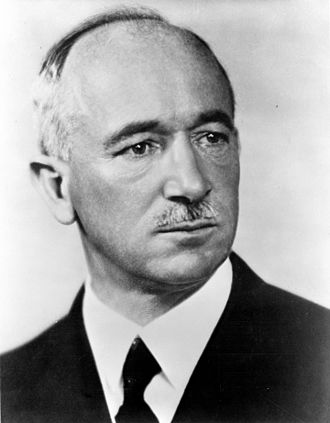
ACHIEVEMENTS: Politician credited with being the primary force behind the formation of Czechoslovakia after World War I.
NICKNAME/ALIAS: also spelled Edvard
DATE AND PLACE OF BIRTH: 28 May 1884, Kozlany, Bohemia
DATE/PLACE OF DEATH/AGE AT DEATH: 3 September 1948, Sezimovo Ústí, Czechoslovakia.. Aged 64.
DISCIPLINE: Politician.
FIELD: Politics
LANGUAGE: Czech
PARENTS: Matêj and Anna Beneš
SIBLINGS: 10 siblings, 8 reached majority; eldest brother named Baclav; others unnamed
SPOUSE: Unnamed
CHILDREN: None
EDUCATION: K.K. Gymnasium in Vinobrady, Bohemia; School of Philosophy of the University of Prague; Sorbonne, École libre des sciences politiques, Paris, France
MAJOR WORK: “Memoirs: From Munich to New War and New Victory” (two volumes); manuscripts including an uncompleted third volume of memoirs
LIFE AND TIMES:
Eduard Beneš was the youngest of ten children. His father was a progressive farmer, who was intensely interested in modern agricultural methods and insisted that all his children work on the family farm, about 150 miles from Prague. He also insisted that all his children attend school, and at least two of his children eventually attended university. His oldest son, Baclav, became an agronomist.
His youngest child, Eduard, began his schooling at the K.K. Gymnasium in Vinobrady, Bohemia, and later attended the University of Prague. In 1904 he studied at the School of Philosophy under <taught by> Tomás Garrigue Masaryk*. Around 1905-1906, Benes traveled to Paris, where he attended the Sorbonne and the École libre des sciences politiques, concentrating on Austro-Hungarian politics. In Paris, Beneš supported himself as a journalist, providing stories to the Czech newspapers “Právo Lidu” and “Volná Myšlenka.”
After returning to Prague in September 1908, Dr. Beneš became a professor of Political Economy at the Czech University of Prague, in July 1909. Toward the end of 1914, with most of the world at war, it became evident that France and England were making plans on how to divide the governance of Europe between the two countries after their defeat of the Austro-Hungarian Empire. The plan was dubbed the “Dual Monarchy,” and meant the end of hopes for an independent Czechoslovakia.
Consequently, Beneš and Masaryk, along with a small group of like-minded Czech nationalists, began their four-year struggle for Czech independence. Thanks in large part to his negotiation skills and his talent for writing moving and inspirational letters to the heads of government, on 29 June 1918, France became the first European nation to recognize Czechoslovakia as an independent nation. Great Britain followed suit on 9 August 1918, Japan’s Mikado government was next on 1 September 1918, and US President <recognized by> Woodrow Wilson* recognized the regime headed by Beneš and Masaryk as an ally against the German and Austro-Hungarian Empires on 9 August 1918.
With the support of these allies, following the end of the war, on 24 September 1919, Beneš returned to Prague as the new country’s foreign minister under the first President, Tomás Masaryk. Masaryk’s surviving son, <a pal of>Jan Garrigue Masaryk* was a close friend of both Beneš and his wife, and Beneš appointed Jan as a diplomatic liaison in both the United States and Great Britain over the next several years. During that time, Beneš implemented the Socialist policies which Masaryk had developed during his years in exile.
When Masaryk stepped down as President of the new Republic in 1935, he appointed Beneš to take his place. Beneš held that post until 1938 when he stepped down both in an attempt to maintain peace in Europe as war with Germany threatened, and to protest the measures being taken to render the Czech Republic defenseless in the face of threats of invasion by the Third Reich.
He went into exile in London, where he continued to lobby for the Czech cause in diplomatic circles. In 1940, following the outbreak of war, Beneš resumed the title of President and kept the provisional Czech government active in the world political arena for the next five years. His efforts centered on protecting the Czech interests, insuring that there would be a Czechoslovakia to return to after the war.
Following the end of World War II, Beneš returned to Prague and was confirmed as President, and re-elected in 1946. He suffered from ill health over the next few years, primarily arteriosclerosis and spinal tuberculosis, and resigned in February 1948 after the Communist Party overthrew the majority Socialist Party in what was commonly referred to as the Putsch. He reluctantly confirmed the new government, but declined to sign the new constitution, and named Jan Masaryk as his choice for Prime Minister.
ASSESSMENT: Beneš managed to negotiate multiple alliances with European governments during both World Wars to protect his country, resulting in the creation of the modern state of Czechoslovakia after the break-up of the Austro-Hungarian and German empires after World War I. He served as the Czech foreign minister (1918-35), premier (1921-22) and as President (1935-1938, 1940-1948).
EXTRA CONNECTIONS: Had political connections with <political connection with> Lloyd George*, <political connection with> Hitler*, <political connection with> Balfour*, <political connection with> Mussolini*
He met <met> Kokoschka*
ONELINER: Eduard Benes, who helped achieve Czech independence
BIBLIOGRAPHY:
Beneš, Eduard, Memoirs: From Munich to New War and New Victory, (translated by Godfrey Lias), Houghton Mifflin Company, Boston, The Riverside Press, Cambridge, 1954
Crabitès, Pierre,. Benes: Statesman of Central Europe, Coward-McCann, Inc., New York, 1936.