Balfour, Arthur
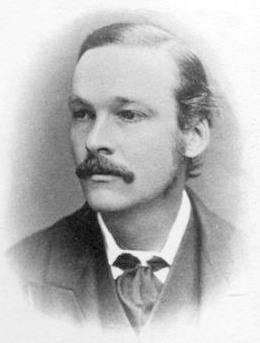
Arthur James, 1st Earl of Balfour
Nickname/Alias: Bloody Balfour
Achievements: British Prime Minister; “Balfour Declaration” regarding founding of Israel.
Born: July 25, 1848; Whittingehame, Scotland.
Died: March 19, 1930; Woking, England (Aged 81)
Field & Discipline: Politics; Prime Minister
Language: English.
Education: Eton School; Trinity College, Cambridge.
Major Work: The Balfour Declaration
Life & Times:
At the suggestion of his uncle, Lord Salisbury, Balfour entered Parliament in 1874, as a Conservative in [served under] Disraeli’s* final administration and, two years later, he gave his maiden speech. In 1877, he recommended that women should be enabled to qualify for university degrees. The following year, Lord Salisbury appointed him as his parliamentary private secretary, and he attended the Congress of Berlin.
At that time, developments in science prompted Victorian society to question religious belief. Through his brother-in-law, [brother-in-law was] Strutt*(Lord Rayleigh), Balfour knew men of science, like [knew] J. J. Thomson*, [knew] Rutherford*, and [knew] Lodge*. It is possible that these men were the inspiration for his book, ‘Defence of Philosophic Doubt’, which highlighted his belief that scientific knowledge depended as much on faith as did theology.
In 1880, the general election was a disaster for the Conservatives, but Balfour managed to keep his seat in Parliament. In the next general election, five years later, he was elected Member of Parliament for East Manchester but the Liberals returned to overall power under [served under] Gladstone*. When the Conservatives came to power again in 1886, Balfour became president of the Local Government Board, then Secretary for Scotland.
By November 1886, Balfour became Irish Secretary, gaining the nickname ‘Bloody Balfour’ after he suppressed the Irish National League and forcibly prevented insurrection after the trial of O’Brian. But he also challenged the widespread practise of absentee landlordism in Ireland and made other concessions to the Irish people. Balfour, now a formidable Parliamentary debater, became leader of the House of Commons and First Lord of the Treasury in 1891, which made him second-in-command in the government. At the election of 1892, the Conservatives lost again to the Liberals, but in 1895 when the Commons voted down a Home Rule Bill proposed by Liberal Gladstone, the Conservatives regained power, with Balfour as leader of the Commons.
In 1900, with the Boer War in progress, Balfour was elected to East Manchester and, in July 1902, Salisbury resigned and Balfour became Prime Minister. One of his main objectives was better education and within his first year, the Education Act, to improve primary and secondary education, was passed. Another achievement was The Wyndham Land Purchase Act, 1903, which promoted the sale of land to tenant farmers in Ireland. Balfour established the Committee of Imperial Defence in 1904, and brought about a practical foreign policy for Britain. The next major diplomatic achievement was the negotiation of the Entente Cordiale between Britain and France. Unfortunately, his decision to abandon the free trade policy eventually forced Balfour to resign, in November 1911.
The First World War brought him back into politics in Asquith’s coalition, as First Lord of the Admiralty. In the political crisis of December 1916, Balfour switched his allegiance to [served under] Lloyd George* and he served in the new coalition as Foreign Secretary. His most significant political act at this time was the Balfour Declaration. He had been interested in Zionism, after conversations with Dr Weizmann and Justice Brandeis in America had convinced him of the political justness of setting up a Jewish national homeland.
The “Balfour Declaration,” indicating British support for the establishment of a Jewish state, was given by Balfour in a letter to [gave Israel declaration to] LN Rothschild*, head of the English branch of the Jewish banking family. Under a British Mandate from the League of Nations, the Jews were established in the Holy Land on equal terms with the indigenous Arabs.
Balfour served as Lord President of the Council between 1919-22 and again between 1925-29. In his later years, Balfour became a member of the London guild known as The Stationer’s Company, of which [knew] Kipling* was a fellow-member.
Extra Connections:
He knew [knew] WG Armstrong*, [met] Lazarus*, [knew] AR Wallace*, and [played] concertina* newly-invented by [played concertina of] Wheatstone*.
Had political links with Czech nationalist [political links with] Benes*.
Had a row with [ fight with] TH Huxley*
Knew [knew] Sidney & Beatrice Webb*
Assessment: His main political achievements were the organization of defence, the reform of education, technology and science and re-orientation of British Commonwealth relationships.
Oneliner: AJ Balfour, British Prime Minister
Bibliography:
- Kenneth Young, Arthur James Balfour: the Happy Life of the Politician, Prime Minister, Statesman and Philosopher 1848-1930, G. Bell and Sons, Ltd., London, 1963.
Father: James Maitland Balfour
Mother: Lady Blanche Gascoyne-Cecil.
Siblings: Alice Blanche; Cecil Charles; Eleanor Mildred (Mrs. Henry Sidgwick); Eustace James Anthony; Francis Maitland; Gerald William; Evelyn Georgiana (Mrs. Strutt, aka Lady Rayleigh)
Spouse: None
Children: None