Bonnet, Chls
Full Name: Charles Bonnet
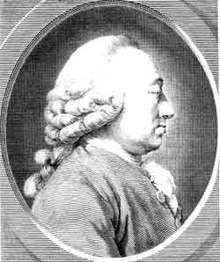
Achievements: Experimental biological research
Born: March 13, 1720; Geneva, Switzerland
Died: May 20, 1793; Geneva, Switzerland (Aged 73)
Field & Discipline: Natural History; Philosophy; Natural Scientist; Philosopher
Education: Local schools; Private tutor Auditoire de Philosophie
Major Work:
“Traite d’insectologie” (1745)
“Essai de psychologie” (1754)
“Recherches sur l’usage des feuilles dans les plantes” (1754)
“Essai analytique sur les facultes de l’ame” (1760)
“Contemplation de la nature” (1769)
Life & Times: Bonnet’s tutor at the “Auditoire”recognised his interest in natural history and introduced him to works by the microscopists [influenced by] Swammerdam* and [influenced by] Malphighi*. The greatest influence on Bonnet at this stage was [influenced by] Reaumur’s* “Memoires su les insectes”.Bonnet began to repeat Reaumur’s investigations and when he found his observations on a nest of caterpillars differed from Reaumur’s he wrote to him, initiating a correspondence which lasted until Reaumur’s death in 1760. Bonnet left the “Auditoire” at the age of nineteen and was compelled by his father to spend four years studying law. . He continued with his observations and in 1740 found that aphids reproduce parthenogenetically. His astonishing findings that insects can reproduce without fertilization were read to the “Academie de Sciences” by Reaumur and on the recommendation of [supported by] Fontenelle* Bonnet was elected a corresponding member of the “Academie”.
He went on to study the respiratory system of caterpillars and tapeworms, and the regeneration of rainwater worms. He made numerous experiments, such as cutting a worm into twenty-six pieces, each of which eventually became a single worm. Bonnet’s eyesight was becoming weak, and realizing that he could not hope to embark on a general history of insects, he published his findings to date under the title “Traite d’insectologie” (1745).In this work, he supported the concept of a Great Chain of Being: a single infinite chain, organised heirarchically, which united every thing in the universe. In the preface to his “Traite”, Bonnet refers to an essay (“Essay on Man”) by the English poet [influenced by] Pope* in which Pope writes about a universal chain of being.
Bonnet became one of the leading eighteenth-century exponents of this theory which was later challenged by the French zoologist [challenged by] Cuvier*, not least on the fact that Bonnet included in his chain animate and inanimate objects, and based his hierarchy on the degree of organization while ignoring the determining principle of life. Cuvier nevertheless credited Bonnet with the idea of using the chain of being as a taxonomic principle. Bonnet’s failing eyesight meant that he could no longer use the microscope to study insects and after a period of depression he turned to botanical studies.
In 1746 he began to study moss which led to an interest in the leaves of plants. He was assisted in his researches by collaborators, including [collaborated with] Senebier*, who later became famous for his studies on photosynthesis. Bonnet wrote a series of memoirs in which he made important observations on the processes of nutrition, transpiration, etiolation and leaf movement in plants. He published his findings in “Recherches sur l’usage des feuilles dans les plantes” (1754). His botanical work influenced the future development of his nephew [influenced nephew] Saussure*.
Bonnet’s interest in philosophical questions increased at this time and was strengthened when he read [influenced by] Leibniz’s* “Theodicy” in 1748, an event which he regarded as critical in his life. Leibniz confirmed Bonnet’s position on the existence of pre-formation of germs and of souls with which he had been wrestling for some time.Bonnet wrote a manuscript entitled “Meditations sur l’univers” which formed the basis for many of his later philosophical works and he discovered that writing on the metaphysics of nature was just as exciting as peering down a microscope. By now he had to dictate his thoughts.
In 1754 he published “Essai de psychologie” anonymously and in the same year corresponded with the French writer [corresponded with] Montesquieu* about the origins of law, which Bonnet believed were the consequences of relations between things rather than a manifestation of the relations themselves. Bonnet held that the origins of laws could be deduced from observations of nature rather than metaphysical abstractions on universality.The final part of “Essai de psychologie” concerned education. Bonnet discusses stages of childhood development and, in anticipation of [anticipated] Rousseau*, he believed that there was an age for the activation of reason and that children who had not yet attained it should not have to memorize and parrot books that were beyond their comprehension.
In 1756 he married and retired to his wife’s estate on the north shore of Lake Leman. He extended his psychological and physiological investigations in his “Essai analytique sur les facultes de l’ame” (1759), in which he claimed that each sensation is allocated to a specific nerve fiber and attempted to give a scientific explanation of the soul. The mathematician [corresponded with] Euler* corresponded with Bonnet on this issue and criticized his special fiber theory.Bonnet had many scientific correspondents including [corresponded with] Blumenbach* and [corresponded with] von Haller* whose experiments with chicken eggs appeared to confirm Bonnet’s views on pre-formation which he restated in “Considerations sur les corps organises” (1762). Bonnet, however, was never doctrinaire in his approach and always supported further observation and experiment. In the course of his correspondence with [corresponded with] Spallanzani*, for example, he suggested that Spallanzani investigate artificial insemination. “Considerations” was banned in France on the grounds that it was a metaphysical work that was could be dangerous if read by the general public.
Bonnet’s ”Contemplation de la nature” (1764) was a success and was used by Spallanzani as a teaching text at Pavia. It went into several editions and was translated across Europe. [translated by] Lavater*, an early pioneer of physiognomy, translated one of Bonnet’s philosophical works and he followed Bonnet’s insistence that observation of nature should always precede theory.In “Palingenesie philosophique” (1769) Bonnet discussed the future of the species and attempted to give the resurrection a physical interpretation. He maintained that animals have a will that was directed by sensation only, while plants were further down the scale of being, but he granted both species a soul and upheld the possibility of their further development.Bonnet investigated psychological questions until the end of his life. In 1788 he wrote several articles criticizing [criticized] Kant’s* “Critique of Pure Reason”. Bonnet died in 1793.
Assessment: Bonnet is famous for his discovery of parthogenesis in aphids and he helped to influence the development of biology in the eighteenth century.
Oneliner: Charles Bonnet, discoverer of aphid parthenogenesis
Language: French
Father:: Father: Pierre Bonnet
Mother: Anne-Marie Lullin
Siblings: Unknown
Spouse: Jeanne-Marie de la Rive
Children: None
Bibliography:
- Anderson, Lorin, Charles Bonnet and the Order of the Known, D Reidel Publishing Company, Dordrecht, Boston, London, 1982.