Swan, Joseph
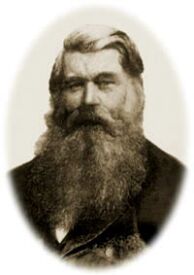
Achievements: Inventor of the Swan incandescent filament lamp.
Born: 31st October 1828, in Sunderland, England.
Died: 27th May 1917, in Warlingham, England. Aged 88.
Field & Discipline: Science, Chemistry, Engineering; Chemist, Engineer
Education: Private school.
Major Work: The filament lamp.
Life & Times:
During his chemistry apprenticeship, Swan joined the Sunderland Athenaeum library, where he came across the ‘Repertory of Patent Inventions’. He researched J. W. Starr’s invention of the incandescent electric lamp and, around 1845, he saw W. E. Staite lecturing on his ‘regulator lamp’. It was at this time that Swan first began to think about how an electric light bulb could be made to work and he started experimenting with different filament materials. He adopted the idea of carbon and began a series of painstaking experiments, saturating paper in treacle, syrup or tar so that he could produce a large residue of carbon. By 1855, he had produced strong, flexible filament spirals.
Despite this success, he had come up against technical difficulties in creating a vacuum and providing the necessary electrical power. He overcame these problems when , in 1865, he studied the writings of [influenced by] Crookes* and found that [influenced by] Sprengel* had invented the high vacuum pump. Then he discovered [influenced by] Faraday’s* dynamo in the early 1870s.
The next obstacle was the problem of the burnt carbon blackening the glass. Further experiments showed him that making a vacuum while the wire was cold, then passing a strong current through the filament to make it incandescent at high temperature, produced a light which didn’t blacken the glass. Swan demonstrated his carbon filament light to the Chemical Society in Newcastle-upon-Tyne in 1878 and, in 1880, he caused some excitement at the Newcastle Literary and Philosophical Society when twenty lamps were turned on at once in the lecture theatre.
In 1881, he established The Swan Electric Lamp Company Ltd., at Benwell, outside Newcastle. In the early days, he made his filaments by carbonizing mercerised cotton (a process invented by John Mercer) before developing the more effective nitrocellulose.
Swan’s home was the first house in Great Britain to be lit entirely by electricity, closely followed by that of [lit house of] WG Armstrong*. By June 1881, there had been a trial lighting at the House of Commons and, by 1882, a train saloon on the Victoria to Brighton railway line, the London Lord Mayor’s Mansion House, the British Museum, and the Royal Academy were all using Swan lamps.
Swan [partnered with rival] Edison* had also produced a commercial electric lamp in the United States but, unlike Swan, had patented his ideas. Swan soon found himself in a disagreement over patent infringement but, instead of getting involved in a lengthy legal battle, the two joined forces and formed the Edison and Swan United Electric Light Company Ltd., in 1883.
In his later work, Swan contributed to the areas of electroplating, electric cells and the production of artificial fibres. He also developed a miner’s safety lamp and a new lead cell battery which would not spill acid. He received many honors for his work, including election as Fellow of the Royal Society in 1894 and President of the Institute of Electrical Engineers in 1900. The following year, Durham University awarded Swan an honorary doctorate and he became the first president of the Faraday Society and Vice President of the Senate of University College, London. By 1904, he had become President of the Society of Chemical Industry as well as being a Chevalier de la Légion d’Honneur and, in November of that year, he was knighted and he lived the last twelve and a half years of his life as Sir Joseph Swan.
Assessment: He invented the electric light, which, in turn, boosted the development and expansion of the new electrical industry.
Oneliner: Joseph Swann, co-inventor of the light bulb
Bibliography:
Swan, Kenneth R., Sir Joseph Swan and the Invention of the Incandescent Electric Lamp, The British Council, Longmans, Green and Co., London, New York, Toronto, 1946.
Language: English.
Father: Joseph Swan
Mother: Isabella Cameron.
Siblings: Alfred.
Spouse: Frances White (daughter of William White, died 1868); Hannah White (daughter of William White, married 1871)
Children: Four sons, three daughters.