Crookes, Wm
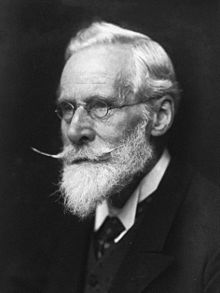
Achievements: The Crookes radioscope and radiometer.
Born: June 17, 1832; London, England.
Died: April 4, 1919; London, England (Aged 86)
Field & Discipline: Science; Physics; Chemistry
Education: Royal College of Chemistry, London
Major Work: Discovery of the element Thallium.
Life & Times:
Crookes entered the Royal College of Chemistry in London, in 1848, before becoming assistant to [assistant to] von Hoffmann* in 1850. He undertook independent research on selenocyanides, the new compounds of the element selenium, and published his results in 1851. Faraday* heard of Crookes’ work and introduced him to [knew] Wheatstone* and [knew] Stokes*, who got him interested in chemistry. At the suggestion of Wheatstone, the Radcliffe Observatory at Oxford made Crookes Superintendent of the Meteorological department in 1854. In 1855, he moved to the College of Science at Chester, before leaving to become a freelance chemist.
During the 1850’s he studied the new field of photography and researched the sensitivity of the wet collodion process developed by [work related to] Swan*. He returned to London in 1858 and became secretary of the London Photographic Society and editor of their journal. The following year he set up the journal, “Chemical News.” Working from a laboratory set up at his home, he studied spectroscopy, using the new spectroscope of [influenced by] Kirchhoff* and [influenced by] Bunsen*. This led to his discovery of thallium in 1861.
In the course of this work, Crookes had needed to use a vacuum balance. He had noticed that variations occurred when a substance was weighed in a vacuum, which led to him researching the effects of light radiation on objects in a vacuum. In 1875, he wrote another paper, which announced the invention of the renowned Crookes radiometer (or “light mill”), in which a series of vanes, blackened on one side and polished on the other, is caused to rotate on exposure to light. Crookes was unable to correctly work out the theory behind the behavior of the radiometer, however. In the end it turned out to be due to microscopically-small gas leaks from the vanes, heated by the light.
Crookes next observed electrical currents passed through vacuum tubes containing rarefied gases. These glass tubes, named “Crookes tubes,” contained two electrodes and were pumped out to a very low gas pressure. By applying a high voltage to the electrodes, and by varying the pressure in the tube, in 1878 Crookes produced cathode rays and various levels of glow in the electrical discharges. One observation was a gap in the light of the electrical discharge near the cathode, which has become known as the “Crookes Dark Space.” He also found that the ion stream of the electrical discharge, which he called “molecular rays,” cast shadows and warmed objects and, if a magnet was held near the rays, they were deflected.
Crookes tubes were responsible for the discovery of electrons and also played a role in the development of the first X-ray machines. They were also the predecessors of the [developed] cathode ray tube*.
Success came in the use of the stereoscope during the 1880s, when he developed a device for viewing radioactive particles, called the spinthariscope, and he also made the first observations of phenomena which Frederick Soddy later called isotopes.
After the death of his brother in 1867, Crookes became involved in spiritualism, fascinated by the phenomena seen in séances, such as lights, unexplained noises and movements of objects. He was a fan of medium [a fan of]Daniel Dunglas Home*.
He continued to work right up to his death in April 1919, having submitted a paper on scandium, with numerous photographs of its spectrum, four months before.
Extra Connections:
His work related to that of [work related to] JA Fleming*, [work related to] Lodge*, [work related to] JJ Thomson*, [work related to] Goldstein*, [work related to] O Reynolds*, [work related to] Pringsheim*, [work related to] Mendeleyev*, [work related to] Ramsay*, [work related to] Braun* and [work related to] Roentgen*
Was a member of the Society for Psychic Research, as were authors [in Psychic Society with] Carroll* , [in Psychic Society with] Tennyson*, [in Psychic Society with] Conan Doyle*, [in Psychic Society with] evolutionist Wallace* and Lodge.
His cathode ray tube was used by [work used by] Braun*
He met [met] Hertz*, and[met] Zollner*
[anticipated by] Hittorf* laid the ground for him.
He influenced the work of [influenced] Lenard*
Worked with [worked with] Dewar*
He taught [taught] Perkin*
He advised [advised] Swinton*
Assessment: Crookes was the discoverer of thallium, inventor of the radiometer and pioneer in the study of cathode rays.
Oneliner: William Crookes, major Victorian scientist and psychic freak
Bibliography:
- D’Albe, E. E. Fournier., The Life of Sir William Crookes, T. Fisher Unwin Ltd., London, 1923.
Language: English
Father: Joseph Crookes
Mother: Mary Scott
Siblings: Philip; Joseph; Henry; Alfred; ten others
Spouse: Ellen Humphrey
Children: Bernard; Walter; Lewis