Gully & Wilson
Full Name: James Manby Gully & James Wilson
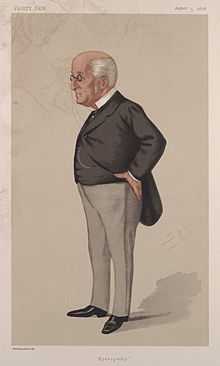
ACHIEVEMENT(S): Introduced hydropathy, now known as hydrotherapy, or the Water Cure, to Great Britain from Europe.
Born: Gully: March 14, 1808; Kingston, Jamaica; Wilson: December 1, 1807; Bagillt, Holywell, Flintshire, Wales
Died: Gully: March 27, 1883; place unknown (Aged 75); Wilson: January 8, 1867; Malvern, England (Aged 59)
FIELD:Medicine; Physician
EDUCATION: Gully: Dr Pulford School, Liverpool; College de St Barbe, Paris; University of Edinburgh, 1825-28; Ecole de Medecine, Paris, 1828.
Wilson: Holywell's Classical Academy, St Winefred's Chapel; Trinity College, Dublin,
1825-28; Ecole de Medecine, Paris.
MAJOR WORK:
Gully:
“The Water Cure in Chronic Disease” (1846)
Wilson:
“The Water Cure: A Practical Treatise on the Cure of Diseases by Water, Air, Exercise, and Diet” (1842)
Life & Times:
GULLY:
Gully studied medicine in Edinburgh for three years, then moved to the Ecole de Medecine, Paris in 1828, where he continued his studies for another year as an external pupil and dresser at the Hotel Dieu under Dupuytren*. In 1829, Gully took a medical degree at Edinburgh, and became a member of the Royal College of Surgeons there. He then moved to London, where he set up as a practising physician in 1830. He was later elected as a fellow of the Chirurgical Society of London and a fellow of the Royal Physical Society of Edinburgh.
Between 1833 and 1836, he edited the 'London Medical and Surgical Journal' and the “Liverpool Medical Gazette.” In the former he published a condensed account of Broussais*'s “Lectures on General Pathology,” and in the latter “The Rationale of Morbid Symptoms.”
In 1836 he printed, for private circulation, 'Lectures on the Moral and Physical Attributes of Men of Genius and Talent' and around 1837, he met James Wilson. The two agreed that current medical routines were inefficient and so they began searching for a better system. In 1842, Wilson returned from the European mainland, where he had experienced hydropathy, to convince Gully of the power of water treatment in acute and chronic disease. They decided to introduce hydropathy to England and selected Malvern, in the West of England, for their practice.
As “Doctor Gullson,” Gully appears in Charles Reade's highly successful novel “It’s Never Too Late to Mend” (1856), later dramatised for the stage. He was friendly with historian and social critic Thomas Carlyle*, who took the water cure in August 1851, while staying with the Gully’s.
Generally, Gully was more successful than Wilson and attracted other celebrities, including the poet Alfred, Lord Tennyson*, the politician and historian Thomas Macaulay* and Charles Darwin*, who all took the water cure at Malvern. Florence Nightingale* recommended the treatment. In 1872, Gully resigned his practice to his partner, William T Fernie, but his career ended badly. Four years later, in 1876, Gully’s name was frequently mentioned at the sensational inquiry into the death of a barrister, Charles Bravo, who was, it was suspected, poisoned by his wife. Disclosures of Gully's intimacy with Mrs Bravo greatly damaged his reputation and at the end of the inquiry, his name was removed from all the medical societies and journals of the day. He died on 27th March 1883.
WILSON:
When he was fifteen, both of Wilson's parents died and he was apprenticed to Joseph Churton, house surgeon of the Liverpool Royal Infirmary. Two years later he matriculated at Trinity College, Dublin and spent several years in Ireland, attending lectures and gaining practical experience in a County Meath hospital. His most influential teacher of this time was Professor Macartney, at Trinity College, who was a pioneer in cold water treatment and was an advocate of the use of water in healing.
After briefly attending the Ecole de Medecine in Paris, where he came under the influence of the famous French pathologist, Francois Victor Joseph Broussais, Wilson travelled to London to receive the diploma of the Royal College of Surgeons and the Licentiate of the Society of Apothecaries.
Wilson's first official appointment was as resident surgeon at the Liverpool South Dispensary in 1830. He returned to London in 1833, where he bought into a general practice in Clapton in the East End of London. There, he met Dr James Gully, a general practitioner in the fashionable West End, with whom he struck up a close and lasting friendship. Wilson's health started to deteriorate and so, in 1838, he accepted an invitation from Lord Farnham to accompany him as a travelling physician on a visit to France. After Farnham's death in Paris later that year, Wilson remained on the Continent and found employment with distinguished families, including the position of physician to the Prince of Nassau.
In 1840, he met and married Clara Kortright in Nice and their son Henry Grattan was born in 1841. In the same year, Wilson visited Vincent Priessnitz*, in Graefenberg, Austria to see the complex he had built with a system of baths and douches with which to treat his patients. Wilson returned to London with his wife and young son in early 1842 and took up residence at 18 Sackville Street, near his friend Gully, with whom he frequently discussed the Water Cure and how they could bring it to England.
He wrote his book, “The Water Cure: A Practical Treatise on the Cure of Diseases by Water, Air, Exercise, and Diet,” dedicated to Vincent Pressnitz and in May 1842, Wilson and Gully set out to explore the feasibility of Malvern as a centre for the practice of hydropathy. It was here that Wilson set up his practice, “Graefenberg House,” which proved so popular that in November 1843, he built his “Hydropathic Establishment,” a large house with an enormous cistern, known as the Mason Tank. Later he built his home, Malvern House, close to the site.
It was here that many of Wilson's most distinguished guests stayed, including Sir Charles Barry*, the novelist Sir Edward Bulwer Lytton, who later wrote “Confessions of a Water-patient,” the journalist Joseph Leech and the lithographer Richard Lane. Charles Dickens placed his wife Catherine under Wilson's cold water cure in 1851, after the birth of their ninth child. It became clear that Wilson needed a full-time partner and, in 1850, he found Dr Leopold Stummes, an Austrian physician. Soon after, Wilson wrote his most ambitious work, 'Principles and Practice of the Water Cure' (published 1857).
During the 1860s his health started to deteriorate and in an attempt to find a cure, he visited fellow hydropathist, Dr. William Macleod, uperintendent of Ben Rhydding, a Water Cure institution in the Wharfe Valley near Otley. In January 1867, Wilson decided to spend another period there, and on Tuesday 8th January he was found dead in his room, having probably died of heart failure.
Assessment: Drs Gully & Wilson, doctors who brought hydrotherapy to Britain
Oneliner: Drs Gully & Wilson, who made hydrotherapy fashionable in Britain
Bibliography:
- Grierson, Janet, Dr. Wilson and his Malvern Hydro: Park View and the Water Cure Era, Malvern: Aldine Press, 1998.
- James Wilson
Wikipedia Gully
"Taking the waters" is alluded to in the first rap song, written by Scots chronobard Al Stewart in 1974, beating Sugarhill Gang'sRapper's Delight by five years.
LANGUAGE: English
Father: Gully: Unknown; Wilson: James Wilson
Mother: Gully: Unknown; Wilson: Mrs. Adams
Siblings: Gully: Ann and Ellen; Wilson: Unknown
Spouse: Gully: Unknown; Wilson: Clara Kortright
Children: Gully: William Court Gully (QC, MP); 2 others; Wilson: Henry Grattan; Clara Constance