Fermat, P de
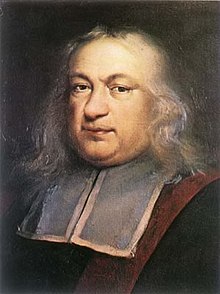
Achievements: Differential calculus. Fermat’s Last Theorem.
Born: August 17, 1601; Beaumont-de-Lomagne, France
Died: January 12, 1665; Castres, France (Aged 63)
Field & Discipline: Mathematics
Language: French
Education: Convent of the Cordeliers, Beaumont-de-Lomagne; University of Toulouse; University of Orleans
Major Work:
"Introduction to Loci"
"Fermat's Last Theorem"
Life & Times:
By 1629, Fermat had begun a reconstruction of the long-lost "Plane Loci" of Apollonius, the 3rd Century B.C. Greek geometer. Fermat soon found that the study of loci (sets of points with certain characteristics) could be facilitated by the application of algebra to geometry through a coordinate system. Meanwhile, [paralleled work of] Descartes* had simultaneously observed the same basic principle of analytic geometry: that equations in two variable quantities define plane curves.
Because Fermat's "Introduction to Loci" was published in 1679, two years after his death, the discovery has become known as Cartesian (i.e. "of Descartes") geometry.
In 1631, Fermat got his degree in civil law from the University of Orleans, then set up a legal practice in Toulouse. During this period, Fermat developed his "reduction analysis" technique, a reversible process in which a particular problem is "reduced" until it can be seen to be part of a group of problems for which solutions are already known. This method permitted the use of equations to describe geometric figures, and Fermat demonstrated that a second degree equation could be used to describe seven "irreducible forms", each of which gave complete descriptions for different curves, such as parabolas, hyperbolas, spirals and ellipses.
In the mid-1630s, Fermat's work on curves led him to the concept of "infinitesimals" and the creation of an algorithm (rule of mathematical procedure) that was equivalent to differentiation. He applied this algorithm to equations of quadrature, the calculation of the maxima and minima of curves, and the method of finding the tangent to a curve. He also applied his analysis of infinitesimal quantities to a variety of other problems, including the calculation of centers of gravity, and the lengths of curves. Around 1643, he also tried to extend this system into three dimensions to describe solids, but was unsuccessful beyond establishing in 1650 the algebraic foundation of solid analytical geometry.
Although Fermat's work was superseded 50 years later by the development of calculus by [superseded by] Newton* and [superseded by] Leibniz*, Newton still acknowledged the influence of Fermat on his ideas. In 1636, Fermat wrote to [corresponded with] Mersenne* about mistakes he believed [identified errors by] Galileo* had made in his description of free-fall, and included descriptions of his work on spirals, which had been prompted by his studies of the path of free falling bodies. He told Mersenne that to compute areas under the spirals he had used methods adopted from Archimedes' "On spirals".
His letter also contained two problems on maxima which he asked Mersenne to pass on to other French mathematicians, including [corresponded with] Roberval* and Etienne Pascal. Both Roberval and Mersenne found Fermat's problems extremely difficult and asked him to reveal his methods, whereupon Fermat sent them his "Method for calculating Maxima and Minima and Tangents to Curved Lines", his restored text of Apollonius's "Plane loci", and his algebraic approach to geometry, "Introduction to Plane and Solid Loci".
Fermat corresponded with many mathematicians, including Carcavi, Mersenne, Roberval, [corresponded with] Christiaan Huyghens*, Descartes, [corresponded with] Gassendi*, [corresponded with] Torricelli*, [corresponded with] Wallis*, [corresponded with] De Moivre* In 1654, [corresponded with] Blaise Pascal* wrote Fermat to ask about his ideas on probability. Their short correspondence set up the theory of probability, and they are now considered its authors. Three years later, in 1657, their arguments were extended and published by Huyghens in "De Ratiociniis in Ludo Aleae" (1657).
In 1657, Fermat published "Fermat's Last Theorem", his most famous achievement, which has remained a mystery for more than 300 years. The theorem, which appeared in the margin of his copy of Diophantus's "Arithmetica", declared that there is no solution in whole integers to the equation x[to the power of]n + y[to the power of]n = z[to the power of]n, where x, y, z, and n are positive integers, if n is greater than 2.
After making a study of the passage of light through materials with different refractive indices, Fermat produced what is now known as "Fermat's Principle", which states that light travels by the path of least duration. He again differed with Descartes over the Law of Refraction (that the sines of the angles of incidence and refraction of light passing through media of different densities are in a constant ratio), which had been published by Descartes in his "La Dioptrique" of 1637.
Descartes had tried to justify the sine law with a premise that light traveled more rapidly in the denser of the two media involved in the refraction. Twenty years later, Fermat noted that this appeared to be in conflict with the view that nature always chose the shortest path. Applying his method of maxima and minima and making the assumption that light travels less rapidly in the denser medium, Fermat showed that the Law of Refraction obeyed his "principle of least time". His argument concerning the speed of light was found later to be in agreement with the wave theory of Huygens, and, in 1849, was verified experimentally by [light theory confirmed by] Fizeau*.
Extra Connections: [work related to] Lagrange* failed to solve his theorems
His work was studied by [studied by] Viviani *
Assessment: Independently of Descartes, discovered the fundamental principle of analytic geometry. His methods for finding tangents to curves and their maximum and minimum points led him to be regarded as the inventor of differential calculus. With Blaise Pascal, he co-founded the theory of probability.
Oneliner: Pierre de Fermat, of “Fermat’s last theorem.”
Bibliography:
- Biographical Dictionary of Mathematicians.
- Dictionary of Scientific Biography.
- Encyclopedia Britannica.
Mahoney, M.S., The Mathematical Career of Pierre de Fermat (1601- 1665), Princeton: Princeton University Press, 1994.
Father: Dominique Fermat
Mother: Claire de Long
Siblings: 1 brother, 2 sisters
Spouse: Louise de Long
Children: Clement-Samuel; Jean; Claire; Catherine; Louise