Gassendi
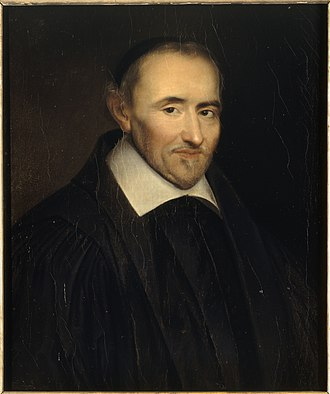
Name: Pierre Gassendi
Nickname/Alias: also spelled Gassend
Achievements: The idea of atoms and molecules
Born: January 22, 1592; Champtercier, Provence, France.
Died: October 24, 1655; Paris, France (Aged 63)
Field & Discipline: Mathematics; Philosophy
Language: French
Father: Antoine Gassendi
Mother: Francoise Fabry
Siblings: Unknown
Spouse: None
Children: None
Education: Latin school, Digne (1599-1606); University of Aix (1606-12); University of Avignon (1612-14)
Major Work:
“Syntagma Philosophicum” (1658)
Life & Times:
Gassendi studied Aristotelian philosophy and Catholic theology for six years at the University of Aix-en-Provence. He soon developed a dislike for [disagreed with views of] Aristotle*, whose abstract disputation wasn't practical enough for him as it failed to address mathematics and natural philosophy.
He became even more convinced when he read the works of [studied work of] della Mirandola*.
He was a very gifted, holding the Chair of Rhetoric at Digne, France, in 1608 while still a student. He later studied at the University of Avignon and returned to Digne as a Doctor of Theology in 1614, becoming Principal of the Latin School. Gassendi preached at the church of Notre Dame de Bourg and, in 1616, after becoming a priest, conducted his first Mass at l'Eglise des Peres de L'Oratoire at Aix.
In the same year, he was offered both Chairs of Theology and Philosophy at Aix and spent the next six years there, but lost the job in 1622, when all teaching at the University was taken over by the Jesuits. Instead of teaching, he then devoted himself to what he termed “investigative and analytical genuine philosophy.”
In 1624, he published his first work, “Exercitationes Paradoxicae adversus Aristoteleos, Book 1,” a philosophical work disagreeing with the old Scholastic mode of reasoning. In the same year, he visited Paris, where he met [met] Mersenne* and the [met] Dupuy* brothers and, a year later, wrote to [corresponded with] Galileo* to demonstrate his support for Copernican ideas.
After 1625, Gassendi's working life was pretty much devoted to restoring the philosophy of Epicurus (341-270 BC). Epicurus proposed Atomism, the doctrine of “atoms and the void” derived directly from that of Democritus, and involving a largely mechanical concept of causality. Gassendi first wrote of his studies on Epicurean Atomism in a letter to his patron and friend, [patron and pal was] Peiresc*, in 1626, but two years later, his own manuscripts on the philosophy of Epicurus began to appear.
In the winter of 1629-30, he traveled in the Netherlands, where he met, among others, the physicist [met] Beeckman*. Back in Provence in 1631, he described, in a letter to Peiresc, a first version of his philosophy.
Gassendi was finally given the job of Provost of Digne Cathedral in 1634. He then wrote the “Pars Physica,” in which he described his basic Epicurean system of natural philosophy. This included sections on the Earth, atmospheric phenomena, stones, metals, plants, animals and human beings and much of it was later included in his “Disquisitio,” which was published in 1644.
He maintained an enthusiastic involvement in practical astronomy and, in 1636, wrote a letter to his friend [a pal of] Naude* concerning the question of the apparent differences in the size of the Sun according to its position in the sky.
In 1637, Peiresc died and the following year Gassendi was taken under the wing of the new governor of Aix-en-Provence, Louis de Valois. De Valois asked him to return to Paris, where Gassendi was elected to the Assembly of the Clergy. He also published a variety of treatises, the most important of which was “Commentarii de Rebus Caelestibus,” compiled during the period 1618 – 1655.
In 1639 Gassendi wrote a treatise explaining the corpuscular theory of light, based on a celestial phenomenon described by the Jesuit astronomer, [influenced by] Scheiner*.
In 1640 he wrote a treatise on projectile motion and the mechanics of Galileo. This included his own theory on the causes of motion, and the implications for the Copernican debate. The treatise described an experiment, performed by Gassendi in 1640 in Marseilles in which a weight was dropped from the top of the mast of a moving ship, falling at the foot of the mast and not behind it, proving that the weight shared the forward motion of the ship.
Gassendi then began a dispute with [corresponded with] Descartes*, when he disagreed with Descartes’ “Meditations.” His objections and subsequent replies were published by Gassendi's friend, Samuel Sorbiere, under the title “Disquisitio Metaphysica” in 1644. This work was the first of the three versions, “Disquisitio,” “Animadversiones,” in 1649 and the posthumous “Syntagma,” published in 1658, which together covered the major work of Gassendi's life.
In 1645, the patron of the Royal College in Paris, Richelieu, persuaded Gassendi to take the Chair of Mathematics but after a year, he fell ill and returned to Provence in 1648. A couple of years later, on a mountain near Toulon, he carried out another experiment, repeating the famous investigation of air pressure by [repeated experiment of] Perier* under the direction of [repeated experiment of] Blaise Pascal*.
Unlike Pascal, though, Gassendi differentiated weight from pressure. He understood that variations in pressure affected the barometer and that it was not only the approximate height of the "column of air,” but also the changes of state of the atmosphere, which influenced subsequent weather conditions.
He also showed that while the barometric vacuum proved that the natural vacuum is not impossible, what happened inside the tube depended on what happened outside. In this Gassendi anticipated the great English physicist, [anticipated] Robert Boyle*.
Back in Paris in 1653, he wrote a third version of his great work entitled “Syntagma Philosophicum” and in 1654 a biography of [wrote biography of] Brahe*, followed by a much briefer life of [wrote biography of] Copernicus*, and then brief lives of [wrote biography of] Peuerbach* and [wrote biography of] Regiomontanus*.
The following year, Gassendi died from a pulmonary infection, at the Paris home of Habert de Montmort.
Extra Connections:
His work related to that of [work related to] Berti*.
His chair of math was taken by [succeeded by] Roberval*
He corresponded with the [corresponded with] Cassini family*, [corresponded with] Fermat*,
He met [met] Hobbes*, [met] Huyghens*, [met] Theveneot*
His work was known to [work known to] La Fontaine*
He influenced [influenced] Locke*, [influenced] Newton*
He was a fan of [a fan of] Montaigne*
He taught [taught] Picard*
A bronze statue of him (by Joseph Ramus) was erected by subscription at Digne in 1852. A large crater on the Moon is named after him.[35]
Scientific achievements
As part of his promotion of empirical methods and his anti-Aristotelian and anti-Cartesian views, he was responsible for a number of scientific 'firsts':
- He explained parhelia in 1629 as due to ice crystals.
- In 1631, Gassendi became the first person to observe the transit of a planet across the Sun, viewing the transit of Mercury that Kepler had predicted. In December of the same year, he watched for the transit of Venus, but this event occurred when it was night time in Paris.
- Use of camera obscura to gauge the apparent diameter of the Moon.
- Dropping a stone from the mast of a ship (in De motu) conserves horizontal momentum, removing an objection to the rotation of the Earth.
- Measurement of speed of sound (to about 25% accuracy), showing that it is invariant of pitch.
- Satisfactory interpretation of Pascal's Puy-de-Dôme experiment with a barometer in the late 1640s; this suggested a created vacuum is possible.
- He asserted and defended (in "Syntagma philosophiae Epicuri", 1649, see Philosophical Writings below) the notion that matter is made of atoms, following Epicurus.
In addition to this he did work on determining longitude via eclipses of the Moon and on improving the Rudolphine Tables. He addressed the issue of free fall in De motu (1642) and De proportione qua gravia decidentia accelerantur (1646).[36]
Assessment: He rationalized physics by introducing quantity into the science through the measurements he undertook and, above all, by introducing the concept of atoms capable of joining together in molecules to produce measurable bodies.
Oneliner: Pierre Gassendi, influential 17th century scientist and philosopher
Bibliography:
- Jones, Howard, Pierre Gassendi, 1592-1655: An Intellectual Biography, Nieuwkoop B. de Graaf, 1981.