Fritts, Chls
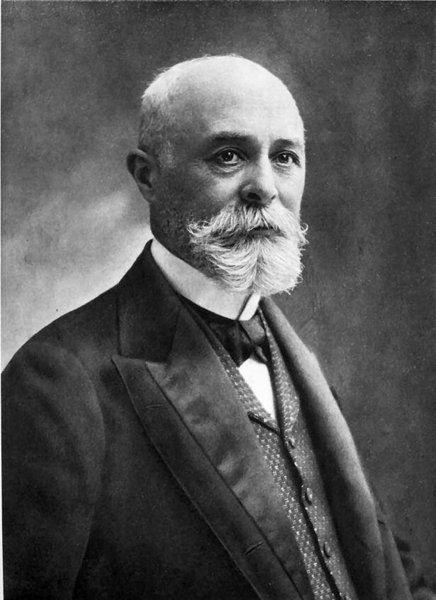
NAME: Fritts, Charles Edgar
ACHIEVEMENT(S): Solar cell
NICKNAME/ALIAS: None
DATE/PLACE OF BIRTH: active in the 1880s in New York
DATE/PLACE/AGE AT DEATH: Unknown
DISCIPLINE: Inventor
FIELD: Physics
LANGUAGE: English
PARENTS: Unknown
SIBLINGS: Unknown
SPOUSE: Unknown
CHILDREN: Unknown
EDUCATION: Unknown
MAJOR WORK: Unknown
LIFE AND TIMES:
In 1883 Charles Fritts constructed the first selenium photovoltaic cells. This was an important step in the history of photovoltaics, which had started in 1834 when the young French physicist Alexandre-Edmond Becquerel first observed and described the photovoltaic (PV) effect.
In one of a series of electrical experiments, Becquerel placed two metal plates in a conductive fluid, exposed the apparatus to the sun, and observed a small surge in voltage. This was followed, in 1873, with Willoughby Smith's discovery of the photoconductivity of the non-metallic element selenium (first isolated in 1817 by <work related to> Berzelius*), whose findings stimulated the English physicists W.G. Adams and R.E. Day to make further investigations into selenium. In 1877, Adams and Day observed the photovoltaic effect in solid selenium, and made the first selenium cell.
In 1883 in New York, Charles Fritts, having seen the industrial potential of Adams and Day's work, carried on his own experiments with selenium and constructed the first true solar cells made from selenium wafers - using junctions formed by coating the semiconductor selenium with an ultra-thin, nearly transparent layer of gold.
Although these devices were very inefficient converters of energy, transforming only 1 per cent of the absorbed light energy into electrical energy, these early solar cells fostered a vision of abundant, clean power.
Fritts himself had grandiose plans for his cells competing with the large electrical generating plants which were just then being set up in the United States. Since his cells were compact and self-sustaining, he foresaw a time when each building could incorporate its own electrical generating plant and would no longer have to depend on a centralized grid.
Another advantage of photovoltaic cells, Fritts wrote in
1886, was that their fuel, solar energy, "is both without limit and without cost and will continue to stream down on Earth after we exhaust our supplies of fossil fuels".
But in spite of the fact that in 1887 the German physicist <ideas developed by> Hertz* discovered that ultraviolet light altered the lowest voltage capable of causing a spark to jump between two metal electrodes, the early solar cell industry of the 19th century never developed as Fritts predicted.
Most engineers at the time were sceptical of Fritts's claims because, they argued, no system could produce significant amounts of power without consuming large quantities of fuel. Since these engineers were accustomed to working with the laws of thermodynamics as understood at the time, most of them felt that Fritts's experiments violated the principle of the conservation of energy.
Fritts and other solar cell experimenters of the period couldn’t develop a theoretical defense against these objections. Why the cells worked (i.e. the photovoltaic effect) could not be adequately explained by 19th century classical physics.
But their experiments could be replicated and several leading scientists of the period, including <invention tested by> Werner Siemens*, confirmed Fritts's results. After testing an array of cells sent to him by Fritts, Siemens said the American inventor's work was "of the greatest scientific significance since there is here presented to us, for the first time, the direct conversion of the energy of light into electrical energy."
Researchers in photovoltaics were to remain the outcasts of the scientific community until quantum mechanics - which explained why solar cells worked - won general acceptance among engineers and scientists. Interest in solar cells then rose.
Reporting on work in the solar cell field, a 1931 article in 'Popular Science' predicted that once these cells were mass-produced, they would power "a huge electric station at a cost no greater than would be required to build a hydroelectric station of the same capacity." The optimism proved premature, as the newer solar cells could still produce only minute amounts of electricity.
In the 1950s scientists at Bell Laboratories, trying to discover a reliable alternative power source for communication systems in remote areas, began investigating ways to improve the performance of selenium cells.
The leader of the research team, Darryl Chapin, believed that photovoltaics were ideally suited for this task, and he and his team devoted much time to the development of a more efficient selenium cell. Meanwhile another Bell scientist, Calvin Fuller, was researching ways of making silicon a better rectifier. Fuller found that silicon would work more efficiently when doped with certain impurities.
Chapin and Fuller worked together to refine the silicon solar cell and after several months, came up with cells that had an efficiency of 6 percent. In May 1954, they announced their work to the press. Chapin and Fuller went on to build cells with
efficiencies as high as 15 percent, and solar cells were first put to use in powering a telephone relay system near Americus, Georgia, but the sun powered unit proved uncompetitive with conventional sources of energy.
The problem lay in the high cost of the pure-grade silicon required for the manufacture of efficient cells and in the expensive, labor-intensive method of cell production which called for slicing each cell by hand.
Solar-cell technology was taken up soon afterwards by the U.S. space programme, which needed a long-term power source for its satellites, the advantage of solar cells being that there is continuous sunlight in space, they require no storage and are, therefore, the lightest per-watt source of power.
The American space program created and sustained a solar cell industry from the late 1950s through the 1970s, and solar cells have powered almost every satellite from the first Vanguard to the Space Station.
In 1989 a concentrator solar cell, a type of device in which sunlight is concentrated onto the cell surface by means of lenses, achieved an efficiency of 37 percent due to the increased intensity of the collected energy.
ASSESSMENT: Fritts took an important step in the history of photovoltaics and towards the development of solar power.
ONELINER: CE Fritts, pioneer in photovoltaics
EXTRA CONNECTIONS: He influenced the work of <influenced> Shockley*
According to CleanTechnica, the world's first rooftop solar array, using Fritts' selenium cells, was installed in 1884 on a New York City rooftop.[2] Bellingcat, however, attributes a photo of the cells to the roof of George Cove's laboratory.[3]
BIBLIOGRAPHY:
EB
Siemens Solar Industries Website