Bridgman, Laura
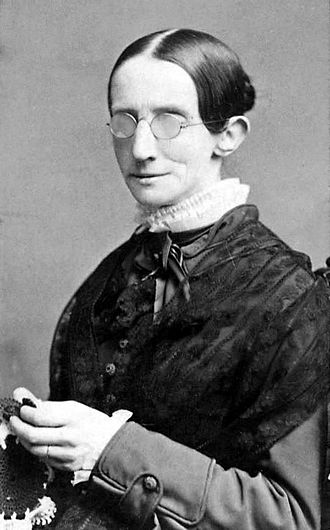
ACHIEVEMENT(S): First formally educated deaf-blind person
DATE/PLACE OF BIRTH: 21st December 1829, Hanover, near Etna, NH.
DATE/PLACE/AGE AT DEATH: 24th May 1889, Boston, MA. Aged 59
DISIPLINE: Deaf-blind person.
FIELD: Education
EDUCATION: Perkins Institution for the Blind, 1837-52.
MAJOR WORK: N/A.
LIFE AND TIMES: Laura Bridgman was born in 1829 in New Hampshire, the third daughter of Daniel Bridgman and his wife, Harmony Downer. Her father was a farmer, member of the Baptist Church, and a local politician who served two sessions in the New Hampshire legislature.
In 1832 Laura and her two sisters caught scarlet fever. Her sisters died and it was two years before Laura was able to sit up properly, and three years before she regained full strength. The illness left her blind and deaf, with little sense of smell and taste, and what little speech she had developed before her illness was forgotten.
During the next few years, Bridgman learned to sew, knit, braid, and do minor work around the house. She also learned some simple signs to communicate her basic needs.
In early 1837 James Barrett, a student at Dartmouth College, went to work at the Bridgman's farm. He talked about Bridgman to Reuben Mussey, head of the medical department of Dartmouth College, who in May published an article about her in 'Barnard's Magazine'.
This article brought her to the attention of Samuel Gridley Howe*, the first director of the Perkins Institution for the Blind in South Boston, now the Perkins School for the Blind in Watertown, Massachusetts. After Howe visited the Bridgman's in the summer, Laura was enrolled at Perkins in October 1837.
The initial method of communication Howe employed was to take everyday objects and stick labels onto them. The labels were embossed with the name of the object, using a system known as Boston Line Type dating from before Braille*
Once Bridgman had memorised the names and was able to identify each object, Howe then created each letter in the name, using the same system. So Bridgman was able to learn the alphabet. From there, she was able to progress to the manual alphabet developed by L’Epee*.
Dedicated effort by Howe and his colleagues Swift and Drew brought amazing results. Bridgman’s curriculum expanded to include spelling, then reading, writing, arithmetic and geography, the last of these disciplines using the first ever globe for the blind Howe had designed in 1837.
By 1841 Bridgman had mastered writing, using a grooved board as a guide, and was keeping a regular journal.
A major event in Bridgman's life (and in that of the education of the deaf-blind) occurred on 29thJanuary 1842, when Dickens* visited Perkins. Dickens and the US statesman Charles Sumner were given a tour of the establishment, Bridgman making such an impression on Dickens that he wrote extensively about her.
On his personal impressions of Bridgman, he wrote: "Her face was radiant with intelligence and pleasure. Her hair, braided by her own hands, was bound about a head, whose intellectual capacity and development were beautifully expressed in its graceful outline, and its broad open brow; her dress, arranged by herself, was a pattern of neatness and simplicity; the work she had knitted lay beside her; her writing-book was on the desk she leaned upon. From the mournful ruin of such bereavement, there had slowly risen up this gentle, tender, guileless, grateful-hearted being."
Dickens included this passage, along with large tracts taken from Howe's reports and more of his impressions of the Institution, in his journal, published as 'American Notes' in 1842. It was this work that first brought Bridgman and Howe to world-wide attention, and many people came to visit her at Perkins. Although other deaf-blind people (such as Victorine Morreseau, in France) had been educated before Bridgman, their education had not been conducted in a formal academic environment.
In 1852 Bridgman returned to live with her family in Hanover, as she had learned as much as it was thought possible. However, after the busy and interesting life she had lived at Perkins, life on the farm was tedious and unstimulating.
She returned to Perkins and decided to stay there. Being an excellent seamstress, she sometimes taught sewing to the Perkins girls, and in addition to teaching she also made beds and cleaned. She remained active by making most of her own clothes, knitting, crocheting, and fashioning lace, which she sold. She loved to read and write, keeping up a correspondence with family, friends, and many of the celebrities who came to see her.
Among her closest friends were Morrison Heady in Kentucky, who also was deaf and blind. She kept a journal and wrote poetry: simple, devotional verse filled with images of darkness and light. She spent the summers with her family in New Hampshire, returning to Perkins in the autumn.
In January 1876, Howe died and in his will made provision for his most famous pupil, so that she could remain at Perkins for the rest of her life. The second director of Perkins, Michael Anagnos, Howe's son-in-law, continued to care for Bridgman, and some of the older Perkins girls were assigned in turn to share her room. One of these women was Anne M. Sullivan, who was partially sighted and became famous, after she graduated in 1886, as Keller*'s teacher. Bridgman died of pneumonia at Perkins in May 1889.
ASSESSMENT: Along with Samuel Howe, Bridgman demonstrated that formal education of a deaf and blind person was possible.
EXTRA CONNECTIONS:
Bridgman became famous in her youth as an example of the education of a deaf-blind person. Helen Keller's mother, Kate Keller, read Dickens's account in American Notes and was inspired to seek advice which led to her hiring a teacher and former pupil of the same school, Anne Sullivan. Sullivan learned the manual alphabet at the Perkins Institution which she took back to Helen, along with a doll wearing clothing that Bridgman had sewn herself.[54]
Bridgman's case is mentioned in La Symphonie Pastorale by André Gide.[55]
A Liberty ship, the SS *Laura Bridgman*, was named after her.[56]
ONELINER: Laura Bridgeman, famous blind pupil
LANGUAGE: English.
PARENTS: Daniel Bridgman and Harmony Downer
SIBLINGS: 2 elder sisters, both of whom died in 1832.
SPOUSE: None.
CHILDREN: None .
BIBLIOGRAPHY:
Dickens, Charles, American Notes, London: Penguin, 1965.
ANB