Forster EM
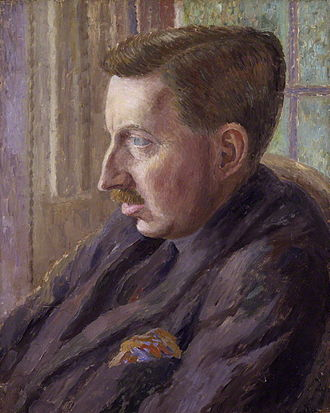
NAME: Forster, E(dward) M(organ)
NICKNAME/ALIAS:
DATE/PLACE OF BIRTH: 1st January 1879, in London, England.
DATE/PLACE/AGE AT DEATH: 7th June 1970, in Coventry, Warwickshire, England. Aged 91.
DISCIPLINE: Writer.
FIELD: Literature.
LANGUAGE: English.
PARENTS: Edward Morgan Llewellyn Forster and Alice Clara Whichelo.
SIBLINGS: None.
SPOUSE: None.
CHILDREN: None.
EDUCATION: Tonbridge School, Kent; King's College, Cambridge University.
ACHIEVEMENTS: Novels, essays, criticism.
MAJOR WORK: ‘Where Angels Fear to Tread’ (1905), ‘The Longest Journey’(1907), ‘A Room with a View’ (1908), ‘Howards End’ (1910), ‘A Passage to India’ (1924) and ‘Maurice’ (1913-14, pub’d 1971).
LIFE AND TIMES:
In 1905, Forster spent several months at the von Armin castle in Pomerania, tutoring the children of the writer Elizabeth von Armin. When he finished there, he went home to live with his mother in a suburban house in Weybridge, England and decided he wanted to be a writer.
He led a quiet life and, while lecturing at the Working Men's Colleges for adult education, he started to write short stories. In 1905, his first novel, ‘Where Angels Fear to Tread’, was published. The hero of the book was based on a friend from Cambridge and Forster introduced Italy as a symbol of warmth and natural affection.
The press raved about the novel and Forster went on to publish ‘The Longest Journey’ two years later.
‘The Longest Journey’ was always Forster’s personal favorite. Like his first book, the leading character was based on a graduate friend. The hero gives up his dream of writing to become a schoolmaster, for the sake of a beautiful but shallow woman. As a result, the character is forced to accept suburban values and so loses his spiritual core.
‘A Room with a View’, published in 1908, was set in Italy and told the romantic story of a young English girl who defied convention to follow her heart. Like his previous novels, this one was a critical success and his friends were now eager to introduce Forster to London’s literary life.
On the whole, Forster was content with the simple, suburban life he was leading and was unhappy with the demands of the city, but he had no clear idea how he really wanted to live. He resisted the limelight, occasionally meeting literary celebrities like the American novelist <met> Henry James*. Generally, he was far more comfortable in the company of his old Cambridge friends.
Despite the success of his novels, Forster continued with his work in adult education, which he took seriously. He used his observations in ‘Howards End’, published in 1910 and probably his first masterpiece. The novel explored the effect of introducing culture and philosophical ideals to an impressionable working man and, partly because the issues he had addressed were of great interest to the liberal educated classes, it made him a celebrity.
The book tells the story of how two cultured and intelligent sisters, with links to the women's suffrage movement and socialism, are affected by their different relationships with the rich, philistine family at ‘Howards End’. The main characters demonstrate the different levels between materialism and idealism, through Henry Wilcox, the materialistic owner of Howards End, Margaret Schlegel, the elder sister, who takes a middle view that Forster supported and her younger sister Helen, who is passionately idealistic.
In 1912, Forster went to India for an extended holiday and there he became friendly with Leonard Woolf who, disapproving of imperialism, had just left the Ceylon civil service and had fallen in love with a young writer who later became his wife, Virginia <knew> Woolf*.
Forster went back home to live with his mother and. In 1914, finished the novel ‘Maurice’, a story about a gay relationship with a happy-ever-after ending. At the time, homosexuality was illegal in Britain and, as a homosexual himself, Forster knew that he couldn’t publish the novel. It was eventually published after his death.
During World War I, he served with the International Red Cross in Alexandria, then, after the war, he went through a dry period when he felt that he had exhausted his talent as a novelist. His involvement with the so-called Bloomsbury set of artists and writers had deepened and Roger Fry, the artist and art critic, painted his portrait. In addition to the Woolfs, he had more worldly contacts as well, like <a pal of> Keynes*, the economist, but no one could regenerate his confidence.
In 1921, after writing to the Maharaja of Dewas, Forster spent a few months working in his court in India, but the experience did nothing for his apparent writer’s block. Back home, he still lacked his previous self-confidence but, using his experience of India, he started working on a new book in 1922.
Two years later, ‘A Passage to India’ was published. Based on the tensions in Anglo-Indian society and their effect on personal relationships, it became his second masterpiece and the novel for which he is best known. The book was given literary awards including the James Tait Black Memorial and the Femina Vie Heureuse prizes. Going out on a high, he spent his time after ‘A Passage to India’ writing only critical pieces, essays and biographies and lecturing.
His Cambridge lectures, ‘Aspects of the Novel’, were published in 1927 and were well received but, over the next twenty years, he became more involved in political and social affairs. He served as President of the National Council for Civil Liberties and was a member of the International writers' club, PEN, which denounced Nazism.
In 1931, he broadcast a fortnightly series of book reviews on BBC radio, gave talks on literature for the BBC’s audiences in India and, in 1934, he wrote the biography of Lowes Dickinson, with whom he had founded the ‘Independent Review’ in 1903.
For most of his life, he had lived with his mother but, after she died in 1945, Forster went to live at King's College in Cambridge University, where he was elected a Fellow in 1946.
In 1948, he lectured in Aldeburgh, on the coast of Suffolk, where he stayed with the composer <collaborated with> Britten*.
As a result of this visit, he wrote, together with Eric Crozier, the libretto for Britten's opera ‘Billy Budd’.
For a long time after this, apart from writing a biography of Marianne Thornton in 1958, Forster stayed out of the limelight, except in 1960, when he appeared as a defense witness for the publishers who were being prosecuted for publishing the novel, ‘Lady Chatterley's Lover’, by D H Lawrence.
ASSESSMENT: By the end his life, Forster was revered as a wise and moral man but it is as a novelist that he is remembered.
EXTRA CONNECTIONS: He was a friend of <a pal of> Auden*
<published by> TS Eliot* published some of his work.
He was a fellow club-member with <knew> Tennyson*
<a fan was> Isherwood* was a fan.
He knew <knew> TE Lawrence* and <knew> Morrell*
He influenced <influenced> Perelman*
Worked with Orwell at BBC
He declined a knighthood in 1949 and was made a Companion of Honour in 1953.[27] At age 82, he wrote his last short story, Little Imber, a science fiction tale.
According to his friend Richard Marquand, Forster was critical of American foreign policy in his latter years, which was one reason he refused offers to adapt his novels for the screen, as Forster felt such productions would involve American financing
ONELINER: E.M. Forster, English novelist
BIBLIOGRAPHY:
Beer, J, The Achievement of E. M. Forster, 1962.
Furbank, P. N., E. M. Forster, A Life, Secker & Warburg, London, 1979.
Beauman, N., Morgan: a biography of E M Forster, 1993.