Barnum, PT

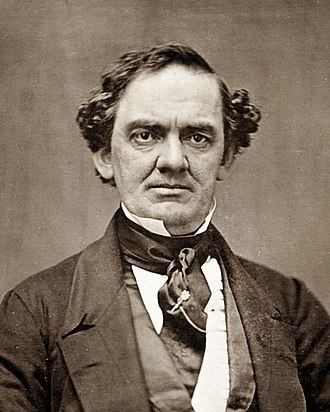
Achievements: “The Greatest Show on Earth”
Born: July 5, 1810; Bethel, Connecticut
Died: April 7, 1891; Bridgeport, Connecticut (Aged 80)
Field & Discipline: Art; Entertainment; Business; Entrepreneur
Language: English
Education: Public school, Bethel, CT
Major Work:"Struggles and Triumphs, or the Life of P.T. Barnum, Written by Himself"
Life & Times:
At 15, when his father died, Barnum took a job in a general store, where he started a lottery. By 21, he had opened a store of his own and begun a newspaper, the "Herald of Freedom", an anti-slavery organ that also supported religious tolerance. In 1834, when his newspaper failed, Barnum went to New York, where he sold hats, worked in a grocery store, and opened a boarding house, until the idea struck him of becoming a traveling showman.
He was soon on the road, traveling the countryside, exhibiting "freaks", including a "mermaid", midgets, Siamese twins, and a bearded lady. The show did not do well and in 1841 he returned to New York, where he bought a run-down museum on Broadway and turned it into Barnum's American Museum, the first popular public museum in the United States. He floodlit the building, covered it with large paintings of animals, and inside presented a program of performing dogs, performing fleas, rope dancers, panoramas, mechanical figures, and examples of new technology such as knitting machines.
In 1842, Barnum heard about a five-year-old midget in Bridgeport, CT. He took the midget under his care, taught him to dance, sing, tell jokes, then changed his name from Charles Stratton to General Tom Thumb. In 1844, he took Thumb to England, where the midget danced a hornpipe, did his impression of Napoleon for [met] Queen Victoria*, and was an astounding success.
In Europe, Barnum signed [promoted] Jenny Lind*, the "Swedish Nightingale", to sing in America, and mounted such a fevered publicity campaign that when she arrived in September, 1850, more than 20,000 New Yorkers greeted her at the dock. She gave almost 100 concerts across America, also in Cuba, and every concert was a sell-out. Merchandisers hawked Jenny Lind shawls, bonnets, gloves, chairs, sofas, and even pianos.
Barnum built an oriental palace, "Iranistan", in Bridgeport, CT and became one of the founders of the new town of East Bridgeport, becoming the local bank president in 1851. Around the same time he began a touring show (that ran for three years) called the Great Asiatic Caravan, Museum and Menagerie. The show included Tom Thumb and boasted six lions and a herd of 10 elephants.
After the show disbanded, Barnum became involved in a number of business ventures, not all successful, wrote his autobiography, gave lectures on "The Philosophy of Humbug", and continued his involvement with local affairs at Bridgeport.
In 1855, he entered into the clock business with [partner was] Jerome*, but before long, the Jerome Manufacturing Co. collapsed and both men went bankrupt. In 1857-58, Barnum made a successful tour of Britain and Europe with a troupe that included Tom Thumb, and gave lectures on "The Art of Money Getting". In 1860, he was able to buy back the American Museum and exhibited, among other oddities, white whales captured off Nova Scotia, the first hippopotamus seen in the United States, a group of Indian chiefs, and two new midgets, Commodore Nutt and Lavinia Warren. In 1863, Tom Thumb married Lavinia.
In 1865, Barnum was elected Connecticut Representative in Congress. In the same year, he published "Humbugs of the World." In 1867, he failed to regain his Congressional seat and set out on a lecture tour to talk about "Success in Life." In 1870, Barnum joined William C. Coup, a circus manager, to operate a huge new traveling show that included a museum, menagerie, caravan, hippodrome, and a circus of clowns, acrobats and tightrope walkers. Comprised of 500 men, 200 horses, and numerous wagons, it was called "Great Traveling World Fair", and opened in Brooklyn in April, 1871.
Over the next few years, an expanded show traveled around the U.S. by rail. Barnum made sure that cheap excursion trains ran to all his venues. By the end of the decade, the show, now called "P.T. Barnum's New and Greatest Show on Earth", was appearing in 140 towns a year from Nova Scotia to California. In 1881, Barnum joined James A. Bailey and James L. Hutchinson, to form the "Barnum and Bailey" circus. Its biggest attraction was Jumbo, said to be the world's largest elephant, which Barnum bought from the London Zoo. When news of the purchase was published, Queen Victoria, the Prince of Wales, art critic [criticized by] Ruskin* and "The London Times" all demanded the contract be broken and Jumbo remain in London. The brouhaha in England was perfect publicity for Barnum and by the time Jumbo was on the road in 1882, the animal was famous. In 1889, Barnum took the show back to London and gave sell-out lectures.
Extra Connections:Barnum turned down [rejected offer from] Sperry*'s offer of a gyroscopically controlled wheel barrow for use in a high-wire act.
After Stowe's Uncle Tom's Cabin copyright expired, many stage versions watered down or even inverted the novel's message (more people in US saw these than read the novel; Barnum offered two versions);
Assessment: Pioneered the modern circus, and introduced a special brand of flamboyant publicity techniques that are associated with him and influenced future show business promoters
Oneliner: PT Barnum, entrepreneur and the “Prince of Humbug”
Bibliography:
- Saxon, A.H., P.T. Barnum, The Legend and the Man,Columbia University Press, New York, 1989.
Multimedia:
Lost Musuem (virtual recreation):http://lostmuseum.cuny.edu/
Father: Philo Barnum
Mother: Irena Taylor
Siblings: Four
Spouse: 1) Charity Hallett; 2) Nancy Fish
Children: Four