Muybridge, Eadweard
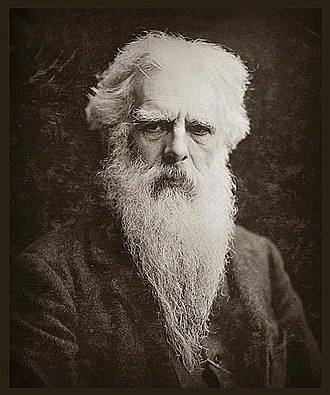
ACHIEVEMENT(S): Stop-motion photography
NICKNAME/ALIAS: Real name: Muggeridge, Edward James.
DATE/PLACE OF BIRTH: 9th April 1830 in Kingston-on-Thames, England.
DATE/PLACE/AGE AT DEATH: 8th May 1904, in Kingston-on-Thames, England.
Aged 74.
DISCIPLINE: Animal locomotion.
FIELD: Photography.
LANGUAGE: English.
PARENTS: John Muggeridge and Susannah Smith.
SIBLINGS: John, George and Thomas.
SPOUSE: Flora Stone.
CHILDREN:
EDUCATION: Self-taught.
MAJOR WORK: Inventor of first theatrical motion picture projector.
LIFE AND TIMES:
Sometime time before 1867 Muybridge was in America studying photography with the photographer-explorer, Carleton E. Watson, an expert in the wet collodion process. Muybridge’s first collection of prints (of the Yosemite Valley), sold for $20 a set in 1868.
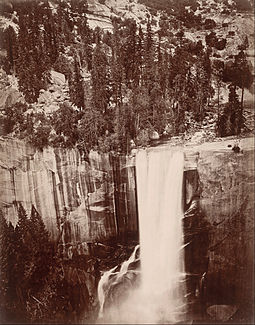
He then took a job as Director of Photographic Surveys for the United States Government, working with the Lighthouse Board, the Treasury and the War Department, taking pictures of the West Coast, Wyoming and Montana. When the U.S. bought Alaska he joined the government survey expedition.
In 1869, Muybridge invented the first efficient camera shutter and, when a debate arose between <hired by> Leland Stanford*, President of Central Pacific Railroad and Fred McCrellish, a millionaire horseman, Muybridge was asked to use his photographic skills. The debate was about whether all four hooves of a horse ever came off the ground when it was in motion.
This presented a challenge because the speed achievable using the wet collodion process was slow. The best Muybridge managed to achieve was a shutter speed of 1/1500th of a second, but the picture was blurred and the argument remained unresolved.
In October 1874, he shot his wife’s lover dead, but at the murder trial was acquitted on the grounds of justifiable homicide, and then left for a photographic job in Guatemala in February, 1875, sponsored by the Pacific Mail Steamship Company. There he took pictures of the Indians, ruins, the villages and a series of stills showing how coffee was cultivated. Two years later, back in America, he took two giant panoramic views of the city of San Francisco.
Stanford approached him again in 1878, to try again to resolve his horse dilemma, so Muybridge set up twenty-four small cameras with matching lenses and electromagnetic shutters, along the side of a track partially covered with rubber matting to prevent dust from affecting the exposure.
On the opposite side of the track was a white background, and the cameras were set off either by clockwork, or by threads stretched across the track and broken by the running horse. The horse, “Sallie Gardner”, galloped past at 36 miles an hour and the photographs were taken at 1/25 of a second intervals on dry plates. The proof was conclusive that all four hooves of the horse left the ground. (Animation)

‘Scientific American’ published a selection of Muybridge’s horse pictures in October 1878, as did the French periodical, ‘La Nature’. Another collection of his prints, ‘The Horse in Motion’, published in 1881, influenced the work of artists such as <influenced> Degas* and caught the attention of <influenced> Marey*, a researcher into animal movement. The two men finally met when Muybridge’s visited Europe in 1881.

In his experiments with animal motion, Muybridge developed the zoopraxiscope in 1879. This was a combination of the children’s zoetrope toy and the magic lantern projector, and showed moving horses, athletes turning somersaults, battling gladiators and flocks of birds in flight. This work opened the way for cinematography, and the zoopraxiscope was later given its own exhibition hall at the World’s Columbian Exhibition in Chicago, in 1893.
In 1894, Muybridge met <influenced> Edison* at his laboratory and later, when Edison went into film production, he acknowledged Muybridge’s influence in the development of his own film technology.
Muybridge published his ‘Animal Locomotion’ in 1887. This work illustrated over 20,000 figures of men, women, children, birds and animals in motion and still remains the most comprehensive publication of its kind.
In 1895, Muybridge returned home to England and died in 1904 .
ASSESSMENT: His zoopraxiscope made motion pictures possible
EXTRA CONNECTIONS: Muybridge may have been influenced by the work of <possibly influenced> Uchatius*.
ONELINER: Eadweard Muybridge, father of movies
BIBLIOGRAPHY:
Gordon Hendricks, Eadweard Muybridge: the Father of the Motion Picture, Secker & Warburg; London, 1975.
Wikipedia see Node 2