Comte
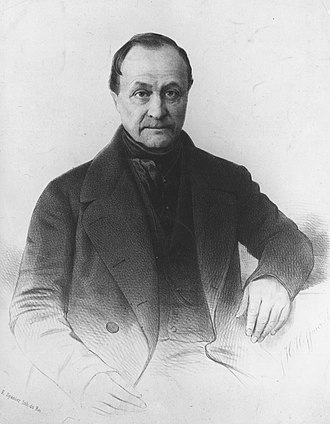
Achievements: Invented Sociology
Born: January 19, 1798; Montpellier, France
Died: September 5, 1857; Paris, France (Aged 59)
Field & Discipline: Philosophy
Education: Local school, Montpellier; Polytechnic school, Paris
Major Work:
"Positivist Philosophy" (1830-42)
"System of Positivist Polity" (1851-54)
Life & Times:
At the Polytechnic in Paris, which he entered at the age of sixteen, Comte was known as “The Thinker.” After leading a student rebellion, he was dismissed from the polytechnic in 1818. He remained in Paris and supported himself by journalism and giving private mathematics lessons. After Comte met the social reformer, [secretary to] Saint-Simon*, he began writing articles for the Saint-Simon press and became a member of the circle around Saint-Simon who were interested in the re-organisation of society on a scientific basis.
In 1822 Comte wrote an essay in which he stated that the old systems of belief should be replaced by new laws and principles relevant to the modern era of industry and technology. He saw the first stage of man's intellectual development as one in which theological concerns had dominated, and the second stage as being governed by metaphysical and abstract reasoning.
He thought that in the modern world (the third stage), a scientific method of observation and reasoning should operate. Comte's conclusion was that scientific thinkers should turn politics into an exact science and that a new social system of positive politics (which he later named ‘sociology’) should be established. His essay was published in 1824 with the help of Saint-Simon but the two men disagreed and ended their friendship soon afterwards.
In 1826 Comte began giving a series of lectures on his system of positivist politics. In the same year he had a nervous breakdown. His common-law wife had him committed to an asylum but Comte's aged mother got him out, orchestrated a Catholic church wedding for her agnostic son and, after Comte had jumped in the Seine and been rescued by a passing guardsman, oversaw his convalescence in Montpellier.
In 1828 Comte resumed his lecture series in Paris and wrote articles on economics for the "New Paris Journal" about the unemployment caused by the introduction of machines and a laissez-faire market economy. He proposed the establishment of a Ministry of Commerce and Manufactures, a large programme of public works and training schools where the young would be taught a variety of skills so they would be eligible for more than one kind of job. His course of seventy-two lectures, covering mathematics, astronomy, physics, chemistry, physiology and social physics, were a great success (attended by luminaries such as [lectured to] Fourier*, [lectured to] Broussais* and [lectured to] Alexander von Humboldt*) and in 1829/30 he repeated them at the Royal Athenaeum.
Over the following twelve years, Comte worked on developing his philosophy. He questioned the relevance of most philosophers in the modern era, although he praised [a fan of] Germain* for her ideas on the value of both science and the humanities. Although Comte wanted a scientifically-based plan for the improvement of society, he never believed science should be absolute. He took a number of minor academic jobs, and acted as an examiner at the Polytechnique. Having lost his job there after quarrelling with the authorities, he was then given financial help by French followers and by English admirers who included philosopher [given money by] John Stuart Mill*.
The fruits of Comte's labours, his "Course of Positivist Philosophy", (1830-42), was based on his 1822 essay. His main concerns were the evolution of the human mind and the establishment of a social system based on scientific laws. For the first time, he used the term 'sociology' to describe the study of the principles and laws on which the organisation of society is based.
He successfully synthesised the scientific ideas of Saint-Simeon, the concept of historical progress (promoted by philosophers such as [work related to] Concordet*, and [work related to] Hume*) that theology and metaphysics are imperfect forms of knowledge preceding true knowledge that is based on observation and empiricism. Comte used the term “positivism” for this type of evolved thinking. On this basis, he classified the sciences historically, tracing human intellectual development from simple and abstract ideas to the analysis of complex and concrete phenomena.
The Belgian mathematician [work related to] Quetelet* was later accused by Comte of stealing his phrase 'social physics' and misusing it as a title for his book about applying statistics to the study of society.
Comte divided sociology into statics, the study of the forces that held society together, and dynamics, study of the causes of change. Comte used the word 'milieu' for the environment in which an organism functions, criticizing the anatomist [work related to] Bichat* for his separation of the organism from its environment. The historian [work related to] Taine* later applied the term'milieu' to historical circumstances.
Comte defended the use of the hypothesis in science, maintaining that it was a useful device, a view which might have influenced later scientists including [work related to] Bernard*, [work related to] Mach* and [work related to] Ostwald.*
In 1842 Comte's unhappy marriage ended and three years later he fell deeply in love with Clotilde de Vaux. She died in 1845 and Comte's future views on the role of women in a positivist society were colored by his idealistic memories of de Vaux.
In 1850 Comte presented his famous Positivist Calendar, a list of over 500 men and women who had contributed significantly to the development of human society. Sophie Germain was named among the few modern philosophers.
The completion of Comte's philsophical work, the "System of Positivist Polity" was published in 1851-4. In this book Comte spelled out his vision of a society organised according to positivism. His view of this secular society as hierarchical and disciplined was based on the structure of the Roman Catholic church, and his conservatism was evident in his concept of an elite class of positivist philosophers who would be the fount of knowledge and moral discipline. His philosophy was widely discussed in his lifetime and influenced later sociologists like [influenced] Spencer*.
Extra Connections: He influenced the work of [influenced] Ratzel*
Auguste Comte is well known for writing in his book The Positive Philosophy that people would never learn the chemical composition of the stars. This has been called a very poor prediction regarding human limits in science. In thirty years people were beginning to learn the composition of stars through spectroscopy
Assessment: The founder of the positivistic school of philosophy and a pioneer in the development ofsociology as a science.
Oneliner: Auguste Comte, inventor of sociology
Bibliography:
Gould, F J,Auguste Comte, Watts & Co., London, 1920.
Pickering, Mary,August Comte, An Intellectual Biography, Vol. I, Cambridge University Press, Cambridge, 1993
Father: Louis Comte
Mother: Rosalie Boyer
Siblings: 2 brothers
Spouse: Caroline Massin
Children: None