Depression
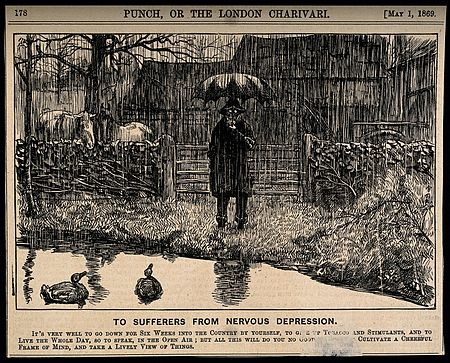
A mood disorder, also known as an affective disorder, is any of a group of conditions of mental and behavioral disorder[2] where a disturbance in the person's mood is the main underlying feature.[3] The classification is in the Diagnostic and Statistical Manual of Mental Disorders (DSM) and International Classification of Diseases (ICD).
Mood disorders fall into seven groups,[2] including; abnormally elevated mood, such as mania or hypomania; depressed mood, of which the best-known and most researched is major depressive disorder (MDD) (alternatively known as clinical depression, unipolar depression, or major depression); and moods which cycle between mania and depression, known as bipolar disorder (BD) (formerly known as manic depression). There are several sub-types of depressive disorders or psychiatric syndromes featuring less severe symptoms such as dysthymic disorder (similar to MDD, but longer lasting and more persistent, though often milder) and cyclothymic disorder (similar to but milder than BD).[4]
In some cases, more than one mood disorder can be present in an individual, like bipolar disorder and depressive disorder. If a mood disorder and schizophrenia are both present in an individual, this is known as schizoaffective disorder. Mood disorders may also be substance induced, or occur in response to a medical condition.
English psychiatrist Henry Maudsley proposed an overarching category of affective disorder.[5] The term was then replaced by mood disorder, as the latter term refers to the underlying or longitudinal emotional state,[6] whereas the former refers to the external expression observed by others.[3]
Classification
Depressive disorders
- Major depressive disorder (MDD), commonly called major depression, unipolar depression, or clinical depression, wherein a person has one or more major depressive episodes. After a single episode, Major Depressive Disorder (single episode) would be diagnosed. After more than one episode, the diagnosis becomes Major Depressive Disorder (Recurrent). Depression without periods of mania is sometimes referred to as unipolar depression because the mood remains at the bottom "pole" and does not climb to the higher, manic "pole" as in bipolar disorder.[7]
Individuals with a major depressive episode or major depressive disorder are at increased risk for suicide. Seeking help and treatment from a health professional dramatically reduces the individual's risk for suicide. Studies have demonstrated that asking if a depressed friend or family member has thought of committing suicide is an effective way of identifying those at risk, and it does not "plant" the idea or increase an individual's risk for suicide in any way.[8] Epidemiological studies carried out in Europe suggest that, at this moment, roughly 8.5 percent of the world's population have a depressive disorder. No age group seems to be exempt from depression, and studies have found that depression appears in infants as young as 6 months old who have been separated from their mothers.[9]
- Depressive disorder is frequent in primary care and general hospital practice but is often undetected. Unrecognized depressive disorder may slow recovery and worsen prognosis in physical illness, therefore it is important that all doctors be able to recognize the condition, treat the less severe cases, and identify those requiring specialist care.[10]
Diagnosticians recognize several subtypes or course specifiers:...
Treatment
There are different types of treatments available for mood disorders, such as therapy and medications. Behaviour therapy, cognitive behaviour therapy and interpersonal therapy have all shown to be potentially beneficial in depression.[84][85] Major depressive disorder medications usually include antidepressants; a combination of antidepressants and cognitive behavioral therapy has shown to be more effective than one treatment alone.[86] Bipolar disorder medications can consist of antipsychotics, mood stabilizers, anticonvulsants[87] and/or lithium. Lithium specifically has been proven to reduce suicide and all causes of mortality in people with mood disorders.[88] If mitochondrial dysfunction or mitochondrial diseases are the cause of mood disorders like bipolar disorder,[76] then it has been hypothesized that N-acetyl-cysteine (NAC), acetyl-L-carnitine (ALCAR), S-adenosylmethionine (SAMe), coenzyme Q10 (CoQ10), alpha-lipoic acid (ALA), creatine monohydrate (CM), and melatonin could be potential treatment options.[89] In determining treatment, there are many types of depression scales that are used. One of the depression scales is a self-report scale called Beck Depression Inventory (BDI). Another scale is the Hamilton Depression Rating Scale (HAMD). HAMD is a clinical rating scale in which the patient is rated based on clinician observation.[90] The Center for Epidemiologic Studies Depression Scale (CES-D) is a scale for depression symptoms that applies to the general population. This scale is typically used in research and not for self-reports. The PHQ-9 which stands for Patient-Health Questionnaire-9 questions, is a self-report as well. Finally, the Mood Disorder Questionnaire (MDQ) evaluates bipolar disorder.[91]
Epidemiology
According to a substantial number of epidemiology studies conducted, women are twice as likely to develop certain mood disorders, such as major depression. Although there is an equal number of men and women diagnosed with bipolar II disorder, women have a slightly higher frequency of the disorder.[92]
In 2011, mood disorders were the most common reason for hospitalization among children aged 1–17 years in the United States, with approximately 112,000 stays.[93] Mood disorders were top principal diagnosis for Medicaid super-utilizers in the United States in 2012.[94] Further, a study of 18 states found that mood disorders accounted for the highest number of hospital readmissions among Medicaid patients and the uninsured, with 41,600 Medicaid patients and 12,200 uninsured patients being readmitted within 30 days of their index stay—a readmission rate of 19.8 per 100 admissions and 12.7 per 100 admissions, respectively.[95] In 2012, mood and other behavioral health disorders were the most common diagnoses for Medicaid-covered and uninsured hospital stays in the United States (6.1% of Medicaid stays and 5.2% of uninsured stays).[96]
A study conducted in 1988 to 1994 amongst young American adults involved a selection of demographic and health characteristics. A population-based sample of 8,602 men and women ages 17–39 years participated. Lifetime prevalence were estimated based on six mood measures:
- major depressive episode (MDE) 8.6%,
- major depressive disorder with severity (MDE-s) 7.7%,
- dysthymia 6.2%,
- MDE-s with dysthymia 3.4%,
- any bipolar disorder 1.6%, and
- any mood disorder 11.5%.[97]
Research
Kay Redfield Jamison and others have explored the possible links between mood disorders – especially bipolar disorder – and creativity. It has been proposed that a "ruminating personality type may contribute to both [mood disorders] and art."[98]
...
See Mental Illness