Key, Francis Scott
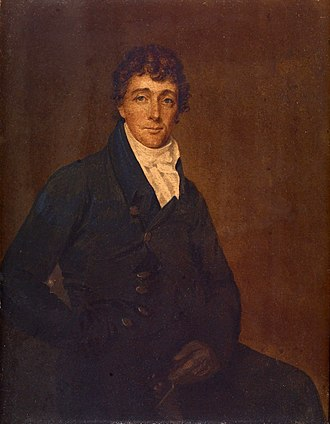
Achievements: Wrote: “Star Spangled Banner”
Born: August 1, 1779; Frederick (now Carroll) County, Maryland
Died: January 22, 1843; Baltimore, Maryland (Aged 63)
Field & Discipline: Law; Literature; Writer; Lawyer
Language: English.
Father: John Ross Key
Mother: Ann Phoebe Charlton
Siblings: One sister
Spouse: Mary Tayloe Lloyd
Children: 11 children
Education: St. John's College, Annapolis.
Major Work:
“The Star-Spangled Banner” (1814)
Life & Times:
The son of an army officer in the revolutionary war, Key was given a good education and, when he graduated from St. John’s College, he went on to study law.
In 1801, he set up a law practice in Fredericktown, in partnership with Roger B Taney, who was not only his partner, but a his brother-in-law, and who later served as chief justice of the US Supreme Court. Key then moved to Georgetown, DC, in 1805, where he began to practice law in association with his uncle, Philip Barton Key.
By all accounts, Key was a handsome, dignified, powerful and respected orator. He soon became a leading member of the American Bar and, as an active member of the Protestant Episcopal Church, for which he wrote two popular hymns, he had a charitable and pious reputation.
Early in September 1814, during the war with the British, Key was asked to negotiate with the enemy for the release of a Washington doctor, William Beanes. The doctor had been captured after the defeat of the US forces at Bladensburg, Maryland and was being held on a British warship.
He went with a Colonel Skinner to visit the British fleet in Chesapeake Bay, at the mouth of the Potomac. On 7th September, Skinner and Key were taken aboard HMS Tonnant, to begin negotiations with General Ross, the British commander. Key successfully arranged the Beanes’ release but while he was on board Tonnant, he overheard talk about the British plan to attack Baltimore.
As a result, the British detained the men on the frigate HMS Surprise, commanded by Cochrane's son, [detained by] Thomas Cochrane*, while preparations were being made to land British troops.
Soon afterwards, HMS Surprise was chosen as the British flagship so, under guard, Key and Beanes, among others, were taken to the American truce ship, the Minden, which maintained regular sailing service between Baltimore and Norfolk. It was from the Minden that, on 13th and 14th September 1814, Key watched the naval bombardment of Fort McHenry in Baltimore.
He stayed on deck all night, watching the sky being lit up by the red glare of the new rockets, invented by [saw rockets of] Sir William Congreve*, being used by the British. When dawn broke, he was delighted to see the American flag still flying over the fort. The British were retreating and Key, along with the other American prisoners, was released.
According to an account of the incident by Roger Taney, Key wrote a poem, inspired by the American victory, when he saw the flag waving in the wind and the enemy retreating to their ships. He composed the verses on his way to shore, on the back of a letter, and revised them in his hotel room in Baltimore that night.
The following morning, 15th September 1814, Key sent it to a printer to be made into a handbill and, two hours later, it was being circulated in Baltimore under the title “The Defence of Fort McHenry.”
Within a few days, the verses had been put to the melody of the popular British work, “To Anacreon in Heaven,” a well known drinking-song written by the English composer [wrote words to music of] John Stafford Smith*. The lyrics were then printed anonymously in the “Baltimore American and Patriot” newspaper and it soon became popular throughout the nation.
Key went back to his life as a lawyer and a member of the church and served as a delegate to the general conventions of the Episcopal Church between 1814 to 1826. He also gave his time as a lay reader for St. John's Church in Georgetown.
Somewhere around 1830, Key left Georgetown to settle permanently in Washington and, now an attorney with a large, successful practice in the Federal courts, he served as the US Attorney for the District of Columbia between 1833 and 1841.
Key’s most important achievement as a lawyer was probably in 1833, when he negotiated (for President [negotiated for] Andrew Jackson*) a settlement between the Alabama State government and the Federal government over the Cree lands.
All through his life, Key maintained a literary interest and, in 1834, he published a volume entitled “The Power of Literature and its Connection with Religion.” He regularly wrote verses for his own pleasure and his poems and hymns, mostly written on scraps of paper, were collected and published, unrevised, as “Poems of the Late Francis S Key, Esq.” in 1857.
“The Defence of Fort McHenry” grew in popularity and had become a national patriotic song by the time of the Civil War. The song was adopted as the nation anthem of the US in 1931.
Extra Connections: A descendant was writer [descendant was] F Scott Fitzgerald*
Assessment: He is best known for writing hat became the US national anthem.
Oneliner: F. Scott Key, writer of “Star Spangled Banner”
Bibliography:
- American National Biography.
- Encyclopedia Britannica.
Wikipedia