Congreve Sir W
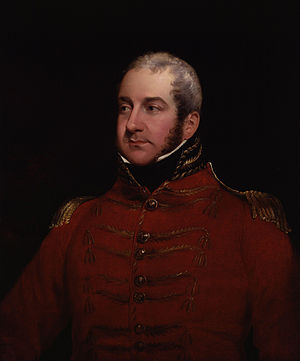
Achievements: The Congreve rocket
Born: May 20, 1772; London, England
Died: May 16, 1828; Toulouse, France (Aged 55)
Field & Discipline: Military; Invention
Language: English.
Father: Sir William Congreve
Mother: Rebecca Elmstone
Siblings: Unknown
Spouse: Isabella McEnvoy (married 1824)
Children: Two sons, one daughter.
Education: Trinity College, Cambridge, 1790-93.
Major Work:
“A Treatise on the General Principles, Powers and Facility of Application of the Congreve Rocket System, as Compared with Artillery” (1827)
Life & Times:
Congreve trained as a barrister in London then, in the late 1790s, he became the proprietor of a newspaper, the “Royal Standard”. At the time, his father was Comptroller of the Royal Laboratory in Woolwich Arsenal, London. He took a keen interest in his father’s work and, in 1804, began experimenting in the use of the rockets that the Indian Prince Tipu Sultan had used with great effect against the British, in 1792 and 1799, in Seringapatam.
In 1805, Congreve built a rocket using a metal cylinder filled with “black powder” (a mixture of saltpeter, sulfur and charcoal). The cylinder was about 3 ft. long, with a stabilizing stick more than 15 ft. long, and the rocket had a range of 2000 yards.
In the same year, Congreve was the first person to come up with the idea of armor-plating warships to protect them from artillery fire.
During the next year, Congreve worked on developing his rockets and experimented with different black powder formulas. He then set down specifications for composition, construction and his improved production techniques.
His designs offered a choice of either an explosive ball charge or an incendiary warhead that ignited on impact. The explosive warhead was separately detonated and allowed the timing of the explosion to be calculated before launching, by using a measured fuse length. This meant that air bursts at different ranges were possible.
In 1806, Congreve produced the rocket that was adopted by the British army. The metal body was equipped on one side with two or three thin metal loops for the long guide stick and it was launched from collapsible A-frame ladders. In addition to aerial bombardment, Congreve's rockets were often fired horizontally just above the ground. In the same year, the side-stick-mounted rockets were used with great success in a naval bombardment of the French coastal city of Boulogne. The following year, Copenhagen was burned to the ground, in a mass attack in which hundreds of rockets were fired.
The first sea trial of the Congreve rocket happened in 1809, when Lord [rockets tried by] Thomas Cochrane* tried to destroy the French fleet in 1809. Congreve’s rockets, although not always as successful as had been hoped, were much in demand by the British Army and the Royal Navy, and Congreve was well rewarded by the government. They financed him in the manufacture of rockets for the Royal Artillery and he then began to produce rockets in eight sizes, ranging up to 60 pounds in weight.
In 1811, Congreve was made a Fellow of the Royal Society and, as a personal favorite of the Prince Regent, later George IV, he became an Equerry (an officer who assists the monarch). In the same year, he was made an honorary Lieutenant Colonel in the Hanoverian Artillery, later rising to Major General. He was elected as a Member of Parliament in 1812 and in the December, his father became a Baronet.
The rocket designs improved regularly and, in 1813, Congreve received orders to take one of his rocket companies to serve in the artillery during the decisive Battle of Leipzig, at which [rockets used against] Napoleon* was defeated. The rockets in fact did little damage to the enemy but put fear and confusion into the French forces.
Congreve's rockets were used many times during the War of 1812 between the US and the British. The two best-known occasions were in 1814, at the Battle of Bladensburg on 24th August. The rockets were used to help the British forces turn the flank of the American troops defending Washington, resulting in the fall of the city.
Then, in September, British forces attempted to capture Fort McHenry, which guarded Baltimore harbor. They fired rockets from small boats as well as the Erebus, a specially designed warship, but this time, the British were unsuccessful. The sight of the Congreve rockets exploding in the night inspired [inspired] Key* to write his “The Star Spangled Banner”, which described “The rockets' red glare, the bombs bursting in air”.
By 1830, most European countries had established rocket corps in their armies, usually attached to artillery units. By the mid-19th century, Congreve rockets were made obsolete by a new, better design by William Hale and thanks to the development of improved ordnance and rifled artillery pieces. The basic design of the Congreve rocket was retained for rescue flares on ships.
Rockets were not Congreve’s only interest as, twenty years before, he had applied his mind to other technological and commercial areas. During his lifetime, he was awarded eighteen patents, including those for new methods of mounting naval guns, gunpowder manufacture, printing counterfeit-proof currency, gas lighting, “hydro-pneumatic” canal locks, several kinds of clocks, a “perpetual motion” machine, a built-in sprinkler system and a steam engine.
Congreve inherited the title of 2nd Baronet Congreve of Walton in 1814, on the death of his father. At this point, he took his father’s place as Comptroller of the Royal Laboratory then, from 1818 until 1826, he was the Member of Parliament for Plymouth in Devon.
From 1826, his failing health and involvement in a case of fraud forced him to leave for the European mainland, where he settled permanently. His illness left him without the use of his legs, but he took the opportunity to design his own wheelchair.
Extra Connections:
His banknote-printing designs beat [beat banknote designs by] Perkins’*
He collaborated with [collaborated with] Donkin* on stamp printing.
He arranged Royal Celebrations including balloon ascent by [hired] Sadler*
Assessment: A prolific inventor, best known for his rockets.
Oneliner: Sir William Congreve, developer of rocket technology
Bibliography:
- Dictionary of National Biography.
- Dictionary of Scientific Biography.
- Encyclopedia Britannica.