ballard partners
disambig SEE BRIAN
---
NEPO BABY VAPE
AN 5 26
The Daily Beast confirms that President Donald Trump’s abrupt passion to make the FDA approve vaping products came after a tobacco firm lobbied his office in each of the last four quarters, according to lobbying reports, either directly or through a firm where Chief of Staff Susie Wiles’ daughter works.
The DB reports Wiles was previously registered as a lobbyistfor Ballard Partners, which lobbied the government on behalf of SI Group Client Services, an associated branch of U.S. international tobacco company Swisher. Wiles represented the tobacco firm in 2019, 2021, and 2022 and is “name-checked in filings at least once in each of those years,” says DB. She later lobbied Congress with Mercury Public Affairs, which also acted on behalf of SI Group in 2023 and 2024, according to Public Citizen.
“In the Swisher filings where she’s named, the most common lobbying issues were ‘Monitor FDA issues regarding flavoring in tobacco products’ and ‘FDA regulations,’” reports DB. “Since Wiles, 68, began working at the White House, Continental Strategy has lobbied consistently on behalf of Swisher.”
Katie Wiles was reportedly promoted by Continentalthe day after her mom was appointed White House chief of staff. She is now a partner in the firm but not a registered lobbyist.
Meanwhile, the Wall Street Journal reported on Tuesday that Trump scolded Food and Drug Administration commissioner Marty Makary for not moving fast enough to approve flavored vapes. The Journal reported that Trump’s advisers told him Makary had blocked his ambition to get those flavors approved, citing sources who said he and Trump, 79, had discussed them directly.
“Makary had reportedly pushed against the flavors because he was concerned about their appeal to children and possible public health risks,” reports DB.
“White House spokesperson Kush Desai said in a statement to the Beast: “President Trump consistently pledged to expand access to vapes in light of an abundance of evidence finding that these products are beneficial for Americans trying to quit smoking.
The FDA announced on Tuesday that it had given the thumbs-up to vape firm Glas to manufacture menthol, mango, and blueberry flavors.
Flavored vaping products have become a significant regulatory battleground, particularly regarding their appeal to youth. Public health organizations including the American Academy of Pediatrics have documented concerns that flavored vapes—especially fruity and dessert varieties—serve as gateway products for young people.
The FDA has previously restricted flavored e-cigarettes in certain contexts, citing youth addiction rates. However, the tobacco industry argues flavored products help adult smokers transition away from traditional cigarettes. The tension between these positions has intensified as vaping use among teenagers has fluctuated in recent years.
Makary's resistance to approving additional flavors aligns with FDA guidance emphasizing youth protection as a central regulatory concern. Trump's pressure to accelerate approvals represents a significant shift in FDA priorities, potentially prioritizing industry interests over the public health precautions that animated the agency's previous stance on flavor restrictions.
:{---
---
AN 3 26
Secretary of State Marco Rubio has shared a 20-year relationship with a man that the government alleges is a foreign agent for Venezuela. It turns out, that man also has very close ties to several people in President Donald Trump's orbit
The sprawling case centers on a $50 million Venezuelan lobbying scheme allegedly orchestrated by Rep. David Rivera (R-Fla.), convicted cocaine trafficker Hugo Perera, and sanctioned media mogul Raúl Gorrín on behalf of Nicolás Maduro’s regime, a Tuesday report from The Lever said.
Court documents also reveal connections to White House chief of staff Susie Wiles, former Trump advisor Kellyanne Conway, Rep. Pete Sessions (R‑Texas), oil executive Harry Sargeant (now advising Trump on Venezuela policy), Iran‑Contra figure Otto Reich, and even Ghislaine Maxwell’s lawyer.
It all began in 2017, when the lobbying company Ballard Partners, which Wiles co-led at the time, was connected to Rivera through Gorrín and Perera. In fact, one of Rivera's lawyers' arguments is that if his associations make him a foreign agent, then Wiles should be considered one too. Ballard's "work for Gorrín appears to have been extensive," the report said and Wiles has been asked to testify. There are about 400 pages of documents connecting Wiles' firm to the men. The documents include numerous emails.
The court filings allege that Gorrín helped facilitate the foreign-agent relationship and served as a go-between for the Venezuelan government. He was involved in several meetings that Rivera set up, including those with Rubio. At one point, Rivera tried to use Gorrín's private jet for the meetings with Conway.
"Gorrín, who was sanctioned by the U.S. government in 2019 for his purported involvement in foreign bribes and money laundering, was reportedly paid handsomely for his work," the report noted. That same year, Attorney General Pam Bondi was also working at Ballard.
Emails exchanged between Wiles and Gorrín also included lobbyist Otto Reich, known for his work on weapons sales during the Ronald Reagan administration. It became known as the Iran-Contra scandal because the U.S. secretly funneled the weapons to Iran through the Contras, a Nicaraguan rebel group. There was an arms embargo at the time and Reich ran the State Department's Office of Public Diplomacy for Latin America and the Caribbean, which helped coordinate everything.
Oil executive Harry Sargeant was also among the email discussions. He's currently working with Trump on stabilizing Venezuela after Trump took out Maduro.
---
ref
The Miami Trial Exposing Foreign Influence In Trumpland
Inside a $50 million Venezuelan lobbying deal and a court battle ensnaring White House power brokers — including Secretary of State Marco Rubio and chief of staff Susie Wiles.
 Luke Goldstein
ShareFollow *The Lever* On Google
At every stage in Marco Rubio’s political ascent, David Rivera has been by his side.
Twenty years ago, the two Miami-raised Cuban-American Republicans earned the nicknames “Batman and Robin” as they rose to power in the Florida House of Representatives. When Rubio sought the speaker’s gavel, Rivera, known as Rubio’s “enforcer,” whipped the necessary votes. The young legislators even put down a mortgage together for a Tallahassee bachelor pad near the state Capitol.
Later, when Rubio was debating whether to launch a long-shot bid for the U.S. Senate, Rivera convinced him to run and campaigned for him across Florida. And when Rubio decided to propose to his now-wife, Rivera helped him pick out the engagement ring.
This month, the two will be by one another’s side once again — except this time on opposite sides of a courtroom.
Rivera is standing trial in Miami federal court for allegedly acting as a foreign agent on behalf of Venezuela, and Rubio, now secretary of state, is scheduled to testify as a government witness against him.
The blockbuster case hasn’t just ensnared Rubio, a central architect of President Donald Trump’s recent overthrow of the Venezuelan government. It provides a rare glimpse into a constellation of powerful figures in Trump’s orbit — including his White House chief of staff — who have profited from shaping U.S. policy on Venezuela, potentially without always disclosing the true nature of their work.
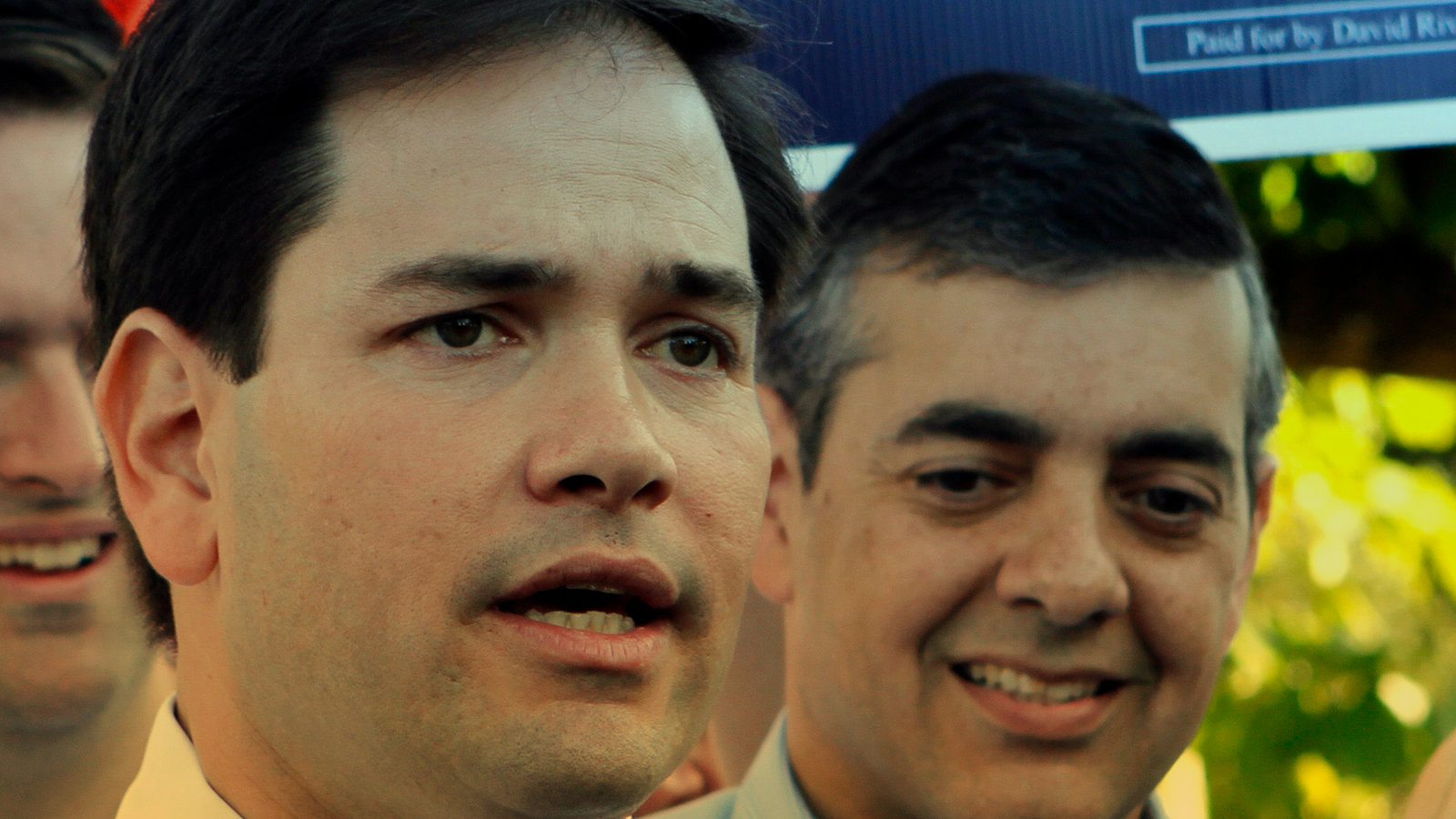 Now-Secretary of State Marco Rubio, left, talks to reporters as David Rivera looks on. (AP Photo/Alan Diaz)
Alongside Rubio, the cast of characters in the case includes a Florida oilman currently advising Trump on Venezuela policy; former Trump senior counselor Kellyanne Conway; a powerful Republican congressman code-named “Sombrero”; a notorious player in the Iran-Contra scandal; a convicted cocaine trafficker with cartel ties; the legal counsel for Jeffrey Epstein’s associate, Ghislaine Maxwell; and even Venezuela’s deposed president, Nicolás Maduro.
Filings in the case, alongside those in related lawsuits and countersuits, hint at hundreds of pages of unreleased documents detailing illicit business networks running from Caracas, Venezuela, to Miami and Washington, D.C. The limited records available describe clandestine operations, government bribes, multimillion-dollar kickbacks, drug smugglers, FBI informants, and secret deals involving Venezuela’s acting president.
The biggest bombshell of all? Documents presented by defense attorneys indicate that Rivera may not have been the only unregistered foreign agent working for Venezuela. According to a subpoena and a judicial decision, representatives of an ascendant lobbying firm in D.C. may also have been hired to promote the Venezuelan government’s interests without the proper disclosures. That includes one of Trump’s top officials: Susie Wiles, his chief of staff.
The trial — and its revelations about foreign influence — is poised to bedevil the White House, even as it tries to move on from its Venezuela ventures to its next regime-change operations in Iran. Under Trump’s increasingly hawkish second administration, the foreign lobbying industry has been booming, with new foreign-agent registrants reaching record highs over the past year.
Legal insiders in Miami interviewed by The Lever never expected the Justice Department’s case against Rivera, initiated in 2022 during the Biden administration, to reach trial under Rubio’s watch. Many still anticipate it will end in a sweetheart deal, given the Trump administration’s freewheeling approach toward pardoning allies.
“This Trump DOJ has been notorious for dropping cases and giving pardons, pointing the finger at the Biden administration, claiming this is some sort of witch hunt,” said Joseph DeMaria, a former prosecutor with the Justice Department’s organized crime strike force who is now a Miami-based defense attorney familiar with the Rivera case. “The question is, why wait until the eve of the trial for this one?”
The Justice Department did not respond to a request for comment on the case. But whichever route it chooses, the government is caught in a bind.
Dropping the case — and appearing to go soft on an alleged Venezuelan foreign agent just as government prosecutors build their narco-terrorism case against the country’s former leader and reportedly prepare corruption charges against his replacement — could spark a media firestorm.
Keeping the case alive, however, could expose the administration’s inner circle to scrutiny and potentially damning revelations.
A $50 Million Mystery
By the time Rubio and Rivera sold their Tallahassee home in 2015 after facing foreclosure over disputed bank payments, Rivera had become a political liability.
During their four terms together in the Florida state legislature, Rubio harnessed the flair and showmanship of political theater. Rivera was the workhorse.
A power broker with meticulous attention to detail, Rivera wielded political muscle behind the scenes to pass landmark legislation on projects ranging from the buildout of the Port of Miami tunnel to a free trade agreement with Colombia. An inveterate policy wonk, Rivera would fondly cite arcane provisions from these measures years later.
But alongside those accomplishments came accusations of graft. In Tallahassee, Rivera garnered a reputation as a “Nixonian” political operator for the lengths he would go to win. He once rear-ended a truck carrying incriminating campaign leaflets from his political opponent, according to a 2002 police report.
By the time Rivera lost his reelection for U.S. Congress in 2013 after serving one term, he had been plagued by so many scandals that colleagues described his behavior as “pathological.” And some of his schemes reportedly implicated Rubio.
In the 2000s, the FBI investigated Rivera for a variety of transgressions, although it never brought charges. Among other matters, agents examined whether the legislator accepted bribes from gambling industry executives seeking to block Native American tribes from expanding their casino operations.
In a separate incident, both Rivera and Rubio faced scrutiny for voting to exonerate a fraudulent investment company that wagered on life insurance policies held by elderly and infirm AIDS patients after the two lawmakers received thousands of dollars in donations from a political action committee cofounded by the head of the operation.
Soon after, federal authorities investigated the company for allegedly laundering drug cartel money, eventually shutting it down and sending its top executive to prison.
In 2017, the Federal Election Commission filed a lawsuit against Rivera, alleging that he financed a straw candidate to run against his Democratic opponent in the 2012 primary for Florida’s 25th district in an unsuccessful effort to damage his electoral prospects. After pursuing the matter for years, regulators dropped the case at the start of 2025.
The State Department did not respond to a request for comment regarding Rubio and Rivera’s long-standing friendship and other matters. But for years, despite the slew of controversies, Rubio publicly defended his old roommate as he rose through the Republican ranks.
In 2022, however, Rivera faced charges that were far more difficult to overlook.
That year, federal prosecutors arrested Rivera and charged him — along with a fellow political consultant, Esther Nuhfer — with working for Venezuela in violation of the Foreign Agents Registration Act (FARA), which requires individuals and organizations to register with the Department of Justice when engaging in U.S. political activity on behalf of foreign governments.
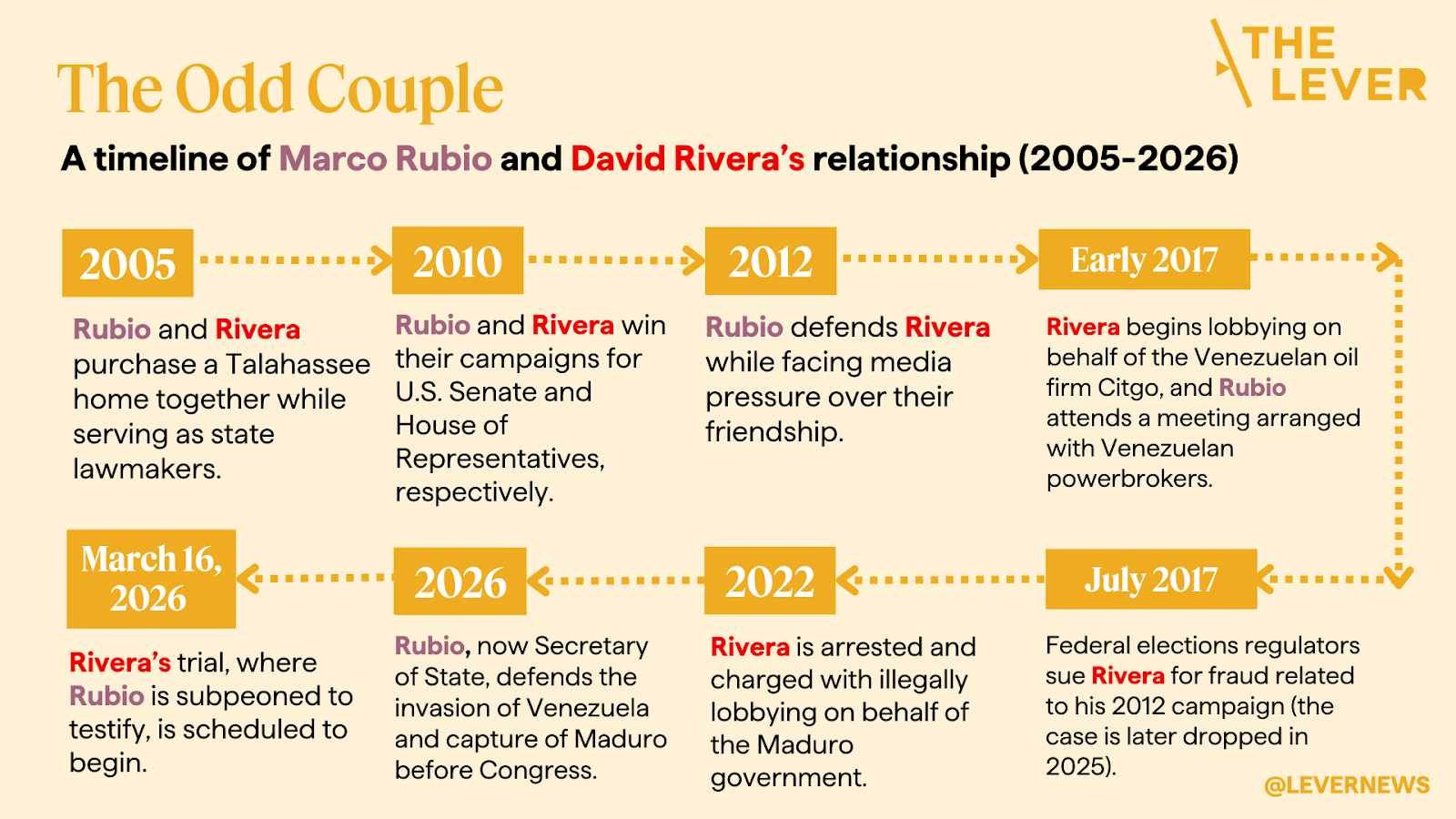 A graphic illustrating Marco Rubio and David Rivera’s relationship. (Source: The Lever)
Enacted in 1938 in response to rising Nazi propaganda in the United States, the Foreign Agents Registration Act requires more stringent disclosures than ordinary lobbying, since foreign clients may have national interests that conflict with those of the United States.
“The question under the law is whether the benefit [of the lobbying] is purely private, divorced from a benefit or control by a foreign government or party,” said Joshua Rosenstein, a lawyer at the Washington firm Sandler Reiff, which advises clients on compliance with lobbying and ethics laws. “The greater the involvement of a foreign government or political party, the less likely it is that you can shoehorn your activities under an exemption.”
The statute also applies to “a person whose activities are directly or indirectly supervised, directed, controlled, financed, or subsidized” by a foreign principal.
According to the Justice Department’s indictment of Rivera, the problems originated in 2017, when he began lobbying on behalf of Citgo, the U.S. subsidiary of Venezuela’s state-owned oil company.
For his work, Citgo paid Rivera’s consulting firm $50 million, a massive sum of money for a single lobbying firm. For comparison, the entire U.S. oil and gas industry spent just over $120 million on federal lobbying in 2022.
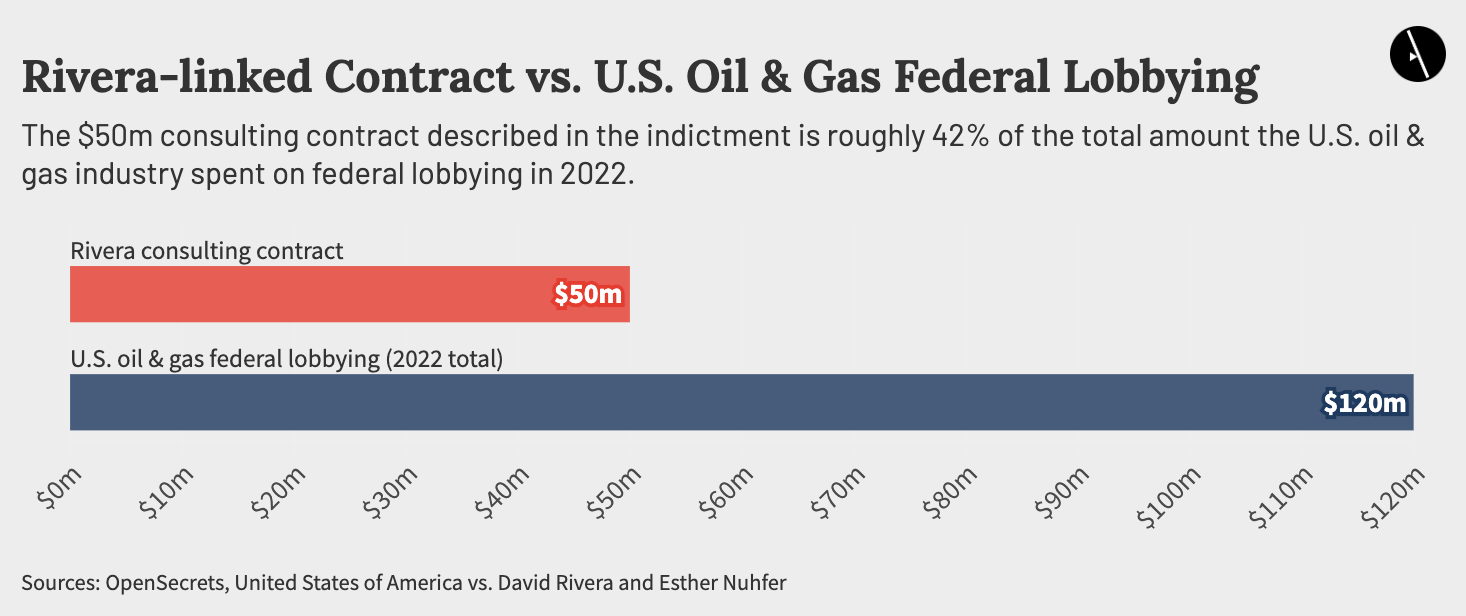 A graphic illustrating the size of David Rivera’s Citgo lobbying contract. (Source: The Lever)
Federal prosecutors allege that Rivera’s lobbying contract was actually a front for a foreign-influence campaign designed to avoid registering under the Foreign Agents Registration Act to conceal the full scope of the operation.
According to the indictment, Rivera was operating as an unregistered foreign agent to normalize relations between Venezuela and the U.S. — two countries that have been adversaries since socialist leader Hugo Chávez came to power in 1999.
Rivera was allegedly working for representatives of the Maduro government, which took power after Chávez’s death in 2013. Among the officials involved, prosecutors say, was then-Vice President Delcy Rodríguez, who now serves as Venezuela’s president.
“It was the purpose of the conspiracy for the defendants to unlawfully enrich themselves… in an effort to influence United States foreign policy towards Venezuela and to conceal these efforts by failing to register under FARA as agents of the Government of Venezuela,” the indictment reads.
Rivera allegedly used his political connections as a longtime Republican lawmaker to arrange meetings between Venezuelan power brokers and U.S. officials.
According to prosecutors, those meetings included a sit-down with Rubio as well as a meeting in Caracas between Maduro and Rep. Pete Sessions (R-Texas), who represents the oil-rich Lone Star State, which has financial interests in Venezuela’s mammoth oil reserves. At the time, Sessions chaired the House Rules Committee, which plays a pivotal role in deciding what legislation receives votes on the House floor.
Kellyanne Conway, a senior counselor to Trump during his first term, also participated in several of the meetings, according to text messages included in the indictment.
Sessions and Conway could not be reached for comment.
In text message exchanges cited by prosecutors, Rivera and his associates used pseudonyms to obscure the specifics of these meetings. The Texas congressman was referred to as “Sombrero,” while millions of dollars were called “melones.” Their code name for Maduro was “El Guaguero,” a reference to the president’s early career as a bus driver.
These 2017 and 2018 meetings— some reported at the time — came at a fraught moment in U.S.-Venezuela relations. Inside the Trump administration, officials were split over Venezuela policy, including proposals to tighten sanctions or normalize U.S. business ties.
Officials ultimately chose the former, ramping up sanctions in 2017 and again in 2020.
At the end of 2025, Rivera’s defense team subpoenaed Rubio to testify about those meetings. Federal prosecutors subsequently decided to call Rubio themselves, apparently concluding that his testimony would strengthen the government’s case.
Rivera, whose lawyers refused to make him available for an interview with The Lever, denies any wrongdoing. His attorneys have argued in court filings that Rivera, a longtime critic of Venezuela’s communist government, was working to undermine Maduro, not help him.
“We confidently believe that the evidence proves the opposite of what the government has alleged,” Rivera’s lawyers wrote in a December letter to the State Department requesting Rubio’s testimony.
“Specifically, then Senator Rubio and Mr. Rivera were focused only on their support for the Opposition [political leaders] in Venezuela, on sanctions against the Maduro government, and on removing Maduro as head of state in Venezuela.”
The Tycoon, The Trafficker, And The Trump Whisperer
As part of their defense, Rivera’s attorneys appear ready to suggest that the foreign-agent violations leveled against their client could just as easily be applied to another political operative: Wiles, Trump’s chief of staff.
To make their case, Rivera’s lawyers are zeroing in on two businessmen named in the indictment: a wealthy Venezuelan media mogul named Raúl Gorrín and a convicted cocaine trafficker named Hugo Perera.
Court documents claim that Gorrín, the politically connected head of a Caracas-based media company called Globovisión, helped orchestrate the alleged foreign-agent operation and served as a go-between for Rivera and the upper echelons of the Venezuelan government.
According to Rivera’s indictment, Gorrín took part in several of the meetings brokered by Rivera, including a sit-down with Rubio. Rivera also reportedly tried to use Gorrín’s private jet for the rendezvous with Conway.
 An employee at Globovision works at the channel’s headquarters in Caracas, Venezuela. (AP Photo/Leslie Mazoch)
Gorrín, who was sanctioned by the U.S. government in 2019 for his purported involvement in foreign bribes and money laundering, was reportedly paid handsomely for his work.
In 2020, Citgo filed a lawsuit against Rivera for breach of contract. According to the suit, Rivera paid $4 million of his $50 million contract fee to Gorrín as a kickback for helping him land the arrangement. Rivera apparently funneled the money through Gorrín’s Miami-based yacht company.
The Lever did not receive a response from Globovisión for a request for comment from Gorrín.
The Citgo lawsuit also alleges Rivera paid $5 million to another subcontractor for help arranging the Citgo contract: Perera, a Miami real estate developer who was convicted in the 1990s for his role in a drug-smuggling operation run by the Cali Cartel in Colombia.
Perera’s name is notably absent in the government’s indictment, and he’s agreed to act as a cooperating witness against Rivera at trial. In retaliation, Rivera has countersued Perera for allegedly violating their confidentiality agreement. Rivera has also claimed in a court deposition that the FBI told him that Perera was an informant.
Perera, who now runs a Miami real estate company, did not respond to a request for comment.
At the same time that Gorrín and Perera were working with Rivera, court documents indicate that both men were engaged in related activities for Ballard Partners, a powerful U.S. lobbying firm that Wiles co-led at the time.
In 2017, the first year of the alleged foreign-agent scheme involving Rivera, Ballard Partners also registered to lobby on behalf of Gorrín’s Globovisión, seeking to expand the network’s presence on U.S. television platforms. Ballard earned $450,000 from the contract, making Globovisión the firm’s third-largest client that year.
Ballard’s work for Gorrín appears to have been extensive. In a subpoena letter sent to the White House requesting Wiles to testify in the upcoming trial, Rivera’s defense team describes roughly 400 pages of documents related to Wiles’ lobbying work gathered during the discovery phase of the case.
Court filings also reference numerous emails exchanged between Gorrín, Wiles, and other Ballard lobbyists. One of those lobbyists was Otto Reich, a former U.S. ambassador to Venezuela who previously ran the interagency office that helped coordinate the Iran-Contra weapons sales during the Ronald Reagan administration.
Other Ballard emails went to Harry Sargeant, an oil executive who is currently advising Trump on his post-regime-change efforts in Venezuela. (Trump’s attorney general, Pam Bondi, began working at Ballard Partners in 2019 after serving as Florida’s attorney general, though she is not referenced in the correspondence described in the filings.)
Based on these email exchanges, Rivera’s lawyers also claim Perera was simultaneously working for Ballard while also serving as a subcontractor for Rivera.
“Discovery documents show that Hugo Perera, an important government witness in the case, was involved in these pro-Venezuelan activities through Ballard Partners at the same time the government has alleged that Mr. Rivera and Ms. Nuhfer were supporting pro-Maduro efforts on behalf of Venezuela,” the attorneys wrote.
 A graphic showing how Venezuelan oil money moved through a network of Washington power brokers. (Source: The Lever)
“I Happen To Know That My Government Wants A Way Out”
Rivera’s lawyers do not accuse Wiles or her Ballard colleagues of illegal conduct. But their filings suggest the government’s legal standard for charging Rivera could potentially implicate a far wider circle of MAGA operatives — including the president’s chief of staff.
No federal records show that Wiles or Ballard Partners ever registered under the Foreign Agents Registration Act for any Venezuelan entity.
“We’re not taking a position on that [legal question] in the case,” said Ed Shohat, one of the defense attorneys representing Rivera.
Ballard Partners did not respond to multiple requests for comment. But the firm has publicly maintained that it complied with all foreign and domestic lobbying laws and that its work related only to Globovisión’s commercial interests in the U.S. The lobbying firm dropped Gorrín as a client in 2018, amid a federal investigation that would lead to U.S. sanctions against him the following year.
“Ballard Partners’ work for Globovisión involved Globovisión’s efforts to expand its TV network into the U.S. market,” Brian Ballard, the founder of Ballard Partners, said in a statement to the Miami Herald.
But a key document in the Rivera case obtained by the Miami Herald appears to suggest that Ballard’s work for Gorrín may have gone beyond strictly commercial interests.
In 2017, Ballard reportedly drafted a memo for Gorrín to provide to Trump, though he ultimately never delivered it. The letter apparently outlined a proposal to mend strained U.S.-Venezuela relations by offering Maduro a path out of the country in exchange for a transition in leadership. As described by the Miami Herald, the document did not directly relate to, or mention, Globovisión’s access to U.S. markets or other commercial interests.
“I happen to know that my government wants a way out, a way to save their skins and fortunes,” the draft letter from Gorrín read. “The opposition, on the other hand, wants a way in but is not unified in how to achieve its goals.”
Should Ballard Partners’ work on the Gorrín letter — or its other lobbying efforts — have required the firm to register under the Foreign Agents Registration Act? That’s likely impossible to determine without additional information about Globovisión’s relationship with the Venezuelan government.
“An exemption [to FARA] would be available, provided the client (Globo) isn’t directed/controlled by a foreign government or political party, and the principal beneficiary of the work wasn’t a government or political party,” said Rosenstein, the lobbying lawyer. “That’s a factual question.”
According to Rosenstein, foreign lobbying involves many legal gray areas, in part because the Justice Department has prosecuted relatively few cases, leaving the law with limited judicial precedent. Under Attorney General Pam Bondi, the Trump Justice Department has curtailed enforcement of foreign corruption and lobbying laws.
Made with Flourish • Create a chart
A graphic illustrating where key figures connected to the alleged Venezuelan lobbying network are based. (Source: The Lever)
The hundreds of pages of Ballard records described by Rivera’s attorneys could shed light on the matter, but the documents may never become public. Last month, a federal magistrate judge in Florida’s Southern District Court granted a Justice Department petition allowing Wiles to avoid testifying at Rivera’s trial, thereby permitting related documents to remain under seal.
But in his ruling, the judge made a surprising admission.
“To be clear, no one disputes that Ballard Partners registered under FARA and dealt with Gorrín openly,” wrote Magistrate Judge Edwin Torres.
Torres’ office refused to comment. But if Torres is correct, it would mean that — despite no publicly available record of the filing — Trump’s chief of staff previously worked as a registered foreign agent for a government the U.S. recently moved to overthrow.
Under Pressure
Miami insiders say Rivera’s aggressive defense strategy isn’t just legal maneuvering ahead of trial; it’s also a political effort to pressure the Trump administration to drop the case.
That campaign includes issuing subpoenas to a striking list of high-profile witnesses, including not just Rubio, but also Conway and Sessions. Rivera’s attorneys even subpoenaed Maduro, Venezuela’s deposed president, who is currently awaiting his own trial on U.S. narco-terrorism charges. Maduro’s attorneys resisted the subpoena, saying their client would plead the Fifth.
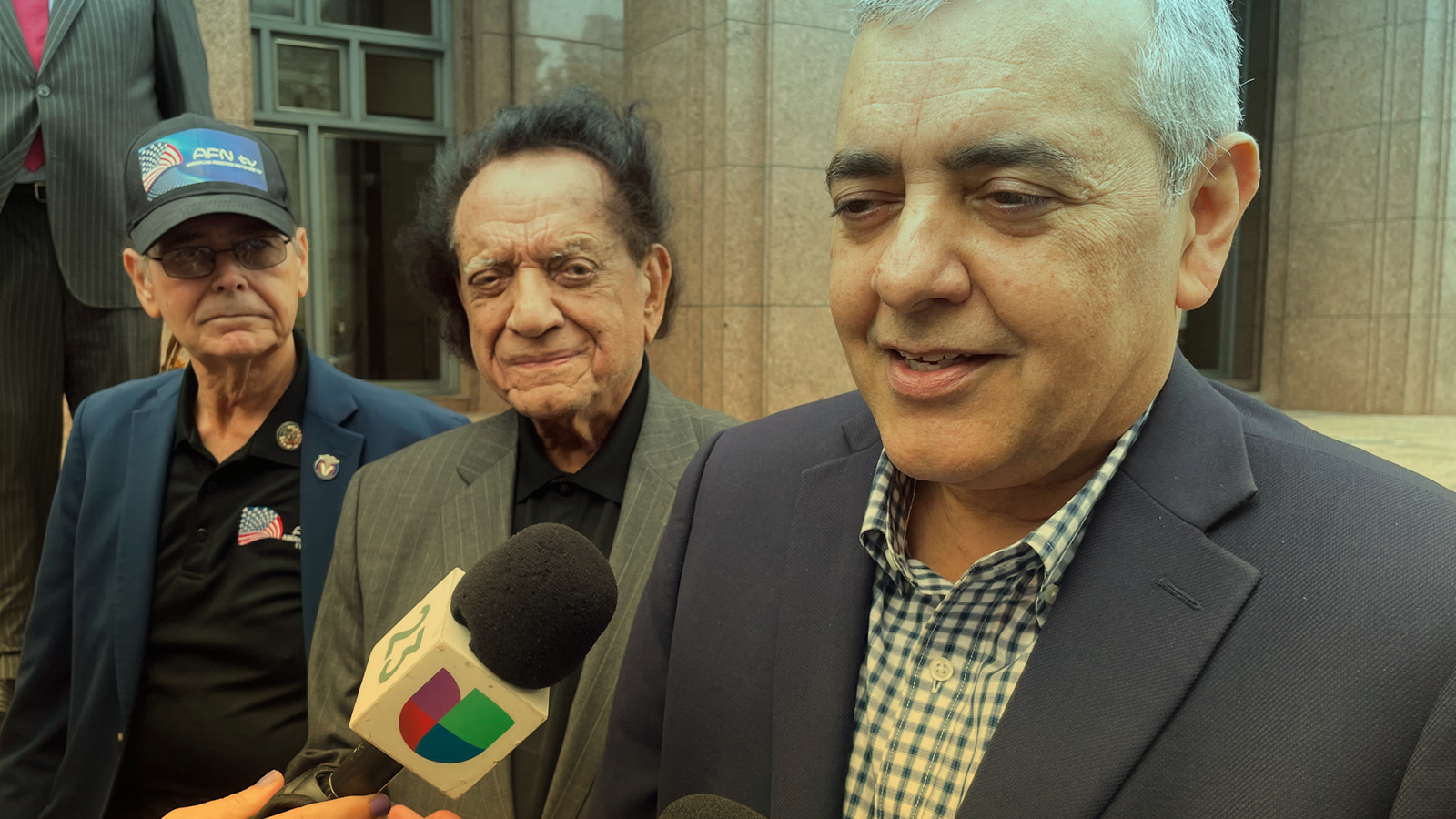 Former U.S. Rep. David Rivera speaks with media outside Miami federal court in Miami, Dec. 20, 2022. (AP Photo/Joshua Goodman)
While Miami defense lawyer Joseph DeMaria believes some of these witnesses could provide crucial testimony for Rivera’s defense, he also notes the political optics of such subpoenas.
“A lot of this strategy is political — to try to put pressure on the Trump administration to leave Rivera alone,” said DeMaria. ”Depending on how the judge rules on [the defense’s requests for testimony], that could lead them to wanting to make a deal with Rivera.”
Rivera’s legal team has a track record of exploiting political leverage when evidence-based legal defenses don’t pan out in the courtroom. One of Rivera’s attorneys is David Markus, a renowned Miami defense lawyer who also represents Ghislaine Maxwell, Jeffrey Epstein’s associate and convicted sex trafficker.
“A lot of this strategy is political — to try to put pressure on the Trump administration to leave Rivera alone.”
As Maxwell’s counsel, Markus has openly proposed a deal with the Trump administration in which his client would receive “clemency” in exchange for being allowed to speak “fully and honestly” about whether the president was involved in any potential sex crimes, or the crimes for which she was convicted.
In a *Vanity Fair*interview about his work, Markus embraced the ethos of a defense attorney: “I love representing the underdog.”
If David Rivera is an underdog, he’s an underdog with powerful friends in Washington — some of whom may soon be called to testify.
---
free press
Drain the Swamp? MAGA Lobbyists Say They’re ‘Drinking from a Fire Hose.’
(Illustration by The Free Press)
Once upon a time, Donald Trump promised to clean up Washington. But for the swampiest industry of all, business is booming.
05.05.25 —U.S. Politics
U.S. Politics
Breaking news, deep investigations, and eye-opening commentary that favor no party.
Since 2016, Donald Trump has promised his supporters that he will  ”—the president’s catchall pledge to end corruption in Washington. But as his second administration gets busy remaking the federal government, business is good for one of D.C.’s most lucrative—and “swampiest”—lines of work: lobbying. And for those lobbyists enmeshed in MAGA World, business has never been better.
One of the biggest winners is Jeff Miller, a veteran Republican lobbyist who has raised hundreds of millions of dollars in donations for Trump and the GOP. His phone has been ringing off the hook ever since election night, which he spent in the grand ballroom of Mar-a-Lago, a few tables away from the incoming president, along with J.D. Vance and Elon Musk.
“We went all-in to make sure President Trump had the resources to win, and we’ve been drinking from a fire hose ever since,” he told The Free Press.
Miller’s firm, Miller Strategies, posted at least $8.5 million in lobbying revenue in the first quarter of 2025—a 190 percent increase from its $2.9 million haul at the same time last year.
His is just one of the lobbying firms with close ties to Trump that cashed in on their influence between January and March, the period captured in the latest lobbying disclosures. They illustrate how, in Trump’s Washington, the “swamp” is far from drained.
Along with other close allies of Trump, Miller is a founding member of a new, invite-only MAGA moguls club in Georgetown called Executive Branch. The club costs $500,000 to join and already has a waitlist. Its co-founders include Donald Trump Jr.; Alex Witkoff and Zach Witkoff, the sons of Steve Witkoff, Trump’s special envoy to the Middle East; and Omeed Malik, a megadonor who was a seed investor in Tucker Carlson’s new media venture.
Miller Strategies, based in Washington, D.C., is lobbying on behalf of powerhouse companies like Zoom, NASDAQ, Apple, Sam Altman’s OpenAI, and Comcast. In March, it signed Cornell University, which, along with other elite colleges, has been roped into Trump’s investigations into alleged racial discrimination and antisemitism on their campuses.
Another new Miller client is Palantir, a data software company that was awarded a $30 million contract from the Trump administration to assist in the government’s deportation efforts.
“Despite all the rhetoric about ‘draining the swamp,’ there remains a thriving industry of lobbying firms who will help those willing to pay for access in Washington, D.C.,” said Michael Beckel, the senior research director for Issue One, a nonpartisan money-in-politics watchdog group.
It’s an echo of the good times that had been enjoyed by Democratic lobbyists with close ties to the Biden White House. For instance, Jeff Ricchetti, the brother of then–White House counselor Steve Ricchetti, saw his lobbying business boom during the Biden years: His lobbying revenues increased fivefold in the first three months of Biden’s presidency. Thus it has always been: When a Republican is in office, firms tied to the GOP thrive; when Democrats are in, the Democratic lobbying firms do well.
Except that Trump has long promised to clean up Washington. On the campaign trail in 2016 he committed to “a complete ban on foreign lobbyists raising money for American elections.” But that pledge has long been forgotten. In the 2024 election, lobbyists registered as agents of foreign governments helped raise more than $10 million for Trump, according to research by Issue One.
Miller was listed in that report because of his work for the Japanese government, his firm’s only foreign client. Miller refuses to sign Chinese clients—“even the ones who say things like, ‘Oh, we just moved into Singapore,’ or wherever,” Miller told The Free Press.
Other firms aren’t so picky.
Ballard Partners, the firm of Republican superlobbyist and Trump fundraiser Brian Ballard, has signed more than 130 clients since Trump’s victory last November. It’s a staggering number given that the firm had signed a total of 178 between 2021 and 2024. White House Chief of Staff Susie Wiles and Attorney General Pam Bondi both previously worked at the firm.
With 10 offices around the world, including in Istanbul, Tel Aviv, and Riyadh, Ballard posted at least $14 million in lobbying revenue in the first quarter of 2025. That’s triple its $4.2 million haul during the first quarter of 2024.
One new client of Ballard’s is Pirelli, an Italian tire manufacturer that the firm signed one month before Trump’s inauguration. Pirelli’s largest shareholder, with a 37 percent stake, is a Chinese state-owned company called Sinochem. In 2021, Sinochem merged with ChemChina, a company identified by the U.S. Department of Defense as an arm of the Chinese military. Pirelli has paid Ballard at least $120,000 since that December lobbying registration, filings show.
Among Ballard’s controversial clients, perhaps the most high-profile is TikTok. Trump delivered a major win for Ballard and TikTok on his first day in office, when he signed an executive order that extended a congressionally mandated deadline for a sale of the popular social media platform by its Chinese parent company, ByteDance.
Foreign ties are nothing new for Ballard. Before Bondi was attorney general, she worked as a lobbyist at Ballard for the gas-rich country of Qatar, which has long harbored the leaders of Hamas. Bondi also lobbied for iGas USA—a Florida-based company that received a large investment from a Chinese state-owned enterprise. Until July of last year, Brian Ballard and his partner, John O’Hanlon, lobbied for iGas USA. Ballard Partners declined to comment.
[ ](https://substackcdn.com/image/fetch/$s_!4Ynd!,f_auto,q_auto:good,fl_progressive:steep/https%3A%2F%2Fsubstack-post-media.s3.amazonaws.com%2Fpublic%2Fimages%2F9e2b06b7-44c1-4fb6-adc0-94b419c66ac4_1320x30.png)
Another firm flexing its influence early on in Trump’s Washington is Florida-based Continental Strategy. It was founded in 2021 by former Trump adviser Carlos Trujillo and employs both Katie Wiles, the daughter of the White House chief of staff, and Alberto Martinez, who served as a chief of staff in the Senate to now–Secretary of State Marco Rubio.
Lobbying disclosures show that Continental netted $3.6 million in the first quarter of 2025, compared to revenue of $127,500 for the same period last year. The firm has added at least 50 clients since Trump’s victory.
It’s hardly a surprise that the firm is in Trump’s good graces. One insider told The Free Press that Trujillo and his colleagues helped raise $15 million for Trump’s inauguration. Trujillo did not dispute the figure.
“We didn’t just show up in Trump World two months ago,” Trujillo told The Free Press—saying that his relationships “make it easy to navigate” Washington.
As business booms for Continental, it is already delivering wins for some clients—with Trump’s blessing. The firm helped broker a deal for a consortium led by BlackRock—that included Continental’s client, the Swiss-based Mediterranean Shipping Company—to pay $23 billion for ports in Panama and across the world. According to a person familiar with the lobbying push, Trujillo’s firm privately secured support from Trump and previewed the deal to federal officials. The president hailed the deal in his March speech to Congress, calling it a step toward “reclaiming” the Panama Canal, a top priority of his administration.
Continental has established an in-house policy of working only with foreign clients that it sees as aligned with American interests, according to two people familiar with the firm.
Then there’s Mercury Public Affairs, where now–White House Chief of Staff Susie Wiles worked as a lobbyist until 2024. Former Trump campaign adviser Bryan Lanza is a partner at the firm, where revenue climbed to $5.2 million in the first quarter of 2025—doubling since the last quarter of 2024. It registered on behalf of around 70 clients in 2024 and 2025, according to lobbying filings.
“The calls started coming in last summer, before Biden dropped out,” said one person familiar with Mercury’s booming operation.
After the election, Lanza registered to lobby for the Chinese electronics giant Xiaomi, which was placed on a Pentagon blacklist during Trump’s first term over alleged Chinese military ties. (The designation was later removed under Biden.)
Mercury clients have included Qatar, the Turkish government, a Chinese surveillance firm linked to China’s persecution of the Uyghurs, and a Chinese solar panel manufacturer called JinkoSolar that saw its Florida factory raided in 2023 after reports the company was linked to forced labor in China.
Mercury has hauled in hundreds of thousands of dollars since 2020 to lobby for China’s Alibaba Group and millions of dollars from Gotion—an electric vehicle battery manufacturer and subsidiary of a Chinese company that pledged in 2022 group documents to “carry out” activities for the Chinese Communist Party. Multiple reports in 2020 linked Alibaba Group to China’s surveillance of Uyghur Muslims. An early client for Lanza upon his joining in 2017 was ZTE, a Chinese telecommunications giant for which Mercury said its work “may inure to the benefit of the People’s Republic of China,” Justice Department filings show.
“As long as evil political regimes like the Chinese Communist Party and the companies they control have willing representatives in Washington, the ‘swamp’ is never going to be fully drained,” said Michael Sobolik, a senior fellow at the Hudson Institute who specializes in U.S.-China relations.
There are, however, limits to how much foreign baggage lawmakers are willing to tolerate.
:{:{“The problem with Mercury is that so many of their clients are total shitbags,” said one senior Republican congressional staffer, “so they have trouble getting meetings.”}:
Drain the Swamp? MAGA Lobbyists Say They’re ‘Drinking from a Fire Hose.’}:
endit?
... “so they have trouble getting meetings.”}:
---