ARIZ2
SEE ARIZ 3 2 25
918 age of trump arpaio
see main for older (sb 1070 show papers eg)
no merri
goldwater inst stinktank
see kari lake
see water
state gop wacko in az and texas?
see cyber ninja fraudit
latino? going purple?
---
AN 2 25
Arizona's political climate is radically different from what it was 40 or 50 years ago.
Once a deep red state that was synonymous with the old-school GOP conservatism of Sens. Barry Goldwater and John McCain, Arizona is now a swing state with a Democratic governor (Katie Hobbs), two Democratic U.S. senators (Mark Kelly and Ruben Gallego) and a Democratic state attorney general (Kris Mayes). President Donald Trump carried Arizona in 2024 but lost it to Democrat Joe Biden in 2020.
Many traditional Goldwater and McCain conservatives are frustrated by the gains that MAGA conspiracy theorists have made in Arizona. And another source of frustration for them is the presence of far-right militia groups in their state.
READ MORE:'We are starting to worry': Economist sounds alarm on 'near-term downside' of 1 million DOGE layoffs
In an article published on February 25, Phoenix News Times reporter T.J. L'Heureux describes seven of the "most concerning" far-right groups with a strong Arizona presence — including the Oath Keepers, the Proud Boys, Arizona Border Recon, Veterans on Patrol, Mayhem Solutions Group, Patriot Front, and the Constitutional Sheriffs and Peace Officers Association.
L'Heureux explains, "Suffice it to say that hate groups and anti-government extremists have always been attracted to Trump. Now that their man, and Elon Musk, is back in power and dismantling the federal government with reckless abandon, experts who track extremist groups are acutely concerned they will feel emboldened to leave the shadows and operate openly. Those experts have their eyes on Arizona."
L'Heureux notes, however, that while "neo-Nazi, white supremacist, anti-immigrant, (and) anti-Muslim" groups "dominate the extremist landscape in the American South and Northeast, they play a secondary role in the Southwest."
Extremism expert Kristofer Goldsmith told the Phoenix New Times, "In Arizona, anti-government groups tend to be the most active."
READ MORE:Federal employees told to assume 'malign foreign actors' are reading e-mails to Musk
Rachel Goldwasser of the Southern Poverty Law Center, told the Phoenix New Times, "Arizona is a hotbed…. As long as we've determined they're actually out there pushing their propaganda and are recruiting or engaging people and are trying to or successfully radicalizing people, we define that as activity. The groups we look at can be very different in terms of their activities, even if their ideologies are similar."
READ MORE:'May never result in charges': Trump’s top prosecutor won’t sign arrest warrant for GOP rep
AN 2 25
'Less expensive to do': Arizona Republicans advance firing squad execution proposal
---
an 2 25
A top Arizona Republican is hoping the Trump administration will do what a federal court wouldn’t: overturn a national monument protecting lands around the Grand Canyon so that mining companies can extract uranium and other valuable minerals from the land.
Arizona Senate President Warren Petersen sent a letter to the U.S. Department of the Interior on Feb. 7 requesting a meeting with Secretary of the Interior Doug Burgum to discuss ending the “government overreach” of the national monument and ban on uranium mining in the area.
At issue is the Baaj Nwaavjo I’tah Kukveni – Ancestral Footprints of the Grand Canyon National Monument, which President Joe Biden created in 2023. Petersen and Ben Toma, who was at the time the speaker of the state House of Representatives, sued to have the designation revoked.
The GOP’s lawsuit argued that Biden did not have the power to create the monument, which spans 917,618 acres the federal government already managed. They also claimed it harms both the state and local communities by permanently barring uranium mining — limiting the state’s potential future revenue — and complicating land development.
On Jan. 27, Judge Stephen McNamee ruled that the Arizona Legislature and the other plaintiffs did not have standing to sue and dismissed the case.
The Grand Canyon is the ancestral homeland of multiple tribal nations across the Southwest, and tribes still rely on the canyon for natural and cultural resources that are significant and sacred to their communities.
The monument protects thousands of historical and scientific objects, sacred sites, vital water sources and the ancestral homelands of many Indigenous communities.
The monument’s name comes from the Indigenous names the Havasupai and Hopi gave to the area. In the Havasupai language, Baaj Nwaavjo means “where Indigenous peoples roam,” while I’tah Kukveni means “our ancestral footprints” in the Hopi language.
The monument restricts new mining within the area, but any mining rights in place before the designation have not been impacted.
Petersen called the Biden administration’s designation of Baaj Nwaavjo I’tah Kukveni a “land grab,” and said keeping it in place contributes to high energy costs and the United States’ reliance on foreign powers.
“Ending the federal government’s hold of this piece of land falls in line with the Trump Administration’s goals of energy independence, job creation, and lower costs for Americans,” he said in a written statement.
Petersen said that government scientists believe that there is more than 300 million pounds of uranium is buried near the Grand Canyon.
“The energy that could be produced from this mineral is astronomical,” he said.
“I look forward to working with Secretary Burgum on this matter of importance for Arizona and the entire nation,” he added.
Arizona Mirror is part of States Newsroom, a nonprofit news network supported by grants and a coalition of donors as a 501c(3) public charity. Arizona Mirror maintains editorial independence. Contact Editor Jim Small for questions: info@azmirror.com.
---
an 11 24
this article was originally published by Votebeat, a nonprofit news organization covering local election administration and voting access.
WILLCOX, Ariz. — Peggy Judd knew exactly what she needed to do.
Judd, a Republican on the board of supervisors in Cochise County, Arizona, had to vote yes Wednesday on whether to certify the county’s presidential election results. If she didn’t, she would be not only breaking the law, but also violating the terms of her plea agreement.
That’s because, two years ago, after the 2022 midterms, she made a different choice. She and another Republican supervisor voted to delay the certification of that election past the legal deadline.
That decision made her one of a handful of local Republican officials around the country who unsuccessfully tried to halt or delay certification of an election. It also upended Judd’s life.
As she prepares to leave public office at the end of the year, she’s still reckoning with the consequences. And the county, a rural region in the southeastern corner of the state along the Mexican border, is still working through the distrust, turmoil, and national attention that came with Judd’s vote.
After the vote to delay, State Attorney General Kris Mayes launched an investigation into Judd and fellow Supervisor Tom Crosby. A grand jury later charged them with two felonies — conspiracy and interference with an election officer.
Judd initially fought the charges, and amassed $70,000 in legal bills, she told Votebeat in an interview Tuesday. She collected contributions to help pay the tab, including, she acknowledged for the first time, $5,000 wired from the Legal Offense Fund of MyPillow CEO Mike Lindell, who has promoted false theories about elections.
But despite promises from GOP activists and leaders to help anyone who bucked the system, most of the burden fell on her.
Judd, 62, signed a plea agreement last month admitting that she failed to certify the election as required by law. She was sentenced to 90 days of unsupervised probation.
That means that if she didn’t certify this election on time, she could be jailed.
Crosby, for his part, has pleaded not guilty, and his trial is scheduled for January.
Feeling betrayed: ‘I don’t want to be a Republican anymore’
Judd, a former state representative, is preparing to sell her house to her daughter, mostly because she needs money to pay her legal bills. Judd moved in with her mother this summer.
She said the local Republican Party she had helped nurture since the Tea Party movement began in 2008 has turned against her. She doesn’t feel welcome at the local GOP meetings now, she said, and has faced criticism for not going all the way on the effort to hand-count ballots and block certification. She said she plans to unregister as a Republican “soon.”
“When I was behaving, they were very kind to me,” she said. “But the minute I was saying ‘No, wait, whoa,’ then they hated me, like immediately. And that’s why I don’t want to be a Republican anymore.”
Even so, sitting at her sister’s pizza restaurant in Willcox the afternoon before the vote, she said she felt tortured by the thought of voting yes on certification the following morning, because Cochise did experience problems counting ballots.
“So much is going wrong,” she said.
A local reporter had just called her to tell her that the elections director had made a mistake when preparing the hand-count audit of results. And the county had mechanical problems with its tabulator while tallying votes during the initial count.
Judd knew the mistakes did not affect the final vote count. And because Donald Trump won the presidency, Judd said, the community wasn’t claiming fraud this time, or pushing her not to certify.
Still, she said she wanted to be deliberate about her vote. Certifying an election is a ministerial duty in Arizona, not a discretionary one, but she said she didn’t want to vote to certify just because she was obligated to. She wanted to be able to tell her community affirmatively that, despite the mistakes, the election should be certified.
She had been all day waiting for the elections director to send her a post-election report that might help her understand exactly what challenges election officials dealt with during the election, and how they resolved them.
She checked her email inbox one more time. But there was nothing there.
The day before the vote in 2022
Even before her vote not to certify the 2022 midterm election results, Judd was tangled up in lawsuits and drama over how Cochise County would handle them. For months, she and some other elected officials pushed for a full hand count of ballots. A judge blocked the plan, finding it would be illegal under state law.
Around the same time, Crosby and Judd conferred with a private lawyer — separately, they say — outside of a public meeting. They asked him to sue the county’s elections director personally for refusing to hand over the ballots for an expanded audit.
Mayes determined later that the two supervisors’ meetings with the outside lawyer had violated the state’s Open Meetings Act.
Activists also asserted that the voting lab that certified the county’s ballot tabulators had not been properly accredited, a claim that the Arizona Supreme Court had already rejected.
Crosby and Judd said they wanted more information on those claims and voted on Nov. 18 to delay the certification vote until the last day allowed in state law, Nov. 28.
Shortly afterward, the state elections director sent supervisors a letter from the U.S. Elections Assistance Commission confirming that the machines were properly certified.
Nonetheless, Judd said that on the day before the Nov. 28 vote, she met with two activists making the claim. She said she was helping them prepare to present at the supervisors’ meeting the next morning.
When those activists weren’t allowed to speak at that meeting, Crosby and Judd again voted to delay certification — this time, until past the county’s deadline to certify under state law.
Then-Secretary of State Katie Hobbs sued, and a court forced Cochise supervisors to certify later that week, allowing the secretary of state to still meet the deadline for statewide certification.
Judd this week said that no one on her staff had advised her of the county’s statutory deadline to certify, or that her vote to delay meant the county would miss it. But fellow Supervisor Ann English, the board’s only Democrat, says the supervisors were warned of the deadline.
Judd also said she had always intended to certify the election. While she had doubts about the fairness of elections elsewhere, she said she always knew Cochise County’s elections were fair.
What were Judd’s intentions?
A grand jury connected Crosby and Judd’s votes to delay certification with their earlier push for hand-counting all of the county’s ballots, and accused them of an illegal conspiracy to delay the election results.
Judd was putting out Christmas decorations with her family when she got a phone call telling her she had been indicted. She said she was surprised and especially wanted to push back on the idea that she conspired with Crosby. Judd said she never spoke to Crosby outside of public meetings, even about the lawsuit against the county’s elections director.
Judd’s sister, Cindy Chaffey, drove her to Phoenix for her arraignment in December 2023 and described Judd as “really struggling” with the charges against her at that point.
She said Judd is best known in the community not for the election drama, but as a longstanding public servant — one who goes out of her way to help others. Judd, she said, wanted to prove to the community that the county’s election was fair and believed her actions would allow that to happen.
“Because everything she does is with a good heart and with good intentions,” she said.
Not everyone saw Judd’s actions that way.
Sitting at R&R Pizza, Judd puts her phone on the table and replays a voicemail that arrived the day after her Nov. 28 vote to delay the results. The man’s voice on the recording tells her she is “election-denying, crazy, psychopathic anti-American to your very core, for denying people their rightful need to vote.”
“Hopefully you both get hit by semi-trucks,” the voice says, referring to Judd and Crosby. “Get cancer, suffer immensely, and die before the end of the year.”
Judd said she cried when she got that message, and regrets that her staff received messages like that, too. Criticism came from other members of the community as well, especially after Crosby and Judd’s actions prompted the resignation of the county’s well-regarded elections director, Lisa Marra.
English, the Democratic supervisor, said she is disappointed that Judd could get off with “a slap on the wrist.” English said she believes Judd and Crosby should also be held accountable for violating public meeting law.
Judd denies that she did so.
Surprise turned to doubt in 2020
This summer, prosecutors with Mayes’ office questioned Judd about her choices in what Judd called a “free talk” that preceded the plea agreement. She said she was honest when they asked her who had influenced her actions: It wasn’t Lindell, or anyone like that, she said. Mostly, it was her husband, Kit Judd.
Judd grew up in Willcox, and she and her husband raised their family there. She helped organize the Tea Party movement in Cochise, and later served as a state representative.
She and her husband were always Republican, but she said she thought of herself as independent-minded and at one point, voted for Democrat Barack Obama. That’s not something she told her husband about, she said.
But she remembers waking up the day after the 2020 election, surprised that Trump had lost. That surprise quickly turned into doubt about the fairness of the election.
And on Jan. 6, 2021, she was at the rally in Washington, D.C., when rioters broke into the U.S. Capitol, though she said she was with her kids and grandkids and nowhere near the building. She has not been charged in relation to what happened that day. She said she condemns the violence.
During the period after the 2022 election, she was caring full-time for her husband, who had become ill. She attended meetings online and voted from home, with him there, and said his opinions influenced her votes.
Kit Judd died in early 2024.
When trying to decide whether to take a plea agreement, she said she consulted privately with a regional leader in the Church of Jesus Christ of Latter-day Saints, of which she is a lifelong member. He asked her if what she would be admitting to — delaying the results — was the truth. She said it was.
Upon signing her plea agreement, Judd said she felt Mayes launched her investigation for political reasons.
But a week after Judd signed the plea agreement, she said, Mayes came to Cochise County for the opening of the Oletski Border Operations Center. Judd said she approached her for a conversation and found her to be kind. Judd said the talk prompted her to think of Mayes as “more of an ally than an enemy.” Mayes’ spokesperson confirmed the two women spoke, but couldn’t confirm what was said.
Judd said her lawyer will ask the judge who heard her case to end her probation early. She wants a break from holding office for four years, she said, but isn’t ruling out running for supervisor again after that.
She wants to go on a Mexican cruise in January. She plans to try to get approved for a church mission trip later in the year.
First, though, she needed to vote on certifying the 2024 election.
On Wednesday morning, Judd showed up to a nearly empty meeting room. No one from the public spoke before the vote, despite the mistakes that occurred while counting ballots. The elections director had, by then, posted a full report of what occurred, and recommendations for improvements in future elections.
The team was new this year, since Marra’s departure has made it hard for the county to attract and keep elections directors. Joe Casey, associate county administrator overseeing elections, said in an interview that they were learning as they went.
When it came time for her vote, Judd thanked the elections team for “hanging in there” and “putting up with all my questions.”
“You allayed my fears,” she told them.
English and Crosby also thanked the staff. And then, they voted unanimously to certify the results.
“Yay,” Judd said immediately after. “Does it feel like we should have confetti or something?”
Jen Fifield is a reporter for Votebeat based in Arizona. Contact Jen atjfifield@votebeat.org.*}:
Votebeat is a nonprofit news organization covering local election integrity and voting access. Sign up for their newsletters here.
===}:
grift?
an 11 24
The Oath Keepers were among the far-fight groups involved in the January 6, 2021 attack on the U.S. Capitol Building. And on May 25, 2023, the U.S. Department of Justice (DOJ) announced that two prominent figures in the militia group — founder Elmer Stewart Rhodes III and Kelly Meggs — had been sentenced to federal prison on seditious conspiracy charges.
But the Oath Keepers remain active in 2024. During an early November interview with Wired, Oath Keepers ally Jim Arroyo described preparations for a possible civil war.
Arroyo told Wired, "The election can certainly trigger a civil war, no different than it happened in any number of countries around the world. I'm training people to survive a civil war, to get out of the way, to stay home, stay off the grid, have enough supplies."
READ MORE:[Inside a Georgia election official’s months-long push to make it easier to challenge the 2024 results
Jim Arroyo and his wife Janet Arroyo operate the Yavapai County Preparedness Team, an Oath Keepers spinoff in Arizona. And both of them, according to Wired reporters David Gilbert and Tess Owen, believe that Democrats are planning to steal the 2024 election from GOP nominee Donald Trump.
Jim Arroyo told Wired, "They want to take him out so that he can't get back in the White House."
During the interview, Jim Arroyo claimed that the left is uniquely violent in the United States — and the Wired reporters noted the violence of January 6, 2021. But Jim Arroyo believes the debunked conspiracy theory that the January 6 rioters were undercover leftists.
Jim Arroyo told Wired, "The main concern right now is the potential of civil unrest because of the election. Whoever wins, one side's going to be pissed off, and the other side, the radical-left side, is going to be more pissed, and they're more known for burning cities to the ground when they don't get their way."
READ MORE:['Trump is toast': Why Michael Moore is 'confident' Harris will win
*Read Wired's full interview with Jim Arroyo at this link (subscription required).
===
mma
10/25/24
---
an 10 24
Arizona was once a deep-red state where Sen. Barry Goldwater and his successor, Sen. John McCain, were regarded by fellow Republicans as the gold standard for conservatism. But Arizona has since evolved into a swing state.
Arizona Democrats are winning a lot more statewide races than they were 30 or 40 years ago, and far-right MAGA Republicans like Kari Lake have been openly disdainful of the Goldwater and McCain conservatives who once dominated the state.
Arizona is among the battleground states where former President Donald Trump and Vice President Kamala Harris have been especially aggressive in their campaigning. And a contentious U.S. Senate race that puts Lake against Rep. Ruben Gallego (D-Arizona) will be closely watched on Election Night.
READ MORE:Man charged for shooting at Dem field office had 120 guns, 250K bullets and grenade launcher
According to Phoenix's ABC 15 News, fire and police officials are investigating a fire in a U.S. Postal Service mailbox that included some mail-in ballots. Arson is suspected.
The Phoenix Fire Department, in an official statement, said, "Approximately 20 electoral ballots were damaged, along with additional miscellaneous mail.
"What led to the fire is not yet known," ABC 15 News reports, "but Phoenix Police Department says Phoenix Fire Department's Arson Investigation Taskforce is performing a criminal investigation with postal inspectors and police. ABC 15 reached out to election officials for information impacting those whose ballots may have been damaged."
Maricopa County Recorder Stephen Richer said his office is "waiting for details from law enforcement."
READ MORE:James Carville is 'certain' Harris will win — Here are 3 reasons why
Richer told ABC 15 News, "We encourage all voters who used that mail box in the last 36 hours to check the status of their ballots at https://BeBallotReady.Vote. Successful delivery is usually reflected on that website within 72 hours. Voters should be aware that tomorrow, October 25, is the last day to request a replacement ballot."
---
substack 10 24
Rachel Walden, Republican candidate for the Arizona Corporation Commission, has repeatedly expressed belief in far right conspiracy theories, including making false claims about climate change, COVID vaccines, and that “MS-13 gang was a creation of the CIA.”
an 10 24
Police in Tempe, Arizona have arrested a man they believe is responsible for a spate of shootings at a Democratic field office in the pivotal battleground state. The alleged shooter's cache of weapons and ammunition suggests he may have been planning a politically motivated mass shooting.
Phoenix-based ABC affiliate KNXV reported Wednesday that 60 year-old Jeffrey Michael Kelly has been arrested in connection with three different shootings reported at the campaign office since September. Democrats have since closed that office and moved operations to an undisclosed location out of concern for the safety of workers and volunteers.
Kelly has since been charged with unlawful discharge, shooting at a non-residential structure, terrorism and criminal damage. He is also accused of "hanging suspicious bags of white powder from several political signs lined with razor blades," according to KVXN.
READ MORE:**Democrats close field office in swing state that's been shot at 3 times since September**
The Democratic field office was targeted in three separate shootings on September 16, September 23 and October 6. Witnesses reported a silver Toyota Highlander SUV near the scene. No one was in the office at the time of the shootings, and no deaths or injuries were reported in either incident.
According to Phoenix-based outlets KTVK and KPHO, Kelly allegedly used Google Maps to search the location of the field office, and he was also reportedly seen posting "anti-Democratic ideology signs" in several locations near his home.
KVXN further reported that when the Bureau of Alcohol, Tobacco and Firearms searched Kelly's home, they found a massive arsenal of weapons, including 120 firearms, approximately 250,000 rounds of ammunition and a grenade launcher, in addition to body armor. Maricopa County Deputy County Attorney Nena Bhatia said it's likely Kelly was planning a mass shooting.
"The state and law enforcement believe that this person was preparing to commit an act of mass casualty with the guns he had, and that his progression of violence was escalating," she said.
READ MORE:**Project 2025 partner org publishes hit list of 10 gov't employees referred to as targets**
While the types of guns investigators and caliber of ammunition seized has not yet been disclosed, it's worth noting that an AK-47 in its fully automatic setting is capable of firing 600 rounds a minute**. This means that without even counting for time to reload, it would take approximately seven hours to fire 250,000 rounds of ammunition continuously.
Kelly is currently being held on a $500,000 bond, according to the Maricopa County Sheriff's Office. His next court appearance is scheduled for Tuesday, October 29.
Click here to read KVXN's article in full.
READ MORE:['Nearly all' voters know about Project 2025 and majority have negative view of it: report
---
'Rushing to judgment': AZ speaker punishes GOP rep who voted with Dems to repeal 1864 law
an 10 24
7 24 kari lake beats sheriff mark lamb in primary and
A Republican election official who has been overseeing the voting process in Arizona's most populous county for the last four years was just voted out in Tuesday night's GOP primary.
The Associated Press called the race Wednesday morning, with Republican state representative Justin Heap in a comfortable lead over incumbent Maricopa County Recorder Stephen Richer. Don Hiatt, another GOP challenger, placed third. According to NBC News, Heap had the backing of MAGA aligned GOP Senate nominee Kari Lake, who continues to insist that former President Donald Trump was the true winner of the 2020 election. She has also refused to acknowledge her loss in the 2022 gubernatorial election, in which Democrat Katie Hobbs won by roughly 17,000 votes statewide.
"I am endorsing Justin Heap for the Maricopa County recorder because we want honest elections,” said Lake last month. “We need a heap of honesty in our elections.”
READ MORE:**'I would lynch him': Arizona GOP leader threatened to murder top election official**
After the GOP primary results were announced, both moderate conservatives and independents mourned Richer's loss. 2020 Democratic presidential candidate Andrew Yang tweeted that Richer losing the primary was a "terrible sign for the AZ Republican Party," and noted that he "stood up for election integrity despite threats and attacks."
"Much love and gratitude to Stephen Richer and the rest who took abuse for doing their jobs with integrity in Maricopa County," tweeted Bulwark podcast host Tim Miller.
Richer was an outlier in the modern Republican Party, given his commitment to overseeing fair elections and not trafficking in election conspiracies in the midst of threats from the MAGA faction of the GOP. Maricopa County Republican Party vice chair Shelby Busch said in June that she would "lynch" Richer, and refused to walk back the comment, saying it was made "in jest." Richer condemned Busch for the remark in an interview with AZFamily.com.
“If lynching is in your vocabulary you need to have a heart to heart with yourself,” Richer said. “That shouldn’t be in your vocabulary given the history of that term and it shouldn’t be on your vocabulary to say about anyone you with whom you disagree.”
READ MORE:**'Plagued by dysfunction': Arizona GOP sells $1.9 million headquarters it bought 9 months ago**
In a statement posted to X (formerly Twitter) after his loss was announced, Richer pledged to use the remaining few months in his position to ensure that either Heap or Democratic nominee Timothy Stringham would be able to have a smooth transition into their new role. He added that he would work to "ensure the continued efficient and lawful execution of my duties in recording, voter registration, and mail voting."
"Elections have winners and, sadly, losers. And in this one, it looks like I'm going to end up on the losing side of the column," Richer tweeted. "But that's the name of the game. Accept it. Move on."
Click here to read NBC's report in full.
READ MORE:['Chaos': GOP officials in AZ county cost taxpayers hundreds of thousands in election fights
Several of the speakers who endorsed presidential nominee Kamala Harris at the 2024 Democratic National Convention in Chicago were conservative Republicans, including former Rep. Adam Kinzinger (R-Illinois), former Trump White House Press Secretary Stephanie Grisham, ex-Mike Pence national security aide Olivia Troye, and Mesa, Arizona Mayor John Giles.
Like other pro-Harris Republicans,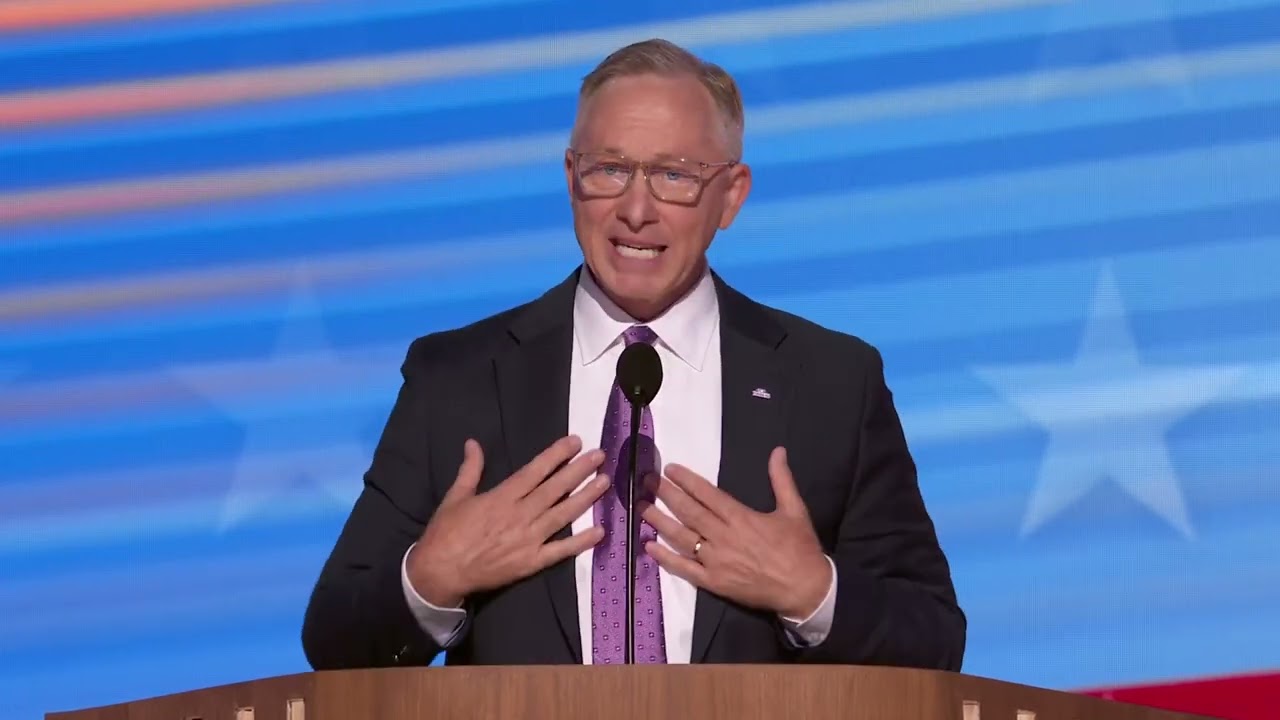 that former President Donald Trump is fundamentally anti-democracy. And the Mesa mayor is warning that Trump and his MAGA allies will fight the election results if Harris wins in November.
The Guardian's Peter Stone, in an article published on September 3, points to Giles as one of the people who is sounding the alarm about the extremes Trump is willing to go to.
READ MORE:**How 'Red Dawn conservatives' have formed anti-Trump alliance with 'educated suburban dads'**
If Trump loses, Giles predicts, MAGA Republicans "will throw everything at the wall and see what sticks."
The Mesa mayor warned, "They'll claim everything went wrong if they lose. I'd be surprised if Trump doesn't try to foment insurrection if he loses the election."
Stone cites Turning Point USA and True the Vote as some of the "MAGA stalwarts" who have been "spreading conspiracy theories about election fraud in order to lay the groundwork for charging the election was rigged if Trump loses."
Former Rep. Dave Trott (R-Michigan) told The Guardian, "Trump continues to encourage his supporters like Charlie Kirk of Turning Point USA to question the integrity of our elections. He has no evidence or basis for claiming fraud and is only perpetuating these lies so he has a plan B to disrupt democracy in the event he loses."
READ MORE:**How the 'antiquated' Electoral College can be reformed to root out 'intrigue and corruption'**
David Becker of the Center for Election Innovation and Research is worried as well, telling The Guardian, "A lot of false claims are masquerading as efforts to change policy to improve election integrity when in actuality, they're just designed to sow distrust in our system if Trump loses. This is all designed to manufacture claims that if Trump loses, the election was stolen and to sow discord, chaos and potential violence.”
READ MORE:**Legal expert lays out what September could hold for Trump’s criminal cases**
*Read The Guardian's full article at this link.
===
---
an 7 24
Arizona is no stranger to election interference tactics, as 18 of Donald Trump's MAGA allies in April were "charged with using false or unproven claims about voter fraud related" to the 2020 presidential election, according to The Associated Press.
Two years later, NBC News reported that a pair of "Republican supervisors in Cochise County, Peggy Judd and Tom Crosby, County — were charged for allegedly conspiring to interfere with the county’s midterm election — in part by pushing for a full hand count of ballots."
Now, according to a Tuesday, July 16 report published by Votebeat, "previously unreported text messages" reveal that Arizona Republican officials' "privately pressured county leaders across the state to count ballots by hand instead of using machines."
READ MORE:'Out of control': Ex-AZ Republican governor slams MAGA election deniers for 'destroying' GOP
Votebeat reports that "newly obtained text messages from Cochise County, which American Oversight fought for in court and shared with Votebeat, show that a state senator was trying to pressure Judd during the public meeting when the supervisors held the key vote on hand-counting ballots."
Cochise County-based state Senator David Gowan (R), according to the report, "texted Judd just as the meeting began," writing, "Does the Cochise bos know there is no law prohibiting them from hand count? From President Fann" — "referring to the county supervisors."
Votebeat reports, "In Pinal County, the day supervisors discussed hand-counting ballots in this year’s election, state Sen. Wendy Rogers, a Republican who represents parts of Pinal County, texted Supervisor Kevin Cavanaugh, also a Republican, to assert that hand-counting all ballots was legal — something the Secretary of State’s Office and state Attorney General’s Office have said is not true."
Rogers typed, "Don’t let them lie today."
READ MORE:Mayor of AZ border town who shared stage with Kari Lake now endorsing Democrat Ruben Gallego
NBC News last year reported:
*:{After the 2020 election, the Arizona state Senate authorized a controversial hand-count audit of two races. The audit took months and cost millions, and — by its leadership’s own account in text messages obtained by The Arizona Republic — failed to result in an accurate count.
Furthermore, Votebeat notes:
The issue with hand-counting ballots is not just the law. Multiple studies, trials, and attempts to hand-count ballots across the country — including in Pinal and Mohave counties — have proven that hand-counting instead of using machines would cost more money, require hundreds to thousands more workers, lead to inaccurate results, and potentially delay or disrupt the certification of results. Yet the conversations about instituting hand counts continue in Arizona, especially as many of the county supervisors run for reelection this year.}:*
The Guardian reported in May that "Judd told Votebeat that she wasn’t a driving force for a hand count in the first place and voted for it because of what she was hearing from constituents."
The GOP county supervisor said, "You can ask anyone. I never pushed for it."
READ MORE: 'I would lynch him': Arizona GOP leader threatened to murder top election official
Votebeat notes that "supervisors ultimately rejected" the requests from Senator Rogers and Supervisor Cavanaugh. "So far, all Arizona counties plan to use machines to count ballots for the upcoming election. The supervisors in Pinal and Mohave, specifically, decided against a hand count after the counties’ lawyers told them they would potentially be violating state law and could be held personally liable if they went ahead with it."
*Votebeat Arizona's full report is available at this link.
---
Rudolph W. Giuliani, Mark Meadows and several others were indicted in an election interference case in Arizona. Credit...Sophie Park for The New York Times
Danny HakimMaggie Haberman
By Danny Hakim and Maggie Haberman
Published April 24, 2024
Updated April 25, 2024, 9:33 a.m. ET
Rudolph W. Giuliani, Mark Meadows, and a number of others who advised Donald J. Trump during the 2020 election were indicted in Arizona on Wednesday, along with all of the fake electors who acted on Mr. Trump’s behalf there to try to keep him in power despite his loss in the state.
Boris Epshteyn, one of Mr. Trump’s top legal strategists, was also among those indicted, a complication for Mr. Trump’s defense in the criminal trial that began this week in Manhattan over hush money payments made to a porn star, Stormy Daniels.
The indictment includes conspiracy, fraud and forgery charges, related to alleged attempts by the defendants to change the 2020 election results. Arizona is the fourth swing state to bring an elections case involving the activities of the Trump campaign in 2020, but only the second after Georgia to go beyond the fake electors whom the campaign deployed in swing states lost by Mr. Trump.
The former president, who is seeking another term, was also named an unindicted co-conspirator in the Arizona case.
“I understand for some of you today didn’t come fast enough, and I know I’ll be criticized by others for conducting this investigation at all,” Kris Mayes, Arizona’s Democratic attorney general, said in a recorded statement. “But as I have stated before and will say here again today, I will not allow American democracy to be undermined. It’s too important.”
Thumbnail of page 1
Read the Arizona Election Indictment
Arizona on Wednesday indicted Rudolph W. Giuliani, Mark Meadows and a number of others who advised Donald J. Trump during the 2020 election, as well as the fake electors who acted on Mr. Trump’s behalf to try to keep him in power despite his loss in the state. Here is the indictment.
READ DOCUMENT 58 PAGES
Mr. Giuliani is Mr. Trump’s former personal lawyer; Mr. Meadows was the White House chief of staff at the time of the 2020 election. They were among a number of defendants whose names were redacted from the indictment, though it was clear from the context and the descriptions who they were. For example, the passage referencing Mr. Giuliani, the former mayor of New York City, said among other things that he was known as “the mayor.”
A Guide to the Various Trump Investigations
Confused about the inquiries and legal cases involving former President Donald Trump? We’re here to help.
Key Inquiries: Trump faces several investigations at both the state and the federal levels, into matters related to his business and political careers.
Case Tracker: Keep track of the developments in the criminal cases involving the former president.
What if Trump Is Convicted?: Will any of the proceedings hinder Trump’s presidential campaign? Here is what we know, and what we don’t know.
Trump on Trial Newsletter: Sign up here to get the latest news and analysis on the cases in New York, Florida, Georgia and Washington, D.C.
Some parts of the indictment did not refer to Mr. Trump by name, instead referring to the “defendants’ attempts to declare Unindicted Coconspirator 1 and Pence the winners of the 2020 Presidential Election.”
Also indicted were Mike Roman, a Trump campaign operative in 2020, John Eastman, an architect of the fake electors plan, and two other lawyers who advised Mr. Trump and his 2020 campaign: Jenna Ellis and Christina Bobb.
The indictment lays out a series of alleged efforts by the defendants to overturn Arizona’s election results. They are accused of pressuring “officials responsible for certifying election results to encourage them to change the election results,” including the governor, the legislature and the Maricopa Board of Supervisors.
In all, 35 people who acted as fake electors in Georgia, Michigan, Nevada and now Arizona face criminal charges for signing certificates in 2020 falsely stating that Mr. Trump had won their state’s electoral votes.
Mr. Giuliani, Mr. Meadows, Mr. Roman and Mr. Eastman now face charges in two states, Georgia and Arizona. Ms. Ellis has already pleaded guilty to a felony in Georgia.
Among those charged in Arizona are some who served as top Republican Party officials there during the 2020 election, including Kelli Ward, a former state party chairwoman, and Greg Safsten, who at the time was executive director of the state party. Two state senators, Anthony Kern and Jake Hoffman, now also face charges.
Some of the people who held themselves out to be Trump electors in states that he lost in 2020 have adamantly insisted that they were acting legally. After Dr. Ward and other fake electors gathered in Phoenix that December, she wrote in a social media post that “we are the electors who represent the legal voters of Arizona!” As recently as late last year, Mr. Kern said that “there’s no such thing as fake electors.”
Late Wednesday, Charles Burnham, a lawyer for Mr. Eastman, said: “The phenomenon of partisan lawfare grows more troubling by the day. Professor Eastman is innocent of criminal conduct in Arizona or any other place and will fight these charges as he has all the other unjust accusations leveled against him.”
Ted Goodman, a spokesman for Mr. Giuliani, said: “The continued weaponization of our justice system should concern every American as it does permanent, irrevocable harm to the country.”
Mr. Hoffman said in a social media post that he was “innocent of any crime,” adding that “I will vigorously defend myself, and I look forward to the day when I am vindicated of this disgusting political persecution.”
Mr. Epshteyn was a constant presence during Mr. Trump’s civil trial in January on charges that he had defamed the New York writer E. Jean Carroll. He joined Mr. Trump at the defense table when Mr. Trump’s lawyer in the case went to the bench for sidebars.
But Mr. Epshteyn has not been in New York for the current criminal case. He has described himself as an “in-house counsel” to Mr. Trump and has been something of a quarterback for the various legal teams working on the former president’s defenses in four criminal cases. He usually speaks with Mr. Trump several times a day.
Mr. Epshteyn has been arrested twice in Arizona over the last 10 years, once in 2014 for assault after a bar fight, in which he pleaded guilty and the conviction was set aside, and again in 2021, after he was accused of inappropriately touching two women. In that case, he pleaded guilty to disorderly conduct, received probation and a fine, and the conviction again was set aside.
Mr. Epshteyn did not immediately respond to a request for comment.
Election deniers have not fared well at the polls in Arizona, but they maintain a grip on the state’s Republican Party. In January, the party installed a hard-right Trump supporter, Gina Swoboda, as its new leader; Ms. Swoboda runs a nonprofit group that has falsely claimed to have found huge discrepancies in voting records in a number of states. Kari Lake, a fervent backer of Mr. Trump and his false election claims, was the party’s candidate for governor in 2022 (she lost) and is the leading Republican candidate for a U.S. Senate seat this year.
The Arizona Republican Party, in a statement, called the indictment “a blatant and unprecedented abuse of prosecutorial power, aimed solely at distracting the public” ahead of the 2024 election.
The United States Supreme Court rejected an appeal on Monday that challenged the state’s electronic voting machines. The case was brought by Ms. Lake and Mark Finchem, who lost a 2022 race for Arizona secretary of state.
Having slates of people claiming to be electors for Mr. Trump was an integral part of the effort to keep him in office after his loss at the polls in 2020. Mr. Trump and his allies sought to block or delay congressional certification of Joseph R. Biden Jr.’s victory, hoping that Mr. Trump’s allies in the House and Senate might then consider a challenge to the validity of the results in a number of battleground states like Arizona and Michigan — and then accept the pro-Trump electors from those states as valid.
In addition to the state cases, Mr. Trump is facing election interference charges himself in the Georgia case and in a federal case brought by Jack Smith, the special prosecutor appointed by the Department of Justice.
Mr. Trump has long made a strategy of falsely claiming election fraud. After he was defeated in the 2016 Iowa caucus, he said that Senator Ted Cruz of Texas, the winner of that contest, “illegally stole it.” And after Mr. Trump received fewer votes nationwide in 2016 than Hillary Clinton did, he said that he had actually won the popular vote “if you deduct the millions of people who voted illegally.”
Faced with criminal charges in the state elections inquiries, some of Mr. Trump’s allies and advisers have backtracked from his 2020 claims.
“Biden was elected, the process was followed,” Kenneth Chesebro, an architect of the fake elector plan, told investigators in Michigan last year. Mr. Chesebro has emerged as a key witness in the state prosecutions.
James Renner, a former Michigan state trooper who was a last-minute substitution as a fake elector in that state, expressed regret last year to investigators, saying that he “had been walked into a situation that I shouldn’t have ever been involved in.” Charges against him were dropped as part of a cooperation agreement with the office of Dana Nessel, Michigan’s attorney general, a Democrat.
Richard Fausset, Alan Feuer, Jonathan Swan and Benjamin Protess contributed reporting.
Danny Hakim is a reporter on the Investigations team at The Times, focused primarily on politics. More about Danny Hakim
Maggie Haberman is a senior political correspondent reporting on the 2024 presidential campaign, down ballot races across the country and the investigations into former President Donald J. Trump. More about Maggie Haberman
A version of this article appears in print on April 25, 2024, Section A, Page 1 of the New York edition
---
public citizen
Local Efforts to Protect Workers
In states without occupational heat standards, some local governments have tried to create ordinances to protect workers from heat stress. However, strong lobbying by corporate interests has blocked those efforts, turning life-saving worker protections into a political tug-of-war. Espousing the goal of creating consistent statewide policy, Republican-controlled state legislatures have passed aggressive preemption laws that have steam-rolled efforts by local governments to protect workers.[[79]](https://www.citizen.org/article/scorched-states/#_ftn79)
Texas
Texas is one of the hottest states in the country and the impact of heat on workers there is undeniable. For example, data from the Houston Health Department on ER admissions for heat-related illness in 2022 showed that 58% of the illnesses occurred while working and the patients were largely construction workers, warehouse workers, and firefighters.[[80]](https://www.citizen.org/article/scorched-states/#_ftn80)
The cities of Austin and Dallas attempted to address the dangerous conditions facing construction workers. They passed ordinances requiring that construction workers to be given 10-minute water breaks every four hours.
:{:{But in July of 2023 Governor Greg Abbott signed HB 2127, the sweeping “Death Star Law,” which bars local governments from issuing regulations across a wide range of categories without approval from the Texas Legislature, including labor regulations}:.[[81]](https://www.citizen.org/article/scorched-states/#_ftn81)
The legislation went as far as specifically preempting rules on rest breaks. In a legal challenge to the new law brought by Houston, El Paso and San Antonio, Travis County Civil District Court Judge Maya Guerra Gamble blocked the Death Star law as unconstitutionally vague under the Texas Constitution.[[82]](https://www.citizen.org/article/scorched-states/#_ftn82)
The Texas Attorney General Ken Paxton immediately appealed the ruling and the Appellate Court temporarily suspended Judge Gamble’s ruling, allowing the law to go into effect on September 1, 2023, as planned.[[83]](https://www.citizen.org/article/scorched-states/#_ftn83) It may be 2025 before the Texas Supreme Court issues a final ruling on the statute.[[84]](https://www.citizen.org/article/scorched-states/#_ftn84)}:
Florida
For 46 straight days in 2023 Miami’s heat index exceeded 100°F.[[85]](https://www.citizen.org/article/scorched-states/#_ftn85)
In March of 2024, Miami-Dade County was just weeks away from instituting employer requirements to protect workers from heat-related illnesses, injuries and fatalities. In a preemptive strike, fueled by the the Florida Chamber of Commerce and the powerful agriculture and construction lobbies,[[86]](https://www.citizen.org/article/scorched-states/#_ftn86) Florida lawmakers passed HB 433[[87]](https://www.citizen.org/article/scorched-states/#_ftn87) to prevent it from happening. Taking a page from the Texas Death Star Law, the legislation prohibits local governments from instituting protections for workers. However, the Florida law is much more narrowly targeted.[[88]](https://www.citizen.org/article/scorched-states/#_ftn88)
Instead of prohibiting local governments from instituting a wide range of regulations, the cruel Florida law very specifically attacks heat stress protections. It details a list of prohibited workplace requirements — basic protocols to prevent heat stress including hydration, rest breaks, acclimatization, and any form of training for workers about the dangers of heat illness and how to prevent it. It even prohibits requirements for employers to have the first aid and emergency response protocols necessary to save lives. Finally, the law undermined all pretext of maintaining consistent requirements for employers throughout the state by prohibiting the state government from passing workplace heat stress protections for the next two years.
The law is expected to impact nearly 1.8 million Florida workers, having a disproportionate impact on Latino and undocumented immigrant workers.[[89]](https://www.citizen.org/article/scorched-states/#_ftn89) In Florida, 40% of outdoor workers are Latino, whereas Latinos make up only 30% of the total workforce in the state. While undocumented immigrants make up only 12% of the Florida workforce, they make up 22% of outdoor workers.[[90]](https://www.citizen.org/article/scorched-states/#_ftn90) This pattern of heightened exposure to heat stress is broadly reflected in the national outdoor workforce.
Phoenix, Arizona
For millions in the American South and Southwest, intense heat waves lasted for weeks in the summer of 2023. Phoenix, Arizona experienced a record-setting 31 consecutive days above 110°F[[91]](https://www.citizen.org/article/scorched-states/#_ftn91) with only a brief intermission — two days with highs of 108°F and
109°F — before suffering through another week surpassing the 110°F mark again.[[92]](https://www.citizen.org/article/scorched-states/#_ftn92) The scorching Phoenix daytime highs were accompanied by 16 consecutive days when overnight lows didn’t sink below 90°F.
:{:{On March 26, 2024, the Phoenix City Council passed an ordinance to protect all outdoor workers of city contractors and subcontractors from heat stress.[[93]](https://www.citizen.org/article/scorched-states/#_ftn93) The definition of outdoor work environments is work conducted on city-owned, city-leased or city-licensed outdoor property and includes greenhouses, sheds, tents, and jet bridges to aircrafts.[[94]](https://www.citizen.org/article/scorched-states/#_ftn94)}:
The ordinance requires employers to provide — (1) regular breaks and necessary breaks as needed in the shade or air-conditioning; (2) free, accessible and cool drinking water; (3) air-conditioning in vehicles by May 1, 2025; (4) effective acclimatization for newly assigned or reassigned to outdoor workers.[[95]](https://www.citizen.org/article/scorched-states/#_ftn95) And it requires detailed comprehensive training for all employees and contract workers with required elements similar to those found in the Washington heat standard.[[96]](https://www.citizen.org/article/scorched-states/#_ftn96) Failure to comply with the requirements of the Phoenix heat standard could result in cancellation or suspension of the contract.[[97]](https://www.citizen.org/article/scorched-states/#_ftn97)}:
Conclusion
------
AN 4 24
Aizona Republicans, including far-right U.S. Senate hopeful Kari Lake, have been in damage-control mode following a recent ruling by the Arizona Supreme Court — which upheld a draconian 1864 law that makes abortion illegal in almost all cases.
Lake, who still identifies as "pro-life," came out against the decision even though she applauded the 1864 law in the past. And former Arizona Gov. Doug Ducey criticized the Arizona Supreme Court ruling as well.
With Arizona having evolved into a crucial swing state, Republicans fear that the ruling could hurt not only Lake, but also, presumptive GOP presidential nominee Donald Trump — who lost Arizona to President Joe Biden in 2020.
READ MORE:Kari Lake's effort to 'paper over her extremism' is drawing 'mockery and rebuke': analysis
A new report from AZ Family/CBS 5 political editor Dennis Welch reveals the scope of the Arizona Republican Party's effort to gain control of the abortion narrative in the state.
According to Welch, an abortion-related PowerPoint strategy for Arizona Republicans was accidentally sent to Democrats serving in the Arizona State Legislature. And the strategy details Republican efforts to undermine an abortion-rights ballot initiative.
Welch reports, "The Republican outline includes two phases, with the first offering a ballot referral that constitutionally protects abortion restrictions that are already on the books. But unlike the citizens' initiative, the GOP's phase one proposal 'does not create a right to abortion.' The second phase, titled 'SEND VOTERS TWO OTHER OPTIONS THAT CONFLICT WITH (Arizona for Abortion Access) INITATIVE,' would send a 15-week and a 6-week abortion ban to the ballot."
Republican House Speaker Ben Toma confirmed the PowerPoint "presents ideas drafted for internal discussion and consideration within the caucus."
READ MORE:Conservative ex-governor slams bombshell Arizona Supreme Court decision — from justices he appointed
"I’ve publicly stated that we are looking for options to address this subject and this is simply part of that,” Toma told AZ Family/CBS 5.
In a segment on AZ Family/CBS 5, Welch sheds additional light on the leaked PowerPoint presentation.
Welch reports, "unlike the proposed Arizona Abortion Access Act, the GOP proposal does not create a right to abortion."
"In addition, it would give the (Arizona State) Legislature the authority to make future changes, which could include stricter abortion regulations," Welch continues. "It would split and dilute support for the Arizona Abortion Access Act. As for what's not in the memo: any attempt to repeal the Civil War-era law that, when it goes into effect, will ban nearly all abortions."
READ MORE:['Massive implications for November': AZ Supreme Court upholds 19th century anti-abortion law(https://www.alternet.org/arizona-supreme-court-abortion/)
*Read Arizona Family's full report here and watch the video below or at this link.
---
an guard 4 24
tEMPE, Ariz. — At the local discount cinema in this Phoenix suburb this winter, a crowd of about 100 took their seats for something different from the typical Sunday matinee.
The man standing in front of the big screen, Mark Cook, packed up his life months ago to drive around in an RV for a mission he said he was called to by God. Their elections had been stolen from them, he told the crowd, and it was time to take them back. He dubbed his cross-country venture the “hand count road show.”
“Elections belong to us,” he said, emphatically. “Say it!” a woman in the front of the theater yelled out.
The ultimate solution he offered the crowd: Eliminating mail-in voting, counting all ballots cast at polling places on the night of the election, and, most importantly, doing the counting by hand.
Cook is one of several quasi-disciples of Mike Lindell and other big-name election influencers who have been spreading the hand-count gospel around the country since 2020, when Donald Trump began claiming without evidence that ballot tabulating machines were rigged against him.
The push to hand-count ballots is ramping up, albeit with spotty success, as the 2024 election nears, according to a review by The Guardian and Votebeat. If more localities decide to try hand-counting in the November election, results could be inaccurate, untrustworthy, or delayed, fostering more distrust in elections. In places that opt not to hand count, supporters of the practice could use this choice as a reason to question or refuse to sign off on certification.
Either way, it raises the risk of throwing the 2024 election into chaos.
“It just gives additional grounds for calling into question the results of elections when there are no valid grounds,” said Heather Sawyer, executive director at American Oversight. “There’s no good reason to do it. And there’s lots of room for mischief and problems.”
The push hasn’t gained much ground in the large swing counties where Trump claimed votes were stolen from him. It’s been more effective in small or rural counties that voted heavily for Trump, where conservative activists havelined up at public meetings to repeat the conspiracies of Cook, Lindell, and others. There — in Missouri, Nevada, Pennsylvania, Texas, and Wisconsin — local officials voted to give hand-counting ballots a try in either their midterm or presidential primary elections.
These attempts have proven what election experts have long understood: Ditching machines and exclusively hand-counting ballots is time-consuming, expensive, and more prone to human error. It’s also unnecessary. Election officials routinely verify that machines are counting votes properly by hand-counting the results on a portion of ballots after each election.
Most recently, in Gillespie County, Texas,errors were discovered in nearly all precincts after the county tried to hand-count its Republican presidential primary election.
Nevertheless, Gillespie County still plans to hand-count its local runoff election in May. In South Dakota, there are efforts to get hand-counting through local initiatives. And in New Hampshire, one town voted to count ballots by hand after a concerted push by local activists.
This seemingly grassroots effort has sometimes been backed by outside funding and promises of financial support, some from Lindell and others from unknown sources, according to public records and statements reviewed by The Guardian and Votebeat.
Before a California county voted to get rid of its tabulation machines, Lindell wrote to a supervisor that if they “have any pushback, including lawsuits against you or your county, I will provide all of the resources necessary (including both financial and legal) for this fight,” according todocuments obtained by American Oversight, a watchdog group that has tracked the hand count movement across the country, and shared with The Guardian and Votebeat.
Lindell told The Guardian he has contributed money to efforts in South Dakota and New Hampshire, but he wasn’t sure how much or how exactly the funds were used. He also features hand-count activists on his online video programs and helps them find donations that way. “Any way I can to get the word out,” he said.
Money wouldn’t come from him personally, but from an affiliated fundraising outfit, the Lindell Offense Fund, he said. His personal financial issues, stemming from lawsuits he faces, are well documented: He couldn’t pay his lawyers in defamation cases brought by voting machine companies.
“I don’t have money to stick in there myself. I’m reaching out to the public. … I’m not a grifter. I’d be the worst grifter that ever lived,” he said.
In Arizona, the push to hand-count ballots has mysterious benefactors, with an unknown source offering money for the legal defense of county supervisors who take on the fight to hand-count ballots, defying state law. Most recently, an elected official in rural Mohave County sued the attorney general, an effort to obtain a court ruling saying that hand-counting ballots is legal. The supervisor, Ron Gould, said in an interview he doesn’t “have permission” to disclose who is paying his legal costs — but so far, it isn’t him.
Mike Lindell influences hand-count push
Inside Pollack Cinemas in Tempe, road show attendees munched on popcorn and sipped sodas as Cook told them about a story he heard from a Texas poll worker. The poll worker told him they watched as a ballot counter on a tabulation machine ticked up one by one, but no one was inserting ballots at the time.
Many in the crowd gasped. “Oh my gosh,” one said.
This claim could have been referencing a viral video which showed an electronic pollbook in Dallas County adding voters after polls closed, which county officials have explained was simply a delay in the system.
Like many who promote hand-counting ballots, Cook subscribes to wide-ranging conspiracy theories about voting, and he told the crowd all about them. Their election officials in Maricopa County, he told them without offering proof, had caused problems during the midterm election so they could “pepper in ballots.” Election officials across the country used messy voter rolls to “inject” “phantom” voters, he said, again without evidence. And COVID-19 was born as a way to increase vote-by-mail across the country, he said falsely, just so the 2020 election could be stolen from Donald Trump.
The solutions he offers are familiar talking points among the Republican leaders who promote hand-counting ballots. They would restrict voting access, such as ending all early and mail-in voting, and purging voter rolls.
Cook credits Lindell with influencing his beliefs. He attended Lindell’s infamous “cyber symposium” in 2021, where Lindell said the “seeds were planted” for people to go back to their states to advocate against machines.
With Lindell’s assistance and coordination, the hand-count pushes have become more systematic.
He tried to rally the troops at a summit in Missouri last August, where he detailed “The Plan,” his step-by-step guide for grassroots groups and activists to convince their local elected officials to ditch machines. He advises them to talk about machine vulnerabilities, voter roll issues, internet connections, and other frequent talking points of the far-right election activist movement. Then, “call for the implementation of hand counts” and prepare to respond to objections.
Cause of America, one of several organizations affiliated with Lindell, says it has “over 300,000 volunteers on the ground going county by county to change laws, remove machines, teach hand count voting and more.” Lindell said he hosts a weekly call with activists across the country to talk about the plan.
Lindell held the 2021 cyber symposium in South Dakota, where activists are now working on gathering petition signatures to put the idea of getting rid of voting machines before voters in two dozen counties. Proponents have so far convinced two counties, Fall River and Gregory, to adopt full hand counts.
Some counties have objected to the petitions, saying the change could violate state and federal law.
“If the voters vote for this ordinance, we will have lawsuits,” McPherson County Auditor Lindley Howard told South Dakota News Watch. “If we illegally deny the petition, then the petitioners will file a lawsuit. I feel like counties were left swimming in an ocean without a lifejacket.”
In New Hampshire, a group used many towns’ “warrant articles” process to try to get rid of machines, filing petitions in nearly two dozen towns to call for a vote on machine tabulation. Activists in the state tried a similar push in 2022, but didn’t get much traction.
Lindell and New Hampshire organizers hoped for a landslide of towns moving to hand counts.
“Imagine the impact for the rest of the state.... Imagine the impact on the rest of our country! God willing, this will be our generation’s ‘shot heard around the world,’” a crowdfunding site for the New Hampshire push says. The crowdfunding page notes that Lindell funded a “digital mobile truck” to advertise for the campaign for six days at $20,000.
But so far just one town, Danville, has approved the petition to hand-count ballots in presidential elections. The town’s attorney told the Associated Press he doesn’t believe the change will stand because it may violate state law.
New Hampshire organizers didn’t respond to a request for comment.
Lindell has featured both the South Dakota and New Hampshire efforts on his online show.
‘No upside’ to hand-counting ballots
There’s a side benefit to the hand count fervor for the broader rightwing election movement: It serves to keep local activists engaged in the leadup to the 2024 election, notes Emma Steiner, who has followed the hand count push for Common Cause.
“It’s basically an objective that they can organize around, that they can lobby their local legislators and officials about, and something that keeps them motivated and their eye on the ball so that they will be available in the game for November,” Steiner said.
In Arizona, far-right lawmakers Sonny Borrelli and Wendy Rogers have traveled the state to spread the word about hand counts. The anti-machine sentiment is still running strong in the swing state, which could decide the 2024 election.
Before Borrelli and Rogers’ tour, Cochise County notably attempted to move to a full hand count, despite a warning from the secretary of state at the time that the move would be illegal. An unnamed source paid a $10,000 legal retainer for two Republican supervisors who had voted for the hand count to happen, according to their statements at public meetings.
Those two supervisors, Tom Crosby and Peggy Judd, then later refused to certify the election, which required court intervention. Crosby and Judd were recently charged by the state for their role in delaying certification.
Judd said in an interview that she wanted to hand count ballots only to appease the crowds that had been showing up to board meetings.
“It was just to show them we have good machines, we have a good elections director, we have a good system here, you don’t have to be worried about Cochise county,” she said.
Judd said she didn’t know who paid the $10,000 legal retainer for the related case.
When asked if he paid the Cochise retainer, Lindell said, “I don’t believe so.”
In Cochise and elsewhere, the hand count push has driven out some elections officials, who have found themselves at odds with their county boards over the practice. Cochise’s seasoned elections director, Lisa Marra, left her job after suing the county for harassment. She eventually received a $130,000 settlement.
When Mohave County, a heavily Republican part of the state, was considering a full hand count of ballots cast in 2024 elections, Borrelli told the local supervisors that unnamed hand count supporters had promised him they’d financially support the county if there was any legal pushback.
Attorney General Kris Mayes, a Democrat, sent a letter warning the supervisors they could be prosecuted for hand-counting all ballots, and the supervisors voted not to move forward. That spurred Gould’s lawsuit against Mayes, asking the court to rule on whether hand counting is legal in the state. In the suit, Gould says that he faced “potentially losing his liberty and being jailed as a criminal, if Defendant Mayes is correct, for voting according to his conscience.”
Gould said in an interview that he sued so that the state would “stop threatening him.” He believes hand counting ballots is legal and would improve voter confidence.
Supervisor Buster Johnson voted “no” to stop the switch to hand counting. Borrelli is now challenging Johnson for his seat on the board in the July primary election, which could change the makeup of the board. Borrelli said in a text message that his run for the seat has “nothing to do with elections.”
In a phone interview, Johnson said he voted no on hand counting because, along with the legal reasons, he said, it would be expensive and error-prone, and it attempts to fix a non-existent problem.
“There is no upside to it.”
Borrelli didn’t respond to a question about the identity of the unnamed supporter who had promised to pay legal costs in Mohave County. Judd said that Borrelli has not offered to pay legal costs for her pending criminal case.
Beyond Arizona, places that recently tried hand counting have found out the hard way about its challenges.
Osage County, a small Missouri county outside Jefferson City, hand-counted a local election in April 2023 as a test of the practice, spurred by activists who convinced the county clerk to try it. Lindell and other activists now cite the Osage count as one of their successes.
But, County Clerk Nicci Kammerich wrote in a local newspaper, the process took longer and cost more in the end, even with a group of mostly volunteers who helped hand count.
Kammerich sent the article to The Guardian after an interview request, saying the hand count issue has consumed her office: “I do not have the time to talk. I get calls and email requests on the daily about this hand count and it has been really interfering with my day to day tasks.”
After the hand count, Kammerich heard from election judges who said they wouldn’t work again if they had to hand count.
“After considering all factors of this election and comparing it to other elections that are similar, I fear that if we were to continue hand counting it would cost us more in time, money, losing volunteers, and accuracy of votes,” Kammerich wrote, adding that her office intends to go back to tabulation machines for future elections.
How the U.S. counts votes
Most of the U.S. votes on paper ballots, which then are fed into machines that tabulate the results. Some places use touch screens, where people vote by selecting options on a screen and then cast printed receipts of their votes into machines. Machine-tabulated results are then verified with a hand count of a small percentage of ballots, with only tight races receiving a full hand recount. Some jurisdictions, typically very small, still hand count paper ballots, though these instances are rare.
The widespread use of machines is relatively recent: the Help America Vote Act, passed in 2002, allowed many smaller areas to afford tabulation machines, said Charles Stewart III, a political science professor at the Massachusetts Institute of Technology. Some of the proponents of hand counting may remember when their local elections were counted by hand.
Proponents of the practice often point to other countries, like France, where hand-counting paper ballots is the norm. But local ballots in the U.S. are often much longer and more complex than those in European countries: Americans vote on far more offices, and elections are frequently consolidated, so a voter will weigh in on federal, state, and local elected officials and ballot questions at the same time. Some of these countries don’t use mail-in voting, a more common voting method in the U.S., and they are smaller than the U.S.
“A voter in San Francisco in the presidential election is going to vote on more things in that one election than a citizen of Great Britain will vote on in a lifetime,” Stewart said.
Moving to hand counts brings not only financial and accuracy questions, but also logistical ones: it takes far more people and space than machine counting. In some counties that discussed the idea of hand counts, finding a place to house a big operation to count ballots presented obstacles.
Cook shrugs off these points. If we found a way to do it in years past, he said, we can do it now.
Lindell’s response to the pushback from elections officials: “They’re all wrong. They’re all wrong. … These election officials, they don’t know what they’re talking about. They absolutely don’t. They’re just putting it out there and you media people put it out there as gospel. It’s not true.”
Proponents of hand counting say it’s one way to restore faith in elections, especially among those who don’t trust the results. But whenever people claim an election reform will restore confidence in the process, the evidence typically shows it doesn’t, Stewart, of MIT, said.
“I don’t see any evidence that something like this would be the silver bullet that would restore confidence among the mass public,” Stewart said.
Correction: This story originally misstated who warned Cochise County officials in 2022 that their hand count plan would be illegal. It was the Arizona secretary of state, not the attorney general.*}:
*Votebeat reporter Natalia Contreras contributed to this report.
*Rachel Leingang is a democracy reporter at The Guardian. Contact Rachel atrachel.leingang@theguardian.com. Jen Fifield is a reporter for Votebeat based in Arizona. Contact Jen atjfifield@votebeat.org.
Votebeat is a nonprofit news organization covering local election integrity and voting access. Sign up for their newsletters here.
---
---
Arizona education official announces partnership with right-wing propaganda machine PragerU Kids
WRITTEN BY SOPHIE LAWTON
PUBLISHED 02/01/24
Arizona’s GOP Superintendent of Public Instruction Tom Horne announced alongside PragerU CEO Marissa Streit that PragerU Kids’ videos and “educational” content would be available on the Arizona Department of Education website. Arizona is now the fifth state to add PragerU Kids materials to their educational curriculum following Florida, Oklahoma, New Hampshire, and Montana.
During the press conference Horne claimed, “The problem we’ve had is, in some classrooms only the extreme left side has been presented.” Horne followed up by attacking critical race theory and the 1619 Project.
Arizona’s Democratic Gov. Katie Hobbs criticized the partnership, calling PragerU’s lessons “fake history” and Arizona House Rep. Raúl Grijalva labeled it as “unaccredited right-wing propaganda.”
Media Matters has published a comprehensive research file on the PragerU Kids curriculum. PragerU Kids is conservative propaganda that denies climate change, excuses European colonization, and whitewashes slavery. It has published hundreds of videos containing misleading and revisionist history lessons skewed towards far-right ideologies. One video on Christopher Columbus justified the genocide of indigenous peoples and downplayed the moral crime of slavery.
---
---
Arizona, of the seven states where groups of "fake electors" agreed to assist former President Donald Trump with his 2020 election interference ploy, could soon pass a bill that would permit legislators to overturn election results, The Daily Beast reports.
"[I]t is the responsibility of the Arizona Secretary of State to certify elections, including elections for President of the United States, but the sole authority to appoint presidential electors is granted to the Legislature," the legislation, introduced by state Republican Senator Anthony Kern, says. "[T]he Legislature, and no other official, shall appoint presidential electors in accordance with the United States Constitution."
The Beast notes, "A former code enforcement officer in the City of El Mirage, Kern was fired in 2014 for lying to his supervisor about a lost tablet computer. His name was added to the Maricopa County Attorney’s Office’s so-called Brady List, a database of police employees with known credibility issues, that same year. (Kern later tried, unsuccessfully, to get his name removed from the list, only to be outed for the brazen attempt in a *Phoenix New Times* exposé.)"
Democratic Legislative Campaign Committee national press secretary Sam Paisley told the news outlet, "This is a full sound-the-alarm moment for American democracy. Arizona Republicans are attacking the most essential tenet of our elections: that the people decide their representative. Since 2020, we’ve seen hundreds of Republican legislators across the country willing to support efforts to challenge and overturn election results, but this latest attempt to remove the will of the people from the presidential selection process is one of the gravest threats to democracy we’ve seen yet.”
Paisley emphasized that "Arizona’s Republican caucus as 'a hotbed of MAGA extremism,' and Kern has made no secret of his affinity for the cause," having "attended the Jan. 6, 2021, 'Stop the Steal' rally and subsequent Capitol riot—although he has not been accused of entering the building itself—and allegedly used campaign cash to fund his trip."
The Beast emphasized, "Giving the legislature absolute power to control Arizona’s electoral college votes, regardless of who won the popular vote, would disenfranchise millions of Arizonans."
READ MORE:[Ex-U.S. District Court clerk: 'Significant evidence' that fake electors knew 'Trump had definitely lost']
*The Daily Beast's full report is available here (subscription required).
mma 1 24
---
an 1 24
earlier this week, Arizona GOP Chairman Jeff DeWit abruptly resigned after failed gubernatorial candidate and 2024 US Senate hopeful Kari Lake threatened to "leak additional recordings of their private conversations."
In a statement released via X/Twitter on Wednesday, January 24, Dewit commented on the single recording Lake had already released, in which the Republican chair can be heard telling Lake "that he spoke with associates 'back East' who asked about 'any companies out there or something that could just put [Lake] on the payroll to keep her out [of the 2024 US Senate race],' and that there were 'very powerful people' who wanted her to stay on the sidelines."
On Saturday, according to the Daily Beast, "Lake nominated Gina Swoboda, another right-winger who was endorsed by Donald Trump, on Saturday at a GOP meeting in north Phoenix, where she was reportedly met with boos and jeers as she took the stage."
Swoboda won the title by a "landslide," The Daily Beast reports, even as someone who "spread false claims about the integrity of the election system" as the "Trump campaign’s state Election Day director in 2020."
In his statement, Dewit emphasized, "Lake has a massive megaphone that I cannot compete with. I question how effective a United States Senator can be when they cannot be trusted to engage in private and confidential conversations."
READ MORE:'Resigning as Lake requested': AZ GOP chair quits amid threat of more leaks from Kari Lake
*The Daily Beast's full report is available at this link (subscription required).
---
---
Arizona election denial group leader uses QAnon-affiliated channel to urge viewers to flood election officials with spurious records requests
Inundating election officials with records requests is a tactic increasingly popular in the election denial movement
WRITTEN BY ALEX KAPLAN
PUBLISHED 01/11/24
An Arizona county Republican Party official who also leads an election denial organization in the state used a recent appearance on a QAnon-affiliated Rumble channel to encourage viewers to inundate election administration officials with public records requests — a tactic increasingly popular in the election denial movement.
During a January 8 appearance on The Tina Peters Show, Shelby Busch, a vice chair of the Maricopa County Republican Committee and co-founder of the election denial organization We the People AZ Alliance, told viewers to “be demanding” of election officials.
“Ask questions and start requesting records,” advised Busch, whose organization is primarily funded by fellow election denier and QAnon-connected figure Patrick Byrne. “Remind them that this is the people’s election.”
Badlands Media’s The Tina Peters Show and its eponymous host, Tina Peters, have ample ties to the QAnon movement and election denialism. Peters is a former Mesa County, Colorado, clerk who was indicted in 2022 by a grand jury for allegedly facilitating a security breach of her county’s election infrastructure. Peters has associated with a number of QAnon figures and has invoked QAnon terminology on her show. The Badlands Media Rumble channel was founded by QAnon influencers and largely dedicates its programming to covering QAnon and its related conspiracy theories.
During the interview, Peters and Busch rehashed supposed instances of election fraud in Arizona during the 2020 presidential election. At one point, Peters asked Busch to “tell people what they can do in their Maricopa … to make change” regarding elections.
In response, Busch, who also appeared on Peters’ show last April, told viewers to “learn how to do” public records requests to election administration officials regarding possible election fraud. Flooding election officials with such requests has become an increasingly common tactic used by the election denial movement.
Busch also offered to help Peters’ viewers put together their own records requests. She provided viewers with her email address and said, “If you don’t know how to do them, email me … or reach out to us through our website.”
“I will be happy to send you a template and walk you through it,” she added.
Peters also promoted Busch’s We the People AZ Alliance email address in an on-screen graphic during the show and urged viewers to contact Busch for help with their records requests.
Video
CitationFrom the January 8, 2024, edition of Badlands Media's The Tina Peters Show, streamed on Rumble
TINA PETERS (HOST): OK, so Shelby, tell the people — so you mentioned about your volunteers and the people that are working so hard. Tell people what they can do in their Maricopa, what they can do in their counties to make change.
SHELBY BUSCH (CO-FOUNDER OF WE THE PEOPLE AZ ALLIANCE): Absolutely. So number one, public records requests. Learn how to do them. And if you don’t know how to do them, email me at … or reach out to us through our website, and I will be happy to send you a template and walk you through it. Start asking questions. Be demanding of these election officials. Ask questions and start requesting records. Remind them that this is the people’s election. So that’s a first and foremost — you should really, really just start holding your government accountable. And if you don’t know how or what to do, get with somebody who does and learn. So it’s number one.
Number two, get involved with grassroots organizations in your community that are working on stuff like this and see where you can serve. Our voter rolls in every state are a mess. So it’s a great place to start, is learning how to look at voter rolls, knocking on neighbors’ doors, and just making sure that we have legitimate voters in our own neighborhoods. So that’s a really — another thing that you can do. It’s really easy.
But if none of that works for you, if you don’t have time for public records requests or to learn a new challenge, or you’re not comfortable knocking on doors, or maybe you can’t get out of the house, you can pray, because this is a spiritual battle beyond all, and you can show up on Election Day and cast your ballot, and you can stand up for election workers and election officials like Tina, who are putting everything on the line to expose this to the world. Support people who are trying to do the right thing, stand by their side, and encourage them. But most importantly, start developing relationships in your own community with your legislators and your elected officials. Because this is all we have is our voice. And make sure that you know how to use it.
PETERS: Yes. Thank you so much. And I put in the ticker at the bottom of the screen, “learn how to do public record requests at … .” You can — you can email Shelby, and she will send you or give you information how you can do that.
I think that’s so good. I — you know, I’ve had people on too, Shelby, about doing grand jury, you know, just — people have to get involved. They need to learn how to do pro se filings. You don’t always need to have an attorney. You can learn how to pro se, and the judge actually gives you more leniency if you’re not an attorney in how to do that. So I believe everybody can stand up. Everybody can do something. I always say there’s more of us than there are of them. They can’t get us all.
Busch’s use of Peters’ show marks yet another connection between the election denial and QAnon movements, with the former repeatedly using the latter for their efforts.
---
Two Arizona GOP county supervisors indicted for felony election crimes - Alternet.org
---
an ah 1023
arizona's political landscape is radically different from what it was 30 or 40 years ago. The Arizona of the past was a deep red state that was synonymous with the GOP conservatism of Sen. Barry Goldwater and his successor, Sen. John McCain.
In 2023, Arizona is a swing state with a Democratic governor (Katie Hobbs), a Democratic U.S. senator (Mark Kelly), an independent U.S. senator who used to be a Democrat (Kyrsten Sinema), and a Democratic attorney general (Kris Mayes). The Arizona GOP, however, has taken a far-right ultra-MAGA turn and moved away from the traditional Goldwater/McCain conservatism of yesterday.
In a biting opinion column published on October 30, the Arizona Republic's E.J. Montini argues that Donald Trump's "carnivorous pack of howling, growling, backbiting followers" are getting ready to "cannibalize" each another in 2024.
"It shouldn't surprise anyone that MAGA sycophants like Arizona Republican Rep. Paul Gosar and failed governor candidate and current U.S. Senate candidate Kari Lake, who supported one another in previous elections, are at loggerheads when it comes to who should replace retiring Rep. Debbie Lesko in Arizona's heavily Republican Congressional District 8," Montini explains. "Gosar is backing failed Republican U.S. Senate candidate Blake Master…. Lake, on the other hand, is backing failed Arizona attorney general candidate Abe Hamadeh."
Montini argues that Lake's endorsement of Hamadeh "doesn't come because she particularly likes Hamadeh, but because she did not like the fact that Masters thought of challenging her for the Senate nomination."
"The competition must seem odd to casual observers," Montini writes. "Masters and Hamadeh are of the same stripe, the same breed. Essentially, they're the same person. They share a lack of qualifications, a fealty to Trump and a history of losing. But this is a different kind of pack. They eat their own."
---
Arizona Republicans convene a COVID hearing chock full of misinformation — again - Alternet.org
---
15m$
https://www.alternet.org/maricopa-county-gop-wants-to-force-cash-strapped-azgop-to-fund-a-costly-presidential-primary/
---
Arizona Investigators ‘Aggressively’ Looking at Top Trump Ally Kelli Ward RS 8 23
---
https://www.alternet.org/saudi-farming-water-crops-arizona/
---
---
https://www.alternet.org/maricopa-county-elections/
threat jail az 8 23
---
---
an 7 23 no lnx
'Cautionary warning' as Arizona GOP goes broke to acquiesce MAGA election deniers: conservative
Alex Henderson July 11, 2023
On Election Night 2020, television news veteran Chris Stirewalt — who was in charge of Fox News' decision desk — dropped a major bombshell: Democratic now-President Joe Biden had defeated Republican then-President Donald Trump in Arizona. A state that had been closely identified with the conservatism of Sen. Barry Goldwater (R-Arizona) and his successor, Sen. John McCain, had gone Democrat in a presidential election.
Stirewalt's accurate reporting, however, infuriated Trump and his devotees, and Fox News subsequently fired him. Stirewalt scooped the competition, and it cost him his job.
MAGA Republicans spent months falsely claiming that Arizona had been stolen from Trump. But that claim was repeatedly debunked, and Stirewalt's Election Night reporting was held up as factual time and time again.
READ MORE: Trump turns against 'spotlight hound' Kari Lake as possible 2024 running mate: report
Regardless, the Arizona Republican Party went all-in on Trump's Big Lie, and in a Daily Beast opinion column published on July 10, Never Trump conservative Matt Lewis stresses that they have paid a heavy price for it financially.
"For Republicans who are worried the Trump Party is turning into a rump party," Lewis argues, "the Arizona GOP serves as a cautionary warning: Things can always get worse…. The obvious conclusion is that election denial hurts the deniers."
Lewis lays out some reasons why election denialism can be bad for a state GOP financially.
"First, obsessively worrying about having a future election stolen from you can divert energy away from voter-contact programs that might actually prevent, you know, losing elections in the first place," the conservative columnist explains. "Second, in the aftermath of a loss, pretending you won guarantees zero lessons are learned, even as it continues eating up money — in, say, legal fees — and diverts attention from future elections."
READ MORE: 'A whole new level of wackadoodle': Kari Lake promotes theory that Trump won California
Lewis continues, "Third, donors don't want to give money to a crazy party.... This is a national problem for Republicans, but Arizona has had it twice as bad — first when Trump claimed he won the state in 2020, and next, when Trump's disciple Kari Lake followed his same script in 2022."
Arizona hasn't turned deep blue like Massachusetts, Maryland or California, but it is much more of a swing state than it was 30 or 40 years ago. And the state now has a Democratic U.S. senator (Mark Kelly), a formerly Democratic U.S. senator turned independent (Kyrsten Sinema), a Democratic secretary of state (Adrian Fontes) and a Democratic governor: Katie Hobbs.
"Despite Lake's subsequent loss to Democrat Katie Hobbs," Lewis laments, "there is no reason to believe that Arizona Republicans — or any other Republicans, for that matter — are tired of losing, yet. As John McCain used to always say, 'It’s always darkest.... before it turns pitch black."
READ MORE: Arizona GOP leaders: College Republicans tricked them into attending white supremacist event
Read Matt Lewis' full Daily Beast opinion column at this link (subscription required).
FROM YOUR SITE ARTICLES
'Deceitful fraud' Kari Lake will finally pay for pushing 'conspiratorial flimflam': columnist ›
Kari Lake wants GOP to cancel 2024 presidential primary and rally around Trump ASAP ›
'Do you need a timeout?' Journalist tells Kari Lake to 'grow up' after she calls Arizona a 'banana republic' ›
RELATED ARTICLES AROUND THE WEB
Trump pushed Arizona Gov. Ducey to overturn 2020 election results ... ›
Trump's 2020 call to Arizona's governor should have come out long ... ›
Kari Lake's vow to defend Trump with guns threatens democracy ... ›
---
7 23
Arizona Republican Party is clinging to one-vote majorities in the state House and Senate and has only $50,000 remaining in its bank account. "That's not much money to fund crucial expenses such as rent, payroll, and campaign operations," reports The Arizona Republic (paywall).
Just four years ago, it had $770,000, but the whackos in charge blew its war chest on fake audits, hopeless lawsuits, and other dubious expenditures.
According to The Arizona Republic, the party's inane and obnoxious antics have prompted large numbers of registered GOP voters to change their affiliation to "independent."
As of April, 34.6% of voters are registered as Republicans. This compares well to the 30.3% who are Arizona Democrats. But between the two parties is the growing contingent of the unaffiliated.
Independent voters now account for 34.3% of registered voters in the state. By head count, a net gain of just 10,077 new independents would make them the largest "party" in Arizona.
The reasons for this are pretty obvious. In our angry politics of hot takes and sick burns, a growing number don't want to be associated with the more, ahem, passionate segments of either party.
CAP open ltr ~ kevin
...
the Honorable Steve King Member, U.S. Congress (Ret.) | The Honorable Jake Hoffman President & CEO 1TEN | A Creative Agency |
|---|---|---|
The Honorable Laurin Hendrix Representative Elect AZ Legislature | The Honorable Anthony Kern Member Arizona State Senate | The Honorable Anthony Kern Member Arizona State Senate |
Brigitte Gabriel CEO, ACT For America ACT For America | The Honorable Jacqueline Parker Member AZ State House of Representatives | The Honorable Jacqueline Parker Member AZ State House of Representatives |
Jessie Jane Duff Gunnery Sergeant, U.S. Marine Corps (ret) 2020 Campaign Co-Chair Veterans for Trump | Dr. Jerome R. Corsi, Ph.D. Founders and CEO Corstet LLC | Dr. Jerome R. Corsi, Ph.D. Founders and CEO Corstet LLC |
All organizations listed for IDENTIFICATION purposes only.
===
:{
}:
===
https://boingboing.net/2023/07/06/arizona-state-representative-rachel-jones-loves-guns-and-freedom.html
last week, Rachel Jones (AZ State House, District 17, outside of Tucson), tweeted this photograph of herself, standing next to Justine Wadsack (AZ State Senate, District 17), in front of the Arizona State Capitol Building in Phoenix, with no text or description other than "#2A." In the photo they are both wearing skinny jeans, high heels, and blazers, and they are both holding guns—it's definitely "giving" massive Lauren Boebert, as the kids say.[twt pix hi heel ak47]
far-right group Arizona Campaign for Liberty re-tweeted the photo alongside an image from the Pima County Democratic Party and with the accompanying text: "LD 17 – Choose Your Fighters. We trust you'll make the right choice." The image from the Pima County Democratic Party was from a drag show fundraiser, with the text: "The LD17 Fundraiser, Drag Show, Comedy Show, and evening of love and solidarity—was a magnificent success! We are 'woke' and we are proud. Our resistance is our joy and power. #pride20023 #Pride 2023."
Who is Rachel Jones? On her website, she says she'll "restore Arizona Values" (that she claims are "under attack") by:
Banning Critical Race Theory
Ending any and all lockdowns
Securing our elections
Securing our border
Fighting for the Unborn
Defending our God-given rights
Both Jones and Wadsack are part of what they call the "Arizona Freedom Team in Legislative District 17." In addition to Jones and Wadsack, the third member of the "Freedom Team" is Cory McGarr, State House District 17. Here are some signature quotes from the three, featured on the Freedom Team website:
"Vaccine mandates… stolen elections… critical race theory…our rights being trampled do not always start in the home. But our way back does. Our Conservative Values have been relentlessly attacked by the Socialist Democrats in Phoenix, but the fight to RESTORE ARIZONA VALUES starts with STRENGTHENING ARIZONA FAMILIES. Banning Critical Race Theory, Defending the lives of the Unborn, and championing Medical Freedom. This is our way back… this is our way to a Stronger Arizona." — Rachel Jones, State House District 17
"The weak do-nothing politicians in Phoenix do not want me in the State Senate. The Radical Left and Fake Republicans do not want me in office because they know what I will do… they know I will PROTECT the PEOPLE and DEFEND their FREEDOM. The People of Arizona are tired of being ignored… so I am going to the State Senate to STOP IT." – Justine Wadsack, State Senate District 17
"We need someone in the State House who has and will continue to support President Donald J. Trump's AMERICA FIRST Agenda. We need an Authentic Conservative that WILL NOT BACK DOWN. The formula for a better Arizona is simple, but we need Conservative fighters willing to act. I am that Conservative Fighter and I ask you to elect me to the Arizona State House." — Cory McGarr, State House District 17
I would 100% choose drag queens over these "Freedom"-loving ammosexuals, any day of the week. Come on, Arizona, we can do better
an 5 23
no lnx
arizona Senate Republicans began a two-day convening of hearings Thursday morning centered around "supposed 'atrocities' committed by public health officials in response to the Covid-19 pandemic," Rolling Stone reports.
Planned by the newly formed Novel Coronavirus South Western Intergovernmental Committee (NCSWIC), "the QAnon-inflected, anti-vaccine circus" according to Rolling Stone, will involve "appearances from a murderers' row of hard-right federal congressmen, including Reps. Paul Gosar, Andy Biggs, and Eli Crane."
Additionally, the publication reports "The NCSWIC committee will take testimony from a panel of notorious doctors who have touted unproven and discredited treatments for Covid — includingone doc who preaches that Covid public-health restrictions were, in fact, 'Satan's Wholistic Health Care Plan.'"
READ MORE: 'Duct tape people to a tree!' Arizona GOP goes further off the rails
In 2021, according to AZCentral, Arizona State GOP Senator Ron Johnson tweeted a false claim saying, "in England, more vaccinated than unvaccinated individuals are succumbing to the disease."
Additionally, Arizona Republican Party Chair Dr. Kelli Ward retweeted the claim.
AZCentral reported, "According to the latest studies conducted by the Centers for Disease Control and Prevention individuals who are unvaccinated are 11 times more likely to die from COVID-19 than those who are vaccinated," adding, "Likewise, vaccinated individuals are five times less likely to get infected and 10 less likely to end up in the hospital if they do."
Furthermore, the publication added "As factcheckers at Reuters concluded, 'Suggestions that higher numbers vaccinated individuals are dying in England than unvaccinated omits context that most of the population has been vaccinated. Evidence shows that COVID-19 vaccines reduce the risk of serious illness, hospitalization and death.'"
Per Rolling Stone, State Senate president pro tempore T.J. Shope insisted in a "teaser video" for the hearings, he and fellow state GOP leaders would "expose all the atrocities committed during the pandemic response, and Senator Janae Shamp added "she lost her" nursing "job for refusing to take the 'jab,'" claiming "lives and livelihoods were lost for no other reason than horrific government overreach."
READ MORE: How far-right MAGA conspiracy theorists are causing a 'near-civil war within the Arizona GOP': report
Refusing to elaborate further on the "atrocities" claim, Shope said, "Many of our citizens have had an evolution of thought on the pandemic — myself included. And that is why I believe it's so important for those of you feeling this way to tune in. You're not alone."
"Appealing directly to the mindset of conspiracy theorists," according to Rolling Stone, "the NCSWIC hearings promise to reveal hidden truths about the dark reality of the medical establishment, and implore viewers to trust their guts over mainstream scientific evidence."
Furthermore, Rolling Stone reports:
A look at the 'expert panelists' engaged by the committee does not reveal a lineup of overt QAnon proponents. But it shows the NCSWIC committee’s abiding interest in unproven cures and treatments for Covid, as well as the unhinged belief that public health interventions to curb the pandemic were more harmful than the disease itself, which has killed more than a million Americans.
Rolling Stone also notes:
In recent years, QAnon has transcended its origin story, and now lives on as a belief system for nearly anyone who believes that the world is run by nefarious, powerful forces who pose as virtuous, but are actually pure evil, whether they be in government, Big Tech or, specifically, Big Pharma.
READ MORE: 'Unqualified handover': Arizona AG sues Republican county for giving GOP recorder election power
Rolling Stone's full report is available at this link (subscription required).AZCentral's report is here. no lnx
Kelli Ward, chair of the Arizona Republican Party and (according to her website) still a practicing physician, has joined fellow high profile Republicans whose aim, it seems, is to put as many members of the GOP as possible in…the morgue.
Over the weekend Ward retweeted something from Wisconsin Republican Sen. Ron Johnson, one of the most ardent anti-vaccine misinformation spreaders in the land.
Here is the bottom line.
According to the latest studies conducted by the Centers for Disease Control and Prevention individuals who are unvaccinated are 11 times more likely to die from COVID-19 than those who are vaccinated. Likewise, vaccinated individuals are five times less likely to get infected and 10 less likely to end up in the hospital if they do.
The science is clear. The numbers don’t lie.
What about 'first do no harm'?
Given that, you’d think that high ranking members of a political party would do everything in their power to protect their voters by encouraging them to get vaccinated.
And you’d particularly think that of a physician.
But, no.
Sen. Johnson published a tweet speaking about how, in England, more vaccinated than unvaccinated individuals are succumbing to the disease.
What he doesn’t point out is that a vast majority of that country has been vaccinated, so such a statistic shouldn’t be surprising. He also doesn’t point out that many more individuals would be dying if so many of England’s citizens weren’t vaccinated.
As factcheckers at Reuters concluded, “Suggestions that higher numbers vaccinated individuals are dying in England than unvaccinated omits context that most of the population has been vaccinated. Evidence shows that COVID-19 vaccines reduce the risk of serious illness, hospitalization and death.”
Still, Johnson published his tweet and Ward retweeted it.
As a result of conspiracy-driven misinformation like this there is an excellent chance that more Republicans will follow the apparent guidance of their leaders and…die.
Polls already show that the most unvaccinated group of individuals in the United States are members of the GOP, particularly those who were big supporters of former President Donald Trump.
I thought Kelli Ward liked those people.
Unvaccinated encourage new mutation
As for those who say we shouldn’t care if Dr. Ward transforms herself into Dr. Death, that we shouldn’t care about the unvaccinated, or who say the unvaccinated are only hurting themselves, I would defer to Patrick Remington, a former epidemiologist for the U.S. Centers for Disease Control and Prevention and director of the University of Wisconsin-Madison's preventive medicine residency program.
He said, "There’s no question that people who are unvaccinated are the main contributor to the continued transmission of COVID-19 and every transmission presents an opportunity for the virus to mutate to a more contagious and more lethal variant."
Not politics. Science.
Reach Montini at ed.montini@arizonarepublic.com.
https://www.mediamatters.org/qanon-conspiracy-theory/arizona-state-sen-janae-shamp-has-shared-qanon-propaganda-facebook-dozens
https://www.mediamatters.org/diversity-discrimination/arizona-state-sen-janae-shamp-has-promoted-neo-nazis-and-other-virulent
pix wht cowboy hat w trump thumb]
Arizona state Sen. Janae Shamp has promoted antisemitic influencers on her Facebook page. Her sources include a neo-Nazi who previously said he wants a picture of Adolf Hitler in “every classroom”; a Gab user who urged readers to “Fight the Jews on Every Single Issue”; a QAnon influencer who dreamed of the day that Jewish people would be “gone”; and a neo-Nazi radio host who served a prison sentence for issuing violent threats.
In addition to her repeated promotion of antisemites, Shamp has also forwarded QAnon propaganda dozens of times, which Media Matters reported on earlier this week. QAnon itself is steeped in antisemitism. Shamp has not responded to reporters’ questions for comment about her QAnon activity, but she has taken down some of her posts.
Shamp has also compared people who oppose the COVID-19 vaccine to victims of the Holocaust. In one instance, Shamp shared an image of the Jewish badge with the word “unvaccinated” written over it[pix]
shamp’s sharing of bigoted accounts is part of a larger pattern of Republicans who have promoted antisemitic media figures and outlets. Those officials include fellow Arizona politicians Rep. Paul Gosar and state Sen. Wendy Rogers. Both of them, along with former President Donald Trump, endorsed Shamp's campaign.
The following are numerous examples of Shamp promoting the accounts of antisemites.
Shamp promoted neo-Nazi Blair Cottrell’s anti-Soros post
Shamp shared an anti-George Soros post that was credited as “Via Gab - @RealBlairCottrell.” (The writing was originally posted on a QAnon-themed Telegram account.) Blair Cottrell is a pro-violence neo-Nazi who has written of Hitler: “There should be a picture of this man in every classroom and every school, and his book should be issued to every student annually." He has also said, “The Jews are as small physically as they are degenerate in character,” and claimed that Jewish people "infiltrate and subvert entire generations of other nations in a bid for world power.”
The Gab account Shamp directed people to includes Cottrell praising Hitler and his National Socialist German Workers' Party (also known as the Nazi Party). He wrote: “The reason nobody will recreate National Socialism any time soon is because the NSDAP was built from the ground up by a decorated war veteran and thousands of high-stock, stoic German soldiers, frustrated and forced into political action by Germany’s terrible conditions following her defeat in the First World War. … Personally, I don’t even feel like I have the right to call myself a National Socialist. I work hard and am in good condition, however I don’t live morally enough yet.”
Gab itself is a haven for antisemites, neo-Nazis, and white nationalists. It is run by Andrew Torba, who has repeatedly made antisemitic remarks.
Shamp promoted the website of neo-Nazi Hal Turner
Shamp shared a COVID-19 conspiracy theory article on the website of white supremacist radio host Hal Turner. The Southern Poverty Law Center wrote:
On his radio show, Turner has ranted about “bull-dyke lesbians,” “savage Negro beasts,” “f------,” and even joked about a “portable n----- lyncher” machine. He has a nasty history of threatening political enemies, saying that they deserve to be killed and posting their addresses online. That practice caught up to him in August 2010, when he was convicted of threatening to assault and murder three federal judges.
The SPLC also documented Turner’s history of antisemitism. Publications including The New York Times and NPR have described him as a neo-Nazi.
Shamp cited InevitableET, “a leading and hugely antisemitic voice in the Q community”
Shamp shared election denial content credited to QAnon influencer InevitableET. Vice News wrote that InevitableET (real name Craig Longley) is “a leading and hugely antisemitic voice in the Q community.” The publication reported that he has imagined “the day Trump would leave the White House, suggesting that all Jews would be ‘gone,’ using the antisemitic three brackets ‘echo’ symbol to identify Jewish people. … He has taken part in the ‘Blue the Jew’ movement, where anti-Semites Photoshop images of Jewish people blue, a technique developed on fringe websites to use visual clues to disseminate hateful antisemitic messages while avoiding triggering mainstream platforms’ hate speech rules.” Vice added that Longley promoted the virulently antisemitic text The Protocols of the Elders of Zion.
Shamp shared a Clinton death conspiracy theory tweet from a “groyper”
Shamp shared a tweet from a now-suspended Twitter account named “wxgroyper” that pushed the conspiracy theory that Alabama reporter Christopher Sign’s death was related to the Clintons. The Institute for Strategic Dialogue defines groypers as “a loose network of white nationalist activists and internet trolls who gravitate around several key online influencers. Their goal is to push and normalize white nationalist ideas within mainstream conservatism.” Holocaust denier and antisemite Nick Fuentes is a leader of the groyper movement, which pushes antisemitism.
Shamp promoted antisemitic QAnon influencer Jordan Sather
Shamp shared a quote from QAnon influencer Jordan Sather, who has a history of antisemitism. He has written: “What is the real virus plaguing our world?” He then wrote the echo symbol that’s been used by antisemites to symbolize Jewish people: “(((Them))).”
Shamp promoted Gab account Wyatt, Austere Deplorable, who wants to “Fight the Jews on Every Single Issue”
Shamp shared a conspiracy theory post from the obscure and virulently antisemitic Gab account Wyatt, Austere Deplorable. That account, which also supports QAnon, had previously posted antisemitic remarks:
- “Are we, as Gentiles - Satan's Creation, going to sit back and allow this to happen? Or are We going to Fight the Jews on Every Single Issue and put a END to their plan for world domination? I REFUSE TO BE A SLAVE!!” [Link]
- “The little jew started all this and now they are trying to sit back and watch the people devour themselves. This is a classic method of the jews. This is the same thing they did in WW2 and in all other historical times, such as the Roman Empire.” [Link]
- “The jews are very good when it comes to causing wars, frail and afraid when its to carry them. So what do they have to do, is cause Gentiles and other States to fight for them. The jewish oligarchy is pushing Gentile Soldiers to actually do what the jews don't want to do.” [Link]
FROM YOUR SITE ARTICLES
The Arizona GOP needs to rid itself of Trump’s 'whackadoodle’ extremists: columnist ›
Kari Lake goes off the deep end in latest rant about the Arizona gubernatorial election being stolen from her ›
Arizona GOP 'voter fraud' witness implicates Trump-loving lawmaker in drug cartel bribe claims ›
RELATED ARTICLES AROUND THE WEB
Arizona Senate GOP's 2020 election report delayed due to COVID ... ›
Arizona Senate GOP unveils committee to investigate COVID-19 ... ›
Republicans probing Arizona's COVID-19 response will ignore the ... ›
===
an 4 23
no lnx
'God knows the truth': AZ House GOP Rep. expelled by Republicans for ethics violations
Maya Boddie April 13, 2023
Arizona State House Republicans voted to expel Rep. Liz Harris (R) Wednesday for lying about welcoming a "conspiracy theorist" to the House to falsely testify against state lawmakers, CNN reports.
"The resolution calling for" Harris' expulsion, according to NPR, says she "engaged in disorderly behavior in violation of House Rule 1, thereby eroding the public trust in the legislative process."
NPR further notes the state GOP's "move to expel Harris, who's pushed baseless claims about the 2020 and 2022 elections, comes as members of the state's Republican Party have in recent years led Arizona to become a hive of election denialism."
READ MORE: 'He continued to peddle the lie': Ex-GOP AZ AG shredded for burying report debunking Donald Trump
"Arizona House Democrats issued a statement," according to CNN, "supporting the expulsion, saying that 'misinformation, lies and conspiracies are not harmless, and it's not just politics.' They noted that thelies presented in Breger’s televised testimony were picked up by partisan media and social media influencers."
NPR reports:
The vote came a day after the release of a House Ethics Committee report, which concluded that Harris knew, or was at least aware, that a woman she arranged to testify at the Capitol would claim, without evidence, that a host of elected officials and judges, includingDemocratic Gov. Katie Hobbs, took bribes from the Sinaloa drug cartel and committed other crimes, such as money laundering.
The woman, Gilbert, Ariz., insurance agent Jacqueline Breger, also claimed during the February hearing that the Church of Jesus Christ of Latter-day Saints "controls" the government and played a key role in money laundering schemes.
The Democrats added, "The integrity of our institution was damaged in that moment. That damage continues to accumulate, and for that there must be accountability.
CNN reports:
Forty-six Arizona representatives in the GOP-controlled House voted to remove her from her elected position, meeting a two-thirds threshold to expel lawmakers. Thirteen members opposed her expulsion.
READ MORE: 'Wholly false': Former GOP AZ attorney general never disclosed findings from his 2020 election probe
According to NPR, Breger did not offer "evidence to support the outlandish claims" — however, "a video of her testimony in front of election committees exploded on the internet in the days following the hearing,"prompting #CartelKatie to trend on Twitter.
GOP House Speaker Ben Toma, who NPR reports was "one of the lawmakers falsely accused of criminal activity," emphasized "that was problematic enough to merit the ethics investigation and expulsion.
He added, "Each member could make up their own mind on whether or not Rep. Harris did, in fact, not only perpetrate this to begin with, but then contradict herself numerous times during the ethics hearing process."
According to NPR, the report noted the GOPer "lied to the panel when she claimed she had no idea Breger would make such wild accusations.
Furthermore, The Washington Post reports Harris said prior to the House vote, "I didn't lie and God knows the truth. The truth will come out," and following the vote, the ousted lawmaker "quietly left the House floor after the roll call vote."
READ MORE: 'I am proud of the work our office did': Ex-GOP AZ AG defends election fraud probe he allegedly buried
CNN's full report is available at this link. NPR's report is here.
FROM YOUR SITE ARTICLES
'Duct tape people to a tree!' Arizona GOP goes further off the rails ›
How far-right MAGA conspiracy theorists are causing a 'near-civil war within the Arizona GOP': report ›
Arizona GOP 'voter fraud' witness implicates Trump-loving lawmaker in drug cartel bribe claims ›
RELATED ARTICLES AROUND THE WEB
Judge won't block Jan. 6 panel subpoena to Arizona GOP chair | AP ... ›
How the hard-right turn in the Arizona GOP is an anti-democracy ... ›
Arizona GOP censures Cindy McCain, Jeff Flake and Doug Ducey ... ›
===
an ah 3 23
if the Arizona Republicans of the 1980s and 1990s had been able to predict the future, they would have no doubt been shocked by the state's political environment of 2023. Arizona, in those days, was a deep red state, and its most influential Republicans were Sen. Barry Goldwater and the conservative who took over his U.S. Senate seat in January 1987, Vietnam veteran John McCain. Goldwater suffered a landslide defeat at the hands of Democratic President Lyndon B. Johnson in 1964's presidential election; in Arizona, he was a conservative rock star, and McCain was proud to be called a "Goldwater Republican."
But in 2023, Arizona is as much of a swing state as Pennsylvania and Virginia and has a Democratic governor (Katie Hobbs), a Democratic U.S. senator (Mark Kelly), a Democratic state attorney general (Kris Mayes) and a once-Democratic U.S. senator who is now an independent (Kyrsten Sinema). Arizona is way more Democrat-friendly than it was 30 or 40 years ago, yet much of the Arizona Republican Party has moved to the extreme right. And MAGA Republicans like Kari Lake (the conspiracy theorist who Hobbs defeated in 2022) regard the late McCain and his admirers as RINOs (Republicans in Name Only).
In an article published by HuffPost on March 7, journalist Matt Shuham examines the divisions in the Arizona GOP and the disdain that MAGA conspiracy theorists have for more traditional conservatives.
READ MORE:Kari Lake among four women on Trump's VP shortlist: report
"Since the 2020 elections," Shuham explains, "Arizona has been Ground Zero for wild conspiracy theories about supposed voter fraud leading to Joe Biden's victory. The claims gripped state Republicans to the point that nearly the entire slate of GOP midterm candidates for statewide office last year consisted of election deniers. To this day, Kari Lake, who lost the governor's race, maintains that she is actually Arizona’s governor now. Even after getting washed out in the midterms, state Republicans can't quit these outlandish theories. And now, it has thrown the party into chaos. For the past two weeks, Republicans have faced wild accusations of bribery, money laundering and election fixing — from their own supporters."
Two of Arizona's MAGA conspiracy theorists, according to Shuham, are attorney John Thaler and his ally Jacqueline Breger. During her testimony at an Arizona State Legislature hearing on February 23, Shuham notes, Breger 'accused everyone from state officeholders to judges, prosecutors and court-appointed medical health care advisers of accepting bribes from a criminal enterprise." And she "alleged that dozens of public officials were on the take, from judges to state officeholders and everyone in between."
Breger has accused fellow Arizona Republicans of being allies of Mexico's Sinaloa drug cartel, whose infamous former leader,**Joaquín "El Chapo"** Guzman, is serving a life sentence in a Colorado prison and has been the subject of numerous narcocorridos (Mexican corridos about the drug trade). Thaler and Breger's conspiracy theories, according to Shuham, have "created" a "near-civil war…. within the Arizona GOP."
"Following Breger's appearance (at the February 23 hearing) — Thaler left the state months earlier due to fears about his safety, he says — the two became instant celebrities among election conspiracy theorists," Shuham observes. "And Republican politicians now find themselves, some for the first time, on the wrong end of unfounded conspiracy theories and angry right-wing social media mobs."
===
https://www.alternet.org/wendy-rogers-2659475742/
an 2 23 raw
A witness called by Arizona Republicans to push baseless claims of mass voter fraud has now implicated two Republican state senators in a scheme that he says involves taking bribes from drug cartels.
The Arizona Republic reports that Jacqueline Breger, the witness who last week accused multiple state officials of taking bribes in exchange for manipulating statewide elections, was actually relaying the theories of a man namedJohn Thaler, a one-time lawyer from Scottsdale whose law license has been suspended.
The Republic reached out to Thaler to ask him to elaborate on his claims about Arizona officials taking bribes, and he said that indicated that Arizona State Sens. Wendy Rogers and Ken Bennett both possessed "documents that meet the characteristics of those documents used in the money laundering and bribery schemes."
Thaler offered no concrete proof of his claims when asked by the newspaper, however.
Bennett was the Republican state senator who last week cut off Breger as she was accusing two other Republican officials, Mesa Mayor John Giles and Maricopa County Recorder Stephen Richer, of taking bribes.
Rogers, meanwhile, is one of former President Donald Trump's biggest loyalists in the state and has been at the forefront of pushing false claims about the 2020 election being "stolen" from him.
The Arizona Republic notes that, even though Rogers did not directly address Thaler's claims, she did put out a statement expressing regret about the bribery claims being aired in a public hearing.
"Late Sunday night Rogers... issued a press release stating that the claims made by Breger should have been turned over to law enforcement 'and not brought before the Legislature,'" the publication writes. "She added that 'none of the people named' in the presentation are facing charges and that even if allegations are proven factual, the Legislature isn't the venue to try the case."
===
an raw 2 23
:{
}:
Republicans in Arizona are in the midst of an internal battle after they hosted a panel of election conspiracy theorists last week who implicated some of them in a supposed drug cartel bribery scandal.
The Arizona Mirror reports that Republican Arizona House Speaker Ben Toma called out freshman Arizona State Rep. Liz Harris by name in denouncing her role in organizing the hearings, which featured allegations of criminal activity leveled against Mesa Mayor John Giles and Maricopa County Recorder Stephen Richer, both of whom are Republicans.
“What should have been a joint hearing to examine commonsense election reforms devolved into disgraceful fringe theater,” he said. “I’m not alone in believing that it was irresponsible and bad judgment for Ms. Harris to invite a person to present unsubstantiated and defamatory allegations in a legislative forum.”
Republican Arizona State Sen. T.J. Shope endorsed Toma's comments on Twitter and said that the hearing was "a disgrace and an embarrassment to the Arizona Legislature."
While the bribery allegations were initially limited just to Giles and Richer, the man behind them subsequently implicated MAGA favorite State Sen. Wendy Rogers in an interview in the days after the hearing.
Although Rogers was initially supportive of the election conspiracy theory hearings, she put out a statement earlier this week saying that the legislative hearing was not an appropriate place to level allegations of criminality against serving Republican officials.
There is no evidence that any of these officials have taken any bribes from drug cartels.
===
an 2 23 maya
Former Arizona Attorney General Mark Brnovich, a Republican, left office earlier this year without sharing findings from an investigation into Maricopa County's 2020 election seeking evidence of fraud, which he spearheaded, The Washington Post reports.
Now, per Arizona's KPNX News, the state's newly-elected Attorney General Kris Mayes, a Democrat, has released the findings from last year Brnovich failed to provide, provinghis allegations of fraud to be untrue.
A memo from September 2022 states, "These allegations were not supported by any factual evidence when researched by our office. Some of the information was mischaracterized... while some were wholly false."
According to The Post, the former attorney general refused to "respond to questions about his conduct of the probe, his decision not to release additional documents or differences between his public statements and his office's private findings."
"The people of Arizona had a right to know this information before the 2022 election," said Mayes. “Maricopa County election officials had a right to know that they were cleared of wrongdoing. And every American had a right to know that the 2020 election in Arizona, which in part decided the presidency, was conducted accurately and fairly."
Two years prior, The Post reports:
Brnovich quickly affirmed then-President Trump’s loss in Arizona in November 2020, angering fellow Republicans. And he went on to resist Trump’s efforts to overturn the vote. Yet he flirted with claims of fraud as he courted GOP support over the subsequent two years, trumpeting his interim report on a far-right radio show and saying, 'It’s frustrating for all of us, because I think we all know what happened in 2020.'
READ MORE:'They took photographs': Armed 'vigilantes' intimidate Arizona voters at mail-in ballot drop boxes
:{According to The Post, Brnovich :(style="background-color:#ff9900;"):}:never disclosed the full findings, leaving those suspicious of his accusations with questions and concerns.
READ MORE: 'Hyper-partisan attack': Arizona Republicans pushing new voting bills based on conspiracy theories
A spokesperson for the attorney's general office, Richie Taylor, told The Post "records released this week represent a fraction of the thousands of pages produced by investigators and attorneys during the investigation, including additional material from drafts of reports and interviews and correspondence with witnesses and election officials."
Taylor says "Mayes's staff is reviewing those documents and is redacting sensitive information before making them public in the coming months."
READ MORE: Elections expert says Kari Lake tweet 'looks like a felony'
The Washington Post's full report is available at this link (subscription required). KPNX News' report is here.
===
an 2 23 salon
Arizona's Republican-controlled state legislature advanced bills last month that they claim will improve election transparency — but voting rights advocates worry will actually have the opposite effect.
The state House elections committee last week voted to pass House Bill 2308 – a bill that would bar any future secretary of state from overseeing and confirming the results of an election if they are a candidate. The bill comes after then-Secretary of State Katie Hobbs won the gubernatorial election in November.
"There's a lack of confidence from some of my constituents in the election itself," Republican state Rep. Rachel Jones of Tucson, who presented the bill, said during the committee meeting. "I think the optics of that – of a secretary of state running their own election for governor and then certifying that election was a major concern."
State Rep. Melody Hernandez, a Tempe Democrat, questioned why the bill was being presented now but wasn't a concern when GOP Secretaries of State Ken Bennett and Michele Reagan were on the ballot in 2014 and 2018.
Jones countered that the environment changed after the 2020 election and claimed that "there's a lack of confidence in our election process" now, which brought the issue to the forefront.
When state Rep. Oscar De Los Santos, a Democrat from Laveen, asked her if she had "any concrete evidence that there were any misdeeds from the secretary of state in the 2022 election," Jones responded saying "It was more just the optics."
"It was instilling a lack of confidence in the results of the election," she added.
While there has been no evidence of corruption in the election process, Arizona Republicans have continued to sponsor bills they claim will instill faith in the election system for voters. Citing a survey from Rasmussen Reports, which has a history of Republican-leaning polling, Jones shared that 71% of U.S. voters stated they believed the midterms were "botched" during the committee meeting.
But voting rights organizations raised concerns that advancing such bills can create more uncertainty around the election system and even increase threats against election administrators.
"These are the same people who brought you the 'fraudit' following the 2020 election," a Democratic source who asked to remain anonymous told Salon. "So, it just continues to be more bad-faith conspiracy theories and, frankly, I think voters are tired of it. This has been going on now for two years. And because of it, we've seen so much of violent rhetoric, resulting in threats to the safety of secretaries of state and election administrators up and down the ballot."
The Maricopa County elections office recorded nearly 140 threatening and hostile communications against election workers between July and August of last year, according to Reuters.
Many of these threats stemmed from conspiracy theories related to the 2020 presidential election that were promoted by former President Donald Trump and his allies.
The threats asserted false claims of fake ballots, fixed voting machines and corruption among election officials in the county during the 2020 election.
The same efforts that were used to sow doubt about the election system after the 2020 election are being repeated now, said Hannah Fried, executive director of All Voting is Local and All Voting is Local Action.
"Despite the fact that our elections were overwhelmingly proven to be secure, reliable, trustworthy, there are still going to be efforts to drive mis- [and] disinformation from 2022, and use that as a pretextual basis for passing new laws, and that is exactly what we are seeing in Arizona," Fried added.
The Arizona legislature also passed three other bills, two of which the committee split along party lines.
House Bill 2319 would tell judges to "aggressively" favor an election-law interpretation that provides greater transparency and HB 2322 would put observers appointed by each party in charge of voter signature verification.
Observers would have the ability to challenge the decisions of election workers at polling places, voting centers and other counting facilities.
"Signature verification processes, often, the way they're carried out can be to the detriment of older voters," Fried said. "For example, people whose signatures have changed, you really want to be mindful of any kind of change because it can have a really direct impact on people's right to vote."
Beyond Arizona, other states are also enacting similar efforts to "chip away" at the opportunities that have helped more people access voting, she added.
If these efforts continue to advance in other states, it will allow legislators to strip power from people they didn't agree with, which defeats the purpose of having separate branches of government, a Democratic source told Salon.
"This is a hyper-partisan attack based on the fact that they don't like election results," said Kim Rogers, the executive director of the Democratic Association of Secretaries of State. "And I think that Arizona, frankly, has one of the strictest voter fraud guidelines already in the country."
Republicans have pushed out unproven claims of voter fraud when it comes to in-person early voting and voting by mail. Many candidates even made the centerpiece of their campaigns promising to ban some of these efforts.
Republican Arizona gubernatorial nominee Kari Lake said she would support slashing early and mail-in voting citing unsubstantiated or disproven claims of widespread voter fraud. When she lost to her Democratic opponent Katie Hobbs by just over 17,000 votes in the midterm election, Lake refused to concede and instead filed a lawsuit against Hobbs and Maricopa County election officials claiming election fraud.
While her suit was dismissed in court last month, her efforts to sow doubt in the integrity of the election system have continued.
Lake came under fire recently for posting photos of voters' signatures on Twitter. Arizona Secretary of State Adrian Fontes asked Attorney General Kris Mayes to investigate her for potentially violating a state law that prohibits "records containing a voter's signature" from being used by another person who isn't the voter.
Even after election workers in Maricopa County were forced into hiding after receiving threats related to the 2022 midterms, Lake has continued to peddle conspiracy theories.
Now, the Republican-controlled Arizona legislature is passing bills fueled by such election conspiracy theories, which Fried pointed out has been a concerted effort to undermine election integrity for the last couple of years.
"There are points of connectivity between all of this," she added. "It's not happening by accident… people who are trying to break our systems are getting smarter about it, and the really kind of over-the-top stuff that we sometimes see getting replaced with things that look reasonable on the surface are not reasonable."
===
an 2 23 raw?
Republicans in Arizona suffered a string of brutal defeats this past fall after a string of hardline Trump-backed MAGA candidates flamed out against Democratic opponents.
However, Politico reports that the Arizona GOP isn't responding to this by trying to rehabilitate its image and is instead getting even angrier and doubling down on the election denialism that cost the party winnable races in 2022.
To illustrate this, the report notes that the party recently considered resolutions to censure Republicans who were involved in past elections on the grounds that those Republicans were part of a conspiracy to help Democrats win.
One particularly angry attendee stood up at the meeting and said traditional censures did not go far enough.
"We should duct tape people to a tree in a dog park, so the dogs can pee on them," the man declared. "And then, when they’re there for a few hours and they have to crap in their pants, they can wallow in their own sh*t.”
Arizona Republican Party Chairwoman Kelly Ward, who herself has dabbled in conspiracy theories about chemtrails, similarly saw no need for reflection and insisted that "things are going great" with a party that lost a governorship, a Senate race, and a secretary of state race in the same election cycle despite having a favorable political environment.
Barrett Marson, an Arizona GOP strategist, told Politico that he wasn't sure how many more losses his party would have to take before they reckoned with the fact that running on election denialism is a loser strategy.
"The party may have to die to be reborn," he said.
===
an 1 23
former Republican gubernatorial candidate Kari Lake was referred to the Arizona attorney general for investigation on Monday afternoon. According to the referral, which came from Secretary of State Adrian Fontes, Lake violated state law by tweeting out copies of voter signatures in her tweets.
For the past several months, Lake has claimed that there was a conspiracy afoot and that she won the 2022 election, just as Donald Trump won the 2020 election.
Lake's tweet that is being targeted by the secretary claims that the GOP-led Senate confirmed that 40,000 ballots were illegal, showing examples of voters' signatures, which is against the law.
"Nothing in this section shall preclude public inspection of voter registration records at the office of the county recorder for the purpose prescribed by this section, except that ... the records containing a voter's signature ... shall not be accessible or reproduced by any person other than the voter..." the office cited in the referral.
See the excerpt of the letter below or at this link.
an 2 23
Democratic strategists have been expressing their concerns about Arizona’s 2024 U.S. Senate race, fearing that if Sen. Kyrsten Sinema seeks reelection as an independent, a split between Sinema and liberal Democratic Rep. Ruben Gallego among voters could give the GOP nominee — whoever that turns out to be — an advantage. Gallego’s recent announcement that he is seeking the Democratic nomination in that race was well-received by his party’s liberals and progressives;Gallego’s Senate campaign said it raised more $1 million in a single day.
Meanwhile, on the Republican side, GOP insiders have their own worries about that Senate race. According to Politico reporters Holly Otterbein, Burgess Everett and Ally Mutnick, Republicans in Arizona fear that the Republican nominee in that race could be, if they run, either Kari Lake or Blake Masters — both of whom were among the hyper-MAGA Republicans who lost in the 2022 midterms.
Politically, Arizona has changed a great deal in recent years. Once a deep red state, Arizona was, for decades, synonymous with Goldwater conservatism — as in Republican Sen. Barry Goldwater and his successor, Sen. John McCain (a self-described “Goldwater conservative” or “Goldwater Republican”). Goldwater suffered a landslide defeat when incumbent Democratic President Lyndon B. Johnson, empowered in part by the crushed him in the 1964 presidential election. But in Arizona, Goldwater was a conservative rock star. And his influence on right-wing Arizona politics remained long after he left the U.S. Senate.
READ MORE: **'It’s done': These Republicans are openly questioning Kari Lake’s future in Arizona politics**
Goldwater was considered arch-conservative in his day. But by far-right MAGA standards, the late senator would be considered a RINO (Republican In Name Only). And the MAGA movement didn’t fare well in Arizona in 2022, when Lake lost to Democratic now-Gov. Katie Hobbs and Masters lost to incumbent Sen. Mark Kelly (who now sits in the Senate seat once held by Goldwater and later, McCain).
Republican strategists were hoping that a Sinema/Gallego split among voters — assuming Sinema seeks reelection — would give them a good shot at retaking that Senate seat. But now, according to Otterbein, Everett and Mutnick, they fear that Lake or Masters could doom their hopes.
“The possibility of Lake and Masters entering the political waters once more is complicating the newfound optimism GOP officials felt about capitalizing on Sinema’s recent party switch to independent,” the Politico reporters explain in an article published on February 1. “With Democratic Rep. Ruben Gallego already in the race, Republicans see a prime opportunity to win the election with a plurality of the vote. Now, there are new fears that they’d fumble the opportunity by putting forth a candidate who remains aligned with former President Donald Trump or fixated on election denialism.”
Barrett Marson, an Arizona-based Republican strategist, isn’t bullish on either Lake or Masters as a possible Senate candidate.
READ MORE:**Arizona lawmaker wages war against Kyrsten Sinema with new Senate campaign**
Marson told Politico, “Just look at what happened in the last two elections. You in no way have to guess what happens when MAGA candidates ignore bread-and-butter issues that Arizonans care about. Kari Lake is not governor. Blake Masters is not senator. Republicans have to get back to basics.”
Nor is Senate Minority Whip John Thune excited about the prospect of either Lake or Masters running for the U.S. Senate seat now held by Sinema.
The South Dakota Republican told Politico, “Any candidate in ’24 that has, as their principal campaign theme, a stolen election, is probably going to have the same issues that some of the ’22 candidates had. I just don’t think that’s where the American public is. It’s a swing state — we need to have a good Republican nominee, obviously. You know, whoever gets in, I hope they focus on the future, not the past.”
READ MORE: Kari in 'Neverland': Arizona columnist buries GOPer Lake for 'duly-elected governor' claim
Read Politico’s full report at this link.
boing 12 22
In a recent December 19, 2022 interview on KJAZZ's The Show, recently elected Secretary of State in Arizona, Adrian Fontes, who beat out Trump-backed election denier, Oathkeeper, and January 6th insurrectionist, Mark Fincham, defended Arizona's election system. Fontes praised his Republican counterparts who have also worked to keep Arizona's system one of the most accessible in the country – despite the attempts of some conservative lawmakers to the contrary, what Fontes names as the MAGA-Fascists.
As Maricopa County recorder from 2017-2021, Fontes oversaw the election process in the state's largest county by population, including the metro Phoenix area. Despite ongoing claims of election irregularities and fraud by MAGA-fascists, Fontes is steadfast and confident that Arizona's system is a model for other states.
Fontes has been in the national spotlight, including a Time magazine cover profile. In his discussion of democracy, he emphasizes county-level officials being vital to maintaining election integrity, reactionary politicians, Oathkeepers, anti-semitism, and other election issues; one phrase that stood out to me from the interview was "sore-loserism and MAGA-fascism."
My ears were pricked by this phrase – MAGA-Fascists. The use of the F-word by conservatives like Bill Kristol, and even liberals like current US President Joe Biden, to describe the mainstreaming of more militant positions once associated with the alt-right has become more commonplace.
You can check out the full interview from minute 16:08 to minute 27:15. Click on the link for December 19, 2022.
8 22 bunch of election deniers won statewide primary eg finchem
boing 12 22
Conservative officials in Cochise County, Arizona, didn't like how locals voted in last month's midterm elections. This plan met a problem in the form of Judge Casey McGinley, who ordered them to complete the official canvass within 90 minutes.
The Republicans made clear they have no compunction at all over trying to flip the election and that the only reason they were backing down is the immediate prospect of legal sanction.
Two Republicans on Cochise County's three-member board of supervisors balked for weeks about certifying the election, even as the deadline passed on Monday. They did not cite any problems with the election results.
…
"I am not ashamed of anything I did," said Supervisor Peggy Judd, one of the two Republicans who twice blocked certification.
The board members had to represent themselves in court because no lawyer could be found willing to take the case, reports the AP. Here's more fromThe Atlantic.
Correction: the canvass in Cochise County could not have changed the statewide results in favor of the Republican Party.
ALL BEATEN?
https://www.rightwingwatch.org/post/how-the-gops-far-right-candidates-faired/
11 22 rww
on Election Day, Democrats braced for a red wave that could put the GOP’s most extreme candidates into office. But nearly a week later, that wave looks more like a trickle. Americans generally rejected the party’s far-right candidates, though many of these far-right candidates have yet to accept the will of the people.
In Michigan, Republican nominee for secretary of state Kristina Karamo soundly lostto current Michigan Secretary of State Jocelyn Benson. Just days before the election, Karamo launched a lawsuit to try to throw out tens of thousands of votes from Detroit voters who voted by mail-in ballots, claiming that they were fraudulent. When that lawsuit to disenfranchise voters in the majority-Black, majority-Democratic city failed ahead of the election, Karamo turned her attention to Ann Arbor, where the student-heavy population waited hours in line to vote.
In a press release in the wee hours last Wednesday, Karamo accused the Ann Arbor City Clerk of breaking several election laws, claiming that the clerk allowed voters to enter the line after 8 p.m. deadline, and criticized the Ann Arbor police for failing to “investigate election crimes.” In a tweet, she took those accusations a step further, accusing the clerk of “engaging in mass election Crimes. Illegally registering people after 8pm. Registering non-Michigan citizens to vote.”
“We are not election deniers or threats to democracy,” Karamo claimed in her press release. “This is a real threat to our society as it demoralizes citizens to believe that voting is pointless as their legal ballot will be nullified by fraud.”
Karamo issued another press release Thursday in which she doubled down on her accusations of fraud and called for her supporters to “Standby,” promising, “there’s much more to come.”
As we reported ahead of Election Day, Karamo made election denialism a key component of her campaign and was expected to allege fraud should she lose. The Wayne County judge who dismissed her lawsuit targeting Detroit voters said Karamo provided “no evidence” of her allegations.
Other clear losses for the GOP’s extreme candidates were seen in Maryland, where Michael Peroutka, the Confederacy-supporting, Dixie-singing Christian nationalist, soundly lost his bid for attorney general to Democrat Anthony G. Brown. Ahead of Election Day, a top aide to Peroutka had encouraged voters to get in line to vote late in the day—a move denounced by the Maryland Democratic Party as “plotting to create chaos and laying the groundwork to challenge the upcoming election.” It didn’t matter, as Peroutka’s loss was called by the Associated Press as early as 11 p.m. on Election Day.
Peroutka didn’t concede.In a press release, Peroutka claimed that “many odd and suspicious incidents were reported by poll watchers.” He concluded with this: “I plan to investigate these strange occurrences and I do not plan to concede the race.”
Doug Mastriano, the election-denying, Christian nationalism-promoting Republican nominee for governor of Pennsylvania, lost by more than 14 percentage points to Democrat Josh Shapiro. He, too, refused to concede after the Associated Press called the race in favor of Shapiro, saying that he still “had faith.” But by Sunday, that faith was gone, and he finally acknowledged, “there is no right course but to concede,” all while still calling for “election reform.”
Next door, in Ohio, a Trump-endorsed candidate had a win. Trump sycophant J.D. Vance beat out Democrat Tim Ryan for that state’s Senate seat. Vance has spread the racist great replacement theory and urged Trump to rule with an iron fist should he return to the presidency.
Speaking to supporters in Youngstown, Ryan conceded the race, calling it a “privilege … because the way this country operates is that when you lose an election, you concede.” That appeared to be a jab at those Republican candidates who have signaled their refusal to concede and instead baselessly suggested electoral fraud was afoot.
Nowhere was that signal clearer than in Arizona, where GOP nominees alleged that a printer error in Maricopa County was part of Democrats’ efforts to delay GOP wins or even take them away.
On election night, GOP nominee for governor Kari Lake lashed out at “incompetent” election workers, attacked the “fake media,” and asked her supporters to not let “cheaters and crooks” sow doubt about her supposedly forthcoming win. Throughout the week, Lake continued attacking the media and election officials, with pundits and activists like Tucker Carlson and Charlie Kirk echoing her claims.
As of Monday afternoon, Lake continues to trail Democrat Katie Hobbs by 1 percentage point, with 93 percent of the vote counted. Ahead of the election, Lake had suggested the only way Hobbs could win would be by stealing the election.
Other election-denying Republican candidates trailing their Democratic opponents joined in alleging fraud. Blake Masters, who has perpetuated a version of the racist replacement theory, found himself behind Democratic Sen. Mark Kelly by nearly 6 percentage points when the AP called the race in favor of Kelly Saturday night.
Masters had spent Election Day suggesting that the printer error in Maricopa County could’ve been malicious. He tweeted on Election Day, “Hard to know if we’re seeing incompetence or something worse. All we know right now is that the Democrats are hoping you will get discouraged and go home.”
Masters declined to concede on Saturday, saying that he wanted “every legal vote” to be counted first.
Abe Hamadeh, an Arizona Republican running for attorney general who has denied the 2020 election results, trails Democrat Kris Mayes by less than a percentage point with 93 percent of the vote counted as of Monday afternoon.
Speaking to supporters on election night, he said that “incompetent” election officials threatened American democracy. He took that message further over the weekend.
“REMEMBER: 72%+ of the votes on Election Day in person were Republican. When you have 30% of the tabulating machines failing, causing people to leave the lines and give up. This is voter suppression targeting a political party,” Hamadeh said in a post on Twitter Saturday.
Hamadeh also shared an Uncover DC story authored by Tracy Beanz, a QAnon conspiracy theorist influencer and self-declared investigative journalist, to try to bolster his allegations. Beanz claimed that an election judge said that the printer error in Maricopa County was no error. “In my opinion, the machines were programmed to do this, and it was all planned,” Beanz quoted the election judge as saying. This story is gaining steam on far-right platforms and outlets, including The Gateway Pundit.
Mark Finchem, the self-declared member of the far-right extremist Oath Keepers, also fell short of expectations in his bid to become secretary of state in Arizona. Finchem was deeply involved in the so-called “Stop the Steal” campaign, a disinformation campaign aimed at overturning the 2020 presidential election and was credited with bringing the campaign to Arizona. He lost to Democrat Adrian Fontes, a former Maricopa County election official, by more than 5 percentage points. Finchem refused to concede.
“It is completely ridiculous that the #FakeNews is calling the elections in Arizona when there are 390k (many election day) ballots outstanding. RIDICULOUS!” Finchem tweeted after the AP called the race Saturday.
On Twitter, Finchem predictably alleged fraud. He shared stories from the Gateway Pundit’s Jim Hoft that claimed it was impossible for Maricopa County to vote Democrat; he accused Democrats of “ballot harvesting” and Fontes of “laundering money” from billionaire philanthropist George Soros; and he peddled a money laundering conspiracy theory that implicated Ukraine.
In Nevada, Jim Marchant, the QAnon-adhering election-denying secretary of state candidate, lost to Democrat Francisco Aguilarin the race to become in charge of that state’s elections by about 3 percentage points. When Marchant, who put together a coalition of likeminded “America First” secretary of state candidates, lost Saturday, it marked a string of losses for his coalition. Only one survived in Indiana. Marchant, who claimed his failed 2020 congressional bid was stymied by fraud, has yet to concede.
Among the upsets for far-right candidates is Joe Kent, who received support from white nationalists and has blamed the attack on the U.S. Capitol on “deep state provocateurs.” Kent lost to Democrat Marie Gluesenkamp Perez in Washington state in a close race called by the AP Saturday.
In the primaries, Kent had beat out incumbent Rep. Jaime Herrera Beutler, one of 10 Republicans who had voted for Trump’s second impeachment. But moderate Republicans who were alarmed by Kent’s extremism threw their support behind Gluesenkamp Perez ahead of Election Day. On Saturday, Kent refused to concede and told his supporters to correct their mail-in ballots.
“What the media says is irrelevant, its another narrative designed to stop voters from ballot curing & to force me to concede – not gonna happen,” Kent wrote on Twitter Saturday. “We’re on the streets ballot curing. The fight goes on while the talking heads talk.”
In response to Kent’s loss, Rep. Adam Kinzinger, one of the 10 House Republicans who voted to impeach Trump, tweeted, “White supremacy just doesnt win races like it did in 1921.”
Another shock occurred in Colorado’s 3rd District. Rep. Lauren Boebert, the gun-toting, QAnon-believing Christian nationalist of Colorado, appeared to be a shoo-in. But by Wednesday morning, she was trailing her Democratic opponent, Adam Frisch. On Monday, with 99 percent of the vote counted, Boebert gained the lead but by less than 1,000 votes. The race has yet to be decided and could well head to a recount should either candidate win by less than 0.5 percent.
Election deniers did get a win in Wisconsin. Ron Johnson narrowly retained his Senate seat after a group of right-wing billionaires funded a series of racially charged ads attacking Lt. Gov. Mandela Barnes. Johnson had supported Trump’s efforts to remain in power after the former president lost the 2020 election.
In other notable news, throughout the country, voters voted to enshrine abortion rights into their state constitutions, and in Kentucky, voters rejected a measure that would have prevented that right from being enshrined in that state’s constitution.
As of Monday, Democrats retain control of the Senate. The House still remains undecided, with 17 races to be called. And though it appears likely Republicans will gain control of the House, it will be a smaller majority than Minority Speaker Kevin McCarthy wanted.
Trump’s candidates fared poorly at the polls; it turns out the biggest Trump sycophants made for candidates of questionable quality, as Senate Minority Leader Mitch McConnell suggested in August. Notably, Trump-endorsed candidates in Arizona—where the so-called Stop the Steal campaign of 2020 found solid footing and where right-wing organizations like Turning Point USA poured their resources—underperformed. If Trump Republicans can’t claim that state, what does that say about Americans’ appetite for Trumpian politics?
Of course, far-right candidates are suggesting that fraud has played a part in their poor performance at the polls and are refusing to concede. Such claims of fraud were expected, but unlike 2020, these baseless allegations don’t appear to be catching steam nationwide.
an 11 22 travis raw
MAGA movement is out in force in Maricopa County, Arizona, as votes continue to be counted in last week's midterm elections.
Gubernatorial candidate Kari Lake's allies are questioning the ballots cast outside same-day voting as fraudulent,echoing Donald Trump's lies after his own election loss, and right-wing demonstrators have gathered outside vote-counting centers to denounce election officials and sheriff's deputies stationed outside as traitors, reported The Bulwark.
"PATRIOTS RISE UP to RALLY tomorrow SATURDAY NOON at the Maricopa County Elections office (510 S. 3rd Ave. Phoenix) to pray for the Light to shine in the darkness and for His truth to be revealed!" posted far-right state Sen. Wendy Rogers last week.
A loose confederation of Boogaloo Bois, Christian nationalists and other protesters answered Rogers' call to action, which she described as a "Jericho March" -- in a clear echo of the Jan. 6 insurrection.
"You may remember the organization named Jericho March and its role in laying the groundwork for the January 6th insurrection," wrote Annika Brockschmidt and Thomas Lecaque for The Bulwark. "As God instructed the Israelites to walk seven times around Jericho and blow the shofar (horn) so that the walls would fall and everyone within the city would be slaughtered in God’s name, so believers have taken up the mantle of spiritual warfare and continued Jericho Marches in Maricopa County. The target that they are currently circling, which holds their enemies, is the center in which votes are being counted."
Lake, Senate candidate Blake Masters and secretary of state candidate Mark Finchem all earned Trump's endorsement by backing his fraud claims, and they have followed the former president's playbook in challenging their losses as illegitimate without any evidence.
"It is very unlikely that Kari Lake’s supporters will try to storm the Maricopa ballot center," wrote Brockschmidt, the author of a book on the religious right, and Lecaque, a history professor at Grand View University. "But their ideology isn’t far from the one that drove people to march around the Capitol in the weeks before January 6th and then to attack it: the belief that not just humans but institutions can be possessed by evil spirits, by demons and powers of darkness (Eph. 6:12)—and that they have to be cleansed, purged, defeated by righteous Christians in the cosmic battle between good and evil."
"It is ultimately a totalizing — totalitarian, even — belief system that allows for no nuance, that only knows friend or mortal foe," the pair added. "And, crucially, while this kind of belief can wane for any number of reasons, it has never been swayed by defeat at the ballot box. Rather, it takes defeats and twists them into stories of heroic martyrdom, of promises of revenge and retribution."
adl
updated on August 12, 2022 to reflect the finalized results of two primary elections. This story was originally published on August 4, 2022.
In January 2022, the ADL Center on Extremism identified more than 100 right-wing extremists running for elected office nationwide, and warned that these candidates had the potential to shift the Overton Window -- what is considered “normal” or “acceptable” in political and social discourse. While some of these candidates have lost their races, the results from the primaries held over the last few weeks demonstrate that ties to right-wing extremist ideologies and groups have ceased to be a political poison pill.
In fact, as of August 10, 2022, of the 119 right-wing extremist candidates that participated in theprimaries, about 25 percent of the candidates won their race, putting them one step closer to winning their general election in November and gaining access to or retaining political power. More alarming, of the 30 victors, 10 won by a margin of 10 percent or greater.
The right-wing extremist candidates who won their 2022 primaries subscribe to or espouse a range of extremist and fringe ideologies, including support for QAnon; ties to anti-government extremists like the militia movement and the Constitutional Sheriffs and Peace Officers Association; white supremacy; and antisemitism. Other candidates have sought to undermine the United States electoral system by propagating election conspiracies and participating in the January 6 Capitol attack.
ADL is also watching closely the outcomes of primary races featuring radical anti-Israel candidates on the left. While both are problematic and deserving of attention, these two issues should not be equated in terms of the threat, degree of rhetoric, and embrace by the political mainstream.
The following is a partial list of the right-wing extremist candidates who won their primary races as of August 2, 2022:
ARIZONA:
- Kari Lake, a former Phoenix television news anchor, won the GOP primary for governor of Arizona. Lake has repeatedly called for the 2020 election to be decertified. While Lake has not voiced explicit support for QAnon, she has been endorsed by Michael Flynn, former National Security Advisor in the Trump administration and a hero in QAnon circles. She also appeared with with QAnon influencer intheMatrixxx at the Cyber Symposium; organizers, including conspiracy theorist Mike Lindell, falsely claimed the event would present "evidence" to support claims of voter fraud in the 2020 presidential election. Lake also held a rally in Morristown, Arizona, with U.S. Rep Paul Gosar and Mike Lindell in March 2022.
- Arizona State Representative Mark Finchem (R) won his primary to become Arizona’s Secretary of State, a position that controls the state’s electoral system. Finchem has self-identified as an Oath Keeper, shared QAnon content, vocally denied that President Biden won the 2020 election, and attended the January 6 rally in Washington, D.C., that preceded the Capitol riot.
- Current Arizona State Senator and self-proclaimed Oath Keeper Wendy Rogers (R) won the race to retain her Arizona State Senate seat representing District 7. In addition, Rogers spoke in February at the America First Political Action Conference, a white nationalist conference organized by Nick Fuentes; appeared on the antisemitic TruNews streaming platform; has been a prominent voice in the effort to undermine the 2020 presidential election; and was censured in March for threatening rival politicians with violence.
- U.S. Representative Paul Gosar (R) won the primary to retain his congressional seat representing Arizona’s 9th District. Gosar has ties to the Oath Keepers, Proud Boys and America First, and has been seen with far-right fringe figures including Steve Bannon, Ali Alexander and white supremacist Nick Fuentes. Gosar has a history of promoting conspiracy theories - including those surrounding the 2020 election – and in November 2021 he was censured for sharing an anime cartoon that depicted a character killing a character meant to be Representative Alexandria Ocasio-Cortez.
- Mary Ann Mendoza (R) won the primary for Arizona State House District 9 despite having been pulled from the speaker line-up for the 2020 Republican National Convention after she shared a thread on Twitter that contained the antisemitic conspiracy theory that the Rothschild family is plotting on taking over the world and “enslaving” non-Jews and promoted the Protocols of the Elders of Zion. Later in January 2021, she shared an antisemitic post on Facebook. In addition, Mendoza has expressed her belief that the insurrection was “staged” and that the 2020 election was rigged.
COLORADO:
- U.S. Representative Lauren Boebert (R) won her primary to retain her seat representing Colorado’s District 3. Boebert is known for her anti-Muslim bigotry, ties to militia groups, and appearances on QAnon-related shows.
MARYLAND:
- Dan Cox (R), a January 6th participant, won the Republican gubernatorial nomination in a close race. While at the January 6th riot, Cox tweeted “Mike Pence is a traitor.” He has also used a QAnon hashtag in a tweet and previously spoke at a QAnon-linked event.
- Michael Peroutka (R), a former member of the neo-Confederate, white supremacist group League of the South (LOS), won the Attorney General nomination in a close race. At an LOS event in 2012, Peroutka played the Confederate song "Dixie," calling it the "national anthem.” He also spoke at the same QAnon event as Cox in April.
MICHIGAN:
- John Gibbs (R), who previously served in the Trump administration and has espoused QAnon conspiracy theories, defeated the state's 3rd Congressional District incumbent Rep. Peter Meijer in a tight race. Gibbs has also echoed ‘Stop the Steal’ rhetoric ahead of his own primary.
- Angela Rigas (R) won her primary for state House in District 79 by a large margin despite being a January 6th participant. In response to being called an insurrectionist or treasonist, Rigas said, “I consider all of those terms a compliment, because our Founding Fathers were called all the same things.”
NEVADA:
- Jim Marchant (R), a QAnon adherent who leads a coalition of pro-Trump Secretary of State candidates, defeated seven other candidates by a 17 percent margin in the Secretary of State race. After winning his primary in June, Marchant lunched with an organizer of a QAnon event in Las Vegas.
- Adam Laxalt (R), who is associated with the anti-government Constitutional Sheriffs and Peace Officers Association, won the U.S. Senate primary race by a 21 percent. Laxalt, a former state attorney general, has also pushed 2020 election conspiracies.
OHIO:
- January 6th participant JR Majewski (R) won in Ohio’s 9th Congressional District. Majewski was also a devout QAnon adherent, once saying he believed in “everything that’s been put out by Q.” He has also posted the movement’s hashtags on Instagram and appeared on Fox News while wearing a QAnon shirt.
OREGON:
- Securing the Republican nomination for U.S. Senate in a close race, Jo Rae Perkins (R) is a QAnon supporter. In 2020, Perkins further explained her beliefs in QAnon saying, “there is a ‘very strong probability/possibility that ‘Q’ is a real group of people, military intelligence, working with President Trump.’” Perkins has doubled down on her support for the conspiracy theory movement, citing it as her “source of information.”
PENNSYLVANIA:
- Doug Mastriano (R) won the gubernatorial primary despite expressing numerous problematic beliefs, including promoting 2020 election fraud theories, embracing QAnon, and supporting the idea that America should be a “Christian nation.” He has also aligned himself with Andrew Torba, the antisemite who runs Gab.
WASHINGTON STATE:
- Joe Kent will be the Republican nominee for the U.S. House seat representing Washington State's 3rd District. One day after his win was announced, Kent appeared on Steve Bannon's podcast, where he said, "We are at war [with the left]," adding, "We have to go after these people." Kent has ties to and has praised the putatively religious far-right group Patriot Prayer and its leader, Joey Gibson, who spoke at a Kent fundraising event in June 2021. Gibson and Patriot Prayer often appear alongside other right-wing extremist groups in the Pacific Northwest, including the Proud Boys and Washington State Three Percenters. Kent attended and spoke at the March 5, 2022 “GRIT” (Government Resistance Impedes Tyranny) event at the Washington State Capitol and posted about his participation on Twitter. The rally was hosted by anti-government extremist group Washington State Three Percenters.
This is just a sampling of the right-wing extremist candidates who have won their primaries, and there dozens more candidates vying to win their primaries over the next few weeks, meaning more are likely to get at least one step closer to having the power toto advance their right-wing extremist agendas. While some of these candidates will face stiff competition in November, others are running in safe Republican districts, and are therefore essentially assured victory. Given these candidates’ proclivity for engaging in conspiracies that undermine democracy and indulgence in ideologies that scapegoat and target perceived enemies, this is a dangerous development that risks further normalizing right-wing extremist activity and imperiling our political system.
https://www.azcentral.com/story/opinion/op-ed/2022/09/28/saudi-firm-isnt-only-investor-draining-rural-arizona-water/8124438001/
Arizona Republic recently reported about the bipartisan outrage regarding foreign investors exploiting, or arguably squandering, Arizona’s water resources (“Arizona AG, governor candidates call for Saudi Arabian water leases investigation,” Aug. 30).
The anger is justified, but it is important to remember that this problem extends far beyond a single corporation growing alfalfa.
It is a statewide concern.
Though it is easy to focus on foreign actors, aggressive investor-owned outfits have been threatening water resources all over Arizona.
Equity firms, cities could drain rural Arizona
In Cochise County, for example, intensive drilling for corporate agriculture has jeopardized the livelihood of residents and imperiled small farms.
On the opposite corner of the state in Mohave County, so much water has been withdrawn for investor-owned large-scale farming operations that the future economic development of the region is in doubt.
Meanwhile, in La Paz County, a private equity firm is buying up land for the sole purpose of selling the water rights to a suburb of Phoenix.
This last example brings up another point. Fondomonte, the corporation which is the target of the candidates’ outrage, is using an aquifer that, according to the article, could be tapped “as a future water source for metro Phoenix and other urban areas.”
The controversy:Inside Arizona's sweet deal to a Saudi farm
The implication here is that the concern is not for the residents of La Paz County, but for a suburban town more than 150 miles away over mountains and desert valleys.
The residents of La Paz County have their own needs and their own vision of their future as a community, and these deserve at least some consideration in the discussion of water. The wells will be just as dry whether local water resources are monopolized by corporate farms or are redirected elsewhere.
Rural areas need the power to manage their water
The emphasis on foreign boogeymen and the needs of one metro area tends to ignore the larger problems here, chiefly the fact that the use of groundwater is largely unregulated in much of the state.
Rural communities are even limited in their capacity for land-use planning. Local governments in rural areas do not have the same tools for comprehensive planning available to them that those in Arizona’s urban counties do, so measures to control water use by limiting certain development are not feasible.
An effort to address this shortcoming in the last legislative session by creating a system of “rural management areas” to oversee local regulation of groundwater use stalled in spite of broad bipartisan support.
It calls for action on the issue from elected officials and community leaders across the state.
Republicans are pushing another tax cut? Seriously?
Doug Ducey may change how the nation educates our kids
Why the liar George Santos is just what America deserves
Arizona still yanks too many kids from their parents
An appropriation of $440 million for conservation and water reliability projects, passed in the waning hours of the session, is a significant step. But a more comprehensive approach, including planning and regulation, is necessary to sustain whatever progress we can make.
This conversation must continue, and as Arizona revisits the way it manages this precious resource, we must include the empowerment of local communities to determine their water future.
Arizona native Tom Prezelski is a program manager for Rural Arizona Action, a nonprofit organization based in Coolidge that works to boost voter empowerment and civic engagement. He is a former state lawmaker. On Twitter: @tomprezelski.
https://www.nytimes.com/2022/08/15/magazine/arizona-republicans-democracy.html
terry gross no lnx
The Arizona Republican Party’s Anti-Democracy Experiment
First, it turned against the establishment. Now it has set its sights on democracy — the principles, the process and even the word itself.
A primary eve rally in Phoenix featuring onstage, from left, the former Trump official Richard Grenell, the gubernatorial candidate Kari Lake, the state attorney general candidate Abraham Hamadeh and the U.S. Senate candidate Blake Masters.Credit...Peter van Agtmael/Magnum, for The New York Times]
By Robert Draper
Aug. 15, 2022
Rose Sperry, a state committeewoman for Arizona’s G.O.P., answered immediately when I asked her to name the first Republican leader she admired. “I grew up during the time thatJoe McCarthywas doing his talking,” Sperry, an energetic 81-year-old, said of the Wisconsin senator who in the 1950s infamously claimed Communists had infiltrated the federal government. “I was young, but I was listening. If he were here today, I would say, ‘Get him in there as president!’”
Sperry is part of a grass-roots movement that has pushed her state’s party far to the right in less than a decade. She had driven 37 miles the morning of July 16, from her home in the Northern Arizona town Cottonwood to the outskirts of Prescott, to attend the monthly meeting of a local conservative group called the Lions of Liberty, who, according to the group’s website, “are determined to correct the course of our country, which has been hijacked and undermined by global elites, communists, leftists, deep state bureaucrats and fake news.” That dismal view of America today was echoed by nearly every other conservative voter and group I encountered across the state over the past year.
Arizona has become a bellwether for the rest of the nation, and not just because of its new status as a swing state and the first of these to be called for Joe Biden in the 2020 presidential election. It was and has continued to be the nexus of efforts by former President Donald Trump and his Republican allies to overturn the 2020 election results. At the same time, party figures from Trump down to Rose Sperry have sought to blacklist every Arizona G.O.P. official who maintained that the election was fairly won — from Gov. Doug Ducey to Rusty Bowers, speaker of the state’s House of Representatives. Such leaders have been condemned as RINOs, or Republicans in name only, today’s equivalent of the McCarthy era’s “fellow travelers.”
The aggressive takeover of the Arizona G.O.P. by its far-right wing was made manifest on primary night earlier this month, when a slate of Trump-endorsed candidates — the gubernatorial candidate Kari Lake, the U.S. Senate candidate Blake Masters, the state attorney general candidate Abraham Hamadeh and the secretary of state candidate Mark Finchem — all prevailed. As a group, they maintain that the 2020 election was stolen, have promoted conspiracy theories about Covid and have vowed to protect Arizona’s schools from gender ideology, critical race theory and what McCarthyites denounced 70 years ago as “godless communism.”
They have cast the 2022 election as not just history-defining but potentially civilization-ending. As Lake told a large crowd in downtown Phoenix the night before the primary: “It is not just a battle between Republicans and Democrats. This is a battle between freedom and tyranny, between authoritarianism and liberty and between good and evil.” A week later, in response to the F.B.I.’s executing a search warrant at Trump’s residence at Mar-a-Lago in Florida, Lake posted a statement on Twitter: “These tyrants will stop at nothing to silence the Patriots who are working hard to save America.” She added, “America — dark days lie ahead for us.” Far from offering an outlier’s view, Lake was articulating the dire stance shared by numerous other Republicans on the primary ballot and by the reactionary grass-roots activists who have swept them into power.
Whether that viewpoint is politically viable in a swing state is another question. Arizona’s two U.S. senators, Mark Kelly and Kyrsten Sinema, are both Democrats. The tissue-thin Republican majorities in Arizona’s State Legislature — 31 to 29 in the House, 16 to 14 in the Senate — are the most precarious the G.O.P. has experienced in over a quarter-century as the ruling party. And, of course, Trump lost Arizona in 2020, in large part by alienating the college-educated suburbanites who have relocated to the Phoenix metropolitan area of Maricopa County in increasing numbers.
Arizona has thus become what the state’s well-regarded pollster Mike Noble characterizes as “magenta, the lightest state of red.” In the face of this shift, the state’s G.O.P. has aggressively declined to moderate itself. Instead, it has endeavored to cast out some of its best-known political figures. Last year, it censured its sitting governor, Doug Ducey; its former U.S. senator Jeff Flake; and Cindy McCain, the widow of the U.S. senator and 2008 G.O.P. presidential nominee John McCain, arguably the state party’s second-most-famous elected official, after Barry Goldwater.
In the weeks leading up to its Aug. 2 primary, and now as it turns toward the general election in November, Arizona has presented an American case study in how backlash to demographic and social change can cause a political party to turn on itself,even at its own electoral peril. “The fact that so much energy is being spent RINO-slaying and not beating Democrats is not a healthy place for our party to be in the long run,” one political consultant who works in multiple Western states including Arizona (and who requested anonymity to not alienate current and potential clients) observed fretfully.
When I recently spoke by phone with the state G.O.P.’s chairwoman, Kelli Ward, and shared this consultant’s concern, she offered a defiant laugh. “That’s the same argument that they’ve been making again and again and again, decade after decade,” Ward told me. “And they deliver us these spineless weaklings who cave in like rusty lawn chairs at the snap of a Democrat’s finger. I’m sick of it, and the people are sick of it.” A day after we spoke, Ward announced on Twitter that party officials had voted to censure yet another of their own: Bowers, the sitting House speaker, one of the few state Republican leaders who had remained steadfast in publicly saying that Trump lost Arizona fair and square, and had recently testified to the Jan. 6 House committee that vengeful opponents had driven a van through his neighborhood with a video screen calling him a pedophile. Bowers, Ward proclaimed in her tweet, “is no longer a Republican in good standing & we call on Republicans to replace him at the ballot box in the August primary.” (Bowers was defeated.)
But there is more at stake than the health of the Republican Party when its core activists, as well as a growing number of officials and those campaigning for governmental positions, openly espouse hostility not just to democratic principles but, increasingly, to the word “democracy” itself. It has long been a talking point on the right — from a chant at the 1964 Republican convention where Goldwater became the G.O.P. nominee to a set of tweets in 2020 by Senator Mike Lee of Utah — that the United States is a republic, not a democracy. The idea, embodied by the Electoral College’s primacy over the popular vote in presidential elections, is that the founders specifically rejected direct popular sovereignty in favor of a representative system in which the governing authorities are states and districts, not individual voters. But until very recently, democracy has been championed on the right: President George W. Bush, a subject of two books I’ve written, famously promoted democracy worldwide (albeit through military aggression that arguably undermined his cause). For that matter, in Trump’s speech at the rally on Jan. 6, he invoked the word “democracy” no fewer than four times, framing the attempt to overturn the 2020 election as a last-ditch effort to “save our democracy.”
What is different now is the use of “democracy” as a kind of shorthand and even a slur for Democrats themselves, for the left and all the positions espoused by the left, for hordes of would-be but surely unqualified or even illegal voters who are fundamentally anti-American and must be opposed and stopped at all costs. That anti-democracy and anti-“democracy” sentiment, repeatedly voiced over the course of my travels through Arizona, is distinct from anything I have encountered in over two decades of covering conservative politics.
It’s the failure to reinstall a legitimately defeated president, under the misguided belief that victory was stolen from him, that seems to have ushered in the view among Arizona Republicans — and many more across the nation — that democracy itself was at fault and had been weaponized by the political left, or the “enemies from within,” as McCarthy once put it. As it happened, Rose Sperry wasn’t the first person to invoke the Wisconsin senator at the Lions of Liberty event. “I had a weird dream last night about Joseph McCarthy,” said one of the morning’s featured speakers, Jim Arroyo, the head of Arizona’s biggest chapter of the Oath Keepers, a far-right paramilitary group made up largely of current and former members of the armed forces and law enforcement. McCarthy, he said, “was not only right — he understated the seriousness of it.”
Arroyo’s eschatological rhetoric was echoed by the down-ballot Republican candidates who spoke to the group. One of them was Selina Bliss, a precinct committeewoman and nursing teacher at Yavapai College who was running for a State House seat. (On Aug. 2, she was defeated by the G.O.P. incumbent, Quang Nguyen, who earlier this year authored legislation, later signed into law, requiring that Arizona high school students receive anti-Communist civics instruction.) Bliss reminded her friends and neighbors that they belonged to a thriving activist movement: “We Republicans, we conservatives, we’re the grass roots, we come from the bottom up.”
Image Blake Masters, in white shirt, outside a campaign rally in Tucson, Ariz., in July.]
But after the seeming paean to political participation, she took a turn. “I want to address something that’s bugging me for a long time,” Bliss said. “And that’s the history and the sacredness of our Constitution and what our founding fathers meant.” She then said: “We are a constitutional republic. We are not a democracy. Nowhere in the Constitution does it use the word ‘democracy.’ When I hear the word ‘democracy,’ I think of the democracy of the Democratic Republic of the Congo. That’s not us.”
It once would have been jarring to hear a candidate for state legislative office ignore the usual parochial issues — property taxes, water access, state funding for universities — and instead repudiate the very idea of democracy in America. But Bliss’s view was hardly out of place here. Sperry, the activist sitting in the audience, had posted on Facebook a few months before: “Please strike the word democracy from your vocabulary! WE ARE A REPUBLIC!!!”
The Republican activities across Arizona before its primary could have been mistaken, at first glance, for a collective celebration of democracy rather than a threat to it. Rows of yard signs, nearly all of them for G.O.P. candidates, stretched along highways from Maricopa County to the northern conservative strongholds of Mohave and Yavapai Counties. Candidate meet-and-greets, held in coffee shops and strip malls and V.F.W. halls, were hosted by activist groups like the Granite Mountain Republican Women and United Patriots AZ. Among the candidates, the closest thing to an entrenched party war horse was two six-term congressmen from the 2010 Tea Party class, Paul Gosar and David Schweikert, each of whom were now, because of redistricting, having to sell themselves to voters in newly drawn but still red districts. (Both incumbents won.) Otherwise, the field was replete with political novices, suggestive of what Selina Bliss, at the Lions of Liberty meeting, referred to as a seeming “bottom up” democratization of the Republican Party.
But most of the G.O.P. candidates seemed to share Bliss’s fears of majority rule as well as a desire to inflict harsh punishment on those they perceive as threats, deviants and un-American. Possibly the most notorious Arizona Republican to appear on the primary ballot wasState Senator Wendy Rogers. She was censured in March by her fellow state senators for telling a white-nationalist group, referring to state and federal officials who had enacted Covid vaccine mandates, “If we try some of these high-level criminals, convict them and use a newly built set of gallows, it’ll make an example of these traitors who betrayed our country.”
Yet Rogers would go on to win her primary, easily defeating a fellow G.O.P. state senator, Kelly Townsend, whose communications with Trump lawyers have been subpoenaed by the F.B.I., presumably for information she might have about the plot by Trump allies to replace Arizona’s legitimate electors with fake ones. No moderate herself, Townsend recently vowed that vigilantes at primary polling stations would monitor voters they deemed suspicious: “We’re going to have people parked out there watching you, and they’re going to follow you to your car and get your license plate.”
The leading name in this new Republican wave is that of Lake, the gubernatorial candidate, who was a well-known personality on Phoenix’s Fox affiliate for over two decades. At a Trump rally in Arizona I attended in January, she called for the arrest of illegal border-crossers and also of Dr. Anthony Fauci for unspecified Covid-related offenses, as well as unspecified conspirators “in that corrupt, shady, shoddy election of 2020.” To this litany of suspected criminals, Lake has also added teachers. “Put cameras in the classroom,” she told the Arizona conservative talk-radio host Garret Lewis last November, arguing that parents should have access to video evidence of “something being taught in the classroom” that they might deem objectionable.
Lake neatly if hyperbolically described the Arizona G.O.P.’s us-versus-them outlook on Twitter in June: “They kicked God out of schools and welcomed the Drag Queens. They took down our Flag and replaced it with a rainbow. They seek to disarm Americans and militarize our Enemies. Let’s bring back the basics: God, Guns & Glory.” On her campaign website, Lake describes the media — her former profession — as “corrupt” and “the enemy of the people.” A campaign video displays her bashing televisions to bits with a sledgehammer and a baseball bat. At a rally the night before the primary, she directed her audience to turn around and “show these bastards” — referring to the camera crews positioned on a riser — their disapproval, which they proceeded to do with loud jeers.
Lake has said she decided to leave journalism in 2021 because of disenchantment with the news media’s liberal bias. In fact, Lake herself donated to Barack Obama’s presidential campaign in 2008. A decade later, Lake’s preference had changed. She visited the White House in June 2019 to do a story for the local Fox affiliate on Stephanie Grisham, who years before served as the press secretary for the Arizona House Majority Caucusand who had just been named communications director for the first lady, Melania Trump. “What got me was how much of a fangirl for Donald Trump she was,” Grisham told me. “When she got there, she was absolutely gushing about him. I remember thinking, Even for Fox, this is a bit much.”
Trump endorsed Lake last September, a few hours after she wrote on Twitter that the likeness of the former president should be chiseled into Mount Rushmore. Trump also endorsed Blake Masters, now the Arizona Republican candidate for the U.S. Senate against the incumbent Democrat, Mark Kelly. Masters, the 36-year-old former C.O.O. of Peter Thiel’s venture capital firm, embraces the “great replacement” conspiracy theory. “If you say as a candidate, ‘Obviously, the Democrats, they hope to just change the demographics of our country, they hope to import an entirely new electorate,’ they call you a bigot,” he told Rob Hephner, who goes by Birdman, on the “Patriot Edition” podcast in April. Such views are in alignment with those of Andrew Anglin, the publisher of the neo-Nazi website The Daily Stormer, who gave Masters his “forceful endorsement.” (Masters rejected the endorsement.) The campaign yard signs for Masters that I saw festooning Arizona’s highways bore pledges like “Blake Masters Will Prosecute Fauci” and “Blake Masters Won’t Ask Your Pronouns.”
Trump’s interest in Arizona officeseekers like Masters and Lake is anything but casual. For nearly two years running, he has repeatedly cited both his continuing desire to overturn the 2020 presidential election and Arizona’s centrality to that effort. At a rally in Prescott Valley on July 22,Trump spoke glowingly of the G.O.P. state chairwoman, Kelli Ward — “she’s winning so much.” Ward has championed the State Senate’s election audit of Maricopa County, calling it “America’s Audit.” (Arizona election officials had already conducted a succession of recounts and audits before this one by an outfit called Cyber Ninjas, headed by a conservative election denier named Doug Logan, which found in the end that Biden had won 99 more votes and Trump 261 fewer than originally recorded.)
A primary eve rally in Phoenix, in August.
The most telling among Trump’s Arizona endorsements is that of the secretary of state candidate Mark Finchem, whom Trump has described in an official statement as “a true warrior” who took an “incredibly powerful stance on the Massive Voter Fraud that took place in the 2020 Presidential Election Scam.” Indeed, Finchem, as a state representative, was one of Arizona’s first public officials to baselessly claim that the state’s voting machines had been corrupted in Biden’s favor. At a candidate forum I attended in mid-July, Finchem disclosed to the audience that he had charged $5,000 to his personalAmerican Express card to rent out a Phoenix hotel conference room where, on Nov. 30, 2020,he and Trump’s lawyer Rudy Giuliani staged a multihour presentation to Finchem’s fellow state legislators of supposed fraud in Arizona, even as state officials were certifying the election for Biden a few miles away. As secretary of state, Finchem would be Arizona’s top election official during a potential rematch of Trump and Biden in 2024 and could work to invalidate the results, which the current secretary of state, the Democrat Katie Hobbs, now running for governor, refused to do in 2020.
The enmeshment of Finchem and other Arizona Republicans in the tumultuous final weeks of Trump’s presidency is remarkable in its depth and complexity. On Nov. 4, 2020, the day after the election, Representative Paul Gosar conceived the first protest of the results anywhere in the United States, marching to the Maricopa County recorder’s office in Phoenix, where the ballots were still being tallied. Joining Trump’s lawyer Sidney Powell in a postelection lawsuit seeking to invalidate Arizona’s results, on the factually unsupported grounds that “old-fashioned 19th-century ballot stuffing” had occurred there, was the Phoenix lawyer Alexander Kolodin, who on primary night won a seat in the State Legislature (no Democrat will oppose him in the general election). As the flurry of Arizona lawsuits failed one by one, the state’s G.O.P. chairwoman, Ward — who had also filed an unsuccessful election lawsuit — maintained a weekslong pressure campaign against the Republican-controlled Maricopa County Board of Supervisors to throw out the results, saying in one ominous text message (among many that were obtained by The Arizona Republic), “I know you don’t want to be remembered as the guy who led the charge to certify a fraudulent election.”
Two weeks after the Nov. 30 election-fraud hearing convened by Finchem and Giuliani, while state officials were certifying the Arizona results, the official state G.O.P. Twitter account posted a video of Ward and 10 other Republicans signing documents falsely proclaiming themselves to be the state’s electors and declaring the election results illegitimate. Among the phony electors were three Republicans who would later appear on the 2022 primary ballot: the U.S. Senate candidate Jim Lamon and the State Senate candidates Anthony Kern and Jake Hoffman. (Lamon was defeated by Masters; Kern and Hoffman won.) This fake-elector scheme had been in the works for over a month and involved Ginni Thomas, the wife of Supreme Court Justice Clarence Thomas, who in emails obtained by The Washington Post urged two Arizona lawmakers, Speaker Rusty Bowers and State Representative Shawnna Bolick, to “take action to ensure that a clean slate of electors is chosen.”
When that maneuver also failed to bear fruit, several Arizona Republicans joined with Trump in attempting a final desperate postelection measure. On Dec. 21, 2020, Gosar and his fellow Arizona congressman Andy Biggs, then the head of the ultraconservative House Freedom Caucus, were among a group of G.O.P. House members who met with Trump in the White House to discuss actions including calling on Vice President Mike Pence to decertify the election results unilaterally.Two weeks later, on Jan. 5, 2021, 16 Arizona legislators — Bolick, Kern and Finchem among them — signed a letter to Pence that was also signed by Republican legislators in four other contested states, urging him to delay certifying the election results for 10 days. Pence refused to do so, and on Jan. 6, Kern and Finchem were among the Arizonans who descended on the Capitol. Finchem photographed the riotous mob and posted it on Twitter with the caption, “What happens when the People feel they have been ignored, and Congress refuses to acknowledge rampant fraud.”
As a result of their involvement in Trump’s efforts to steal back the presidency, Finchem, Ward, Biggs and other Arizona Republicans have been issued subpoenas by the Jan. 6 committee. (Though Ward taunted Democrats last year for their resistance to the State Senate audit in Arizona — “What are they hiding?” she demanded at the time — she has since sued to block the committee from obtaining her cellphone records.) Back home in Arizona, however, they have faced no reprisals within their party. Far from it: Their willingness to assist Trump in overturning the 2020 election was rewarded across the boards on primary night.
There was no mystery as to why. According to a state survey of Arizona voters last year, 61 percent of Republicans believed the 2020 election “was stolen from President Trump.” Perhaps not by coincidence, the G.O.P. primary candidates who spoke the most vociferously about fraud in the 2020 elections were those like Kari Lake and Blake Masters, who were not in Trump’s trenches back then and now had to work overtime to prove themselves fit for combat against the enemy.
“We are a Wild West state,” Lake proudly declared to a cheering audience at the Trump rally I attended in January. She was saluting her state’s undomesticated spirit and distinguishing it from what she termed the “socialist garbage” prevalent in California. Much like Texans, residents of the last contiguous state to enter the Union have long evinced a certain pride in their nearly uninhabitable territory, insofar as doing so confers a toughness that their effete neighbors to the west may lack. Lake was no doubt also nodding to the worrisome demographic reality that some 60,000 Californians relocated to Arizona in 2020. What some activists on the right derisively refer to as the looming “Californication” of Arizona — high taxes, increased gun restrictions and liberalization of social values — ranks high on the list of existential anxieties among the state’s conservatives. “They don’t win with their ideas,” Lake said of progressives to her supporters the night before the primary, “because their ideas are what sunk California.”
Roughly 39 percent of Arizona’s land is federally owned. The local hostility to government control, combined with the sense of rough-hewn independence fostered by its desert climate, has meant that conservatism in Arizona has long possessed an extremist underbelly. One former longtime state G.O.P. operative brought up the congressional district long represented by Gosar, which includes most of Mohave and Yavapai Counties, two of the two most conservative in Arizona. (The home page for the Mohave County G.O.P. contains the banner headline, “Protecting Our Republic ... One Voter at a Time.” The Yavapai County G.O.P.’s website includes links to the former Trump adviser Steve Bannon’s podcast as well as to the Gateway Pundit website, which has been banned on Twitter and demonetized by Google for promoting ludicrous conspiracy theories.) “These are the ranchers of the West,” the former operative told me. “They literally will meet you with a gun at their door if you try to say hello. It makes canvassing very difficult.” This person noted that Kingman, a town in Mohave County, was where Timothy McVeigh spent several months discussing with fellow extremists his plans to bomb a federal building in Oklahoma City in 1995. As the former operative told me, “This is the part of the country where they believe Timothy McVeigh was right.”
Other political observers in Arizona point to Gov. Evan Mecham, elected in 1986 and impeached and removed from office only 15 months into his term (for obstruction of justice and misusing public funds to prop up his ailing auto dealership), as an early sign of a far-right base that Trump would later exploit. Mecham, who rescinded the state holiday honoring the Rev. Dr. Martin Luther King Jr. while blaming America’s high divorce rate on women’s entering the labor force, vowed to his death that his political career had been undone by a vast conspiracy.
The bridge between Mecham and Trump would prove to be Joe Arpaio, who took office as Maricopa County sheriff in 1993, five years after Mecham’s removal, and stepped down in 2017 after losing his latest re-election bid. Styling himself as “America’s toughest sheriff,” Arpaio achieved notoriety for his barbaric attitude toward county inmates before later refashioning himself as Arizona’s foremost proponent of strict border-enforcement measures and, later still, as a pioneer of the “birther” conspiracy theory that Barack Obama was born outside the United States. Arpaio became an early spokesman for candidateTrump, who as president would pardon Arpaio after he was found guilty of contempt of court. Arpaio, now 90, was also on the ballot for the Aug. 2 primary, barely losing a campaign to be mayor of Fountain Hills, an affluent town in Maricopa County with a population of some 24,000.
Of course, Arizona’s dominant modern-day political figures — the Democrats Carl Hayden and Morris Udall, the Republicans Goldwater and McCain — have shaped the state and its national standing in ways that Arpaio and Mecham never could. But it’s also the case that McCain, the state’s most powerful Republican for the past quarter-century, commanded as much distrust as he did allegiance from the grass roots. Conservative Christians in Arizona did not readily forgive McCain for denouncing Pat Robertson and Jerry Falwell as “agents of intolerance” during his first presidential run in 2000. McCain’s partnership with the Democrat Ted Kennedy to reform the nation’s immigration system in 2006 further alienated his conservative constituents. Another grudge was the senator’s opposition to a 2014 Arizona bill that would permit businesses to deny service to gay customers on religious grounds, insisting that in Arizona, “We welcome all people of all persuasions.”
That year, despite McCain’s status as a war hero, the Arizona G.O.P. censured him “for his continued disservice to our state and nation,” in essence accusing its best-known Republican — and the 2008 G.O.P. presidential candidate — of being a RINO. Following the censure, several McCain associates set up a political action committee called Arizona Grassroots Action and aggressively filled vacant precinct committee seats with loyalists, who in turn voted for like-minded party chairs.
Among the precinct committeemen who continued to view McCain with disfavor was a libertarian-leaning engineering technology professor at Mesa Community College named Joe Neglia. In 2012, Neglia attended the state party convention and watched with chagrin as the Republican establishment used delay tactics to deprive Ron Paul of any delegates and ensure victory for the presidential nominee Mitt Romney. “It was a day that really changed my life,” he told me in mid-July over breakfast in Tempe. “Because I thought: This can’t possibly be right. This can’t possibly happen.”
Neglia began to catalog the means by which the party establishment maintained the upper hand: how, in 2015, they brought in busloads of McCain supporters to a party meeting so that the senator would not be greeted entirely by boos; how, in 2016, they invoked an obscure rule to shut down an “Endorse Anyone but McCain” resolution. “That’s when I started studying to become a parliamentarian,” Neglia told me. “Now I’ve got the RINOs running scared, because every meeting I go to, they see me, and they know they can’t get away with anything anymore.”
A former Maricopa County G.O.P. chairwoman, Rae Chornenky, ruefully described to me how Neglia turned the tables at the state party meeting in January 2019. “We were deciding who the next state chairman would be, and Neglia threw a bomb in the middle of it,” she said. “He insisted on a roll-call vote, so that people would have to say out loud who they voted for. In politics, you don’t always want to have to do that. It’s because of that procedure that many people feel she was able to eke out her win.”
A Republican precinct committeeman outside his home in Tempe, Ariz., in July.
“She” was Kelli Ward, an osteopathic physician, Tea Party activist and state senator who unsuccessfully challenged McCain in the 2016 Senate primary and subsequently failed to win a Senate primary in 2018.(Ward would later suggest in one of her books that her loss to McCain may have been due to fraud.) “McCain was like a Mafia don,” Ward told me, “whose henchmen were willing to take out people who wouldn’t kiss his ring. That’s why it’s so painful now for his cronies, because they’re used to being rewarded for their loyalty, just like in the mob. And we are seeing a resurgence or a surge of populist grass-roots people who understand how our country was founded and are tired of that kind of machinery controlling the Republican Party.”
Ward’s evocation of mobster fealty in McCain’s circle might strike some as ironic, given her unyielding fidelity to Donald Trump, whom she first met at Mar-a-Lago in December 2017, tweeting seven months later, “Every day I thank God for @realDonaldTrump & the amazing job he is doing to #MakeAmericaGreatAgain both here at home & across the world.” In February, Ward self-published a book about the State Senate audit titled “Justified: The Story of America’s Audit” and dedicated it “to President Donald J. Trump, the 45th president of the United States of America, who should still be president today.” Though the audit failed to achieve the objective of demonstrating fraud, the taxpayer-funded exercise counted as a huge win for Ward’s party organization, which raised over a million dollars during the time of the audit, far more than it did the previous year. As the G.O.P. consultant who works in Western states told me, “The audit was a tremendous windfall for the party, it was good business, the small dollar donations went through the roof.”
Ward now sits atop the state G.O.P. hierarchy, which has made her an object of carping from the grass roots, who wonder whether she is drifting away from their ideals. “Even she will violate the rules that we have,” Neglia told me, and he then went on to describe how Ward defied “Robert’s Rules of Order” in abruptly shutting down a party meeting this past January just as Neglia was trying to argue for a transparency measure. Still, Neglia remains an ally of Ward’s — “She’s definitely not a RINO,” he said — and now shares with her the view that widespread fraud tainted the 2020 election.
What persuaded Neglia, he said, was the stolen-election film polemic “2000 Mules,” directed by Dinesh D’Souza, whom Trump pardoned four years ago after D’Souza pleaded guilty to making illegal campaign contributions. Neglia told me that he met D’Souza in May at the Maricopa County G.O.P.’s annual Lincoln Day lunch. “Very nice, reasonable guy,” he said. “I don’t think he has a dishonest bone in his body.”
“So I was in the movie ‘2000 Mules,’ and I’ve been on that issue nonstop,” said Charlie Kirk as he stood before a gathering of fellow Republicans at a restaurant in the Maricopa County town Goodyear on a Thursday night in July. Kirk, 28, is the leader of the Phoenix-based conservative youth organization Turning Point USA, arguably the nation’s most high-profile Trump-adjacent activist group. He was there to raise campaign funds on behalf of his Turning Point lieutenant Austin Smith, who was running in a State House primary, which he would go on to win on Aug. 2. (Smith, in his brief stump speech that night, paid tribute to Trump announcing his presidential bid in 2015 as “a guy with golden hair coming down a golden escalator to save our country.”) But after a few perfunctory words of support for Smith, Kirk — an accomplished orator who combines earnestness, comic timing and doomful soothsaying in one smooth and youthful package— proceeded to describe, unhinged from the fact-based world, how America in general and Arizona in particular rested on a knife edge of anarchy.
“We’ve taught our kids to hate themselves, hate the country and believe there is no God,” Kirk told the audience. “And we wonder why our country’s falling apart.” Kirk told the crowd he knew who was responsible: the Democrats. “They want 7,000 illegals across the border to come into our country every day. They want C.R.T. They want this graphic transgenderism in our schools.” As with Kari Lake’s good-versus-evil formulation, Kirk went on to describe the stakes in zero-sum terms: “There’s no compromise when you want to teach 8-year-olds transgender sexual education. I’m sorry, there’s no bargaining. There’s no compromise here. I’m just going to have to get more votes than you, and we’re going to have to defeat you.”
Kirk helped start Turning Point USA in 2012. His organization did not take long to become one of the nation’s leading promoters of political disinformation. During the 2016 presidential election, a study conducted for the U.S. Senate Select Committee on Intelligence found, memes created by Kirk’s group were amplified by the Russian troll farm known as the Internet Research Agency as part of Russia’s effort to aid Trump’s candidacy. Two years later, according to an investigation by The Guardian, Kirk’s organization contracted an Arizona digital marketing firm, Rally Forge, to promote deceptive messages on Facebook with the apparent objective of persuading some Democratic voters to peel away and side with Green Party candidates, as was the case in 2016, when Jill Stein’s vote totals in Michigan, Pennsylvania and Wisconsin exceeded Trump’s margin of victory in those three swing states.
‘In my lifetime, I never imagined this attack on democracy. I’ve been asking myself: Will this movement die out with Trump? Or are we the ones that will die out?’
In 2020, The Washington Post reported that Turning Point Action (an affiliate of Turning Point USA) commissioned Rally Forge to churn out disinformation about Covid and election security, using a Phoenix-based campaign likened to a troll farm that included teenagers as employees. That same year, Rally Forge’s chief executive, Jake Hoffman, was banned from Twitter. He was also elected to Arizona’s Legislature and was among the group of Arizona Republicans who, with Kelli Ward, proclaimed themselves to be electors in seeking to overturn Trump’s defeat. Hoffman is now vice-chairman of the state’s House Committee on Government and Elections and on primary night became a G.O.P. nominee for the State Senate.
The effect of disinformation on the growing extremism of Arizona’s conservative activist community was described to me by a former state Republican operative who asked not to be named so that he could speak candidly about a trend he found to be disturbing. He told me that he frequently received emails from several of the state’s conservative precinct committeepersons. “I’ve never known a group of people, many of whom I genuinely liked, to be so misinformed,” the former operative told me. “I wish I could send you a file of memes that I’ve seen from them over the years. They’re lies or half-truths designed to incite rage. So, what ends up happening is you start to get all these clustered groups that start to spread disinformation, but they’re also the same people that are the root source of power in Arizona’s political system, which is the local precinct committee.”
Arizona, the former operative said, is particularly susceptible to the churn of disinformation, owing to its large population of retirees. “These are all folks that have traded in their suit pants for sweatpants,” he said. “They’re on the golf course, or they’re in hobby mode. They have more than enough time on their hands. They’re digesting six to 10 hours of Fox News a day. They’re reading on Facebook. They’re meeting with each other to talk about those headlines. And they’re outraged that, ‘Can you believe that the government is lying to us about this?’”
At the event held in Prescott by the Lions of Liberty, I asked Rose Sperry, the G.O.P. state committeewoman, which information outlet she most trusted. She immediately replied, “OAN” — One America News, the Trump-touting network that provided daily coverage of “America’s Audit” in Arizona even as one of its show hosts, Christina Bobb, was helping to raise funds for and directly coordinate the operation between the Trump team and state officials.
One guest on OAN’s heavy rotation over the past year has been the secretary of state candidate Mark Finchem, who appeared on a broadcast last September to discuss the State Senate audit of the 2020 election, accompanied by a chyron that read, “Exposing the Crime of the Century.” In July, I drove to Fountain Hills, where Finchem was speaking at a candidate forum hosted by the Republican Women of the Hills. Finchem sidled up to the microphone with a pistol conspicuously strapped to his right hip. After describing his work history in law enforcement, the private sector and Arizona politics, he then offered a different sort of qualification. With a grin, Finchem said, “The Atlantic put out a piece yesterday: I’m the most dangerous person to democracy in America.”
The article Finchem was referring to did not designate him “the most dangerous person” — but rather as one of “dozens” of election-denying candidates who “present the most significant threat to American democracy in decades.” Regardless, the notion of Arizona’s G.O.P. secretary of state front-runner as a threat to democracy was received rapturously. Several women in the audience yelled out “Whooo!” and applauded.
Throughout Arizona’s 2022 political season, the proactive denigration of democracy among Republicans became a chorus that was impossible to ignore in meetings, speeches and rallies across the state. “By the way,” Charlie Kirk made a point of saying at the fund-raiser in Goodyear, “we don’t have a democracy. OK? Just to fact check. We’re a republic.”At a gathering in Mesa that I attended in July, held by the conservative group United Patriots AZ, the evening’s host, Jeffrey Crane, asked the audience, “Are we a democracy?” They responded loudly: “Nooooo! Republic!”
In each case, the very notion of democracy was raised not so much to win a scholarly point but rather to shine a spotlight on it as an offending object. When I mentioned this emerging antagonism to McCain’s longtime state director, Bettina Nava, she was genuinely stunned. Reflecting on her former boss’s brand of conservatism, Nava told me: “At the root of it all was his deep belief in the experiment of democracy. When I was his state director, we met with everybody. And there were times when it was perfectly friendly and others where it was contentious. But he never shied away from it, because disagreement didn’t equal hate.”Nava feared for the Republican Party she once served. “In my lifetime, I never imagined this attack on democracy,” she said. “I’ve been asking myself: Will this movement die out with Trump? Or are we the ones that will die out? Are we the Whigs?”
Nava was describing a democracy reliant on a notion of comity that was no longer in evidence.As McCain’s grip on Arizona waned, Arizona conservatives began gradually to part ways with his beloved democratic experiment. That experiment had worked in the past, so long as the democratic principles in question redounded to the benefit of the state’s ruling conservative base. Arizona Republican legislators led the way three decades ago in championing early voting, and Republican voters overwhelmingly chose to cast their ballots by mail, at least until the 2020 election. But by Primary Day in August, many Arizona Republicans had come to view such conveniences, against all evidence, as a trap laid by a wily leftist conspiracy bent on engineering Democratic victories.
I spent that morning visiting about a dozen voting centers throughout deeply conservative Yavapai County, from Black Canyon City to Yarnell to Congress. Outside the Cottonwood Bible Church, a young bearded man in a camouflage shirt politely greeted every voter with a fistful of ballpoint pens he had purchased for the occasion. “I know they were passing out the felt-tip pens last election and not all the votes counted,” the young man said, referring to the disproved claim that election workers in Maricopa County sought to invalidate Republican ballots in 2020 by forcing voters to use Sharpies. “I just wanted to do my part.”
At a voting center in Clarkdale, three senior citizens, all G.O.P. precinct committeepersons, sat in folding chairs directly in front of the town’s only voting drop box a few yards away. When a car idled up, they craned their necks to see whether the driver was trying to stuff the box with multiple ballots, which “2,000 Mules” claimed was a frequent tactic. Two hours into their vigil, there had been no suspicious activity.
One of them, a woman named Sandy Jenocovich, led me to a nearby booth they had set up. It included leaflets for the conservative candidates they favored, as well as free copies of the Constitution, “in case anybody wants one, not that the Democrats go by it, because they certainly don’t,” she snorted. I asked Jenocovich about the hostility toward democracy I had heard voiced throughout Arizona. Nodding, she replied: “Well to me, what a democracy is, is like 51 percent of the people can decide that they want my property, and they can take it. Where a constitutional republic is: No, you can’t do that.” The three precinct committeepersons agreed that Republicans needed to “take it back” in 2022, lest critical race theory become embedded in school curriculums and children be urged to change their gender on a whim.
That evening, at Lake’s election-watch party in Scottsdale, the ebullient gathering — many of the attendees young and wearing date-night attire — grew restive as her opponent, Karrin Taylor Robson, held onto a commanding lead for several hours. Having been told for the past two years that early voting was rife with corruption, Lake’s supporters had mostly cast their ballots on Primary Day, and the totals were slow to come in. The candidate finally emerged onstage at close to 11 to assure the crowd that Primary Day’s voters were breaking her way — adding, “There is no path to victory for my opponent.”
Then Lake’s speech took a conspiratorial turn. “This is how they do it. They want to try to take you down in this movement. They don’t want you to celebrate.”
It wasn’t clear who “they” were in Lake’s scenario. By that point, there were news reports of widespread problems in Republican-dominated Pinal County, just to the south of Maricopa County. A miscalculation by election officials there had resulted in a shortage of ballots in several precincts, with some 750 voters being turned away (though most if not all were given the opportunity to vote later that day). “What in the hell is going on?” Lake exclaimed. To many in the audience, the question itself was enough and did not require an answer. Any glitch or ambiguity on voting day would be sufficient to dispute any future election results that did not emphatically produce the outcome desired by the ascendant reactionary right.
“That’s a compromised election,” Mark Finchem, the secretary of state candidate, said to me of Pinal County. “These are people who were disenfranchised.” He had arrived at Lake’s party after his own victory was all but assured. I approached him after he finished an interview with a reporter for the far-right outlet Real America’s Voice.Finchem told me that he had spent part of the day monitoring a voting center. I said that I had encountered other such monitors north of here. Given their prevalence, I asked him, was there any reason at all to suspect anything more devious than human error in Pinal County? Finchem thought for a second as beads of sweat rolled down from underneath his cowboy hat. Then, grimly, he answered.
“Everything is suspect right now.”
Robert Draper is a contributing writer for the magazine. He is the author of several books, most recently “To Start a War: How the Bush Administration Took America Into Iraq,” which was excerpted in the magazine. Peter van Agtmael is a Magnum photographer. His latest book, “Sorry for the War,” is about the American disconnect with war.
an 8 22
Former President Donald Trump suffered a major humiliation in Georgia when, in May, Gov. Brian Kemp and Secretary of State Brad Raffensperger crushed their “Stop the Steal” challengers in GOP primaries; Kemp, in fact, defeated the Trump-backed former Sen. David Perdue by a brutal 52 percent. But in Arizona, another key swing state that President Joe Biden won in 2020, there were much different outcomes in Republican primaries that found the most extreme, far-right “Stop the Steal” MAGA candidates defeating more traditional conservatives. The Big Lie promoters who are now competing with Democratic nominees in the general election in Arizona include gubernatorial nominee Kari Lake, secretary of state nominee Mark Finchem and state attorney general nominee Abraham Hamadeh.
Lake, Finchem and Hamadeh have all falsely claimed that the 2020 presidential election was stolen from Trump in Arizona through widespread voter fraud. It wasn’t; recount after recount has made it abundantly clear that Biden defeated Trump fair and square in Arizona, where on Election Night 2020, right-wing Fox News’ decision desk was the first to call the Grand Canyon State for Biden.
In an article published by Politico on August 18, Phoenix-based journalist Hank Stephenson — who co-founded the Arizona Agenda newsletter — describes a conflict within the Arizona GOP: far-right MAGA conspiracy theorists versus traditional conservatives. And Arizona’s traditional conservatives, according to Stephenson, fear that they’re losing the battle.
READ MORE: [Why Ron DeSantis is stumping for election deniers in key swing states: report
“When Arizona state lawmaker Mark Finchem, a 2020 election denier who deals in fringe legal theories, won the Republican nomination for secretary of state earlier this month, many of his GOP colleagues in the (Arizona) State Legislature couldn’t believe it,” Stephenson explains. “To be clear, they knew he would win — he had Donald Trump’s endorsement — but they were still stunned. Mark Finchem. Him. A back-bench lawmaker best known locally for his over-the-top drugstore cowboy get-ups and extreme ideas, Finchem would be in charge of the state’s elections should he win in November. That would also put him first in the line of succession for the governorship since Arizona doesn’t have a lieutenant governor.”
The political landscape in Arizona has changed dramatically from what it was back in the 1980s, 1990s and 2000s. In those days, Arizona was known for being a deep red state and was closely identified with Goldwater conservatism — as in Sen. Barry Goldwater and his successor, Sen. John McCain. Now, it is a swing state with two centrist Democratic U.S. senators: Kyrsten Sinema and Mark Kelly, who is running for reelection this year and is up against Trump-backed MAGA Republican Blake Masters.
These days, it isn’t uncommon to hear Arizona Democrats say that they miss the days of Goldwater/McCain conservatism — which is ironic in light of the fact that when Goldwater won the 1964 GOP presidential nomination, President Lyndon B. Johnson’s campaign and the Democratic National Committee (DNC) successfully painted him as an extremist who would get the U.S. into a nuclear war (the that sunk Goldwater’s 1964 campaign can be found on YouTube). But the MAGA Republicans of 2022 are way to the right of Goldwater, who was considered an arch-conservative in his day, and McCain. Democrat Sinema often praises McCain, who was proud to call himself a Goldwater conservative.
But while Arizona on the whole is much more of a swing state than it was 30 or 40 years ago, much of the Arizona GOP has been moving more and more to the MAGA far right.
“Trump’s slate of political insurgents swept the GOP nomination for every state office in which he offered his blessing, from the U.S. Senate down to state Senate races,” Stephenson explains. “After decades of civil war, the Arizona primaries mark a decisive swing in the state GOP’s balance of power. The center-right, pro-business wing of the party led by the late Sen. John McCain and Gov. Doug Ducey has been defeated, at least for now. Finchem and other far-right outsiders — the original Tea Party activists and the new Trumpist hardliners — have taken over…. Lake, a former TV news anchor, fended off more than $20 million in spending against her to narrowly capture the nomination, despite her opponent’s backing from Ducey, former GOP Gov. Jan Brewer and former Vice President Mike Pence.”
Stephenson warns that if Lake, Finchem and other MAGA Republicans are victorious in November and Trump runs for president in 2024, Trump could have “a slate of statewide officials who could steal the election for him” in Arizona.
Arizona State Sen. Paul Boyer, a conservative Republican who received death threats from MAGA extremists after refusing to go along with the Big Lie, decided not to seek reelection in 2022. Discussing the Arizona primary results with Politico, Boyer commented, “Abe Hamadeh for AG? Kari Lake for governor? It’s very simple. If you can fog up a mirror and win the ‘Arizona Apprentice,’ you’re good.”
Many Never Trump conservatives are hoping that if Democrats enjoy a lot of victories in Arizona in November, the Arizona GOP will move away from extremism. But Barrett Marson, a GOP consultant in the Grand Canyon State, isn’t so sure that MAGA losses in November would discourage the Arizona Republican Party from continuing to move in the direction.
Marson told Politico, “It may take a drubbing at the polls this year to get Republican voters off the Trump train. Or maybe they’ll just double down.”
READ MORE: How Trump made Arizona’s gubernatorial race a vendetta against Doug Ducey
rww 8 22
"trump’s REVENGE as Ultra MAGA Candidates DOMINATE Primaries,” exulted far-right Christian nationalist Steve Turley in his Wednesday newsletter. Indeed, Tuesday’s primary elections in several states gave major wins to Big Lie-promoting allies of former President Donald Trump, though there were exceptions to the Trumpist wave.
In a major defeat for anti-abortion activists, Kansas voters overwhelmingly rejected a referendum to remove abortion rights from the state constitution, which would have given legislators the ability to pass the kind of outright ban anti-abortion forces have put into place in other states. The huge margin of victory and massive voter turnout suggest that the Supreme Court’s recent decision overturning Roe v. Wade could be a powerful motivator for pro-choice voters this fall. Pundit Todd Starnes called the Kansas vote a “crushing defeat” for anti-abortion forces. Anti-choice activist Lila Rose called it a “tragic setback.”
Here are some highlights:
Arizona was a blowout win for Trumpism, extremism, and threats to elections. Election conspiracy theorist and Oath Keeper Mark Finchem won GOP primary for secretary of state. Blake Masters, backed by anti-democracy billionaire Peter Thiel, won the Senate primary and will have unlimited funds to attack incumbent Mark Kelly.
In very close race for governor nomination, Trump’s candidate Kari Lake pulled ahead of Mike Pence-backed developer and former member of the Arizona board of regents Karrin Taylor Robson. Lake has claimed victory even though news organizations have said the race is too close to call. Like Finchem, Lake is a hard-core promoter of lies about election fraud and says as gov she will refuse to “take orders” from the “illegitimate” Biden; she has said if she wins she will direct the attorney general to seize election equipment from 2020. “We have God on our side,” she declared.
Rep. Paul Gosar and state Sen. Wendy Rogers, associates of white nationalist Nick Fuentes, won their primaries.
House Speaker Rusty Bowers, who testified before the Jan 6 committee about the abuse he faced for resisting Trumpists’ demands to try to overturn the election, was defeated in his bid for state senate. Former state AG Tom Horne has won the primary for state superintendent of education, an office he has held previously and used to push hard-right agenda such as a ban on ethnic studies; he has pledged to ban bilingual education and create a hotline for reporting suspected teaching of critical race theory.
In the U.S. senate primary in Missouri, scandal plagued Eric Greitens and Rep. Vicky Hartzler were defeated by Erick Schmitt, who ran on “America First” themes; as state attorney general he had led the state into legal challenges of the 2020 presidential election results. Schmitt has pledged not to support McConnell for Majority Leader.
In Michigan, Trump and his allied successfully targeted Rep. Peter Meijer, who had backed Trump’s impeachment;Meijer was defeated by former Trump official John Gibbs. Winning the gubernatorial nomination was Tudor Dixon, who had been backed by the DeVos family and endorsed late in the race by Donald Trump. During the campaign, Dixon vowed to sign legislation “that creates severe criminal penalties for adults who involve children in drag shows.” A “no exceptions” supporter of abortion bans, she made a national media splash when she insisted that a 14-year-old raped by her uncle should be forced to carry the child to term. Kristina Karamo, who hopes to become the GOP nominee for secretary of state, is among the Big Lie promoters hoping to be in positions to run elections in 2024.
In Washington state, Trumpists did not fare so well. They targeted two incumbent Republicans who had voted for Trump’s impeachment, Jaime Herrera Beutler [lost] in 3rd CD and Dan Newhouse in the 4th. Their races have not been called, but both incumbents appear set to make the runoff in WA’s top-two all-party primary, while their Trumpist challengers Joe Kent and Loren Culp are currently trailing.
Tags: Anti-Abortion Anti-Choice Donald Trump Election 2022 MAGA
https://www.washingtonpost.com/national-security/2022/07/25/fann-townsend-subpoenas-arizona-trump/
no lnx Democracy Dies in Darkness
Arizona fake-electors subpoenas show breadth of DOJ Jan. 6 probe
Requests for information from two state lawmakers were released under a state public records law
By Devlin Barrett and Yvonne Wingett Sanchez
July 25, 2022
Arizona state Sen. Kelly Townsend, pictured in 2019, and state Senate President Karen Fann received subpoenas seeking communications “relating to any effort, plan, or attempt to serve as an Elector” for Donald Trump after the 2020 election. (Bob Christie/AP)[
Grand jury subpoenas issued last month to two Arizona state lawmakers show the breadth of the criminal investigation by the U.S. attorney’s office in Washington into efforts by supporters of Donald Trump to use “false electors” to try to undo Joe Biden’s 2020 election victory.
Copies of two subpoenas issued to Republican state senators from Arizona were released Monday via a public-records request, confirming what has been previously reported about the June demands for records related “to the signing or mailing of any document purporting to be a Certificate certifying Elector votes in favor of Donald J. Trump and/or Michael R. Pence.”
The subpoenas issued to Karen Fann, president of the Arizona Senate, and Sen. Kelly Townsend also seek communications “relating to any effort, plan, or attempt to serve as an Elector” in favor of the then-president and then-vice president.
A subpoena is not an accusation but rather a demand for information that investigators believe may help them solve a crime. The documents released Monday cast a wide net for any communications that Fann and Townsend may have had with any member of the executive or legislative branch of the federal government; any representative or agent of Trump or his campaign; or Trump boosters Jenna Ellis, Bernard Kerik, Rudy Giuliani, Boris Epshteyn, James Troupis, Joe DiGenova, John Eastman, Joshua Findlay, Justin Clark, Kenneth Chesebro, Mike Roman or Victoria Toensing.
[Trump didn't want to call for Jan. 6 prosecutions, newly released video shows
The subpoenas are just one part of a significant escalation and expansion of the Justice Department’s criminal probe of the events of and leading up to the Jan. 6, 2021, assault on the U.S. Capitol by Trump supporters seeking to overturn the election results. Around the same time in mid-June, federal agents fanned out in multiple states to serve subpoenas, execute search warrants and interview potential witnesses as part of the investigation into the electors scheme.
Separately, a grand jury in Washington examining Jan. 6 heard testimony Friday from Marc Short, the former chief of staff to Pence, according to a person familiar with the matter who spoke on the condition of anonymity to discuss the ongoing investigation. Short’s grand jury appearance was first reported by ABC News. He testified on the same day that a jury in the federal courthouse convicted longtime Trump confidant Stephen K. Bannon of contempt of Congress for refusing to provide information to the U.S. House committee investigating Jan. 6.
In the weeks after the 2020 election, Fann huddled with Arizona state lawmakers and Maricopa County officials to try to broker a deal to conduct a joint audit by an accredited firm of the county’s election results.
On Dec. 1, 2020, she attended a meeting with Giuliani and Ellis, both of whom worked as attorneys for Trump, as well as Kerik, state Republican lawmakers and retired Col. Phil Waldron. Arizona House Speaker Rusty Bowers (R) also attended the meeting and later said Giuliani made various claims about election fraud that the former New York mayor could not back up.
“My recollection, he said, ‘We’ve got lots of theories, we just don’t have the evidence,’ ” Bowers told the House select committee investigating the Jan. 6 attack.
In the end, the GOP Senate that Fann presided over launched its own review of 2.1 million ballots cast in Maricopa County for the presidential and U.S. Senate race, using a Florida-based firm with no experience in auditing elections. The review affirmed Biden’s win.
More than 840 suspects have been charged in the Jan. 6 Capitol riot
In late 2020, Townsend, as a state representative, sought to prevent the certification of Arizona’s electoral votes. On Dec. 31, she wrote a letter to Pence asking the vice president “to refrain from accepting the Biden electors” until state lawmakers could adequately investigate claims of voter fraud. It is unclear if Pence received the letter.
“We believe it is impossible to conclusively declare a winner in Arizona and pray that you would refrain from counting the electoral votes from our state, and consider the alternate slate should we be able to establish validity to the various claims of election fraud on such a scale that would change the outcome,” said the letter, obtained by the watchdog group American Oversight.
The subpoenas to Fann and Townsend seek all communications or documents exchanged with those who served as Arizona’s alternate electors, as well as communications with state Rep. Mark Finchem, a vocal “Stop the Steal” proponent now vying for the Republican nomination for secretary of state.
Finchem helped organize a Nov. 30, 2020, meeting in downtown Phoenix attended by Giuliani, Ellis, GOP congressmen, state lawmakers and others, where speakers claimed widespread fraud in the election. Finchem was in Washington on Jan. 6. The House committee probing the events of that day issued a subpoena to him in February seeking information about his activities after the election, including comments he made about delivering “an evidence book and letter to Vice President Pence showing key evidence of fraud” in the election “and asking him to consider postponing the award of electors.”
The subpoenas to Fann and Townsend also seek any communications they had with a host of Arizona GOP figures who either helped assemble a list of Trump-backing electors or were on a list of such electors.
[In Georgia Trump probe, DA is blocked from investigating GOP lawmaker
Townsend has previously said that as chair of the elections committee, she tried to conduct an investigation because legislators “have plenary authority and responsibility to send the correct slate, and because it was in question, we wanted to have an alternate slate in case fraud was discovered and found.”
:{
}:
On Monday, she said she had one or two phone calls with Giuliani in December 2020 but no longer has the phone on which those calls were made. She said she has described the nature of the calls to the FBI.
:{
}:
“They asked me not to talk about it because of the investigation,” Townsend told The Washington Post in an interview. She said it was her impression that FBI agents were seeking information about one of Trump’s attorneys.
The subpoenas also seek a list of all email accounts, social media accounts and telephone numbers used by Fann and Townsend between October 2020 and now.
The subpoenas are signed by Thomas Windom, a federal prosecutor who has been tasked with investigating the false-electors scheme.
A spokesperson for Fann, who is not seeking reelection when her term expires in January, has said she is cooperating with the investigation. The spokesperson said they do not expect Fann to have to testify in person to the grand jury, which is located in Washington.
Some within Trump’s orbit, particularly Eastman, a law professor, had advocated offering new slates of “Trump electors” to challenge the electors in key states, such as Arizona, that Trump won in 2016 but lost in 2020. The scheme failed in part because even GOP-controlled state legislatures did not endorse the effort.
Rosalind S. Helderman contributed to this report.
The Jan. 6 insurrection
The House select committee investigating the Jan. 6, 2021, insurrection has held a series of high-profile hearings throughout the summer: Find Day 8′s highlights and analysis.
Congressional hearings: The House committee investigating the attack on the U.S. Capitol has conducted a series of hearings to share its findings with the U.S. public. The eighth hearing focused on Trump’s inaction on Jan. 6. Here’s a guide to the biggest moments so far.
Will there be charges? The committee could make criminal referrals of former president Donald Trump over his role in the attack, Rep. Liz Cheney (R-Wyo.) said in an interview.
What we know about what Trump did on Jan. 6: New details emerged when Hutchinson testified before the committee and shared what she saw and heard on Jan. 6.
The riot: On Jan. 6, 2021, a pro-Trump mob stormed the U.S. Capitol in an attempt to stop the certification of the 2020 election results. Five people died on that day or in the immediate aftermath, and 140 police officers were assaulted.
Inside the siege: During the rampage, rioters came perilously close to penetrating the inner sanctums of the building while lawmakers were still there, including former vice president Mike Pence. The Washington Post examined text messages, photos and videos to create a video timeline of what happened on Jan. 6.
mma 6 22
no lnx many vid
jerone Davison, a Republican running for Congress in Arizona, confirmed that QAnon influencer Austin Steinbart is running his campaign, weeks after Steinbart boasted of his new role as campaign manager.
Steinbart, known online as “Baby Q,”has previously claimed that QAnon was ”a military intelligence operation” that used “space age quantum technology to post messages from the future to internet forums in the present,” and that former President Donald Trump was personally involved. Steinbart has served time in prison for hacking the medical records of celebrities, and, as noted by The Daily Beast, he got in legal trouble for using a “synthetic penis, in an apparent attempt to evade drug tests for marijuana while out on bail.”
In early June, Steinbart released a video to his supporters on Discordin which he said that Davison, who is running for Arizona’s 4th Congressional District, “made me his campaign manager last week, like officially.” According to Steinbart, he created a campaign site for Davison to go “really hard” on the “Q stuff” as a core part of his campaign messaging, and he plans to continue working with Davison “from the Capitol” should he successfully win a seat in Congress this November.
In a June 16 interview on an online show, Davison said, “I have somebody on my campaign who had a past, Austin,” adding that the “FBI set him up” and that he is a “guy on my team.” He also suggested that someone was creating “dummy websites” of his campaign, even though his social media promoted as his own campaign site a site that had the QAnon slogan -- “where we go one, we go all,” or “WWG1WGA” -- in its metadata, listed next to “breadcrumb,” another QAnon term. (Davison during the interview also said, “I was at January 6.”)
Video file
Video CitationFrom the June 16, 2022, edition of The Jim Price Show
Additionally, a Facebook post from Davison on June 20 was even more specific on Steinbart’s role in his campaign, stating, “Austin is my campaign manager,” and claiming that “the left is so afraid of my campaign that they tried to force me to fire” Steinbart.Davison also lashed out at Media Matters for allegedly “attempting to stop” his supposed campaign momentum by reporting the connections between himself and the QAnon movement, a conspiracy theory that has inspired internal warnings from multiple government agencies.
Jerone Davison site Facebook post
In response to Davison’s Facebook post, Steinbart wrote on Discord, “Jerone has our back. Let’s make sure we have his!”
Big 5 donors in Southern Arizona politics may surprise you
Some are well-known, others not so much, but together they've ponied up $2 million
Carli Brosseau, Brady McCombs and Becky Pallack Arizona Daily Star Nov 2, 2012 Updated Nov 2, 2012
Big 5 donors in Southern Arizona politics may surprise you
Jim Click introduced Mitt Romney at a business round table in September 2011. Click has given $50,000 to the Restore Our Future super PAC, which supports the Republican presidential candidate.
BENJIE SANDERS / ARIZONA DAILY STAR 2011
Carli Brosseau, Brady McCombs and Becky Pallack Arizona Daily Star
The list of big spenders from Southern Arizona this election cycle includes several of the usual suspects, as well as a few surprises.
Few will be shocked to hear that automotive mogul Jim Click and his clan have contributed $450,000 to Republican candidates and causes.
But it may surprise many in the Old Pueblo to read that the chair of the Arizona Democratic Party, Bill Roe, and his wife, Alice Roe, have poured in $490,000 to support Democratic candidates and causes.
Neither family tops the list, though.
That spot belongs to Paavo and Marguerite Ensio, who have spent $546,000 backing conservative causes, with most of that going to one Christian conservative super PAC that has spent very little in Arizona.
As political players, the Ensios have flown under the radar. Paavo Ensio, a mineral company entrepreneur who grew up in Canada, has never before spent so much money on elections and is not a well-known political mover and shaker.
Although the motivating factors vary - promoting a certain view of morality for Ensio, habitat conservation for Bill Roe - donors see their contributions as a means to fulfilling their goals.
"I wish I could do more contributions right now," Roe said. "This election it seems to me is the most extreme, the most partisan I've ever witnessed. I find it unsettling, a threat to democracy as we know it."
While he contributes directly to local conservation issues, he thinks political contributions are also necessary because conservation depends on political will and public budgets to maintain the land set aside and to put in place appropriate regulations.
Roe laments that his half-million pales next to layouts from national political titans.
Here's a look at five of the 11 biggest spenders from Southern Arizona and which candidates and causes they backed; we'll tell you about other top spenders in Saturday's Star.
The Ensio family
Who they are: Paavo Ensio is an international businessman in the industrial minerals field, and Marguerite is his wife and a homemaker. Their son Mark and his wife, Rachelle, also contribute.
Party lines: Christian conservative Republicans.
How much they've spent so far: $546,000.
Who they're backing: Mitt Romney, Martha McSally, Jonathan Paton, Gabriela Saucedo Mercer and Al Melvin.
Favorite causes: They have given $475,000 to the Faith Family Freedom Fund, a Christian conservative super PAC affiliated with the Family Research Council - of which Paavo Ensio is on the board of directors in Washington, D.C. The super PAC bought radio ads supporting Paton and McSally.
Surprises: They haven't spent a dime in the U.S. Senate race.
Bill and Alice Roe
Who they are: He's a former attorney and chairman of the Pima County Conservation Acquisition Commission. She's president of the Blenman-Elm Neighborhood Association and chairs military and university community relations groups.
Party lines: True-blue Demo-crats.
How much they've spent so far: $490,000.
Who they're backing: President Obama, Richard Carmona, Ron Barber, Ann Kirkpatrick and Raúl Grijalva.
Favorite causes: Democratic Party organizations. They gave $240,000 to the Arizona Demo-cratic Party, which Bill Roe chairs.
Surprise: The longtime Tucsonans gave the combined maximum of $10,000 to Democrat Kyrsten Sinema, who is running in CD9 in the Phoenix area.
The Click family
Who they are: Led by patriarch Jim Click Jr., the family owns and runs the Click auto dealerships. Jim and Vicki Click have two adult children: Chris Click and Carrie Click.
Party lines: Republicans all the way.
How much they've spent so far: $452,000.
Who they're backing: Romney, Jeff Flake, Paton, Ethan Orr, Adam Kwasman, Tyler Mott and Ted Vogt.
Favorite causes: Jim Click gave $50,000 to the Romney-loving Restore Our Future super PAC.
Surprises: The Clicks backed several campaigns that hit the skids or came up short, including Tim Pawlenty for president, Dave Sitton for CD8, Ben Quayle for CD6 and Paul Babeu for CD4.
Pascua Yaqui Tribe
Who they are: A Native American tribe southwest of Tucson that ownsCasino Del Sol and Casino of the Sun.
Party lines: Bipartisan.
How much they've spent so far: $309,000.
Who they're backing: Carmona and Grijalva.
Favorite causes: Political party groups. They gave $164,000 to national Democratic Party groups and $92,400 to national GOP groups.
Surprises: On one day the tribe cut checks for the same amount to the Republican and Democratic national senatorial committees.
David and Leesa Lane
Who they are: He's a Pepsi-Cola executive who also manages Lane Arizona Properties. She has partnered with him in a recent business venture, Lane/Lofton CM LLC.
Party lines: Moderate Republicans.
How much they've spent so far: $208,000.
Who they're backing: Romney, Flake and Paton.
Favorite causes: They've spent $110,000 backing Romney.
Surprises: After supporting Dave Sitton, who lost in the CD8 special primary election, the couple didn't send money to any other candidates in the CD8 general election race or in the subsequent CD2 race.
A two-day report
• Today: The Big 5 political spenders in Southern Arizona.
• Saturday: Rounding out the Top 10, and more.
About the data
The information was gathered through an Arizona Daily Star analysis of federal, state and local campaign finance records.
The figures include money contributed in 2011-2012 to federal, state and local candidates, political party organizations, PACs and super PACs. These totals do not include contributions made to certain nonprofit groups, which are not required to reveal donors to the Federal Election Commission.
Learn more about the candidates, propositions and latest news on local elections at azstarnet.com/elections
Who is Paavo Ensio?
Paavo Ensio is a native of Finland who lived for many years in Canada before recently becoming a U.S. citizen, according to a video of him speaking to the Catalina Foothills Church in Tucson.
He is the director of several companies that provide the oil and gas industrywith iron ore, heavy aggregates and abrasives, as well as ballast for ships and deepwater platforms, Arizona Corporation Commission records show.
He and his wife have contributed to political causes in recent years, including giving at least $100,000 in the 2010 election cycle, but the couple had never contributed the $500,000-plus magnitude they hit this year.
Most of their money this cycle went to one Christian conservative super PAC, the Faith Family Freedom Fund.
Addressing the church in September, Ensio choked up several times as he spoke about what's at stake in this election.
"I would say it's a battle between good and evil. It's a battle between right and wrong," Ensio said. "One side is the people who trust in God and believe that God is good. On the other side we have people who trust in man and think man is good. I don't know how they can do that. … They are in denial - look at what's going on around the world. How can you say that man is good?"
He said the "other side" is for equality, which sounds good, but really is a code word for redistribution. He lamented the fact that abortions occur. On gay rights, he said the homosexual agenda is not only out there, but in your face.
"They want to teach your young kids that the homosexual lifestyle is an alternative lifestyle that is not only acceptable but good," Ensio said. "They are right there in our schools doing that."
https://www.alternet.org/2022/06/ginni-thomas-2020-more-extensive/
an 6 22
2022 wacko-rama
although Arizona has gone from being a deep red state to being a swing state, the Arizona GOP has not responded by purging itself of extremists. In fact, far-right MAGA conspiracy theorists like Kelli Ward (who chairs the Arizona Republican Party), gubernatorial candidate Kari Lake (a former television news anchor) and Rep. Paul Gosar have becoming increasingly prominent in Arizona politics. And Arizona Republic opinion columnist Phil Boas, in his June 2 column, has a recommendation for the Arizona GOP: ditch the MAGA extremists and return to a more traditional Barry Goldwater/John McCain type of conservatism.
Lake, who has been endorsed by former President Donald Trump, and Ward have been aggressive promoters of the Big Lie — falsely claiming that the 2020 presidential election was stolen from Trump. Such “whackadoodles,” Boas writes, have been a thorn in the side of non-MAGA conservatives like former Sen. Jeff Flake.
“In Arizona, the whackadoodles took control of the Arizona Republican Party a decade before Trump,” Boas explains. “They were loud and eccentric and loved to censure John McCain. But they were never trusted with more power than, say, your average hamster, so they were perfectly adorable andeasily ignored. That changed when the Maricopa County Republican Party invited Donald Trump to speak at the Arizona Biltmore in 2015.”
Boas adds, “Trump then was still considered a pretender in the race for the White House, and his sometimes crude comments led more powerful Republicans such as U.S. Sens. John McCain and Jeff Flake to protest.”
McCain, a Barry Goldwater disciple who died in 2018, was a scathing critic of Trump and the MAGA movement. And in 2018, Flake — obviously frustrated by the MAGA extremists who had taken over his party — decided not to seek reelection. That seat is now held by a centrist Democrat: Sen. Kyrsten Sinema, who has been a frequent source of frustration to the progressive wing of her party but gets along well with members of the McCain family — including John McCain’s widow Cindy McCain and his daughter, Republican activist Meghan McCain, a former co-host of ABC’s “The View.”
Arizona’s other U.S. Senate seat — the one once held by Goldwater and later, McCain — is also held by a centrist Democrat: Sen. Mark Kelly, who is up for reelection in the 2022 midterms. A state that was, for many years, synonymous with Goldwater/McCain conservatism now has two Democratic U.S. senators.
Boas notes that Lake and Ward have become “the most visible evangelists of Trump Republicanism in Arizona,” arguing that both of them have been terrible for the Arizona GOP.
But Boas stresses that the type of MAGA extremism that Lake and Ward champion was recently rebuked in some GOP primaries in Georgia, where incumbent Gov. Brian Kemp defeated a Trump-backed challenger, former Sen. David Perdue, by a whopping 52%. And incumbent Georgia Secretary of State Brad Raffensperger was victorious as well, defeating his challenger, Rep. Jody Hice, by 18%.
Perdue and Hice, like Lake in Arizona, campaigned on the Big Lie.
“In Georgia, a state long considered a peer to Arizona because of its demographic similarities, the old-school Republicans stomped Trump candidates for governor, secretary of state and attorney general,” Boas observes. “Brian Kemp won reelection as Georgia governor, beating Trump errand boy David Perdue by 52 points. That’s not a landslide. That’s a collision of planets, an exploding ball of flame that can still be seen through the drapes at Mar-a-Lago.
Boas adds, “If you’ve been buying what the Arizona GOP televangelists have been selling, this might be a good time to short.”
grover open ltr ~ BBB
not ward?
The Honorable Jake Hoffman
Arizona House of Representatives
The Honorable Brenda Barton
Arizona House of Representatives
The Honorable Leo Biasiucci
Arizona House of Representatives
The Honorable Walt Blackman
Arizona House of Representatives
The Honorable Judy Burges
Arizona House of Representatives
The Honorable Joseph Chaplik
Arizona House of Representatives
The Honorable John Fillmore
Arizona House of Representatives
The Honorable Gail Griffin
Arizona House of Representatives
The Honorable Justin Wilmeth
Arizona House of Representatives
The Honorable John Kavanaugh
Arizona House of Representatives
The Honorable Becky Nutt
Arizona House of Representatives
The Honorable Jacqueline Parker
Arizona House of Representatives
The Honorable Kevin Payne
Arizona House of Representatives
The Honorable BeverlyPingerelli
Arizona House of Representatives
an ah 1 22
arizona’s political landscape has changed considerably from what it was 30 or 40 years ago. On one hand, Arizona — once a deep red state that was synonymous with the GOP conservatism of Sen. Barry Goldwater and his successor, Sen. John McCain — has evolved into a swing state. But on the other hand, Arizona’s far right has become increasingly dangerous. And Arizona-based journalist Katya Schwenk describes some of those dangers in an article published by the Phoenix New Times on January 11.
The fact that Arizona has become more Democrat-friendly than it was in the past is evident in some statewide victories of the late 2010s and early 2020s. The state now has two Democratic U.S. senators: Sen. Kyrsten Sinema and Sen. Mark Kelly. And President Joe Biden won Arizona in 2020’s presidential election. But Arizona still isn’t a deep blue state like California or Massachusetts. Gov. Doug Ducey is a conservative Republican, and Sinema and Kelly are centrists. Sinema, a frequent source of frustration to Democratic progressives, has often praised McCain as her hero and is on very friendly terms with his daughter: GOP activist Meghan McCain, formerly of the popular ABC talk show “The View.”
Meanwhile, the chair of the Arizona Republican Party is Kelli Ward, a far-right MAGA extremist who hated John McCain and considered him a RINO: Republican In Name Only. Ward is so far to the right that if Goldwater were a young Republican in 2022, she would surely consider him a liberal or a RINO — which is ironic in light of the fact that during the 1960s and 1970s, Goldwater was considered an arch-conservative.
Ward is hardly the only MAGA Republican in Arizona who is pushing an extremist agenda. Anti-vaxxer Kari Lake, who appears to the frontrunner in Arizona’s 2022 GOP gubernatorial primary, is right out of the Marjorie Taylor Greene/Lauren Boebert school of MAGA lunacy. And as Schwenk’s article shows, some Republicans in the Arizona State Legislature are becoming increasingly unhinged.
Schwenk explains, “Felony charges for providing healthcare for transgender youth, a statewide ‘Donald J. Trump Day’ holiday, hundreds of millions in funding for the U.S.-Mexico border wall — these are just a few bills that the Arizona legislature will be considering in the coming months…. Whether such legislation will successfully wind its way through House and Senate committees is more of an unknown. Although Republicans hold a trifecta in Arizona — control of both chambers and the governor’s office — their majorities in both the House and the Senate are relatively slim.”
Nonetheless, the fact that MAGA Republicans are even proposing such bills in the first place is troubling. Darrell Hill, policy director for the Arizona American Civil Liberties Union, told the Phoenix New Times, “We’re seeing a lot of ‘culture war’ bills, a lot of bills that would impact the civil rights of Arizonans — and we’re worried.”
Democrat Rebecca Rios, former minority leader in the Arizona House of Representatives, told the New Times, “The current Arizona GOP have turned into extremists who care more about attacking democracy, attacking our teachers and schools, and working on bills like ‘Donald Trump Day.’”
One of the extremist bills sponsored by Arizona State Sen. Wendy Rogers, a MAGA Republican and member of the far-right militia group the Oath Keepers, is Arizona Senate Bill 1047. If it passed, Schwenk notes, “Schools could face thousands in civil penalties if they do not display American flags in every classroom and recite the pledge of allegiance.”
“It’s already law in Arizona that public schools must display a large American flag in each classroom and display, next to it, a copy of the Constitution and the Bill of Rights,” Schwenk observes. “Schools must also set aside time to recite the National Anthem each day. But SB 1047…. would cause schools to face thousands of dollars in fines for violations of any of those requirements. The Arizona Attorney General would be directed to collect up to $1000 in civil penalties from schools — for every violation identified.”
Under the Rogers-sponsored Arizona Senate Bill 1045, Schwenk notes, “Any health professional that provides gender-affirming care to trans youth could be charged with a felony.”
==
1 22
In addition to supporting QAnon, Finchem has aggressively promoted the Big Lie— Trump’s false and debunked claim that he really won the 2020 election but was robbed of his victory because of widespread voter fraud. One recount after another has made it abundantly clear that now-President Joe Biden legitimately won that election; in fact, he defeated Trump by more than 7 million votes. Regardless, Finchem continues to promote Trump’s bogus election fraud claims.
The January 15 MAGA rally will feature an extremist who’s-who of far-right Big Lie promoters, including MyPillow CEO Mike Lindell; Kelli Ward, who chairs the Arizona GOP; Rep. Paul Gosar (who was censured by House Democrats for posting an animated video that depicted him murdering Democratic Rep. Alexandria Ocasio-Cortez), Rep. Andy Biggs and Kari Lake, a former Fox anchor who is running for governor.
https://www.alternet.org/2021/05/katie-hobbs-secretary-of-state/
stripped of power?! running for gov 1 22
, August 27th, a dozen constituents representing 2,307 petition signers from Arizona's 2nd congressional district stood for two hours in 104-degree heat outside of Representative Kirkpatrick's office to demand that Representative Kirkpatrick comes through on the campaign promise she made to cosponsor HJR48, the #WethePeopleAmendment.
https://www.alternet.org/2021/05/gop-big-lie/
ah
After the 2020 presidential election, then-President Donald Trump had no shortage of Republican allies — from members of Congress to attorneys — who were anxious to help him promote his conspiracies and join him in making the false claim that the election had been stolen from him because of widespread voter fraud. And some of those Republicans, according to journalist Zach Montellaro, are now trying to become election officials in their states.
In an article published by Politico this week, Montellaro reports, "Republicans who sought to undercut or overturn President Joe Biden's election win are launching campaigns to become their states' top election officials next year, alarming local officeholders and opponents who are warning about pro-Trump, 'ends justify the means' candidates taking big roles in running the vote. The candidates include Rep. Jody Hice of Georgia, a leader of the congressional Republicans who voted against certifying the 2020 Electoral College results; Arizona State Rep. Mark Finchem, one of the top proponents of the conspiracy-tinged vote audit in Arizona's largest county; Nevada's Jim Marchant, who sued to have his 5-point congressional loss last year overturned; and Michigan's Kristina Karamo, who made dozens of appearances in conservative media to claim fraud in the election."
Hice, Finchem and Marchant, Montellaro notes, are all running for secretary of state "in key battlegrounds that could decide control of Congress in 2022 — and who wins the White House in 2024."
"Their candidacies come with former President Donald Trump still fixated on spreading falsehoods about the 2020 election, insisting he won and lying about widespread and systemic fraud," Montellaro explains. "Each of their states has swung between the two parties over the last decade, though it is too early to tell how competitive their elections will be. The campaigns set up the possibility that politicians who have taken steps to undermine faith in the American democratic system could soon be the ones running it."
In Maricopa County, Arizona, Trump supporters have been conducting a bogus "audit" of the 2020 presidential election — and Bill Gates, chairman of the Maricopa County Board of Supervisors, is one Republican who has been vehemently critical of that farce. Gates told Politico, "Someone who is running for an election administration position, whose focus is not the rule of law but instead, 'the ends justify the means,' that's very dangerous in a democracy. This is someone who is trying to tear at the foundations of democracy."
Hice is challenging in Georgia Secretary of State Brad Raffensperger, a conservative Republican who angered Trump when he declared that now-President Joe Biden won the Peach State fair and square and pushed back against Trump's bogus voter fraud claims.
In Arizona, Finchem has been a vocal supporter of the Maricopa County "audit," and Stephen Richer, a Republican who serves as Maricopa County recorder in Arizona, is among his outspoken critics on the right.
At a recent press conference, Finchem said, "Mark Finchem is running for secretary of state. Process that," he said. "If the election was completely fraudulent, as he says, why would you run for secretary of state?
FROM YOUR SITE ARTICLES
- Here's the insidious reason Liz Cheney angers Republicans ... ›
- The decades of deceit behind the 'Big Lie' - Alternet.org ›
- A new GOP 'big lie' plot is in the works - Alternet.org ›
RELATED ARTICLES AROUND THE WEB
- Opinion | Trump's Big Lie Devoured the G.O.P. and Now Eyes Our ... ›
- Why Republicans are keeping Trump's Big Lie alive | Salon.com ›
- Why Republicans won't walk away from the 'Big Lie' - CNNPolitics ›
New analysis reveals one key reason Trump lost Arizona — and deflates his claim of 'rigging'
Steven Rosenfeld Independent Media Institute
May 21, 2021
About 75,000 Republican-leaning voters in Arizona's two most populous counties did not vote to re-elect President Donald Trump in the 2020 election, according to an analysis of every vote cast by a...
Arizona vote 'audit' sinks deeper into insanity as state GOP chair threatens her own officials with arrest
May 20, 2021
The Trump-backed "audit" of the 2020 election in Arizona is sinking deeper into madness, as Arizona GOP Chairwoman Kelli Ward this week threatened her own party's officials with arrest....
https://www.mediamatters.org/qanon-conspiracy-theory/qanon-followers-are-working-arizona-senators-audit-officials-overturn-2020
great pix
As Arizona conducts an audit of ballots in Maricopa County rooted in baseless conspiracy theories about the outcome of the 2020 presidential election, it appears the evidence underpinning that effort and much of the work to generate support for it has come from two QAnon followers, Liz Harris and Bobby Piton.
Both Harris and Piton have frequently bragged about working with Arizona senators and audit officials -- in one case, even livestreaming a supposed meeting with Rep. Andy Biggs (R-AZ) to discuss their findings -- but their support of the election audit is grounded in widely debunked claims of voter fraud, many of which stem from the same “Stop the Steal” allegations that the election was stolen from former President Donald Trump.
Simply put: Arizona’s election audit has a QAnon problem.
Harris and Piton’s role in the Arizona election audit
Harris and Piton have both managed to place themselves in roles of influence as two of the main promoters of the Arizona election fraud conspiracy theory, working behind the scenes with state senators and audit officials. The Arizona Republic recently reported on Harris and Piton as some of the key figures involved in the election audit.
Harris is head of a “non-partisan” “grassroots canvass effort” to prove that rampant voter fraud exists in the state’s most populous county (it doesn't). The group claims, using data tabulated by Piton, to have uncovered mass voter fraud during the 2020 election.
Harris ran for the Arizona House of Representatives’s District 17 seat in 2020 but lost the general election. Much of her time is now dedicated to voter fraud canvassing efforts, while she commonly livestreams multiple videos per day related to the Arizona audit on YouTube and Facebook.
Piton is a managing partner at a financial planning and investment advisory firm in Illinois, whose website claims he “has read well in excess of a million pages over his career and has extensively studied physics, quantum mechanics, mathematics, economics, trading, portfolio construction, model development, asset valuation, and alpha generation to develop and refine his methodology.”
It seems that Harris and Piton have a relationship with Doug Logan, the CEO of Cyber Ninjas, the company conducting the audit. Logan recently came under fire for peddling “Stop the Steal” and other election fraud conspiracy theories on his personal Twitter account before it was deleted.
On April 11, Piton posted on the far-right platform Gab promising to provide his supposed Maricopa election fraud findings “to the person who won the bid to perform the audit,” which would be Logan and Cyber Ninjas. Piton later confirmed to The Daily Beast that Logan “asked him for his assistance” in the election audit, where he was working “in an unofficial capacity.” Piton also prayed a rosary on YouTube for Harris, Logan, and all Arizona “patriots.”
Harris claimed to have met Logan “multiple times,” and there is additional evidence to suggest that Harris and Logan have been in communication about the audit. According to a May 12 newsletter from Arizona Capitol Reports, Logan boosted Harris’ campaign with the hashtag “#PhantomSleeperVoters,” a reference to conspiracy theories about fraudulent ballots cast by nonexistent voters, before the deactivation of his Twitter account.
On February 28, Harris uploaded photos of herself with former Overstock CEO Patrick Byrne and MyPillow CEO Mike Lindell, two of the right-wing, pro-Trump millionaires funding the Arizona election audit, as well as Sidney Powell, the former Trump campaign attorney and conspiracy theorist who attempted to overturn the 2020 presidential election. In the comments under the photos, Harris wrote, “Arizona hold on to your hats… The storm has just begun!” (“The storm” is a key phrase in the QAnon conspiracy theory.) Harris noted that this meeting occurred in Arizona but did not provide other specifics[pix
harris has bragged in an April 25 livestream about sharing her canvassing data with Arizona state Senate President Karen Fann, who has been supportive of the audit. She also said senators were lauding her canvassing efforts and relayed that audit officials were supposedly going to incorporate her work “into this deep-dive forensic audit.”
At one point, Piton livestreamed what appears to be a private Zoom meeting about the election audit between Harris, Rep. Andy Biggs, members of the Arizona Senate, and himself. This means that state Senate members and a sitting U.S. congressman were seemingly consulting with Harris and Piton about the audit and baseless allegations of election fraud. In the same livestream, Piton told his viewers that he had been asked to help with the election audit.
“One of the individuals that may be winning this bid to do the work has contacted me a few weeks back,” Piton said. “I did tell Liz I thought they would be contacting me, or somebody would. And they asked me if I would look at the data and I said that I would definitely be helping in one way, shape, or form.”
Given Piton’s other claims about contact with audit officials, this is most likely another reference to Logan.
On January 19, Piton posted what appears to be a birthday card from Trump and “two Patriots” working in the White House, at least one of whom appears to be from the National Security Council. This is particularly significant given Piton’s unofficial role in the Arizona election audit; the post also claims that Piton has been “communicating some of my findings with” those administration officials. [img]
in an April 2 Facebook post, Piton bragged about signing affidavits for “both Lin Wood and Sidney Powell regarding PA data back in mid December.”
Piton and Harris worked together to attempt to prove potential voter fraud abnormalities. According to Piton, he provided Harris with “a sample size of over 95,000 voter registrations that he forecast would have problems of the approximately 4,300,000 registered voters who are on the voter rolls”; Harris then “randomly selected names on those lists and had volunteers go to work in determining how many of these registered voters had issues.” This formed the basis for their election fraud claims.
Harris’ group started the “Crime of the Century” project, a website dedicated to exposing supposed voter fraud in Arizona. It includes an “Election Integrity Arizona” page that contains Harris’ “initial findings and analysis of the 2020 General Election in Maricopa and Pima counties conducted by a citizens’ non-partisan grassroots project.” The Arizona Republic reported that Harris’ initially claimed her “group was helping with the Senate’s audit, but she couldn’t say on what part because of a nondisclosure agreement. Harris later said she doesn’t know what her involvement may or may not be.”
The Arizona audit isn’t the first brush Harris and Piton have had with promoting misinformation about election integrity. Harris also testified at Rudy Giuliani’s Arizona election fraud “hearing” in November, with Piton appearing as an expert witness to claim “that his opinion, from reviewing Arizona voter data, was that between 120,000 and 306,000 ballots were cast by ‘fake people.’”
Both Harris and Piton appear to follow or support the QAnon conspiracy theory
Both Harris and Piton have posted content and slogans affiliated with the QAnon conspiracy theory. Followers of QAnon led the January 6 insurrection at the U.S. Capitol and believe that Trump will conduct mass arrests and secret military tribunals to prosecute “deep state” elites.
Harris’ social media presence suggests that she subscribes to the QAnon conspiracy theory. Her Facebook account contains QAnon videos, a “WWG1WGA” shirt (an abbreviation of the QAnon slogan “Where we go one, we go all”), and QAnon-affiliated posts.
As for Piton, when The Daily Beast first reported on his unofficial involvement in the Arizona audit in late April, he said that “he didn’t know much about QAnon.” But his social media tells a different story. Posts explicitly supporting the QAnon conspiracy theory, and even a Q “drop” -- the term for messages from the anonymous figure at the center of the conspiracy theory -- are scattered throughout his public Facebook page. [pix]
for example, on August 2020, Piton wrote a post in support of the “#SaveTheChildren” QAnon movement, calling the Democratic Party the “DemoNcrat Party.” “This party is PURE EVIL,” wrote Piton. The image he shared with this post also contained the QAnon slogan “WWG1WGA.[img
in a post following the January 6 insurrection, Piton claimed to have never “been part of any ‘Q movement’” and downplayed his support as merely liking “some of their phrases.”
Less than a month later, Piton posted a photo of former National Security Agency Director Admiral Michael S. Rogers along with references to QAnon. “Admiral Rogers… come on down… you are the lucky number 1… 7 on the Truth is Right!!!” wrote Piton. (Q is the 17th letter in the alphabet and is popularly used to refer to “Q.”)
“Q...uestion for you,” he continued, once again referencing Q.
In November 2019, Piton shared a QAnon primer video on Facebook, writing: “Keep an open mind… even if all of this isn’t 100% accurate, it is something worth thinking about!" [pix]
on April 25, Piton and Harris were both interviewed on the QAnon outlet Patriots’ Soapbox. During the livestream, Josh Barnett, a QAnon House candidate who lost a race to represent Arizona’s 7th Congressional District in 2020 and is running again for the state’s 6th district in 2022, bragged that Arizona senators “saw Liz’s numbers” and “saw Bobby’s data” and “that’s when things started changing” and they began backing the audit.
Harris and Piton’s involvement in the Arizona election audit is more than concerning -- if their claims of working with audit officials and Arizona senators are true, it means that an attempt to overturn Arizona’s election results has been quietly influenced by two QAnon followers working from within.
https://www.alternet.org/2021/05/arizona-voter-law/
one hr gov ducey
more corp SOP BS
https://www.alternet.org/2021/05/observers-of-questionable-election-audit-in-arizona-were-required-to-sign-ndas-report/
https://www.alternet.org/2021/04/never-heard-of-them-anonymous-arizona-gop-ballot-auditing-firm-unknown-its-home-state/
ME
An Arizona judge is demanding more information about a Florida-based ballot firm's audits of the 2020 presidential election results as others raise concerns about the firm's reputation.
According to Politico, Cyber Ninjas consulting firm has caused a stir with its controversial audit of voting results in Maricopa County, and many lawmakers on both sides of the aisle are asking: who are the Cyber Ninjas?
In Arizona and the firm's home state of Florida, no one seems to have a clue who they are.
When Christian Ziegler, vice-chair of the Republican Party in Florida was asked about the firm's founder, Doug Logan, she admitted she had no idea who he is. Like many other Florida Republican leaders and lawmakers, Ziegler said, "Doug Logan? Cyber Ninjas? No. I don't know these guys. Never heard of them."
On Monday, Arizona Secretary of State Katie Hobbs (D) and other Democratic leaders also criticized the firm's audit as Superior Court Judge Christopher Coury in Phoenix demanded more information about it. On Monday, April 26, Hobbs appeared on "Cuomo Prime Time" where she expressed concern about the audit as she insisted it is yet another attempt by Republicans to "appease" the voters in their party.
"A group of Republicans are continuing to try to appease their base who refuse to accept that ... Trump lost Arizona and that he's not the president anymore," Hobbs told CNN's Chris Cuomo.
Hobbs also noted that her office has been focused on working "with a lawsuit that's been filed to try to address the security's concerns at a minimum, but at this point, this seems like such a farce that it would be a good idea to stop it."
Amid Republicans' push for election audits, organizers have reportedly been very selective when it comes to revealing details about who will be conducting the audits and if the selected teams will be bipartisan.
CNN also reports that organizers have "ignored requests from election integrity groups to allow nonpartisan election administration experts to observe the process," adding that "journalists who want to report on the endeavor are allowed to do so only if they agree to participate as election observers, and will be barred from taking notes or video."
Hobbs shared her reaction to the scarcity in the details.
"We have so many concerns about this exercise," Hobbs said Monday. "I kind of don't want to call it an audit. I think that's an insult to professional auditors everywhere because they're making this stuff up as they go along." She added, "I think there was a high level of expectation that whoever had their hands on the ballots and the equipment would adhere to some level of security measures and transparency, and that clearly has not happened."
FROM YOUR SITE ARTICLES
RELATED ARTICLES AROUND THE WEB
- Sarasota firm Cyber Ninjas controversially selected to head Arizona ... ›
- Arizona Senate hires Trump ninja to do election audit. No, really ›
- Wanted: 'Cyber Ninjas' - The New York Times ›
https://www.alternet.org/2021/04/arizona-recount/
alexh
Five months after the 2020 presidential election and three months into Joe Biden's presidency, Republicans in the Arizona State Senate are using a Florida-based firm, Cyber Ninjas, to conduct an audit of votes in Maricopa County (which includes Phoenix). And attorneys for the company, according to the Arizona Republic, are asking a judge to keep its procedures for the audit secret and exclude the public and the media from a hearing where documents pertaining to the recount might be discussed.
The Arizona Republic's Andrew Oxford reports that Judge Christopher Coury, on Friday, asked Cyber Ninjas to turn over its plans and procedures for the audit, but attorneys for the company said that filing the documents publicly would compromise the audit's security. And Cyber Ninjas believe the documents enjoy legislative privilege because the company is conducting the audit at the request of the Arizona State Senate.
Coury has since recused himself from the case, and a new judge will need to be assigned to it.
Meanwhile, the Arizona Democratic Party and Maricopa County Supervisor Steve Gallardo have filed a lawsuit against the Arizona State Senate to stop the audit altogether and argue that it violates the state's election laws.
According to Oxford, "The prospect that a court might block voters from seeing how their ballots will be handled during the unprecedented undertaking adds to mounting concerns about its transparency, given that its funders remain a mystery and news briefings were immediately placed on an indefinite hiatus."
Oxford quotes Roopali Desai, an attorney representing the Arizona Democratic Party, as saying, "This is a simple case that asks for simple relief: that agents of the Arizona Senate who purport to be conducting an 'audit' of Maricopa County's election results follow state law and ensure the safety and security of ballots, voting equipment, and voters' personal information."
Arizona, which was deeply Republican in the past, has evolved into a swing state in recent years — and Biden was the first Democrat to win Arizona in a presidential election since President Bill Clinton in 1996. Although Republican Arizona Gov. Doug Ducey supported former President Donald Trump in the 2020 election, he acknowledged Biden as president-elect after he won and certified the Electoral College results in his state — much to Trump's chagrin. Ducey has maintained that Biden won Arizona fair and square, but some far-right Republicans in Arizona, including those in the Arizona Senate, have promoted Trump's false and totally debunked claims of widespread voter fraud.
Cyber Ninjas' Maricopa County audit is being livestreamed by One America News Network, a right-wing cable news channel that prides itself on being to the right of Fox News.
FROM YOUR SITE ARTICLES
- Republicans' chaotic audit of Arizona ballots for Trump may blow up ... ›
- Arizona lawmaker uses racist slur and calls for Black representative ... ›
- Arizona Republicans threaten to arrest fellow GOPers if they don't ... ›
RELATED ARTICLES AROUND THE WEB
- Arizona Judge Halts (for Now) G.O.P. Recount of 2020 Ballots - The ... ›
- The Recount Arizona Republicans Are Calling for Has Big ... ›
- Arizona elections: GOP-led Senate hires firms to recount 2.1M ballots ›
==
==
https://www.alternet.org/2021/04/arizona-gop/
sos qANON
https://www.alternet.org/2021/02/arizona-gop-2650398660
According to a report from USA Today, the Republican majority in the State Senate is threatening to arrest members of the Maricopa County Board of Supervisors if they don't turn over copies of mail-in ballots and voting machines so they can conduct another vote count of the 2020 presidential election results that led to Doinald Trump losing.
The report notes that the Maricopa board is also predominately Republican but that hasn't stopped state senators from going after them.
"The Arizona Senate, controlled by Republicans, has threatened to hold the supervisors, nearly all Republicans, in contempt for not responding to subpoenas asking for copies of all the county's mail-in ballots and access to voting machines. The Senate wants to perform its own audit," the report states. "Some senators have even threatened to arrest the supervisors over the matter, and the body could vote on the contempt resolution as early as Monday."
The report notes that "For the hand count, the county examined ballots from 2% of vote centers, as well as 5,000 early ballots, and found that the county's voting machines counted the ballots with 100% accuracy. Political parties appointed representatives to select which vote centers to audit, and they helped perform the hand count," and that tests showed that, " machines operated without error."
According to USA Today, "The Senate wants a more thorough hand count of ballots. And they want to do it themselves – or to choose who will."
FROM YOUR SITE ARTICLES
- Arizona GOP lawmakers who traveled to DC before Capitol riot ... ›
- Arizona GOP Twitter account urges Republicans to 'give their lives ... ›
- 'Insulting' GOP bill would let Arizona lawmakers throw out ... ›
RELATED ARTICLES AROUND THE WEB
- Arizona GOP wants to censure Cindy McCain over gay marriage ... ›
- Kelli Ward facing audit of her own Arizona GOP win after promoting ... ›
- Cindy McCain rips Arizona Republican Party Chair Kelli Ward, draft ... ›
"Insulting' GOP bill would let Arizona lawmakers throw out presidential election results
February 06, 2021
As Republican lawmakers in Arizona introduce a number of proposed election bills, one piece of legislation has sp...
https://www.alternet.org/2021/02/arizona-2020-election/
https://www.alternet.org/2021/02/voter-suppression
comm dr
since former President Donald Trump failed to reverse the outcome of the 2020 presidential election, Republicans in more than two dozen states have introduced over 100 bills to restrict voting access, an alarming development that voting rights advocates have pointed to as yet another reason for Democrats to abolish the filibuster, an anti-democratic tool currently allowing the GOP minority to block the enactment of a suite of popular pro-democracy reforms.
Mother Jones journalist Ari Berman on Thursdayreported on the GOP's ongoing nationwide push to make voting more difficult—particularly for communities of color and other Democratic-leaning constituencies—and in some cases to empower state legislatures to overturn election results. He called state-level Republicans' efforts "a huge scandal that should be getting as much attention as Trump's plot to overturn the election."
Republicans across the country, Berman said, are "weaponizing Trump's lies" about fraud in an attempt to roll back voting rights after last year's historic turnout and expansion of mail-in ballots.
"Democrats have a clear choice," Berman continued. "They can get rid of the filibuster to pass the John Lewis Voting Rights Act and the For the People Act to stop GOP voter suppression, or they can allow the GOP to undermine democracy for the next decade."
"The stakes," Berman added, "couldn't be higher." That's because, according to an analysis conducted by the Brennan Center for Justice in late January, Republicans at the state level have introduced three times as many bills to chip away at voting rights compared to the same point last year.
Already this year, 106 bills have been introduced in 28 states—including 17 under complete GOP control, where passage is more likely—to undermine access to the franchise. According to the Brennan Center's report, "These proposals primarily seek to: (1) limit mail voting access; (2) impose stricter voter ID requirements; (3) limit successful pro-voter registration policies; and (4) enable more aggressive voter roll purges."
"These bills," the report argues, "are an unmistakable response to the unfounded and dangerous lies about fraud that followed the 2020 election."
106 bills introduced in 28 states already this year to restrict voting access finds @BrennanCenter That's 3x as h… https://t.co/o69lHRGgsd
— Ari Berman (@Ari Berman)1612459832.0
And this week, as CNN reported on Friday, "lawmakers in the Republican-controlled Georgia Senate added more. They include proposals that would eliminate no-excuse absentee voting for many state residents and end automatic voter registration when obtaining a driver's license."
According to Berman, the nine bills that Georgia Republicans introduced on February 1 would amount to "one of the worst voter suppression laws ever passed."
On first day of Black History Month Georgia Republicans introduced NINE bills to make it harder to vote, including… https://t.co/qwLmKWq6o7
— Ari Berman (@Ari Berman)1612458849.0
Not to be outdone, Arizona Republicans have since the start of 2021 introduced 34 bills to make voting harder, including reducing the number of polling places in Maricopa County from 100 to 15.
Arizona Republicans have introduced 34 BILLS to make it harder to vote, including ending mail voting, purging list… https://t.co/4kXh0wNIMT
— Ari Berman (@Ari Berman)1612459235.0
Georgia and Arizona are not alone; similar reactionary proposals are being pushed by Republicans in more than two dozen additional states.
The spike in anti-democracy bills represents an intensification of an existingtrend rather than a new development. As Common Dreamsreported last November, Trump ally Sen. Lindsey Graham (R-S.C.) admitted shortly after the election that making voting more accessible hurts the GOP's electoral prospects.
"If we don't do something about voting by mail, we're going to lose the ability to elect a Republican in this country," Graham told Fox News host Sean Hannity.
The GOP has been trying to undercut efforts to expand voting access for years. "A decade ago," Bermanwrote, "Republicans passed new voter ID laws and other efforts to curtail voting rights when they took power in the states following [former President] Barack Obama's election."
But now, he added, "Republicans are taking their assault on voting rights to the next level." Like the Brennan Center, Berman attributed the surge in anti-democracy legislation to Trump's failed bid to subvert the will of the people in last year's election.
According toBerman, the GOP is "trying to accomplish through legislation what Trump couldn't with litigation. All in all, these efforts amount to the most concerted attempts to roll back voting rights since the passage of the Voting Rights Act in 1965."...
schumer boosts HR 1 -> S1
https://www.alternet.org/2021/01/voting-rights hunter kos
Republican attempts to undermine democracy are continuing.The party's crackpot wing may have failed in their plans to reinstall Donald Trump as president by simply nullifying the electoral votes of multiple Biden-won states, and a clumsy but still earnest assassination attempt against Trump's own vice president, among others, may have been thwarted by luck and a handful of law enforcement officers, but the central tenet of Republicanism's fascist push remains the same: Only government by Republican loyalists is legitimate, and only votes by the Republican base are legitimate votes.
After premising a nonviolent-turned-violent coup on false claims and hoaxes claiming unspecified and undiscovered "fraud" centered, according to them, primarily in cities with large nonwhite populations, we move on to the predictable next phase: a Republican redoubling of efforts to keep Americans from voting in the states that swung away from their party after four years of abject disaster.
The problem Republicans face, according to party leaders themselves, is that too many Democrats took advantage of vote by mail during a freaking deadly pandemic, compared to Republicans who were dissuaded from voting by mail by Republican leaders bent on pretending the deadly pandemic was a hoax. Now that the party is freed from having to pretend their concerns revolve around anything other than an attempt to cling to power despite shedding voters, they are saying so outright: "They've got to change the major parts of [voting rules] so that we at least have a shot at winning," burped a Georgia Republican elections official last week.
The plan, then: End absentee voting, pandemic or no pandemic. Either make it so onerous that most voters cannot stomach it (as with an Arizona lawmaker's proposal requiring absentee ballots to be notarized), or simply outlaw it except in narrow cases. Again, we're in the midst of a deadly pandemic. People are choosing to vote by mail so as to ... not die.
Georgia may turn out to be the epicenter of these new restrictions, if only because the state's Republicans have largely unfettered power to enact them. Secretary of State Brad Raffensperger has been trying to make amends with his party after refusing to end democracy outright in his state by suggesting that the state's vote-by-mail system be eliminated. It was originally adopted by Republicans as a way to boost Republican turnout, since Republican voters tend to be, ahem, older, but having the common rabble use the same laws to Not Die during a pandemic has infuriated party leaders, many of whom believe it to have caused Donald Trump's loss in the state.
But similar bills are being proposed or have already passed in Arizona, which intends to strip the vast majority of voters from its early voting lists; Kentucky, where Republicans are looking to strip the Democratic governor's authority to implement "emergency" election changes and instead give it to, well, themselves; Montana, where Republicans are looking to end same-day registration for no apparent reason other than, again, to screw with voters; and New Hampshire, looking to do the same.
With any luck, we will not still be in the midst of a pandemic emergency two years from now, or four, but what Republicans appear to have taken as the central lesson of emergency voting procedures during the last election is that vote by mail is inherently dangerous to Republicanism. States like Georgia, which have long relied on manipulations such as closing polling places in non-Republican counties while expanding them in Republican ones, saw those previous efforts rendered useless when voters could return their ballots by mail. Long lines at polling places due to understaffing? Also circumvented.
Voting by mail, in other words, short-circuits many of the party's most popular methods of minority disenfranchisement. It was fine as a means of boosting Republican turnout; now that it has turned into a more general-purpose tool, the party now believes it's got to go.
We'll be seeing a lot of this in the next two years. The Republican push toward fascism—the notion that only Republican rule is legitimate, and that votes against Republican power are inherently not—will continue with aggressive moves to sabotage American elections one way or another. Limiting who can vote has been the go-to method since Reconstruction, and with a Supreme Court majority now itching for excuses to undo whatever civil rights legislation they can, will now become the party's signature issue.
FROM YOUR SITE ARTICLES
- Voting Rights Roundup: Trump's order to remove noncitizens from ... ›
- Voting Rights Roundup: Pennsylvania GOP aims to gerrymander the ... ›
- Mysterious benefactor for NC voting rights groups raises suspicion ... ›
https://www.alternet.org/2021/01/state-gop
the attempted Republican coup against our democracy is not over. It is changing form, now that Joe Biden has been formally sworn in as the nation's new president, but not abating. State Republican parties, in particular, are continuing to aggressively embrace the hoaxes, conspiracy theories and cult notions justifying the attempted violent insurrection to reinstall Donald Trump as an illegitimate leader. They are also retaliating against those Republicans who refused to abet those efforts.
Long a extremist hub, the Arizona Republican Party has been moving the swiftest to dole out consequences to anti-fascist Republicans. The party voted yesterday to censure Cindy McCain, Gov. Doug Ducey and ex-Sen. Jeff Flake, while reelecting far-right crackpot Kelli Ward as their state party leader. (All three censured Arizonans attended Joe Biden's inauguration just days before in a show of support for our continuing democracy, which may or may not be coincidental.)
Ducey was condemned for his imposition of pandemic-battling restrictions, as the party continues its obsessions with anti-science, anti-book-learning contrarianism even as the pandemic death toll inches towards a half million souls.McCain, however, was called out not only for her insufficient Trump support but for supporting "globalist policies," a reference to the anti-Semitic conspiracy theory supposing that global "elites" are working behind the scenes to undermine national identity. To her credit, McCain responded by telling her state party to pound sand.
Lurching farther rightward still, the Texas Republican Party encouraged its allies to travel to neo-Nazi friendly site Gab while identifying itself with a pro-"Q" conspiracy trope.
After 2016, there was an avalanche of punditry about what Democrats needed to do to rebuild their party — mainly, e… https://t.co/ARCdePG4jU
— Matt McDermott (@Matt McDermott)1611496999.0
"We are the STORM" is, if the symbolism did not give it away already, a Q-ism borrowed directly from the neo-Nazi movement. The "storm" refers to a violent revolution to murder the enemies of the far-right, from antifa to Democratic and social leaders to insufficiently pure neighbors, under the premise that those enemies are secretly murdering children to harvest their blood. Once again, it is the thinnest possible veneer on fringe-right anti-Semitic conspiracy theories that have animated neo-Nazi justifications for violence since before they were neo-.
Donald Trump may be gone, left to stew for the moment on his loss and whether he truly wants to form a new far-right party or simply blow it off and go golfing, but the party that chose him as its incompetent, dishonest, blustering, and criminal figurehead has, if anything, only solidified its embrace of fascist techniques and principles. They are redoubling their efforts to radicalize their base, battle truths with hoaxes and to further impede the ability of non-white, non-conservative Americans to cast votes at all.
That they are doing so even after stoking a genuine violent insurrection is not surprising; the intent of the hoaxes to begin with was to overturn the election by any means necessary through the promulgation of hoaxes intended to so inflame the base that the citizenry itself would rise up to demand it. It remains the intent now. Violence is not a side effect of these efforts, but a tool. They will use it when they can.
FROM YOUR SITE ARTICLES
- Texas GOP asks state Supreme Court to trash over 117,000 votes ... ›
- Trump humiliates a vulnerable GOP senator in her home state ... ›
- 'Prepare for war': GOP state rep pushes dangerous pro-Trump ... ›
RELATED ARTICLES AROUND THE WEB
- Texas GOP will proceed with in-person state convention in Houston ... ›
- Trump's Ideas Flourish Among State and Local Republicans - The ... ›
- More Than A Dozen GOP State Lawmakers Attended Rally
121 intercept
az gop c0-chair Urged Violence at the Capitol. The Mercers Spent $1.5 Million Supporting Her.
Matthew Cunningham-Cook
The billionaire Republican megadonors have funded numerous organizations now peddling baseless claims about the election.
READ MORe...
an 121
Only days after a violent coup by supporters of Donald Trump came unspeakably close to murdering top U.S. leaders, including Trump's own vice president, Republicans are expressing outrage not over the coup attempt, the attempted murders, or the unforgivable lack of federal response, but over private companies deciding that they cannot continue to support the online tools used to help coordinate the violent attack.
Republican lawmakers have given only lip service to coup condemnations; instead, they have devoted the vast majority of their statements to insisting that "unity" demands taking no action to remove Donald Trump, even after he provoked an insurrection, and declaring that the greater travesty is online efforts to isolate and expel those that advocated for and planned the violence.
Trump's own handpicked leader of the Republican National Committee, in the meantime, a woman who willingly abetted malevolent hoaxes claiming that the United States elections that removed Trump from power were fraudulent and should be nullified, was reelected to lead the party by a unanimous vote.
That is evidence enough that Republican lawmakers and leaders have no remorse over their own parts in stoking, relentlessly, the fraudulent propaganda that domestic terrorists then used as justification for attempting to murder Trump's enemies in Congress. It is also the reason the acts of individual lawmakers should be investigated, by Congress, and expelled en masse if warranted. But further evidence can be found in the materials being distributed by Republican candidates and officeholders in the immediate aftermath of the murders.
They want constituents to know that their attacks on America's democracy and government will continue, and that they are proud of their actions to date.
In new campaign materials, recent North Carolina Republican congressional candidate Sandy Smith bragged of her involvement in an attempted overthrow of the government.
"[twt]I was at the March for Trump and the Stop the Steal Rally, supporting the President, fighting for our country and our Constitution!" says Smith, a fascist, seditionist and traitor. Of the participants in the event: "None were inciting violence," she claims.
Of "Republicans in DC": "To them, it's fine if Biden stole the election and takes office."
"No wonder the establishment cheated to get Trump out."
Sandy Smith, a Republican congressional candidate, is unrepentant in continuing to stoke the provably false propaganda claim that the United States elections were "stolen." Every court in the land has decried these claims; there is, literally, no evidence for them. Not a stitch. The claim is a lie, and it is a lie that Trump's fascist enablers signaled before the election he would pursue if he lost. It is a hoax intended to overthrow this nation's government, and Sandy Smith is a traitor knowingly peddling it.
In a pinned Tweet, Smith claims she herself won her election for North Carolina's 1st District seat, "if we audit" it. She did not. She lost. Her claims are false, and she is a traitor.
She is not the only Republican who has continued to claim that the elections that ousted Trump were fraudulent, of course. Over a hundred Republican lawmakers claimed the same, even as pooled blood continued to dry outside the chamber doors Wednesday evening. It is a false claim, explicitly demanding the nullification of an election based on a propagandistic hoax perpetrated by a deranged madman and his fascist allies. The Republican Party is a fascist movement. There are no "good" Republicans after Wednesday: There are only ex-Republicans or seditionists. The party has made clear what it stands for.
The Arizona Republican Party and other state parties, all of them stripped of any leaders perceived to be insufficiently loyal to their orange-hued tax-dodging rapist leader, have only doubled down on their support for a traitor, which is to be expected. It is a party with no remaining morals; it cannot be forced to condemn a coup it itself attempted to bring into being with anti-American lies.
This coup is not over. From Jim Jordan, Devin Nunes and Kevin McCarthy to Ted Cruz and Josh Hawley, the party continues to claim the election that ousted Trump is invalid and that "unity" requires allowing the organizational tools of the coup, its party allies, and their own seditious rhetoric to go unmolested as they continue to push the same pro-Trump hoaxes that American fascists used to justify their attempted murder of top national leaders. This coup is not over, and its enablers fully intend to rebuild their hoaxes rather than abandon them.
an 121
huh?
In a New Year's Eve tweet, the Republican party for Arizona's 28th legislative district encouraged its followers to "respect of all our elected Republicans living & deceased," adding, "Hostility will not grow the Party or win elections. Home to the most current & former elected officials we honor their service & memory. Civility matters."
But the state's main Republican party chapter wasn't having it.
In response, the Arizona Republican Party Twitter account commented, "As the sun sets on 2020, remember that we're never going back to the party of Romney, Flake, and McCain. The Republican Party is now, and forever will be, one for the working man and woman! God bless."
Republican Senators Mitt Romney of Utah, Jeff Flake and John McCain of Arizona were all known for their willingness to work with Democratic colleagues. But the Arizona GOP doesn't want the likes of those three, including McCain who was a former military prisoner of war who died of brain cancer in 2018.
During the 2008 presidential election, McCain won Arizona by 10 points. In the 2020 presidential election, Trump lost Arizona by 0.3 points. So much for civility!
Keep in mind, the Republican Senate has largely not passed any signature legislation during the Trump Administration, save a tax break for the wealthy and two decreasingly helpful COVID-19 stimulus bills. That is, the inability of Senate Republicans to work with Democratic colleagues has largely made the institution useless, not even advancing an infrastructure bill that most Americans support.
It's no surprise that the state party is taking this inflexible, hardline approach seeing as its top members had largely signed onto an absolutely bonkers and bogus lawsuit seeking to grant Vice President Mike Pence the ability to singlehandedly declare President Donald Trump as the winner of the 2020 elections even though Trump lost by over 7 million votes.
That case, which even Pence himself wanted thrown out, was duly thrown out by a Trump-appointed federal judge last night.
FROM YOUR SITE ARTICLES
- Arizona Supreme Court delivers major blow to GOP chair Kelli Ward ... ›
- Watch: Arizona GOP governor 'ignored' call from White House while ... ›
- Arizona GOP Twitter account urges Republicans to 'give their lives ... ›
RELATED ARTICLES AROUND THE WEB
- Arizona GOP's attorney blasts judge in new legal filings over ... ›
- 'Go to Hell': Meghan McCain Rips Arizona GOP Twitter Account for ... ›
- Arizona GOP Asks If Republicans Are Ready To Die For Trump's ... ›
an 1220
arizona Supreme Court delivers major blow to GOP chair Kelli Ward
an 1220
state level gop wacko also tx
Arizona — one of the states that President-elect Joe Biden won — Republican Gov. Ducey is being slammed as a RINO by far-right Trump supporters for certifying the state's 2020 election results and acknowledging Biden, not President Donald Trump, as the winner. Some Arizona Republicans are continuing to claim, without evidence, that Trump was robbed of a victory in that state by widespread voter fraud. And one source of pro-Trump conspiracy theories in Arizona, BuzzFeed reporter Paul McLeod notes, is the Arizona GOP's Twitter account — where extremists are saying that they're willing to die for Trump if necessary.
McLeod notes that when Twitter user @ali posted, "I am willing to give my life for this fight," the Arizona GOP only encouraged such rhetoric — telling Arizona Republicans, "He is. Are you?...The "fight" that @ali is referring to is Republican efforts to overturn the election results.
Another tweet sent from the Arizona GOP's Twitter account, @AZGOP, reads, "This is what we do, who we are. Live for nothing, or die for something."The willing-to-die-for-Trump rhetoric coming from the far right is by no means limited to the @AZGOP account on Twitter. A caller to Rush Limbaugh's show, distraught over the election results, recently told the far-right radio host he would gladly give his life for Trump.
Here are some of the other over-the-top tweets coming from @AZGOP and its allies:...
an 1120
Since Election Day, mobs of right-wing anti-Democracy groups have alternately been trying to "stop the count" and "count the votes" in a confusing cacophony of dumb. Led by some of the same faces that have brought you other bogus right-wing protests around the country, the Arizona mobs have been fueled by the entirely baseless claims of election fraud promoted by the Republican Party and Donald Trump.
As a result, Arizona Secretary of State Katie Hobbs has been forced to repeatedly appear on television to refute the completely fabricated claims of election malfeasance. This has led to Hobbs, her family, and her staff to be :{targeted online by real cowardly :(style="background-color:#ffffff;"):}::{faketriots:(style="background-color:#ffff66;"):}: who are threatening the lives of Hobbs and those around her. On Wednesday, Sec. Hobbs dropped a powerful statement about these threats and our Democracy and justice. In it, Hobbs says that while she is not surprised that people are angry and are striking out it does not excuse the perpetrators of violent threats meant to intimidate people trying to protect our Democracy. "Their continued intimidation tactics will not prevent me from performing the duties I swore an oath to do. Our democracy is tested constantly, it continues to prevail, and it will not falter under my watch."
She also calls out Trump and "members of Congress and other elected officials," who spread false information about the integrity of these elections, reminding them that their "words and actions have consequences."
Hobbs' statement is the kind of document that should be copied, and printed, and re-printed, and taught in classes across the country. It is about the integrity of our delicate democracy and a testament to the courage that our officials are meant to show when our Constitution truly is threatened by a minority of mobsters and well-funded bullies.
Here is the full statement from Arizona Secretary of State Katie Hobbs:
The truth is, I was prepared for these threats of violence and vitriol I have been a social worker for many years and can anticipate this reaction when certain people feel powerless and angry. These actions are utterly abhorrent, especially when directed at my family and my staff. They are a symptom of a deeper problem in our state and country—the consistent and systematic undermining of trust in each other and our democratic process Arizonans deserve to know that elections are safe and secure.
This does not excuse the perpetrators. Their continued intimidation tactics will not prevent me from performing the duties I swore an oath to do. Our democracy is tested constantly, it continues to prevail, and it will not falter under my watch.
But there are those, including the president, members of Congress and other elected officials, who are perpetuating misinformation and are encouraging others to distrust the election results in a manner that violates the oath of office they took. It is well past time that they stop. Their words and actions have consequences.
Now, I am calling on other leaders in this state, including the governor whose deafening silence has contributed to the growing unrest, to stand up for the truth. When facing unimaginable challenges this election year, Arizonans stepped up. More people are registered to vote in our state than ever before, election participation has been at historic highs, thousands answered the call to work at voting locations during a pandemic, and people made their voices heard.
This should be a time for thanking voters and election workers for their incredible commitment during unprecedented challenges. In that spirit, I offer my gratitude and express my admiration for the Arizonans who inspire trust in our democracy.
FROM YOUR SITE ARTICLES
- Arizona's blue shift rooted in years of grassroots Latinx organizing ... ›
- Arizona officials vow to 'continue our job' as armed Trump backers ... ›
- 'Get that result changed': Inside Trump's frantic efforts to overturn a ... ›
RELATED ARTICLES AROUND THE WEB
- Arizona presidential election: Trump campaign drops lawsuit ... ›
- Arizona GOP seeks to temporarily bar Maricopa Co. from certifying ... ›
an 920
elections expert explains why Trump is in real trouble in Arizona: ‘The revenge of John McCain’Brad Reed / Raw
==
an 620
why Trumpism is turning once-red Arizona increasingly blue: Conservative website
https://theintercept.com/2019/11/22/tucson-12-protest-felony-riot/
ON THE NIGHT of August 14, a small group of around 20 Tucson, Arizona-based activists and community members stood outside the Pima County Adult Detention Complex, making noise. They sang, they chanted, they banged drums and pans loud enough to reach the ears of those caged behind the facility’s beige concrete walls. Standing on a sidewalk, some lit small, handheld fireworks; others held up a large banner bearing the famed prison abolitionist refrain, “Fire to the prisons.” The message to those inside, as with most every noise demonstration held outside a prison: “You are not alone.”
:{
}:
Noise demonstrations are a well-established practice, held all around the country, for showing solidarity with incarcerated people. They are a gesture of community, against the prison system’s brutal enforcement of isolation. In Tucson that August night, according to one attendee, the inmates could be seen dancing and waving in response.
The demonstration wound down on its own, without any police intervention; the participants rolled up their banner, packed up their instruments, and began to disperse. Yet the police were waiting in the wings: A mile away from the facility, along a river path, a dozen sheriffs in patrol cars surrounded and arrested a group they believed had taken part in the protest.
The Tucson 12 — so named by their supporters — now face the charge of felony riot, a statute that hasn’t been used by Arizona prosecutors in years and, until Donald Trump’s presidency, had been rarely invoked anywhere in the country. In the weeks and months following Trump’s 2017 inauguration, a wave of repressive anti-protest laws were pushed onto statehouse agendas nationwide. Republicans in Arizona attempted to pass some of the most heavy-handed legislation. The state’s Senate Bill 1142 — dubbed an “anti-rioting” bill by its supporters — aimed to dramatically expand the state’s existing rioting statutes; the law would have significantly lowered the bar for what counts as participation in a riot, and protesters who were deemed “rioters” would face hefty racketeering charges. The bill passed the state Senate but died in the House. Yet, as the Tucson 12 case demonstrates, the bill wasn’t necessary for prosecutors to come down hard on protesters.
The demonstrators’ prosecution is not the harshest contemporary instance of state repression against social justice struggle in the border region. Humanitarian Scott Warren, for example, was just found not guilty in his second trial on felony harboring charges for the crime of feeding two migrants and offering them beds after an arduous, death-defying journey through the desert.Yet the Tucson 12’s case sits at the intersection of some of the most troubling recent patterns toward the persecution of dissent: the repression of those who protest the integrated systems of mass incarceration and deportation; the targeting and demonization of left-wing organizing; and the government’s effort to reframe protests as “riots” to justify crackdowns.
==
Arizona used to be a Republican stronghold — but Democrats have a chance to win it in 2020
==
an 919
Arizona Supreme Court hands major pro-discrimination decision to anti-gay Christian wedding invitation companyDavid Badash / The New Civil Rights Movement
==
win
August 28, 2019
https://www.governing.com/topics/politics/gov-tea-party-arizona-republicans.html
...
Arizona has been dominated by Republicans, with few exceptions, for more than half a century. For years, it’s been home to a string of polarizing politicians, especially on immigration. Gov. Jan Brewer, who drew national attention when she wagged her finger in Obama’s face on an airport tarmac, became a fixture on cable shows, warning about the perils of illegal immigration. She was term-limited out in 2014. State Sen. Russell Pearce, SB 1070’s primary sponsor, was recalled from office a year after its passage amid ethics complaints. Most sensationally, Maricopa County Sheriff Joe Arpaio, whose hard line on immigration made him a national figure and a Trump ally, lost his bid for a seventh term last November.
Arpaio’s defeat was ascribed by many Republicans to an ongoing FBI investigation, but its symbolic importance was not lost on anyone in Arizona politics. Neither is the fact that voters, on the same ballot, approved a statewide increase in the minimum wage. Or that Trump, while he carried Arizona with a plurality, won by a margin of less than 4 percentage points. In 2012, Republican Mitt Romney carried Arizona by 9 points.
Currently, both chambers of the Arizona Legislature and all the statewide offices are held by Republicans. But the state may not be as red as it looks from the outside. Arizona Republicans believe there’s a chance they could lose power in 2018 or 2020, at least in the state Senate, and their fear of the state slowly turning purple helps explain their move back toward the middle and their avoidance of social issues. “Right now, it’s the business party,” says Doug Berman, a senior research fellow at the Morrison Institute for Public Policy. “Republicans still have a decided advantage, but there’s a center of gravity that’s moved quite a bit away from Trumpism in Arizona politics.”
Democrats have been touting the idea for many years now that the rising share of Latinos in Arizona (currently above 30 percent) will inevitably turn the state blue. It hasn’t happened yet. Social conservatives are convinced that many Hispanics are with them on the issues, even if they’re put off by the GOP’s immigration politics. Still, many other newcomers -- notably transplants from California -- are more liberal on social issues than Arizona natives. That may be one reason why Ducey, who was hailed as a “conservative reformer” on the cover of National Review last year, is happy to have the legislature concentrating on fiscal matters.
Ducey loves to brag about the state’s ability to attract and grow businesses and welcome a large and steady influx of newcomers from elsewhere. Like other Arizona politicians, he’s learned from experience that having cable news trucks parked at the Capitol complex, covering the latest controversy, can make the state look bad. He wants to keep Arizona “one of the most welcoming states in the country.” Toward that end, Ducey has made “the reputation of the state” one of his top three priorities, along with K-12 education and economic growth. “They’re not issues that cherry pick or inflame,” says Ducey. “They’re issues that unite people into broad majorities.”
The state’s softened approach on social issues shouldn’t fool anyone into thinking Arizona’s going to become a bastion of moderation anytime soon. This is, after all, the state that just last year declared ideological war on its cities, passing a blanket preemption law that puts state aid to localities at risk if a city or county has any laws on its books that don’t align with what the attorney general decides is state policy. Even before that law was enacted, the legislature had preempted local governments on everything from plastic bag bans to gun control. It passed a bill in 2015 taking away local authority to regulate Uber and similar shared economy companies. “Enforcing preemption bills, especially weapons compliance, was very difficult to get through the courts,” says state Sen. John Kavanagh, who is sponsoring a bill this year to block municipalities from issuing their own identification cards. “So, we hit them in their pockets.”
Arizona has been on the cutting edge of the school choice movement, with a robust scholarship tax credit program and the nation’s first education savings accounts.Since the recession, Arizona has made the deepest cuts to higher education, on a percentage basis, of any state in the country.Last year, Ducey signed a bill largely taking the state out of the business of regulating anonymous campaign contributions from nonprofit groups. “We’re concerned that will become the model of how to enshrine dark money, in terms of lack of disclosure,” says Catie Kelley, an attorney at the Campaign Legal Center in Washington.
...
==
From the Arizona Republic: A voter-approved ban on “dark money” in Phoenix elections became law earlier this month. Phoenix voters in November approved the measure that requires individuals and organizations to disclose any campaign donations above $1,000 intended to influence a Phoenix election. Negative ads not connected with the candidates and their campaigns were a staple of the recent mayoral election. Read more.
==
==
https://www.commondreams.org/views/2018/10/31/how-teachers-might-end-beating-back-koch-brothers-plan-privatize-arizona-schools
The moment Beth Lewis realized the powerful political forces she was up against was when she was seated in the gallery of the Arizona House watching Republican legislators, one-by-one, fall into line to support a new bill she and her fellow teachers had come to the capitol to oppose.Republican Governor Doug Duceyand others “working the bill” on the floor took any wavering members into a back room for a “conversation,” while lobbyists in the wings nodded and hand-signaled with lawmakers to track the bill’s progress. When the bill’s handlers agreed a vote was in order, it passed easily. Then, “it was like a party,” Lewis recalls, with lawmakers high-fiving each other and lobbyists shaking hands and backslapping. “It was sickening,” she says. “I realized our state legislators weren’t at all interested in representing the people.”
The bill, which the State Senate also passed and the governor quickly signed, opened up education savings accounts, calledEmpowerment Scholarship Accounts, to all of the state’s 1.1 million students. The new accounts, previously restricted to students with special needs and students attending schools receiving a grade of D or F on the state’s school report card, would provide $4,400 a year, 90 percent of the amount of money the state would typically send a district for enrolling a student, for a family to spend as they wish on their children’s education. Students with disabilities and poor students would receive more money than other students.
For parents to receive the money, on a debit card, they must agree not to enroll their children in a public school—essentially giving up their children’s right to a free public education. Other than that, the program has few regulations and there’s little oversight in how public money is being spent. For that reason, Lewis, an Arizona public school teacher, and others who oppose the bill, call the savings accounts “vouchers” that drain funding from public education.
The lobbyists working the House floor that night were from the Goldwater Institute, a right-wing advocacy group based in Arizona with extensive connections to the Koch brothers and a number of organizations and networks with close Koch ties including ALEC (the American Legislative Exchange Council), the State Policy Network, and the Franklin Center for Government and Public Integrity. For years, Charles and David Koch and their associated foundations have invested heavily in electing Arizona lawmakers, including Governor Ducey, and expanding the education savings accounts was one of their crowning achievements.
Passing the bill was also a moment of triumph for the education agenda of the Trump administration. Shortly after news of the passage of the voucher expansion broke, U.S. Secretary of Education Betsy DeVos tweeted, “A big win for students & parents in Arizona tonight with the passage of ed savings accts. I applaud Gov. @DougDucey for putting kids first.”
But in the upcoming Arizona midterm elections, that achievement is at risk, as Lewis and her colleagues with Save Our School Arizona have successfully pushed a referendum onto the ballot, Proposition 305, that lets Arizona voters decide the fate of the bill. Should the initiative fail, the Koch brothers’ plan to expand vouchers would be defeated.
Arizona Democrats running for office, including Democratic gubernatorial candidate David Garcia, who is taking on Ducey, have embraced opposition to the voucher program and thrown their support behind teachers who are calling for more funding of public schools.
Should pro-education candidates win, and Prop 305 go down in flames, the teachers would have led a remarkable campaign that not only would be a victory for public schools but also would threaten to topple the Koch brothers’ political empire in the Grand Canyon State.
Before There Was #RedforEd
“The teachers’ protest movement, which calls itself #RedforEd, has transformed the political battleground” in Arizona, says an article in the New York Times.
The weeklong walkouts that happened earlier this year demanded higher teacher pay and more funding for schools. #RedforEd not only won concessions from Ducey and the state legislature; it culminated in placing a referendum on the ballot, called InvestInEd, that would have raised income taxes on individuals and households earning more than $250,000 and directed the increased revenues to public schools. However, the State Supreme Court struck the initiative from the ballot, for technical questions about its wording.
But months before there was #RedforEd, there was the fight against school vouchers.
After Lewis and her colleagues watched the statewide voucher expansion pass in the Arizona capitol, they began to meet regularly and formed Save Our Schools Arizona. At first, their effort to overturn the legislation got few supporters, Lewis recalls, even among teachers. Few understood that “scholarships” is just another word for “vouchers” and that “empowerment” actually means parents have to give up the right for their children to receive a free public education.
The “turning point,” according to Lewis, was the revelation that citizens could use a petition campaign to refer legislation to a ballot. That gave anti-voucher advocates a specific goal and steps—how many signatures they’d need and how many volunteers they’d need to recruit to circulate the petitions.
A Costly Program for Wealthier Families
Also aiding to their communications effort was an accumulation of evidence of how poorly the voucher program measured up to its purported intention to “save” low-income families from “failed” public schools.
Most of the students who participate in the program, 70 percent, come from some of the state’s most highly rated schools—rated A or B on the state report card. Only 7 percent of the money is being used by students leaving D- or F-rated schools. The majority of these families are also not low-income, but instead reside in the wealthier suburban communities in the state.
Other analyses have found that the vast majority of parents participating in the program use the money to pay for private school tuition. Given that most private schools in Arizona are religious schools, a reasonable conclusion is that the education saving accounts are mostly subsidizing wealthier families’ desires to leave public schools to seek out religious educations for their children.
Furthermore, since the average payout from the voucher program is $5,700 per year for children without disabilities, and the average private school tuition in Arizona is $6,126 for elementary schools and $19,162 for high schools, the vouchers are supplementing parents, who may already be able to afford private schools, with a “coupon” that heavily discounts the tuition. Families of students with disabilities, who receive $19,000 in voucher money on average, could even be “profiting” from the program, as there is very little to no monitoring of how they spend from the accounts.
Currently, Arizona’s voucher program drains $141 million from the public school system, and in fact, costs the state an additional $62 million each year—roughly $4,700 per student, adding 75 percent more to what the state pays to educate a regular public school student.
Kochs vs. ‘a Bunch of Volunteers’
Armed with information about how the voucher program was defrauding the state of millions of education dollars, the SOS Arizona team formed their campaign to get 75,321 signatures to place Prop 305 on the ballot.
“We did most of our outreach through social media,” recalls Sharon Kirsch, another leader in SOS Arizona. “SOS never had any money.”
Kirsch, a university professor, became interested in overturning the voucher expansion after she saw the bill zoom through the State Senate without serious consideration of what the expansion would do to public schools. Its sponsor was former State Senator Debbie Lesko—a recipient of large campaign donations from the Koch brothers and other conservative donors—who now sits in Congress and is up for reelection in November. Lesko is also Arizona state chairman for ALEC.
Relying on a network of volunteers—made up mostly of retired educators, parents, and community activists—SOS Arizona submitted 111,540 signatures in August 2017.
After SOS Arizona announced it had successfully gathered more than enough signatures to place the referendum on the ballot, the Koch network intervened again. On the night SOS delivered the signatures for review by the secretary of state’s office, Lewis recalls, they were told “both sides” would be allowed to be present at the review. Who was the other “side”?
“All of a sudden all these men in dark suits came into the room,” says Lewis. “They paired up with each examiner from the state and hovered over their shoulders, pointing to signatures they felt should be challenged or thrown out.”
The “suits” were from Americans for Prosperity, a right-wing pressure group that operates as a political arm of the Koch brothers to advocate and lobby at state and local levels for small government, deregulation, privatization, and anti-labor union policies.
“When I investigated what these right-wing organizations were doing to oppose us,” Kirsch explains, “I realized how strategic they’ve been. They’ve been working on their privatization efforts for years. They fund teams to work full-time on the issues. They’re breeding their own PhDs through academic centers they sponsor. And we just have a bunch of volunteers.”
Americans for Prosperity, along with the American Federation for Children, formerly led by Secretary DeVos, sued to block the referendum. But in January 2018, a judge dismissed the lawsuit.
In the meantime, Governor Ducey was meeting with donors in the Koch network, pledging to go big on passing Prop 305 and asking for their support. “This is a very real fight in my state,” he said. “I didn’t run for governor to play small ball.”
“In 2018, Koch donors see Arizona as ground zero in their push,” the Washington Post reports, and Koch brothers’ money has continued to pour into the state through Americans for Prosperity and the Libre Institute, an astroturf group spending “hundreds of thousands of dollars,” according to a local news outlet, “targeting Arizona Latino families with ads, mailers and phone calls” urging them to vote “yes” on Prop 305.
“We had to bring in Spanish-speaking volunteers to counter the propaganda being spread by the Koch Brothers’ Libre group,” says Kirsch. “We reached out to community organizations like LUCHA (Living United for Change in Arizona),” an Arizona-based grassroots group advocate for social and economic justice in the Latinx community. “They’ve been very helpful in spreading our literature,” Kirsch says.
In addition to its stealth campaign in the Latinx community, supporters of school vouchers also created a #YesforEd campaign that mimics the logo of the teachers’ #RedforEd campaign—a blatant attempt to mislead voters about the initiative and convince them to vote yes.
“This is the lowest of the low when it gets to political dirty tricks,” says Dawn Penich-Thacker of SOS Arizona. “They are obviously trying to mimic #RedforEd,” and create the false impression that a “yes” vote on Prop 305 supports teachers and public-school funding, when it would in fact do the exact opposite.
‘Education Is the Driving Issue’
While SOS Arizona has tried to keep its effort to block voucher expansion nonpartisan, its cause has champions running for office in the Democratic Party.
In the race for governor, Democratic candidate David Garcia is stridently opposed to the voucher expansion and urges voters to vote no. Should Garcia win, he would be the state’s first Latinx governor, but education issues could be what propels him over the top.
“A change in education is Arizona’s No. 1 issue,” Garcia said in a televised debate. “It is my strength, it is Ducey’s weakness, and it’s going to be the difference.”
Ducey has extended his small lead in recent polls, but Garcia insists the surveys likely miss a rising new electorate in the state that includes Latinx voters and teachers and pro-education voters energized by #RedforEd and the presence of Prop 305 on the ballot.
Someone with insights on both those issues—the rising power of Latinx voters and the significance of education in the Arizona elections—is Alex Gomez, the co-executive director of LUCHA.
She tells me LUCHA recently completed an effort to register over 20,000 new voters in the Latinx community and is now canvassing them to ensure they vote. Working with other like-minded organizations, LUCHA’s goal is to turn out 190,000 new voters from the Latinx community in the midterm elections.
LUCHA supported the educators who walked out of schools statewide this spring. “The midterms caught its wind after the teacher strike,” says Gomez. “That moment when there were 75,000 people at the capitol was a big part of building momentum. It became so clear that the legislature is more interested in their corporate donors than in doing the right thing for education and moving the state forward.”
Gomez expects its support for Garcia’s pro-education platform and opposition to Prop 305 will energize new voters, particularly those in the Latinx community who “are very grateful because no one has ever come to them before.”
“Education is the driving issue in Garcia’s campaign,” she says, and “we’re encouraging voters to vote against 305.
In many down-ballot races, Democratic candidates are uniting around education and opposition to Prop 305. In the race to unseat Debbie Lesko in U.S. House District 8, Hiral Tipirneni has drawn a sharp contrast to the Republican incumbent on education, calling Lesko, “the ringleader behind the infamous voucher bill, which takes our tax dollars out of public schools and uses them to pay for private school tuition.” Tipirneni nearly defeated Lesko in a special election in April.
In state legislative races, two Democratic candidates and LUCHA endorsees, Raquel Terán, running in Legislative District 30, and Gilbert Romero, in LD 21, are canvassingand phone-banking on Prop 305 and urging voters to vote no.
‘No Hiding Behind the Curtain’
Those leading the opposition to Prop 305 hope to do more than just defeat the bill; they want to expose the corrupt network behind the effort to privatize Arizona public schools and change the conversation about what would truly help education in the state.
“Teachers are carrying the torch against privatization in ways they never did before,” says Lewis. “They have a level of understanding of the issues I’ve never seen before.”
“Even if we defeat 305, I know folks at Goldwater are already crafting a new bill to replace the voucher bill with something else,” says Kirsch. “But people are paying attention in ways they never have in the past. They’re changing the conversation to making public schools the priority instead of all these other schemes that take money away from them.”
“We’re leaving everything out on the field and are really hopeful about the results,” says Gomez. “Even before election day, we’ve already won because we’ve exposed the corruption of the Republican Party. There’s no hiding behind the curtains anymore.”
To learn more about school privatization, check outWho Controls Our Schools? The Privatization of American Public Education, a free ebook published by the Independent Media Institute.
Click here to read a selection of Who Controls Our Schools? published on AlterNet, or here to access the complete text.
This article was produced by the Independent Media Institute.
==
==
brett k gop front woman maricopa
==
https://www.alternet.org/election-03918/how-thousands-voters-swing-state-arizona-could-be-walking-trap-election-day
vote supp
As the close of voter registration approaches in Arizona for the November 6 midterms, it is more than likely that thousands—if not tens of thousands—of registered voters who recently moved inside the state will be walking into a trap on Election Day.
At best, they will face an annoying and inconvenient runaround to find a polling place to cast a ballot that will count. But just as likely many voters who moved to another county will find that their voting status has been suspended for the 2018 election.
The reasons for this likely quagmire are numerous. Some of the blame falls on Arizona residents who moved and didn’t revise their voter registration information. But a larger share of the blame falls on the state, especially two agencies involved in elections, for a series of uneven, bureaucratically opaque, and even legally dubious moves that don’t come down on the side of ensuring that all already-registered voters can participate.
The first culprit is the Arizona Department of Transportation, which runs the Motor Vehicle Division (MVD), where 384,000 residents who moved since November 2016 renewed their driver’s licenses online, but did not check a “register to vote” box that would have used their new address to update their voter registration file. In addition to being poorly labeled, by implying that the box only pertained to prospective voters, that opt-in check-off violates Section 5 of the National Voter Registration Act (NVRA), which says driver’s license information “shall” be used for voter registration and updates—including new addresses.
The second culprit is the Arizona Secretary of State’s office,which has not gone to bat for the recently relocated residents. Instead, it has hidden behind a don’t-blame-us and legalistic defense, first pointing to MVD’s driver’s license protocols, which they admit violate the NVRA (but say will be fixed in 2019); and then saying the state office lacks legislative authority to use that address change data—even though it is in the state computer systems that it routinely accesses to manage their statewide voter database.
To make matters worse from the point of view of what’s most helpful to voters, aU.S. District Court last week sided with these two Arizona agencies, after being sued in late August by a coalition of voting rights law groups seeking an order tellingSecretary of State Michele Reaganto notify these 384,000 individuals that their registration may be out of date. Arizona U.S. District Court Judge James Teilborg ruled that it was too late in 2018’s election cycle to try to notify the voters who moved and got new driver’s licenses—but did not check the MVD’s box—without causing confusion and a costly mailing.
When talking to lawyers for the voting rights groups and a Secretary of State spokesman about this case and its impact on voting in the 2018 elections, one hears many measured comments typical of legal professionals. The voting rights lawyers say they tried to negotiate solutions, but were stonewalled without explanation. Secretary Reagan’s spokesman carefully places the blame on another agency that their office does not control, and said it is working toward a more pro-voter solution after the election.
“The changes are scheduled to be implemented in 2019 working with ADOT. We can’t command ADOT to do anything. They are their own sovereign agency,” Secretary of State spokesman Matt Roberts said, referring to revising MVD’s online portal so drivers will only check a box if they do not want their license address to be used for voting. “The DOT, we agree, has likely been out of compliance with the NVRA for a very long time. And we’re glad at this point that we are going to get ADOT to make those changes to the online environment, and perhaps look at legislative solutions to allow the Secretary of State to make those changes unilaterally, which we don’t have at this time.”
But this is not the end of this story. It turns out that the Secretary of State is using recent MVD address data for other voter registration purposes before 2018 midterms—but just not to update the records of 384,000 people who moved inside their state since the 2016 election. That address data was used to create a statewide list of eligible but unregistered voters who were sent a postcard mailing from the Secretary several weeks ago, urging them to register before the November election. That’s part of an interstate program that the state joined that requires identifying and contacting eligible but unregistered voters.
In other words, if one digs into the weeds around how Arizona is using driver’s license address data that its state agencies collect for voter registration purposes, what it is doing is inconsistent at best.More judgmentally, it has been violating federal law, the NVRA—despite last week’s federal court ruling ordering no action before November—and the top state election officer’s spokespeople are offering porous explanations for why it is not evenly reaching out to all of its residents. These assessments may be in the nooks and crannies of law and policy; however, the impact will be seen on November 6, 2018.
“It’s political stubbornness,” said Stuart C. Naifeh, senior counsel for Demos, a national voting rights law group that is working with the League of Women Voters of Arizona, Mi Familia Vota Education Fund, Promise Arizona, the American Civil Liberties Union and others on this lawsuit and related NVRA issues. “And in any case, we were not asking them to import the [MVD updated] addresses, we were asking them to do essentially exactly what they were going to do under ERIC [Electronic Registration Information Center]—send people a notice telling them their registration appears to be out of date. And yes, the impact on voters could be profound. They don’t seem to see the irony in their sending multiple pieces of mail that won’t be delivered [mail-in ballots to past addresses of people who have moved] while complaining that they can’t afford to send one that will straighten out the problem.”
Secretary Reagan’s communications director, Roberts, stopped responding to emails when asked to explain how the same MVD address data cannot be used to update voter rolls but can be used to find and encourage eligible voters to register this fall.
A Federal Judge Leaves Voters in Limbo
This confluence of events is extraordinary. Two Arizona state agencies have been violating federal voting rights law for years, yet an obstinate Secretary of State will not act to help her state’s registered voters—including members of her party—to cast ballots that will count later this fall. Moreover, federal Judge Teilborg, as reflected in his ruling, is resentful that he had to deal with this case on the eve of the close of 2018 registration in Arizona. He chided the voting rights groups for suing in August as an “unreasonable and prejudicial delay,” rejecting their explanation that they had been negotiating with the two state agencies since late last year to resolve different NVRA violations. That leads to the real-life bottom line, which is that thousands of Arizonans may find themselves in an avoidable Election Day snarl. And thousands may not be able to cast ballots that count.
These events are unfolding against a political backdrop in a state where Democrats may be on the verge of picking up an additional Senate seat, if polling is accurate. This cloud surrounding uncertain voter registrations is particularly true for one subset of the 384,000 voters who renewed their driver’s licenses online—63,000 registered voters who moved outside of their prior county, according to state-generated numbers in Teilborg’s ruling.
To have their votes count, Arizona ballots must be cast in the right county and precinct, the ruling explained. All voters who moved to a new county must re-register. (The only exception is if those people moved after the close of voter registration, which in 2018 is October 9 in Arizona. They can vote at their old poll.) As the ruling said, “Anyone who attempts to vote in a county in which they are not registered is effectively an unregistered voter and, therefore, ineligible to vote, even if they are registered in another county.”
Voters who moved within their county must show up at the correct precinct tied to their new address to have their vote count. If they go to their previous polling place, they are supposed to be told by poll workers to go to their correct new precinct, where they must submit a provisional ballot (that will be segregated and later verified before counting). If those voters insist on filing that provisional ballot at their old poll, it will not count.
Teilborg’s ruling, in a footnote, calls these prospective Election Day runarounds “some inconvenience,” but concludes that they are not going to impede large numbers of voters. He cited records that “only 3,970 OOP ballots”—which stands for out of precinct ballots, which did not count—were cast in 2016, a decrease from 10,979 such ballots in 2012 and 14,885 such ballots in 2008. “It stands to reason that sending out a last-minute notice to 384,000 people to attempt to salvage a maximum of 3,970 ballots from being cast OOP would likely cause more harm and confusion among voters than good,” he concluded, before denying a motion for injunctive relief.
Thus, it is likely, given the Secretary of State’s refusal to apply address changes gathered by the Motor Vehicle Division to existing voter registrations, that thousands of Arizonans will experience avoidable snafus as they try to vote on Election Day. The numbers may be as relatively small as 4,000 votes, as Teilborg estimated, or closer to 15,000 based on the high turnout 2008 presidential election, or even higher—especially if those 63,000 people who moved to another county do not re-register. No one can truly predict.
“MVD does not maintain records as to whether an individual changed her voter registration address at the same time,” Teilborg’s ruling noted. In other words, the only thing that’s certain, looking at how Arizonans will vote on Election Day in November, is the state could have stopped some predictable voter chaos.
That scenario has left voting rights groups and other advocates trying to alert several hundred thousand Arizona residents who updated their driver’s licenses since the 2016 election that they should go online and verify their voter registration information. Meanwhile, the NVRA litigation and state’s procedural remedies will continue.
“The federal court got the law wrong on the NVRA,” said Demos senior counsel Stuart Naifeh. “But with the election so close, our clients are focusing on trying to help clean up the mess themselves and make sure as many voters as possible are aware of the problem and can fix it in time, rather than trying to get an appellate decision reversing the district court, when that decision would likely come too late to make much of a difference.”
This article was produced by Voting Booth, a project of the Independent Media Institute.
===
==