judicial education pjt
---
MERRI OK
see leo
see rename
kellyanne
see ginni
hobby lobby
shelby v
severino
NO CLETA?
jok: vote by mail suppress
html endit1
===
---
an 8 23
:{:{ former United States Department of Justice trial attorney under ex-President Bill Clinton is probing Republican billionaire and ex-President Donald Trump donor Leonard Leo along with "his network of nonprofit groups," POLITICO exclusively reports.}:
}:
Washington, D.C. Attorney General Brian Schwalb's investigation comes after the GOP billionaire and Federalist Society leader's trust fund, Marble Freedom Trust's latest Internal Revenue Service (IRS) filing revealed in June Leo's mission to control right-wing politics, according to a Truthout report.
Truthout notes the IRS filing obtained by progressive watchdog Accountable.US "shows the Federalist Society leader 'has dumped at least $411 million into fueling right-wing infrastructure in the U.S. since mid-2020.'"
POLL: Should Trump be allowed to hold office again?"
According to POLITICO, the probe also "comes after POLITICO reported in March that one of Leo's nonprofits — registered as a charity — paid his for-profit company tens of millions of dollars in the two years since he joined the company.'
The news outlet notes that "a few weeks later, a progressive watchdog group filed a complaint with the D.C. attorney general and the IRS requesting a probe into what services were provided and whether Leo was in violation of laws against using charities for personal enrichment."
POLITICO reports:
Best known as Donald Trump's White House 'court whisperer,' Leo played a behind-the-scenes role in the nominations of all three of the former president's Supreme Court justices and promoted them through his multi-billion-dollar network of nonprofits. Trump chose his three Supreme Court picks, Neil Gorsuch, Brett Kavanaugh and Amy Coney Barrett, from a list drawn up by Leo. More recently, Leo was the beneficiary of a $1.6 billion contribution, believed to be the biggest political donation in U.S. history.
"There are questions as to whether Leo-affiliated nonprofits have diverted substantial portions of their income and assets, directly or indirectly, to the personal benefit of Leonard Leo," the Campaign for Accountability's complaint said. "Such payments were generally listed as made in exchange for alleged consulting, research, public relations, or similar services. However CFA has reasonable questions about whether those alleged services were actually rendered at all or, if services were rendered, whether the payments made were substantially in excess of fair market value."
READ MORE:How a Republican megadonor is 'playing fast and loose' to push 'dangerous, extreme agenda': watchdog
Per the report, "The news of the investigation comes as the nonprofit that was a subject of the complaint quietly relocated in recent weeks from the capital area to Texas, according to paperwork filed in Virginia and Texas," after "for nearly 20 years the nonprofit, now known as The 85 Fund, had been incorporated in Virginia."
The news outlet notes:
The Leo-aligned nonprofit The 85 Fund — which is registered as a tax-exempt charity — paid tens of millions of dollars to a public relations firm in Virginia which he co-chairs in the two years since he joined the firm, known as CRC Advisors. The watchdog complaintalleges the total amount of money that flowed from Leo-aligned nonprofits to his for-profit firms was $73 million over six years beginning in 2016.
According to POLITICO, attorney David B. Rivkin Jr., who represents the parties in the probe, "said in a statement that the complaint 'is sloppy, deceptive and legally flawed and we are addressing this fully with the DC Attorney General's office.'"
Politico's full report is available at this link.
HEIDI PRZYBYLA
08/22/2023
Washington
D.C. Attorney General Brian Schwalb is investigating judicial activist Leonard Leo and his network of nonprofit groups, according to a person with direct knowledge of the probe.
The scope of the investigation is unclear. But it comes after POLITICO reported in March that one of Leo’s nonprofits — registered as a charity — paid his for-profit company tens of millions of dollars in the two years since he joined the company. A few weeks later, a progressive watchdog group filed a complaint with the D.C. attorney general and the IRS requesting a probe into what services were provided and whether Leo was in violation of laws against using charities for personal enrichment.
David B. Rivkin Jr., an attorney for the parties in the investigation, said in a statement that the complaint “is sloppy, deceptive and legally flawed and we are addressing this fully with the DC Attorney General’s office.”
The news of the investigation comes as the nonprofit that was a subject of the complaint quietly relocated in recent weeks from the capital area to Texas, according to paperwork filed in Virginia and Texas. For nearly 20 years the nonprofit, now known as The 85 Fund, had been incorporated in Virginia.
Gabe Shoglow-Rubenstein, Schwalb’s communications director, declined to confirm or deny the existence of the probe, including whether the attorney general took any action in response to the complaint.
Schwalb, who took office in January, has a background in tax law and served as a trial attorney in the tax division of the Department of Justice under President Bill Clinton.
Best known as Donald Trump’s White House “court whisperer,” Leo played a behind-the-scenes role in the nominations of all three of the former president’s Supreme Court justices and promoted them through his multi-billion-dollar network of nonprofits. Trump chose his three Supreme Court picks, Neil Gorsuch, Brett Kavanaugh and Amy Coney Barrett, from a list drawn up by Leo. More recently, Leo was the beneficiary of a $1.6 billion contribution, believed to be the biggest political donation in U.S. history.
He is also the co-chair of the Federalist Society, the academic arm of the conservative legal movement, for which he worked in various capacities for decades while building his donor base.
While Leo grants few interviews, in mid-July he was featured in a two-part podcast with the Maine Wire, a conservative news organization. Asked why he’s become a “lightening rod for criticism,” Leo cited his commitment to “defend the Constitution” and spoke about the “long history” of dark money in U.S. politics.
“It’s not to hide in the shadows,” he said. “It’s because we want ideas judged by their own moral and intellectual force.”
He did not address any allegations of potential misuse of nonprofit tax law.
Real estate and other public records illustrate that the lifestyle of Leo and a handful of his allies took a lavish turn in the course of the making of the current ultraconservative court, beginning in 2016, the year he was tapped as an unpaid adviser to Trump. Citing the report, a progressive watchdog group called on the IRSand D.C. Attorney General a few weeks later to investigate whether the groups may be violating their tax-exempt status by “siphoning” assets or income for personal use.
:{:{}:
Anthony Burke, a public affairs specialist with the IRS, declined to comment. “Under the federal tax law, federal employees cannot disclose tax return information,” he said.
The Leo-aligned nonprofit The 85 Fund— which is registered as a tax-exempt charity — paid tens of millions of dollars to a public relations firm in Virginia which he co-chairs in the two years since he joined the firm, known as CRC Advisors.
The watchdog complaintalleges the total amount of money that flowed from Leo-aligned nonprofits to his for-profit firms was $73 million over six years beginning in 2016.
“There are questions as to whether Leo-affiliated nonprofits have diverted substantial portions of their income and assets, directly or indirectly, to the personal benefit of Leonard Leo,” read the Campaign for Accountability’s complaint.
“Such payments were generally listed as made in exchange for alleged consulting, research, public relations, or similar services. However CFA has reasonable questions about whether those alleged services were actually rendered at all or, if services were rendered, whether the payments made were substantially in excess of fair market value,” said the complaint, which covers the period between 2016 and 2020.
POLITICO reported that a total of $43 million flowed to Leo’s company over two years and that the bulk of it came from The 85 Fund, a nonprofit run by his allies which has spent tens of millions of dollars over the past decade to promote Trump’s Supreme Court picks, file briefs before the court and, more recently, used an alias to push for voting restrictions and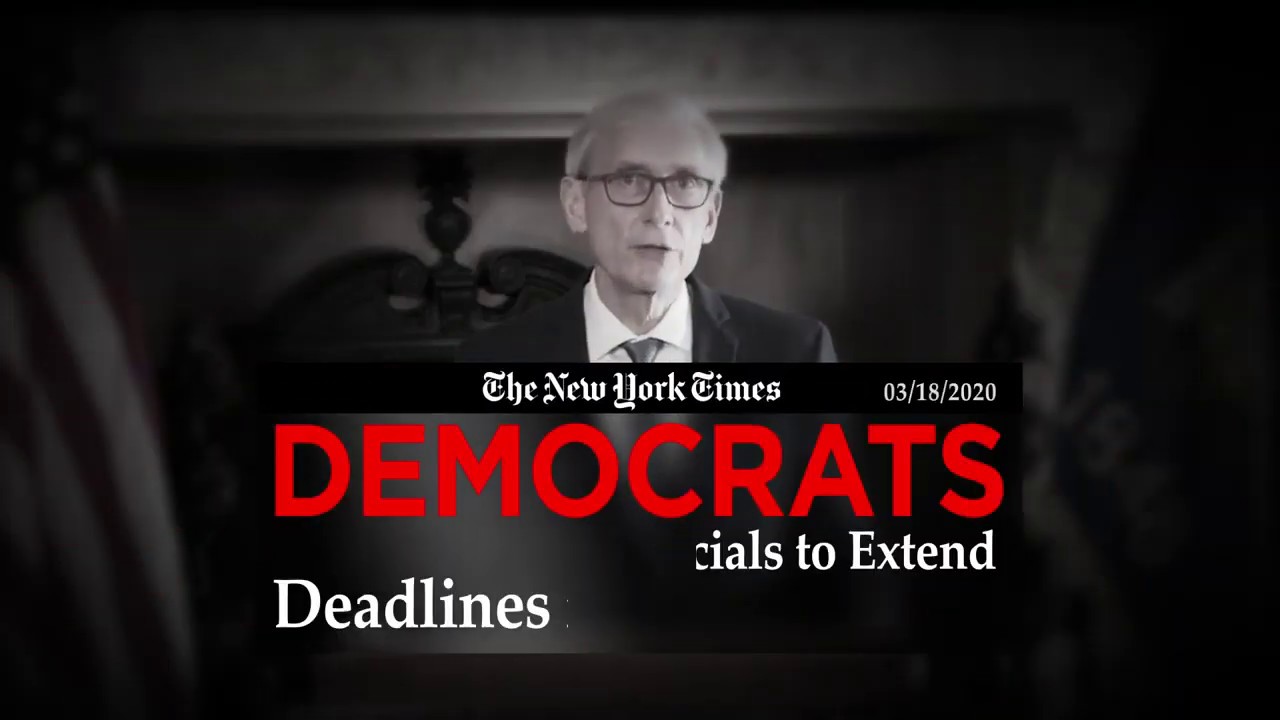 of cheating in the 2020 election.
It is now run by Carrie Severino, an attorney and former clerk for Justice Clarence Thomas listed as director in the group’s most recent IRS paperwork and is collecting massive amounts of anonymous funds: $117 million in 2021.
In discontinuing the group in the state of Virginia, the new address Severino listed is a virtual office suite in Fort Worth, Texas, shared by a “Two Men and a Truck”franchise. The office building advertises virtual and coworking spaces.
Further complicating the picture: in Texas, a new registration for “The 85 Fund” was filed on June 27 under yet a different address in a different city than the one listed on the Virginia paperwork. It is also registered in Texas as a for-profit entity.
This location is a UPS store in a strip mall next door to a restaurant called the “Snooty Pig Cafe.” As POLITICO previously reported, The 85 Fund had been using a UPS drop box in DC’s Georgetown neighborhood as its principal office address.
Beginning in 2016, Leo formed or helped reorganize two for-profit businesses — CRC Advisors and BH Group— to perform millions of dollars in services for his aligned nonprofits.
In those five years, BH Group brought in $15 million from the nonprofits. Yet unlike CRC, BH Group doesn’t appear to have advertised itself as a consulting or public relations firm, or even have had a website. During some of that time, Leo was employed full-time as a vice president at the nonprofit Federalist Society, raising questions about how he could have reasonably generated millions of dollars in consulting fees at the same time, the complaint says.
}:
The 85 Fund’s switch to the Fort Worth office building came days after POLITICO inquired, on June 30, about certain Leo allies who may have personally benefited from millions in anonymous donations that moved through the 85 Fund over the past decade.
A number of the groups that receive contributions from Leo’s “dark money” network, in turn, hold sizable contracts with his firm, CRC Advisors. This includes the Federalist Society, the nation’s preeminent conservative debating society where Leo was executive vice president and still serves as co-chairman. Among payments the complaint flagged to the IRS and DC attorney general is $3.1 million which the Federalist Society paid to CRC between 2020 and 2021 for “media training.”
On July 7, a Leo spokesperson offered an initial response to inquiries POLITICO had made about The 85 Fund, previously known as the Judicial Education Project. That was the day paperwork with Severino’s signature was filed “surrendering” The 85 Fund’s charter in Virginia.
In the paperwork, Severino stated the plan to move to Texas was adopted by a majority of the board of directors on Dec. 8, 2022. It has three board members. In addition to Severino, they include treasurerGary Marx and chair Todd Graves,according to the latest IRS paperwork available.
It’s not the only major conservative nonprofit to have moved to Texas in recent years. The National Rifle Association, contesting multiple lawsuits from attorneys general in New York state and Washington, D.C., alleging violations of nonprofit law, announced in early 2021 that it would relocate to Texas.
Yael Fuchs, who was a senior lawyer on the New York case against the NRA, said Texas has limited regulation over charities, making it a more attractive legal environment for nonprofits.
“This gambit isn’t going to deprive the regulator [DC] of jurisdiction over past wrongdoing but it could create some hurdles,” she said. They include complications in gaining injunctive relief or obtaining evidence, “but there are ways of getting over those,” said Fuchs, former head of charities enforcement in the New York attorney general’s office.
It’s also not the first time a Leo-aligned group has shifted operations after media scrutiny.
A separate Leo-aligned group that appears to have been involved in the 2017 sale of GOP pollster Kellyanne Conway’s company was dissolved last fall,three days after POLITICO inquired about whether it helped to facilitate the multi-million-dollar deal while she was advising Trump on judicial candidates.
In his statement, Rivkin, the lawyer for the groups targeted in the CFA complaint, said CFA was connected to Arabella Advisors, a firm that was founded by former Bill Clinton appointee Eric Kessler. Leo has long compared his business practices to those of Arabella.
Both Michelle Kuppersmith, CFA executive director, and Steve Sampson, Arabella spokesperson, said their groups have no financial relationship. However, CFA was originally part of the Hopewell Fund, a nonprofit for which Arabella provides administrative support. CFA spun off from Hopewell in 2017, both groups confirmed.
Arabella is a for-profit company that provides administrative, HR and accounting services to largely philanthropic nonprofits which are largely independently run.
- FILED UNDER:
- U.S. SUPREME COURT,
- U.S. SUPREME COURT,
- FEDERALIST SOCIETY,
---
}:
:{:{}:
}:
:{:{}:
---
https://www.alternet.org/activist-arranged-thomas-wife-payouts/
an 5 23
no lnx
clarence Thomas' wife, "Ginni" Thomas, reportedly received tens of thousands of dollars for consulting work, and her name was intentionally left off of the paperwork.
:{:{}:
}:
Ginni Thomas received the funds from conservative activist Leonard Leo—who has also helped former President Donald Trump select judicial nominees—according to the Washington Post's investigation. The news comes at a time when Clarence Thomas himself is under fire for reportedly receiving undisclosed gifts.
:{:{}:
}:
Leo made the arrangements through former Trump Administration official Kellyanne Conway, according to the Washington Post's report.
:{:{}:
}:
"In January 2012, Leo instructed the GOP pollster Kellyanne Conway to bill a nonprofit group he advises and use that money to pay Virginia 'Ginni' Thomas, the documents show," according to the report. "The same year, the nonprofit, the Judicial Education Project, filed a brief to the Supreme Court in a landmark voting rights case."[shelby]
The investigation further uncovered the circumstances surrounding how the payments were made secret.
"Leo, a key figure in a network of nonprofits that has worked to support the nominations of conservative judges, told Conway that he wanted her to 'give' Ginni Thomas 'another $25K,' the documents show. He emphasized that the paperwork should have 'No mention of Ginni, of course,'" according to the Washington Post.
:{:{}:
}:
The Polling Company, Conway's firm, reportedly sent the Judicial Education Project a $25,000 bill, and listed the reason only as "Supplement for Constitution Polling and Opinion Consulting."
"In all, according to the documents, the Polling Company paid Thomas's firm,Liberty Consulting, $80,000 between June 2011 and June2012, and it expected to pay $20,000 more before the end of 2012," according to the Washington Post's investigation. "The documents reviewed by The Post do not indicate the precise nature of any work Thomas did for the Judicial Education Project or the Polling Company.
In a statement, Leo reportedly told The Post that, "Knowing how disrespectful, malicious and gossipy people can be, I have always tried to protect the privacy of Justice Thomas and Ginni."
FROM YOUR SITE ARTICLES
'Ethics be damned': Legal experts aghast over bombshell report on Clarence Thomas’ luxury lifestyle ›
Why Clarence and Ginni Thomas have done more than anyone to 'damage the High Court’s reputation': journalist ›
Ex-GOP rep. slams 'slimy and unethical' Clarence and Ginni Thomas business enterprise ›
RELATED ARTICLES AROUND THE WEB
Why the Clarence and Ginni Thomas scandal still matters. ›
Is Ginni Thomas a Threat to the Supreme Court? | The New Yorker ›
The Long Crusade of Clarence and Ginni Thomas - The New York ... ›
---
ref no lnx
Judicial activist directed fees to Clarence Thomas’s wife, urged ‘no mention of Ginni’
Leonard Leo told GOP pollster Kellyanne Conway to bill nonprofit, then use money to pay spouse of Supreme Court justice
By Emma Brown, Shawn Boburg and Jonathan O'Connell
May 4, 2023
Leonard Leo, a conservative judicial activist, speaks at the National Catholic Prayer Breakfast in D.C. in 2019. (Michael Robinson Chavez/The Washington Post)
Conservative judicial activist Leonard Leo arranged for the wife of Supreme Court Justice Clarence Thomas to be paid tens of thousands of dollars for consulting work just over a decade ago, specifying that her name be left off billing paperwork, according to documents reviewed by The Washington Post.
In January 2012, Leo instructed the GOP pollster Kellyanne Conway to bill a nonprofit group he advises and use that money to pay Virginia “Ginni” Thomas, the documents show. The same year, the nonprofit, the Judicial Education Project, filed a brief to the Supreme Court in a landmark voting rights case.
Leo, a key figure in a network of nonprofits that has worked to support the nominations of conservative judges, told Conway that he wanted her to “give” Ginni Thomas “another $25K,” the documents show. He emphasized that the paperwork should have “No mention of Ginni, of course.”
:{:{}:
}:
Conway’s firm, the Polling Company, sent the Judicial Education Project a $25,000 bill that day. Per Leo’s instructions, it listed the purpose as “Supplement for Constitution Polling and Opinion Consulting,” the documents show.
:{:{}:
}:
In all, according to the documents, the Polling Company paid Thomas’s firm, Liberty Consulting, $80,000between June 2011 and June 2012, and it expected to pay $20,000 more before the end of 2012. The documents reviewed by The Post do not indicate the precise nature of any work Thomas did for the Judicial Education Project or the Polling Company.
The arrangement reveals that Leo, a longtime Federalist Society leader and friend of the Thomases, has functioned not only as an ideological ally of Clarence Thomas’s but also has worked to provide financial remuneration to his family. And it shows Leo arranging for the money to be drawn from a nonprofit that soon would have an interest before the court.
Clarence Thomas gift disclosures
The polite struggle to do something — anything — about Clarence Thomas
Crow tuition payment for Thomas relative adds to outcry over court ethics
A brief timeline of Clarence Thomas’s ethics questions
Analysis
Despite outrage from some, Congress reluctant to act on Supreme Court ethic...
Clarence Thomas has for years claimed income from a defunct real estate fir...
Clarence Thomas’s ethics are not the Supreme Court’s only problem
Analysis
Veteran U.S. judge joins calls for Supreme Court ethics code
Gorsuch property sale renews calls for Supreme Court ethics reform
The low cost (for a rich person) of sponsoring a Supreme Court justice
Analysis
Complaints about Justice Thomas’s disclosures sent to judicial committee
Clarence Thomas might have recognized law at issue in his real estate deal
Analysis
Senators call for probe of Thomas amid report of real estate deals with GOP donor
Judicial activist directed fees to Clarence Thomas’s wife, urged ‘no mention of Ginni’
Parsing Clarence Thomas’s statements on the gifts he didn’t disclose
Analysis
Justice Thomas: Advisers said no need to report travel with GOP donor
Supreme Court justices under new ethics disclosures on trips, other gifts
Justice Thomas accepted luxury travel for years from GOP donor, report says
What is Bohemian Grove? The secretive camp visited by Clarence Thomas.
Who is Harlan Crow, the GOP megadonor who vacations with Justice Thomas?
End of carousel
In response to questions from The Post, Leo issued a statement defending the Thomases. “It is no secret that Ginni Thomas has a long history of working on issues within the conservative movement, and part of that work has involved gauging public attitudes and sentiment. The work she did here did not involve anything connected with either the Court’s business or with other legal issues,” he wrote. “As an advisor to JEP I have long been supportive of its opinion research relating to limited government, and The Polling Company, along with Ginni Thomas’s help, has been an invaluable resource for gauging public attitudes.”
Of the effort to keep Thomas’s name off paperwork, Leo said: “Knowing how disrespectful, malicious and gossipy people can be, I have always tried to protect the privacy of Justice Thomas and Ginni.”
Leo’s statement did not address questions about whether he had arranged other work for Ginni Thomas or how much money he directed to her in all from the nonprofit.
Conway, who was a senior adviser in the Trump White House, did not respond to messages seeking comment.
Virginia “Ginni” Thomas, wife of Supreme Court Justice Clarence Thomas, on Capitol Hill last year. (Jabin Botsford/The Washington Post)
The Thomases did not respond to messages seeking comment. Ginni Thomas, a political activist and former GOP aide on Capitol Hill, has long maintained that she and her husband keep their careers separate.
In December 2012, the Judicial Education Project submitted an amicus brief in Shelby County v. Holder, a case challenging a landmark civil rights law aimed at protecting minority voters. The court struck down a formula in the Voting Rights Act that determined which states had to obtain federal clearance before changing their voting rules and procedures. Clarence Thomas was part of the 5-to-4 majority.
Thomas issued a concurring opinion in the case, arguing that the preclearance requirement itself is unconstitutional. Thomas’s opinion, which was consistent with a previous opinion he wrote, favored the outcome the Judicial Education Project and several other conservative organizations had advocated in theiramicus briefs. He did not cite the Judicial Education Project brief.
Legal ethics experts disagreed about whether the arrangement outlined by Leo and the payments from Conway should have led Thomas to recuse himself from the Shelby case.
Federal law requires justices to recuse if their “impartiality might reasonably be questioned,” a standard that has not been well-defined as applied to filers of amicus briefs, the experts said. Law professor Kathleen Clark of Washington University said that if the Judicial Education Project paid Ginni Thomas $100,000 in the year and a half before it filed its brief, the size and timing of the payments would have been enough to cast doubt on Clarence Thomas’s impartiality and require his recusal. Law professor Stephen Gillers of New York University, however, said that as the rule is now interpreted, the link appeared too “attenuated” to require recusal.
But both experts said the arrangement shows that current ethics rules and disclosure requirements fail to protect public confidence in the independence of the courts. For example, although justices must report the name of companies that pay their spouses, they are not required to report the names of the companies’ clients. In this case, even if there were such a requirement, it is not clear that the Judicial Education Project would have been listed as a client, because the fees intended for Ginni Thomas were to go through Conway.
“The idea that Leonard Leo, who has a passionate ideological interest in how the court rules and who has worked hard for years to advance that interest, could pick up the phone and generate substantial compensation to Virginia Thomas, which also benefits Clarence Thomas — that idea is bad for the country, the court and the rule of law,” Gillers said. “It’s not the way the Supreme Court should do its business or allow its business to be done.”
The effort to keep Ginni Thomas’s name off paperwork makes the arrangement seem “more egregious,” said Clark.
In his statement to The Post, Leo said that Ginni Thomas’s work had no bearing on her husband’s opinions.
“I have known Clarence and Ginni Thomas since 1990. They are dear friends and are people of tremendous good will and integrity. Anybody who thinks that Justice Thomas is influenced in his work by what others say or do, including his wife Ginni, is completely ignorant of who this man is and what he stands for. And anybody who thinks Ginni Thomas would seek to influence the Supreme Court’s work is completely ignorant of the respect she has for her husband and the important role that he and his colleagues play in our society.”
Leonard Leo and the Supreme Court's push to the right
28:51
Conservatives are winning the battle for America’s courts, a triumph decades in the making. This is how they did it. (Video: Dalton Bennett, Jesse Mesner-Hage, Jorge Ribas/The Washington Post)]
Leo, 57, has for years been the behind-the-scenes leader of a network of interlocking nonprofits that has raised and spent hundreds of millions of dollars to support conservative judges and causes. Marble Freedom Trust, one of the organizations Leo chairs, received a contribution worth $1.6 billion in 2020 from a Chicago businessman, Barre Seid.
The Judicial Education Project was part of that network, although Leo was not listed on its tax filings or incorporation records. Leo’s allies founded the Judicial Education Project in 2004. Its mission was to “conduct research and educate the public on the role of the judiciary as laid out in the U.S. Constitution,” according to its tax filings. It secured tax-exempt status in 2011 and was not initially well-funded, filing paperwork with theIRS indicating it brought in less than $50,000 annually.
In 2012, it received about $1.5 million from donors whose identities were not publicly disclosed,the tax filings show. The Judicial Education Project spent $150,000 on “polling” that year, according to its tax filing. The filing does not identify which firm did the work.
The president of the Judicial Education Project that year was Neil Corkery, a Leo ally and bookkeeper for several of his nonprofit groups. Corkery certified on the group’s 2012 tax filing that no one other than the group’s officers or key employees had control over the nonprofit.
Corkery declined to comment.
Clarence Thomas has been under scrutiny since ProPublica revealed in April that Texas billionaire Harlan Crow took him on lavish vacations and also bought from Thomas and his relatives a Georgia home where Thomas’s mother lived; the transaction was not listed on the justice’s annual disclosure forms.
Senate Democrats this week held a hearing focused on Supreme Court ethics. Chief Justice John G. Roberts Jr. declined an invitation to testify, offering instead a statement signed by all the justices in which they reaffirmed their commitment to abide by “foundational ethics principles and practices.”
During the hearing, Sen. Sheldon Whitehouse (D-R.I.) mentioned Leo, who The Post has reported used the nonprofit network during the Trump administration to conduct publicity campaigns in support of nominees he helped select. “This guy doesn’t have business before the court,” Whitehouse said. “His business is the court.”
Leo’s ties to the Thomases go back decades and span their personal and professional lives.
Leo advised Clarence Thomas through his contentious confirmation process in the early 1990s and made Thomas the godfather of one of his children. Leo also has hosted the justice at his New England vacation home, according to the New York Times.
At a Federalist Society event in 2018, Thomas shared a stage with Leo and jokingly told him, “You’re the Number Three most powerful person in the world.”
The year before that, Ginni Thomas called Leo a “mentor to me” and “a hero” when she honored him with one of her Impact awards for conservative activists.
“Leonard Leo has single-handedly changed the face of the judiciary,” she said at the awards dinner, held at what was then the Trump International Hotel in Washington. “He has many hats. That isn’t even all he does. He does not really tell all that he does. But I know enough to know the man is a force of nature.”
In 2009, when Thomas founded a tea party-aligned nonprofit called Liberty Central, Leo served on the board, tax filings show. Corkery was the nonprofit’s accountant, public records show.
Thomas stepped away from Liberty Central in late 2010 amid controversy over whether its anonymous funding — including one donation for $500,000 — posed a potential conflict of interest for her husband. (Politico reported the following year that thedonation had come from Crow.)
She then formed Liberty Consulting, a for-profit firm. On her LinkedIn page, Thomas describes her work as collaborating with “citizen activists, leaders and nonprofits to succeed and have impact in defending the principles that have made America an exceptional nation.”
Liberty Consulting began receiving payments from Conway’s firm within months of its creation in 2011, documents reviewed by The Post show. On multiple occasions, Thomas contacted the Polling Company to discuss her payments, the documents show.
The documents do not indicate whether Thomas knew of Leo’s role in the arrangement with Conway’s company, or of the Judicial Education Project’s role. (Conway sold the company in 2017 to what is now known as CRC Advisors, another firm that Leo chairs.)
Since its first amicus brief, in the voting rights case in 2012, the Judicial Education Project has submitted about a dozen amicus briefs to the Supreme Court. It has argued for limiting or rolling back race-based college admissions policies,regulations on greenhouse-gas emissions and gun-control measures.
In 2014, the group filed a brief in theHobby Lobby case, which challenged a mandate in the Affordable Care Act that employers make contraception available to workers at no cost to the workers. The court’s ruling struck down part of the requirement in a split decision, with Clarence Thomas again in the narrow majority.
:{:{}:
}:
Supreme Court Justice Clarence Thomas at the White House in 2018. (Chip Somodevilla/Getty Images)]
Thomas’s votes were aligned with the Judicial Education Project in six of the cases in which it filed briefs, including the Hobby Lobby case and two involving affirmative action at public universities. Thomas, a longtime critic of affirmative action, voted with the majority to uphold Michigan’s prohibition on race-based admissions at its public universities, and he dissented in a ruling that upheld admissions policies at the University of Texas.
Thomas’s votes did not align with the group’s position in three other cases, including one that largely upheld the Environmental Protection Agency’s ability to regulate greenhouse-gas emissions. The court did not take up all the cases in which the Judicial Education Project filed briefs.
The group’s interest in the Supreme Court extended beyond the courtroom. It spent money on campaigns to support President Donald Trump’s nominations of Brett M. Kavanaugh and Neil M. Gorsuch to the Supreme Court. And it is listed as a funder in the credits of a 2020 documentary that celebrated Thomas. Clarence and Ginni Thomasare featured extensively in the documentary, titled “Created Equal: Justice Thomas In His Own Words,” talking about the justice’s upbringing and his judicial philosophy.
As the Judicial Education Project pushed for a conservative court, the group grew into a financial juggernaut and was rebranded as the 85 Fund. Between 2020 and 2021, its revenue nearly doubled from about $66 million to more than $117 million, tax forms show.
Even so, the group has never had more than a handful of employees, tax filings show. It has listed its main office address as a UPS Store situated amid rowhouses and retail stores in the Georgetown neighborhood of D.C.
Alice Crites contributed to this report.
---
}:
:{:{}:
---
speech 1st // parents def fdm CRT BS"
Funding
In May of 2018, Neily refused to disclose donor information to Politico and refused to say if the Kochs were involved to The Nation. The organization collects $5 dues from its members. Neily said in May that Speech First had around 1,000 members.[3] Such makes up a “negligible part” of Speech First's Funding "which mainly comes from undisclosed backers."[2]
Speech First is not required to disclose its funders. Its major funders, however, can be found through a search of IRS filings.
- Bader Family Foundation: $175,000 (2018-2019)
- Conru Foundation: $5,000 (2019)
- Fidelity Investments Charitable Gift Fund: $500,250 (2018)
- Judicial Education Project: $1,000,000 (2017-2018)
- Melvin S Cohen Foundation: $10,000 (2020)
- National Philanthropic Trust: $1,050,000 (2018-2019)
- The 85 Fund: $1,000,000 (2019-2020)
---
}:
:{:{}:
---
igor salon
https://www.alternet.org/2021/10/glenn-youngkin-2655355138/
A billionaire Trump donor who funded a group that marched on the Capitol ahead of the Jan. 6 Capitol riot is bankrolling a dark-money group boosting Virginia Republican gubernatorial candidate Glenn Youngkin's attacks on Democratic opponent Terry McAuliffe.
The Republican-aligned Restoration PACthis week launched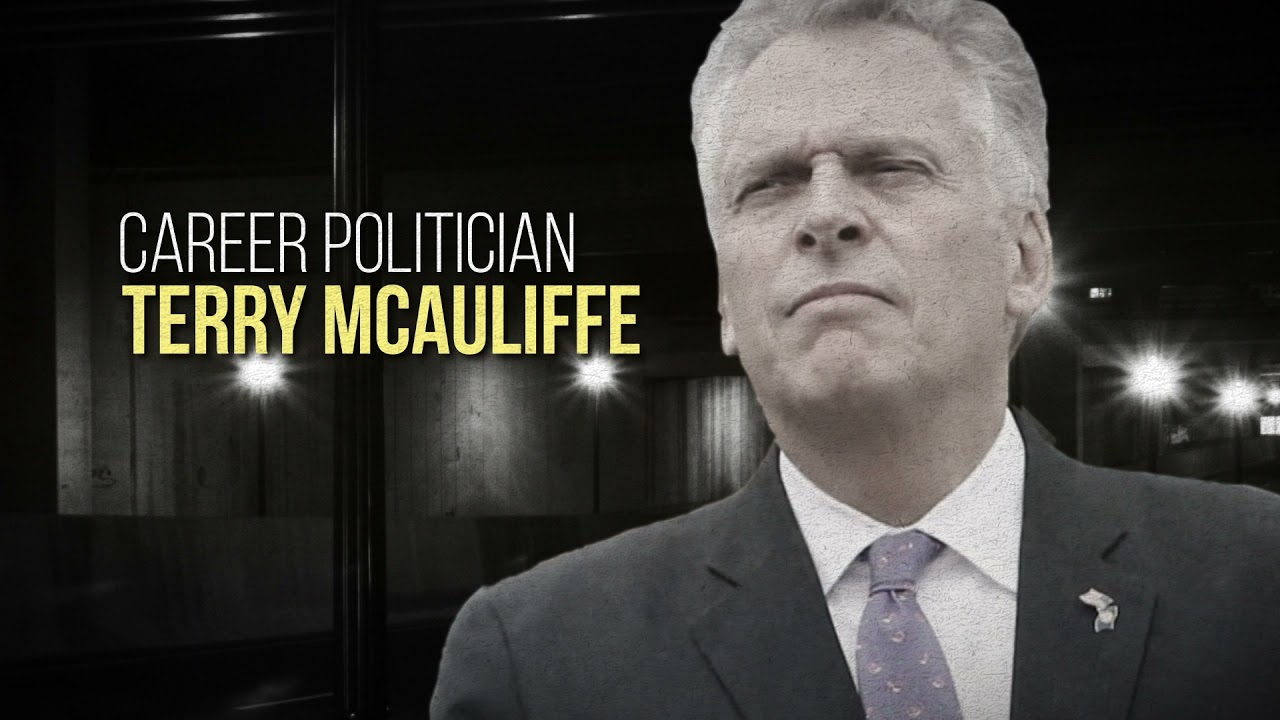 attacking McAuliffe, who served a previous term as governor, over crime rates. (Virginia's unusual term limits restrict governors to one term, but does not bar them from running again after leaving office.) The PAC has spent $1.767 million funding ads against McAuliffe, making it by far the largest independent expenditure group in the race.
The group is funded almost entirely by Republican mega-donor Richard Uihlein, co-founder of the Wisconsin shipping supply giant Uline. Uihlein contributed $24.5 million to the group in the 2020 election cycle, making up 97% of its funding, according to data from the Center for Responsive Politics. He put another $1.5 million into the group in May, according to FEC filings.
Uihlein and his wife Liz are among the biggest Republican donors in the country, having given more than $65 million to former President Donald Trump,Republican candidates and conservative groups since 2019. The Uihleins have also contributed $4.3 million over the past five years to theTea Party Patriots, including $800,000 in October 2020, making them by far the group's biggest donors.
The Tea Party Patriots participated in the "March to Save America" rally that preceded the Capitol riot and were one of 11 groups listed as part of the "#StopTheSteal coalition," according to WBEZ. The group also contributed to Rep. Mo Brooks, R-Ala., who was accused by "Stop the Steal" organizer Ali Alexander of helping plan the rally, which Brooks has denied. Tea Party Patriots also contributed to Sens. Ted Cruz, R-Texas, and Josh Hawley, R-Mo., who led objections to the certification of Electoral College results in the Senate.
Restoration PAC last month also gave $942,000 to Women Speak Out Virginia — 2021, a PAC affiliated with the anti-choice Susan B. Anthony List that launched a $1.4 million campaign to attack McAuliffe on abortion.
Uihlein's foundation also contributed $275,000 to Trump booster Charlie Kirk's Turning Point Action between 2014 and 2016. The group was listed as a participant in the Capitol protest and Kirk took credit for "sending 80+ buses full of patriots to DC to fight for this president" in a since-deleted tweet.
Turning Point Action also previously received $50,000 from the Judicial Crisis Network, a conservative dark-money group that helped Trump fill federal courts with conservative judges and is pushing to restrict voting. The group also funds the Republican Attorneys General Association (RAGA), giving it $2.1 million last October and a total of $12.7 million since 2014. RAGA's fundraising arm, the Rule of Law Defense Fund,sent out robocalls urging supporters to "march to the Capitol building and call on Congress to stop the steal" on Jan. 6.
The Judicial Crisis Network has multiple legal aliases it uses for other initiatives, including The Concord Fund and Free to Learn Action.That latter group has launched a $1 million ad campaign focused on "critical race theory" in schools, an issue Youngkin and other conservatives have seized on. The group is spending $1 million attacking McAuliffe for arguing that parents should not dictate school curricula.
The Judicial Crisis Network is also closely aligned and shares staff with the Judicial Education Project and its Honest Elections Project, a conservative initiative pushing voting restrictions. The Judicial Education Network is almost entirely funded by the Donors Trust, a dark-money group backed by the Koch network. Donors Trust in 2019 gave more than $20 million to at least a dozen groups who would later question the results of the election. Last year, the Honest Elections Project announced a six-figure ad campaign stoking fears of a "brazen attempt to manipulate the election system for partisan advantage" before the election even happened.
Youngkin has tried to walk a fine line on Trump's election lies as he tries to solidify his Republican base without alienating independent and suburban voters in the increasingly blue state. He refused to acknowledge President Biden's election victory while seeking the Republican nomination, doing so only after he had already triumphed over Republican rivals. And while Youngkin has said he would have voted to certify the election results, he is nonetheless calling for an "audit" of voting machines in Virginia (something the state already does) and boosting election conspiracy theorists.
Youngkin, the former CEO of the private equity firm the Carlyle Group, is also the primary funder of Virginia Wins, contributing $1 million to back Republican candidates in down-ballot races. The PAC has funneled tens of thousands to candidates who attended the Stop the Steal rally, organized transportation for others to attend the event, defended Capitol rioters or pushed election conspiracy theories, Mother Jones reported on Thursday.
Youngkin did not respond to a request for comment.
"It's no surprise that some of the most powerful, pro-insurrection dark money forces are rushing to Glenn Youngkin's side in this campaign," Manuel Bonder, a spokesman for the Virginia Democratic Party, said in a statement to Salon. "They are supporting Youngkin because he's all in on their agenda — and they have full confidence that if elected, Glenn will do exactly what Donald Trump says. He belongs nowhere near the governorship."
---
}:
:{:{}:
}:
:{:{}:
---
lisa g
A new review of grant documents, first published on the dark web, provides a snapshot of how groups tied to Leonard Leo–the man who put Amy Barrett on President Trump’s list for the Supreme Court–have been secretly funded to file briefs with the Supreme Court to overturn U.S. laws, including the Affordable Care Act.
Leo, the co-chair of the Federalist Society's board, was previously the group’s Executive Vice President. Earlier this year, he announced the launch of a for-profit firm called CRC Advisors, which is working closely with Leo-tied non-profits that were being rebranded–including one previously known only as the “Judicial Education Project” (JEP).
His move came in the aftermath of an in-depth investigation of Leo in 2019 by Robert O’Harrow and Shawn Boberg of the Washington Post’s investigative unit, which documented how Leo directed millions from big donors to groups spending big to get nominees of Trump confirmed and to block Merrick Garland’s confirmation to the Supreme Court. Senators Stabenow, Schumer, and Whitehouse recently announced that they will be issuing a new series ofreports about the impact of court capture on Americans’ rights, following on earlier white papers, and Senator Whitehouse recently testified about these issues before the House.
Last year, the Post tallied the Leo network’s spending to get federal and state judges appointed and to influence the law at more than $250 million over the past few years–not counting money given in 2018, which was not publicly available due to tax filing deadlines. Leo-tied groups, like the legally separate Judicial Crisis Network, have also recently funneled money from major donors, who are not publicly known, to fund activities by the Republican State Leadership Committee, which has used a related entity to spend big on negative ads the week before state supreme court elections, and the Republican Attorneys General Association. Earlier this year, JEP filed for the use of a “fictitious name” to do business in Virginia, calling itself the “Honest Elections Project.” This new Leo-connected group is amplifying claims of voter fraud and downplaying evidence of voter suppression measures, assertions that have been widely assailed.
The newly reviewed grant documents include emails showing that the Bradley Foundation”s grant officer conferred with Leo at the Federalist Society about how the foundation could fund “two Supreme Court amicus projects” without funneling the money through DonorsTrust, in 2014. Leo connected them to Neil Corkery, a long-time ally of his in an array of groups, and the listed leader of JEP. That group was launched in 2004 alongside another group Leo has deep ties to: the Judicial Confirmation Network, which is now known as the Judicial Crisis Network (JCN).JCN was created at a small dinner party Leo attended with Corkery and others that Justice Antonin :{Scalia attended too, after the 2004 election.}:
Corkery is also a central figure in the now-defunct Wellspring Committee, which transferred millions from one secret source to JCN, as it fought to block Merrick Garland’s confirmation to the Court and to advance Neil Gorsuch to that seat. Corkery has been on the board of a number of anti-choice and anti-gay rights groups and other entities–sometimes with Gary Marx or Dan Casey. At the time of the Bradley grant, Corkery was operating JEP as president, with Carrie Severino as staff and on the Board. She is a former law clerk for Justice Clarence Thomas.
Severino is now the leader and spokesperson of JCN, which recently announced a multi-million dollar ad campaign in support of Barrett’s confirmation. As the Washington Post documented, during the fight over Brett Kavanaugh’s nomination she had an office just down the hall from the Federalist Society.
The Bradley grant summary states that the request for funding for JEP’s amicus briefs was “initiated by Bradley Prize recipient Leonard Leo of the Federalist Society for Law and Public Policy Studies.”
According to that document, JEP provided Bradley with a proposal seeking $200,000 to help subsidize the cost of two amicus briefs, which were described by Bradley as costing $250,000 each. Bradley’s grant officer recommended that its board approve $150,000 to help underwrite the costs of those briefs to the Supreme Court, stating:
At this highest of legal levels, it is often very important to orchestrate high-caliber amicus efforts that showcase respected high-profile parties who are represented by the very best lawyers with strong ties to the Court. Such is the case here, with King and Friedrichs, even given Bradley’s previous philanthropic investments in the actual, underlying legal actions. (Bradley Grant Proposal Record of the Judicial Education Project)
Bradley’s proposal summary expressly stated that the funding was needed “for two important cases pending before the U.S. Supreme Court.”
The King Litigation Was an Attack on Health Care
“King” is a reference to King v. Burwell, which the Court decided later that year, in 2015. That case involved a challenge by four individual plaintiffs to an IRS rule providing federal-exchange subsidies nationwide as part of the implementation of the Affordable Care Act (ACA), the signature health insurance reform bill of the Obama administration.
Bradley’s recommendation to provide funding to support JEP’s amicus brief noted that “the King statutory interpretation case itself was brought with Bradley support by the Competitive Enterprise Institute” (CEI). The Supreme Court’s Rule 29.6 required disclosure in the case notes that the plaintiffs were four individuals. There is no reference to CEI in the Supreme Court’s docket sheet for the case as a lawyer or litigant, but the group’s website stated that CEI “is coordinating and funding both the King v. Burwell case and the D.C. Circuit Halbig v. Burwell case.” There is no mention of CEI as an intermediary for Bradley funding of this litigation.
After the Supreme Court ruled against the four plaintiffs and upheld the ACA, the Bradley summary for CEI’s grant stated:
[T]he U.S. Supreme Court handed CEl, and perhaps conservatism in general, one of its biggest legal losses ever. The Court ruled against CEI’s ambitiously creative challenge to Obamacare’s tax subsidies to individuals purchasing insurance coverage through the federal health-insurance exchange. CEI acknowledges that the loss was deeply disappointing – not only because it kept intact subsidies not authorized by statute, but also because it signaled a shift in the Court’s respect for the plain meaning of laws enacted by Congress. Nonetheless, it argues, the case succeeded in reshaping the country’s public discourse about health-care policy, the rule of law, the role of Congress, and agency accountability. (Bradley Grant Proposal Record of the Competitive Enterprise Institute)
Bradley’s grant summary also specifies that CEI has long been funded by the Koch family fortune, Sarah Scaife, Barre Seid, Exxon, Murray Energy, and Pfizer. It also noted that Leo was on CEI’s board of legal advisors alongside Michael Greve of George Mason’s law school, which has received many millions in Koch money. (CEI was founded by Fred Smith in the 1980s after he worked with Charles Koch at his Council for a Competitive Economy, the predecessor of Citizens for a Sound Economy, now known as Americans for Prosperity. CEI has a long history of peddling climate change denial.)
Billionaire Charles Koch’s political arm, Americans for Prosperity, has announced that it will spend millions to push for the quick confirmation of Barrett to the Supreme Court. Koch has spent tens of millions through organizations he controls to attack the ACA over the past decade. He began subsidizing litigation against anti-corruption election laws in the 1970s.
:{The Koch-founded and -funded Cato Institute also submitted an :{amicus:(style="background-color:#ffcc66ff"):}: brief in the King case, urging that the Supreme Court strike down the ACA.}:
The JEP brief that Bradley mentioned as worthy of its philanthropic subsidy had been filed in 2014 by Severino and other lawyers on behalf of seven elected officials: Senators John Cornyn, Ted Cruz, Orrin Hatch, Rob Portman, and Marco Rubio as well as Reps. Dave Camp and Darrell Issa. The main law firm on the brief with JEP was Cooper & Kirk, one of the firms Bradley noted in its grant write-up. The discussion with Leo about funding occurred about two weeks before this brief was submitted to the Court.
So, in essence, the Bradley Foundation wanted to subsidize an amicus brief to the U.S. Supreme Court prepared by a for-profit law firm for GOP Members of Congress by funding a non-profit group working with that firm.
The Bradley proposal documents also noted that it was funding two other groups that submitted amicus briefs in the King litigation: the Pacific Research Institute (PRI) and the Galen Institute. Both groups specifically requested Bradley funding for amicus briefs seeking to get the Supreme Court to overturn the ACA. PRI’s brief is here. The Galen Institute’s brief is here, on the website of C. Boyden Gray’s law firm.
Galen also received funding for its amicus briefs against the ACA from the Randolph Foundation, which is controlled by Vicks VapoRub heir, Heather Higgins, who leads the Independent Women’s Voice (IWV) and Independent Women’s Forum (IWF). IWV received $150,000 from JCN in 2014, and later received $4 million from Leo’s Freedom and Opportunity Fund over two years as it opposed Garland’s confirmation and supported Gorsuch’s confirmation. Her groups also played a prominent role in defense of Brett Kavanaugh’s nomination, and JEP gave $300K to IWF in 2018. IWF and IWV leaders are actively pressing for Barrett’s rapid confirmation. Notably, Higgins has used claims about the ACA in outreach to swing-state voters right before the election in 2016, and she took credit for moving women in Wisconsin toward Trump in sufficient numbers to help him win the presidency.
IWF joined forces with the Cato Institute in the follow-on case to King, a consolidated set of cases under the name Zubik v. Burwell. IWF has received both Koch and Bradley funding for other work over the years. It has deep ties to Koch–even being led for years by the former top lobbyist for Koch Industries and being co-led and co-located with Citizens for a Sound Economy/Americans for Prosperity.
Judge Barrett, Trump’s nominee for Justice Ruth Bader Ginsburg’s seat on the Supreme Court, has criticized the Affordable Care Act. The Court has schedule oral arguments for November 10 in the latest case attacking that law–which extended access to health care to millions of Americans and which makes it illegal for insurance companies to discriminate against people with pre-existing conditions.
Trump has attacked the ACA repeatedly and sought its repeal, and never forgave Senator McCain for refusing to go along with his plan. Trump’s recently issued declaration “policy” about pre-existing conditions would provide no actual enforceable protections, if the Court were to strike down the law as he seeks. That declaration is little more than a talking point that was issued right after Justice Ginsburg died, as he prepared to nominate Barrett to the Supreme Court. With covid-19 spreading in the U.S., millions of Americans may now or in the future have significant pre-existing conditions as a result of this deadly pandemic.
The Friedrichs Litigation Was an Attack on Unions
The “Friedrichs” case mentioned by Bradley in its funding document was Friedrichs v. California Teachers Association. That case attacked the dues collected by unions from employees to negotiate for benefits for all non-management employees.
Bradley noted in early 2015 that “Various amici in Friedrichs likely will include current and former governors, state attorneys general, First Amendment scholars, and leading Bradley-supported education-reform entities — including PRl. At this writing, two or three others may be commissioned.” The Koch-funded Cato Institute also filed an amicus brief in Friedrichs.
It is noteworthy that in its evaluation of which groups to fund on these issues, Bradley touted that the Friedrich’s case and a related case could be a “powerful one-two punch” against unions that could cause them to “lose an estimated $60 million annually.: (That was part of the summary of the Bradley grant recommendation for the group StudentsFirst in 2015.)
After Justice Antonin Scalia died in early 2016, the Court was deadlocked 4-4 in the Friedrichs case, which resulted in affirming a lower court decision that had refused to overrule “agency shop” rules for public sector unions. Those long-standing rules prevent free riders from benefiting from union negotiations without dues. However, after Gorsuch was confirmed, the Court struck down those rules in a 5-4 decision with a different plaintiff, Mark Janus, pursuing the same line of arguments as those subsidized by the Bradley Foundation. (A brief history of the roots of the Janus litigation and the so-called “right-to-work” laws that undermine collective bargaining rights is available here.)
The amicus brief JEP submitted in the Friedrichscase, after receiving Bradley funding, was on behalf of eight law professors, all of whom were then and are still leading voices in the Federalist Society, including one of its co-founders: Steven Calabresi. (One of them has since passed away.) In 2010, the Bradley Foundation awarded Calabresi, Leonard Leo, and other founders or leaders of the Federalist Society the Bradley Prize, a gift of $250,000, which it has also given to others like Paul Gigot, when he was on the Wall Street Journaleditorial board.
So, in the case of Friedrichs, the Bradley Foundation was in touch with the Executive Vice President of the Federalist Society about helping to subsidize an amicus brief for the U.S. Supreme Court that was later written and filed on behalf of professors, all of whom were contributors to the Federalist Society.
This is only one snapshot of the role that the Bradley Foundation and others have played in funding amicus briefs submitted to the Supreme Court to try to get laws overturned. In this instance, one of the groups that submitted amicus briefs the foundation subsidized is part of Leo’s dark money network, which has spent millions to get the judges he wants on our nation’s highest court.
The documents used to illustrate this story in the public interest are only a few of the thousands of pages of documents in the Bradley files trove, which the Center for Media and Democracy (CMD) began examining in 2017. It noted:
“The documents were made public in October 2016 on two Twitter accounts that cyber security analysts have linked to one of the Russian hackers alleged to have breached the Democratic National Committee. The Bradley Foundation confirmed in a statement that the hack had taken place and was reported to the FBI. More information about how the Bradley files became public is available here.
The documents open a window to the behind-the-scenes workings of one of America’s largest right-wing foundations. With $835 million in assets as of June 2016, the Bradley Foundation is as large as the three Koch family foundations combined, yet receives much less attention as a significant funder of the right.”
For more on the Bradley Foundation’s activities, see CMD’s Bradley Files investigation.
==
}:
:{:{}:
}:
:{:{}:
==
https://www.exposedbycmd.org/2020/10/13/senator-whitehouse-calls-out-dark-money-networks-behind-amy-coney-barretts-scotus-nomination
no lnx grafs
Senator Whitehouse Calls Out Dark-Money Networks Behind Amy Coney Barrett’s SCOTUS Nomination
By ExposedByCMD Editors | October 13th, 2020
Bradley Files, Democracy, Featured Investigations, Koch, News, RAGA, Trump7 Comments
Editor’s Note: The following is a transcript of remarks made by Sen. Sheldon Whitehouse (D-RI) in the October 13, 2020, Senate Judiciary Committee hearing on the nomination of Judge Amy Coney Barrett to the U.S. Supreme Court.
Thank you, Chairman, Judge Barrett. You can take a bit of a breather on your return to the committee, because what I want to do is go through with the people who are watching this now the conversation that you and I had when we spoke on the telephone. You were kind enough to hear out a presentation that I made, and I intend to ask some questions in that area, but it doesn’t make sense to ask questions if I haven’t laid the predicate, particularly for viewers who are watching this.
So, I guess the reason that I want to do this is because people who are watching this need to understand that this small hearing room and the little TV box that you are looking at, the little screen that you are looking at, are a little bit like the frame of a puppet theater, and if you only look at what’s going on in the puppet theater you’re not going to understand the whole story. You are not going to understand the real dynamic what is going on here, and you are certainly not going to understand forces outside of this room who are pulling strings and pushing sticks and causing the puppet theater to react.
So first, let me say, why do I think outside forces are here pulling strings?Well, part of it is behavior. We have colleagues here who supported you, this nominee, before there was a nominee. That’s a little unusual.
We have the political ram job that we have already complained of driving this process through at breakneck speed in the middle of a pandemic while the Senate is closed for safety reasons and while we are doing nothing about the COVID epidemic around us. We have some very awkward 180s from colleagues. Mr. Chairman, you figure in this. Our leader said back when it was Garland versus Gorsuch, that of course, of course, the American people should have a say in the Court’s direction. Of course, of course, said Mitch McConnell. That’s long gone.
Senator Grassley said the American people shouldn’t be denied a voice. That’s long gone. Senator Cruz said you don’t do this in an election year. That’s long gone. And our chairman made his famous hold-the-tape promise if an opening comes in the last year of President Trump’s term we’ll wait until the next election. That’s gone too.
So there is a lot of hard-to-explain hypocrisy and rush taking place right now, and my experience around politics is that when you find hypocrisy in the daylight, look for power in the shadows. Now people say well, what does all this matter? This is a political parlor game; it’s no big deal. Well, there are some pretty high stakes here that we have been talking about here on our side, and I will tell you three of them right here.
Roe v. Wade, Obergefell, and the Obamacare cases. Here’s the GOP platform, the Republican platform, the platform of my colleagues on the other side of this aisle say that a Republican president willappoint judges who will reverse Roe, Obergefell, and the Obamacare cases. So if you have a family member with an interest in some autonomy over their body under Roe v. Wade, the ability to have a marriage, have friends marry, have a niece or a daughter or a son marry someone of their same-sex they have – you’ve got a stake, and if you are one of the millions and millions of Americans who depend on the affordable care act you’ve got a stake.
It’s not just the platform. Over and over again, let’s start by talking about the Affordable Care Act. Here is the president talking about this litigation that we are gearing up this nominee for for November 10. In this litigation, he said we want to terminate healthcare under Obamacare.
That is the president’s statement, so when we react to that, don’t act as if we are making this stuff up. This is what President Trump said. This is what your party platform says: reverse the Obamacare cases. Senator after senator, including many in this committee, filed briefs saying that the Affordable Care Act should be thrown out by courts. Why is it surprising for us to be concerned that you want this nominee to do what you want nominees to do?
One quick stop on NFIB v. Sebelius, because a lot of this has to do with money. This is an interesting comparison. National Federation of Independent Businesses, until it filed the NFIB v. Sebelius case, had its biggest donation ever of $21,000. In the year that it went to work on the Affordable Care Act, ten wealthy donors gave $10 million. Somebody deserves a thank you.
So let’s go on to Roe v. Wade. Same thing. Same thing. The president has said that reversing Roe v. Wade will happen automatically because he is putting pro-life justices on the Court. Why would we not take him at his word? The Republican Party platform says it will reverse Roe. Why would we not comment on that and take you at your word?
Senators here, including Senator Hawley, have said I will vote only for nominees who acknowledge that Roe v. Wade is wrongly decided, and their pledge to vote for this nominee. Do the math. That’s a really simple equation to run.
The Republican brief in June Medical said Roe should be overruled, so don’t act surprised when we ask questions about whether that’s what you are up to here. And finally, out in the ad world that you have spared yourself wisely Judge Barrett, the Susan B Anthony Foundation is running advertisements right now saying that you are set, you are set to give our pro-life country a Court that it deserves.
Here is the ad with the voiceover. She said – she said. And then Roe, Obamacare cases and Obergefell, gay marriages. National Organization for Marriage, the big group that opposes same-sex marriage, says in this proceeding, all our issues are at stake. The Republican platform says it wants to reverse Obergefell. And the Republican brief filed in the case said same-sex relationships don’t fall within any constitutional protection, so when we say the stakes are high on this, it’s because you have said the stakes are high on this. You have said that is what you want to do. So how are people going about doing it? What is the scheme here?
Let me start with this one. In all cases, there’s big anonymous money behind various lanes of activity. One lane of activity is through the conduit of the Federalist Society. It is managed by a guy – was managed by – a guy named Leonard Leo, and it has taken over the selection of judicial nominees. How do we know that to be the case? Because Trump has said so over and over again. His White House counsel said so. So we have an anonymously funded group controlling judicial selection run by this guy Leonard Leo.
Then in another lane, we have again anonymous funders running through something called the Judicial Crisis Network, which is run by Carrie Severino, and it is doing PR and campaign ads for Republican judicial nominees. It got $17 million – a single $17 million donation in the Garland-Gorsuch contest. It got another single $17 million donation to support Kavanaugh. Somebody, perhaps the same person, spent $35 million to influence the United States Supreme Court. Tell me that’s good.
And then over here you have a whole array of legal groups, also funded by dark money, which have a different role. They bring cases to the Court. They don’t wind their way to the Court, your Honor, they get shoved to the Court to by these legal groups, many of which ask to lose below so they can get quickly to the Court to get their business done there. And then they turn up in a chorus, an orchestrated chorus of amici.
Now I’ve had a chance to have a look at this. And I was in a case, actually, as an amicus myself, the Consumer Financial Protection Board case. And in that case there were 1, 2, 3, 4, 5, 6, 7, 8, 9, 10, 11 amicus briefs filed, and every single one of them was a group funded by something called DonorsTrust.
DonorsTrust is a gigantic identity-scrubbing device for the right wing so that it says DonorsTrust is the donor without whoever the real donor is. It doesn’t have a business. It doesn’t have a business plan. It doesn’t do anything. It’s just an identity scrubber.
And this group here, the Bradley Foundation, funded eight out of the 11 briefs. That seems weird to me when you have amicus briefs coming in little flotillas that are funded by the same groups but nominally separate in the court.
So I actually attached this to my brief as an appendix. Center for Media and Democracy saw it, and they did better work. They went on to say which foundations funded the brief writers in that CFPB case. Here is the Bradley Foundation for $5.6 million to those groups. Here’s DonorsTrust, $23 million to those brief writing groups. The grand total across all the donor groups was $68 million to the groups that were filing amicus briefs, pretending that they were different groups.
Right-Wing Foundations Fund Anti-Consumer Protection Groups, 2014-present
Sixteen right-wing foundations gave nearly $69 million to groups urging the Supreme Court to abolish the Consumer Financial Protection Bureau since 2014.
Donor Amount
DonorsTrust $23,460,705
Charles Koch Foundation $12,986,462
Sarah Scaife Foundation $7,550,000
L&H Bradley Foundation $5,579,500
Searle Freedom Trust $4,550,000
Dunn Foundation $4,450,000
Donors Capital Fund $2,522,680
John William Pope Foundation $1,895,175
Bradley Impact Fund $1,363,000
Mercer Family Foundation $1,200,000
Adolph Coors Foundation $1,155,000
F.M. Kirby Foundation $672,500
Charles Koch Institute $517,134
Ed Uihlein Family Foundation $408,000
Pierre F. and Enid Goodrich Foundation $395,000
William H. Donner Foundation $167,000
TOTAL $68,872,156
And it’s not just in the Consumer Financial Protection Board case. You might say well that was just a one-off. Here’s Janus, the anti-labor case that had a long trail through the Court, through Friedrichs, and through Knox, and through other decisions.
And SourceWatch and ProPublica did some work about this. Here’s DonorsTrust and Donors Capital Fund. And here’s the Bradley Foundation. And they totaled giving $45 million to the 1, 2, 3, 4, 5, 6, 7, 8, 9, 10, 11, 12, 13, 14, 15groups that filed amicus briefs, pretending to be different groups, and both of the lawyer groups in the case, funded by DonorsTrust, funded by Bradley Foundation in Janus.
This is happening over and over and over again, and it goes beyond just the briefs. It goes beyond just the amicus presentations.The Federalist Society– remember this group that is acting as the conduit and that Donald Trump has said is doing his judicial selection? They’re getting money from the same foundations, from DonorsTrust, $16.7 million and the Bradley Foundation, $1.37 million. From the same group of foundations total, $33 million.
Donors to the Federalist Society, 2014-present
The same 16 foundations that fund the amicus brief filers all give to the Federalist Society
donor Amount
DonorsTrust $16,733,100
Mercer Family Foundation $4,850,000
Donors Capital Fund $4,231,120
Charles Koch Foundation $2,419,264
Searle Freedom Trust $1,551,000
Lynde and Harry Bradley Foundation $1,375,000
Ed Uihlein Family Foundation $1,000,000
John William Pope Foundation $250,000
Adolph Coors Foundation $230,000
Pierre F. and Enid Goodrich Foundation $210,000
Dunn Foundation $150,000
F.M. Kirby Foundation $120,000
William H. Donner Foundation $45,000
Bradley Impact Fund $15,250
Charles Koch Institute $6,400
TOTAL $33,286,134
So you can start to look at these, and you can start to tie them together. The legal groups, all the same funders over and over again, bringing the cases and providing us orchestrated, orchestrated chorus of amici. Then the same group also funds the Federalist Society over here. The Washington Post wrote a big expose about this, and that made Leonard Leo a little hot, a little bit like a burned agent. So he had to jump out. And he went off to go do anonymously-funded voter suppression work. Guess who jumped in to take over the selection process in this case for Judge Barrett? Carrie Severino made the hop. So once again, ties right in together.
So, Center for Media and Democracy did a little bit more research. Here’s aBradley Foundation memo that they’ve published. The Bradley Foundation is reviewing a grant application asking for money for this orchestrated amicus process, and what do they say in the staff recommendation? It is important to orchestrate – their word, not mine – important to orchestrate high-caliber amicus efforts before the Court.
Page 3 of 2015 Bradley Summary Judicial Education Project Proposal 150K
Contributed to DocumentCloud by Staff 18 of Documented • View document or read text
They also note that Bradley has done previous philanthropic investments in the actual underlying legal actions. So Bradley is funding – what do they call – philanthropically investing in, the underlying legal action and then giving money to groups to show up in the orchestrated chorus of amici. That can’t be good.
And it goes on, because they also found this email. This email comes from an individual at the Bradley Foundation, and it asks our friend, Leonard Leo, who used to run the selection process, is there a 501(c)(3) nonprofit to which Bradley could direct any support of the two Supreme Court amicus projects other than DonorsTrust? I don’t know why they wanted to avoid the reliable identity-scrubber DonorsTrust, but for some reason they did.
Page 6 of 2014 Bradley Leonard Leo Neil Corkery Carrie Severino Judicial+Education+Project
Contributed to DocumentCloud by Staff 18 of Documented • View document or read text]
So Leonard Leo writes back on Federalist Society address – so don’t tell me that it isn’t Federal Society business – on Federalist Society, on his address, he writes back, yes, send it to the Judicial Education Project, which could take and allocate the money. And guess who works for the Judicial Education Project? Carrie Severino,who also helped select this nominee, running the Trump Federalist Society selection process.
So the connections abound. In the Washington Post article, they point out that the Judicial Crisis Network’s office is on the same hallway in the same building as the Federalist Society, and when they sent their reporter to talk to somebody at the Judicial Crisis Network, somebody from the Federalist Society came down to let them up.
This more and more looks like it’s not three schemes, but it’s one scheme with the same funders selecting judges, funding campaigns for the judges, and then showing up in court in these orchestrated amicus flotillas to tell the judges what to do.
On the Judicial Crisis Network, you’ve got the Leonard Leo connection, obviously. She hopped in to take over for him with the Federalist Society. You’ve got the campaigns that I’ve talked about, where they take $17 million contributions. That’s a big check to write, $17 million, to campaign for Supreme Court nominees. No idea who that is or what they got for it. You’ve got briefs that she wrote. The Republican senators filed briefs in that NFIB case signed by Ms. Severino.
:{:{}:
}:
The woman who helped choose this nominee has written briefs for Republican senators attacking the ACA. Don’t say the ACA is not an issue here. And by the way, the Judicial Crisis Network funds the Republican attorneys general. It funds RAGA, the Republican Attorneys General Association, and it funds individual Republican attorneys general. And guess who the plaintiffs are in the Affordable Care Act case? Republican attorneys general.
Trump joined them because he didn’t want to defend, so he’s in with the Republican attorneys general. But here’s the Judicial Crisis Network campaigning for Supreme Court nominees, writing briefs for senators against the Affordable Care Act, supporting the Republicans who are bringing this case, and leading the selection process for this nominee.
Here is the page off the brief. Here is where they are. Mitch McConnell, and on through the list, Senator Collins, Senator Cornyn, Senator Hoeven, Senator — who’s still here? Marco Rubio. It’s a huge assortment of Republican senators who Carrie Severino wrote a brief for against the Affordable Care Act. So this is a, to me, pretty big deal. I’ve never seen this around any court that I’ve ever been involved with, where there’s this much dark money and this much influence being used.
Here’s how the Washington Post summed it up. This is “a conservative activist behind-the-scenes campaign to remake the nation’s courts,” and it’s a $250 million dark money operation. $250 million is a lot of money to spend if you’re not getting anything for it. So that raises the question, what are they getting for it?
Well, I showed the slide earlier on the Affordable Care Act. And on Obergefell and on Roe v. Wade, that’s where they lost. But with another judge, that could change. That’s where the contest is. That’s where The Republican Party platform tells us to look at how they want judges to rule, to reverse Roe, to reverse the Obamacare cases, and to reverse Obergefell and take away gay marriage. That is their stated objective and plan. Why not take them at their word?
But there is another piece of it, and that is not what’s ahead of us, but what’s behind us. What’s behind us is now 80 cases, Mr. Chairman, 80 cases under Chief Justice Roberts that have these characteristics. One, they were decided five to four by a bare majority. Two, the five-to-four majority was partisan in the sense that not one Democratic appointee joined the five. I refer to that group as the “Roberts Five.”
It changes a little bit as–with Justice Scalia’s death, for instance – but there’s been a steady “Roberts Five” that has delivered now 80 of these decisions.And the last characteristic of them is that there is an identifiable Republican donor interest in those cases, and in every single case, that donor interest won. It was an 80 to zero, 5 to 4 partisan rout, ransacking.
And it’s important to look at where those cases went, because they’re not about big, public issues like getting rid of the Affordable Care Act, undoing Roe v. Wade, and undoing same sex marriage.They’re about power. And if you look at those 80 decisions, they fall into four categories over and over and over again. One, unlimited and dark money and politics.Citizens United is the famous one, but it’s continued since with McCutcheon and we’ve got one coming up now. Always the five for unlimited money in politics. Never protecting against money dark money in politics, despite the fact that they said it was going to be transparent.
And who wins when you allow unlimited dark money in politics? A very small group. The ones who have unlimited money to spend and a motive to spend it in politics. They win. Everybody else loses. And if you’re looking at who might be behind this, let’s talk about people with unlimited money to spend and a motive to do it. We’ll see how that goes.
Next, knock the civil jury down. Whittle it down to a nub. The civil jury was in the Constitution, in the Bill of Rights, in our darn Declaration of Independence, but it’s annoying to big corporate powers because you can swagger your way as a big corporate power through Congress. You can go and tell the president you put money into to elect what to do. He will put your stooges at the EPA. It’s all great until you get to the civil jury, because they have an obligation, as you know, Judge Barrett, they have an obligation under the law to be fair to both parties irrespective of their size.
You can’t bribe them. You’re not allowed to. It’s a crime to tamper with the jury. It’s standard practice to tamper with Congress. And they make decisions based on the law. If you’re used to being the boss and swaggering your way around the political side, you don’t want to be answerable before a jury. And so one after another, these 80 5-to-4 decisions have knocked down, whittled away at, the civil jury, a great American institution.
Third – first was unlimited dark money, second was demean and diminish the civil jury – third is weaken regulatory agencies. A lot of this money, I’m convinced, is polluter money. The Koch Industries is a polluter, the fossil fuel industry is a polluter. Who else would be putting buckets of money into this and wanting to hide who they are behind DonorsTrust or other schemes?
And what are – if you’re a big polluter – what do you want? You want weak regulatory agencies. You want ones that you can box up and run over to Congress and get your friends to fix things for you in Congress. Over and over and over again, these decisions are targeted at regulatory agencies to weaken their independence and weaken their strength. And if you’re a big polluter, a weak regulatory agency is your idea of a good day.
And the last thing is in politics. In voting. Why on earth the Court made the decision, a factual decision – not something appellate courts are ordinarily supposed to make, as I understand it Judge Barrett – the factual decision that nobody needed to worry about minority voters in preclearance states being discriminated against, or that legislators would try to knock back their ability to vote. These five made that finding in Shelby County against bipartisan legislation from both houses of Congress, hugely passed, on no factual record.
They just decided that that was a problem that was over, on no record with no basis, because it got them to the result that we then saw. What followed? State after state after state passed voter suppression laws. One so badly targeting African Americans that two courts said it was surgically, surgically tailored to get after minority voters.
And gerrymandering, the other great control. Bulk gerrymandering where you go into a state, like the Red Map project did in Ohio and Pennsylvania, and you pack Democrats so tightly into a few districts that all the others become Republican majority districts. And in those states, you send a delegation to Congress that has a huge majority of Republican members, like 13 to 5, as I recall, in a state where the five, the party of the five actually won the popular vote.
You’ve sent a delegation to Congress that is out of step with the popular vote of that state and court after court figured out how to solve that, and the Supreme Court said nope. 5 to 4 again. Nope. We’re not going to take an interest in that question. In all these areas where it’s about political power for big special interests, and people who want to fund campaigns, and people who want to get their way through politics without actually showing up, doing it behind DonorsTrust and other groups, doing it through these schemes over and over and over again, you see the same thing.
80 decisions, Judge Barrett. 80 decisions. An 80-to-0 sweep. I don’t think you’ve tried cases, but some cases, the issue is bias and discrimination. And if you’re making a bias case as a trial lawyer – Lindsey Graham is a hell of a good trial lawyer. If he wanted to make a bias case – Dick Durbin is a hell of a good trial lawyer. If they wanted to make a bias case and they could show an 80-to-0 pattern, A, that’s admissible, and B, I’d love to make that argument to the jury. I’d be really hard pressed to be the lawyer saying no, 80-to-0 is just a bunch of flukes.
All five-four. all partisan, all this way.So something is not right around the Court. And dark money has a lot to do with it. Special interests have a lot to do with it. DonorsTrust and whoever is hiding behind DonorsTrust has a lot to do with it, and the Bradley Foundation orchestrating its amici over at the Court has a lot to do with it.
So I thank you, Judge Barrett, for listening to me now a second time and I think this gives you a chance for you and I to tee up an interesting conversation tomorrow. And I thank my colleagues for hearing me out.
---
}:
---
https://www.rightwingwatch.org/post/the-propaganda-war-against-voting-by-mail/
no lnx
THE FIRST Tuesday in April, as the gravity of the COVID-19 pandemic was becoming all too real, Americans got a scary glimpse of what Election Day in November might look like if the virus were still spreading. We also got a big, loud, ugly preview of the 2020 voting wars.
The state of Wisconsin had no business holding an election on April 7. Sixteen other states had bumped their primary dates back, hoping to give election officials time to adjust to the drastic new conditions and allow more voters to cast their ballots safely by mail. Governor Tony Evers had issued a statewide stay-at-home order. In Milwaukee alone, at least 51 people had already died from the new coronavirus. And so many poll workers were refusing to show up that the city, home to Wisconsin’s largest concentration of voters of color, would be hard-pressed to open even a handful of polling places, never mind the usual 180. “We are over our heads in chaos,” Neil Albrecht, Milwaukee’s election chief, told The Guardian a few days before the voting was slated to start.
Evers, a Democrat, tried to push the election date to May 23 and send mail ballots to all registered Wisconsinites. But he waited too late. By the time Evers called the state legislature into emergency session the week before the polls were to open, asking legislators to approve the delay and green-light an all-mail ballot, President Donald Trump and his right-wing amen chorus had begun to paint voting by mail not as a public-health necessity during a pandemic, but instead as a Democratic plot to “rig” the 2020 elections—“perhaps the worst of all the scams perpetrated through the COVID nightmare,” as Trump fan Laura Ingraham put it to viewers of her Fox News Channel show.
In addition to the Democratic presidential primary that was to take place on that day, there was also an election for a seat on the Wisconsin Supreme Court.
“A lot of people cheat with mail-in voting,” the president said on April 4. “In Wisconsin what happened is I, through social media, put out a very strong endorsement of a Republican conservative judge, who’s an excellent brilliant judge, he’s a justice. And I hear what happened is his poll numbers went through the roof, and because of that, I think they delayed the election.”
So Wisconsin Republicans forced the show to go on.The Republican leaders of the state Assembly and Senate both gaveled in their special sessions, then gaveled them out within seconds. When the governor responded by issuing an executive order to delay the primary, the majority-Republican state Supreme Court stayed it on the night before the election.
Voting went smoothly enough in the state’s smaller counties and towns, where white Republicans predominate and polling places had no lines. But in the cities, it was an unholy mess. Lines were so long in Green Bay that some people couldn’t vote till after midnight. In Milwaukee, the scene was downright eerie; some poll workers wore makeshift hazmat suits fashioned from plastic bags. National Guard troops, hastily called in to serve as poll workers, dashed around with plastic bottles of disinfectant spray, wiping things down between voters. Local firefighters passed out hand sanitizer to the thousands who waited for hours in lines that stretched for blocks, far past the trail of orange traffic cones that had been set up to keep folks six feet apart. Outside Washington High School, one waiting voter, Jennifer Taft, summed it all up perfectly, holding up a hand-lettered sign reading: “THIS IS RIDICULOUS.”
“I’m disgusted,” Taft told a local reporter. “I requested an absentee ballot almost three weeks ago and never got it. I have a father dying from lung disease, and I have to risk my life and his just to exercise my right to vote.”
Statewide, overall turnout was higher than expected. Even in that compressed time period, 1.1 million of Wisconsin’s 3.3 million voters had sent in absentee ballots—five times the number of voters who did so in the 2016 primary. And when the votes were all tallied six days later, the Democratic Supreme Court challenger had won easily, giving the lie to Trump’s theory that Evers wanted to delay the election to prevent a GOP victory.
But the Republicans’ efforts to sew confusion and long lines in the cities had worked in certain ways: In Milwaukee, which saw historically low Black turnout in 2016 after a strict new Voter ID law went into effect, the primary vote was half what it had been four years earlier. “It was voter suppression on steroids,” said Democratic National Committee Chair Tom Perez. “They tried to steal the election.”
[I have to risk my life just to exercise my right to vote.
JENNIFER TAFT, MILWAUKEE VOTER]
The mail balloting hadn’t gone smoothly, either: Nearly 12,000 voters who’d requested absentee ballots, like Jennifer Taft, never got them. Three tubs full of absentee ballots that never reached voters were found in a mail center outside Milwaukee. And 23,000 absentee ballots sent in by voters—more than Trump’s margin of victory in the state in 2016—had been disqualified for technical problems. Here as elsewhere, Republican lawmakers had made the process as complicated and time-consuming as possible to keep mail voting down, including a requirement that a witness sign every ballot. Voters’ signatures had to match the signatures on file with the state; as in other states, it’s left to election volunteers and staffers, not handwriting experts, to decide whether the signatures match. Thousands of votes were tossed on this subjective basis. (In June, after the delayed New York primary, 30,000 votes from Brooklyn, one-quarter of the total, would be tossed out for similar reasons.)
The threat of robust turnout figures posed by mail-in voting had fully stirred the right-wing propaganda machine by now—and it had given them a fresh new story to tell about what they claimed was the looming threat of mass left-wing “voter fraud.” The same day Wisconsin’s primary results were announced, an apparently new group called the Honest Elections Project aired an Orwellian TV and digital ad across the country—a six-figure buy—casting what happened in Wisconsin as Democrats’ “brazen attempt to manipulate the election system for partisan advantage by exploiting the coronavirus pandemic.” It was, the narrator intoned, a sign of election-rigging to come: “The facts about the Wisconsin election: Record absentee voting. Five times more than 2016. Democrats didn’t think they could win so they tried lawsuits, changing the rules, even canceling the election. They create chaos. It’s wrong.”
The Honest Elections Project turned out to be a legal alias for the Judicial Education Project, a powerful dark-money PAC funded by the Donors Trust, a nonprofit donor-advised fund often referred to as the “dark money ATM” of the right, with such heavy-hitting benefactors as billionaire Charles Koch and the (Betsy) DeVos family.It was the brainchild of Leonard Leo, a Trump confidant who was instrumental in the choice and confirmations of the president’s Supreme Court nominees, and it would soon begin filing lawsuits seeking to block the expansion of remote voting, and other pandemic-inspired election reforms—using the same lead attorney, longtime Washington litigator William Consovoy, as the Trump campaign.
Tom Fitton, president of Judicial Watch, a litigious right-wing group that sues to effect voter-roll purges.]
At least three other lavishly funded far-right groups—Judicial Watch, the Public Interest Legal Foundation, and True the Vote—are also combining legal challenges with propaganda efforts designed to discredit, and disable, remote voting for November.The Republican National Committee issued a statement this spring promising to devote at least $20 million to such lawsuits as well. The messages they’re all promoting are identical to Trump’s rhetoric about the dangers of mail-in balloting and the Democrats’ purportedly cynical promotion of it to allegedly rig the election. Their combined resources and firepower adds up to the biggest coordinated effort to suppress votes in history. Until this year, battles over voting rules were mostly waged by Republican state lawmakers and right-wing legal firms not quite acceptable to the mainstream, cheered on by talk-radio shouters and extremist websites like The Gateway Pundit and Breitbart.
“You used to have these small-time, right-wing operations,” Mark Elias, a top Democratic litigator who’s working on several ongoing lawsuits, told The Washington Post in June. “Because Donald Trump has normalized all these crackpot theories about voter fraud, they’ve all now joined forces under the banner of the legitimate Republican establishment.”
All they want, they say, are the same old “fair” and “normal” elections that Trump keeps calling for. But the president, characteristically, had already given away the game before the Wisconsin primary lit the right wing on fire. On “Fox & Friends” during the week before that primary from hell, he’d warned the friendly hosts what would happen if voting by mail were allowed to metastasize: “You’d never have a Republican elected in this country again.”
[Gallows humor from artist Mike Licht regarding Wisconsin’s April 7, during-the-pandemic, in-person Spring election. via Flickr creative commons]
THE CRUSADE TO suppress votes in the 2020 election began long before COVID-19 existed, and long before the pandemic led to a popular clamor for more voting by mail. Three weeks after his razor-thin victory in the Electoral College, still irked at hearing about Hillary Clinton’s edge in the popular vote, President-elect Trump issued a tweetstorm citing right-wing conspiracy theories. His chief claim, often to be repeated: “I won the popular vote if you deduct the millions of people who voted illegally.”
On stage at the 2017 Conservative Political Action Committee convention three months later, Tom Fitton, president of Judicial Watch, backed up Trump’s claims. “The left would have you believe that we have about 43 million aliens in this country, both lawful and unlawfully present,” he said. “And none of them vote!” The activists in the audience cheered and chuckled. “You know, under the Obama administration, they opposed Voter ID; they opposed the idea of even asking someone whether they were a citizen before they register to vote,” Fitton went on to say. “Why would you be opposed to that, other than maybe wanting to steal elections when necessary?” Cue applause.
Fitton also seconded Trump’s call for a “federal investigation into voter fraud,” promising that it would be “the most significant civil rights investigation in a generation,” because, he said, “We’re on the side of civil rights. We’re on the side of the civil rights of Americans who potentially are having their votes stolen from them by the thousands, if not millions, by illegal votes.” Getting the findings to back up those assertions would be a breeze, he promised. “It’s easy to figure out where there’s voter fraud,” Fitton said, “and obviously that’s why the leftist voters are screaming, because they’re afraid their gig is up.”
Not quite, as it transpired. That “investigation” was launched in May 2017, when Trump made appointments to his newly concocted Presidential Advisory Commission on Election Integrity, which included top vote-suppression specialists Kris Kobach, the former Kansas secretary of state and anti-immigration zealot, and Hans von Spakovsky of the Heritage Foundation. But it didn’t prove so easy to find hard proof of the massive fraud they’d long been claiming. After eight months of trying, the commissioners dug up only scattered cases drawn from media reports, and the president disbanded the effort.
[This is a pretext for blocking voices they do not want to hear.
STACEY ABRAMS, FAIR FIGHT FOUNDER]
But voter-suppression is now an industry unto itself, and Judicial Watch and its peers didn’t skip a beat.Ahead of the 2018 midterm elections, Judicial Watch and PILF sent 248 letters to state and local election officials across the country, threatening lawsuits if they didn’t undertake massive, aggressive “purges” of their voter rolls. “Your jurisdiction is in apparent violation of Section 8 of the National Voter Registration Act,” the letters claimed. The NVRA, known as the “Motor Voter Act,” was passed in 1993 to “expand voting opportunities” in various ways, including offering registration at driver’s license offices. It also required local elections offices to undertake “uniform, non-discriminatory maintenance” of their registration rolls, striking those who’d become ineligible—by dying, going to prison, or moving out of state.
Under previous administrations, the Justice Department monitored these purges and sometimes stepped in when they became overzealous and were clearly targeting voters of color. “The rationale of removing voters from the rolls to protect against fraud is nonsensical,” Stacey Abrams, who founded the voting-rights group Fair Fight after narrowly losing the Georgia governor’s race in 2018, told Mother Jones earlier this year. “This is a pretext for blocking voices they do not want to hear.”
The letters contained legal threats, but their primary purpose was to stoke publicity about voter fraud—and to raise the profiles of Fitton andJ. Christian Adams, a former Department of Justice official who heads PILF and served on the ill-fated Election Integrity Commission. Adams is best known as the DOJ attorney who promoted a 2008 “voter intimidation” case against two members of a group that dubbed itself the New Black Panthers.On Election Day 2008, the two stationed themselves outside a predominantly white polling place in Philadelphia, one of them holding a nightstick. When Obama’s Justice Department declined to press charges, Adams loudly resigned and wrote a book called “Injustice: Exposing the Racial Agenda of the Obama Justice Department.” In lawsuits and legal threats targeting jurisdictions with large numbers of non-white voters, Adams first launched suits via the American Civil Rights Union (a right-wing group that fancies itself to be the analog to the American Civil Liberties Union), and then with PILF.
[“The rationale of removing voters from the rolls to protect against fraud is nonsensical,” says Stacey Abrams. “This is a pretext for blocking voices they do not want to hear.” (Photo of Abrams on election night 2018 from Abrams’ Facebook page.)]
Judicial Watch and PILF got a few big victories out of their threats and lawsuits, in 2018 and again last year. In 2018, the Supreme Court upheld a Judicial Watch settlement agreement with Ohio and allowed a massive voter purge—a decision that opened the floodgates for more of the same, permitting states to strike voters who haven’t voted in recent elections.
As 2020 began, counties in California and Kentucky were busy removing close to 2 million voters; ditto, Allegheny County, one of the largest Pennsylvania counties carried by Hillary Clinton in 2016. In three other large Clinton-voting Pennsylvaniacounties Judicial Watch dragged into court this year, the group claimed an almost comically high number of “ineligible” voters—800,000 in all, which would amount to more than 65 percent of all registered voters in the counties. “We 100-percent dispute the claims,” Secretary of the Commonwealth Kathy Boockvar, who was also sued, told state senators.
Most of this year’s election lawsuits are related to COVID-19—or, more precisely, they target attempts by states and municipalities to make voting easier and safer during the pandemic. The number of these cases is staggering: More than 200were still percolating through the courts in mid-August. Many have been brought by the Trump campaign, theRepublican National Committee, Judicial Watch, PILF, and the Honest Elections Project, all of whom have the same agenda: Keep voting restrictions in place. Three more states have switched to all-mail elections this year: California, Nevada, and Vermont. When lawmakers in Nevada, where Trump lost by just 27,000 votes in 2016, approved all-mail voting in a special session on the first Sunday of August, Trump called it “an illegal late-night coup” on Twitter, with the promise, “See you in court!” Two days later, still fuming, he posted a tweet falsely stating that voting by mail would mean a “Rigged Election.” It became the first tweet flagged by Twitter as untrue. The same day, the Republican National Committee, the Trump campaign, and Nevada Republican Party all filed suit against Nevada.
In most states, election officials and lawmakers have simply tried to ease restrictions that can make absentee voting difficult or confusing: early deadlines for requesting ballots, Election Day deadlines for having them returned or postmarked, requirements that witnesses or notaries sign the ballots, strictly limited forms of acceptable ID. In some cases, the question is whether vulnerability to COVID-19 counts as an “excuse” for needing a mail ballot. (Most states already allow no-excuse absentee voting, but a few—like emerging battleground Texas—do not.)
Graphic from the National Conference of State Legislatures.]
Justin Levitt, a Loyola University law professor who tracks all these cases, has not detected a pattern in the decisions. But as he’s noted, it’s already a win for right-wing organizations and the Republicans to keep elections officials tied up in courts—and election rules in a state of suspended uncertainty as states try, with chronically inadequate funding, to manage an election during a pandemic. “My usual election-cycle comment is that we’re trying to find enough duct tape to cover the holes in the bucket,” Levitt said recently. “This time, we’re trying to make the bucket out of duct tape.”
The uncertainty created by the lawsuits, combined with the disinformation about voting that will be plastered all over social media this fall, creates an indirect but powerful form of voter suppression in itself.“Voter suppression is a combination of things,” says Georgia state Rep. and voting-rights advocate Renitta Shannon. “It’s a chipping away of people either not being able to vote, or thinking it will be a major hassle. When people have a question about whether their vote is going to be counted, that [becomes] a reason not to vote.”
ON JUNE 5, Tom Fitton and J. Christian Adams were both invited to testify at a U.S. House hearing on “Protecting the Right to Vote During the COVID-19 Crisis.” It was another sign of how formerly fringe right-wing conspiracies had become thoroughly mainstreamed in Trump’s GOP. And it provided another platform to spread the falsehood that Democrats were using the pandemic to make real their fraudulent dreams. “It is now about five months until Election Day,” Fitton testified, “and the pandemic’s infection curve has flattened. Insisting now on all-mail-ballot elections seems less like a response to a health crisis and more like a partisan application of the immortal words of Rahm Emanuel: ‘Never let a good crisis go to waste.’”
Fitton’s coronavirus predictions would soon be disproved, but the notion of Democrats using mail ballots to commit grand theft in 2020—“using COVID to defraud the American people,” as Trump expressed it on the first night of the Republican National Convention—remains the central deceit of the right’s propaganda campaign. “The Democrats have cooked this thing up,” Rush Limbaugh bellowed in August, “because they don’t feel confident that they can win in a traditionally fair and normal election.”
[J. Christian Adams, president and general counsel of the Public Interest Legal Foundation in 2019 screencap.]
In many places, the relative unfamiliarity of mail voting is a boon to the fear-mongering. And with folks on the right having been treated to years’ worth of “voter fraud” talk, they’d been conditioned to take it seriously. “When they talk about voter fraud,” says Tomas Lopez, executive director of the progressive group Democracy North Carolina, “they’re talking about race, of course. They’re lamenting the fact that those people get a vote.”
Across platforms—Fox News, talk radio, social media, presidential briefings—the narrative being served up about mail voting has been remarkably consistent in all its main plot points. It’s almost as if Judicial Watch teamed with the Trump campaign and sent out a bullet-point memo, which kicks off with “stealing and rigging” and proceeds, from there, to the following talking points:
Even more “illegals” get to vote.“Here’s a shocking things for your audience to consider,” senior Trump adviser Stephen Miller, architect of the immigration policy that caged children at the U.S.-Mexico border, said in August on “Fox & Friends.” “Nobody who mails in a ballot has their identity confirmed; nobody checks to see if they’re even a U.S. citizen. Think about that. Any foreign national—talk about foreign election interference—can mail in a ballot, and nobody even verifies if they’re a citizen of the United States of America.” (In reality, every state verifies the identity of the person requesting the mail-in ballot.)
This summer, Judicial Watch bought at least 263 ads on Facebook (cost: $210,000) to drive home the same spurious claim delivered by Miller on Fox News.According to a tally from Media Matters for America, 144 of the ads, which were full of disinformation about “voter fraud,” claimed that “illegal aliens are voting,” while 119 got more specific, claiming that “25% of noncitizens are registered to vote.”
Ballots Are On the Loose.
On May 1, Trump retweetedMollie Hemingway, a writer for The Federalist, a right-wing publication, who had some “news” that sounded startling: “Nearly one in five of all absentee and mail-in-ballots between 2012 and 2018 remain unaccounted for, according to data from the federal Election Assistance Commission,” she wrote. Hemingway drew her figures from a new and scholarly looking report by PILF—J. Christian Adams’ organization—which claimed that 28 million absentee ballots had “gone missing” in recent election cycles. Those ballots represent a golden opportunity for mass-scale fraud, Adams said in a statement accompanying the PILF report—“28 million opportunties for someone to cheat.”
The “missing ballots” meme spread like wildfire. But as voting-rights advocates (and logical thinkers) pointed out, the ballots aren’t just floating around, waiting for noncitizens and Democrats to scoop them up and send them in; they simply hadn’t been returned by the voters who got them. Twelve million of the “loose” ballots, as they’re also called, had been sent by election officials in Colorado, Oregon, and Washington state, where everyone who registers automatically receives one. About 30 percent of voters in those states typically don’t return their ballots in a given election. “Where are they now?” said Paul Gronke, a Reed College professor who runs the Early Voting Information Center, of the so-called “missing” ballots. “Most likely, in landfills.”
Democrats Are Harvesting Those Loose Ballots.
Expect to hear several earfuls about “ballot harvesting” between now and November. It’s the hip, scary-sounding new catchphrase for voter-fraudsters, though the practice it describes is a routine feature of absentee voting in more than half the states: Basically, it just means that a third party can collect someone’s vote in its sealed envelope and hand-deliver it to an election office. The laws are meant to help people who live at great distances from polling places without transportation, or who are sick or shut in, to cast a vote. In March, Trump’s own ballot in the Florida primary was “harvested”—he gave it to an (unknown) third party, who delivered it directly to an elections office in Palm Beach. Nonetheless, as he tweeted on April 14, we must “GET RID OF BALLOT HARVESTING, IT IS RAMPANT WITH FRAUD.”
Democratic workers sometimes organize “community collections,” leading right-wing pundits to peddle fantastical visions of thugs pounding on doors and demanding people’s blank ballots for harvesting. The proof? Well, in Paterson, N.J., this spring, a postal employee noticed something odd in a local post office five days before an all-mail primary: 347 completed ballots bundled together. They were part of a scheme for which four perpetrators, including one city council member, have all been charged with fraud. Amid the controversy, Paterson’s election board disqualified 19 percent of the ballots in the primary—which, trickling up from Gateway Pundit, a conspiracy theory website, to the West Wing, served as evidence of the fraudulent potential of “harvesting.” “Look at Patterson[sic], N.J.,” Trump tweeted. “20% of vote was corrupted!” In fact, election officials said that most of the uncounted ballots were tossed out for the usual technical reasons—mainly for signatures that didn’t appear to match those on file. The only example of large-scale ballot harvesting occurred in a North Carolina congressional race in the 2018 midterms. It was organized by a paid GOP operative who’s facing both state and federal charges.
“THIS IS GOING TO BE the greatest election disaster in history,” Trump promised reporters in the middle of yet another rant against vote-by-mail in August. He failed to mention how hard he and his right-wing allies were fighting to make his apocalyptic predictions about the election come true—or how much his prospects for victory may hinge on it.
The right’s doomsaying about chaos and fraud at the polls have definitely penetrated the national consciousness. In August, a Pew poll found that nearly half of registered U.S. voters expect to “have difficulties casting a ballot” this year. That might not sound surprising—but it’s a sea change from 2018, when 85 percent expected voting to be “easy.”
When it comes to mail voting in particular, however, it’s only Republicans who are moved by the propaganda. When Pew asked Trump supporters how they planned to vote, 80 percent said they’d do it in person, while just 17 percent would vote by mail. By contrast, most Biden supporters—58 percent—said they’d be voting remotely.
Given those results, it’s no surprise that, in the 2020 battleground states, Democrats are outpacing Republicans in absentee ballot requests. Far more, in fact. Four years ago in Florida, Democrats requested 6,000 more absentee ballots than Republicans; by the end of August this year, ballot requests by Democrats had surpassed those from Republicans by 600,000. In North Carolina, where absentee voting has always been sparse, 177,000 Democrats had asked for ballots compared to 50,000 Republicans. “Everybody’s up,” said Michael Bitzer, a politics professor at Catawba College. “It’s just that Democrats and unaffiliated are through the roof, and Republicans are not even on the second floor.”
This disparity, which is consistent in other battleground states, has saner Republican officials and activists deeply worried. What if the anti-mail campaign ends up backfiring, and suppressing their votes? And with the virus likely to still be raging come November, will GOP voters—seniors, in particular—actually take the risk to show up in person to vote? “What the president is doing when he keeps saying that this mail-in balloting thing is fraudulent, he’s scaring our own voters from using a legit way to cast your ballot,” Rohn Bishop, chair of the Fond du Lac County GOP in Wisconsin, told USA Today. “We’re kind of hurting ourselves.” When he tries to talk up absentee voting to fellow Republicans, Bishop said, he gets a lot of flak that he’s “ignoring voter fraud.” It’s not easy to argue when the Republican president keeps calling vote-by-mail “the greatest scam in history.”
The weird thing, said Bishop and other Republican state leaders, is that while the president continues to slam mail voting on a daily basis, the Trump campaign and RNC have told them to promote it. “I’m out there pushing it at the request of the campaign, because they asked me [to] do that,” said Lawrence Tabas, chair of the Republican Party in Pennsylvania, which Trump carried by less than 1 percent in 2016—and where Democrats have made 68 percent of all mail-ballot requests, while Republicans requested just 24 percent. “And then the president is publicly opposed to it,” Tabas added. “Let’s put it this way; it’s made my job more challenging.” The Pennsylvania GOP website urges Republicans to “Vote Safe: By mail. From home.”
GOP voters in California also heard that “safe, from home” message before they voted in this spring’s primary—from two of Trump’s family members, no less. Both daughter-in-law Lara Trump and Donald Jr. recorded robocalls in April urging mail votes for a Republican congressional candidate in a special election. “Nancy Pelosi and liberal Democrats are counting on you to sit on the sidelines this election, but you can prove them wrong,” Lara Trump said in one call. “You can safely and securely vote for Mike Garcia by returning your mail-in ballot by May 12.”
Both Lara Trump and Donald Jr. recorded robocalls in April urging mail votes for a Republican congressional candidate in a special election.
One major group on the right, Americans for Prosperity, is flexing its considerable muscle to counter the president’s message and urge right-wing voters to take advantage of either early or absentee voting this fall. Tim Phillips, president of the “grasstops” group, which underwrote the Tea Party movement, told Politico this spring that AFP “is absolutely going to up the percentage of dollars that go into absentee and early voting.” The group, which raked in $83 million in donations in 2018, has plenty to spend. It plans to target conservative voters in dozens of competitive congressional districts.
But Judicial Watch, PILF, the Honest Elections Project, and allied groups like True the Vote—which is recruiting ex-Navy SEALs to serve as GOP poll-watchers on Nov. 3—are delivering a contrary message: It’s perfectly safe to vote in person. “Don’t let the left scare you from voting on Election Day,” Tom Fitton said on a Judicial Watch podcast on July 31. The same message continues to blast out on conservative media. “If people can go to Home Depot and distance six feet,” Fox host Jeanine Pirro said this summer, “why can’t they go to the voting booth and distance six feet?”
Is there a coherent strategy here, somehow? Do the clashing messages make any strategic sense? Perhaps not. But some political observers suspect that Trump is setting up a way to delegitimize the results in November. If more Republicans do turn out in person, their votes will be among those tallied first—creating a chance that Trump may lead on election night, even if only half of the total vote, or less, is counted by then. In that event, Jamelle Bouie wrote this summer in his New York Times column, “There’s no mystery about what Donald Trump intends to do… . First, he’ll claim victory. Then, having spent most of the year denouncing vote-by-mail as corrupt, he’ll demand that authorities stop counting mail-in and absentee ballots. He’ll have a team of lawyers challenging courts and ballots across the country.”
It’s certainly plausible. Just as in 2016, Trump has refused to say he’ll accept the results—unless, that is, they show him winning. “You don’t know until you see,” he said this summer on Fox News. “It depends. I think mail-in voting is going to rig the election, I really do.”
In November 2018, when the Republican candidates for governor and senator in Florida held leads on election night that began to dissipate as the vote-counting continued, Trump telegraphed what he might say this November: “The Florida election should be called in favor of Rick Scott and Ron DeSantis in that large numbers of new ballots showed up out of nowhere, and many ballots are missing or forged,” he tweeted. “An honest vote count is no longer possible—ballots massively infected. Must go with Election Night!”
Attorney General William Barr has indicated that the Department of Justice would have Trump’s back if he tries to shut down the count. “I think the people who want to experiment with different ways of voting right now … are playing with fire and are grossly irresponsible,” Barr told Fox News’ Mark Levin in August. Sounding more like a Judicial Watch attorney than the attorney general of the United States, Barr called it “scary” that “most of those mailings go to a lot of addresses where the people no longer live. They’re misdirected. And I think they will create a situation—they could easily create a situation where there’s going to be a contested election.”
That is chilling to hear. It stirs up nightmare visions of Florida 2000 but on a national scale—and in a year that’s already been full of unrest. Realistically, though, it’s also a far-fetched strategy born of desperation. And there’s a much rosier scenario that is just as plausible as Bouie’s, if not more so.
Say this election proves to be less apocalyptic than Trump and the right are hoping—and say Trump is clearly a loser on election night. The president’s defeat, and the pandemic-inspired rise of mail voting, could begin to unravel the elaborate system of barriers to voting that Republicans have been erecting over the past decade. If Democrats retake a majority in the U.S. Senate, the John R. Lewis Voting Rights Act will surely be one of the first measures to pass, restoring protections and federal oversight to elections. And if Republicans lose control of state houses they captured (which they are poised to do in several battleground states), Democratic majorities can begin to reverse the race-based voting restrictions that the GOP has been cooking up with relentless creativity since the Tea Party insurrection lifted them to unprecedented power in Congress and the states.
“What we’ve had is the 21st century equivalent of the Mississippi Plan of 1890,” says Carol Anderson, the Emory University historian and best-selling author of One Person, One Vote. That “plan” was the template for other states to “redeem” white supremacy after Reconstruction by disenfranchising Black men all over again, through tactics like poll taxes, literacy tests, and violent intimidation. The 2010s were eerily similar. “It’s been legislative evil genius,” Anderson says. “And so Jim Crow.”
Anderson is a serious historian, so she’ll make no predictions. But there is at least a fair chance that the latest manifestation of the Republicans’ long and fraudulent voter-fraud campaign—the demonizing of remote-voting during a pandemic—will backfire on them in a lasting way. The hollering won’t die down, of course; Trump himself will make sure of that. The voter-suppression industry—the Judicial Watches, the PILFs, the Honest Elections Projects—won’t disappear. Chief Justice John Roberts won’t suddenly start deciding in favor of voting rights. But the more Americans grow accustomed to voting by mail, and the more they keep demanding that it be made easier and more reliable, the harder their votes will be to suppress or toss out. Trump is right, after all, about one thing: Wherever remote voting becomes routine, turnout soars. And we all know who loses then.
Tags: Carol AndersonDonald J. TrumpJ Christian AdamsJamelle BouieJennifer TaftJustice John RobertsJustin LevittLaura IngrahamLawrence TabasLeonard LeoMark EliasMichael BitzerRohn BishopRon DeSantisStacey AbramsTim PhillipsTom FittonTony EversWilliam BarrWilliam Consovoy
---
==
voter felon suppression 2020, pal of ginni and jok?
Cash matters, but O’Keefe’s personal connectionsare where the depth and seamlessness of this coordination with the Republican Party become truly apparent. They also offer a glimpse into the vast network that has formed to suppress the vote this fall—a network years in the making, of which Project Veritas is but a humble node.
Take litigator William Consovoy, the legal point man on many of the conservative-funded election integrity cases pursued during the Trump era. He is, like O’Keefe, a New Jersey native with a long history in local Republican politics. A former law clerk for Clarence Thomas, Consovoy is also reportedly a friend of Federalist Society Executive Vice President Leonard Leo, whose nephew David Maxham has been a friend of O’Keefe’s since their undergraduate years at Rutgers. (Maxham, naturally, was also invited to O’Keefe’s wedding.)
This year, Leonard Leo has stepped aside from day-to-day management of the Federalist Society to run a new conservative donor group, CRC Advisors, that is pouring money into Consovoy’s legal challenges in key battleground states across the country. CRC has been steering money into something called the “Honest Elections Project,” a fictitious name filed in Virginia for Leo’s old group the Judicial Education Project, now officially called the 85 Fund. As The Guardian reported, 99 percent of the Judicial Education Project’s funding in 2018 was a single $7.8 million donation funneled through Donors Trust.guk?
With generous assistance from the Honest Elections Project and the RNC, Consovoy’s firm Consovoy McCarthy PLLC has recently brought cases against the re-enfranchising of felons in Florida and sued to block California’s plans to deliver absentee ballots to all of the state’s registered voters.Consovoy has contributed to related motions filed in Pennsylvania, Wisconsin, Nevada, Michigan, and Texas, where Ken Paxton’s victory against mail-in voting in May earned praise from President Trump on Twitter.
==
==
Funding and Finances
Ties to the Wellspring Committee, a Dark Money Group
According to reporting by Open Secrets, "JCN’s tightest ties with any group or individual revolve around Ann and Neil Corkery."
Neil Corkery, the treasurer of JCN, has also been affiliated with Liberty Central, a Tea Party group registered by Virginia Thomas, wife of Justice Thomas.[6]
According to calculations made by Open Secrets:
In 2012, tax records show that Neil Corkery was not only treasurer of JCN, president of its allied Judicial Education Project, and executive director of a charity called the Sudan Relief Fund, all of which paid him salaries; but he also drew paychecks from at least four other organizations: the anti-gay union National Organization for Marriage, ActRight Action, the Catholic Association Foundation, and Catholic Voices. His total earnings were almost $450,000, and his weekly workload was 105 hours in the first half of the year, the groups’ IRS filings show, before dropping back to a mere 80.[1]
Ann Corkery, who is married to Neil, was influential in forming JCN and has played a key role in its funding and spending. She is the President of the Wellspring Committee, an organization that Open Secretscharacterizes as a "dark money machine"[1] which is "little more than [a] UPS mailbox" that cloaks donors' identities by serving as a conduit for contributions to other politically active nonprofits.[7]
In 2016, "Wellspring received 90 percent of its revenue, nearly $28.5 million, from a single anonymous donor"[2] and then in proceed to give a grant to the Judicial Crisis Network which amounted to 84 percent of its over 25 million dollars total revenue that year.[28]
In 2011, Ann Corkery replaced two of Wellspring's board members with her own daughter and a JCN board member's son. In 2012 and 2013, JCN received nearly $3 million from Wellspring.[1]
Funding Sources and Ties to the Koch Brothers....?
---
endit1
---