judicial crisis network JCN 2
---
merri ok
at what point is leo involved?
see older main , see wellspring
deason funder, WI
carrie severino clerk clarence thomas, also wendy long
raga
leo leo2
---
KICKASS 4 26
IF YOU GO BACK TO THE ORIGINAL BUG YOU ALSO SEE THE HONEST ELECTIONS PROJECT.
3:27
3 minutes, 27 seconds
THIS WAS USED TO FILE AN AMICUS BRIEF IN THE SUPREME COURT WITHOUT DISCLOSING ITS AFFILIATION WITH THE JUDICIAL CRISIS NETWORK, WHICH SPENT
3:35
3 minutes, 35 seconds
MILLIONS OF DOLLARS TO GET THREE LEONARD LEO-SELECTED SUPREME COURT JUSTICES APPOINTED TO THE COURT.
===
an 12 23
Trump's unofficial Supreme Court advisor who was actively involved in all three of his justice nominations has been revealed as the sole trustee of a perplexing group that generated more than $80 million in dark money in 2018.
A unfiled tax return for Rule of Law Trust (RLT) shows the name of Federalist Society co-chairman Leonard Leo, according to CREW. The mysterious tax return also includes a number of questionable details that raise alarms about the origin of the money.
In its first year of operation, there were no employees or volunteers working the firm's main address which appears to be a virtual office located in Virginia. The only people associated with RLT have statuses similar to Leo being Federalist Society officials who now work as "consultants" or have a long history of ties to companies circulating dark money.
The company's mission statement also notes that it strives "to advance conservative principles and causes through communications, research, strategy and assistance to other organizations."
In addition to the mysterious cash circulating and the business' hallow history, it also appears to have funneled nearly $2.7 million in company expenditures through another business known as the BH Group.
*"The filing vastly expands the amount of money known to be flowing into the growing constellation of dark money groups tied to Federalist Society co-chairman Leonard Leo."
Leo is also listed as the partial owner of that firm. While there has been speculation of Leo's affiliation with the company, his true status within the company had not been confirmed until recently. The BH Group garnered attention back in 2016 after it donated a cool $1 million to Trump's first presidential election campaign. The firm also has a history of funneling funds for the purpose of campaign contributions.
Wellspring Committee and Judicial Crisis Network (JCN), both 501(c)(4) social welfare groups relatively similar to RLT, also funneled money through the BH Group to sway elections and Supreme Court nominations.
Here is a quick timeline of how dark money has influenced politics over the last four years:
- In 2016, JCN shelled out millions of dollars to dissuade senators from considering President Barack Obama's last Supreme Court nominee, Judge Merrick Garland.
- In 2017, JCN dumped millions into having Trump's first Supreme Court nominee Justice Neil Gorsuch fill the seat Obama's nominee was denied.
- In 2018, the group repeated the same process to back Trump's second nomination of Justice Brett Kavanaugh.
- Now, in 2020, JNC has poured millions into the confirmation of Trump's nomination, Amy Coney Barrett to quickly fill the seat of the late Ruth Bader Ginsburg before the upcoming election.
//
- Trump judicial adviser tied to 'secretive network' of 'dark money ... ›
- Meet the Federalist Society executive and unofficial Trump judicial ... ›
- Trump allies want conservative legal activists to fight impeachment ... ›
- Supreme Court declines to take action on Trump’s Pennsylvania appeal prior to certification of Biden win - Alternet.org ›
- Legal experts mock Trump for getting a 'disgraced white supremacist' to file a 'crazy’ Supreme Court case - Alternet.org ›
- Trump is practically begging for the Supreme Court to slap him down - Alternet.org ›
- How 'dark money' from the Koch network and others is fueling Senate opposition to voting rights bill: watchdog - Alternet.org ›
- 'Troubling' questions raised about disappearing millions from Trump’s dark money machine: report - Alternet.org ›
- 'How democracy gets corroded': Right-wing group receives 2 dark money donations of $425 million - Alternet.org ›
- A 'dark money group' tied to a former Federalist Society VP was 'dissolved' 3 days after report on Conway sale - Alternet.org ›
- D.C. AG probing Trump mega-donor’s 'multi-billion-dollar network of nonprofits': report - Alternet.org ›
- 'Extreme agenda': GOP megadonor who stacked SCOTUS is bankrolling payday lenders in high-profile case - Alternet.org ›
- 'Fury from the conservative base': Meet the man behind the right’s Supreme Court supermajority - Alternet.org ›
- Inside the saga of Trump megadonor Leonard Leo's judicial strategy - Alternet.org ›
- How right-wing activists influence SCOTUS to boost 'their historical narrative': report - Alternet.org ›
- 'Nightmare for John Roberts': How 'two Trump curveballs' may be 'decisive chapter' for SCOTUS’ 'legitimacy' - Alternet.org ›
---
---
fac so index:
May 26, 2019by Facing South
Rank of Brett Kavanaugh's 2018 appointment to the U.S. Supreme Court among the reasons there's a new push to ban abortion in state legislatures across the South and elsewhere: 1
In the fiscal year before it spearheaded Kavanaugh's confirmation, amount the Judicial Crisis Network (JCN) — a secret-money 501(c)(4) "social welfare" nonprofit that promotes conservative judges — received in anonymous donations, according to a tax return recently obtained by campaign finance watchdogs: $22 million
Size of a single anonymous donation JCN got during the period between July 2017 and June 2018, when abortion rights-protecting Justice Anthony Kennedy resigned, opening the door to Kavanaugh, who was backed by anti-abortion groups: $17 million
Number of other anonymous donations JCN got that year, all of them at least six-figure: 9
JCN's spending in 2017 to support the confirmation of President Trump's other Supreme Court nominee, Neil Gorsuch, who has also shown hostility to the Court's 1973 Roe v. Wade decision legalizing abortion: $10 million
Year in which Carrie Severino — a former law clerk for Supreme Court Justice Clarence Thomas and spouse of Catholic anti-abortion lawyer Roger Severino, who now runs the Department of Health and Human Services' Office of Civil Rights and opposes contraceptive access under the Affordable Care Act — took the helm of JCN: 2014
Among JCN's top funders, rank of the Wellspring Committee, a secretive nonprofit that serves as a conduit for anonymous contributions to conservative causes and is led by hard-line Opus Dei Catholic Ann Corkery and her husband, Neil Corkery, who has served as JCN's treasurer: 1
Amount Wellspring funneled to JCN between 2010 and 2018: more than $54.2 million
According to the newly released tax return, amount JCN paid that fiscal year to the BH Group, a Virginia limited liability company connected to Trump advisor Leonard Leo, who's also the executive vice president of the Federalist Society, an influential conservative legal organization whose current or former members include five sitting Supreme Court justices: $241,000
Decades for which Leo — also reportedly an Opus Dei member who plays a key role in hiring at George Mason University's law school in Virginia — has worked to push the judiciary to the right in order to enable an abortion crackdown: 3
According to conservative commentator Ed Whelan, number of people "more dedicated to the enterprise of building a Supreme Court that will overturn Roe v. Wade" than Leo: 0
Month in which Leo told a gathering of conservative activists in Florida that they had to mobilize in "very unprecedented ways" to finish their transformation of the U.S. Supreme Court: 2/2019
Between 2014 and 2017 alone, amount Leo and his allies raised for JCN and other secret-money nonprofits to carry out their court-transforming agenda: more than $250 million
Year since JCN has also been funneling millions of dollars to state supreme court races, money that has bought misleading or even libelous ads: 2012
==
https://www.nationofchange.org**/2022/07**/07/opus-dei-supreme-indecency-extreme-deceit/
the current Supreme Court majority that just denied women a legal right to abortion (Dobbs vs. Jackson) consists of religious fanatics whose careers have been fast-tracked (so that young Justices can serve for decades) by ultra-wealthy, like-minded lobbyists and political operatives. The nexus of this activity lies with a powerful arch-conservative organization within the Catholic Church, Opus Dei, that in the U.S. operates out of the Catholic Information Center in Washington D.C.
I am not targeting Catholics but rather the Church’s reactionary, fundamentalist wing. Many Catholic organizations are dedicated to upholding the rights and lives of minorities (and majorities, such as women), victims of pedophilic priests, gays, the poor, immigrants, etc. The fundamentalist wing of any religion has more in common with other creeds’ fundamentalisms than with many of its own co-religionists, whom they often regard as enemies. Catholic fundamentalism is obviously not the only “brand” influencing American politics, but it is the one with a dominant insidious influence on the judiciary.
Opus Dei and its partner organizations have poured tens of millions of dollars into promoting the careers and appointments of Chief Justice Roberts and the five Justices who overturned Roe: Thomas, Alito, Kavanaugh, Gorsuch, and Barrett (Roberts, an arch-conservative, nonetheless dissented on the abortion case).
Opus Dei was founded in Spain by Escriva de Balaguer in 1928 and grew in power, wealth, and influence during the Fascist dictatorship of Francisco Franco who, with significant military help from Nazi Germany, overthrew the legitimate Spanish government and ruled over a police state from 1939-1975.The group extended its power throughout Latin America, supporting Pinochet’s murderous regime in Chile and other terrorizing dictatorships. It consistently opposes gay, sexual, and reproductive rights, and the Catholic liberation movements that champion the poor in Latin America. It has been involved in the Vatican’s banking scandals but still wields enormous influence over Vatican finances, as detailed by Robert Hutchison in his book, Their Kingdom Come.
Opus Dei’s assets as of 2008 were $2.8 billion, but they have undoubtedly grown since. Popes John Paul II and Francisboth elevated Opus Dei officials to the highest Church offices. One of Opus Dei’s core principles, as articulated by its founder, is to engage in “the sphere of public life”, not because they are human or Catholic rights but because “they are God’s rights…May such ‘fanaticism’ for the Faith…become stronger every day.” Opus Dei is not simply a conservative religious group, it is openly dedicated to wielding political and financial power in nations throughout the world. And that often means promoting and aligning itself with the most violent, reactionary regimes and acting in the shadow realms of political influence.
Opus Dei members were prominent in Trump’s White House, including Attorney General William Barr and Pat Cipollone, Trump’s former White House counsel. Opus Dei had access to Trump’s budgetdirector,Mick Mulvaney, along with other noted right-wing lobbyists (Heritage Foundation, Koch Industries), meetings the Trump administrationtried to keep secret. Member Larry Kudlow was Trump’s director of the National Economic Council. It may well be the most powerful political lobby in the world and yet its explicit political agenda is absolutely subservient to its extreme, authoritarian religious agenda.
A key fixer in this effort is Leonard Leo. Leo is on the board of directors of the Catholic Information Center (William Barr was a past director) and Executive Vice Presidentof the Federalist Society, a lobbying group that adheres to an “originalist” interpretation of the Constitution (more on this below). The two organizations are close political allies, as Leo’s dual role suggests. As Trump’s close advisor during his presidency, Leo was responsible for selecting and guiding the Supreme Court nominations of Alito, Barrett, Kavanaugh, and Gorsuch and was instrumental in riddling the lower Federal courts with Trump appointees.
Meanwhile, members of both Opus Dei and The Federalist Society include Alito, Clarence Thomas, and the late Justice Antonin Scalia. Chief Justice Roberts is a Federalist Society member and the Society’s members and supporters are prominent in many of nation’s top law schools and most powerful law firms, which allows it to have an untoward influence over judicial selections. When Clarence Thomas headlined a 2013 Federalist Society fundraiser, guests were seated in proximity to him according to the size of their donations. In effect, the Federalist Society and Opus Dei have become the Supreme Court of the land.
Much of Opus Dei’s influence was exerted via the Wellspring Committee, established and run by Opus Dei members Ann and Neil Corkery in 2008. The Koch brothers were instrumental in providing Wellspring with its first $10 million in seed money. According to Robert Maguire of Citizens for Responsibility and Ethics in Washington, the Corkerys “have been the overseers of massive amounts of money that have gone into federal judicial races.”
Wellspring closed down in 2018 but not before passing its mantle to theJudicial Crisis Network (JCN); in 2017 Wellspring transferred $14,814, 998.00, or 94% of its donations that year, to JCN. JCN was formerly directed by Leonard Leo and now byCarrie Severino, who served as Thomas’s law clerk. (Opus Dei’s Roger Severino, Carrie’s husband, was Director of Trump’s Office for Civil Rights). JCN is a 501(c)(4) organization so its donors can remain secret. JCN poured millions into supporting Bush and Trump’s Supreme Court nominees (Roberts, Alito, Kavanaugh, Gorsuch, and Barrett) and millions blockingObama’s Court nominee, Merrick Garland.
Given Opus Dei’s absolute anti-choice ideology, global power, and influence over the Supreme Court, it is clear the Court’s anti-choice decision was not driven by legal arguments over the right to privacy, strict or “originalist” interpretations of the Constitution, or states rights. These were all just window dressing. The Supreme Court—and much of our judiciary—has been taken over by fanatics with a strictly theologicalagenda: to replace “separation of Church and State” with “the Church runs the state”. It is a narrow, fanatical religious ideology that decided the case.
The so-called “originalist” theory of interpreting the Constitution claims the Constitution only protects rights explicitly mentioned in the text. The Constitution itself rejects the “originalist” idea so central to conservative ideology. The Ninth Amendment reads, “The enumeration in the Constitution, of certain rights, shall not be construed to deny or disparage others retained by the people.” This clearly states that interpreting the Constitution is a living, evolving process, for how else can those “other[s]” rights be “retained by the people”? The Ninth is also a safety valve: “If we left out any important rights, sorry, our bad, it doesn’t mean those rights aren’t protected as well.” The Ninth has been used to uphold such diverse rights as teaching non-English languages, sending kids to private schools, protecting against forced sterilization, and the 1965 Griswold decision overturning bans on contraception, in which privacy was deemed a “penumbra” (also called “unenumerated”) right. The penumbra concept was then applied to abortion in 1973’s Roe decision.
Justice Harry Blackmun wrote the majority decision in Roe v. Wade, citing both the Ninth and Fourteenth Amendments:“This right of privacy, whether it be founded in the Fourteenth Amendment’s concept of personal liberty and restrictions upon state action, as we feel it is, or…in the Ninth Amendment’s reservation of rights to the people, is broad enough to encompass a woman’s decision whether or not to terminate her pregnancy. The detriment that the State would impose upon the pregnant woman by denying this choice altogether is apparent.” The Court also recognized that “When those trained in the respective disciplines of medicine, philosophy, and theology are unable to arrive at any consensus, the judiciary…is not in a position to speculate as to the answer.” Blackmun’s decision includes an overview of the dramatic shifts in cultural and legal attitudes towards abortion, though most views differentiated abortions in the first 12-16 weeks (before the baby is usually felt moving inside the womb) from those occurring later.
The “sanctity of the foetus”, that is, viewing abortion at any stage of pregnancy as equivalent to murder, is the linchpin of the anti-choice position and its driving emotional trigger. However, even the Catholic Church’s historical opposition to abortion had nothing to do with the sanctity of the foetus; it was aimed at the “sin” of sexual pleasure. Church policy varied over the centuries but the foetus’s life was either absent as an issue or secondary to sexual sin and other theological concerns. St. Thomas Aquinas asserted that in its earlier stages a foetus is in a “vegetal” and then “animal” state before achieving person-hood at some point, most likely at the end of the third month.It wasn’t until 1965 that the Church banned abortion on the basis of sanctity of life rather than sexual sin.However, the Bible passages used to justify this claim 1) do not really address abortion (the BIble is much more direct in advising that adulterers be stoned to death); 2) are drawn mostly from the Old Testament, a Jewish document, significant since the Jewish religion allows abortion; and 3) are in the Bible, which has no legal standing in the United States. Or didn’t.
The Court’s decision in Dobbs v. Jacksonis only the beginning, as anti-abortion activists and GOP-led extremists mobilize to assault a wide range of rights. The anti-choice movement was never only about abortion. Abortion was used as the emotional catalyst for a broad attack on the values of tolerance and social commitment embodied in Federal guarantees backed by Constitutional authority. The well-being of Americans and our system of government is now in the hands of religious fanatics on a crusade against all those who do not believe in their degraded, medieval version of truth. They are welcome to their beliefs but are not welcome to impose those beliefs on the rest of us, nor to challenge the fundamental values of the United States, which holds the value of human beings above adherence to extreme and rigid political or religious ideologies.
===
https://www.thedailybeast.com/how-right-wing-dark-money-is-trying-to-kneecap-the-biden-doj
NO LNX
OPINION
How Right-Wing Dark Money Is Trying to Kneecap the Biden DOJ
TIME TO FIGHT
A shadowy group is fighting DOJ appointees Vanita Gupta and Kristen Clarke. Their crime? Their desire to use their skills to defend Americans’ right to vote.
Sheldon Whitehouse
Published Mar. 22, 2021
OPINION
Someone is targeting Biden Justice Department nominees Vanita Gupta and Kristen Clarke with attacks. Why? Both nominees hold exceptional records as litigators and civils rights activists. The respect they’ve earned extends beyond the civil rights movement and progressives to law enforcement and leading conservatives. They ought to be consensus picks.
But pull back the curtain, and strategy and motive take shape. Gupta and Clarke are poised to use their skills to defend Americans’ right to vote, just as the Republican Party is going all in on voter suppression as its path to political victory in 2022.
Unraveling the strategy starts with the dark-money group running the ads: the so-calledJudicial Crisis Network (JCN).This group’s ordinary work has been to translate big donors’ money into political attack ads in the “Court capture” mission that set out to remake the Supreme Court to the donors’ advantage. JCN has placed more than 10,000 ads since 2012 in pursuit of that mission, and they’ve kept secret the identity of those big donors.
[Biden’s AG’s the Perfect Person to Clean Up Trump’s Cesspool
CLEANUP IN AISLE 5
Jay Michaelson]
In Donald Trump and Mitch McConnell’s court-packing machine, this Judicial Crisis Network spent $7 million to oppose President Obama’s Supreme Court nominee Merrick Garland, and then spent another $10 million to boost Trump’s nominee Neil Gorsuch. JCN pledged $10 million or more for Brett Kavanaugh’s nomination. It spent $10 million in under two months to support Amy Coney Barrett’s bid. These campaigns were funded with tens of millions of anonymous dollars, primarily through four separate donations of at least $15 million. Those donations may well have been the same donor.
Eye-popping as that is, those millions are a tiny slice of the funding behind the overall dark-money operation. A 2019 Washington Post investigation revealed JCN is one of a web of front groups coordinated by Leonard Leo, the long-time executive vice president of the Federalist Society. The Post tracked more than $250 million in dark money flowing through Leo’s groups.
The groups see to the grooming and selection of reliable nominees, the lobbyists needed to shepherd nominees through confirmation, and the attack ads to motivate the confirmation votes. Then, more groups lobby the selected judges through amicus curiae briefs, signaling how their donors want the judges to rule.
The dark-money network has won an avalanche of victories for its donors. There are 80 partisan, 5-4 Supreme Court decisions that limit workers’ rights and access to reproductive health care, erode environmental protections, block commonsense gun safety laws, undermine civil rights, and protect corporations from courtrooms. It is an astounding 80-0 rout for big right-wing donors.
After The Washington Post exposed the $250 million operation, Leo stepped back from his Federalist Society role and turned up at a new organization improbably named the Honest Elections Project. This project began voter suppression work in political swing states like Florida, Nevada, Wisconsin, and Michigan that included: negative ads against Democrats; threatening letters to election officials challenging voter rolls; and a barrage of lawsuits seeking voting restrictions for November’s election.
“Trump’s cronies at the Justice Department showed dark-money donors the value of a captive Department that would look away from voter suppression schemes. ”
The media soon uncovered that the Honest Elections Project was a rebrand of the Judicial Education Project—which shared connections, donors, and aims with its sister group —yes, the Judicial Crisis Network. As a reporter for The Guardian observed, the Honest Elections Project melds two goals of the right-wing dark-money operation: first, pack the federal judiciary; and second, bring voting rights cases before the packed courts. Rigging elections through the courts is now a Republican judicial priority.
This brings us back to Gupta and Clarke. Gupta once ran the Civil Rights Division. She prosecuted hate crimes and human trafficking, promoted disability and LGBTQ rights, and fought discrimination in education, housing, employment, lending, and religious exercise. But most important, she challenged voter suppression. Gupta, if confirmed as assistant attorney general, will supervise the Civil Rights Division she once ran.
Accomplished civil rights attorney Clarke will fill Gupta’s former role running the Division and enforcing voting rights. The Honest Elections Project, kin to the Judicial Crisis Network, wants no part of these two women, because they will be strong, motivated leaders against unlawful voter suppression. They preferred Trump’s Civil Rights Division, which didn’t bring one single Voting Rights Act case until late May of 2020.
That’s the motive. The donor-approved Republican appointees to the Supreme Court may handcuff the Civil Rights Division with further judicial assaults on voting rights. But Trump’s cronies at the Justice Department showed dark-money donors the value of a captive Department that would look away from voter suppression schemes. As Republicans hinge their election strategy on keeping Americans from voting, an active Civil Rights Division is a deadly threat.
I get it. If I were a right-wing special interest group, the last thing I would want is these two experienced lawyers wielding the power of the Justice Department to defend voting rights. But for everybody else, these women are two appointments to applaud.
[TONY ORTEGA
Even Trump Can’t Make Sense of His Own Dark-Money Maze
===
===
https://www.thedailybeast.com/the-secrets-of-leonard-leo-the-man-behind-trumps-supreme-court-pick
no lnx many
2x?
TRUMPLAND
The Secrets of Leonard Leo, the Man Behind Trump’s Supreme Court Pick
LAW MAN
A Catholic fundamentalist who controls a network of right-wing groups funded by dark money has put three justices on the court. He’s about to get a fourth.
Jay Michaelson
Updated Jul. 24, 2018
When President Donald Trump nominates a justice to the Supreme Court on Monday night, he will be carrying out the agenda of a small, secretive network of extremely conservative Catholic activists already responsible for placing three justices (Alito, Roberts, and Gorsuch) on the high court.
And yet few people know who they are—until now.
At the center of the network is Leonard Leo of the Federalist Society, the association of legal professionals that has been the pipeline for nearly all of Trump’s judicial nominees. (Leo is on leave from the Federalist Society to personally assist Trump in picking a replacement for Justice Anthony Kennedy.) His formal title is executive vice president, but that role belies Leo’s influence.
Directly or through surrogates, he has placed dozens of life-tenure judges on the federal bench; effectively controls the Judicial Crisis Network, which led the opposition to President Obama’s high court nominee, Judge Merrick Garland; he heavily influences the Becket Fund law firm that represented Hobby Lobby in its successful challenge of contraception; and now supervises admissions and hires at the George Mason Law School, newly renamed in memory of Justice Antonin Scalia.
“Leonard Leo was a visionary,” said Tom Carter, who served as Leo’s media relations director when he was chairman of the U.S. Commission on International Religious Freedom (USCIRF), in an exclusive interview with The Daily Beast. “He figured out twenty years ago that conservatives had lost the culture war. Abortion, gay rights, contraception—conservatives didn’t have a chance if public opinion prevailed. So they needed to stack the courts.”
Amazingly, said Carter, Leo has succeeded in this mission with few people taking notice.
“The Christian right has been written about a lot, but hardly anyone talks about the Catholic right,” Carter said. “Four Supreme Court justices—they’re more successful than anybody: the NRA, the Israel lobby, Big Pharma, no one else has had that kind of impact.”
Catholic Fundamentalist
Leo is a member of the secretive, extremely conservative Knights of Malta, a Catholic order founded in the 12th century that functions as a quasi-independent sovereign nation with its own diplomatic corps (separate from the Vatican), United Nations status, and a tremendous amount of money and land.
The Knights, which recently have tussled with Pope Francis and resisted his calls for reform, take their own set of vows, as monks do. On the surface, the primary work of the order is humanitarian work around the globe, but it is also home to noted Catholic conservatives including Cardinal Raymond Leo Burke, a frequent foe of the reformist pope.
“Leonard’s faith is paramount to him,” Carter said. “When he traveled, staff members had to find him a church near where he was staying so he could say [attend] Mass every day.”
To be sure, none of this is to repeat the odious claims of anti-Catholicism of papist conspiracies and dual loyalty. But Leo has spent a career shaping the federal judiciary to reflect rigid, conservative religious dogmas.
Those include the notions that human life begins at conception and that homosexuality is immoral. The reason is that the moral “natural law” is as part of the fabric of the universe as the laws of nature, and it trumps any secular law that humans (or legislatures) might dream up. As developed by St. Thomas Aquinas and a millennium of subsequent philosophers, everything has its “natural” function and its “unnatural” misuse. Food is for nourishment, not gustatory delight; sex is for procreation, not pleasure; sensual enjoyment is luxuria, a sinful diversion of pleasure from its intended purpose of reproduction.
“He figured out twenty years ago that conservatives had lost the culture war. So they needed to stack the courts.”
— Tom Carter
Moreover, men and women are “complementary” to one another; heterosexual marriage is part of the structure of the universe. Thus the Catholic catechism teaches that “homosexual acts are intrinsically disordered. They are contrary to the natural law. They close the sexual act to the gift of life.” And life begins at conception, making abortion and even contraception acts of murder. And since God has decided all of these facts, individuals have no rights (secular or religious) to decide them for themselves.
Leo’s religious beliefs have also occasionally manifested as bias against other faiths. When he was chairman of U.S. Commission on International Religious Freedom (he was appointed by President Bush in 2007), Leo fended off a discrimination lawsuit brought by a Muslim former employee who says she was fired because of her faith. Several USCIRF employees resigned over the controversy and Leo was fired not long thereafter.
In 2011, Leo played a leading role in successfully opposing an Islamic center near the site of the 9/11 attacks in New York that was maligned by the right as the “Ground Zero Mosque” (it wasn’t a mosque and was several blocks from Ground Zero). Leo was the director of Liberty Central, a Tea Party affiliated group he co-founded with Ginni Thomas, wife of Clarence Thomas, that organized a petition against the center.
Three Justices and Counting
Leo is most closely associated with the Federalist Society, which he joined in the 1990s. Sometimes thought of as a legal association, the Federalist Society is actually a large right-wing network that grooms conservative law students still in law school (sponsoring everything from free burrito lunches to conferences, speakers, and journals), links them together, mentors them, finds them jobs, and eventually places them in courts and in government. It’s like a large-scale fraternity, knitted together by ideological conformity. (The Federalist Society did not respond to The Daily Beast’s request for comment.)
The Federalist Society network is now estimated to include over 70,000 people. In 2016, they reported $25 million in net assets.
Leo played the decisive role in the appointments of Justice Alito (whom few people had heard of before Leo first promoted him), Chief Justice Roberts, and Justice Gorsuch—as well as in the unprecedented stonewalling of would-be Justice Merrick Garland.
Now, of the 25 people on Trump’s Supreme Court list, all but one are Federalist Society members or affiliates. Justice Gorsuch was the speaker at the 2017 Federalist Society gala. And when Gorsuch was asked how he had come to Trump’s attention, he told Congress, “On about December 2, 2016, I was contacted by Leonard Leo” (PDF).
And of the 18 people Trump has nominated to federal appeals courts, 17 are Federalist Society members or affiliates.
These include appellate court Judge Amy Coney Barrett, a leading Supreme Court contender and member of a far-right Catholic sect called the People of Praise that makes use of actual “handmaids” (now called “women leaders”); John Bush, who compared abortion to slavery, promoted the birther conspiracy, and then lied to the Senate about doing so; Thomas Farr, whom the Congressional Black Caucus described as “the preeminent attorney for North Carolina Republicans seeking to curtail the voting rights of people of color” (PDF); and Jeff Mateer, who said in a speech that parents suing on behalf of their transgender children “really shows you how Satan’s plan is working and the destruction that’s going on.”
Indeed, while the Trump list was initially credited to John Malcolm at the Heritage Foundation, Carter said that this was just another tactic of obfuscation: “a way of saying it’s Heritage’s list and not Federalist Society’s list.”
Ironically, while trying to downplay the Federalist Society’s influence, White House counsel Don McGahn, the point man on judicial nominees, managed to confirm it.
“Our opponents of judicial nominees frequently claim the president has outsourced his selection of judges,” McGahn said at a Federalist Society event last year. “That is completely false. I’ve been a member of the Federalist Society since law school, still am, so frankly it seems like it’s been in-sourced.”
In addition to creating a vast network that serves as a counterpoint to the mainstream legal world, the Federalist Society has mainstreamed ideas that were once considered intellectual outliers: that most of the New Deal and administrative state are unconstitutional, that corporations have free speech and free religion rights, that women and LGBT people are not “protected classes” under constitutional law, and that there is no right to privacy implied by the due process clause of the Constitution (i.e., banning abortion, contraception, and gay marriage are entirely constitutional).
Two decades ago, hardly anyone in the legal academy took these ideas seriously. Now, they are litmus tests for conservative judges.
‘Very Good at Staying in the Shadows’
But the Federalist Society is only one arm of Leo’s network. Another is the Judicial Crisis Network, founded in 2009 during the Bush 43 administration as the Judicial Confirmation Network, with the aim of pushing through Bush’s conservative judicial nominees.
Rebranded as the Judicial Crisis Network under Obama, JCN then led the effort to stonewall Obama’s nominees, with unprecedented success. It wasn’t just torpedoing the nomination of Garland—although he was surely JCN’s greatest victory. In the last two years of the Obama presidency, the GOP-led Senate confirmed only 38 percent as many judges as the Democratic Senate did under the last two years of President George W. Bush.
JCN is headed by Leo protégé Carrie Severino, a former clerk to Justice Thomas and the wife of Roger Severino, now heading the HHS office charged with helping health-care providers discriminate against women and LGBT people. Like Leonard Leo and Amy Coney Barrett, the Severinos are extremely devout, extremely conservative Catholics.
But, Carter says, despite whatever legal separations exist between JCN and the Federalist Society, “JCN is absolutely Leonard’s group. Carrie was working out of the Federalist Society office. Federalist Society staff babysat her kids as the JCN project was launched… The JCN is Leonard Leo’s PR organization—nothing more and nothing less.”
JCN is also a “social welfare” 501(c)(4) organization, meaning its records are largely hidden from public view, and it utilizes that status to raise and spend dark money in a variety of ways.
For example, JCN has spent millions of dollars on local judicial and attorney general races across the country—$2 million in Michigan alone (PDF)—and on influencing state legislatures to pass socially conservative and pro-business libertarian legislation. A 2015 investigative report by The Daily Beast revealed how JCN’s intervention swung judicial elections in Wisconsin, Michigan, and California. JCN also is one of the top three funders of the Republican Attorney General Association, which, among other things, helped Scott Pruitt rise to national prominence by suing the EPA, which he went on to lead. It even donated $1 million to the NRA.
After reports that JCN spent $17 million to defeat Garland and promote Gorsuch, Sen. Sheldon Whitehouse asked Gorsuch about its work at the justice’s confirmation hearing. “There’s a small group of billionaires who are working very hard to influence and even to control our democracy,” Whitehouse said. “They set up an array of benign sounding front groups to both organize and conceal their manipulations of our politics.”
Effectively, the Federalist Society creates the pool of conservative judges and its offshoot JCN promotes them for appointment or election. And Leonard Leo effectively manages both organizations, which work out of the same office and are funded by the money he raises.
“Leonard is very good at staying in the shadows,” Carter continued. “Getting stuff done without having it traced back to him, leaving no fingerprints.”
Hand Behind Hobby Lobby
The Becket Fund gained national fame for being the lawyers of Hobby Lobby, the evangelical-owned crafts chain who won a religious exemption from the Affordable Care Act’s requirement that qualified health plans include contraception coverage.
Named for Catholic martyr Thomas Becket, it is run mostly by far-right Catholics and places Catholic concerns at the center of its work.
“When I was there,” Carter told The Daily Beast, “the halls at the Becket Fund were lined with anti-Catholic cartoons from the 1880s and 1890s… I was told that the philosophy is ‘we protect everybody, because if we don’t stop [liberals], they’ll be at our door next.’”
Carter noted that “At Becket, everything has precedent for Catholics eventually. Hobby Lobby were evangelicals, but the issue was contraception.” (Indeed, abortion and contraception were of little concern to conservative Protestants throughout most of the 20th century; they were seen as “Catholic issues.” It was only with the creation of the New Christian Right in the 1970s—itself a response to the forced desegregation of schools—that they became of concern to conservative Protestants.)
As for Leonard Leo, “Becket was saved at least two times by Leonard Leo before Hobby Lobby,” said Carter. “It was either Federalist Society money or fundraising. Only Leo could raise that kind of money.”
Bought His Own Law School
Finally, thanks to a huge $30 million donation made in 2016, Leonard Leo is the most powerful individual at the newly renamed Antonin Scalia School of Law, formerly the George Mason University School of Law.
When the donation was made, all that was stated publicly is that $10 million came from the Koch brothers and $20 million from an anonymous donor brought to the law school by Leonard Leo. This was an obfuscation. Since then, however, it has emerged that the $20 million came from a shell corporation called the BH Fund, of which Leo is president.
In other words, it was money that Leo raised (from a still-unknown source, hiding behind the shell corporation) and donated himself.
Indeed, it was revealed in May 2018—thanks to Freedom of Information Act requests filed by a GMU Law alum—that the law school regularly consults with Leo on developing programs, hiring faculty, admitting prospective students, and placing students in federal clerkships.
The documents released as part of the FOIA request show Leo intervening multiple times on behalf of conservative student and faculty candidates, and promoting curricula on “Law and Economics,” which predominantly favors conservative legal positions by evaluating issues in terms of financial efficiency rather than justice.
All of this is in clear violation of academic standards of independence. GMU Faculty Senate Chair Keith Renshaw said at a GMU board meeting on May 3 that “the faculty is deeply disturbed by the recent revelations of these gift agreements… In no instance should a philanthropic donor to a university have any influence over academics. That includes curriculum, faculty hiring, faculty firing, and faculty or student research and scholarship. The ideology driving the influence is not what matters. Academic independence, academic freedom and academic integrity are what matter.”
But the arrangement makes perfect sense in the context of Leo’s octopus of organizations and influence. Rather than merely grooming conservative law students at schools across the country, now Leo has a law school of his own.
Secret Money Funds It All
Who is paying for all this work? Behind Leo stands a network of dark-money funders in both socially conservative and economically conservative arenas.
First among them are Ann and Neil Corkery, and the dark-money group the Wellspring Committee, of which Ann is president and Neil is the sole board member. Wellspring was founded out of the Koch network in 2008, and has funded other Koch groups like Americans for Prosperity, often in a labyrinthine way that involves passing millions of dollars from one organization to another to evade accountability.
Wellspring raised $24 million from 2008-2011, as revealed by the Center for Responsive Politics and distributed over $17 million, largely to other shell organizations. Yet because it is defined by the IRS as a “social welfare” organization, it is impossible to know exactly where the money is coming from or going.
Wellspring received 90 percent of its revenue, nearly $28.5 million, from a single anonymous donor in 2016, an investigation by Robert Maguire at the Center for Responsive Politics. It gave a grant to the Judicial Crisis Network that accounted for 83 percent of the group’s total revenue in 2016.
The Corkerys have been staff members or directors at the extreme-right Catholic League (famous for its boycotts of movies; its leader Bill Donohue said the group focuses on “public embarrassment of public figures who have earned our wrath.”); the anti-gay National Organization for Marriage (Neil served as treasurer); and Leo-affiliated organizations like the Becket Fund and the Judicial Crisis Network.
The Corkerys themselves are members of the extreme, ultraorthodox Catholic sect known as Opus Dei, perhaps best known for members’ engaging in literal self-flaggelation and other body-mortification practices. (According to 1990 interview, Neil introduced Ann to the sect, though he later dropped out and she remained.)
Moreover, Wellspring came into existence largely thanks to the support of Robin Arkley, California’s “foreclosure king,” who also funded Leo’s work at the Judicial Crisis Network and the Federalist Society. (Subsequent funding has come from the Templeton Foundation and conservative businessman Paul Singer.) In 2011, Corkery fired her fellow Wellspring board members and replaced them with her daughter and the son of a JCN board member.
“Ann [Corkery] is very good at cultivating relationships and capitalizing on them,” a conservative source told The Daily Beast in 2015.
The second major dark-money conduit to and through Leo is the “BH Group,” formed in August 2016. (Leo himself listed the BH Group as his employer on a recent campaign finance filing.) An investigation by Robert Maguire revealed that the BH Group, another C4 organization, received $750,000 from Wellspring for “public relations” and another $947,000 from JCN.
In other words, Leonard Leo and Leonard Leo paid Leonard Leo.
And what has the BH Group done with the money? It donated $1 million to the Trump inauguration—a check, in other words, from Leonard Leo, though it was publicly described as anonymous.
“It’s really quite striking,” Maguire told The Daily Beast. “Someone who orchestrated a secret $1 million contribution to President Trump’s inaugural committee has been given enormous discretion over one of the most important decisions President Trump will ever make, and that same person is central to orchestrating the funding of two dark money groups that will barrage people in certain parts of the country, promoting whoever is ultimately nominated.”
“Someone who orchestrated a secret $1 million contribution to President Trump’s inaugural committee has been given enormous discretion over one of the most important decisions President Trump will ever make.”
— Robert Maguire
One open question is the relationship, if any, between the BH Group and the BH Fund, which, as described above, is the LLC which donated $20 million to the George Mason Law School in exchange for Leo gaining influence in admissions, hiring, and curriculum. These are, apparently, separate organizations, but they are both controlled by Leonard Leo and have almost identical names.
Maguire told The Daily Beast that no one knows what or who “BH” stands for.
Who is funding Wellspring, the BH Group, and the BH Fund? If you add up the figures, it’s at least a $45 million question ($24 million at Wellspring, $1 million at BH Group, $20 million at BH Fund).
Yet thanks to the opacity of these C4 organizations, we simply do not know.
Other donors to Leo’s network of organizations include Koch Industries, the Mercer Family Foundation, the Chamber of Commerce, White House counselor Kellyanne Conway and her husband, as well as Chevron, Google, Microsoft, and Pfizer. Are they behind the unaccounted-for $45 million? If not, who is?
There’s often a misperception that the supposedly apolitical Supreme Court justices keep politicians at arm’s length. In fact, Republican politicians dine, drink, and hunt with them all the time (when Dick Cheney accidentally shot a man in the face, he was out hunting with Justice Scalia), with Leo at the table more often than not.
“He’s gotten away with all kinds of things for years, and nobody seems to notice,” Carter told me. And because Leo is shaping institutions with life-tenure members, his impact will be felt for decades to come.
Correction: This piece previously called People of Praise, People of Prayer. It also mistakenly referred to Carrie Severino as the “husband” of Roger Severino.
Jay Michaelson
jay@jaymichaelson.net
===
igor salon
https://www.alternet.org/2021/10/glenn-youngkin-2655355138/
A billionaire Trump donor who funded a group that marched on the Capitol ahead of the Jan. 6 Capitol riot is bankrolling a dark-money group boosting Virginia Republican gubernatorial candidate Glenn Youngkin's attacks on Democratic opponent Terry McAuliffe.
The Republican-aligned Restoration PAC this week launched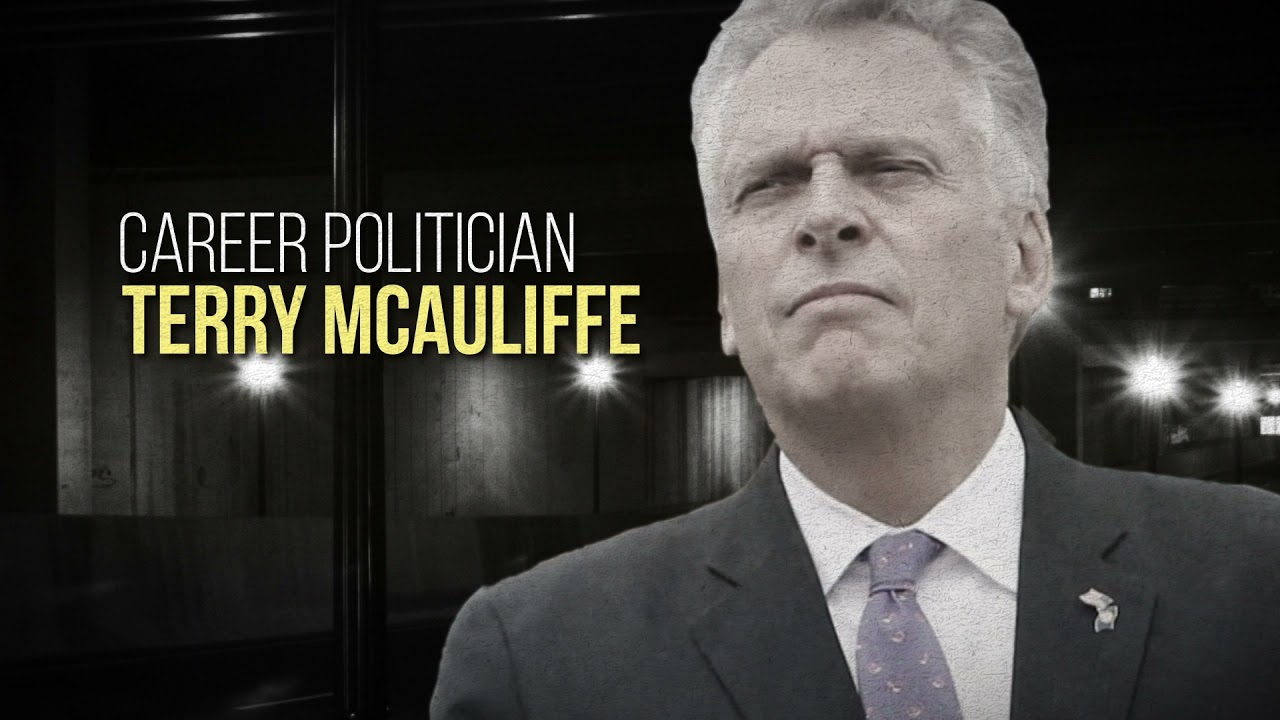 attacking McAuliffe, who served a previous term as governor, over crime rates. (Virginia's unusual term limits restrict governors to one term, but does not bar them from running again after leaving office.) The PAC has spent $1.767 million funding ads against McAuliffe, making it by far the largest independent expenditure group in the race.
The group is funded almost entirely by Republican mega-donor Richard Uihlein, co-founder of the Wisconsin shipping supply giant Uline. Uihlein contributed $24.5 million to the group in the 2020 election cycle, making up 97% of its funding, according to data from the Center for Responsive Politics. He put another $1.5 million into the group in May, according to FEC filings.
Uihlein and his wife Liz are among the biggest Republican donors in the country, having given more than $65 million to former President Donald Trump, Republican candidates and conservative groups since 2019. The Uihleins have also contributed $4.3 million over the past five years to the Tea Party Patriots, including $800,000 in October 2020, making them by far the group's biggest donors.
The Tea Party Patriots participated in the "March to Save America" rally that preceded the Capitol riot and were one of 11 groups listed as part of the "#StopTheSteal coalition," according to WBEZ. The group also contributed to Rep. Mo Brooks, R-Ala., who was accused by "Stop the Steal" organizer Ali Alexander of helping plan the rally, which Brooks has denied. Tea Party Patriots also contributed to Sens. Ted Cruz, R-Texas, and Josh Hawley, R-Mo., who led objections to the certification of Electoral College results in the Senate.
Restoration PAC last month also gave $942,000 to Women Speak Out Virginia — 2021, a PAC affiliated with the anti-choice Susan B. Anthony List that launched a $1.4 million campaign to attack McAuliffe on abortion.
Uihlein's foundation also contributed $275,000 to Trump booster Charlie Kirk's Turning Point Action between 2014 and 2016. The group was listed as a participant in the Capitol protest and Kirk took credit for "sending 80+ buses full of patriots to DC to fight for this president" in a since-deleted tweet.
Turning Point Action also previously received $50,000 from the Judicial Crisis Network, a conservative dark-money group that helped Trump fill federal courts with conservative judges and is pushing to restrict voting. The group also funds the Republican Attorneys General Association (RAGA), giving it $2.1 million last October and a total of $12.7 million since 2014. RAGA's fundraising arm, the Rule of Law Defense Fund,sent out robocalls urging supporters to "march to the Capitol building and call on Congress to stop the steal" on Jan. 6.
The Judicial Crisis Network has multiple legal aliases it uses for other initiatives, including The Concord Fund and Free to Learn Action.That latter group has launched a $1 million ad campaign focused on "critical race theory" in schools, an issue Youngkin and other conservatives have seized on. The group is spending $1 million attacking McAuliffe for arguing that parents should not dictate school curricula.
The Judicial Crisis Network is also closely aligned and shares staff with the Judicial Education Project and its Honest Elections Project, a conservative initiative pushing voting restrictions. The Judicial Education Network is almost entirely funded by the Donors Trust, a dark-money group backed by the Koch network. Donors Trust in 2019 gave more than $20 million to at least a dozen groups who would later question the results of the election. Last year, the Honest Elections Project announced a six-figure ad campaign stoking fears of a "brazen attempt to manipulate the election system for partisan advantage" before the election even happened.
Youngkin has tried to walk a fine line on Trump's election lies as he tries to solidify his Republican base without alienating independent and suburban voters in the increasingly blue state. He refused to acknowledge President Biden's election victory while seeking the Republican nomination, doing so only after he had already triumphed over Republican rivals. And while Youngkin has said he would have voted to certify the election results, he is nonetheless calling for an "audit" of voting machines in Virginia (something the state already does) and boosting election conspiracy theorists.
Youngkin, the former CEO of the private equity firm the Carlyle Group, is also the primary funder of Virginia Wins, contributing $1 million to back Republican candidates in down-ballot races. The PAC has funneled tens of thousands to candidates who attended the Stop the Steal rally, organized transportation for others to attend the event, defended Capitol rioters or pushed election conspiracy theories, Mother Jones reported on Thursday.
Youngkin did not respond to a request for comment.
"It's no surprise that some of the most powerful, pro-insurrection dark money forces are rushing to Glenn Youngkin's side in this campaign," Manuel Bonder, a spokesman for the Virginia Democratic Party, said in a statement to Salon. "They are supporting Youngkin because he's all in on their agenda — and they have full confidence that if elected, Glenn will do exactly what Donald Trump says. He belongs nowhere near the governorship."
===
===
https://www.alternet.org/2021/03/vanita-gupta
There's a right-wing smear campaign underway against one of Biden's top DOJ nominees
Vanita Gupta gives opening remarks at the Naturalization Ceremony in Nov. 2016, Lonnie Tague
Alex Henderson March 02, 2021
Vanita Gupta, President Joe Biden's nominee for associate attorney general, is among the Obama-era officials he has picked for his administration — and she has come under attack from the far-right Judicial Crisis Network. Washington Post opinion writer Jonathan Capehart defends Gupta in a column published this week, arguing that she should be confirmed regardless of what the JCN thinks.
"For a couple of weeks now, my morning newspaper-reading over coffee and yogurt has been interrupted by the aural pollution that is the attack ad against Gupta from the Judicial Crisis Network," Capehart explains. "As the Post's editorial board pointed out over the weekend, the Network's television ad 'is a doozy, mainly notable for the magnitude of the lies and distortions it crams into 30 seconds.'"
Under President Barack Obama, Gupta headed the Civil Rights Division at the U.S. Department of Justice. Gupta, according to Capehart, is "more than qualified to return as the agency's third-highest-ranking official." But that hasn't stopped JCN from smearing her.
"The lies and distortions are your garden-variety right-wing hysteria seeking to paint an unabashed liberal woman of color as a danger to the rule of law and to police," Capehart writes. "The lies don't stand up to the facts. More than 50 current and retired chiefs of police and sheriffs who worked with Gupta during her last tour at the Justice Department sent a letter of support to the Senate Judiciary Committee. So did the National Fraternal Order of Police, whose president noted the organization's working relationship with Gupta goes back to 2014."
Capehart continues, "And before that, as a lawyer with the ACLU, Gupta worked on cash bail reform, fair sentencing and other criminal justice reform issues with Koch Industries. Mark Holden, the firm's former general counsel and senior vice president, sent in a letter of support for her nomination."
Koch Industries is headed by 85-year-old billionaire CEO Charles Koch, who has been a major supporter of right-wing causes and has been a registered Libertarian. The fact that Gupta was willing to work with Koch Industries, Capehart writes, underscores her ability to "reach across the ideological divide."
If confirmed, Gupta will be working closely with Judge Merrick Garland, Biden's pick for U.S. attorney general — and Capehart is hoping that despite the JCN smear, she will be confirmed.
"Gupta and Lisa Monaco, nominated to be deputy attorney general, will both appear for their confirmation hearings on March 9," Capehart explains. "Both deserve to be confirmed. But Gupta ought to sail through the Judiciary Committee with the same ease that Garland did."
When Garland was challenged during his confirmation hearing by GOP Sen. Mike Lee of Utah for his support of Gupta and another nominee Republicans have criticized, the attorney general nominee was unequivocal: "I have complete faith in them."
FROM YOUR SITE ARTICLES
How Jeff Sessions and Donald Trump Have Restarted the War on ... ›
'Cover up': House Democrats subpoena documents NLRB refused ... ›
Trump appears to have fraudulently manipulated financial markets ... ›
RELATED ARTICLES AROUND THE WEB
Anti-Trump conservatives rally for Vanita Gupta, Biden's pick for key ... ›
Vanita Gupta (@vanitaguptaCR) | Twitter ›
Biden announces he will nominate Lisa Monaco and Vanita Gupta ... ›
Vanita Gupta - The Leadership Conference on Civil and Human Rights ›
===
https://www.alternet.org/2020/10/trump-supreme-court-advisor-leonard-leo-tied-to-more-than-80-mllion-in-dark-money
m ellis
President Donald Trump's unofficial Supreme Court advisor who was actively involved in all three of his justice nominations has been revealed as the sole trustee of a perplexing group that generated more than $80 million in dark money in 2018.
A unfiled tax return for Rule of Law Trust (RLT) shows the name of Federalist Society co-chairman Leonard Leo, according to CREW. The mysterious tax return also includes a number of questionable details that raise alarms about the origin of the money.
In its first year of operation, there were no employees or volunteers working the firm's main address which appears to be a virtual office located in Virginia. The only people associated with RLT have statuses similar to Leo being Federalist Society officials who now work as "consultants" or have a long history of ties to companies circulating dark money.
The company's mission statement also notes that it strives "to advance conservative principles and causes through communications, research, strategy and assistance to other organizations."
In addition to the mysterious cash circulating and the business' hallow history, it also appears to have funneled nearly $2.7 million in company expenditures through another business known as the BH Group.
"The filing vastly expands the amount of money known to be flowing into the growing constellation of dark money groups tied to Federalist Society co-chairman Leonard Leo."
Leo is also listed as the partial owner of that firm. While there has been speculation of Leo's affiliation with the company, his true status within the company had not been confirmed until recently. The BH Group garnered attention back in 2016 after it donated a cool $1 million to Trump's first presidential election campaign. The firm also has a history of funneling funds for the purpose of campaign contributions.
Wellspring Committee and Judicial Crisis Network (JCN), both 501(c)(4) social welfare groups relatively similar to RLT, also funneled money through the BH Group to sway elections and Supreme Court nominations.
Here is a quick timeline of how dark money has influenced politics over the last four years:
- In 2016, JCN shelled out millions of dollars to dissuade senators from considering President Barack Obama's last Supreme Court nominee, Judge Merrick Garland.
- In 2017, JCN dumped millions into having Trump's first Supreme Court nominee Justice NeilGorsuchfill the seat Obama's nominee was denied.
- In 2018, the group repeated the same process to back Trump's second nomination of Justice Brett Kavanaugh.
- Now, in 2020, JNC has poured millions into the confirmation of Trump's nomination, Amy Coney Barrett to quickly fill the seat of the late Ruth Bader Ginsburg before the upcoming election.
FROM YOUR SITE ARTICLES
- Trump judicial adviser tied to 'secretive network' of 'dark money ... ›
- Meet the Federalist Society executive and unofficial Trump judicial ... ›
- Trump allies want conservative legal activists to fight impeachment ... ›
===
==
https://www.exposedbycmd.org/2020/10/13/senator-whitehouse-calls-out-dark-money-networks-behind-amy-coney-barretts-scotus-nomination
no lnx grafs
Senator Whitehouse Calls Out Dark-Money Networks Behind Amy Coney Barrett’s SCOTUS Nomination
By ExposedByCMD Editors | October 13th, 2020
Bradley Files, Democracy, Featured Investigations, Koch, News, RAGA, Trump7 Comments
Editor’s Note: The following is a transcript of remarks made by Sen. Sheldon Whitehouse (D-RI) in the October 13, 2020, Senate Judiciary Committee hearing on the nomination of Judge Amy Coney Barrett to the U.S. Supreme Court.
Thank you, Chairman, Judge Barrett. You can take a bit of a breather on your return to the committee, because what I want to do is go through with the people who are watching this now the conversation that you and I had when we spoke on the telephone. You were kind enough to hear out a presentation that I made, and I intend to ask some questions in that area, but it doesn’t make sense to ask questions if I haven’t laid the predicate, particularly for viewers who are watching this.
So, I guess the reason that I want to do this is because people who are watching this need to understand that this small hearing room and the little TV box that you are looking at, the little screen that you are looking at, are a little bit like the frame of a puppet theater, and if you only look at what’s going on in the puppet theater you’re not going to understand the whole story. You are not going to understand the real dynamic what is going on here, and you are certainly not going to understand forces outside of this room who are pulling strings and pushing sticks and causing the puppet theater to react.
So first, let me say, why do I think outside forces are here pulling strings?Well, part of it is behavior. We have colleagues here who supported you, this nominee, before there was a nominee. That’s a little unusual.
We have the political ram job that we have already complained of driving this process through at breakneck speed in the middle of a pandemic while the Senate is closed for safety reasons and while we are doing nothing about the COVID epidemic around us. We have some very awkward 180s from colleagues. Mr. Chairman, you figure in this. Our leader said back when it was Garland versus Gorsuch, that of course, of course, the American people should have a say in the Court’s direction. Of course, of course, said Mitch McConnell. That’s long gone.
Senator Grassley said the American people shouldn’t be denied a voice. That’s long gone. Senator Cruz said you don’t do this in an election year. That’s long gone. And our chairman made his famous hold-the-tape promise if an opening comes in the last year of President Trump’s term we’ll wait until the next election. That’s gone too.
So there is a lot of hard-to-explain hypocrisy and rush taking place right now, and my experience around politics is that when you find hypocrisy in the daylight, look for power in the shadows. Now people say well, what does all this matter? This is a political parlor game; it’s no big deal. Well, there are some pretty high stakes here that we have been talking about here on our side, and I will tell you three of them right here.
Roe v. Wade, Obergefell, and the Obamacare cases. Here’s the GOP platform, the Republican platform, the platform of my colleagues on the other side of this aisle say that a Republican president willappoint judges who will reverse Roe, Obergefell, and the Obamacare cases. So if you have a family member with an interest in some autonomy over their body under Roe v. Wade, the ability to have a marriage, have friends marry, have a niece or a daughter or a son marry someone of their same-sex they have – you’ve got a stake, and if you are one of the millions and millions of Americans who depend on the affordable care act you’ve got a stake.
It’s not just the platform. Over and over again, let’s start by talking about the Affordable Care Act. Here is the president talking about this litigation that we are gearing up this nominee for for November 10. In this litigation, he said we want to terminate healthcare under Obamacare.
That is the president’s statement, so when we react to that, don’t act as if we are making this stuff up. This is what President Trump said. This is what your party platform says: reverse the Obamacare cases. Senator after senator, including many in this committee, filed briefs saying that the Affordable Care Act should be thrown out by courts. Why is it surprising for us to be concerned that you want this nominee to do what you want nominees to do?
One quick stop on NFIB v. Sebelius, because a lot of this has to do with money. This is an interesting comparison. National Federation of Independent Businesses, until it filed the NFIB v. Sebelius case, had its biggest donation ever of $21,000. In the year that it went to work on the Affordable Care Act, ten wealthy donors gave $10 million. Somebody deserves a thank you.
So let’s go on to Roe v. Wade. Same thing. Same thing. The president has said that reversing Roe v. Wade will happen automatically because he is putting pro-life justices on the Court. Why would we not take him at his word? The Republican Party platform says it will reverse Roe. Why would we not comment on that and take you at your word?
Senators here, including Senator Hawley, have said I will vote only for nominees who acknowledge that Roe v. Wade is wrongly decided, and their pledge to vote for this nominee. Do the math. That’s a really simple equation to run.
The Republican brief in June Medical said Roe should be overruled, so don’t act surprised when we ask questions about whether that’s what you are up to here. And finally, out in the ad world that you have spared yourself wisely Judge Barrett, the Susan B Anthony Foundation is running advertisements right now saying that you are set, you are set to give our pro-life country a Court that it deserves.
Here is the ad with the voiceover. She said – she said. And then Roe, Obamacare cases and Obergefell, gay marriages. National Organization for Marriage, the big group that opposes same-sex marriage, says in this proceeding, all our issues are at stake. The Republican platform says it wants to reverse Obergefell. And the Republican brief filed in the case said same-sex relationships don’t fall within any constitutional protection, so when we say the stakes are high on this, it’s because you have said the stakes are high on this. You have said that is what you want to do. So how are people going about doing it? What is the scheme here?
Let me start with this one. In all cases, there’s big anonymous money behind various lanes of activity. One lane of activity is through the conduit of the Federalist Society. It is managed by a guy – was managed by – a guy named Leonard Leo, and it has taken over the selection of judicial nominees. How do we know that to be the case? Because Trump has said so over and over again. His White House counsel said so. So we have an anonymously funded group controlling judicial selection run by this guy Leonard Leo.
Then in another lane, we have again anonymous funders running through something called the Judicial Crisis Network, which is run by Carrie Severino, and it is doing PR and campaign ads for Republican judicial nominees. It got $17 million – a single $17 million donation in the Garland-Gorsuch contest. It got another single $17 million donation to support Kavanaugh. Somebody, perhaps the same person, spent $35 million to influence the United States Supreme Court. Tell me that’s good.
And then over here you have a whole array of legal groups, also funded by dark money, which have a different role. They bring cases to the Court. They don’t wind their way to the Court, your Honor, they get shoved to the Court to by these legal groups, many of which ask to lose below so they can get quickly to the Court to get their business done there. And then they turn up in a chorus, an orchestrated chorus of amici.
Now I’ve had a chance to have a look at this. And I was in a case, actually, as an amicus myself, the Consumer Financial Protection Board case. And in that case there were 1, 2, 3, 4, 5, 6, 7, 8, 9, 10, 11 amicus briefs filed, and every single one of them was a group funded by something called DonorsTrust.
DonorsTrust is a gigantic identity-scrubbing device for the right wing so that it says DonorsTrust is the donor without whoever the real donor is. It doesn’t have a business. It doesn’t have a business plan. It doesn’t do anything. It’s just an identity scrubber.
And this group here, the Bradley Foundation, funded eight out of the 11 briefs. That seems weird to me when you have amicus briefs coming in little flotillas that are funded by the same groups but nominally separate in the court.
So I actually attached this to my brief as an appendix. Center for Media and Democracy saw it, and they did better work. They went on to say which foundations funded the brief writers in that CFPB case. Here is the Bradley Foundation for $5.6 million to those groups. Here’s DonorsTrust, $23 million to those brief writing groups. The grand total across all the donor groups was $68 million to the groups that were filing amicus briefs, pretending that they were different groups.
Right-Wing Foundations Fund Anti-Consumer Protection Groups, 2014-present
Sixteen right-wing foundations gave nearly $69 million to groups urging the Supreme Court to abolish the Consumer Financial Protection Bureau since 2014.
Donor Amount
DonorsTrust $23,460,705
Charles Koch Foundation $12,986,462
Sarah Scaife Foundation $7,550,000
L&H Bradley Foundation $5,579,500
Searle Freedom Trust $4,550,000
Dunn Foundation $4,450,000
Donors Capital Fund $2,522,680
John William Pope Foundation $1,895,175
Bradley Impact Fund $1,363,000
Mercer Family Foundation $1,200,000
Adolph Coors Foundation $1,155,000
F.M. Kirby Foundation $672,500
Charles Koch Institute $517,134
Ed Uihlein Family Foundation $408,000
Pierre F. and Enid Goodrich Foundation $395,000
William H. Donner Foundation $167,000
TOTAL $68,872,156
And it’s not just in the Consumer Financial Protection Board case. You might say well that was just a one-off. Here’s Janus, the anti-labor case that had a long trail through the Court, through Friedrichs, and through Knox, and through other decisions.
And SourceWatch and ProPublica did some work about this. Here’s DonorsTrust and Donors Capital Fund. And here’s the Bradley Foundation. And they totaled giving $45 million to the 1, 2, 3, 4, 5, 6, 7, 8, 9, 10, 11, 12, 13, 14, 15groups that filed amicus briefs, pretending to be different groups, and both of the lawyer groups in the case, funded by DonorsTrust, funded by Bradley Foundation in Janus.
This is happening over and over and over again, and it goes beyond just the briefs. It goes beyond just the amicus presentations.The Federalist Society– remember this group that is acting as the conduit and that Donald Trump has said is doing his judicial selection? They’re getting money from the same foundations, from DonorsTrust, $16.7 million and the Bradley Foundation, $1.37 million. From the same group of foundations total, $33 million.
Donors to the Federalist Society, 2014-present
The same 16 foundations that fund the amicus brief filers all give to the Federalist Society
donor Amount
DonorsTrust $16,733,100
Mercer Family Foundation $4,850,000
Donors Capital Fund $4,231,120
Charles Koch Foundation $2,419,264
Searle Freedom Trust $1,551,000
Lynde and Harry Bradley Foundation $1,375,000
Ed Uihlein Family Foundation $1,000,000
John William Pope Foundation $250,000
Adolph Coors Foundation $230,000
Pierre F. and Enid Goodrich Foundation $210,000
Dunn Foundation $150,000
F.M. Kirby Foundation $120,000
William H. Donner Foundation $45,000
Bradley Impact Fund $15,250
Charles Koch Institute $6,400
TOTAL $33,286,134
So you can start to look at these, and you can start to tie them together. The legal groups, all the same funders over and over again, bringing the cases and providing us orchestrated, orchestrated chorus of amici. Then the same group also funds the Federalist Society over here. The Washington Post wrote a big expose about this, and that made Leonard Leo a little hot, a little bit like a burned agent. So he had to jump out. And he went off to go do anonymously-funded voter suppression work. Guess who jumped in to take over the selection process in this case for Judge Barrett? Carrie Severino made the hop. So once again, ties right in together.
So, Center for Media and Democracy did a little bit more research. Here’s aBradley Foundation memo that they’ve published. The Bradley Foundation is reviewing a grant application asking for money for this orchestrated amicus process, and what do they say in the staff recommendation? It is important to orchestrate – their word, not mine – important to orchestrate high-caliber amicus efforts before the Court.
Page 3 of 2015 Bradley Summary Judicial Education Project Proposal 150K
Contributed to DocumentCloud by Staff 18 of Documented • View document or read text
They also note that Bradley has done previous philanthropic investments in the actual underlying legal actions. So Bradley is funding – what do they call – philanthropically investing in, the underlying legal action and then giving money to groups to show up in the orchestrated chorus of amici. That can’t be good.
And it goes on, because they also found this email. This email comes from an individual at the Bradley Foundation, and it asks our friend, Leonard Leo, who used to run the selection process, is there a 501(c)(3) nonprofit to which Bradley could direct any support of the two Supreme Court amicus projects other than DonorsTrust? I don’t know why they wanted to avoid the reliable identity-scrubber DonorsTrust, but for some reason they did.
Page 6 of 2014 Bradley Leonard Leo Neil Corkery Carrie Severino Judicial+Education+Project
Contributed to DocumentCloud by Staff 18 of Documented • View document or read text]
So Leonard Leo writes back on Federalist Society address – so don’t tell me that it isn’t Federal Society business – on Federalist Society, on his address, he writes back, yes, send it to the Judicial Education Project, which could take and allocate the money. And guess who works for the Judicial Education Project? Carrie Severino,who also helped select this nominee, running the Trump Federalist Society selection process.
So the connections abound. In the Washington Post article, they point out that the Judicial Crisis Network’s office is on the same hallway in the same building as the Federalist Society, and when they sent their reporter to talk to somebody at the Judicial Crisis Network, somebody from the Federalist Society came down to let them up.
This more and more looks like it’s not three schemes, but it’s one scheme with the same funders selecting judges, funding campaigns for the judges, and then showing up in court in these orchestrated amicus flotillas to tell the judges what to do.
On the Judicial Crisis Network, you’ve got the Leonard Leo connection, obviously. She hopped in to take over for him with the Federalist Society. You’ve got the campaigns that I’ve talked about, where they take $17 million contributions. That’s a big check to write, $17 million, to campaign for Supreme Court nominees. No idea who that is or what they got for it. You’ve got briefs that she wrote. The Republican senators filed briefs in that NFIB case signed by Ms. Severino.
:{:{}:
}:
The woman who helped choose this nominee has written briefs for Republican senators attacking the ACA. Don’t say the ACA is not an issue here. And by the way, the Judicial Crisis Network funds the Republican attorneys general. It funds RAGA, the Republican Attorneys General Association, and it funds individual Republican attorneys general. And guess who the plaintiffs are in the Affordable Care Act case? Republican attorneys general.
Trump joined them because he didn’t want to defend, so he’s in with the Republican attorneys general. But here’s the Judicial Crisis Network campaigning for Supreme Court nominees, writing briefs for senators against the Affordable Care Act, supporting the Republicans who are bringing this case, and leading the selection process for this nominee.
Here is the page off the brief. Here is where they are. Mitch McConnell, and on through the list, Senator Collins, Senator Cornyn, Senator Hoeven, Senator — who’s still here? Marco Rubio. It’s a huge assortment of Republican senators who Carrie Severino wrote a brief for against the Affordable Care Act. So this is a, to me, pretty big deal. I’ve never seen this around any court that I’ve ever been involved with, where there’s this much dark money and this much influence being used.
Here’s how the Washington Post summed it up. This is “a conservative activist behind-the-scenes campaign to remake the nation’s courts,” and it’s a $250 million dark money operation. $250 million is a lot of money to spend if you’re not getting anything for it. So that raises the question, what are they getting for it?
Well, I showed the slide earlier on the Affordable Care Act. And on Obergefell and on Roe v. Wade, that’s where they lost. But with another judge, that could change. That’s where the contest is. That’s where The Republican Party platform tells us to look at how they want judges to rule, to reverse Roe, to reverse the Obamacare cases, and to reverse Obergefell and take away gay marriage. That is their stated objective and plan. Why not take them at their word?
But there is another piece of it, and that is not what’s ahead of us, but what’s behind us. What’s behind us is now 80 cases, Mr. Chairman, 80 cases under Chief Justice Roberts that have these characteristics. One, they were decided five to four by a bare majority. Two, the five-to-four majority was partisan in the sense that not one Democratic appointee joined the five. I refer to that group as the “Roberts Five.”
It changes a little bit as–with Justice Scalia’s death, for instance – but there’s been a steady “Roberts Five” that has delivered now 80 of these decisions.And the last characteristic of them is that there is an identifiable Republican donor interest in those cases, and in every single case, that donor interest won. It was an 80 to zero, 5 to 4 partisan rout, ransacking.
And it’s important to look at where those cases went, because they’re not about big, public issues like getting rid of the Affordable Care Act, undoing Roe v. Wade, and undoing same sex marriage.They’re about power. And if you look at those 80 decisions, they fall into four categories over and over and over again. One, unlimited and dark money and politics.Citizens United is the famous one, but it’s continued since with McCutcheon and we’ve got one coming up now. Always the five for unlimited money in politics. Never protecting against money dark money in politics, despite the fact that they said it was going to be transparent.
And who wins when you allow unlimited dark money in politics? A very small group. The ones who have unlimited money to spend and a motive to spend it in politics. They win. Everybody else loses. And if you’re looking at who might be behind this, let’s talk about people with unlimited money to spend and a motive to do it. We’ll see how that goes.
Next, knock the civil jury down. Whittle it down to a nub. The civil jury was in the Constitution, in the Bill of Rights, in our darn Declaration of Independence, but it’s annoying to big corporate powers because you can swagger your way as a big corporate power through Congress. You can go and tell the president you put money into to elect what to do. He will put your stooges at the EPA. It’s all great until you get to the civil jury, because they have an obligation, as you know, Judge Barrett, they have an obligation under the law to be fair to both parties irrespective of their size.
You can’t bribe them. You’re not allowed to. It’s a crime to tamper with the jury. It’s standard practice to tamper with Congress. And they make decisions based on the law. If you’re used to being the boss and swaggering your way around the political side, you don’t want to be answerable before a jury. And so one after another, these 80 5-to-4 decisions have knocked down, whittled away at, the civil jury, a great American institution.
Third – first was unlimited dark money, second was demean and diminish the civil jury – third is weaken regulatory agencies. A lot of this money, I’m convinced, is polluter money. The Koch Industries is a polluter, the fossil fuel industry is a polluter. Who else would be putting buckets of money into this and wanting to hide who they are behind DonorsTrust or other schemes?
And what are – if you’re a big polluter – what do you want? You want weak regulatory agencies. You want ones that you can box up and run over to Congress and get your friends to fix things for you in Congress. Over and over and over again, these decisions are targeted at regulatory agencies to weaken their independence and weaken their strength. And if you’re a big polluter, a weak regulatory agency is your idea of a good day.
And the last thing is in politics. In voting. Why on earth the Court made the decision, a factual decision – not something appellate courts are ordinarily supposed to make, as I understand it Judge Barrett – the factual decision that nobody needed to worry about minority voters in preclearance states being discriminated against, or that legislators would try to knock back their ability to vote. These five made that finding in Shelby County against bipartisan legislation from both houses of Congress, hugely passed, on no factual record.
They just decided that that was a problem that was over, on no record with no basis, because it got them to the result that we then saw. What followed? State after state after state passed voter suppression laws. One so badly targeting African Americans that two courts said it was surgically, surgically tailored to get after minority voters.
And gerrymandering, the other great control. Bulk gerrymandering where you go into a state, like the Red Map project did in Ohio and Pennsylvania, and you pack Democrats so tightly into a few districts that all the others become Republican majority districts. And in those states, you send a delegation to Congress that has a huge majority of Republican members, like 13 to 5, as I recall, in a state where the five, the party of the five actually won the popular vote.
You’ve sent a delegation to Congress that is out of step with the popular vote of that state and court after court figured out how to solve that, and the Supreme Court said nope. 5 to 4 again. Nope. We’re not going to take an interest in that question. In all these areas where it’s about political power for big special interests, and people who want to fund campaigns, and people who want to get their way through politics without actually showing up, doing it behind DonorsTrust and other groups, doing it through these schemes over and over and over again, you see the same thing.
80 decisions, Judge Barrett. 80 decisions. An 80-to-0 sweep. I don’t think you’ve tried cases, but some cases, the issue is bias and discrimination. And if you’re making a bias case as a trial lawyer – Lindsey Graham is a hell of a good trial lawyer. If he wanted to make a bias case – Dick Durbin is a hell of a good trial lawyer. If they wanted to make a bias case and they could show an 80-to-0 pattern, A, that’s admissible, and B, I’d love to make that argument to the jury. I’d be really hard pressed to be the lawyer saying no, 80-to-0 is just a bunch of flukes.
All five-four. all partisan, all this way.So something is not right around the Court. And dark money has a lot to do with it. Special interests have a lot to do with it. DonorsTrust and whoever is hiding behind DonorsTrust has a lot to do with it, and the Bradley Foundation orchestrating its amici over at the Court has a lot to do with it.
So I thank you, Judge Barrett, for listening to me now a second time and I think this gives you a chance for you and I to tee up an interesting conversation tomorrow. And I thank my colleagues for hearing me out.
---
===
shuffle dark &$ laundering?
:{:{}:
}:
voter felon suppression 2020, pal of ginni and jok?
:{:{}:
}:
:{:{}:
}:
Cash matters, but O’Keefe’s personal connectionsare where the depth and seamlessness of this coordination with the Republican Party become truly apparent. They also offer a glimpse into the vast network that has formed to suppress the vote this fall—a network years in the making, of which Project Veritas is but a humble node.
Take litigator William Consovoy, the legal point man on many of the conservative-funded election integrity cases pursued during the Trump era. He is, like O’Keefe, a New Jersey native with a long history in local Republican politics. A former law clerk for Clarence Thomas, Consovoy is also reportedly a friend of Federalist Society Executive Vice President Leonard Leo, whose nephew David Maxham has been a friend of O’Keefe’s since their undergraduate years at Rutgers. (Maxham, naturally, was also invited to O’Keefe’s wedding.)
This year, Leonard Leo has stepped aside from day-to-day management of the Federalist Society to run a new conservative donor group, CRC Advisors, that is pouring money into Consovoy’s legal challenges in key battleground states across the country. CRC has been steering money into something called the “Honest Elections Project,” a fictitious name filed in Virginia for Leo’s old group the Judicial Education Project,now officially called the 85 Fund. As The Guardian reported, 99 percent of the Judicial Education Project’s funding in 2018 was a single $7.8 million donation funneled through Donors Trust.guk?
With generous assistance from the Honest Elections Project and the RNC, Consovoy’s firm Consovoy McCarthy PLLC has recently brought cases against the re-enfranchising of felons in Florida and sued to block California’s plans to deliver absentee ballots to all of the state’s registered voters.Consovoy has contributed to related motions filed in Pennsylvania, Wisconsin, Nevada, Michigan, and Texas, where Ken Paxton’s victory against mail-in voting in May earned praise from President Trump on Twitter.
==
===
https://YYY.desmogblog.com/sites/beta.desmogblog.com/files/Judicial%20Crisis%20Network%20Funding%202018_0.xlsx
xl
Judicial Crisis Network as Recipient
donor_name year
Wellspring Committee $39,354,997
2010 $350,000
2011 $170,000
2012 $1,515,000
2013 $1,435,000
2014 $6,655,000
2015 $5,775,000
2016 $23,454,997
American Justice Partnership $50,000
2012 $50,000
Total Result $39,404,997
Judicial Crisis Network as Donor
Sum - contribution year
recipient_name 2017 Total Result Resource URL
45 Committee $250,000 $250,000 verified
American Conservative Union $129,000 $129,000 verified
American Principles Project $50,000 $50,000 verified
Americans for Limited Government $1,425,000 $1,425,000 verified
AZ Public Integrity Alliance $100,000 $100,000 verified
C.S.G. Action $110,000 $110,000 verified
Catholic Vote Civic Action $500,000 $500,000 verified
Club for Growth $500,000 $500,000 verified
Concerned Women for America $205,445 $205,445 verified
Faith Freedom Coalition $415,000 $415,000 verified
FRC Action $50,000 $50,000 verified
Liberty 2.0 $25,000 $25,000 verified
Michigan Chamber of Commerce $500,000 $500,000 verified
Missouri Alliance for Freedom $70,000 $70,000 verified
National Rifle Association $1,000,000 $1,000,000 verified
National Right to Life Committee Inc. $330,000 $330,000 verified
Nebraskans for the Death Penalty $300,000 $300,000 verified
Republican Attorneys General Association $1,300,000 $1,300,000
Republican Governors Association $200,000 $200,000
Republican State Leadership Committee $290,000 $290,000
State Government Leadership Fund $50,000 $50,000
Susan B Anthony List $50,000 $50,000
Tea Party Patriots $2,765,000 $2,765,000
Virginia First Foundation $50,000 $50,000
Total Result $10,664,445 $10,664,445
==
https://www.alternet.org/2019/05/mysterious-dark-money-group-got-22-million-to-get-trump-scotus-pick-kavanaugh-confirmed/
A just-published report by the nonpartisan Center for Responsive Politics’ award-winning OpenSecrets.org reveals the Judicial Crisis Network, a conservative secretive dark money group received $22 million from anonymous donors in the year leading up to the Tump administration and conservatives’ push to place Brett Kavanaugh on the U.S. Supreme Court.
$17 million of that $22 million came from one anonymous donor.
“The Judicial Crisis Network (JCN), a Washington, D.C.-based nonprofit, pledged to spend as much as $10 million to ensure Kavanaugh’s confirmation — the same amount that it spent to help confirm Justice Neil Gorsuch in 2017,” Anna Massoglia and Andrew Perez at OpenSecrets reveal in their report Friday.
“JCN has close ties to Trump’s judicial adviser Leonard Leo, a longtime executive at the Federalist Society, the influential conservative and libertarian lawyers network based in Washington, D.C.”
If you’re not familiar with the Judicial Crisis Network, here’s one of their ads you may have seen on TV in the run up to the Kavanaugh confirmation vote:
[vid]
Here’s where it gets even more disturbing.
“The bulk of JCN’s funding has typically come from the Wellspring Committee, another secretive nonprofit run by operatives who wear multiple hats in a larger network of opaque groups.”
That “larger network of opaque groups” links to another OpenSecrets report: “New clues link $1 million Trump inauguration mystery money to secretive ‘dark money’ network.”
OpenSecrets adds, “Wellspring has continued to send massive annual endowments to JCN since the group launched in 2005. JCN, in turn, has continued to pour tens of millions of dollars into every subsequent Supreme Court nomination fight and working to reshape the judiciary. Wellspring reported donating almost $15 million to JCN in 2017, on top of $23.5 million in 2016. Neither organization discloses the sources of its funds.”
==
ref
https://www.opensecrets.org/news/2019/05/dark-money-group-funded-by-17million-mystery-donor-before-kavanaugh
The conservative “dark money” organization that spearheaded controversial Supreme Court Justice Brett Kavanaugh’s contentious confirmation received $22 million in anonymous donations in the year before the 2018 court fight, newly released tax records show.
The Judicial Crisis Network (JCN), a Washington, D.C.-based nonprofit, pledged to spend as much as $10 million to ensure Kavanaugh’s confirmation — the same amount that it spent to help confirm Justice Neil Gorsuch in 2017. JCN has close ties to Trump’s judicial adviser Leonard Leo, a longtime executive at the Federalist Society, the influential conservative and libertarian lawyers network based in Washington, D.C.
More than three-quarters of the funds JCN raised between July 2017 and June 2018 came in the form of a $17 million contribution from a single anonymous donor, according to its latest tax return, which was obtained by MapLight and OpenSecrets. Former Supreme Court Justice Anthony Kennedy announced his retirement in June 2018, paving the way for Kavanaugh’s nomination.
JCN’s filing lists nine other anonymous contributions, none smaller than six figures.
The bulk of JCN’s funding has typically come from the Wellspring Committee, another secretive nonprofit run by operatives who wear multiple hats in a larger network of opaque groups. Neil Corkery, Wellspring’s current president, previously served as JCN’s treasurer; his wife, Ann, was leading Wellspring at the time.
Wellspring has continued to send massive annual endowments to JCN since the group launched in 2005. JCN, in turn, has continued to pour tens of millions of dollars into every subsequent Supreme Court nomination fight and working to reshape the judiciary. Wellspring reported donating almost $15 million to JCN in 2017, on top of $23.5 million in 2016. Neither organization discloses the sources of its funds.
The 2017-18 tax return also reveals JCN paid $241,000 to BH Group — a Virginia limited-liability company tied to Leo, the Trump judicial adviser — after paying the company $947,000 the previous year. BH Group was responsible for a mysterious $1 million donation to Trump’s inaugural committee in 2017. BH Group received at least $919,000 from Wellspring and $1.4 million from the Judicial Education Project, a nonprofit affiliated with JCN, through the end of 2017.
JCN contributed $250,000 to the National Rifle Association (NRA), after giving the gun rights group $1 million from 2016-17. America Engaged, another nonprofit tied to Leo, also gave $950,000 to the NRA in 2017. The NRA ran ads boosting both Gorsuch and Kavanaugh.
JCN gave almost $3.6 million to the Republican Attorneys General Association (RAGA) and $450,000 to the Rule of Law Defense Fund. RAGA launched the dark money policy fund while then-Oklahoma Attorney General Scott Pruitt was on the association’s board of directors. Pruitt later chaired the fund before Trump hired him to lead the Environmental Protection Agency.
One of the many controversies Pruitt dealt with during his 17-month EPA tenure involved the revelation his wife had secured a position with JCN as a temporary contractor. JCN reportedly received her resume from Leo, who has helped raise much of the Wellspring Committee’s cash, according to McClatchy.
From 2017-18, JCN continued quietly bankrolling a small but expanding circle of conservative groups aimed at attracting women, with $75,000 to the Susan B. Anthony List; $35,000 to the American Women’s Alliance; and $250,000 to Winning for Women, which was launched in 2017 as a conservative counterweight to EMILY’s List.
The Susan B. Anthony List boosted Kavanaugh’s nomination and continued to support him after he was accused of sexual assault by Christine Blasey Ford, a Stanford University professor who knew the justice when he was in prep school. Winning for Women also threw their support behind Kavanaugh, spending on hundreds of videos and Facebook ad buys targeting women.
JCN also donated $500,000 to A New Missouri, a dark money organization established to support the state’s former Republican governor, Eric Greitens. He resigned last year amid an investigation into the organization.
This story was produced in partnership between OpenSecrets and MapLight.
Feel free to distribute or cite this material, but please credit the Center for Responsive Politics.
For permission to reprint for commercial uses, such as textbooks, contact the Center: info@crp.org
RELATED TOPICS
- 501(c)(4)
- 527
- A New Missouri
- Andrew Perez
- ann corkery
- Anna Massoglia
- BH Group
- Brett Kavanaugh
- dark money
- Donald Trump
- Donald Trump inaugural committee
- Environmental Protection Agency
- epa
- Eric Greitens
- Federalist Society
- FedSoc
- JCN
- Judicial Crisis Network
- leonard leo
- Maplight
- Neil Corkery
- Neil Gorsuch
- republican attorneys general association
- Rule of Law Defense Fund
- Scott Pruitt
- scotus
- Supreme Court
- Susan B Anthony List
- Wellspring Committee
==
https://truthout.org/articles/one-six-figure-donor-funds-whitaker-nonprofit-with-dark-money/
A single six-figure donor accounted for 100 percent of funding raised by a nonprofit run by acting Attorney General Matthew Whitakerbefore he became Jeff Sessions’ chief of staff last year, new tax documents obtained by the Center for Responsive Politics reveal.
President Trump tapped Whitaker to become acting Attorney General earlier in November after Jeff Sessions was asked to resign.
The Foundation for Accountability and Civic Trust (FACT) is a self-proclaimed 501(c)(3) “watchdog” nonprofit.
This is not the first year a single big donor has accounted for the entirety of FACT’s funding, according to an exclusive new analysis by CRP. Nearly 100 percent of FACT’s funding — all but a few dollars in interest accrued on money left-over from prior years — came from a single anonymous donor again in 2015, 2016 and again last year.
CRP discovered FACT’s first tax return back in 2016, revealing its funding — $600,000 for 2014, its first year of operation — came entirely from a donor-advised fund called DonorsTrust, which acts as a pass-through vessel managing the money flow from wealthy individuals and foundations to nonprofit organizations while allowing the donors to remain anonymous. Beneficiaries of DonorsTrust include a breadth of conservative and libertarian initiatives. Due to DonorsTrust’s design, although CRP is able to reveal the direct funder of FACT by piecing together grants from different tax returns, the ultimate donor remains hidden.
New tax returns obtained by CRP show that wasn’t the only time DonorsTrust was FACT’s main funder. In fact, DonorsTrust accounted for 100 percent of FACT’s income from donations again in 2015, in 2016 and its most recent tax return — meaning Whitaker’s organization that claimed to be “dedicated to promoting accountability, ethics, and transparency” has gotten all of its funds from a group that exists mainly as a vehicle for donors to elude transparency every year since its inception.
deep Ties to Dark Money Networks
In their application for tax-exempt status, FACT — then called the Free Market America Educational Foundation — told the Internal Revenue Service (IRS) that its purpose was to “conduct research and provide informational studies on free market concepts in relation to environmental regulations and policy.” The IRS approved the group’s application for tax-exempt charity status on July 21, 2014, according to its determination letter.
:{Tax-exempt status in hand, the nonprofit changed its address to a UPS store and its name just weeks later, according to Virginia incorporation records. The nonprofit changed its name again that October, first to the Working for Rights to Express & Communication before finally landing on its current name — ultimately changing its name three times in the months following IRS approval for tax-exempt status, twice in just one day. That month, Whitaker, took control of the organization after losing his bid for a U.S. Senate seat in Iowa. :{}:
}:
As the Free Market America Educational Foundation, the group was started by Ray Wotring, an operative who had long ago been tied to another shadowy network of politically active nonprofits. Wotring also served on another conservative nonprofit, Americans for Limited Government, which has close financial ties to the network and shared the same UPS story mailing address as FACT’s first iteration as the Free Market America Educational Foundation as well as Free Market America’s 501(c)(4) nonprofit arm.
Free Market America’s nonprofit arm has remained active and began to spend on lobbying in 2018, reporting six-figure spending.
FACT’s dark money ties don’t end there.
The treasurer and a member of the board of directors at FACT is Neil Corkery. Corkery, along with his wife Ann, sit at the helm of a network of conservative “dark money” groups organized to influence public policy and has become a key player promoting Trump’s agenda.
The network has become well-known for the Judicial Crisis Network(JCN), a nondisclosing group that emerged as the predominant dark money spender in Supreme Court confirmation fights since its launch in 2005, allowing deep-pocketed donors to funnel millions of dollars opposing or supporting judicial nominees, including a pledge to spent $10 million on the confirmation of Supreme Court Justice Brett Kavanaugh. JCN’s primary benefactor over the years has been the Wellspring Committee, an even more opaque nonprofit run by the Corkerys that accounted for over 80 percent of its total revenue in 2016.
Many of the groups tied to the network list the same address as their office, with different “suite” numbers. In reality, the address is also a UPS store and the suite numbers are PO boxes.
Links to Trump’s Mysterious Inaugural Donor
In addition to its ostensible political spending fueled by secret donors, disclosures by groups in the Corkery’s network have also raised question about other vehicles of influence behind the scenes, most notably in ties to a $1 million gift to President Donald Trump’s inaugural committee from a mysterious Northern Virginia company called BH Group, LLC.
Little is known about the LLC other than the seven-figure check on Dec. 22, 2016, almost a month before President Trump was sworn in, and a trail of clues pieced together from tax documents and other disclosures.
These clues have also led to Leonard Leo, the executive vice president at the Federalist Society, who listed “BH Group” as his employer in a filingwith the Federal Election Commission.
Tax documents previously obtained by CRP show that the Wellspring Committee made a $750,000 payment to BH Group for “public relations” and that JCN made an additional cash infusion of $947,000to the BH Group around when the LLC made its inaugural donation.
New tax documents first obtained by Maplight and reviewed by CRP reveal that Judicial Education Project, JCN’s sister 501(c)(3) nonprofit organization, paid an additional $1.3 million to BH Group LLC last year.
As a 501(c)(3) organization, Judicial Education Fund is not required to reveal its donors and chooses to keep them secret. However, CRP has been able to trace the source of the bulk of the group’s 2017 funding. Like FACT, Judicial Education Fund received millions of dollars coming from DonorsTrust accounting for more than 99 percent of the group’s funding.
That newly revealed payment from Judicial Education Fund brings the total known income for the BH Group to more than $3 million, according to CRP’s analysis — over three times the $1 million it gave to President Trump’s inaugural committee and raising more questions about its other activities that have yet to be reported.
Whitaker’s Watchdog
FACT’s own activities since 2014 have largely revolved around legal and ethics complaints, mostly targeting Democrats and with a particularly aggressive focus on Hillary Clinton during the 2016 presidential election.
FACT has paid more than half-a-million dollars to Republican opposition research firm America Rising LLC,according to its most recent three tax returns.
FACT raised just over $3.4 million since it was conceived in 2014, according to tax filings obtained by CRP. Whitaker’s salary accounts for more than a third of FACT’s entire revenue since its exception, making him its single largest expense.
Whitaker received more than $1.2 million from FACT over the three years he led the organization, according to CRP’s analysis of the group’s tax returns, with the salary he drew from FACT rising precipitously — in some cases increasing by more than six-figures with each passing year.
Whitaker made $502,000 in 2017 — around half of FACT’s spending — despite having left the organization to take a position at the Justice Department as then-Attorney General Jeff Sessions’ chief of staff in September of that year.
[graph]
FACT provided the vast majority of Whitaker’s income for the entire span of time covered by his financial disclosures on file with the Office of Government Ethics and released by the Justice Department the Tuesday before Thanksgiving, following weeks of scrutiny and multiple requests.
Whitaker’s selection as acting Attorney General has been contested on multiple fronts, and the release of his financial disclosures has only fueled the dumpster fire.
Disclosures revealed that Whitaker’s unsuccessful 2014 campaign received four donations totaling $8,800 this year — years after he lost the election and just months after he joined the Justice Department. The donations were the only money the campaign has received in over two years, raising questions about the potential implications of the donations under the Hatch Act, a federal law that generally prohibits federal officials from knowingly soliciting or accepting campaign donations and a separate Justice Department memo further restricting political activity by its personnel in the hopes of keeping the agency as apolitical as possible.
A provision of the Hatch Act allows officials to raise money to retire campaign debt, but the campaign’s only reported spending was 2018 were $228 to reimburse “data services” and $500 to Whitaker’s old law firm for renting office space, according to the New York Times.
Whitaker’s law partner of eight years, William Gustoff,who was treasurer for Whitaker’s unsuccessful 2014 Senate campaign and also serves on the board of FACT, signed off on the FEC filings.
“The checks came in. I, as the treasurer, deposited the checks, and I retired the debt that I knew I could without talking to Matt,” Gustoff told the New York Times, “I don’t talk to Matt about the campaign.”
Gustoff did say that FACT had been “well received” by Republican donors.
2017 Form 990 tax returns for DonorsTrust and Judicial Education Project were first obtained by Maplight’s Andrew Perez and reviewed by the Center for Responsive Politics.
===
==
FACT whitaker
...
The Post determined from other tax filings that the money came from DonorsTrust, a large nonprofit organization that wealthy contributors have used to anonymously give millions to conservative nonprofits in recent years.
The president of DonorsTrust, Lawson Bader, declined to identify the source of the funding contributed to FACT through his organization.
FACT launched its advocacy efforts shortly after Whitaker took over, describing itself in a news release as a “new watchdog group.”
On its website and in tax filings in 2014, FACT said that its mission was “to educate the public about unethical conduct on the part of public officials by publicizing these actions through media outlets throughout the country” and through its own website.
The new three-member board now comprised Whitaker, Whitaker’s former law partner and a conservative activist, Neil Corkery, who is involved in operating or funding multiple conservative charities.
Whitaker’s former partner, William Gustoff, did not return calls for comment. Corkery did not respond to phone messages seeking comment.
...
==
2x?
https://www.opensecrets.org/news/2017/11/web-of-secret-money-hides-one-mega-donor-funding-conservative-court/
When a small nonprofit called the Judicial Crisis Network poured millions into a campaign to stop the Senate from confirming Barack Obama’s Supreme Court pick last year, and then spent millions more supporting President Donald Trump’s choice for the same seat, political observers assumed conservatives from around the country were showering the group with donations.
Not so.
Newly obtained tax documents show that JCN’s money came almost entirely from yet another secretive nonprofit, the Wellspring Committee, which flooded JCN with nearly $23.5 million in 2016.
Most of Wellspring’s funds, in turn, came from a single mysterious donor who gave the organization almost $28.5 million — nearly 90 percent of its $32.2 million in revenues.
Like JCN, Wellspring — at one time tied to the donor network spearheaded by conservative industrialists Charles and David Koch — is a nonprofit that is supposed to be dedicated to social welfare functions and doesn’t have to disclose the names of its benefactors. Since the 2010 Citizens United Supreme Court decision loosened certain constraints on political spending, these and other 501(c)(4) groups have become increasingly politically active while providing anonymity to their donors. Often one group, like Wellspring, will act as a conduit, giving most of its funds to other, similar groups with political agendas.
“It sounds like Wellspring Committee acted as a dark money conduit to provide an extra layer of secrecy to whomever was bankrolling the Judicial Crisis Network ads,” Brendan Fischer of the nonpartisan Campaign Legal Center in Washington said in an email interview. “This has the effect of layering secrecy on top of secrecy, and almost entirely insulating donors from any form of public accountability.”
But, Fischer added, “Even though the public doesn’t know who is really behind the tens of millions spent, there is nothing stopping these secret donors from making their identities known to the beneficiaries of that spending.”[live doc?]
Illinois Policy Action was another organization that benefited from Wellspring’s grants in 2016, receiving $2.5 million; it’s the lobbying arm of the Illinois Policy Institute, a conservative Chicago think tank in Chicago that has ties to the state’s billionaire governor, Republican Bruce Rauner, according to the Chicago Tribune. In 2016, the institute released a documentary critical of Rauner’s political opponent, Illinois House Speaker Mike Madigan, a Democrat.
The American Future Fund, another former Koch “dark money” nonprofit, pulled in $2 million from Wellspring last year. It spent more than $12.7 million in 2016 federal elections without disclosing its donors.
Early in the Republican presidential primaries, AFF appeared to be supporting Sen. Marco Rubio (R-Fla.) through attacks on his GOP opponents, Sen. Ted Cruz of Texas, Ohio Gov. John Kasich and Donald Trump.
When the group ran ads highlighting lawsuits against Trump University, the Republican frontrunner tweeted “Phony Rubio commercial. I could have settled, but won’t out of principle!” Trump did eventually settle the lawsuit for $25 million after becoming president.
Wellspring also paid out $750,000 to a firm called BH Group LLC, not as a grant but for “public relations” services.
The corporation is nearly untraceable beyond an address for a “virtual office” in Arlington, Va. A representative of the company that manages the space, Regus, said that the BH Group has no physical presence and that all its mail is forwarded to another address. The representative would not provide a forwarding address or any names of individuals affiliated with BH Group “for security reasons.” [sm live doc?]
BH Group LLC’s only other appearance in the public record? On the list of Trump inaugural donors: It gave $1 million to help pay for the festivities. Virginia incorporation records show the LLC wasn’t formed until the end of August 2016. That means Wellspring’s payment to it was made between then and the end of the year — right around when the Trump inaugural committee was doing the bulk of its fundraising.
As for the Judicial Crisis Network, when Trump’s Supreme Court nominee Neil Gorsuch was sworn in last April, the group’s chief counsel was there, snapping pictures in the White House Rose Garden.
RELATED TOPICS
- 2016 election
- American Future Fund
- BH Group
- bruce rauner
- dark money
- Illinois Policy Institute
- Judicial Crisis Network
- koch
- Koch Brothers
- mcclatchy
- megadonor
- merrick garland
- Neil Gorsuch
- scotus
- Supreme Court
- Wellspring Committee
===
https://www.thenation.com/article/the-anti-catholic-playbook/ no lnx
CAMPAIGNS AND ELECTIONS
CORRUPTIONPODCASTS OPP-ART: DISPATCHES FROM THE RESISTANCE
The Nation
SUPREME COURT The ‘Anti-Catholic’ Playbook
SUPREME COURTRELIGIONBRETT KAVANAUGH
The ‘Anti-Catholic’ Playbook
Does Brett Kavanaugh think abortion should be illegal? A secret network of right-wing activists has spent millions attacking such questions as anti-religious bigotry.
By Sarah PosnerTwitter SEPTEMBER 5, 2018
Confirmation hearings for President Donald Trump’s Supreme Court pick, Brett Kavanaugh, began yesterday with a sustained uproar from Democrats on the Senate Judiciary Committee, who protested Republican efforts to barrel through the process. From the opening moments, Democrats prevailed on committee chair Charles Grassley to postpone the hearings—or entertain their motion to adjourn—because so many of Kavanaugh’s records as associate White House counsel, and all of his records as staff secretary to President George W. Bush, have yet to be released.
This article was reported in partnership with The Investigative Fund at The Nation Institute, where Sarah Posner is a reporting fellow. Additional research by Eli Clifton, Richard Salame and Maia Hibbett.
Committee Republicans, undaunted by this breach of transparency, turned to laying the groundwork for the questioning of Kavanaugh, set to begin this morning, by sowing fear in the Republican base about what Democrats would do if he were not confirmed and they gained more control of the confirmation process after the midterms. Senator Ted Cruz reminded the public of litigation brought by religious groups, including Catholic nuns, against the Obama administration, claiming that employer-provided contraception coverage under the Affordable Care Act violated their religious freedom. Democrats, Cruz charged, “want justices who will further that assault on religious liberty.”
The hearings were fast-tracked by Senate majority leader Mitch McConnell, who is pressing the Senate to confirm Kavanaugh by October 1. The rushed timeline is just the latest maneuver in an aggressive Republican campaign to make sweeping, long-lasting changes to the federal judiciary by packing it with judges hostile to civil rights, reproductive freedom, LGBTQ equality, and church-state separation—while at the same time taking extreme measures to block Democratic nominees. If he is confirmed, the 53-year-old Kavanaugh could tip the balance of the high court for decades, potentially overturning the right to an abortion and dramatically expanding religious exemptions to civil-rights laws and reproductive-health services. He could play a pivotal role in matters that could decide the future of the Trump presidency, from the scope of executive power, which Kavanaugh has argued is vast, to whether or not a sitting president may be subpoenaed or charged with a crime. On a wide range of issues with a profound impact on the daily lives of Americans, a Justice Kavanaugh could prove the decisive vote that cements conservative gains, while wiping out past civil-rights advances.
In the coming days, the 21 senators on the judiciary committee will have an opportunity to ask Kavanaugh tough questions about his legal philosophy on abortion, LGBTQ rights, executive power, and, as the point person on government faith-based initiatives while in the White House counsel’s office of George W. Bush, the proper role of government in the face of faith-based discrimination. Civil-rights advocates say these are precisely the questions that must be posed, given the stakes in choosing a successor to Anthony Kennedy, long the Court’s crucial swing vote on many of these issues. But if a tight-knit network of conservative activists has its way, these senators will instead pull their punches, fearing ferocious, well-funded attacks that deliberately misrepresent such scrutiny as signs of anti-religious bias.
Conservatives, including Kavanaugh himself, have long awaited and carefully prepared for this moment. In the wake of the crushing defeat of conservative legal hero Robert Bork, nominated to the Supreme Court in 1987, and deep disappointment that subsequent, more-moderate Republican appointees Kennedy and David Souter failed to adjudicate as conservative ideologues, right-wing political operatives began building a new strategy for the courts. The Federalist Society continued to build a pipeline of conservative nominees, but strategists bruised from the Bork fight knew they also would need a hard-hitting public-relations campaign to press for their confirmation. They would have to successfully portray rigid ideologues as mainstream, while intimidating lawmakers from grilling them on their more extreme views.
A key tactic would be to shut down questioning on how the nominee would approach cases on abortion or LGBTQ rights by accusing Democratic senators probing these issues of being anti-religious—even anti-Catholic—bigots.
That campaign, honed over more than a decade, has been fueled by tens of millions of dollars in dark-money donations, designed by conservative political consultants and PR firms, disseminated by advocacy groups such as the Catholic League and the Judicial Crisis Network, and validated by GOP senators such as Orrin Hatch, who in past confirmation battles has accused “the left” of “trying to enforce an anti-religious litmus test.” The network also includes Federalist Society executive Leonard Leo, who famously delivered a list of judicial nominees to then-candidate Trump, and has continued to closely advise him on his picks as president.
In his East Room speech accepting Trump’s nomination in July, Kavanaugh spoke often about his faith. He recalled his Jesuit education at Georgetown Preparatory School, in the suburbs of Washington, DC, which taught him the motto “men for others,” a creed Kavanaugh said had inspired a lifelong dedication to public service. He highlighted his standing in “the vibrant Catholic community” in Washington, noting that “the members of that community disagree about many things, but we are united by a commitment to serve.” He hit the same notes yesterday in his opening remarks, referencing his Jesuit education and his volunteer work with Catholic Charities.
In emphasizing his Catholic faith, Kavanaugh had perfectly teed up conservative activists to launch a preemptive attack on anyone who might question his views on abortion, LGBTQ issues, and religious liberty. Within hours of his nomination, one conservative Catholic advocacy organization, Catholic Vote, which claims nearly half a million lay Catholics as members, declared Catholic voters to be “thrilled” with the pick, but warned that they would be vigilant for “any whiff of anti-Catholic bigotry” in the confirmation process. “The experience of past judicial confirmation battles suggest attacks on a nominee’s personal religious views are inevitable,” the group’s president, Brian Burch, said. Op-eds warned of “another explosion of public anti-Catholicism” and predicted the “ugly insinuation” of “the same ‘dual loyalties’ chestnut that bigots have smeared Catholic candidates for public office for going on 200 years in this country.”
Kavanaugh’s nomination was not even a day old, yet Burch was already issuing a warning: “CatholicVote.org is prepared to defend Judge Kavanaugh from any such personal smear campaign by anti-Catholic zealots. We intend to hold every Senator, of both parties, accountable. Any whiff of anti-Catholic bigotry must be met with universal condemnation by every senator. This is especially true for those senators seeking re-election in states won by President Trump.” These senators include North Dakota’s Heidi Heitkamp, Indiana’s Joe Donnelly, and West Virginia’s Joe Manchin—all Democrats in close races. All three are Catholic, and all three have been targeted with ads over the Kavanaugh nomination by Catholic Vote and the Judicial Crisis Network.
It’s unlikely that anyone on the Senate Judiciary Committee missed Burch’s meaning. The network had bludgeoned Dianne Feinstein of California, the committee’s ranking Democrat, for a year over a single sentence she uttered during confirmation hearings last September for Amy Coney Barrett, a Notre Dame Law School professor and conservative Catholic whom Trump had nominated to serve on the US Court of Appeals for the Seventh Circuit. After Barrett insisted that as a judge she would follow Supreme Court precedent, Feinstein asked how Barrett would resolve conflicts between her religious beliefs and the law as a judge. “Dogma and law are two different things,” Feinstein told Barrett. “I think whatever a religion is, it has its own dogma. The law is totally different. And I think in your case, professor, when you read your speeches, the conclusion one draws is that the dogma lives loudly within you. And that’s of concern when you come to big issues that large numbers of people have fought for for years in this country.”
The clip caused an immediate uproar among conservatives. Catholic Vote published a piece on its website, “Dear Anti-Catholic Left: Bigotry Lives Loudly Within You.” The Judicial Crisis Network, the dark-money group at the center of the conservative march to stack the courts, leapt to Barrett’s defense with an inflammatory, six-figure ad campaign, titled “Catholics Need Not Apply.” It accused Feinstein and fellow Judiciary Committee Democrat Dick Durbin of Illinois, himself a Catholic, of having “mocked” Barrett’s faith. “Their hypocrisy knows no limits,” the ad charged. “They attack a woman for her Catholic faith, make it a religious test, while they are afraid to call radical Islam, radical Islam.”
The Senate confirmed Barrett, who became an instant celebrity to Trump’s Christian-right base, a standing that soon landed her on Trump’s short list for the Supreme Court. Meanwhile a variation on Feinstein’s phrase—“the dogma lives loudly within me”—became a right-wing meme, appearing on T-shirts and coffee mugs sold on conservative websites, and her quote continues to provide fodder for right-wing pundits.
But while conservative Catholic activists have succeeded in claiming loudly that they have been oppressed, many liberal Catholic leaders argue that their views don’t represent all Catholics. “The religious right, including ultraconservative Catholic special-interest groups, are the squeaky wheel in American politics,” said Jon O’Brien, President of Catholics for Choice. “They get heard and privileged above the majority of Americans of faith or no faith. We are incredibly concerned that Kavanaugh and the special interests he is backed by will radically redefine religious freedom in America to mean religious privilege for a few at the expense of everyone else, including women and LGBT individuals.”
Indeed, yesterday, as Kavanaugh’s hearings got underway, 1,550 Catholic nuns, priests, deacons, and other leaders wrote to the Senate raising concerns about Kavanaugh’s views on health care, immigration, workers’ rights, voting rights, and the death penalty. “As Catholics,” they wrote, “we believe that any government official—including a Supreme Court Justice—must be concerned with the needs of people who are marginalized, not just the rich and powerful or a member of one’s own political party.”
Kavanaugh, it turns out, is deeply familiar with this playbook built around allegations of bias, as it dates back to his days as a top adviser in the George W. Bush White House during the religion wars over Bush’s judicial nominees, some of whom had out-of-the-mainstream views on abortion, gender, and LGBTQ rights.
From 2001 through the middle of 2003, Kavanaugh served as associate White House counsel, helping Bush shepherd his judicial nominations through the Senate. In mid-2003, Bush named Kavanaugh his special adviser and staff secretary; shortly afterward, he nominated Kavanaugh to be a judge on the powerful US Court of Appeals for the District of Columbia Circuit. Throughout this period, Bush’s judicial nominees—many of whom, like Trump’s nominees, had been cultivated and vetted by the Federalist Society—provoked pitched confrontations in a narrowly divided Senate.
In 2003, while Kavanaugh was still in the White House counsel’s office, conservatives accused Democrats of anti-Catholic bias during confirmation hearings for James Leon Holmes, whom Bush had nominated to be a federal trial judge in Arkansas. Holmes had a history of misogynist writing in which he had argued, with his wife, that “the woman is to place herself under the authority of the man” and insisted that an abortion ban would not violate the rights of women who had been sexually assaulted. “Concern for rape victims is a red herring,” he wrote in a letter to a local newspaper, “because conceptions from rape occur with approximately the same frequency as snowfall in Miami.”
The “controversy around Leon Holmes,” according to an account by conservative Catholic political operative Deal Hudson, provided a “perfect opening” for Republicans to accuse Democrats of being anti-Catholic. According to documents related to Kavanaugh’s White House tenure released by the George W. Bush Presidential Library, Manuel Miranda, at the time counsel to Senate majority leader Bill Frist, circulated an e-mail blast to White House staff, including Kavanaugh, from the arch-conservative Catholic League. “catholicism on trial: religious test applied to judicial nominee,” it read, going on to describe Holmes as “a man of deep religious conviction” and accuse Democrats of having “unfairly tagged him a misogynist, misunderstanding what the pope, the U.S. bishops and Holmes have said regarding this matter.”
“It does not get better than this,” Miranda enthused in his cover note. Miranda later left his post over a scandal in which he was implicated in secretly accessing and leaking Democratic computer files about judicial nominations. Holmes was confirmed.
The religion wars only intensified when Bush nominated William Pryor to serve on the US Court of Appeals for the 11th Circuit. Because he was up for an appellate seat, Pryor generated more adamant Democratic opposition than had Holmes. Senators probed his hard-line beliefs on abortion, church-state separation, and LGBTQ rights, including questioning him about his rescheduling of a family vacation to Disney World because it coincided with “Gay Day,”and an amicus brief he authored as Alabama attorney general in the landmark Supreme Court case Lawrence v. Texas, in which he argued that gay sex should remain criminalized because the Court had “never recognized a fundamental right to engage in sexual activity outside of monogamous heterosexual marriage, let alone to engage in homosexual sodomy.” Pryor supporters, again, portrayed legitimate questions about a nominee’s position on abortion—a constitutional right that enjoys majority support among not only Americans as a whole but also among Catholics—as a de facto litmus test against Catholics.
“Their intention is smearing senators as anti-religious for asking questions,” said Peter Montgomery, senior fellow at People for the American Way, which has been in the thick of judicial nominations for decades. “In doing that they’re hoping to intimidate the senator somehow. They raise these questions when senators are asking the nominees about important issues like Roe v. Wade.”
Throughout this entire period, Kavanaugh was specifically enlisted by the Bush White House to engage the Catholic community, including about judges. He was asked, along with Karl Rove, to address supporters of the Catholic magazine Crisis. He also spoke about judicial nominations to a Pro-Life Pilgrimage from Legatus, a conservative Catholic network created by Domino’s Pizza founder Thomas Monaghan, for Catholic business leaders who have “committed themselves to study, live and spread the Catholic faith in their business and personal lives.” And he volunteered to be the office’s specialist on faith-based initiatives, “given my general interest and my previous religious liberty work in my pre-WH days.” Kavanaugh had served on the Religious Liberty Practice Group at the Federalist Society; in private practice he authored an amicus brief in a school-prayer case, arguing that student-delivered prayers at football games were constitutional (the Supreme Court held that they were not).
It was during the Pryor nomination fight that conservative advocacy groups first aggressively advanced the claim that Catholics were being excluded from the bench by the left. The Committee for Justice, led by former George H.W. Bush White House Counsel C. Boyden Gray, and the Ave Maria List, a political-action committee funded by Monaghan, ran newspaper ads in support of Pryor that targeted moderate and swing-state Democratic senators. The ads featured a picture of a closed courtroom door with a sign over it reading, “Catholics Need Not Apply”—the first of the phrase’s many appearances in confirmation campaigns.
Senate Republicans helped press the charge that Democrats were anti-religion. Hatch, then the chair of the Senate Judiciary Committee, told reporters, “It appears that nominees who openly adhere to Catholic and Baptist doctrines, as a matter of personal faith, are unqualified for the federal bench in the eyes of the liberal Washington interest groups. Period.”
But the Committee for Justice ads drew condemnation from other quarters, including from the Anti-Defamation League, which protested that they were “misleading and inflammatory.” A Washington Post editorial described them as “beyond the pale.” Senate Democrats mounted a filibuster, consigning Pryor to a recess appointment, but he was eventually confirmed in 2005 in a bipartisan deal.
The political battle, however, turned out to be far more damaging to the senators who had opposed Pryor’s confirmation. As the 2004 election season got underway, it became clear that an attack machine sounding the alarm about anti-Catholic bias was perfectly comfortable with harsh assaults on Catholic Democrats. Then–Senate minority leader Tom Daschle of South Dakota and Patrick Leahy of Vermont, both Catholics themselves, had denounced the Committee for Justice ads on the Senate floor. Daschle, declaring himself “proud of my Catholic faith,” said, “I know about the bias against immigrants and against Catholics. That was real discrimination. What is being spread this week is a falsehood uttered for partisan political purposes.”
Despite his public declaration of pride in his Catholic faith, Daschle would become a target of conservatives—including conservative Catholics—who sought to oust him from the Senate in order to pave a clear path for confirmation of Bush’s judicial picks. The 2004 elections, with John Kerry, another liberal Catholic at the top of the presidential ticket, featured brutal attacks on both men’s faith.
The Republican National Committee attacked Kerry’s Catholicism, launching a website, KerryWrongforCatholics.com, critical of his positions on abortion, same-sex marriage, and judicial nominations, noting that as senator he had pledged to “filibuster any Supreme Court nominee who would turn back the clock on the right to choose, on civil rights and individual liberties, on the laws protecting workers and the environment.” Kerry was also being Swift Boated, a campaign conceived in part by a PR firm, Creative Response Concepts, that would go on to become a player in the Catholic judicial-nominations network. The Committee for Justice launched a website and ad campaign called “Kerry’s Scary” to attack his views on abortion, same-sex marriage and the pope, as well as his judicial philosophy, calling the latter issue urgent because “Court watchers believe as many as four Justices might retire in the next four years.”
Conservatives also raised questions about Daschle’s Catholicism during his 2004 reelection bid, attacking him in ads over his stance on the judiciary, abortion, and LGBTQ rights. The stakes were high for those who dreamed of a conservative takeover of the courts: If Democrats reversed Republicans’ razor-thin margin in the Senate, they would control the chamber, giving them the ability to block Bush’s nominees, including for anticipated Supreme Court vacancies, or push through those nominated by a potential president Kerry.
Even before the campaign got underway, conservative magazines spread stories that Daschle’s bishop was denying him communion because he was divorced. Then the ads started. The Ave Maria List PAC spent $100,000 running ads accusing Daschle of misinforming South Dakota voters that he was against abortion. One ad said Daschle had once called abortion “an abhorrent practice,” but had later supported pro-choice groups as senator. “Tom Daschle tries to claim he’s pro-life even though his voting record and actions in Washington prove he’s not,” the ad charged. “Tom Daschle has changed and it’s time for South Dakota voters to make a change of their own.”
Another anti-Daschle ad campaign, titled “You’re Fired”—modeled on Trump’s reality-television show The Apprentice—was produced by the You’re Fired PAC and funded by Robin P. Arkley II, a California real-estate magnate. Arkley donated over half a million dollars to the effort.
“The people of South Dakota want to protect traditional marriage,” an affiliated website declared. “You’re Fired Inc. believes the Federal Marriage Amendment is the only way to prevent liberal, activist judges from imposing same sex marriage as they have in Massachusetts—on the rest of American society.” The site depicted a boardroom meeting, during which an executive concluded, “We have one too many Democrats around here and that’s not a good thing,” punctuating his statement with the trademark “You’re fired.” Another Arkley ad charged that Daschle “refused to protect marriage” and “would let liberal, activist judges redefine it.”
Daschle lost his reelection bid, the Republicans retained control of the Senate, and Bush beat Kerry, winning reelection to a second term during which he put John Roberts and Samuel Alito on the Supreme Court.
With the White House and Senate in Republican hands, and with the GOP riding high on passing same-sex marriage bans at the ballot box in 11 states, conservative activists set to work on getting Bush’s conservative judicial nominees confirmed. After the 2004 election, one of Arkley’s top aides, Ann Corkery, who had directed philanthropy at his loan-servicing firm, founded the Judicial Confirmation Network. The group blandly described itself as “an organization of citizens joined together to support the confirmation of highly qualified individuals to the Supreme Court of the United States.” Yet Corkery and her husband Neil would soon become pivotal figures in a broadening coalition of conservatives as they prepared for the confirmation battles ahead.
That coalition, according to a 2006 account in Crisis magazine, was directed by a “war room” of activists “acquainted with each other through Catholic and conservative public causes.” Among them were major players from the Bush reelection campaign, including Gary Marx, who had led the campaign’s outreach to social conservatives, and Greg Mueller, described by Crisis as “the group’s public-relations maestro,” whose public relations firm, Creative Response Concepts, had advised Swift Boat Veterans for Truth. Today, CRC represents the Judicial Crisis Network as well as the Catholic Association, another advocacy group the Corkerys helped launch in 2007, to influence policy-makers on issues concerning “the family, Catholic institutions, religious liberty, and cultural values.” CRC did not respond to repeated requests to interview representatives of JCN and the Catholic Association.
According to Crisis, “Mueller, Leo, and their colleagues would provide the main talking points, media training, rapid response to any attacks on the nominees, assistance with ad buys, and ongoing legal analysis.”
“Our most important goals were to support the idea of judicial restraint, to define the character of the nominee within the first 24 hours, and to continue to provide support as the process wended its way,” Leo told Crisis, reflecting on the war room’s role in the successful confirmation of both Roberts and Alito. “To accomplish this, we engaged in a variety of approaches—an aggressive paid media effort, rapid response activity, and positive messages.”
Mueller described the war room in far more political terms. “We tried to take the approach of corporate crisis management, along with the daily political communications that go on in a political campaign.” It fell to Marx, fresh off the Bush-Cheney campaign and newly appointed as JCN’s first executive director, as Crisis wrote, to develop “a state-based strategy that would target the political pressure points—an organization that would make Democratic senators in Republican states feel the political heat.”
During Bush’s second term—as Kavanaugh’s nomination to the DC Circuit was held up over a period of years, with Democrats arguing that his role in drafting the Starr Report and in the investigation of the suicide of Clinton aide Vince Foster had marked him as too partisan to warrant his confirmation as a judge—the war room kicked in. JCN openly threatened Democratic senators with the Daschle treatment. If lawmakers filibuster Kavanaugh, JCN warned in 2006, a midterm-election year, “Americans in key states will react just as they did when former Senate Democrat leader Tom Daschle did the same thing. Americans care about judges and the role of the courts in our society.” The Senate confirmed Kavanaugh two weeks later, by a vote of 57-36.
Today, the president of JCN is not a public figure like Marx but a player so behind-the-scenes as to barely leave a public trace. But Daniel Casey, a public-relations, political, and “crisis” consultant, is a veteran of the Bork confirmation battle—a fight that conservatives painfully lost, triggering the scorched-earth organizing JCN spearheads today.
Then the executive director of the American Conservative Union, Casey was “a crucial player” in the Bork fight, said Patrick McGuigan, who worked then for the Free Congress Foundation, a political advocacy group founded by religious-right architect Paul Weyrich that helped push the GOP to the right. The dust jacket of Ninth Justice, a book McGuigan wrote with Weyrich’s daughter Dawn, detailing each move and countermove in the Bork fight, describes McGuigan and Casey as “intensely Republican, devout Catholics, ardent admirers of the nominee—who understood from the first moment of the battle that they were involved in the most significant political confrontation of their lives.”
McGuigan, who now works as a journalist in Oklahoma, described his relationship with Casey as “co-captains” in the Bork battle, in which conservatives were heavily outspent and outmaneuvered by the liberal opposition. He said that at the time, there was “insufficient organization of ideas and messaging on the conservative side of things compared to the left side.” Casey’s forte, said McGuigan, was “neighborhood by neighborhood, precinct by precinct, household by household organization patterned after the labor unions, but on the conservative end of the spectrum instead. I think that’s what Dan was good at.” (Casey declined to be interviewed for this article, referring interview requests to Peter Robbio at CRC, who did not respond.) In the years after the failure of the Bork nomination, conservatives saw the appointment of Kennedy, and then of Bill Clinton’s nominees Ruth Bader Ginsburg and Stephen Breyer. Although Kennedy was nominated by a Republican, he proved a bitter disappointment to conservatives, particularly for his majority opinion in Lawrence in 2003, ruling anti-sodomy laws unconstitutional—a ruling that led, 12 years later, to the legalization of same-sex marriage nationwide.
During the Bork hearings, Casey argued that “the American people should be outraged that the liberals are spending millions of dollars to try to buy a Supreme Court seat.” Three decades later, Casey is the president of the moneyed advocacy organizations JCN and the related Judicial Education Project, as well as of Catholic Voices. He is also treasurer and director of the Catholic Association Foundation and the Catholic Association. Together, they are part of a multimillion-dollar dark-money campaign backing a relentless drive by Trump and his Republican allies in the Senate to reshape the federal judiciary for generations, from federal trial courts all the way to the Supreme Court, and to shape public opinion about Catholicism and religious liberty.
JCN does not disclose the identity of its donors. But the group has said it anticipates spending at least $10 million advocating for Kavanaugh’s nomination. While many of the early ads focused on promoting Kavanaugh as a mainstream, impartial jurist admired by former clerks of all political stripes, the most recent ads touted him a “grand slam for conservatives” and warned Democrats against succumbing to “pressure from East Coast liberals.”
After 2008, the Judicial Confirmation Network changed tacks, from battering the opponents of Bush’s court nominees to blocking President Barack Obama’s. JCN, now renamed the Judicial Crisis Network, was the first conservative organization to blast Obama’s selection of Sonia Sotomayor—a Catholic—as “a liberal judicial activist of the first order who thinks her own personal political agenda is more important that the law as written.” Although JCN had repeatedly claimed that liberal Democrats had unfairly attacked conservative Catholics, it again did not hesitate to attack a liberal Catholic.
John Gehring, Catholic program director at Faith in Public Life, a liberal group that advocates for progressive expressions of faith in politics, said that for conservative Catholics, Obama’s presidency “was very formative to the idea that Catholic identity was under siege by an administration that had elitist contempt for what the church believes.” The University of Notre Dame’s invitation to the pro-choice Obama to deliver a commencement speech in 2009, said Gehring, triggered “a huge divide” and “an earthquake in Catholic political conversation.” The Obama administration’s policies, particularly the contraception benefit written into the Affordable Care Act, which became the core target of conservatives’ legal strategy on religious freedom, further inflamed the world of conservative Catholicism.
But Gehring argues that this “well-funded, deep network” has “had disproportionate influence on what Catholic identity is in the public square and in politics.” He said the network has helped to create the distorted impression that Catholic priorities are limited to opposing abortion and LGBTQ rights, when traditional Catholic social-justice teaching includes a range of issues such as immigration, poverty, and the environment. Gehring pointed out, as an example, that conservative Catholics ignore the 1891 papal encyclical, “Rights and Duties of Capital and Labor,” written in support of workers rights, including the right to unionize.
What’s more, the conservative network’s position on abortion doesn’t represent the majority of Catholics. According to the Pew Research Center, 53 percent of Catholics say abortion should be legal in all or most cases. O’Brien, of Catholics for Choice, also points out that “Catholic women have abortions at the same rate as women of other faiths or no faith.” Kavanaugh’s decisions as an appellate judge on reproductive rights and the role of religion in politics, O’Brien added, “underscore just how out of touch he is with the majority of Catholics who are pro-choice and who support a healthy separation between church and state.”
During the Obama era, the dark money ramped up. The Wellspring Committee, a nonprofit formed in 2008 where both Corkerys have served as president, became the chief funder of JCN, bankrolling its campaigns to block Merrick Garland’s confirmation, and, under Trump, to support the nomination of Neil Gorsuch and other nominees to federal courts. According to an investigation last year by the Center for Responsive Politics, “most of Wellspring’s funds, in turn, came from a single mysterious donor who gave the organization almost $28.5 million—nearly 90 percent of its $32.2 million in revenues” in 2016. According to this report, Wellspring gave more than $23 million to JCN in 2016, quadrupling its 2015 donation to the group of $5.8 million.
Wellspring also donated money to the Catholic Association, another nonprofit the Corkerys helped found, this one to advocate on behalf of “religious liberty,” and to the Federalist Society. In yet another sign of the intimacy of this network, the association paid Leo, known as Trump’s Supreme Court whisperer, $120,000 for “management consulting.” (Leo also earned $435,000 from the Federalist Society that year, according to its tax return.) Neither Leo nor the Corkerys responded to requests for comment.
Another mysterious Corkery-linked company, BH Group LLC, created in 2016, donated $1 million to Trump’s inaugural committee. Not much is known about what BH Group does, or who its principals are, but in 2016, the Corkerys’ Wellspring Committee paid BH Group $750,000 for “public relations,” according to its tax return, and JCN paid the firm $947,000 for “consulting services.” And Leo later identified BH Group as his employer in an FEC filing.
In early May 2017, about a month after Gorsuch was confirmed to the Supreme Court, Leo was awarded the prestigious Canterbury Medal from the Becket Fund for Religious Liberty, billed by the organization as “religious liberty’s highest honor.” A major Christian-right legal firm, the Becket Fund is best known for its victory in 2014’s landmark Hobby Lobby case, in which the Supreme Court ruled that the Affordable Care Act’s requirement of contraceptive coverage violated the company’s religious freedom. In his acceptance speech at a gala held at The Pierre, a New York luxury hotel overlooking Central Park, Leo, in white tie, could barely conceal his elation that Trump had beaten the odds to win the White House. Looking back on the campaign, Leo recalled the “fear that permeated every day in that countdown to November 8” and rejoiced at the “amazing turn of events, thanks to our 45th president.”
With Trump as president, Leo is, for all practical purposes, on the inside, as a handsomely compensated guide to judicial nominees who will satisfy religious conservatives. JCN runs the outside game, spending its mounds of dark money to promote the president’s—or rather, Leo’s—judicial nominees.
But even as the Trump administration was already well on its way to stacking the judiciary, including the Supreme Court, with judges inclined to expand the reach of Hobby Lobby, Leo had not quite let go of the urgency of the Obama years—or what he’d seen as the threat of a potential Hillary Clinton presidency suppressing religious freedom. “As government policy becomes more grudging toward religious freedom, that attitude spreads in the broader culture. A hostile stance in Washington creates space for groups with kindred ideological designs,” Leo said, going on to warn of even more dire consequences. “A government that suffocates something so elemental as freedom of religion is not likely to be respectful of any other right.”
At one point, he released the tension with a joke at Clinton’s expense. “Of course everyone thought they knew how the election was going to go,” Leo said. “The Democratic nominee looked so confident, so relaxed, so content. With just days remaining, what could possibly go wrong?” And then, “Well, not everyone had access to Rebekah Mercer’s crystal ball.”
At the time Leo spoke, Mercer’s family’s data-analytics firm, Cambridge Analytica, was not yet under federal investigation for harvesting private Facebook data and potentially violating US election laws. But even so, it was striking that he referenced the Mercer family—whose political giving is led by Rebekah and her father Robert, the reclusive, Trump-supporting, Republican financier—at a celebration of religious freedom, given that one of the family’s pet projects, Breitbart News, has long been a hotbed of Islamophobia and anti-Semitism. It turns out that Mercer had also long been a generous funder of an array of organizations in Leo’s orbit—the conservative legal and Christian organizations that claim to represent ordinary citizens fed up with Democrat-appointed “judicial activists” and Democratic “gridlock” in holding up Republican nominees.
Charity filings show that between 2013 and 2016, the Mercer Family Foundation gave a million dollars to the Becket Fund, on whose board Leo has served since 2014. Between 2013 and 2015, the foundation donated nearly $6 million to the Federalist Society. In fact, Rebekah Mercer’s ties with Leo go even deeper.
In 2014, Leo joined the board of a new group called Reclaim New York, led by Mercer and Steve Bannon, then ensconced at Breitbart. The group claims to provide citizen trainings to “empower citizens to engage their state and local government,” but critics call it an astroturf organization dedicated instead to sowing distrust in state and local government and laying the groundwork for far-right Republican candidates to win elections. In 2015, Reclaim New York shared office space with Cambridge Analytica in midtown Manhattan and paid the firm for data-analytic services. (Reclaim New York did not respond to a request for comment about Leo’s role.) In 2016, Leo, along with Mercer and Kellyanne Conway, now a top adviser to President Trump, incorporated a related lobbying organization, the Reclaim New York Initiative.
A core element of Leo’s strategy, throughout the Bush and Obama years, was to portray religious freedom, a treasured American virtue, as under siege by supposed government overreach and disdainful, elite liberal culture. In another May 2017 speech, this one before the Acton Institute, a conservative think tank, Leo placed the blame on the left for making confirmation battles “so intense.” Liberals, he said, want to invest the Supreme Court with “something close to absolute power,” including the“creation of rights found nowhere in the text or structure of the Constitution,” citing Griswold v. Connecticut, from 1965, which struck down laws criminalizing the sale of contraception; Roe v. Wade, from 1973, which legalized abortion; and Obergefell v. Hodges, from 2015, which legalized same-sex marriage.
But now, he said, thanks to Trump, liberals were finally losing control of the courts. “For constitutionalists,” Leo told the Acton Institute, “our improbable 45th president has turned out to be, to borrow a phrase from his predecessor, the change we’ve been waiting for.”
Sarah PosnerTWITTERSarah Posner is a Reporting Fellow with the Investigative Fund and expert on the intersection of religion and politics.
==
==
sw 918 Judicial Crisis Network (JCN, formerly the Judicial Confirmation Network) is an advocacy organization that advances a right-wing legal agenda and uses undisclosed dark money "issue ads" to influence state and federal judicial appointments and elections. JCN also directs millions in funding to other dark money groups such as Wisconsin Club for Growth and American Future Fund that spend large amounts in state-level Supreme Court and Attorney General races, as well as other down-ticket races.[1]JCN is registered with the IRS as a 501(c)(4) nonprofit. JCN does not disclose its funders, but all of its reported revenue in 2012 and 2013 came from large contributions of more than $10,000, and contributions of more than $1 million providing more than 80 percent of JCN's total revenue in both years. 1Founding and History2Opposition to President Obama and His Judicial Appointments2.1"Seven Figure" Campaign to Obstruct Appointing Justice Scalia's Replacement3JCN Spending Targets State Supreme Courts and AG Races3.1State Supreme Court Races in 2016 Election Cycle3.2JCN Targets State Supreme Court and AG Races in 2014 Cycle3.3Millions to Influence Michigan and Wisconsin Supreme Courts in 20123.42010 Election Cycle3.5Spending against Barack Obama in 2008 Presidential Campaign4Funding and Finances4.1Ties to the Wellspring Committee, a Dark Money Group4.2Funding Sources and Ties to the Koch Brothers4.2.1Grants Received4.3Grants Made4.4Core Finances5Personnel6Contact7ReferencesFounding and HistoryJCN was founded as the Judicial Confirmation Network in 2004 by Gary Marx, who directed outreach to conservative voters in George W. Bush's 2004 presidential campaign,[2] and Wendy Long, a former law clerk for Supreme Court Justice Clarence Thomas.[3][4]Other people who were influential in founding JCN included Leonard Leo, an executive vice president with the Federalist Society, and Robin Arkley II, a real estate magnate,[1], as well as Ann Corkery, a lawyer and fundraiser who was later president of the dark money funder the Wellspring Committee, which contributed to JCN, according to Open Secrets.[5] Corkery's husband, Neil Corkery, has been the treasurer of JCN since at least 2007.[6] See below for more information about the Corkerys and JCN's dark money ties.JCN was originally housed in the office of the American Center for Law and Justice, run by Jay Sekulow, according to The Wall Street Journal, which reported in 2005:Mr. Sekulow uses his Senate contacts to track the status of the debate and identify wavering lawmakers. While he targets them on the radio or through his regular emails, Mr. Marx follows up with state-based groups that can be important to a senator's political career.[7]JCN played an important role in generating support for Supreme Court nominees John Roberts Jr. and Samuel Alito Jr. under President George W. Bush. The organization reportedly spent "hundreds of thousands of dollars in 2005 and January 2006 on radio and online ads, as well as on grassroots efforts, to shape public opinion" on those confirmations, according to Open Secrets.[1]Opposition to President Obama and His Judicial AppointmentsJCN reported spending $571,063 opposing Barack Obama in the 2008 presidential election.[8] During President Barack Obama's term, JCN shifted its strategy to obstructing judicial nominations and fighting measures such as the Affordable Care Act.[1] JCN changed its name to the Judicial Crisis Network in 2010.[9]In 2010 JCN's "significant efforts...included taking the lead in opposing the nomination of Solicitor General Elena Kagan to the Supreme Court" as well as pushing for Justice Kagan to recuse herself from litigation on the Affordable Care Act, according to a statement in the organization's tax filing ..."Seven Figure" Campaign to Obstruct Appointing Justice Scalia's Replacement ...In February 2016 JCN launched "a seven figure television, radio and digital advertising campaign" that would support seven Republican U.S. Senators who were trying to block hearings on any candidate President Obama nominated to fill the Supreme Court seat left vacant after Justice Antonin Scalia's death. Titled "Let the People Decide," the campaign asserts that the seat should only be filled by the next President. The ads were to run in Washington, DC and the media markets covering Senators "Kelly Ayotte (NH), Chuck Grassley (IA), Ron Johnson (WI), John McCain (AZ), Mitch McConnell (KY), Rob Portman (OH), and Pat Toomey (PA)."[11] All but McConnell were up for re-election; McConnell was still serving as the Senate Majority Leader.JCN Spending Targets State Supreme Courts and AG RacesJCN's political spending in recent years has targeted state-level Supreme Court and Attorney General races. Spending described below includes millions of dollars spent on "issue ads," which aim to influence elections but which skirt donor disclosure laws, and on funding other non-profits that ran issue ads. JCN has also reported to the FEC some direct spending on electioneering, and has contributed significant amounts to other organizations that reported election spending.State Supreme Court Races in 2016 Election CycleJCN had spent at least $300,000 in an Arkansas state Supreme Court race as of February 2016, running television ads that attacked Supreme Court Associate Justice Courtney Goodson.[12]JCN Targets State Supreme Court and AG Races in 2014 CycleTotal spending on tv ads in state Supreme Court races rose to $13.8 million in the 2014 election cycle, according to an estimate by the liberal Justice at Stake Campaign.[1]JCN gave $1,000,000 to the Republican Attorneys General Association (RAGA) in the 2014 cycle, making it the third-largest contributor that year.[13] That year, the Republican Party won three additional state Attorney General races than previously, resulting in the party holding a majority of AG positions in the states.[1]JCN also gave $750,000 to the American Future Fund between late 2012 and early 2013; the American Future Fund started an Attorney General project and also contributed $680,000 to RAGA in that period.[1]As Open Secrets reported, just before the 2012 elections, JCN policy director Carrie Severinowrote in National Review ... that conservative AGs are "emerging as key leaders in the battle for limited constitutional government." Many of them, she noted, had joined the challenge to Obamacare, and a number were also fighting the Dodd-Frank financial services overhaul and EPA regulations.[1]According to The Daily Beast/Open Secrets,The sharp rise in judicial election spending by JCN and other groups on both sides of the political aisle troubles some judicial candidates who have been targeted. “To the extent that judicial campaigns start looking like other campaigns, there’s a risk that judges will be perceived as having a political agenda,” Sam Ervin IV, a North Carolina Supreme Court justice, told The Daily Beast.[1]Millions to Influence Michigan and Wisconsin Supreme Courts in 2012JCN spent more than $2 million related to Michigan court races in 2012, including $1 million on television ads for a single state circuit court race, according to an estimate by the Michigan Campaign Finance Network.[1][14]In Wisconsin, JCN gave $503,000 to Wisconsin Club for Growth (WCFG) between 2012 and 2013. WCFG has been one of the top spenders in state Supreme Court races, sometimes spending more than the candidates themselves.[15] It also spent $9.1 million during the Wisconsin's historic 2012 recall races for Governor, Lt. Governor and State Senate, and was tied to a long-running investigation into possibly illegal campaign coordination, which was ended by the Wisconsin Supreme Court in 2015.[16] (WCFG also received $400,000 from the Wellspring Committee in 2011.)[1]JCN had $750,000 in attributable spending in the 2012 election cycle, according to the Center for Responsive Politics ($750,000 of contributions JCN made to another group or groups was reportable to the FEC as political spending).[17]2010 Election CycleJCN reported spending $47,245 in the 2010 election cycle.[17]Spending against Barack Obama in 2008 Presidential CampaignJCN reported spending $571,063 opposing Barack Obama in the 2008 presidential election.[17]Funding and FinancesTies to the Wellspring Committee, a Dark Money GroupAccording to reporting by Open Secrets, "JCN’s tightest ties with any group or individual revolve around Ann and Neil Corkery."Neil Corkery, the treasurer of JCN, has also been affiliated with Liberty Central, a Tea Party group registered by Virginia Thomas, wife of Justice Thomas.[4]According to calculations made by Open Secrets:In 2012, tax records show that Neil Corkery was not only treasurer of JCN, president of its allied Judicial Education Project, and executive director of a charity called the Sudan Relief Fund, all of which paid him salaries; but he also drew paychecks from at least four other organizations: the anti-gay union National Organization for Marriage, ActRight Action, the Catholic Association Foundation, and Catholic Voices. His total earnings were almost $450,000, and his weekly workload was 105 hours in the first half of the year, the groups’ IRS filings show, before dropping back to a mere 80.[1]Ann Corkery, who is married to Neil, was influential in forming JCN and has played a key role in its funding and spending. She is the President of the Wellspring Committee, an organization that Open Secrets characterizes as a "dark money machine"[1] which is "little more than [a] UPS mailbox" that cloaks donors' identities by serving as a conduit for contributions to other politically active nonprofits.[5]In 2011, Ann Corkery replaced two of Wellspring's board members with her own daughter and a JCN board member's son. In 2012 and 2013, JCN received nearly $3 million from Wellspring.[1]Funding Sources and Ties to the Koch Brothers...Corkery and Arkley reportedly "went to some of the early fundraising and policy retreats held by the Kochs," and by 2008 Corkery had been put in charge of the Wellspring Committee, "a dark money conduit that began pumping funds to other dark money Koch-backed groups like Americans for Prosperity."[1]JCN does not disclose its donors, but appears to receive all or nearly all of its revenues from a small number of large contributions. Open Secrets has noted that JCN's financial growth is largely the result of Ann Corkery's fundraising and connections. In the group's early years, "Robin Arkley, the president and CEO of Security National Corp. who had tapped Corkery to be his political liaison and senior advisor, became a key underwriter of JCN’s operations, to the tune of the high six or low seven figures," according to sources who spoke to The Daily Beast/Open Secrets.[1]According to Open Secrets, "Corkery’s most direct Koch ties frayed after the ’08 elections and Arkley’s wallet took a hit in the financial crisis," and since then she has reportedly drawn large contributions from other wealthy members of the Koch donor network, including Paul E. Singer and John Templeton, Jr..[1]Grants ReceivedSome of JCN's funding sources can be identified through those organizations' tax filings:2014