Rep State Leadership Comm RSLC 2
---
yikes, primary 7/18
root of RAGA AND REDMAP?!
LEO$
see ct pack stack trump judge
see state scotus
oops see also duplicate
---
---
https://www.alternet.org/amazon-google-proving-complicit-abortion/
an 6 23
thanks to the United States Supreme Court's 2010 Citizens United ruling that established money as a constitutionally protected form of free speech, countless dollars have flowed into political campaigns, candidates, and causes.
On Saturday, The Guardian reported that Amazon, Google, and other giant companies have waded into the fight over reproductive freedom. The British outlet revealed that these entities have been making financial contributions to an organization that has bankrolled right-wing lawmakers in North Carolina who voted to overturn Democratic Governor Roy Cooper's veto of the state's twelve-week abortion ban.
"The RepublicanState Leadership Committee (RSLC) received donations of tens of thousands of dollars each from corporations including Comcast, Intuit, Wells Fargo, Amazon, Bank of America and Google last year.The contributions were made in the months after Politico published a leaked supreme court decision indicating that the court would end the right to nationwide abortion access," The Guardian learned from an analysis conducted by the Center for Political Accountability (CPA).
READ MORE: 'Treat humans like humans': Amazon drivers file 16-page lawsuit alleging inhumane working conditions
"Google contributed $45,000 to the RSLC after the leak of the draft decision, according to the CPA's review of the tax filings," The Guardianexplained. "Others contributed even more in the months after the leak, including Amazon ($50,000), Intuit ($100,000), and Comcast ($147,000)."
The paper noted that "although these companies did not directly give these vast sums to North Carolina's anti-abortion lawmakers, the CPA's analysis is a case study in how corporate contributions to organizations such as the RSLC can end up being funneled into anti-abortion causes. When Republican state legislators successfully overturned a veto from the Democratic governor last month to pass the upcoming abortion ban, nine of lawmakers voting to overturn the veto had received campaign contributions from a group with links to the RSLC."
Also pointed out by The Guardianis that "these donations are evidence that corporations are proving to be complicit in the broader movement to limit abortion rights, the CPA non-profit argues, even as many of these companies publicly tout women's empowerment and employee access to healthcare."
Moreover, these businesses have vested interests in both sides of the debate. Per The Guardian, "The companies which donated to the RSLC are also large donors to Democratic political groups, and tech giants such as Google and Amazon tend to spend millions each year more broadly on lobbying efforts."
---
---
https://newrepublic.com/article/172480/barre-seid-leonard-leo-dark-money-king
...The amicus curiae brief is one of the network’s favored weapons. ProPublica has identified at least six groups funded by Leo’s network that have filed amicus briefs supporting a Colorado web designer, Lorie Smith, who wants to refuse to work for gay people, and whose lawsuit, now at the Supreme Court, would overturn Colorado’s anti-discrimination law. Twenty Republican attorneys general have also filed an amicus brief in support of the case through the Republican Attorneys General Association. RAGA has received huge tranches of Leo’s largesse for years. In 2022, a Leo-connected group donated $6.5 million to RAGA, according to ProPublica. RAGA money went into PACs targeting Democrats in the midterms. RAGA coordinates Republican attorneys general in pro-corporate, anti-progressive legal action. Those include 19 attorneys general who are pressuring investors like BlackRock to abandon environmental, social, and governance, or ESG, investments aimed at curtailing climate pollution. RAGA money has also been traced to organizations involved in the January 6 insurrection, and the group filed anamicus brief in support of dismissing federal criminal charges against Michael Flynn,the Trump administration’s former national security adviser who pleaded guilty to lying to the FBI.
Other organizations linked to Leo, including the Judicial Crisis Network and the Republican State Leadership Committee’s Judicial Fairness Initiative, are pouring money into state judge races. A Grid News investigation found that Leo-connected groups have put “$31 million in campaign funds into at least 42 races for seats on state Supreme Courts or other high-level state judgeships in 15 states since 2010.” These obscure, low-interest races are increasingly critical as the Supreme Court tosses decisions about everything from abortion to elections down to the states.
Senator Whitehouse has devoted himself to tracking dark money, especially money aimed at reshaping the law and court-packing. He has given much thought to what motivates a man to leave his entire fortune to a regressive, dark money funnel. “Poor man wanna be rich, rich man wanna be king,” Whitehouse said, quoting Bruce Springsteen. “That’s the song. If you are a creepy right-wing billionaire and you know the public hates your view of the world, the only way to be king is to work your way around democratic processes, go clandestine, and find a scamp like Leonard Leo who knows how to move levers secretly.”
What $1.6 Billion Means
Seid’s bequest is believed to be the largest dark money donation in U.S. history. Charitable nonprofits are required to disclose their major donors, but the IRS class of political recipients defined as “social welfare” groups like Leo’s Marble trust are not. “Seid’s donation seems to be one of the largest, if not the largest, single political donation ever given,” said Kathleen Enright, president of the Council on Foundations, a nonprofit association of philanthropic entities. “But to be clear, this is not a charitable contribution by any means. It is a political contribution made to support a political agenda.”
How it works is: If Warren Buffett sets up a charitable foundation, a 501(c)(3) organization under IRS rules, it must spend transparently. Political action committees engaging in candidate support also must disclose donors. But when a billionaire throws a fortune at a “social welfare,” 501(c)(4) status organization, the IRS doesn’t require donor disclosure. Beyond Leo and his coterie, nobody knows how the money is being spent, or whether Seid put any restrictions on it. If Leo’s past is precedent, the money will support cherished right-wing goals: expanded gun rights, further erasure of the wall between church and state, rollbacks of civil rights on various fronts, and federal and state judges who will rule favorably on those issues.
Some of the money might wind up in the pockets of Leo and his pals. In March, Politico published an investigation finding that Leo-controlled nonprofits moved $43 million into his for-profit political consultancy, CRC Advisors, which he has been running since around the time of the Seid donation. The investigation dated the start of Leo’s “lifestyle upgrade,” with real estate and other perks, to 2016, the year he became Trump’s judge-picker.
In the wake of the Politico report, Senator Whitehouse and others are calling for an IRS investigation. “Leonard Leo’s new lavish lifestyle appears to be his reward for helping anonymous right-wing billionaires capture our Supreme Court,” Whitehouse said in a statement to The New Republic. “But questions remain about how he is getting paid and by whom, and who is behind the front groups communicating instructions to the justices through amicus briefs. People need to understand the level of coordination among dozens of supposedly independent groups that are played like piano keys by a manipulative donor elite. It’s an operation, not a coincidence.”
Whitehouse cited “Republican political battering of a previous IRS Commissioner” for the agency’s oversight “ineffectuality.” Kathleen Enright concurred. “The charitable sector has always valued and supported fair oversight,” she said. “However, the IRS division that regulates these organizations has been hollowed out in recent years, so the mechanisms to ensure the checks and balances that preserve the credibility of nonprofits, and the people and organizations that fund them, is woefully inadequate. Rebuilding that accountability and enforcement capacity is an important first step to rebuilding trust in the sector.”
Besides the question of what to spend Seid’s pile on, Leo can also decide how long to hold on to the money. He could spend Seid’s money all at once, essentially dropping a billion on a candidate or cause on one or a few cycles. Or he could treat it more like an endowment, invest it, and spend the income. That choice is not available to most charitable entities, since they rarely receive such large gifts, Enright said. “An operating nonprofit that received a gift of this size would be wise to put some portion into an endowment for future needs, given that it’s unlikely they will receive similar gifts in the future.”
Gara LaMarche is a past president of Democracy Alliance, a group of liberal donors, and no stranger to allocating big money. In his previous position as president of Atlantic Philanthropies, LaMarche spent half a billion dollars a year in the process of doling out a $4 billion fund according to the wishes of billionaire Chuck Feeney, who made his fortune in duty-free shops. Feeney had mandated that the money be spent over a short time on four program areas: population health, aging, disadvantaged youth, and human rights and reconciliation. Atlantic laid a great deal of grassroots groundwork for the passage of Obamacare.
Still, LaMarche is impressed by the Seid donation, which he compared to the endowment of a very significant charitable foundation. The Democracy Alliance has never spent more than $100 million a year, he said. He wouldn’t hazard a guess as to what Leo plans to spend it on, but LaMarche suggested several possible spending styles. Leo could spend it fast—say, $400 million over four election cycles. “Shorter time, bigger impact,” said LaMarche. “Or he could save it and spend it as an endowment. It’s enough money so you could have a very significant program just off the interest of the endowment—hundreds of millions of dollars without touching the nut. My guess is it will be a combination.”
Besides legally saving him hundreds of millions in taxes, Seid’s structuring the gift as a stock transfer increased the size of the gift by 20 to 25 percent over what it would have been if Seid first sold his shares and then made the donation. “Under current law, that approach just makes sense,” Enright said. “However, the broader questions remain of whether this scale of influence on our elections is good for our democratic system, and whether donors to political causes should be able to reap tax benefits by structuring gifts in this way. If you believe unchecked political giving is unhealthy, as we do, that requires changes to the law.”
Philip Hackney is associate professor of law at the University of Pittsburgh, specializing in nonprofits and their tax exemptions. Hackney explained that the IRS has been battered from the right, first in 2014, after a manufactured scandal alleging that the Obama IRS targeted conservatives, and further with a Trump-era IRS decision to stop requiring recipients of political dark money to reveal the names of donors. “The system is allowing people to completely avoid wealth tax on future generations and accomplish political goals,” Hackney said. “Then the IRS moves in 2019–2020 made it very hard to see these wealth games happening. We are ensconcing dynasties and giving federal money to accomplish that. Why would you allow a billionaire to use this system to get more money from government to accomplish their goals?” Hackney offered an answer to his own question: “There is a part of our institutional structure that believes wealthy people are brilliant and deserve the right to ample political speech.”
The Barre Seid bequest should alert all Americans to the extent of the damage Citizens United does to democracy. So far, it has only caused ripples of fear through the political junkie class on the progressive side. But it should freak you out, and here’s why.
The Federalist Society, with an annual expenditure of around $20 million, remade the Supreme Court and seeded the federal bench with enough extremists to overturn gun control laws in places like New York and Chicago, chip away at the Affordable Care Act, and overturn the Food and Drug Administration when it comes to approval of an abortion pill. Leo’s people spent a mere $6.5 million to gin up an amicus curiae machine that, for example, aims to ensure that discriminating against gay people is federally protected.
...
---
---
https://americanindependent.com/leonard-leo-conservative-power-broker-judicial-elections/
as the former vice president and current co-chair of conservative legal think tank the Federalist Society, Leonard Leo sits atop one of the most influential right-wing organizations in the country. The Federalist Society counts at least five sitting U.S. Supreme Court justices among its members, as well as dozens of judges on lower courts.
But Leo’s influence extends far beyond the Federalist Society and its sway over the Supreme Court.
Over the past two decades, Leo has operated behind the scenes of several well-funded dark money groups — political nonprofits that can spend money on political activities but don’t have to disclose their donors — that have spent tens of millions of dollars to boost conservative candidates in state supreme court elections across the country. According to an investigation published by the website Grid in December, nonprofit political groups connected to Leo have spent at least $31 million in 42 supreme court races across 15 different states since 2010.
The web of political nonprofits and organizations tied to Leo isn’t easy to define. On paper, Leo’s name isn’t associated with any of the major dark money groups that have directly spent money on political advocacy or to influence judicial elections. But a 2022 New York Times investigation of Leo revealed the extent of his connections to these groups, explaining how he solicits money from wealthy donors and directs the money to specific political causes through several for-profit and nonprofit groups.
Leo is most closely associated with the Judicial Crisis Network and the 85 Fund,though his name doesn’t appear in the tax filings for either of these groups and he’s not on their payrolls. According to the same New York Times article, Leo is connected to both groups through several for-profit groups of which he is a full or partial owner. One of the groups is CRC Advisors, a Virginia-based policy incubation group that Leo co-founded in 2020 with communications executive Greg Mueller. The other is BH Group, an LLC that dissolved earlier this year, days after Politico revealed a potential conflict of interest between the company and former Trump senior adviser Kellyanne Conway.
The Judicial Crisis Network, which goes by the name Concord Fund on its tax filings and was previously known as Judicial Confirmation Network, is a 501(c)(4) nonprofit organization — considered under tax law a “social welfare” organization that can engage in political advocacy — that advocates for and supports conservative policies and legislation and limited government. There’s no limit as to how much these groups can spend on political activity, so long as it’s not in direct campaign contributions, and they don’t have to disclose their donors.
During Donald Trump’s presidency, the Judicial Crisis Network spent millions of dollars in dark money advocating for the Supreme Court confirmations of Neil Gorsuch, Brett Kavanaugh, and Amy Coney Barrett. Leo is connected to the Judicial Crisis Network through the group’s president, Carrie Severino, a former law clerk for Supreme Court Justice Clarence Thomas whom the Daily Beast describes as Leo’s “protégé.”
Severino is also the president of The 85 Fund, a nonprofit formerly called the Judicial Education Project, which has a similar mission to JCN’s. Unlike JCN, though, The 85 Fund is registered as a 501(c)(3) nonprofit, which can’t directly spend money on political advocacy. But a 501(c)(3)y can give money to a 501(c)(4) social welfare group, which can directly spend money on political ads as long as it’s not in coordination with any specific political campaign.
Because of these laws, The 85 Fund doesn’t directly spend money on political advocacy. But the group’s close relationship to JCN — particularly when JCN was spending millions of dollars on advocacy efforts to support Trump’s Supreme Court picks — raised ethics concerns with Sen. Sheldon Whitehouse (D-RI).
During a confirmation hearing for Barrett on Oct. 13, 2020, Whitehouse condemned the Leo and Severino-backed organizations, saying:
In all cases, there’s big anonymous money behind various lanes of activity. One lane of activity is through the conduit of the Federalist Society. It’s managed by a guy – was managed by – a guy named Leonard Leo, and it’s taken over the selection of judicial nominees. How do we know that to be the case? Because Trump has said so over and over again. His White House counsel said so. So we have an anonymously funded group controlling judicial selection run by this guy Leonard Leo.
Then in another lane, we have again anonymous funders running through something called the Judicial Crisis Network, which is run by Carrie Severino, and it’s doing PR and campaign ads for Republican judicial nominees. … Somebody … spent $35 million to influence the makeup of the United States Supreme Court. Tell me that’s good.
The JCN and The 85 Fund have paid both of Leo’s for-profit groups, CRC Advisors and BH Group, tens of millions of dollars since 2016, according to the New York Times. Most of the money going through all of these groups trickled down from a dark money group called the Wellspring Committee, according to the New York Times, which was founded and primarily funded by the Koch Brothers until it dissolved in 2019.
Leo-affiliated dark money found its way into state supreme court races through the Republican State Leadership Committee, a super PAC that focuses its spending on right-wing candidates in state elections. An arm of the RSLC called the Judicial Fairness Initiative focuses on state judicial elections and, according to Grid’s investigation, spent more than $10 million on state judicial elections between 2014 and 2018. Over the past several election cycles, JCN has been a top donor to the RSLC, giving the group nearly $5.5 million since 2016.
The RSLC has played a pivotal fundraising role in some of the most contentious state supreme court races of the past several years. In the 2021 Pennsylvania Supreme Court race, for example, the group spent $1.2 million in last-minute ads to support Kevin Brobson, the conservative candidate who won the election. Last fall, the RSLC spent $2 million in support of three right-wing justices running for reelection to theOhio Supreme Court. Most recently, the group spent at least $200,000 to support Dan Kelly, the conservative Wisconsin Supreme Court candidate who lost in April in what was the most expensive state judicial election in U.S. history.
In 2020, Leo founded a new organization called Marble Freedom Trust, which, according to its tax filings, was created to “maintain and expand human freedom consistent with the values and ideals set forth in the Declaration of Independence and the Constitutionof the United States.”
Leo’s new group flew under the radar until the New York Times reported in August that Barre Seid, the billionaire owner of the electrical products manufacturer Tripp Lite, had given the organization 100% of the shares in the company in a massive $1.6 billion donation the previous year.
Because Marble Freedom Trust is registered as a 501(c)4 nonprofit organization, the group can spend an unlimited amount of money on political advocacy as long as it’s not given directly to a campaign. Since its founding, Marble Freedom Trust has given at least $229 million to other nonprofits, including $153 million to the conservative legal organization the Rule of Law Trust and $16.5 million to the JCN, according to the New York Times.
Leo told the New York Times in a statement, “It’s high time for the conservative movement to be among the ranks of George Soros, Hansjörg Wyss, Arabella Advisors and other left-wing philanthropists, going toe-to-toe in the fight to defend our constitution and its ideals.”
Published with permission of The American Independent Foundation.
---
---
https://rollcall.com/2019/08/06/conservative-judicial-group-is-top-donor-to-gop-state-elections-arm/
the dark money group that spent millions on ads supporting Neil Gorsuch and Brett Kavanaugh for the Supreme Court was the biggest contributor to Republicans’ state legislative campaign arm in the first half of 2019, in what may be an effort to affect judicial races.
The Judicial Crisis Network, a group dedicated to elevating conservative judges, spent a combined $22 million to promote the confirmations of Gorsuch and Kavanaugh to the Supreme Court, and contributed $1 million of the roughly $8.2 million the Republican State Leadership Committeeraised through June 30 of this year, according to a report the RSLC filed last week. The RSLC then transferred about $1.2 million to its Judicial Fairness Initiative — nearly all of what the state judicial campaign group raised all year.
[Trump’s federal judge pace matches recent presidents — but with a big twist]
The Democratic Legislative Campaign Committee, the equivalent to the RSLC, raised a similar amount from unions.
Representatives for the RSLC and Judicial Crisis Network did not return messages seeking comment. Democrats and other critics have slammed the Judicial Crisis Network for refusing to disclose their donors. As a 501(c)(4) organization, the group is not legally required to.
[The GOP senator who hasn’t raised any campaign money so far]
Douglas Keith, a lawyer with theBrennan Center for Justice, a liberal legal group housed at New York University’s law school, said the contribution was likely meant to affect state judicial races, though the campaign finance disclosures didn’t say definitively.
“The disclosures are what they are, so for all we know — more importantly, for all the public knows — it could be that the Judicial Crisis Network is giving money to be spent on state legislative races,” Keith said. “But it could also be that they’re just giving this money so that it can be spent on state Supreme Court races.”
It’s unclear how closely the RSLC and Judicial Crisis Network work together, but they often support the same candidates, Keith said.
“Their interests certainly seem to be aligned in these races,” he said.
In the 2018 cycle, the Judicial Crisis Network also spent on lower-court races in Arkansas and West Virginia, Keith said.
Conservative groups have long targeted state races, which has been crucial to building their power since the 1970s, said Alexander Hertel-Fernandez, a professor of international and public affairs at Columbia University who has written about conservative efforts to affect state politics and policy.
“Conservatives have made a concerted effort to invest in building cross-state power,” he said. “That is to say, not just having a presence within states but moving between states to wage electoral campaigns and legislative campaigns to push state policy and politics to the right.”
The RSLC also had backing from top pharmaceutical and energy companies in the first half of 2019.
Though conservatives have focused more than liberals on state-level campaigns, there are signs that is changing, Hertel-Fernandez said.
The 2019 midyear reports show unions provided something of a counterweight for the Democratic Legislative Campaign Committee, the national group working on Democrats’ state legislative campaigns. The DLCC raised $1.15 million from its top seven labor contributors, including its largest single contributor, the American Federation of State, County and Municipal Employees, which gave $500,000. Six other unions gave the group at least $100,000 each.
The DLCC does not have a wing dedicated to judicial races.
The Democratic group raised about $8.5 million in the first half of the year, securing contributions from the same pharmaceutical companies — including $175,000 from the industry’s lobby group, PhRMA — and oil and gas companies that gave to Republicans, though the RSLC tended to receive larger contributions from those sectors.
The DLCC had an apparent advantage on gun issues, raising $100,000 from the gun control group Everytown for Gun Safety. The National Rifle Association didn’t write a check to the RSLC in the first half of 2019, though the group did contribute $85,000 to the Republican Governors Association.
The DLCC held a significant advantage over the RSLC in the number of donors above the reporting threshold of an aggregate of $200. The Republican group listed just over 900 contributors, while the DLCC listed 11,900.
:{:{}:
===
}:
---
oddly lost?
rslc:
...Health insurance giant Centene Corporation contributed $250,000, while Anthem chipped in $50,000. Pharmaceutical companies continued donating, too, including Novo Nordisk ($125,000), Novartis ($60,000), AbbVie ($50,000), and Gilead Sciences ($50,000).
Fossil fuel companies ExxonMobil and ConocoPhillips both gave $100,000 to RSLC. Tech money poured in as well, including donations from Google ($25,000), Uber Technologies ($25,000), PayPal ($25,000), and Amazon ($10,000). Other corporate names, like Bank of America and Best Buy, each donated $25,000 to RSLC. General Motors chipped in $10,000.
Some of those same corporate donors signed the “We Stand for Democracy” letter last month, including Alphabet (Google’s parent company), Bank of America, Best Buy, General Motors, and PayPal.....
https://jacobinmag.com/2021/05/voter-suppression-capitol-riot-chamber-commerce
major corporations won praise in the weeks after the January 6 Capital riot by expressing support for voting rights and promising to suspend their political action committee donations to Republican lawmakers who had tried to overturn the election. Corporate America would be a vanguard in the defense of democracy, some headlines suggested.
:{:{}:
}:
Left largely unmentioned: brand-name corporations and corporate lobbying groups still funneled $15 million last year to two major GOP groups — the Republican Attorneys General Association and the Republican State Leadership Committee — after the organizations and their officials pushed to curtail voting rights and overturn the 2020 election, according to IRS records we reviewed.
Meanwhile, many major companies continue to support the US Chamber of Commerce — even as the powerful lobby group has been leading the fight against federal legislation protecting voting rights.
RAGA Rakes in Cash
In November 2020, the Republican Attorneys General Association (RAGA) backed a Supreme Court amicus brief requesting that the high court prevent Pennsylvania election officials from counting mail-in ballots postmarked on election day.
The brief alleged that the Pennsylvania Supreme Court had opened the door for “unscrupulous actors” to “attempt to influence a close Presidential election in Pennsylvania and elsewhere” by granting a three-day extension for ballot counting because of problems with the COVID-19 pandemic and US Postal Service delays.
A month later, Texas Republican attorney general Ken Paxton brought suit to withhold the certified vote count from Georgia, Michigan, Pennsylvania, and Wisconsin ahead of the Electoral College vote on December 14, on the grounds that the states had violated the Constitution when they changed their election rules to make accommodations for COVID.
Supporting Paxton’s lawsuit were the Republican attorneys general from seventeen states: Alabama, Arkansas, Florida, Indiana, Kansas, Louisiana, Mississippi, Missouri, Montana, Nebraska, North Dakota, Oklahoma, South Carolina, South Dakota, Tennessee, Utah, and West Virginia. The group filed an amicus brief in the case. All but one of RAGA’s executive committee members at the time — Georgia attorney general Chris Carr — were represented among the signatories.
Amid those brazen attempts to overturn the national election, forty-seven companies and trade associations donated nearly $1.5 million to the Republican Attorneys General Association in December 2020. Several of the donor companies have subsequently claimed to support voting rights.
For instance, Philadelphia-based international law firm Cozen O’Connor signed the well-publicized “We Stand for Democracy” letter against voter suppression laws in April. Yet the firm funneled $50,000 to RAGA weeks after the group tried to convince the Supreme Court to overturn the election in Cozen’s home state of Pennsylvania.
Other signatories to the letter that also gave to RAGA in December were PayPal ($50,000) and Lyft ($25,000).
A number of companies gave to RAGA in the days immediately after it filed the brief. Those include Johnson & Johnson ($50,000), PepsiCo ($25,000), U.S. Sugar Corporation ($15,000), and Microsoft ($25,000).
Walmart, which would later decline to sign on to a letter pledging support for democracy and voting access, gave $125,000 to RAGA in late December. Blue Cross Blue Shield Association, meanwhile, gave $15,000 to RAGA in December, only to pledge three weeks later not to give PAC donations to the lawmakers who voted against accepting the Electoral College results.
Soon after the money flowed to RAGA, the group helped direct people to the January 6 protest preceding the Capitol insurrection through its dark money arm, the Rule of Law Defense Fund (RLDF). RLDF appeared on the “March to Save America” website and even made robocalls promoting the protest that eventually resulted in the storming of the US Capitol building.
“The March to Save America is tomorrow in Washington, DC, at the Ellipse in President’s Park between E St. and Constitution Avenue on the south side of the White House, with doors opening at 7:00 a.m.,” the calls stated. “At 1:00 p.m., we will march to the Capitol building and call on Congress to stop the steal. We are hoping patriots like you will join us to continue to fight to protect the integrity of our elections. For more information, visit MarchtoSaveAmerica.com.”
Since then, Republican attorneys general backed by RAGA have continued to try to make voting more difficult. Texas attorney general Ken Paxton, for example, urged states with Republican legislatures to tighten their election laws in March.
“There are certain states where we still control legislatures and we still have governors,” Paxton said in an interview with Breitbart. “I would encourage them to work with the legislature in those states and make sure that their laws are tightened up.”
Meanwhile, Arizona attorney general Mark Brnovich has been fighting to uphold restrictive voting laws, claiming to do so in the name of “election integrity.”
“There is a whole menu of options of how people can exercise their right to vote. Nobody is disenfranchising anybody in Arizona,” he said in February. “This litigation is all about, ‘Can we protect the integrity of our ballots?’”
The laws — the first invalidating ballots cast in the wrong precinct; the second banning third-party ballot collection, or “ballot harvesting” — were challenged by the Democratic National Committee, which argued that they had a discriminatory impact on racial minorities that connects to a history of discrimination in the state.
In January 2020, the Ninth Circuit Court of Appeals struck the laws down on the grounds that they violated Section 2 of the Voting Rights Act, which prohibits voting procedures that discriminate on the basis of race, color, or membership to minority groups.
As the case headed to the Supreme Court, Brnovich dismissed Democratic complaints that the laws would disproportionately impact minority voters, claiming that “they always play the race card.” The case is ongoing.
RSLC Scores Millions After Trying to Restrict Voting Rights
In the months before the election, another GOP group, the Republican State Leadership Committee (RSLC), filed a Supreme Court amicus brief pressing justices to uphold Arizona’s restrictive voter laws. If the court sides with the GOP, the decision could gut the main remaining enforcement mechanism in the landmark Voting Rights Act of 1965.
“RSLC submits this brief in support of Petitioners because the Ninth Circuit’s ruling, if allowed to stand, will significantly undermine the ability of states to safeguard election integrity and maintain voter confidence, and will cause paralyzing uncertainty as to the continued validity of innumerable facially-neutral time, place, and manner election regulations,” the June 1, 2020, brief reads.
More than two hundred corporations and trade associations gave RSLC nearly $13.7 million after the organization filed its brief, according to data compiled by CQ Roll Call’s Political MoneyLine. Some of the biggest donors included BNSF Railway ($280,000) and Dominion Energy ($170,000).
Health insurance giantCentene Corporation contributed $250,000, while Anthem chipped in $50,000. Pharmaceutical companies continued donating, too, including Novo Nordisk ($125,000), Novartis ($60,000), AbbVie ($50,000), and Gilead Sciences ($50,000).
Fossil fuel companies ExxonMobil and ConocoPhillips both gave $100,000 to RSLC. Tech money poured in as well, including donations from Google ($25,000), Uber Technologies ($25,000), PayPal ($25,000), and Amazon ($10,000). Other corporate names, like Bank of America and Best Buy, each donated $25,000 to RSLC. General Motors chipped in $10,000.
Some of those same corporate donors signed the “We Stand for Democracy” letter last month, including Alphabet (Google’s parent company), Bank of America, Best Buy, General Motors, and PayPal.
The RSLC is now encouraging state legislatures to purge voter rolls, change voter registration deadlines, and enact new voter ID requirements, as Documented recently reported.
The Texas state house is currently considering a bill that would close polling locations primarily in Democratic and minority areas. In Harris County, for example, thirteen of the twenty-four House districts — all represented by Democrats — would lose polling stations. Texas isn’t the only state aiming to restrict voting rights. According to a report from the Brennan Center for Justice, “As of March 24, legislators have introduced 361 bills with restrictive provisions in 47 states.”
“Five restrictive bills have already been signed into law,” the report continues. “In addition, at least 55 restrictive bills in 24 states are moving through legislatures: 29 have passed at least one chamber, while another 26 have had some sort of committee action (e.g., a hearing, an amendment, or a committee vote).”
Julian Brookes, a spokesperson for the Brennan Center, said that the “vast majority” of those bills were introduced by Republicans.
Both RAGA and RSLC are due to next report their election filings in July.
Breaking Up With the Chamber
In the wake of the January 6 Capitol insurrection and in the face of ongoing Republican efforts to restrict voting rights, political watchdog Accountable.US has started a new campaign asking companies, including Microsoft, Target, and Salesforce, to disaffiliate from the US Chamber of Commerce, the nation’s preeminent business lobbying group, on the grounds that the Chamber has been bankrolling the GOP’s anti-democratic agenda.
The Chamber’s long history of complicity and enablement of Republican assaults on voting rights is documented in a recent report from Accountable.US. The report notes that in 2010, the Chamber, joined by Republican strategists, “hatched” and funded REDMAP, the notorious GOP redistricting project focused on flipping state legislatures ahead of the 2010 census.
REDMAP was so successful that Republicans picked up nearly seven hundred state legislative seats in 2010, flipping twenty chambers. After that, the project focused its efforts on redrawing congressional and state legislative districts to favor Republican majorities. Through REDMAP, the GOP was able to gerrymander a standing majority in the House that held until 2018, despite losing by 1 million votes in 2012. Even in 2018, in at least three states, the GOP held its congressional majority despite a majority of voters selecting Democrats to represent them.
Beyond REDMAP, the Chamber and its affiliated entities have been major funders of RAGA and RSLC, giving the groups a combined $13.6 million since the 2016 election cycle, based on data from Political MoneyLine. It has also contributed to Republicans who support cracking down on voting rights.
The Chamber is currently waging a campaign against H.R. 1, the For the People Act, which is the Democratic Party’s response to Republican voter suppression laws.
---
---
https://www.alternet.org/2019/12/the-decade-republicans-hijacked-our-democracy-via-the-gerrymander/
no lnx
The decade Republicans hijacked our democracy — via the gerrymander
Written by David Daley / Salon December 30, 2019
As this decade comes to a close, 59 million Americans live in a state where one or both chambers of the state legislature is controlled by the party that got fewer votes in the 2018 election.
In Wisconsin in 2018, voters elected a Democratic U.S. senator, defeated an incumbent Republican governor, picked Democrats for every statewide office, and favored Democratic candidates for the state assembly by more than 200,000 ballots. Republicans nevertheless controlled more than 63 percent of the seats.
We end the 2020s with voter purges in Ohio, Wisconsin and Georgia, with precinct closures weaponized to lower voter participation across the South, with Texas, Tennessee and Florida making it harder to register new voters. The ball drops on the 2010s with state legislatures in Florida, Michigan and Missouri willing to undo voting reforms approved by upwards of 60 percent of the people via initiative.
One of our final images of the U.S. House will be the floor debate over impeachment, with its dueling images of older, white men defending the president’s actions over Ukraine and younger members, largely women and people of color, insisting that no one, even a president, stand above the law.
White men make up a smaller slice of the American electorate with each election. Yet they maintain outsized power in Congress and state legislatures. A new decade dawns with a crisis of representation that threatens the integrity of representative democracy itself.
We’re in this mess, in many ways, because of gerrymandering. This was the decade that the gerrymander — perhaps the oldest political trick in the book — pushed American politics into a dangerous state of anti-majoritarianism, grounded in racial fear and identity politics, that may take at least another decade to overcome, assuming we ever do so.
It’s worth remembering how we got here. After all, the decade began with the likelihood that changing American demographics might push the nation in a very different direction.
As thousands celebrated America’s first black president in Chicago’s Grant Park on election night 2008, the smartest analysts on every network, left and right, watched Barack Obama defeat John McCain and wondered whether an increasingly diverse nation might render Republicans a minority party for decades.
Top Republican strategists had a different idea. The 2008 election might have been historic, they understood, but 2010 had the potential to be transformative. Every state legislative and congressional district in the nation would be redrawn after the 2010 census. State legislatures would draw most of the lines. If Obama and the Democrats suffered a difficult midterm election, as new presidents often do, Republicans could quickly change their fortunes, dominate redistricting, and draw themselves an enduring advantage, even in competitive states they’d lost in 2008, such as Wisconsin, North Carolina, Ohio, Pennsylvania and Michigan.
The GOP plan — known as REDMAP, or the Redistricting Majority Project — was headquartered at the Republican State Leadership Committee, led by former party chairman Ed Gillespie. It was announced on the op-ed page of the Wall Street Journal by no less than GOP mastermind Karl Rove. The RSLC’s key benefactors included Koch Industries, Walmart, Reynolds American and the U.S. Chamber of Commerce. The RSLC identified just over 100 state legislative races in crucial states, and drowned Democratic incumbents in waves of sophisticated negative advertisements in the final weeks of the 2010 race. (It helped that cocky Democrats snoozed on the importance of redistricting and barely put up any fight.) And when it came time to remap these states in 2011, using the most exacting voter data andsophisticated mapping technology ever deployedon redistricting, the political operations of new House Speaker John Boehner, Paul Ryan and many other establishment figures would play key roles.
It worked. In 2012, the first election held under these lines, Democratic U.S. House candidates won 1.4 million more votes than Republicans nationwide. Republicans held the chambers nevertheless, decisively, 234-201. In targeted swing states like Pennsylvania and Michigan, Democratic candidates would earn tens of thousands more votes, but the Republican-drawn districts packed and cracked those votes so precisely that the GOP would win 13 of the 18 seats from Pennsylvania and nine of 14 from Michigan. Democratic state legislative candidates would routinely win more votes in these states as well; Republicans would hold both chambers in Michigan, Ohio, North Carolina, Pennsylvania and Wisconsin regardless.
So yes, it worked. But it also contained the seeds of the party’s unraveling, placed a frustrated and impossible-to-please base in charge, and set the stage for an outsider to sweep up the pieces four years later.
But first, something else would happen in 2012: Barack Obama defeated Mitt Romney, and shaken Republicans realized they’d lost the popular vote in five out of six presidential elections, GOP leaders commissioned a warts-and-all diagnosis of the party’s brand. It wasn’t pretty. One-time Republican voters now described the party as “scary,” “out of touch,” “narrow-minded,” even “stuffy old men.”
Its authors named the report the Growth and Opportunity Project but it soon became known by everyone as something catchier and more urgent: the Republican autopsy. Among the causes of death? Republicans had “lost their way with younger voters.” Many minorities “think that Republicans do not like them or want them in the country.”
It recommended that the party modernize itself, learn how to persuade and appeal to a wider variety of people, champion policies that make life better for working Americans rather than the rich, then head to communities Republicans had tended to avoid and make their case. “We need to campaign among Hispanic, black, Asian and gay Americans and demonstrate that we care about them, too,” the autopsy concluded.
When Donald Trump captured the GOP nomination in 2016, many Republicans bemoaned not following this advice from the autopsy and more, such as championing immigration reform and becoming genuinely welcoming and inclusive on social issues. But it was already too late. The autopsy itself had been dead on arrival, and long before Trump descended his gilded Manhattan escalator and joined the Republican race. It had already been smothered, unaware, by the very Republican establishment who commissioned the report.
REDMAP made it impossible.
The new districts drawn by Republicans made their districts older, whiter, and more conservative. These new districts — where the Republican primary was the only race that mattered — produced a different kind of congressman (and most of them were men), incentivized against compromise, insulated from the ballot box, interested in listening only to their base.
These members also didn’t much care for the Republican establishment in Washington. They would bring a much different tone and tenor to Congress. Boehner, now the House speaker, learned this right quick. In summer 2013, a first-term congressman from North Carolina’s 11th district wrote Boehner a letter, suggesting that the GOP look to defund Obamacare by threatening a government shutdown. Boehner knew it was folly. Democrats controlled the White House and the Senate. It was a strategy doomed to fail. Rove blasted it in the Wall Street Journal.
ButMark Meadows enlisted 79 other Republicans in this quest. His own district, previously a swing district that most recently produced a conservative Democrat, had been redrawn so that he captured it by more than 15 percentage points. It was 87 percent white.
In the New Yorker, Ryan Lizza and David Wasserman looked at the districts of the 80 signatories. They were, on average, 75 percent white and just 9 percent Latino, compared to an average district that’s 63 percent white and 17 percent Latino. In 2012, Obama won the national popular vote by 4 percentage points. In those districts, Romney won by an average of 23. The Republican members exceeded even that landslide margin: They won their seats by an average of 34 percentage points. As the nation changed, redistricting not only held back demographic change, but it turned back the clock and solidified conservative white power. As Lizza concluded, “these 80 members represent an America where the population is getting whiter, where there are few major cities, where Obama lost the last election in a landslide, and where the Republican Party is becoming more dominant and more popular. Meanwhile, in national politics, each of these trends is actually reversed.”
Boehner, given little choice, followed the “suicide caucus” over the cliff. Predictably, disaster ensued and he had to change course. And predictably, the “suicide caucus” saw no reason to compromise or change its own. This was just one of more than four dozen battles to repeal Obamacare in the House, none of which stood any greater likelihood of victory.Immigration reform, one of the only policy options the autopsy’s authors saw as crucial for the party’s future, stood no chance in this climate.
Neither did the GOP leadership. A year later,Meadowswould turn on Boehner, filing a parliamentary motion to “vacate the chair” that would ultimately lead to the speaker’s resignation.
The House had been set on a dangerous new course. REDMAP, like some Frankenstein’s monster, would not only devour Boehner, but the new members empowered by these toxic, technology-driven gerrymanders would accelerate all of the worst polarizing trends in our politics. The Freedom Caucus, legislators created and empowered by REDMAP, would run the House. Ryan, Boehner’s successor, would later step aside in frustration as well, proven ineffective despite GOP control of Congress and the White House. The autopsy wouldn’t be worth the paper it was printed on. The GOP establishment hoped that controlling redistricting would buy themselves time to set a new course. Instead, the party’s course, and our nation’s history, would beset by the new leaders that their gerrymandering rendered unbeatable and uncontrollable.
Did Boehner learn any lesson from his unholy creation? Well, earlier this month he and Ryan signed on as chairs of a Speakers Advisory Council generated to fundraise for the REDMAP creators’ 2020 redistricting strategy.
Here’s the thing: When you’re trying to ensure that the side with less support continues to hold power, when you’re trying to maintain control without talking to a changing nation, your tactics aren’t likely to end with redistricting. [MAX X DRIVES SYS OUT OF BALANCE --> UNINTENDED CONSEQ AND SYS FAIL?]
Indeed, efforts to make it harder for citizens to vote were among the very first actions by gerrymandered state legislatures, especially in Wisconsin and North Carolina, where a federal court found that those barriers were “surgically” crafted to target blacks. Gerrymandered legislatures can take such anti-democratic actions because the people’s representatives need not fear the judgement of the people. [no FEEDBACK] And after the U.S. Supreme Court [MOD] undid essential protections within the Voting Rights Act, in the 2013 case Shelby County v. Holder, states and other entities didn’t have to fear the courts, [DISABLE CHECKS AND BALANCE] either, when they wanted to change the rules around voting. Across much of the nation, but especially in the South, as well as in states with one-party control and newly gerrymandered legislatures, came aflood of voter ID bills, cutbacks in absentee and early voting, voter roll purges, precinct closures and more.
Gerrymandered legislatures felt free to ignore the will of the people. Other legislatures followed along. In Florida, for example, where 64 percent of voters approved a 2018 state constitutional amendment ending felony disenfranchisement, lawmakers added an additional burden instead — complete repayment of any fines and fees connected to the sentence or prison term — that many critics compared to a poll tax. Legislators also undermined a legal victory allowing campus sites to be used for early voting with a sneaky provision that requires something always at a premium on colleges: Easy parking.
Texas would make it a felony for anyone to cast an ineligible ballot, even by accident. Arizona looked to dial back early voting and expand voter ID requirements. Tennessee passed legislation that would make it put those who run voter registration drives in jeopardy of massive fines if they submitted too many incomplete applications. Indiana made it harder to sue in state court to extend voting hours, often necessary when machines malfunction or when lines are long.Legislatures in Missouri, Utah, Michigan and Idaho worked to unwind popular 2018 initiatives won by citizens demanding reforms politicians had refused to make.
And so we end this decade with the water in Flint still undrinkable, thanks to gerrymandering.
In 2011, Michigan’s GOP-controlled legislature dramatically expanded the state’s power to take over financially struggling municipalities and place them under the control of a state-appointed emergency manager. Angry voters toppled the law in a November 2012 ballot initiative, concluding that it gave the state too much power to usurp local control and run roughshod over elected officials. One month later, lawmakers ignored the public and reinstated the program.
Then, in 2014, the emergency manager appointed to run Flint changed the city’s water supply to the Flint River and decided against installing corrosion inhibitors to properly treat the water, saving an estimated $140 a day. It sparked a lead contamination crisis and an outbreak of Legionnaire’s disease that killed 12 people and sickened hundreds of children.
And so we end this decade with fetal heartbeat laws on the march in aggressively gerrymandered states like Ohio, Georgia and Alabama, that would enact abortion restrictions dramatically out of sync with the wishes of voters even in these red states.
And so we end this decade with a national consensus on gun controland putting an end to the horrifically numbing routine of mass shootings, but an anti-majoritarian and broken political system where large majorities are ever-stymied and unable, again and again, to translate the will of the people into action. The decade closes with consensus on climate change, but progress and agreements being rolled back.
We stand on the verge of the next redistricting cycle, which will begin in 2021, without the prospect of intervention from the federal courts, with the gerrymander wars headed south and the prospect of states using citizen population, rather than total population, to draw state legislative districts, all, again, with the goal of standing athwart demographic change and shouting “stop.”
These wars will be fought with Democrats, at last, fully awakened and focused on state legislatures. They’ll take place with dramatically more public awareness and media attention paid to the importance of structural voting issues that once made eyes glaze over. And they’ll be undertaken with solid majorities of Americans of all ideologies backing rules and reforms enshrine the best promises of our democracy.
But the damage that has done is severe and will be long-lasting. Forty years ago, when Raymond Donovan, the labor secretary under Ronald Reagan, was acquitted on fraud and larceny charges, he famously asked “Which office do I go to to get my reputation back.” We should all pose the same question about the way urgent issues went unaddressed during this bitter and polarized decade, stolen from us, in part, by the gerrymander.
It may require a generation to repair the damage to our civic fabric from this decade’s cynical and corrosive festival of partisan gerrymandering. It helped heightened and accelerated polarization, extremism and our dysfunctional politics. It’s incumbent on all of us to ensure it doesn’t get worse before it gets better. There may not be any battle in the next decade that’s more urgent.
David Daley, a former editor of Salon, is the author of the national bestseller “Ratf**ked: Why Your Vote Doesn’t Count” and the forthcoming “Unrigged: How Americans Fought Back, Slayed the Gerrymander and Reinvented Democracy.”
==
==
[map]
The little-known Republican State Leadership Committee (RSLC) is spending big this election cycle to maintain GOP control over state houses and is coordinating with dark money groups to fight off liberal ballot initiatives.
The RSLC is a 527 group which gained notoriety for its 2010 efforts to capture state houses and secure GOP control over decennial redistricting in a project called REDMAP.
This successful effort was spearheaded by President George W. Bush advisor Ed Gillespie, who is chairman emeritus of the RSLC for the 2016 election cycle. Gillespie founded American Crossroads with Bush campaign guru Karl Rove and Rove's Crossroads helped fund the 2010 REDMAP project.
Although little known to the public, the RSLC has been described by Politico as "one of the most influential outside players on the right." And New Yorker writer Jane Mayer describes the RSLC as a critical cog in the "shadow political machine" that emerged following the 2010 Citizens UnitedSupreme Court ruling. Emails and court filings unearthed by the Guardian showed that RSLC was being investigated for illegal campaign coordination by Wisconsin prosecutors due to its close contact with top campaign aides of Wisconsin Governor Scott Walker in 2011 and 2012.
What Industries and Interests Are Bankrolling RSLC?
So far in 2016, according to CMD analysis, the RSLC has raised $17.95 million, the vast majority of which has come directly from corporations. Roughly 94.4% or $16.9 million has been raised from corporations, special interests and CEOs.
This includes: $1.34 million from fossil fuels interests, $2.7 million from the FIRE industries (Finance, Insurance, Real Estate), $2.16 million from pharmaceutical and healthcare-related interests, $1.56 million from gambling and tobacco interests, and $3.52 million from the U.S. Chamber of Commerce.
Prominent corporate donors include Reynolds American, $427,335; Altria Group, $206,000; Koch Industries, $216,590; PhRMA, $243,700; Wal-Mart, $200,300; Exxon $100,000; Peabody Energy $36,000 and CitiGroup Management Corp. $120,000.
Individuals have also invested heavily in the group. The RSLC's second largest donor is the casino magnate Sheldon Adelson, who contributed $500,000, while eight members of the Michigan-basedDevos billionaire family collectively gave $225,000.
Matching Up Secretaries of State with Donors to Talk Ballot Measures
Secretaries of State are charged with ensuring fair and accurate elections, but as the New York Times reported this week, under the leadership of RSLC, these state officials areworking "to defeat liberal ballot initiatives on topics like the minimum wage, and to raise money from corporations that also wanted to kill these efforts."
The Times reported that on May 3, four Republican secretaries of state,Jon Husted of Ohio; Wayne Williams of Colorado; Barbara Cegavske of Nevada; and Kim Wyman of Washington, met with the National Restaurant Association to discuss minimum wage initiatives in Colorado, Washington and Ohio, as well as minimum wage battles in Cincinnati and Seattle. The NRA is a proponent of the $2.15 tipped minimum wage and a major corporate opponent to Fight for $15 and any effort to raise the wage.
That meeting was followed by one with Reynolds Tobacco to discuss tobacco tax ballot initiatives. What was decided at those meetings was not disclosed.
The Times also revealed that the RSLC created tiered sponsorship packages that rewarded its largest donors with "private briefings with Secretaries of State," and with regular ballot initiative briefings led by the Center for Conservative Initiatives, a project of the State Government Leadership Foundation, a "dark money" social welfare organization originally seed-funded by Exxon, Pfizer, and Time Warner, among other corporations.
RSLC Spending in the States
Most of the RSLC's contributions are funneled to state PACs that run vicious attack ads. By channeling their money through the RSLC, corporate interests are able to distance themselves from the ugliest aspects of electioneering, while providing the financial means to make it possible.
In Nevada, the RLSC has given $600,000 to the Nevada Jobs Coalition, a PAC running attack ads that critics on both sides of the aisle submit "just keep getting nastier and more deceitful--the things they say in these ads simply aren't true."
In Colorado, the RSLC has given $800,000 toColorado Citizens for Accountable Government, an organization that is being sued for sending out fortune cookies attached to mailers thatfalsely accuse a Democratic senate candidate of taking a taxpayer-funded junket to China. ("I've never been to China," the candidate, Rachel Zenzinger has said repeatedly.)
In Minnesota, the RSLC has dumped $275,000 into Minnesota Jobs Coalition, an officially non-partisan dark money social welfare group that exclusively supports Republican candidates, and is spending big on attack ads against Democrats like State Representative Paul Marquart.
In North Carolina, the RSLC has given $500,000 to Truth and Prosperity Inc., a PAC formed "to support incumbent Republican Lt. Gov. Dan Forest," and is running ads touting, not coincidentally, Forest's pledge to eliminate corporate income taxes.
In Washington state, the RSLC has given $200,000 to the Leadership Council, which subsequently donated to the Working Families PAC, a group that is running ads against State Senator Mark Mullet in his race against Representative Chad Magendanz, a candidate who, unlike Mullet, opposes increasing the minimum wage to help real working families.
In New Mexico, the RSLC has given $100,000 to Advance New Mexico Now, a PAC that is supporting Republicans and their bid for stricter criminal sentencing laws. Of note, theRSLC filings show that the organization received over $70,000 from the private prison giants CCA and Geo Group.
In addition to funding state-based PACs, the RSLC has also contributed $2,695,223 to its own "Judicial Fairness Initiative," a project the RSLC started in 2014 that producesattack ads in judicial races.
In Montana, the RSLC's Judicial Fairness Initiative was reprimanded and forced into compliance by the state's campaign finance regulator for having "blatantly violated state law by not reporting $268,000 that was used for attack ads."
The Montana advertisements in question have been condemned across the board for their sensationalism, and other advertisements the organization has aired (see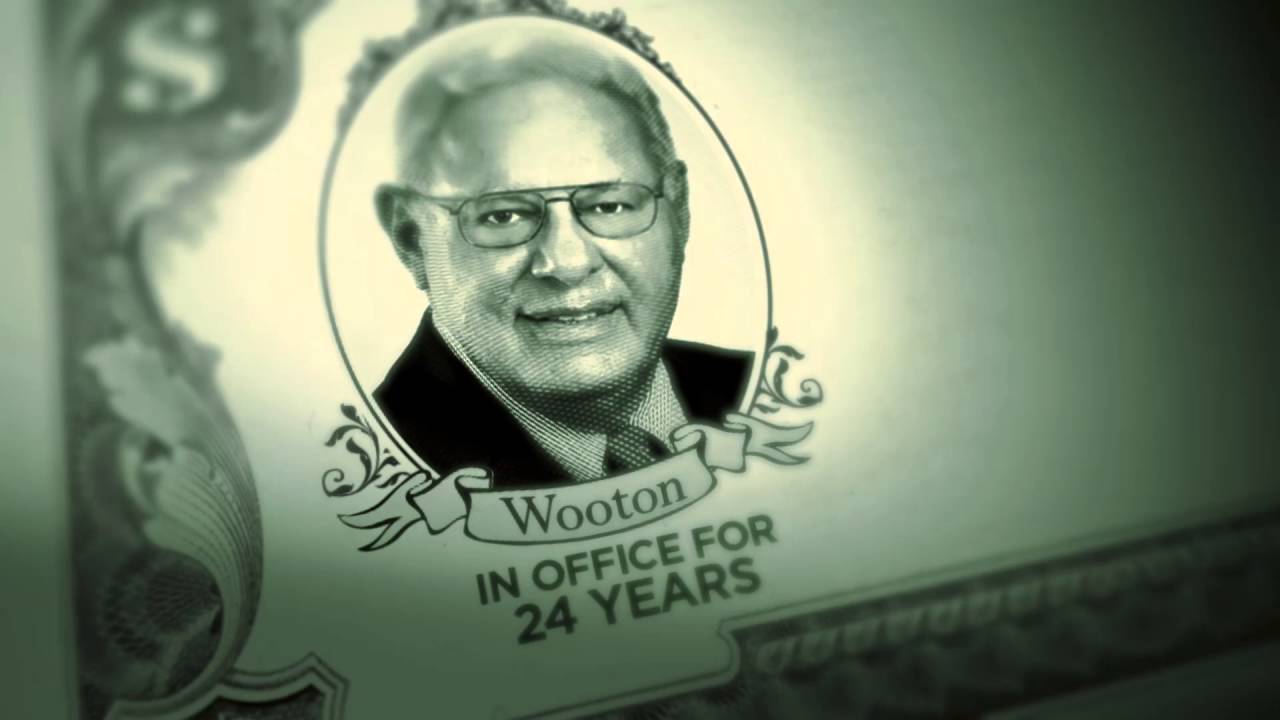 and

Although the Democrats have a partisan counterpart to the RSLC, the DLSC, the Republicans are far more eager, willing and systematically structured to solicit campaign donations from corporations.
By comparison to the RSLC numbers listed above, the DLSC has raised $8.25 million so far this year, with $3.14 million coming from trade unions, and $4.2 million coming from CEOs and corporations giving over $1,000 in aggregate contributions.
MORE LIKE THIS:
- How Scott Walker Made Wisconsin the National Poster Child for Dark Money Corruption
- KochPAC Rarely Gives Money to U.S. House Democrats…Except to These Four
- Reform Groups Call for a Criminal Investigation of the Trump Foundation
- Koch Justice: Billionaires Seek to Expand Influence over Law Enforcement and Courts in 2018
- Democrats Reintroduce DISCLOSE Act to Combat Dark Money "Poison"
---
https://www.propublica.org/article/big-corporations-put-up-seed-money-for-republican-nonprofit
justin elliot 2013
BUYING YOUR VOTE
Big Corporations Put Up Seed Funding for Republican Dark Money Group
IRS files show that some of the biggest companies in the country provided more than a million dollars a decade ago to launch a Republican dark money group.
Feb. 14, 2013, 8 a.m. EST
Some of the nation’s biggest corporations donated more than a million dollars to launch a Republican nonprofit that went on to play a key role in recent political fights.
Like the nonprofit groups that poured money into last year’s elections, the decade-old State Government Leadership Foundation has been able to keep the identities of its funders secret. Until now.
A records request by ProPublica to the IRS turned up a list of the original funders of the group: Exxon, Pfizer, Time Warner, and other corporations put up at least 85 percent of the $1.3 million the foundation raised in the first year and a half of its existence, starting in 2003.
The donor list is stamped “not for public disclosure,” and was submitted to the IRS as part of the foundation’s application for recognition of tax-exempt status. If approved, such applications are public records.
The foundation and other similar nonprofits are allowed to take anonymous and unlimited donations from individuals or corporations. That’s because they are classified as “social welfare” nonprofits, which are supposed to benefit the community at large, and not just one group or political party.
Last year, we reported how the State Government Leadership Foundation paid for Republican redistricting consultants to draw new congressional district maps in North Carolina. The resulting gerrymander helped flip the state’s congressional delegation to Republicans.
In recent years, the foundation has also funded TV ads targeting Democrats during the 2011 Wisconsin showdown over collective bargaining rights; attacking President Obama in Virginia over his energy policy; and accusing teachers unions of “destroying our children’s future.”
The foundation also gave $1.25 million in 2011 to the Indiana Opportunity Fund, a state-level nonprofit that ran anti-union ads featuring Republican Gov. Mitch Daniels. (That group was founded by attorney Jim Bopp, who has long fought against campaign finance regulation.)
The foundation’s single-biggest early donor was the now-defunct mortgage lender Ameriquest,which gave more than $260,000. (We contacted a number of the companies on the list; they did not respond to requests for comment.) Corporate trade associations including the Pharmaceutical Research and Manufacturers of America, the Edison Electric Institute, and the American Tort Reform Association also pitched in, each giving between $50,000 and $100,000.
The foundation’s affiliated organization, the Republican State Leadership Committee, focuses on winning state-level elections for the GOP and also gets corporate money, including fromtobacco and insurance giants. As an explicitly political organization, the committee has to disclose its donors.
By contrast, the recent funders of the foundation, which took in $2.5 million in 2011 including a single donation of $1 million, are still secret.
The foundation applied for IRS recognition as a social welfare group in late 2003 but was initially rejected. The IRS concluded the foundation was “a partisan organization” that “operated primarily for the benefit of a select group” – the GOP. Social welfare groups, the IRS’ rejection letter noted, must promote the “general welfare of the whole community” — not a particular group.
The foundation’s lawyers from the firm Arent Fox fired back in an appeal, arguing that the foundation was not a partisan outfit.
The foundation, according to the 2005 appeal, “was created to promote public debate” about issues including pharmaceuticals, securities regulation, and asbestos litigation.
“It may be useful to describe what the SGLF is not,” the appeal says. “The SGLF:
• Is not affiliated with the Republican Party in any way;
• Does not meet with or coordinate its activities with the Republican Party;
• Does not make contributions to, or accept contributions from, the Republican Party;
• Does not participate in political campaigns, elections or publish electioneering messages on behalf of any candidate or party;
• Does not invite Representatives of the Republican Party to speak at its events, and
• Does not participate in the Republican Party platform, does not recruit or train Republican candidates, does not fundraise for Republican candidates, and does not coordinate its issue selection or policy positions with the Republican Party.
In 2007, more than three years after the foundation’s application, the IRS ultimately recognized it as a tax-exempt social welfare group.
But the group’s protestations that it has nothing to do with the GOP seems at odds with its recent activities. Besides running ads attacking Democrats, the foundation was involved in redistricting in several states to, as the foundation put it in a letter to Republican legislators, draw “legislative lines that we will have to defend in 2012 and beyond.”
Foundation spokesperson Jill Bader told ProPublica that since its creation the foundation’s “activities have evolvedin some ways from those that were originally contemplated and conducted by the organization.”
Bader continued: “SGLF’s present activities are in strict compliancewith the requirements of the Internal Revenue Code and all future SGLF activities will be in strict compliance as well.”
==
==
404 elsewhere
https://flatheadbeacon.com/2016/11/01/montana-official-national-group-broke-disclosure-law-court-race/
Montana Official: National Group Broke Disclosure Law in Court Race
Republican State Leadership Committee's Judicial Fairness Initiative has until Wednesday to file campaign finance report
BY MATT VOLZ, ASSOCIATED PRESS // NOV 1, 2016
HELENA — A national organization that seeks to elect conservative judges blatantly violated state law by not reporting $268,000 that was used for attack ads against a Montana Supreme Court candidate, the state’s campaign finance regulator said Tuesday.
Commissioner of Political Practices Jonathan Motl gave the Republican State Leadership Committee’s Judicial Fairness Initiative until 3 p.m. Wednesday to register and file a campaign finance report detailing where the money came from.
“I fully expect them to comply,” Motl said. “If they don’t, we have options available.” Those options include having a judge issue an order for the organization to show cause.
Motl’s decision is the latest development in the highly contentious race between District Judge Dirk Sandefur of Great Falls and University of Montana adjunct law professor Kristen Juras for an open seat on the state’s highest court. The nonpartisan race has seen a flood of outside money with partisan interests, including the RSLC cash that helps Juras and about $60,000 from the state Democratic Party, which is backing Sandefur. Republican State Leadership Committee spokeswoman Ellie Hockenbury did not have an immediate comment.
The RSLC money went to a political committee called Stop Set ‘Em Free Sandefur, which used the cash to create a website, ad and mailers portraying Sandefur soft on crime. The anti-Sandefur organization reported in its campaign finance filings that the source of the money was the RSLC’s Montana-registered political committee.
However, that committee did not disclose any spending in that amount, prompting a complaint by the executive director of the Montana Trial Lawyers Association, which backs Sandefur.
Motl said he talked to the RSLC’s attorney, who told Motl that the money actually came from a different RSLC-affiliated group that is registered with the IRS as a tax-exempt 527 organization and is therefore not regulated by any campaign practice laws.
Motl, in the decision, called that position “foolhardy” and said the group’s IRS status does not exempt it from registering as a political committee when it is active in a Montana election.
“It is hard to fathom the logic of this attempt to avoid Montana reporting and disclosure laws,” Motl wrote in the decision.
The commissioner ordered the group to report and disclose the $268,000 it received in contributions and expenditures. He also ordered the anti-Sandefur political committee and the RSLC’s Montana political committee to update their filings.
Campaign violations are usually resolved through a cash settlement negotiated by the commissioner’s office and the violator, but they can go to court if a settlement is not reached.
==
The RSLC, for example, received at least $200,000 fromDevon Energy, $201,000 from Marathon Petroleum, and $150,000 from Noble Energy–all of whom operate fracking wells–yet state campaign finance filings only show the Republican State Leadership Committee's name when the committee makes a disbursement, if the name is mentioned at all.
==
http://www.exposedbycmd.org/**2016/11**/08/republican-state-leadership-committee-spends-big-keep-state-houses-red/
The little-known Republican State Leadership Committee (RSLC) is spending big this election cycle to maintain GOP control over state houses and is coordinating with dark money groups to fight off liberal ballot initiatives.
The RSLC is a 527 group which gained notoriety for its 2010 efforts to capture state houses and secure GOP control over decennial redistricting in a project called REDMAP.
This successful effort was spearheaded by President George W. Bush advisor Ed Gillespie, who is chairman emeritus of the RSLC for the 2016 election cycle. Gillespie founded American Crossroads with Bush campaign guru Karl Rove and Rove’s Crossroads helped fund the 2010 REDMAP project.
Although little known to the public, the RSLC has been described by Politico as “one of the most influential outside players on the right.” And New Yorker writer Jane Mayer describes the RSLC as a critical cog in the “shadow political machine” that emerged following the 2010 Citizens UnitedSupreme Court ruling. Emails unearthed by the Guardian showed that RSLC was in close contact with top campaign aides of Wisconsin Governor Scott Walker as he fought off a recall in 2011.
WHAT INDUSTRIES AND INTERESTS ARE BANKROLLING RSLC?
So far in 2016, according to CMD analysis, the RSLC has raised $17.95 million, the vast majority of which has come directly from corporations. Roughly 94.4% or $16.9 million has been raised from corporations, special interests and CEOs.
This includes: $1.34 million from fossil fuels interests, $2.7 million from the FIRE industries (Finance, Insurance, Real Estate), $2.16 million from pharmaceutical and healthcare-related interests, $1.56 million from gambling and tobacco interests, and $3.52 million from the U.S. Chamber of Commerce.
Prominent corporate donors include Reynolds American, $427,335; Altria Group, $206,000; Koch Industries, $216,590; PhRMA, $243,700; Wal-Mart, $200,300; Exxon $100,000; Peabody Energy $36,000 and CitiGroup Management Corp. $120,000.
Individuals have also invested heavily in the group. The RSLC’s second largest donor is the casino magnate Sheldon Adelson, who contributed $500,000, while eight members of the Michigan-based Devos billionaire family collectively gave $225,000.
MATCHING UP SECRETARIES OF STATE WITH DONORS TO TALK BALLOT MEASURES
Secretaries of State are charged with ensuring fair and accurate elections, but as the New York Times reported this week, under the leadership of RSLC, these state officials are working “to defeat liberal ballot initiatives on topics like the minimum wage, and to raise money from corporations that also wanted to kill these efforts.”
The Times reported that on May 3,four Republican secretaries of state, Jon Husted of Ohio; Wayne Williams of Colorado; Barbara Cegavske of Nevada; and Kim Wyman of Washington, met with the National Restaurant Association to discuss minimum wage initiatives in Colorado, Washington and Ohio, as well as minimum wage battles in Cincinnati and Seattle. The NRA is a proponent of the $2.15 tipped minimum wage and a major corporate opponent to Fight for $15 and any effort to raise the wage.
That meeting was followed by one with Reynolds Tobacco to discuss tobacco tax ballot initiatives. What was decided at those meetings was not disclosed.
The Times also revealed that the RSLC created tiered sponsorship packages that rewarded its largest donors with “private briefings with Secretaries of State,” and with regular ballot initiative briefings led by the Center for Conservative Initiatives, a project of the State Government Leadership Foundation, a “dark money” social welfare organization originally seed-funded by Exxon, Pfizer, and Time Warner, among other corporations.
RSLC SPENDING IN THE STATES
Most of the RSLC’s contributions are funneled to state PACs that runvicious attack ads. By channeling their money through the RSLC, corporate interests are able to distance themselves from the ugliest aspects of electioneering, while providing the financial means to make it possible.
In Nevada, the RLSC has given $600,000 to the Nevada Jobs Coalition, a PAC running attack ads that critics on both sides of the aisle submit“just keep getting nastier and more deceitful–the things they say in these ads simply aren’t true.”
In Colorado, the RSLC has given $800,000 to Colorado Citizens for Accountable Government, an organization that is being sued for sending out fortune cookies attached to mailers that falsely accuse a Democratic senate candidate of taking a taxpayer-funded junket to China. (“I’ve never been to China,” the candidate, Rachel Zenzinger has said repeatedly.)
In Minnesota, the RSLC has dumped $275,000 into Minnesota Jobs Coalition, an officially non-partisan dark money social welfare group that exclusively supports Republican candidates, and is spending big on attack ads against Democrats like State Representative Paul Marquart.
In North Carolina, the RSLC has given $500,000 to Truth and Prosperity Inc., a PAC formed “to support incumbent Republican Lt. Gov. Dan Forest,” and is running adstouting, not coincidentally, Forest’s pledge to eliminate corporate income taxes.
In Washington state, the RSLC has given $200,000 to the Leadership Council, which subsequently donated to the Working Families PAC, a group that is running ads against State Senator Mark Mullet in his race against Representative Chad Magendanz, a candidate who, unlike Mullet, opposes increasing the minimum wage to help real working families.
In New Mexico, the RSLC has given $100,000 to Advance New Mexico Now, a PAC that is supporting Republicans and their bid forstricter criminal sentencing laws. Of note, theRSLC filings show that the organization received over $70,000 from the private prison giants CCA and Geo Group.
In addition to funding state-based PACs, the RSLC has also contributed $2,695,223 to its own “Judicial Fairness Initiative,” a project the RSLC started in 2014 that produces attack ads in judicial races.
In Montana, the RSLC’s Judicial Fairness Initiative was reprimanded and forced into compliance by the state’s campaign finance regulator for having “blatantly violated state law by not reporting $268,000 that was used for attack ads.”
The Montana advertisements in question have been condemned across the board for their sensationalism, and other advertisements the organization has aired (see and
Although the Democrats have a partisan counterpart to the RSLC, the DLSC, the Republicans are far more eager, willing and systematically structured to solicit campaign donations from corporations.
By comparison to the RSLC numbers listed above, the DLSC has raised $8.25 million so far this year, with $3.14 million coming from trade unions, and $4.2 million coming from CEOs and corporations giving over $1,000 in aggregate contributions.
calvin
==
Rep. Paul Ryan (R-Wisc.) headlined the RSLC event
https://www.opensecrets.org/news/**2016/**07/heres-how-it-works-industry-lawmakers-and-money-mingle-in-cleveland/
... gop conv
The afternoon of cocktails and hors d’oeuvres was organized by theRepublican Legislative Campaign Committee, part of the Republican State Leadership Committee, a national 527 political organization that aims to elect down-ballot Republicans.
The two-hour catered event treated politicians and their corporate guests to salmon-wrapped asparagus, watermelon topped with bleu cheese and edible flowers, and two open bars. (Note to watchdogs: This probably was ethically fine for Ryan and any other federal lawmakers there.) Republican officials and representatives of GOP-aligned big money groups like American Crossroads milled about chatting with corporate officials representing some of the biggest corporations in the country, from industries as diverse as tech and retail to fossil fuels and private prisons.
“Your help, your donations, your efforts to help in our states to maintain these majorities to continue to move us forward, is extremely important,” said Ohio House Speaker Cliff Rosenberger, kicking off the event. “And by the way, before you go, make sure you see us again to see how much money we can get from you.”Reporters for the OpenSecrets Blogwere not on the invitation list, but were able to gain access to the event.
Together, the more than two dozen corporations and organizations sponsoring the event have given$12.4 million to the RSLC’s efforts since 2013. More than half of that came from just two donors: the U.S. Chamber of Commerce, $5.4 million, and the Altria Group,which gave nearly $1.2 million.
Republicans are not alone in raising cash from corporations that hope to curry favor with legislators who will be formulating policies that will affect their bottom line. The RSLC’s analog on the left, the Democratic Legislative Campaign Committee, raises millions from unions and corporations, and Democratic leaders will almost certainly be wooing these groups next week in Philadelphia.
Very few of the sponsors at this morning’s RSLC event, however, have been as generous with the DLCC. In all, those same sponsors only gave $2.3 million to the DLCC since 2013, and 11 have not given a single contribution to the Democratic group in that time frame. On average, the corporations sponsoring the Paul Ryan event favor the RSLC more than eight to one over the DLCC, with only four companies — Wal-Mart, AT&T, Monsanto, and Microsoft — having a near even split in support for both.
Early in his speech, Ryan gave a nod to fossil fuel interests present, such as the American Coalition for Clean Coal and Electricity, a sponsor, and the American Fuel & Petrochemical Manufacturers, on the invitee list, in the middle of a metaphor about government effectiveness.
“In the House we sort of see ourselves at the bottom of a ship, shoveling coal into the engine,” Ryan said. “By the way, there’s nothing wrong with shoveling coal into an engine. Shout out to coal country,” he said, as the crowd burst into applause.
---
nice graph huge CoC]
Ryan concluded by emphasizing that the party needs resources to “make sure the down ticket stays strong” and maintain a “big and deep party” on all levels of government.
Other notable sponsors include two of the largest private prison corporations, Corrections Corporation of America (which gave $53,000 since 2013) and the GEO Group. OpenSecrets Blogreporters also spied nametags laid out for foreign dignitaries, including Nigel Farage, Brexit leader and former head of the U.K. Independence Party, and Ron Dermer, the Israeli ambassador to the U.S.Big Pharma had a strong showing, with event backing from Astellas Pharma, Pfizer, Novartis and Teva Pharmaceutical Industries. The pharmaceutical manufacturing industry as a whole has been a big supporter of the RSLC, giving more than $3.4 million since 2013.
Categories: Congress Influence & Lobbying Money Talks Outside Money Political Parties Politicians & Elections
Tags: American Crossroads, big pharma, cca, DSLC, fundraiser, Paul Ryan, Republican National Convention,rnc, RSLC, state politics
===
arly in his speech, Ryan gave a nod to fossil fuel interests present, such as the American Coalition for Clean Coal and Electricity, a sponsor, and the American Fuel & Petrochemical Manufacturers, on the invitee list, in the middle of a metaphor about government effectiveness.
“In the House we sort of see ourselves at the bottom of a ship, shoveling coal into the engine,” Ryan said. “By the way, there’s nothing wrong with shoveling coal into an engine. Shout out to coal country,” he said, as the crowd burst into applause.
Ryan concluded by emphasizing that the party needs resources to “make sure the down ticket stays strong” and maintain a “big and deep party” on all levels of government.
Rep. Paul Ryan (R-Wisc.) headlined the RSLC event, expressing the importance of resources to Republican efforts.
Rep. Paul Ryan (R-Wisc.) headlined the RSLC event, expressing the importance of resources to Republican efforts.
Big Pharma had a strong showing, with event backing from Astellas Pharma, Pfizer, Novartis and Teva Pharmaceutical Industries. The pharmaceutical manufacturing industry as a whole has been a big supporter of the RSLC, giving more than $3.4 million since 2013.
Other notable sponsors include two of the largest private prison corporations, Corrections Corporation of America (which gave $53,000 since 2013) and the GEO Group. OpenSecrets Blog reporters also spied nametags laid out for foreign dignitaries, including Nigel Farage, Brexit leader and former head of the U.K. Independence Party, and Ron Dermer, the Israeli ambassador to the U.S.
==
https://us-mg5.mail.yahoo.com/neo/launch?.rand=esmkmv4qcvjj7#3913245312
facing so
this week a panel of three federal judges refused to delay its order that North Carolina redraw congressional maps before the state's March 15 primary elections on the grounds that North Carolina's 1st and 12th districts were unconstitutionally gerrymandered along racial lines.
The ruling was not a surprise: North Carolina's congressional and legislative districts have been embroiled in litigation since they were devised by state Republicans after the 2010 Census. In their decision, the judges agreed with voting rights plaintiffs who argued that the unconstitutional way race was used as a "nonnegotiable criterion" in drawing up the maps outweighed the inconvenience the ruling posed to the state, which would could be forced to move its primaries if the ruling stands.
State attorneys immediately appealed the decision to the U.S. Supreme Court; elections experts are split in their predictions about which way the high court will rule.
The North Carolina case highlights the growing role of powerful, well-funded political organizations in the high-stakes world of election map-making. In North Carolina, the Republican State Leadership Committee — a Washington, D.C.-based super PAC created in 2002 to elect state-level GOP candidates— played a uniquely influential role in both creating the state's contested districts and helping to elect state lawmakers and a N.C. Supreme Court Justice who would pass and approve them.
WINNING THE LEGISLATURE:As documented by Facing South and others, in 2010 the Republican State Leadership Committee made it a priority to win over state legislatures in time for the biennial redistricting process. The RSLC funneled $1.25 million to Real Jobs NC, a 527 political committee launched by conservative donors including Art Pope, who sat on the group's board.
Real Jobs NC was part of a constellation of Pope-connected groups that targeted nearly two-dozen races. Republicans won 80 percent of the contests, helping fuel the GOP's historic capture of the N.C. General Assembly, and putting Republicans in charge of drawing the state's new Congressional and legislative districts.
DRAWING THE LINES:After winning the election, the Republican State Leadership Committee turned to its nonprofit arm, the State Government Leadership Foundation, to aid in creating North Carolina's new political districts.
As reported by ProPublica, Chris Jankowski — who headed both the RSLC and the Leadership Foundation — wrote a letter to North Carolina lawmakers describing the role his groups could play in the process. The letter, which became public as a result of the redistricting lawsuits, read in part:
Our team would be happy to assist in drawing proposed maps, interpreting data, or providing advice … We are engaged in a number of states and believe we are playing a meaningful role in helping draw fair and legal lines that will allow us to run competitive elections in 2012 and in future cycles.
Heading the Leadership Foundation's redistricting team was Tom Hofeller, a GOP mapmaking veteran. On Feb. 1, 2011, Hofeller came to North Carolina for the first of 10 visits he would make to the state. According to depositions gathered in the lawsuit, Hofeller and others — including Art Pope — used Hofeller's software to create a so-called "10-3" map that would pack Democrats (and African Americans) into three districts, allowing 10 others to be dominated by Republicans.
SECURING THE COURT: With North Carolina's controversial districts guaranteed to face a robust legal challenge, the RSLC moved aggressively to secure a conservative majority on the N.C. Supreme Court, where the redistricting lawsuit would be heard.
:{In 2012, with conservative Justice Paul Newby (in photo) facing a tough election and the court's 5-4 conservative majority on the line, the RSLC funneled nearly $1.2 million into the North Carolina-based group :{Justice for All:(style="background-color:#ffff66ff"):}: N.C., formed in May of that year. Justice for All then used that money and donations from other sources to fund another state-based group, the North Carolina Judicial Coalition, which ultimately spent nearly $2 million on ads supporting Newby. Justice for All also spent $175,000 directly on ads supporting Newby, who beat opponent Sam Ervin by a 52-48 margin.}:
In 2014, the RSLC sent over another $1.3 million to Justice for All, which spent nearly $900,000 on a widely-panned attack adagainst incumbent justice Robin Hudson, and $425,000 more supporting conservative candidate Mike Robinson in a second supreme court race. Both liberal incumbents held onto their seats.
The N.C. Supreme Court ruled twice to accept the congressional and state legislative districts, most recently in December 2015 on a 4-3 decision following party lines. Justice Newby refused a request from attorneys involved in the redistricting lawsuit that he recuse himself, given the role the RSLC played in both drawing the maps and electing him to office.
The conservative N.C. Supreme Court majority approved the maps in December even after the U.S. Supreme Court, which remanded the case back to North Carolina, had taken a clear stand against racial gerrymandering in a similar case in Alabama. As legal expert Billy Corriher wrote for the Center for American Progress, "When it upheld the maps [in December], the North Carolina Supreme Court's four-justice conservative majority essentially ignored the rules laid out in the Supreme Court's Alabama decision."
This week, the state Supreme Court refused to rehear a different case that challenges both the legislative and congressional districts, a case that may also end up at the U.S. Supreme Court.
Big Money, court conflicts
The RSLC's role in North Carolina's judicial elections has been especially controversial given the backing the political group receives from key corporate interests in North Carolina, including companies and groups with business before the N.C. Supreme Court.
A Facing South/Institute for Southern Studies analysis of reports submitted to the Internal Revenue Service finds that eight North Carolina companies have given $100,000 or more to the RSLC since 2011. While the donations slowed slightly in 2015, they continue to come from many of the companies that have been faithful donors over the years. Total contributions from North Carolina businesses to the RSLC totaled nearly $733,000 last year.
Among the largest North Carolina backers of the Republican State Leadership Committee:
REYNOLDS AMERICAN:Leading the pack by a wide margin is tobacco giant Reynolds American, based in Winston-Salem, which has given the RSLC close to $3.1 million over the past five years. Last year, Reynolds completed a $27.4 billion merger with Greensboro-based tobacco company Lorillard, which is the state's second-biggest donor to the RSLC, having pitched in nearly $335,000 since 2011. The merger unites two already substantial political donors to conservative groups. In addition to funneling money through the RSLC, the two companies — which have had key cases appear in N.C. courts in recent years — have been directly involved in spending on judicial elections: Since 2012, Reynolds American has given Justice for All $130,000 and Lorillard has donated $25,000. Reynolds gave $150,000 to the N.C. Judicial Coalition in 2012.
DUKE ENERGY:The nation's biggest utility company, which has had considerable business before the high court regarding rate hikes and environmental issues such as its 2014 coal ash spill, has given consistently every year since 2011 for a total of $305,000.
Other leading corporate donors to the RSLC from North Carolina include Time Warner Cable ($300,000) and Variety Stores, the retail chain owned by Art Pope ($250,000). The following chart outlines North Carolina's top corporate contributors to the RSLC (click on it for a larger version):...
==
---
nick c nyt on fresh air
On the group that engineered the one-party-rule strategy
[The Republican State Leadership Committee] focus[es] simply on state lawmakers and attorneys general and judges. That was their niche. It's kind of under the radar because, in Washington, there's not that much attention paid to state governments at that level. And what happened in the last couple of years was this group had been around for a while and they approached a very senior Republican, Ed Gillespie, and they said, "Look, with you on board and you as our rainmaker and chairman, we can really raise our game for 2010 and beyond."
So what they did was they raised a huge amount of money — $30 million in 2010, which is a lot for state politics. What they can do is, if you are a state party chairman in Iowa or Alabama or Louisiana, you are not necessarily going to have access to the best pollsters [or] the biggest donors around the country in what we call "the money centers" — in Texas and Florida and Southern California and New York. So what a group like this does is — it has access to those people, it has a national perspective, it has better polling and research than some of the state parties and state leaders — and what it can do is provide all of that as kind of a central funnel of money and expertise [and] then [make] it available to the state operations, state by state. It's very effective.
On out-of-state efforts by Democrats to pass gay-rights state legislation
So Minnesota is a state where ... there's a $500 limit on contributions to candidates, and it is kind of limiting because you can't just hand them a check for $20,000 or half a million, for that matter, and it's hard to get money to them....
---
nyt
...
Their combined work has helped remake the nation’s political landscape.Republicans or Democrats control both the legislature and the governor’s office in 36 states, the most in 60 years. Twenty-three states are now solely controlled by Republicans, and 13 solely by Democrats. In two others — New York and Washington — one chamber is jointly controlled.
In some states, the shifts are largely organic, the product of Latino immigration, economic transformation and other demographic forces.But elsewhere, the strategic deployment of campaign cash has helped consultants and donors accelerate or arrest states’ natural drift toward one party or the other, defying national election trends or voter registration advantages.
“People who want to see policies enacted, and see things tried, are moving their activity to the states, and away from Washington,” said Ed Gillespie, a longtime Republican strategist who has played a central role in efforts to swing state legislatures to Republican control. “There is a sense that you can get things done.”
Their party’s success has empowered Republican lawmakers in dozens of states to redraw legislative districts on both the state and federal levels, potentially ensuring their party’s control of the United States House of Representatives for the rest of the decade.
But those successes are also paving the way for what amounts to a vast, real-world experiment in lawmaking: At a time when Washington appears hopelessly divided and gridlocked, elected officials in one-party states have aggressively reshaped government policy, whether legalizing same-sex marriage and marijuana, abolishing taxes and regulations, or restricting guns or labor unions....
Not unlike a political version of Cayman Islands banks, the networks allow political strategists to sidestep regulations and obscure the source of funds. Campaign contributions that would be banned or restricted in one state can be sent to a state where the rules allow money to flow more freely, often scrubbed of the identity of the original donor. Some groups work behind the scenes to orchestrate “money bombs” of smaller contributions from hundreds of different donors, allowing the groups to provide candidates with large doses of cash — fingerprint-free — even in states with low contribution limits.
Both networks arose to help Democrats and Republicans skirt the McCain-Feingold campaign-finance law, which sharply cut the flow of money from national parties to the states. But over the last three years they have been turbocharged by the Supreme Court’s Citizens United decision, which made it easier in many states for unions, corporations and the wealthy to pool money for large independent expenditures.
Today, state and even local races increasingly are financed by checks written hundreds or thousands of miles away. A five-figure contribution from a Colorado energy executive passes through a bank account registered in Pennsylvania, where it is mixed with money that ends up in the campaign coffers of an attorney general candidate in Iowa. Business money raised in Michigan, where corporate contributions to candidates are banned, fuels campaigns in Florida and Maine, where such contributions are legal.
Much of the money passes through a handful of Washington-based organizations: From 2006 to 2010, the volume of campaign cash flowing from Beltway-based groups to state parties and candidates almost doubled, to $139 million from $79 million, according to an analysis by The New York Times of data collected by the National Institute on Money in State Politics.
That figure is widely expected to grow in this year’s midterm elections: Strategists say donors are persuaded that dollars spent in relatively low-budget state elections can go further in advancing their agenda than money burned in the ceaseless trench warfare of Washington.
“The donors are saying there’s nothing going to happen in Washington anytime soon,” said Robert McKay, chairman of the Democracy Alliance, an elite club of liberal donors around the country that has been closely involved in efforts to move swing states into the Democratic column. “But conversely, progressive ideas can be hampered — or be promoted — at the state level.”
A Rare Opportunity
In early 2010, a little-known group called the Republican State Leadership Committee approached Mr. Gillespie, the party strategist.
Once part of the Republican National Committee, the group was forced by McCain-Feingold to reorganize as an independent organization, and had built up a respectable record of electing Republican state officials. But with furor growing over President Obama’s health care law, officials at the leadership committee believed they had a rare opportunity to topple Democratic majorities around the country.
Mr. Gillespie had a sterling résumé in Republican politics, with stints as head of the Republican National Committee and as chairman of the Virginia Republican Party. He was also a founder of one of Washington’s top lobbying firms, with an enviable Rolodex and deep ties to the Beltway’s trade associations.
Mr. Gillespie came on as chairman and chief rainmaker. Armed with PowerPoint slides showing long lists of likely pickup opportunities, he took his pitch to Wall Street investors in New York, energy executives in Dallas and dozens of corporate government relations offices in Washington.
Republicans could do more than just flip a few state legislatures, he told them. They could use their new statehouse majorities to build a firewall in the United States House of Representatives: congressional districts so favorably drawn for Republicans that the party’s House majority would endure for a decade.
“It was three yards and a cloud of dust,” Mr. Gillespie said of his hunt for dollars. “It was a constant working, and working, and working until it broke through.” (Mr. Gillespie is now talking about making his own bid for elected office, a run for the United States Senate in Virginia.)
INTERACTIVE GRAPHIC
Taking the Battle to the States
A look at the party splits in the states on different issues.
OPEN INTERACTIVE GRAPHIC
The group’s fund-raising shot upward, bolstered by bigger contributions from longtime donors — such as tobacco, pharmaceutical and telecommunications interests — and new money from the growing network of post-Citizens Unitedconservative political groups. By Election Day, the leadership committee would raise$30 million, its biggest two-year haul ever.
The bulk of that money went into a carefully laid assault on Democratic lawmakers in 19 states, planned in tandem with efforts by the Republican Governors Association. In some states, the groups handed cash directly to state parties or candidates. Elsewhere, they spent millions on hard-to-track radio and television advertisements.
The leadership committee’s nationwide base of donors lent candidates distance from the source of the money benefiting them, and allowed the committee to maneuver around varying rules that apply to campaign spending in different states. Instead of spending money where it was raised, the Republican State Leadership Committee could allocate checks to affiliates in other states. Other checks could be pooled into a central fund in Washington and then distributed in large chunks to state Republican Parties, to candidates or to campaigns by independent groups.
Alabama was an obvious target. Long after its voters had become overwhelmingly Republican, Alabama retained Democratic majorities in the Legislature. Mr. Hubbard, himself a state representative, and officials at the leadership committee believed just one well-organized push would send the Democrats into permanent minority status.
Yet state law prohibited corporations from giving more than $500. And other potential donors were unwilling to give to the party at all, in case the takeover effort failed. “There were a lot of people and companies who didn’t want to give to us directly because they feared the Democrats,” Mr. Hubbard said.
Many of those donors were willing, however, to give to a Republican group in Washington. After meeting with leadership committee officials, Mr. Hubbard, along with his finance chairman, State Senator Del Marsh, began raising money for the group. If they did well enough, Mr. Hubbard believed, the leadership committee would make a similar investment in Alabama.
“We had to become players for them,” said Mr. Hubbard. “Their job is to flip legislatures, and we wanted them to help us flip Alabama.”
During the 2010 cycle, the leadership committee took in close to a million dollars from Alabama donors. And over the same period, the group directed about $1.4 million into an Alabama-registered political action committee, all of it from out-of-state corporations. Because the state allowed unlimited transfers between political action committees and parties — a loophole long exploited by Democrats and Republicans alike — the leadership committee could shuffle all of that money to the state party and a pair of committees controlled by Mr. Hubbard and his team.
The arrangement also offered donors a way to help Mr. Hubbard without their checks showing up on the Alabama party’s public filings. One such supporter was the Poarch Band of CreekIndians, which operates several large casinos on tribal land in Alabama.
The tribe was wary of the rapid expansion of non-Indian gambling in the state, particularly the proliferation of small bingo parlors competing with their resort casinos, and stood to benefit if antigambling Republicans took control of the Legislature. But precisely because they opposed gambling, few Republican state lawmakers or candidates would accept the tribe’s contributions.
After meeting with Mr. Marsh and other Republicans, said Robert R. McGhee, director of government affairs for the tribe, the tribe chose a different approach: It donated $350,000 to the leadership committee. When the contributions were later disclosed, critics accused Mr. Hubbard of using the Washington group to launder the money by exchanging it with other contributions.
A spokesman for the leadership committee said that the Poarch Creek contributions had been allocated to the group’s administrative account, to pay for overhead and other expenses, and that the staff members involved in arranging the checks no longer worked at the organization. Mr. Hubbard said there had been no agreement to directly swap cash.
“The conversation was, ‘I’ve got some people in Alabama who are very interested in giving money to help elect Republicans to state legislatures, and I would hope that if we help raise money for you, you will help us win in Alabama,’ ” Mr. Hubbard said.
Launch media viewerGun-rights advocates at the Democratic-controlled State Capitol in Denver on Jan. 9. Matthew Staver for The New York Times
Swap or no swap, public records suggest that many of the contributions the leadership committee raised in Alabama made their way to races in other states.
About $260,000 from Alabama donors, for example, was assigned to a Pennsylvaniaaccount originally set up to collect checks from federal political action committees. (Pennsylvania is one of a handful of states that allow such contributions to be spent directly on state races.) But none of the money raised was spent in Pennsylvania. Instead, the Alabama contributions were pooled with hundreds of thousands of dollars in political action committee checks and individual contributions from around the country. Beginning in August 2010, the leadership committee transferred $860,000 from the Pennsylvania account to the Republican Party in Iowa to assist its candidates.
The Republican Governors Association made similar transfers. In Michigan, for example, a political action committee set up by the governors association raised $8.4 million. Virtually all of it came from a roster of elite donors outside Michigan, such asBob Perry, the Texas homebuilder, and David Koch, the billionaire industrialist. Most of that money was transferred to the Michigan Republican Party.
While out-of-state donors were funneling millions of dollars into Michigan, Republicans were sending millions of dollars back out to the governors association in Washington. All told, Michigan donors contributed $8.5 million to the association. That is roughly as much as the group spent on independent advertisements to help elect the Republican candidate for governor,Rick Snyder, on top of the money transferred directly for the Michigan party.
Rich Robinson, the head of the Michigan Campaign Finance Network, a watchdog group, said he believed the transactions were designed in part to allow Michigan businesses, which could not give directly to Mr. Snyder, to exchange their contributions for money from out-of-state individual donors, who could legally donate. “It appeared to be a currency swap to obfuscate the actual sources of money,” Mr. Robinson said. “I had never seen anything like this before, particularly at this scale.”
More than $5 million of the Michigan money raised by the governors association, for example, was a corporate money from the Michigan Chamber of Commerce. Two million dollars of that went to association affiliates in Maine and Florida, where corporate contributions are legal.
A spokesman for the governors association, Jon Thompson, said that all of its contributions had been disclosed in campaign filings and that the association made sure its transfer stayed within each state’s restrictions on the size and source of contributions. “The R.G.A. raises funds to elect and support Republican governors,” Mr. Thompson said, “and we invest that money in full compliance of the law wherever we see any opportunity to make a difference in accomplishing our objective.”
Only when the dust from the 2010 elections settled did the full scale of the Republicans’ success become clear.
The governors association spent $99 million and ended with Republican control of 29 governorships, up from 23, the highest number for either party in a decade. Republicans controlled 25 legislatures around the country, up from 14, including inpivotal swing states such as North Carolina, Wisconsin, Ohio and Pennsylvania.In Alabama, Republicans won supermajorities in both houses of the Legislature. Mr. Hubbard’s colleagues elected him speaker of the Assembly, while Mr. Marsh became Senate leader.
The Alabama Republican Party’s finances during that period have since come under scrutiny: Some of the party’s records have been subpoenaed by the Alabama attorney general, Luther Strange, a Republican, though the scope of his office’s inquiry is unclear, and Mr. Hubbard has denied any wrongdoing.
But the impact of Republican governance in Alabama has been undeniable. In the party’s first year in control, the Legislature passed — and the governor signed — more than 30 major pieces of legislation, including new tax breaks for businesses, ethics overhauls and restrictions on abortion and union organizing.
The Gay-Rights Battle
In May 2012, a former congressional aide named Kirk Fordham stood at the front of a packed ballroom in the basement of the Mandarin Oriental hotel in Washington, a few blocks from the Jefferson Memorial. Before him sat more than a hundred of the country’s leading gay donors and advocates, all of whom had pledged to keep the proceedings confidential.
Launch media viewer
Representative Mike Hubbard, a Republican in Alabama, said, "We had to become players for them. Their job is to flip legislatures, and we wanted them to help us flip Alabama.” William Widmer for The New York Times
RECENT COMMENTS
fireside reader 4 days ago
I am alarmed. A Constitutional Convention would be a great idea--if we could keep the dollar-laden lobbyists, especially the Koch brothers...
SEE ALL COMMENTS
It was the third day of an annual conference known as OutGiving, organized by the Gill Action Fund, a Denver-based group, and Mr. Fordham, the group’s executive director, was clicking through a presentation known as “punishing the wicked.” As the donors watched, Mr. Fordham scrolled through names, pictures and, in some cases, videos of state lawmakers and other elected officials, each one an opponent of gay-rights legislation. All would be targeted for defeat.
Founded by a press-shy software entrepreneur named Tim Gill, the fund had racked up a string of wins in state races, helping elect dozens of lawmakers who supported gay rights — or unseating their opponents — in Iowa, Colorado and New York. In 2012, Mr. Fordham’s presentation showed, Minnesota was rich with potential targets.
Two years earlier, Republicans had won an upset victory there, taking control of the State Senate and the State House for the first time in nearly four decades. The new Republican majorities had sought to enact a wave of conservative or pro-business policies, battling with the new Democratic governor, Mark Dayton, over tax cuts, education spending and a measure to rein in unions.
One bill in particular had the Gill Action Fund’s attention. Minnesota already had a law on the books banning same-sex marriage. But over Mr. Dayton’s objections, Republican lawmakers had put a question on the November ballot asking voters to enshrine that ban in the State Constitution, making it less vulnerable to repeal.
Other deep-pocketed gay-rights groups, both in Minnesota and around the country, were already mobilizing to defeat the marriage initiative. The Gill group had a complementary goal: helping Democrats win back the Legislature, so that Republicans would not get a second chance.
By the spring of 2012, two strategists for the group had already spent weeks in Minnesota, traveling to swing legislative districts, sorting through turnout data and gauging the quality of the candidates Democrats were recruiting. But the state has some of the lowest donation limits in the country. A candidate for State Assembly could accept only up to $500 from individuals, unions or political action committees.
So instead of cutting a few big checks, the fund picked a handful of candidates and then organized a blizzard of small contributions to them from dozens of donors. As Election Day neared, out-of-state contributions began to flow into the campaign accounts of seven Democratic candidates for the Minnesota Legislature. The checks came from Philadelphia, from Los Angeles and San Francisco, from New York City and the Hudson Valley — at least 200 contributions in all from at least 50 donors around the country, each one at or under the state’s limit.
Kevin Dahle, a Democratic candidate for Senate facing an uphill campaign in a mostly rural part of Minnesota, raised almost a fifth of his campaign chest from out-of-state gay-rights supporters. Paul Rosenthal, running in a House district in suburban Minneapolis, received about a quarter of his contributions from the same list of donors.
While Mr. Gill’s team organized contributions directly to candidates, it was also joining up with one of the most successful state-based political operations anywhere in the country: a liberal nonprofit group called the Alliance for a Better Minnesota.
Two years earlier, the alliance had played a pivotal role in helping make Mr. Dayton governor, in part by persuading an array of outside interests — unions, abortion-rights supporters and environmental groups — to pool money and coordinate their political spending.
A handful of big in-state donors anchored the alliance’s fund-raising, led by Minnesota labor unions and Alida Messinger, a wealthy philanthropist and Rockefeller heiress formerly married to Mr. Dayton. The commitments by in-state donors, and the prospect of giving Democrats control of state government, in turn helped draw out-of-state money for 2012. While the state Democratic Party paid for direct mail and radio ads, the alliance organized a major campaign of television and Internet advertising.
Because the Alliance for a Better Minnesota is a nonprofit organization, not a campaign committee, it is not required to disclose a full roster of its donors. But state law requires the group to disclose sources of funding for its political spending, providing a glimpse of how the 2012 effort was financed.
Ms. Messinger contributed a total of $1.3 million, both directly and through two other fund-raising committees set up to manage donations. An additional $937,000 — about a quarter of the total raised — came from out-of-state donors, among them the National Education Association, the teachers union, and a Washington-based organization called America Votes. Three donors affiliated with the Gill Fund provided $90,000.
...
The fund and other national gay-rights groups also raised millions of dollars from out of state for efforts to defeat the anti-gay-marriage initiative. Separately, another Washington-based group, the Democratic Legislative Campaign Committee, contributed $400,000 to help finance a joint polling and research effort for the alliance and the Democratic Party. The committee, which raises money from unions, wealthy individuals and corporations to help elect Democratic state lawmakers, also contributed $700,000 directly to the state party to help elect legislative candidates, making it one of the party’s largest donors.
By Election Day, Democratic candidates and committees had amassed a nearly unprecedented cash advantage over the Republicans. The alliance poured an additional $2.5 million in advertising into 32 races. Democrats won all but six, picking up majorities in both chambers of the Legislature.
In May 2013, Minnesota became the 12th state to legalize same-sex marriage. The Gill Fund is now raising money for incumbent lawmakers who voted for the measure, an official there said.
“No Republican or Democratic lawmaker from any state, red or blue, needs to question whether or not we will have their back when they do the right thing,” Mr. Gill said in a statement. “We will.”
Looking for Targets
The blossoming interest of donors has fueled what both sides describe as an arms race: Liberal and conservative groups are now moving quickly to identify and set up shop in states where demographic shifts and hot-button policy disputes are opening up opportunities to radically reshape state government.
They have been propelled, in part, by the vivid successes of their opponents. North Carolina, a state won by Mr. Obama in 2008, has since become one of the country’s foremost laboratories of aggressive conservative policy making.
In Colorado, a state where voters outlawed same-sex marriage a half-decade ago and Republican voters outnumber Democrats, Democrats swept to full control of state government in 2012. Over the last year, they have enacted sweeping changes on gun control, marijuana legalization and civil unions. Some of the legislation has provoked a fierce reaction from voters: Two Democratic state senators who supported the gun-control bill were ousted in recall elections in September, while a third recently resigned to avoid being forced into a recall vote.
“There’s undoubtedly more interest in what’s happening in the states right now,” said Michael Sargeant, executive director of the Democratic Legislative Campaign Committee, which raised significantly more money in 2012 than in any previous cycle since its founding. “There is less of a knee-jerk need among some donors that their contributions need to stay in their state.”
This year, Republicans are targeting states like West Virginia. The state has long been reliably Democratic, but disputes over the regulation of coal mining and environmental rules have alienated important Democratic constituencies, providing what Republicans believe is a clear chance to flip the state Republican over the next few election cycles.
Charles and David Koch, brothers whose philanthropic and political network has helped fuel a Republican resurgence in the onetime union strongholds of the industrial Midwest, have also stepped up their political activity in the states; they hope to rebound in places like Virginia, where a Democrat won the governorship in 2013, and consolidate earlier victories in states like Michigan and Wisconsin.
Liberal donors are following suit, focusing on states like Arizona, where Latino immigration has expanded the pool of potential Democratic voters. Last spring, the Democracy Alliance began a $10 million State Initiatives Fund, aimed at building liberal organizations and winning back legislative seats in 12 states, including North Carolina and Florida. In Maine, a consortium of progressive groups financed by the hedge fund billionaire S. Donald Sussman, an alliance member, is looking to unseat Gov. Paul R. LePage this year and put both the governor’s office and the Legislature under Democratic control.
In a measure of their ambition, liberal groups are even targeting some states in the Old South, convinced that superior organization and money can help them begin to win back governorships and legislative seats. Interest has focused on Georgia, which has experienced significant Latino immigration and where 600,000 voting-age African-Americans are not yet registered to vote.
Last year, there were fewer Democrats on the ballot in Georgia than in any year on record, according to Bryan Long, the founder of Better Georgia, a liberal group. In recent months, Mr. Long — inspired by states like Minnesota — has circulated proposals to labor leaders and to donors in Georgia and around the country to build a $5 million political infrastructure for nonprofit groups, outside the traditional party organization.
“We’ve seen huge wins in other states,” Mr. Long said. “And here in Georgia, we’ve learned what’s possible: If you fight back, you win. And if you fight smart, you win more.”