Kevin Dayaratna
pow
g alert 12 22
the False Assumptions Behind Climate Regulations in Pennsylvania
By Kevin Mooney
December 06, 2022
While they were in the majority, Pennsylvania House Republicans spent their political capital to advance American energy independence, free speech rights, and scientific integrity.
Unlike too many their counterparts in Washington D.C., they were not cowed by hostile press coverage or well-funded pressure groups that have a stake in undermining sound science. Most recently, for instance, the House Environmental Resources and Energy Committee held a hearing this fall exploring the benefits of fossil fuels and pitfalls of “emergency declarations” advanced in the name of climate change.
Since Gov. Tom Wolf, the state’s outgoing Democratic governor, first announced back in October 2019 that he was taking executive action to combat climate change, Republican leaders have held a series of hearings calling attention to scientific data that debunks climate alarmism. They have also worked in partnership with Pennsylvania Democrats representing the energy sector to prevent Wolf from circumventing the state legislature along the way toward imposing carbon taxes.
In April, the Pennsylvania Senate fell just one vote shy of the requisite two-thirds majority needed to override Wolf’s veto of a concurrent resolution from the full General Assembly that would prevent the commonwealth from joining the multi-state climate change compact. Three Senate Democrats joined with Republicans in the override attempt. At issue, is the Regional Greenhouse Gas Initiative, commonly known as RGGI, a “cap and trade” regulatoryscheme operating under the guise of climate change that is designed to curtail carbon dioxide emissions throughout the 11 participating New England and Mid-Atlantic states. Government regulators in the RGGI states require electric power plants with a capacity of at least 25 megawatts to purchase carbon allowances at quarterly auctions whenever utilities surpass the greenhouse gas initiative’s predetermined cap on Co2 emissions. Speculators have latitude to resell allowances at higher prices. The auction process, which has been in motion since 2009, is where carbon taxes enter the equation. State Rep. Jim Struzzi, a Republican in Indiana County,explains why.
“RGGI is a tax,” Struzzi said in an interview. “It taxes the carbon dioxide emissions that come from plants anytime they are generating electricity and so basically it punishes these companies for being successful by creating the electricity we need for reliable energy in those cold winter months and hot summer months. If these companies are going to stay in business someone is going to have to pay these costs; and it’s going to be the factories, it’s going to be the consumers, and it’s going to affect everyone.”
Struzzi is the lead sponsor of legislation that would prohibit the governor from joining RGGI and imposing carbon taxes without legislative approval. Wolf vetoed an earlier version of the bill, which seven of his own Democrats co-sponsored on the House side. Wolf is not exactly an outlier among climate change activists in government who are actively working to circumvent the democratic process.
In his testimony before the Pennsylvania House, Marc Morano, the editor and publisher of the Climate Depot website, told lawmakers that he sees a certain parallel between climate change initiatives the COVID-19 lockdowns at all levels of government impacting businesses and schools across the country.
“The Biden administration believes that when democracy fails to achieve its climate goals, it's time to bypass democracy and Congress and follow the COVID model. Climate activists havelusted after the COVID lockdowns as the model for climate lockdowns,” Morano said. “The plan is to declare a 'climate emergency,' toss out elected representatives and follow China's one-party rule model by implementing energy restrictions through the bureaucracy. They don't need no stinkin' democracy. Throughout history, emergency declarations have been used and abused to crush freedom. For those who loved howunelected officials ruled our lives under COVID lockdowns, prepare for the attempts to make climate and energy lockdowns permanent.”
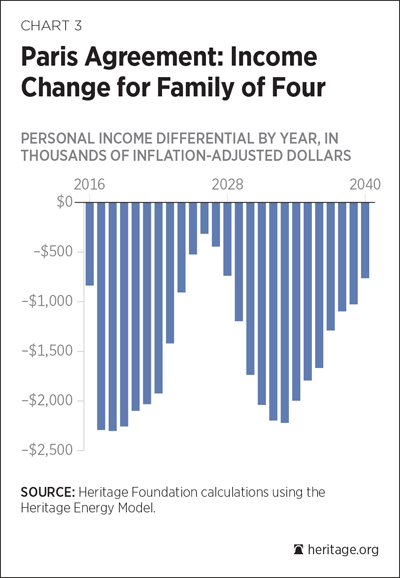
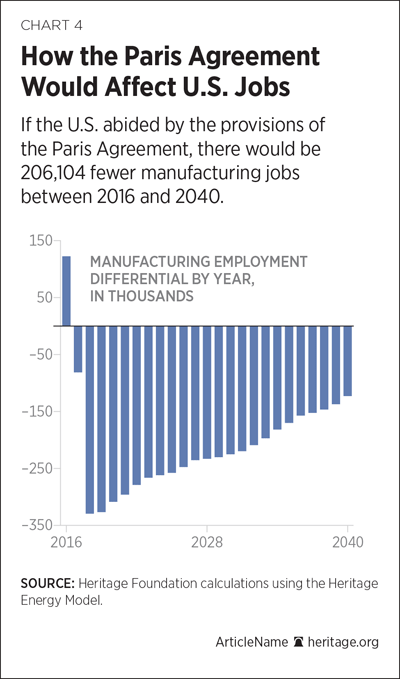
During the same hearing, Kevin Dayaratna, a statistician and data scientist with The Heritage Foundation,presented testimony focusing attention on the “Social Cost of Carbon,” or SCC, which federal regulators define as “economic damages per metric ton of carbon dioxide emissions.” The Biden administration is using the SCC in various climate models to determine the long-term impact of CO2, Dayaratna said. However, these models are based on assumptions that may not square with reality, the Heritage analyst warned. These assumptions tend, for example, to overlook the environmental benefits of Co2 emissions such as the “greening of the planet” that occurred between 1982 and 2009, Dayaratna said. At the same time, the models omit the deleterious effect of regulations that restrict Co2 emissions, he observed.Dayaratna cited figures from the Heritage Foundation that point to a severe economic fallout to U.S. that could result from rejoining the U.N.’s Paris Climate Agreement. By 2040, the U.S. could experience an average employment shortfall of more than 1.2 million lost jobs, loss of income of more than $87,000 for a family of four, and up to a 30% increase in household electricity expenditure, with an aggregate $7 trillion loss in GDP, Dayaratna said.
In Pennsylvania, the state-level outlook is every bit as bleak. The Commonwealth Foundation, a free-market group based in Harrisburg, has just published an analysis that finds RGGI’s “carbon tax regime” could lead to a 114% hike in electricity bills. Although Wolf had Pennsylvania join RGGI this year, the state has not participated in the most recent auctions since Wolf’s executive actions are the subject of legal challenges. Industry and labor groups have filed suit challenging the governor’s ability to act unilaterally on climate change policy as have state senators who have raised questions about the separation of powers. As a solution, the Commonwealth Foundation has proposed passing a constitutional amendment to allow the General Assembly “to disapprove regulations as a check on an agency’s power to restrict energy development in the state.”
Josh Shapiro, the incoming Democratic governor, expressed misgivings about Wolf’s approach toward RGGI while on the campaign trail. Since being elected, he hasn’t made any firm commitments about the state’s future participation. A constitutional amendment offers him a way out.
With his party poised to take a slim majority in the House next year, Shapiro will still need to contend with labor constituents and House Democrats residing in energy producing regions who are opposed to RGGI. Meanwhile, the scientific and economic rationale for the climate change initiative continues to unravel. Gregory Wrightstone, a geologist, and executive director of the Co2 Coalition, has repeatedly informed Pennsylvania House members thatCo2 is a “miracle molecule” that greatly benefits humanity and deserves greater appreciation.
“Critics of fossil fuels routinely exaggerate, and sometimes outright fabricate, their negative effects while ignoring altogether their enormous benefits,” Wrightstone said during his latest testimony before the Pennsylvania House.
“Coal and oil fueled the Industrial Revolution, which gave us unprecedented prosperity and health. Together with natural gas, they promise to raise billions of people in developing countries from poverty and deprivation. Modern economies cannot long survive without fossil fuels. In short, we love CO2 and so should you.”
In a victory forfree speech, climate skeptics have found expression before the Pennsylvania legislature like they have in few other public venues. In a potential victory for American energy, these same skeptics have also exposed the faulty assumptions underpinning costly regulations while alsocalling attention to unconstitutional executive actions.
Kevin Mooney is an investigative reporter with both the Commonwealth Foundation and the Heritage Foundation.
Pruitt's prospects
Here are some of the skeptical nominees under consideration:
Joseph D'Aleo, a certified consultant meteorologist and co-founder of the Weather Channel: He has run climate skeptic websites and has appeared as a speaker at Heartland conferences. D'Aleo said his priority on the board would be attacking the endangerment finding, the legally binding document that holds that carbon dioxide and other greenhouse gases harm human health and must be regulated by the executive branch. He said he wants to challenge the finding because it could otherwise be used later to build back Obama-era environmental regulations.
Edwin Berry. edberry.com
"We're going to push for reconsideration, start from scratch and put together the best science," he said. "If CO2 is not a serious pollutant, let's focus the attention of the EPA on other issues."
Edwin Berry, a meteorologist and atmospheric scientist: He has funded his own climate research and says human carbon dioxide emissions do not cause climate change. He has compared those who believe in human-caused climate change to "Aztecs who believed they could make rain by cutting out beating hearts and rolling decapitated heads down temple steps." On his Twitter account, he has called Islam "a death cult" and has encouraged motorists to drive into protesters.
Berry, in an email to E&E News today, described his tweet as a joke and said he does not advocate violence.
"Clearly, my tween says to slowly drive to not hurt anyone," Berry said in the email, misspelling "tweet."
brn
Kevin Dayaratna. Heritage Foundation
Berry, who confirmed that he and a number of other skeptics were nominated by Heartland, said he wants to use his position on the board to show that humans barely contribute to atmospheric carbon dioxide levels, which he claimed are mostly driven by natural factors.
"Let's get over this whole thing about climate change being an important thing, because in fact we humans have a negligible impact on climate," he said. "And if we had the Paris Agreement and everything else, it wouldn't do any good anyway."
Alan Carlin, a retired EPA employee who is affiliated with Heartland: He fought the agency's crafting of the endangerment finding. Carlin, an economist, was at the center of a political firestorm under Obama after he produced a widely criticized 93-page report comprising cherry-picked scientific data and blog entries concluding that regulating carbon dioxide was "the worst mistake that EPA has ever made."
Kevin Dayaratna,a statistician at the conservative Heritage Foundation: His report was cited by Trump as a reason to withdraw from the Paris climate accord. It claimed that the agreement could shrink U.S. gross domestic product by $2.5 trillion within two decades (though Trump stated the impact as coming within a decade). The report was criticized by some as being misleading, because that amount is less than 1 percent of the aggregate GDP over that period and the report did not account for the cost of taking no climate change action.Dayaratna was invited to attend Trump's withdrawal announcement in June in the White House Rose Garden.
Craig Idso, a senior fellow at the Heartland Institute: He has researched the benefits of atmospheric carbon dioxide. His work has centered on highlighting how increased carbon dioxide will benefit plants.
Paul Driessen, a senior policy adviser at the Committee for a Constructive Tomorrow, a libertarian environmental think tank: His organization handed out leaflets at a climate protest this year in Washington, D.C., that said, "CO2 is not the 'control knob' of the climate." He also co-founded Climate Exit, or "Clexit," which criticized the science behind the Paris climate agreement and holds that spiking levels of atmospheric carbon dioxide benefit the Earth. "The world must abandon this suicidal Global Warming crusade," the group stated in its founding statement. "Man does not and cannot control the climate."
Gordon Fulks, a physicist and adviser to the Cascade Policy Institute, an Oregon-based libertarian think tank: He has denied that net sea ice melt is occurring and that the Earth is warming. He has said those who express concern about climate change are like a "societal pathogen that virulently spreads misinformation in tiny packages like a virus."
Anthony Lupo, another founding member of Clexit: He has received support from the Heartland Institute and helped in the unsuccessful fight against the endangerment finding in court.
Leighton Steward, a former energy company executive and a founder of groups that promote the rise of carbon dioxide as a benefit: He has also encouraged the United States to drop out of the Paris climate accord and says that natural warming is raising the temperature of the Earth.
David Legates, a professor of climatology at the University of Delaware: He has denied that human-caused climate change could have catastrophic consequences and has co-authored climate research claiming polar bears are not harmed by human-caused climate change that was quietly funded, at least in part, by Koch Industries Inc.
Critics want to boot EPA 'cronies'
Kevin Dayaratna
@kdd0211
Principal Statistician, Data Scientist, and Research Fellow
Kevin D. Dayaratna specializes in tax, energy and health policy issues as Principal Statistician, Data Scientist, and Research Fellow.
HERITAGE IMPACT
Heritage’s Center for Data Analysis Earns Attention in Washington
Nathaniel Ward
Bill Beach
Bill Beach heads Heritage's Center for Data Analysis
Writing in the New York Times, Bruce Bartlett worries about the growing influence of The Heritage Foundation’s Center for Data Analysis.
Describing conservative efforts to explain the flaws in Keynesian economics, he writes:
My concern is that the Republican effort is just a smokescreen to incorporate phony-baloney factors into revenue estimates to justify unlimited tax cutting. How soon before the C.B.O. is required to incorporate estimates from the right-wing Heritage Foundation in its calculations?
It already has a very well-financed Center for Data Analysis that the chairman of the House Budget Committee, Paul Ryan of Wisconsin, used to analyze his budget plan last year, bypassing the Joint Committee on Taxation and C.B.O.
Ryan did turn to Heritage last year to help analyze the effects of his 2012 budget plan.
Far from competing with the Congressional Budget Office, however, Heritage’s Center for Data Analysis works with the group to help it produce more robust reports. For example, the CBO recently asked Heritage experts for technical help with their analysis of federal employee compensation.
Heritage has also worked to educate lawmakers directly about the importance of sound economic analysis. Heritage’s Bill Beach, who directs the Center for Data Analysis, testified before Congress last fall about the importance of considering the “dynamic effects” on the economy of tax policy changes.
:{
}:
lnx
It already has a very well-financed Center for Data Analysis that the chairman of the House Budget Committee, Paul Ryan of Wisconsin, used to analyze his budget plan last year, bypassing the Joint Committee on Taxation and C.B.O.
Ryan did turn to Heritage last year to help analyze the effects of his 2012 budget plan.
Far from competing with the Congressional Budget Office, however, Heritage’s Center for Data Analysis works with the group to help it produce more robust reports. For example, the CBO recently asked Heritage experts for technical help with their analysis of federal employee compensation.
Heritage has also worked to educate lawmakers directly about the importance of sound economic analysis. Heritage’s Bill Beach, who directs the Center for Data Analysis, testified before Congress last fall about the importance of considering the “dynamic effects” on the economy of tax policy changes.
off bs
https://www.heritage.org/center-data-analysis
the Center for Data Analysis specializes in quantitative research and simulation modeling of public policies for the Heritage Foundation. The CDA specializes in modeling the effects of federal fiscal policy, trade policy, federal social policy, and energy and environmental policy. Policymakers rely on CDA’s independent policy research in each of these areas to inform their decisions.
This page lists research by CDA staff and documentation of the methodology behind CDA models, as well as notable results. It should be a useful reference for practitioners in the field of public policy. It will be updated as new publications become available.
Featured Backgrounders and Reports
Public Finance
Taxes Will Go Up in Every Congressional District if the TCJA Is Repealed
Adam Michel, Kevin Dayaratna, and Parker Sheppard | October 17, 2018
Tax Cuts in Every Congressional District in Every State
Kevin Dayaratna, Parker Sheppard, and Adam Michel | July 23, 2018
Heritage Foundation Individual Income Tax Model
Augmented Solow Growth Model
The Personal and Fiscal Impact of the Social Security 2100 Act
Rachel Greszler and Drew Gonshorowski | June 11, 2019
Is Social Security Worth Its Cost?
Kevin Dayaratna, Rachel Greszler, and Patrick Tyrrell | July 10, 2018
Heritage Foundation Social Security Model
Energy and Environment
Assessing the Costs and Benefits of the Green New Deal’s Energy Policies
Kevin Dayaratna and Nicolas Loris | July 24, 2019
Heritage Energy Model
Turning America’s Energy Abundance into Energy Dominance
Kevin Dayaratna, and Nicolas Loris | November 3, 2017
Time to Unlock America’s Vast Oil and Gas Resources
Kevin Dayaratna, David Kreutzer, and Nicolas Loris | September 1, 2016
Consequences of Paris Protocol: Devastating Economic Costs, Essentially Zero Environmental Benefits
Kevin Dayaratna, Nicolas Loris, and David Kreutzer | April 13, 2016
Unfounded FUND: Yet Another EPA Model Not Ready for the Big Game
Kevin Dayaratna and David Kreutzer | April 29, 2014
Loaded DICE: An EPA Model Not Ready for the Big Game
Kevin Dayaratna and David Kreutzer | November 32, 2013
Public Health
A Statistical Analysis of COVID-19 and Government Protection Measures in the U.S.
Kevin Dayaratna and Andrew Vanderplas | March 18, 2021
Kevin Dayaratna, Patrick Tyrell, and Andrew Vanderplas | July 20, 2020
The Challenges of Forecasting the Spread and Mortality of COVID-19
Kevin Dayaratna and Norbert Michel | April 15, 2020
Peer-Reviewed Publications of CDA Staff
Climate sensitivity, agricultural productivity and the social cost of carbon in FUND
Kevin Dayaratna, Ross McKitrick, and Patrick Michaels
Environmental Economics and Policy Studies 22, 433-448 | 2020
Empirically Constrained Climate Sensitivity and the Social Cost of Carbon
Kevin Dayaratna, Ross McKitrick, and David Kreutzer
Climate Change Economics. Vol. 8, No. 2 | 2017
Bayesian semiparametric density ratio modelling with applications to medical malpractice reform
Kevin Dayaratna and Benjamen Kedem
Statistical Modelling. Vol. 16, Issue 4 | 2016
Speeches and Congressional Testimony
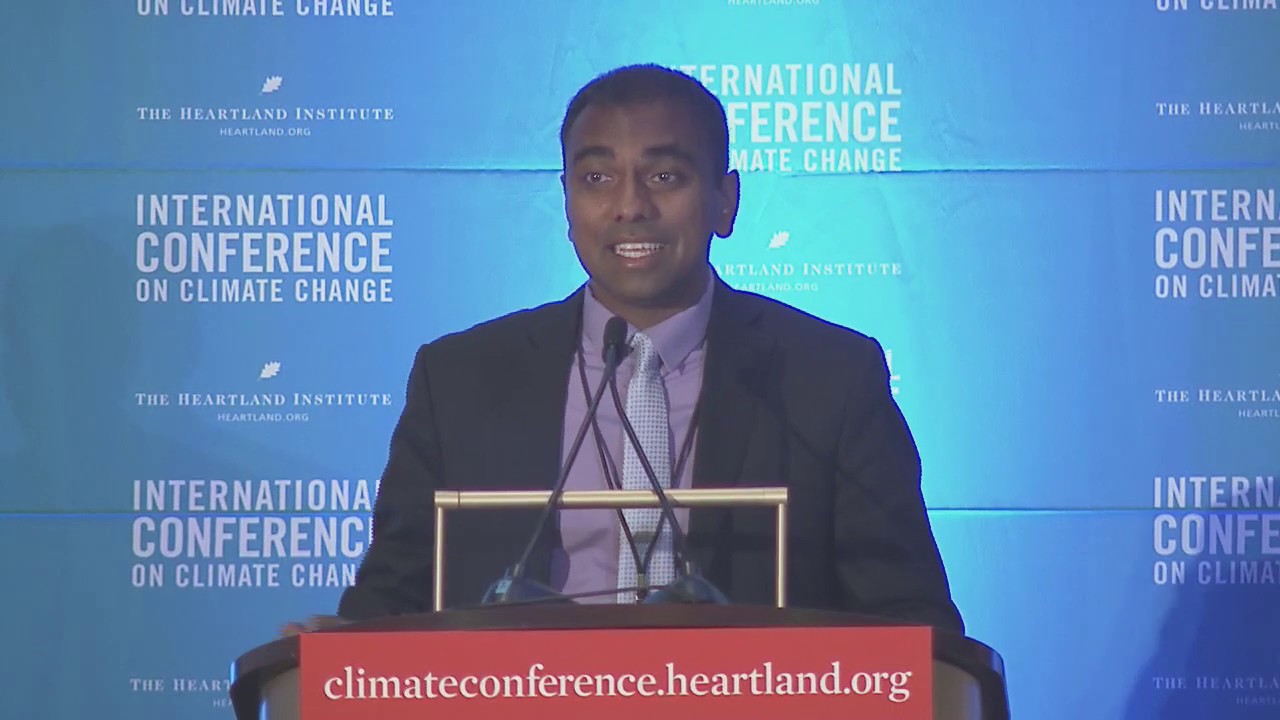
Kevin Dayaratna
International Conference on Climate Change | 2019
Healthy Oceans and Healthy Economies: The State of Our Oceans in the 21st Century
Kevin Dayaratna | Subcommittee on Water, Oceans, and Wildlife, Committee on Natural Resources, U.S. House of Representatives | February 7, 2018
Methods and Parameters Used to Establish the Social Cost of Carbon
Kevin Dayaratna | Testimony before the Subcommittee on Environment and Oversight, Committee on Science and Technology, U.S. House of Representatives | February 24, 2017
Kevin Dayaratna
Principal Statistician, Data Scientist, and Research Fellow
Areas of Expertise
Energy Economics
Taxes
Environment
Kevin D. Dayaratna specializes in tax, energy and health policy issues as Principal Statistician, Data Scientist, and Research Fellow.
REQUEST AN INTERVIEW
Download Headshot
Kevin D. Dayaratna, Ph.D. explores questions on the boundary of policy, statistics, and economics as Principal Statistician, Data Scientist, and Research Fellow in The Heritage Foundation's Center for Data Analysis (CDA). An applied statistician, he has researched and published on the use of high-powered statistical models in public policy, medical outcomes, business, economics, and professional sports among many other fields.
In CDA, he draws upon scores of statistical models including CDA’s individual income tax model, corporate tax model, Social Security rate of return model, climate simulator model, climate economics models, and energy model to name a few. Dayaratna is a prolific scholar, having published numerous papers both at Heritage as well as in the peer reviewed literature in statistics, economics, law, and public policy journals. His work has also been referenced by both the Obama and Trump administrations, numerous lawmakers, presidential candidates, and major media outlets including The Wall Street Journal, the National Review, National Public Radio, and Fox News among many others. In addition, Dayaratna gives numerous talks throughout the country about his work both to lawmakers as well as the general public.
Dayaratna frequently briefs lawmakers and testifies before Congress as well as state governments to offer his expertise on the issues he publishes on. During President Obama's second term, Dayaratna found a major flaw in the administration's climate modeling that forced the administration to open up this entire class of modeling to public comment. His continued work on this and other related areas constituted the basis for a number of major policy decisions made by the Trump administration as well. Dayaratna's expertise on energy modeling has also been utilized by the Congressional Budget Office (CBO), which he has aided to consider analyzing energy policies using the same tools he uses at Heritage.
Beyond energy and climate policy, Dayaratna has worked on many other policy areas at Heritage as well. He started out his career at Heritage as a graduate fellow in health policy in 2012, publishing research comparing outcomes of Medicaid to private insurance as well as research on free markets in health care. Since then he has worked on numerous other policy areas as well including tax, energy, climate, Social Security, welfare, and labor policy.
Dayaratna grew up in Princeton Junction, N.J. He did his undergraduate work at the University of California, Berkeley, majoring in applied mathematics with a specialty in mathematical physics. He also holds two masters degrees from the University of Maryland, one in business and management and the other in mathematical statistics. In 2014, Dayaratna completed his Ph.D. in mathematical statistics from the University of Maryland with specialties in Bayesian modeling and statistical computing. In his spare time, he enjoys playing tennis and watching professional sports.
no grf
Turning America’s Energy Abundance into Energy DominanceNovember 3, 2017 24 min read Download Report
Authors:
Kevin Dayaratna and Nicolas Loris
SUMMARY
In June, President Trump delivered remarks at the Department of Energy to promote America’s global position as an energy powerhouse. Calling for an era of energy dominance, Trump outlined a number of ways in which domestic producers can capitalize on the country’s abundance of domestic resources. Heritage Foundation research projects that opening access and deregulating would generate significant economic gains,helping the Administration achieve its 3 percent growth target. Expanding energy supply would produce a peak employment gain of 1.4 million new jobs and generate $2.4 trillion in gross domestic product from now until 2035, the equivalent of $27,000 per family of four.
KEY TAKEAWAYS
The Energy Independence Executive Order directs federal agencies to review, rescind, and possibly replace burdensome regulations obstructing energy development.Expanding energy supplies would produce apeak employment gain of 1.4 million new jobs and generate $2.4 trillion in gross domestic product from now until 2035.Policies that open access and reduce harmful regulations that do not produce meaningful environmental benefits will make the U.S. dominant in the energy sector. Copied
Select a Section 1/0
Despite the success that the U.S. has had as a global energy powerhouse,1
U.S. Department of Energy, Energy Information Administration, “United States Remains the World’s Top Producer of Petroleum and Natural Gas Hydrocarbons,” June 7, 2017, https://www.eia.gov/todayinenergy/detail.php?id=31532 (accessed October 5, 2017).
a number of government-imposed obstacles prevent Americans benefiting from the nation’s rich wealth of natural resources. Earlier in 2017, President Trump issued the Energy Independence Executive Order, which directs federal agencies to review, rescind, and potentially replace burdensome regulations that obstruct energy development.2
President Donald J. Trump, “Presidential Executive Order on Promoting Energy Independence and Economic Growth,” March 28, 2017, https://www.whitehouse.gov/the-press-office/2017/03/28/presidential-executive-order-promoting-energy-independence-and-economi-1 (accessed October 5, 2017).
Opening access to the nation’s vast energy resources will unleash American ingenuity and talent, lower energy bills for families and businesses, and create hundreds of thousands of jobs for years to come. President Trump and Congress should implement the necessary policy reforms to enable the energy industry to capitalize even further on America’s energy abundance.
Energy’s Importance to Quality of Life and the Economy
Get exclusive insider information from Heritage experts delivered straight to your inbox each week. Subscribe to The Agenda >>
Energy is ubiquitous in today’s economy. From heating and cooling homes, to powering businesses, schools and hospitals, to moving goods and people across the world, energy is a critical component to quality of life in the U.S. Harnessing the U.S.’s abundant natural resources not only provides families with a reliable source of energy, but also significantly improves public health and well-being by serving as an input for medicines, plastics, fertilizers, cleaners, and much more.3
“Products Made from Oil & Gas (Part 1),” Petroleum Services Association of Canada, 2017, https://oilandgasinfo.ca/patchworks/products-made-from-oil-gas-part-1/ (accessed October 5, 2017).
Coal, oil, and natural gas meet more than 80 percent of America’s energy needs. In fact, these natural resources have comprised at least 80 percent of the nation’s energy mix for more than a century.4
U.S. Department of Energy, Energy Information Administration, “Fossil Fuels Have Made Up at Least 80% of U.S. Fuel Mix Since 1900,” July 2, 2015, https://www.eia.gov/todayinenergy/detail.php?id=21912 (accessed October 5, 2017).
Conventional fuels, often derided by environmental activists as an energy source of the past, could actually meet the U.S.’s and the world’s energy demands for centuries to come. Conventional fuels will be essential to meeting future energy needs in the developing world, where more than 1.2 billion people (17 percent of the global population) do not have access to reliable electricity.5
International Energy Agency, “Uneven Progress on Achieving Access to Sustainable Energy for All,” April 3, 2017, https://www.iea.org/newsroom/news/2017/april/uneven-progress-on-achieving-access-to-sustainable-energy-for-all.html (accessed October 5, 2017).
America’s Energy Abundance
The U.S., in addition to the rest of North America, is extremely energy rich. The Institute for Energy Research estimates that North American oil resources total nearly 1.8 trillion barrels of recoverable oil, over 75 percent of which is contained in the U.S.6
The U.S. also contains 14 quadrillion cubic feet of natural gas and 10 trillion short tons of coal.
This oil is more than enough to meet the U.S.’s current energy demands for the next two centuries.7
Institute for Energy Research, North American Energy Inventory, December 2011, https://www.instituteforenergyresearch.org/wp-content/uploads/2013/01/Energy-Inventory.pdf (accessed October 5, 2017).
However, these estimates may in fact underestimate America’s energy wealth, because they fail to keep up with technological advancements discovering new resources. In fact, innovative companies have squashed exaggerated claims of looming resource exhaustion. Allen Gilmer, Co-Founder and Executive Chairman of Drillinginfo, recently called the Permian Basin in west Texas and southeastern New Mexico “a permanent resource.”8
David Blackman, “Gilmer: We Should View The Permian Basin As A Permanent Resource,” Forbes, August 17, 2017, https://www.forbes.com/sites/davidblackmon/2017/08/17/gilmer-we-should-view-the-permian-basin-as-a-permanent-resource/#45d0577d56ff (accessed October 5, 2017).
Gilmer remarked:
The research we’ve done indicates that we have at least half a trillion barrels in the Permian at reasonable economics, and it could be as high as 2 trillion barrels. That is, as a practical matter, an infinite amount of resource.9
Mark J. Perry, “From Peak Oil to Energy Abundance. Energy Expert Now Says the Permian Basin is a Permanent, Near-Infinite Resource,” American Enterprise Institute, August 21, 2017, https://www.aei.org/publication/we-should-view-americas-most-prolific-oil-field-the-permian-basin-as-a-permanent-near-infinite-resource/ (accessed October 5, 2017).
Accessing the Abundant Energy: Horizontal Drilling and Hydraulic Fracturing
Oil and natural gas extraction in the U.S. is a fundamentally different process than that found in places like Canada, the Middle East, Venezuela, or offshore operations. In the U.S., companies extract these resources, known as tight oil or shale oil/gas, through a combination of horizontal drilling and hydraulic fracturing.
Horizontal drilling is an innovative method that assists shale oil and gas extraction. In this approach, energy companies drill down and subsequently outward (horizontally). Horizontal drilling enables producers to significantly expand their search horizons and extract more oil and gas in a quicker and more efficient manner than typical vertical drilling allows. Horizontal drilling also drastically reduces the surface area footprint of the drilling activities, minimizing the visible environmental footprint.
Hydraulic fracturing, often referred to as fracking, enables producers to extract oil and natural gas trapped in rock deposits. Producers drill wells that on average are 7,500 feet below the surface—thousands of feet underneath drinking water aquifers—and inject water, sand, and chemical additives deep in the ground at high pressure to fracture the forms or formations. The fracturing releases trapped oil and gas, which is then pumped to the surface.
Hydraulic fracturing and horizontal drilling are imperative to the safe and efficient extraction of recoverable oil and gas in various parts of the country, generating tremendous economic growth and job creation.10
Institute for Energy Research, “Bakken Shale Fact Sheet,” 2012, http://instituteforenergyresearch.org/wp-content/uploads/2012/08/Bakken-Fact-Sheet.pdf (accessed October 5, 2017), and Diana Furchtgott-Roth, “Government May be Shut Down, But the Energy Industry Is Booming,” Manhattan Institute Commentary, October 4, 2013, http://www.economics21.org/html/government-may-be-shut-down-energy-industry-booming-608.html (accessed October 5, 2017).
However, misinformation from environmental activist organizations has demonized fracking and the fossil fuel industry. Opponents have deemed the process unsafe, arguing that fracking contaminates drinking water.11
Sierra Club, “Increasing Reliance on Natural Gas Displaces the Market for Clean Energy and Harms Human Health and the Environment in Places where Production Occurs,” http://content.sierraclub.org/naturalgas/why-move-beyond-natural-gas (accessed October 5, 2017).
A number of academic studies have discredited this claim, finding no widespread, systemic contamination because of the fracking process.12
Brian D. Drollette et al., “Elevated Levels of Diesel Range Organic Compounds in Groundwater Near Marcellus Gas Operations Are Derived from Surface Activities,” Proceedings of the National Academy of Science of America, Vol. 112, No. 43, pp. 13184–13189, October 27, 2015, http://www.pnas.org/content/112/43/13184.full.pdf (accessed October 5, 2017), and Energy in Depth, “Compendium of Studies Demonstrating the Safety and Health Benefits of Fracking,” http://eidhealth.org/wp-content/uploads/2017/04/Positive-Health-Compendium.pdf (accessed October 5, 2017).
Both the Environmental Protection Agency (in a five-year study) and the U.S. Geological Survey recently found that fracking has not adversely affected drinking water.13
U.S. Environmental Protection Agency, Hydraulic Fracturing for Oil and Gas: Impacts from the Hydraulic Fracturing Water Cycle on Drinking Water Resources in the United States (Final Report), 2016, https://cfpub.epa.gov/ncea/hfstudy/recordisplay.cfm?deid=332990 (accessed October 5, 2017), and Peter B. McMahon et al., “Methane and Benzene in Drinking-Water Wells Overlying the Eagle Ford, Fayetteville, and Haynesville Shale Hydrocarbon Production Areas,” Environmental Science & Technology, Vol. 51, No. 12 (2017),pp. 6727–6734, http://pubs.acs.org/doi/abs/10.1021/acs.est.7b00746?journalCode=esthag (accessed October 5, 2017).
Environmental organizations also claim that continued reliance on conventional fuels exacerbates catastrophic global warming, despite the fact that natural gas decreases carbon-dioxide (CO2) emissions.14
Greenpeace, “Fracking,” http://www.greenpeace.org/usa/global-warming/issues/fracking/ (accessed October 5, 2017), and U.S. Department of Energy, Energy Information Administration, “U.S. Energy-related Carbon Dioxide Emissions in 2015 Are 12% Below Their 2005 Levels,” May 9, 2016, https://www.eia.gov/todayinenergy/detail.php?id=26152 (accessed October 5, 2017).
This Backgrounder includes simulations of impacts on the climate from increase in oil and natural gas production to assess the legitimacy of claims.
Energy companies have capitalized on the wealth of resources underneath U.S. soil on state and privately owned lands. The energy industry and consumers alike benefit from most of the shale oil and shale gas in the U.S. not being under federal control. However, federal regulations and federal land ownership have rendered vast quantities of recoverable oil and natural gas onshore and offshore either inaccessible or costlier to extract.15
Mark Green, “Expanding Offshore Access Is Key to U.S. Energy Security,” EnergyTomorrow, May 1, 2017, http://energytomorrow.org/blog/2017/05/01/expanding-offshore-access-key-to-us-ener (accessed October 5, 2017).
A burdensome environmental review and permitting process for resource extraction on federal lands, including the climate change regulation of methane emissions, restrict the accessibility of energy resources on federal lands for little to no environmental benefit.
Climate Impact of Increased Oil and Gas Production
To assess the veracity of claims that increased oil and gas production, especially fracking, would lead to exacerbated global warming, we used the Model for the Assessment of Greenhouse Gas Induced Climate Change (MAGICC)—also used by the Intergovernmental Panel on Climate Change—to estimate how temperatures and sea levels would change as a result of increased CO2 emissions resulting from our policy scenario.16
University Corporation for Atmospheric Research, “MAGICC/SCENGEN,” http://www.cgd.ucar.edu/cas/wigley/magicc/ (accessed October 5, 2017).
Even under the dubious assumption that a doubling of CO2 emissions significantly increases warming, our simulations indicate that, by 2100, global temperature would change by no more than 0.003 degrees Celsius and sea levels would rise by no more than 0.02 cm. The MAGICC model simulations, in conjunction with the results from HEM, thus demonstrate that accessing the U.S.’s vast oil and gas supply would have tremendous economic benefits and negligible impact on the climate.
The Economic Impact of Using U.S. Oil and Gas Resources
To quantify the economic impact of capitalizing on our vast oil and gas supply, we used the Heritage Energy Model (HEM). We performed a simulation comparing current policy to a policy assuming that the recoverable shale oil and shale gas are 50 percent higher through greater access, reduced regulations, and improved efficiencies. All of the assumptions are set forth in the Appendix.17
U.S. petroleum production and natural gas production in 2016 were about 50 percent higher than the projection the EIA made for them eight years earlier. In fact, our assumptions in this study may even be under-estimates not fully taking into account the potential of ever-improving smart drilling technologies. For a similar analysis using a previous version of NEMS, see Kevin D. Dayaratna, David W. Kreutzer, and Nicolas D. Loris, “Time to Unlock America’s Vast Oil and Gas Resources,” Heritage Foundation Backgrounder No. 3148, September 1, 2016, http://www.heritage.org/environment/report/time-unlock-americas-vast-oil-and-gas-resources.
The combination of a rational regulatory environment with open access could put a 50 percent increase within reach. Although lower energy prices may tamper new investments, companies are reducing operating costs and improving efficiency to enhance productivity.18
Karen Boman, “Cost Reduction, Greater Efficiency Focus of Technology in 2017,” Rigzone, January 6, 2017, http://www.rigzone.com/news/oil_gas/a/148019/cost_reduction_greater_efficiency_focus_of_technology_in_2017 (accessed October 5, 2017).
Vice Chairman of IHS Markit Daniel Yergin remarked, “The industry is in the middle of re-engineering its processes and its technologies to be a $50 industry, not a $100 industry.”19
Stanley Reed, “Oil Companies at Last See Path to Profits After Painful Spell,” The New York Times, August 1, 2017, https://www.nytimes.com/2017/08/01/business/energy-environment/oil-prices-bp-exxon.html?mcubz=3 (accessed October 5, 2017).
Chart 1 provides the impact, based on the simulation results, of lifting unnecessary regulations and taking advantage of the abundant oil and gas resources our country has to offer.
How Unleashing America's Energy Abundance Would A
The prospect of fracking creates employment opportunities for those directly associated with the extraction including data scientists, engineers, and geologists. Moreover, the energy boom provides more employment opportunities for local businesses near extraction sites such as hardware stores, hotels, laundromats, restaurants, and so forth. Chart 1 illustrates a peak employment gain of 1.4 million new jobs and average gains of over 660,000 jobs. These gains occur for a variety of reasons.
Even for businesses not directly or indirectly associated with energy production, cheaper energy lowers the cost of doing business. Nearly every business in the U.S. uses energy as an input cost for its product, whether it is as simple as paying the electricity bill or filling up a vehicle with gasoline or diesel to transport goods. Cheaper energy means companies across the country would incur lower operational costs and therefore have more resources to invest in labor and capital.
Chemical companies are investing heavily in the U.S., citing the affordable and abundant natural gas as their motivation. As of July 2017, the American Chemistry Council reports that the industry is cumulatively investing $185 billion on 310 projects in the U.S.20
American Chemistry Council, “U.S. Chemical Investment Linked to Shale Gas: $185 Billion and Counting,” July 2017, https://www.americanchemistry.com/Shale_Gas_Fact_Sheet.aspx (accessed October 5, 2017).
Chart 2 shows some of the industries that would reap tremendous benefits from increased energy production.
Unleashing America's Energy Abundance: Job Growth by Sector
The economic gains at the industry level are impressive, but individuals and households also receive remarkable financial benefits. The dramatic increase in oil and natural gas production drives down prices, putting money back in the wallets of Americans. Cheaper energy lowers the cost of living. After accounting for inflation, overall energy expenditures in 2015 were the lowest since 2004, driven in large part because of increased supplies.21
U.S. Department of Energy, Energy Information Administration, “Total U.S. Energy Expenditures in 2015 Were the Lowest in More than a Decade,” August 10, 2017, https://www.eia.gov/todayinenergy/detail.php?id=32432 (accessed October 5, 2017).
According to the U.S. Energy Information Administration, “In constant 2015 dollars, average annual household energy expenditures peaked at about $5,300 in 2008. Between 2008 and 2014, average annual household energy expenditures declined by 14.1%.”22
U.S. Energy Information Administration, “Declining Energy Prices Lower the Cost of Living,” May 3, 2016, https://www.eia.gov/todayinenergy/detail.php?id=26072 (accessed October 5, 2017).
Increased energy supplies will drive prices down further, generating significant cost savings and overall economic gains to households. As Chart 3 illustrates, the average family of four gains over $27,000 by 2035. In terms of total gross domestic product, these gains translate to an increase of over $2.4 trillion.
Unleashing America's Energy Abundance: Higher Family Incomes
Our analysis also computed the changes in annual electricity expenditures for a family of four. Annual electricity expenditures will decline, resulting in a total savings of nearly $1,000 for such a household. These savings are particularly important for low-income families and seniors on fixed incomes where energy costs represent a larger portion of their budget.23
Jon Jin, “The Burden of Energy Costs on Low-income Families,” Healthify, June 7, 2016, https://www.healthify.us/healthify-insights/the-burden-of-energy-costs-on-low-income-families (accessed October 5, 2017).
When low-income households are making difficult decisions regarding health care and access to food, the additional energy savings are essential to a better quality of life.
Unleashing America's Energy Abundance: Lower Electricity Bills
How to Capitalize on America’s Energy Abundance
President Trump’s energy independence executive order includes direction to open access to resources on federal lands and review, suspend, revise, or rescind a number of regulations.24
President Donald J. Trump, “Presidential Executive Order on Promoting Energy Independence and Economic Growth.”
The simulation results above illustrate the vast gains that would occur if policymakers open access to off-limits areas, streamline the permitting process, and reduce the regulations with no direct, substantial environmental benefits. Working with Congress, the Trump Administration can leave a legacy that fundamentally changes how energy investments are made. To achieve these gains, federal and state policymakers should:
Open Access to Energy Exploration of Federal Waters and Lands.The Administration should open all federal waters and federal lands that are not part of the national park system or congressionally designated areas to exploration and production for all of America’s natural resources. Congress should require the Department of the Interior (DOI) to conduct lease sales, rather than develop five-year planning programs, if a commercial interest exists. The lease plans do not reflect dynamic market conditions that affect companies’ decisions to explore and develop offshore resources. Congress and the Administration should overhaul the leasing process that ensures access to safely develop energy off America’s coasts.
Reverse Federal Regulations on Fracking. Federal regulations duplicate existing state regulation on fracking since companies must obtain state permits for all wells, including federal wells, and must comply with all state regulations. Citizens working with state and local bureaucrats have a significantly better sense about increasing economic growth while protecting their environment. The federal government should rescind all methane regulations for oil and gas activities, which will drive costs higher for no climate benefit.25
Nicolas D. Loris, “Methane Regulations Add to the Price Tag of the Administration’s Climate Plan,” Heritage Foundation Issue Brief No. 4341, February 3, 2015, http://www.heritage.org/environment/report/methane-regulations-add-the-price-tag-the-administrations-climate-plan.
Allow States to Manage Energy Development. Permitting energy extraction on federally owned land will result in even more oil and gas extraction and create jobs in areas that would otherwise not see such economic growth. The average period for the federal government to process an application for permit to drill (APD) lasts for months (sometimes over a year), whereas states process an APD in days or weeks. The DOI should reduce the APD time frames to that of states.
A better solution requires legislative change, wherein Congress grants authority to state regulators to oversee the environmental review and permitting of energy projects on federal lands within their borders. The Federal Land Freedom Act, which would allow states to regulate energy development, will produce better economic and environmental results.26
Nicolas D. Loris, “The Federal Land Freedom Act: Empowering States to Regulate Energy Will Yield Better Economic and Environmental Results,” testimony before the Subcommittee on Energy and Mineral Resources, Committee on Natural Resources, U.S. House of Representatives, November 21, 2016, http://www.heritage.org/testimony/the-federal-land-freedom-act-empowering-states-regulate-energy-will-yield-better-economic.
Ultimately, Congress should explore ways to sell federal lands to states and private individuals who are in a better position to reap the benefits from energy production while protecting the environment.
Streamline the National Environmental Policy Act (NEPA) Process. The NEPA requires federal agencies to conduct comprehensive environmental impact assessments for a wide range of projects, including energy extraction on federal lands. A number of factors result in NEPA delays at the federal, state, and local level. At the federal level, some of the major issues include differing interpretations of NEPA requirements, failed interagency coordination, administrative bottlenecks, and outdated requirements that fail to take into account changing conditions. In fact, the Obama Administration recognized that the federal government could expedite permitting without sacrificing environmental protection by effectively relinquishing NEPA requirements for a large number of projects funded by the American Recovery and Reinvestment Act.
Empowering states to regulate energy production on federal lands would satisfy all NEPA requirements. Without legislative reform, however, the Trump Administration should require agencies to complete environmental assessments as expeditiously as possible. Reforms include:
Properly shaping the scope of the project.Agencies control the substance of a NEPA analysis by shaping the “scope” (i.e., the purpose and need) of the project. As a result, the agencies can effectively control the outcome of the NEPA review through deliberate scoping. Therefore, the utmost constraint should be exercised in scoping to ensure that the NEPA analysis is targeted and relevant, thus helping to reduce legal challenges and shorten the review.
Eliminating redundancies.The multitude of other regulatory requirements makes a full-scale NEPA review redundant. The Council on Environmental Quality (CEQ) should allow agencies to treat existing analyses as functional equivalents for project elements that have been previously reviewed.
Ensuring scientific transparency and integrity.The scientific integrity of the NEPA process suffers from a lack of consistent methodology. The CEQ has left agency officials free to apply any assessment approach of their choosing, but thorough cost-benefit analyses are rare. The CEQ should carefully monitor the scientific validity of information/data used in the review, and reject unsound findings.
Establishing a lead agency and restricting the input of other agencies.Responsibility for the NEPA review should be assigned to a “lead” department. The involvement of other agencies should be strictly limited to issues that fall within their specified jurisdiction or expertise.
Allow Fracking on Private Land. Property rights are a fundamental component of American society. Individuals should have the right to use their property as they see fit and have the freedom to contract with private employees to frack on their own lands if they so desire. Proper enforcement of property rights, in conjunction with appropriate regulations implemented by state and local governments, enable the extraction of potentially valuable resources and the protection of the environment.27
Nicolas D. Loris, “Free Markets Supply Affordable Energy and a Clean Environment,” Heritage Foundation Backgrounder No. 2966, http://www.heritage.org/research/reports/2014/10/free-markets-supply-affordable-energy-and-a-clean-environment.
States should not issue blanket moratoriums on fracking that strip away these rights.
Prohibit Taxes or Regulations Regarding Greenhouse-Gas Emissions. Past Heritage Foundation research has demonstrated that any carbon tax or climate change regulations will reduce energy supply, raise energy costs, and eliminate jobs, but have an insignificant impact on global temperatures.28
Kevin D. Dayaratna, Nicolas D. Loris, and David W. Kreutzer, “Consequences of Paris Protocol: Devastating Economic Costs, Essentially Zero Environmental Benefits,” Heritage FoundationBackgrounderNo. 3080, April 13, 2016, http://www.heritage.org/environment/report/consequences-paris-protocol-devastating-economic-costs-essentially-zero.
The Environmental Protection Agency and the DOI should rescind these regulations and Congress should clarify that the Clean Air Act was never intended to regulate CO2 and other greenhouse-gas emissions and prohibit any further climate regulations.
Conclusion
The U.S. has a vast supply of oil and gas running beneath it. Capitalizing on this vast supply will have tremendous economic benefits, creating hundreds of thousands of jobs and making families all across the country more prosperous in the process. Policymakers should pursue policies to unlock these resources.
—Kevin D. Dayaratna, PhD, is Senior Statistician and Research Programmer in the Center for Data Analysis, of the Institute for Economic Freedom, at The Heritage Foundation. Nicolas D. Loris is Research Manager and Herbert and Joyce Morgan Research Fellow in Energy and Environment in the Thomas A. Roe Institute for Economic Policy, of the Institute for Economic Freedom.
Appendix: Methodology
The Heritage Energy Model
The analysis in this Backgrounder uses the Heritage Energy Model (HEM), a derivative of the National Energy Model System 2017 Full Release (NEMS).29
U.S. Department of Energy, Energy Information Administration, “The National Energy Modeling System: An Overview,” October 2009, http://www.eia.gov/oiaf/aeo/overview/pdf/0581(2009).pdf (accessed April 3, 2013).
The NEMS is used by the Energy Information Administration (EIA) in the Department of Energy as well as various nongovernmental organizations for a variety of purposes, including forecasting the effects of energy policy changes on a plethora of leading economic indicators.
The methodologies, assumptions, conclusions, and opinions in this Backgrounder are entirely the work of statisticians and economists in the Center for Data Analysis (CDA) at The Heritage Foundation, and have not been endorsed by, and do not necessarily reflect the views of, the developers of the NEMS.
The HEM is based on well-established economic theory as well as historical data, and contains a variety of modules that interact with each other for long-term forecasting. In particular, the HEM focuses on the interactions among
The supply, conversion, and demand of energy in its various forms;
American energy and the overall American economy;
The American energy market and the world petroleum market; and
Current production and consumption decisions as well as expectations about the future.30
Ibid., pp. 3–4.
These modules are the:
Macroeconomic Activity Module,31
The HEM’s Macroeconomic Activity Module uses the IHS Global Insight model, which is used by government agencies and Fortune 500 organizations to forecast the effects of economic events and policy changes on notable economic indicators. As with the NEMS, the methodologies, assumptions, conclusions, and opinions in this report are entirely the work of CDA statisticians and economists, and have not been endorsed by, and do not necessarily reflect the view of, the owners of the IHS Global Insight model.
Transportation Demand Module,
Residential Demand Module,
Industrial Demand Module,
Commercial Demand Module,
Coal Market Module,
Electricity Market Module,
Liquid Fuels Market Module,
Oil and Gas Supply Module,
Renewable Fuels Module,
International Energy Activity Module, and
Natural Gas Transmission and Distribution Module.
The HEM is identical to the EIA’s NEMS with the exception of the Commercial Demand Module. The Commercial Demand Module makes projections regarding commercial floor-space data of pertinent commercial buildings. Other than the HEM not having this module, it is identical to the NEMS.
Overarching the 12 modules is the Integrating Module, which consistently cycles, iteratively executing and allowing these various modules to interact with each other. Unknown variables that are related, such as a component of a particular module, are grouped together, and a pertinent subsystem of equations and inequalities corresponding to each group is solved via a variety of commonly used numerical analytic techniques, using approximate values for the other unknowns. Once a group’s values are computed, the next group is solved similarly, and the process iterates. Convergence checks are performed for each price and quantity statistic to determine whether subsequent changes in that particular statistic fall within a given tolerance. After all group values for the current cycle are determined, the next cycle begins. For example, at a particular cycle, a variety of pertinent statistics, is obtained.32
Steven A. Gabriel, Andy S. Kydes, and Peter Whitman, “The National Energy Modeling System: A Large-Scale Energy-Economic Equilibrium Model,” Operations Research, Vol. 49, No. 1 (January–February 2001), pp. 14–25, http://pubsonline.informs.org/doi/pdf/10.1287/opre.49.1.14.11195 (accessed December 23, 2014).
The HEM provides a number of diagnostic measures, based on differences between cycles, to indicate whether a stable solution has been achieved.
This report uses the HEM to analyze the impact of making hydraulic fracturing more feasible by increasing the availability of petroleum in North America. In particular, we ran two of the same simulations which the EIA used in “Annual Energy Outlook 2017,” in comparing the greater availability of shale oil, shale gas, and its variants in North America with current policy.33
COMMENTARY
There Are Better Ways to Fight COVID-19 Than Mask Mandates
Kevin Dayaratna, Ph.D. Aug 30, 2021 8 min read
REPORT
A Statistical Analysis of COVID-19 Breakthrough Infections and Deaths
Aug 12, 2021 25 min read
COMMENTARY
Why Tax Code Should Continue to Allow Full Expensing of Research and Development
Kevin Dayaratna, Ph.D. Jul 12, 2021 2 min read
COMMENTARY
Biden Administration Is Skewing Carbon Numbers to Push Regulations
Jun 28, 2021 5 min read
REPORT
A Statistical Analysis of Mandates and Mask Usage in Kansas
Apr 15, 2021 36 min read
REPORT
A Statistical Analysis of COVID-19 and Government Protection Measures in the ...
Mar 18, 2021 About an hour read
COMMENTARY
Why “Social Cost of Carbon” Is The Most Useless Number You’ve Never Heard of
Kevin Dayaratna, Ph.D. Mar 2, 2021 5 min read
REPORT
Green New Deals: Bad for Americans and Bad for Europeans
Aug 7, 2020 14 min read
COMMENTARY
Are Lockdowns Necessary? What Data From 10 Countries Show
Jul 29, 2020 4 min read
REPORT
Comparative Analysis of COVID-19 Policies Around the World with Recommendations
Jul 20, 2020 Over an hour read
PaginationCurrent page1 Page2 Page3 Page4 Page5 Page6Next pageNext ›
p 2 of many
Kevin Dayaratna
Principal Statistician, Data Scientist, and Research Fellow
Areas of Expertise
Energy Economics
Taxes
Environment
Kevin D. Dayaratna specializes in tax, energy and health policy issues as Principal Statistician, Data Scientist, and Research Fellow.
REQUEST AN INTERVIEW
Download Headshot
Kevin D. Dayaratna, Ph.D. explores questions on the boundary of policy, statistics, and economics as Principal Statistician, Data Scientist, and Research Fellow in The Heritage Foundation's Center for Data Analysis (CDA). An applied statistician, he has researched and published on the use of high-powered statistical models in public policy, medical outcomes, business, economics, and professional sports among many other fields.
In CDA, he draws upon scores of statistical models including CDA’s individual income tax model, corporate tax model, Social Security rate of return model, climate simulator model, climate economics models, and energy model to name a few. Dayaratna is a prolific scholar, having published numerous papers both at Heritage as well as in the peer reviewed literature in statistics, economics, law, and public policy journals. His work has also been referenced by both the Obama and Trump administrations, numerous lawmakers, presidential candidates, and major media outlets including The Wall Street Journal, the National Review, National Public Radio, and Fox News among many others. In addition, Dayaratna gives numerous talks throughout the country about his work both to lawmakers as well as the general public.
Dayaratna frequently briefs lawmakers and testifies before Congress as well as state governments to offer his expertise on the issues he publishes on. During President Obama's second term, Dayaratna found a major flaw in the administration's climate modeling that forced the administration to open up this entire class of modeling to public comment. His continued work on this and other related areas constituted the basis for a number of major policy decisions made by the Trump administration as well. Dayaratna's expertise on energy modeling has also been utilized by the Congressional Budget Office (CBO), which he has aided to consider analyzing energy policies using the same tools he uses at Heritage.
Beyond energy and climate policy, Dayaratna has worked on many other policy areas at Heritage as well. He started out his career at Heritage as a graduate fellow in health policy in 2012, publishing research comparing outcomes of Medicaid to private insurance as well as research on free markets in health care. Since then he has worked on numerous other policy areas as well including tax, energy, climate, Social Security, welfare, and labor policy.
Dayaratna grew up in Princeton Junction, N.J. He did his undergraduate work at the University of California, Berkeley, majoring in applied mathematics with a specialty in mathematical physics. He also holds two masters degrees from the University of Maryland, one in business and management and the other in mathematical statistics. In 2014, Dayaratna completed his Ph.D. in mathematical statistics from the University of Maryland with specialties in Bayesian modeling and statistical computing. In his spare time, he enjoys playing tennis and watching professional sports.
Read Full Bio
COMMENTARY
There Are Better Ways to Fight COVID-19 Than Mask Mandates
Kevin Dayaratna, Ph.D. Aug 30, 2021 8 min read
REPORT
A Statistical Analysis of COVID-19 Breakthrough Infections and Deaths
Aug 12, 2021 25 min read
COMMENTARY
Why Tax Code Should Continue to Allow Full Expensing of Research and Development
Kevin Dayaratna, Ph.D. Jul 12, 2021 2 min read
COMMENTARY
Biden Administration Is Skewing Carbon Numbers to Push Regulations
Jun 28, 2021 5 min read
REPORT
A Statistical Analysis of Mandates and Mask Usage in Kansas
Apr 15, 2021 36 min read
REPORT
A Statistical Analysis of COVID-19 and Government Protection Measures in the ...
Mar 18, 2021 About an hour read
COMMENTARY
Why “Social Cost of Carbon” Is The Most Useless Number You’ve Never Heard of
Kevin Dayaratna, Ph.D. Mar 2, 2021 5 min read
REPORT
Green New Deals: Bad for Americans and Bad for Europeans
Aug 7, 2020 14 min read
COMMENTARY
Are Lockdowns Necessary? What Data From 10 Countries Show
Jul 29, 2020 4 min read
REPORT
Comparative Analysis of COVID-19 Policies Around the World with Recommendations
Jul 20, 2020 Over an hour read
PaginationCurrent page1 Page2 Page3 Page4 Page5 Page6Next pageNext ›
Taxes Will Go Up in Every Congressional District if the TCJA Is Repealed
Oct 17, 2018 6 min read
REPORT
Tax Cuts in Every Congressional District in Every State
Jul 23, 2018 10 min read
COMMENTARY
New Report Shows Every Congressional District Benefits From Tax Reform
Jul 23, 2018 2 min read
REPORT
Is Social Security Worth Its Cost?
Jul 10, 2018 25 min read
COMMENTARY
For a Huge "Peace Dividend," End the War on Fossil Fuels
Kevin Dayaratna, Ph.D. Nov 29, 2017 2 min read
REPORT
Turning America’s Energy Abundance into Energy Dominance
Nov 3, 2017 24 min read
COMMENTARY
Keeping the Death Tax Would Make No Sense At All
Oct 31, 2017 3 min read
REPORT
Why Tax Reform Should Eliminate State and Local Tax Deductions
Oct 16, 2017 23 min read
COMMENTARY
Some Say GOP Tax Plan Would Raise Taxes. Here’s What They’re Missing.
Oct 10, 2017 4 min read
COMMENTARY
A Conundrum — An Impending Shortage of Care and a Surplus of Talent
Jul 5, 2017 2 min read
PaginationPrevious page‹ PreviousPage1 Page2 Current page3 Page4 Page5 Page6
Other Heritage ExpertsSee all experts
Daren Bakst
Daren Bakst
Senior Research Fellow in Regulatory Policy Studies
@darenbakst
Theodore R. Bromund
Ted R. Bromund, Ph.D.
Senior Research Fellow in Anglo-American Relations
Solving the Doctor Shortage by Taking Advantage of Untapped Medical Resource
May 31, 2017 14 min read
REPORT
Rolling the DICE on Environmental Regulations
Jan 19, 2017 21 min read
REPORT
Time to Unlock America’s Vast Oil and Gas Resources
Sep 1, 2016 12 min read
REPORT
The State of Climate Science: No Justification for Extreme Policies
Apr 22, 2016 26 min read
REPORT
Consequences of Paris Protocol: Devastating Economic Costs, Essentially Zero...
Apr 13, 2016 9 min read
REPORT
How Government Unions Affect State and Local Finances: An Empirical 50-State ...
Apr 11, 2016 Over an hour read
REPORT
Maine Food Stamp Work Requirement Cuts Non-Parent Caseload by 80 Percent
Feb 8, 2016 21 min read
TESTIMONY
An Analysis of the Obama Administration’s Social Cost of Carbon
Kevin Dayaratna, Ph.D. Jul 24, 2015 9 min read
TESTIMONY
The Economic Impact of the Clean Power Plan
Kevin Dayaratna, Ph.D. Jun 24, 2015 8 min read
REPORT
Time to End the Federal Subsidy for High-Tax States
Mar 26, 2015 10 min read
PaginationPrevious page‹ PreviousPage1 Page2 Page3 Current page4 Page5 Page6
Healthy Oceans and Healthy Economies: The State of Our Oceans in the 21st Century
April 15, 2019
**The Justification Behind These Regulations**
The official definition of the social cost of carbon is the economic damages per metric ton of CO2 emissions, and is discussed further in U.S. Environmental Protection Agency, “The Social Cost of Carbon,” http://www.epa.gov/climatechange/EPAactivities/economics/scc.html (accessed September 14, 2013).
There are three primary statistical models that the Interagency Working Group (IWG) has used to estimate the SCC—the DICE Model, the FUND model, and the PAGE model.
For the DICE model, see William D. Nordhaus, “RICE and DICE Models of Economics of Climate Change,” Yale University, November 2006, http://www.econ.yale.edu/nordhaus/homepage/dicemodels.htm (accessed November 6, 2013). For the FUND model, see “FUND—Climate Framework for Uncertainty, Negotiation and Distribution,” http://www.fund-model.org/ (accessed November 6, 2013). For the PAGE model, see Climate CoLab, “PAGE,” http://climatecolab.org/resources/-/wiki/Main/PAGE (accessed November 6, 2013). See also U.S. Interagency Working Group on Social Cost of Greenhouse Gases, “Technical Support Document: Technical Update of the Social Cost of Carbon for Regulatory Impact Analysis Under Executive Order 12866,” May 2013, revised November 2013, https://www.epa.gov/sites/production/files/2016-12/documents/sc_co2_tsd_august_2016.pdf (accessed February 6, 2019); U.S. Interagency Working Group on Social Cost of Greenhouse Gases, “Addendum to Technical Support Document on Social Cost of Carbon for Regulatory Impact Analyses under Executive Order 12866: Application of Methodology to Estimate the Social Cost of Methane and the Social Cost of Nitrous Oxide,” August 2016, https://www.epa.gov/sites/production/files/2016-12/documents/addendum_to_sc-ghg_tsd_august_2016.pdf (accessed February 6, 2019); and U.S. Interagency Working Group on Social Cost of Greenhouse Gases, “2010 Technical Support Document: Social Cost of Carbon for Regulatory Impact Analysis under Executive Order 12866,” February 2010, https://www.epa.gov/sites/production/files/2016-12/documents/scc_tsd_2010.pdf (accessed February 6, 2019).
" style="box-sizing: inherit; position: relative; font-size: 0.6875rem; line-height: 0.6875rem; color: rgb(0, 147, 208); vertical-align: super;">2
For the DICE model, see William D. Nordhaus, “RICE and DICE Models of Economics of Climate Change,” Yale University, November 2006, http://www.econ.yale.edu/nordhaus/homepage/dicemodels.htm (accessed November 6, 2013). For the FUND model, see “FUND—Climate Framework for Uncertainty, Negotiation and Distribution,” http://www.fund-model.org/ (accessed November 6, 2013). For the PAGE model, see Climate CoLab, “PAGE,” http://climatecolab.org/resources/-/wiki/Main/PAGE (accessed November 6, 2013). See also U.S. Interagency Working Group on Social Cost of Greenhouse Gases, “Technical Support Document: Technical Update of the Social Cost of Carbon for Regulatory Impact Analysis Under Executive Order 12866,” May 2013, revised November 2013, https://www.epa.gov/sites/production/files/2016-12/documents/sc_co2_tsd_august_2016.pdf (accessed February 6, 2019); U.S. Interagency Working Group on Social Cost of Greenhouse Gases, “Addendum to Technical Support Document on Social Cost of Carbon for Regulatory Impact Analyses under Executive Order 12866: Application of Methodology to Estimate the Social Cost of Methane and the Social Cost of Nitrous Oxide,” August 2016, https://www.epa.gov/sites/production/files/2016-12/documents/addendum_to_sc-ghg_tsd_august_2016.pdf (accessed February 6, 2019); and U.S. Interagency Working Group on Social Cost of Greenhouse Gases, “2010 Technical Support Document: Social Cost of Carbon for Regulatory Impact Analysis under Executive Order 12866,” February 2010, https://www.epa.gov/sites/production/files/2016-12/documents/scc_tsd_2010.pdf (accessed February 6, 2019).
*Over the past several years at The Heritage Foundation, my colleagues and I have used the DICE and FUND models, testing their sensitivity to a variety of important assumptions. Our research, published as Heritage Foundation publications, in the peer-reviewed literature, and discussed in my prior congressional testimony, has repeatedly illustrated that although these models might be interesting academic exercises, they are extremely sensitive to very reasonable changes to assumptions.
Kevin D. Dayaratna and David W. Kreutzer, “Unfounded FUND: Yet Another EPA Model Not Ready for the Big Game,” Heritage Foundation Backgrounder No. 2897, April 29, 2014, http://www.heritage.org/research/reports/2014/04/unfounded-fund-yet-another-epa-model-not-ready-for-the-big-game; Kevin D. Dayaratna and David W. Kreutzer, “Loaded DICE: An EPA Model Not Ready for the Big Game,” Heritage Foundation Backgrounder No. 2860, November 21, 2013, http://www.heritage.org/research/reports/2013/11/loaded-dice-an-epa-model-not-ready-for-the-big-game; and Kevin D. Dayaratna, and David Kreutzer, “Environment: Social Cost of Carbon Statistical Modeling Is Smoke and Mirrors,” Natural Gas & Electricity, Vol. 30, No. 12 (2014), pp. 7–11; K. Dayaratna, R. McKitrick, and D. Kreutzer, “Empirically Constrained Climate Sensitivity and the Social Cost of Carbon,” Climate Change Economics, Vol. 8, No. 2 (2017), p. 1750006; Kevin D. Dayarantna, “An Analysis of the Obama Administration’s Social Cost of Carbon,” testimony before the Committee on Natural Resources, U.S. House of Representatives, July 23, 2015; and Kevin D. Dayarantna, “At What Cost? Examining the Social Cost of Carbon,” testimony before the Committee on House, Sciences, and Technology, U.S. House of Representatives, February 28, 2017.
" style="box-sizing: inherit; position: relative; font-size: 0.6875rem; line-height: 0.6875rem; color: rgb(0, 147, 208); vertical-align: super;">3
Kevin D. Dayaratna and David W. Kreutzer, “Unfounded FUND: Yet Another EPA Model Not Ready for the Big Game,” Heritage Foundation Backgrounder No. 2897, April 29, 2014, http://www.heritage.org/research/reports/2014/04/unfounded-fund-yet-another-epa-model-not-ready-for-the-big-game; Kevin D. Dayaratna and David W. Kreutzer, “Loaded DICE: An EPA Model Not Ready for the Big Game,” Heritage Foundation Backgrounder No. 2860, November 21, 2013, http://www.heritage.org/research/reports/2013/11/loaded-dice-an-epa-model-not-ready-for-the-big-game; and Kevin D. Dayaratna, and David Kreutzer, “Environment: Social Cost of Carbon Statistical Modeling Is Smoke and Mirrors,” Natural Gas & Electricity, Vol. 30, No. 12 (2014), pp. 7–11; K. Dayaratna, R. McKitrick, and D. Kreutzer, “Empirically Constrained Climate Sensitivity and the Social Cost of Carbon,” Climate Change Economics, Vol. 8, No. 2 (2017), p. 1750006; Kevin D. Dayarantna, “An Analysis of the Obama Administration’s Social Cost of Carbon,” testimony before the Committee on Natural Resources, U.S. House of Representatives, July 23, 2015; and Kevin D. Dayarantna, “At What Cost? Examining the Social Cost of Carbon,” testimony before the Committee on House, Sciences, and Technology, U.S. House of Representatives, February 28, 2017.
These models can be manipulated by user-selected assumptions and are thus not legitimate for guiding regulatory policy.*
These models are estimated by Monte Carlo simulation. The general idea behind Monte Carlo simulation is that since some aspects of the models are random, the models are repeatedly estimated to generate a spectrum of probable outcomes. As a result of principles in probability theory, repeated estimation for a sufficient amount of time provides a reasonable characterization of the SCC’s distributional properties.
As with any statistical model, however, these models are grounded by assumptions. In our work, my colleagues and I have rigorously examined three important assumptions: the choice of a discount rate, a time horizon, and the specification of an equilibrium climate sensitivity distribution.
Discount Rate
The concept of discount rates is best viewed by considering an expenditure today as a benefit in the future via an investment. Discounting future benefits of averting climate damage compares the rate of return from CO2 reduction to the rate of return that could be expected from other investments. In principle, discounting runs the compound rate of return exercise backwards, calculating how much would need to be invested at a reasonably expected interest rate today to result in the value of the averted future climate damage.
*D. W. Kreutzer, “Discounting Climate Costs,” Heritage Foundation Issue Brief No. 4575, June 16, 2016, https://www.heritage.org/environment/report/discounting-climate-costs.*
" style="box-sizing: inherit; position: relative; font-size: 0.6875rem; line-height: 0.6875rem; color: rgb(0, 147, 208); vertical-align: super;">4
*D. W. Kreutzer, “Discounting Climate Costs,” Heritage Foundation Issue Brief No. 4575, June 16, 2016, https://www.heritage.org/environment/report/discounting-climate-costs.*
The Environmental Protection Agency has run these models using 2.5 percent, 3.0 percent, and 5.0 percent discount rates despite the fact that the Office of Management and Budget guidance in Circular A-4 has specifically stipulated that a 7.0 percent discount rate be used as well.
Office of Management and Budget, “Circular A-4,” Obama White House, February 22, 2017, https://obamawhitehouse.archives.gov/omb/circulars_a004_a-4/ (accessed February 6, 2019), and Paul C. “Chip” Knappenberger, “An Example of the Abuse of the Social Cost of Carbon,” Cato-at-Liberty, August 23, 2013, http://www.cato.org/blog/example-abuse-social-cost-carbon (accessed February 6, 2019).
" style="box-sizing: inherit; position: relative; font-size: 0.6875rem; line-height: 0.6875rem; color: rgb(0, 147, 208); vertical-align: super;">5
Office of Management and Budget, “Circular A-4,” Obama White House, February 22, 2017, https://obamawhitehouse.archives.gov/omb/circulars_a004_a-4/ (accessed February 6, 2019), and Paul C. “Chip” Knappenberger, “An Example of the Abuse of the Social Cost of Carbon,” Cato-at-Liberty, August 23, 2013, http://www.cato.org/blog/example-abuse-social-cost-carbon (accessed February 6, 2019).
In my research, we re-estimated these models using a 7.0 percent discount rate in a variety of publications. Below are our results published in the peer-reviewed journal Climate Change Economics:
As the above tables illustrate, the SCC estimates are drastically reduced under the use of a 7.0 percent discount rate. In fact, under the FUND model, the estimates are negative, suggesting that there are actually benefits to CO2 emissions. These changes in the discount rate can cause the SCC to drop by as much as 80 percent or more.
Time Horizon
It is essentially impossible to forecast technological change decades, let alone centuries, into the future. Regardless, however, these SCC models are based on projections 300 years into the future. In my work at Heritage, I have changed this time horizon to the significantly less, albeit still unrealistic, time horizon of 150 years into the future, and we obtained the following results for the DICE model in our work published in 2013:
Dayaratna and Kreutzer, “Loaded DICE: An EPA Model Not Ready for the Big Game.”
" style="box-sizing: inherit; position: relative; font-size: 0.6875rem; line-height: 0.6875rem; color: rgb(0, 147, 208); vertical-align: super;">6
Dayaratna and Kreutzer, “Loaded DICE: An EPA Model Not Ready for the Big Game.”
Clearly, the SCC estimates drop substantially as a result of changing the end year (in some cases by over 25 percent).
Equilibrium Climate Sensitivity (ECS) Distribution
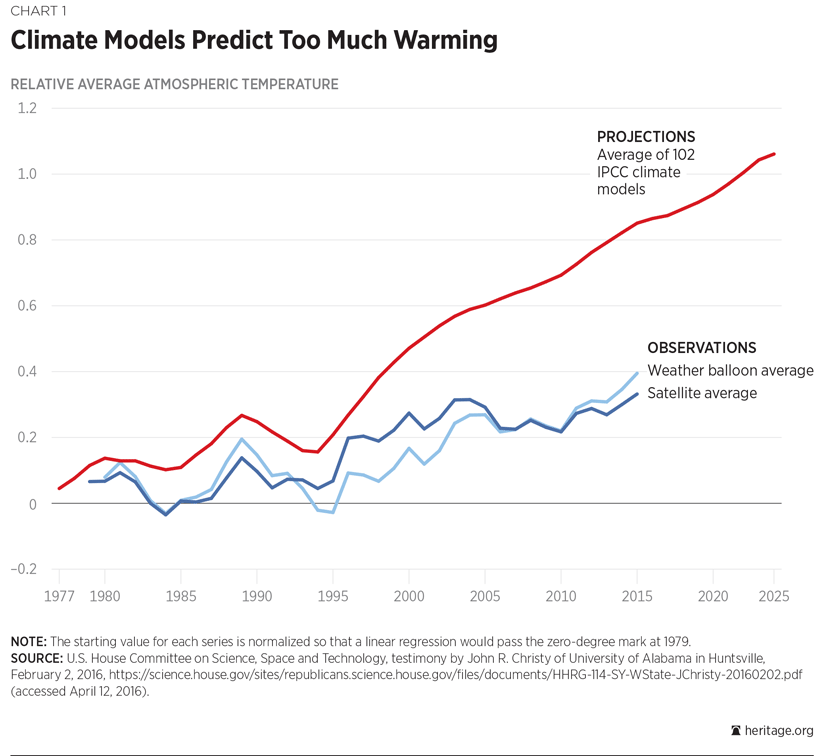
These models, of course, take into account assumptions regarding the planet’s climate sensitivity. The real question, however, is the degree of accuracy statistical models have at doing so. Professor John Christy testified in both 2013 and 2016 regarding the efficacy of climate change projections and juxtaposed them against actual weather balloon and satellite data.
John R. Christy, testimony before the Committee on Science, Space & Technology, U.S. House of Representatives, February 2, 2016, and John R. Christy, “A Factual Look at the Relationship Between Climate and Weather,” testimony before the Subcommittee on Environment, Committee on Natural Resources, U.S. House of Representatives, December 11, 2013.
" style="box-sizing: inherit; position: relative; font-size: 0.6875rem; line-height: 0.6875rem; color: rgb(0, 147, 208); vertical-align: super;">7
John R. Christy, testimony before the Committee on Science, Space & Technology, U.S. House of Representatives, February 2, 2016, and John R. Christy, “A Factual Look at the Relationship Between Climate and Weather,” testimony before the Subcommittee on Environment, Committee on Natural Resources, U.S. House of Representatives, December 11, 2013.
Christy has exposed the sheer inadequacy of the Intergovermental Panel on Climate Change’s (IPCC) models in forecasting global temperatures:
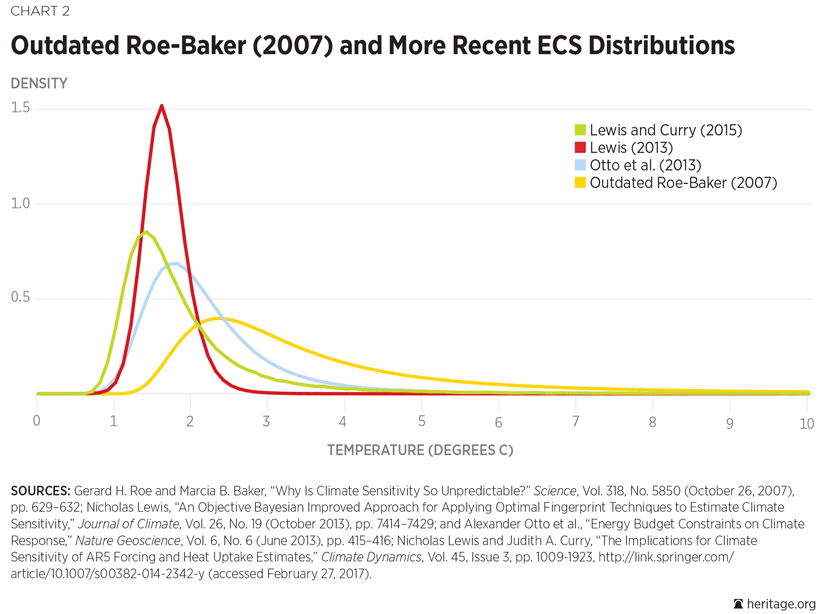
The climate specification used in estimating the SCC is that of an ECS distribution. These distributions probabilistically quantify the earth’s temperature response to a doubling of CO2 concentrations. The ECS distribution used by the IWG is based on a paper published in the journal Science twelve years ago by Gerard Roe and Marcia Baker. This non-empirical distribution, calibrated by the IWG based on assumptions that the group decided on climate change in conjunction with IPCC recommendations, has been deemed to be “no longer scientifically defensible.”
Patrick J. Michaels, “An Analysis of the Obama Administration’s Social Cost of Carbon,” testimony before the Committee on Natural Resources, U.S. House of Representatives, July 22, 2015, https://www.cato.org/publications/testimony/analysis-obama-administrations-social-cost-carbon (accessed February 6, 2019).
" style="box-sizing: inherit; position: relative; font-size: 0.6875rem; line-height: 0.6875rem; color: rgb(0, 147, 208); vertical-align: super;">8
Patrick J. Michaels, “An Analysis of the Obama Administration’s Social Cost of Carbon,” testimony before the Committee on Natural Resources, U.S. House of Representatives, July 22, 2015, https://www.cato.org/publications/testimony/analysis-obama-administrations-social-cost-carbon (accessed February 6, 2019).
*Since then, a variety of newer and more up-to-date distributions have been suggested in the peer-reviewed literature. Many of these distributions, in fact, suggest lower probabilities of extreme global warming in response to CO2 concentrations. Below are a few such distributions:
Gerard H. Roe and Marcia B. Baker, “Why Is Climate Sensitivity So Unpredictable?” Science, Vol. 318, No. 5850 (October 26, 2007), pp. 629–632; Nicholas Lewis, “An Objective Bayesian Improved Approach for Applying Optimal Fingerprint Techniques to Estimate Climate Sensitivity,” Journal of Climate, Vol. 26, No. 19 (October 2013), pp. 7414–7429; Alexander Otto et al., “Energy Budget Constraints on Climate Response,” Nature Geoscience, Vol. 6, No. 6 (June 2013), pp. 415–416; Nicholas Lewis and Judith A. Curry, “The Implications for Climate Sensitivity of AR5 Forcing and Heat Uptake Estimates,” Climate Dynamics, Vol. 45, No. 3, pp. 1009–1923, http://link.springer.com/article/10.1007/s00382-014-2342-y (accessed February 6, 2019); and U.S. Interagency Working Group on Social Cost of Greenhouse Gases, “2010 Technical Support Document: Social Cost of Carbon for Regulatory Impact Analysis under Executive Order 12866,” February 2010, https://www.epa.gov/sites/production/files/2016-12/documents/scc_tsd_2010.pdf (accessed February 6, 2019).
" style="box-sizing: inherit; position: relative; font-size: 0.6875rem; line-height: 0.6875rem; color: rgb(0, 147, 208); vertical-align: super;">9
Gerard H. Roe and Marcia B. Baker, “Why Is Climate Sensitivity So Unpredictable?” Science, Vol. 318, No. 5850 (October 26, 2007), pp. 629–632; Nicholas Lewis, “An Objective Bayesian Improved Approach for Applying Optimal Fingerprint Techniques to Estimate Climate Sensitivity,” Journal of Climate, Vol. 26, No. 19 (October 2013), pp. 7414–7429; Alexander Otto et al., “Energy Budget Constraints on Climate Response,” Nature Geoscience, Vol. 6, No. 6 (June 2013), pp. 415–416; Nicholas Lewis and Judith A. Curry, “The Implications for Climate Sensitivity of AR5 Forcing and Heat Uptake Estimates,” Climate Dynamics, Vol. 45, No. 3, pp. 1009–1923, http://link.springer.com/article/10.1007/s00382-014-2342-y (accessed February 6, 2019); and U.S. Interagency Working Group on Social Cost of Greenhouse Gases, “2010 Technical Support Document: Social Cost of Carbon for Regulatory Impact Analysis under Executive Order 12866,” February 2010, https://www.epa.gov/sites/production/files/2016-12/documents/scc_tsd_2010.pdf (accessed February 6, 2019).*
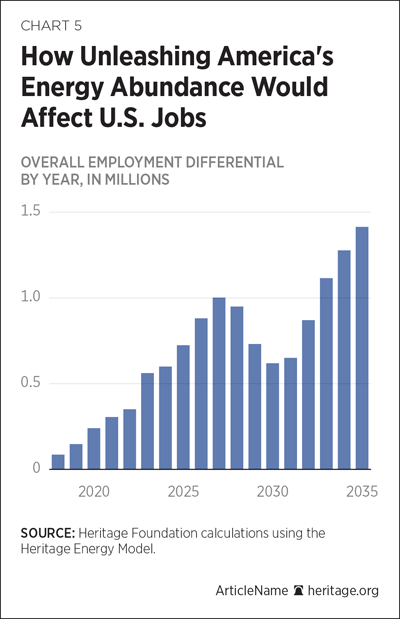
The area under the curve between two temperature points depicts the probability that the earth’s temperature will increase between those amounts in response to a doubling of CO2 concentrations. Thus, the area under the curve from 4 degrees C onwards (known as a “tail probability”) provides the probability that the earth’s temperature will warm by more than 4 degrees Celsius in response to a doubling of CO2 concentrations. Note that the more up-to-date ECS distributions (Otto et al., 2013; Lewis, 2013; Lewis and Curry, 2015) have significantly lower tail probabilities than the outdated Roe-Baker (2007) distribution used by the IWG. In our research published in Climate Change Economics, we re-estimated the SCC having used these more up-to-date ECS distributions and obtained the following results:
Dayaratna, McKitrick, and Kreutzer, “Empirically Constrained Climate Sensitivity and the Social Cost of Carbon.”
" style="box-sizing: inherit; position: relative; font-size: 0.6875rem; line-height: 0.6875rem; color: rgb(0, 147, 208); vertical-align: super;">10
Dayaratna, McKitrick, and Kreutzer, “Empirically Constrained Climate Sensitivity and the Social Cost of Carbon.”
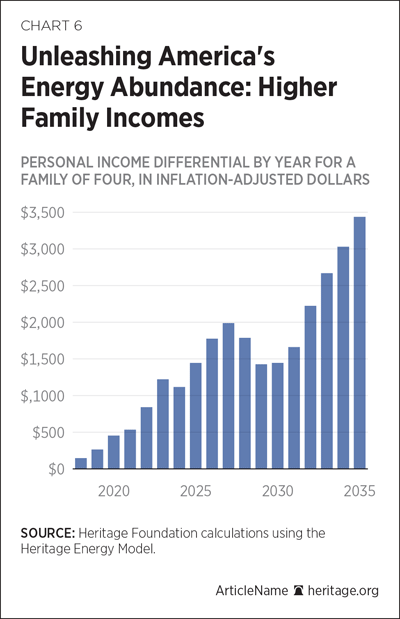
Again, we notice drastically lower estimates of the SCC using these more up-to-date ECS distributions. These results are not surprising—the IWG’s estimates of the SCC were based on outdated assumptions that overstated the probabilities of extreme global warming, which artificially inflated their estimates of the SCC.
Negativity
When people talk about the social cost of carbon, they tend to think of damages.Not all of these models, however, suggest that there are always damages associated with CO2 emissions. The FUND model, in fact, allows for the SCC to be negative based on feedback mechanisms due to CO2 emissions. In my research at The Heritage Foundation, we computed the probability of a negative SCC under a variety of assumptions. Below are some of our results published both at Heritage as well as in the peer-reviewed journal Climate Change Economics:
Dayaratna and Kreutzer, “Unfounded FUND: Yet Another EPA Model Not Ready for the Big Game,” and Dayaratna, McKitrick, and Kreutzer, “Empirically Constrained Climate Sensitivity and the Social Cost of Carbon.”
" style="box-sizing: inherit; position: relative; font-size: 0.6875rem; line-height: 0.6875rem; color: rgb(0, 147, 208); vertical-align: super;">11
Dayaratna and Kreutzer, “Unfounded FUND: Yet Another EPA Model Not Ready for the Big Game,” and Dayaratna, McKitrick, and Kreutzer, “Empirically Constrained Climate Sensitivity and the Social Cost of Carbon.”
As the above statistics illustrate, under a very reasonable set of assumptions, the SCC is overwhelmingly likely to be negative, which would suggest the government should, in fact, subsidize (not limit) CO2 emissions. Of course, we by no means use these results to suggest that the government should actually subsidize CO2 emissions, but rather to illustrate the extreme sensitivity of these models to reasonable changes to assumptions and can thus be quite easily fixed by policymakers.
Economic Impact
In our research at The Heritage Foundation, we used the Heritage Energy Model, a clone of the Department of Energy’s National Energy Modeling System to quantify the economic impact of both implementing further carbon-based regulations as well as repealing existing ones. One policy we analyzed was the Clean Power Plan, a policy initiated by the Obama Administration to regulate carbon-based emissions. We found that by 2035, the policy would result in an average employment shortfall of over 70,000 lost jobs, a loss of income of more than $10,000 for a family of four, an up to 5 percent increase in household electricity expenditures, and an aggregate $1 trillion loss in gross domestic product (GDP). I discussed these facts during congressional testimony for the House, Sciences, and Technology Committee in June 2016.
*Kevin D. Dayaratna, “The Economic Impact of the Clean Power Plan,” testimony before the Committee on House, Science, and Technology, U.S. House of Representatives, June 24, 2015, https://www.heritage.org/testimony/the-economic-impact-the-clean-power-plan.*
" style="box-sizing: inherit; position: relative; font-size: 0.6875rem; line-height: 0.6875rem; color: rgb(0, 147, 208); vertical-align: super;">12
*Kevin D. Dayaratna, “The Economic Impact of the Clean Power Plan,” testimony before the Committee on House, Science, and Technology, U.S. House of Representatives, June 24, 2015, https://www.heritage.org/testimony/the-economic-impact-the-clean-power-plan.*
In addition, we also used the Heritage Energy Model to quantify the economic impact of the Paris Agreement on the American economy. In our research published in 2016, we found that the economic impacts would be quite devastating—in particular by 2035, the country would see an average employment shortfall of nearly 400,000 lost jobs, a loss of income of more than $20,000 for a family of four, an up to 20 percent increase in household electricity expenditures, and an aggregate $2.5 trillion loss in GDP.
In other research at The Heritage Foundation, we considered the impact of taking advantage of the significant shale oil and gas supply available here in the U.S. The Institute for Energy Research has noted that North America alone has over 1.4 trillion barrels of oil and 2.2 quadrillion cubic feet of natural gas. My colleagues and I have used the Heritage Energy Model to look into the impact of actually taking advantage of these resources. Our research found that if this vast supply were actually utilized that by 2035, the country would see an average employment gain of nearly 700,000 jobs, an increase in over $27,000 for a family of four, a marked reduction in household electricity expenditures, and an aggregate $2.4 trillion increase in GDP.
Kevin D. Dayaratna, Nicolas D. Loris, and David W. Kreutzer, “The Obama Administration’s Climate Agenda: Will Hit Manufacturing Hard,” Heritage Foundation Backgrounder No. 2990, November 13, 2014, http://www.heritage.org/research/reports/2014/11/the-obama-administrations-climate-agenda-underestimated-costs-and-exaggerated-benefits; Kevin D. Dayaratna, Nicolas D. Loris, and David W. Kreutzer, “The Obama Administration’s Climate Agenda: Underestimated Costs and Exaggerated Benefits,” Heritage Foundation Backgrounder No. 2975, November 13, 2014, http://www.heritage.org/research/reports/2014/11/the-obama-administrations-climate-agenda-underestimated-costs-and-exaggerated-benefits; Nicholas D. Loris, Kevin Dayaratna, and David W. Kreutzer, “EPA Power Plant Regulations: A Backdoor Energy Tax,” Heritage Foundation Backgrounder No. 2863, December 5, 2013, http://www.heritage.org/research/reports/2013/12/epa-power-plant-regulations-a-backdoor-energy-tax; David W. Kreutzer, Nicholas D. Loris, and Kevin Dayaratna, “Cost of a Climate Policy: The Economic Impact of Obama’s Climate Action Plan,” Heritage Foundation Issue Brief No. 3978, June 27, 2013, http://www.heritage.org/research/reports/2013/06/climate-policy-economic-impact-and-cost-of-obama-s-climate-action-plan; David W. Kreutzer and Kevin Dayaratna, “Boxer–Sanders Carbon Tax: Economic Impact,” Heritage Foundation Issue Brief No. 3905, April 11, 2013, http://www.heritage.org/research/reports/2013/04/boxer-sanders-carbon-tax-economic-impact; “Consequences of Paris Protocol: Devastating Economic Costs, Essentially Zero Environmental Benefits,” Heritage Foundation Report, April 13, 2016, http://www.heritage.org/environment/report/consequences-paris-protocol-devastating-economic-costs-essentially-zero; Institute for Energy Research, North American Energy Inventory, December 2011, https://www.instituteforenergyresearch.org/wp-content/uploads/2013/01/Energy-Inventory.pdf (accessed February 6, 2019); and Kevin Dayaratna and Nicholas Loris, “Turning America’s Energy Abundance into Energy Dominance,” Heritage Foundation Report, November 3, 2017, https://www.heritage.org/energy-economics/report/turning-americas-energy-abundance-energy-dominance.
" style="box-sizing: inherit; position: relative; font-size: 0.6875rem; line-height: 0.6875rem; color: rgb(0, 147, 208); vertical-align: super;">13
Kevin D. Dayaratna, Nicolas D. Loris, and David W. Kreutzer, “The Obama Administration’s Climate Agenda: Will Hit Manufacturing Hard,” Heritage Foundation Backgrounder No. 2990, November 13, 2014, http://www.heritage.org/research/reports/2014/11/the-obama-administrations-climate-agenda-underestimated-costs-and-exaggerated-benefits; Kevin D. Dayaratna, Nicolas D. Loris, and David W. Kreutzer, “The Obama Administration’s Climate Agenda: Underestimated Costs and Exaggerated Benefits,” Heritage Foundation Backgrounder No. 2975, November 13, 2014, http://www.heritage.org/research/reports/2014/11/the-obama-administrations-climate-agenda-underestimated-costs-and-exaggerated-benefits; Nicholas D. Loris, Kevin Dayaratna, and David W. Kreutzer, “EPA Power Plant Regulations: A Backdoor Energy Tax,” Heritage Foundation Backgrounder No. 2863, December 5, 2013, http://www.heritage.org/research/reports/2013/12/epa-power-plant-regulations-a-backdoor-energy-tax; David W. Kreutzer, Nicholas D. Loris, and Kevin Dayaratna, “Cost of a Climate Policy: The Economic Impact of Obama’s Climate Action Plan,” Heritage Foundation Issue Brief No. 3978, June 27, 2013, http://www.heritage.org/research/reports/2013/06/climate-policy-economic-impact-and-cost-of-obama-s-climate-action-plan; David W. Kreutzer and Kevin Dayaratna, “Boxer–Sanders Carbon Tax: Economic Impact,” Heritage Foundation Issue Brief No. 3905, April 11, 2013, http://www.heritage.org/research/reports/2013/04/boxer-sanders-carbon-tax-economic-impact; “Consequences of Paris Protocol: Devastating Economic Costs, Essentially Zero Environmental Benefits,” Heritage Foundation Report, April 13, 2016, http://www.heritage.org/environment/report/consequences-paris-protocol-devastating-economic-costs-essentially-zero; Institute for Energy Research, North American Energy Inventory, December 2011, https://www.instituteforenergyresearch.org/wp-content/uploads/2013/01/Energy-Inventory.pdf (accessed February 6, 2019); and Kevin Dayaratna and Nicholas Loris, “Turning America’s Energy Abundance into Energy Dominance,” Heritage Foundation Report, November 3, 2017, https://www.heritage.org/energy-economics/report/turning-americas-energy-abundance-energy-dominance.
Negligible Environmental Benefits
In our research at The Heritage Foundation, we have also estimated the environmental impact of a number of pertinent policies using the Model for the Assessment of Greenhouse Gas Induced Climate Change. In one exercise, we simulated the impact of reducing CO2 emissions in the United States by 80 percent. Assuming a climate sensitivity of 4.5 degrees Celsius, we found that by 2100, the earth would incur a temperature reduction of 0.135 degrees Celsius and 1.35 cm sea level rise reduction. In a second exercise, we simulated the impact of eliminating all CO2 emissions from the United States completely. We found a similarly trifling change of 0.2-degree Celsius temperature reduction and 2 cm of sea level rise reduction. In a third exercise, we modeled the climate impact of taking advantage of the oil/gas resources discussed in Dayaratna et al. (2017). We again found a negligible impact of less than 0.003-degree Celsius change in temperature and 0.02 cm of sea level rise increase.
Kevin Dayaratna and Nicholas Loris, “Turning America’s Energy Abundance into Energy Dominance,” Heritage Foundation Report, November 3, 2017, https://www.heritage.org/energy-economics/report/turning-americas-energy-abundance-energy-dominance, and University Corporation for Atmospheric Research, “MAGICC/SCENGEN,” http://www.cgd.ucar.edu/cas/wigley/magicc/ (accessed January 9, 2017).
" style="box-sizing: inherit; position: relative; font-size: 0.6875rem; line-height: 0.6875rem; color: rgb(0, 147, 208); vertical-align: super;">14
Kevin Dayaratna and Nicholas Loris, “Turning America’s Energy Abundance into Energy Dominance,” Heritage Foundation Report, November 3, 2017, https://www.heritage.org/energy-economics/report/turning-americas-energy-abundance-energy-dominance, and University Corporation for Atmospheric Research, “MAGICC/SCENGEN,” http://www.cgd.ucar.edu/cas/wigley/magicc/ (accessed January 9, 2017).
Conclusions
Policies aimed at “decarbonizing” the American economy are predicated on faulty models that are prone to user-selected manipulation. These policies will raise the cost of energy, thus resulting in devastating economic impacts. On the other hand, policies that are aimed at taking advantage of fossil-based fuels have tremendous potential to grow the economy. And moreover, either policy—regulatory or de-regulatory—will have negligible impact on the climate.
*******************
The Heritage Foundation is a public policy, research, and educational organization recognized as exempt under section501(c)(3) of the Internal Revenue Code. It is privately supported and receives no funds from any government at any level, nor does it perform any government or other contract work.
The Heritage Foundation is the most broadly supported think tank in the United States. During 2017, it had hundreds of thousands of individual, foundation, and corporate supporters representing every state in the U.S. Its 2017 income came from the following sources:
Individuals 71%
Foundations 9%
Corporations 4%
Program revenue and other income 16%
The top five corporate givers provided The Heritage Foundation with 3.0% of its 2017 income. The Heritage Foundation’s books are audited annually by the national accounting firm of RSM US, LLP.
Members of The Heritage Foundation staff testify as individuals discussing their own independent research. The views expressed are their own and do not reflect an institutional position for The Heritage Foundation or its board of trustees.
===
ggl 1 22
Showing results for heritage center for data analysis beach
Heritage's Center for Data Analysis Earns Attention in
== ...https://www.myheritage.org › news › heritages-center-f...
Bill Beach heads Heritage's Center for Data Analysis. Writing in the New York Times, Bruce Bartlett worries about the growing influence of The Heritage ...